Bob Tant, Charles Lister Court and Dover’s Honorary Freemanship

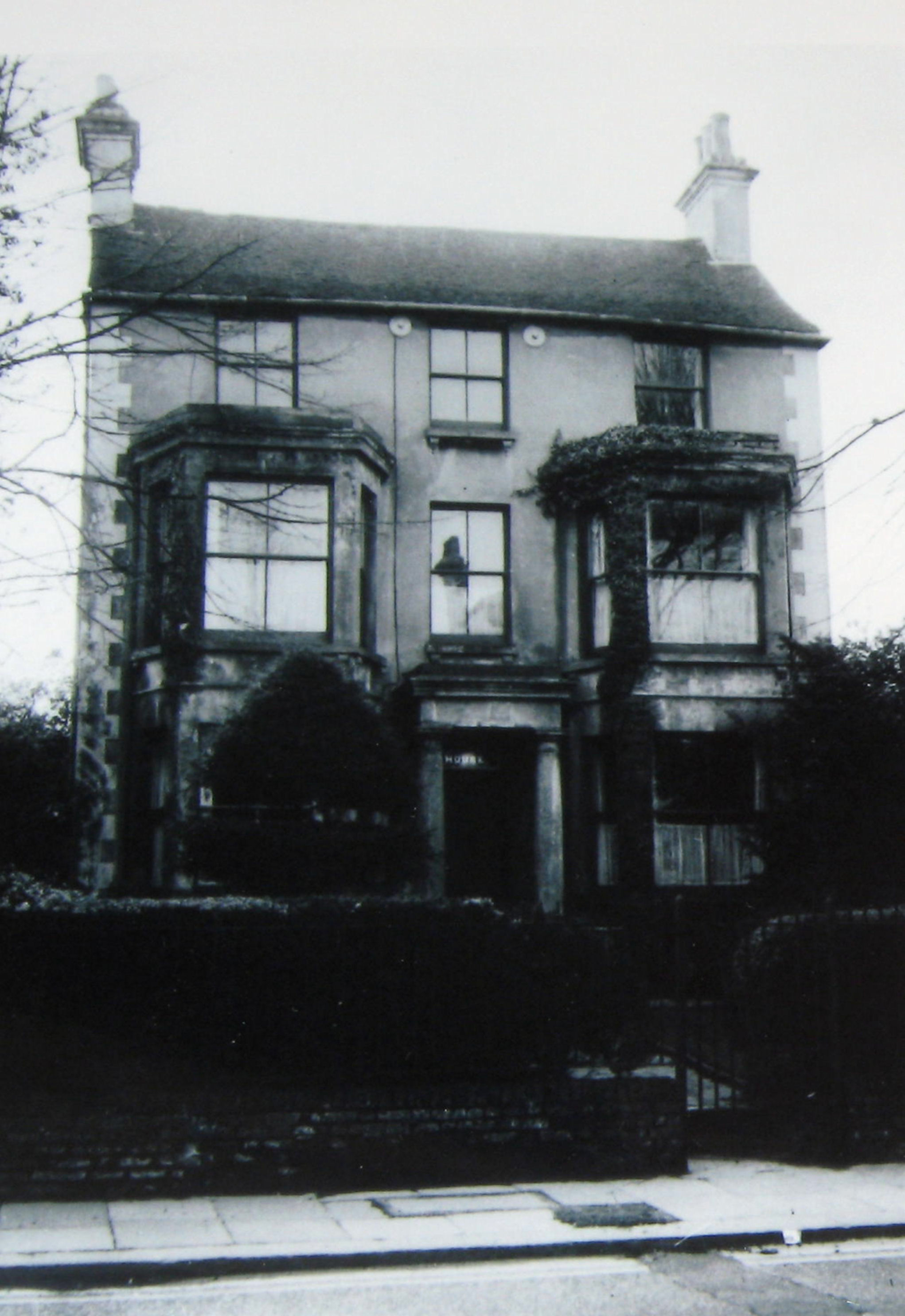
Grove House, London Road, prior to demolition in 1979 - Courtesy of John Gilham

Grove House, London Road, prior to demolition in 1979 – Courtesy of John Gilham

In living memory, there was a fine old Tudor house at the corner of St. Radigunds Road and London Road, Dover, called Grove House. Built in 1560 it had a panelled room and on one wall, near the ceiling, one of the panels could be moved to reveal a hole 3-foot (0.9-metres) by about 2-feet (0.6-metres). This opened up into a large space where a man could easily have been hidden! Whether it was used to hide contraband or fugitives during the ages of religious turbulence, or both, is unknown.

From about the time of the World War I Guy Mannering, the youngest son of Edward Mannering of Buckland corn mill, lived in Grove House and on 31 March 1941, during World War II, a shell exploded nearby causing some damage. Restored, but due to the attitude of the prevailing council demolition of the ancient building began in mid August 1979. The following year, the Royal British Legion Housing Association commissioned the building of 53 flats – 16 double and 37 single, plus two wardens on the site.

Naming the project after Charles Lister, a British Legion stalwart and Mayor of Folkestone, the flats cost £900,000 to build. This was paid for by a loan from the Government’s National Housing Corporation. Built by Corbens Construction, work began on laying foundations in late October 1980. Residents, all ex-servicemen and women or their spouses, started moving into the flats in 1982. The project was officially opened on 25 September 1983 by Brigadier Maurice Atherton – now President of the Dover Society.
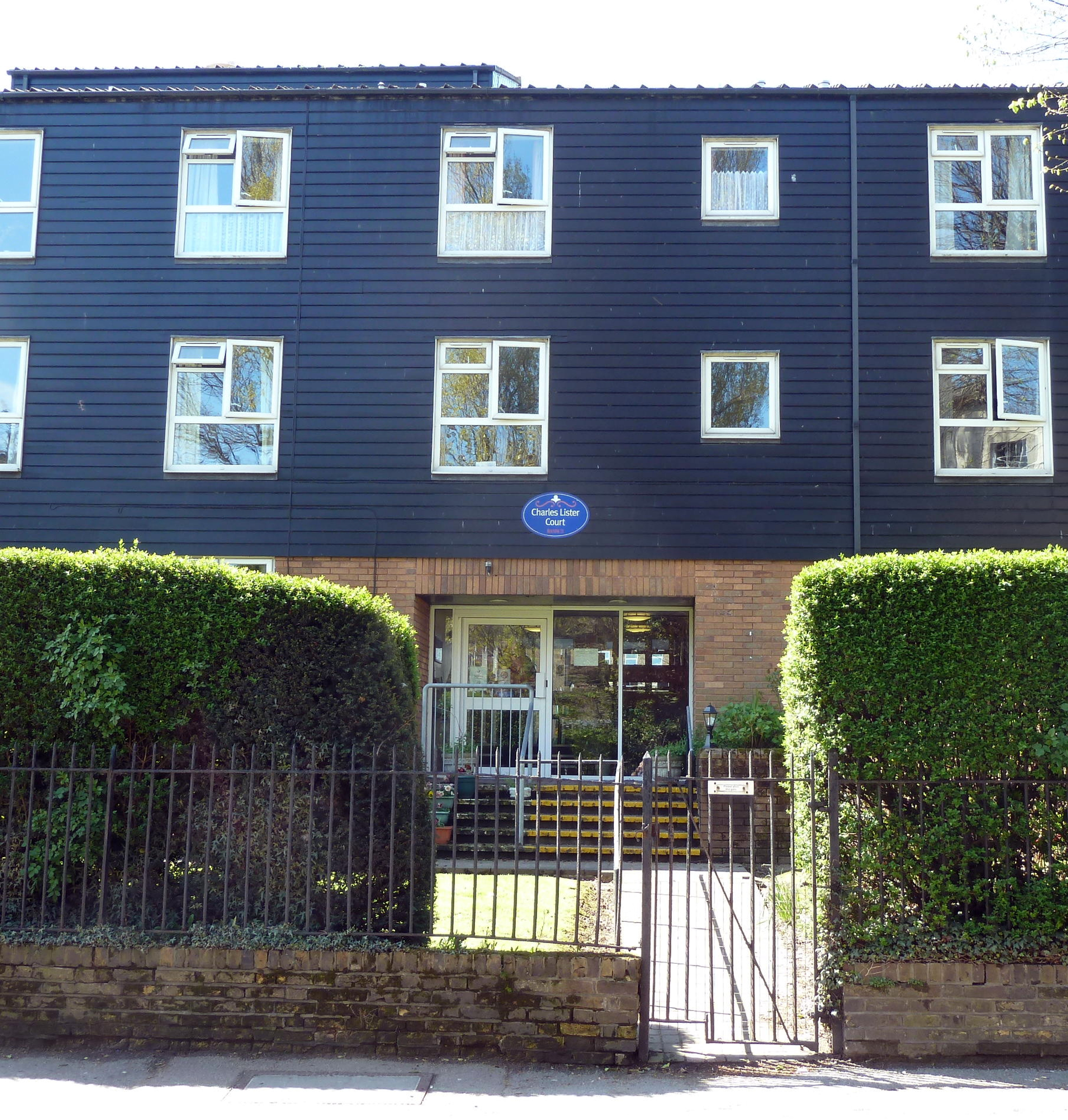
Charles Lister Court, London Road, Buckland

Charles Lister Court, London Road, Buckland

One of original residents is Royston Tant, known as Bob, who was appointed an Honorary Freeman of the town in 2010. Bob was born in Battersea, London, in 1927. He came to Dover in 1946 whilst doing his National Service and met his wife to be, Eileen Husk. They married in Dover in 1951 but went to live in London.

Returning in 1953, they moved into a house in Mason’s Road, and Bob was elected a Labour councillor during the last days of the Dover Corporation. He remained a councillor following the establishment of Dover District Council in 1974 where his main areas of concern were the care and housing problems of the elderly and he worked closely with the Royal British Legion.

Like all other Dover councillors at that time, Bob served as a Charter Trustee for the town and was appointed the Mayor of Dover in 1982 and again in 1988. During his latter incumbency, he was also the Speaker of the Confederation of the Cinque Ports. As a Charter Trustee Bob was instrumental in the establishment of a parish council as Dover Town Council in 1996.

Parish councils were formed under the Local Government Act of 1894 to undertake civic duties in rural towns and villages. Following the Local Government Act of 1972 that came into operation on 1 April 1974, many towns that had previously been municipal boroughs, like Dover, applied to become ‘successor parishes’ within larger district councils, such as Dover District Council. To cater for this, in 1974, the law was changed so that a successor parish could pass a resolution to declare its area a ‘town’, with the council known as a ‘town council’. The powers are the same as those of parish councils, although the chairman is entitled to be called ‘town mayor.’

It was not long after Dover Town Council was formed that I, along with my local historian mentor, Joe Harman, were invited to join a committee headed by Cllr. Lynette (Lyn) Young. This was to regain the right to award Honorary Freemanship – or something similar – to those held in esteem by the town.

The Honorary Freedom Act of 1885 had introduced the accolade but when Dover ceased to be a municipal borough in 1974 this right also ceased. Bob was the fourth member of that committee and Lyn, who knew him well, said that he would encourage our enthusiasm as well as advising caution where necessary. She also warned that Bob had a bit of a temper but if we listened and worked together for the good of Dover, all would be fine.

As it turned out, Bob’s temper was never pitted against us and I, for one, did learn from his other qualities. It was long, hard struggle not helped when both Joe and I became seriously ill. Joe, sadly, did not recover. By the time I returned Bob had ceased to play an active role and new personalities were taking centre stage. Thus, it looked as if Dover would have to settle for the accolade ‘Honorary Portsmen’ and Dover Town Council accepted this.

Bob Tant - Honorary Freeman 2010 with Mayor Sue Jones. Source: Dover Town Council

Bob Tant – Honorary Freeman 2010 with Mayor Sue Jones. Source: Dover Town Council

Albeit, relentless campaigning by Lyn, together with members of other former boroughs now parish/town councils, desperate to regain their ancient rights, was brought to the attention of Michael Boyce, Baron Boyce, the Lord Warden of the Cinque Ports. He took this up in the House of Lords and legislation was amended in 2010 with the caveat that the maximum number of Honorary Freemen, at any one time, is restricted to twelve. Nominations are subject to a vote and to receive the award, two-thirds of the Town Councillors must support the nomination.

On 18 November 2010, three Dover stalwarts were created Honorary Freemen, two members of the Dover Society, Jack Woolford and John Turnpenny. The other went to Bob who still lives at Charles Lister Court. In 1992, the Royal British Legion Housing Association changed their name to Housing 21 and these days are classed as a social enterprise specialising in housing, care and support services for older people.

From 2011, the Honorary Freemen awards are made at the Annual Mayor Making Ceremony, usually held at the end of in May, when the Roll of Freemen/Women is also read out.

Bod (Royston) Tant died on 18 September 2015.

Published:

  • Dover Mercury: 06 September 2012
Posted in Buildings, Freemanship Honorary and Cllr. Bob Tant, Local Government, People, Tant Bob, Charles Lister Court and Honorary Freemanship | Comments Off on Bob Tant, Charles Lister Court and Dover’s Honorary Freemanship

Waiting Miner Statue

Waiting Miner Statue by H Phillips, Prior to 2010 located in Granville Gardens, Dover

Waiting Miner Statue by H Phillips, Prior to 2010 located in Granville Gardens, Dover

In July 2010, the Waiting Miner statue was moved from Granville Gardens to Fowlmead Country Park on what was once was the site of the spoil tip of the former Betteshanger Colliery, near Deal. Although I could accept the arguments given for the move I was, and still am, saddened that in Dover there is nothing to mark the strong link between the town and the Kent coalfield.

Towards the end of the nineteenth century, coal had been found across the Channel, near Calais. It seemed reasonable to assume that the seams would also be on this side of the Channel. Boreholes were sunk at the bottom of the abandoned Channel Tunnel shaft near what is now Samphire Hoe and coal was found at a depth of just over 300 metres.

Towards the end of the nineteenth century, coal had been found across the Channel, near Calais. It seemed reasonable to assume that the seams would also be on this side of the Channel. Boreholes were sunk at the bottom of the abandoned Channel Tunnel shaft near what is now Samphire Hoe and coal was found at a depth of just over 300 metres. Drilling was started and in 1896, Arthur Burr formed the Kent Coal Field Syndicate and a start was made on Shakespeare Colliery.

Snowdown Colliery First Hoppit of Coal raised 19 November 1912

Snowdown Colliery First Hoppit of Coal raised 19 November 1912

Although Dover Corporation fully supported the project, Shakespeare Colliery had serious problems with water seepage that made it unviable, was placed in the hands of the Receiver and was finally abandoned in December 1915. Nonetheless, the continual demand for coal encouraged other borings to be undertaken in and around the Dover area. A total of 14 coal seams, stretching from Dover almost to Herne Bay, were eventually found and the first bucketful of commercial East Kent coal was raised on 19 November 1912 at Snowdown Colliery, north of the town. It had been envisaged to sink 15 mines, but in the event only three more were opened, these were Tilmanstone, (1906) coal produced from 1913; Chislet, (1913) coal produced from 1919; and Betteshanger (1924) coal produced from 1927.

The year before Betteshanger colliery went into production, 1926, saw the General Strike. The events that led up to it are well documented; suffice to say that following World War I (1914-1918) the country had slid into an economic depression. One of the main reasons was that our currency was strong, which made imports cheap and our exports expensive for overseas consumers. In order to encourage people, both at home and overseas, to buy our goods, wages were cut. Further, as our economy relied on coal, due to costs, industrialists preferred the cheaper imported coal.

In the autumn of 1922 Messrs Dorman Long and Co. and Messrs S Pearson and Son – the former major steel makers and the latter construction engineers combined to take over a very large area of mining rights in Kent. They owned Snowdown colliery and started the preliminary work that resulted in Betteshanger colliery. On the subject of exchange rate parity, Sir Arthur Dorman made a powerful and well reported speech in which he asked the government for more equality, (Economist 19.12.1925), but to no avail.

As the pit owners could not compete with imported coal, they cut wages, introduced short-time working and lay-offs. Starvation in mining communities in many parts of the country was rife. Then, in 1926, due to the continued strength of sterling, a Royal Commission recommended a further pay cuts and lay-offs. It was one too many, and on 3 May the miners, supported by other industries, went on the ten day General Strike, following which miners stayed strike and in some areas until November.

Granville Gardens during the inter-war period

Granville Gardens during the inter-war period

When they returned to work, wages had been further cut and for many, there were no jobs or prospect of jobs. However, Pearson, Dorman Long, were advertising for experienced miners to work in the Kent coalfield. All they had to do was find their own way to the town where the mine owners had their offices. Further, at 1 St. James Street, was the office of the Miners Federation (after 1945 National Union of Mineworkers). With no money miners but possibility of prospects, my maternal grandfather, along with miners from South Yorkshire, Durham, Lancashire, Scotland and Wales, walked to Dover.

My grandfather came down the Great North Road to London and then Watling Street (later the A2) to Dover – along with other miners from South Yorkshire. On arrival in the town, they made their way to the seafront. They had been told that someone from the Union would meet them near the Granville Gardens. It was a Sunday when grandfather arrived on Dover’s seafront. In the Gardens, he wrote, a band was playing ‘Poet and Peasant’ his favourite piece of music. This, he saw as good omen.

From there my grandfather was directed to the Union offices in St James Street but the offices were closed. That night, he slept in a doorway near the brewery (Leney’s), and the following morning, with others, was taken to Snowdown colliery. He started work that afternoon. Food and lodgings were provided on ‘tick’ and taken out of his wages.

The lodgings were three bunks packed in a small room. Each bed was shared by three occupants – other miners on different shifts. It was easy to get work at Snowdown, as the turnover of miners was rapid. The colliery was nicknamed the ‘hell hole’ because of the intense heat and wet conditions. My grandfather stayed until the mid-1930s and then returned to Yorkshire.

Area Headquarters of the National Coal Board , Waterloo Crescent

Area Headquarters of the National Coal Board , Waterloo Crescent

The mining industry was nationalised on 1 January 1947 and the National Coal Board (NCB) initially opened their South East Division Offices at Richborough. In 1949 the Waterloo Crescent offices became available and they were leased by the NCB and in June 1950 moved in. These officers were next to Granville Gardens and remained the Divisional Offices until the Kent coalfield was closed. The first mine to go was Chislet in 1969, both Tilmanstone and Snowdown closed in 1987 and Betteshanger on 28 August 1989. With the demise of the Kent coalfield, it was felt that a lasting reminder, based in the town of its origin, should be erected.

Waiting Miner Statue by H Phillip - details on plaque.

Waiting Miner Statue by H Phillip – details on plaque.

At the time, the Waiting Miner statue was outside Richborough power station. Made of bronze on a concrete base simulated to look like a slab of coal it was sculptured by H.R.Phillips. It was commissioned by what was the Central Electricity Generating Board (later PowerGen) and was originally going to be sited in Yorkshire. Instead, in 1966, it was placed at the entrance to Richborough power station, between Sandwich and Ramsgate. In September 1997, following the closure of the power station, PowerGen donated the statue to Dover District Council. They placed it in Granville Gardens, to remind people that it was from Dover the Kent coalfield was first explored.

Following the closing of the Kent coalfield, it was decided to create the 365-acre (1,480,000-m2) Fowlmead Country Park as a tribute to the Kent miners. With £18.8m funding from English Partnerships, as part of the National Coalfields Programme, it was opened by Sir David Bellamy in May 2007. It was felt, by those involved, that the Waiting Miner statue should be placed near the entrance and a campaign to this effect, ensued.

They argued that the Statue had been placed in Granville Gardens to be near the NCB offices and that as they closed in 1987, the Statue had been left isolated on the seafront in Dover. In reality, of course, the Statue had been placed there 10 years after the offices had closed and it was in Granville Gardens as a tribute to Dover being the centre of the Kent coalfield from its inception to its demise. The Statue was also seen by many as a tribute to those, like my grandfather, who walked to Dover in the inter-war years and helped to make the Kent coalfields successful, unfortunately this was lost on councillors.

Published:

  • Dover Mercury:  17 &24 February 2011 
Posted in Kent Coal Field, Sea Front, Waiting Miner Statue, Waiting Miner Statue | Comments Off on Waiting Miner Statue

Biggin Hall

Biggin Hall

Biggin Hall

Biggin Hall, as we now call it, was built in 1881 of knapped flints pressed into the mortar to match the then Police Station opposite, which was built at the same time. The intention for Biggin Hall was office accommodation for the police station and the town council. In 1894, due to increasing health problems, caused by the lack of bathing facilities in many Dover homes, hot and cold slipper baths were installed. The hot water came from the nearby electricity station.

At that time, there was a wrought iron fence in front of Maison Dieu House – now the Dover Town Council offices, which terminated at the Maison Dieu. Opposite the front door of Maison Dieu House was a single gate and double wrought iron gates nearer the Maison Dieu. The latter were ornate gates and had been made by Francis Morton of Garston in Liverpool. They were the carriage entrance to the House.

On 8 January 1899 the owner of Maison Dieu House, William Mummery (1845-1899), died and the mansion was offered for sale in June that year. It would appear that about this time the Corporation had made the double gates the entrance from Biggin Street to Biggin Hall. In 1900, the interior of the Hall was refurbished in a more luxurious style and Turkish, Russian and medicated baths installed.

Turkish Baths, Biggin Hall. Source Dover Library

Turkish Baths, Biggin Hall. Source Dover Library

John James Lewis had acquired the lease in 1903 at a yearly rent of £150. Employing two men, two women, a boy and a girl, his outgoings were greater than his income of £300 a year and Lewis was declared bankrupt. That was in 1905 but the next leaseholder seemed to fair better offering facial massages, manicures and a chiropody service. The original slipper baths remained but their surroundings were upgraded and the charges increased. These proved too expensive for the previous clients and the use of the slipper baths went into decline.

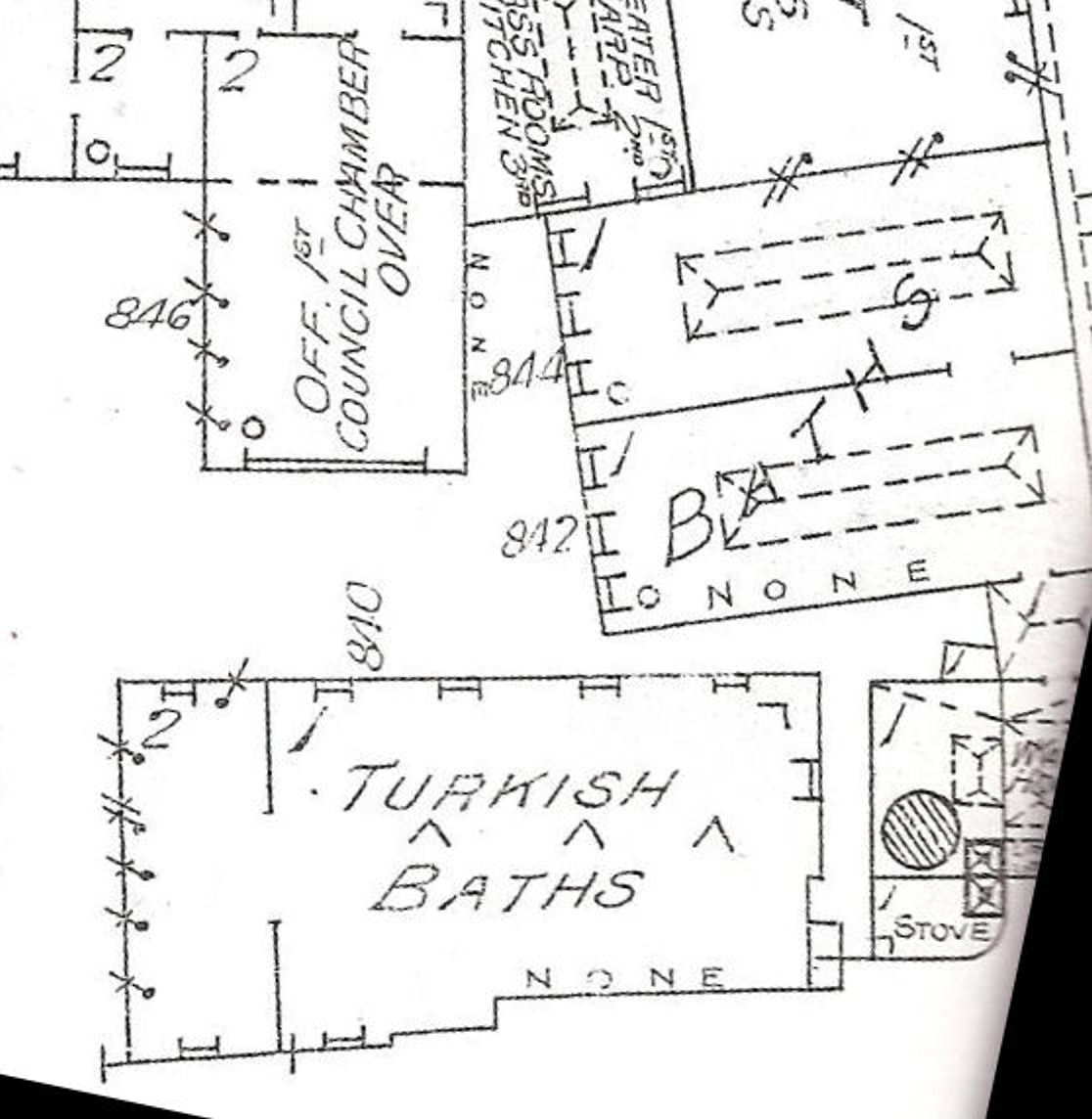
1905 Insurance map showing the layout of the bathing facilities

1905 Insurance map showing the layout of the bathing facilities

Following World War I, the affluent tourists no longer came to Dover but there were still affluent residents in the town. Nonetheless, in 1920, it was reported that the facility was making a loss of about £300 a year and consideration was given to turning the building back into offices. Research was undertaken and it was found that one of the reasons for lack of usage was that the Turkish Baths were not hot enough. Pumping steam from the adjacent municipally owned electricity works rectified this! Usage increased and the Turkish Baths and other facilities were reprieved.

Albeit, the shortage of housing saw many of the properties that once belonged to the affluent summer visitors, being refurbished into what best could be described as bed-sits. Whole families were renting one or two rooms with shared washing facilities and this led to a marked increase of communicable infections and infestations.

It was suggested that the slipper baths at the Hall should be made available free to the families of the unemployed while all other users paid a nominal amount. This caused uproar and in the end it was agreed that the families of the unemployed, who regularly used the municipal swimming baths, could apply to use washing facilities there on Mondays free of charge. There was one stipulation, they had to take one towel each and if they were unable to then they could not use the facility!

On 5 November 1924, Vice-Admiral Roger Keyes unveiled Dover’s War Memorial in front of the Maison Dieu House. In order to create a larger concourse, the railings in front of Maison Dieu House were removed and the ornate gates were moved to the Isolation Hospital in Tower Hamlets.

In the early 1930s, the Turkish baths were making a loss and the facility was closed in 1934. At the time the Museum, on the upper floor of the then Market Hall, was being refurbished and the curator wanted to reintroduce winter lectures. As there was insufficient room it was agreed, in 1935, to turn that part of Biggin Hall into a lecture hall accommodating 120 people.

The slipper baths remained and for a small charge made available to locals. A further charge was made for towels. It was at this time that the lavatories, we see today, were constructed and when the work was finished, the building was named Biggin Hall.

With the outbreak of World War II (1939-1945) and the subsequent influx of military personnel, in 1940, a much larger municipal slipper baths facility opened at Woodlands in Bridge Street. In the following spring Biggin Hall was made over to the Military Welfare Officer who collected donated books, periodicals and knitted ‘comforts’ for distribution to the members of Armed Services based in the town. On Boxing Day (26 December) 1941 the Dover Ladies Committee together with the Women’s Branch of the British Legion held a successful social evening in the Hall.

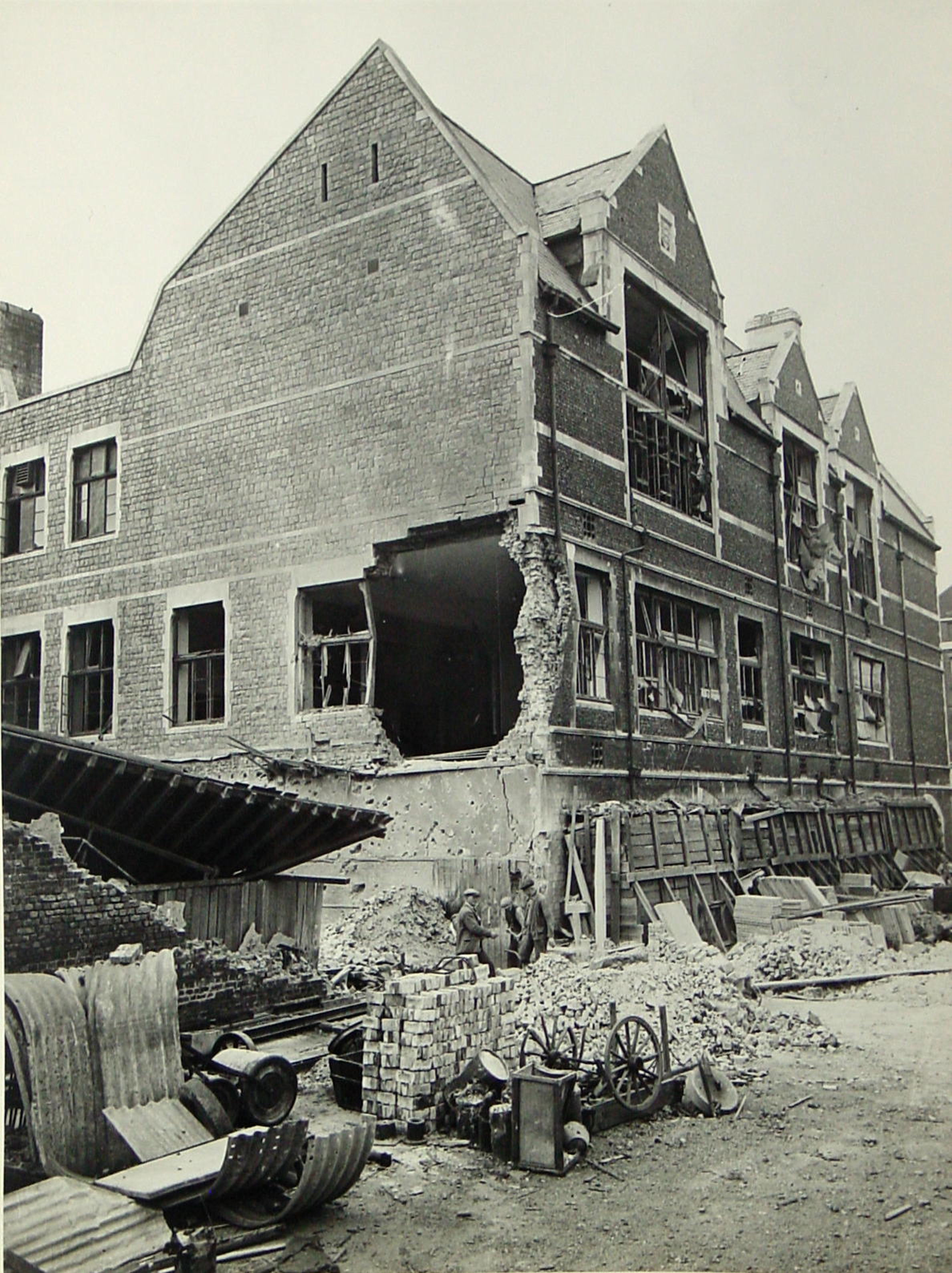
Technical College on Ladywell after a shell had hit Biggin Hall. Kent Messenger Group

Technical College on Ladywell after a shell had hit Biggin Hall. Kent Messenger Group

However, the public library, up to 1942, was in Biggin Street that year was destroyed by enemy action. Temporarily, the library was moved to 16 Effingham Crescent, at the same time, the slipper baths were removed from Biggin Hall. On 3-4 October 1943, the Hall was badly damaged by shelling and it was estimated that it would cost £1,780, to repair. The repairs were carried out and the library eventually moved to Biggin Hall in October 1945.

The library stayed in the building until June 1952 when it was moved to Maison Dieu House. That year, Biggin Hall was redecorated and furnished as a public hall at a cost of about £450. A year later Woodlands was sold as part of a package to the Dover Engineering Works and it was proposed that temporary slipper baths would be provided by adapting a building attached to Biggin Hall. These opened in September 1954 and the baths were still in use in 1975. Councillors becoming increasingly concerned at their cost – estimated at £3,635 a year, the baths were closed.

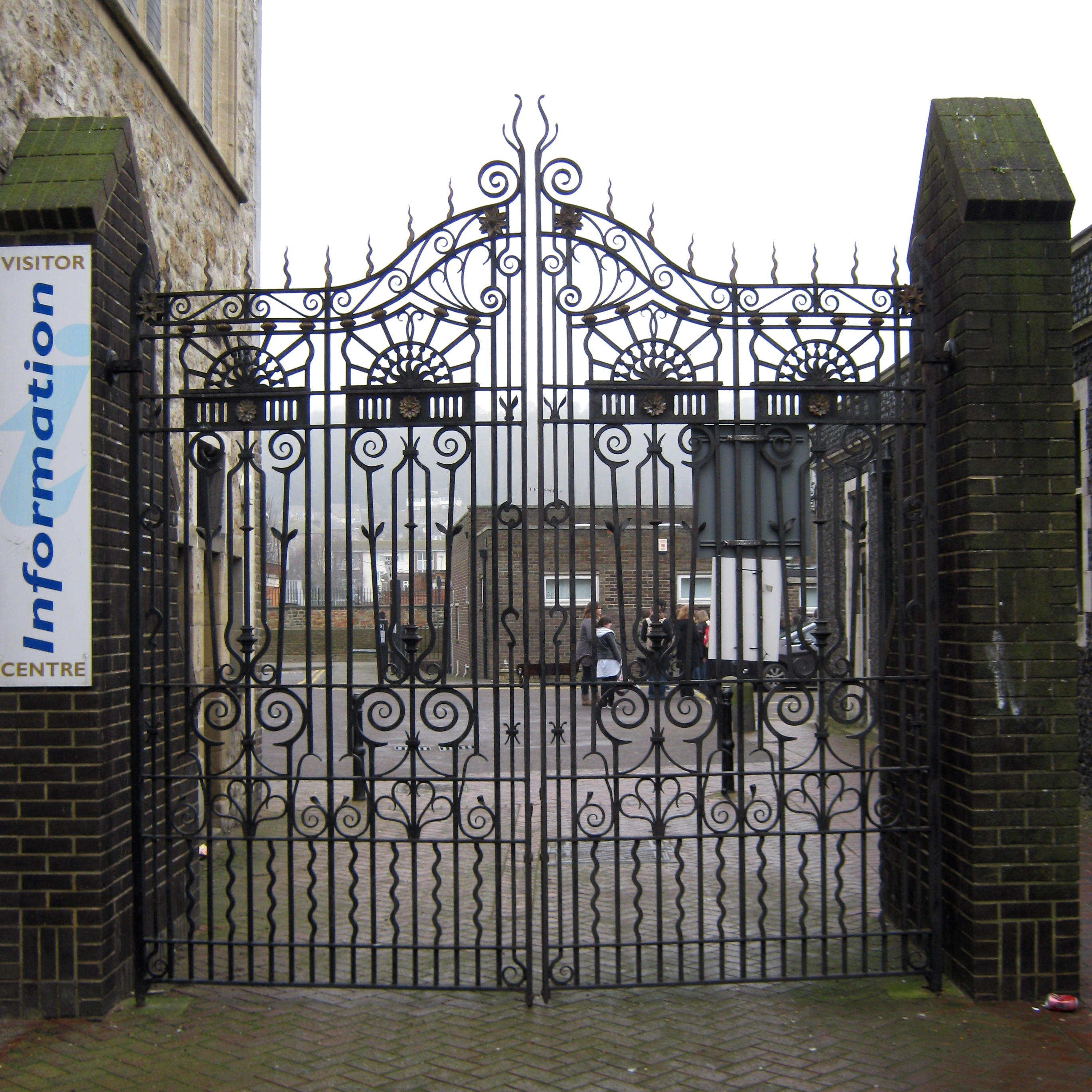
Isolation Hospital Gates

Isolation Hospital Gates

On 1 April 1988, following public advertisements, the Hall was let but only Councillor and Mrs G T Tyler tendered. They offered to pay a rental of £52 per annum with the proviso that, if letting income exceeded £9,000 per annum, additional rental of £500 per annum would be paid. The offer was accepted and renewed in 1991.

On 1 April 1988, following public advertisements, the Hall was put out to let but only Councillor and Mrs G T Tyler tendered. They offered to pay a rental of £52 per annum but Dover District Council added the the proviso that if letting income exceeded £9,000 per annum, an additional rental of £500 per annum would be paid. The offer was accepted and renewed in 1991.

In the meantime, the area around the Maison Dieu underwent a major transformation. The attractive wrought iron gates, which had been standing in a council yard for years following the demolition of the Isolation Hospital, were restored and placed between the Maison Dieu and Biggin Hall. As for the Hall, it is was still owned by Dover District Council and at the time the article was published in the Dover Mercury in 2012, the hall was leased by the Dover Oddfellows.

In October 2013, it was reported that following negotiations with Dover District Council, it had been agreed to ‘give’ Biggin Hall to the Dover Community Association. The Association was set up in 1969 by Dover Rotary Club but in December 2012, against much opposition, sold the existing Community Centre. This was Cleary House, bought by a donation from the Cleary Foundation, a general grant making charity with emphasis on issues local to Kent and reflecting the wishes of Fred Cleary (1905-1984) of St Margaret’s Bay.

The house was on Maison Dieu Road and although the Community Centre had gone through a financially hard time, Arthur Thomas as treasurer made it viable. Sadly he died in 2007, since when moves were made to sell the building. Against opposition, Cleary House was put to auction in 2012, and sold for £220,000. After three years of negotiations with Dover District Council, the Community Association bought Biggin Hall for £1. In the spring of 2016 they started work on extensive refurbishment, estimated to cost £60,000 and includes a new toilet block while the existing toilet block is to become additional meeting rooms.

First Published:

  • Dover Mercury: 16 & 23 February 2012
Posted in Biggin Hall, Local Government | Comments Off on Biggin Hall