Dover Stage Coachotel

Dover Stage ‘coachotel’

Dover Stage ‘coachotel’

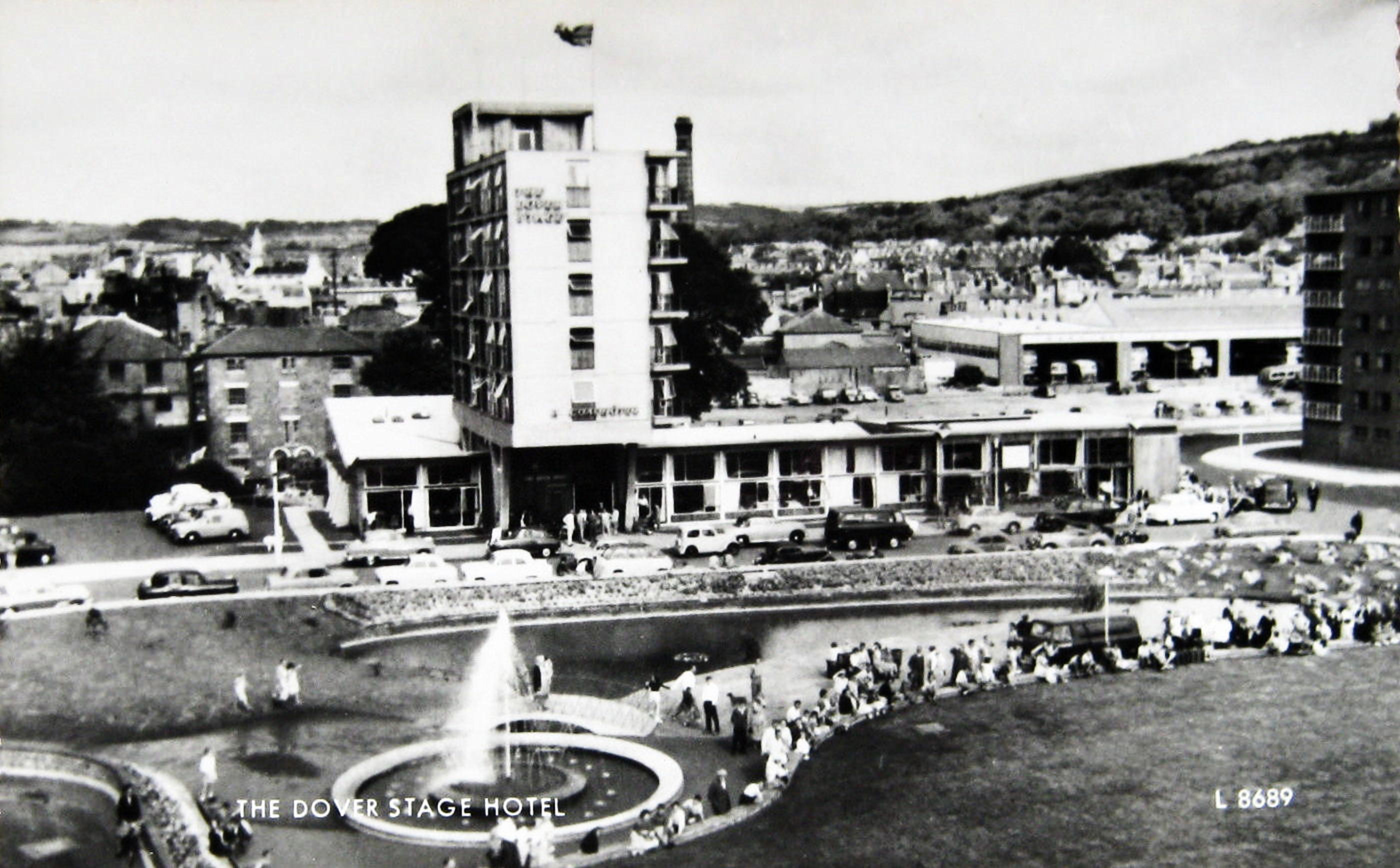
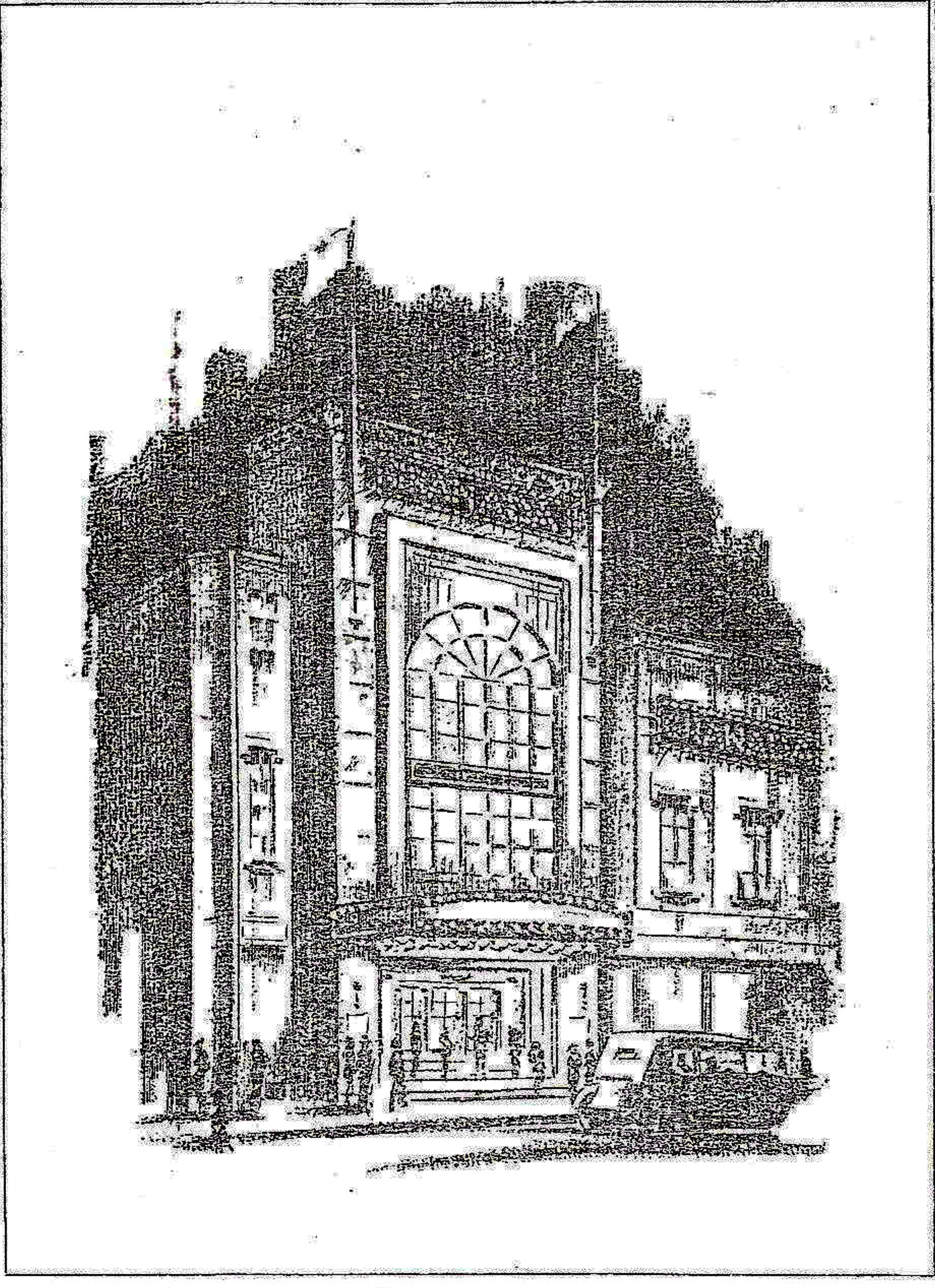
The Dover Stage Coachotel, near the seafront, was demolished in November 1988 to create a car park on Camden Crescent. It had been built on the site of an equally as distinctive building, the Round House.

Dover’s first Council surveyor was builder Richard Elsam, who also designed and built the Round House in about 1820. The house was the private property of Dover’s Town Clerk, John Shipdem, who had already given the contract for the building of Dover’s Gaol to Elsam. This was to land the council with a huge bill as the tendering process, drawn up by Shipdem, ensured that Elsam would be given the contract! Thus, the distinctive tower of the Round House that gave the building its name, was said by locals, ‘so that the devil wouldn’t be able to catch the Town Clerk in a corner!’

Round House, Camden Crescent

Round House, Camden Crescent

Following the death of John Shipdem’s grandson, Reverend Thomas S Frampton, on 2 February 1923, the building was sold. On 27 July that year, it was officially re-opened by Sir Roger Keyes, who was in command of the Dover Patrol during World War I. The House was one of the 80 branches of the British Legion in Kent.

In the 1930’s, the British Legion moved out and the building stood empty until it was reopened by the Gospel Mission on 10 December 1936. They had moved from the Central Gospel Hall, Queen Street. However, in September 1940, following the outbreak of World War II (1939-1945) the house was badly damaged by a bombed blast. Pastor Efemy was conducting a service at the time but luckily he survived. The Round House was totally devastated.

In the late 1940s brewers, Watney, Combe and Reid acquired the site, for £4,250 but in November 1950 it was purchased by Dover Corporation as part of their Redevelopment Plan for the whole of Camden Crescent. The site was then offered on a lease, through estate agents, ideally for a new hotel. As an incentive, the council promised that they would ‘use their endeavours to secure a full unrestricted licence for the sale of intoxicating liquors on the premises.’

The Corporation eventually sold the lease in 1956 to Graham Lyon and Watney’s Breweries and work started on a thoroughly modern building to be called the Dover Stage. It was built by the local firm of Barwick’s to a design by Louis Erdi. The £100,000 ‘coachotel’ had six floors, five of which were balanced on V-shaped struts. It was expected that the design would attract  continental visitors to England, travelling by coach. It had a large ballroom, bars and the 42 rooms with balconies that were angled to give a sea view. The council undertook, as part of the project, to lay out Granville Gardens and the re-aligned Camden Crescent in front the hotel.

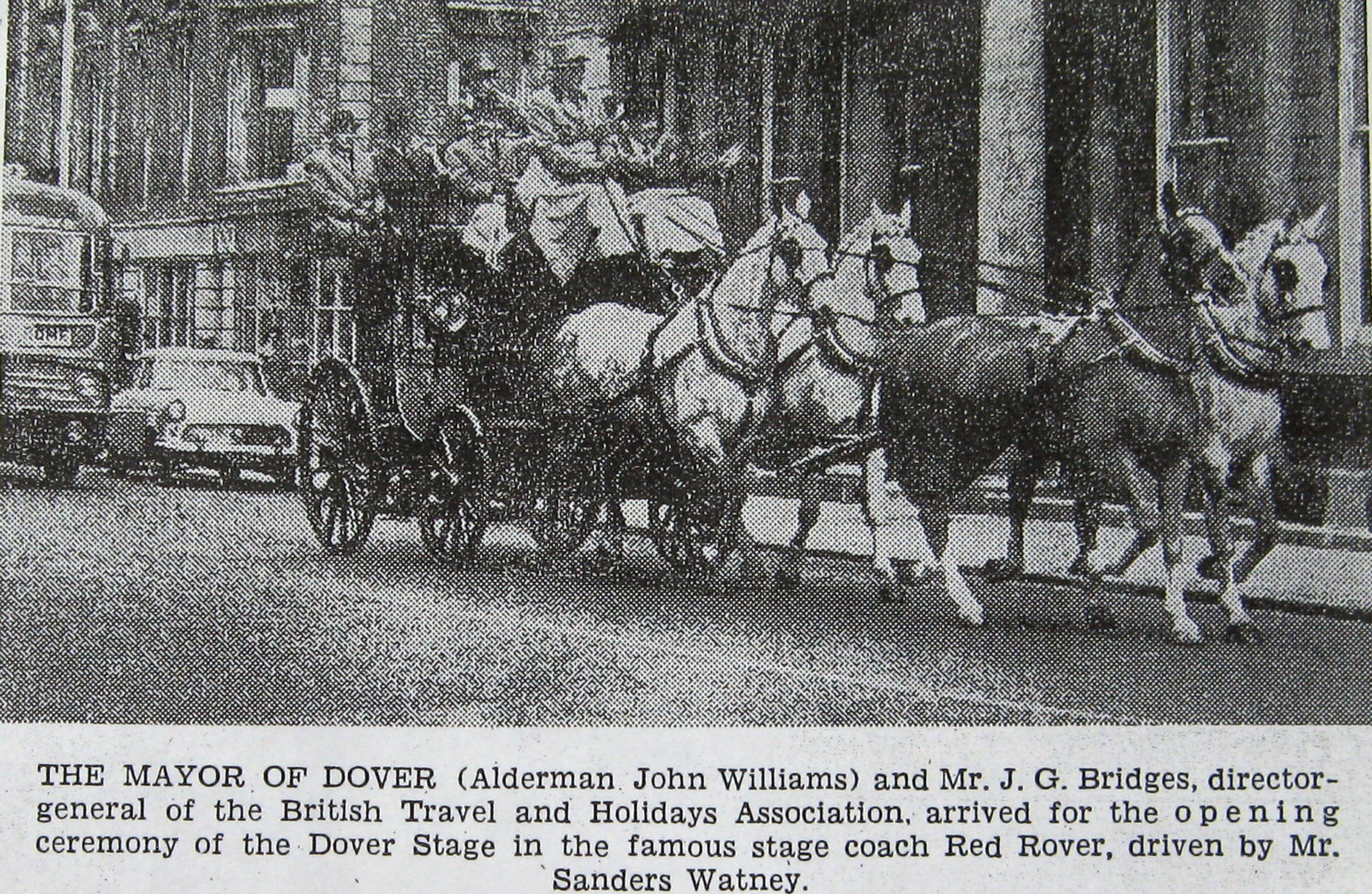
Opening of Dover Stage. Kent Messenger 31.05.1957

Opening of Dover Stage. Kent Messenger 31.05.1957

The Dover Stage, only the third hotel to be built in Britain after the end of World War II, was opened in May 1957 by J G Bridges, director-general of the British Travel and Holidays Association. He arrived together with the Mayor – Alderman John Williams – in the Red Rover stagecoach drawn by four horses. The driver was Sanders Watney of Watney’s Breweries.

Initially, the coachotel was very successful but as time passed tourists’ demands increased to include en-suite toilet facilities. These were added to the detriment of the size of the bedrooms. Nonetheless, the hotel remained well patronised and the ballroom became one of the most popular venues in Dover. As the 1980s progressed and Dover District Council (DDC) turned its attention to tourism, both the Dover Stage and the nearby White Cliffs Hotel came in for bruising rumours, a ploy favoured in Dover to destroy reputations. The rumourmongers said that both hotels were past their ‘sell by date.’

A postcard of the Dover Stage sent in 1958 to Massachusetts by American tourists who stayed at the hotel. They tell the recipient that they went to see 'the Castle on the hill' and the White Cliffs. Thanks to Robert Bedard

A postcard of the Dover Stage sent in 1958 to Massachusetts by American tourists who stayed at the hotel. They tell the recipient that they went to see ‘the Castle on the hill’ and the White Cliffs. Thanks to Robert Bedard

On 30 June 1988, DDC Planning Committee granted approval for the demolition of the Dover Stage in order to replace it with 49 sheltered flats and warden accommodation. The architecturally striking Dover Stage was demolished in November that year. Then in early January 1989, DDC announced that the site was, instead, to be used for additional parking for their pet project, the ill-fated White Cliffs Experience.

A couple of years later the vacant land was offered for sale and in 1993 Henley Lodges submitted a planning application for a 60-bed roomed budget style hotel. The application included a road running through the Granville Gardens and was turned down. The land became a car park and to date it is still an under used car park.

  • Published:
  • Dover Mercury: 31 May 2012

For further information on Dover’s Pubs: http://www.dover-kent.com

Posted in Buildings, Businesses, Camden Crescent, Dover Stage ‘Coachotel’, Dover Stage Coachotel, Dover Stage Coachotel, Dover Stage Coachotel, Wanton Destruction | Comments Off on Dover Stage Coachotel

Smith’s Folly

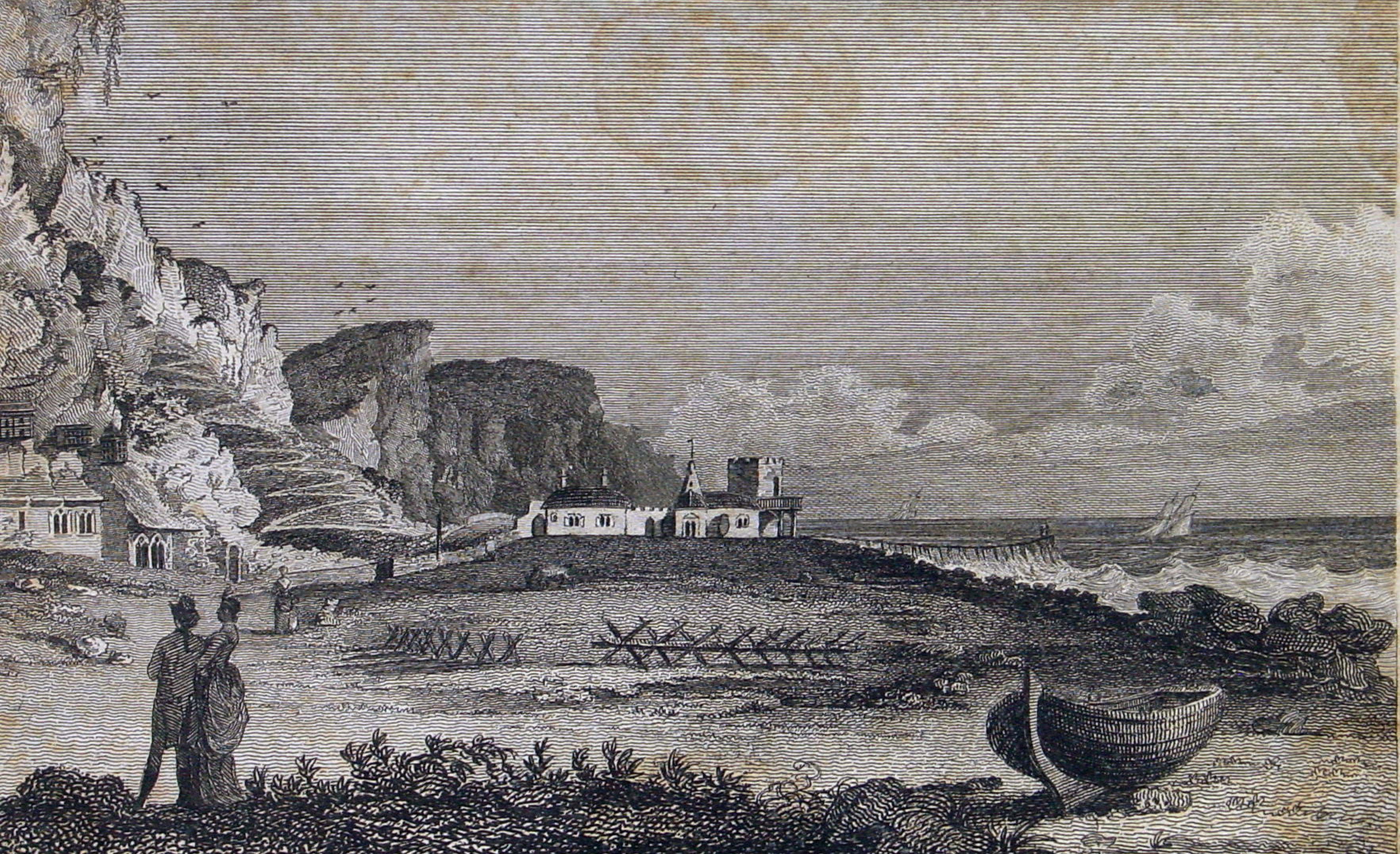
Smith's Folly, East Cliff, from an original drawing by Rawle & engraved by John Nixon 1801. Dover Library

Smith’s Folly, East Cliff, from an original drawing by Rawle & engraved by John Nixon 1801. Dover Library

From Tudor times Dover’s harbour, which was at the west end of the bay, had suffered from being blocked by shingle caused by the Eastward drift. In order to combat this, in 1753, the Harbour Commissioners built a wooden pier opposite the Castle – the Castle Jetty. This slowed down the eastward movement of the shingle and a broad strip of beach gradually accumulated. On this newly created land Guilford battery was built and the first person to build a ‘house’ was Captain John Smith.

Guilford Battery with Moat Bulwark behind 1821. Dover Museum

Guilford Battery with Moat Bulwark behind 1821. Dover Museum

Born in Dover, Captain John Smith, of the 3rd Regiment of the Guards was, in1759, appointed the aide-de-camp to Lord Sackville at the fatal battle of Minden. Following the battle Lord Sackville was relieved of his post and Court Marshalled. The only witness to support him was Captain John Smith whose testimonial must have carried some credence for it saved Lord Sackville’s life if not his military career.  Lord Sackville’s father, the Duke of Dorset, was at that time Lord Warden of the Cinque Ports and in gratitude gave Captain John some land, to the east of the Guilford Battery.

In October 1760, George III (1760-1820) ascended the throne and Lord Sackville was brought back into favour. He, in turn, recommended Captain John to the post of gentleman usher to Queen Charlotte (1744-1818). Shortly afterwards, Captain John married and lived in Midgham, Berkshire where his children, including William Sidney, known as Sidney, (1764-1840) and John Spencer (1769-1845), were born. All of Captain John’s children were brought up at Court as part of the royal household.

On his retirement, Captain John returned to Dover and built a summer residence on the piece of land that he had been given. Initially, he employed two boys to clear and level the ground, and it was reported that he would call them twice daily to prayers. These were held in a cave that had been excavated out of the cliff and in which he had a sarcophagus erected for his burial.

The residence, called The Cave, was completed in 1791 and starting from the cave it consisted of a series of low buildings with flint walls with irregularities designed to appear as artificial ruins while and roofs had the appearance of upturned boats. Inside, it was said, to be ‘neatly fitted up, forming a pleasant summer residence.’  Later a turret and castellation was added, said to represent Temple Prison in Paris where Captain John’s second son, Sidney, had been a prisoner.

Sir Sidney Smith's tribute to Horatio Nelson, Times 11 November 1805

Sir Sidney Smith’s tribute to Horatio Nelson, Times 11 November 1805

During the Napoleonic Wars (1793-1815) Sir Sidney – as he became – was famous second only to Lord Nelson (1758–1805), for his naval activities. He eventually rose to the position of Admiral but on 18 April 1796 was captured by the French and imprisoned in Temple Prison from where he escaped in May 1798. Sir Sidney, said to be a lover of the Princess of Wales – Caroline of Brunswick (1768-1821) – successfully stood for Parliament at Rochester but his political career was not as brilliant as his naval one and he landed him in debtors’ prison in 1805.

In 1802, Captain John’s youngest son, John, successfully stood for Parliament as Dover’s representative. Four years later he had to decline due to lack of finance but during his time in Dover, he apparently stayed, with his wife, at The Cave. By that time the abode was nicknamed locally as ‘Smith’s Folly’ an accolade that was to remain.

Captain John died on 23 February 1804 but was not buried in the sarcophagus in the cave more likely in St James’ Churchyard. He left his Dover property to his son Sidney and it is believed that he lived at the ‘Folly’. Like other naval officers, Sir Sidney was only paid when he was at sea, at other times he was forced to fall back on his own resources and during such a depression sold his only other property, a small estate in Norfolk.

Map of East Cliff 1884 showing Captain John Smith's cave

Map of East Cliff 1884 showing Captain John Smith’s cave

However, on 11 November 1805 Sir Sidney was in Dover, probably residing at the ‘Folly’, when he addressed the men of the Diligence and the Antelope, following the death of Lord Nelson at Trafalgar (21 October 1805). Shortly afterwards, he led a fleet of ships in an attack on the French ships in Boulogne harbour. In January 1806, he was posted to Naples but financial concerns never seemed far away and following the end of the Napoleonic Wars, Sir Sidney sold Smith’s Folly and the remainder of the landholdings then left to live in Paris.

According to Z Warren’s Dover Guide for 1830 p97, a substantial house, with offices, was erected on the site of the ‘Folly’ called East Cliff Lodge. A map of 1884 shows that Smith’s cave was still known by that name. There was also a pub nearby named Sir Sidney Smith from about 1842 to 1882. During this time Charles Dickens was a frequent visitor to Dover and it is believed that he used the description of Smith’s Folly to describe Peggoty’s brother’s house at Yarmouth in David Copperfield. The last two villas at East Cliff, today were for a long time called Sidney Villas.

Published:

  • Dover Mercury 5 January 2012

Further Historic Information on Dover Pubs : www.dover-kent.com

Posted in Buildings, John Smith's Folly, Smith's Folly East Cliff | Comments Off on Smith’s Folly

Dieppe Raid – the Aftermath

Following the publication of my article on the 60th anniversary of the Dieppe Raid, in the Dover Mercury of August 2012 a number of readers contacted me. One was Ron Akines, who said that he had a number of photographs of the disastrous Raid that took place on 19 August 1942.

The Dieppe Raid was the largest combined operation carried out on the Continent since the evacuation of Dunkirk two years previously with over 6,000 commandos, of which 5,000 were Canadians, taking part.

These men were ferried across the Channel and were backed up by Allied air force contingents, Royal Navy minesweepers and destroyers. Approximately 250 ships including the Invicta and launches including MY Robrina – RAF High Speed Rescue Launch 186 based at Dover, took part.

Things did not go to plan and only 3,623 of the commandos made it ashore. Of the 5,000 Canadians, 3,367 were killed, wounded or captured. The photographs, some 35 that Ron loaned me, show the aftermath of the raid from the German perspective:

A Dieppe Beach

A Dieppe Beach

Wrecked landing craft. Courtesy of Ron Akines

Wrecked landing craft. Courtesy of Ron Akines

German personnel surveying an abandoned Allies tank. Courtesy of Ron Akines

German personnel surveying an abandoned Allies tank. Courtesy of Ron Akines

Captured soldiers being marched through Dieppe. Courtesy of Ron Akines

Captured soldiers being marched through Dieppe. Courtesy of Ron Akines

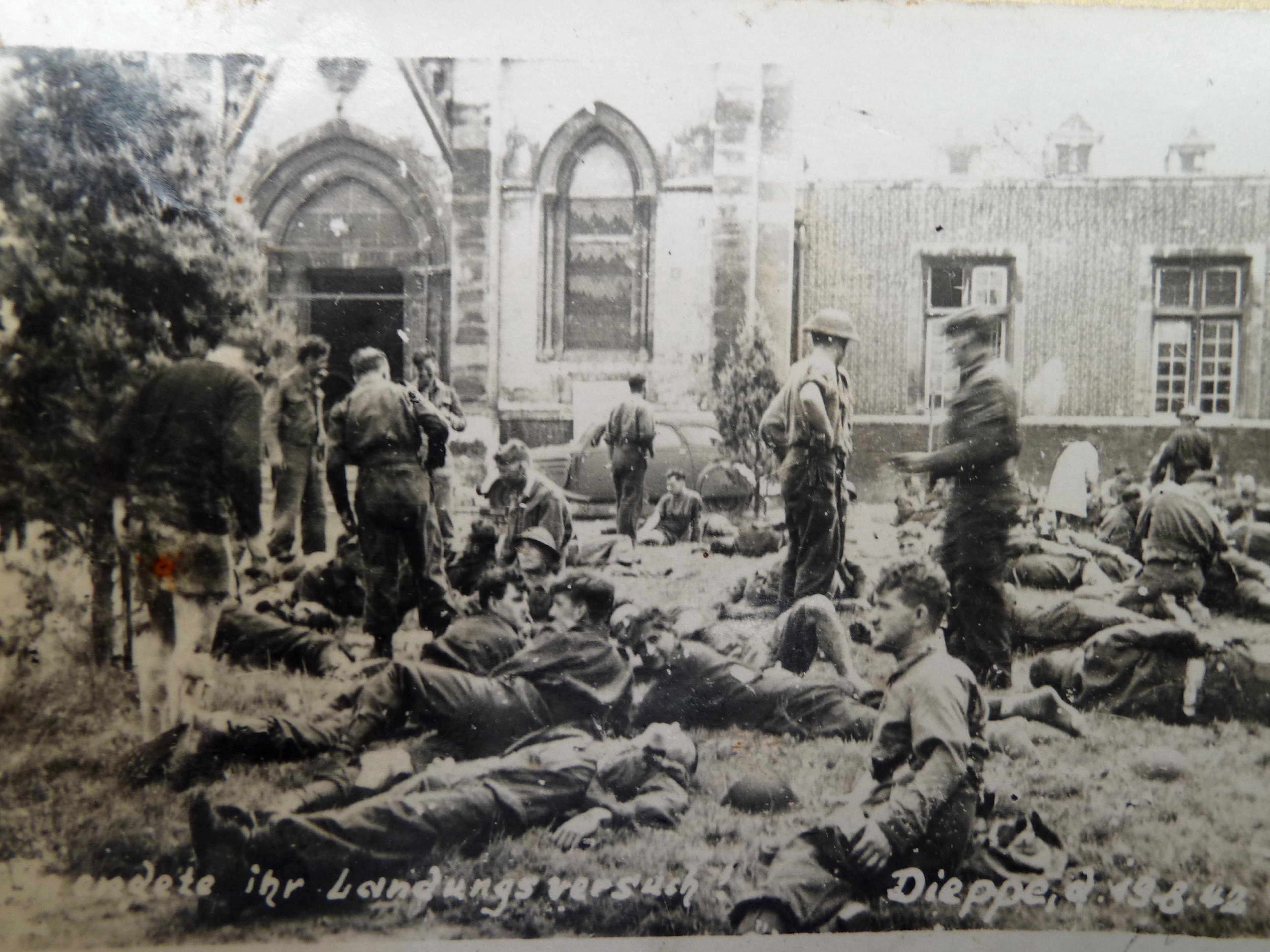
Captured soldiers awaiting transhipment to prisoner of war camps. Courtesy of Ron Akines

Captured soldiers awaiting transhipment to prisoner of war camps. Courtesy of Ron Akines

Awaiting transhipment to prisoner of war camps. Courtesy of Ron Akines

Awaiting transhipment to prisoner of war camps. Courtesy of Ron Akines

Published:

  • Dover Mercury 4 April 2013
Posted in Armed Services, Dieppe Raid - Aftermath | Comments Off on Dieppe Raid – the Aftermath

Dieppe Raid

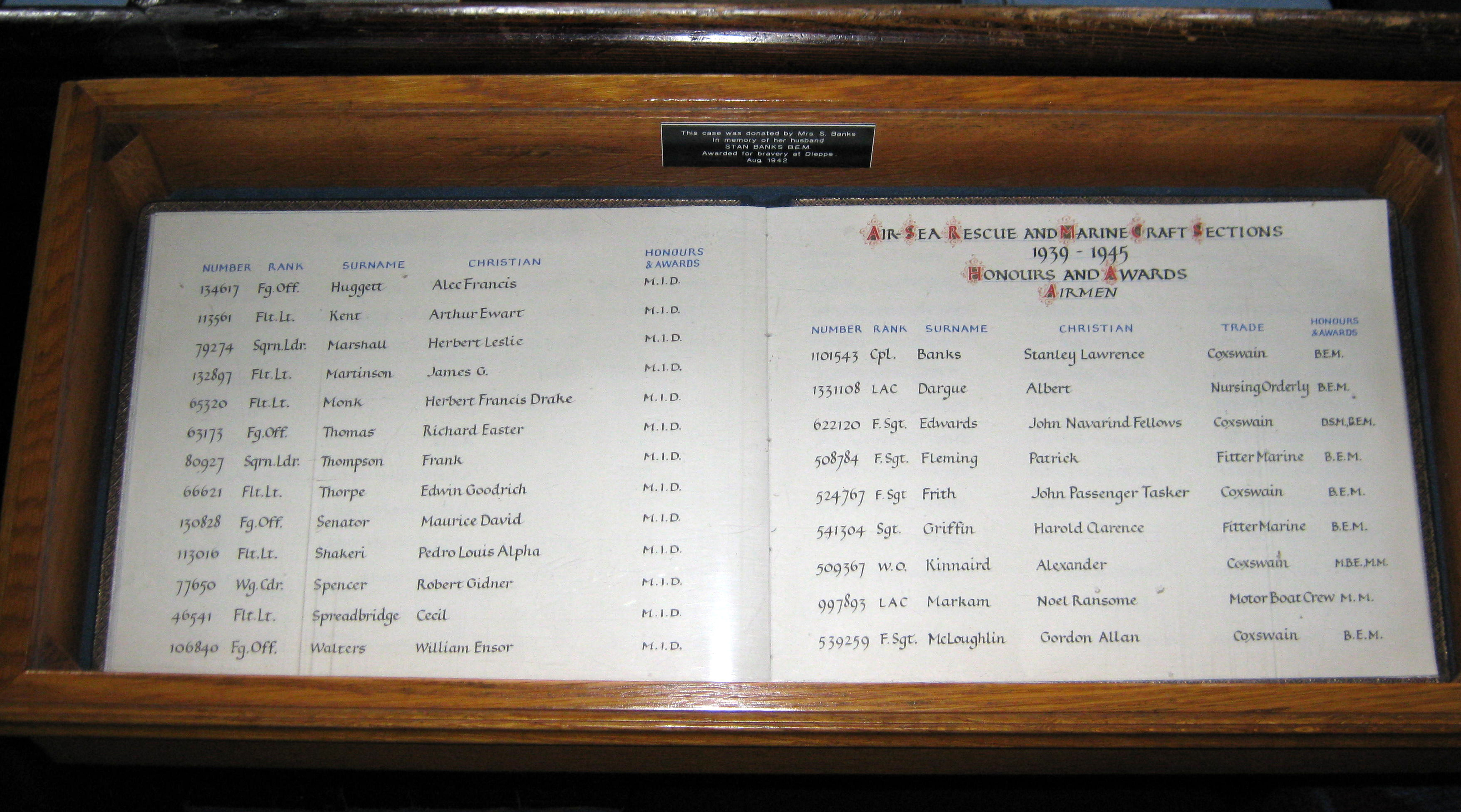
Dieppe Raid Air Sea Rescue  Book of Rembrance August 1942 St Mary's Church

Dieppe Raid Air Sea Rescue Book of Rembrance August 1942 St Mary’s Church

Dieppe Raid Case donated by Mrs S Banks for husband Stan Banks B.E.M. St Mary's Church

Dieppe Raid Case donated by Mrs S Banks for husband Stan Banks B.E.M. St Mary’s Church

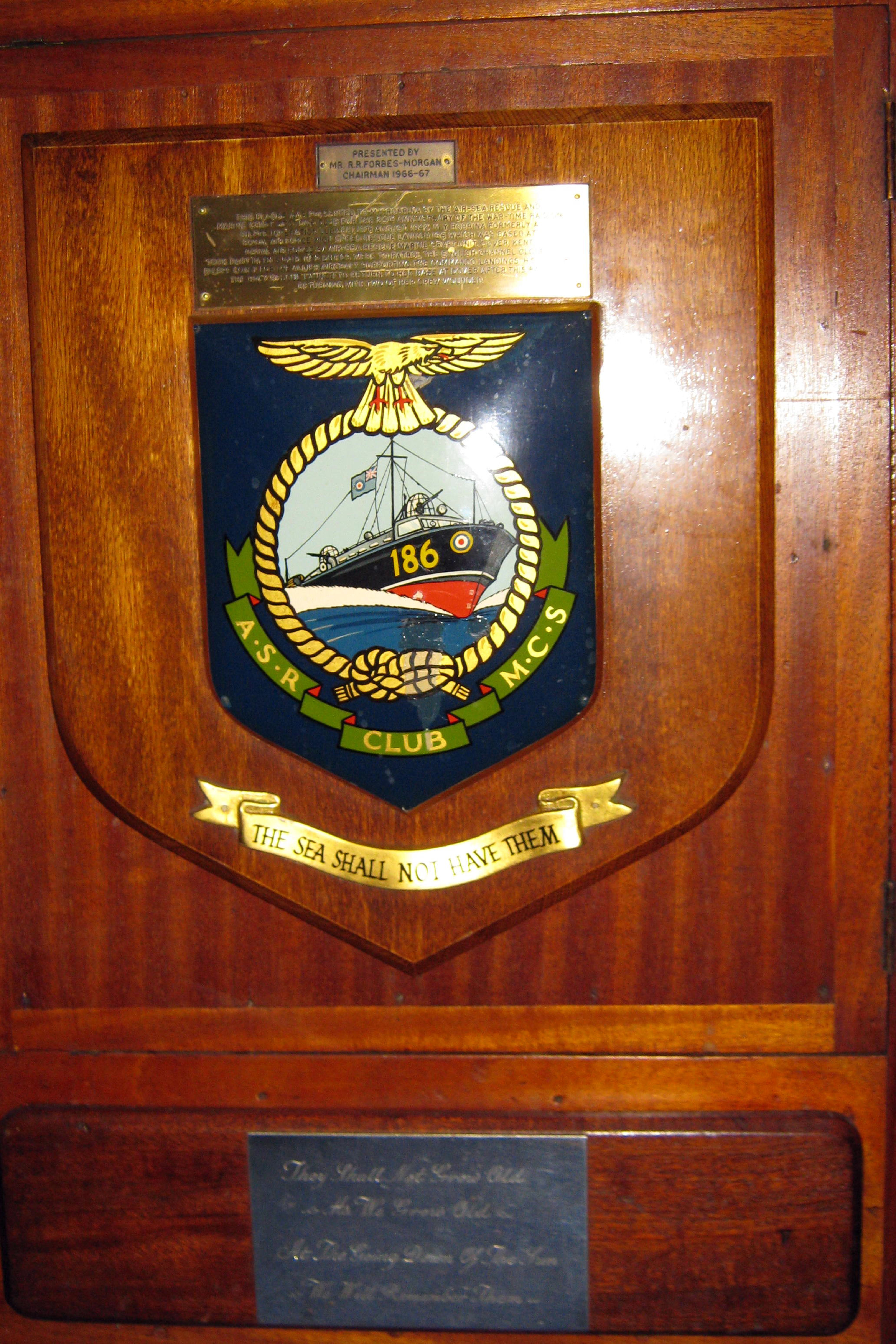
In St. Mary’s Church, Dover is a case, donated by Mrs S Banks in memory of her husband Stan Banks, who was awarded the BEM for bravery during the Dieppe Raid. Nearby is a plaque dedicated to MY Robrina, a Royal Air Force High Speed Rescue Launch 186 that was based at RAF 27 Air-Sea Rescue Marine Craft Unit, based at what is now Lord Warden House, Dover that also took part in the Raid.

The raid, given the name, Operation Jubilee took place on 19 August 1942 and was the largest combined operation carried out on the Continent since the evacuation of Dunkirk two years previously. Over 6,000 commandos were deployed and the stated objective was:
– Testing the defences;
– The destruction of German batteries;
– Obtaining the importance of a radiolocation (radar) station
– The capture of prisoners for interrogation.

Dieppe Raid  Air Sea Rescue - presented to MV Robrina. St Mary's Church

Dieppe Raid Air Sea Rescue – presented to MV Robrina. St Mary’s Church

The intelligence of the area where the Raid was to take place was sparse. Much of it had been obtained from pre-war holidaymakers’ photographs together with information from the Resistance. However, although aircraft reconnaissance had taken place, due to camouflage the sites and number of gun positions could only be guessed.

The commandos were  taken across the Channel and were escorted by Allied air force contingents, Royal Navy minesweepers and destroyers. Approximately 250 ships including the Invicta* and launches including MY Robrina – RAF High Speed Rescue Launch 186, based at Dover.

Dieppe Raid locations - National Memorial Arboretum Staffordshire

Dieppe Raid locations – National Memorial Arboretum Staffordshire

The force embarked from Dover and other southern seaports arriving at 04.50 on six selected beaches in the Dieppe area. Although meant to be a surprise landing, each faced a different but violent reception.

Albeit, at Verengeville-sur-Mer, 4½ miles west of Dieppe, No 4 Commando force succeeded in destroying an enemy 6-inch gun battery of howitzers. Captain Patrick Porteous was afterwards awarded the Victoria Cross for bravery.

Dieppe Raid 19.08.1942. Courtesy of Ron Akines

Dieppe Raid 19.08.1942. Courtesy of Ron Akines

At Berneval, east of Dieppe, the job of No. 3 Commandos was to silence the coastal battery. However, an encounter with German S-boats escorting a German coastal convoy led to a loss of some of the landing craft and alerted the coastal defences. Only 18 Commandos landed at the designated place but they did reach the perimeter of the battery. There they engaged their target with small arms fire. Although they were unable to silence the guns they did distract the occupants from taking aim at Allied vessels out to sea.

Dieppe Raid 19.08.1942. Courtesy of Ron Akines

Dieppe Raid 19.08.1942. Courtesy of Ron Akines

Between Dieppe and Verengeville is Pourville-sur-Mer on the east of the River Scie. There the tanks disembarked from the special landing craft and troops surged onto the beach with few losses. However, some of the landing craft drifted off course, landing west of the River, and the Commandos had to go through Pourville to reach the main party. As they tried to make it to the centre of the town, they faced unrelenting opposition. Many were killed, the remainder taken prisoner-of-war, including Lieutenant Colonel Merritt who was awarded a VC for his gallantry.

While this was going on, the main contingent and the landing craft crew were coming under increasing heavy fire. As the troops withdrew, this became so ferocious that only 341 men embarked, 141 were killed and the remainder were forced to surrender.

On the cliffs above Pourville was a German radar station and radar specialist RAF Flight Sergeant Jack Nissenthall’s objective was to enter the radar station, assess its importance and put it out of action. Eleven men accompanied Nissenthall and, because of his knowledge, were ordered to kill him if he was in danger of being captured.

The group, under constant fire, managed to get to the parameter of the radar station compound. Nissenthall then crawled to the rear and managed to cut the telephone wires forcing the German’s to use radio transmissions to contact their superiors. These were intercepted by English ‘listening posts’ and convinced the Allied commanders the importance of radar. This led to its increase in use and the development of jamming equipment. Of the twelve men, only Nissenthall and one other came home.

Dieppe Raid 19.08.1942. Courtesy of Ron Akines

Dieppe Raid 19.08.1942. Courtesy of Ron Akines

Between Dieppe and Berneval is Puys. Just after the smoke screens had been set to hide the landing parties, some grenades accidentally went off killing and injuring a number of men. Not only did the accident delay the landings it alerted the German gunners on the shore. By the time the men landed the smoke screens had lifted and even though there was only 60 Germans defending the beach 225 men were killed, 264 surrendered and just 33 returned to England.

Throughout the day, the Royal Navy supported the land operations by keeping up a constant bombardment of the enemy shore positions. Nonetheless, the bombardment was reciprocated and the destroyer H.M.S. Berkeley was lost.

Dieppe Raid 19.08.1942. Courtesy of Ron Akines

Dieppe Raid 19.08.1942. Courtesy of Ron Akines

There was also an extensive air umbrella provided by about 70 squadrons including 48 squadrons of Spitfires. The Luftwaffe took retaliatory action and the fighting developed on a scale not seen since the Battle of Britain. These combined operations were not only heard in Dover but the heavy explosions shook the houses in the town.

A total of 3,623 of the 6,086 men (almost 60%) who made it ashore were killed, wounded, or captured. Of the 5,000 Canadians, who formed five-sixths of the attacking force, 3,367 were killed, wounded or captured. The German Army lost 591 killed or wounded. The destroyer, HMS Berkeley was lost along with 33 landing craft, with 550 killed or wounded. The RAF lost 106 aircraft and the Luftwaffe 48.

Throughout the Raid, MY Robrina duties was to patrol the English Channel close to the Dieppe coast for the Allied Aircraft supporting the Commando Landings. With two-wounded crew aboard, she was the only rescue launch to return to Dover.

During the early stages of the Dieppe Raid, a BBC broadcast to the French urged them to avoid all action that would compromise their safety and told them that no invasion was contemplated. Albeit, following the raid, Germans propaganda created the impression that the Raid had been a failed full-scale attempt at invasion.

National Memorial Arboretum Staffordshire

National Memorial Arboretum Staffordshire

* The Invicta, was launched April 1940 and immediately commandeered by the Admiralty for war service. On 15 October 1946, the refitted Invicta replaced the Canterbury and became Southern Railways (afterwards Southern Region) flagship carrying the prestigious Golden Arrow service.

Published:

  • 16 & 30 August 2012
Posted in Armed Services, Dieppe Raid | Comments Off on Dieppe Raid

Granada / ABC Cinema Castle Street

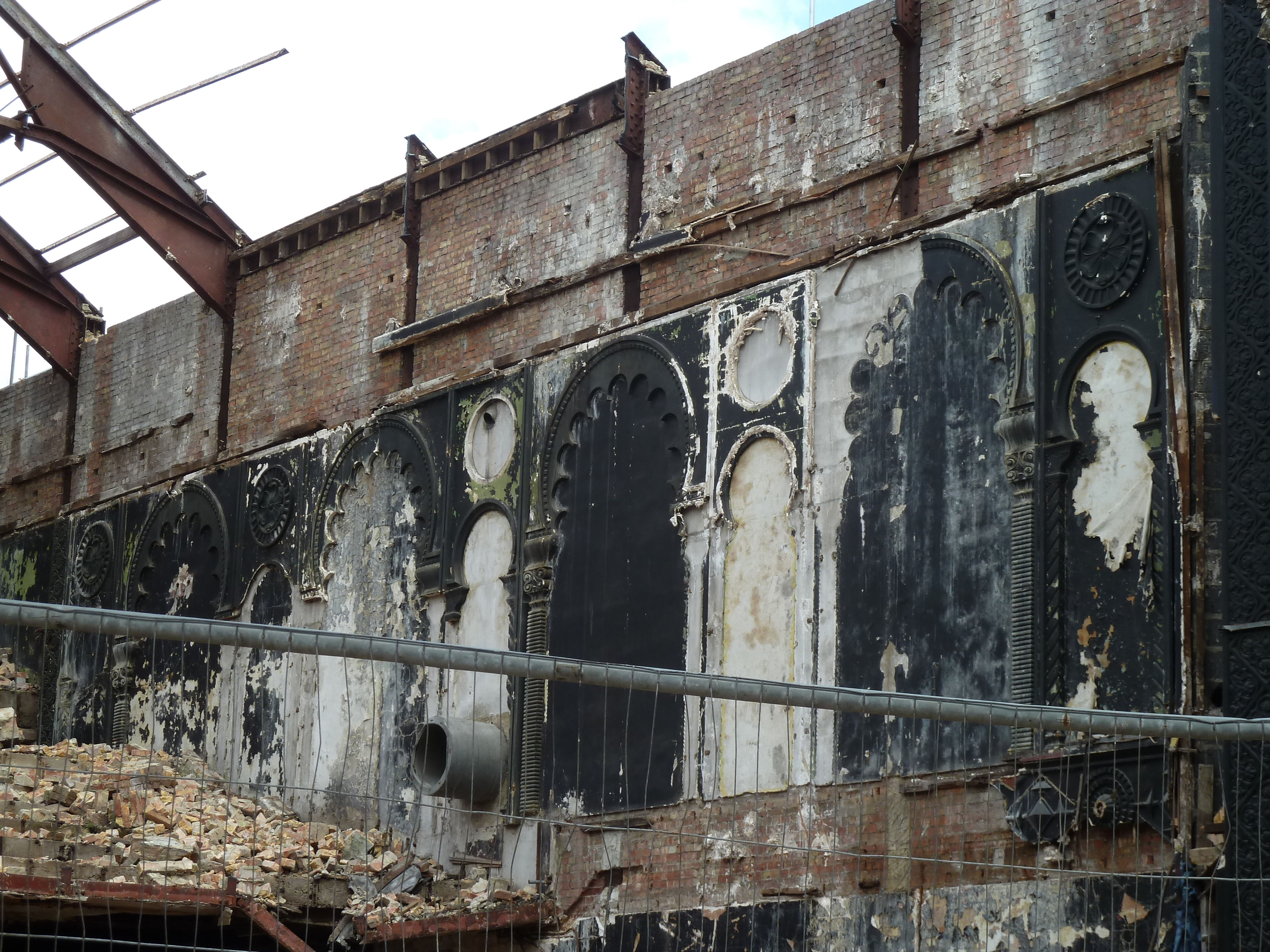
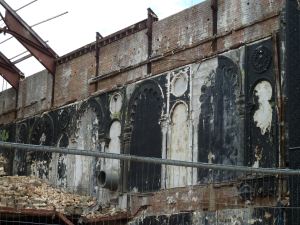
Demolition of Granada Cinema, Castle Street, August 2014. Part of the original decorations were still in evidence even though some local councillors stated otherwise. AS

Demolition of Granada Cinema, Castle Street, August 2014. Part of the original decorations were still in evidence even though some local councillors stated otherwise. AS

August 2014 and the once grand and prototype Granada Cinema in Castle Street was demolished.  Interestingly, a similar art deco building in Tooting has the grade I listing while one in Walthamstow has grade II and both have been returned to their former glory.

In January 2014, the owners,  JD Wetherspoon were served a legal notice by Dover District Council under section 2.1.5 of the Town and Country Planning Act. A Wetherspoon spokesman said, at that time, that the company is presently sourcing quotes for work to be undertaken. In reality the chain of public houses, following being served with a section 2.1.5, sold the property to Dover Heritage and Regeneration Ltd, The Studio, St Nicholas Close, Elstree, Hertfordshire 3D6 3EW. They put in an application to demolish the once grand old lady of Castle Street through Dover Demolition Company, off Astley Avenue, Long Hill, Dover and according to the planning application work should have commenced on 21 August 2014 but started before.

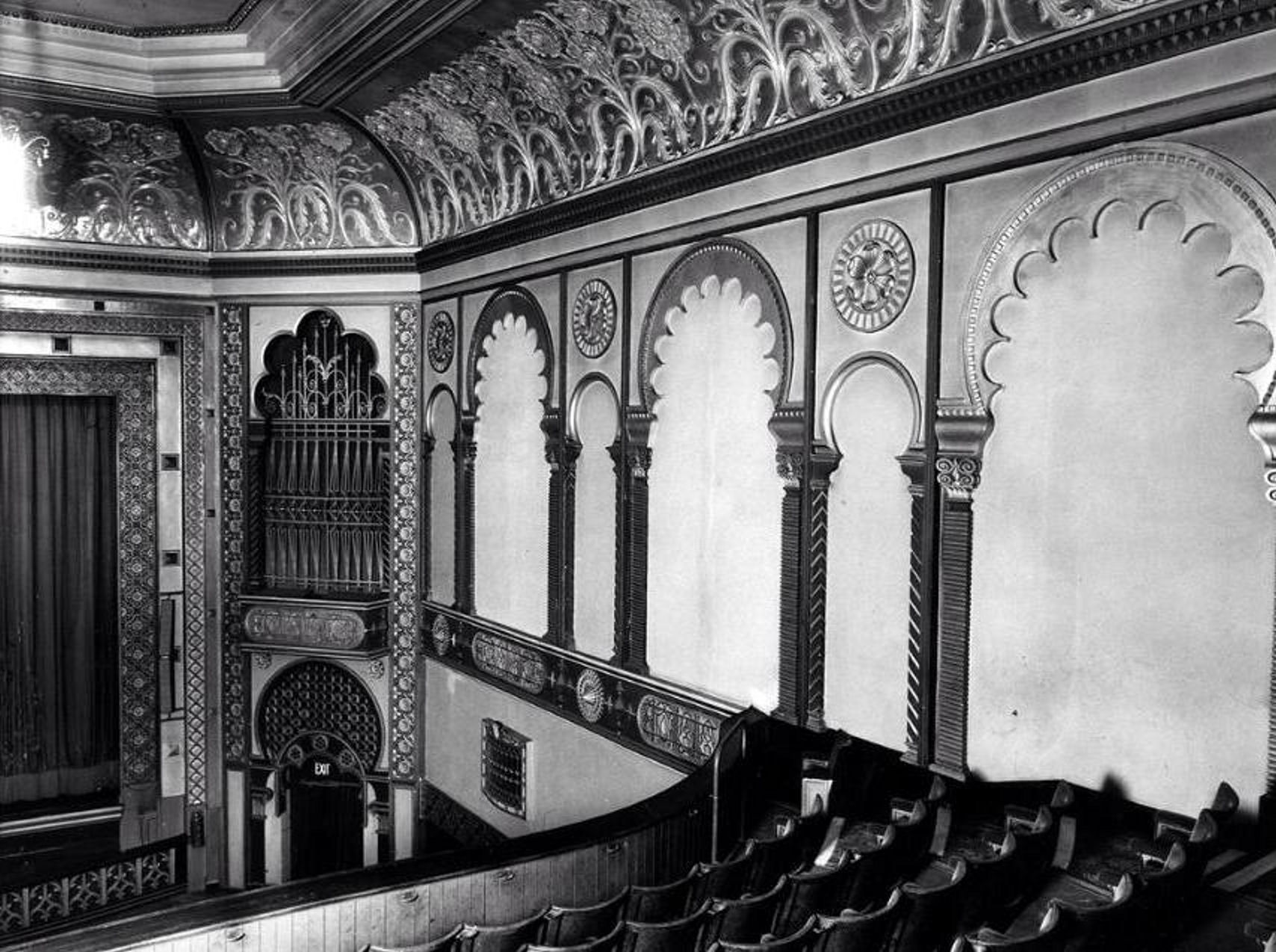
The comment from one group of local elites, before the demolition process was started, was that the building was an eyesore and that internally nothing was left of the precious original art deco. In reality, this was a lie as the photo above shows. Another example of the destruction of Dover especially as Dover is crying out for a full size theatre for the town’s highly commended local theatrical groups.

Granada Cinema, Castle Street, in its heyday. Adeline Reidy

Granada Cinema, Castle Street, in its heyday. Adeline Reidy

Why was the building so special? Sidney Bernstein (later Lord Bernstein) loved travel and was particularly enthralled by the grandeur of Granada, Spain. He was 23 when he inherited eight cinemas and music halls and three years later, in 1926, bought what had been Leney’s brewery barrel yard.

The inter-war period had seen the economy lurch from one depression to the next that ordinary people were desperate to escape. Bernstein asked architect Cecil Masey and theatre designer Theodore Komisarjevsky to crate ‘a picture palace reflecting the vast extravaganzas of Moorish and renaissance architecture where the working class could be royally entertained…’
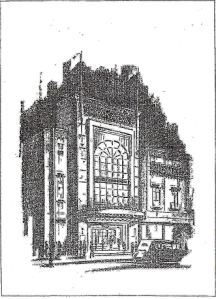
Granada Gala Opening Front Cover of programme 8 January 1930, Eveline Robinson

Granada Gala Opening Front Cover of programme 8 January 1930, Eveline Robinson

The exterior was white stone and mottled brickwork with a front elevation dominated by a huge glass window. Two pairs of mahogany doors led the way into the white marbled floor vestibule which contained the cashier booths and decorated in ‘bright modernist’ style. The white marble flooring and the ‘modern style’ of decoration continued through swing doors into the foyer, which was designed as an ‘intimate rendezvous’ lounge.

The circle was reached by a grand marble staircase on either side of which were a series of scarlet-coloured square fluted columns with Corinthian capitols. These were carried up to the barrelled ceiling and on the plain walls were Venetian mirrors.

The cinema itself was in a Spanish-Moorish style with a seating capacity for 1,800. The ventilation system gave a continuous supply of 3,000,000 cubic feet of washed air every hour. Both silent and talkie projection was available and in order to put on theatrical productions, there was a large stage with dressing-room accommodation and full lighting installation.
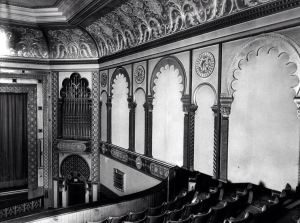
Granada Cinema in its heyday. Thanks to Justin Preston

Granada Cinema in its heyday. Thanks to Justin Preston

The cinema also boasted of a Christie organ built by William Hill & Sons and Norman & Beard Ltd, London and placed in the centre of the orchestra pit on a rise and fall lift. It had 2,800 pipes, 3,000 silver contacts, 600 soldered joints, 35 miles of electric wire, 51 stops, nearly 100 ‘effects’ and was controlled from a three-manual console designed by Art Decorators, Keeble Ltd.

Building contractors were Bovis (1928) Ltd. and work started on 14 May 1929, but making the dream a reality was not without problems. The main one was the river Dour, which ran through a 22-foot (6.7 metres) wide culvert under Castle Street and diagonally across the planned cinema site. Either side the land was boggy. The whole had been covered with metal sheeting, topped by paving and aggregates. To carry the weight of the proposed cinema, the Bovis engineers erected concrete walls on either side of the Dour and further sets across the boggy land, which they then drained and filled with aggregates. The whole was then spanned with steel work and concrete and the metal frame of the cinema was anchored in the concrete. In some places this was only 18 inches (0.45metres) below ground level but it worked.

Bovis employed a number of local companies to help with the building, but imposed a time-penalty clause in the contracts. Delays, for whatever reason, resulted not only in the loss of revenue for the company, but a hefty fine. Albeit, at a time of high unemployment it provided much needed work.
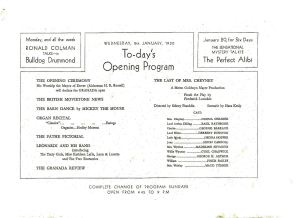
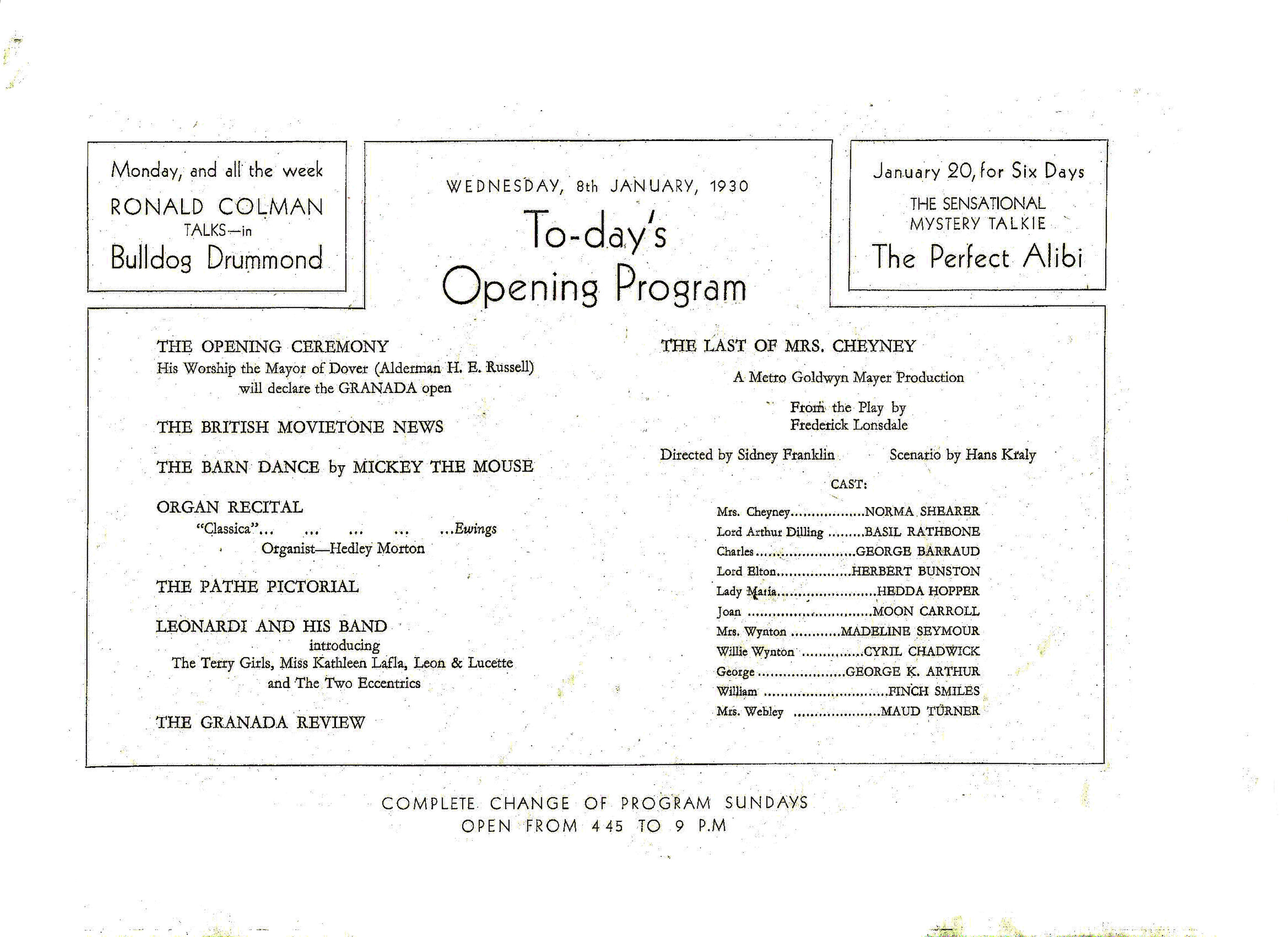
Granada Cinema Gala Opening programme - 8 January 1930. Eveline Robinson

Granada Cinema Gala Opening programme – 8 January 1930. Eveline Robinson

The cinema opened by the Mayor, Alderman Hilton E Russell on Wednesday 8 January 1930 with Norma Shearer’s first talkie, ‘The Last of Mrs Cheyney.’ The Manager was Noel Hobart, Assistant Manager F Fryer, Stage Manager S Williams, Musical Advisor E J Barber, Conductor Leonardi, Organist H Morton and Chief Projectionist G Short. In the adjacent car park were the parking attendants one of whom was Rosa Harman, wife of Dover’s late historian, Joe Harman.

The weather was cold and frosty but the crowds turned out … and so did members of the Lord’s Day Observance Society as the cinema advertised that it would be open on Sundays. Initially the council refused to licence Sunday opening but Bernstein retaliated by having the cinema lit up and staff on duty but not allowing customers in. Customers complained and eventually the council relented.
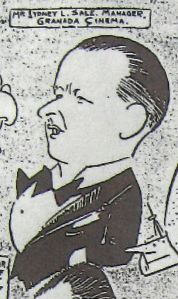
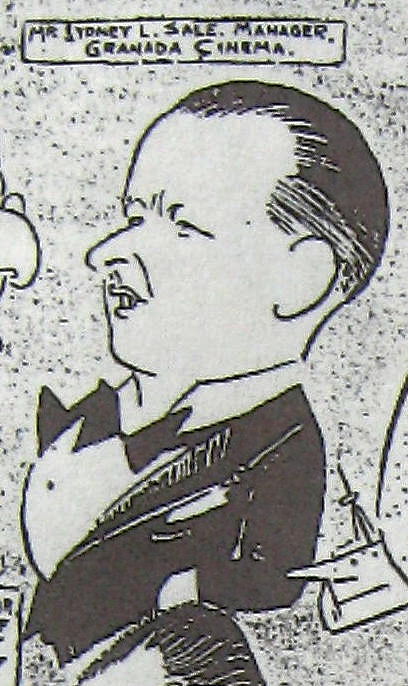
Granada Cinema Manager, Sidney L Sale - Dover Characters c1935

Granada Cinema Manager, Sidney L Sale – Dover Characters c1935

The reputation quickly spread and customers came from Canterbury, Folkestone and further afield.  When Princess Victoria Eugenie of Battenberg, queen consort to the exiled Spanish King Alfonso XIII of Spain stayed at the Lord Warden Hotel in January 1933, she made a point of making an official visit the cinema. The cinema was sold in 1935 to the ABC group but the name was retained.

The long-term manager was Sydney Sale who during World War II had overall responsibility for the Plaza in Cannon Street as well. In July 1941, Sydney was one of those who discovered the murdered body of the Plaza manager Richard Roberts. Leslie Hammond, the 18-year-old projectionist at that cinema was arrested and found guilty at the Old Bailey. He was sentenced to hang but was commuted to life imprisonment.
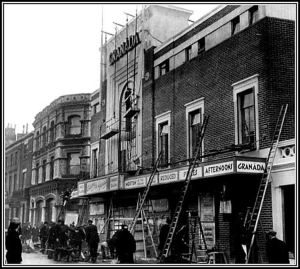
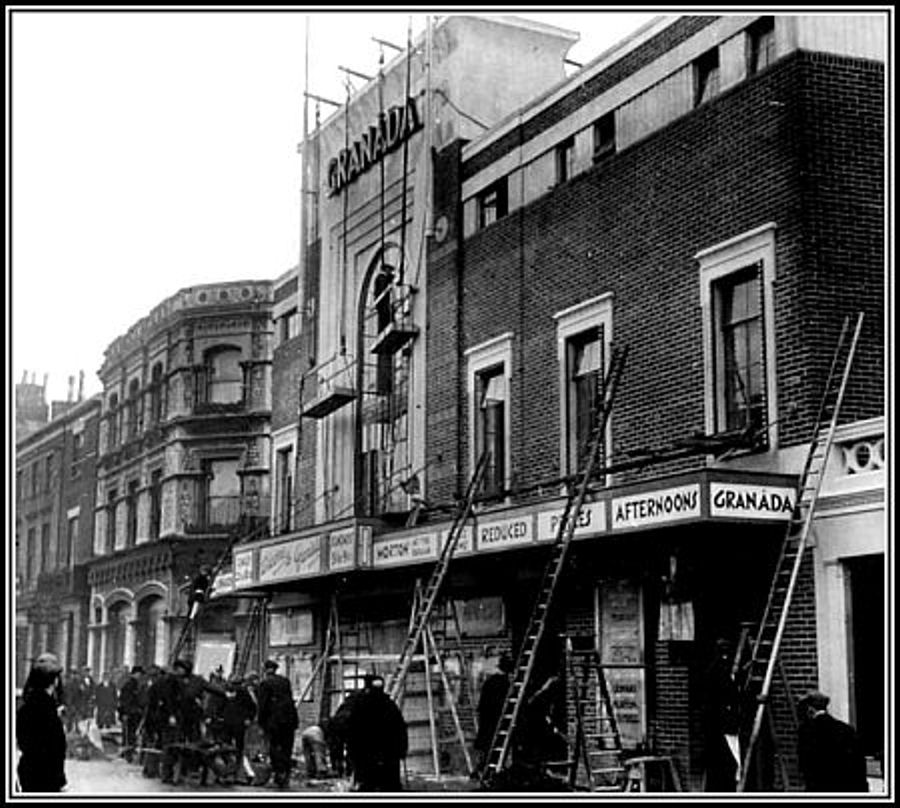
Granada being repaired following shell attack in September 1942

Granada being repaired following shell attack in September 1942

On 23 March 1942, the packed Granada was shaken by a bomb that landed some 20 yards (18.3 metres) from the cinema wrecking the shops in nearby Market Square. Six months later, on Saturday evening 6 September 1942, shelling caused serious structural damage to the Granada. The film was stopped but without any panic, the audience filed out of the building. As soon as sufficiently repaired, the cinema opened again. Two years later, on 3 September 1944 the Granada again suffered from heavy shelling and badly damaged. Again, it was repaired and reopened.

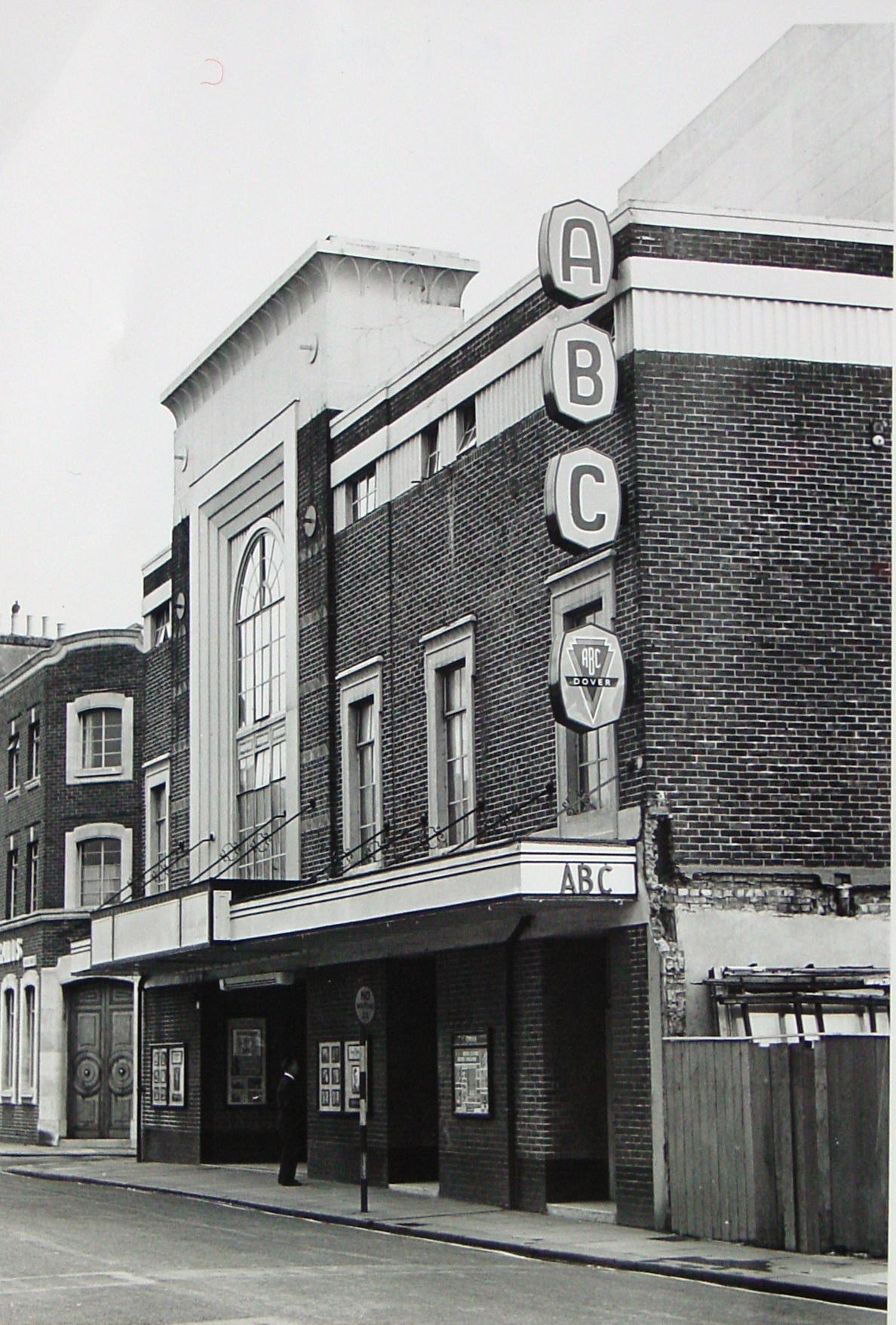
ABC Cinema, Castle Street. Dover Library

ABC Cinema, Castle Street. Dover Library

Following the war, the Granada retained its popularity and in January 1953, to celebrate its 23rd birthday, the cinema played host to a wide range of shows and produced a detailed souvenir programme. However, with the advent of television, audiences began to decline. In an effort to cover costs, the Granada became a major venue for popular bands, groups and singers as well as entertainers.

Renamed A.B.C. cinema in March 1960, given a makeover and with a personal appearance of Cliff Richard, television was winning the popularity war. Efforts were made to try to win audiences back from competitions to late night films and all-night specials showing five or six films non-stop but audience numbers continued to dwindle. On 30 October 1982, the last film was shown. Throughout the decline, Dover Film Society Chairman, John Roy, unsuccessfully campaigned to have the cinema turned into a 2 or 3-screen multiplex.

From April 1983, David Chalk, from Hardres near Canterbury, invested a considerable sum to turn the building into a nightclub using the art deco theme. The seats were removed and replaced by a massive dance floor. Opening as the Images nightclub it received a Public Entertainment licence in 1985.
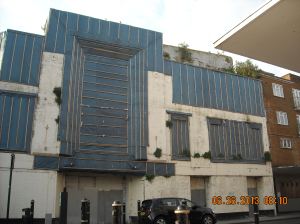
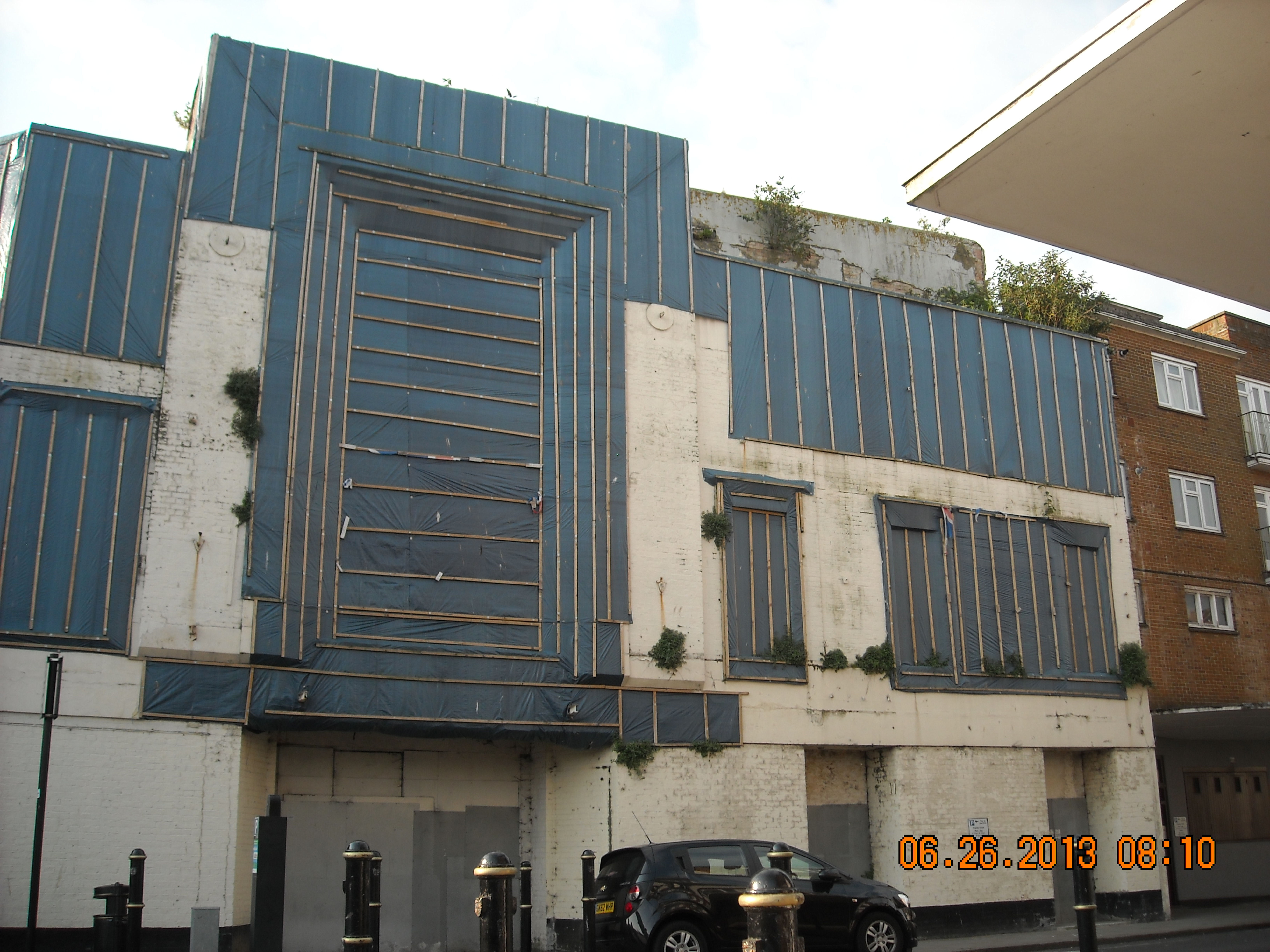
The once majestic Granada cinema, Castle Street, today. Adeline Reidy

The once majestic Granada cinema, Castle Street, today. Adeline Reidy

Images was followed by Snoops nightclub, and in 2003, J D Wetherspoon, the pub chain, bought the building. Their stated intention was refurbishment but instead left it to deteriorate.
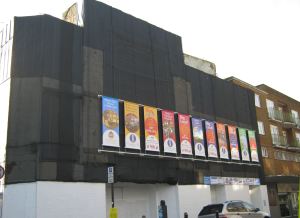
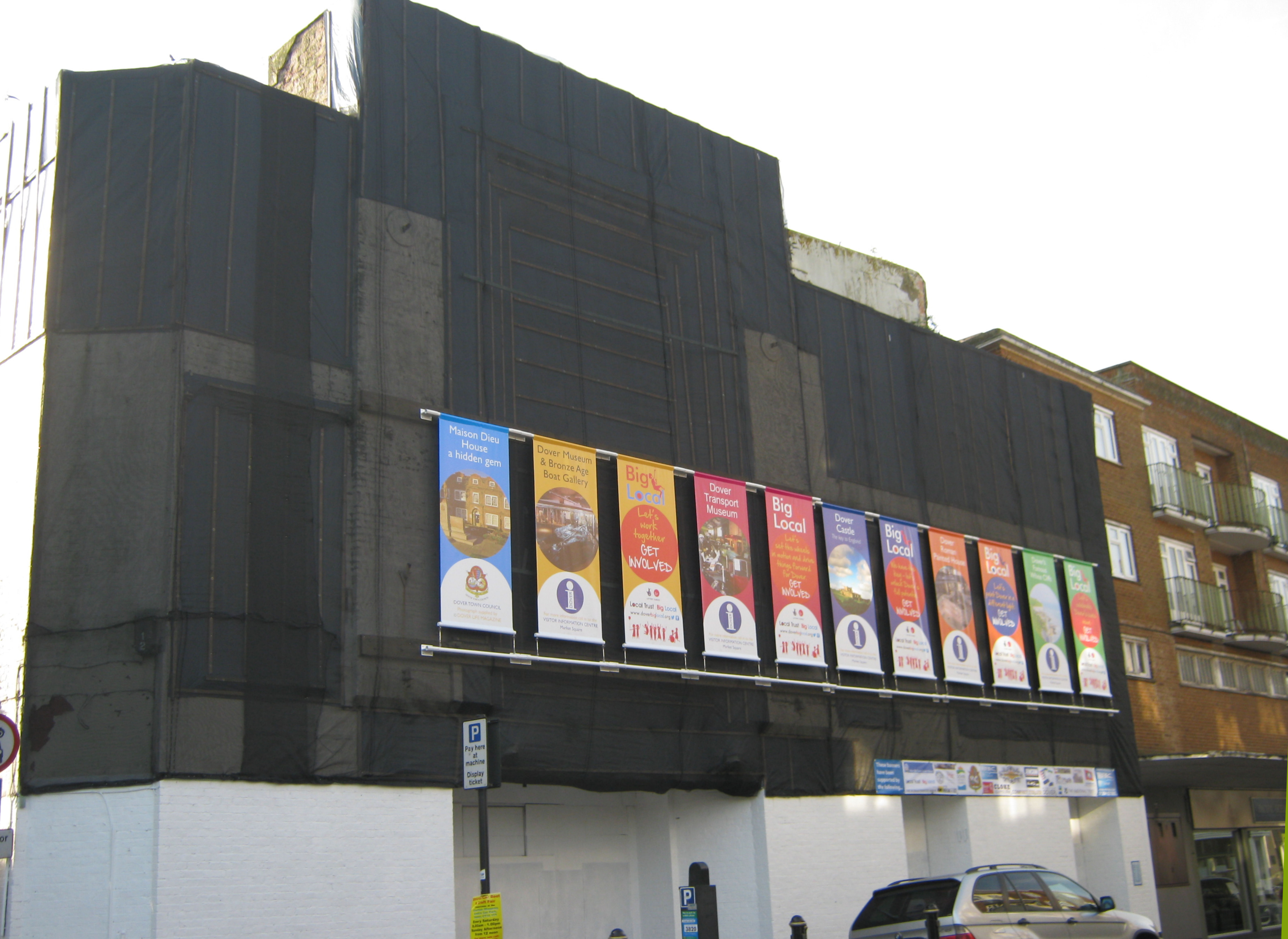
Granada Cinema resplendent with Banners on local touris attractions. October 2013

Granada Cinema resplendent with Banners on local touris attractions. October 2013

On the initiative of Adeline Reidy, banners were erected on the front of the cinema. The posters advertise the towns tourist attractions such as the Roman Painted House,  Transport Museum, Maison Dieu House, Dover Museum Bronze Age Boat gallery, Dover Castle and the White Cliffs of Dover.

In January 2014 JD Wetherspoon were served a legal notice by Dover District Council under section 2.1.5 of the Town and Country Planning Act. A Weatherspoon spokesman said at the time that the company were sourcing quotes for work to be undertaken. In January 2014 JD Wetherspoon were served a legal notice by Dover District Council under section 2.1.5 of the Town and Country Planning Act. A Weatherspoon spokesman said at the time that the company were sourcing quotes for work to be undertaken. In reality they sold the building to Dover Heritage and Regeneration Ltd,  incorporated on 22 June 2012 with the registered office located in Hertfordshire and in August 2014 demolition began.
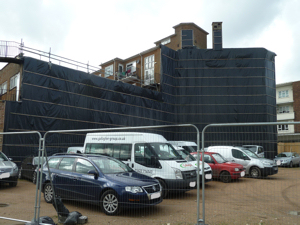
The former Granada cinema site, Castle Street, now a car park for workers on the St James development. Note the black polythene protecting adjacent buildings that has been there since the cinema was demolished in 2014. AS March 2017

The former Granada cinema site, Castle Street, now a car park for workers on the St James development. Note the black polythene protecting adjacent buildings that has been there since the cinema was demolished in 2014. AS March 2017

Spring 2017 – It is now well over 2 years since the palatial Dover Granada was demolished. The site remained derelict up until the beginning of this year and is now a car park for workers on the nearby St James development site. The adjacent flats on Castle Street have had black polythene tacked to the full length of the wall that was joined to the old cinema. This remains and can be seen in the accompanying photograph. Of interest, those who screamed for the Granada’s demolition are now, not surprisingly, quiet over what has been left behind. Perhaps they see potential rich development  pickings?

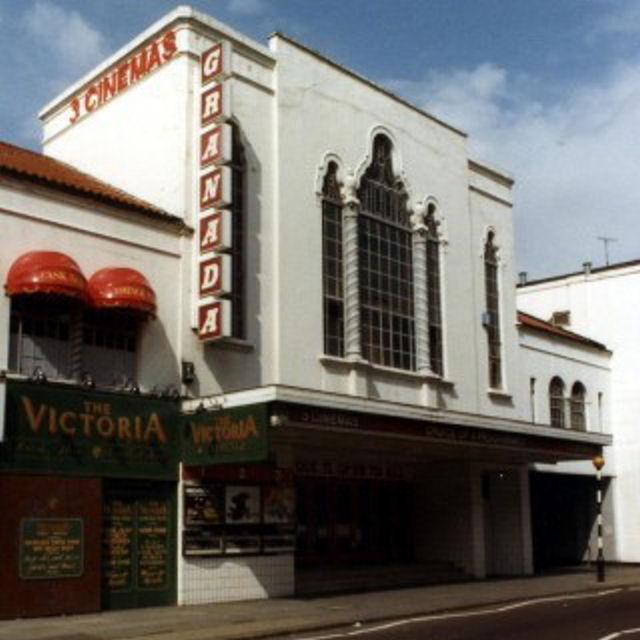
WALTHAMSTOW – FORMER GRANADA CINEMA and a different attitude. 

Thu 23 May 2013
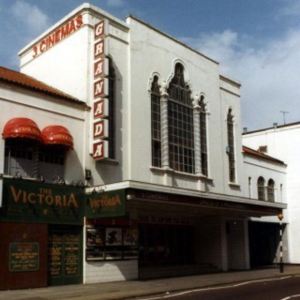
Walthamstowe former Granada Cinema

Walthamstowe former Granada Cinema

Today the Secretary of State for Communities and Local Government, Eric Pickles, upheld Waltham Forest Council’s decision to refuse planning permission for the former Granada Cinema in Walthamstow to be turned into a church. There has been a sustained campaign to save this beautiful Grade II* listed building and to reinstate it as an entertainment venue for the benefit of local and London-wide audiences and as a catalyst for economic regeneration and job creation. This decision opens the door to do that.

Published:

  • Dover Mercury: 19 & 26 May 2011


Posted in Buildings, Granada Cinema Castle Street - Wetherspoon's neglect, Granada/ABC Building Castle Street, Roads & Streets, Wanton Destruction | Comments Off on Granada / ABC Cinema Castle Street