Aerated Mineral Water Manufacturers

S R Elvey Mineral Water Manufacturers 110-112 High Street &  3-4 Branch Street, Charlton

S R Elvey Mineral Water Manufacturers 110-112 High Street & 3-4 Branch Street, Charlton

These days most of us drink ubiquitous branded aerated mineral waters. Once upon a time locals would only drink aerated water manufactured in the town and Dover had a thriving industry for local and national consumption.

George Forster, of 52 Castle Street, (now Blakes) opened his business as a chemist in 1834 and later expanded it to include the manufacture of aerated mineral water, including soda water, lemonade and ginger beer. However, it was Stephen Read Elms, age 34, who in 1837 opened Dover’s first aerated waters factory.

This was in Branch Street, Charlton, between the High Street and, nowadays, Morrison’s delivery yard. Nearby, was, and still is but running into a culvert, a chalybeate spring – water containing salts of iron that had been discovered in the 18th century. Indeed, the drinking of waters from this spring had turned the tiny village into a budding health spa. If it had been allowed to develop, Charlton could have grown to become a rival of Leamington Spa! However, a paper manufacturer opened a short-lived paper mill and the spring was diverted into the culvert in order for the water to be used for papermaking.

Stephen Elms came from Canterbury where he had learnt his trade and Charlton was attractive to him on two counts. The first was other springs and second, there were no aerated water factories in Dover. Stephen’s business was a success and he eventually diversified into making a large variety of sweets for the local market. Stephen died in 1872 but before then his son, also called Stephen, and was heavily involved in the running of the company. It is from Stephen junior’s time that a detailed account still exists of the manufacture of aerated water at the factory.

The basic drink, made up of water, sugar and flavourings, was brewed in large copper pans heated on giant gas rings until the sugar dissolved. The mixture was allowed to cool and then effervescence was added. Manufacturers of fizzy drinks for much of the nineteenth century used either seidlitz powders – a cathartic made up of a mixture of tartaric acid, sodium bicarbonate and potassium sodium tartrate; or citrate of magnesia, a laxative.

By the end of the century, large concerns were using carbonic acid gas, and this is what was being used by Elm’s at the time of the detailed account. The gas was purified carbonate of lime mixed with an acid to create the effervescence and introduced into the drink using a generator. The next part of the process was bottling the aerated water and sealing the bottle.

When the factory first opened in 1837, the liquid was poured into the bottles and corks were pushed in and secured by wire – in the same way as champagne corks are today. Although some manufacturers still used that system, Stephen junior used Codd-neck bottles together with Bennett & Foster bottling machines.
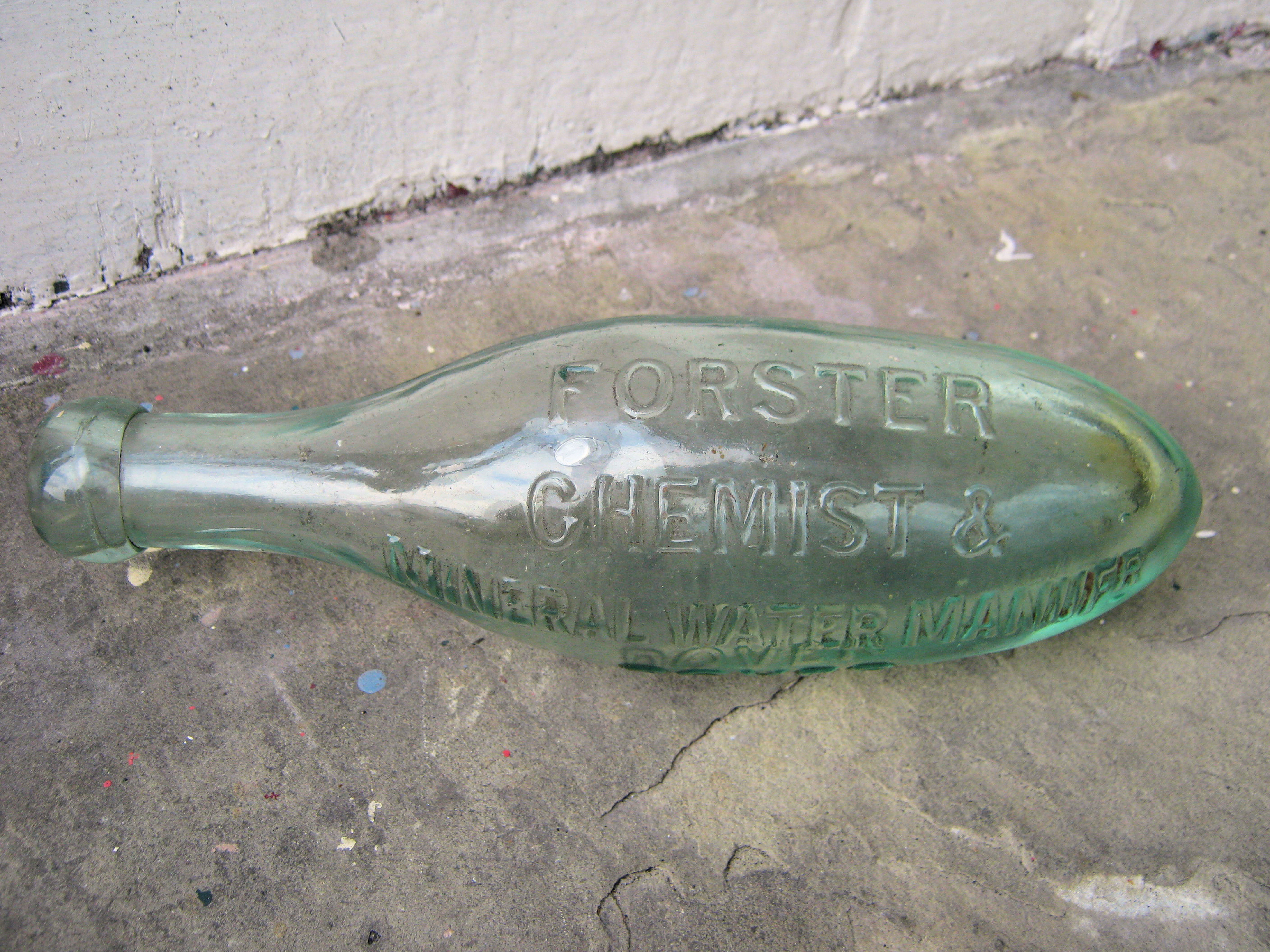
Cobb bottle made for Forster's, 52, Castle Street. Courtesy of Kathryn Garsten

Cobb bottle made for Forster’s, 52, Castle Street. Courtesy of Kathryn Garsten

The Codd-neck bottle, patented in 1872 by Hiram Codd of Camberwell, was of heavy glass with a glass marble inside and a ring of rubber at the neck. Using the Bennett & Foster machine bottles were filled with the carbonated drink and once filled, the machine turned them upside down. The marble fell into the neck against the washer and was kept there by the pressure of the gas. The customer released the drink by pushing the glass ball into the slightly wider neck of the bottle either with a special implement or with their finger.

A good operator could fill and seal about 280 bottles an hour but considerable care and judgement was required as there was always the risk of a bottle exploding causing serious injuries from fragmented glass. Although Codd neck bottles are still used in some countries they were discouraged in the early twentieth century because of the danger involved.

By the last decade of the 19th century, there were seven firms in Dover producing aerated water: Bright of Caroline Place; Elms in the High Street / Branch Street; Elvey in Limekiln Street; Foster in Castle Street; Jones in Elizabeth Street; Meenagh on Priory Hill and Souter & Mackenzie & Co in Blenheim Square.

Whether these manufacturers used the traditional or the Cobb-neck bottles, they all faced the two problems. The first was that the bottles were expensive and second, unscrupulous people filled empty bottles with bogus concoctions and sold them as the real thing. To secure the safe return of bottles, the names of the aerated water manufacturer embossed and people paid a deposit that was returned to them when they brought the bottle back.

In order to try and prevent the bottles being filled with poor quality substitute drinks, the East Kent aerated water manufacturers formed a Society. Shopkeepers, publicans and other retailers were advised to only buy aerated water direct from them and to ensure that only their products were delivered each manufacturer had horse-drawn commercial vehicles with their names emblazoned on the side.

Russell Street entrance into what once was Leney's Mineral Water factory.

Russell Street entrance into what once was Leney’s Mineral Water factory.

Stephen Elms junior died in 1897 and appears to have been succeeded by a daughter and three nephews but the business eventually ceased. Early in 1910, Alfred Leney, Chairman of the Leney’s Brewery, recognising the profitability of supplying their many licensed pubs with soft drinks and opened a mineral water department at his Phoenix Brewery in Castle Street. So successful was the venture that two years later the company opened a factory in Russell Street. The arch on the east side of the Street was the entrance to the factory.

However, on 9 March 1916 at 14.00hrs, a German seaplane dropped a bomb that completely wrecked the factory and it had to be rebuilt. The firm also opened a second factory in the Chalk Pit, Tower Hamlets. In their adverts, the firm boasted that they used pure water from a stream in the chalk bed accessed by artesian well and a motorised pump. Later, Leney’s excavated the caves around the pit and used them for storing the mineral water and in World War II, they were used as air-raid shelters.

When Leney’s amalgamated with Fremlins in 1926 the table water side of the business became a subsidiary adopting the trademark, ‘Pharos’. With the threat of war in 1939, the basement of the Russell Street factory was adapted as an air raid shelter to accommodate 140 people. On 5 July 1943, the factory was hit in the early hours of the morning but luckily, there were no casualties and the building was repaired.

Souter & Mackenzie Mineral Waters - c 1900

Souter & Mackenzie Mineral Waters – c 1900

Souter & Mackenzie & Co had the largest mineral water factory in Dover. It was owned by Edwin Souter from Surrey and Patrick W J Mackenzie, from Birmingham. Edwin came to Dover in the 1870s residing in Hawksbury Street, in the Pier District. He opened his factory, employing three men, in nearby Blenheim Square. The entrepreneurial Patrick joined him and the firm quickly grew with factories in Folkestone and Deal.

Patrick Mackenzie, shortly after his arrival, was assimilated in the town’s politics, becoming the Chairman of the Board of Guardians, Magistrate and Town Councillor. However on 6 November 1913, following a stay in a hospital in Birmingham, he went to Kings Norton, Staffordshire, where he died. At the time of his death, Patrick was in sole control of the factories but following his death, the business appears to have been run by a series of managers. The company was still thriving when Edwin Souter died suddenly on 10 August 1922. He was aged 81 and died at his home, Tabernacle House, Maxton and was buried in Charlton Cemetery. After that, little is on record and by 1934, the Souter & Mackenzie factory was derelict so demolished.
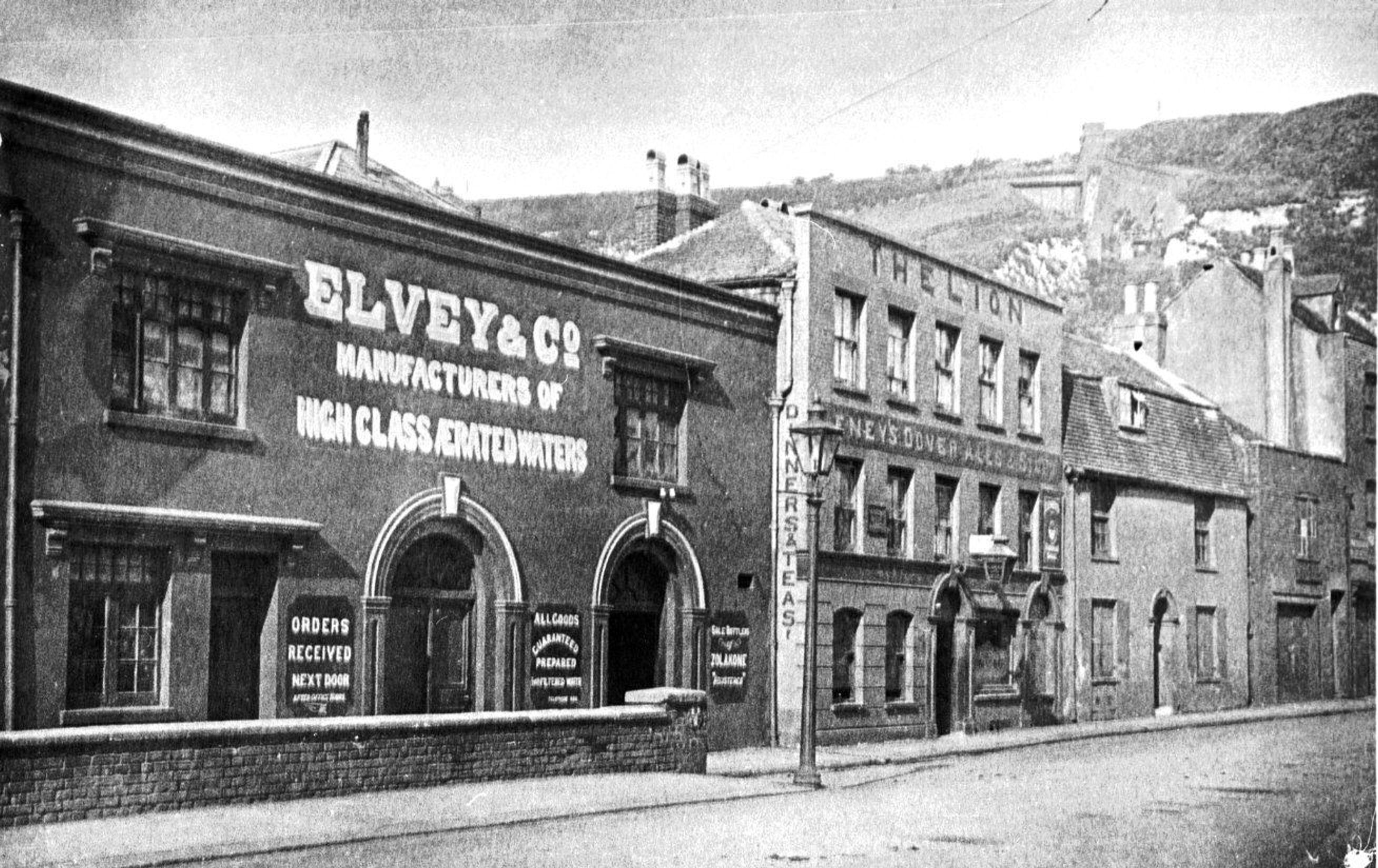
Elvey Aerated Waters Manufactures - Dover Museum

Elvey Aerated Waters Manufactures – Dover Museum

Nearby, in Elizabeth Street, in the early 20th century there were three mineral water manufacturers one of which was Elvey’s. Richard Vine Elvey was born in 1865 the son of a bricklayer living in Charlton and it appears that he may have learnt his trade working for Elms. He then joined W Welsford and as the Dover Brewery Company they produced bottled beer, aerated waters and associated products. The partnership was dissolved in 1888 and Richard, together with a series of partners, built up the Elvey Company. What appears to have been Richard’s final partnership before he died on 2 September 1941, was dissolved in April 1939.

Following World War II, Elvey’s along with Leney’s and Ozonic at 13 Priory Gate Road, were still operating. During the rise of the jukebox era, Leney’s secured a contract with Coca-Cola and it looked as if Dover’s aerated waters industry would not be lost. However, in February 1960 Leney’s table water factory closed and aggressive marketing by national and international concerns ensured that by 1970 aerated water was no longer produced commercially in Dover.

  • Published:
  • Dover Mercury: 11 & 18 April 2013

For further information on Dover’s Pubs: http://www.dover-kent.com
Posted in Aerated Mineral Water Manufacturers, Businesses | Comments Off on Aerated Mineral Water Manufacturers

Charters

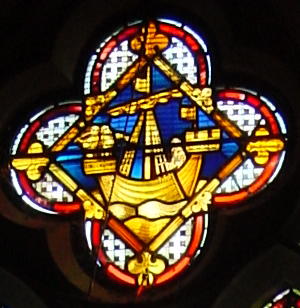
Cinque Ports Ship window, Council Chamber, Maison Dieu.

Cinque Ports Ship window, Council Chamber, Maison Dieu.

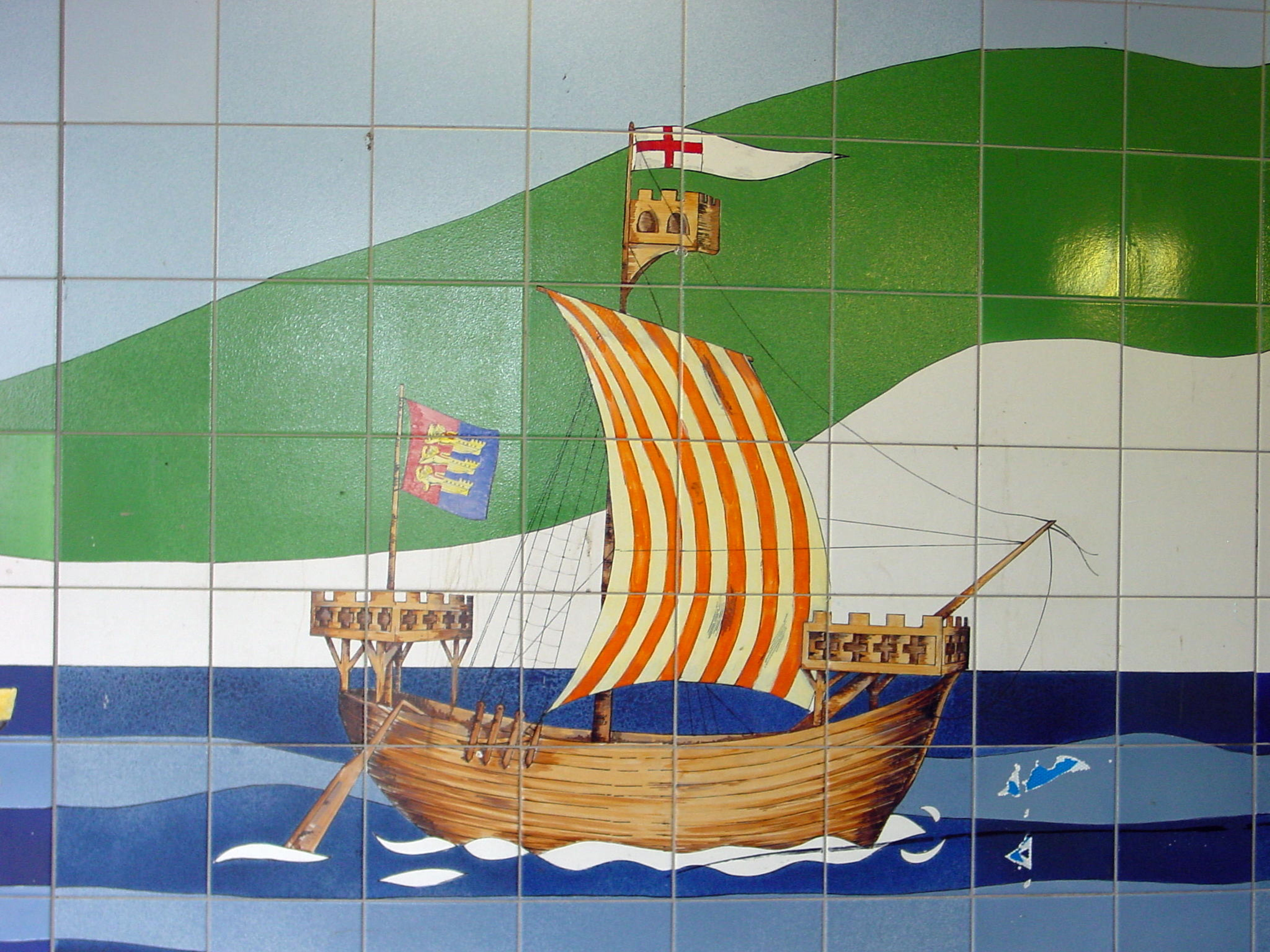
During medieval times, Charters were issued detailing the rights of the citizen and over the centuries, Dover had several granted by various monarchs. Dover’s earliest one was dated the 14 September in the 6th year of the reign of Edward II (1307-1327) and appertained to Channel crossings. As a Cinque Port, Dover was included in the Cinque Ports Royal Charter of 1155.

The Cinque (pronounced ‘sink‘) Ports are: Dover, Hastings, Romney, Hythe and Sandwich, whose citizens were fishermen. Their expertise as sailors was recognised by Edward the Confessor (1042-1066) and it was also noted that they were master shipbuilders whose boats were strong enough to withstand the conditions in the Channel and the North Sea. In 1050 he proclaimed that the five towns along (the two antient towns of Rye and Winchelsea joined later), would provide ‘ship service’. This was the provision of ships and men for 15 days a year to defend the realm and in return he gave the towns many rights and privileges.

These rights and privileges were encompassed in the Cinque Ports Royal Charter of 1229, which formally recognised their fleet as the nation’s naval force. The Charter stated that the five ports were equal in status and privileges but differed in the number of ships and crew they were bound to provide. As a whole they were obliged to supply 57 ships a year for 15 days with 20 men and a boy for each vessel. At the Ports expense they were to maintain the ships ready for the Crown in case of need. Dover and Hastings were obliged to provide 21 vessels each and Romney, Hythe and Sandwich, five apiece. If, however, the King wished to retain the vessels in excess of that period then he would pay. In return, the towns received, ‘Exemption from tax and tallage. Right of soc and sac, tol and team, blodwit and fledwit, pillory and tumbril, infangentheof and outfangentheof, mundbryce, waives and strays, flotsam and jetsam and ligan’

Cinque Ports Ship. Townwall Street subway mosaics.

Cinque Ports Ship. Townwall Street subway mosaics.

In other words, the town was:
Exempt from tax and tolls,
Given self-government,
Permission to levy tolls,
Allowed to punish those who shed blood or flee justice,
Punish minor offences,
Detain and execute criminals both inside and outside the port’s jurisdiction,
Punish breaches of the peace,
Take possession of lost goods that remain unclaimed after a year, goods thrown overboard, and floating wreckage.

They were also given the right of the King’s Truce when, from the Festival of St Michael (29 September) to St Andrew (30 November), citizens were immune from arrest for debt or civil actions. In 1277, Edward I (1272-1307) called on the Cinque Ports Fleet to mount a blockade along the Welsh coastline to stop French aid during his campaign against Wales. The Portsmen both inflicted and suffered heavy losses but overall they helped to secure victory. As a reward, the following year, 1278, King Edward granted the first great comprehensive Charter to the Cinque Ports.

The earliest Charter relating strictly to Dover was dated the 14 September in the 6th year of the reign of Edward II (1307-1327). This, recognising the importance of the town’s role in the Cinque Ports fleet was particularly generous and appertained to Channel crossings.

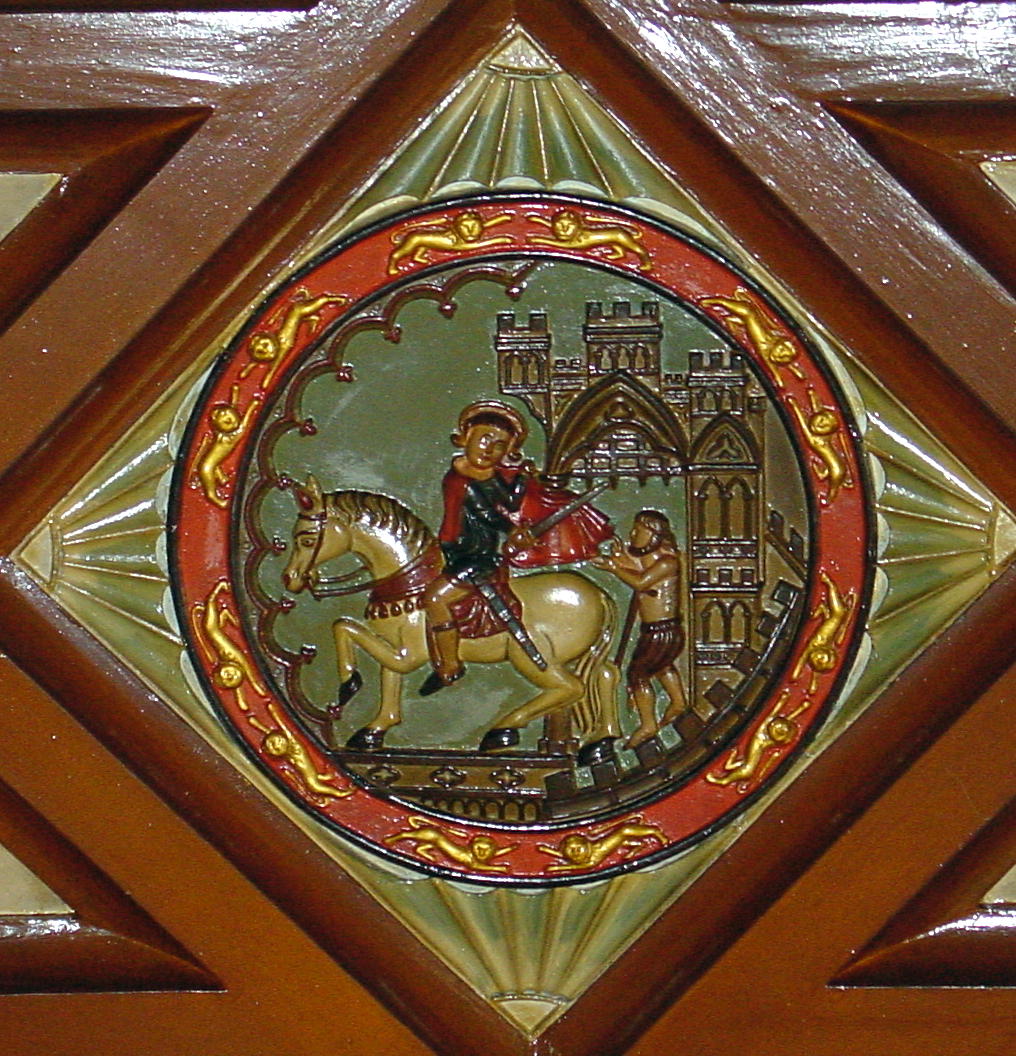
Plaque depicting St Martin, the ceiling of the Court Room, Maison Dieu.

Plaque depicting St Martin, the ceiling of the Court Room, Maison Dieu.

Following this Charter, the town was the recipient of others including one relating to St Martin’s Fair. St Martin is Dover’s Patron Saint, whose feast is 11 November. From Saxon times this was celebrated and initially lasted three days. About 1160 the Fair received a Royal Charter and the number of days increased to ten! Under the Charter, the Corporation were given the privilege of holding a court of Piepoudre, where disputes were settled and fines levied. The town was allowed to keep these fines.

Between 1365 and 1438 Dover received six Charters from the Kings of the time, appertaining to land grants and the liability of ship service. However, due to the silting up of harbours, many of the Cinque Ports were losing their access to the sea but Dover, although having similar problems, was still in a sufficiently powerful position and these new Charters were significant in creating a separate identity to the Cinque Ports. This effectively meant that increasingly the town was given more autonomy and as successive kings handed over more rights the profits to the town increased. However, the kings did require their dues (taxes), as well as loyalty and ship service that were particularly important for the country was going through a long recession with merchants objecting to taxes paying for the king’s ships.

Elizabeth I (1558-1603) renewed most of the town’s ancient chartered rights but Charles II (1660-1685) in the 1683 Charter revoked them. William III (1689-1702), however, overturned the revocation, following the Glorious Revolution of 1688.

These days the Charters are of mainly historical value but sadly, many of Dover’s ancient Charters has been lost or destroyed. As far as I am aware, there are only four remaining and three of these are held by Dover Town Council and are on display in Maison Dieu House.

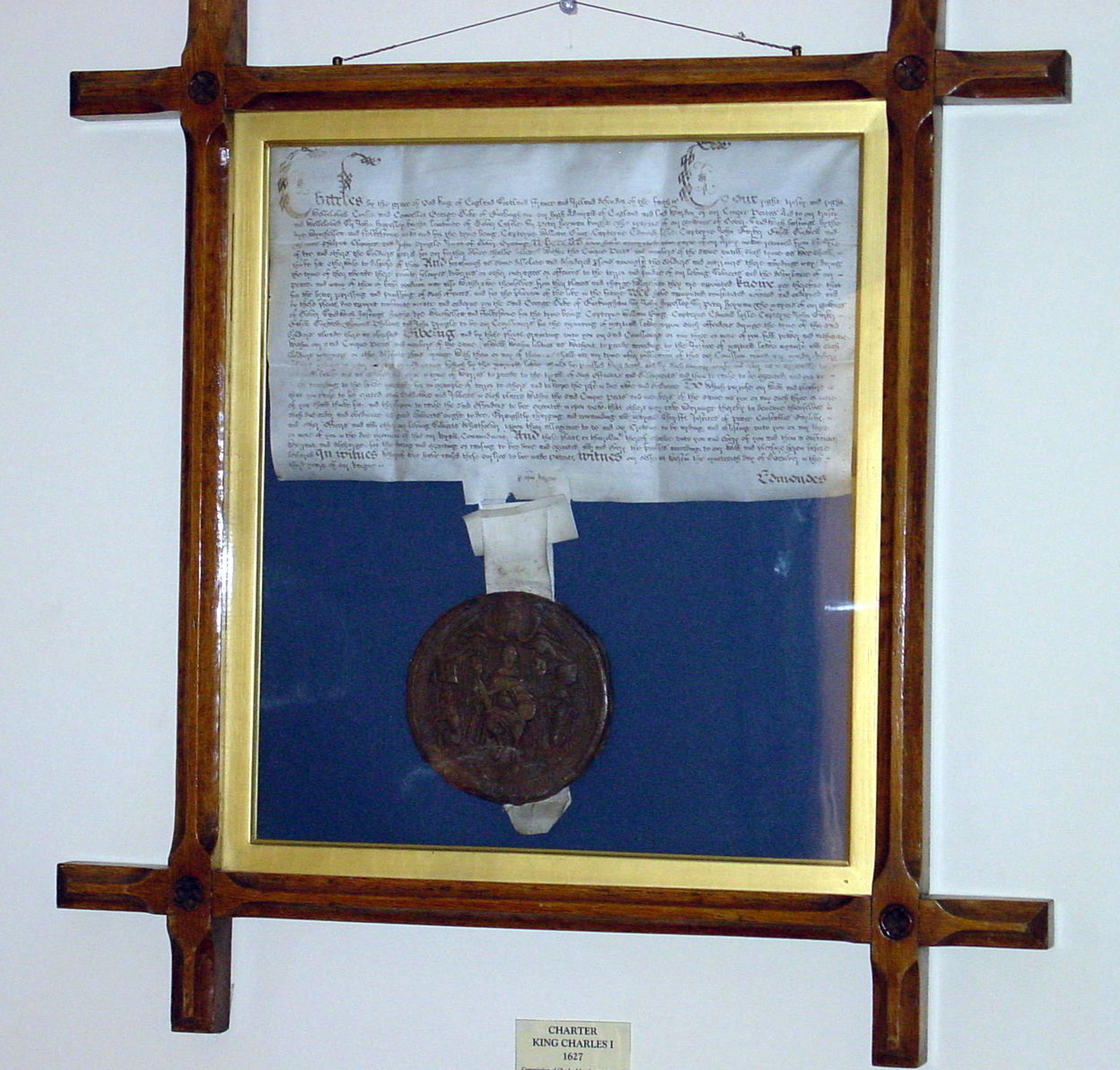
Charles I Charter of 1627

Charles I Charter of 1627

The first, given by Charles I (1625-1649), was in answer to an appeal made by the Mayor, Stephen Monin, in 1627. At the time, George Villiers, the Duke of Buckingham and Lord Warden, was the King’s favourite. He had embroiled the country in a war against France and some 7,000 soldiers had been impressed to sail to La Rochelle to help the plight of Huguenots (French Protestants) there.

This resulted in an embarrassing retreat and the troops were returned to England with some 2,000 billeted in Dover. They were destitute, miserable and troublesome so the Mayor, Stephen Monins, applied to the King and the subsequent Charter allowed Martial Law to be instituted. Eventually, the men were marched to Portsmouth with the intention of embarking to La Rochelle again. However, before leaving, on 23 August 1628, John Felton assassinated Buckingham and the impressed men went home.

Charles I Charter of 1637

Charles I Charter of 1637

The second Charter was given in 1637 and it is ironic that it is on display in the Town Council offices. Dover council, at the time, applied to James I (1603-1625) for financial help to refurbish the harbour. However, by another Charter, dated 1606, the King had given the responsibility of the harbour to the Lord Warden and the Harbour Commissioners (now the Dover Harbour Board). The Town council were not at all happy about this and it has been a source of contention ever since.

The 1606 Charter also stipulated that all reclaimed land from the base of Western Heights to the Mote Bulwark (Boundary Groyne) belonged to the new Commission. The council chose to ignore that part of the Charter and had leased the land to local Freemen who had built houses and even opened a small brewery. The Harbour Commissioners complained to the King who sent his surveyors and they upheld the complaint. In consequence, the 1637 Charter was issued and the council were ordered to pay £66 13s 11d (£66.69p) to the Commissioners for the encroachments – and told not to do it again!

Queen Ann Charter of 1702

Queen Ann Charter of 1702

Queen Ann (1702-1714) presented the third Charter to the Town in the first year of her reign. To be pedantic, it is a ‘Letters Patent’ that proved very lucrative to the town. From the days of Edward I (1272-1304) Dover had a Bailiff, a Freeman was usually appointed by the Crown to the post. Because of his legal responsibilities he had two assistants, a Land and a Water bailiff. The first dealt with legal matters within the town the second dealt those relating to the harbour.

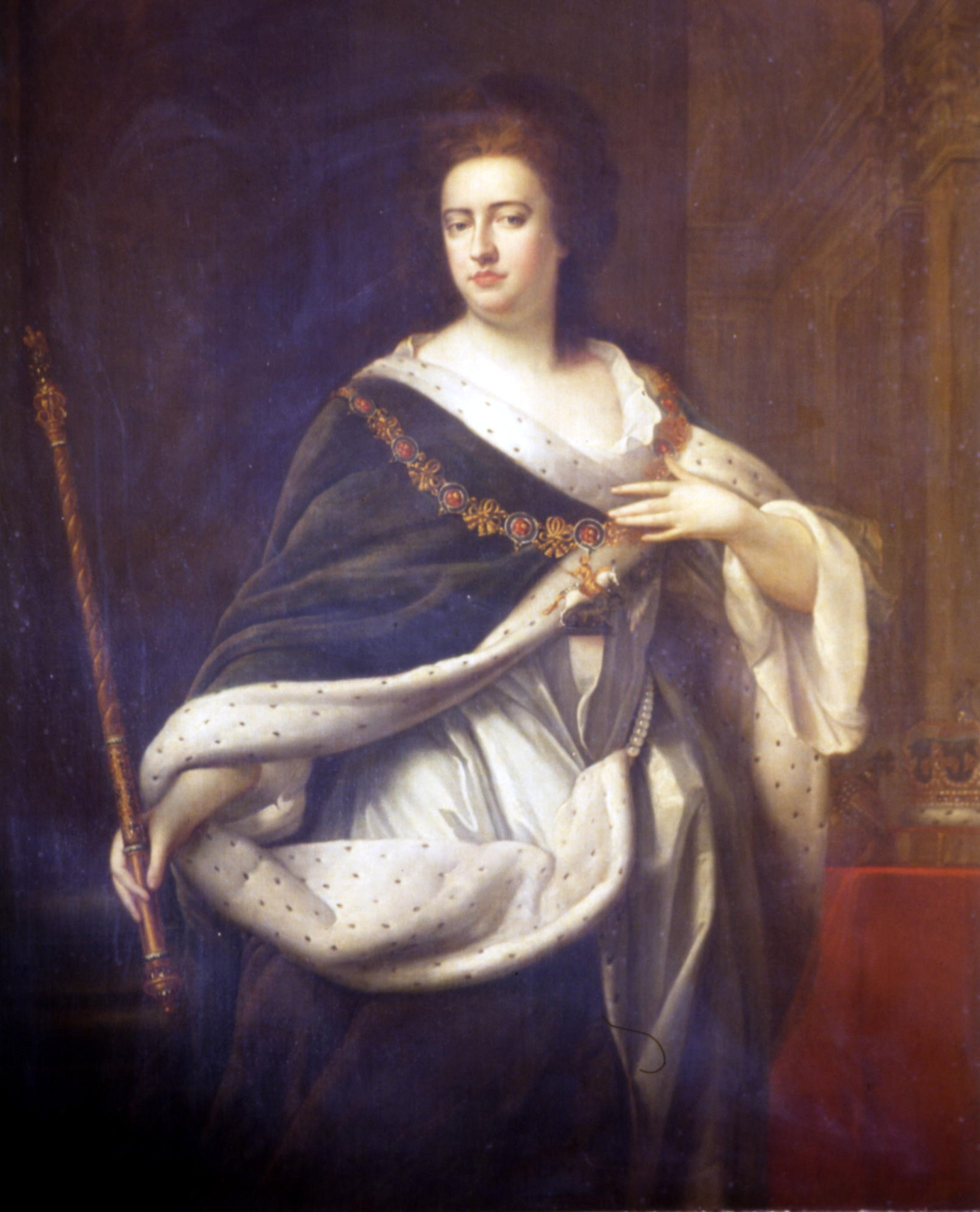
Queen Anne - Godfrey Kneller(1646-1723) oil on canvas. Dover Museum

Queen Anne – Godfrey Kneller(1646-1723) oil on canvas. Dover Museum

Because of increasing legislation by the end of the Tudor period the Bailiff was replaced by Recorders, who were trained lawyers. However, it became apparent that there was still the need of a Water Bailiff to police the harbour. Although appointed by the council, he was expected to pay his own deputy and men out of revenues collected from fines. The Harbour Commissioners insisted, however, that all the fines actually belonged to them.

The council appealed to Queen Anne, who was sympathetic to their cause giving all the fines imposed by the Water Bailiff to the town! Further, she also made the Water Bailiff ‘Keeper of the Prison’ with the fees for the keep of prisoners also to go into the town’s coffers. In gratitude, the town purchased a painting of their benefactor by Godfrey Kneller (1646-1723), which is now looked after by the Museum.

Published:

Dover Mercury: 27 October 2011

Posted in Charters, Charters, Cinque Ports, Local Government | Comments Off on Charters

Edwin Farley and the Vindictive Casket

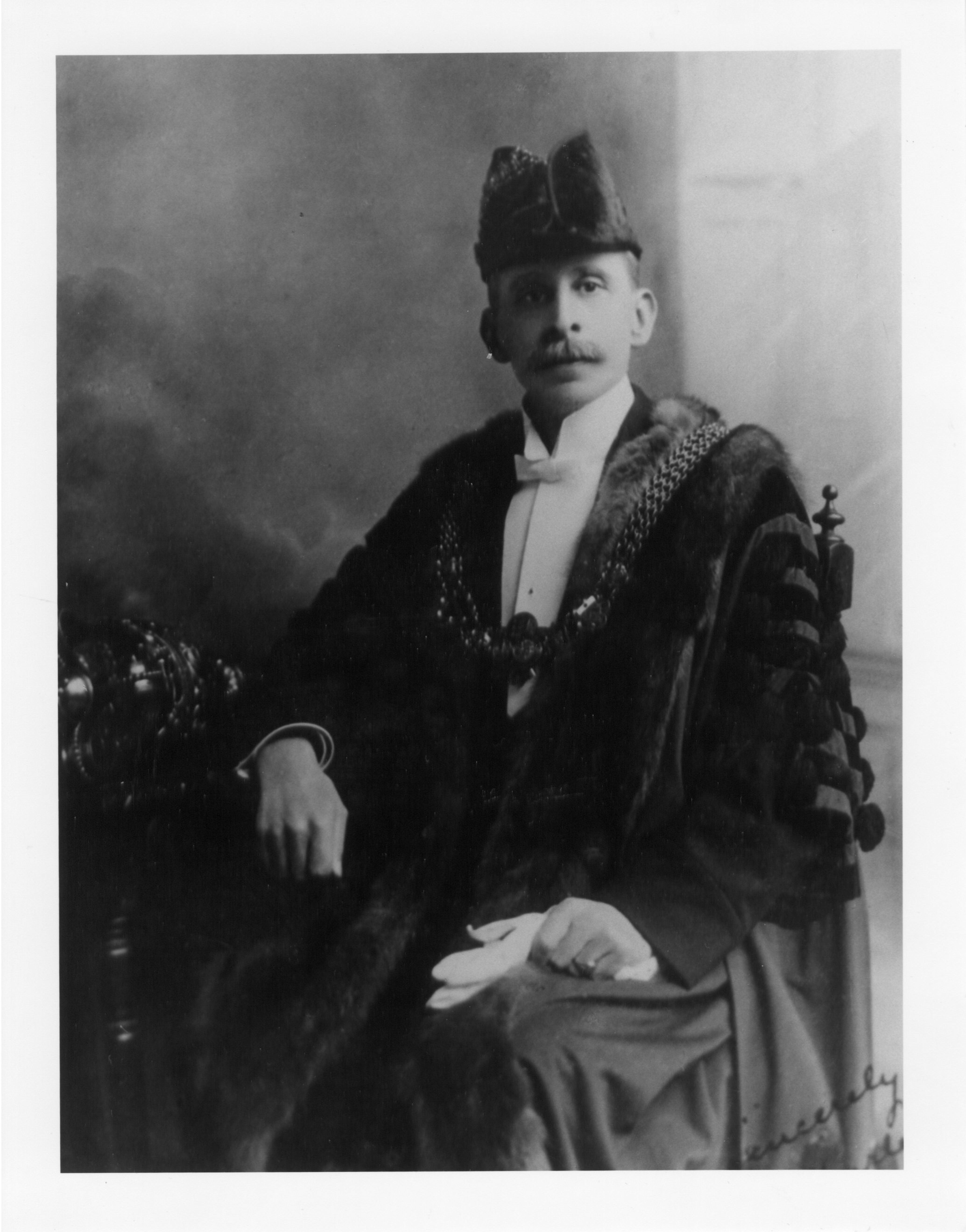
Edwin Farley Mayor 1913-1918. Farley Family

Edwin Farley Mayor 1913-1918. Farley Family

Following the publication of my article in the Dover Mercury, on Sir Edwin FarleyEdwin Farley – Mayor who stayed throughout WWI, one of his granddaughters contacted me.

Sir Edwin, a Dovorian, was born in 1864, after a few years at sea returned to Dover, and worked in the family dairy business. This he eventually took over and was also a councillor. In November 1913, he was elected Mayor, a position he held until the hostilities of World War I ceased.

It was his work as Mayor, during World War I, when the town was under Military Rule, that earned him his knighthood in 1920. By that time, Sir Edwin was a national legend, for always being on call and never once having slept out of the town.

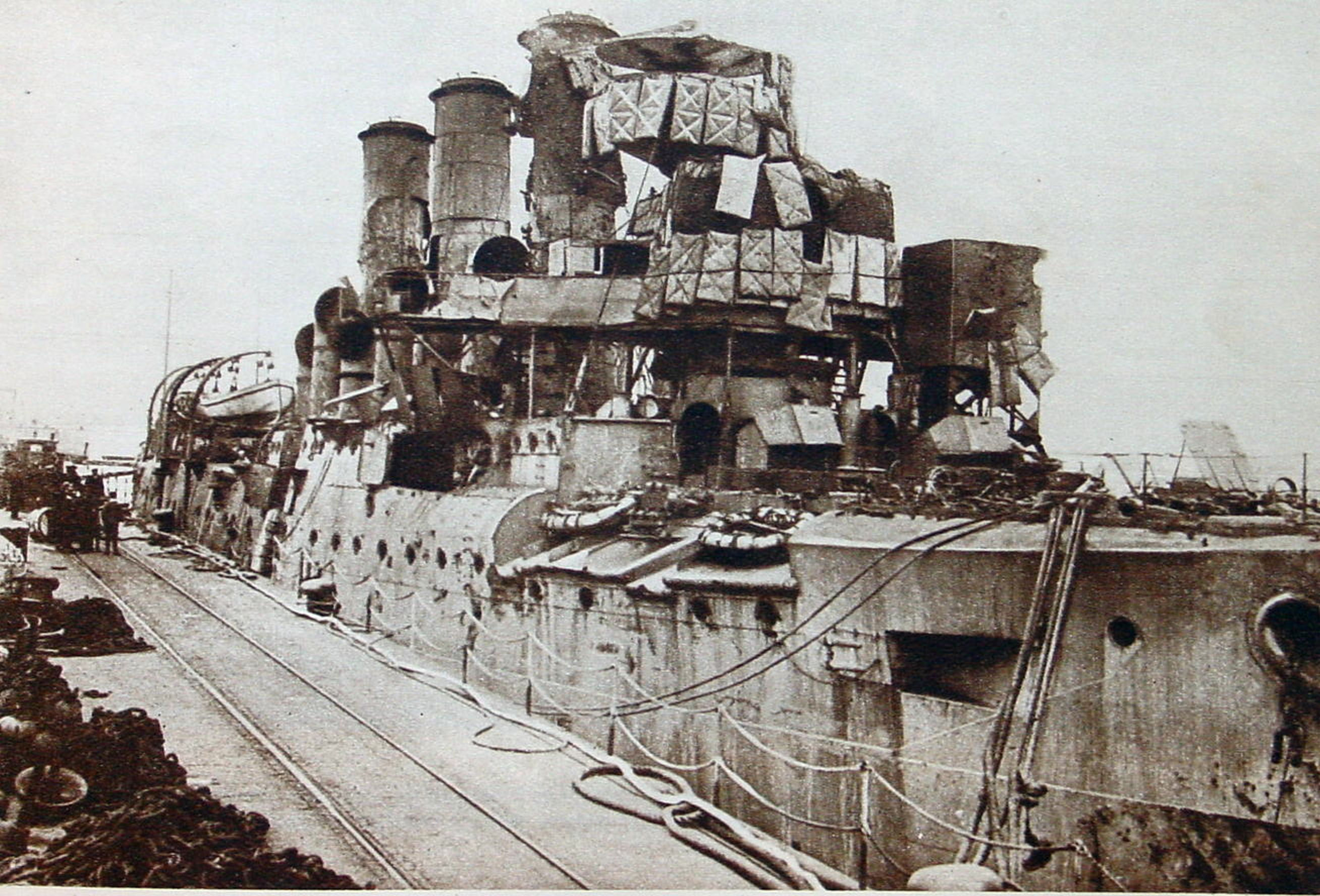
 Vindictive on her return to Dover following Zeebrugge Raid. Doyle collection

Vindictive on her return to Dover following Zeebrugge Raid. Doyle collection

Before the War ended Sir Edwin officially accepted, from Vice-Admiral Sir Roger Keyes, the Zeebrugge Bell. The King of the Belgians had given this in recognition for the successful Zeebrugge Raid carried out on 23 April 1918. Sir Roger masterminded the Raid that involved scuttling ships at the entrance to Zeebrugge Harbour thus blocking an exit route into the Channel for German submarines.

Following the War, Sir Edwin initiated fund raising that provided the obelisks commemorating the men of the Dover Patrol. These were erected at Leathercote Point, St Margaret’s Bay, which was unveiled by the Prince of Wales in July 1921, Cap Blanc Nez and New York harbour.

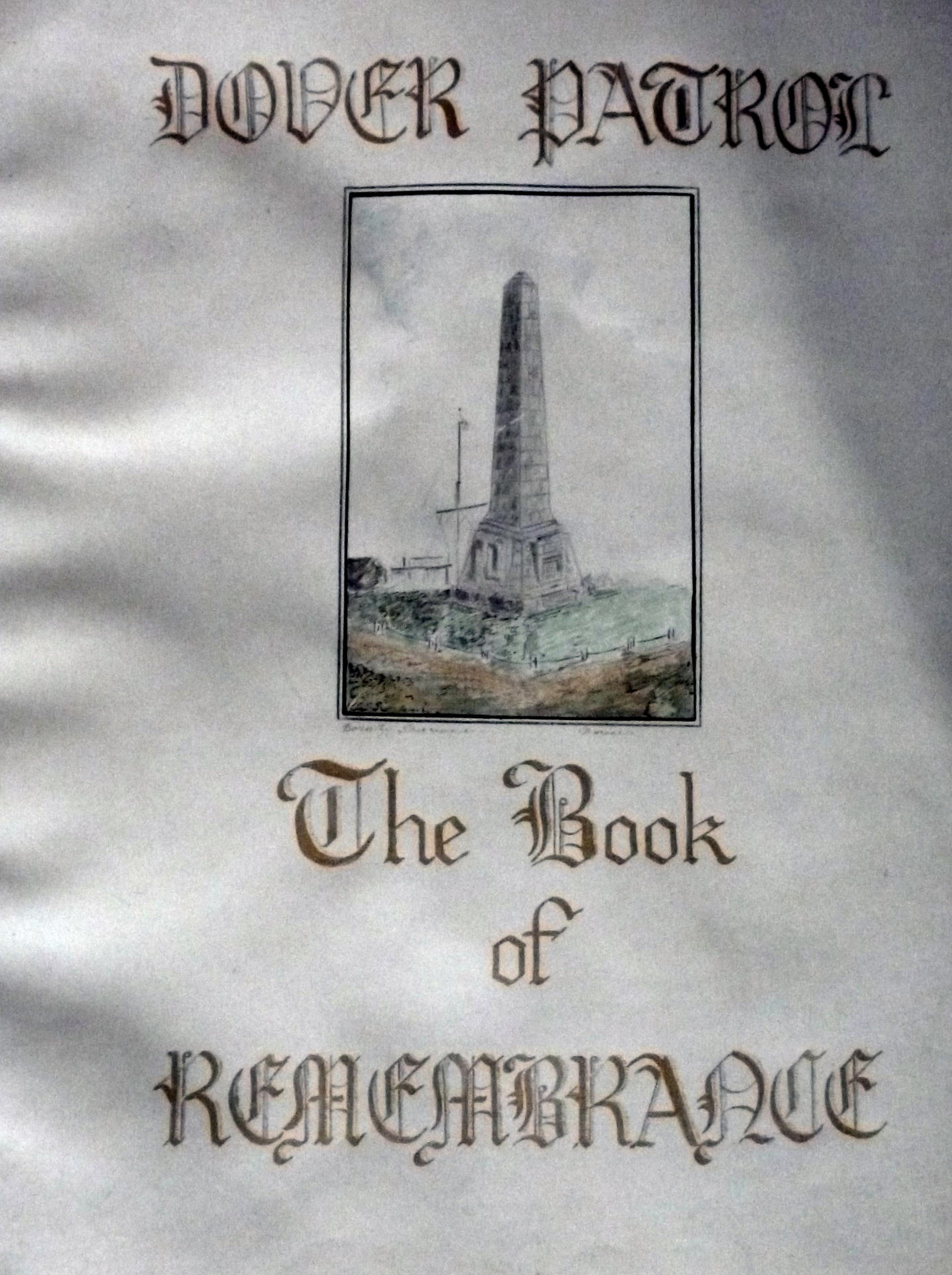
Dover Patrol Book of Remembrance First Page. St Margaret of Antioch Church, St Margaret's

Dover Patrol Book of Remembrance First Page. St Margaret of Antioch Church, St Margaret’s

With the money left over, Sir Edwin established a three-storey Dover Patrol Hostel on Wellesley Road. This was destroyed by enemy action during World War II. Near the site is a bench dedicated by Lady Farley in memory of her husband.

5 November 1924, saw the unveiling of Dover’s War Memorial by Vice-Admiral Sir Roger Keyes. Afterwards the assembled dignitaries went to the Town Hall where Sir Roger presented Sir Edwin with the Dover Patrol ‘Golden Book’ – the Roll of Honour of the men who lost their lives serving in the Dover Patrol.

One of the ships involved in the Zeebrugge Raid was the Vindictive. Following the raid the Vindictive was used in the similar, but not so successful, attempt on Ostend harbour. The ship was to have blocked the exit.

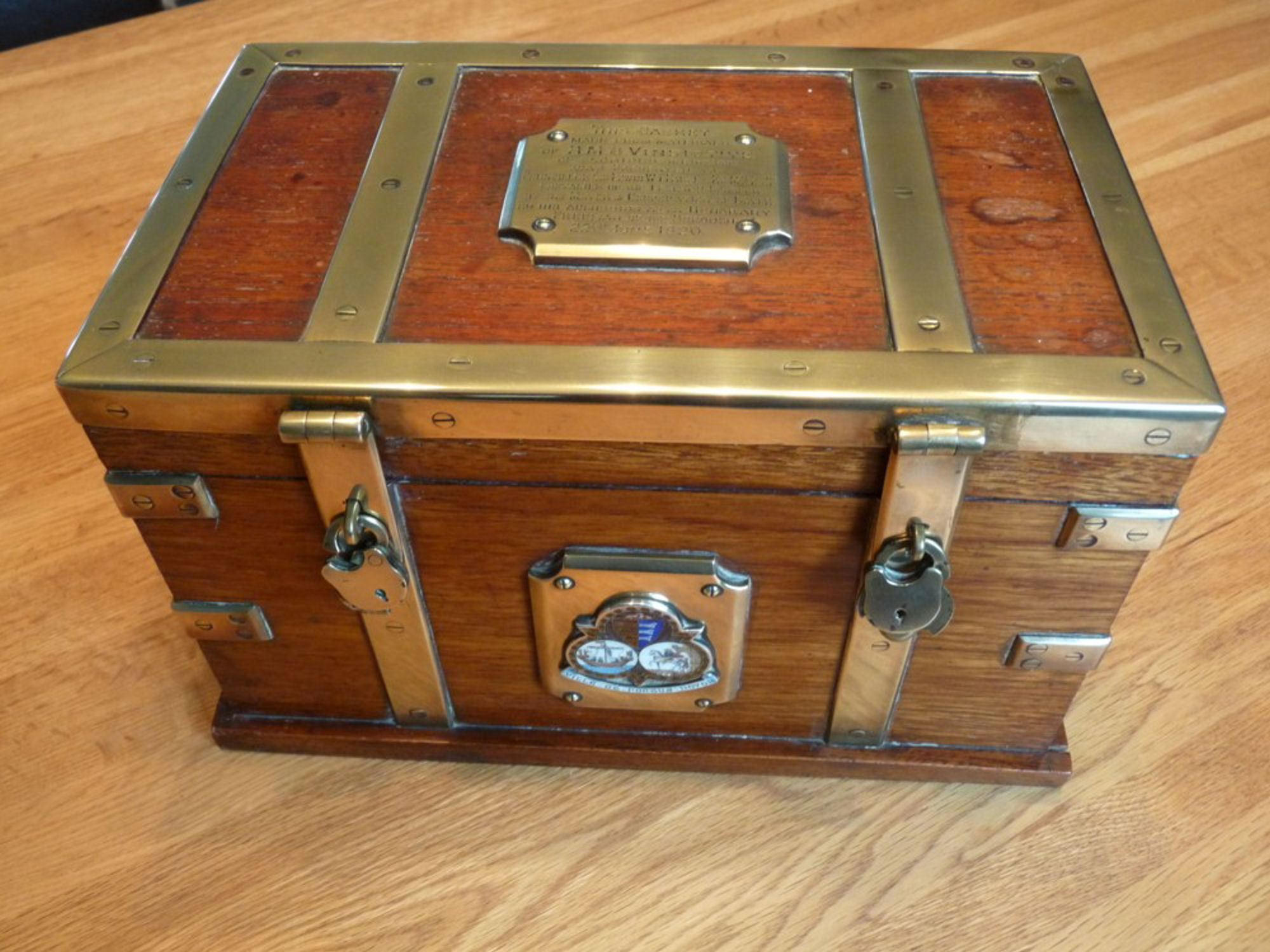
Vindictive Casket made from the ship's wood presented 192. Farley Family

Vindictive Casket made from the ship’s wood presented 192. Farley Family

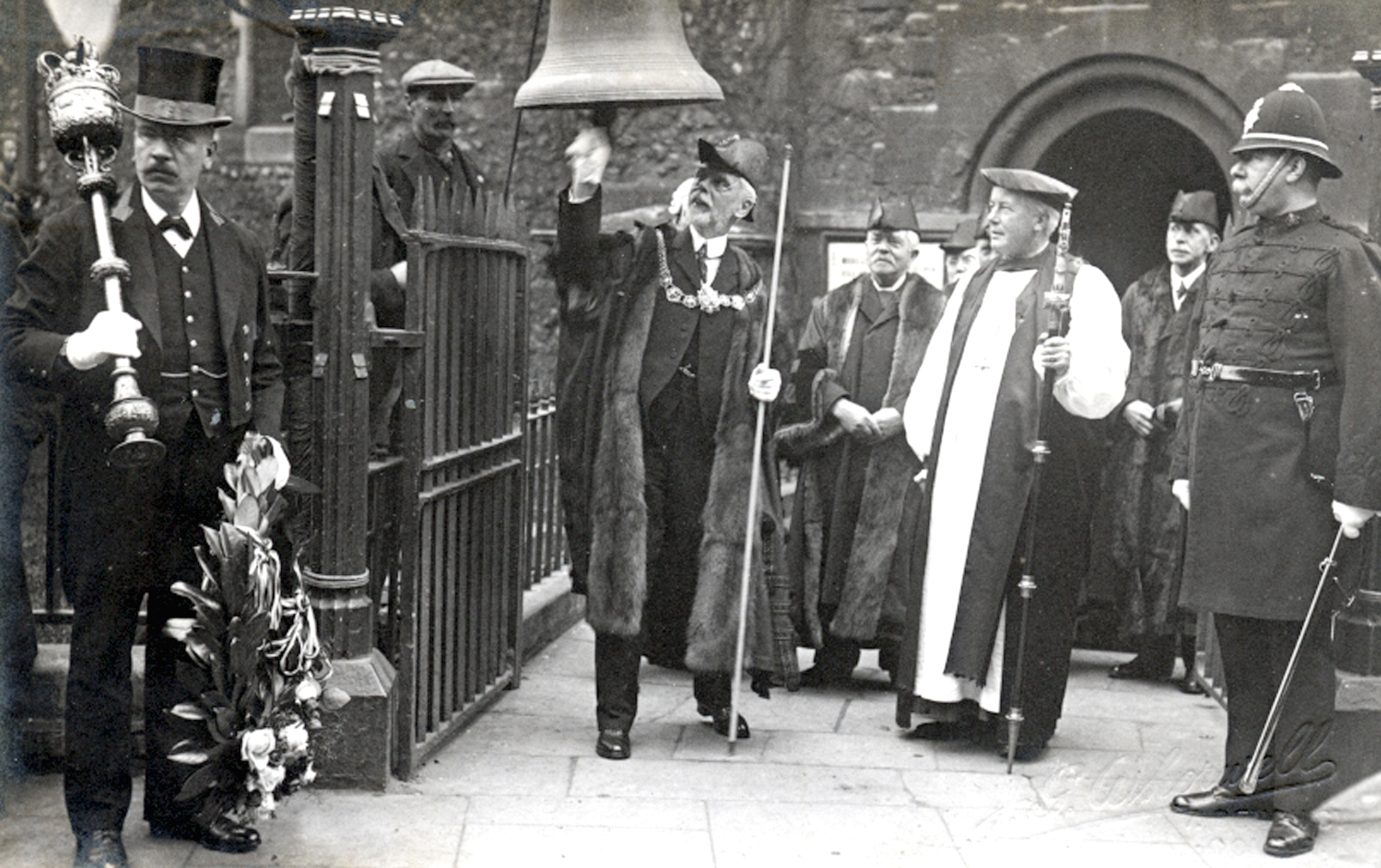
Initially the Zeebrugge Bell was housed in St Mary’s Church but was moved to the Maison Dieu in 1923. Every year since, including during World War II, the town’s Mayor has led a Memorial service on 23 April.

Following the 2012 service the granddaughter of Sir Edwin, sent me photos of a casket made from the Vindictive; Lady Farley had given this to another of her granddaughters on her wedding day.

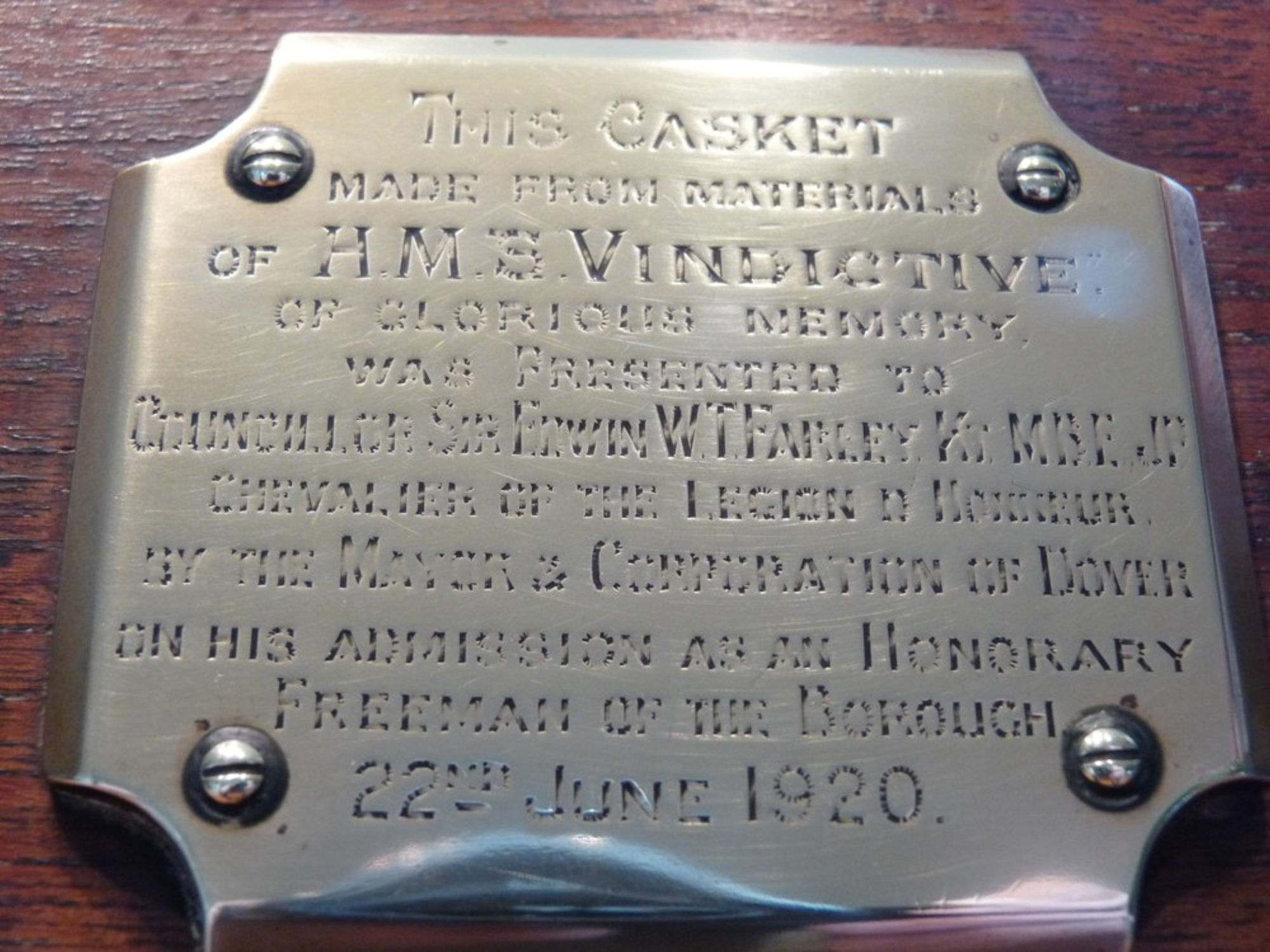
 Vindictive Casket inscription - Farley Family

Vindictive Casket inscription – Farley Family

Inscription reads:

This casket was made from materials of HMS Vindictive of Glorious Memory was presented to Sir Edwin W T Farley Kt MBE JP Chevelier of the Legion of Honour by the Mayor and Corporation of Dover on his admission as an Honorary Freeman of the Borough. 22 June 1920.

  • Published:
  • Dover Mercury: 28 June 2012
Posted in Armed Services, Farley Edwin and the Vindictive Casket, Farley Edwin and the Vindictive Casket, People | Comments Off on Edwin Farley and the Vindictive Casket

Edwin Farley – Mayor who stayed throughout WWI

Edward Farley's Seat - Wellesley Road

Edward Farley’s Seat – Wellesley Road

In Wellesley Road, near Dover’s seafront there is a seat dedicated to Sir Edwin Wood Thorp Farley. An appropriate place, for nearby once stood the Dover Patrol Hostel that Sir Edwin established. This was destroyed during World War II.

Sir Edwin, a Dovorian, was born in 1864 and started work at the age of 10 in his father’s pork butchers shop, in the Snargate Street area. Like many local lads, he went to sea as soon as he was old enough and it is reported that he made 22 voyages to India and a further 11 to China.

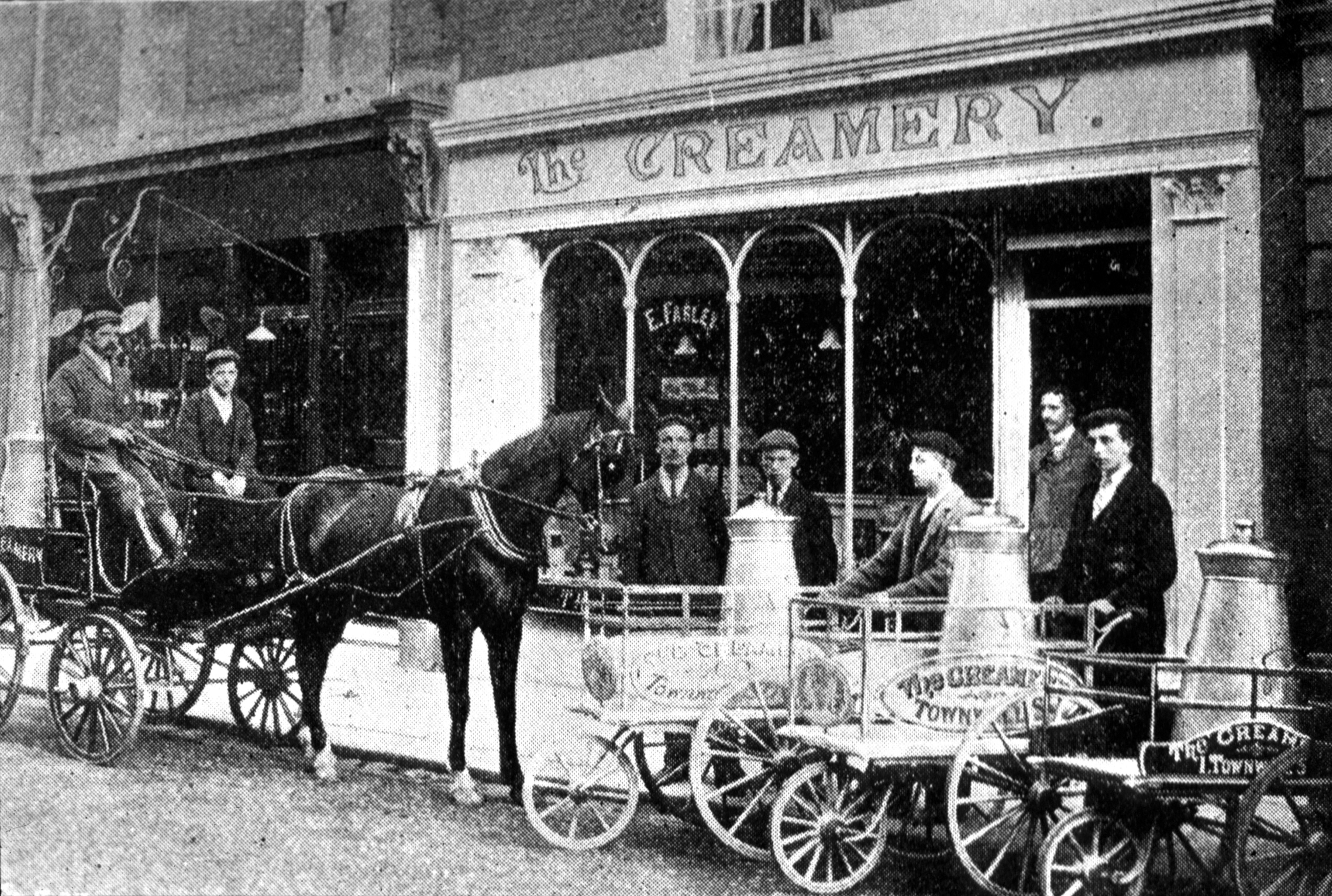
Farley & Woodhams Creamery, Townwall Street 1904

Farley & Woodhams Creamery, Townwall Street 1904

Becoming a landlubber when he was 22, Edwin joined his brothers in running the family dairy in Townwall Street. Eventually Edwin took this part of the business over and ran it with the help of his mother and sister, all of whom, lived on the premises. Following World War I, Edwin merged his firm with Woodhams to become one of Dover’s leading dairies.

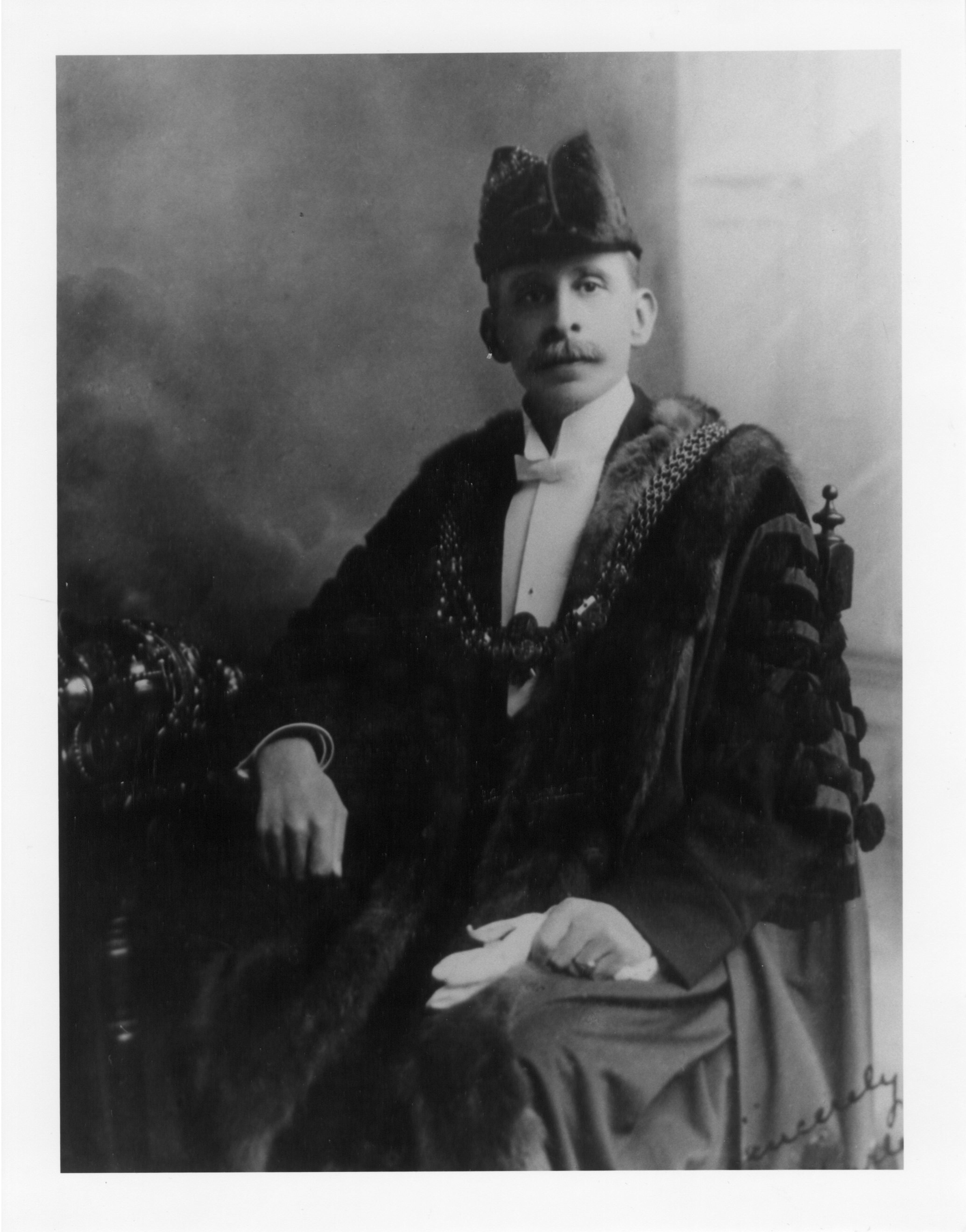
Edwin Farley - Mayor 1913-1918. Thanks to the Farley family

Edwin Farley – Mayor 1913-1918. Thanks to the Farley family


Socially, Edwin was a member of the Cinque Ports Artillery Volunteers until suffering a back injury that was to remain a problem for the rest of his life. He was also a mason through which he became involved in local politics. In 1903, he was elected the Master of the Peace and Harmony Masonic Lodge and Conservative councillor for what became Hougham Ward (Folkestone Road/Maxton and Elms Vale). At the time, Conservatives, under Sir William Crundall, dominated the council but there was a groundswell of Independents.

In February 1913, Dover Harbour Board, whose Chairman was Crundall, filed a Parliamentary Bill to make changes to the Tidal Basin at the Western Docks. As a supplementary, consent was sort to replace the western half of the seafront and beach with a 5.75 acre dock and terminus for a Light Railway Company. This went down badly in Dover and a petition was raised followed by a poll that took place on 20 May 1913.  Of those eligible to vote, 2,265 voted against the Bill’s Supplement and 1,508 for it and the Supplement was withdrawn. Edwin, already veering towards the Independents, firmly opposed the Crundall plan and he, along with two Conservatives, crossed the Chamber. This brought about a nearly equal division in the Council. In November 1913, Edwin was elected Mayor.

World War I broke out on 4 August 1914 and the Borough of Dover, under the Defence of the Realm Act, was part of Dover Fortress. This meant that the military were in charge and although public elections were suspended councillors continued in office. Edwin was re-elected Mayor by his colleagues in November 1914, 1915, 1916, 1917 and 1918!

During this time, not only was Edwin responsible for municipal concerns with depleted staff, but also ensuring that the town’s folk co-operated with the Military Commanders.  This included the billeting of servicemen, giving moral support to those about to embark to the Front and restrictions of movement. Movement restrictions meant the setting up and issuing of permits to local residents so that they could leave and re-enter the town. Food and fuel rationing was a responsibility of the council and also National Service registration when that was introduced in 1916.

Dover, needless to say, was also in the front line – the first aerial bomb to be dropped on the United Kingdom was on 24 December 1914. It landed in the garden of Mr Terson of Leyburn Road that backed on to Taswell Street near where the Dover Society Plaque is today.  Immediately air-raid drills were started and caves were turned into air-raid shelters. These included Trevanion caves (near the present swimming pool), oil mill caves, Barwick caves along Limekiln / Snargate Street and tunnels around both the Eastern and Western Heights. The police station, in the crypt of the Maison Dieu, provided shelter, as did the vaults of Phoenix Brewery, near Market Square.

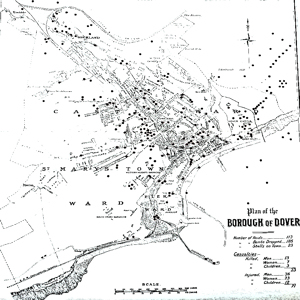
World War I Bombing of Dover. 113 raids,185 bombs dropped, 23 shells hit the town. 13 men, 7 women and 3 children killed 36 men, 23 women and 12 children injured. Dover Library

World War I Bombing of Dover. 113 raids,185 bombs dropped, 23 shells hit the town. 13 men, 7 women and 3 children killed 36 men, 23 women and 12 children injured. Dover Library

As the war progressed, caves were either opened or extended at Albany Place, Crabble Hill Road, Green Lane – Buckland, Winchelsea and Priory Hill, providing, in total, shelter for 2,000 people. During the war there were 113 raids and in all 184 bombs were dropped the heaviest weighed 600lbs. The town was also shelled twice from the sea.

Edwin, as Mayor, was involved in dealing with the casualties of war, not only those in the town but men coming from the Front. The war victims of Dover’s civilian population were: 13 men, 7 women and 3 children killed.  36 men, 23 women and 12 children injured. From the Front, 1,320,149 sick and wounded were landed at Admiralty Pier.  They were transported on through Marine Station – the medical symbol part of the frieze above what was the passenger entrance.

Marine Station Passenger entrance, Note the medical emblem on left.009

Marine Station Passenger entrance, Note the medical emblem on left.

There were also the sick and wounded from mining and submarine attacks, the explosion of the Glatton that killed 105 men and there was the Zeebrugge raid. Out of the 1,700 men who took part, 214 were killed and 383 were wounded. 156 were brought back to the Market Hall, where volunteers, supervised by Edwin, dealt with their mangled bodies.The total of Dovorians killed on the battlefields and at sea, was 1,400.

On the lighter side, there was entertainment and fund raising. Edwin is credited with raising £120,000 for good causes related to the war effort. In 1916 Arthur T Benson, the Mayor of Dover, New York State, wrote offering help. The subsequent correspondence established a link between the two towns, (See Daughters of Dover on the Dover Society Web site).

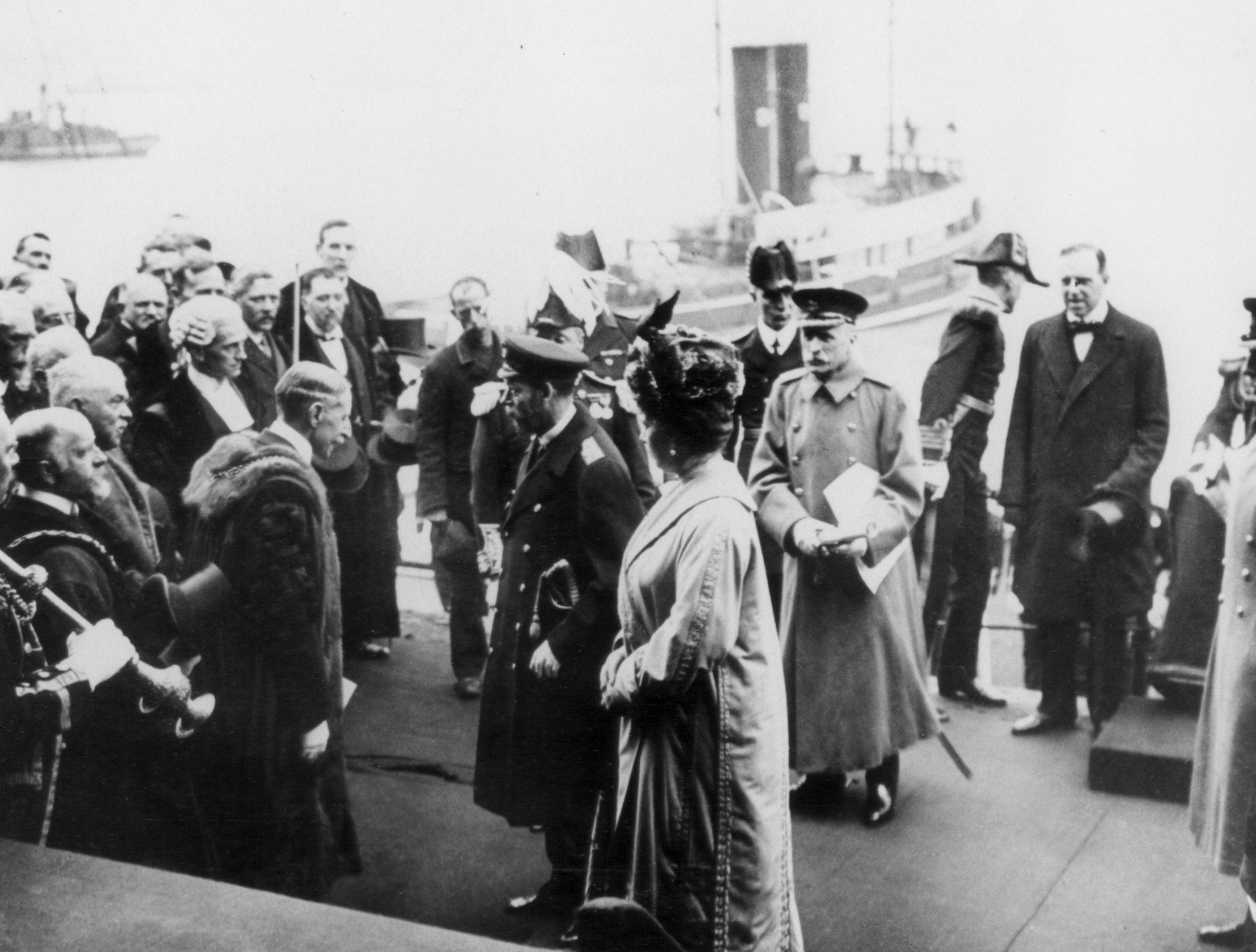
Mayor Edwin Farley greeting King George V and Queen Mary on the Prince of Wales Pier. Clare Farley

Mayor Edwin Farley greeting King George V and Queen Mary on the Prince of Wales Pier. Clare Farley

Edwin, justifiably, became a national legend for always being on call and never once having slept out of the town. When King George V visited, in 1918, while Vice-Admiral Sir Roger Keyes was in command of the Dover Patrol, he thanked Edwin personally and awarded him the M.B.E.

Edwin Farley, next-but-one on right. Zeebrugge Bell ceremony 1923

Edwin Farley, next-but-one on right. Zeebrugge Bell ceremony 1923

Before the war ended Edwin accepted, from Vice-Admiral Keyes, the Bell used by the Germans on Zeebrugge Mole to give warning of British attacks by sea and air. The King of the Belgians in recognition had given it to the town for the Zeebrugge Raid. In 1923, it was placed in its permanent position on the front of the Town Hall, under a canopy.

Edwin was knighted for his war services in 1920 and given the Honorary Freeman of the Borough. The certificate was enclosed in a casket of materials made from the Vindictive, one of the ships involved in the Zeebrugge raid.  In November, he was elected Alderman and his home address was given as 25 Marine Parade.

Fishing and Trawling Company Prospectus 09.01.1920

Fishing and Trawling Company Prospectus 09.01.1920

In January that year, Edwin had launched the Dover Fishing and Trawling Company in the hope of raising shares to set up a £100,000 capitalised company. The prospectus claimed that there were profits to be made from catching Dover Soles off the Varne and bringing them into Dover for onward despatch to fisheries.

The venture failed, but he was successful in raising funds to erect memorials on the cliffs near Dover and near Calais to the men of the Dover Patrol. Initially, it was decided to erect large cairns but as the money poured in, nearly £45,000, the beautiful obelisks could be afforded. These were erected at Leathercote Point, St Margaret’s Bay, which was unveiled by the Prince of Wales on 28 July 1921, Cap Blanc Nez and New York harbour.

Dover Patrol Book of Remembrance Title Page - St Margaret of Antioch Church, St Margaret's

Dover Patrol Book of Remembrance Title Page – St Margaret of Antioch Church, St Margaret’s

With the money left over, Sir Edwin established a three storey Dover Patrol Hostel on Wellesley Road. Lady Keyes opened this well equipped establishment in July 1923. The following year, on 5 November 1924, saw the unveiling of Dover’s War Memorial by Vice-Admiral Sir Roger Keyes. Afterwards the assembled dignitaries went to the Town Hall where Sir Roger presented Sir Edwin, the Dover Patrol ‘Golden Book’ – the Roll of Honour of the men who lost their lives serving in the Dover Patrol.

Referred to as ‘Sir Edwin’ by young and old alike, he was considered kind and thoughtful and, by the end of the decade, living in retirement at 3 Camden Crescent. Often visiting his teashop in Bench Street for his afternoon ‘cuppa’, it was there that he met nurse Gertrude Elizabeth Clout from Elham. She worked at the town’s Royal Victoria Hospital. They married on 16 March 1933 and although Dover’s society were delighted, the national press had a field-day over the discrepancy in their ages – Edwin was 69 and Gertrude was 25!  The couple moved to Shepherdswell, and they had one son named Roger in honour of Sir Roger Keyes.

Sir Edwin died 9 January 1939, the first part of the funeral service, attended by the town’s dignitaries, was held at St Mary’s Church in Dover. Even though it was a cold day, the townsfolk lined the streets to St James’ Cemetery, where he was interred. Admiral Sir Roger Keyes was prevented attending due to illness, but wrote, “My wife and I were very distressed to hear of Sir Edwin’s death. I had great admiration for his gallant spirit and affection for him.”

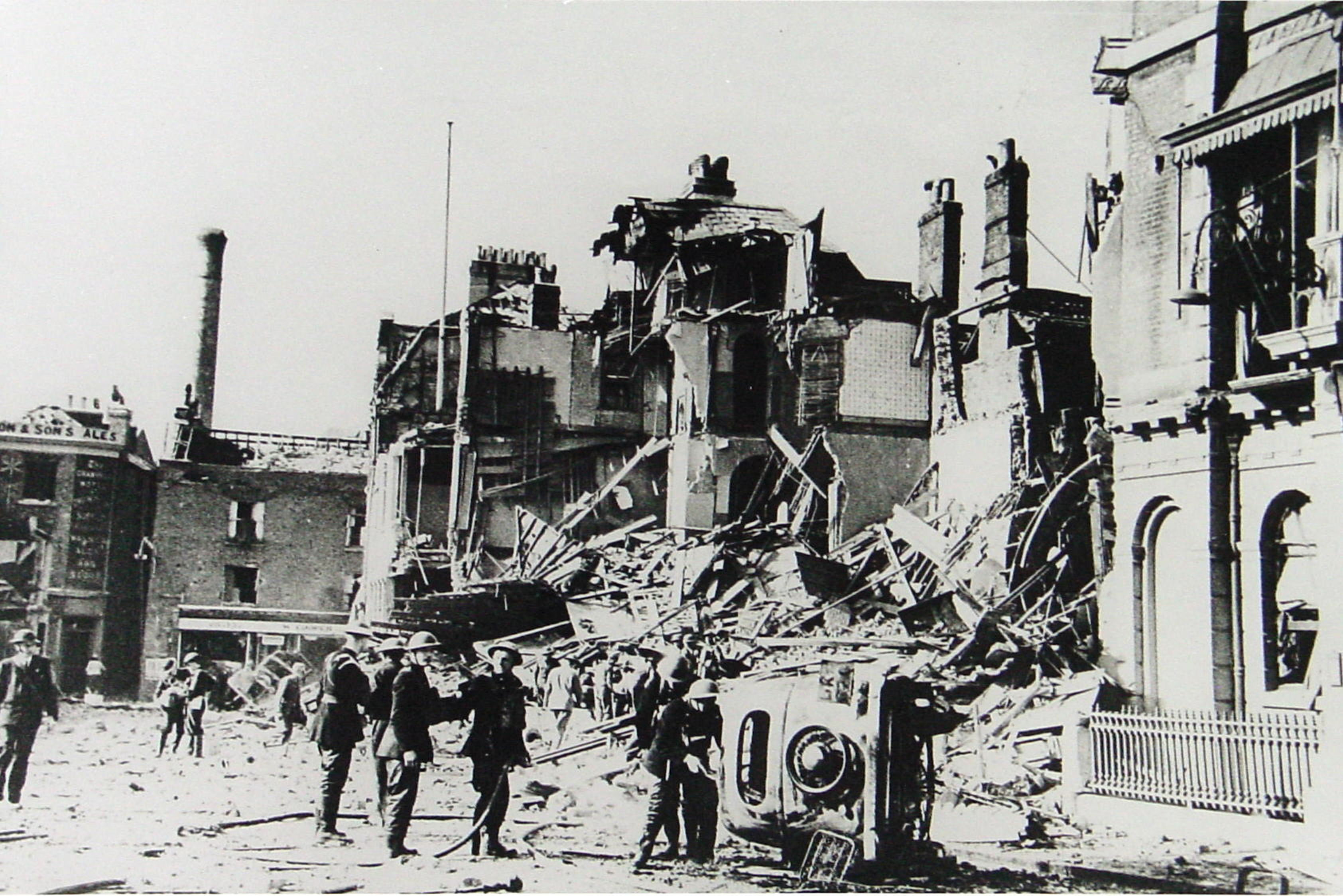
Wellesley Road - looking towards Townwall Street, following WWII shelling. Kent Messenger

Wellesley Road – looking towards Townwall Street, following WWII shelling. Kent Messenger

Before the year was out the nation was at war again and the following year saw the start of unremitting attacks on Dover that was to last four years. On Wednesday 11 September 1940, the town was simultaneously bombed and shelled and the Dover Patrol Hostel took the full impact of a large calibre bomb. Two men were killed and the building was completely wrecked. In memory, Sir Edwin’s seat was placed near the site of the hostel.

  • Published:
  • Dover Mercury 14, 21 and 28 April 2011

Following the publication of this article, the granddaughters of Sir Edwin contacted Dover Town Council and me. The Mayor invited them to the Zeebrugge day celebration that is held each year on 25 April. I had hoped to meet the family that day but a Dover Town Council official stated that I was not to be allowed admission.

Posted in Armed Services, Camden Crescent, Farley Edwin - Mayor who stayed throughout WWI, Farley Edwin - Mayor who stayed throughout WWI, Farley Edwin - Mayor who stayed throughout WWI, Local Government, People | Comments Off on Edwin Farley – Mayor who stayed throughout WWI

Co-operative Society in Dover

Radford Evans Founder of River Co-operative Society

Radford Evans Founder of River Co-operative Society

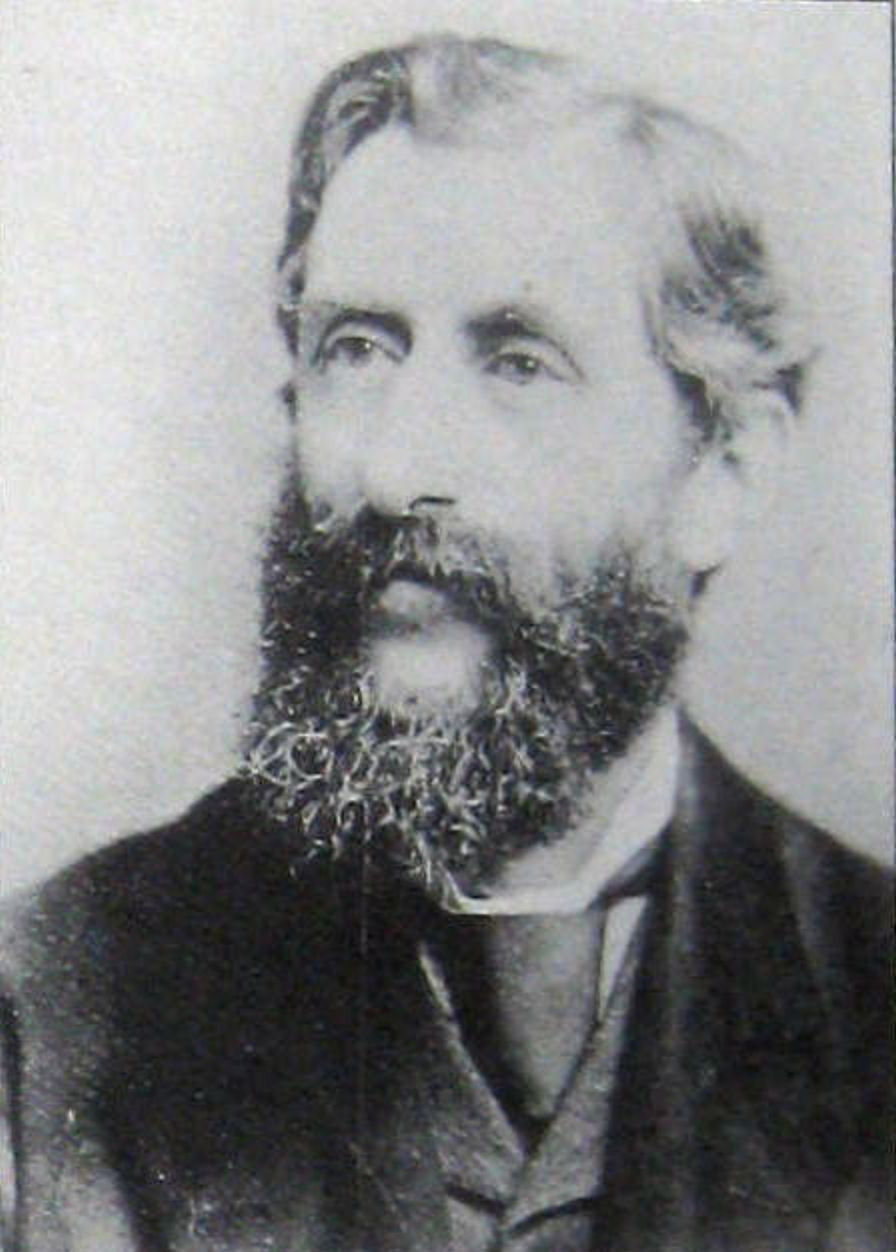
The Co-operative Society in Dover, can be traced back to Radford Evans (1835-1912), born in the village of River. He was the eldest son of Thomas Evans, a labourer at River paper mill, and his wife Ann who worked as a layer at the same mill. By the age of 14, Radford was an apprentice labourer and in 1858, he married Hannah Hopper from East Langdon. They settled in a cottage (demolished 1957), close to the old pub, Dublin Man O’ War, then in Minnis Lane, River. Hannah also worked at the paper mill but with nine children in the space of as many years, she, like other mill wives, continually had financial problems.

Successive members of the Phipps family owned the mill and workers were paid on the piecework basis – that is on the amount they individually produced and how much the product was worth at the time it was sold. The hours were long and workers bought their provisions from the Butty – the mill shop – at prices determined by the mill owner. To save expense, workers were often issued with truck (tickets), as part of their pay. These could only be spent at the shop. It was not until 1875 that Trucking was finally declared unlawful in England.

Radford was bright and self-taught. His literary skills were such that he wrote pamphlets on the workings of paper mills and on the village of River. By 1874, he had been promoted to foreman and although they were now being paid by cash, most provisions were bought from the Butty shop at inflated prices. Radford, along with six other men, decided to form a co-operative to purchase their groceries wholesale.

Their inspiration came from Rochdale where, on 21 December 1844, a group of mill workers had set up a co-operative store. They had bought their goods wholesale and sold them to their members at market prices. They then divided any profits among the members in proportion to the amount spent.

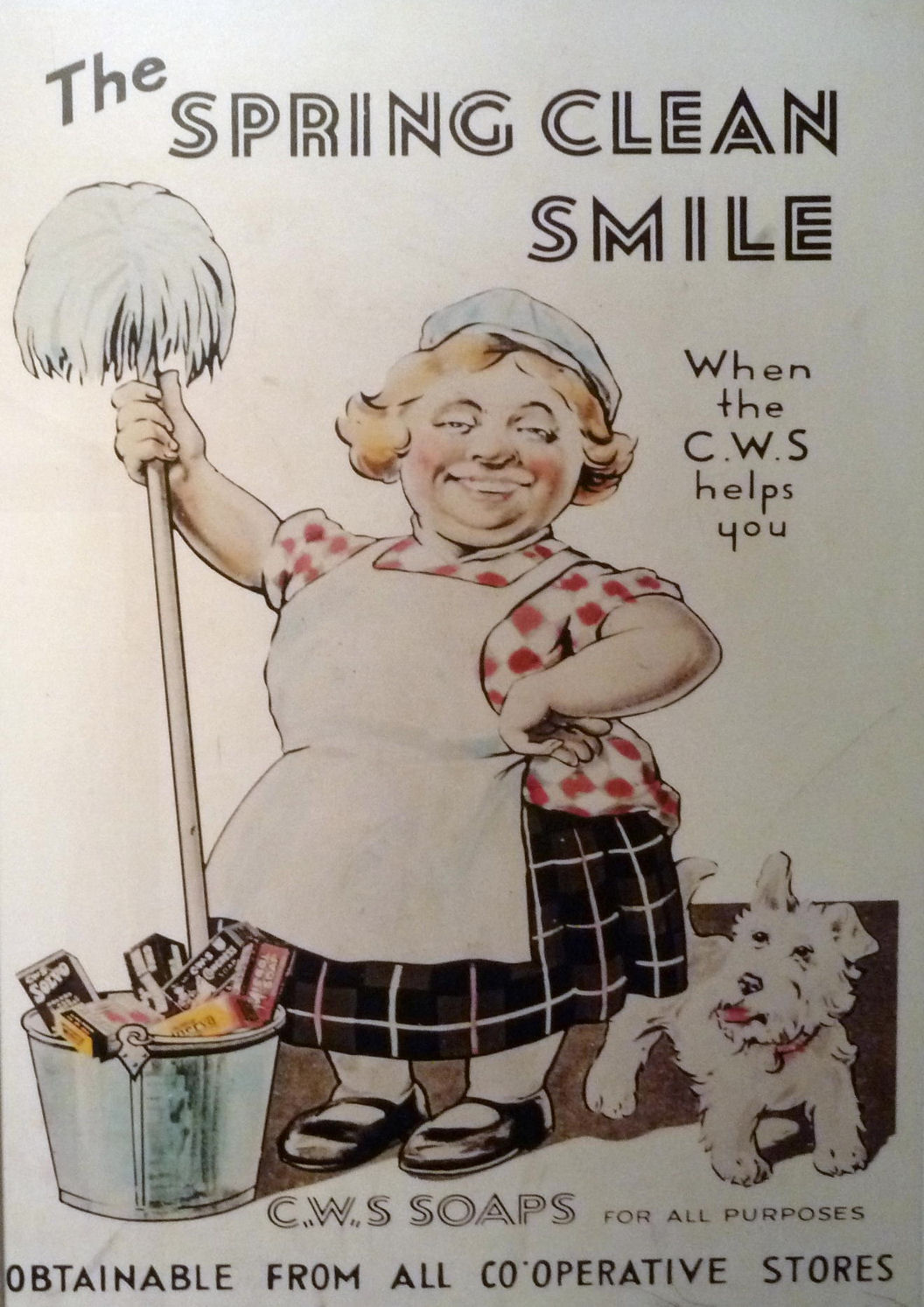
CWS advert

CWS advert

The biggest problem the Rochdale pioneers faced was boycott by wholesale merchants and as the movement grew, having to bid against other co-operatives for goods that were kept deliberately short, by wholesalers. To get round these problems, the co-operatives had set up, on 3 April 1863, the Co-operative Wholesale Industrial and Provident Society Limited (CWS), in Manchester.

The idea of co-operative quickly caught the imagination of other workers at River paper mill and in May 1880, under the Industrial and Provident or Friendly Societies Act (1876), the River Co-operative Society, (RCS) was registered. Originally there were 65 members and each member paid 1s (5p) a week that amounted to £139 share capital for the first year. Out of this the RCS paid 10s (50p) to join the CWS and bought tea, coffee, cocoa and corned beef in bulk.

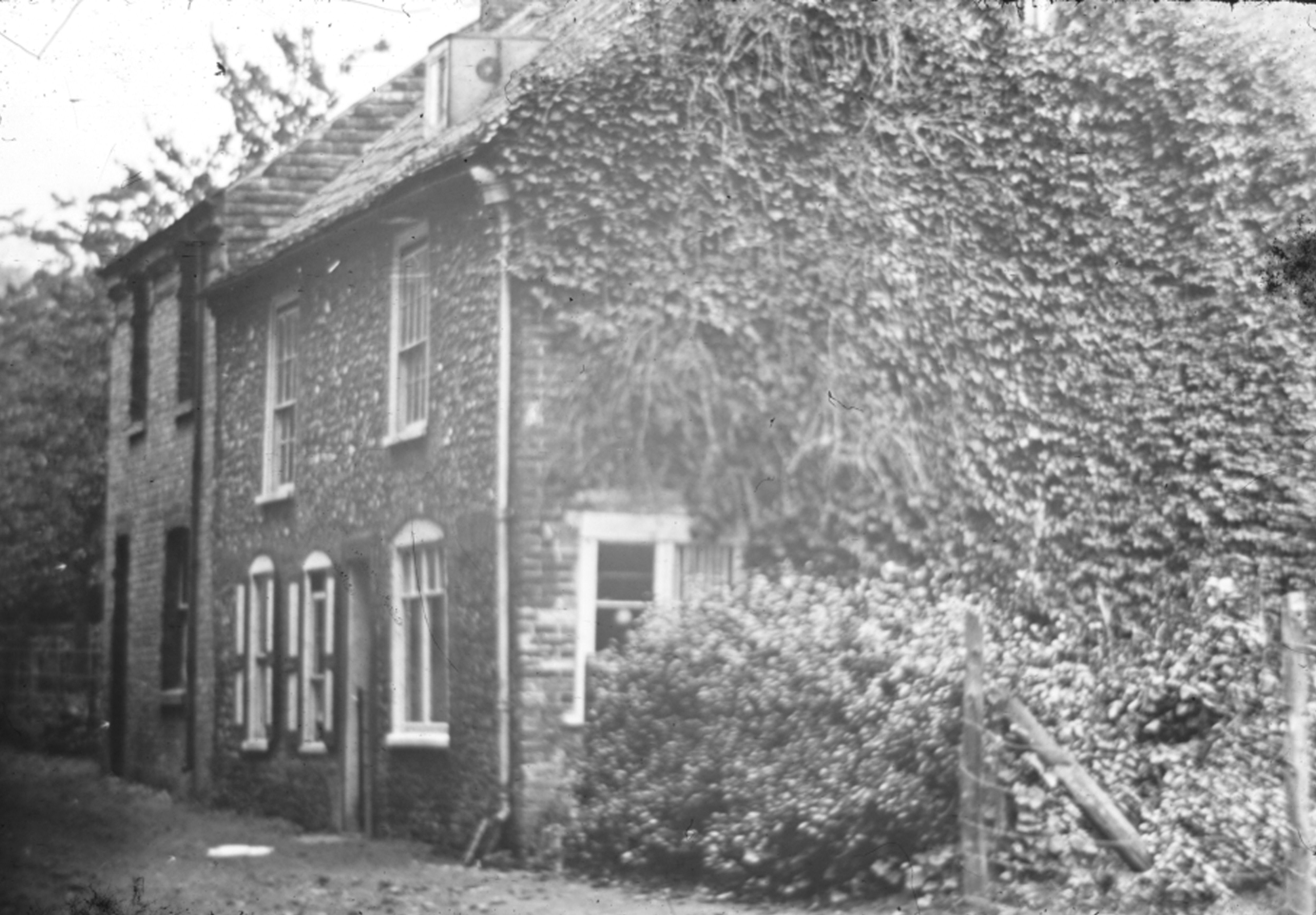
92 Lower Road, River Co-op original premises - Budge Adams

92 Lower Road, River Co-op original premises – Budge Adams

Business quickly grew and the sales at the end of the first year amounted to £1,162 and they established their first shop, at 92 Lower Road, River. The house is still there. Radford Evans was elected secretary and within a year, a small bakery was built. This brought their first confrontation with local businesses. Mannering family owned the corn mills and they refused to supply the RCS with flour. Although Radford Evans was able to get supplies from further a field as time passed the boycott spread.

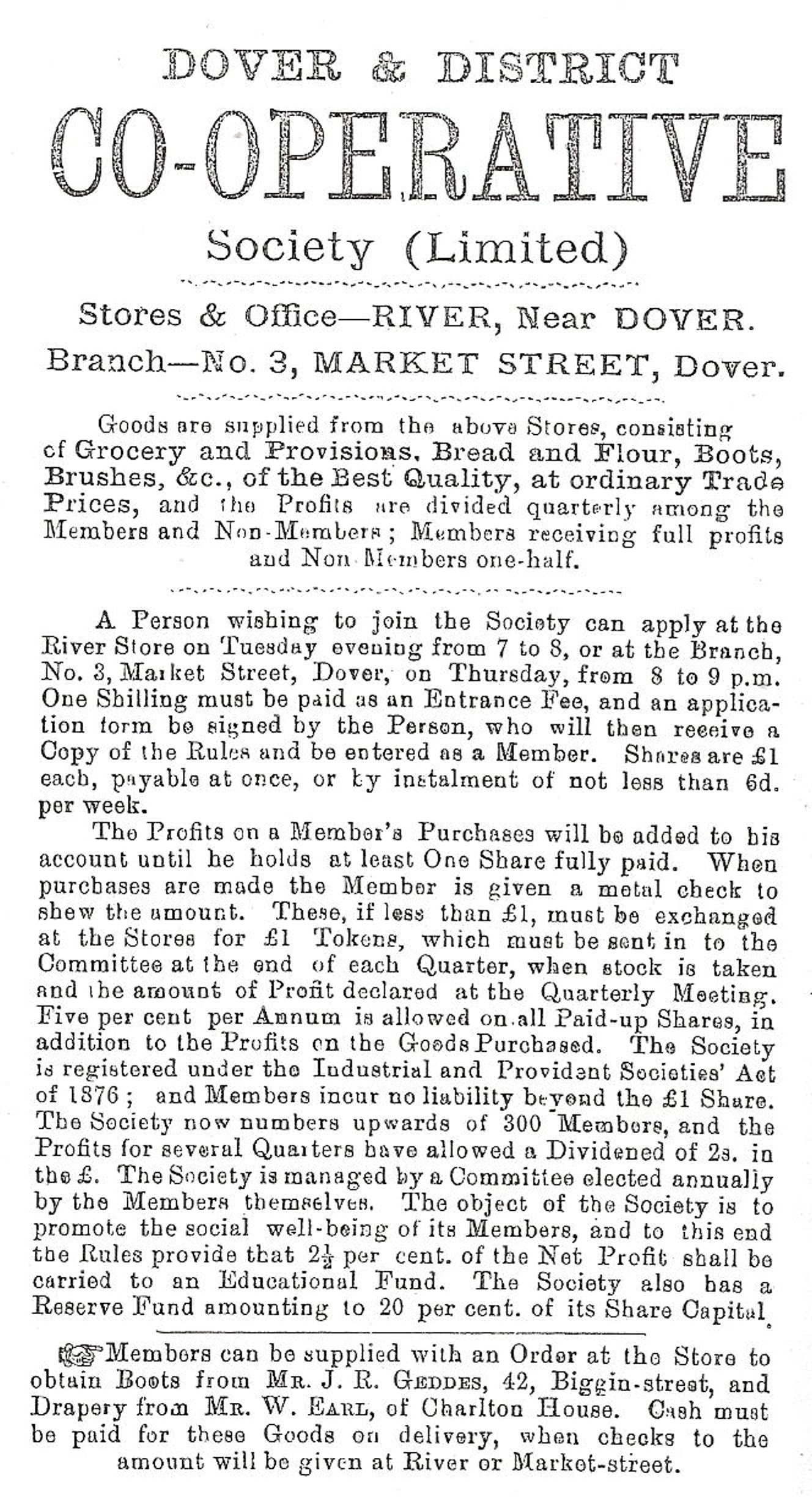
1887 Advert stating Dover & District Co-operative 1887 - Stores and Office River with a branch 3 Market Street.

1887 Advert stating Dover & District Co-operative 1887 – Stores and Office River with a branch 3 Market Street.

Nonetheless, in 1882, RCS acquired a small house at East Cliff but sadly this business failed. Not long after they officially re-registered as Dover and District Co-operative Society Ltd (DDCS) although publicly were known as the River Co-operative Society for a very long time after. With a loan from the Sheerness Co-operative DDCS bought 3 Market Street. Centrally located the site augured well but George Rubie, who owned one of Dover’s major grocery stores and had a lot of influence in the town, organised a boycott.

Enthusiasm with the co-op movement was at its lowest point and Filmer Phipps, the mill owner, was declared bankrupt in 1888. Working at the Market Street store was Joseph Rayner, who took over the reigns and actively, countering Rubie’s boycott. Soon the store outgrew the premises. On 10 April 1889, having purchased the site in Biggin Street, DDCS but reverting to its original name, moved in with Rayner in charge.

This was a major confrontation as George Rubie’s main shop was close by. So angry was Rubie that he re-wrote his Will leaving a pension for local elderly persons of good character connected with the grocery trade, ‘but not the Co-operative Society!’ The Rubie Charity is now handled by the Municipal Charities of Dover.

On the day the Biggin Street shop opened some 800 of the 921 members were entertained to a celebration tea and were addressed by both the Secretary, Radford Evans and the now President of DDCS, Joseph Rayner.

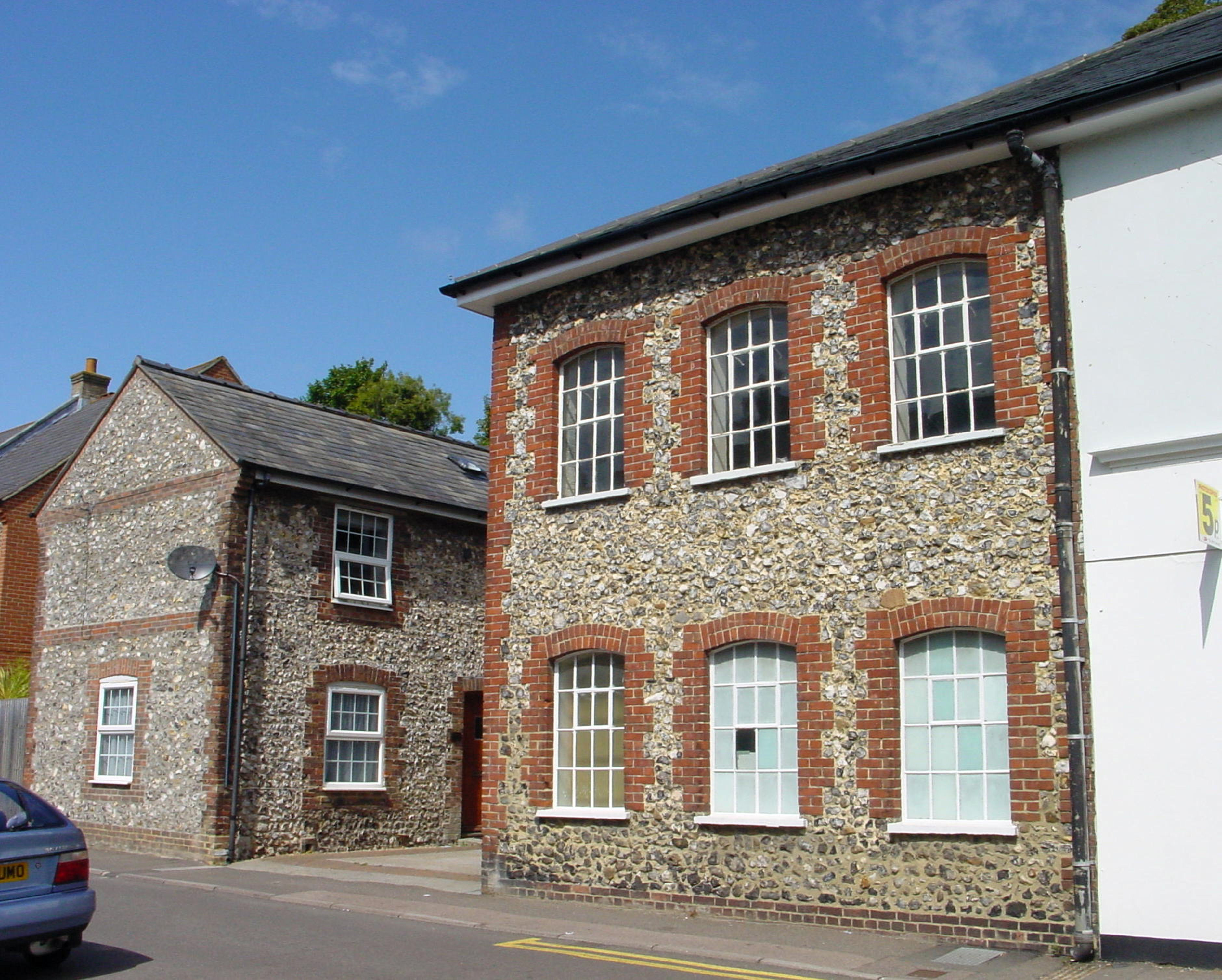
Original purpose built Co-op, Lower Road, River

Original purpose built Co-op, Lower Road, River

In the meantime, DDCS bought, for £2,000, a plot further up Lower Road, River where the Co-operative store is today. There the shop, assembly room, bakery, and for their employees, cottages were built. Most of these building are still there today. Rayner also persuaded local corn millers that it was in their best interest to supply at prevailing market prices. They were happy to do so. In 1895, the Society reported that their capital was £17,276 and the annual receipts was £38,000, the dividend paid to their 1770 members was 2s6d in the pound on purchases!

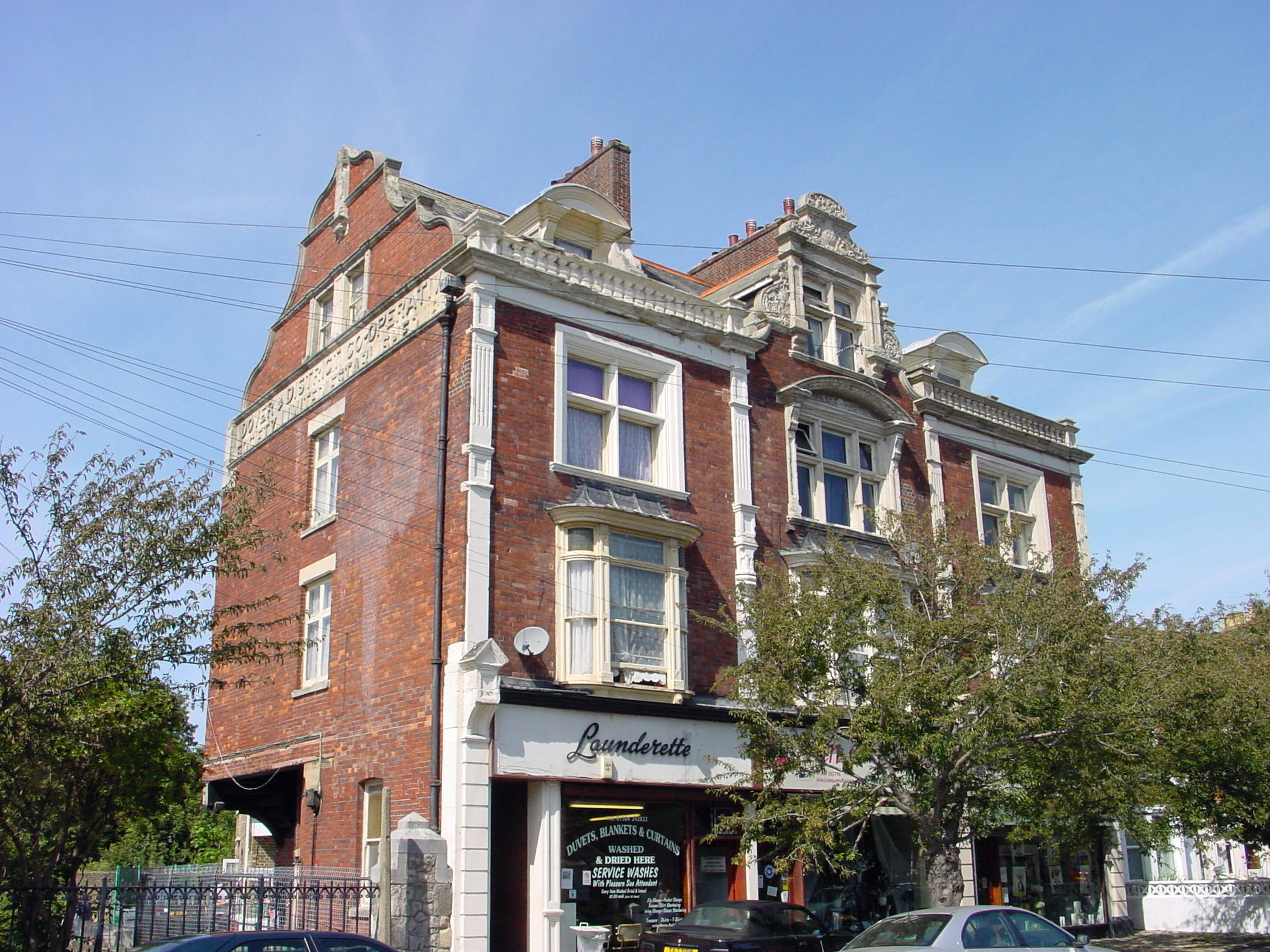
Iconic Co-op Building, Cherry Tree Avenue

Iconic Co-op Building, Cherry Tree Avenue

A new branch of DDCS opened in Winchelsea Road in December 1896, South Road, Tower Hamlets in 1898. In 1905, total sales amounted to £81,807 and they opened their iconic shop on Cherry Tree Avenue. In Biggin Street DDCS opened a restaurant and cake shop while their bakery, which was still entirely carried on at River, baked 240,000 gallons that year. Other facilities DDCS offered included a Penny Bank, Building Society, and library with reading room as well as a Mutuality Club.

James Simpson - 173 tons gross owned by River Co-op

James Simpson – 173 tons gross owned by River Co-op

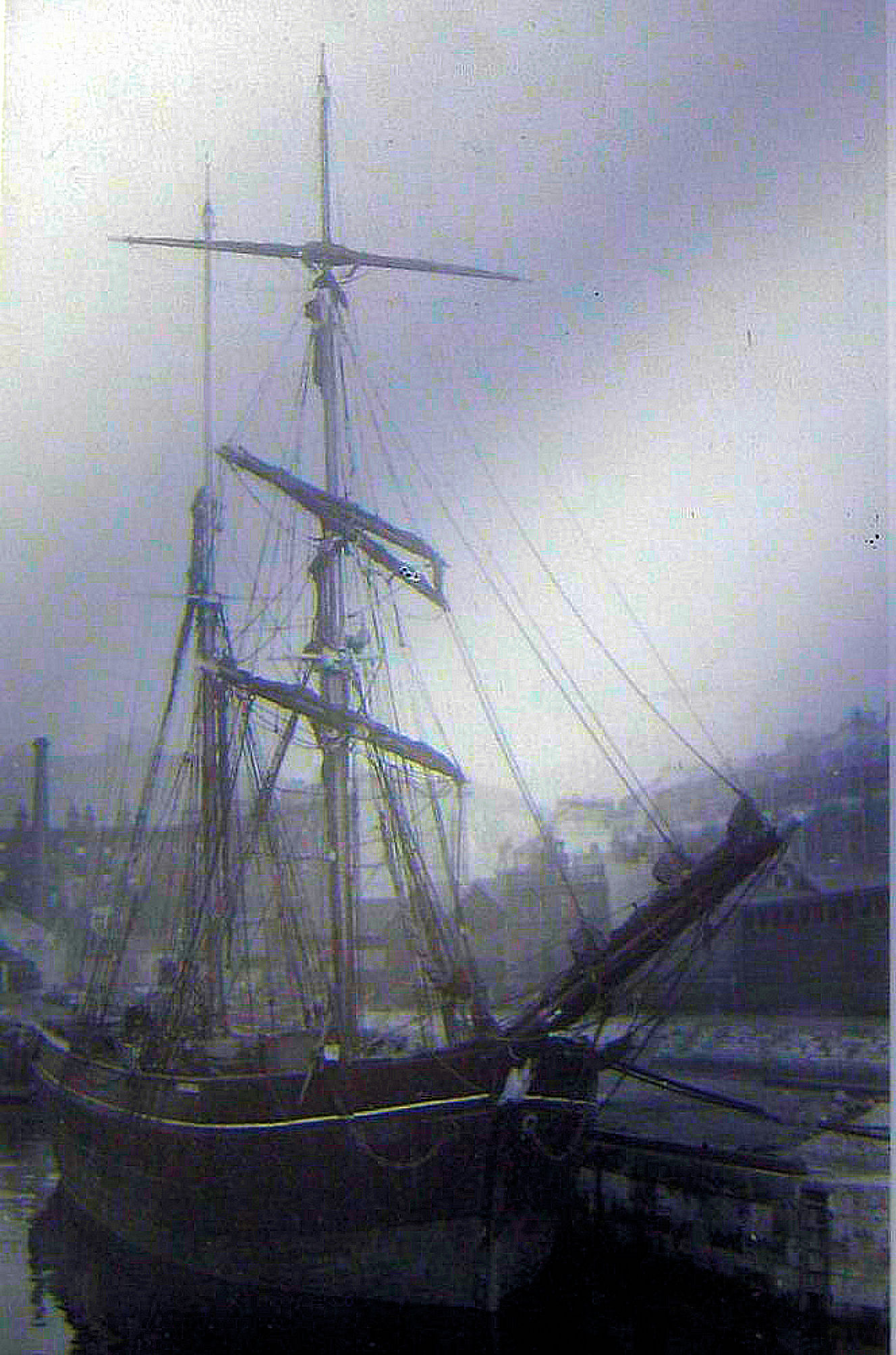
The latter enabled members to have loan vouchers to spend in the DDCS stores valued at £5 or £10, which were paid back as 1s (5p) a week. DDCS paid the Royal Victoria Hospital in Dover’s High Street, to give members a discount on treatments and also ran a Women’s Guild and junior and senior choirs. To bring coal from Newcastle for members, they bought their own brigantine, James Simpson, built in 1857.

In May 1912, Joseph Rayner senior retired but instigated the motion, ‘No person shall be eligible to serve on the Committee of Management if he has a son or daughter in the employ of the Society.’ His sons Joseph and George had served under him, Joseph manager of the River store and George the manager of the Cherry Tree Avenue branch.

Radford Evans died at Princess Square, Bayswater on 12 September that year, he was aged 76. Radford was buried in the family grave at Finchley and on the day of his funeral all the DDCS shops closed. Hannah, Radford’s wife, died in March 1917 in Paddington.

The shop in Biggin Street was named as the registered office in 1914, and thereafter was referred to as the Central Store. On 4 August, World War I (1914-1918) was declared and the initial effect on DDCS was similar to most other businesses, inflation. Credit was only allowed at the discretion of the managers. As the war dragged on and male employees left for the Front, their places were taken by women. On 4 September 1917 employee, Minnie Rhoda Smith aged 40 of Widred Road was killed in a bombing raid. Her coffin was borne by fellow DDCS employees.

Frederick Clark took over the River Co-op in 1918 and was, in 1945, succeeded by his son Leonard. Joseph Rayner junior was promoted to manager and buyer at the Central Store. Faced with the post-war economic depression he introduced a number of ways in which families could augment their finances. Typically, paying children 2d (approx. 1p) for every bucket of horse manure collected in the streets. At the time, DDCS had a fleet of horse drawn wagons and stables in Edwards Road, off Biggin Street. Children were also encouraged to collect, wash and return jam jars for which they received payment in kind. Often this was lumps of bread dough to bake at home.

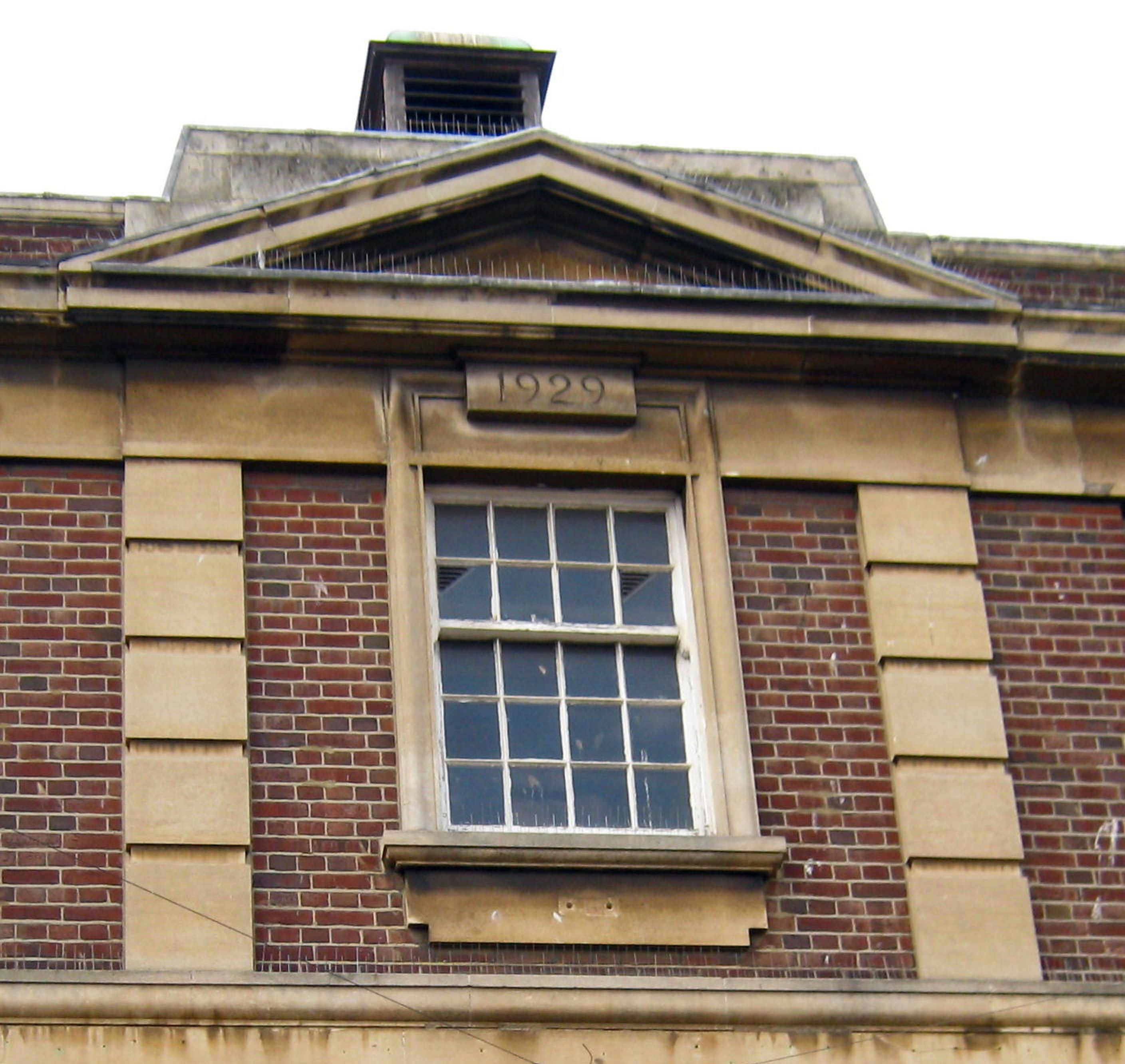
Biggin Street Co-operative building 1929 (detail) now McDonalds

Biggin Street Co-operative building 1929 (detail) now McDonalds

In 1928 work started on a neo-classical style butchery and furniture department in Biggin Street. That year the business acquired Charlton Lodge, on Maison Dieu Road, where they opened a dairy that quickly enveloped premises on Crafford Street. In October the following year Joseph Rayner jnr. died. He was buried in St Andrew’s Churchyard at Buckland after a service in Buckland Wesleyan Church. Not only did the staff of DDCS, but their families and members of the Society along with many of Dover’s elite lined the funeral route. DDCS carried on Joseph’s philosophy during the economic downturn of the 1930s when annual dividend for members brought about long queues on payout days.

At a meeting on 18 February 1931 it was agreed to use the official name, Dover and District Co-operative Society, publicly. Three days later on 21 February a meeting was held to promote the formation of the Co-operative Party at Dover. Later that year the new Party unsuccessfully ran one candidate in the Municipal Election, in the Hougham Ward.

Far reaching decisions were also being made at the headquarters of CWS, to help poor working class areas by making loans available for capital spending. With such a loan, in 1931, DDCS built a community hall on the Charlton Lodge site in Maison Dieu Road. Costing £4,000 it accommodated 800 and opened in June 1932 with a dance organised by local impresario, Freddy Overton. Another loan enabled the store on the west side of Biggin Street to be extended and in 1938, a state of the arts bakery was built next door. In July 1937 James Lawrence, one of the original founders of the DDCS died, he lived long enough to see the membership of DDCS reach 10,000.

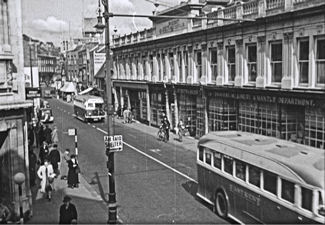
Co-operative, right on Biggin Street 1940 looking north. Ministry of Information

Co-operative, right on Biggin Street 1940 looking north. Ministry of Information

As the dark clouds of World War II gathered, the River store was designated as an ARP post. A telephone link was installed to connect it with the Police Station at the Town Hall. The stables at the back were turned into air raid shelters for 80 and the basement of the Central Store in Biggin Street was designated to provide shelter for 200. Although the different Co-op stores did not suffer a great deal of damage in the war, in May 1941 an exploding shell brought down the workshops behind the Central store. Six months later, bombing damaged its front and in the heavy bombardment of September 1944, the garage, housing the Co-op’s vehicles, was flattened. The following year Richard Fakeley, another of the Co-op pioneers, died on 18 September 1945, aged 92.

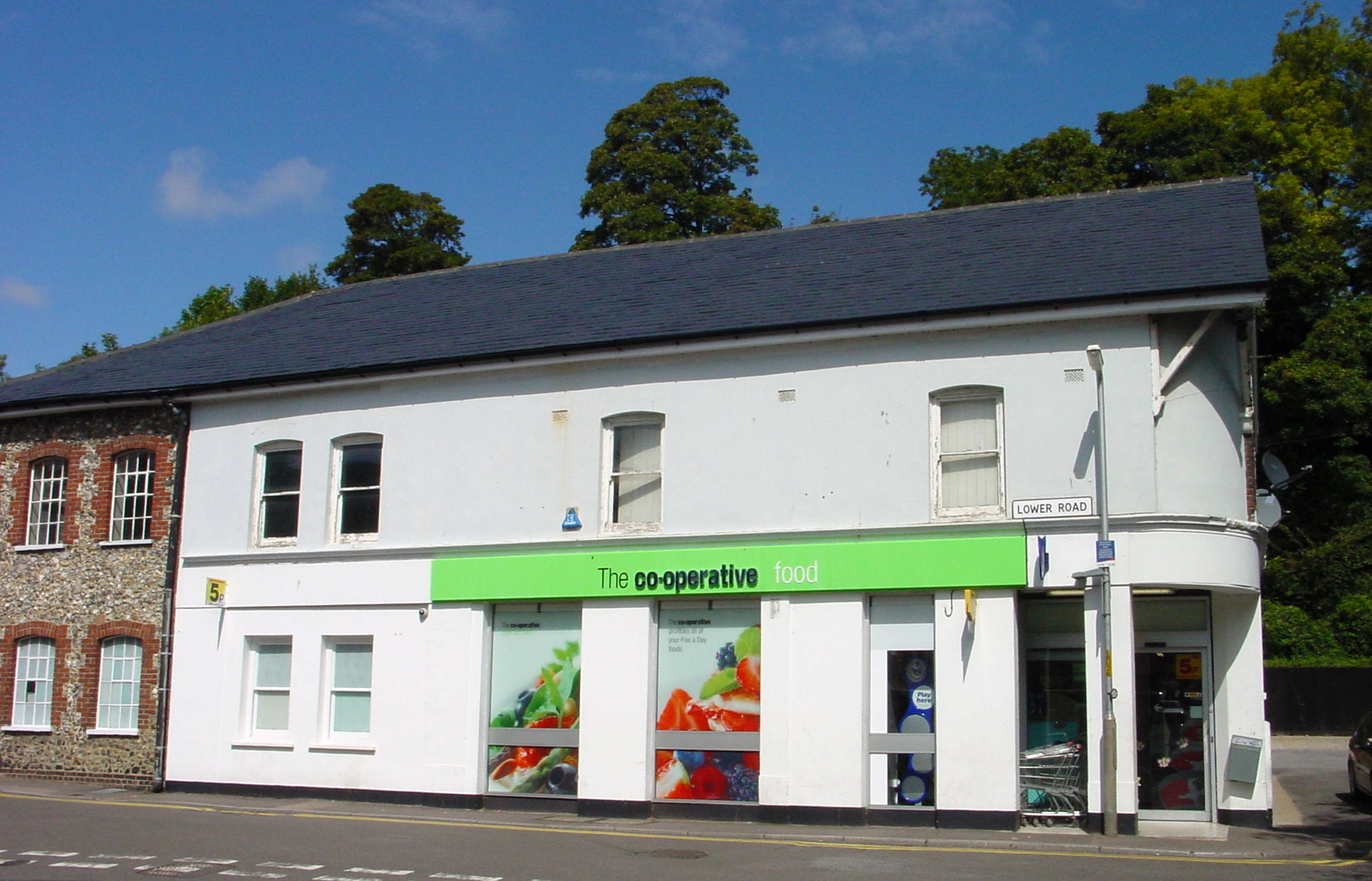
Co-op - Lower Road, River

Co-op – Lower Road, River

Following the war, DDCS reacted quickly to the needs of the townsfolk and became the main grocer. A new River store opened and shops opened on the Aycliffe, Buckland estate and on Sheridan, Folkestone, Manor and Union (later Coombe Valley) Roads. They also opened branches at Whitfield, Elvington and Aylesham. In July 1948, the Olympic Torch was carried through Dover by Sidney Doble of the Co-operative Sports Club on the way to Wembley.

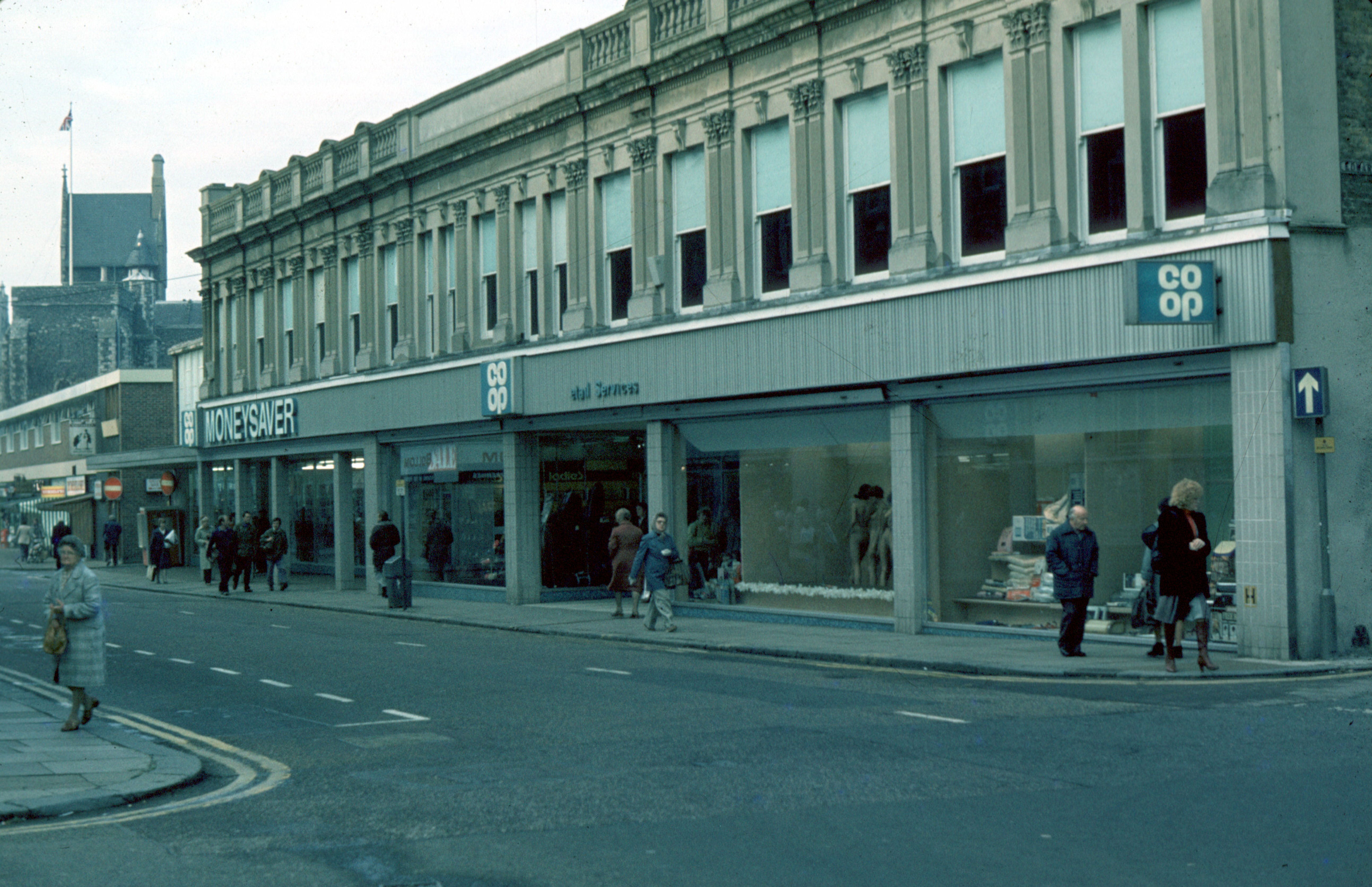
Co-operative Supermarket - Biggin Street 1981. Dover Museum

Co-operative Supermarket – Biggin Street 1981. Dover Museum

The first self-service shop in the town was the co-op store at Elms Vale in 1950. The dairy in Crafford Street was replace by a modern one in 1953 and three years later, (1956) the Biggin Street shop was revamped to become Dover’s first supermarket. The following year Co-operative Retail Services Ltd (CRS) separated from its parent company CWS and DDCS came under its umbrella. July 1960 saw the amalgamation of the Dover and Deal Co-ops and in 1971, the Dover branch reported an annual turnover of over £2m.

However, at the national level internal strife and stagnation brought about the decline of the Co-op and in Dover shop after shop closed. In 1984 the town centre electrical and furniture store on the west side of Biggin Street closed, it was said, to centralise all departments in the bigger premises on the opposite side of the road. The Crafford Street dairy closed in October 1988 and was demolished to make way for Charlton Centre car park. The Co-op Hall in Maison Dieu Road was taken over by the Post Office and since demolished. In 1990, the Biggin Street supermarket closed followed a year later by the departmental store. The request was granted for the demolition of both.

Co-operative at Stembrook 2013

Co-operative at Stembrook 2013

On 23 October 1990 the Co-op, operating under the name of Leo, opened a £7.5m food super-store with its own car park at Charlton Green employing 200 but this closed at Christmas 2004. By 2008, it was reported that only the River shop and the Dover funeral parlour remained. The year before, the national company, the Co-operative Group undertook major changes and in 2009, they acquired the Somerfield supermarket chain. Investing £240,000 on refurbishing the former store in Stembrook, this opened in July 2010 bringing a Co-op back to the centre of Dover. However, it was announced in November 2016, that the supermarket was to close in February 2017 and it did. Dover District Council purchased the building in April 2018 for starter businesses to boost the town centre’s regeneration.

First Published: Dover Mercury: 23 & 30 June and 07 July 2011

Posted in Businesses, Co-operative Society in Dover | Comments Off on Co-operative Society in Dover