Wellington Dock and Fairbairn Hand Cranked Crane

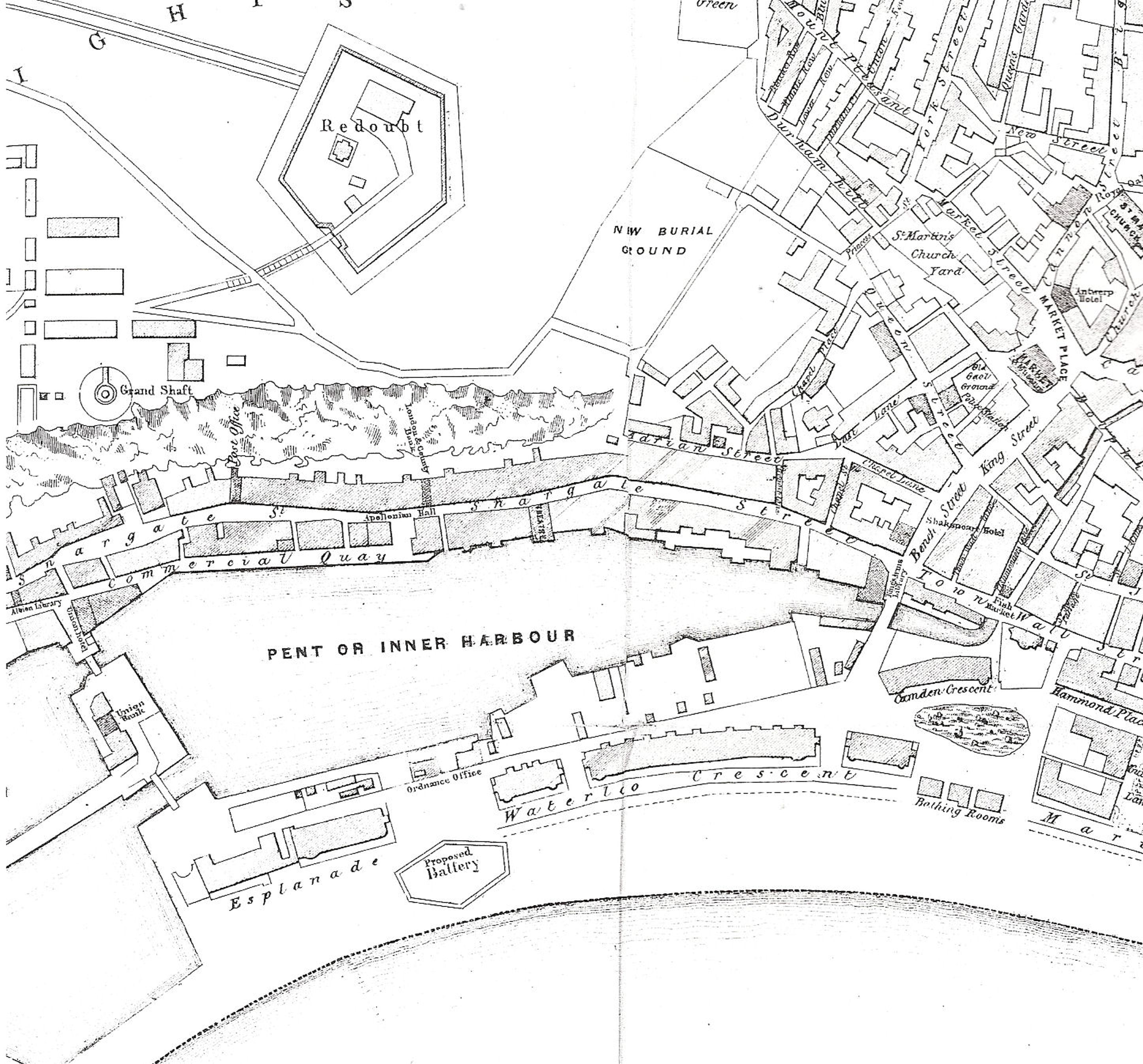
Wellington Dock, circa 1870, known at the time as the Pent or Inner Harbour

Wellington Dock, circa 1870, known at the time as the Pent or Inner Harbour

During the last few years there has been talk of filling in or/and making major alterations to the Listed Wellington Dock. To date none of these have happened, nonetheless, it is still worth reminding ourselves of its history.

Following the introduction of steam-powered ships in the 1830s, the Harbour Commissioners recognise that unless they modernised Dover’s harbour cross Channel ship owners would go elsewhere, namely Folkestone. At the time, the harbour was at the west end of the bay and comprised of the Tidal Basin, the main entrance and exit from the sea and the inner harbour or Bason, as it was called at the time and the Great Pent.

Due to a phenomenon known as the Eastward Drift shingle was deposited outside the harbour entrance. This was particularly bad at neap tides, as the tidal flow was weak. In order to try to combat the problem the River Dour was allowed to flow into the Great Pent, which was dammed at the Tidal harbour end so that it acted as a reservoir. The water collected there, at neap tides, was then released through great sluices to wash away the shingle that had collected there.

In fact, it was not very successful and following a Parliamentary Inquiry sanction was given, in 1836, to enlarge the Tidal basin from the inside. At the same time new works on the Great pent sluice dam were undertaken. This included inserting new reservoirs and culverts that everyone was assured would scour the harbour mouth of shingle. Indeed a large assemblage, including the Duke of Bedford and the Marquis of Abercorn, came to see it put into operation on 24 November 1837.
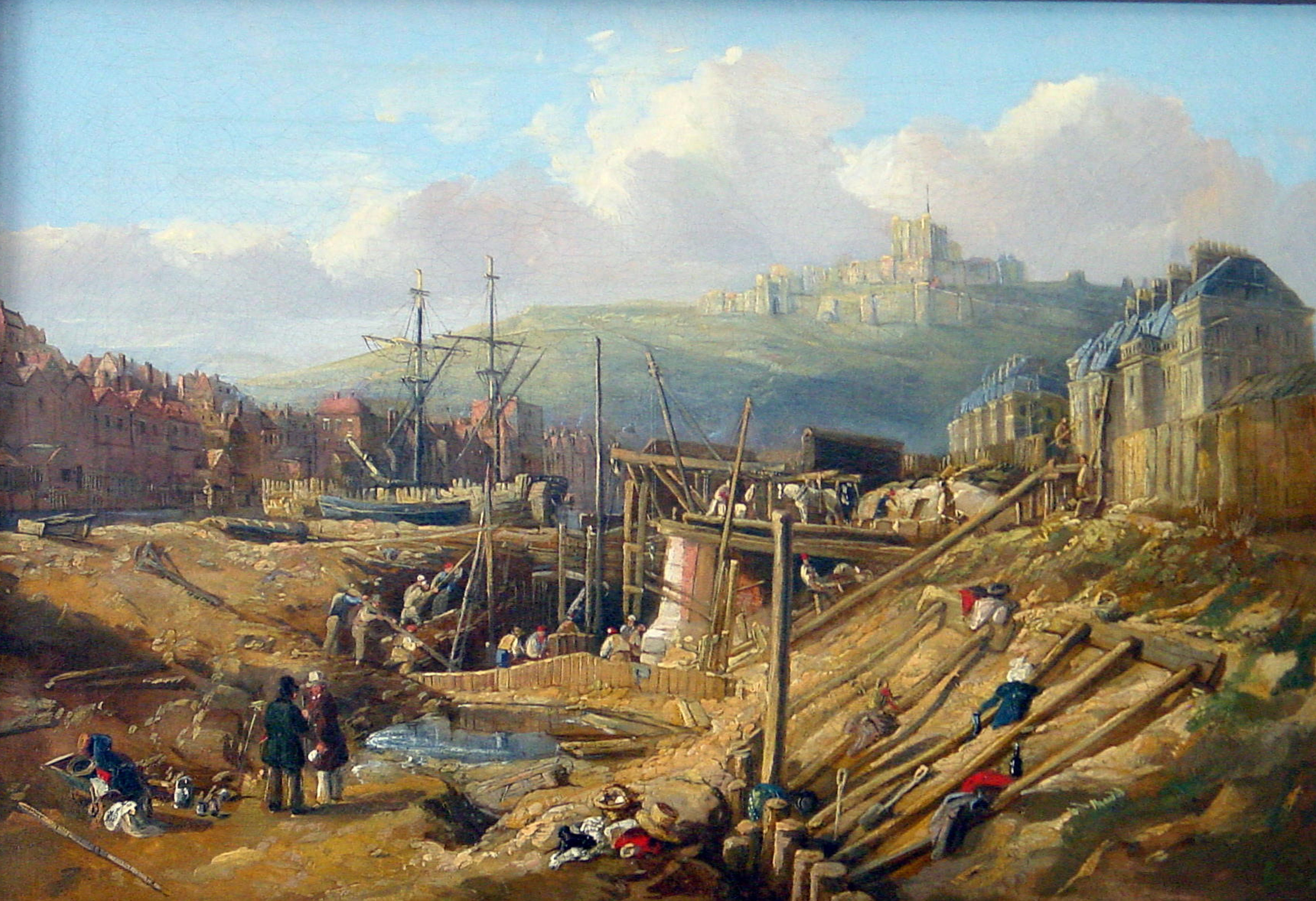
The creation of Wellington Dock - Dover Harbour Board

The creation of Wellington Dock – Dover Harbour Board

The Tidal basin was enlarged by 5 acres, which meant the demolition of the York Hotel – one of Dover’s largest at the time – two pubs, a row of high quality residential housing and the Amherst battery. Further, some 20,000 tons of mud was removed to deepen the Great Pent. Much of this was deposited on the northern side and created sufficient land not only for a wide quay but also for a street that was named after the earl of Northampton. He was a former Lord Warden who had  died in 1614 and was buried in the Castle church.
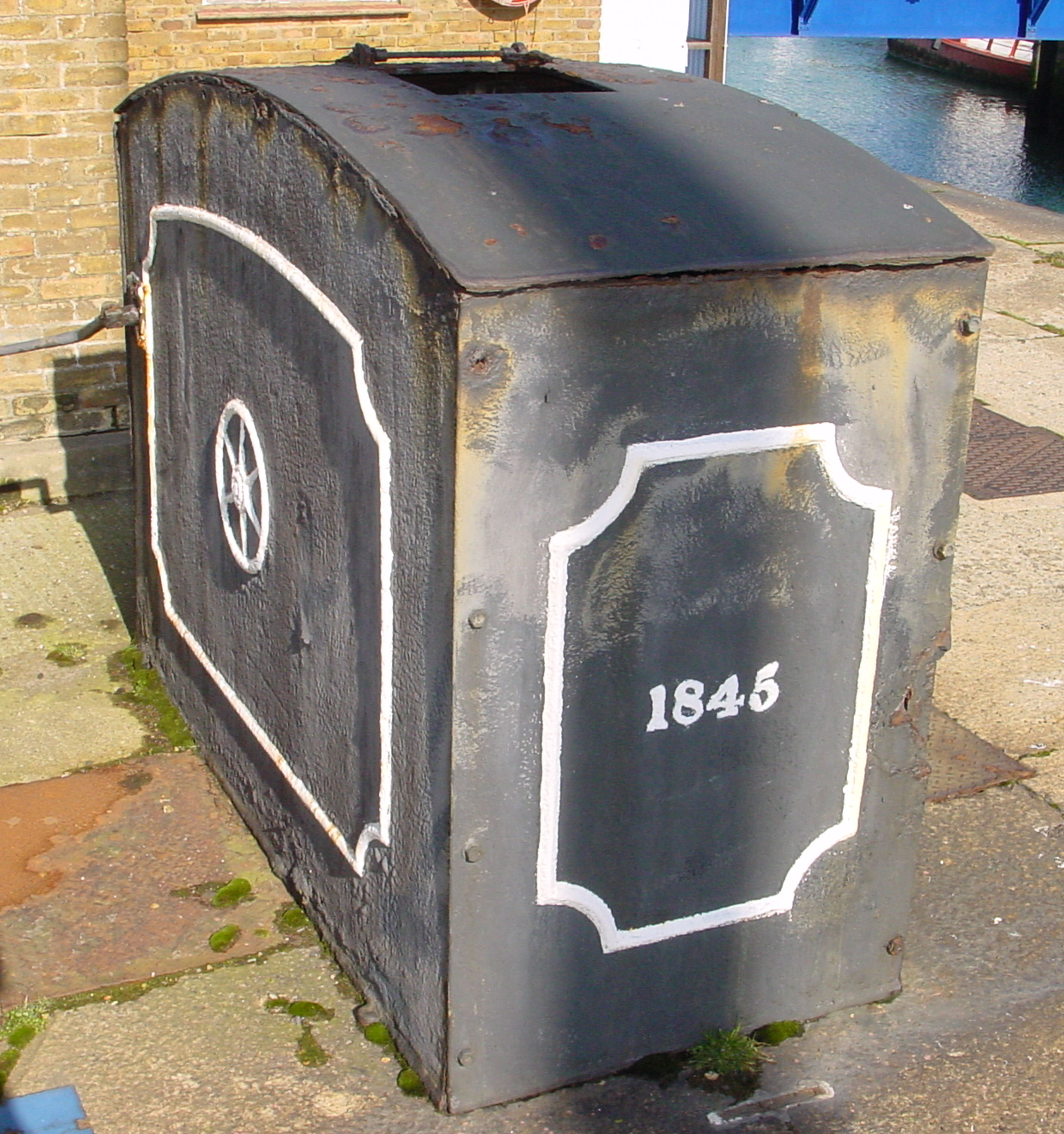
Winch mechanism for Wellington lockgates - 1845

Winch mechanism for Wellington lockgates – 1845

The Great Pent was then lined with granite and two 60-feet (18.3 metres) giant lock gates were inserted that provided access and egress between the Great Pent and the Tidal harbour. Over these, an iron bridge was built and the whole enterprise was completed in 1844 and cost about £45,000. The Lord Warden, the Duke of Wellington (1769-1852), opened what was formerly the Great Pent along with the bridge on the 13 November 1846. They were named, respectively, Wellington Dock and Wellington Bridge but known, until recent times, under its old name of the Pent or the Inner Harbour. The winch mechanism, installed in 1845, to operate the lock gates can still be seen. Before the works had been completed, an Ordnance Store was built in 1841 on Cambridge Road with a wharf alongside the new dock. This is now part of the De Bradelie Wharf complex.

Two years before, in 1844, saw South Eastern Railway Company bring the railways to Dover. The track running on a low-lying timber viaduct across the shingle of Shakespeare Beach to the terminal in Beach Street called Town Station! Prior to this time most of Dover’s shipbuilding activity took place on Shakespeare Beach. Some of the shipbuilders received compensation and most relocated along Ordnance Wharf, alongside Cambridge Road, and Commercial Quay, on the opposite side of Wellington Dock. Much of the mud lifted during the excavation was dumped at the side, which had extended and widened the Commercial Quay. On this new created land, Northampton Street was laid and completed in 1854.
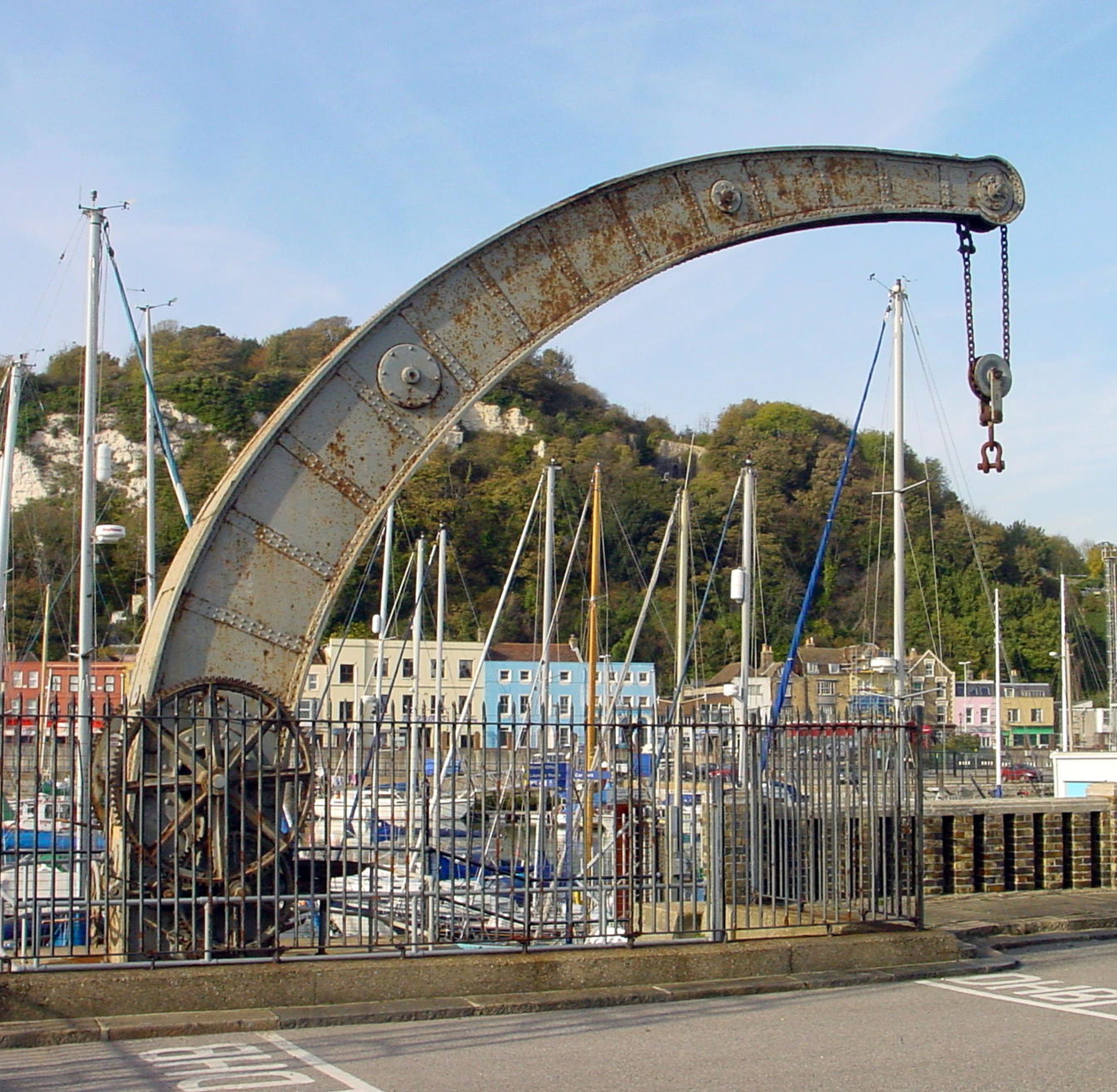
Fairbairn hand crank crane erected 1868, Wellington Dock. AS 2009

Fairbairn hand crank crane erected 1868, Wellington Dock. AS 2009

At the time, Dover shipyards were major employers and as they occupied land owned by the Harbour Commissioners, the shipbuilders paid good rent. Therefore, the Commissioners, in 1850, built the adjoining slipway with a cradle and in 1868, erected the now Listed Fairbairn Hand Cranked Crane. This was to lift heavy shipping gear into and out of the ships but later, it was used for hoisting yachts in and out of Wellington Dock.

The crane was designed and made by William Fairbairn, born in Kelso, Scotland on 19 February 1789, the son of a farmer. Apprenticed to a wheelwright, Fairbairn met and became friends of engineer George Stephenson (1781–1848). Inspired, Fairbairn went on to set up a business in Manchester designing and making machinery, including cranes, for cotton mills.
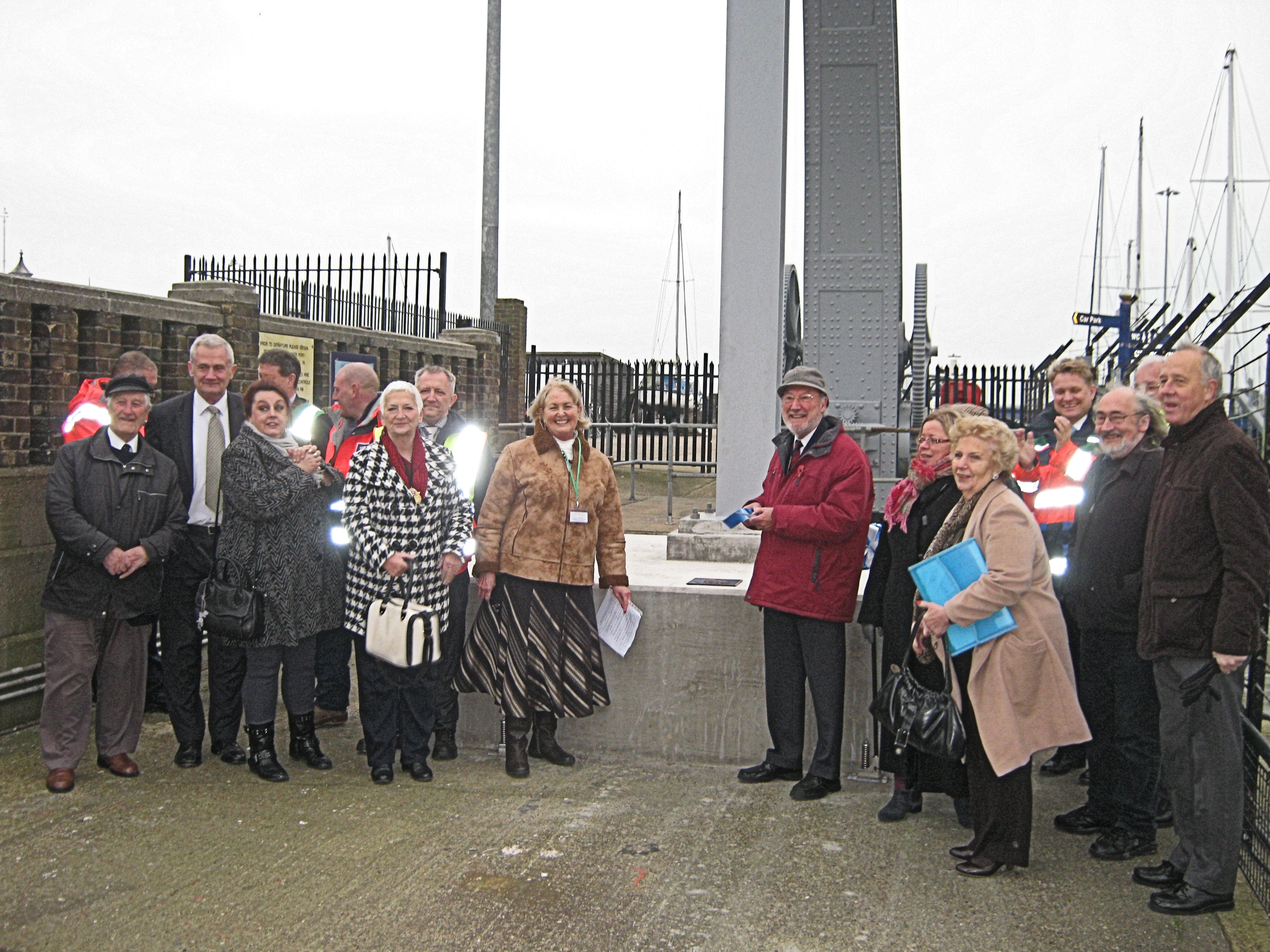
Fairbairn Crane - Cutting the ribbon ceremony following a makeover. 1 December 2014. This author in brown jacket wearing a dogtag.

Fairbairn Crane – Cutting the ribbon ceremony following a makeover. 1 December 2014. This author in brown jacket wearing a dogtag.

In 1830, Fairbairn diversified into the iron-boat building business opening a shipyard at Millwall, London and built several hundred vessels. As a shipbuilder, one of the problems Fairbairn faced was lifting the heavy metal parts into his ships. He therefore adapted his design for cotton mill cranes to shipbuilding.

This was not the only achievement in the field of engineering that Fairbairn made or for what he is remembered. That accolade goes to his invention of the hydraulic machines used to rivet the box girders and used by Stephenson for his Menai Strait Bridge, over the River Conwy in North Wales. For this, Fairbairn was elected Fellow of the Royal Society and President of the British Association. In 1869, the year the Harbour Board bought the crane, Fairbairn was created a baronet. He died at his daughter’s house, Moor Park, Surrey, on 18 August 1874, after catching a chill while opening a building in Manchester.
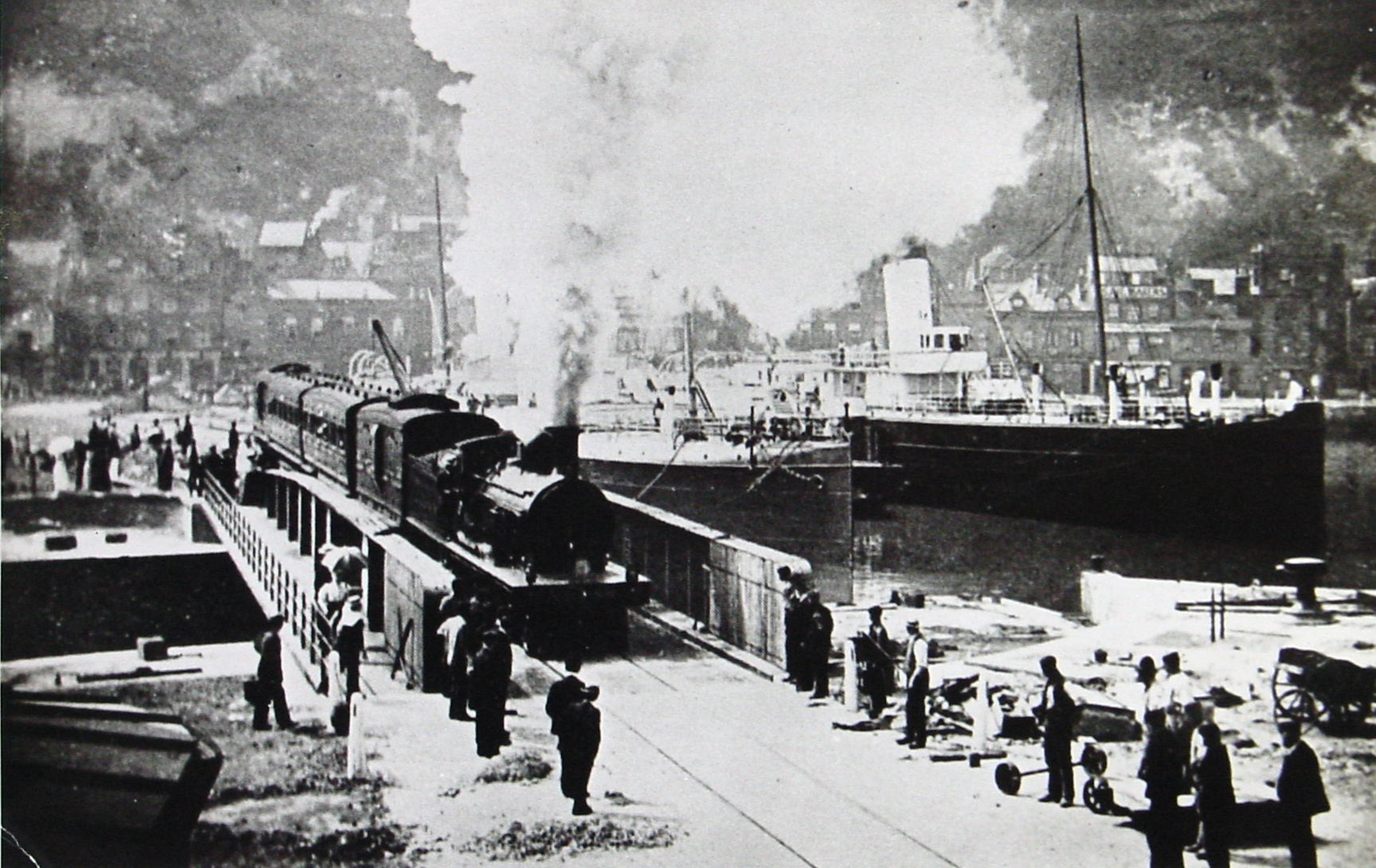
Wellington Bridge 1904, specially rebuilt to take trains. Dover Library

Wellington Bridge 1904, specially rebuilt to take trains. Dover Library

By 1888, larger steam ships were in operation so the Wellington Dock lock gates were widened. A steel bridge, completed in June 1904, replaced the original Wellington Bridge. This was swung by a combination of hydraulic and electric power enabling the laying of a 2,900-feet (884 metres) railway track. This ran from Harbour Station, along Strond Street to Union Street and then along the Prince of Wales Pier. The constructions, all by Dover Harbour Board staff, cost £600,000.

During the following thirty years, the cliff side of Wellington Dock – Commercial Quay and Northampton Street – became a thriving maritime quarter of hotels, shops, pubs and the Friendly Societies’ Convalescent home. However, the Dover Harbour Board, in 1928, sought parliamentary approval to close Commercial Quay in order to create more quayside accommodation and to increase the size of Wellington Dock. The Bill included the demolition of many of the properties between Commercial Quay and Snargate Street – Northampton Street. All these properties were leasehold, belonging to the Harbour Board.

The Dover Corporation opposed the Bill but eventually they agreed to the demolition but with the subsequent widening of Snargate Street to 50-feet (15.3 metres). The work was carried out by the Corporation and cost £7,000.  The Bill was passed in July 1929 and Wellington Dock was increased to 8 acres. As the Kent coalfield was expanding, in January 1930, Northampton Street Quay was cleared of old coal yards, redesigned and turned into the unloading point for imported wood for the coalmines.

Wellington Dock, following World War II (1939-1945), was used for repairing and laying up of cross-Channel steamers and harbour craft. The Harbour Board replaced the 75 years old gates at a cost of £35,000. The main contract was carried out by Head Wrightson and Co and completed on 31 August 1945. Repairing war-damaged quays took longer and it was not until 1951 that work was completed. Ballast Quay, on the side near the present day Bradelei Wharf, was re-designed adding nearly 50-feet (15.25 metres) to its length.
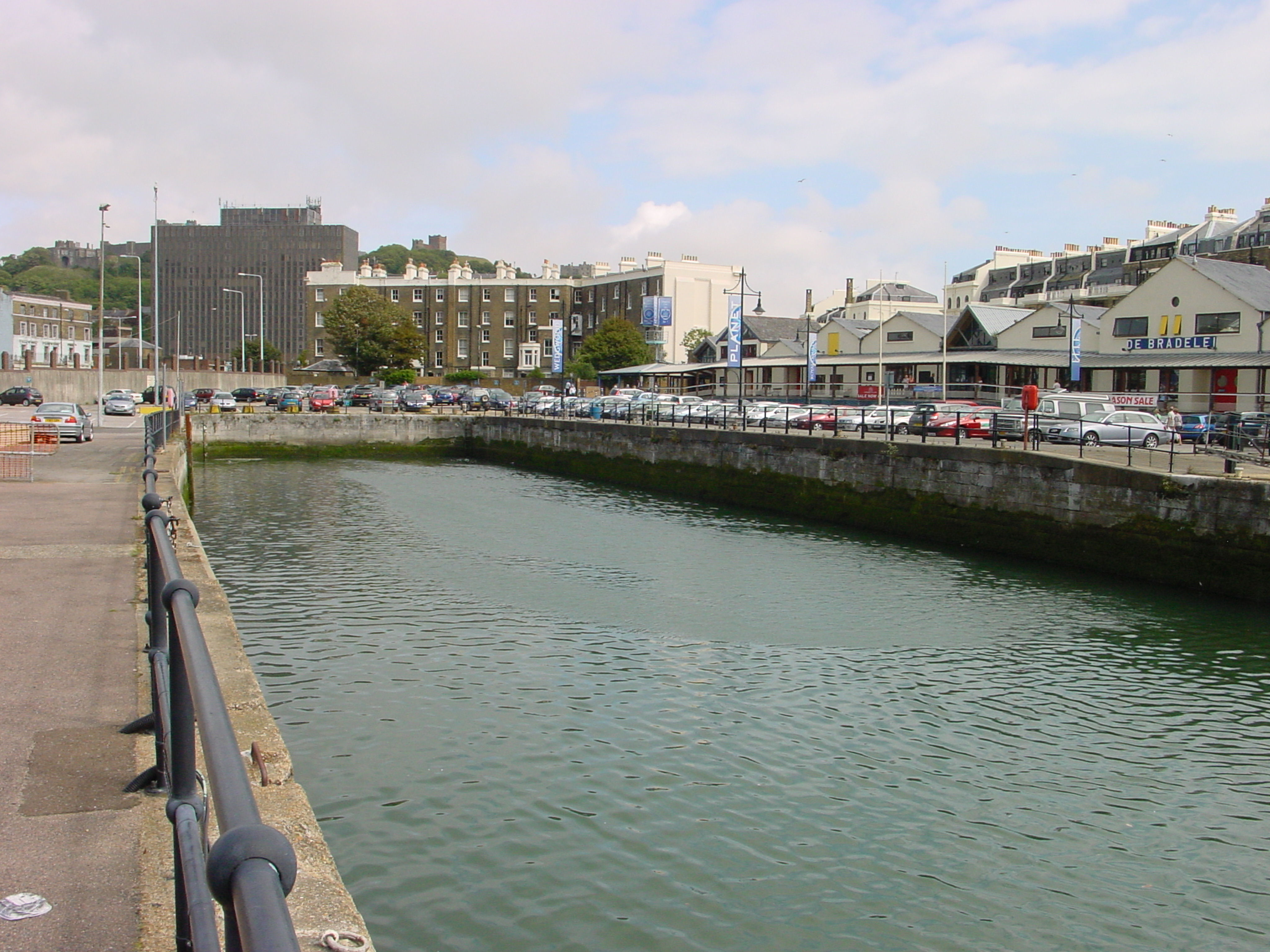
Wellington Dock east end - the Bubbles, so called because the River Dour, as it enters the dock, creates bubbles.

Wellington Dock east end – the Bubbles, so called because the River Dour, as it enters the dock, creates bubbles.

The following year the Harbour Board secured the Corporation’s approval to closure of Northampton Street and Strond Street and straightening Slip Passage. At the same time, a tennis court was laid out for the use of the Harbour Board Club members on the site of the former Synagogue on Northampton Street. This had opened in 1862 but was destroyed during the war.

Over the next few years, the quays surrounding Wellington Dock were a hive of activity, there was a yacht building and repair yard, a timber yard and sawmill a ballast-grading plant, builders’ merchants and coal storage. Cargo vessels, some appertaining to these businesses would often be seen in the dock. During the 1980s, many of these industries disappeared or moved elsewhere.
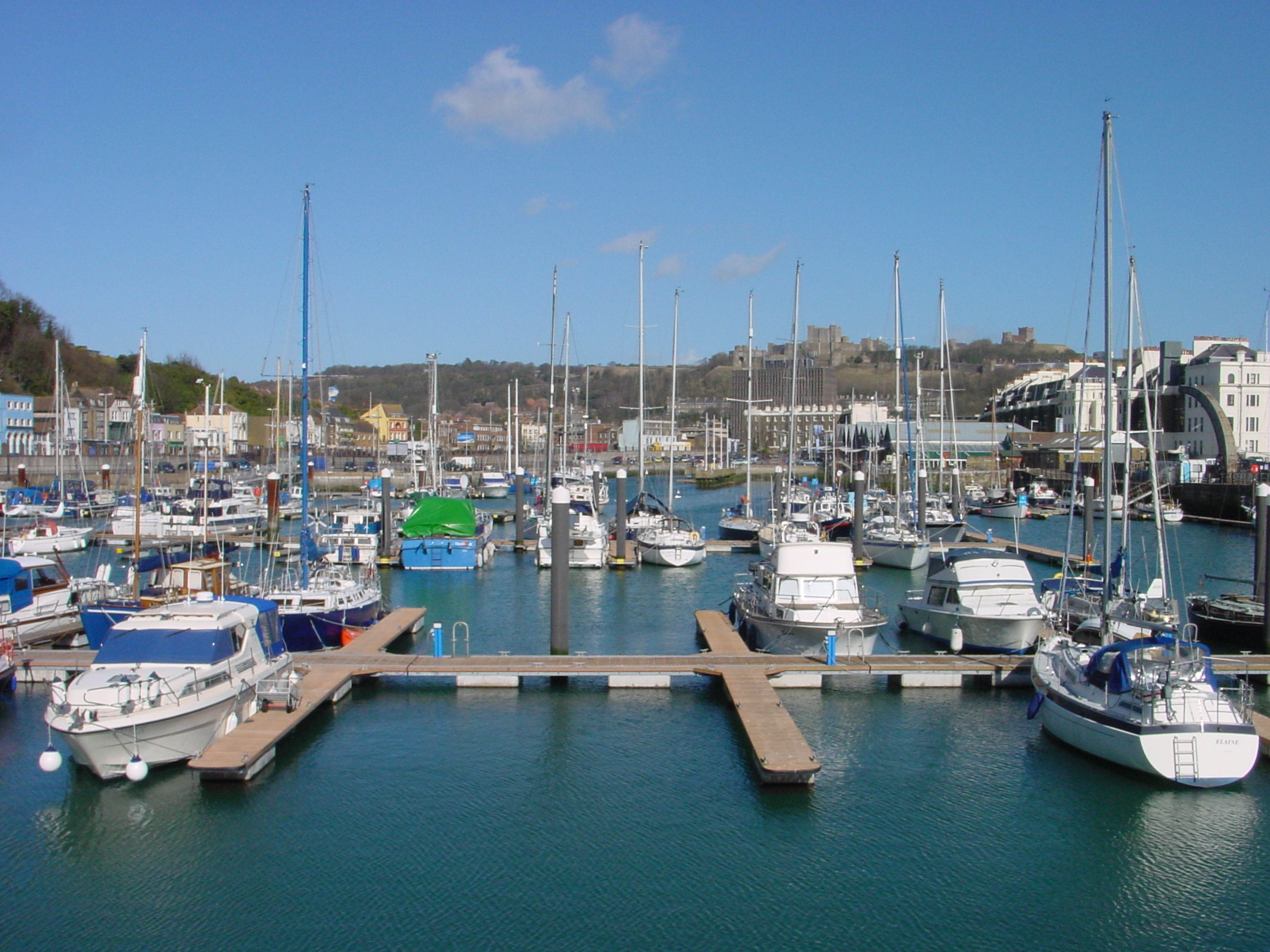
Wellington Dock yachting marina.

Wellington Dock yachting marina.

In the summer of 1996, Dover Harbour Board along with factory shopping specialists De Bradelei Mill converted part of the buildings along Cambridge Road into a factory outlet shopping centre. The outlet proved successful and the following year the remainder of the buildings were converted and a restaurant opened in the former Cullin’s boat yard.

To provide a car park the remaining dockside buildings along with the Dover Harbour Board social club, were demolished. In the car park, the tramlines that once ran along Northampton Street can still be seen. For yachtsmen, in 1991 DHB were only offering 35 marina berths in the Dock and decided to increase the number. By 2009, there was room for 157 yachts in Wellington Dock.

In March 2006, DHB announced, with great deal of publicity, that the Western Docks would be redesigned. The current proposal (2016) includes the reclaiming (filling in) the Granville Dock and Tidal Basin and modifications to the Prince of Wales Pier. Two cargo berths are to be created and, as part of the second phase of the redevelopment, a marina is to be built to the east of the Prince of Wales Pier with a waterway access cut through to the Wellington Dock for pleasure craft. Back in the early 1990s, DHB submitted a major waterfront redevelopment plan for Western Docks that included a part of the Wellington Dock to be filled in. However, the redevelopment did not take place as the Environment Agency objected on the grounds that it could precipitate unacceptable levels of flooding.
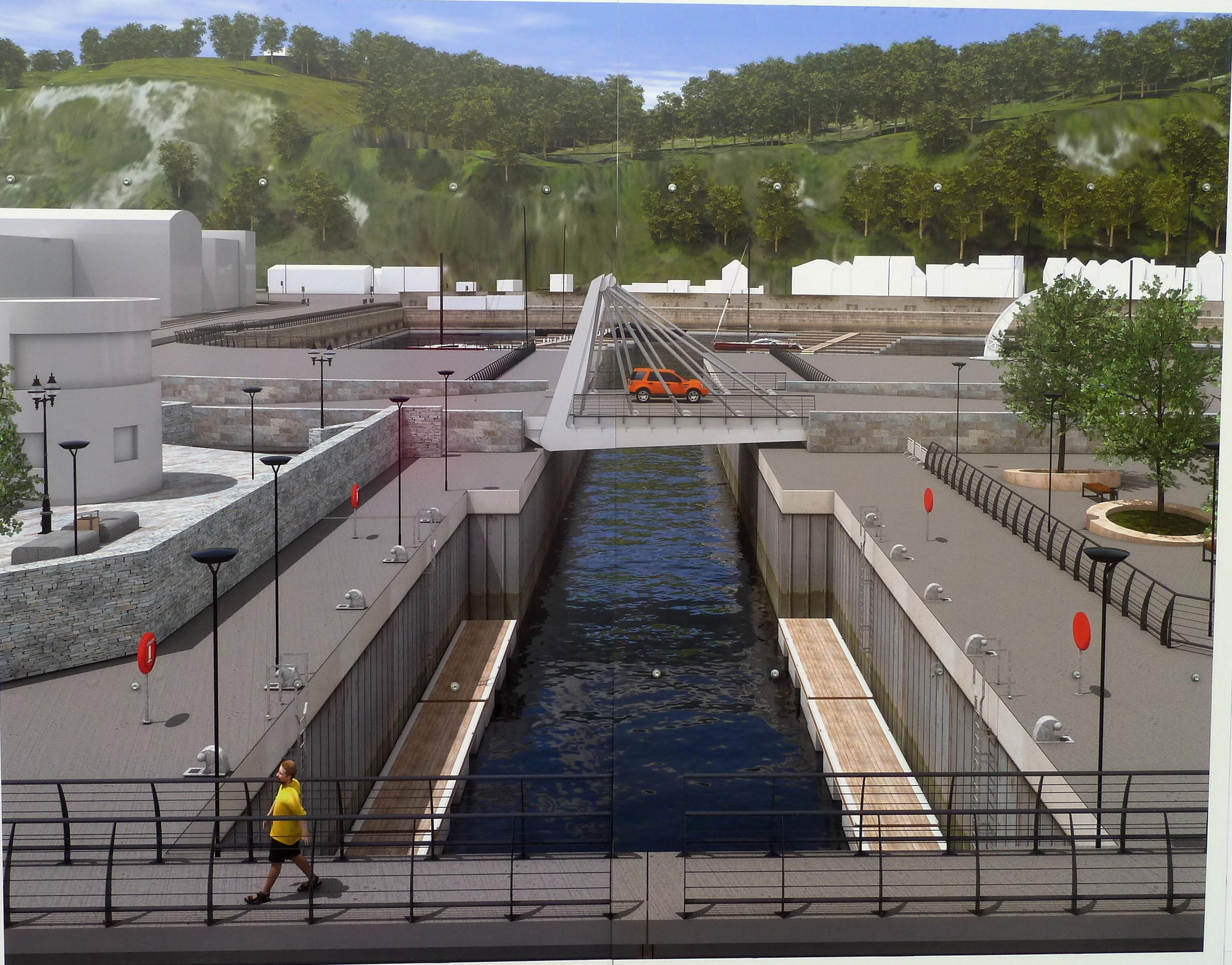
Cut through from Wellington Dock across the Seafront to the Sea proposal Note there are no Lock Gates - DHB poster January 2016

Cut through from Wellington Dock across the Seafront to the Sea proposal. Note there are no Lock Gates – DHB poster January 2016

During the public consultation process on DHB’s latest plans, Alan, the representative of Doverhistorian.com brought up the question of flooding. With the cut through from Wellington Dock across the Seafront to the sea he went so far as to write a paper showing how this could be utilised to reduce Dover’s flooding problems by the use of a specifically designed lock gate. This was submitted to, amongst others, DHB, who acknowledged the paper. However, that appears to be as far as the proposal went, for in the publicity posters, although the cut through is shown, there are no lock gates shown. Further, it would appear that Wellington Dock would become a tidal basin that is unless there is a sill that would maintain an adequate water level for yachts.

  • Published:
  • Fairbairn Hand Cranked Crane – Dover Mercury: 24 June 2010
  • Wellington Dock – Dover Mercury: 22 & 29 August & 12 September 2013
Posted in Port and Transport, Wellington Dock and Fairbairn Hand Cranked Crane | Comments Off on Wellington Dock and Fairbairn Hand Cranked Crane

The Dynasty of Dover – Part I – the Stokes

St Peter's Church, Church Whitfield. Wikapaedia

St Peter’s Church, Church Whitfield. Wikapaedia

Dover has had a number of dynastic families that have had a lasting influence on the town but perhaps the longest and the only one whose influence is still there for all to see started with Thomas Stokes in the 16th century.

Thomas was christened at St Peter’s Church, Whitfield on 29 November 1590 and married Elizabeth Nethersole on 16 July 1618, at St Mary Bredman, Canterbury. Elizabeth was the daughter of William Nethersole, who had been elected Mayor of Dover in 1603. Three years later, in 1606, with the creation of the Dover Harbour Commission, the town lost its monopoly over the harbour and the town quickly went into economic decline. This became worse as the century progressed. Like many prosperous families of the town, the Nethersoles moved away to live in Canterbury, where William Nethersole opened and ran a successful business.

Thomas Stokes served his apprenticeship as a malster for the brewing industry in Dover so the young couple decided to live in the town. Thomas, a Freeman, was appointed a churchwarden of St Mary’s Church. They had several children of which William was their eldest son. He was baptised on 4 April 1624 at St James Church, indicating that the family’s religious inclinations were changing towards the Puritans.

Remains of the Old St James Church attended by the Stokes family.

Remains of the Old St James Church attended by the Stokes family.

As he grew up William was apprenticed to his father and he eventually married local girl, Elizabeth Loper.  He probably would have spent the rest of his life grumbling about the continuing decline of Dover but as a staunch Protestant and with the coming of the Civil Wars and the Interregnum (1642–1660), he joined the army of Oliver Cromwell (1599-1658). Cromwell’s strength lay with the military but his naval strength was very weak due to the Admiralty being run by men sympathetic to the Royalist cause.

Cromwell therefore encouraged some of his soldiers to become master mariners and he gained power he ordered all the Admiralty ships to be refitted. Cromwell then appointed his own master mariners as Officers of his new Navy. Unlike the Royal Navy, Cromwell made a particular point of avoiding the press-ganging of ratings, which in turn created a great deal of loyalty from the ordinary sailors.

Naseby renamed the Royal Charles after the Restoration in 1660. Detail from painting by Jeronymus van Diest

Naseby renamed the Royal Charles after the Restoration in 1660. Detail from painting by Jeronymus van Diest

As William had taken up Cromwell’s offer of master mariner training he was appointed and eventually was appointed to the command of the pride of Cromwell’s fleet, the Naseby. During this time, William was also elected to the Dover council as a Common Councilman and in 1658, he became a Jurat or senior councillor.

Following the death of Cromwell on 3 September 1658, his much weaker son, Richard (1626–1712), succeeded and a power struggle ensued. On 21 February 1660, the Rump Parliament, established following the execution of Charles I (1625-1649), was dissolved and the original Long Parliament of 1642 was reconvened. This dissolved itself on 16 March 1660 and the predominantly Royalist Convention Parliament met on 25 April declaring that Charles II (1649-1685) had been the lawful monarch since the death of his father. Preparations for the King’s Restoration began immediately.

Restoration - Charles II landing in Dover 25 May 1660. Stone Hall, Maison Dieu former Town Hall

Restoration – Charles II landing in Dover 25 May 1660. Stone Hall, Maison Dieu former Town Hall

On 14 May, Samuel Pepys, the diarist and aid to Sir Edward Montagu, asked the captains of the Fleet – all of whom had been appointed during Oliver Cromwell’s time – if they would object to bringing Charles II back to England. According to Pepys, Sir Edward did not like William and was ready to remove him from his post when he objected.

However, William informed his lordship that ‘it was his job to stay at his command’. On 25 May Charles II arrived in England, on the Naseby, which he renamed the Royal Charles, with William in command! Although Dover welcomed Charles II, the religious sympathies of the town were Puritan so when Charles II asked for his Royal Arms to be erected in St Mary’s Church, this reluctantly happened after an official demand was made.

William returned to Dover as master of his own vessel, working the cross-Channel passage and becoming heavily involved in council affairs. Charles II, before the Reformation had agreed to a limited amount of religious dissension from the Church of England. However, in 1661 the Sedition Act was passed that forbid all those not conforming to the religious services of the established church to be removed from official office. The following year the Mayor, Richard Jacob, a Huguenot, and fifty-six Freemen of Dover were ordered to conform to religious ceremonies. One of these was William.

Richard Jacob, twenty-seven Common Council men and seven Jurats refused and were dismissed. William, although at heart a Puritan had learnt when to be quiet and became a member of the Anglican St Mary’s Church. He therefore retained his positions on the council and four years later was elected Mayor. He was subsequently elected Mayor five times. Throughout this time, the religious persecution of Non-Conformists in the town was dreadful but William remained sympathetic to his religious roots and during debates, he argued vociferously for the right to worship as one pleased.

Dover Castle where Dover's Non Conformists were imprisoned for their beliefs. AS 2013

Dover Castle where Dover’s Non Conformists were imprisoned for their beliefs. AS 2013

Even holding such views was frowned upon and Jurat, John Carlisle, the Clerk to the Passage – an early form of immigration officer, wrote a letter to the Privy Council. It arrived on 21 January 1670 and in it, he said that William was condoning secret and unlawful religious meetings. He went on to cite Samuel Taverner, Richard Matson, Edward Dell, Nathaniel Barry, Anthony Street, and Simon Yorke as those, he alleged, William supported. These men were the key Non-Conformists in the town and the King ordered the Corporation to close all their places of worship. Further, those still refusing to conform to the established Anglican Church were to be punished. Those Carlisle had cited as Non Conformists spent much of the next eighteen years in Dover Castle prison for their beliefs.

At the time John Matson, a relative of Richard Matson whom Carlisle had cited, was the Mayor. He had first been elected in 1668 having, contrary to the established rule, made the vote open to all Freemen. The old custom was for the Jurats to select four of their number, and for the Freemen to elect one of them.  John was elected Mayor again in 1669 and 1670, by open votes of the Freemen. Another Anglican, Richard Barley, appealed to the Privy Council and while the case was being examined John Carlisle acted as Mayor. The Privy Council supported Richard Barley who was then appointed Mayor.

John Matson, along with John Hammond, Arnold Braemes and others, had built houses, warehouses and quays along Strond Street in the Pier District of Dover. Strond Street was reclaimed land and from 1606, when the Dover Harbour Commission, now Dover Harbour Board (DHB) was created, all reclaimed land in the area belonged to them. In 1670, the DHB exerted their rights, commandeered the quays to create Custom House Quay, so named due to the proximity of the Custom House.

St Mary's Church, Cannon Street where elections were held.

St Mary’s Church, Cannon Street where elections were held.

The Lord Warden also held the position of the chairman of DHB and up until 1668, the combined positions were held by the King’s brother, James the Duke of York – later James II (1685-1688). In 1669 he declared himself a Roman Catholic and under the Test Act was obliged to resign from all offices including Lord Warden/Chairman of DHB and Sir Heneage Finch, 3rd Earl of Winchilsea (1628–1689) was appointed. William was elected Mayor again in 1676 and the pressing need was to reverse the deterioration of Dover’s harbour on which the livelihood of the town depended. He wrote to Charles II, who appeared to respond favourably, saying that William was ‘to report on the limits of the Port of Dover, seaward, and the wharves and quays of the harbour.’ In return, the Barons of the Exchequer asked for the limits of the Port of Dover and also the quays and wharves in the Harbour to be defined. This was carried out but little happened.

Two years later, again as Mayor, William wrote about the billeting of soldiers on the towns folk, instead of at the Castle. In his letter, he explained that he was ‘A person of very good conduct and command … extraordinarily well beloved by the all townsfolk.’ This does not appear to have been an idle boast, for in 1679 William was elected as one of the two Dover Members of Parliament. The other candidates in the election were Colonel John Strode, Thomas Papillon and Thomas Teddiman, son of Dover’s Admiral Thomas Teddiman. The elections in those days took place within St Mary’s Church.

Although Papillon came first with 201 votes and William second with 193 while Teddiman received 121 and Strode 114 he was not elected to parliament. William was the Mayor at the time so the Deputy Mayor was the returning officer. Not wishing to upset the Lord Warden, who had favoured Colonel Strode, the Deputy Mayor returned Papillon and Strode as the parliamentary members. William, however, protested and a second election was held. This time he came first with Papillon second and both were appointed Dover’s MPs.

William had been elected to what became known as the Exclusion Parliament that was assembled on 21 October 1680. It was dissolved on 18 January 1681 by Charles II in order to block the Exclusion Bill that if passed, would have excluded James, Duke of York from succeeding to the throne. William had voted for the Exclusion Bill and like his contemporaries, including Papillon, became known as a Whig.

The next Parliament was held in Oxford and Assembled on 21 March 1681. Both William and Papillon were elected as Dover’s representatives but neither attended as Parliament only lasted one week. In 1683 and William was again Mayor and Charles II ordered that Dover’s Charter was to be surrendered that had been given by Elizabeth I. The King replaced it with a new one, costing the town £141 19s 8d (£141.8½p). In order to meet this debt, the council was forced to sell valuable property at a knockdown price and this appears to include the site of Newe or Snar Gate. This had been erected in 1596 and following the demolition a stone was erected where the gate had stood that also marked the boundary stone between freehold and leasehold (from Dover Harbour Board) property. Shortly after William was ejected from his office as Mayor and Papillon was forced to seek exile in Holland.

Not long after the King died and James II (1685–1688) ascended the throne. Retribution on the town continued and was harsh. By the middle of 1688, James II’s days were numbered and plans were afoot for William of Orange to land at Dover and take over the throne. As the time grew near, about 300 locals took possession of the Castle and remained there all night. The following morning William persuaded them to leave, saying that due to the strong easterly wind William of Orange had continued to sail westward.

Arms of William III and Queen Mary 1688, St Mary's Church, Dover

Arms of William III and Queen Mary 1688, St Mary’s Church, Dover

On 5 November, William of Orange made landfall in Torbay and the Glorious Revolution (1688) saw him, together with his wife Mary – the daughter of the beleaguered James II – crowned. The congregation erected their Arms in St Mary’s Church, this time with great rejoicing.  It can still be seen in front of the Bell Ringer’s Gallery  of note that it carries William’s personal motto, ‘Jay meintendray’ meaning ‘I will maintain the right.’

William was elected Mayor for the seventh time, but was quickly in trouble again! This time for not allowing a press-gang master to operate in Dover! He died on 6 November 1691 and was buried at St Mary’s Church. Crowds lined the streets, to see his coffin carried through the town and pay their respects.

  • Published:
  • Dover Mercury: 09 October 2008
Posted in Dynasty of Dover, Part I – The Stokes | Comments Off on The Dynasty of Dover – Part I – the Stokes

Dover’s Prison

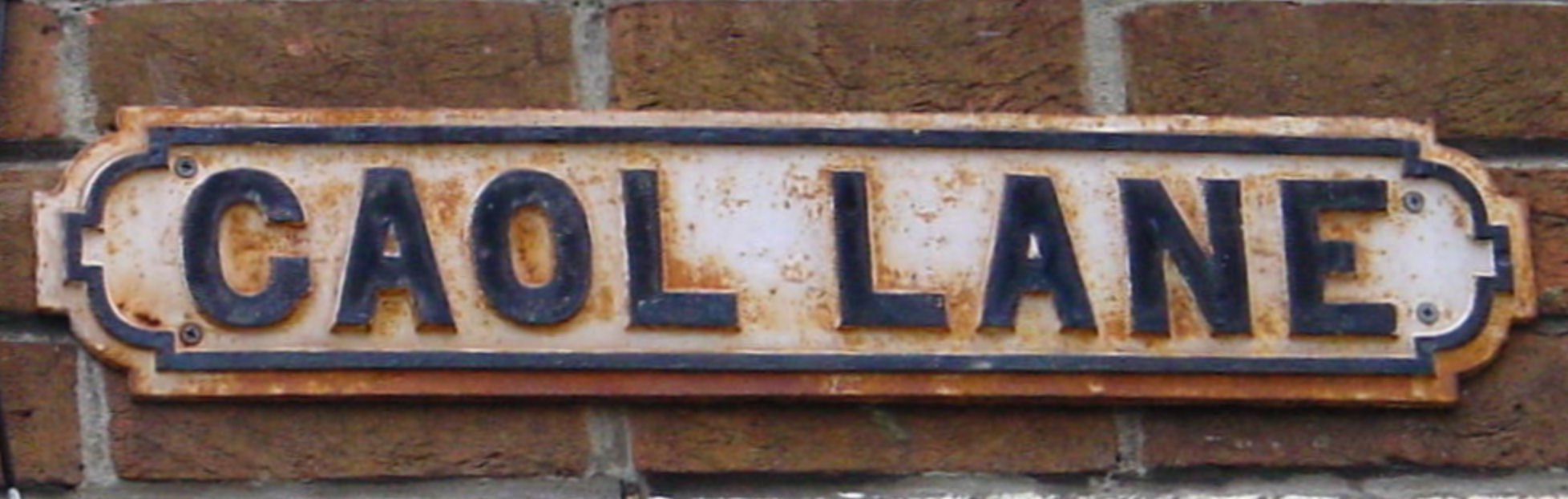
Gaol Lane, off Market Square, adjacent to Dover Museum,

Gaol Lane, off Market Square, adjacent to Dover Museum

For over a thousand years Dover does not have a gaol, jail or prison. The spellings gaol and jail are both in general use, but gaol has historically been in England while jail is used in the USA. The word prison is generic.

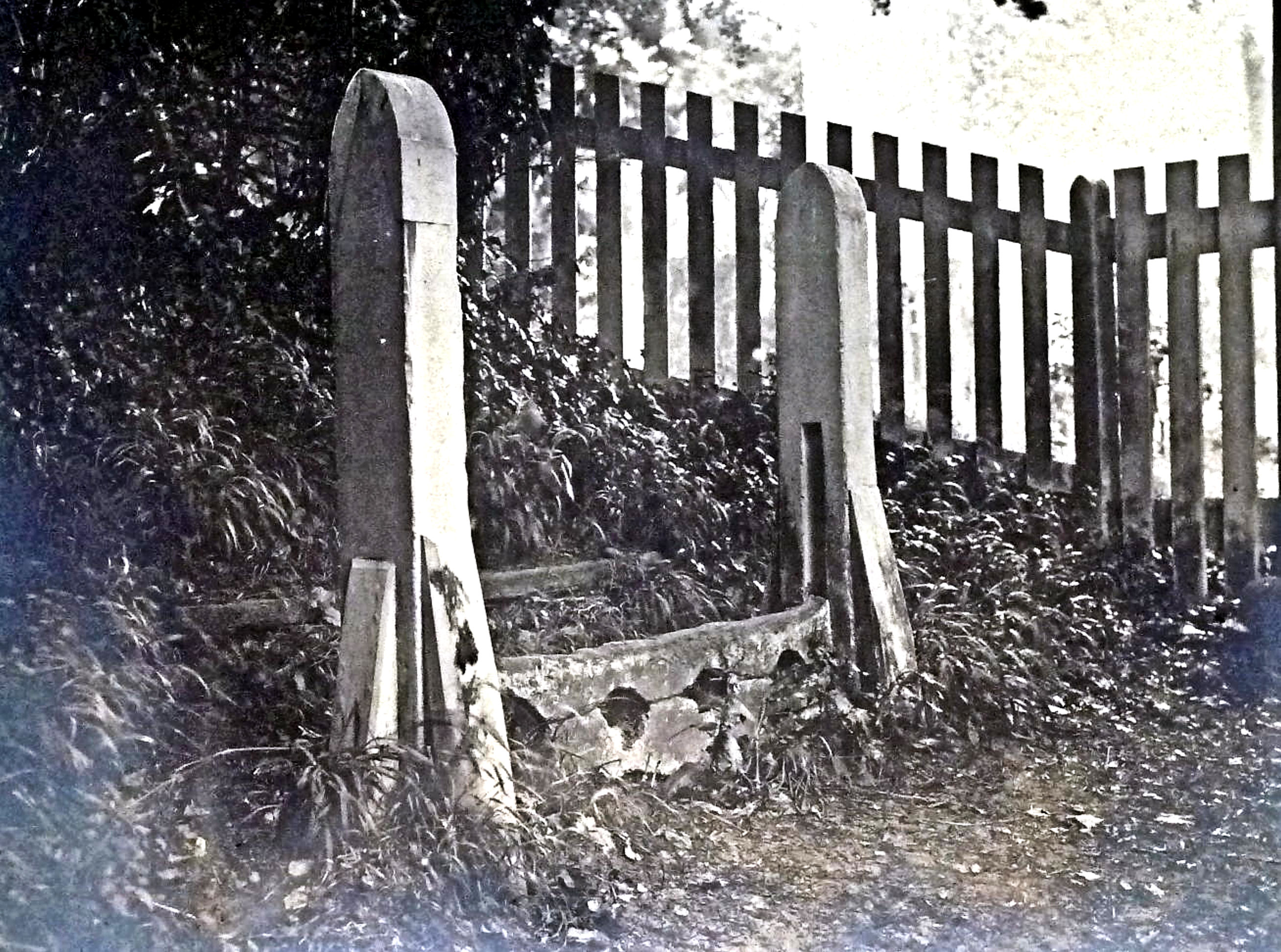
Prior to 1746, Dover had a number of gaols, mainly housed in the ancient town wall gate-towers. However, the preferred punishment was the medieval forms as locals enjoyed them. These were held in the Market Square and included the cage, stocks, pillory and whipping post. Agnes Jaoman was punished for roasting mutton on a fast day in the latter days of Mary I (1553-1558) reign. She was condemned to sit in the open market with her feet in the stocks and the shoulder of mutton before her and ‘afterwards to be commytted to prison there to remain until the ordenory taike further order therein.’ Agnes’s full story is told in the book: Haunted Dover.

 Dover Society Plaque - Punishment Market Lane

Dover Society Plaque – Punishment Market Lane

The ducking stool over the River Dour, which was deeper in those days, was a favourite for punishing women. It was also used to punish adulterers while drunkards would be tied to a whipping post. Later the favourite punishment for women, when the town raised enough money to buy one, was the morter. This was a wooden yoke to which her outstretched arms were tied, she would then have to wear it for up to several days at a time without being freed to sleep, eat or go to the lavatory.

For men it was the pillory. One record tells us of Richard Shoveler who was convicted of being a common cutpurse and ordered to be put in the pillory with one of his ears nailed to the woodwork. The Bailiff or his deputy was to give a ‘knyffe in his hand and he leafe to cut off or els stande style there – this done to be done in the open plaice of market with a paper one his head.’ There is a Dover Society plaque nearby where these punishments took place.

Stocks at Tilmanstone c1900. David Iron

Stocks at Tilmanstone c1900. David Iron

Such punishments along with the local civic and judiciary systems as well as local laws were detailed in the 1356 Dover Customal. This had been drawn up under the guidance of the then Lord Warden (1355-1359), Roger Mortimer – the Earl of March. However, he was given the sack following the Barons of the Cinque Ports complaining to Edward III (1327-1377) that Mortimer had encroached upon their Chartered Rights.

In towns like Dover, the prison system that developed was structured on the amount the inmates could afford to pay for their keep. Gaolers usually tendered for the posts and earned their living as intermediaries between the prisoners and local traders. Inmates paid for food, heating, lighting, bedding etc. It was this that gave rise to the number of different types of prisons and the preference to the medieval form of punishment for those who could not afford their upkeep.

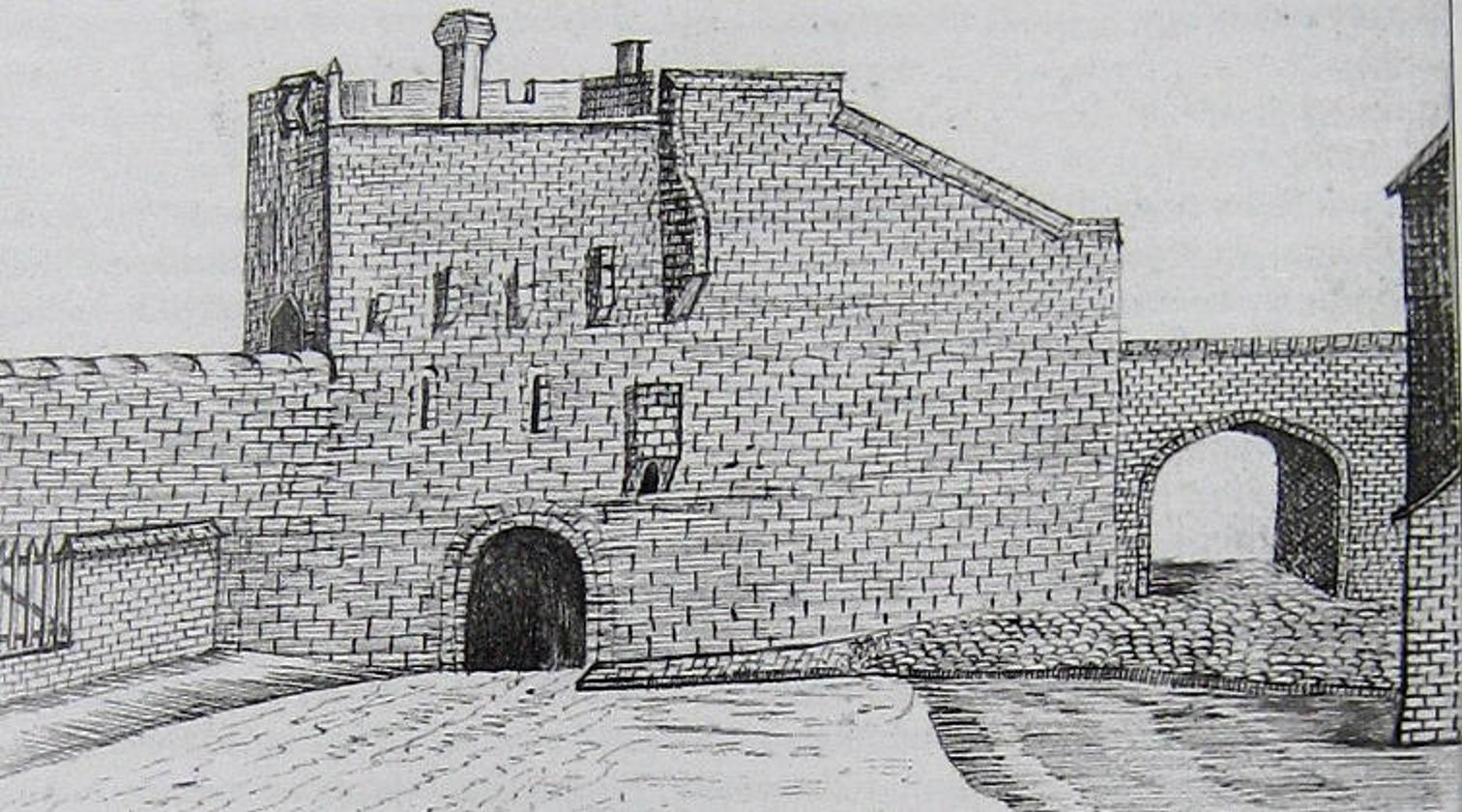
The prison for Freemen was in the Butchery Gate, facing the seafront, while in May 1613, moves were made to turn part of Biggin Gate into a prison for ‘better sort of fforeyners’ (None Dovorians) but this came to nothing. In 1702, the Queen Anne Charter, in Maison Dieu House, gave the appointment of the Keeper of the Prison to Dover’s Water Bailiff. This made incarceration of wrongdoers a lucrative source of revenue to the council and prison sentences became the preferred punishment. By 1722, the need for a large prison became imperative.

Sketch of the now demolished Butchery Gate with Steadfast Tower, Townwall Street

Sketch of the now demolished Butchery Gate with Steadfast Tower, Townwall Street

It was decided to convert the comfortable Freeman’s Prison, in Butchery Gate by this time on Townwall Street, into an austere town gaol and house more prisoners. However, the skilled carpenters and bricklayers who were paid 2s 6d (12½p) a day to do the job, complained that labourers received only a shilling (5p) less than they did and demanded a greater difference. The Corporation refused to either cut the labourers’ wages or increase the skilled artisans, the result was shoddy workmanship.

Within 14 years, the need for a purpose built prison became imperative but instead, in 1746, the Corporation bought a house in Queen Street paying £26 that was to be adapted. The main entrance was on what became known as Gaol Lane but it gave rise to another  industrial dispute. This time over a four tier pay structure that had been implemented whereby artisans received more than labourers and Freemen in both categories received proportionately more than their fellows. Again, the council chose to ignore the discontent and again the result was poor workmanship!

The gaol had to be partially re-built in 1795, when the front entrance was moved to Market Square and the facade had courses of strong masonry, upholding a strong semi-circular arch that actually supported nothing. On either side were shackles as a warning to evildoers and possibly poor workmanship!

Design for the new prison on Gaol Lane 1818 . Dover Library

Design for the new prison on Gaol Lane 1818 . Dover Library

However, on 26 May 1820, the smuggling galley Lively, was seized and the crew of eleven men confined to the prison. They were about to be moved when a mob attacked with saws, hammers, pickaxes and crow bars, damaging the building beyond repair and letting the prisoners free. At the time a new larger prison was on the drawing board and this was built on the same site. It required the then Queen Street School to be demolished to make room that caused a bit of an outcry.

Designed by town’s survor, Richard Elsam, the new prison was both sturdy and a grand affair. Surmounted by a classical pediment, on each side of the main entrance were niches for statues. Chains, fetters and a Latin inscription were carved above the doorway and even though it was faced in stucco, the whole was made to look like stone. On the roof was a metal rod from which four fish hung, these, it was said, were designed to go round when prisoners were on the treadmill.

Dover Gaol circa 1820. Dover Museum

Dover Gaol circa 1820. Dover Museum

The expenditure on the new gaol between 1820-1830 was £6,169 10s 1d (£6,169. 50p) with an additional £2,076 4s 6d (£2,076.23p) spent on lawsuits. Local contractors brought the legal case over the way the Town Clerk, John Shipdem, organised the tendering process. The costs included £71 9s 6d (£71.47p) spent on legal fees defending Elsam against an indictment for perjury. The post of the town surveyor, at that time, was contractual and Elsam’s day job was that of a builder, indeed, he designed and built the Round House for Shipdem. This was destroyed in World War II and replaced, on Camden Crescent, by the architecturally famous but later demolished  Dover Stage.

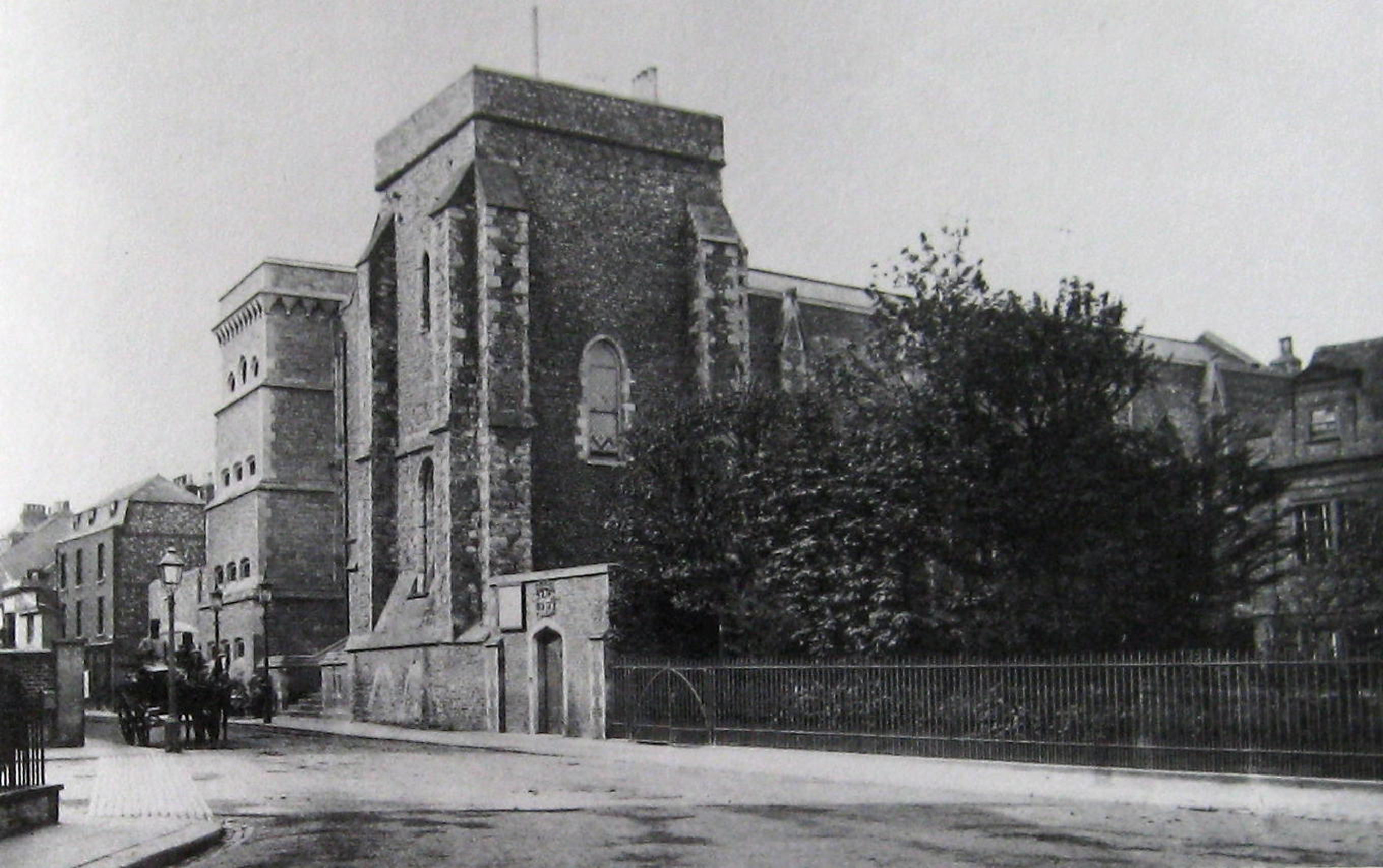
Maison Dieu, former Town Hall, the four-storey prison can be seen on the right, the site of the present Connaught Hall. Dover Museum

Maison Dieu, former Town Hall, the four-storey prison can be seen on the right, the site of the present Connaught Hall. Dover Museum

Although Dover Mayor and Jurats were also the magistrates, separate books were kept for accounting purposes. Thus, it was the magistrates’ account that paid for the building and maintenance of the gaol. When another new, larger, prison was built in 1836 at the Maison Dieu, they sold the Gaol Lane prison to the Corporation. The Corporation immediately found a private purchaser and stood to make a nice profit. They then realised that the new Dover Police Force, which had come into on 20 January that year, required a purpose built police station and lock-up. Thus, they tried but failed to rescind on the deal, however, on 2 October 1837, the Mayor, William Cocke, and the Market Committee repurchase most of the site, paying £555, at a public auction. On the land not required for the police station, the Market Hall was eventually built.

In the meantime, a new town gaol was built as an extension on the Ladywell side of the newly acquired Maison Dieu. This sixty vaulted, four storey, brick prison had cells to accommodate 40 men and 10 women. The main punishments were a treadmill and recycling oakum from old tarry ropes and cordage so that the unravelled fibres could be used for caulking and mat making.

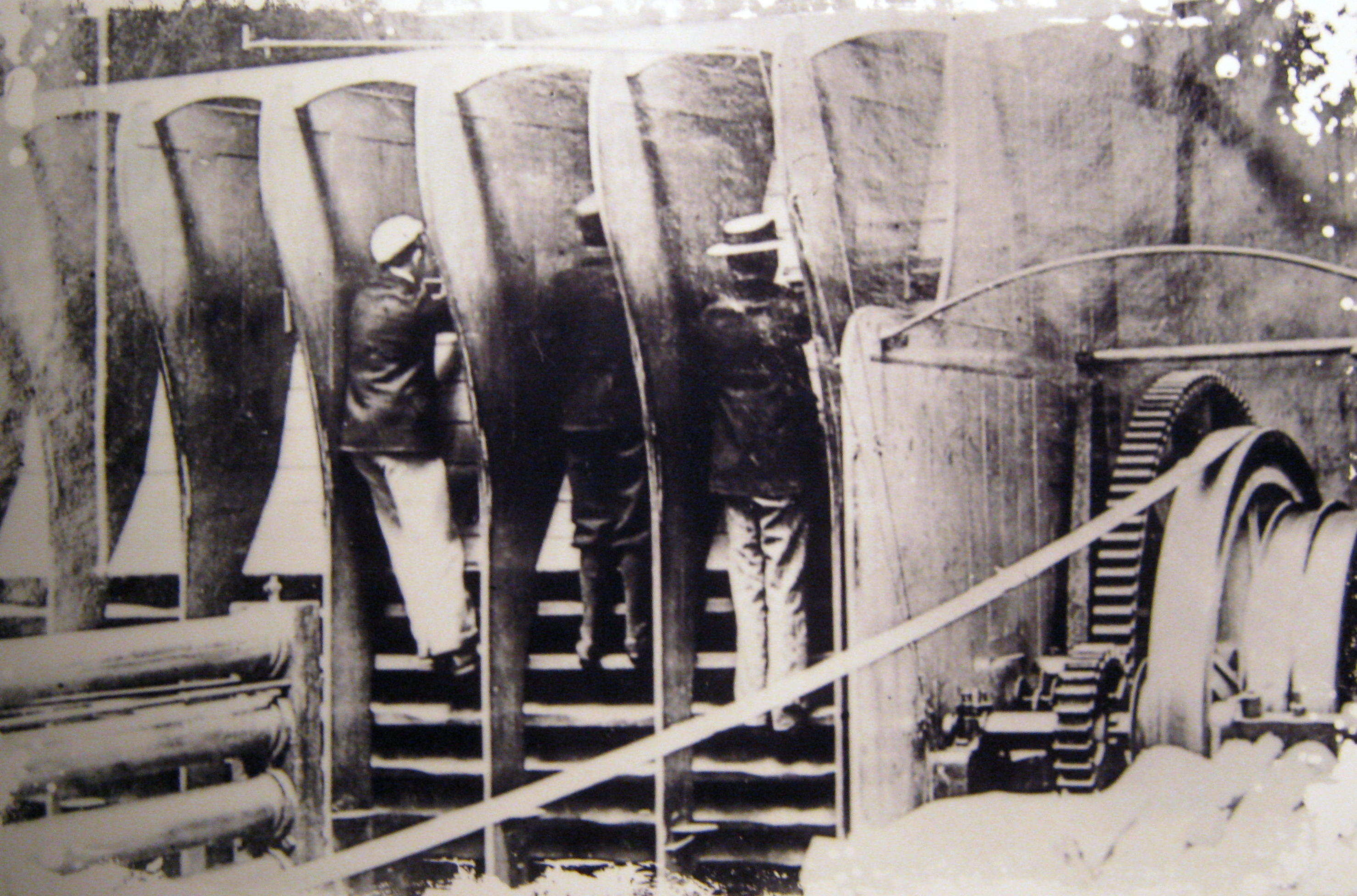
Prison Treadmill

Prison Treadmill

A Bolton treadmill was installed in 1849 at the cost of £9 3s 6d (£9 17.5p) and two years later six more machines were ordered. Following complaints that it they were dangerous, in October 1859, to prove this was not the case, the strongest council tried it. After a few minutes he complained that he had quite enough and wanted it stopped. The Warder pointed out that the mechanics had been set for the shortest time – twenty-minutes – and that it could not be stopped! The councillor, supposedly collapsed, and William H Bodkin, Dover’s Recorder 1834-1874, ordered that the treadmill was only to be used for the fittest prisoner. A new treadmill was installed about 1865.

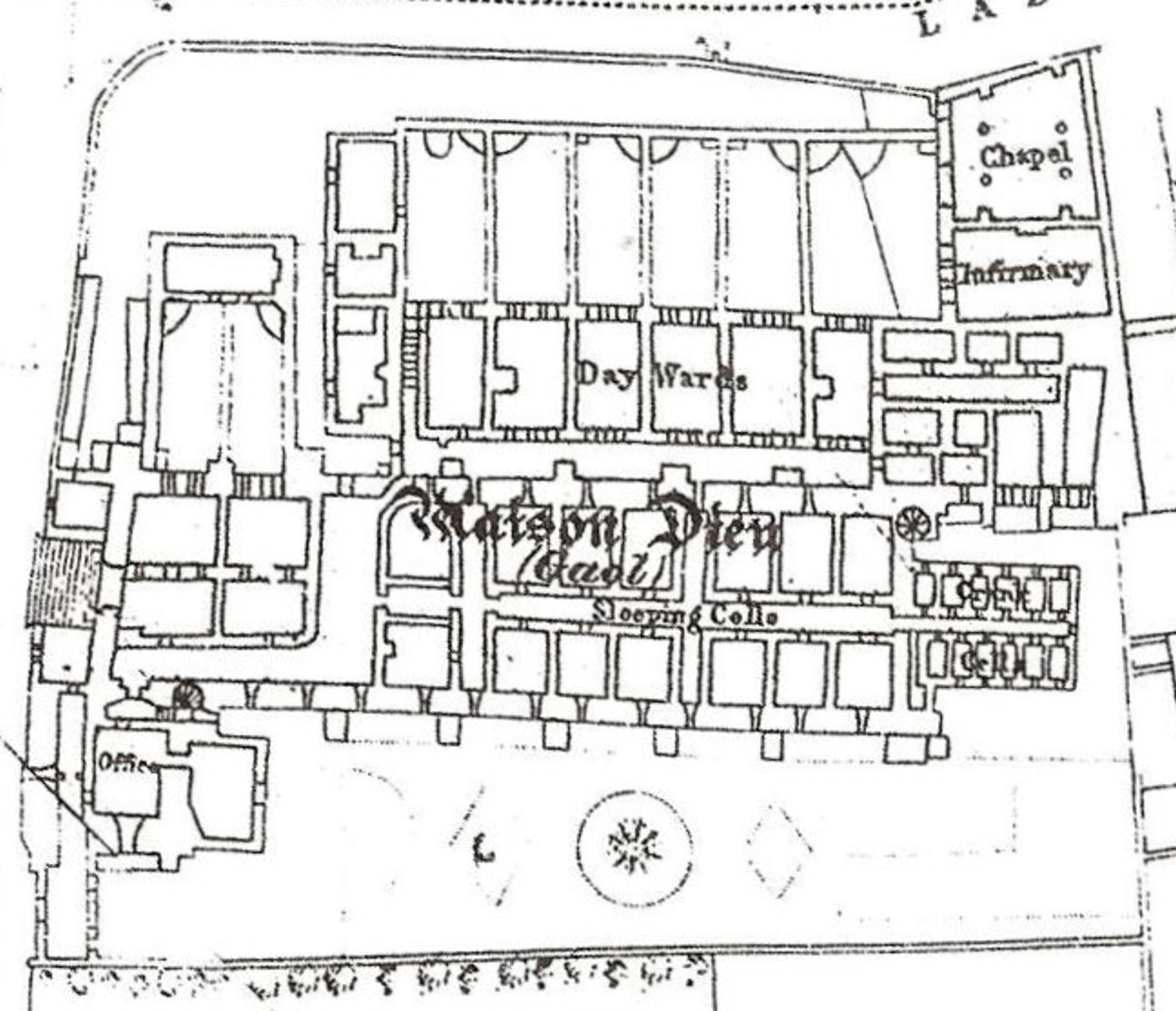
Plan of Maison Dieu Gaol 1867-1878

Plan of Maison Dieu Gaol 1867-1878

About this time, national prison reforms were being instituted making the gaol on the Ladywell side of the Maison Dieu obsolete. To accommodate the new prison in the basement, the floor of the Stone Hall was raised and a new main entrance was built with steps outside to reach it, as we see today. The prison opened in 1867 and included a small chapel, infirmary, single sex exercise yards and free medical attention. The old four-storey gaol next to the Maison Dieu, which opened in 1834, was demolished in 1877.

Old Police Station on south side of the Maison Dieu

Old Police Station on south side of the Maison Dieu

The Borough Prison Jurisdiction was abolished under the Prison Act 1878. What to do with the old prison became the centre of council and public debates and in January 1879 plans were announced. It was going to be converted into municipal offices, so that the whole of Dover Corporations business could be conducted under one roof. However, with the exception of part of the female wing, the prison was demolished and a new police station was built. The entrance, opposite Biggin Hall, can still be seen.

In 1934, after years of complaints from the Home Office, the council considered building a new police station with cells. This finally opened on 4 October 1940 in Ladywell. The defunct police gaol in the Maison Dieu was opened as a tourist attraction in 1988 but closed eleven years later.

  • Published:
  • Dover Mercury:  15 September 2011
Posted in Courts, Crime & Punishment, Dover Prison, Dover's Prison, Dover's Prison, Maison Dieu - Former Town Hall, Market Square | Comments Off on Dover’s Prison

Robin Haydon – Ambassador extraordinary

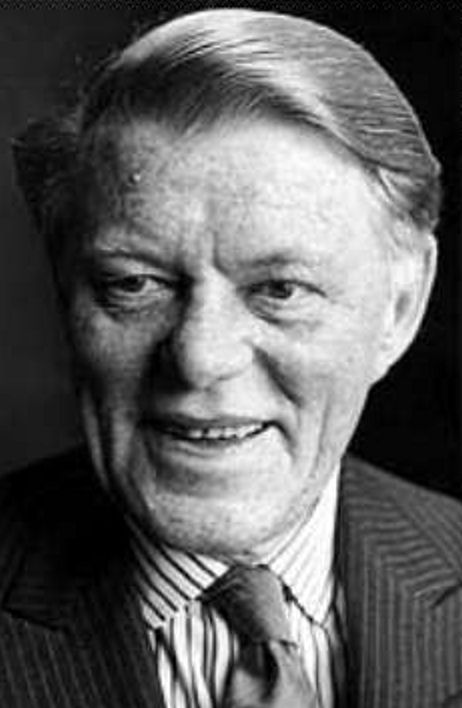
Sir Walter Robert (Robin) Haydon (1920–1999)  -  from the internet.

Sir Walter Robert (Robin) Haydon (1920–1999) – from the internet.

Walter Robert Haydon (1920–1999), known as Robin to his family, friends and the world in general, was one of Britain’s most revered Ambassadors. However, from his inauspicious beginnings it is unlikely that anyone would have expected it of him.

Robin was born on 29 May 1920 in Wandsworth. His father, also called Walter, was a journalist who came to Dover in the early 1920s and lived at 42 Maison Dieu Road. The house was badly damaged during World War II (1939-1945) and has since been demolished.

Walter, Robin’s father, made a name for himself covering the tour of two Tilmanstone miners to Russia, in 1929. That was three years after the General Strike and the bitterness felt by many miners towards the British Establishment pushed them further left than they had been prior to the Strike. Reports were coming out of Russia that the miners ran the mines they worked in and in consequence they enjoyed the best working and social conditions for miners in the world. Richard Tilden Smith, the owner of Tilmanstone mine was intrigued and at his own expense sent a delegation to look at the conditions with a view to introduce them at Tilmanstone. The group was led by two miners, both of whom believed the reports and in the party was Walter Haydon, a journalist from Dover. They went to the Donetz Basin in southern Ukraine, which at the time was the largest coal field in Communist Russia. Walter’s account of the trip was later published as, Russia as Seen by Two Tilmanstone Miners: A Record of a Tour to the Donetz Basin in August – September 1929. The miners returned disillusioned as the working conditions were much worse than those in the Kent coalfield


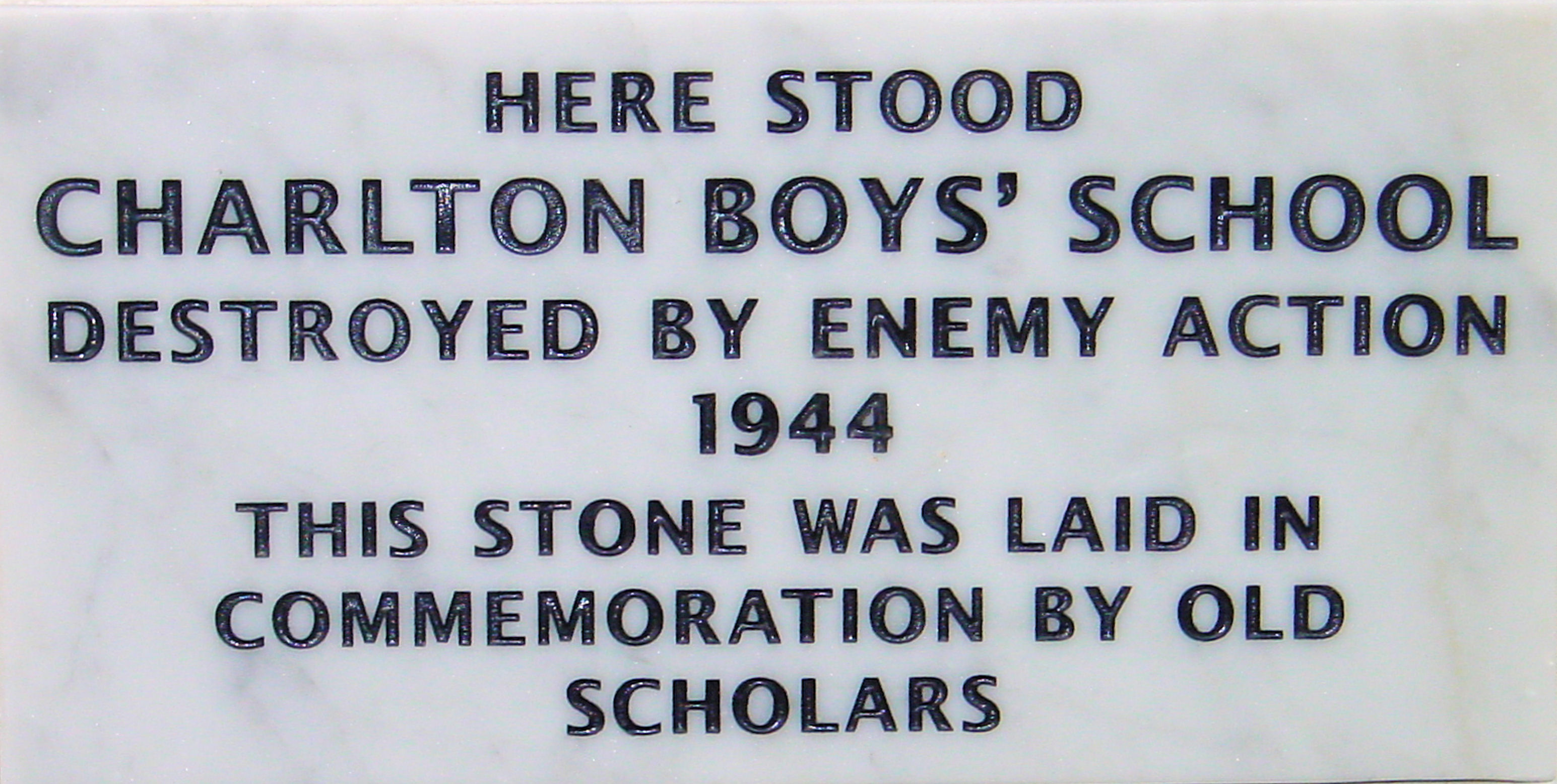
Charlton Boys' School was in Granville Street but was destroyed by enemy action during WWII. A recently erected plaque, by the Dover Society, marks the site and where the old plaque once was.

Charlton Boys’ School was in Granville Street but was destroyed by enemy action during WWII. A recently erected plaque, by the Dover Society, marks the site and where the old plaque once was.

How much this influenced young Robin, who was about 9 years old at the time, is difficult to ascertain. At the time he was probably a pupil at Charlton Boys’ school that was then situated in Granville Street. From there he gained a scholarship to the Boys’ County (now Grammar) school in 1929, at the time in Frith Road, before moving to its present location on Astor Avenue.

Robin left school in 1937 and his reports said that he had served the school well. Robin had been a house prefect, captain of the 1st XV rugby team, part of his house 2nd XI football and cricket teams as well as singing in the school choir and taking an active part in other differing aspects of school life. On leaving school, Robin joined the army gaining a commission to the Royal Engineers. He served in France and was part of the evacuation from Dunkirk. He went to serve in India and Burma as well as operating behind Japanese lines.

In 1943, Robin met and married Elizabeth Tewson and they had three children. Sadly, their son and one of their daughters were killed in separate accidents. When peace returned, Robin applied to join the Civil Service and, much to his surprise, was appointed to the Foreign Office (FO). In those days, there were two requirements for such appointments, an aristocratic background and public school education, Robin had neither.

This lack of correct background would have ensured that Robin stayed in the lower echelons of the FO. Indeed, one of his first commissions was a temporary assignment to Bulgaria at the time when British relationships with that country were poor. Not long after arrival Robin and one of his colleagues were arrested on trumped up charges. The Bulgarian authorities ordered the two men, to sign documents admitting their guilt. Knowing that once they did this, they would be wheeled out in front of the world’s press based in Bulgaria and diplomatic relations would deteriorate dramatically.

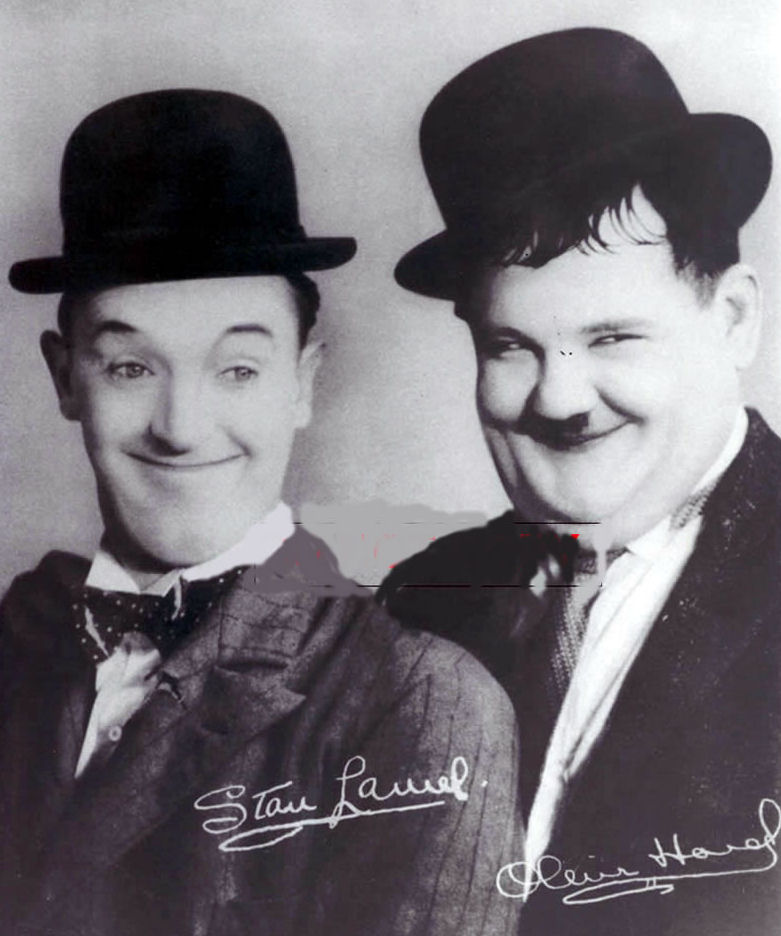
Comedians, Stan Laurel and Oliver Hardy - Internet

Comedians, Stan Laurel and Oliver Hardy – Internet

Although Robin’s colleague refused to sign, Robin did stating that his colleague was equally as guilty as he was. Delighted, the Bulgarian authorities called a press conference, where the two confessions were read out with copies given to the assembled media. The two men were then released and allowed to go back to the British embassy. However, the next day, much to the embarrassment of the Bulgarian officials, when the confessions appeared in the world’s press it was shown that Robin had signed them in the names of Stan Laurel and Oliver Hardy!

Four years later, in 1950, Robin was accepted as career FO official and started to rise through the ranks. He earned a reputation as a diplomat and in 1967 was appointed head of the news department and Foreign Office spokesman for the then Foreign Secretary – George Brown. The latter was not known for his diplomatic skills!

Ted Heath January 1970

Ted Heath January 1970

Nonetheless, Robin was successful and in 1970, was appointed a Companion of the Order of St Michael and St George, a distinction given mainly to Ambassadors. Within a year, Sir Robin was appointed the High Commissioner to Malawi. However, he only stayed in post for two years when he was appointed Chief Press Secretary to the then Prime Minister, Edward Heath. The following year, 1974, Heath was out of office and Sir Robin, although as a Civil Servant was still employed, was effectively out of job.

The FO offered Robin the post of Maltese High Commissioner that he happily accepted but the troubles in Ireland were escalating. In 1976 the British Ambassador there, Sir Christopher Ewart-Biggs, was murdered outside his home in Dublin and Sir Robin was appointed as his successor. Two years later, it was rumoured that the Queen would make a State visit to Ireland in order to help the peace process. Apparently, Sir Robin warned the FO of the danger of an IRA attack and advised them to defer serious planning until relations were ‘less accident-prone’.

Sir Robin’s concerns were well founded for during his time in Ireland (1976 to 1980) there were four attempts on his life. In 1978, only the walls of Dublin Cathedral save him and his wife, Elizabeth, at an Armistice Day (11 November) service. Nonetheless, throughout his time as the Queen’s representative, Sir Robin earned respect for laying the foundations of the partnership we see today that led to peace in Northern Ireland. At the invitation of the President of Ireland, Mary McAleese,  Queen Elizabeth II and the Duke of Edinburgh  made a state visit to the Republic of Ireland from 17 May to 20 May 2011.

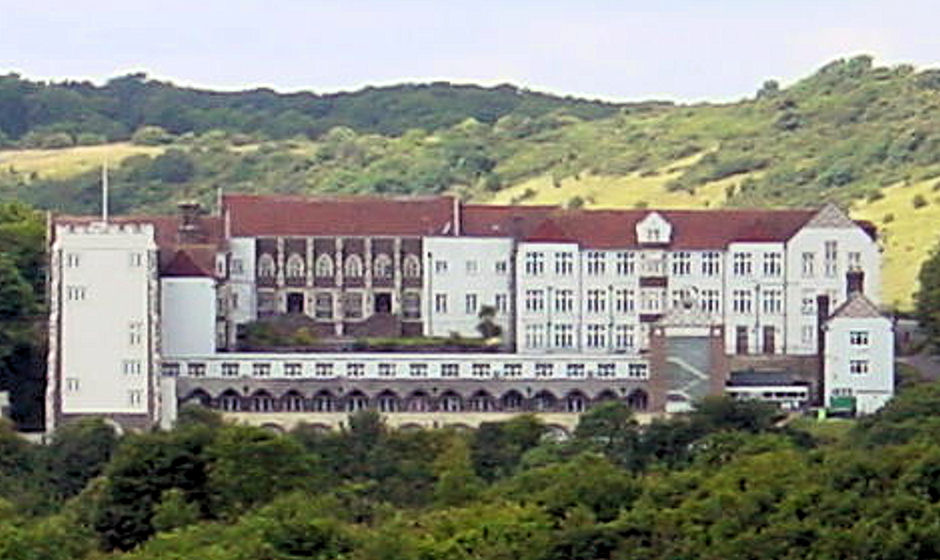
Present day Dover Boys' Grammar school where Sir Robin was of the President of the Old Pharosians (old Boys)

Present day Dover Boys’ Grammar school where Sir Robin was of the President of the Old Pharosians (old Boys)

On retiring, in 1980, Sir Robins was elevated to Knight Commander of the Order of St Michael and St George. A year later, he was elected President of Dover Boys’ Grammar School ‘Old Pharosians’. His beloved Elizabeth died in 1988 but Sir Robin continued to maintain an active life until his death in December 1999 – another great Dovorian for whom there is not even a plaque to his memory.

  • Published:
  • Dover Mercury: 30 May 2013
Posted in Haydon Robin - Ambassador extraordinary, People | Comments Off on Robin Haydon – Ambassador extraordinary

St Radegund’s Abbey

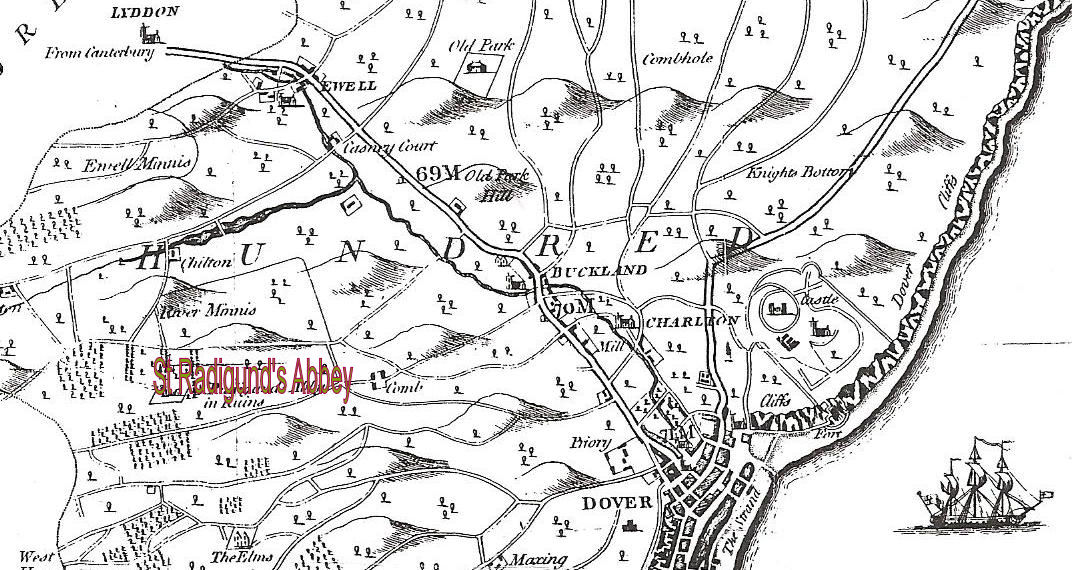
Map of 1789 showing the location of showing location of St Radigund's Abbey

Map of 1789 showing the location of showing location of St Radigund’s Abbey

The Abbey of Saint Radegund is at the top of the Coombe Valley, at Poulton, on a minor road from Dover to Folkestone. Now a working farm, the Abbey gives its name, with a slightly different spelling, to a part of Dover – St Radigunds.

St Radegund, to whom the Abbey was dedicated, was a princess born in 518 AD. Her father, Berthaire, was the pagan King of Thuringia in Southern Germany but when she was about ten her country was invaded by the Franks. Radegund was taken prisoner by King Clothier (or Lothier in some accounts) and he decided that Radegund should be groomed for the role of a royal Christian wife. Radegund acquiesced and took her studies seriously.

When she grew up, not only was Radegund accomplished but also very beautiful and Clothier, a notorious womaniser, decided to make her his fifth wife. Radegund, by all accounts, accepted her position meekly but increasingly devoted herself to great charitable works. Notably, she founded a hospital for lepers and persons ‘afflicted with the most nauseous distempers’, nursing them herself. She was also very pious and it was reputed that during Lent, Radegund wore a shift of haircloth with iron chains and collars and even hot plates of iron under her robes. She also abstained from eating flesh, fish, eggs and fruit.

About six years after their marriage, Clothier had Radegund’s brother murdered and this was probably the last straw for the young queen. Albeit, instead of loudly protesting, she ‘quietly removed herself from Court’ and sought help of Bishop Medard of Noyon, who was later canonised. The Bishop conferred on her the veil, made her a deaconess and Radegund retired to a religious house at Poitiers, France.

Clothier, however, demanded Radegund’s return and was about to try force when Germain, the Bishop of Paris (again later canonised), persuaded Clothier to leave his wife alone. In 557 Radegund built the monastery of the Holy Cross at Poitiers for which, twelve years later, she obtained, from Emperor Justin I, a large fragment of the true cross-encased in rich reliquary. Radegund’s monastery, for both monks and nuns, became a centre of learning. Radegund died peacefully on 13 August 587 and was buried in the crypt at Poitiers.

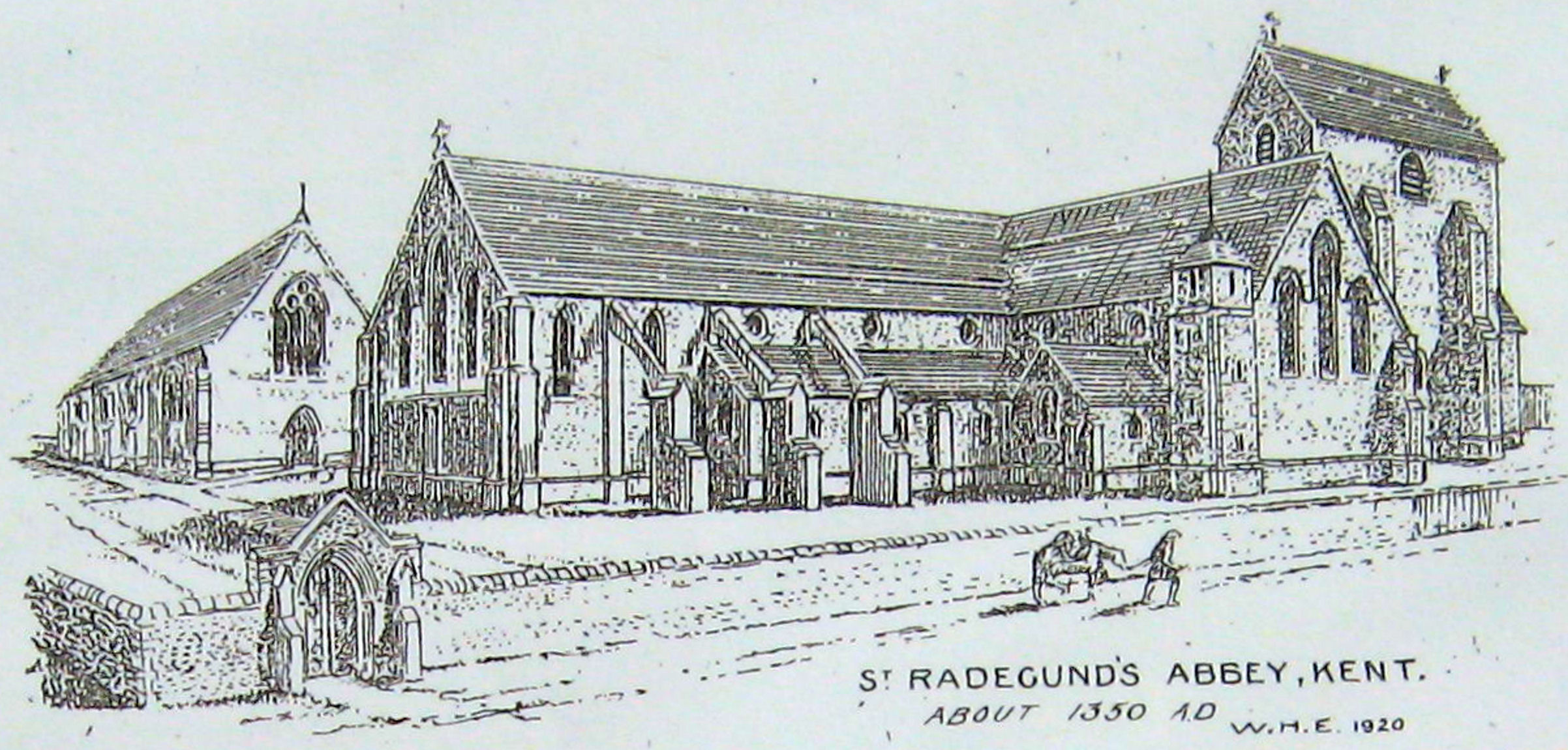
St Radegund's Abbey artist impression of what that Abbey may have looked like in 1350

St Radegund’s Abbey artist impression of what that Abbey may have looked like in 1350

The Abbey of St Radegund, in the ancient parish of Poulton, was one of two English houses colonised by the mother abbey of the Premonstratensian Order at Prémontré, Picardy, northern France. Commonly known as the White Canons, after the colour of their habits, the Order was founded in 1120 and followed a particularly austere interpretation of the rules of St Augustine.

These rules govern chastity, poverty, obedience, apportionment of labours, fraternal charity, fasting and abstinence, care of the sick and prayer, amongst many other things. The community’s life revolved around common prayer and the celebration of the Eucharist – in essence, consecrated the wafers and wine become the real presence of Christ i.e. the physical presence (Transubstantiation) so kneeling before them is reverencing the divine body and blood, (explanation provided by Fr. Peter Sherred of Dover).

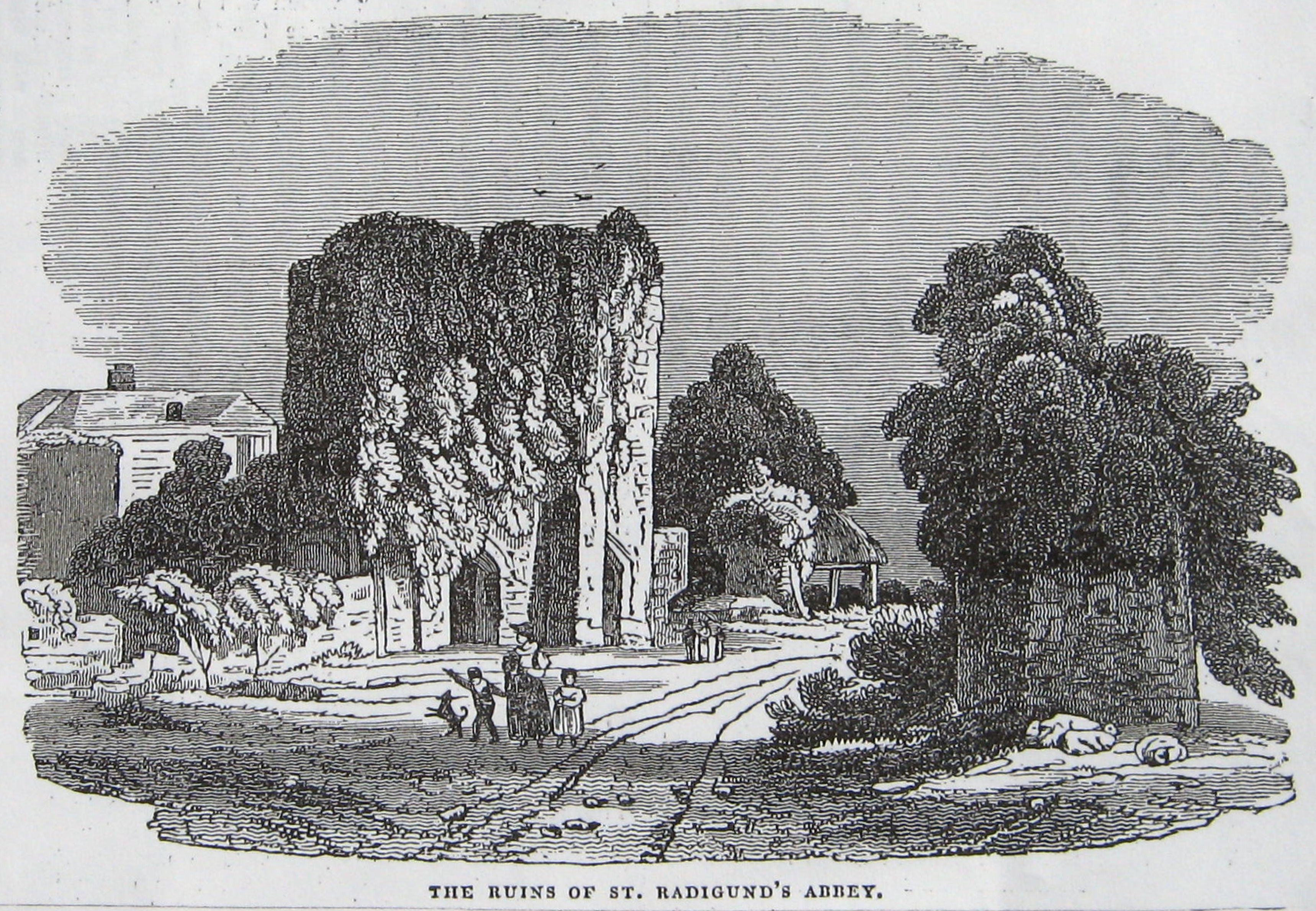
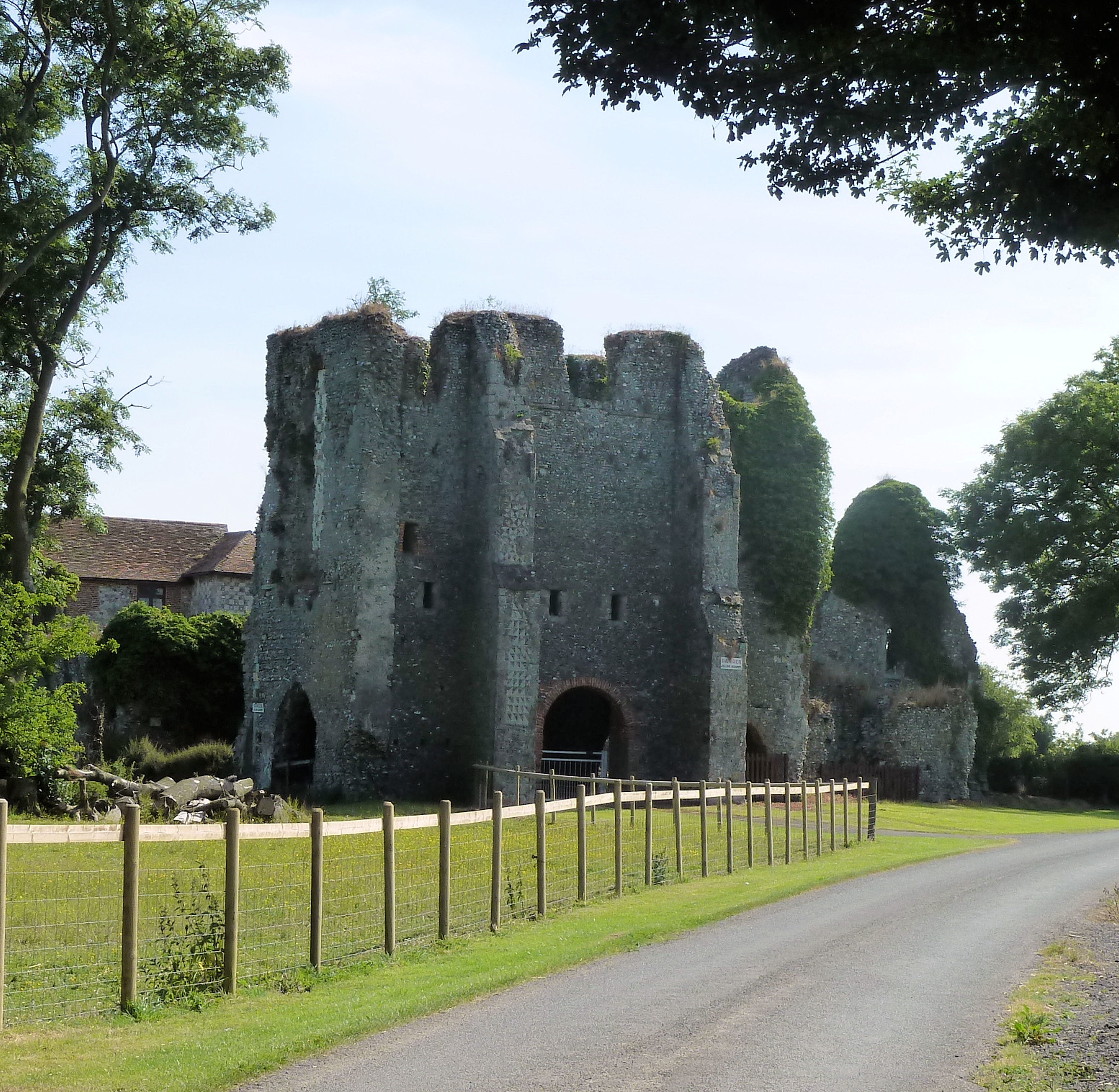
St Radegund's Abbey ruins - The Saturday Magazine 25.03.1837 see photo below left

St Radegund’s Abbey ruins – The Saturday Magazine 25.03.1837see photo below left

It would appear, from the scant evidence that is available, that the first Abbot, Hugh founded the Abbey about 1192. Walter and Emma Hacket, with the agreement of William and Stephen de Poltone, granted the land in what was then known as Bradasole where the Abbey was built.

Later Robert de Poltone granted the manor of Poulton and Hamo de Crevequer and his wife Maud, granted the advowson – the right to nominate the minister – of Alkham and the chapel of Capel to the Abbey. Other grants included the churches of Shepherdswell and of Postling, the manor of Coombe, the site of the mill at Crabble and by Hubert de Burgh (1160-1243) the churches of Portslade and Aldrington, Sussex.

The same view of St Radegunds Abbey as above right - 2013

The same view of St Radegunds Abbey as above right – 2013

Royal patronage included a further 100 acres of land at Bradasole by Richard I (1189-1199); 100 acres of land in the village of River by King John (1199-1216) on 12 May 1204 and the church of River on 26 July 1215. The latter grant was made on the assumption that a new Abbey would be built at River, but this did not happen. From 16 March 1227, Henry III (1216-1272) gave the rent of 20-shillings a year he received from his mill at River. The same day as he granted the Abbey its Charter of Confirmation. In 1315, Edward II (1307-1327) granted a further Charter of Confirmation.

Like St Martin-le-Grand in Dover, St Radegund’s was not free from inter-denominational strife. In 1303, Abbot William and some of his canons were accused of stealing a horse, saddle, bridle, prayer book and girdle to the value of £10. In addition, a purse containing 48-shillings (£2.40p) together with a papal bull authorising the removal of one of his canons, Solomon de Wengham, from the Abbey of Bayham, near Frant, East Sussex.

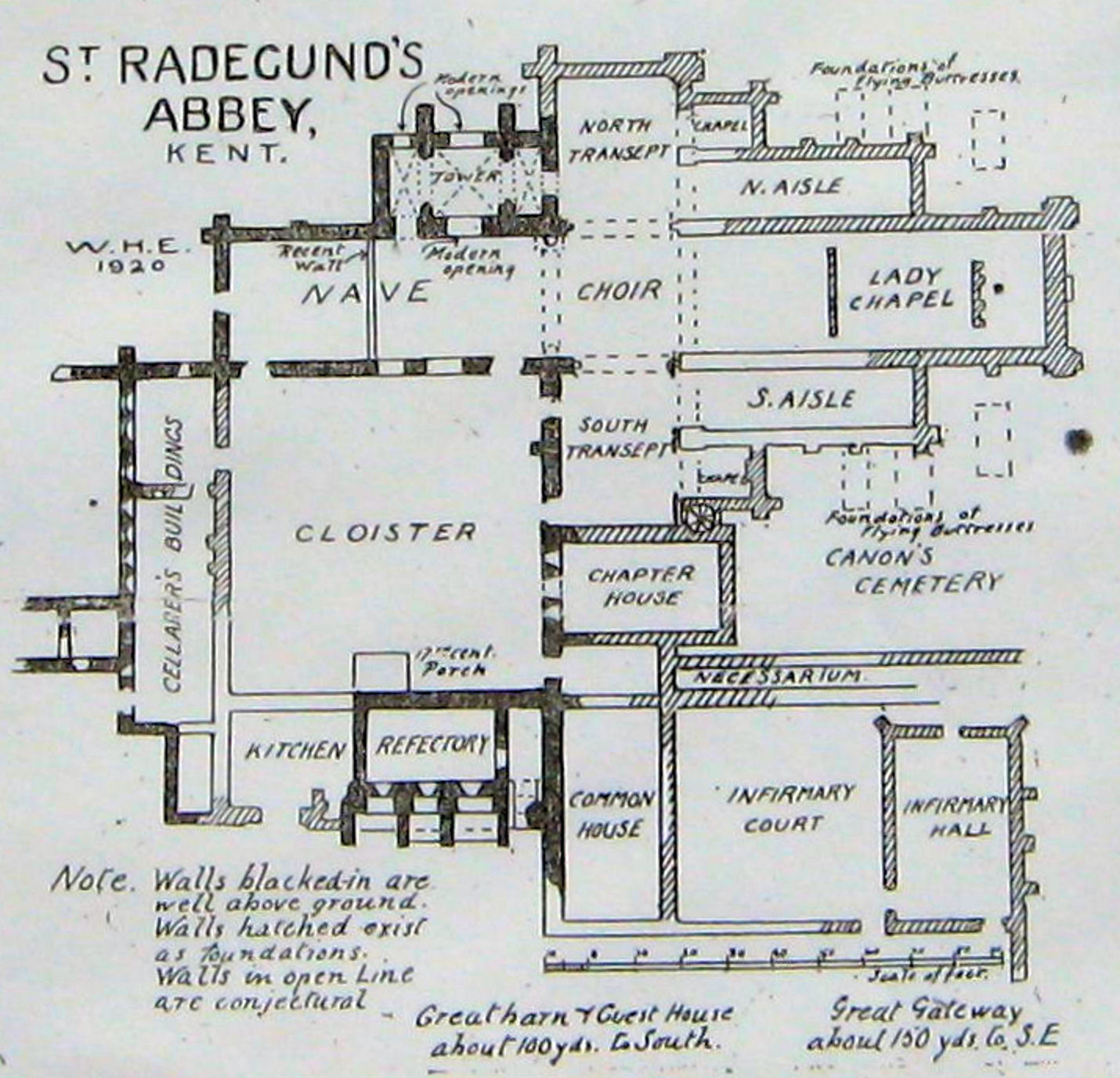
Artist impression of the possible lay out of St Radegund's Abbey in 1350

Artist impression of the possible lay out of St Radegund’s Abbey in 1350

In their defence, Abbot William said that they were on the road at Ash, near Wingham acting in pursuance of a mandate from the Abbot of Prémontré, which stated that as Solomon de Wengham had been found guilty of being rebellious, he should receive his punishment at St Radegund Abbey. The Abbot then went on to say that the prayer book actually belonged to the offending canon, while the purse only contained 4-shillings 9-pence (24p). he had offered the money, goods and the horse to the Abbot of Bayham, but he had declined to accept them. The Abbot of Bayham, however, later changed his mind about the horse! The Jury accepted Abbot William’s explanation and the defendants were allowed to go free.

By 1500, it would appear that many of the austere Augustinian rules were lacking if a report from the Abbot of Bayham is to be believed. His visitation took place on 3 October that year and states that John Newton, the Abbot of St Radegund’s, frequented taverns on Sundays and feast days, used bad language and that the Abbey was in a poor state of repair plus £30 in debt. However, in 1535, the possessions of the Abbey were valued at £142 8-shillings 9-pence (£142 44p) while outgoings only amounted to approximated £44, which questions the findings of the visitation.

Artist impression of what that Abbey chapel may have looked like in 1350

Artist impression of what that Abbey chapel may have looked like in 1350

However, it was the 1536 Act for the Dissolution of the lesser Monasteries that brought to an end the monastic life at St Radegund’s Abbey. On 10 May 1537 the site was leased to Richard Kays for £13 10-shillings 8-pence (£13.53p) a year and on 31 July 1538 it was granted to the Archbishop of Canterbury.

In the late eighteenth century, local historian, Reverend John Lyon, wrote that the chapel was fitted out as a farmhouse, barn and other husbandry conveniences and that the remainder of the site had been left to crumble away. He noted that still standing was the principle entrance, ‘a tall well preserved thick-walled gateway that led through to the tower.’ This was built of flint and 40-feet high and wide and it could be seen that it had accommodated two storeys with a middle room in each, about 17-feet square and smaller apartments on each side.

Between the tower and the farmhouse, were two quadrangles, the first 40-feet by 27-feet and the second 65-feet wide (length not given). Reverend Lyon described other ruins of the old Abbey that could still be seen but was particularly adamant that the tower should be preserved for posterity. Since then a number of archaeological surveys of the site have been undertaken providing plans of the old Abbey and drawings of what it may have looked like.

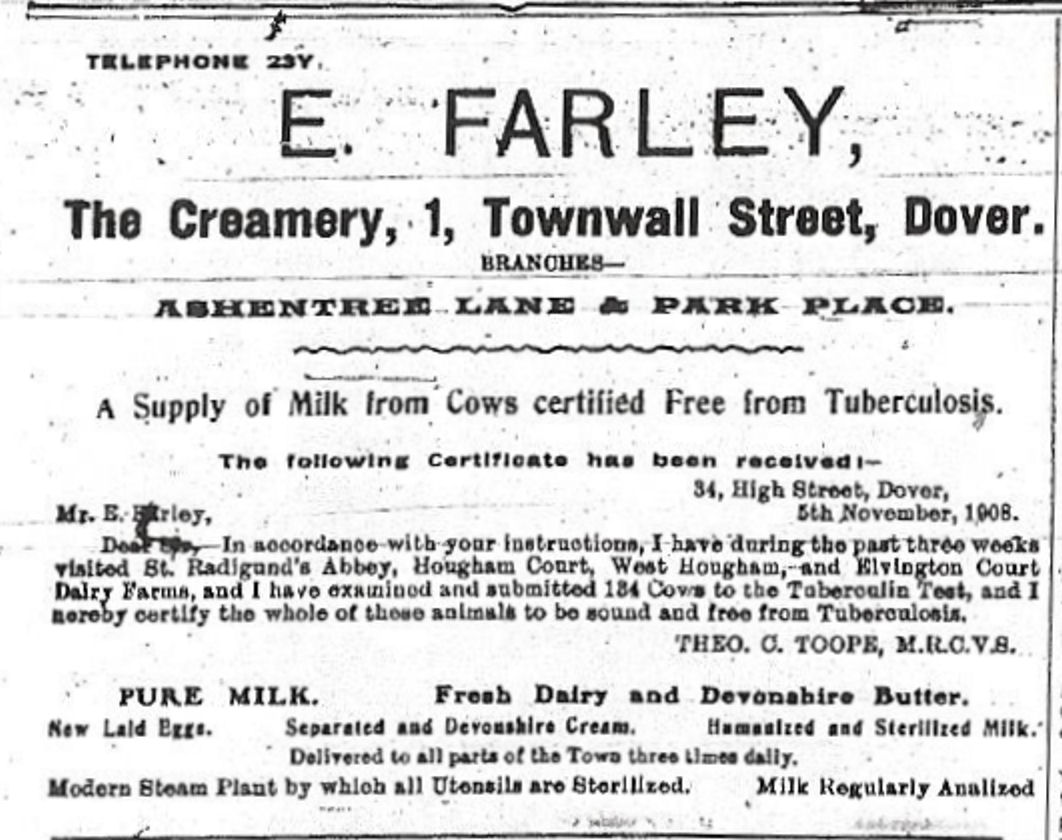
Edwin Farley dairy, 1 Townwall Street, obtained milk from St Radigund's (sic) Abbey Farm 1911

Edwin Farley dairy, 1 Townwall Street, obtained milk from St Radigund’s (sic) Abbey Farm 1911

Edwin Farley, who became one of Dover’s most outstanding Mayors and eventually knighted, ran a Creamery in Townwall Street with branches in Ashentree Lane and Park Place. He obtained the milk and butter from Hougham Court, Elvington Court and St Radegund’s Abbey (spelt Radigund in his advert), dairy farms. The cows from all of these farms were certified to be free of tuberculosis a major health scourge at that time.

Since then a number of archaeological surveys of the site have been undertaken providing plans of the old Abbey and drawings of what it may have looked like. Back in 1920, the Abbey, along with 300 acres of ground, raised a modicum of national interest when they fetched £6,000 at an auction. However, 20 years later, during World War II (1939-1945), the site became of military importance when the first Heavy ack-ack regiment set up five sites sites numbering from D1 to D5 and installing 3-inch open-sight guns, across Dover. D4 was on the high ground to the north of St Radigund’s Abbey.

The comic Marvel front page showing Greyfriars and Billy Bunter - Wikapaedia

The comic Marvel front page showing Greyfriars and Billy Bunter – Wikapaedia

About the same time the Abbey enjoyed national publicity because of a fictional character. In 1908, newly launched boys’ magazine, Marvel, appeared on the stands. Author, Charles Hamilton, using the pen name Frank Richards, introduced to the world, William George Bunter, a pupil in the Remove class, at the fictional Greyfriars public school. Each week the magazine published a feature length Greyfriars story centering mainly on the hapless Billy Bunter. However, due to a decline in circulation and paper shortages of the War, the magazine folded in 1940 but published in one of the last editions was a map showing the location of Greyfriars School. It was already known to be located somewhere in Kent, but the map indicated that it could be at St Radegund’s Abbey, near Dover!

The ruins of the Abbey are still there and can be seen from the road as they are within a working farm. The ruins of the rival Bayham Abbey still stand and are an official English Heritage site.

  • Published:
  • Dover Mercury:  25 August 2005
Posted in St Radegund's Abbey, Villages and Towns | Comments Off on St Radegund’s Abbey