Connaught Hall

 Duke & Duchess of Connaught welcomed at Town Station 14 July 1883

Duke & Duchess of Connaught welcomed at Town Station 14 July 1883

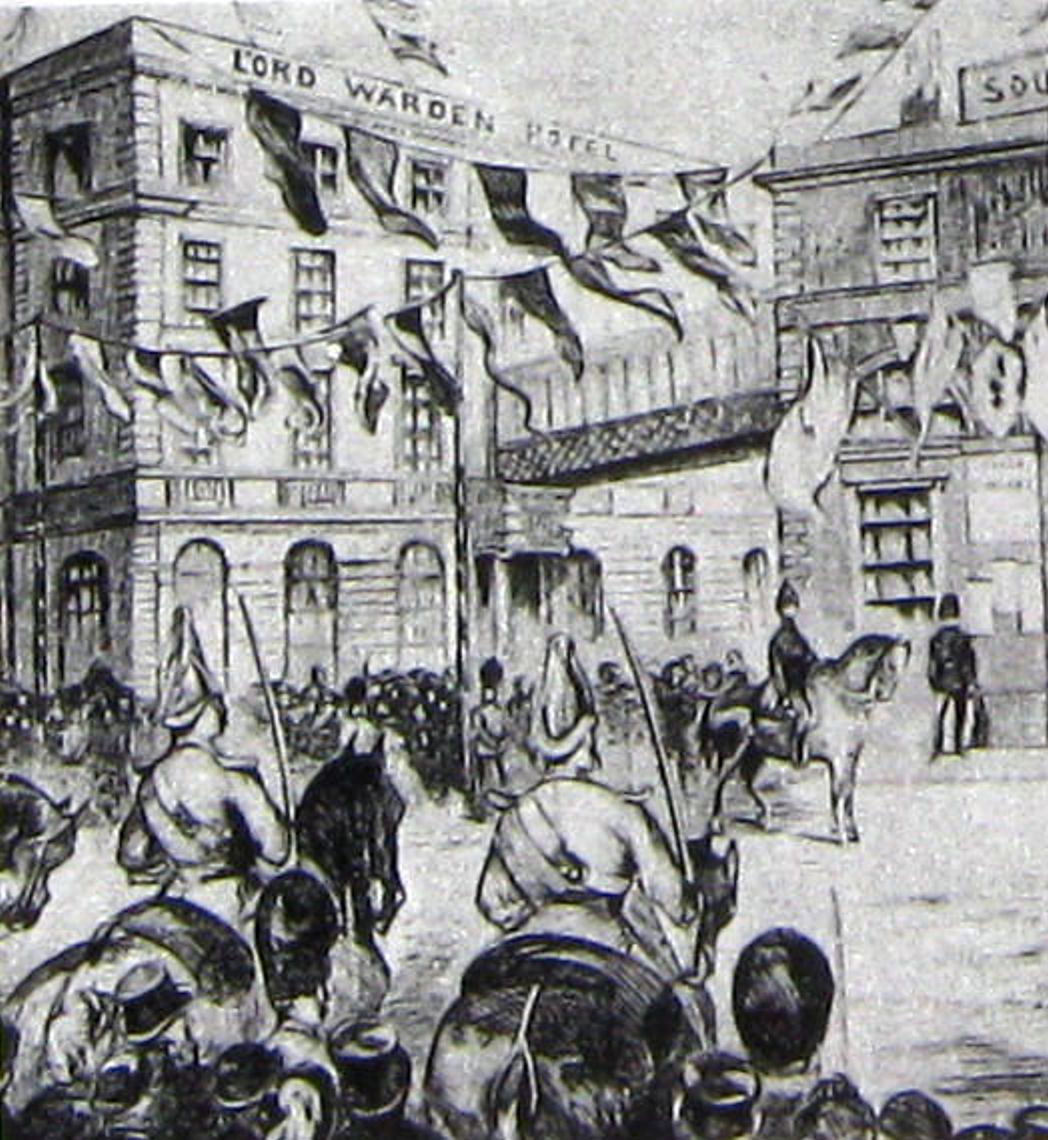
At noon on Saturday 14 July 1883, a royal salute announced that the third son of Queen Victoria, HRH Prince Arthur, Duke of Connaught (1850-1942) and his wife, Louise, had arrived by train at the Town Station in then Pier District of Dover. They had come to open the new part of the then Town Hall and a municipal park, both to be named after the Prince.

The Duke and Duchess, to the delight of the town, had agreed to open both and a splendid welcome was organised by the Mayor, Sir Richard Dickeson. Escorted by the cavalry from the barracks, the royal couple were preceded by a procession of sixteen carriages containing distinguished visitors and dignitaries. Before lunch, they opened Connaught Park and then the procession wended its way down Park Avenue, thronged with cheering crowds, along Park Street to the Maison Dieu – then Dover’s Town Hall

As the Duchess climbed the steps up to the Stone Hall, local women scattered fresh flowers in front of her. Inside, the town’s council, all wearing a marguerite in their buttonholes in honour of the Duchess, welcomed the Royal personages. Then the royal couple, along with 450 guests, enjoyed a grand luncheon, after which the Duke of Connaught declared the Connaught Hall open. It had been planned that they would spend the remainder of the afternoon in the grounds of Dover College but heavy rain put a stop to that. During the following week, the Mayor and Mayoress held a grand ball for about 1,500 guests in Connaught Hall.
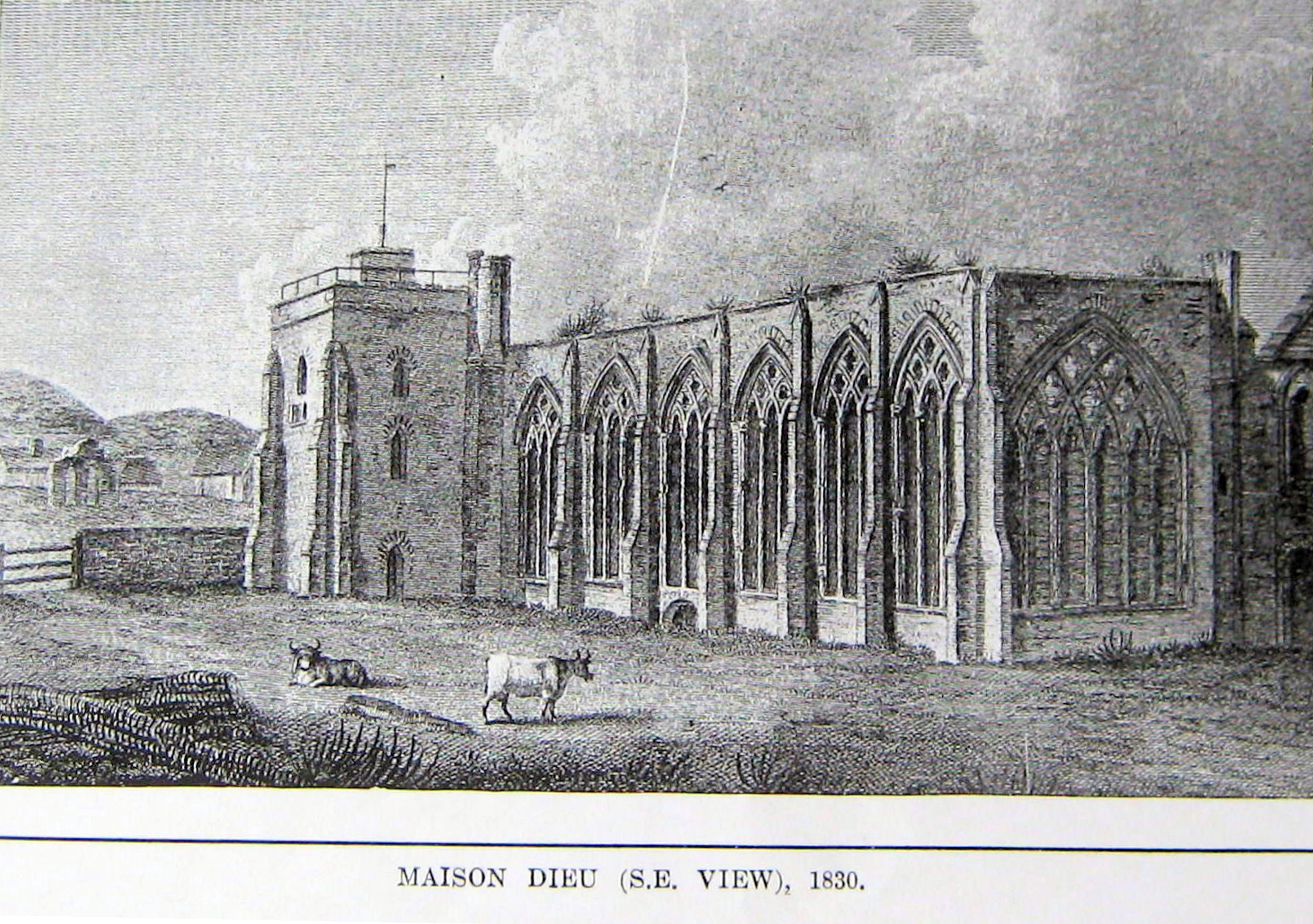
Maison Dieu - 1830

Maison Dieu – 1830

The history of the Maison Dieu can be traced back to Hubert de Burgh (c.1160– 1243) who was in the service of King Richard I until the King died in 1199. De Burgh was then appointed the Chamberlain to King John and Constable of Dover Castle in May 1202. The following year he found the Maison Dieu Hospital. The Great Chamber, or Stone Hall, dates back to 1253 and on the north side was the church, behind which, and running the length of Stone Hall, was the guesthouse. In 1524, Henry VIII ended all religious functions at the Maison Dieu and ten years later all the monks were evicted. The Maison Dieu and its lands became a navy-victualling depot in 1552 remaining so until 1815. The building then came under the control of the government’s Ordnance Department until 1830 when the Royal Engineers would move in as a temporary measure until Archcliffe Fort was ready.

Architects drawing of Connaught Hall extension to the Maison Dieu, July 1883

Architects drawing of Connaught Hall extension to the Maison Dieu, July 1883

Along with Maison Dieu House, next door, the buildings were put up for sale. William Fulke Grenville, of Marine Parade, bought them at a London Auction Market 20 May 1834 for £7,680. At the time the Municipal Corporations Act of 1835 was expected to herald major changes in local government and the council saw this as a good time to move from 17th century Guildhall in the Market Square. However, the council could not afford the asking price so the Ordnance Department agreed to sell Maison Dieu House to a private party, William Kingsford – who owned Buckland corn mill – and offered the Maison Dieu to the council for £7,000. Unfortunately, the council was still £1,500 short of the new asking price so they used, as collateral, the town’s silver. This had been given by Peter Fector in 1814 and was pawned to the Fector Bank so that the deal could be made!

On the site of the ancient guesthouse, a new four-storey gaol was erected and was used as such for the next thirty-two years until prison reforms dictated a new prison. The old gaol next to the Maison Dieu was demolished in 1877 and a year later, the Prison Act made the new prison obsolete. During that time when finance was available, alterations and additions were made to meet the changing needs of the council.
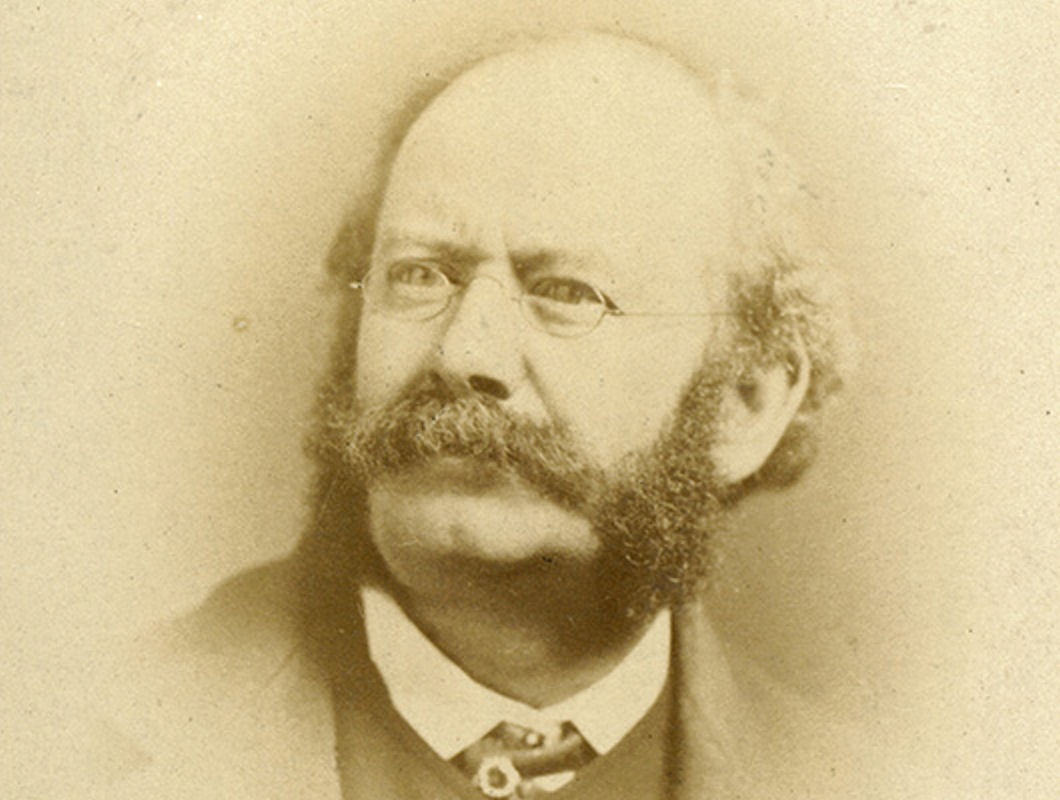
William Burges - Internet

William Burges – Internet

About 1850, Ambrose Poynter (1796–1886), whose father had landholdings at West Cliffe, was instructed to draw plans for restoration of the Town Hall and during the years 1852-1862 his designs were carried out, chiefly under the direction of his successor, William Burges (1827-1881). Although, the council were more than satisfied with the results, towards the end of the 19th century towns were increasingly being judged by the munificence of their town halls. Dover, at that time, was on the ascendancy – by the turn of the century it was one of the top ten wealthiest towns in the country!

A grand town hall, where public meetings, entertainment’s and the ‘promotion of philanthropic objects’, was needed. This did not go without opposition, mainly on the grounds of cost that was exacerbated when it was suggested that the new hall would be built on the site of the old prison. The government actually owned that site and it cost the Corporation £3,039 to buy the land. William Burges was called upon to design the new hall but, by that time, was recognised as the leader of the Victorian Gothic revival and as such his fee had increased! In 1881, the year Burges died so his partners Richard Popplewell Pullan (1825-1888) and John Starling Chapple (d1922) completed the development. The council borrowed £17,500 from the Hearts of Oak Society at 4% per annum to pay for the building.
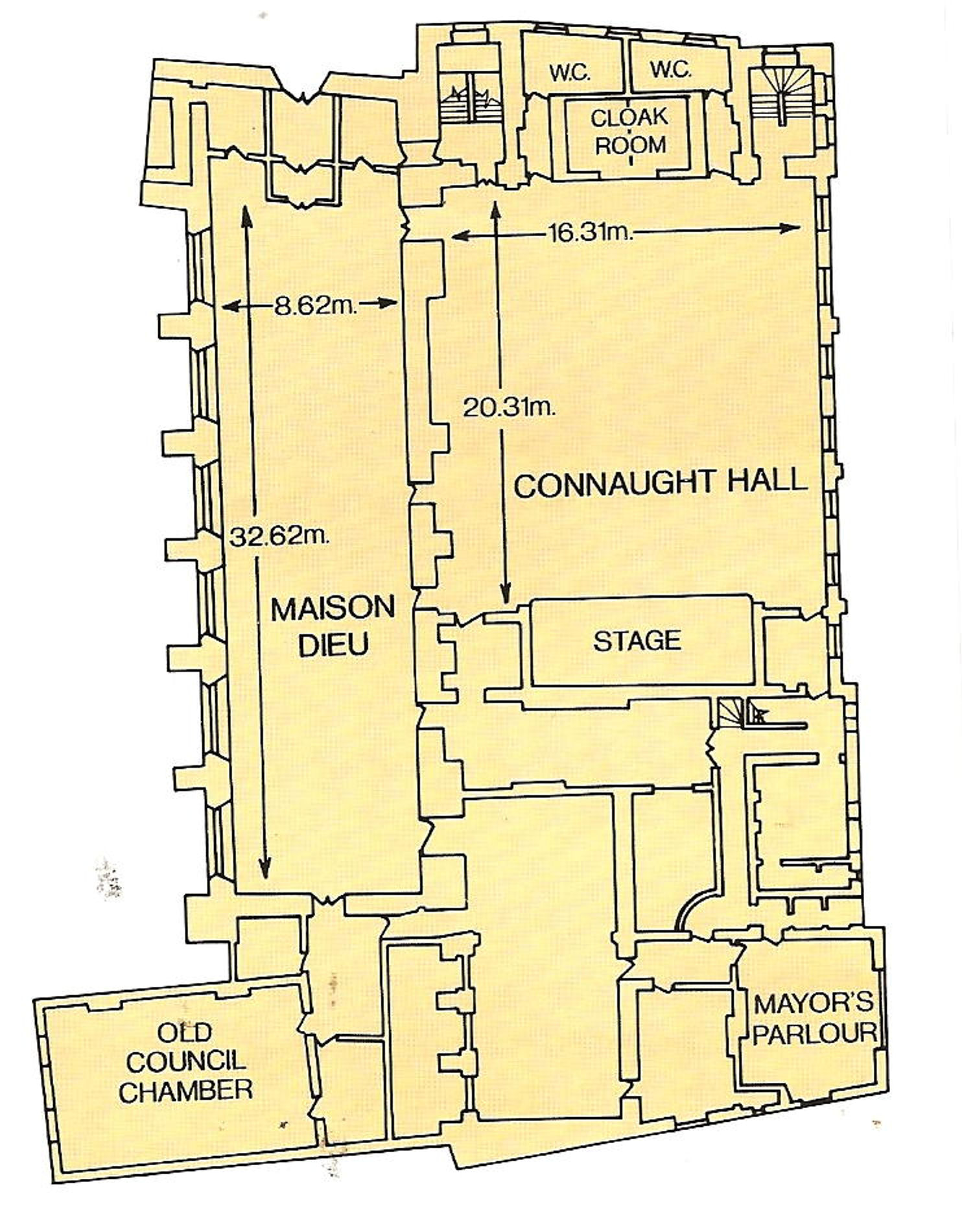
1991 Plan showing the location of Connaught Hall. On the plan the room shown as Maison Dieu is now called the Stone Hall

1991 Plan showing the location of Connaught Hall. On the plan the room shown as Maison Dieu is now called the Stone Hall

The builder was a local, Herbert Stiff who cleverly incorporated the wall shared with the ancient Stone Hall which contained seven arches, six pointed and one wide semi-circular, resting on what had once been eight pillars. They were a legacy from the original 13th century building and can still be seen. When completed it was said that the Hall was one of the finest public buildings in the county of Kent. Not including the stage, it measures 20.31metres by 16.31metres and the final cost, including adjoining rooms one of which was the Mayor’s Parlour, was £19,000.

At the same time as Connaught Hall was built the tower, holding an illuminated clock, was erected on the outside. The clock was supplied by E Dent & Co. of London and John Bacon’s name is on part of the gear train. Although the clock is no longer illuminated and does not always tell the right time, it remains a much-loved feature of the town. Inside the building are other clocks, including one under the balcony in Connaught Hall. This was presented by the sisters of William Woodruff in 1890 who ran a jeweller’s business in Snargate Street and from 1865, New Bridge.

Organ presented to the town by Dr Edward Ferrand Astley in 1902, Connaught Hall

Organ presented to the town by Dr Edward Ferrand Astley in 1902, Connaught Hall

The stage proscenium was designed and built by Flashman’s of Dover in 1893. The magnificent organ was erected as a gift of Dr Edward Ferrand Astley (1812-1907) and was officially handed over on Wednesday, 5 November 1902. The organ cost over £3,000, was fitted with electronic action throughout and was nationally applauded, at the time, as being ‘a veritable triumph in organ building.’ The Borough Organist, Professor Harry J. Taylor was in charge of the instrument until he died in 1936. Recently, there has been talk of restoring the organ, but this is likely to be in the region of £¼m plus £2,000 a year to maintain.

Gugliemo Marconi (1874– 1937). Dover Museum

Gugliemo Marconi (1874– 1937). Dover Museum

In 1899 Gugliemo Marconi (1874– 1937) exhibited his radio equipment in Connaught Hall. Marconi had previously conducted radio experiments, assisted by the Royal Engineers at Fort Burgoyne, near the Castle, at Swingate and St Margaret’s Bay. On Christmas Eve 1898, Marconi demonstrated his new wireless system by transmitting a signal from the South Foreland Lighthouse, St Margaret’s, to the South Goodwin Lightship, the world’s first shore to ship radio transmission. On 27 March 1899 he transmitted the first international wireless message, ‘Greetings from France to England,’ from Wimereux, near Boulogne to the South Foreland Lighthouse.

Connaught Hall quickly proved popular with the townsfolk for besides being used for full Council meetings – the Council Chamber was used at other times. The Hall was, and still is, a popular venue for dinners, dances, musical productions and civic meetings. However, following the installation of the organ, theatrical productions were banned. However, in 1894, 1,300 people packed into the Hall to hear a talk on the New Hebrides. This was far from the first time that the Hall was so packed but the local fire chief – Police Superintendent Thomas Osborn Sanders – raised concerns following which numbers were restricted.

In 1923, an application was granted to use the Connaught Hall as a cinema and it was estimated that there was room for 538 seats on the ground floor, 46 in the gallery and 72 in the side balconies. At the same time the council relented over theatrical productions. Two years later work began on the restoration of the whole of the Town Hall, carried out under the supervision of the government’s Office of Works officials but was later severely criticised. At the time they also had control of the restoration and maintenance works at Dover Castle. During the restoration, the ancient stonework between Connaught Hall and the Stone Hall was found to be badly corroded and the local firm, Hayward and Paramor carried out the repair work.
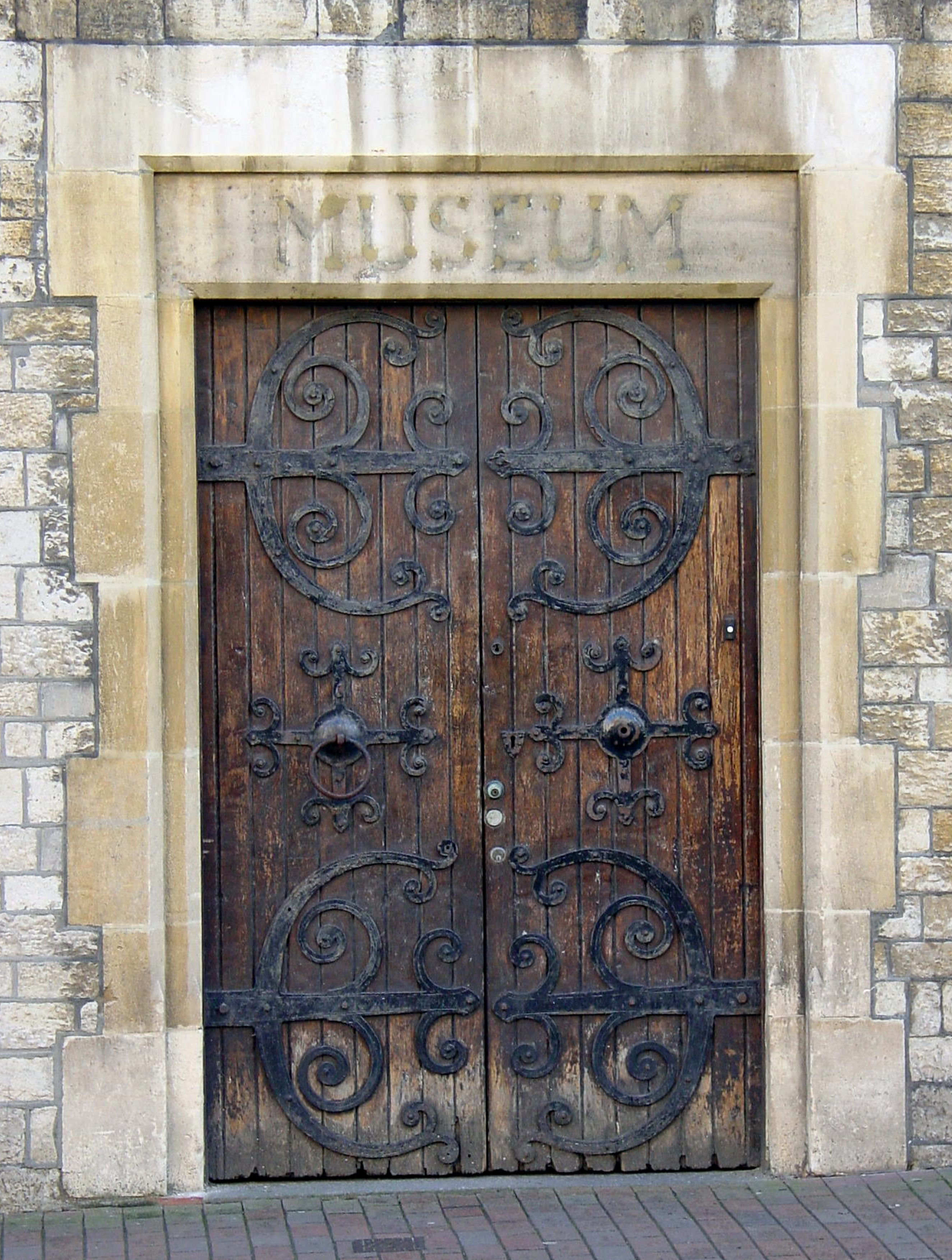
Former Museum entrance on Ladywell, the doors came from Old St James' Church

Former Museum entrance on Ladywell, the doors came from Old St James’ Church

With the threat of World War II in 1939 all the stained glass windows were removed from the Maison Dieu and the cellars were turned into emergency headquarters. The building was not directly hit during the war but it did suffered damage from nearby explosions. The Museum in Market Square, however, took direct hits and what was salvaged was moved into the cellars below Connaught Hall.  The Museum stayed there until the Market Hall was re-built and in 1989 when it was returned to its old home. Above the door, on the Ladywell side of the Maison Dieu, carved into the stonework, is the word ‘Museum’ above the door what was the entrance. The door came from the old St James’ Church.

Following the D-Day landings in June 1944 the bombardment of Dover increased until the last shell fell on the town on 26 September. On 18 October George VI and Queen Elizabeth came to meet the folk. They also inspected Civil Defence workers in the then Town Hall and this is recorded on a plaque in the Stone Hall. The reception was held in Connaught Hall.
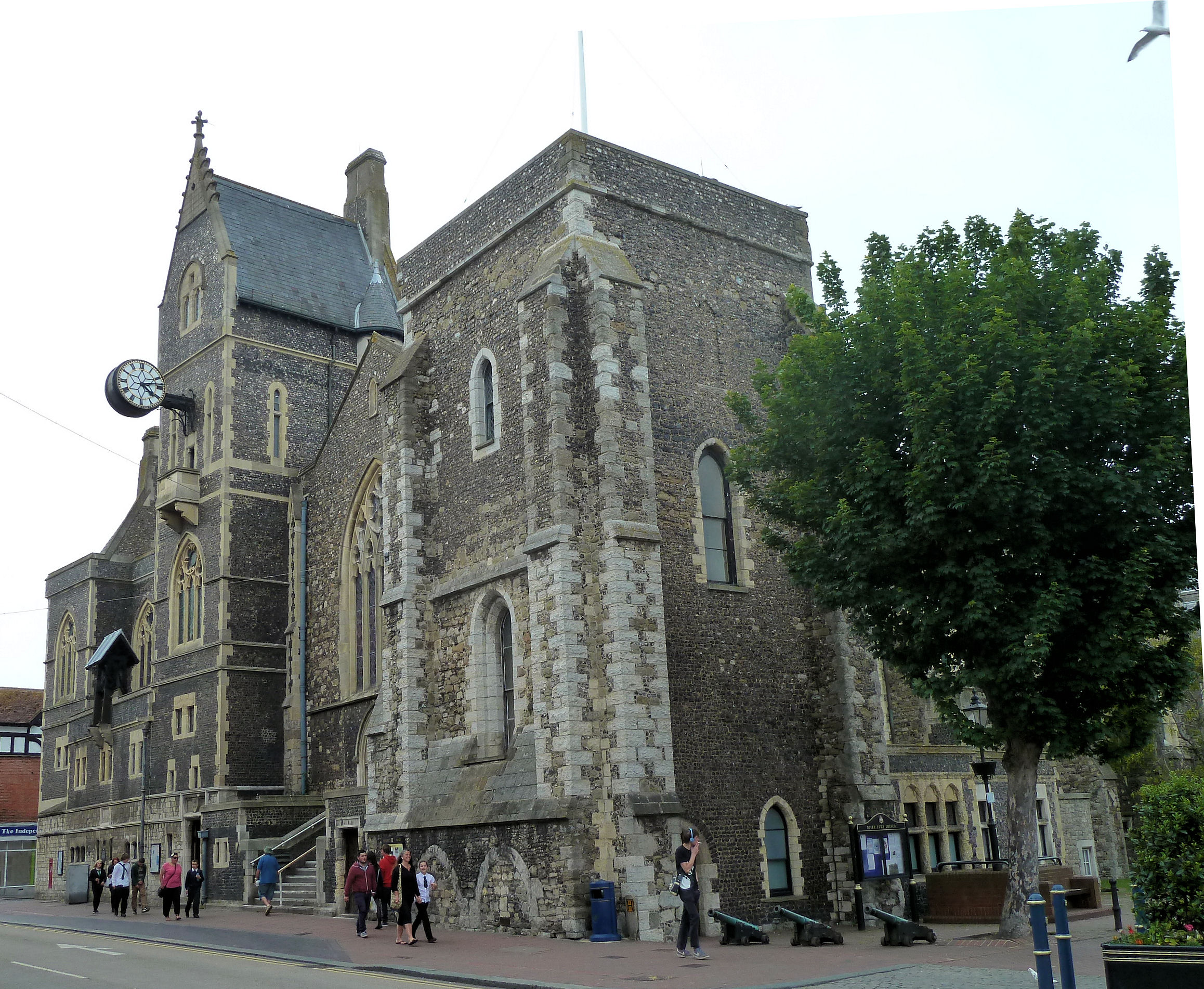
Maison Dieu Dover's former Town Hall today

Maison Dieu Dover’s former Town Hall today

The whole building was taken over by the newly formed Dover District Council (DDC) in 1974 who used it for council meetings until moving to new purpose built headquarters at Whitfield, Dover. From then on, the Charter Trustees, a ceremonial body made up of elected DDC councillors representing Dover’s wards, were allowed, by DDC, to use the buildings. The Dover Town Council (a parish council) succeeded the Charter Trustees, in 1996, and DDC obliged them to find an alternative venue. The Maison Dieu was then, and still is, leased to a private company.

To Visit Dover’s Maison Dieu, including Connaught Hall:

Guided tours are provided by volunteers from The Dover Society and are available on Wednesdays every week from 10am and 4pm (from 1 November to 31 March 10am to 2pm) and last up to an hour. For further information and group bookings, please telephone (UK): code: 01304  then  205108, 206458 or 823926. Outside the UK  the code: 44 0304 plus the number.

  • Published:
  • Dover Mercury: 02 July 2008
Posted in Connaught Hall, Maison Dieu - Former Town Hall | Comments Off on Connaught Hall

Jean-Pierre Blanchard and Dr John Jeffries – The first Aviators to cross the English Channel

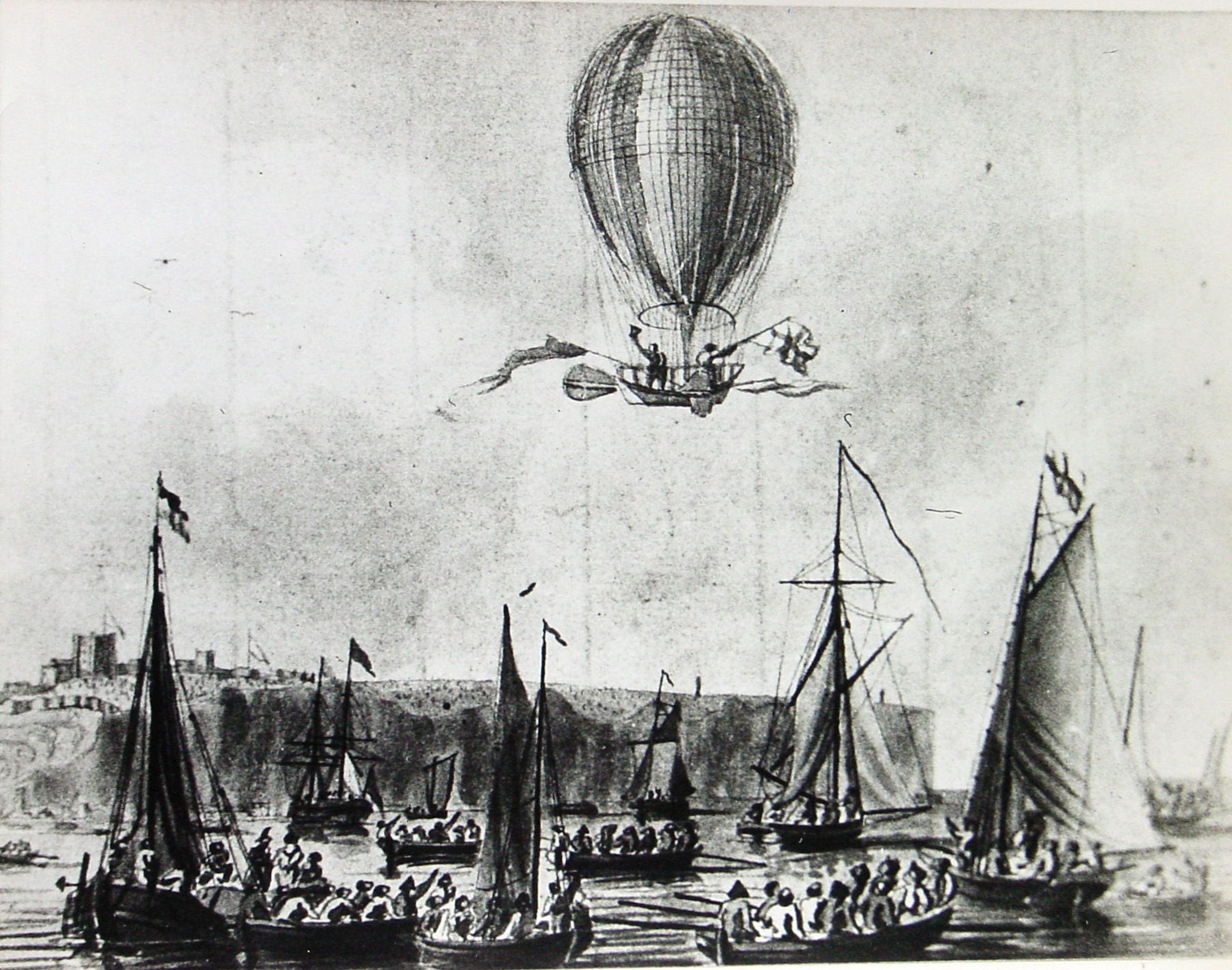
Blanchard and Jeffries Channel Crossing, Friday 7 January 1785. Dover Library

Blanchard and Jeffries Channel Crossing, Friday 7 January 1785. Dover Library

Dover has been in the front line of many aspects of world history one of which is aviation. The first aerial crossing of the English Channel took place from Dover, on Friday 7 January 1785 by Dr. John Jeffries (1744–1819) and Jean-Pierre Blanchard, (1753–1809).

Blanchard was born near Rouen, France,  into a poor family. He became fascinated with the idea of flying from an early age but when Joseph and Jacque Montgolfier succeeded in launching the first man-ascent in 1783, Blanchard became obsessed. His ambition was to cross the Channel and by training and working hard to raise finance, he became a professional balloonist.

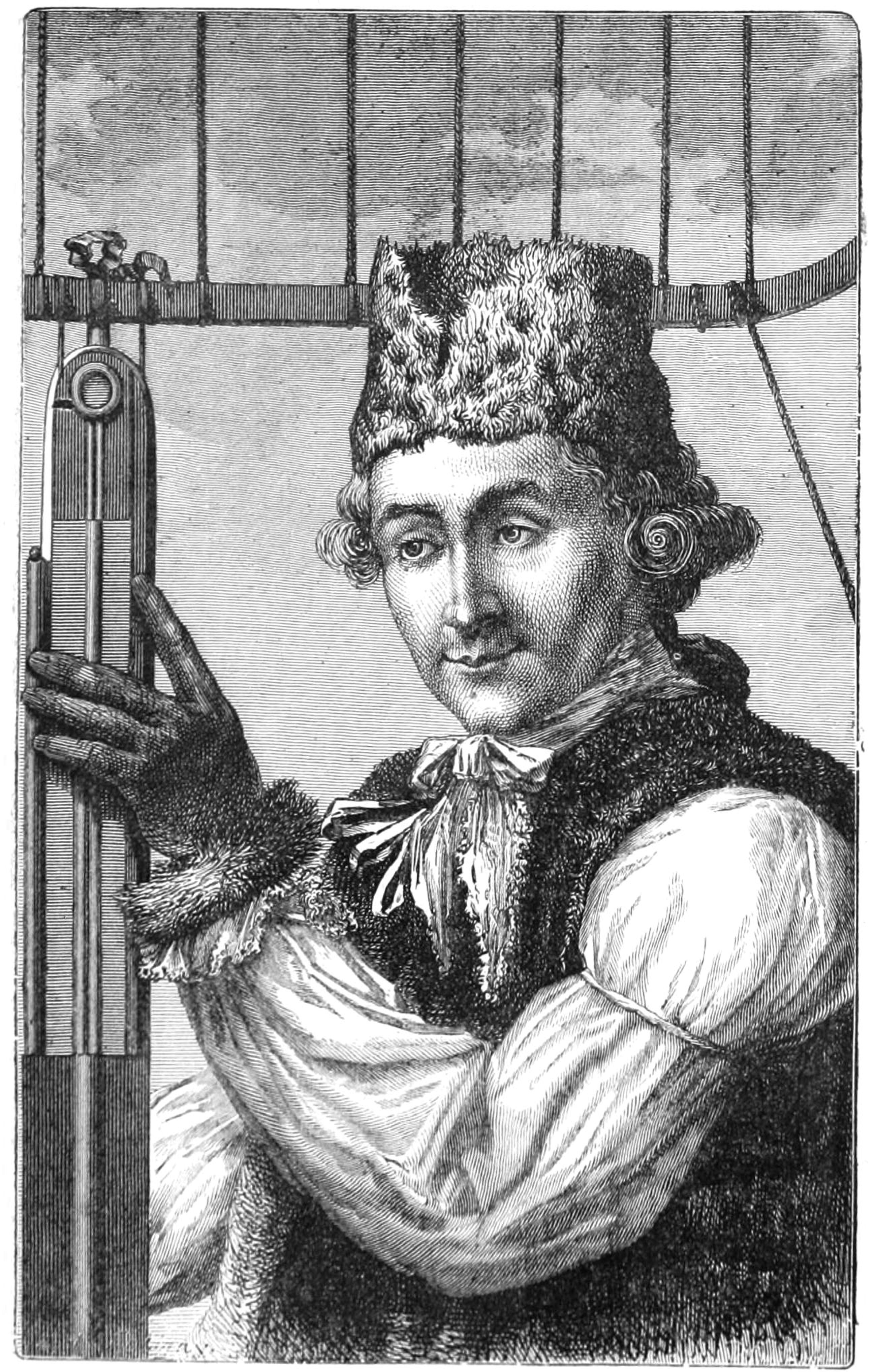
Dr John Jeffries - Internet

Dr John Jeffries – Internet

Jeffries, a physician from Boston, Massachusetts, was a self-imposed exile. He had left the US after the trial of British soldiers following the Boston Massacre of 5 March 1770, when five civilians were killed and six others were injured. Jeffries had been a principal witness for the defence – the defence lawyer was John Adams the future American President. Six of the soldiers were acquitted while two others were found guilty of manslaughter and were punished by having their hands branded. This caused a great deal of disquiet in the US and is said to have been one of the precipitating factors of the American War of Independence (1776-1783). Jeffries was wealthy and interested, from a scientific perspective, in aerial locomotion.

Jeffries came to England where Blanchard, who was in London at the time was trying to raise money for a flight across the Channel. Blanchard invited Jeffries to make an ascent from Grosvenor Square. This raised a great deal of interest and the spectators included the Prince of Wales, the future Prince Regent/George IV (1820-1830). The flight lasted two hours and came down near Dartford, Kent, by which time Jeffries said he would pay all the expenses for the proposed cross-Channel flight. This was to cost him about £700.

In February 1784, J.A. Jacobs released an unmanned hydrogen balloon from near Sandwich, on the East Kent coast. This landed at Warnton, France, three miles from Lille, and was given international coverage by the media of that time. In the interviews, Jacobs said that he intended to cross the Channel by balloon before the year was out. This galvanised Blanchard and Jeffries to try and beat him as it did many others.

Jean Pierre Blanchard - internet

Jean Pierre Blanchard – internet

By the time Blanchard and Jeffries arrived in Dover, towards the end of 1784, Jacobs had still not made the intended flight, but there were numerous other balloonists, in the town all intent to be the first to make the crossing. Blanchard and Jeffries therefore planned to undertake the crossing as soon as possible, at least before the Christmas festivities had started. Inclement weather conditions, however, made this impossible.

Early on the morning of Friday 7 January 1785, they were told that another balloonist had left Dover by hoy (A small sloop-rigged coastal ship) with the intention of making an aerial crossing back to England that same day. The weather however, was favourable in making the crossing the other way as a gentle northwest wind was blowing. Thus the pair decided that their flight would also take place that day.

At 09.00hrs, at the same times as the morning firing of the three guns at Dover Castle, Blanchard and Jeffries began inflating of their hydrogen balloon. This was take two and a half hours during which time a boat was attached, in which the cargo including oars – Blanchard believed that he could steer independently of the wind – were installed. They also loaded on board a compass, barometer, nine bags of sand ballast, anchors, lifejackets, a bottle of brandy, biscuits, a bag of apples and the English and French ensigns. Added to this was a large inflated bladder containing a number of letters described as being ‘from people of the first distinction in this country to several French nobility.’ 

An account of the time tells us that the men were wearing frock coats, dimity waistcoats, nankeen britches, white silk stockings and shoes festooned with black silk ribbons. Their hats were covered with japan (silk) to which were fixed cockades from which arose a small ostrich feather.

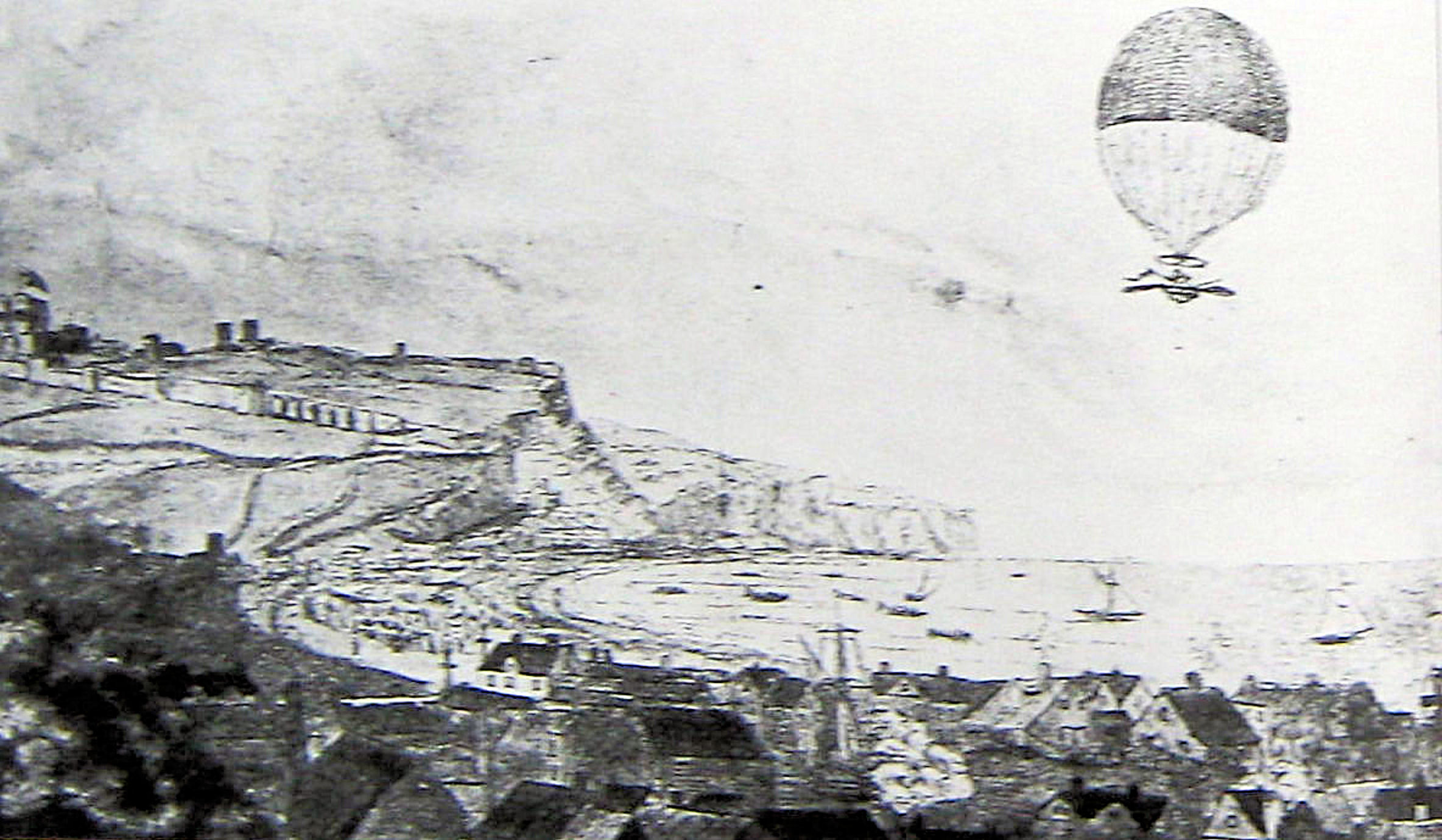
Blanchard and Jeffries Channel Crossing, Friday 7 January 1785.

Blanchard and Jeffries Channel Crossing, Friday 7 January 1785.

At 13.07hrs another gun was fired from the Castle – said to be the Queen Elizabeth’s Pocket Pistol* – and the spectators that had gathered on the Castle slopes and along seafront, hushed. Slowly the balloon rose from the Castle grounds and the crowds began to cheer, which was acknowledged by Blanchard who stood up and bowed, then removed his hat and waived his ensign.

Several times during the journey, the balloon came down almost to sea level, which the two men dealt with by first jettisoning the cargo and then the clothes they were wearing! They landed in a clearing in the Forêt de Guines, about six miles south of Calais, France and the flight had taken two and a half-hours.

Forest of Guînes where Blanchard and Jeffries landed- Guînes.Marie-guines.France

Forest of Guînes where Blanchard and Jeffries landed- Guînes.Marie-guines.France

By this time, both men were almost naked and extremely cold but crowds gathering, including the local magistrates! Although the flight had been successful, Blanchard and Jeffries main concern was their lack of attire but the magistrates provided them with appropriate dress! Afterwards the two men were invited to a grand reception in Calais town hall and Jean Pierre Blanchard was presented with the Freedom of the town. Later, Louis XVI (1774-1793), awarded him a substantial pension.

Dr Jeffries was presented with the Freedom of Dover and local dignitaries, including the then Lord Warden, Frederick North, Earl of Guilford, suggested that a monument should be erected to both men. This never materialised but there in one in the Forêt de Guines, in France, at the spot where the balloon landed.

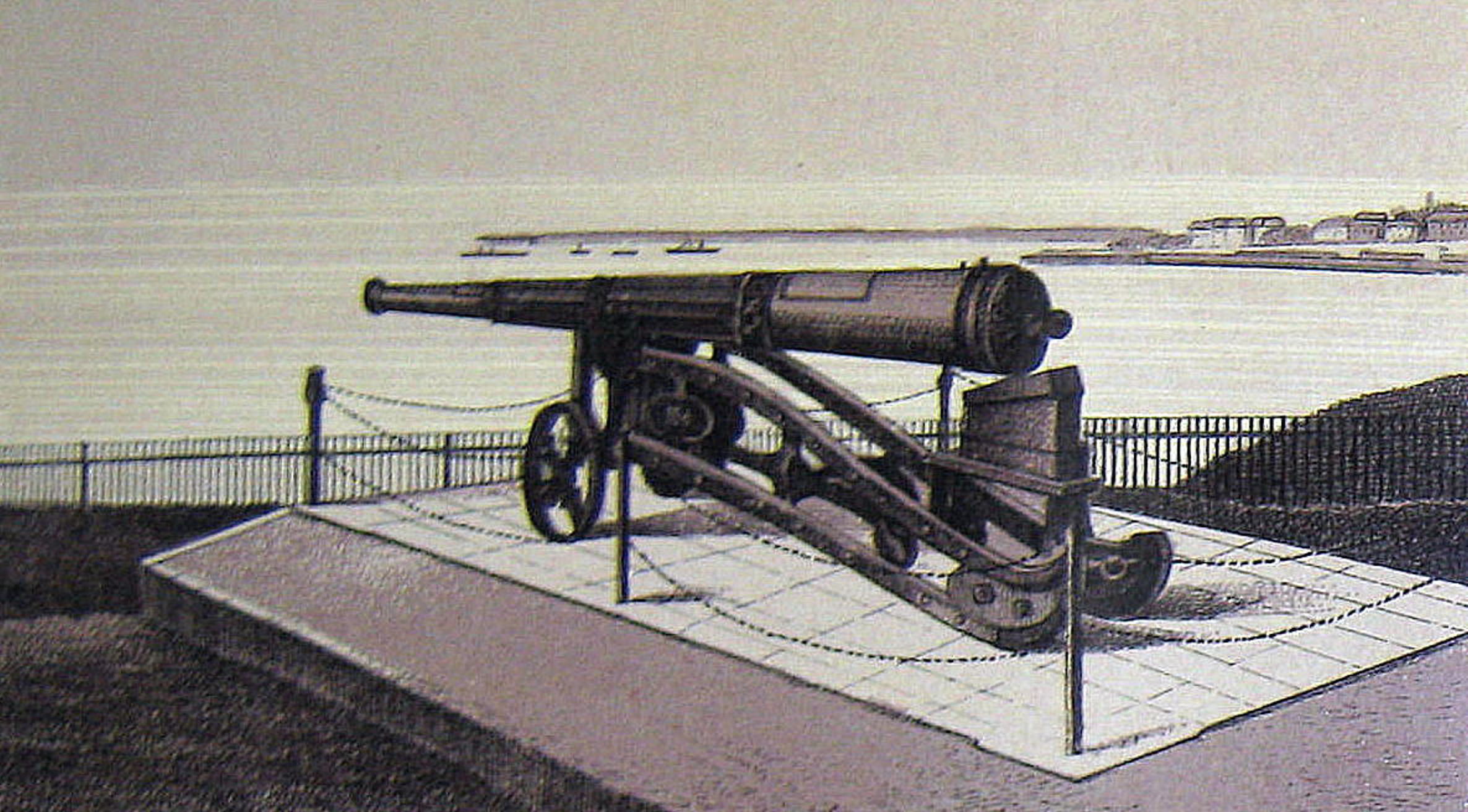
Queen Elizabeth's Pocket Pistol - Royal Album 1901

Queen Elizabeth’s Pocket Pistol – Royal Album 1901

* The Queen Elizabeth’s Pocket Pistol is a cannon that was made in Utrecht in 1544 by Jan Tolhuys as a gift for King Henry VIII. It is a brass Basilisk and was said to be capable of firing 12 pound shot over seven miles but this is an exaggeration. It is beautifully decorated and bears an inscription that is open to many translations; I am of the understanding that it reads:

‘Breaker my name of rampart and wall
Over hill and dale I throw my ball’

The cannon can be seen at the Castle on a replacement carriage that was made in the 18th century from captured French guns.

  • Published:
  • Dover Mercury: 02 July 2009
Posted in Aviation, Blanchard and Jeffries - The first Aviators to cross the English Channel | Comments Off on Jean-Pierre Blanchard and Dr John Jeffries – The first Aviators to cross the English Channel

Admiral Edward Pellew, 1st Viscount Exmouth – A local hero

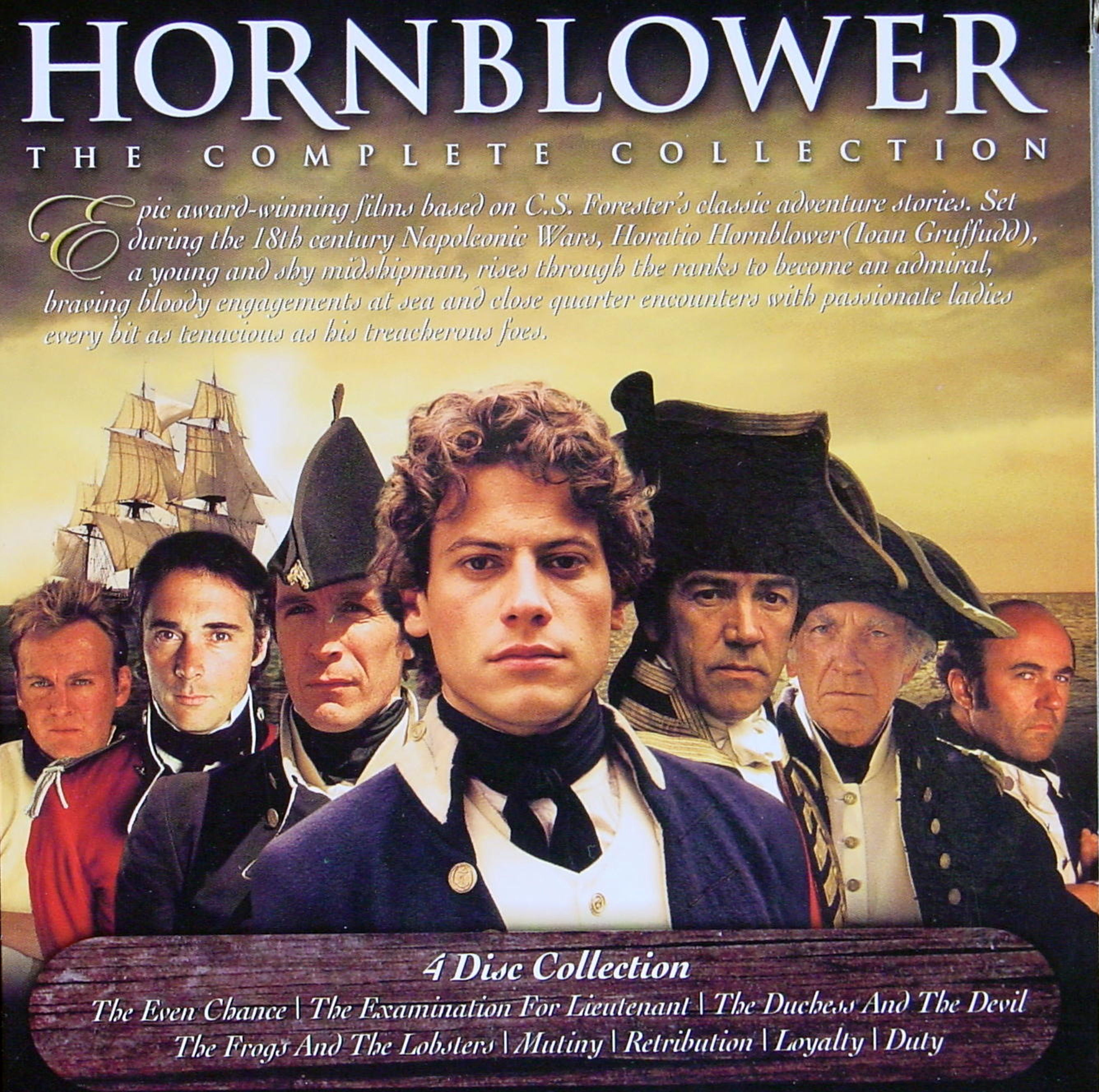
Edward Pellew played by Robert Lindsay first on right of Hornblower played by Ioan Gruffudd - ITV Video

Edward Pellew played by Robert Lindsay first on right of Hornblower played by Ioan Gruffudd – ITV Video

For someone deaf, like me, DVD’s – because of close captions – are a godsend. Consequently, come Christmas or my birthday my family knows what to buy me. At Christmas 2010 I received the DVD box set of the ITV series, Hornblower, (1998-2003) and I was enthralled!

Taken from the C.S. Forester’s books of the same name, the stories centre on the fictional character Horatio Hornblower, a Royal Naval officer during the Napoleonic Wars (1793-1815), and played by Iaon Gruffudd. Horatio’s mentor, Edward Pellew, played by Robert Lindsay, is based on the real life person of the same name. What does not come over, either in the books or the Television adaptation, is that the real Edward Pellew was born in Dover!

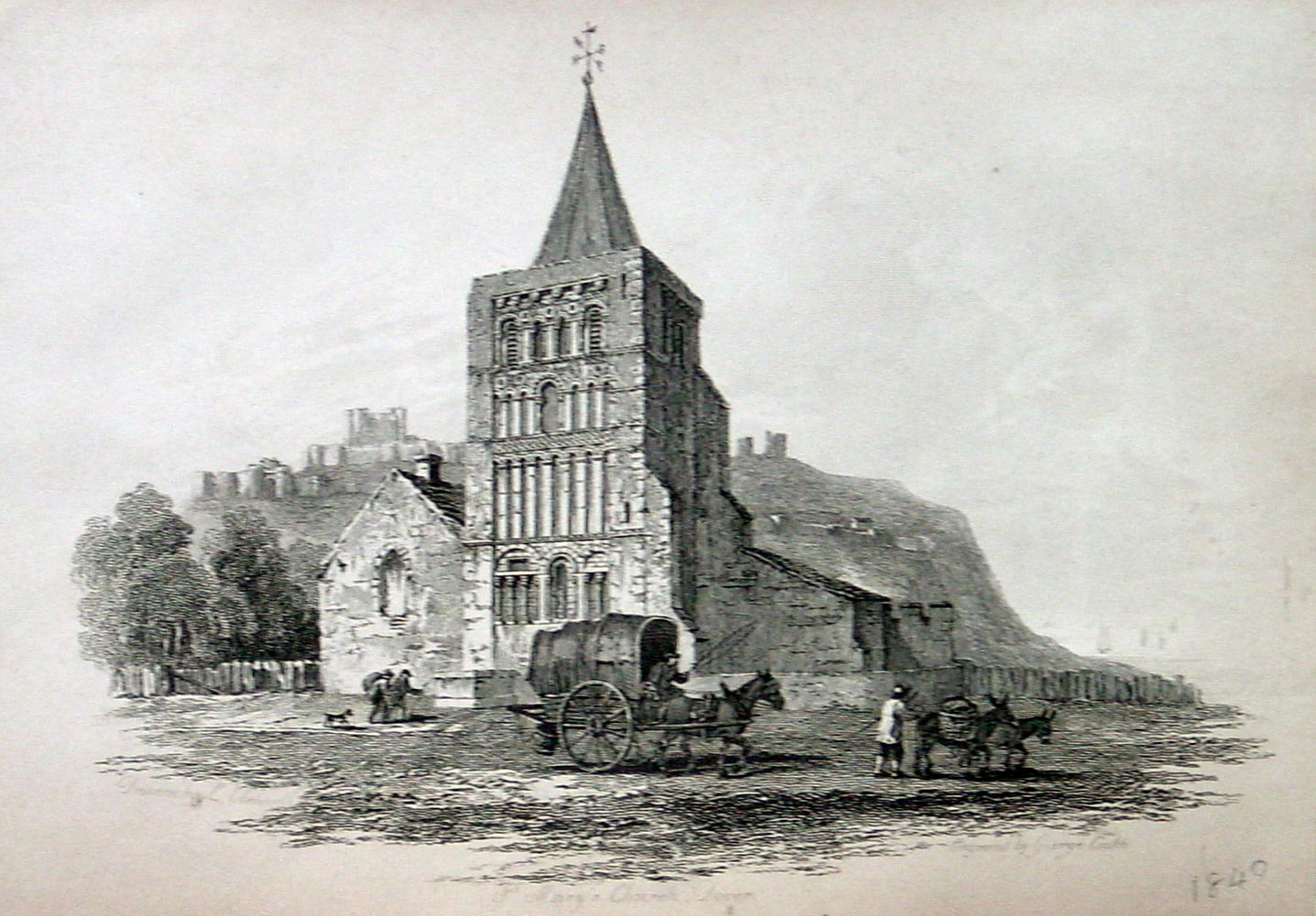
St Mary's Church (1849) where Edward Pellew was christened

St Mary’s Church (1849) where Edward Pellew was christened

Edward was born on 9 April 1757 and christened in St Mary’s Church, Cannon Street, ten days later. He was the second of six children of Samuel Pellew, commander of a Dover Post Office packet, and his wife, Constance. Samuel died in 1765 and Constance took her young brood to Cornwall, from where she came.

It appears that Edward did not settle in well in his new home so through family influence, when he was 13, he was taken on board the frigate Juno as a ‘Captain’s Servant’. The Captain was a John Stott whom, it would seem, was not to Edward’s liking but the young boy loved the sea. His first voyage was to the Falkland Islands carrying provisions that included two cows, one bull, ten sheep, five hogs and twelve rabbits.

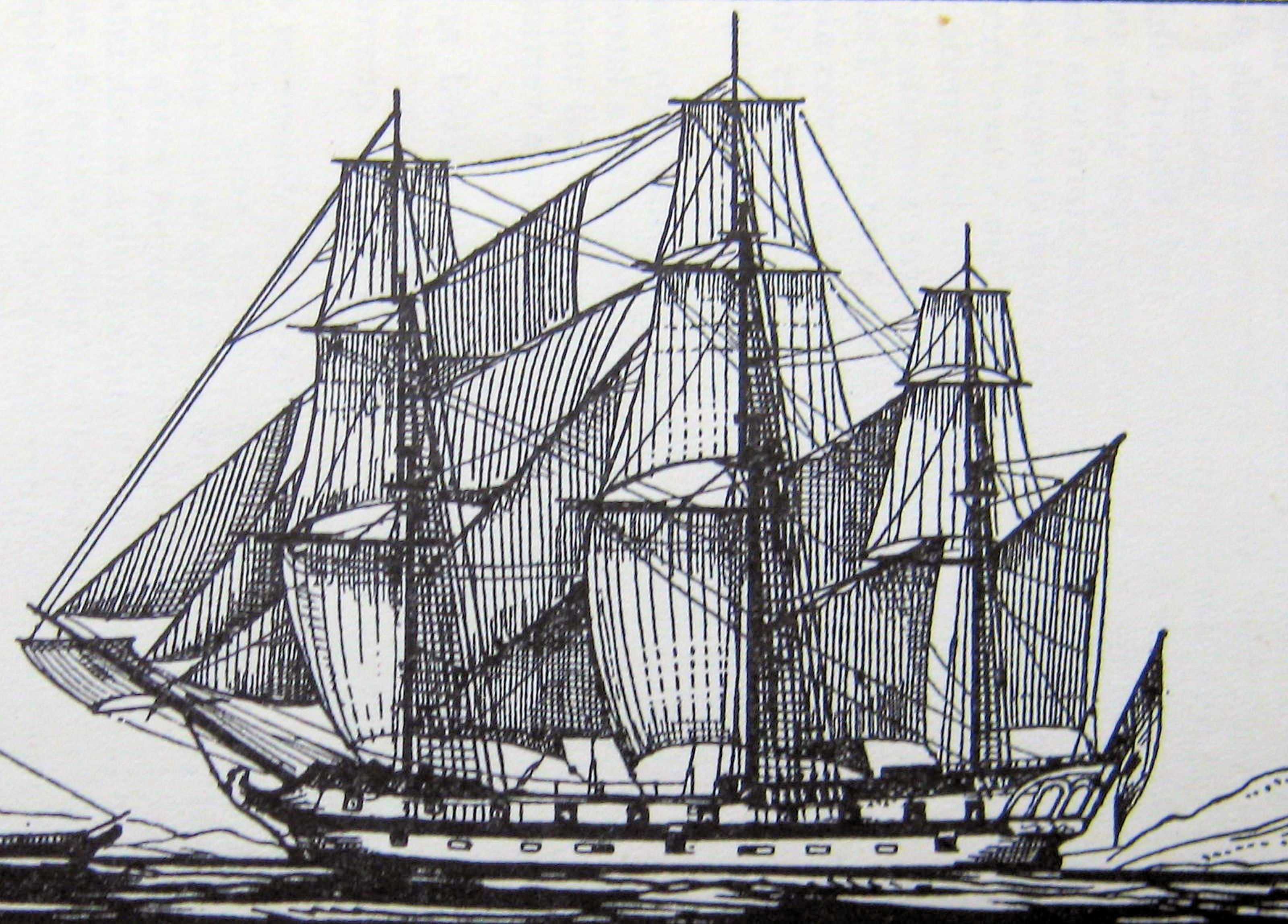
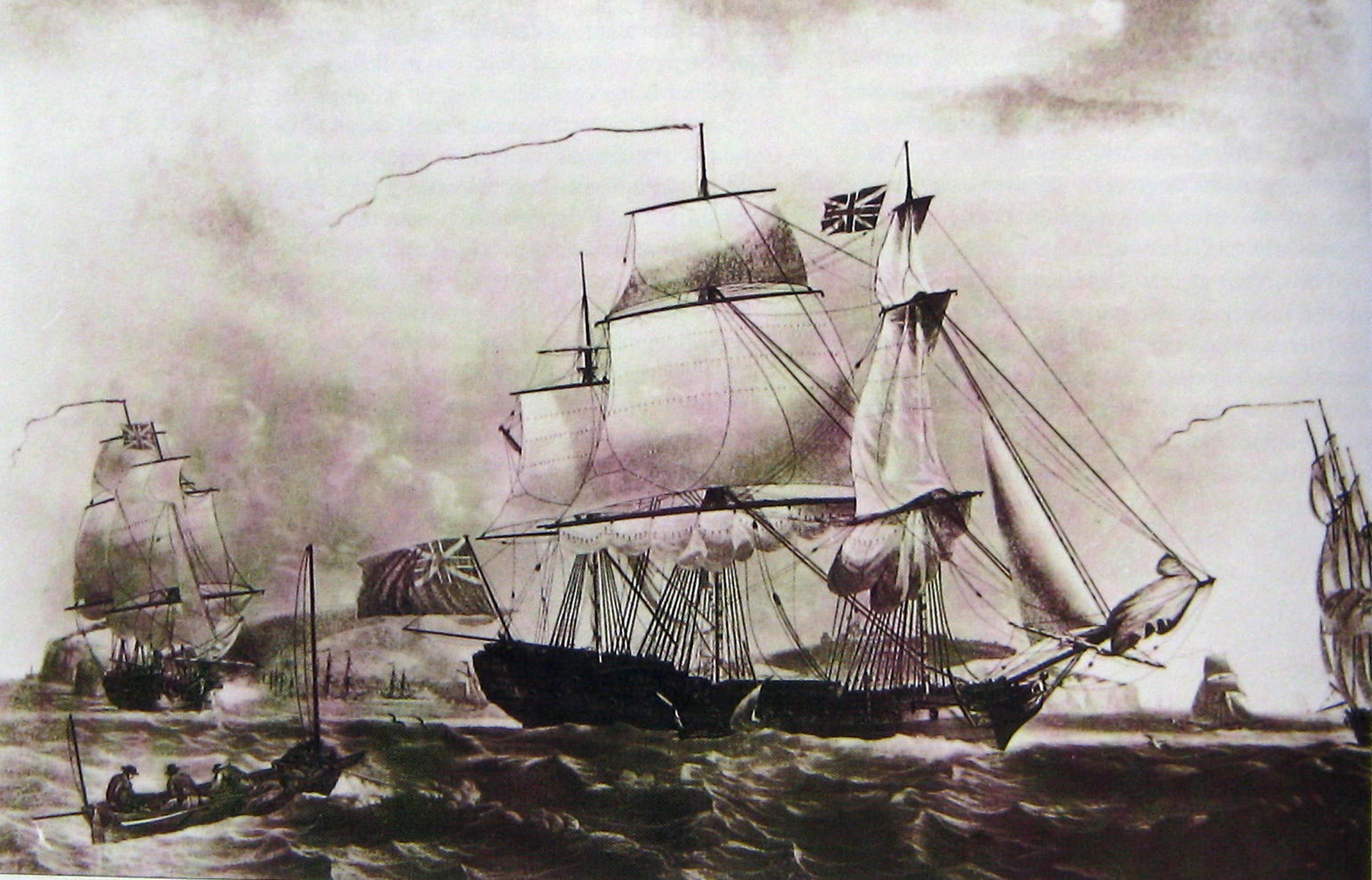
Frigate - circa 1780

Frigate – circa 1780

Following the severe punishment metered out to a seaman by Captain Stott, Edward lost his temper. He had served the Captain for five years and the Captain responded by putting Edward and the seaman ashore at Marseilles without the wages owed to them! Although destitute Edward managed to wend his way back to England and successfully put over his case. He then managed to secure a position on the Blonde, a 32-gun frigate under the command of Philemon Pownoll.

Pownoll came from a nautical background, had the reputation of being fine seaman and was wealthy through privateering activities – legalised piracy. This was 1775 and there were rumblings in the American colonies – the American War of Independence (1776-1783) was declared the following year. In April 1776, together with the Juno, the Blond went to St Helen’s to collect a convoy of twenty transports carrying troops of General John Burgoyne’s* army bound for North America to fight the British cause.

Edward quickly learnt from his new teacher and successfully showed off his seamanship skills. In October 1776, he was third in command of a detachment sent on the schooner Carleton with the remit to take control of Lake Champlain, New York, from the Colonists. This was part of the Battle of Valcour Island but during the action, his two senior officers were badly injured. Instead of retreating, in true Hornblower style, Edward fought his corner and his gallantry was rewarded by the promise of a commission to lieutenant.

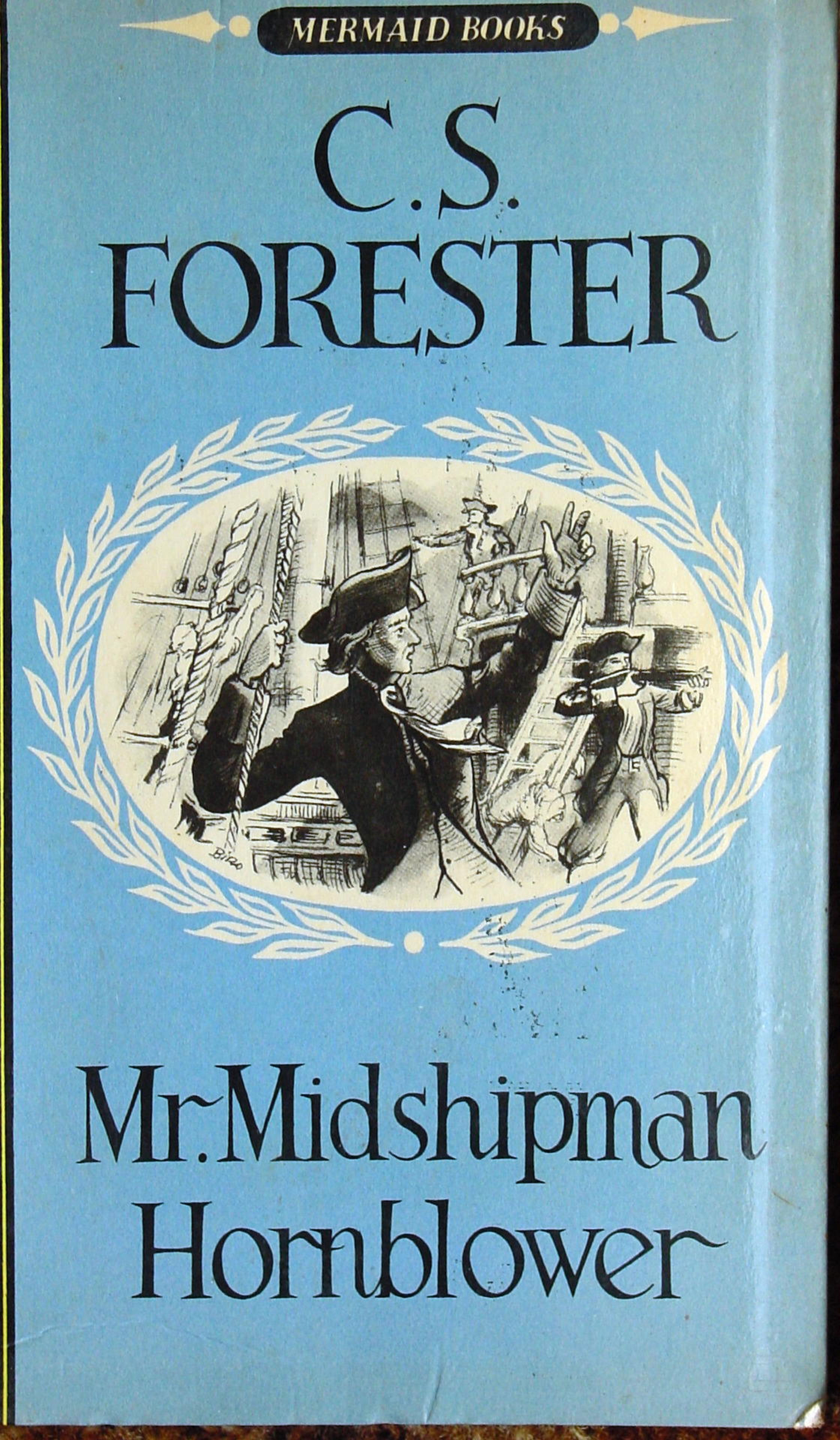
Edward Pellew, the basis for Mr Midshipman Hornblower by C.S. Forester. Front cover of the book published by Mermaid books

Edward Pellew, the basis for Mr Midshipman Hornblower by C.S. Forester. Front cover of the book published by Mermaid books

However, he was obliged to remain on Lake Champlain in command of sailors attached to General Burgoyne’s army through, what turned out to be, a particularly hard winter. During this time, Edward showed both finesse and courage in capturing desperately needed provisions from the Colonists as well as what nature could provide. During the Battle of Saratoga (19 September and 7 October 1777), Edward was taken prisoner and his younger brother, John, was killed. General Burgoyne surrendered on 17 October 1777 and Edward was repatriated home. He finally received his promised promotion in January 1778.

Three months later Edward was offered, by Captain Pownoll, the post of first lieutenant on the Apollo. On 15 June 1780, in an engagement against a French frigate off Ostend, Captain Pownoll was killed but although Edward successfully took command, he had lost a powerful patron. He did, however, manage to secure the command of a couple of sloops and was appointed temporary captain of the frigate, Artois.

Then Edward’s career languished. He was forced to accept a landlubber’s life and tried farming at which he was hopeless! Albeit, during this time, he married Susannah Frowde of Knowle, Wiltshire on 28 May 1783 and to aid his finances helped his brother who was a collector of customs. Across the Channel, in France, the Revolution had occurred in 1789 and on 1 February 1793, France declared war on Britain.

At the very beginning of the Napoleonic Wars  (1793-1815) Edward applied for a ship and was appointed to the Nymphe, a 36-gun frigate with a skeleton crew of officers and about a dozen sailors. Recruiting eighty Cornish miners and pressing merchant seaman from Dover and other Cinque Ports, he increased the number to 240. Edward trained his men hard but had the reputation of being fair. On 19 June 1793, they captured the French frigate, Cléopâtre, with a crew 320. The first frigate taken in the war for which Edward was knighted.

East Indiaman c1800. Dover Museum

East Indiaman c1800. Dover Museum

Sir Edward’s brilliant seamanship, determination backed by a fiery temper and heroics were all highly esteemed and on being given command of the frigate, Indefatigable, his exploits against the French became legendary. Famously, in February 1796, Edward was Plymouth when a storm blew up, which put the Dutton, an East Indiaman, on Plymouth Sound. The ship was to transport troops to the West Indies. The officers and most of the crew had managed to get ashore the ship was breaking up. On board, there were still some 500 people, including a skeleton crew and women and children. Edward organised two rowing boats to carry hawsers – heavy ropes for towing and mooring.

A large and powerful man, Edward swam to the stricken vessel, still dressed in full uniform including sword! On board, the crew accepting their fate had broken open the spirit room but Edward, wielding his sword, soon restored order. He then instructed the crew to haul the ropes on board and once secured the passengers and crew was winched to safety. For this, Edward was created a Baronet.

Over the following years, he and his crew captured fifteen enemy cruisers but after the Peace of Amiens in 1802, Edward had to return to farming. Elected MP for Barnstable he made a significant parliamentary speech against proposed naval reform arguing that it was detrimental to seamen. When hostilities against the French resumed Edward returned to what he could do best and in March 1803 was appointed to the 80-gun Tonnant. The following year he became the Rear Admiral of the White in the East Indies but this required him to resign as an MP.

Edward stayed in the East Indies until February 1809, during which time he promoted the careers of two of his sons and made a fortune for himself by privateering a Spanish treasure ship. With his new found wealth, he purchased a large house in Teignmouth, Devon, and a country estate on the outskirts. His naval career went from strength to strength and eventually, in 1814, Edward was appointed full Admiral and created Baron Exmouth.

Following victory at Waterloo in 1815, Edward had expected to be retired from active service and was preparing to take a positive role in the House of Lords. As one last job, he was given command of an Anglo-Dutch fleet with the remit to bring about and conclude treaties with the Barbary States of North Africa. This was expected to be a low-key task, but with Edward in charge, even the British Government should have thought that unlikely!

Edward’s squadron consisted of five ships of the line, nine frigates and smaller warships and they set off on what looked like a relaxing cruise. However, on the way down to the Mediterranean Edward received word that the Dey of Algiers, on the Barbary Coast, had massacred some 200 Christian fishermen. Further, the Dey was holding over 1,000 Christians as slaves within the heavily fortified city – Algiers was said to be impregnable.

Immediately, Edward ordered that all the crew were to be trained and drilled and he told them what he expected of them. On the approach to Algiers, he put some of his men on shore to do a reconnoitre. On the information they gathered, he instructed his fleet to position themselves off Algiers and then subjected the city to strategically aimed heavy bombardment that lasted seven hours.

The following morning Edward invited the Dey of Algiers to diplomatic talks. These included surrender, releasing all of the Christians and the signing of the Treaty – the task he had been given in the first place! Although Edward had successfully fulfilled his remit, the toll on human life was said to be greater than any of the sea battles during the whole of the Napoleonic Wars.

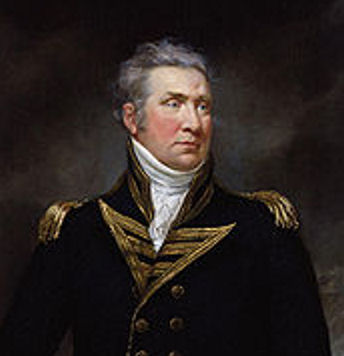
Edward Pellew, 1st Viscount Exmouth (detail) by James Northcote - Internet

Edward Pellew, 1st Viscount Exmouth (detail) by James Northcote – Internet

On returning home, Edward was created Viscount Exmouth and became a voice in the House of Lords on behalf of sailors. On 15 February 1832 was made Vice-Admiral for the United Kingdom but less than a year later he died, on 23 January 1833. Edward was buried at Christow, Devon. His brother, Israel, also born in Dover and also enjoyed a brilliant naval career but he was not used as prototype for Hornblower, so is largely forgotten. In Dover there is nothing to indicate that such a celebrity as Edward Pellew… during his lifetime, fictionalised by C S Forester and recently through a major television series … was born in the town.

*General John Burgoyne (1722-1792) British Army Officer best known for surrendering his entire army of 5,800 men on 17 October 1777 to the American Colonists that proved to be the turning point in the American War of Independence. In Dover, a fort was built on the east cliffs behind the Castle in the 1860s and named after the General. These days there is a housing development nearby called Burgoyne Heights.

  • Published:
  • Dover Mercury; 02 and 09 June 2011
Posted in Pellew Admiral Edward - A local hero, Pellew Edward, 1st Viscount Exmouth - A local hero, People | Comments Off on Admiral Edward Pellew, 1st Viscount Exmouth – A local hero

Transportation

Dover Society Plaque, just off Market Square, showing where Medieval punishments took place in the Town

Dover Society Plaque, just off Market Square, showing where Medieval punishments took place in the Town

Some years ago the Dover Mercury published a series of articles of mine on the different Dover’s around the world. These can now be seen on the Dover Society web-site accessed from the Home page. One of those stories was about Dover, Tasmania, the name of which has its origins as a penal colony for transported English felons, particularly from East Kent.

During the 17th century the brutal punishment of  the medieval age slowly waned in towns like Dover giving way to gaoling and transportation. Proclamations were issued allowing the transportation from the country of vagrants and rogues and with the mainland Continent only 20-miles away, it was probable that such proclamations were frequently used in the town.

In 1718, the first national major legislation on transportation was passed. This established seven year banishment to North America as a possible punishment for those convicted of lesser felonies or where capital punishment was commuted. The administrative arrangements were placed on the county or borough authorities. The first Dovorian to be transported was Solomon Huffam in 1723 who was sent to America on board the Prince Royale. Of interest, when Huffam arrived he was sold to Thomas Pulleyn to work in servitude for his sentenced time but Huffam ran away and was never seen again!

Discovery 'Transportation' Hulk, Deptford 1828

Discovery ‘Transportation’ Hulk, Deptford 1828

The outbreak of the American War of Independence (1776-1783) closed the American colonies as a place for criminals and to deal with this an Act was passed in 1780 that allowed for sentences of transportation ‘to some parts beyond the seas either America or elsewhere.’ In reality this meant imprisonment on a convict ship moored in the Thames. Convict ships, or ‘hulks’ as they were called, were old warships where the convicts were shackled and everyday taken ashore at daylight. Usually they would break blocks for road mending until nightfall. On the hulks the conditions were overcrowded and the food was just enough to sustain the convicts. The death rate was one in three.

In 1770 Australia had been claimed as British territory so under the 1784 Transportation Act, New South Wales was designated as a place to send convicts. Three years later the first convict fleet arrived after a voyage of approximately six months. The convicts were shackled and locked in iron cages below decks and again the death rate was very high. Once in Australia the convicts lived in barracks and as on the hulks, were given just enough food to sustain them. Their sentence demanded that they were forced to do physical hard work for long hours without a break.

The penal colony in Dover, Tasmania was designed for 451 prisoners. Originally named Port Esperance after one of the ships under the command of the French Admiral Bruni D’Entrecasteaux, who had explored the area. It ceased to be a convict settlement in 1850 but the Commandant’s Office still exists. After that time the town developed as an important port shipping the highly prized strait trunked Huon pine, reputed to have natural durability and ease of use and was used in the construction of the Admiralty Harbour!

The infamous Aldington Gang, who had run smuggling operations from the Romney Marsh were transported to there. They had started operating at the end of the Napoleonic Wars (1793-1815), when smuggling had ceased to be seen as a legitimate profession in East Kent. They specialised in illegally importing wines, spirits and luxury items from the Continent, landing the contraband along the coast from Dungeness to Deal.

Adamsons Peak, Dover, Tasmania. Community Liaison Office, Dover, Tasmania

Adamsons Peak, Dover, Tasmania. Community Liaison Office, Dover, Tasmania

In July 1826, under the leadership of George Ransley, they were on Dover beach during the night when an altercation took place with the Coastal Blockade and Midshipman Richard Morgan was shot and killed. The Gang escaped but in October Ransley and gang members Samuel Bailey, Thomas Gilham and James Hogben were arrested on suspicion of murder. The trial took place at Maidstone Assizes in January 1827 and they were found guilty. However, as it was dark when the offence took place giving rise to doubt, the punishment was commuted to transportation to Dover, Tasmania. Ransley’s wife later joined him and following his release in 1838, they stayed and successfully ran a farm until his death in 1856.

Between 1787 and 1857, 162,000 British convicts were transported to Australia reaching a peak in the economically depressed years following the Napoleonic Wars. Typically, in the spring 1819, 47 felons were transported and for the same months in 1826, 116 felons were sent to Australia. The total cost that year to local tax payers, was £79.19.8d. The reasons given as to why the felons were transported varied. Records of the Dover area show that in 1840 Michael Upton age 23 and John Page age 29 were transported for 15 years. They had been found guilty of stealing two sheep and a sack. A year later, John North, age 30 of Hougham was transported for life following serious rape. He had been aided and abetted by Daniel Rigden, James Ridgen, Richard Marsh, John Martin, Stephen Parker and William Smitton who were also transported for life.

In 1845 William Denham, age 17 was found guilty of stealing a coat, a pair of trousers and other articles in Dover and was sentenced to ten years transportation. The next year, John Punch, age 20, and James Howard (alias James Punch), age 36, were found guilty of stealing a silver watch and were sentenced to transportation for 15 years. At the same time John Turner (alias William Davies), age 22 was found guilty of passing a counterfeit half-crown (12½p) at Alkham. He was sent to Australia for ten years. Then James Hounslow, carpenter age 30, was found guilty of feloniously marrying Sarah Jane Houghton widow, his wife being alive, he was sentence to 7 years transportation.

Transportation order by the High Sheriff of Kent, Edward Rice in 1830 - Centre for Kentish Studies

Transportation order by the High Sheriff of Kent, Edward Rice in 1830 – Centre for Kentish Studies

At Maidstone Assizes the judiciary was headed by the High Sheriff of Kent. This is the oldest secular office under the Crown and the High Sheriff, at that time, was the principal law enforcement officer in the County. Of interest John Minet Fector was the High Sheriff in 1805 and Edward Rice in 1830. History shows that John Minet Fector, prior to 1816, ran East Kent’s major smuggling ring and although he was put on trial in 1799, he was cleared. Edward Rice was free from suspicion but at the same time as John Minet Fector was heading illegal activities, Rice’s family were running similar pursuits.

As noted, all those found guilty and transported from east Kent usually were sent to Tasmania and sometimes  Western Australia. In 1840 transportation to New South Wales ended as a result of pressure from the authorities there. South Australia had never been used as a penal colony, although they had transported felons to other Australian colonies. By this time, however, it was beginning to be noticed that after completing their sentence many followed George Ransley’s example and stayed in the new country. This led to a change of attitude in the UK as the public saw transportation as a free passage to build a new life.

The Penal Servitude Act of 1857 abolished sentences of transportation but still allowed those sentenced to penal servitude to be taken overseas to serve part of their sentences. Ten years later this loop-hole was finally closed.

  • Published:
  • Dover Mercury 27 December 2006
Posted in Courts, Crime & Punishment, Transportation | Comments Off on Transportation

Charles Churchill – Poet

Charles Churchill (1731-1764) Poet  - Wikisource

Charles Churchill (1731-1764) Poet – Wikisource

In his day Charles Churchill (1731- 1764) was a popular poet and satirist, hated by the establishment but held in high esteem by an influential section of society. Besides his poems, Churchill’s lasting legacies are in relation to Dover – a memorial tablet in St Mary’s Church, a poem by Lord Byron, and his grave near the top walk of Charlton Cemetery.

Churchill was the son of the curate at St John’s Westminster and it was envisaged that he too would join the church. However, in his mid-teens he rebelled and spent his time frequenting theatres and taverns until he impetuously married at the age of 18. This brought the young Churchill to heal and he was sent, with his young wife, Martha Scott, and son, to Sunderland to train for the clergy.

In 1753, Martha inherited a legacy and they returned to London where Churchill was ordained a deacon and appointed curate of Cadbury, Somerset. The family, which now included two sons, moved there and Churchill threw himself into parish work. After three years he was ordained and given the living of Rainham, Essex.

Churchill’s father died in 1758 and Churchill was given his parish of St John’s, Westminster. His father had been very popular but Churchill increasingly failed to live up to what was expected of him. Consequently, to support the family, he was forced to supplement his income by undertaking private tutelage.

It was about this time that Churchill met up with the friends of his youth, known as the notorious Hellfire Club. They frequented theatres, taverns and brothels and published satirical observations. Quickly, Churchill fell foul of the Dean of Westminster and his marriage began to fail. Further, he became deeper in debt and was threatened with imprisonment. In response, Churchill wrote his first satirical poem, The Conclave directed at the Dean of Westminster but out of fear of legal proceedings withheld its publication!

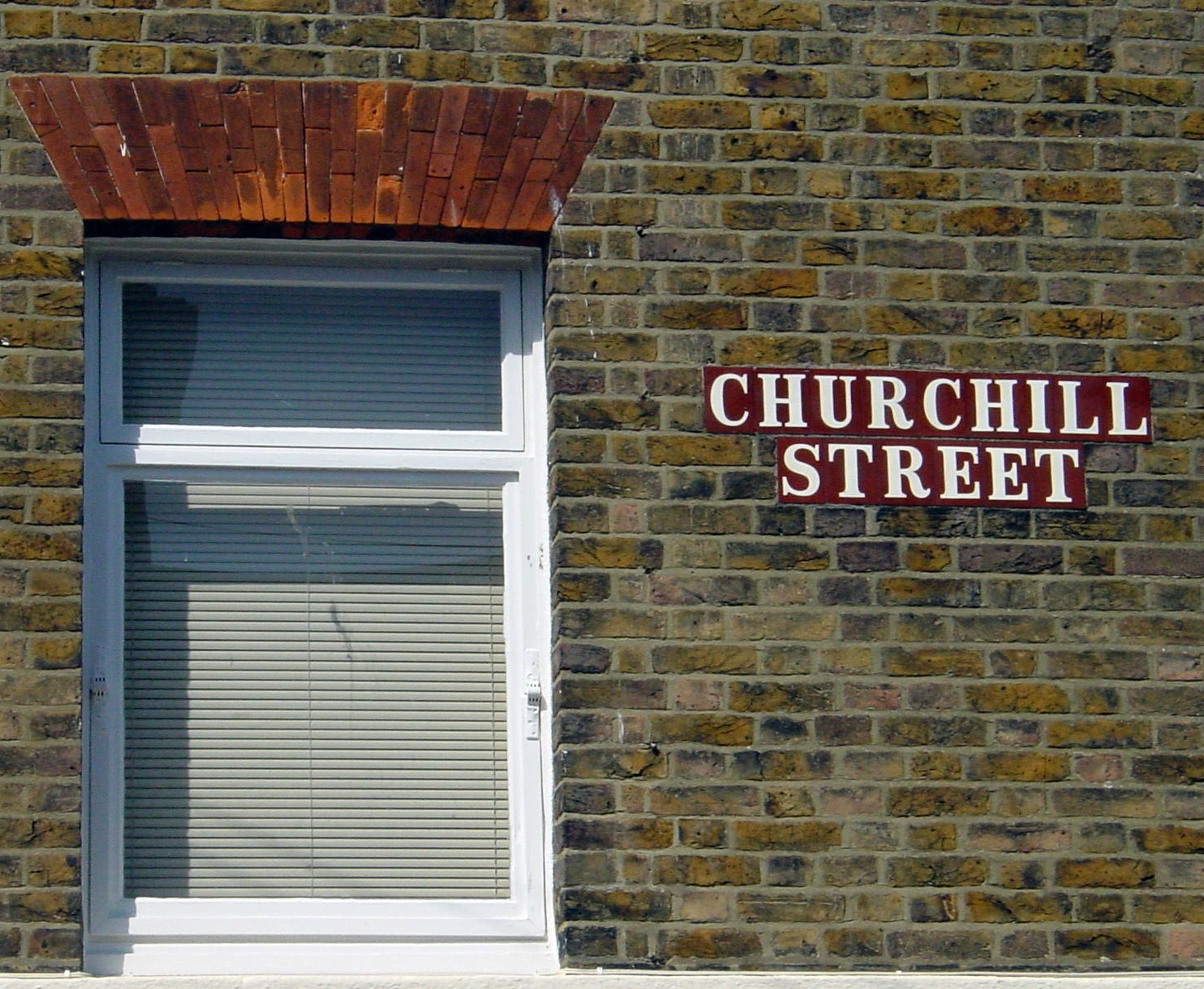
Churchill Street, Buckland, Dover, named after the Poet according to some sources but more likely Randolph Churchill the politician

Churchill Street, Buckland, Dover, named after the Poet according to some sources but more likely Randolph Churchill the politician

Nonetheless, in March 1761 Churchill wrote Rosciad, a poetic satire about the actors and actresses on the London stage. This he published anonymously and at his own expense and the work was an overnight success! However, critics attributed it to other authors – who did nothing to disclaim the credit. Churchill reacted by publishing and signing the Apology, another poetic satire, which secured both his fame and fortune. He resigned from the church, separated from his wife and paid back his creditors.

Churchill’s next publication, The Prophecy of Famine: A Scots Pastoral (1763), was a satire aimed at the Prime Minister, John Stuart, 3rd Earl of Bute, and favourite of George III. The owner of the publication was arrested and Churchill was threatened with legal action but in the end Lord Bute was forced to resign his parliamentary position.

Churchill’s publications that year also included the Duellist aimed at members of the House of Lords; The Ghost in which he attacked well know writers of the time and The Candidate, aimed at John Montagu, the 4th Earl of Sandwich.

The Earl of Sandwich, at the time,  was involved in the prosecution of John Wilkes, another member of the Hellfire Club, for obscene liable. To escape from imprisonment John Wilkes fled to Boulogne and on 22 October 1764 and Churchill went to see him. Within a week, Churchill was sick with ‘military fever’ and on 4 November died, he was thirty-three.

Charles Churchill Gravestone, St Martin's Cemetery. Dover Library

Charles Churchill Gravestone, St Martin’s Cemetery. Dover Library

Another member of the Hellfire Club, Humphrey Cotes, returned Churchill’s body to Dover and he was buried in St Martin’s Churchyard, where the Discovery Centre is today. The funeral was attended by the principal inhabitants of Dover,  ‘as a mark of their esteem.’ Jarvist, a local mason, cut the inscription, ‘Life to the last enjoy’d,  a line from Churchill’s poem, the Candidate finishing with ‘Here Churchill lie.’ Churchill left his wife £60 and provided for his two sons.

T. Underwood, in 1769, erected the memorial tablet to Charles Churchill on the south wall of St Mary’s Church and it includes a line from the poet’s Epistle to Hogarth. Although, in the late 19th century there were calls to remove the plaque on the grounds that, ‘Mr Churchill used his pencil as an instrument of revenge,’ it can still be seen.

Charles Churchill Memorial, St Mary's Church

Charles Churchill Memorial, St Mary’s Church

In April 1816, Lord Byron, on his way to Ostend, visited Churchill’s neglected grave. Shortly after, he published the poem, Churchill’s Grave, the first lines of which read:
‘I stood beside the grave of him who blazed
The comet of a season, and I saw
The humblest of all sepulchres, and gazed
With not the less of sorrow and of awe
On that neglected turf and quiet stone,
With name no clearer than the names unknown,
Which lay unread around it; and asked
The Gardener of that ground, why it might be …’
Churchill’s Grave, by Lord Byron, (1788-1824).

In the summer of 1970 St Martin’s Cemetery was scheduled to be demolished to create Yorke Street. In July Kent Archaeological Rescue Unit, (KARU), archaeologist Brian Philp, obtained a special Home Office licence to exhume the site before its destruction. This involved recording 80 tombstones, including that of Charles Churchill. The graves were carefully exhumed and the contents placed the contents in special containers. They were then taken to Charlton cemetery and placed in a very large communal grave and reburied with clerics officiating.

  • Published:
  • Dover Mercury: 10 June 2010
Posted in Churchill Charles - Poet, People | Comments Off on Charles Churchill – Poet