Connaught Park – Part I

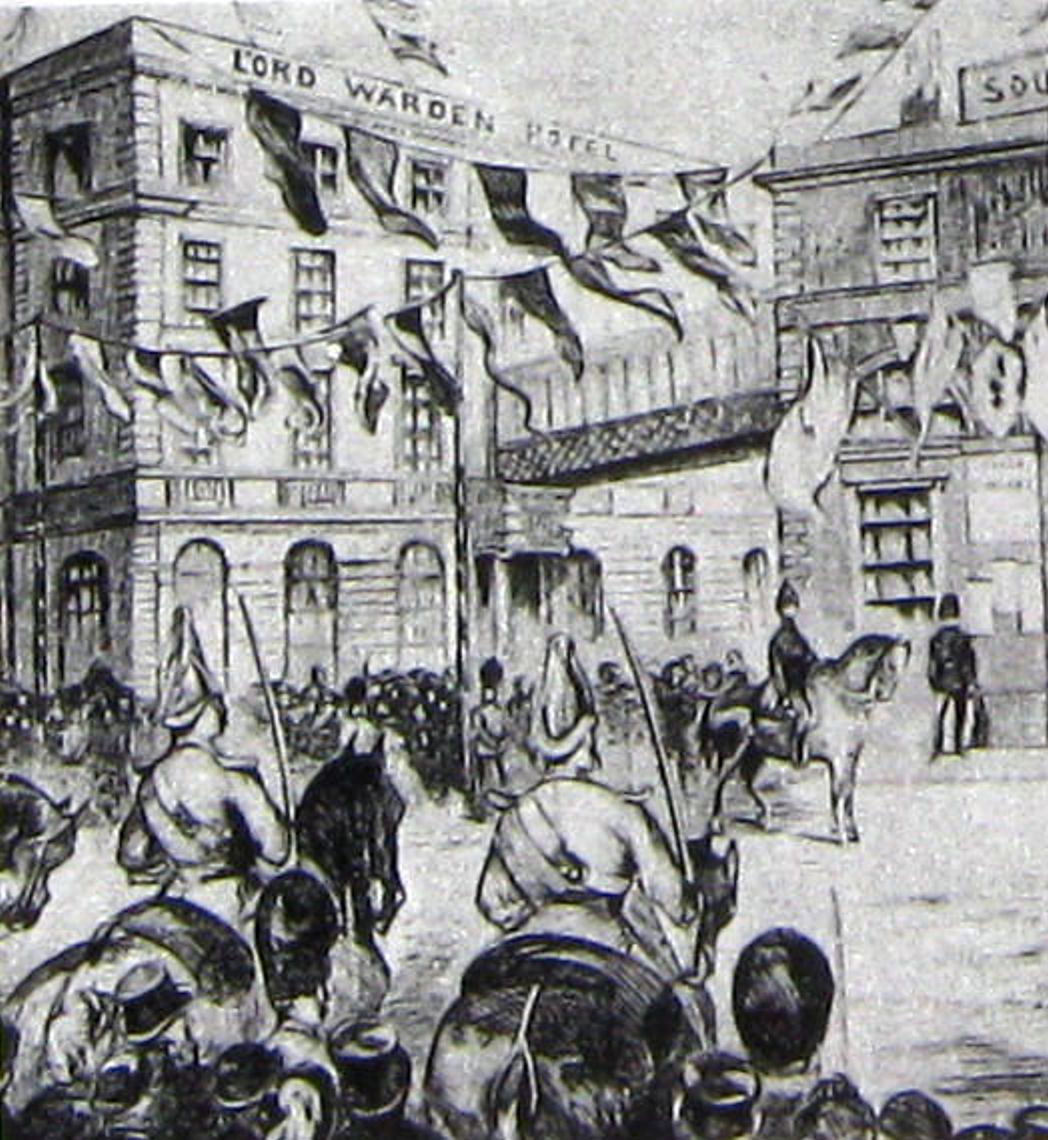
TH Duke & Duchess of Connaught welcome at Town Station - 14.07.1883

Duke and Duchess of Connaught welcomed at Town Station 14 July 1883

At noon on Saturday 14 July 1883, a Royal Salute announced that the third son of Queen Victoria, HRH Prince Arthur Duke of Connaught and his wife, Louise, had arrived by train at the Town Station. This was in the then Pier District of Dover and they had come to open the newly built major extension of the then Town Hall, now the Maison Dieu, and a municipal park, both to be named after the Prince.

The idea of a municipal park had been muted in the 1860s when land holdings, belonging to the government’s Department of Woods and Forest Department, was put on the market. Charles Gorley, who farmed the land, bought it and built a terrace of villas running from the opposite side of the River Dour at Ladywell to Charlton Back Lane, later renamed Maison Dieu Road. Initially the new road was to be named Ladywell but as the deeds stated the site was part of Maison Dieu Park it was given the name Park Street. This was a cause of embarrassment, as the town did not have a municipal park!

On the slopes below the Castle, in 1876, builder William Adcock was commissioned by Robert Chignell (1837-1923) to build a high-class preparatory school for boys who would later go on to a Public School. Called Castlemount, Chignell had the extensive grounds terraced with lawns, plants and trees and following the express of interest, invited the public to come and promenade at weekends and at times when the pupils were on vacation.
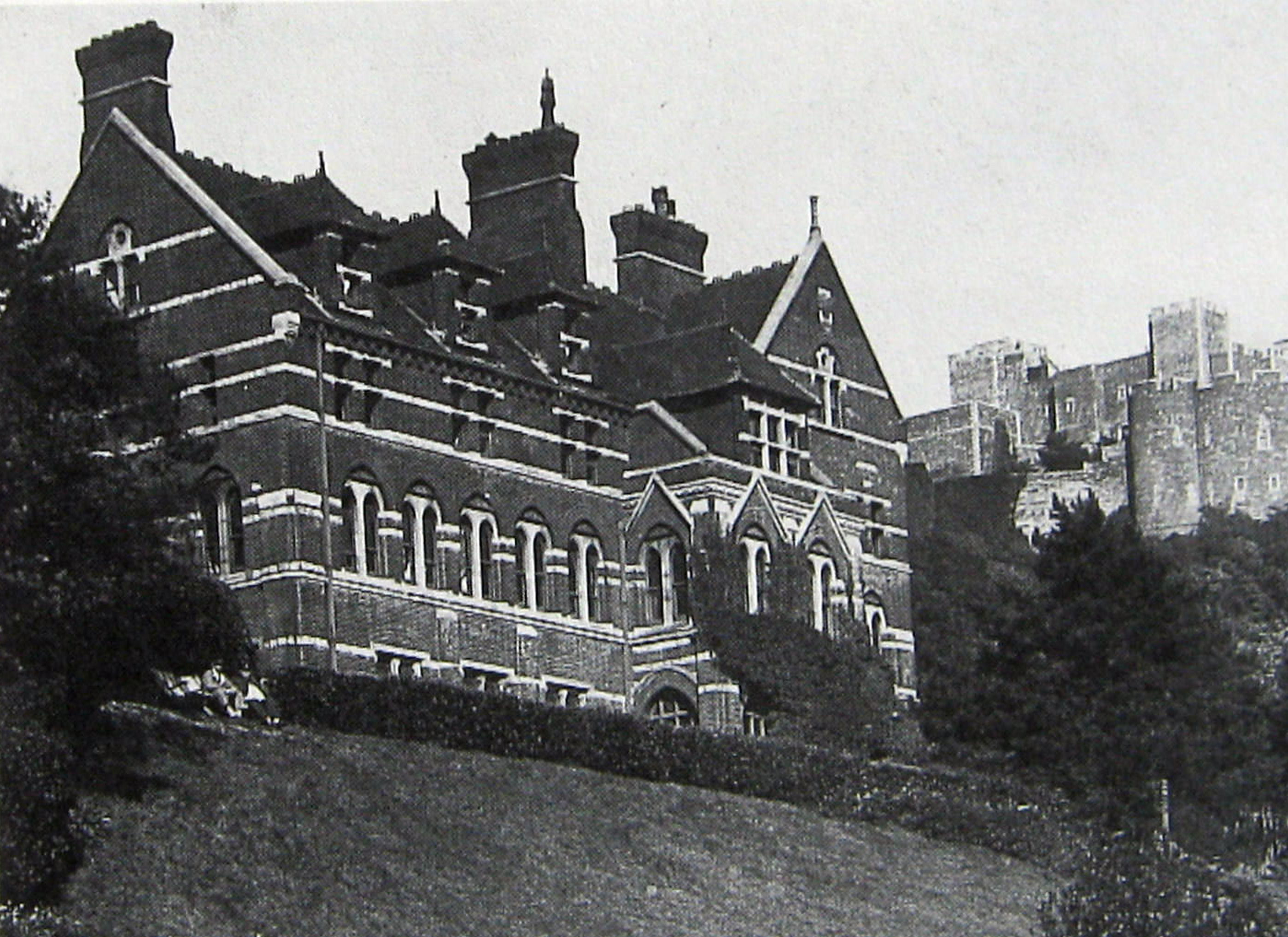
TH Castlemount. Dover Library

Castlemount

So popular was this that a committee was set up and chaired by Dr Edward Astley (1812-1907) to create an extensive public garden also on the Castle slopes. The committee included John Finnis and Henry Hayward – both of whom contributed £500 each – Mr & Mrs Robert Chignell, Steriker Finnis, Richard Dickeson, John L Bradley, William Adcock, Thomas E Back, the Misses Haddon, James Stilwell, Dr Sutton, Alfred Leney, Mrs John Birmingham, W Rutley Mowll and Messrs Hills and Sons of Castle Street. All of whom contributed £100 each.

The committee approached the Department of Woods and Forests to lease, for 99 years, 30 acres of Castle Farm and part of the agreement was that the land was not to be given over to building development. William Crundall gave a piece of land at the top of what became Park Avenue on which the park entrance was created. He also gave a flagpole to be erected at the side of the entrance. A public subscription was set up and £2,700 was quickly raised for fencing, planting and landscaping of the site. The only charge on the council rates was for maintenance, this was agreed to be in perpetuity and a section of the site was set aside as a nursery. Robert Chignell designed the lay out of the park and the construction was under the supervision of Edward May.
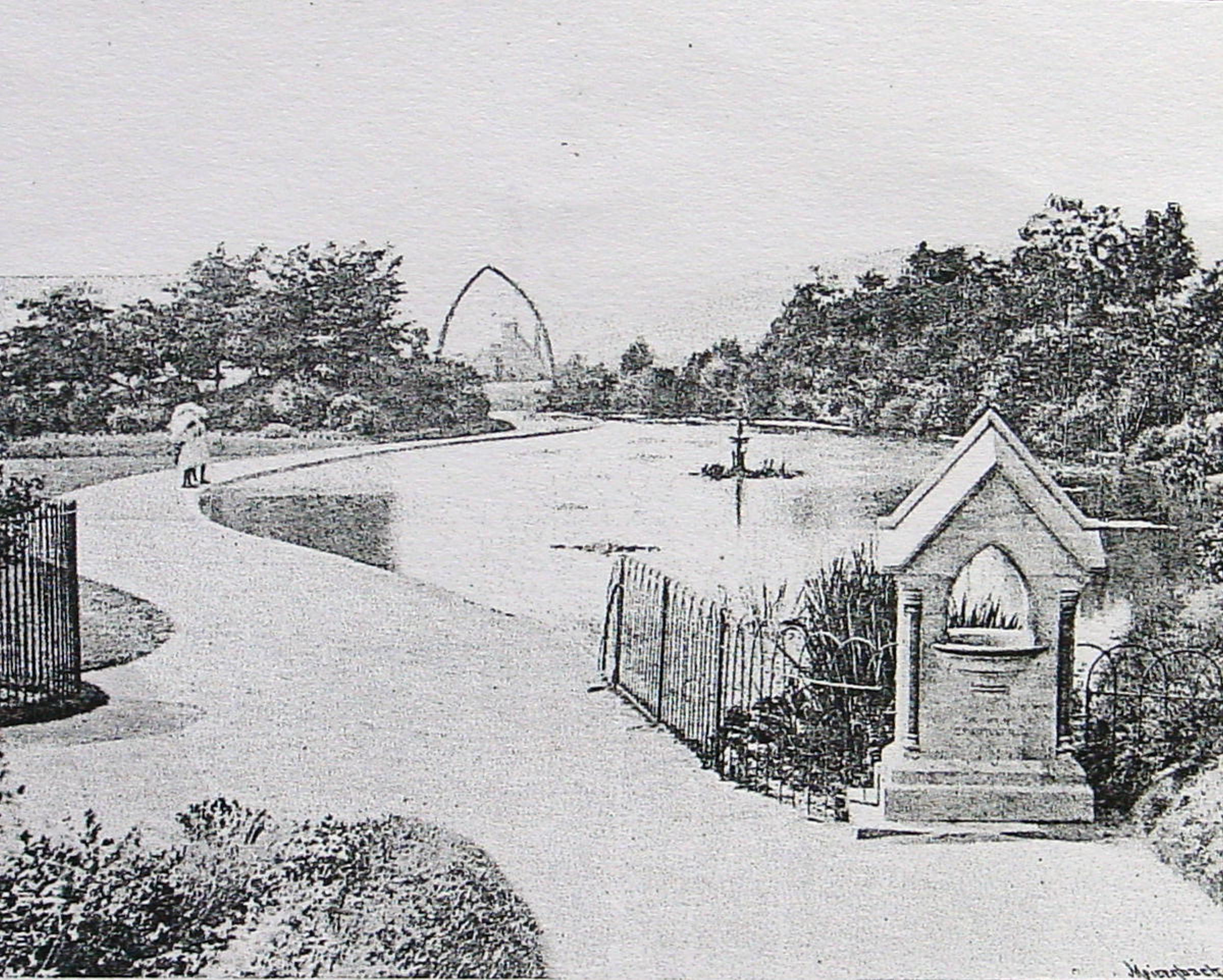
TH Connaught Park Lake c 1900. Martin Jacollette photographer.Courtesy of Dover Library

Connaught Park Lake c 1900 with the Astley drinking fountain at the front and the whale jawbones just beyond the pond. Martin Jacollette photographer. Dover Library

After the creation of the terraces, walks were laid with the intention that the pedestrian could walk from Charlton to the Castle entrance opposite the Constable’s Tower and along the way have extensive views of the sea, harbour and Western Heights. A miniature lake was formed with a fountain in the middle. Nearby a stone drinking fountain was placed that had been bought by Dr Astley and there were ample boarders for flowers. The nursery had a modern hot house where plants could be grown or bought in and kept for planting out to ensure that the flowerbeds would look beautiful from early spring to late autumn. During the winter, appropriate bushes would fill the beds and during the Christmas season be dressed with seasonal garlands.
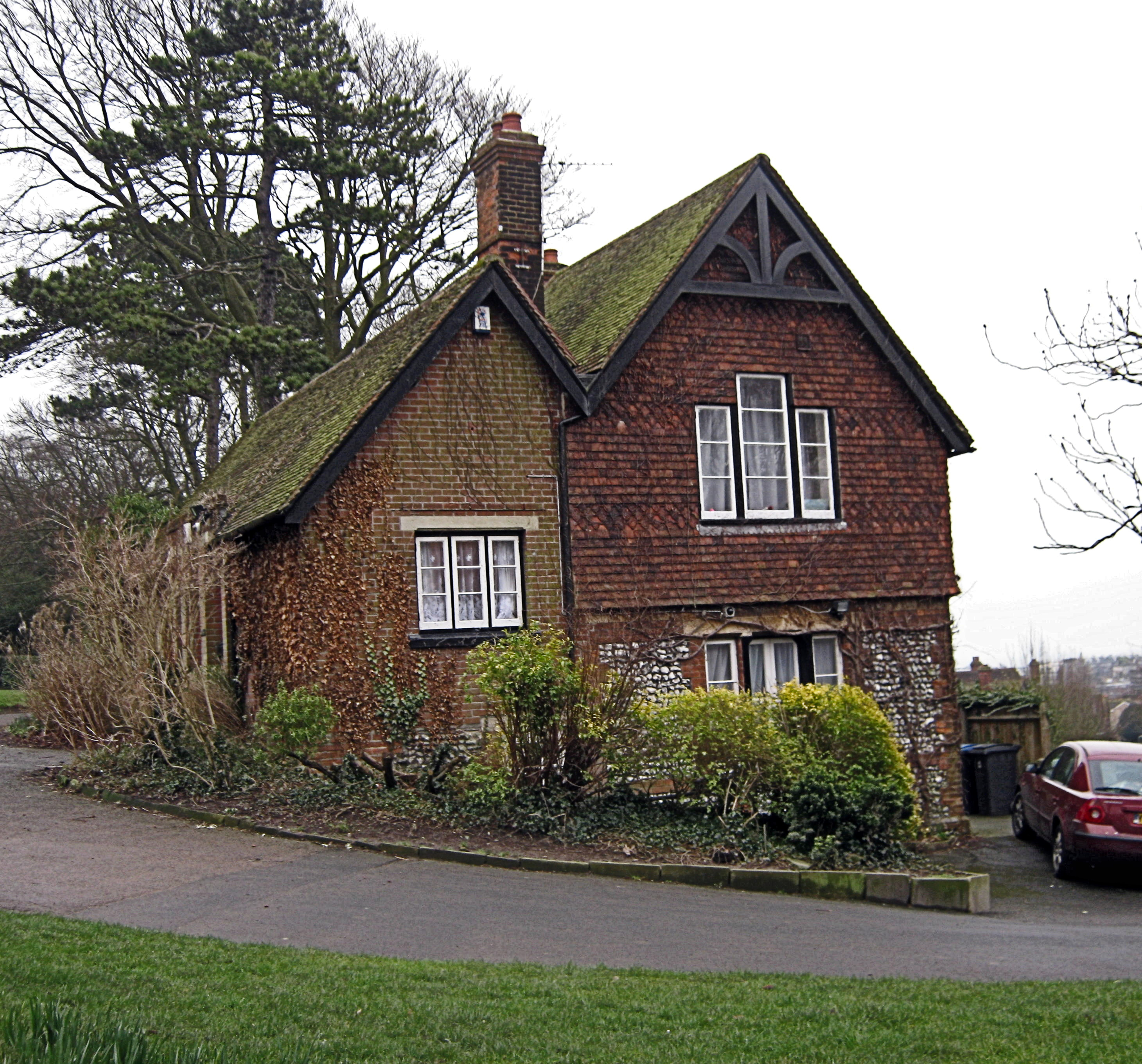
TH Connaught Park - Lodge - LS 2013

Connaught Park Lodge built for park keeper. LS 2013

Edward May was appointed park keeper with a newly built residence adjacent to the park gates. Finally, to make access easier the public roads to the park were widened and improved at a cost of £200.19shillings. By 1882 part of the new park was open to the public and proved more popular than the committee had dared hoped. The whole enterprise was completed by 1 May 1883 when Dr Astley, on behalf of the Park Committee handed over the key to the park to Mayor Richard Dickeson on behalf of the town.

This was not the official opening of the park, that event occurred with great pomp and ceremony on 14 July that year by the Duke and Duchess of Connaught. Prince Arthur – the Duke of Connaught, had been stationed in Dover and was a frequent visitor and he had been invited to open Connaught Hall. However, the town was so proud of the new park that the Duchess was asked to officially open the Park.  Following the couple’s arrival at the Town Station they were escorted by the cavalry from the barracks, preceeded by a procession of sixteen carriages containing distinguished visitors and dignitaries. They travelled along Snargate Street to Market Square as originally planned, but instead of then going to the Town Hall, the procession turned into Castle Street went along Maison Dieu Road, up Park Avenue across Love Lane – as Connaught Road was then called – to the new Park. The route was elaborately decorated and at intervals, there were triumphal arches. All the way there were cheering crowds.
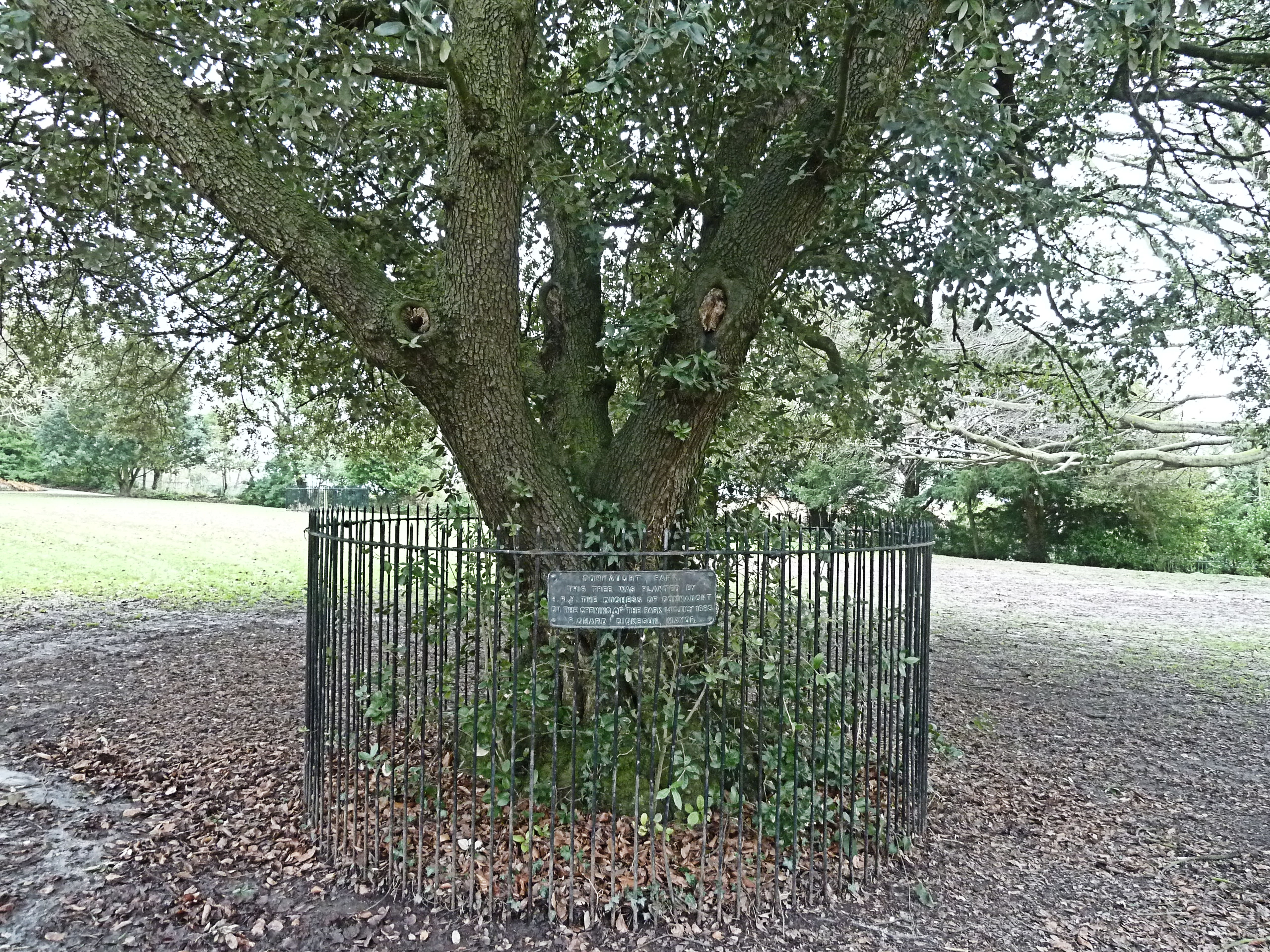
TH Connaught Park - Tree marked opening by Duchess of Connaught 14 July 1883 - AS 2013

Connaught Park – Evergreen Oak planted by the Duchess of Connaught to mark the official opening 14 July 1883. AS 2013

Inside the Park, on the steep banks, were children from St Andrew’s school – Buckland, SS Peter & Paul school – Charlton, St Bartholomew’s school – Tower Hamlets and the Union school at the Workhouse. The children welcomed the Royal couple with a song then watched as the Duchess planted a tree using a silver spade presented by the ladies of Dover. The evergreen oak is still there close to the lake and the inscription nearby was later erected. The Artillery Volunteers, under the command of Captain Poole, provided a guard of honour and the Royal Artillery Band provided the music. When the ceremony was completed the children again sang and to their delight, the Duchess insisted on listening to the end before she waved then goodbye.

Following the formal opening of Connaught Park the procession wended its way down Park Avenue, still thronged with cheering crowds, along Park Street to the Town Hall. There, local women scattered fresh flowers in front of the Duchess, as she climbed the steps. Then the royal couple, together with 450 guests – many of them leading inhabitants of the town – enjoyed a grand luncheon followed by the Duke of Connaught declaring the Town Hall open. Mayor Dickeson paid most of the expenses for which he was later knighted.

TH Connaught Park whale Bone Arch 2 courtesy of Dover Library

Connaught Park Whale Jawbones Arch given by William Tourney Tourney. Dover Library

Connaught Park quickly proved to be an asset to the town as it was popular with both the townsfolk and tourists. Two years after the opening, William Tourney Tourney – the eccentric owner of Brockhill estate, Hythe – presented the town with the jawbones of a large whale. These were later erected in the Park where they remained until 1967, when the arch was declared unsafe. When the council first announced the intention to remove the jaw bones there was a public outcry. Then one night, while this was all going on, ‘vandals’ came to the council’s aid and cut the jaw bones down for them!

The year after the whale jawbones were given to the town, 1886, while William Adcock was Mayor, there was a national economic depression. To provide work for the unemployed Mayor Adcock paid for what had been the zig-zag part of the old road to the Castle, at the top of Laureston Place to be made into pleasant walkway and diverted to come out opposite the top gate to Connaught Park. The area was terraced and the path lined with bushes making what became a popular with tourists staying near the Seafront. Some twenty years later, when the Admiralty Harbour was almost completed and unemployment in Dover reached new heights, the out of work were employed by the council to dig out part of the hillside at Connaught Park. This was for additional tennis courts. The national coal strike in the spring of 1912 increased the unemployment and relief works included the creation of a croquet lawn at the park.
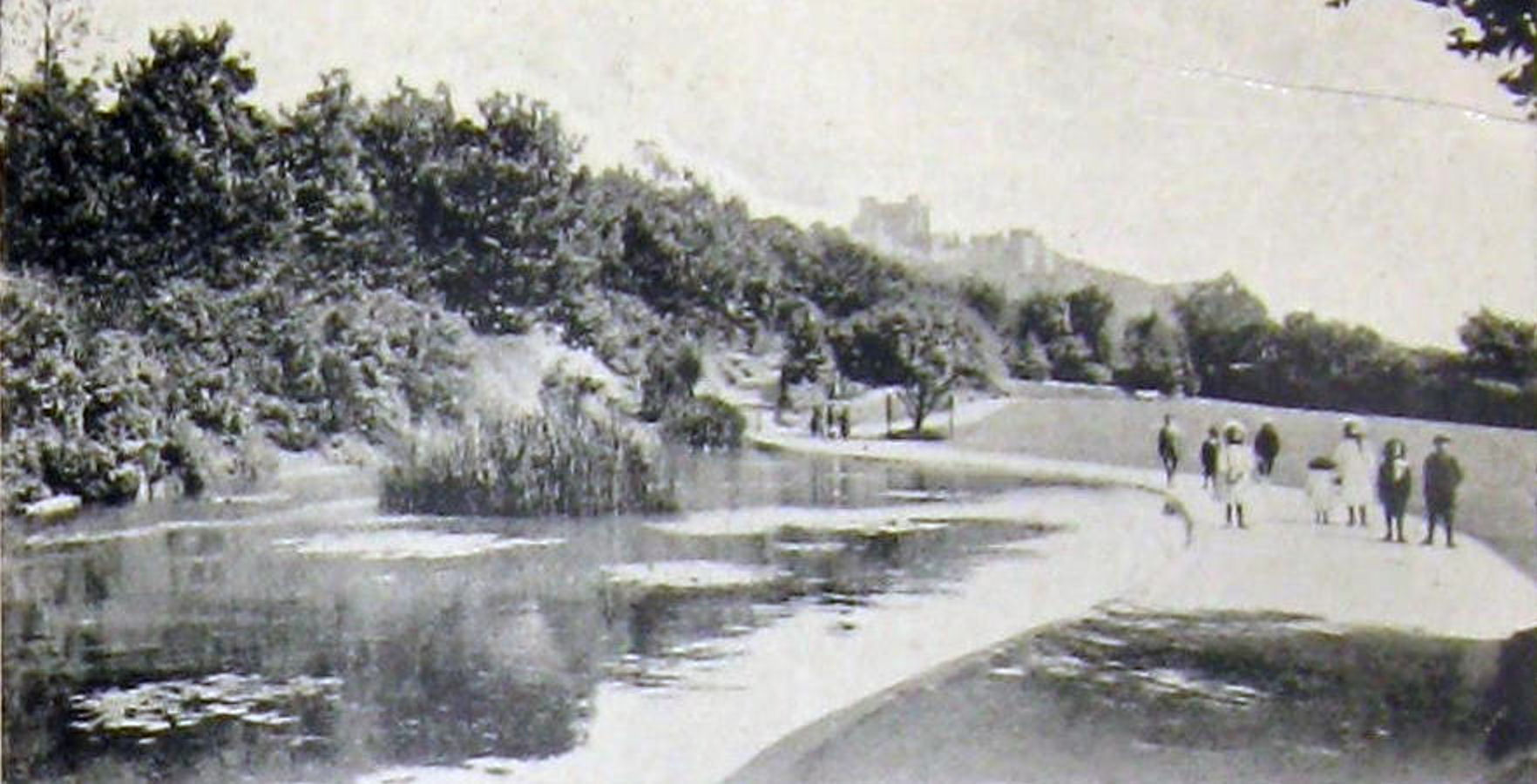
Connaught Park - c 1920. Dover Library

Connaught Park – c 1920. Dover Library

Connaught Park, during the interwar years became nationally famous for its splendid flowerbeds, lawns, shrubbery’s, promenades and celebrations. On Easter weekend 1919, following the end of World War I (1914-1918), 6,500 children were entertained and given a splendid tea by the Dover Peace Celebrations Committee. This was paid for by the council. In 1922 Sir William Crundall was appointed the Deputy Lieutenant of Kent and shortly afterwards, for his 74th birthday, he gave a garden party at Connaught Park for 7000 Dover school children. To each one he gave an autograph letter saying ‘I was born and brought up in Dover and started work at 14 years and worked for 10hours a day for £5 per year…’ On holiday weekends, during the summer, there was entertainment paid for by the council. For instance, on the 1925 August Bank Holiday the Queen’s Royal Regiment band gave several performances and there was a fireworks display organised by J S Pain and Sons Ltd. In total approximately 8,500 people attended with a further 4,000 going to the park on the Monday evening just to see the fireworks display.
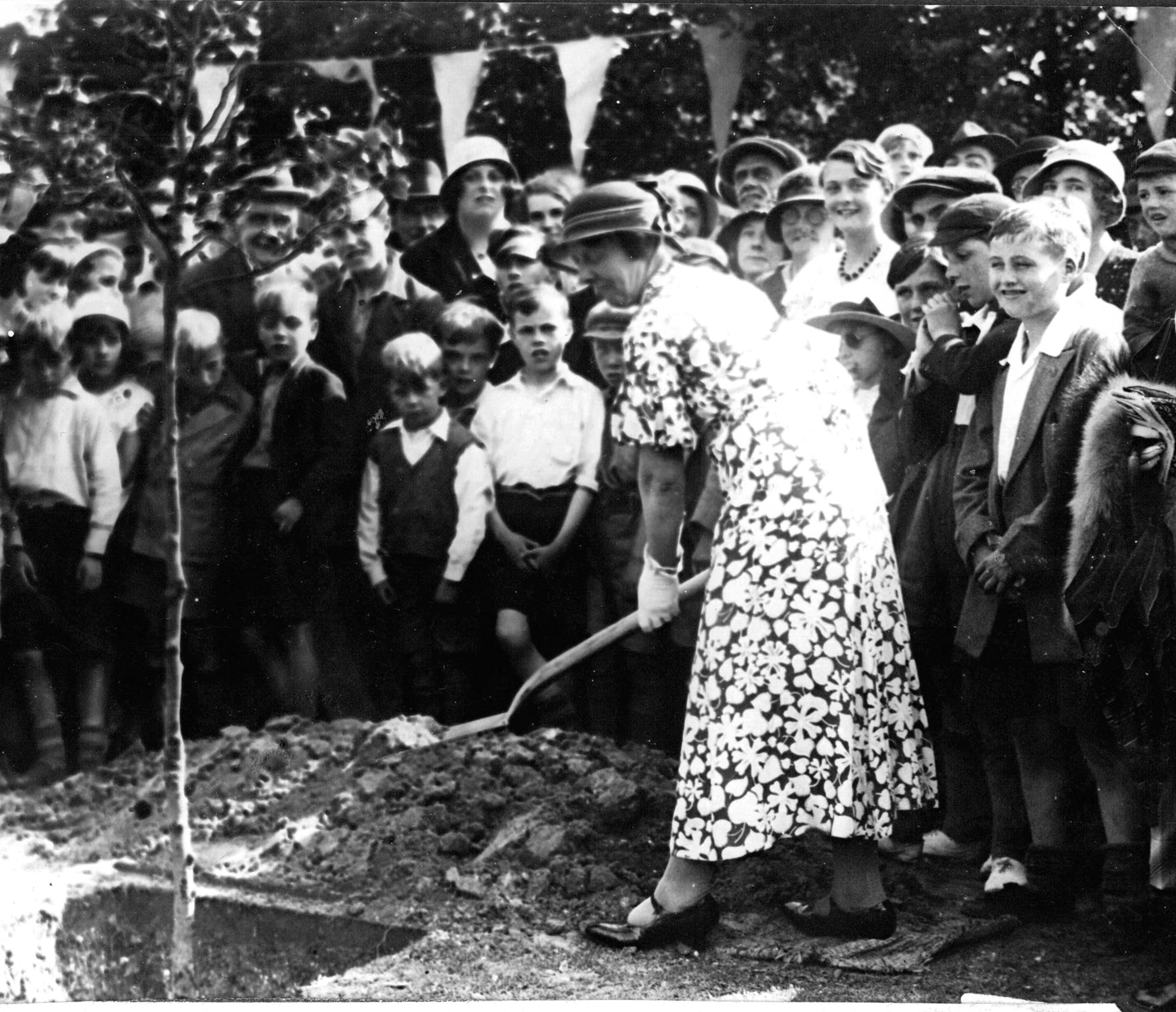
Connaught Park Golden Jubilee 12.07.1933 Mayoress Mrs Morecroft planting a commeration tree. Dover Museum

Connaught Park Golden Jubilee 12.07.1933 Mayoress Mrs Morecroft planting a commeration tree. Dover Museum

Towards the end of the 1920s the park became the breeding home of a flock of albino blackbirds. Even today blackbirds, with at least a few white feathers, are fairly common in the area including this author’s garden. During the economic depression of the 1930s, work was provided by the council to lay a car park and build the children’s play area at the park. Money was also found to commemorate the golden jubilee of the opening of the park on 12 July 1933, with the Mayoress, Mrs Morecroft, planting a tree and followed by grand fete. Four years later, in 1937, the Mayoress, Mrs Rosetta Norman, planting another tree in the park, celebrated the coronation of George VI (1936-1952). However, in 1938 as preparation for war a trench shelter for 423 people near the children’s playground was built. The order was then rescinded and demolished but in 1939 it was rebuilt.

World War II was declared on 3 September 1939 and on Friday 21 September 1940, during the Battle of Britain, yet another volley of shells hit the town. The last one exploded in Connaught Park at 16.43hours killing an Army Captain and injuring a number of civilians. On 14 November, the Park was bombed but there were no reported casualties. However, shelling in the afternoon of Saturday 26 April 1941 did cause casualties. Throughout the War the needs of the Park were neglected.

  • Published:
  • Dover Mercury: 17 &24 April 2014


Posted in Connaught Park - Part I, Connaught Park - Part I, Open Spaces, Tourism | Comments Off on Connaught Park – Part I

Spanish ‘Flu’ – the epidemic that Dover swept under the proverbial carpet

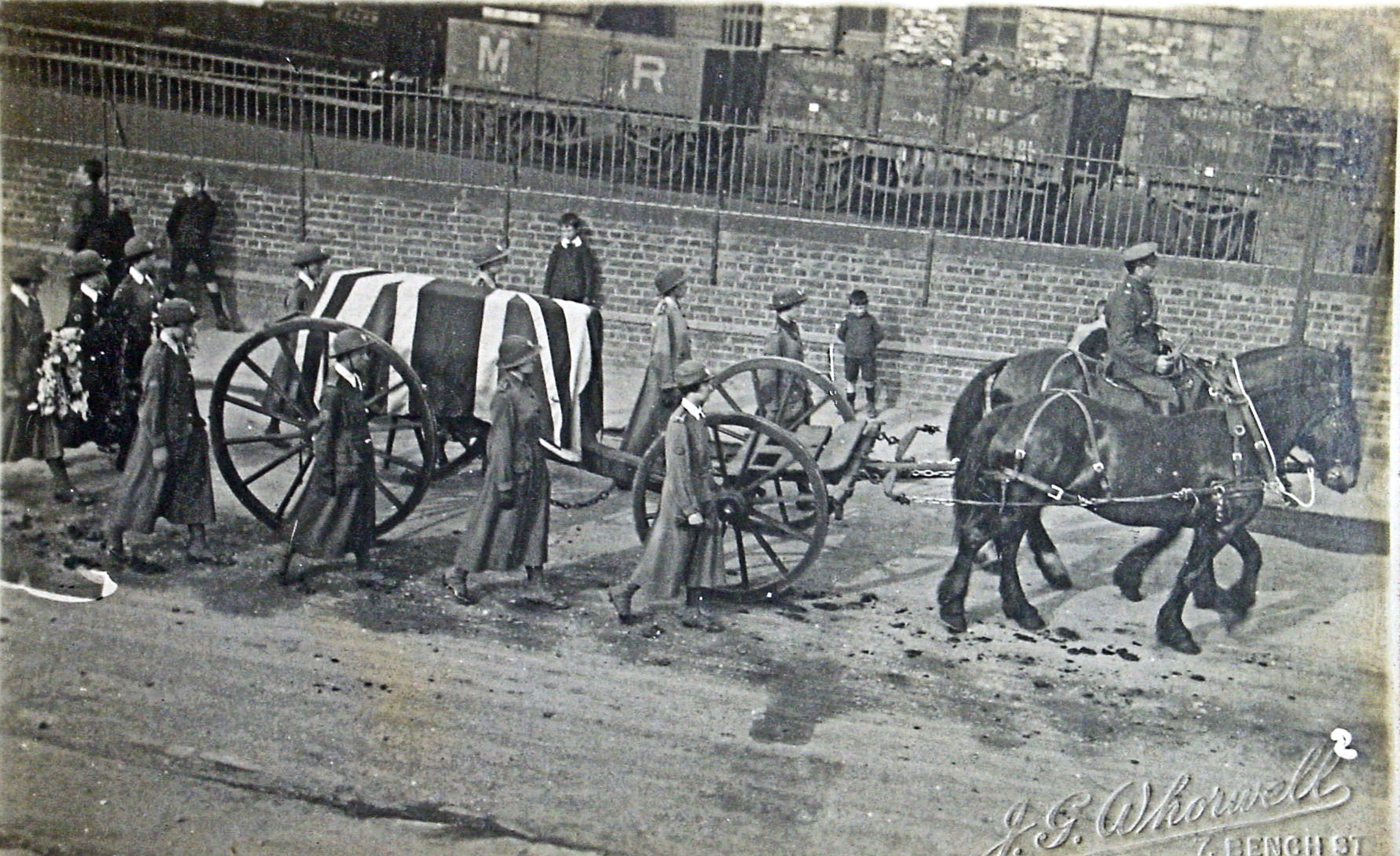
Spanish 'Flu' epidemic 1918 - Postcard of a victim's funeral procession by J G Whorwell, 7 Bench Street. Thanks to Eveline Robinson

Spanish ‘Flu’ epidemic 1918 – Postcard of a victim’s funeral procession by J G Whorwell, 7 Bench Street. Thanks to Eveline Robinson

‘Flu’, or influenza to give its correct name, regularly occurs during the winter months and periodically there are pandemics. Caused by a virus, the usual symptoms are chills, fever, sore throat, severe muscle weakness and headache, coughing and sometimes vomiting, particularly in children. Infection is spread by coughs, sneezes and contact hence, the advice to wash hands frequently. During the 20th century, there were three major pandemics with the Spanish ‘Flu’ of 1918 the most lethal. World War I (1914-1918) claimed an estimated 16 million lives the ‘flu’ epidemic claimed somewhere between 50-100 million lives.

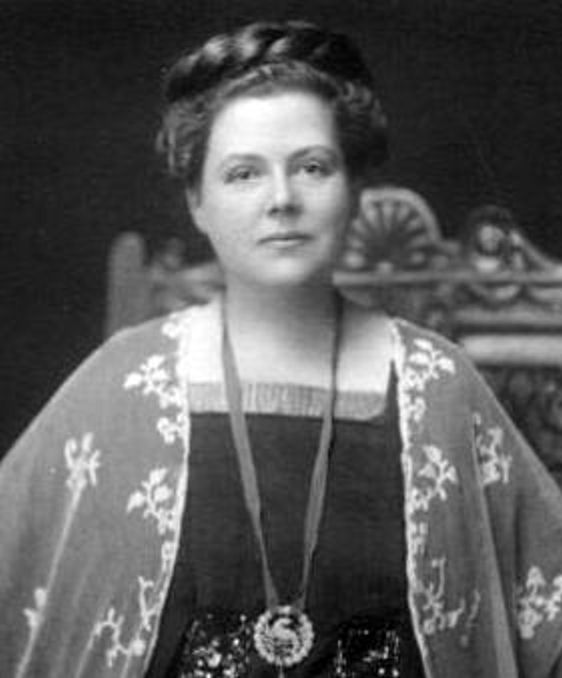
Cllr. Lorna Bomford one of the members of the first 'Flu' emergency committee

Cllr. Lorna Bomford one of the members of the first ‘Flu’ emergency committee

The pandemic started in Spain and came in two waves. The symptoms in the first wave were, in practically all cases, the same at the outset – a sudden violent headache with renal pains and a rapid rise in temperature. The recommended treatment was quinine or salicylate of soda. This phase reached Dover at the end of March 1918 and lasted until July. In accordance with the Local Government Board recommendation (a government department) a 3 member emergency committee was set up headed by the Dover temporary Medical Officer of Health, Dr MacDougall of Folkestone Road. The committee was based in the former stable block at Brook House now the Citizens Advice Bureau. The committee had the full powers to act and incur expenditure and it included Lorna Bomford, Dover’s only female councillor and pre-World War I leader of Dover’s Womens’ Suffrage movement.

The initial flu epidemic ran its course and in May, when it appeared to come to an end the emergency committee was disbanded. However, as the summer progressed the second wave arrived and it was not only highly infectious it was so severe that fatality was frequently the outcome. The deaths were caused by heavy bleeding from the nose, stomach and intestines or through suffocation as the victim’s lungs filled with fluid. The cause was not identified, the infection difficult to control and even more difficult to treat.

Although the official health figures did not reflect a significant rise in death rates in August, in early September there were 40 cases of influenza at the Orphan Working School, Haverstock Hill, north London, and there had been 7 deaths. A few days later, on 11 September, Lloyd George visited Manchester, the City of his birth. Hundreds of munition girls in overalls were on the platform as his train pulled in. He was met by the Mayor, Sir Alexander Porter, and was driven through the City in an open carriage. At the Town Hall he met representatives from Manchester’s Syrian, Armenian and Zionist communities and was presented with the keys to the City. That evening he developed a dry sore throat, a fever and then he collapsed. He was confined to a sickbed for 10 days in Manchester’s Town Hall under the care of Sir William Milligan 1864–1929). At times he was attached to a respirator to ease his breathing and because of the severe headache, all vehicles were banned from the side of the building nearest his bedroom. Once considered sufficiently well Lloyd George returned to London and still using the respirator he took up his official duties.

During the second week of October 1,895 deaths in the civilian population of England and Wales were reported and in the weeks that followed the number of fatalities increased.

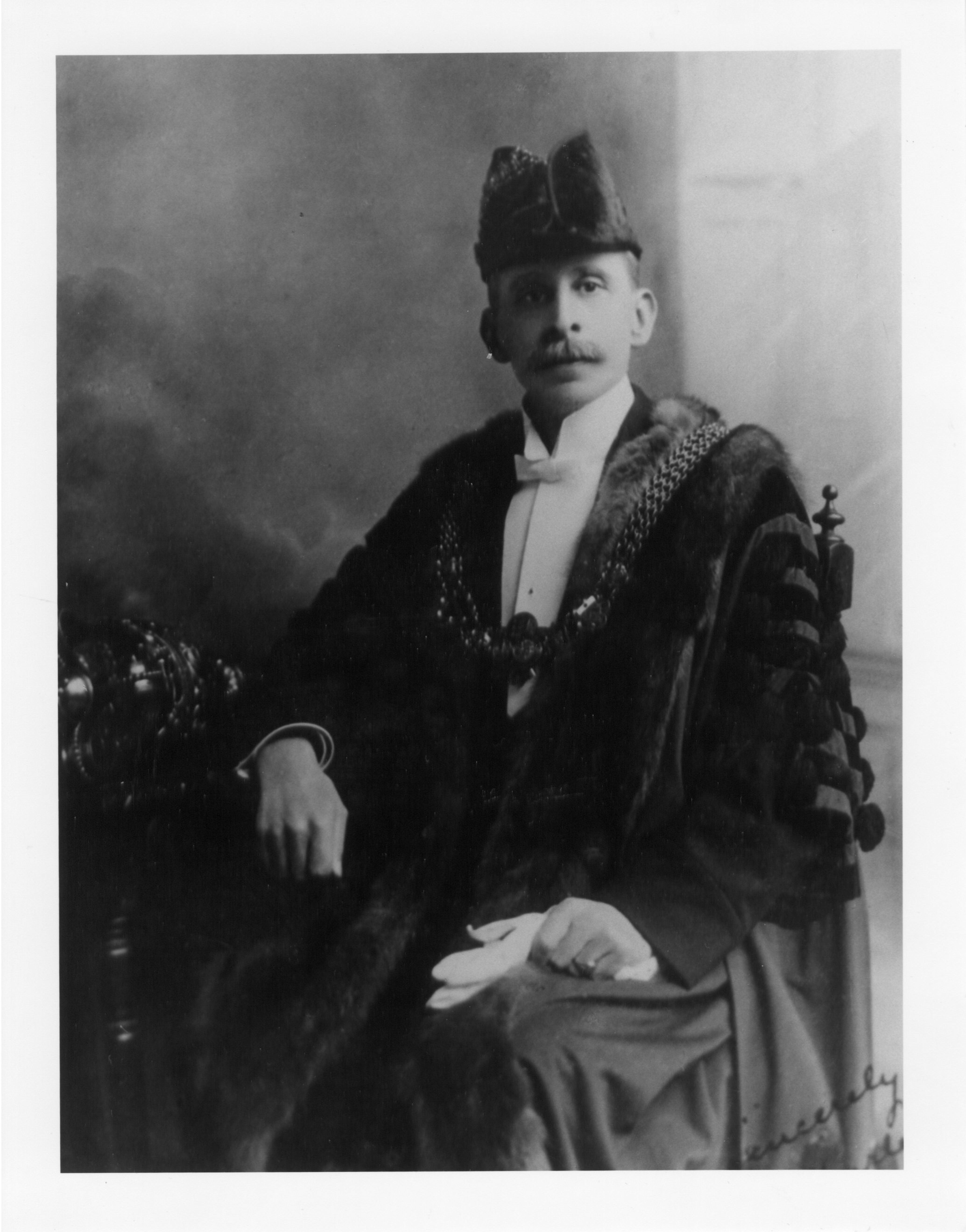
Edwin Fairley - Mayor 1913-1918. Courtesy of Clare Farley

Edwin Fairley – Mayor 1913-1918. Courtesy of Clare Farley

As the country was at war, Dover was under Military Rule with civilians represented by the elected council the head of which was Mayor Edwin Farley. A conscientious and liberal man, who cared deeply for town and its folk, reacted out of character to the epidemic when it hit the town the second time. The council agreed that they had over reacted earlier in the year as the first wave had been similar to winter flu of the previous ten years. These had caused, on average, 14 deaths a year.

Therefore, it was agreed, that it was not the job of the council to be the town folks ‘nannies’. Dover’s Medical Office, Dr MacDougall, asked for the reconvening of the emergency committee but this was declined. To try and change the council’s mind was made more difficult for Dr MacDougall was on probation with the council. Following his protestations it was decided to make his position temporary until a new, more acquiescent, Medical Officer was appointed.

As the town was under Military Rule, there was a large military presence and besides the military hospital on Western Heights, Castlemount at the top of Godwyne Road, had been commandeered as a military hospital. It was there that ‘flu’ stricken military personnel were taken and men were dying. In the Thames and Medway District, the military had made all places of public entertainment, buses, tramcars etc. out of bounds to troops. This was implemented in Dover but the general lack of responsibility of the council angered the Commanding officers.

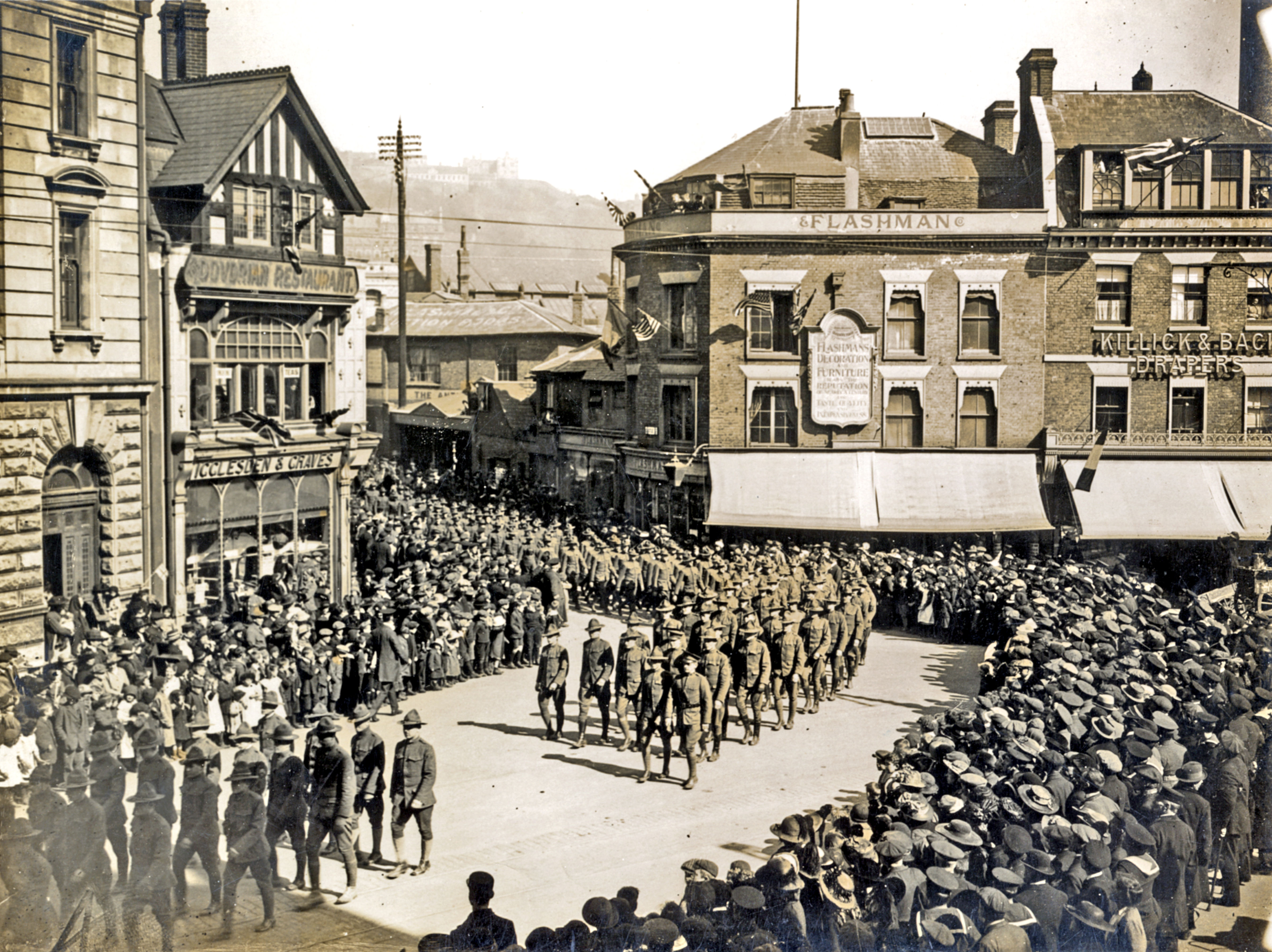
Soldiers marching through Market Square World War I - Dover Museum

Soldiers marching through Market Square World War I – Dover Museum

Out of pure frustration and not wishing to use their full military authority, the Commanding Officers marched all of the forces stationed in the town to a parade near the Seafront. Having invited all the Mayor and councillors, council officers, medical practitioners’ etc. to watch, the order was given for the officers and men to ‘gargle their throats and wash their nose with the antiseptic solution recommended by the Local Government Board in their circular!’ The officers and men, having this equipment with them, did as they were ordered and then they were marched back to their barracks. The gargle was made up of three small crystals of permanganate of potassium dissolved in a tumbler of water with a pinch of salt.

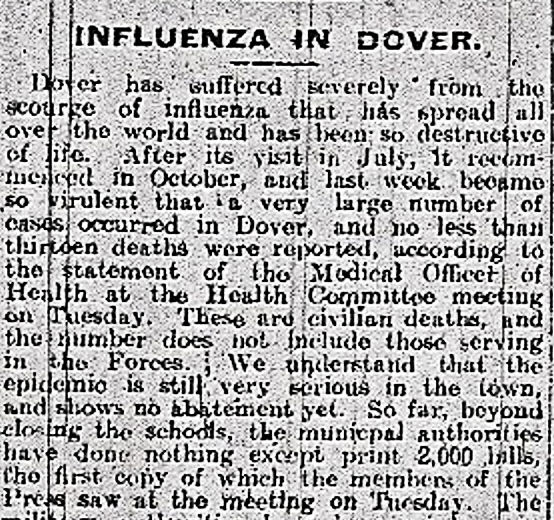
A council meeting was convened to which Dr MacDougall reported that the virus was ‘virulent’ in the town and that in the previous week thirteen deaths caused by influenza had been reported. His report made the point that it was particularly prevalent in areas of poor housing and was scathing about recently constructed houses for the poor. These, he said, were ill built and damp. The doctor finished by asking for the emergency committee to be reconvened and having the same powers as they had originally been given.

Influenza newspaper report condemning the council's stance 1 November 1919. Dover Express

Influenza newspaper report condemning the council’s stance 1 November 1919. Dover Express

His recommendations were declined; instead it was agreed that cinemas were out of bounds for troops – the military authorities had already instigated that all public places as out of bounds – plus the printing of 2,000 leaflets detailing preventative measures. These included the importance of keeping warm and dry and that all civilian personnel were to ‘gargle their throats and wash their nose with the antiseptic solution every evening before retiring.’ By the end of October the ‘flu’ situation in the town was much worse and the council announced that schools, where attendance had fallen below 80%, were to be closed!

It took a Directive from the Local Government Board to persuade the council to close all schools but the council said that this was to be lifted on 11 November and not reimposed. On that day Peace was declared and, to commemorate the end of World War I, there were Peace Parties and street celebrations.  By the end of the month there were over 2,000 civilian cases of influenza reported in Dover, schools were closed and ordered to remain so until 11 December. The town’s medical, nursing and social care teams were stretched to the limit due to the epidemic so it decided that only those who could pay were to get help. In some poorer homes children were left with the responsibility of dealing with their dead parents bodies.

On 26 December, Boxing Day, Susannah Bourne aged 17 of Military Hill, looking healthy and radiant, married Stoker Thomas Jones R.N. Susannah succumbed to ‘flu’ that night and was dead the following day. Criticism, already being heaped on the council, escalated with Susannah’s death. The council reacted by issuing an order to close cinemas but exempt other places of entertainment. It was not only Dover that was reluctant to close establishments catering for the public the attitude was prevalent elsewhere in the country.

To counter this the Local Government Board issued all councils with statutory Regulations. These limited the duration of public entertainments to four consecutive hours and cinemas to two hours. At places where there were two successive entertainments there was to be at least a 30-minute interval, during which the building was to be ventilated. In Dover, now taking the problem seriously, the council stated that the buildings were to be disinfected.

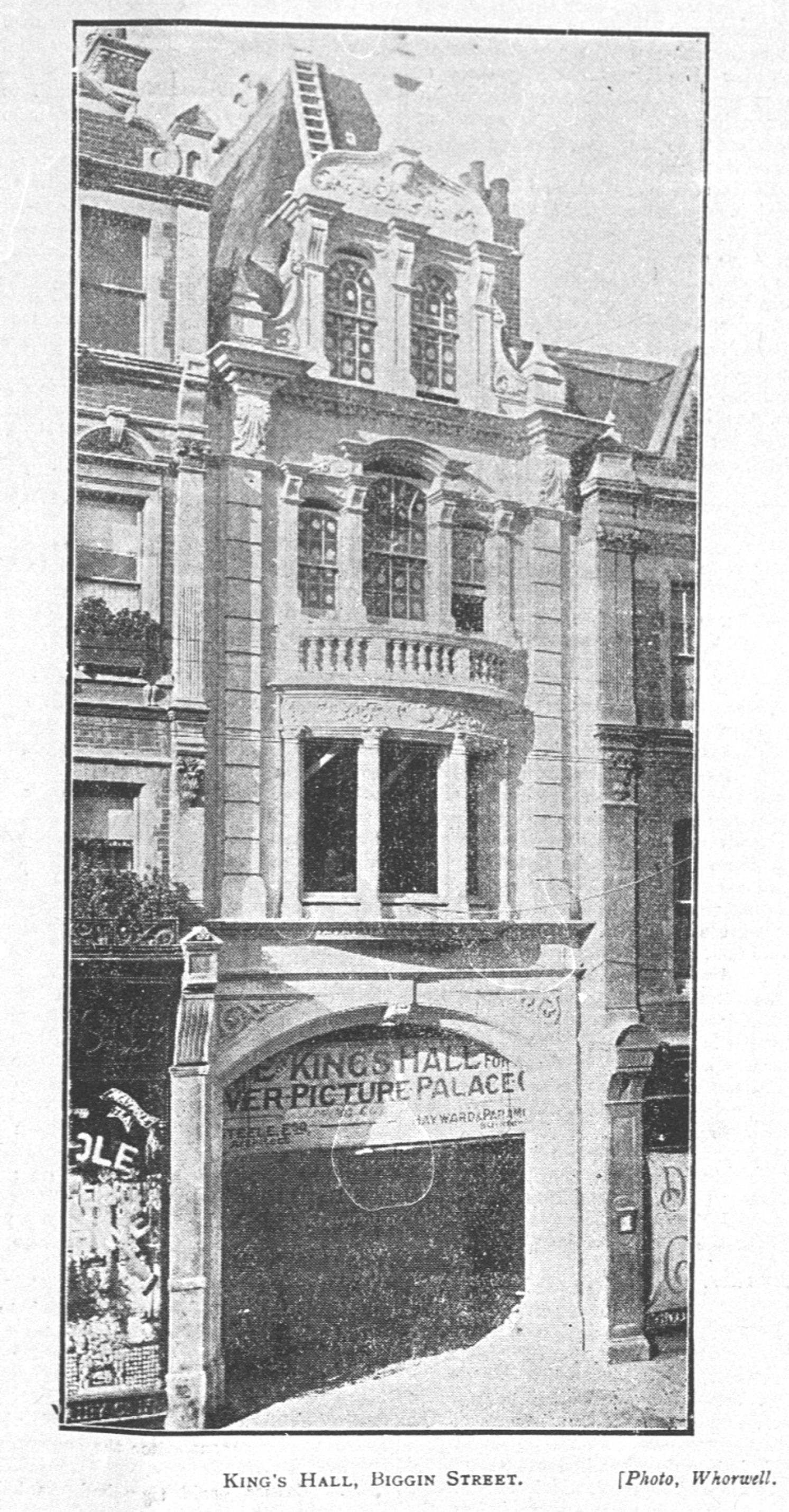
Kings Hall, Biggin Street. Dover Museum

Kings Hall, Biggin Street. Dover Museum

The Directive banned children from elementary schools entering cinemas but one local proprietor refused to comply. He was Harry Day, the owner of the King’s Hall in Biggin Street. When the council officer, backed by both a military and police presence, ordered children out of the cinema, Day threaten Dover Corporation with legal action. This he started but the council took out a High Court injunction and Day was forced to comply. By the end of that year, 90 civilians had died in the town. The military deaths were not included in the statistics.

The lack of care for the poor was again something that was happening in other places besides Dover and this led, in January 1920, to the Ministry of Health issuing a directive recommending medical, nursing and social assistance for the poorer inhabitants of the country suffering from influenza. They also suggested the publication of information respecting all facilities provided. By this time Dr MacDougall had been replaced with Dr J Reginald Long, whose surgery was in Effingham Crescent, and as a local was expected not to be as demanding as his predecessor.

Once Dr Long’s position was ratified as permanent he asked for an emergency committee to be set up with the special powers and the fait accompli was agreed! Alderman Sellen and Councillor Ord were appointed and given full powers. However, with regards to help to poorer members of the community who were suffering with influenza, this was deferred. In the council minutes it states that as there had only been three deaths from the disease that week only. Adding that six beds were reserved in the Isolation Hospital at Tower Hamlets for the reception of ‘selected‘ cases.

Although the harbour was under Admiralty control and only used by authorised shipping, in February 1920 the council issued a directive that all persons embarking or disembarking would receive a copy of their emergency leaflet on influenza. This included members of all the naval establishments such as the Dover Patrol. By that time, Spanish ‘flu’ was on the wane but the following year, 1921, the number of people dying from influenza in Dover, was higher than the normal average and anti-influenza vaccine was issued to the doctors in the town. Medical researchers in Toronto, Canada had created a vaccine during the height of the 1918 epidemic that consisted of 18 strains of dead influenza germs.

The following January (1922), the virus again returned to Dover and this time with a vengeance. Barton school reported 127 children and two women teachers sick. St Bartholomew’s had 46 cases, St James’ 25, Buckland school 21 cases, Charlton school 11 and River school 13 cases. All schools were closed between 16 January and 6 February except Pier Infants’, which had been closed for a measles outbreak on 9 January. The total number of deaths from ‘flu’ that month was 25, mainly children and young adults. The council followed the Ministry of Health’s advice closed Sunday Schools and all places children were likely to attend including cinemas and Harry Day complied!

On a global scale, these ‘flu’ epidemics were not devastating as the 1918 Spanish ‘flu’ and were treated as normal influenza outbreaks and a local problem. The 1918 pandemic has been subject to many studies especially as 99% of pandemic influenza deaths occurred in people under 65 with more than half in adults aged 20 to 40 years old. Those who had succumbed to first wave and recovered were found to be less likely to succumb to the second wave or if they did, it was of a milder form, thus showing a relationship between the two waves.

  • Published:
  • Dover Mercury: 03 September 2009
Posted in Hospitals and Health, Local Government, Spanish 'Flu' - the epidemic that Dover swept under the proverbial carpet, Spanish 'Flu' - the epidemic that Dover swept under the proverbial carpet, Spanish 'Flu' - the epidemic that Dover swept under the proverbial carpet, World War I | Comments Off on Spanish ‘Flu’ – the epidemic that Dover swept under the proverbial carpet

Thomas Kelsey – Governor of Kent and Sussex and the Battle of Dover

Dover Castle

Dover Castle

Although some historians say that Thomas Kelsey was a Lord Warden during the Interregnum (1649-1660), when England was without a monarchy, the office of Lord Warden of the Cinque Ports, as such, did not exist at that time. Instead the position of the Captain of Dover Castle was created that, in many respects, emulated that of the Lord Warden and Thomas was given that  office. Later he was to rise to the specially created Governor of Kent & Sussex and was also elected Dover’s Member of Parliament.

Charles I ruled 27 March 1625 – 30 January 1649. Worcester Cathedral Cloisters

Charles I ruled 27 March 1625 – 30 January 1649. Worcester Cathedral Cloisters

It appears that Thomas Kelsey (d circa 1680) may have come from humble beginnings for it is stated that he could have been the son of a poor button maker of Birchin Lane, London. How he spent his early life is a mystery, possibly he was apprenticed to a trade at an early age. Nonetheless, on 22 August 1642, when Charles I (1626-1649) raised his standard at Nottingham initiating the Civil Wars (1642–1651), Thomas was to be seen on the Parliamentary side. In fact, he had already attained the office of Major in the Foot Regiment of Colonel Edward Montagu, 2nd Earl of Manchester (1602 –1671). The Earl’s Lieutenant-General was Oliver Cromwell (1599–1658).

The Parliamentary army, re-formed and renamed the New Model Army (NMA) in 1645, was under Thomas Fairfax (1612-1671). It was the first ‘professional army’ that England had ever known and quickly became a highly efficient fighting machine. Further, aristocrats and members of Parliament were excluded from command, which meant that the Earl of Manchester lost his position and because of that, Thomas was transferred to Colonel Sir Richard Ingoldsby (1617–1685) regiment. Very soon he was promoted to Lieutenant-Colonel.

In the meantime, Charles I was defeated at Marston Moor (2 July 1644) and it was expected, not only by the Parliamentary forces but also in his own circle, that the King’s forces would be caught in Oxford and compelled to surrender. However, Charles and his Cavaliers – the name given to Royalist supporters – were wily and after providing for the defence Oxford, they eluded the NMA and reached Worcester where they were to hold their own in the ensuing battles.

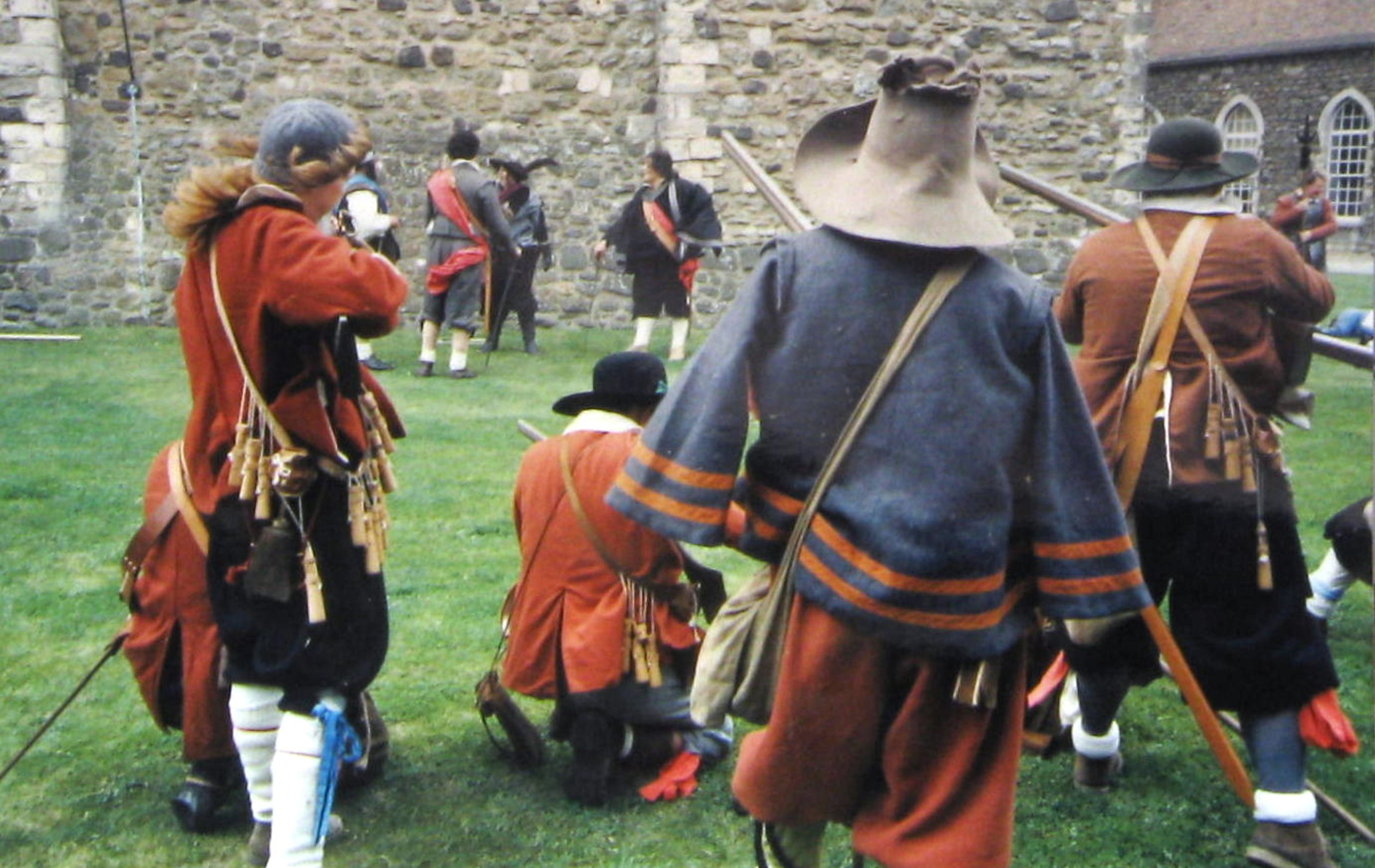
Civil War re-enactment at Dover Castle

Civil War re-enactment at Dover Castle

In late November 1644, active warfare paused and Charles re-entered Oxford in triumph. Albeit, by the spring of 1646 all armed resistance to the NMA was beaten down and on 25 June, the Royalist forces were forced to surrender the city. Thomas was appointed Deputy Governor of Oxford and entered into the university life by enrolling as a student – gaining his MA in 1648. Moreover, as a devout Puritan he played a prominent part in ensuring that Puritan views were expressed by the university academics.

In London, Parliament satisfied with the outcome of the Civil Wars, saw very little use for the NMA and sought to disband it. However, the soldiers pay was in arrears and there was a fundamental difference in the military and religious ideology between Parliament and the leading officers of the NMA. This came to a head in February 1647, when Charles I, who had been captured by the Scots, was handed over to Parliament on condition that his safety was guaranteed. At the time many in Parliament hoped that Charles would be restored as King but with Parliamentary constraints. The officers of the NMA, however, wished to put the King on trial.

Riots and revolts were becoming commonplace throughout the country and Kent was to be the centre of the most significant one of the whole period. Like many such revolts, it was something relatively minor that sparked it. The mayor of Canterbury announced that Christmas Day 1647 was to be treated as a working day. The citizens were angry and riots ensued with the ringleaders holding the reigns of power for about month. When order was restored retribution was to quickly follow. The ringleaders were rounded up, and put on trial with the jury drawn from Kent’s squireocracy. It was thought that this would appear fair but because of the difference in class the ringleaders would be made an example.

Instead, the jury ignored the charges and petitioned against the oppressive rule! Some twenty thousand people signed the petition and it was arranged that on 29 May 1648 the organisers would assemble on Blackheath and carry the document to Parliament. However, the County Committee, the administrative body accountable only to Parliament, ordered that the meeting be cancelled.

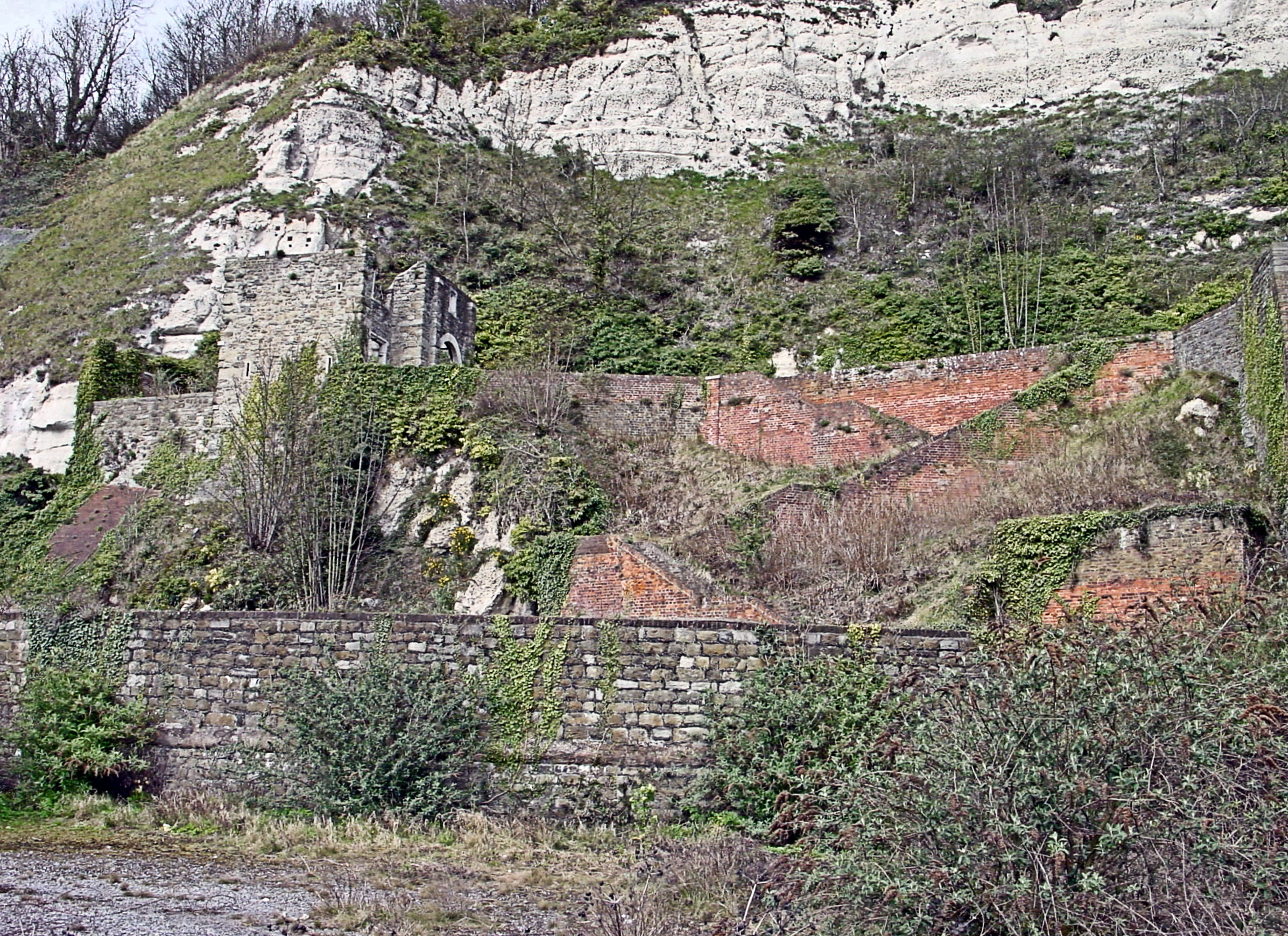
Mote Bulwark, below the Castle facing Dover Seafront, today

Mote Bulwark, below the Castle facing Dover Seafront, today

This led to a county wide rebellion with Walmer, Deal and Sandown castles quickly being taken. The fleet, lying in the Downs, joined in and soon only Dover Castle was in the hands of the Parliamentarians. One of the leaders of the rebellion, Sir Richard Hardres, marshalled some 2,000 men to mount an offensive. They quickly seized the Mote Bulwark and they used the ammunition that they found to bombard the Castle but failed. Nonetheless, they still held siege to it. To deal with the insurrection, Parliament called in the NMA and Lord Rich and Colonel Birkhamstead were despatched to relieve Dover and recover the castles on the coast. On 30 May, Colonel Birkhamstead relieved Dover Castle and Lord Rich retook Walmer, Deal and Sandown Castles.

In the north, General Oliver Cromwell had routed a rebellion two weeks earlier and in Oxford, Thomas Kelsey had successfully nipped a proposed rebellion in the bud. On 6 December that year – 1648 – Colonel Thomas Pride purged the House of Commons of members unsympathetic to the NMA’s views and Charles I was placed under arrest. On 2nd January 1649, a court was set up to try the King, one of the judges being Dover’s Member of Parliament, Colonel John Dixwell (c1607- 1689). On the 30 January Charles I was executed and Cromwell took up the reigns of power.

Under the new regime Kent’s strategic importance increased as the sons of the executed Charles I – Charles (later Charles II 1649-1685) and James (later James II 1685–1688) and their supporters had fled to the Continent. The post of Captain of the Castle was created and held by a succession of NMA officers but Royalist agitation increased in the county. In 1650 Sir Thomas Peyton 2nd Baronet of Knowlton (1613–1684) near Sandwich; John Tufton 2nd Earl of Thanet (1608–1664) and county gentlemen such as Sir Arnold Braemes (1602-1681) of Dover, met with other cavalier leaders in London. There they surreptitiously purchased and conveyed to various Kentish manor-houses, arms and ammunition. It was agreed that the neighbouring counties would stage a rising in March 1651 to draw the Army away from Kent, and then the Royalist conspirators would seize Dover Castle.

The Conspiracy was betrayed, Dover Castle was secured by Sir Algernon Sidney (1623–1683) and the uprising came to nothing. The Council of State, however, felt it necessary to bring in someone more capable and Thomas Kelsey was appointed. He immediately and meticulously organised a search throughout the county for Royalists. At the same time he set guards along the Kentish coast and arrested anyone it was felt were suspicious arriving from the Continent. So successful was Thomas at totally quietening all opposition he was promoted to the position of Governor of Kent and Sussex.

Besides Charles and James, Charles I had younger son, Henry Stuart, Duke of Gloucester (1640-1660) and three daughters, one of which was Elizabeth (1635-1650). The young prince and princess were held in Carisbrooke Castle on the Isle of Wight when it was decreed that they should be moved ‘to a fit place beyond the seas.’  Before the decision was implemented, however, the little princess died. On 13 February 1652 a tiny ship, hired by the State, left Cowes but due to bad weather off Dover, was laid off the Goodwin Sands for three days. The master of the ship sought the urgent help from the Mayor of Dover, William Cullen (1605-after 1665), Mayor 1651,52,57, & 58, saying that ‘he was most alarmed that his important passenger might succumb whilst in his care.’ William Cullen arranged for the young prince to be moved to a private house in Deal saying that this had been done with the utmost secrecy and hoped ‘that he would be forgiven for taking a wretchedly seasick child out of the cockleshell that he had been tossed about for three nights.‘ Thomas ensured that he was.

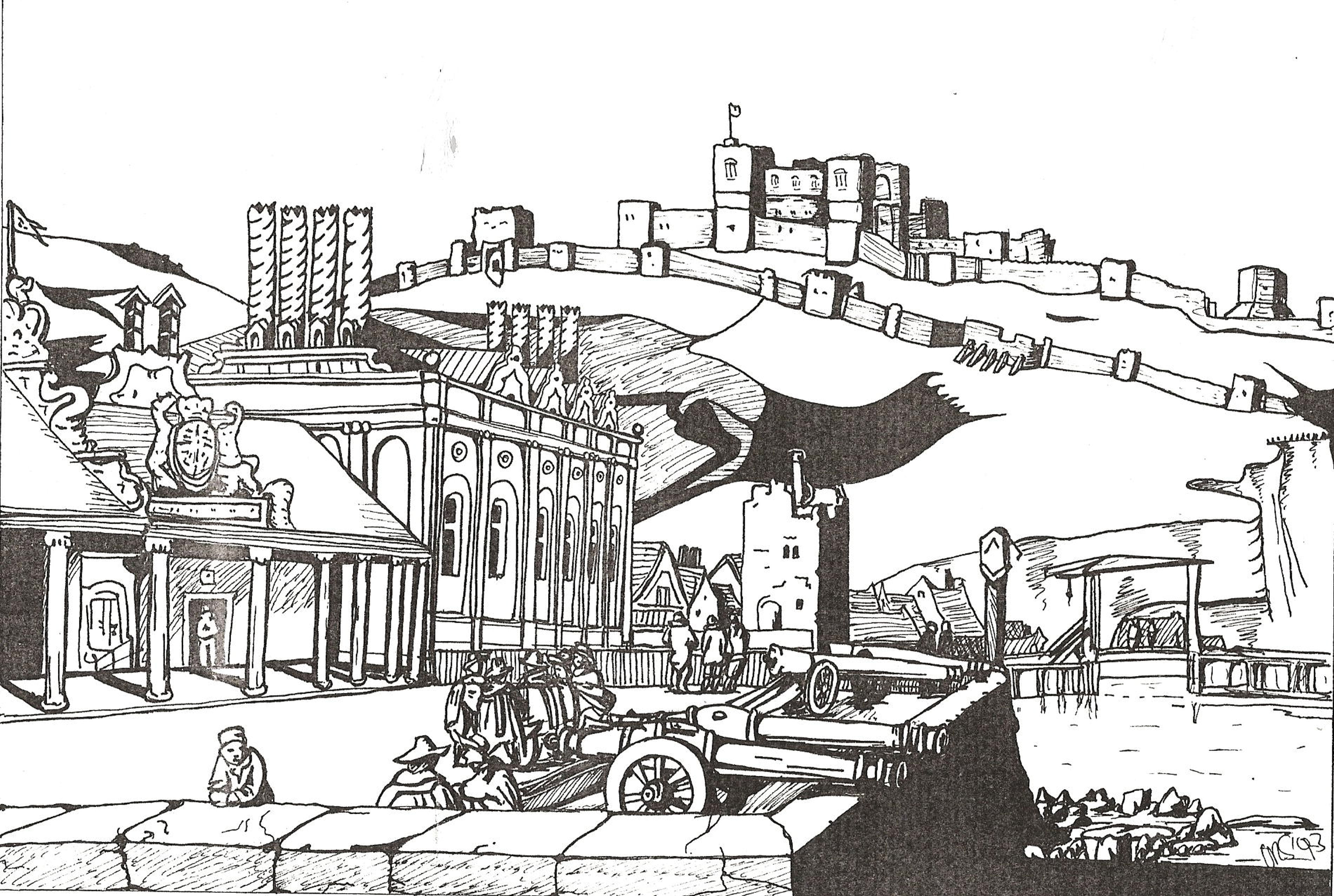
Dover Custom House 17th cent. Lynn Candace Sencicle

Dover Custom House 17th cent. Lynn Candace Sencicle

However, there were new threats to the safety of the country, mainly from Holland. Trouble began in October 1651 with Cromwell introducing the Act of Navigation, whereby any goods imported into England or transferred from one English colony to another, could only be carried in English ships. This meant, for instance, that goods carried on Dutch ships would not be allowed into the country or any of the dominions unless a hefty customs duty was paid. Further, to ensure that the Act was being adhered to, English customs had the right to search any Dutch ships passing through the Strait of Dover and confiscate any unlawful goods on board along with the ship.

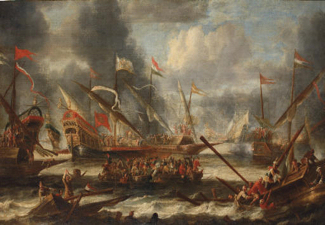
Possibly the Battle of Dover 1652 by Catharina Peeters. Wikimedia Commons

Possibly the Battle of Dover 1652 by Catharina Peeters. Wikimedia Commons

This was not particularly popular with Continental traders, especially the Dutch who had a number of overseas territories. It was only a matter of time before things came to a head and this happened on 19 May 1652. The Dutch Admiral Maarten Harpertszoon Tromp (1598–1653) was leading a convoy of 44 ships along the Downs, off the east coast of Kent, and he refused to strike, that is, lower his flag in acknowledgement of the English fleet. The fleet was headed by Admiral Robert Blake (1598–1657) who had some fifteen vessels under his command. In response, Blake ordered a shot to be fired across Tromp’s bows to which the Admiral retaliated with a broadside and a fierce battle began lasting 5 hours.

At the outset, the English were saved only by the poor gunnery on the part of the Dutch, which gave them time to send for reinforcements. Thomas Kelsey arranged for eight ships from Dover under the command of a Captain Bourne. At the same time John Dixwell, Dover’s MP, used his special powers to raise a county militia to guard the coast. Blake’s forces sank one Dutch ship and took another and at night fall the Dutch fleet retired towards Holland.

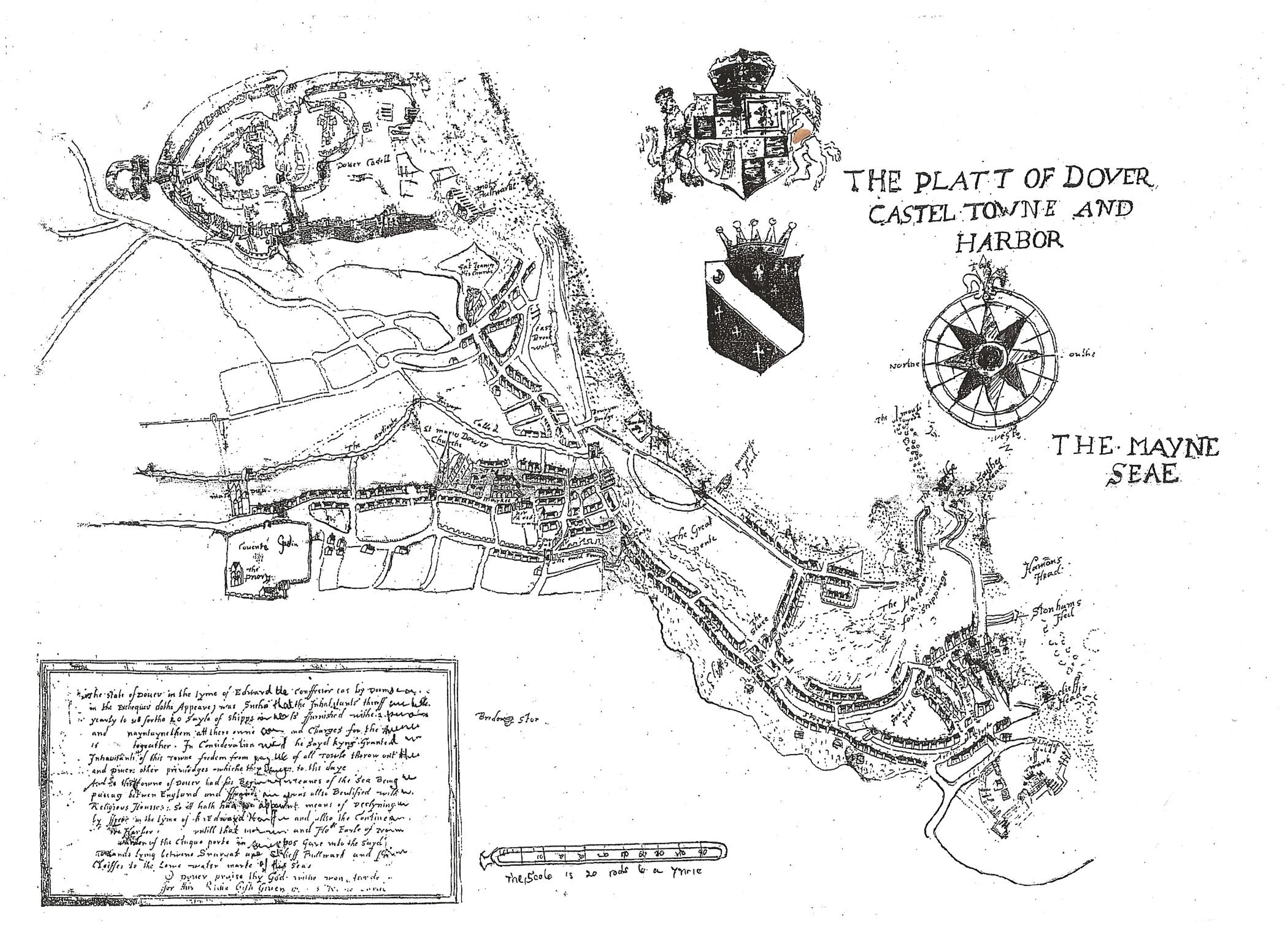
William Eldred's Map of Dover Harbour 1641.

William Eldred’s Map of Dover Harbour 1641.

Blake reported what happened and in response, the Council of State, on behalf of Cromwell, wrote to Dover’s Mayor William Cullen, ‘and The men of the Toune who so cheerfully went forth to assist in defence of their country which good seruice of theirs’. They also directed that the Dover men who had participated should be rewarded out of the prizes taken by the English fleet while the town was promised finance to build a new harbour pier. At the national level, the Dutch ambassadors demanded redress of injuries to their fleet but this was in vain and so began the first of several Dutch Wars.

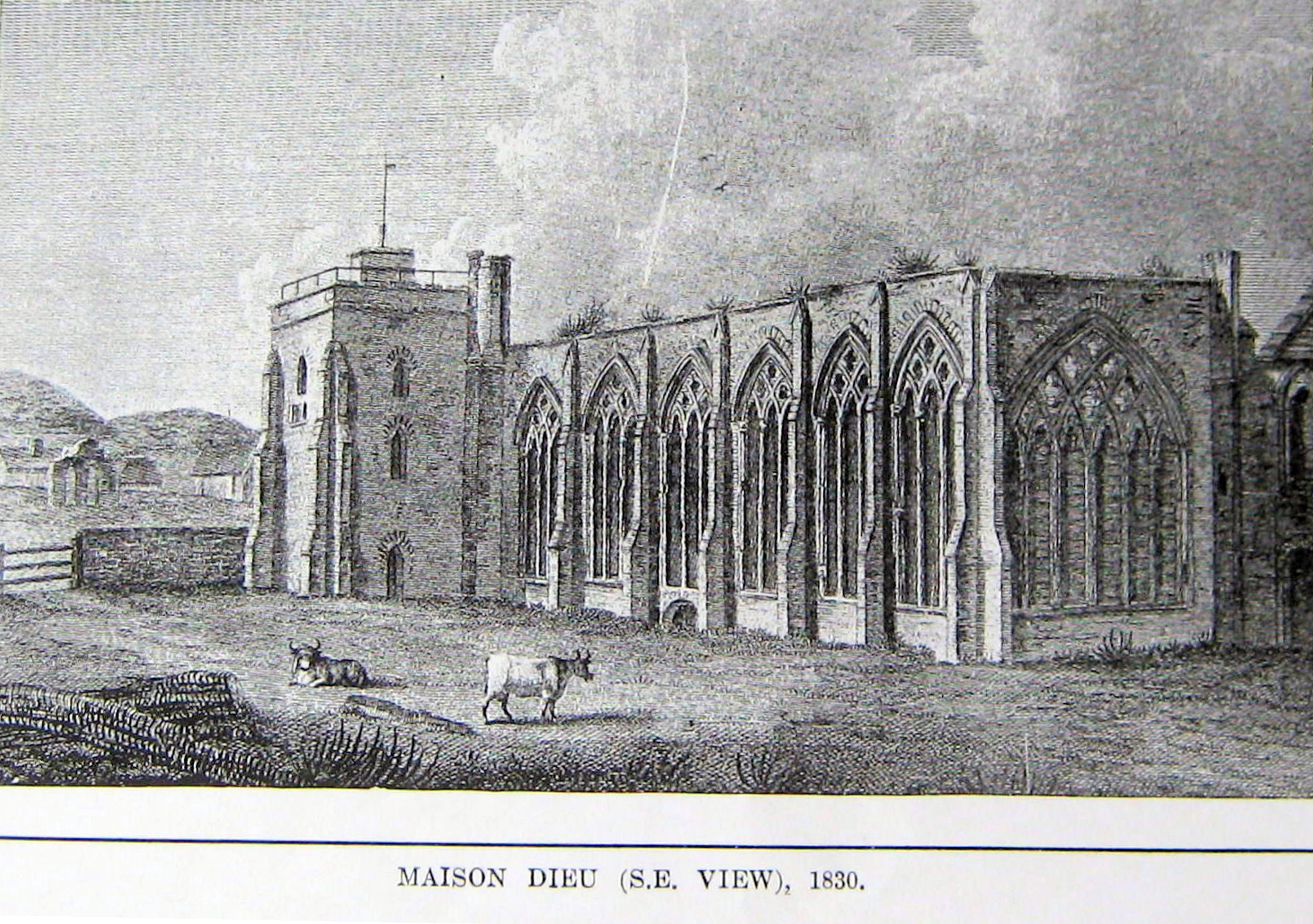
Maison Dieu c1830 when the building was a navy victualling station

Maison Dieu c1830 when the building was a navy victualling station

That summer Dover became a very busy place, supplying victuals, from the Maison Dieu, dealing with prisoners and providing men and ships. For the latter, the Council of State agreed that the next navy ship, which was launched in 1654, to be named Dover. Meanwhile other naval battles ensued but it was the blockade of Texal, near the Dutch coast, that resulted in the last battle of the First Dutch War. There Admiral Von Tromp was killed and the Dutch lost 26 ships and 6000 men but the English also suffered heavy losses. When the blockade was broken, peace negotiations followed leading to the Treaty of Westminster in April 1654. The cost of the militia defending the coast came from taxes imposed by Cromwell. In Kent and Sussex, Thomas levied the tax proportionately greater on the wealthy and the expense of administering it was less than 9% of the total receipts.

By 1654 Cromwell had appointed as the High Sheriff of Kent – the principal law enforcement officer in the county – known Royalist, John Tufton Earl of Thanet. The Earl, at the time was paying £157 tax every six months on his estates that he resented. That year, against a significant opposition, Thomas was elected to represent Sandwich in Parliament. At Dover, Thomas reported that, ‘the rabble of the town’ endeavoured to return George Cony, who had challenged at law the right of Cromwell to collect taxes.

Early the following year Thomas was told by his informants that, ‘the b’faces and carriages of the malignants’ indicated that new storms were rising, and that the Cavaliers were ‘only waiting an opportunity to imbrue their hands with blood’. 13 February had been fixed for the insurrection and to the rebels it appeared that Thomas was either oblivious or no longer cared. Just before the rebellion began, Thomas arrested Kent’s High Sheriff – John Tufton – while he was travelling to Davington Priory, Faversham. There, in the cloisters of the old convent the Earl and other Royalists had hidden the ammunition for the uprising.

Thomas had already signed the arrest warrants for all the known county cavaliers and he gave the order for them to be issued. In his preparations, the number of guards had been increased at Rochester, Queenborough, Deal, Walmer and Sandown castles and guards had been set along the Kentish coast. All who arrived from the Continent were held and many were subsequently arrested. John Tufton the Earl of Thanet was consigned to the Tower of London while other Kent cavaliers, including Sir Thomas Peyton, whose estate at Knowlton was the centre of Royalist conspiracies, and members of the Braemes family, were also incarcerated. To pay for the militia and his informants Thomas levied further taxes on the arrested cavalier’s estates.

Although the rising was countrywide, by successfully stopping the Kent rebellion Thomas had protected the most vulnerable of the English counties. As a reward, Cromwell appointed him one of the Commissioners for the management of the Navy. In 1656, Thomas represented Dover as Member of Parliament and it was during this session that he publicly proclaimed his undying loyalty to Cromwell.

Two years later, on 3 September 1658, Oliver Cromwell died and in his last hours he nominated his eldest son, Richard, to succeed him. At first the Army accepted Richard but when he attempted to exercise authority he found that he was impotent. At the same time, the Army was beginning to fractionalise and many, including Thomas, put their signature to a proclamation asking for the Rump Parliament, which had been dismissed in 1653, to be recalled. Others saw this as a sign of weakness in the army and the cavaliers. The latter, in August 1659, attempted yet another uprising but Thomas ruthlessly put it down.

Charles II landing in Dover 25 May 1660 - Maison Dieu window

Charles II landing in Dover 25 May 1660 – Maison Dieu window

By Christmas General George Monck (1608–1670), declared himself to be reconciled with Parliament and in January 1660 John Dixwell was appointed Governor of Dover Castle. In February, Parliament having being recalled, Monck dissolved it. He immediately established a new Parliament that included members excluded following ‘Pride’s Purge’ of 1648. They declared Monck Commander-in-Chief of all forces and then dissolved Parliament again! Monck satisfied that a free Parliament should be summoned, which would certainly recall Charles II, pulled his troops out including Thomas.

On 25 May 1660, Charles II (1649-1685) landed at Dover and the monarchy was restored. Although the new Parliament wanted to punish those who had held power since 1649, prior to the Restoration, the King had said that only those who signed his father’s death warrant and a handful of others were to be prosecuted. Thomas had not signed the death warrant but he felt it expedient to get out of the country and escaped to Holland. He resided there until 1672 when, through diplomatic measures, he was allowed to return to his homeland. On returning he set up trade as a brewer in London. Eight years later Thomas Kelsey, once the ruler of Kent and Sussex, died apparently ‘in a mean condition’.

  • Published:
  • Dover Society Magazine No 42: December 2001
  • Battle of Dover – Dover Mercury 21.02.2008
Posted in Cinque Ports, Civil Wars and Interregnum, Kelsey Thomas - Governor of Kent & Sussex and the Battle of Dover, Kelsey Thomas - Governor of Kent & Sussex and the Battle of Dover, Kelsey Thomas - Governor of Kent & Sussex and the Battle of Dover, Kelsey Thomas - Governor of Kent & Sussex and the Battle of Dover, Members of Parliament, People | Comments Off on Thomas Kelsey – Governor of Kent and Sussex and the Battle of Dover

Volunteer Review of 1869 and the Ferret Disaster

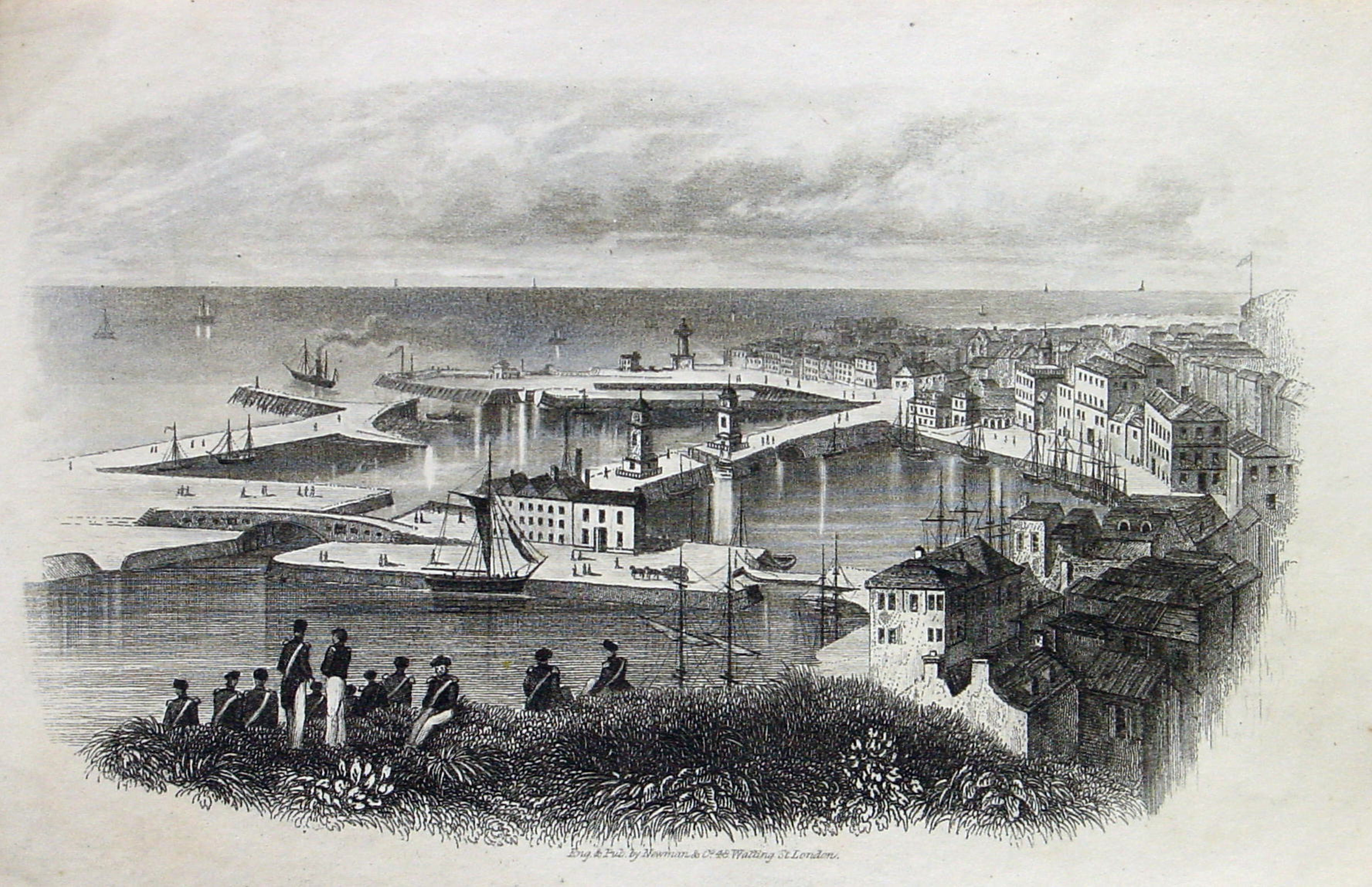
Dover Harbour c1850 from Western Heights. Dover Library

Dover Harbour c1850 from Western Heights. Dover Library

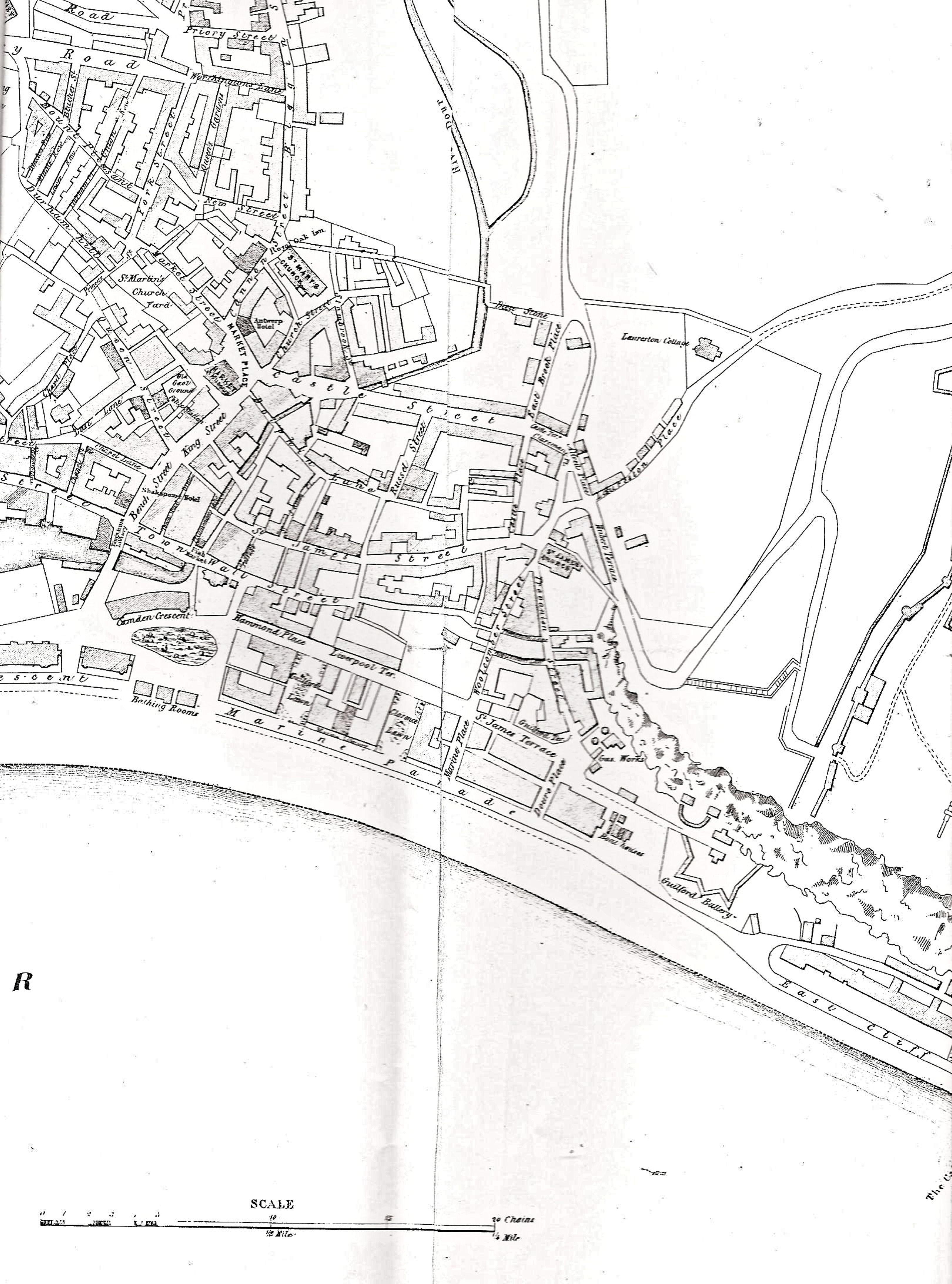
It is a little known fact that the first Volunteer Corps – the forerunners of the Territorial Army – was founded in Dover! Thomas Hyde Page, who was born 1746 and educated at Woolwich Military Academy on being invalided out of the army, came to Dover to recover. He bought land in Buckland and built the house now Listed as 110 London Road. Later knighted, Sir Thomas was a military engineer and responsible for a number of important defence works at the Castle during the American War of Independence (1776-1783). He was also responsible for starting what eventually became the Western Heights fortifications and the building four shore batteries. These were Guilford Battery, under the Castle cliffs; North’s Battery, where Granville Gardens are today; Amherst Battery to the east of where the Clock Tower is today; and Townsend Battery close to the present day Lord Warden House. Together with Archcliffe Fort and a canal along the seafront, the fortifications made an effective line of defence during the Napoleonic Wars (1793-1815).

It was during the American War of Independence, in 1779 that Thomas Hyde Page set up the Dover Corps and by 1798, the number of Dover Volunteer Corps had increased to eight. By the mid-nineteenth century, nearly every town and city in the country boasted of having at least one volunteer corps and they were brought together by Annual Reviews. These involved mock battles that included the professional military and the Royal Navy and when held in Dover were a major tourist attraction. People would crowd the Seafront, Admiralty Pier, Western Heights, Castle Hill and anywhere else it was thought that they would get a good view. At the best locations seats could be reserved for those who could afford them and for invited dignitaries!

Easter in 1869 fell early, Good Friday was on 26 March and the weather was far from clement. There had been a snowstorm the night before and the weather on the Saturday was no better. It was over this holiday period that Dover was hosting the annual Volunteer Review and the town had ‘subscribed liberally’ to ensure that compensation could be paid to farmers whose land the Volunteers were likely to cross. The towns folk had ensured that every flagstaff supported the Union Jack, bunting was the best money could buy – some had been specially imported from Paris – and the Castle, Archcliffe Fort, Western Heights and the remaining Batteries that Thomas Hyde Page had built were all illuminated. It was expected that some 20,000 members of volunteer corps from all over the country would arrive in special trains at Dover on the Saturday together with tourists and Dover was going to ensure that it was a Review that no one would forget … and they were right, but not for the right reasons!

The national newspapers based in London covered the event but the reporters were far from happy that it was been held in Dover. This appeared to be for social reasons rather than military. Their write-ups were littered with such comments such as Dover ‘was not quite as agreeable as Brighton!‘ The reporters arrived in the town by early trains on the Saturday morning and in their first communications were disparaging about the state of the town. Writing scathing comments, such as the bunting that festooned the shops was bedraggled and damaged. They did make a nod that this may have been due to the weather but they were not complimentary. Albeit, by 11.00hrs even these cynical reporters had to admit that when the first official train arrived, ‘even the bunting looked resplendent!’

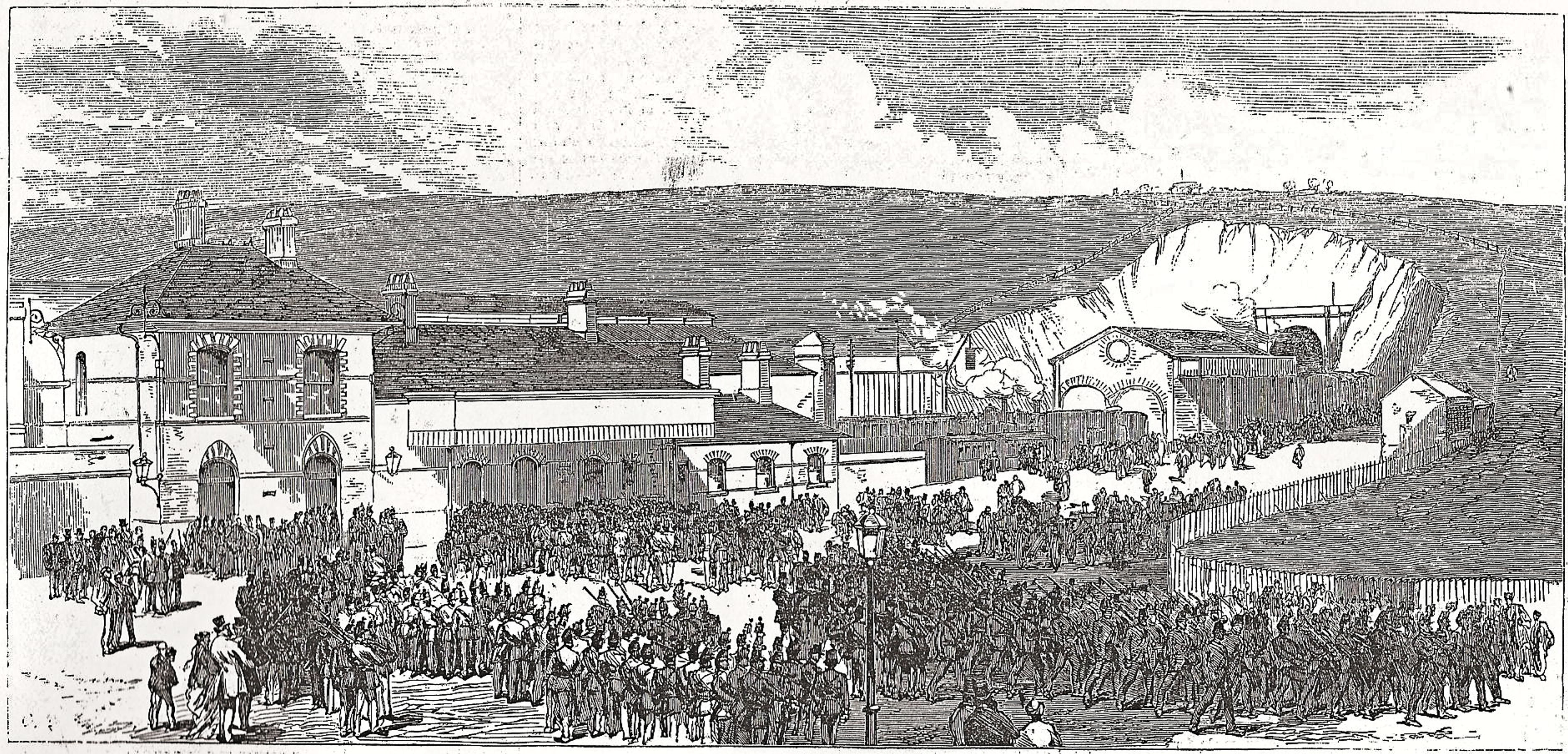
Volunteers arrival at Dover Priory Station Illustrated London News 04.05.1867. Dover Library

Volunteers arrival at Dover Priory Station Illustrated London News 04.05.1867. Dover Library

The different battalions arrived at the Town,  Harbour and Priory Stations and from there marched along the streets through the Pier district and then the Seafront to a large parade ground adjacent to North’s Battery. The streets were lined were cheering crowds and the Naval ships in the harbour were dressed overall. Their crews, on the decks, waved their hats to the marching Volunteers. After reaching the parade ground, the Volunteers were dispersed to hotels or lodging houses, depending on their rank.

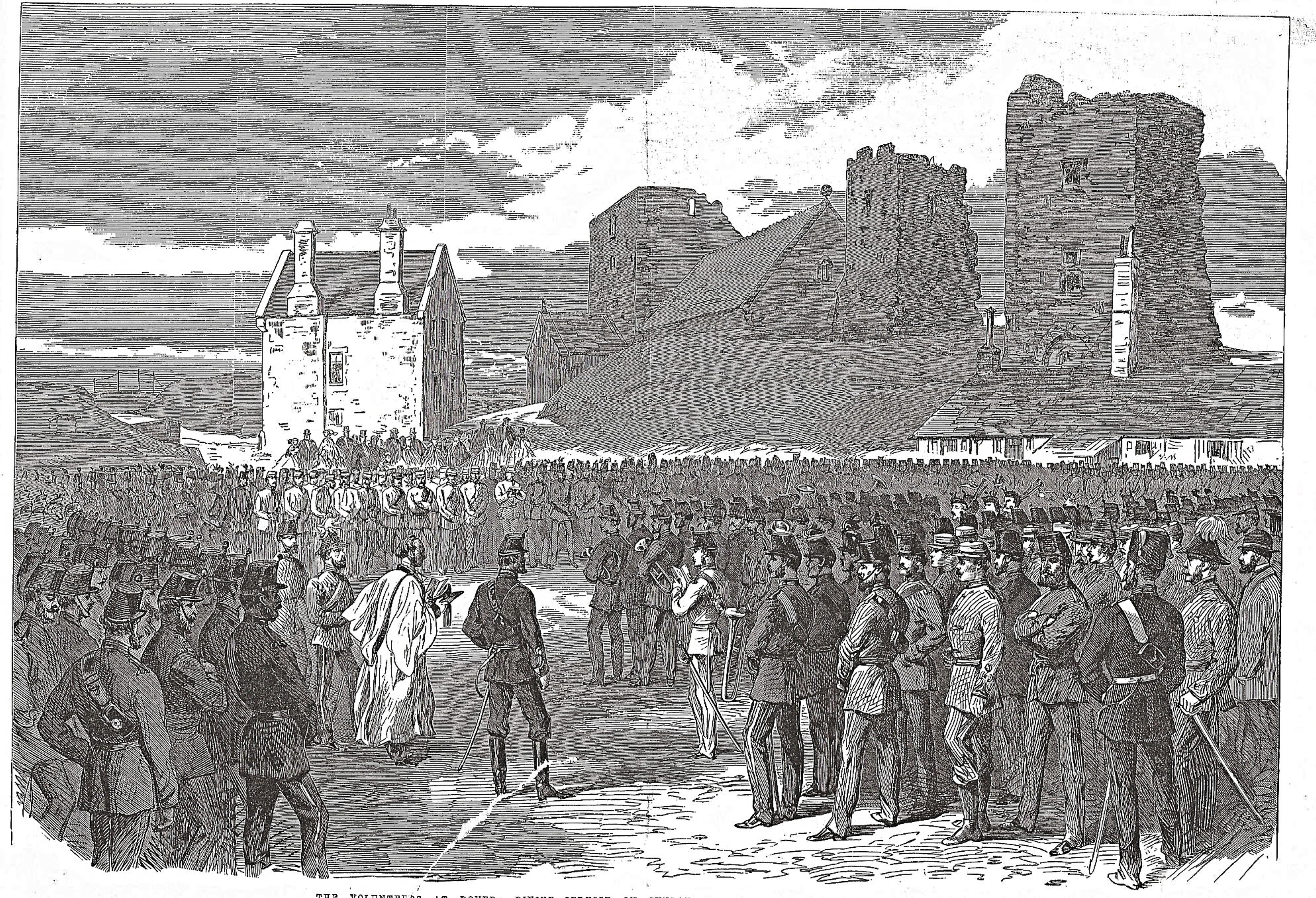
Church Service at the Castle. Illustrated London News 10.04.1869. Dover Library

Church Service at the Castle. Illustrated London News 10.04.1869. Dover Library

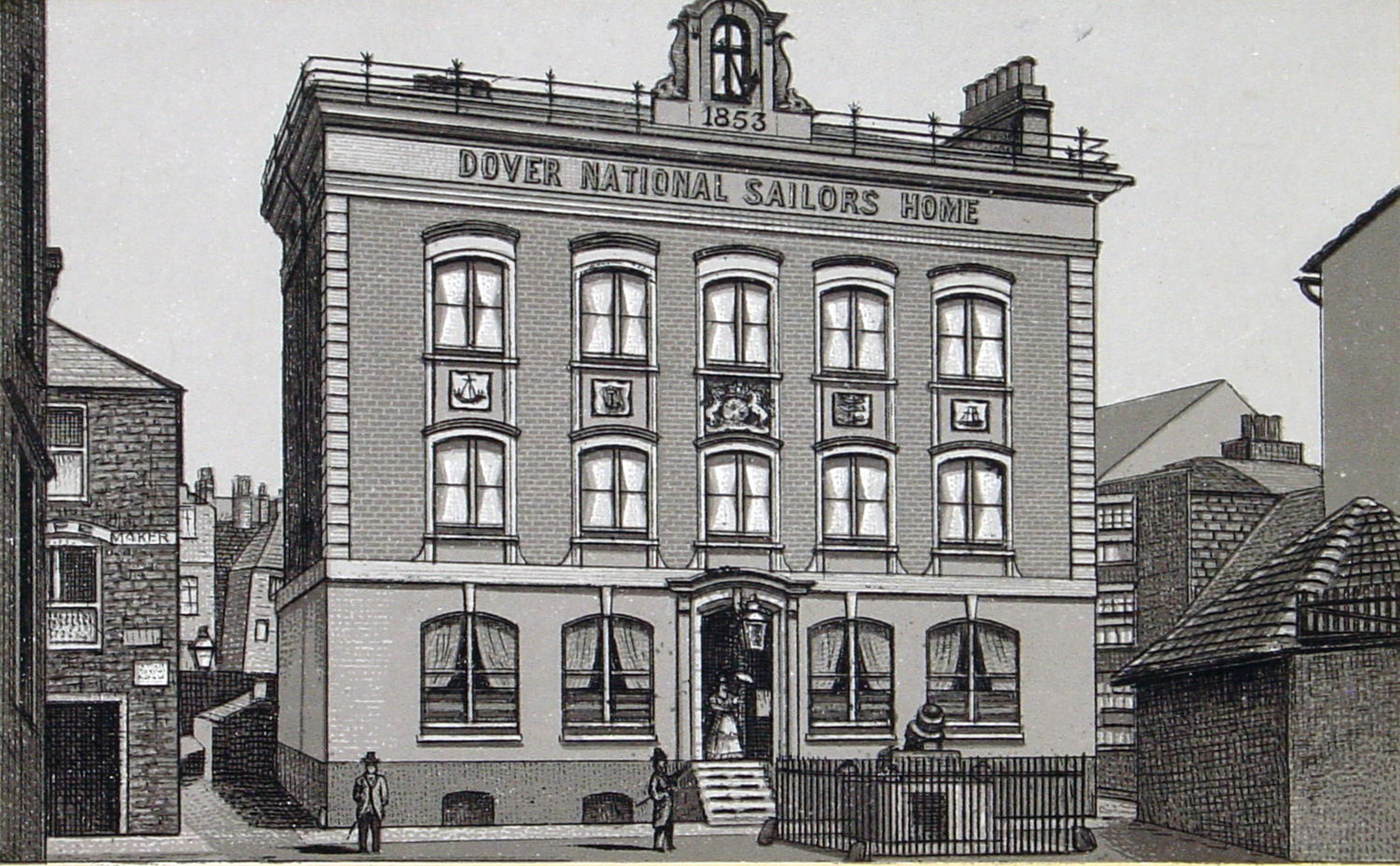
The stormy weather continued through out the night of Saturday/Sunday and at about 02.00hrs the bark Annie Sharpe, was driven onto the rocks off Shakespeare Cliff. The crew were saved and taken to the Sailors’ Home. The next morning, Easter Sunday, more Volunteers arrived by special trains, while many of those who had arrived the day before went to the different places of worship. They then marched up to the parade ground in the Castle, where they were joined by the enlisted men stationed in Dover. There, a formal church service was held attended by the town’s dignitaries led by the Mayor, John Birmingham.

The route, both to and from the Castle, was crowded with people and according to a report of the time, ‘the windows of most of the houses were occupied by ladies.’ On returning to the town, the Volunteers were dismissed and were free to spend the rest of the day as they wished. It was also reported that many of the women of Dover ensured that this was made as pleasurable as possible!

Although the snow had ceased in the morning that Sunday, a gale blew in the afternoon and it had hardly abated when it began snowing heavily again. In the harbour and bay, there were a large number of merchant vessels as well as the Royal Navy Squadron. The Royal Sovereign was the leading vessel commanded by Captain A W A Hood. There was also the Scorpion under Captain G A Brooker, Staunch commanded by Lieutenant Hall, Stork under Lieutenant Stewart, Ernest under Lieutenant Hunt, Maguet under Lieutenant Fairlie and sailing brigs Martin and Ferret. These were eight-gun sailing vessels used as training ships for boys. The Ferret came from Portsmouth and moored on an Admiralty  buoy near the Admiralty Pier. She had a crew of 17 men, eight stewards, was carrying 86 boys and under the command of Lieutenant Carré. Some of the boys were Dover’s Sea Scouts – later Sea Cadets.

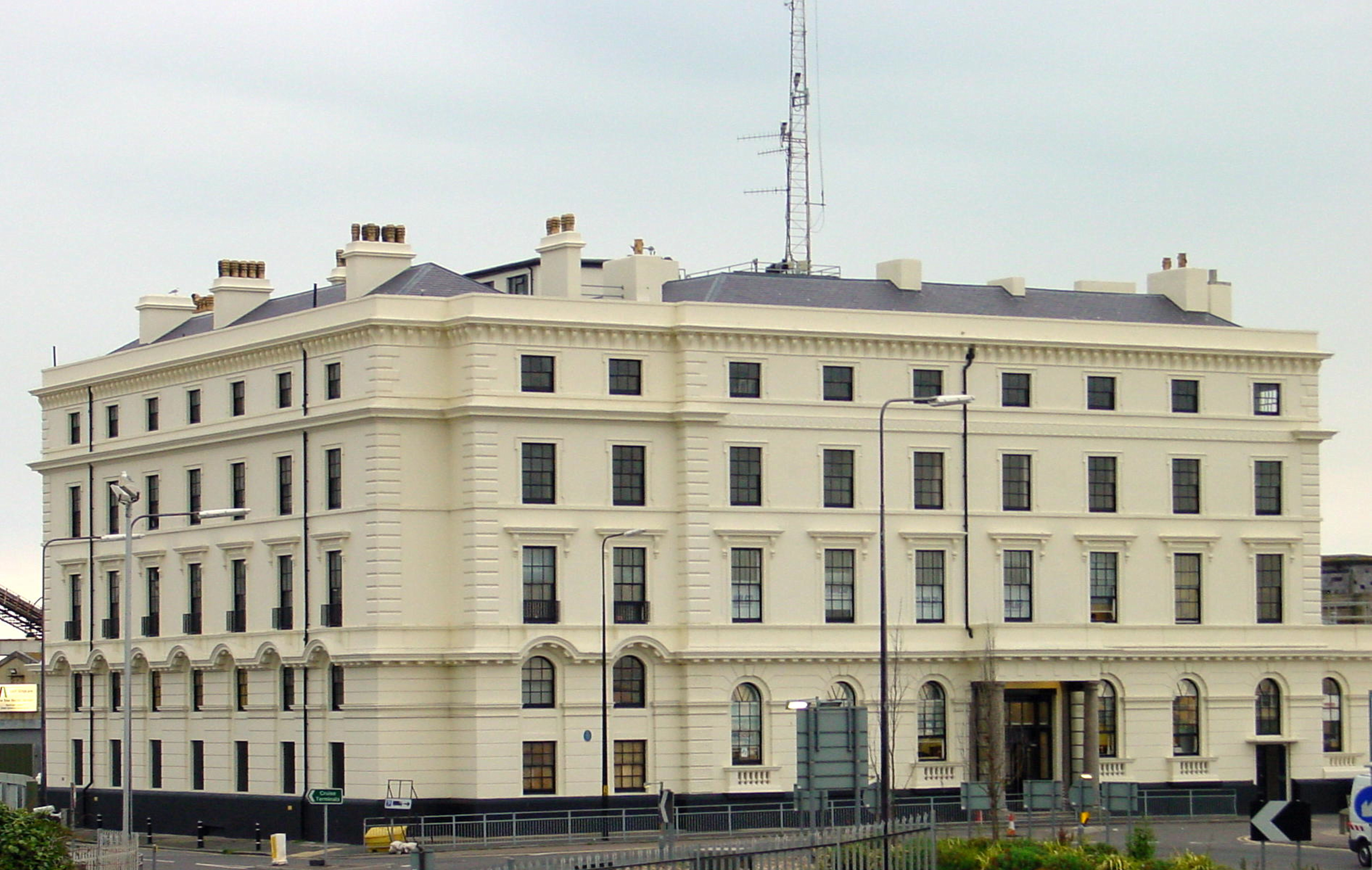
Lord Warden House formerly the Lord Warden Hotel where a splendid feast was going to be enjoyed by the organisers. AS.

Lord Warden House formerly the Lord Warden Hotel where a splendid feast was going to be enjoyed by the organisers. AS.

Even though the weather was atrocious instructions were issued for the next day. The enemy were to land at St Margaret’s, east of Dover, then advance to Dover where they would storm the southeast bastions of the Castle from both land and sea. The Volunteers were to lay a field telegraph and use steam traction engines to take the heavy guns up the hill into position to defend the Castle batteries. At sea, the opposing ships were to sail out of the Downs towards Dover where they would be met and defeated by a fleet of ships that included the brig Ferret. The exercise was to last about two hours before the ‘invaders’ retreated. It was then expected that the Volunteers would then return home, by special trains, with their corps. When the despatch was completed, the organisers would spend the evening at the Lord Warden Hotel to enjoy a magnificent meal and toast each other on another successful exercise.

Castle Hill area 1844

Castle Hill area 1844

Because of the weather, it was decided to take a train of seven 18-pounder cannons up the hill towards the Castle and the battleground on the Sunday. The convoy was tightly chained together and hauled by 2 ten-horse powered traction engines. The road, in those days up to the Castle was designed for horse-drawn vehicles. That is, from St James Street across and up Laureston Place it snaked to lessen the gradient and at the top, where the hill was steeper, the road zigzagged. Throughout the road varied in width and because the convoy was unable to articulate it became stuck!

At the Castle, unaware of the convey ascending the hill, a number of soldiers resplendent in uniform and some on horse back started towards the town, pulling a gun carriage. By the time the two ‘forces’ met in Laureston Place the route was already crowded with Dovorians and tourists. They loudly proffered advice with some not using the choicest of language. Chaos ensued and tempers were rising. From the midst of the crowd stepped three people. They were a well-dressed young man wearing a bunch of violets in his buttonhole, a boy and a young lady on horseback and between them, they took command of the situation. The boy put stones under the 18-pounders while the man with the violets told the locals to loosen the chains. The lady ordered the soldiers from the Castle to go back from whence they came and refused to take no for an answer. The problem was quickly resolved but the report does not give the names of these three.

The weather on Sunday night / Monday morning continued to deteriorate and soon after midnight, the force seven – eight wind had gone round from south-east to east-north-east accompanied by a heavy running sea. The Ferret rolled heavily and at 04.33hrs, low tide, the chain of the Admiralty buoy broke. The Quartermaster of the Watch had the brig’s anchor let go but after seven shackles of chain had been run out the anchor had still not ‘snubbed’. He had the compressor bowsed in order to try to get the anchor to bite but with little effect and the Ferret bore rapidly towards Admiralty Pier. The order was given for the boys, asleep in their hammocks, to prepare to abandon ship. The Ferret ran, stem-on, into the Pier.

Sailors' Home, Blenheim Square. Dover Library

Sailors’ Home, Blenheim Square. Dover Library

Just tied up, on the lee side of the Pier out of the wind, was the Dover-Calais mail boat, the Breeze. The commotion on board the Ferret was heard by the crew but the deck of the Ferret was about 20feet (approximately 6metres) below the top of the Pier. Nearby was the Maid of Kent and the crew of both ships threw lines and ropes to the beleaguered boys. Some of them mounted the rigging and from the yards climbed, but for most, the crews of the Breeze and Maid of Kent hauled them up. Although initially one of the boys was reported missing all were eventually rescued and taken to the Sailors’ Home.

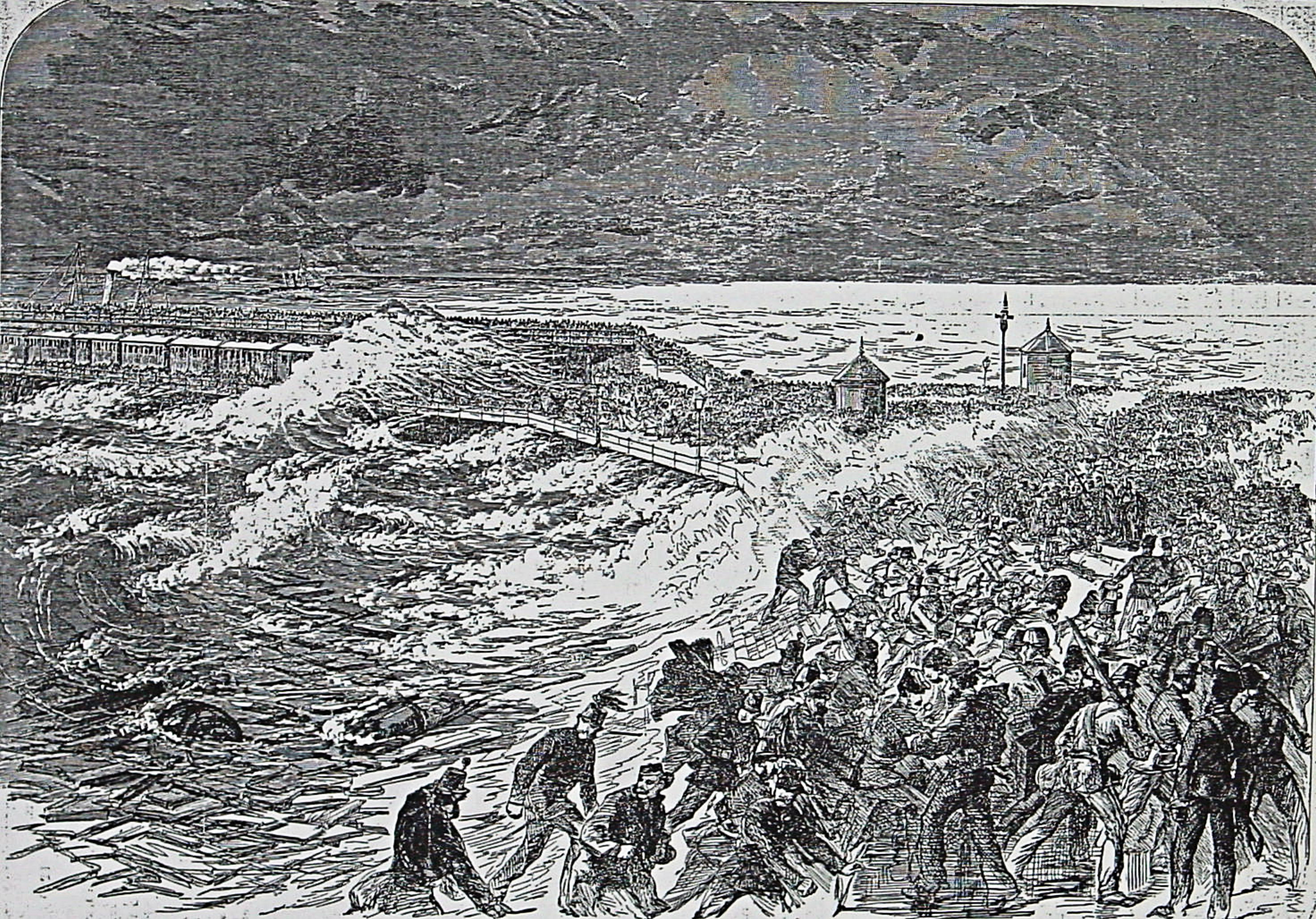
Scene of the wreck of the Ferret. Illustrated London News 10.04.1869 Dover Lbrary

Scene of the wreck of the Ferret. Illustrated London News 10.04.1869 Dover Lbrary

It was hoped that the rising tide would right the Ferret but she was stuck fast. Lieutenant Carré, officers and men had stayed on board and succeeded in getting on board, from a tug, that had come to help, a large hawser and secured it around the foremast. The tug then commenced steaming and the Ferret’s port chain was slipped. However, the tug was unable to make progress, the hawser parted and the Ferret slid along the Pier. Onlookers stood by helplessly as heavy seas crashed onto the little ship and the rising tide swamped her. By 10.30hrs on the Monday morning, crowds that had, the day before, lined the streets of Dover in welcome, watched along with Volunteers, as the raging sea smashed the little ship.

On the roofs of trains that had drawn up at the Harbour Station the passengers were watching the disaster unfold before them. Suddenly the little vessel appeared to break free and there were audible sighs of relief. She righted herself and as her two masts rose majestically above the Admiralty Pier in an upright position, the crowd cheered. Then her masts slowly arced towards the sea and the she was lost.

The Coastguard, under the command of Navigating Sub-Lieutenant Morrison, were there with lines and lifebelt, to help the officers and crew to get off the beleaguered ship, but they managed to abandon ship without help. However, one of the onlookers clambered down to the rocks in order to get a souvenir from the beleaguered ship. He was caught by a wave and carried out to sea but was successfully rescued by Volunteer West of the Queen’s Westminster and London Rifle Brigade. The rescuing subsequently received the Royal Humane Society medal for Gallantry.

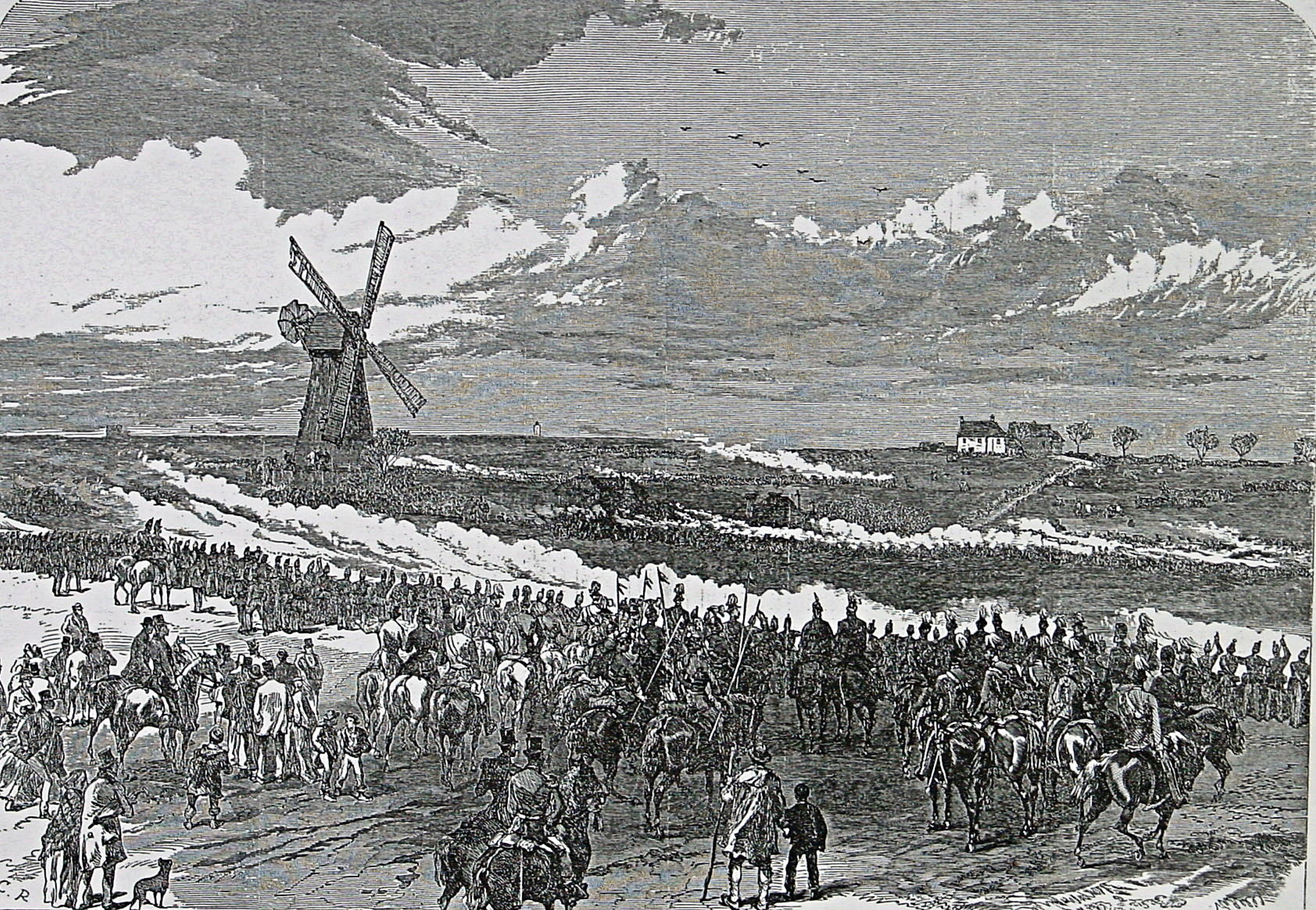
Attacking force near Guston - Illustrated London News 10.04.1869. Dover Library

Attacking force near Guston – Illustrated London News 10.04.1869. Dover Library

By mid morning, the weather had moderated and the heavy rain ceased. The Commander-in-Chief of the British Forces (1856-1895) Prince George the 2nd Duke of Cambridge (1819-1904) and cousin to Queen Victoria (1837-1901) was in charge of the Review and he arrived. With him were Prince Arthur, Duke of Connaught (1850-1942), Francis, Duke of Teck (1837-1900) and Earl Granville the Lord Warden (1866-1891). They had ridden from Walmer Castle where they had been staying. The Duke of Cambridge was told of the catastrophe and was well aware of the weather conditions but commanded that the Review should go ahead as planned. He was somewhat taken aback by the Volunteers, who appeared to be in disarray and he issued the order to ‘Sound the Assembly at once.’ The wet and bedraggled Volunteers assembled.

As the Volunteers were getting to their positions, the weather took yet another turn for the worse and eventually, due to the increasing strong winds, heavy rain and sleet, the exercise was abandoned. At sea, the inclement weather was also a cause for concern. Nonetheless, there is a contemporary drawing of the two turret-ships, Royal Sovereign and Scorpion, actively engaged in firing at the Castle and being met with return fire. Although the weather had ensured that the weekend manoeuvres did not go as planned the events that did take place were memorable than the Reviews that went ahead as planned.

On 22 April 1869, a Court Marshall was convened for the trial of Lieutenant Hilary Carré and the officers and crew of the Ferret over the loss of the sail-training vessel. The court was presided over by Captain R W Courtney and composed of Captains S H Henderson, Thomas Bridgeman Lethbridge (1829-1892), J C Soady, S A Wilmshurst. A Mr Martin, paymaster of Her Majesty’s yacht and a barrister-at-law officiated as Deputy Judge-Advocate. After hearing all the evidence the Court concluded that no blame could be attached to any person and that the cause of the accident was caused by the breaking of the Admiralty buoy chain. Lieutenant Carré and his crew were commended for successfully getting all the boys to safety and for twice trying to save the ship – when the chain broke and before she finally went down.

The Ferret disaster, without loss of life, reflected well on the people of Dover but the reasons why it happened gave the Admiralty cause for concern. At the time, Admiralty Pier had been built as part of a Harbour of Refuge with another Pier designated to be built where the Prince of Wales Pier is today. The second Pier had been put on hold but following the disaster, the Admiralty saw the necessity for it. However, the second Pier was again put on hold and in the end, the Harbour Board built the Prince of Wales Pier with the money raised by a passenger tax of one shilling per head. This formed a Commercial Harbour that doubled as a Harbour of Refuge and was completed in 1902. The harbour we see today was commission by the Admiralty and opened on Friday 15 October 1909 during weather akin to that experienced on the weekend of the fateful Volunteer Review.

  • Published:
  • Dover Mercury; 02 & 09 April 2009
Posted in Armed Services, Ferret Disaster and the Volunteer Review of 1869, Maritime, Volunteer Review of 1869 and the Ferret Disaster | Comments Off on Volunteer Review of 1869 and the Ferret Disaster

Lydden Hill Race Circuit

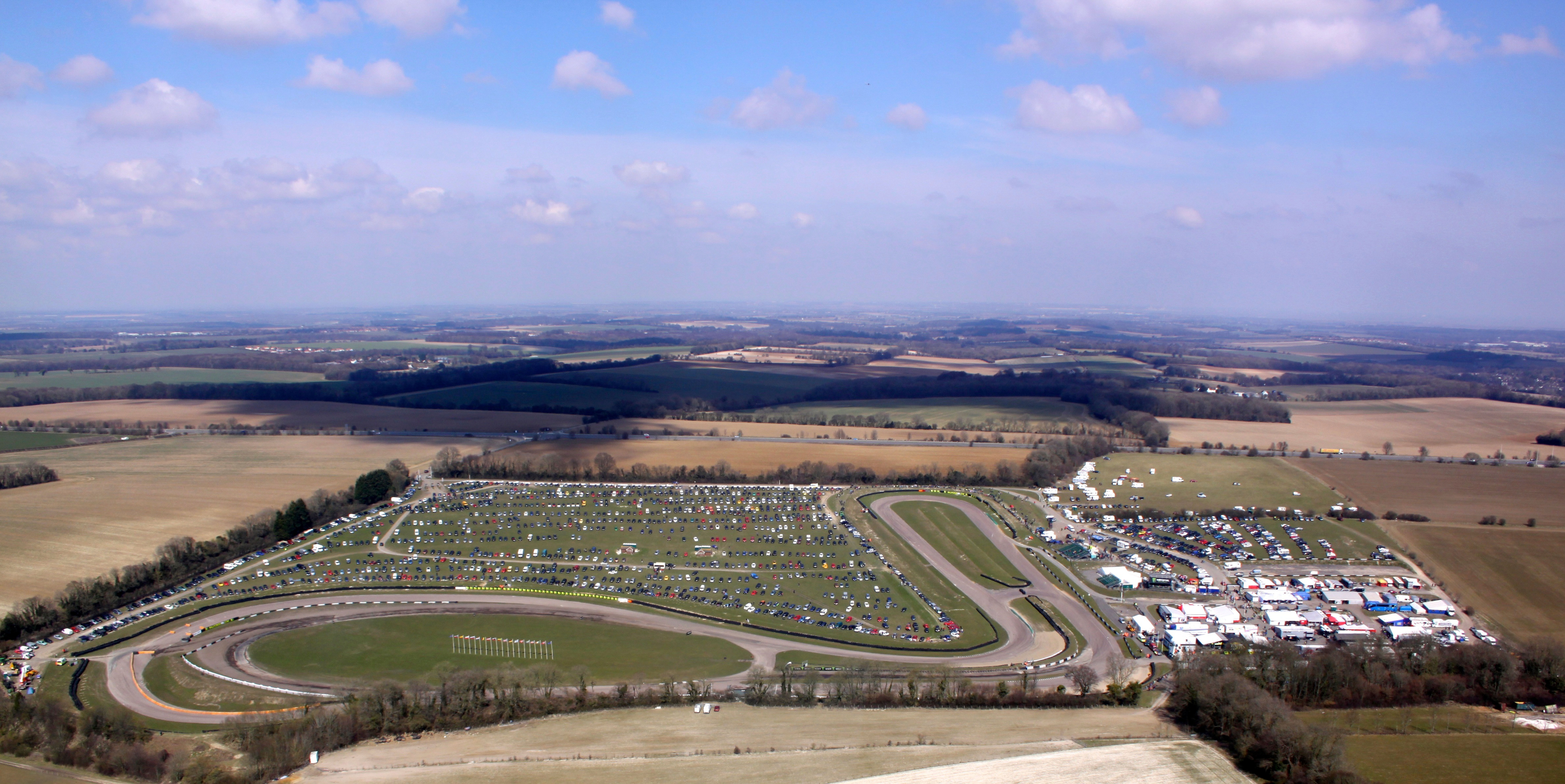
Lydden Hill Race Circuit Aerial View. Courtesy of Lydden Hill Race Circuit

Lydden Hill Race Circuit Aerial View. Courtesy of Lydden Hill Race Circuit

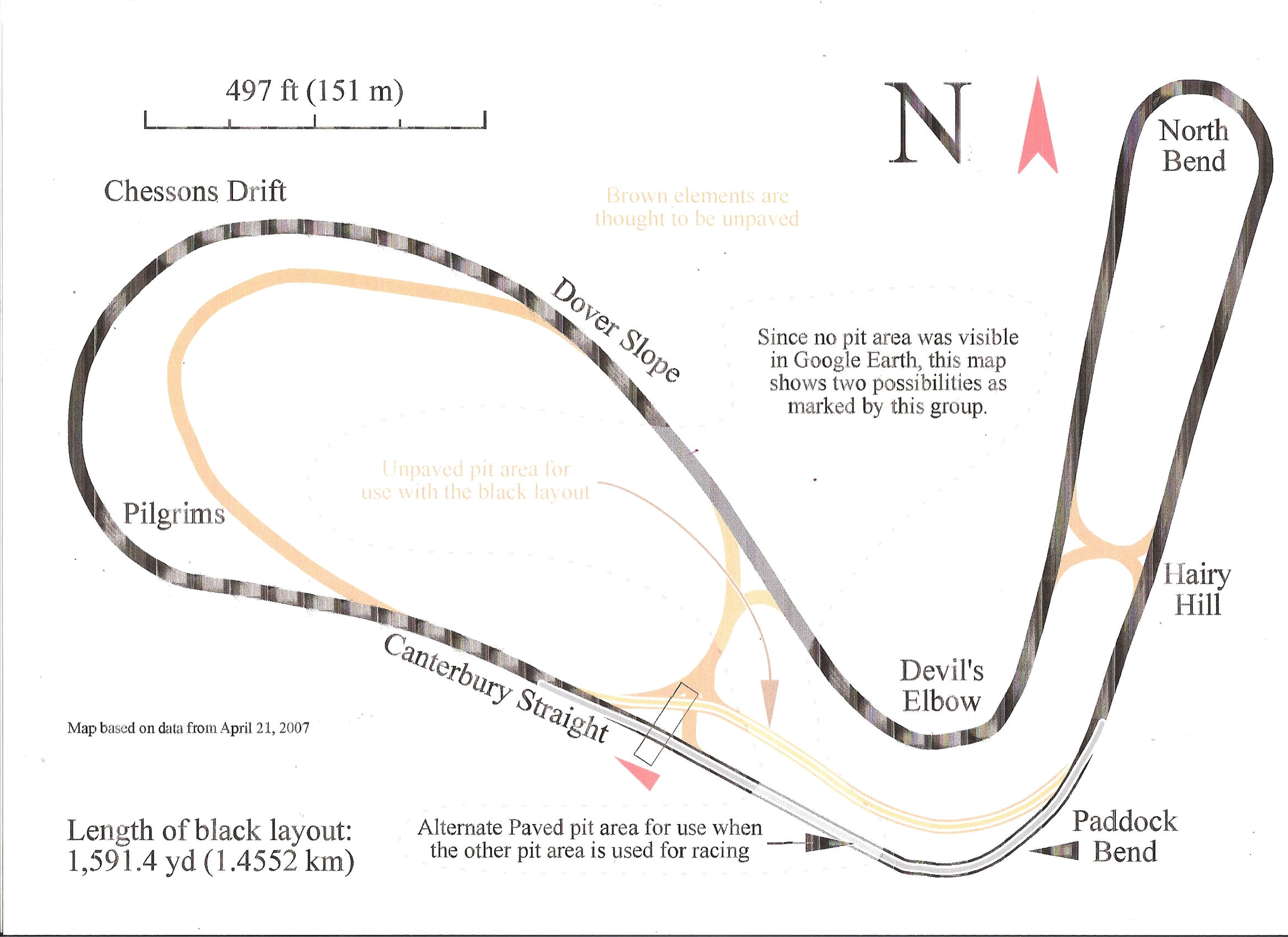
Lydden Hill Race Circuit, formerly known as Lydden Circuit, is approximately 6 miles north of Dover on the A2 Canterbury Road. Situated in a natural amphitheatre in an Area of Natural Outstanding Beauty the only access is from the A2. At one mile (1.6093 kilometres), it is the UK’s shortest road racing circuit but is challenging due to its many undulation changes.  These days the events are mainly rallycross, drift, saloon, sports car and motor cycle racing.

The track’s history goes back to 1955 when Bill Chesson (1923-1999), from Sittingbourne, bought land on Lydden Hill, formed Autosport Ltd – the name he later sold to Autosport magazine – and opened grass-track racing for motorcycles and a stock car racing circuit.

At that time, stock car racing was popular but dangerous. On 13 October 1955 a stock car hit Jim Edwards, who was acting as official starter. Five years later, on the afternoon of 25 September 1960, a stock car, driven by Frederick Funnel of Cranbrooke, ran into a section of the crowd causing the death of Robin Goldsmith of Maidstone and injuring several others. These included Robin’s mother Lottie Goldsmith, his son David – who lost a leg – and his cousin Brian Willis. Frederick Funnel suffered head injuries.

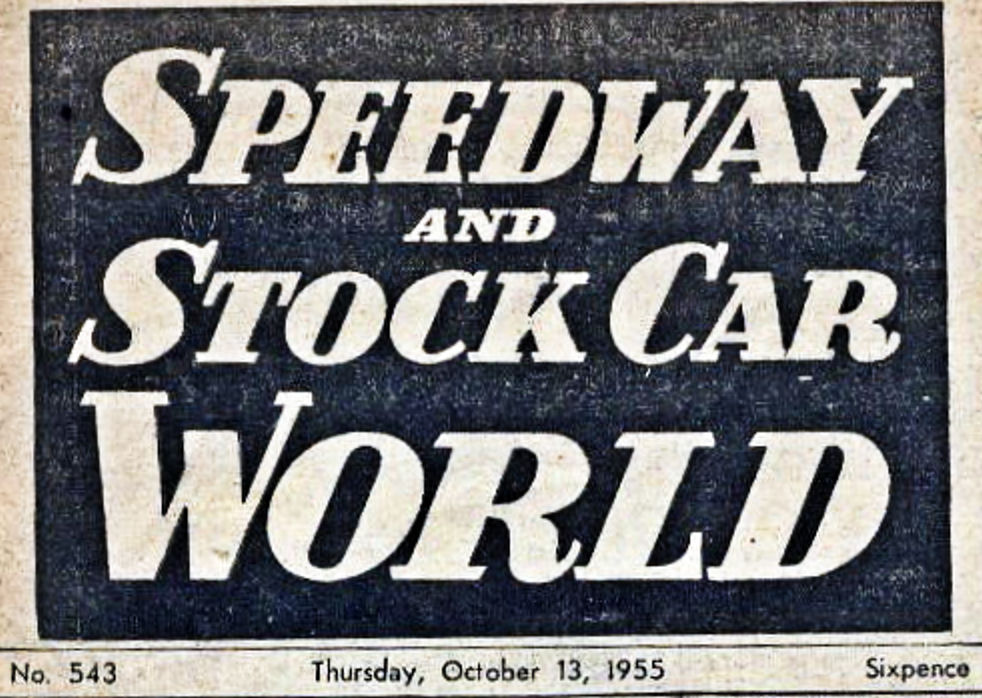
Speedway and Stock Car World that featured Lydden Race Track, 1955.

Speedway and Stock Car World that featured Lydden Race Track, 1955.

High Court action ensued and centred on why Chesson had refrained from laying a tarmac circuit. He argued that it was not financially feasible as only temporary (10 years) planning permission had been given. During this time grass track motorcycle racing was a growing sport and in 1958 Chesson organised the country’s first international meeting at Lydden. This subsequently became an annual event attracting some of the top names in speedway and grass track racing.

About 1962 Chesson did lay a short tarmac track and by 1965 the Lydden tarmac circuit had been laid. Both motorcycle and racing up to Formula 3 level took place there and among the future stars competing was motorcycle champion Barry Sheene (1950-2003). In the meantime Bill Chesson paid a visit to the US where he saw the new sport of rallycross in which either production or specially built highly sophisticated rally cars take part in a form of sprint style racing. To rouse interest, Chesson badgered the then two UK television companies, BBC and ITV.

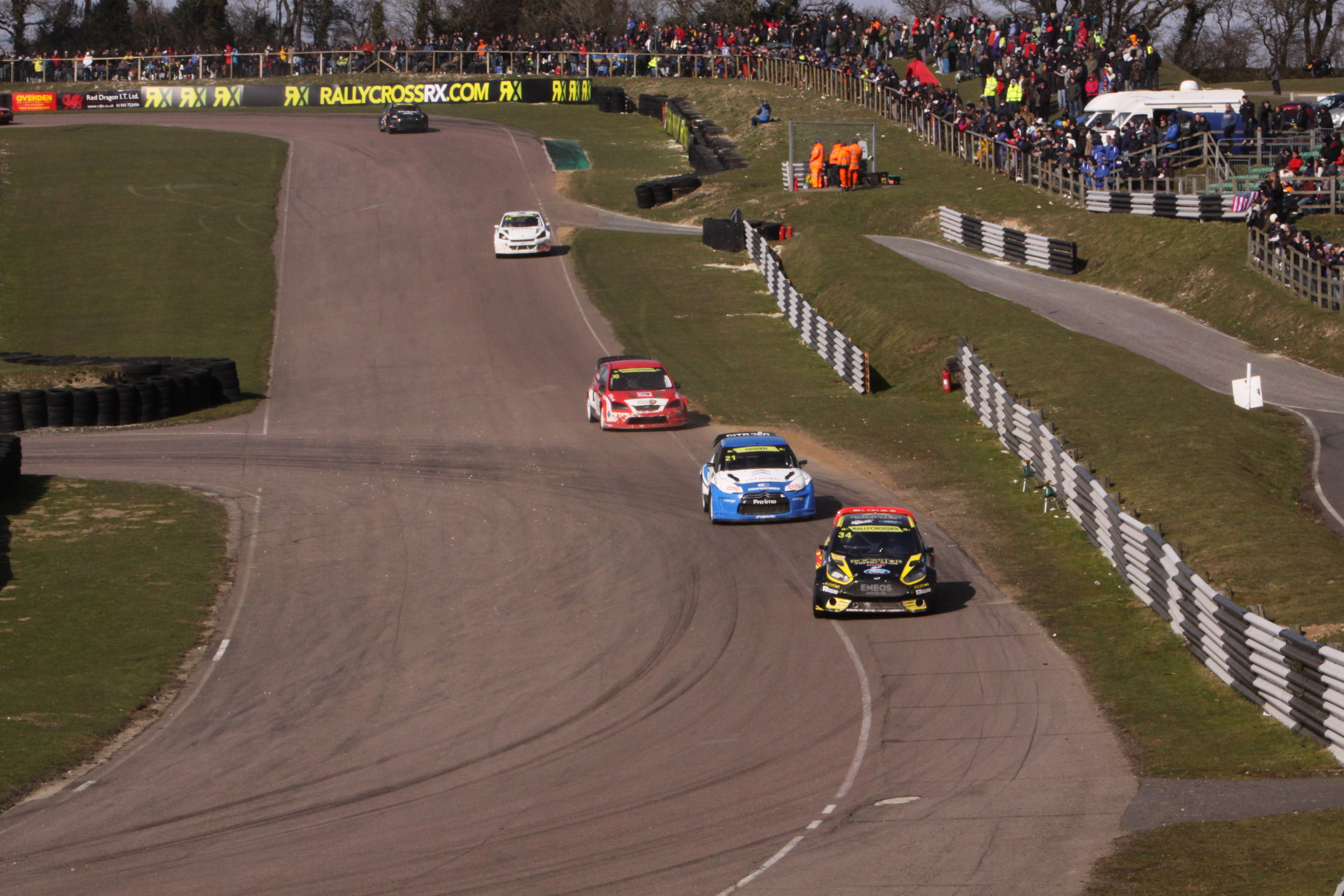
Rallycross at Lydden Hill Race Circuit

Rallycross at Lydden Hill Race Circuit

Robert Reed, a producer with Independent Television – ABC’s World of Sport programme was already interested in rallycross so took no persuading. He knew Bud Smith of 750 Motor Club, Tunbridge Wells, who was keen to organise an event and Lydden was ideal. The first race to take place at Lydden was on Saturday 4 February 1967 and was won by Vic Elford (b1935) in a Porsche. Soon the general public were hooked. In November that year, the first International Rallycross event was to be televised from the Circuit, which was expected to ensure success of both the sport and the circuit.

Unfortunately, there was an outbreak of Foot and Mouth disease, which meant that the Lydden Circuit was out-of-bounds. As Ministry of Defence land was not covered by restrictions, the event was moved to Camberley, Surrey and the International event, as Chesson predicted, raised worldwide interest. Two years of further lobbying and BBC’s Grandstand televised a rallycross event – from Lydden!

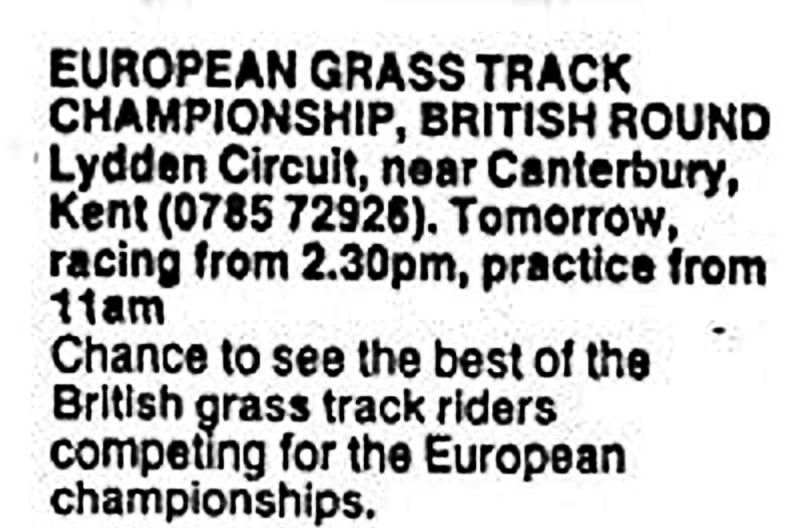
Advert for the European Grass Track Championship at Lydden 1984

Advert for the European Grass Track Championship at Lydden 1984

Chesson maintained his interest in motorcycle racing and in 1967 organised the country’s first of the annual International Grass Track motorcycle events at Lydden. In 1984, the European Championships were held there. Following its success plans were made for similar events in future, but due to problems with planning permission, potential investors were put off. Nonetheless, big names in speedway, such as Barry Briggs MBE (born 1934), Peter Collins MBE (born 1954), Don Godden (1936 – 2011), Ivan Mauger, OBE, (born 1939) and Ole Olsen (born 1946) all raced at Lydden.

Rallycross had, by 1968, a large following and in August that year Chesson struck a deal with BBC giving them almost exclusive rights. Within weeks, on 9 September, an unknown English driver James Hunt (1947-1993) won his first race at Lydden. Less than two years later Hunt returned and notched up his second win to that date. However, on 3 September 1972, a leading campaigner in the wearing of compulsory seat belts, John Gott age 58 and the Chief Constable of Northamptonshire, died after his sports car crashed during a race. Wilfrid Mowll, the Canterbury coroner recorded a verdict of Accidental death.

From when Chesson first opened the track back in 1955 residents living near by had complained about the noise from loud speakers, vehicles and crowds as well as traffic chaos on the local road network. The Track came under two separate but adjacent authorities, the Circuit was in the Canterbury area and for that the council there gave planning permission. Much of the remainder of the area and access was in the Dover District Council (DDC) area and they refused to give permanent planning permission.

In June 1986, the application for permanent racing went to Appeal and permission was granted. This was celebrated by a ‘21st celebration of opening’ even though the Track was much older! Albeit, the permission did have restrictions, including limiting the operation of the circuit to 52 days per year and forbidding racing taking place on consecutive days in excess of 12 occasions in any calendar year. The period ran from 1 April until the 31 March of the succeeding year.

The Motor Sports Association (MSA) also demanded that Armco barriers (the generic name for the corrugated steel crash barriers) to be erected to minimise vehicle damage on impact. Although Chesson recognised that this would be an asset for motor sports he argued that the barriers could be fatal for motorcyclists and refused to comply. The MSA threatened to refuse a new circuit permit so Chesson put the Track up for sale.

Truck racing today at Lydden Hill Race Circuit.

Truck racing today at Lydden Hill Race Circuit.

Rival rallycross competitor, Tom Bissett, bought the Track in 1989 for over £1million. He, along with Ron Dennis of McClaren, formed Lydden Circuit Ltd and they complied with the MSA demands. In 1991, outline planning permission was given to turn the Circuit into a test track to Formula 1 standard. This included telemetry to measure the entry and exit speeds at each corner, as well as a factory to house the production line for the new McClaren road car. However, an acrimonious dispute arose that ended with a court ordering Ron Dennis to buy out Tom Bissett for £4½million. McClaren International became the sole owner but in 1993, the McClaren Group decided not to proceed with their plans for Lydden and instead concentrated on their new Headquarters at Woking.

The following year the McClaren Group did apply and receive consent to extend the time limits of their planning application but were asked to give details of when they proposed to start. In the meantime, Terry Mount of the British Motor Cycle Racing Club (BMCRC) persuaded the company to reintroduce competitive racing at the Circuit and it was reported that BMCRC paid more than £50,000 for the privilege. South East Motor Sports Enthusiasts Club (SEMSEC) was given leave to promote events. These included specialist annuals such as the ‘Lord of Lydden’ and ‘Sidecar Burnup’ races and club motorcycle race meetings. The last European Rallycross event at Lydden Hill Race Circuit was in 1996 this included the European championship won by Kenneth Hansen (b 1987).

On 6 June 1999, Bill Chesson died aged 76 and that year saw McClaren applying for a planning package that included the production of Mercedes Benz sports cars on the site, providing some 50 to 100 jobs. This gained approval in January 2000 but the associated new circuit for motor racing or the testing of Formula One cars and other non-silenced vehicles, as well existing uses, were blocked. Discussions between Dover District Council  and McClaren’s took place with the result that, in 2004, it was decided the Circuit would stay as it was providing both car and motorbike racing run under the auspices of SEMSEC.

The following year the management of SEMSEC was taken over by Tunbridge Wells Motor Club with the assistance of Borough 19 Motor Club and Rochester Motor Club. In 2007, a record crowd of 8,000 turned out for the 40th anniversary of rallycross but in November the lease on the site expired and it looked as if the racing circuit would cease. However, in January 2008, the five-times British rallycross champion Pat Doran, His son Liam and daughter Amy signed a five-year lease from track owners McClaren International. Amy Doran age 23 took over the day-to-day running of Lydden Hill Race Circuit Ltd.

Lydden Hill Race Circuit 2014

Lydden Hill Race Circuit 2014

A full programme of fixtures and track days were initiated and in 2009, the Motor Sports Association (MSA) signed the contract for both the British Rallycross Championship and the Grand Prix to be held at the Lydden from 2010 to 2012. The Circuit was also the host of the Federation Internationale de L’Automobile (FIA) European Rallycross Championship. Kenneth Hansen who won the event the last time it was held at Lydden in 1996 won this! The following year Hansen was beaten by Sverre Isachsen (b 1970) while Liam Doran (b 1987), the son of Pat Doran, was in Division 1 ‘A’ final.

Easter 2011 saw 13,500 people attending the opening round of that year’s European Rallycross Championship and victory went to Norwegian Sverre Isachsen. Tanner Foust (b 1973) and co-host of the American equivalent to the British motoring series Top Gear, won the start of the 2012 season. There was no doubt about it, the Circuit was going from strength to strength. However, in 2013, planning application was submitted to start the racing at 10.30hours on some Sundays and this included using the public address (PA) system.

Previously the circuit was restricted to opening at 12.00midday and to close at 18.00hrs. Forty-two locals, living in Lydden, objected, pointing out that not only would the earlier opening destroy the peace and quiet of a Sunday morning but that the noise would start much earlier than 10.30hrs with the arrival of cars and helicopters as well as music through the PA system. Dover District Council gave permission, saying that the Planning ‘committee could not find any planning reason to reject the application.

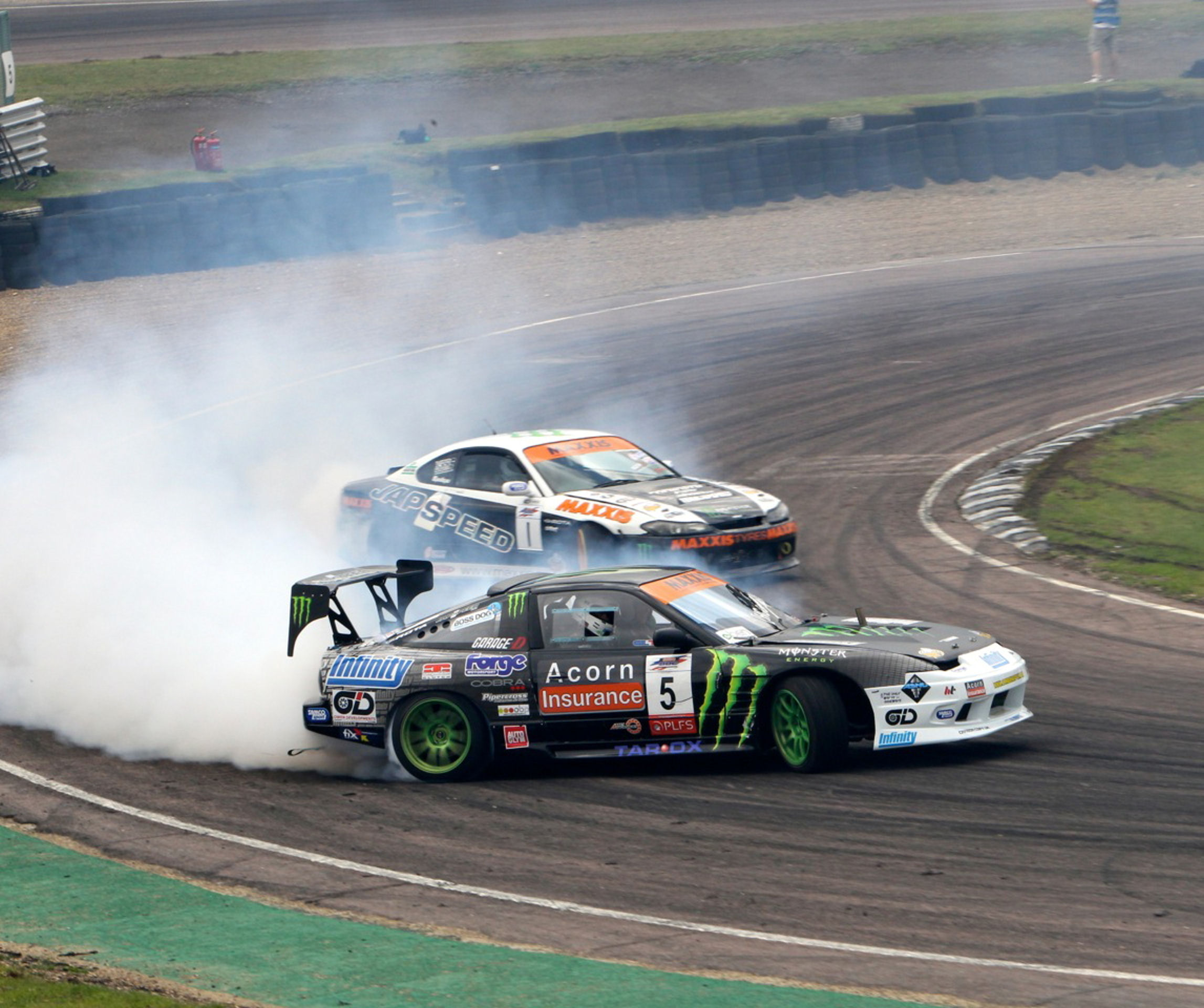
Drift racing at Lydden Hill Race Circuit

Drift racing at Lydden Hill Race Circuit

Over the Easter bank holiday 2013 saw the start of the rallycross championship and again Tanner Foust was victorious. Besides rally cross, the Lydden Hill Race Circuit also runs two rounds of the British Drift Championship, Bike and Car Track Days, and other major shows such at the APEX Festival, Truck and BHP Shows.

In 2014, a further planning application was approved for a major redevelopment of the Circuit that includes a new control tower to house timekeepers and officials and a VIP hospitality lounge. There are also plans for a new VIP centre with grandstands and workshops but this dragged although but the attendances to the events have grown year on Year. However, in January 2017, the organisers of the FIA World Rallycross Championship announced that from 2018 the event would be held at Silverstone, Northamptonshire. The owners of the Lydden Track are planning to create a new event with festival elements to take its place.

  • First Published:
  • Dover Mercury:  08 May 2008
Posted in Lydden, Lydden Hill Race Circuit, Lydden Hill Race Circuit, Lydden Hill Race Circuit, Sports, Tourism | Comments Off on Lydden Hill Race Circuit