Lieutenant Graham and the last public Execution of a Dovorian

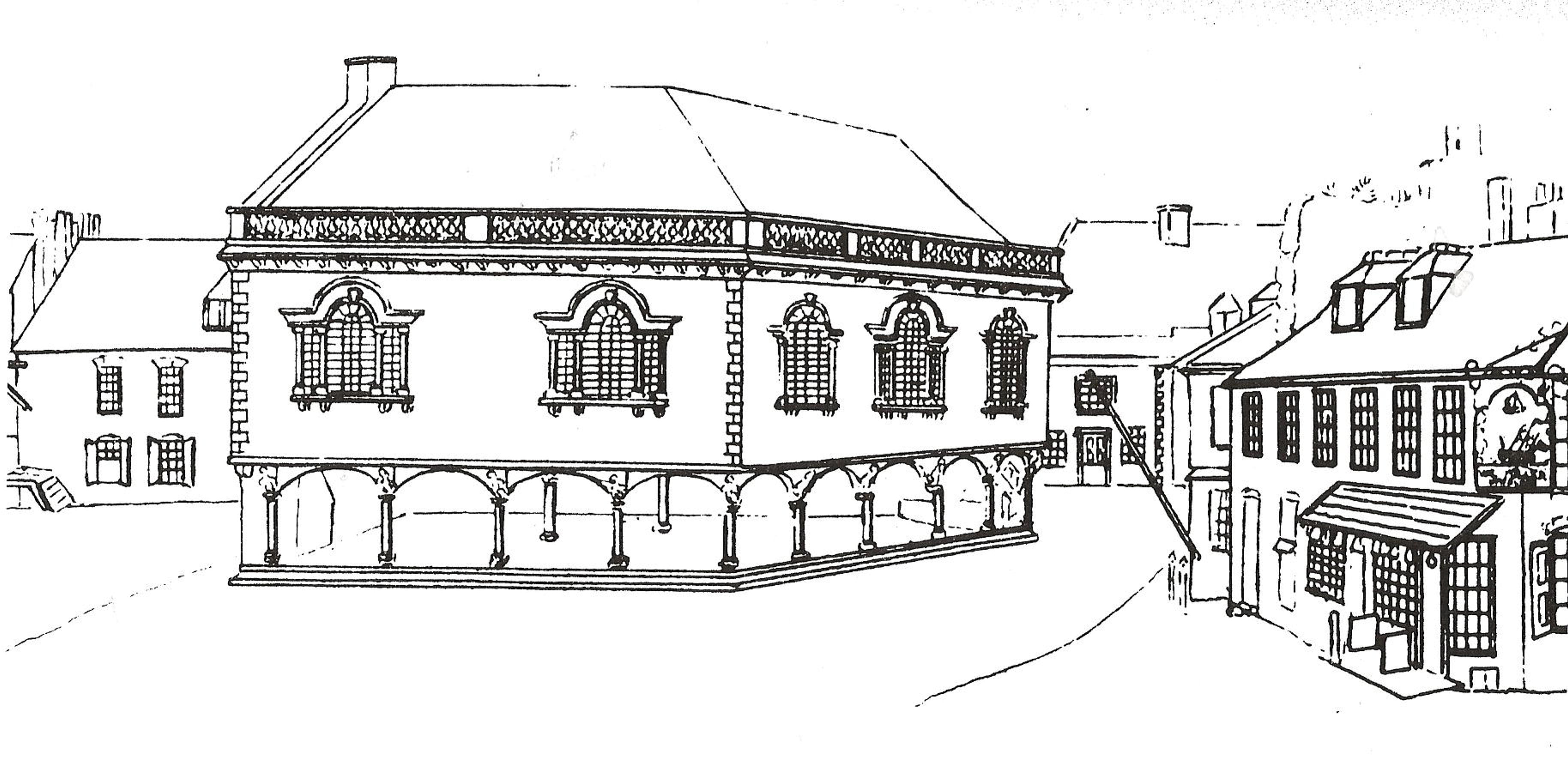
Dover's Court Hall 1606-1834 where cases were tried. Dover Museum

Dover’s Court Hall 1606-1834 where cases were tried. Dover Museum

From the days before the Conquest (1066) and for centuries after, Dover, as a Cinque Port, had a number of privileges in return for providing ship-service to the ruling monarch. These privileges included the full authority to deal with all criminal offences and the right to arrest, imprison or execute criminals. The mayor passed all sentences, including those of death and the last time was in 1823.

Execution was, for centuries, carried out by throwing the guilty felon from the Bredenstone on the Western Heights. If they survived they could walk or be carried away otherwise they were buried in unconsecrated ground. It was for this reason that the Bredenstone – the western Roman Pharos, was nicknamed the ‘Devils Drop of Mortar.’  With the development of the Pier District, below Western Heights, the execution site was moved to the top of Sharpness (now Shakespeare) Cliff giving it the nickname ‘Devil’s Drop!’

Public hanging increasingly became the preferred punishment as people could watch and, it was argued, this was a greater deterrent. Wooden gallows became a permanent fixture and were only replaced when dilapidated or when the incoming mayor wanted to make a point. Thomas Warren, elected Mayor five times from September 1549, had strong views on punishment as a deterrent so during his administration the gallows were replaced, the ducking stool was repaired and a new lock for the stocks was ordered.
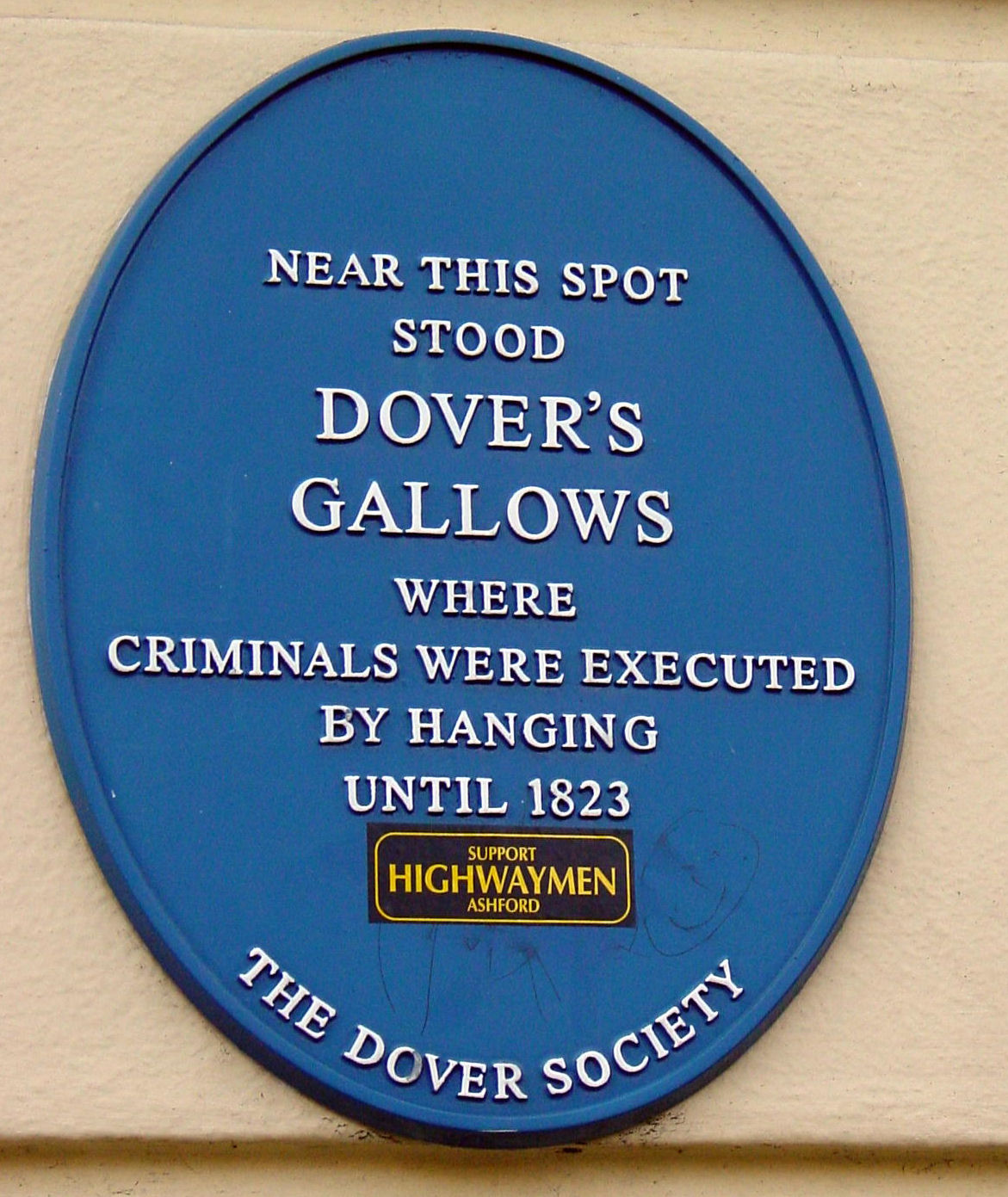
Plaque erected by the Dover Society on the Eagle Hotel, Tower Hamlets opposite to where the gallows once stood.

Plaque erected by the Dover Society on the Eagle Hotel, Tower Hamlets opposite to where the gallows once stood.

In the 18th and early 19th centuries, public hangings were a common occurrence in Dover and took place outside the ancient boundary on the corner of the High Street and Tower Hamlets Road. Today there is a Dover Society plaque on the Eagle pub  opposite to where the gallows once stood on the corner of Tower Hamlets Road. The last Dovorian to be hanged there was Alexander John Spence who had been found guilty of shooting Lieutenant Philip Graham. Graham was a Preventative Coastal Blockade Officer working from the ship Ramillies based at Dover. It was during a confrontation with a group of smugglers that Spence shot at Lieutenant Graham.

Spence was found guilty and sentenced to death by hanging under the Malicious Shooting and Stabbing Act. Lord Ellenborough, the Lord Chief Justice of England and Wales had proposed the Bill, in order to clarify the law relating to abortion. As the Bill wended its way through Parliament it was used to clarify other offences including shooting at an officer during the course of his duties. The Act was given Royal Assent on 24 June 1803 (43 Geo 3 c58).

Dover Goal circa 1820. Dover Museum

Dover Goal circa 1820. Dover Museum

The prison, at that time was in Gaol Lane, off Market Square, and on the morning of Spence’s execution, 9 August 1822, he ate a ‘hearty breakfast.’ Then he was seen by Reverend John Maule of St Mary’s Church who tried to impress upon Spence his miserable situation but the condemned man remained resolute. Later one of Spence’s sisters visited and his attitude change. He asked for the sacrament and at the time to leave the gaol he dutifully climbed into the cart that was to take him to the gallows.

The cart, with horse and driver, to carry the condemned man was hired from Worthington’s stables in what was then Worthington Lane, (now Street). Mr Worthington charged 10s (50p) of which 2s 6d (12½p) was paid to the driver. Spence sat on his coffin in the body of the cart. Rev. Maule stood by him constantly praying. The executioner, carrying the rope, sat at the front with the driver. The Mayor, Henshaw Latham, and town dignitaries travelled in covered carriages behind.

Eagle Hotel, Tower Hamlets Road.

Eagle Hotel, Tower Hamlets Road.

The spectacle of the condemned man being taken along Biggin Street and then up the Charlton High Road (now High Street) in an open cart to Black Horse Lane – the old name for Tower Hamlets Road – was enjoyed by the ‘multitudous’ crowd. Rooms with windows at the Black Horse Inn – now rebuilt as rename the Eagle – were hired for £1.1s (£1.5p), by the town’s wealthy. They were, apparently, enjoying light refreshments when Mayor Latham and the other officials joined them.

On his way to the gallows Spence remained standing, waving to the crowds and bowing to his friends and relatives as he passed by. Standing by the gallows was Preventative Officer Lieutenant Graham and his colleagues and when Spence saw them he became meditative. The hangman swung the rope over the gallows and then joined Spence and the Rev Maule in the body of the cart. He put the hood over Spence’s head and then the noose but before the executioner could drive the cart away, Spence either slipped or threw himself off and ‘struggled wildly.’ Afterwards, Spence’s body was given to relatives for disposal and he was buried in St Mary’s Churchyard.

The Municipal Corporations Act of 1835 took most of the ancient privileges away from the town’s officials including the right of passing the death sentence.  Although Alexander Spence was the last Dovorian to be publicly hanged on the town’s gallows, in 1823 a young man from Margate was hung there for robbery. In August 1868, Dovorian Thomas Wells, a 19-year-old London, Chatham and Dover Railway carriage cleaner was hung at Maidstone Prison. He was the first person to be convicted of murder following the enactment of the Capital Punishment Amendment Act of 1868 that put an end to public executions. In the UK, execution was abolished (except for treason) in 1973, the last one took place in 1964 and the punishment was abolished totally in 1998.

As for the Preventative Coastal Blockade Officer, Lieutenant Philip Graham of the Ramillies, whom Spence had been convicted of shooting. At the Lent Assizes, Maidstone in 1826, Graham was convicted, with costs, of ‘sending challenges’ to Robert Sherard, 6th Earl of Harborough (1797–1859), ‘with the intent to provoke him into fighting a duel.’
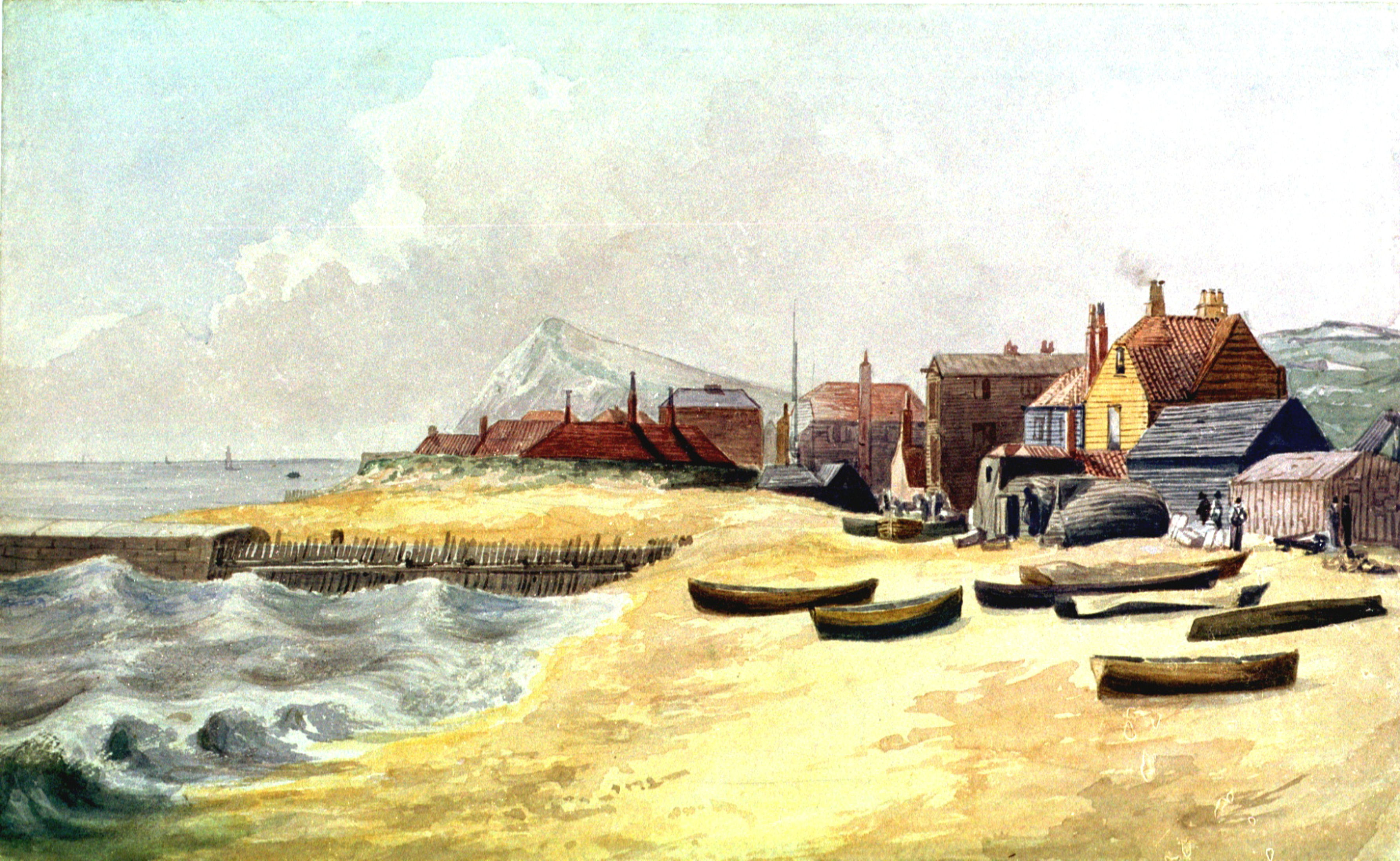
Archcliffe Beach - Pier Houses by Samuel Mackie 1842. Dover Museum

Archcliffe Beach – Pier Houses by Samuel Mackie 1842. Dover Museum

One afternoon the Earl arrived in Dover Bay on his yacht that he moored on Dover’s Archcliffe Beach (now part of Shakespeare Beach). This was the usual place for smugglers to tie up.  Lieutenant Graham and his officers, in their official capacity went onboard and conducted a search. The Earl was dressed like a common seaman and, by his own admission, used strong and course language and told them to leave. An altercation took place during which, the Earl alleged, Lieutenant Graham gave him his calling card saying that ‘he expected the satisfaction of a gentleman.’ The Earl tore the card up and threw it to the crowd of onlookers who cheered. Lt Graham then ordered the Earl to take his yacht round on the next high tide to the Custom shed, on Customs House Quay. The Preventative officers then left.

The Earl did as he was bid and the yacht was again searched, nothing was found. However, in the Customs house, according to John Ward – Collector of Customs, Lieutenant Graham told him that he had laid a challenge and that the Earl was a coward for refusing it such that he ‘should be under the necessity of kicking him.’ Ward was the only witness to this alleged conversation.
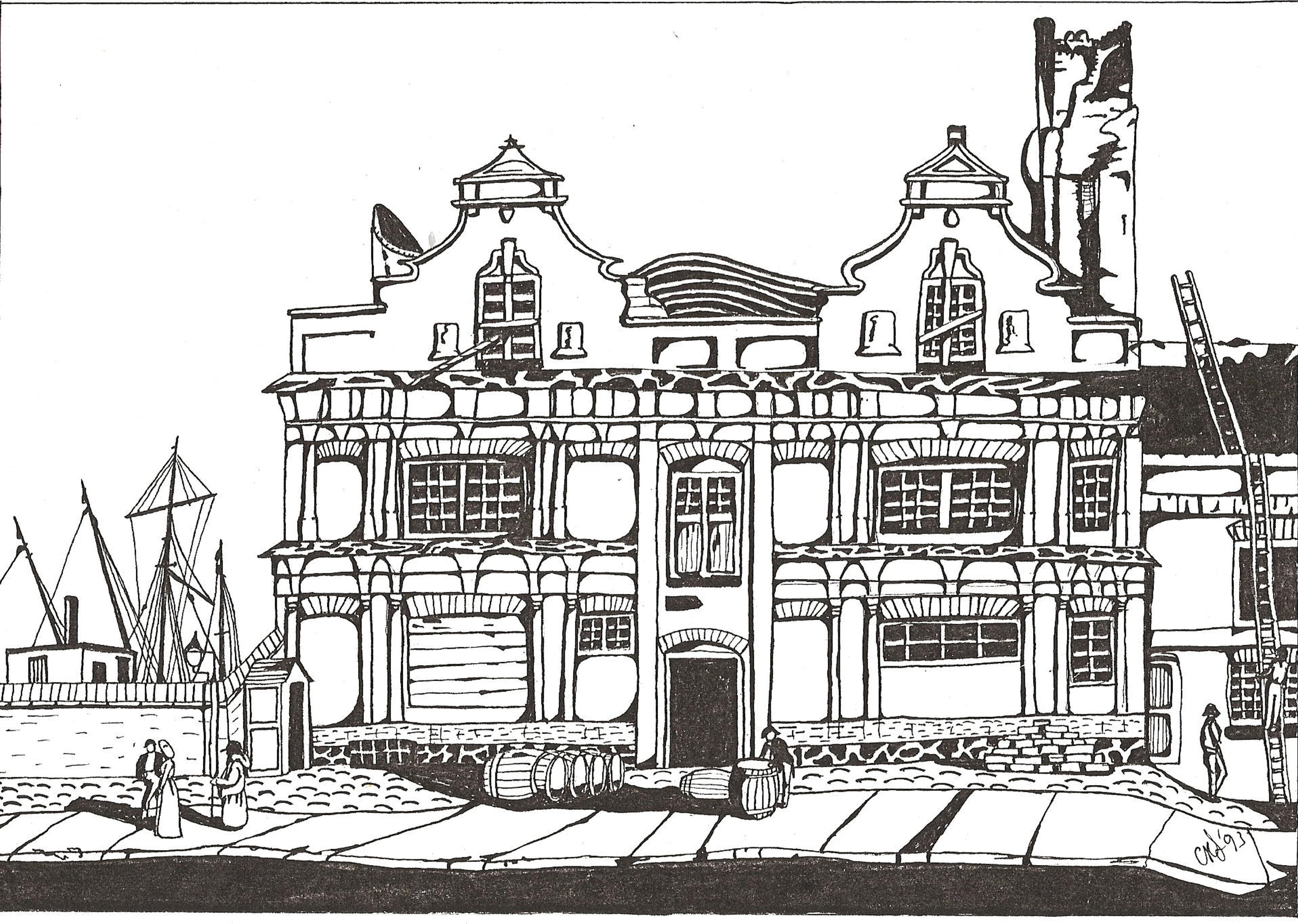
Custom House on Custom House Quay, built 1809. Lynn Candace Sencicle

Custom House on Custom House Quay, built 1809. Lynn Candace Sencicle

Lieutenant Graham’s colleagues, at the trial, said that during the first examination of the yacht, the Earl was ‘extremely violent,’ accusing them of being ‘highwaymen,’ and tauntingly doubted that Lieutenant Graham had the ‘king’s commission’. The Earl then demanded to see the evidence, to which Lieutenant Graham produced his card that showed who he was. The Earl’s loud and abusive behaviour had attracted the attention of fishermen and known smugglers and taking the card the Earl tore it up and threw to the wind. The Preventative officers decided to examine to yacht later that day and the Earl was ordered to take it round to the Customs house on the next tide.

Of the Lieutenant, his colleagues said that he was a peaceable and brave man, and a humane and skilful officer. This was backed in affidavits by a number of Dover gentlemen including, Thomas Mantell, George Jarvis, Henshaw Latham, Richard Elsam, Henry Pringle Bruyere, William Knocker, John Shipdem and Mayor George Stringer. Lieutenant Graham was represented by the Attorney General and the jury found that though Lord Harborough was not engaged in any smuggling activities, he conducted himself in a manner to give reasonable ground to the officers to suspect that he was in practices of that nature.

However, the jury preferred the Earl’s and Collector of Customs, John Ward’s  version of events to that of Lieutenant Graham and his witnesses. The judge, Mr Justice Bayley, in summoning up before sentencing said that ‘officers’ of the Crown ought to behave with temperance and moderation, and that their failure so to behave must be attended with painful and mischievous results.’ He sentenced Lieutenant Graham to four months in Marshlsea prison, London and the loss of his job.

The Coastal Blockade and the Preventative Water Guard – the latter served the rest of the country – amalgamated in 1821 under the Board of Customs, and were renamed the Coast Guard – in the twentieth century this was changed to Coastguard. The Preventative Officers came directly under the Crown and their job was to prevent smuggling. The Customs was effectively privatised under a Collector of Customs for each locality. The Collector of Customs tendered for the privilege and once in post, it was he who hired the customs officers to collect the excise duties on the goods that were being imported or exported. The Collector of Customs received a percentage of these revenues and after paying his staff and renting the customs house etc., he retained what was left as his income.

  • Execution published:
  • Dover Mercury 05.11.2009
Posted in Courts, Crime & Punishment, Execution - last public of a Dovorian and Lieutenant Graham, Graham Lieutenant and the last public Execution of a Dovorian, People | Comments Off on Lieutenant Graham and the last public Execution of a Dovorian

Matson Family, Dissenters, Solton and the Trunnel Feast

 West Cliffe and Solton underlined in red

West Cliffe and Solton underlined in red

The Matson’s hailed from Solton, then part of West Cliffe, about three miles east of Dover and less than a mile from St Margaret’s at Cliffe. The parish of West Cliffe, adjacent to the A258 Dover-Deal Road traditionally consisted of four farms, West Cliffe, Wallet’s Court, Solton (on the east Langdon side of the A258) and Bere, together with a few cottages. The tiny church is dedicated to St Peter. At the time of the Conquest (1066), the area of West Cliffe amounted to 1,165 acres and included the cliffs overlooking the Strait of Dover.

At that time, the 432 acre Wallet’s Court was taxed at two shulings while the 216-acre Solton, was taxed at one shuling. The remaining 517 acres that made up West Cliffe appears to have been uncultivated. Edric was listed as the earliest landholder of Wallet’s Court and Godfrid owned Solton. Following the Conquest the manors came into the hands of Hugo de Montford a close associate of the Constable of Dover Castle, Odo – Bishop of Bayieux (c 1030s–1097) and William I’s (1066-1087) half brother. When Odo fell from grace in 1090, de Montford relinquished the lands.

Solton Manor courtesy of Leonie Mercer

Solton Manor courtesy of Leonie Mercer

The Manor of Solton, following the demise of Odo, was first granted to Jeffrey de Peverel, one of eight knights who were given Odo’s confiscated property in exchange for knights’ service. Knight’s service was the provision of a defensive tower and connecting walls at the Castle and the men to man it. By the early 16th century, the land was in the hands of Robert Finet (d1582), whose grandfather came to England with Cardinal Lorenzo Campeggio (1474–1539) in 1519. Robert married Alice, the daughter of John Wenlock, the Captain of Calais – then in English possession. His son, John (1571–1641), was the Master of Ceremonies to Charles I (1625-1649) and was known for his witty but course songs.

John Finet was knighted on 23 March 1616 succeeding as Master of Ceremonies in 1626 and his main role was entertaining foreign envoys at Court. In 1618, John married Jane the daughter of Henry, Lord Wentworth of Nettleshead, Suffolk, and had three children John junior, Lucy and Finetta. John died on 12 July 1641 and was buried at St Martin’s in the Field, London. It appears that he left Solton Manor to his two daughters who sold it to Nathaniel Matson (1665-1719).

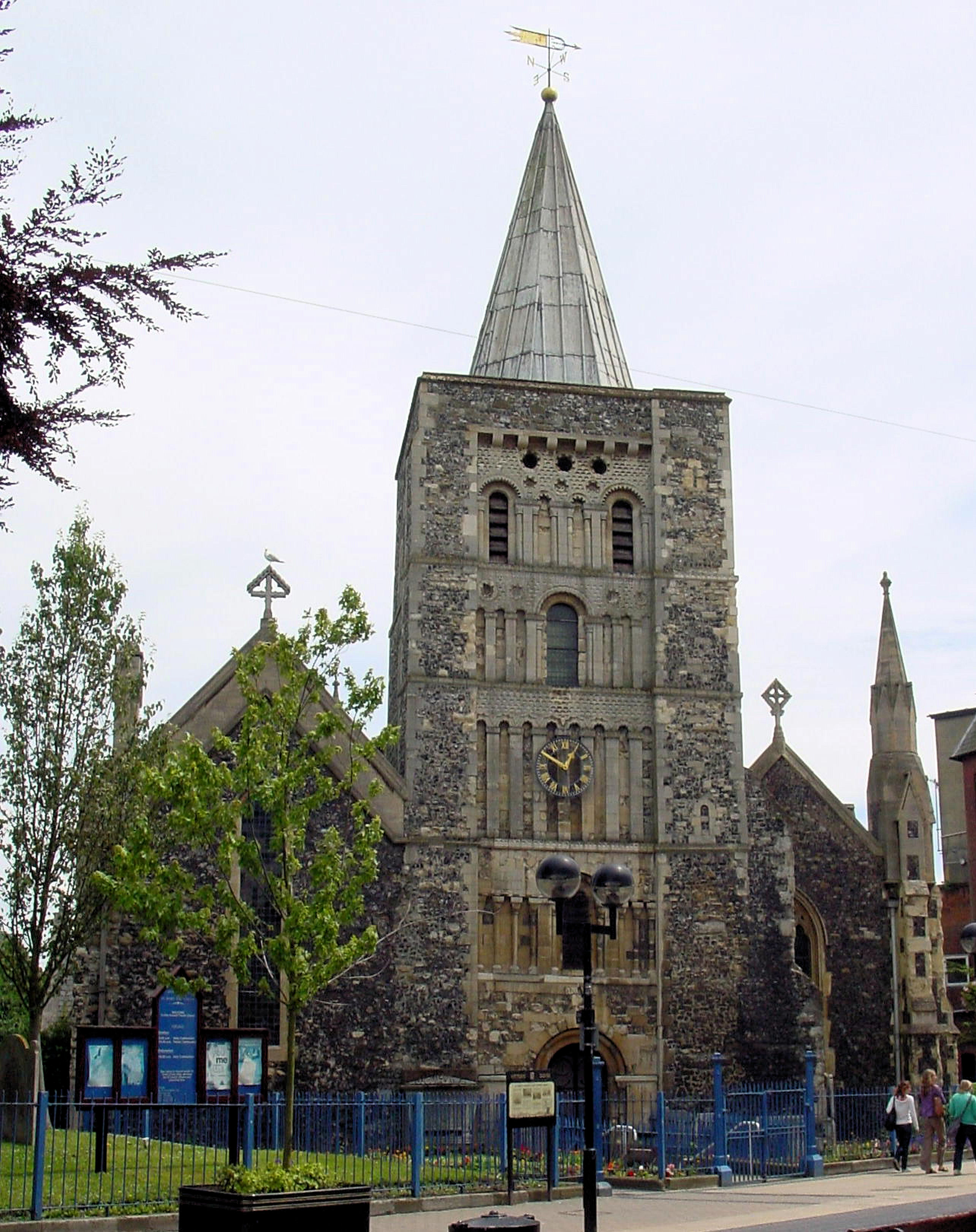
St Mary's Church - Cannon Street.

St Mary’s Church – Cannon Street.

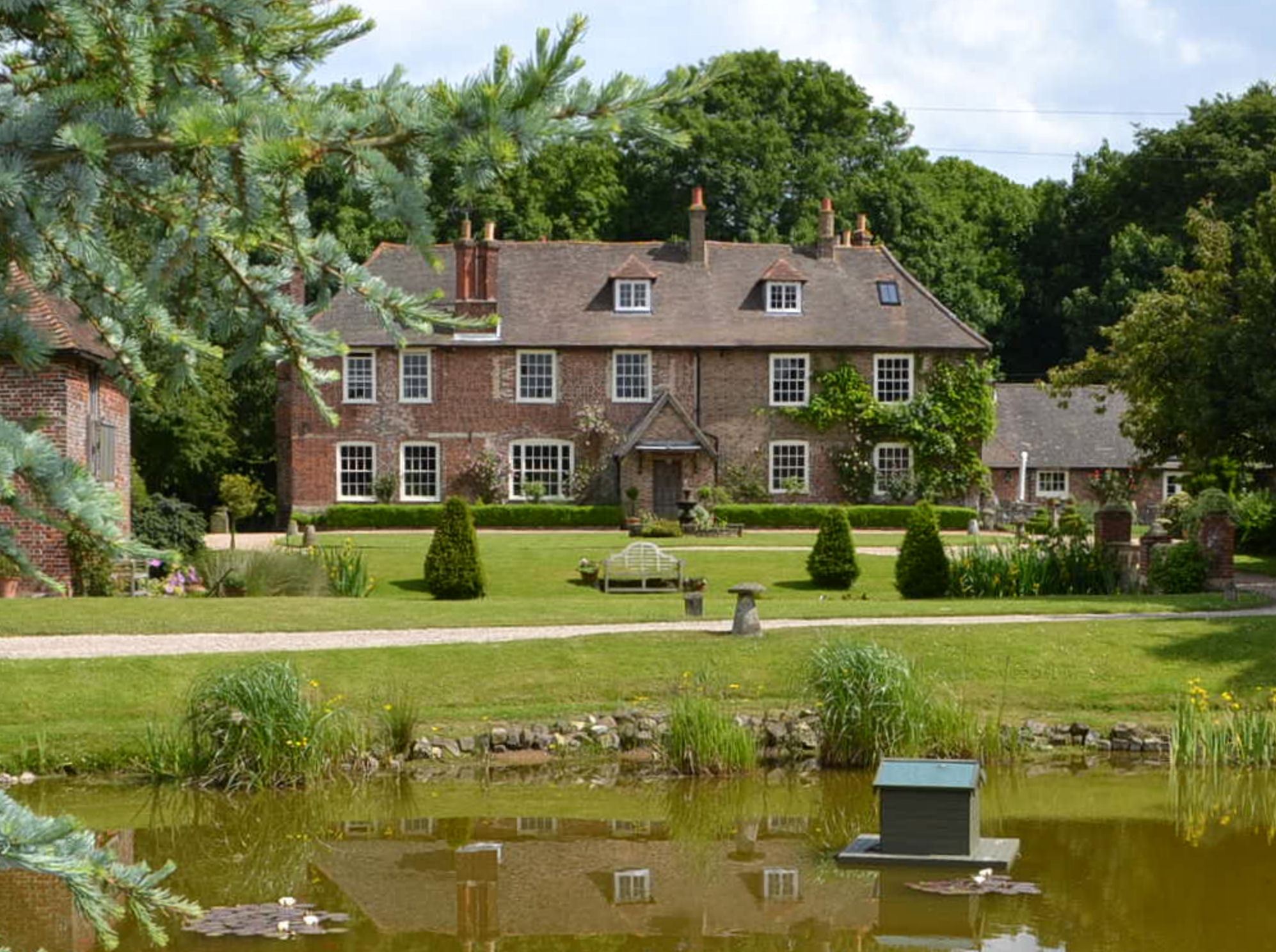
Nathaniel was the son of John and Mary Matson of Dover and was baptised at St Mary’s Church, Dover, on 24 November 1665. John Matson, a local merchant, was elected the Mayor of Dover in 1668 and for the following two years. He appears to have been a popular man, for his election on both occasions was, contrary to the established rule, open to all Freemen. The old custom was for the Jurats to select four candidates from their number and from this short list the Freemen would elect the Mayor.

At the time, Dover was divided between those who supported the Church of England (Anglicans) and those who dissented from those beliefs (Nonconformists). The Corporations Regulation Act of 1661 purged the Corporation of Nonconformists and in the autumn of 1662, eighty-two Freemen were struck off the roll. Following this, the Nonconformists worshipped privately but over time they became bolder.

In 1669, when John Matson was the Mayor John Carlisle, a Dover Jurat and Anglican wrote to the Charles II’s (1649-1685) Privy Council and complained. In his letter, he specifically named high profile Nonconformists in the town, namely, Samuel Taverner, Richard Matson, Edward Dell, Nathaniel Barry, Anthony Street, and Simon Yorke. The King ordered the Corporation to close their places of worship and the Nonconformists spent much of the next eighteen years in the Castle prison for their beliefs.

John Matson was elected Mayor a third time in 1670, by the open votes of the Freemen but another Anglican, Richard Barley, appealed to the Privy Council. While the case was being examined, John Carlisle acted as Mayor. On 8 September, there was a riot against Carlisle but the Privy Council supported Richard Barley who was then elected Mayor.

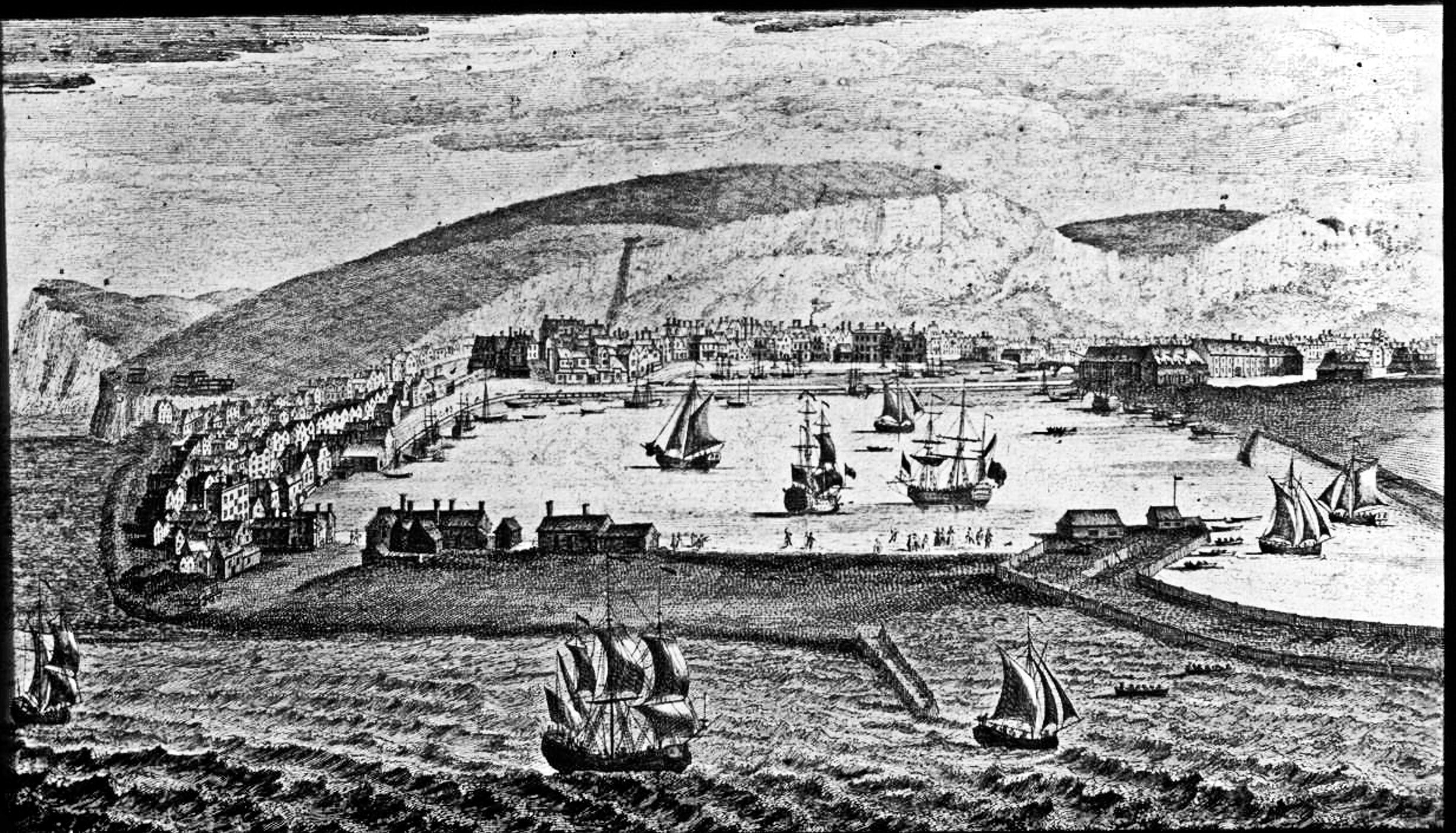
Harbour 1738 glass slide artist Nathaniel & Samuel Buck. Dover Museum

Harbour 1738 glass slide artist Nathaniel & Samuel Buck. Dover Museum

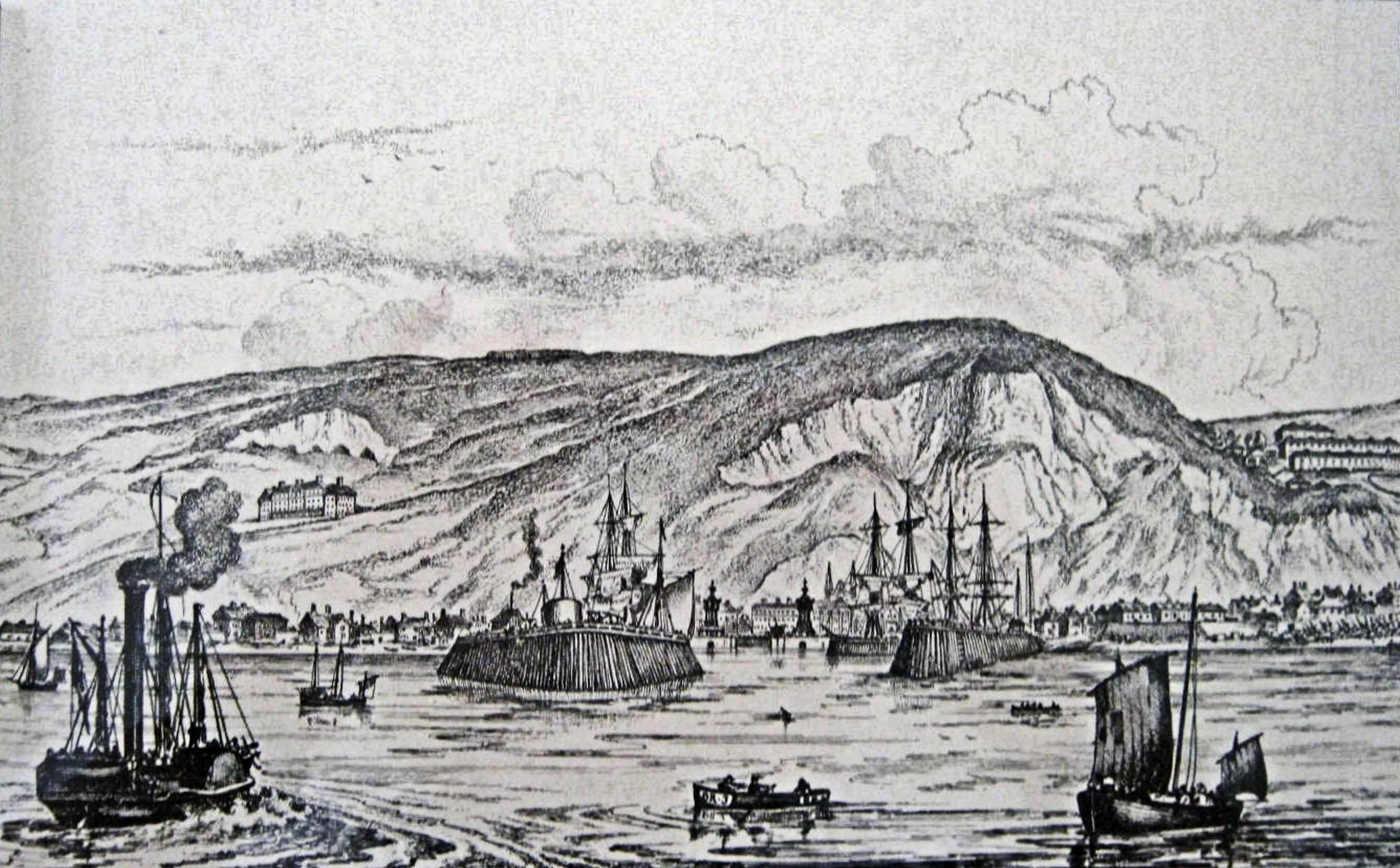
Along with John Hammond, Arnold Braemes and others, John built his home, warehouse and quay along side the Great Paradise, part of Dover harbour. The houses fronted onto Strond Street, in the Pier District of Dover. Strond Street and quays were built on reclaimed land and in 1670, the Harbour Commission exerted their rights under the Charter 1606. Along side of the Great Paradise they laid one continuous quay and as the Custom House was next to it, they named it, Custom House Quay. However, for a long time after the quay retained the names of the owners of the warehouses it fronted.

In those days the Lord Warden of the Cinque Ports duties included the chairmanship of the Harbour Commission and up until 1668, the combined positions were held by the King’s brother, James the Duke of York – later James II (1685-1688). In 1669 he had declared himself a Roman Catholic and under the Test Acts of 1673 and 1678 – penal laws that served as a religious test for holders of public offices and were particularly used against Roman Catholics – James was obliged to resign from all offices. These included Lord Warden and Chairman of the Harbour Commission. Sir Heneage Finch, 3rd Earl of Winchilsea (1628–1689) was appointed in his place and by 1676 John Matson had been appointed to the Harbour Commission. That year the Barons of the Exchequer asked the Commission to define the limits of the Port of Dover and also the quays and wharves in the Harbour. One of the quays specified by name was John Matson Quay, which measured on the west side of his warehouse 45 feet, and from thence towards the north 35 feet.

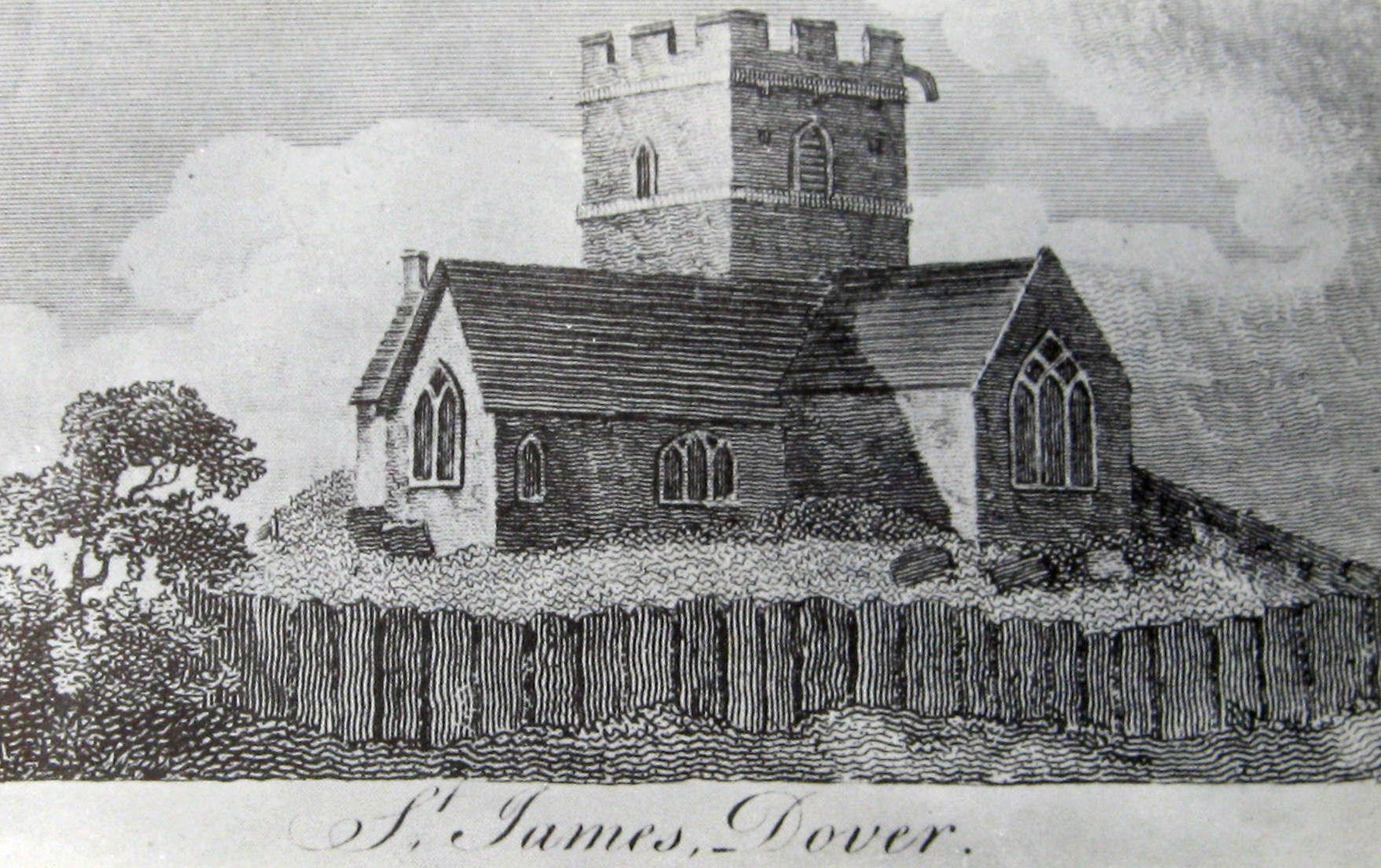
18th Century sketch of St James' Church

18th Century sketch of St James’ Church

In April 1670, Mary Matson gave birth to another son, Henry (1670-1721) who was baptised on 26 April at St James’s Church – now the Tidy Ruin. Although they had thirteen children, only Nathaniel and Henry survived to adulthood. Both men were seen as wealthy, pompous but neither appealed nor were interested in the opposite sex. They had a number of cousins and other relatives and so when Nathaniel Matson died on 5 December 1719, the relatives expected that they would receive something in his Will. Nathaniel, whom had distanced himself from the Nonconformists, was buried in St James Churchyard, two days after he died. His coffin bearers were the Mayor Captain Henry Blindstone, Jurat Thomas Bradley, Collector of Dover Customs William Veale, John Slodden, Robert Wickenden and Benjamin Devinck. When his Will was read, Nathaniel did leave a modicum amount of money to be shared between his relatives but the bulk of the estate and all his land holdings went to his brother, Henry.

Like his brother, Henry had distanced himself from the Nonconformists but he was a churchwarden at St Mary’s church. It was said that he had first set eyes on Elizabeth Stokes, a relative of Elizabeth Gunman, at a church service and that she was quite a beauty. Henry was smitten and a meeting was arranged on one of the harbour pier heads with Elizabeth and her mother. Henry was, by this time, 49-years old and considered himself handsome. To ensure that Elizabeth thought the same, he went on a shopping spree to London, where, for Henry, he spent a small fortune. He bought shoes, hats, wigs and to finish his apparel off, a gold-headed walking stick.

Dover harbour circa 1800

Dover harbour circa 1800

The day came for the meeting and the weather was perfect. Henry jauntily walked to the pier for once smiling at passers by. When he espied mother and daughter, he thrust back his head, pushed out his chest and was walking towards them when calamity struck! His gold-headed walking stick went through a hole in the wooden pier! Henry lost his balance and also his demeanour and swore loudly. The hole was caused by a missing trunnel –  wooden pegs that were driven through the holes to secure the planks above to the wooden timbers beneath. Elizabeth and her mother not only saw the catastrophe they were in earshot and were deeply offended by Henry’s obscenities. They immediately walked away and refused to have anything more to do with him.

Dover Harbour Entrance by William Heath published 1836 by Rigden. Dover Harbour Board

Dover Harbour Entrance by William Heath published 1836 by Rigden. Dover Harbour Board

Henry was mortified such that when he made his Will, on 17 October 1720, he instructed his executors to acquire lands which would bring in ‘£150 per annum to the Warden and Assistants of Dover Harbour for the use and repair of the said harbour for ever, on condition that: The Warden and Assistants should take care to have the trunnel holes stopped and constantly kept so and the pins cut off close and even, or else this gift to be void.’

On 11 March 1721 Henry died and was buried in St James Churchyard. One of the bearers of his coffin was the Mayor – John Hollingbery, whom George I (1714-1727), had removed from office as he was a Tory and the King disliked Tories! John Knott was elected Mayor in John Hollingbery’s place. The other bearers of the coffin were former Mayor Captain Henry Blindstone, Collector of Dover Customs William Veale, Captain James Gunman RN, Captain Charles Lamb, Benjamin Devinck 150 per annum including Solton and these were put in Trust for the Harbour Board. However, the relatives were not happy, with Christopher Matson saying that the Will was a ‘sentimental and extravagant benefaction.’ Assisted by Isaac Minet, Christopher Matson sought redress through the Court of Chancery but the case was not settled until 1772 and then in favour of the Harbour Commission except for £40 a year. That was reserved for poor relations of Henry Matson with the proviso that no recipient may have more than £10 a year.

Digges Place, Barham, once part of the Matson legacy

Digges Place, Barham, once part of the Matson legacy

From then on, the local dignitaries, headed by Dover’s Mayor and including the members of the Harbour Commission, would, every year, ceremoniously fill in a couple of holes where trunnels were missing and then retire to a nearby hostelry and enjoy the Trunnel Feast paid for out of the legacy! The remaining missing trunnels would be filled as and when. The Harbour Commissioners, in 1800, sold Solton Manor to Thomas Hatton of Buckland. Nonetheless, by 1834 the Matson bequest amounted to £348 17shillings a year. This income came from Singledge farm at Whitfield £128 13s 3d, Horsehead Farm £30 3s 3d, Digges Place at Barham £182 6s 3d and Barham Mill £7 14s 0d. Two years later the Treasurer to the Harbour Commissioners, Henshaw Latham, stopped the Trunnel Feast and the money coming from the rents of properties was used for harbour repairs.

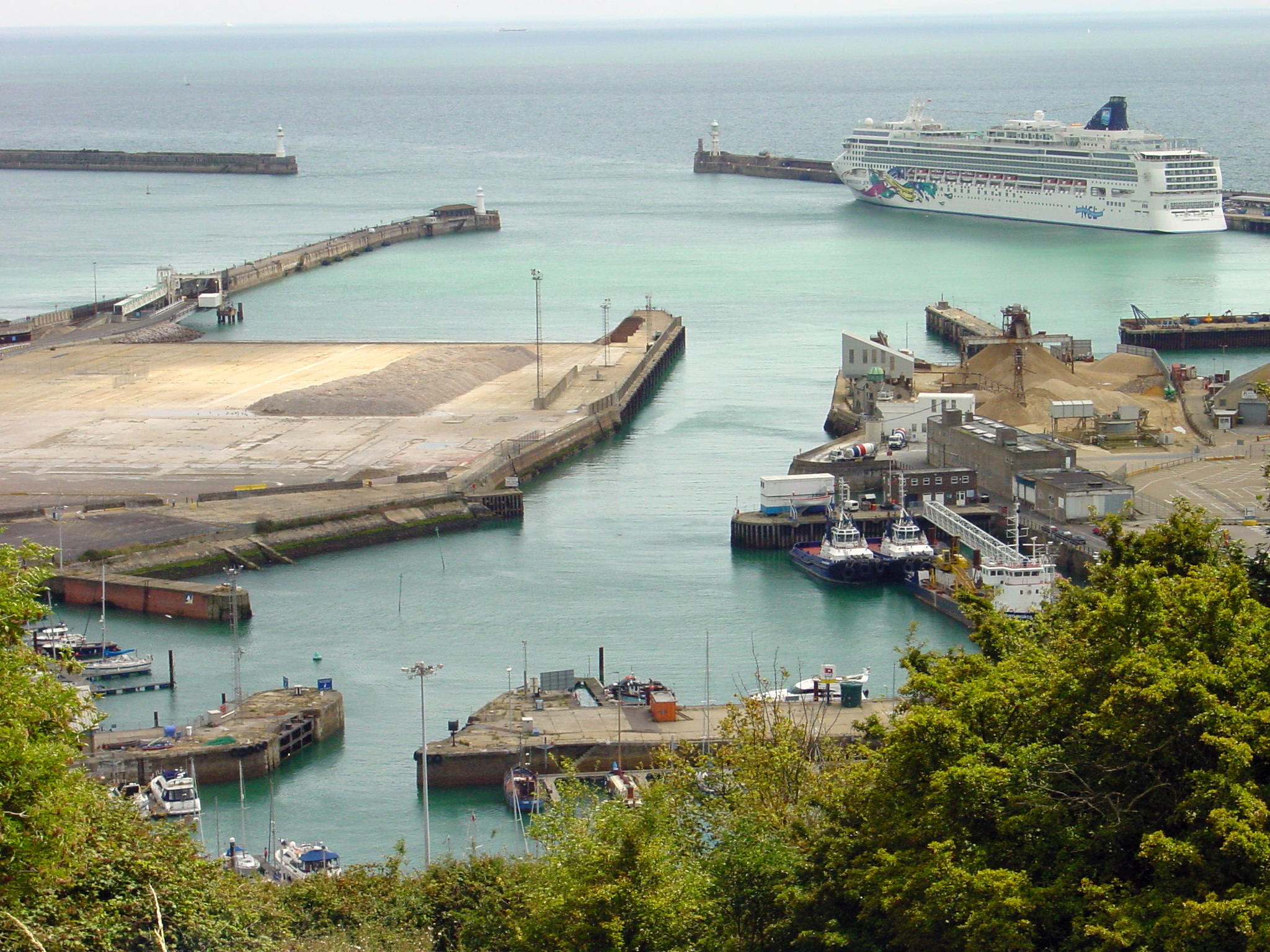
Western Docks from St Martins Battery, Western Heights  Alan Sencicle 2009

Western Docks from St Martins Battery, Western Heights Alan Sencicle 2009

In October 1926, Dover Corporation inquired of Dover Harbour Board what had happened to the remainder of the Matson bequest and were told by Rutley Mowll, Harbour Board Register, that the land holdings had been sold some years before and the proceeds used for the harbour. As for Henry Matson’s relatives’ bequest, this still exists and is administered by the Municipal Almshouse Charity of Dover. If there are no applicants in any one-year then the money reverts to the Charity.

Presented: 18 February 2014

Posted in Matson Family and Dissenters, Matson Family and Solton, Matson Family and the Trunnel Feast, People, Port and Transport, Religion & Churches, West Cliffe | Comments Off on Matson Family, Dissenters, Solton and the Trunnel Feast

Bowling in Dover

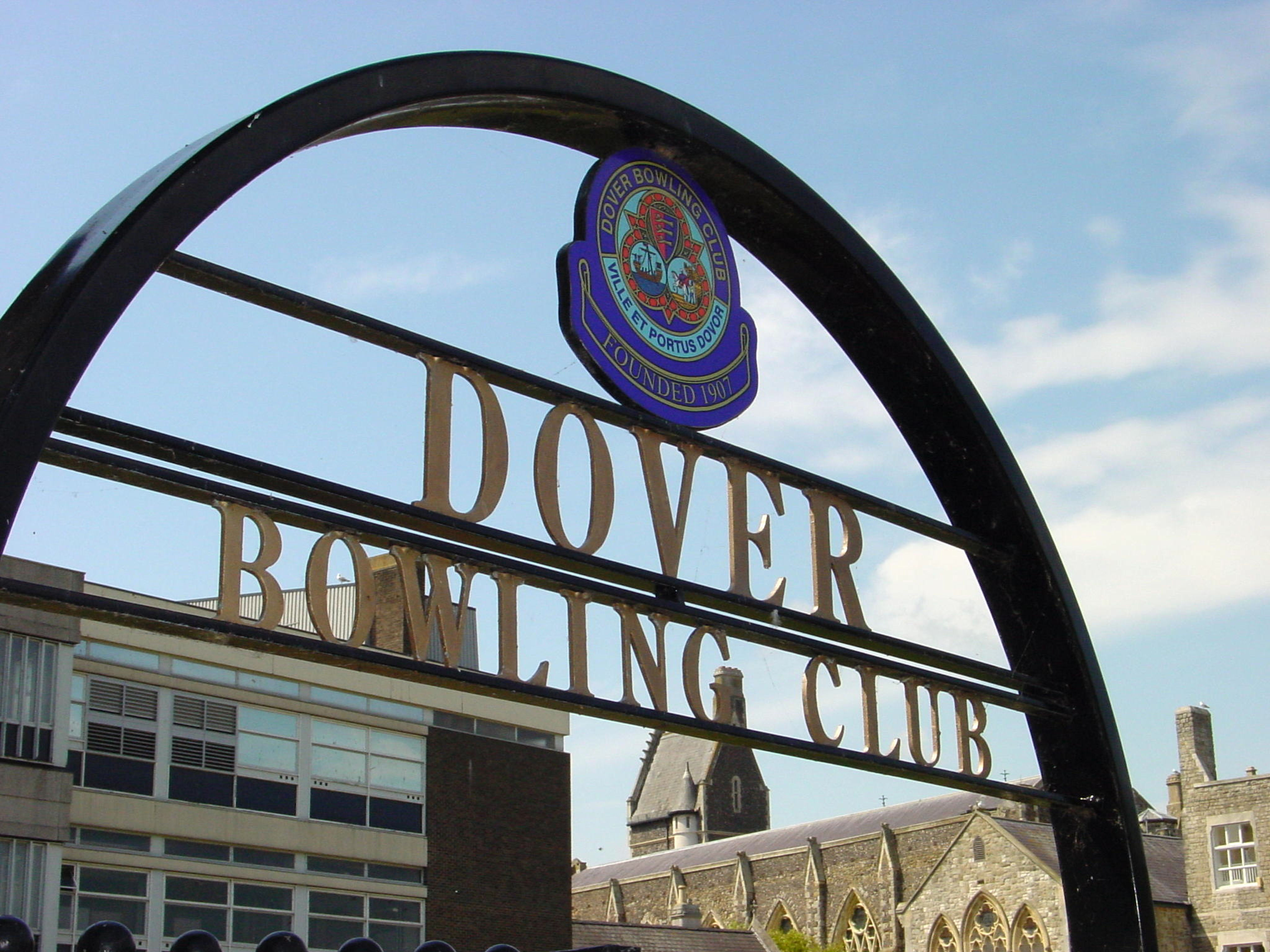
Dover Bowling Club Gate Maison Dieu Gardens

Dover Bowling Club Gate Maison Dieu Gardens

Bowling is one of Dover’s most popular sports and can trace its history in the town from the 1840s. That was when the first legal bowling green opened at the foot of Western Heights. The game has been around since at least the 13th century, in those days players aimed at small cone rather than an earthenware ball or jack. The game quickly caught on but equally as quickly was banned. It was feared it would jeopardise the practice of archery – then important for defence. Nonetheless, the sport remained surreptitiously popular and so in 1541 an Act of Parliament banned the game … Francis Drake notwithstanding!

The Act was not repealed until 1845 but even then, artificers, labourers, apprentices and servants were only allowed to play at Christmas time. Further, the game could only be played on licensed greens, which led to one being excavated near the lower part of Military Road – Bowling Green Lane was so named because of its proximity. Enclosed and strictly private the green was laid for military officers and gentlemen of Dover.

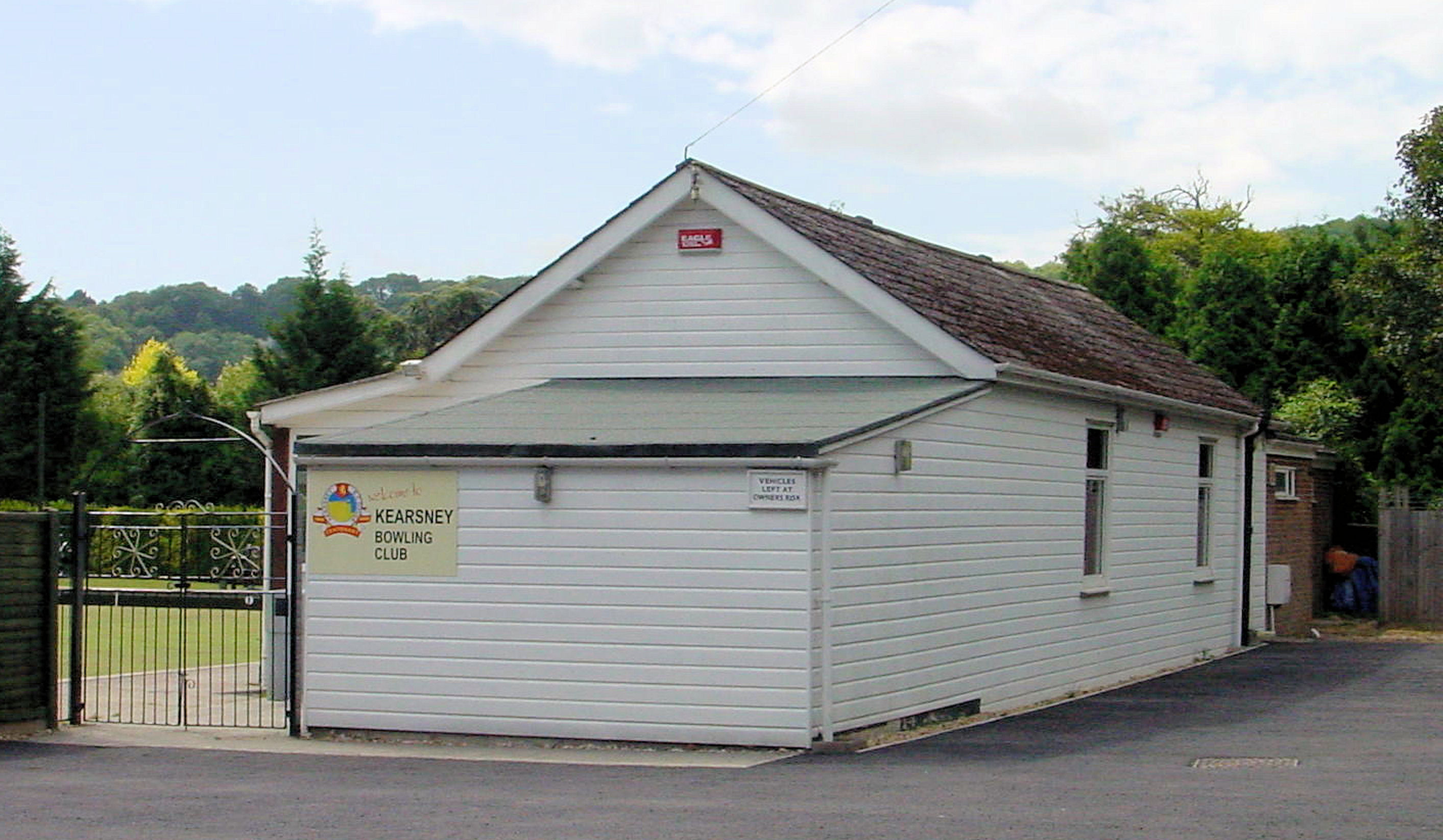
Kearsney Bowling Club Pavillion

Kearsney Bowling Club Pavillion

In May 1906, the Dover Institute rented land from Dover Corporation, behind Maison Dieu House, for bowling and croquet. However, restrictions on the sale of intoxicating liquors resulted in the Dover Institute’s Tennis and Bowls clubs giving up the tenancy and constructing a bowling green on a private ground. This was on Dieu Stone Lane and the land belonged to George Bacon of nearby Stembrook Tannery. In the same year, the Kearsney Bowling club was formed with four rinks but played by invitation only.

A year later the Dover Institute’s Tennis and Bowls club mutually agreed to be dissolved and at the same meeting, the Dover Institute Bowling Club (DIBC) was formed. Edward M. Worsfold was elected president, Stephen Knott its first secretary and treasurer, and the club colours were red and black. The Corporation agreed to give the new club exclusive rights to Maison Dieu Gardens green on Wednesdays and Saturdays from 14.00hrs to one hour after sunset. The club retained the lease of the Dieu Stone Lane site and used the green there at other times but, in 1911, they voted to build a pavilion next to the Maison Dieu Gardens green.

Donald Campbell - Captain of England. Times Saturday 06.07.1929

Donald Campbell – Captain of England. Times Saturday 06.07.1929

The Kearsney and DIBC were joined by a number of other bowling clubs in the area to compete for the ‘Dover Club Cup’. That is until World War I put an end to inter-club matches. Following the War there was a surge of interest and two brothers, George and Donald Campbell, who played at Kearsney, particularly helped this. Donald, the youngest, was President of Kent and County Singles and was the champion in 1922. He went on to play for England in 1926, was appointed the Captain in 1929 and played for the country until 1930. Donald was later awarded the MBE for his services to the game of bowls.

Bowling Green Maison Dieu Gardens today.

Bowling Green Maison Dieu Gardens today.

In 1920, the lease expired on the Dieu Stone land and DIBC sold its timber pavilion along with the flagpole, rollers and challenge cups. At Kearsney, in 1924 the members paid £600.00 for their green and in 1926, two more rinks were added. The 1925 Dover Guide waxed lyrically about DIBC’s green saying that it is, ‘in a beautiful sheltered aspect on the Banks of the River Dour is to be found one of the finest and most popular greens in the country.’ That year, thanks to Sir Edwin Farley (Mayor 1913-1918) generosity, the green was extended. The annual Royal Victoria Hospital (challenge) Cup had been introduced and this was usually held on the Maison Dieu Garden green.

Around this time, Buckland Paper Mill employees started to play bowls on the lawn at the Cricketers Arms, in River. Bob Jordon, a mill office worker, county player and member of the Kearsney club, lent his expertise and encouragement. The Buckland Mill Bowls Club, with 30 members, opened in 1929, on a new green adjacent to Crabble Paper Mill where they built a small pavilion. Bert Coleman, who only had one arm, won the first County Badge for the Club in the 1930s.

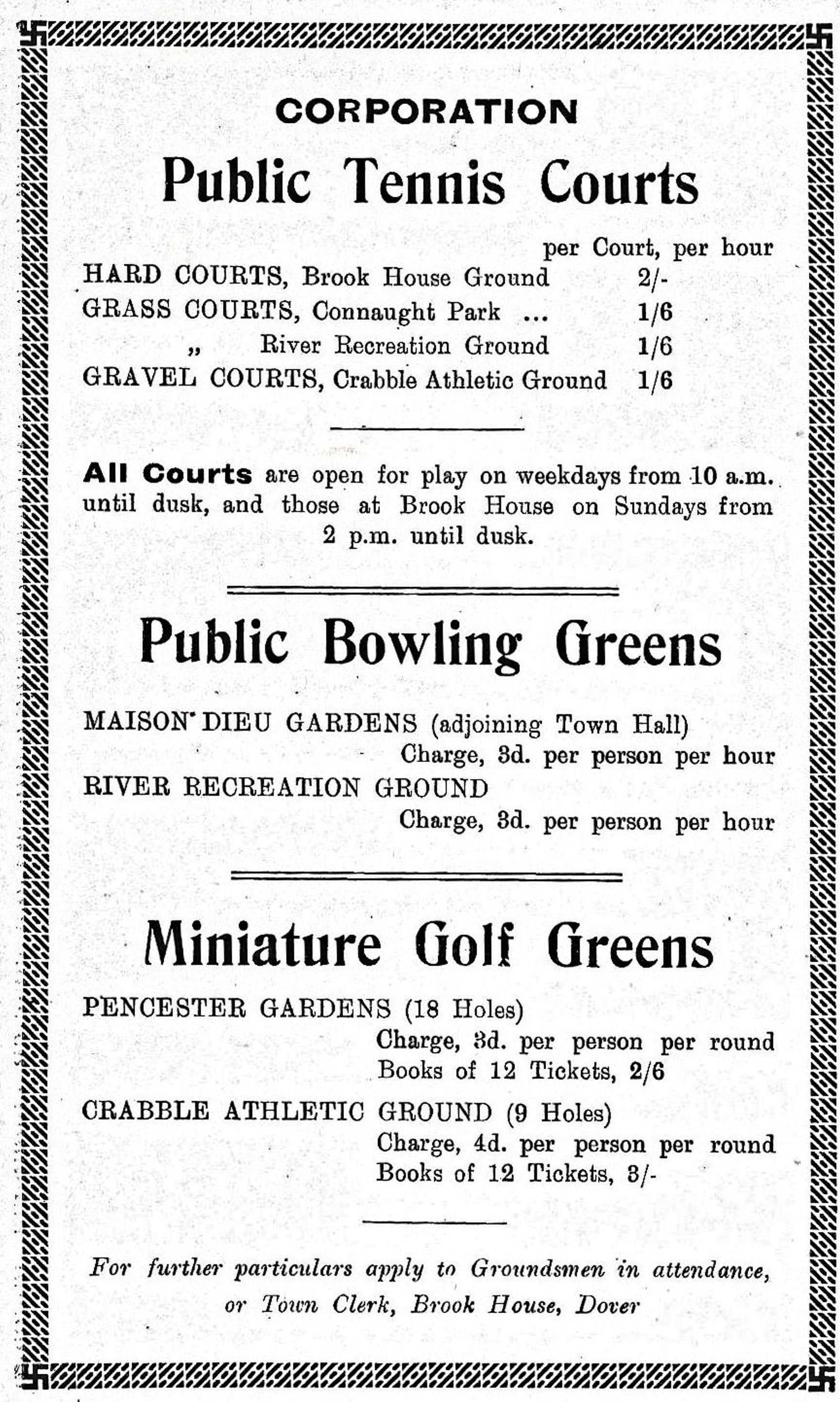
Corporation Bowling Greens, Maison Dieu Gardens and River Recreation Ground - 1938

Corporation Bowling Greens, Maison Dieu Gardens and River Recreation Ground – 1938

About the same time the Co-operative Sports Club were given leave to use the DIBC Green and in 1934, the first round of Kent singles were played there. The following year DIBC decided to replace their pavilion, built in 1911, and to change their name to the Dover Bowling Club. Their colours were changed to light and dark blue. Other clubs in Dover, at this time, included River – founded in 1923, Post Office, East Kent Road Car, and the Police. For the most part, the greens were provided by the Corporation.

Bowling was suspended for the duration of World War II and the management of Buckland and Crabble Paper Mills decided to close their factories down for duration. However, 17 members of staff remained on the sites to look after the mills. One night an enemy firebomb landed on their precious bowling green and police sergeant, Peter Steele, ‘retrieved and mounted it on a stand with a suitable plaque.’ After, the Police and Mill bowls clubs played for the ‘Blitz Trophy’ and it is now in the Museum. Later, there was a direct hit on the Maison Dieu Gardens green that created a large crater and it was thought that bowls would never be played there again.

Bowling Blitz Trophy played for by the Police and the Crabble Mill Bowls Club. The trophy is now in Dover Museum

Bowling Blitz Trophy played for by the Police and the Crabble Mill Bowls Club. The trophy is now in Dover Museum

Following the war, bowling quickly became a popular past time again and in 1947, the annual Royal Victoria Hospital Cup Tournament was held at the River bowling club. With the introduction of the National Health Service, the following year, the Tournament was renamed the Stephen Knott Tournament, after the then President of the Dover Bowling Club.

The Maison Dieu Gardens green was repaired and in 1955 the ladies of the Dover Bowls Club were officially allowed to play  for the first time. They were not allowed to play in singles but could play in pairs and triples, but not as singles. The following year it was agreed that they could play in the singles and in 1959 they were allowed to play in inter-club matches, but only, ‘where necessary.’ During that time, three lady members played for Kent County! 1976 saw Barbara Stevens of Kearsney club winning the Kent ladies singles title, the first player from the Dover area to become a champion in the event.

Ladies of Kearsney in 1992 left to right: Mayor Bill Newman & wife Jean, Joan Heath, Ann Harrison - Lead, Rita Vane and Ann Smith - Captain. Kearsney Bowling Club

Ladies of Kearsney in 1992 left to right: Mayor Bill Newman & wife Jean, Joan Heath, Ann Harrison – Lead, Rita Vane and Ann Smith – Captain. Kearsney Bowling Club

Twelve years later, in 1988 and again in 1990 and 1992, a team of ladies, headed by Ann Smith, from the Kearsney club won the County fours, which enabled them to represented England in the British Isles Championships. Also in 1992, at Royal Leamington Spa, the ladies became the Champions of England! Dover Bowling Club were the runners up in the 1996 Kent County Bowling Association Cox Cup. In the same year, Mick Fisher, of the same club, won the County unbadged singles and subsequently played for the County.

Buckland Mill Bowling Club team, Messrs Friend, Avis, Langley and Fox, who made it to the County finals in 1982. Gateway Bowling Club

Buckland Mill Bowling Club team, Messrs Friend, Avis, Langley and Fox, who made it to the County finals in 1982. Gateway Bowling Club

Although members  Buckland Paper Mill Bowling club were proving themselves, in 1998,  Crabble Paper Mill site was put up for sale. The club were assured that their green owned by Arjo Wiggins, would not be sold and initially, the sale excluded both the bowling green and the social club. However, in June 1999, it was announced that Buckland Paper Mill was to close and both that and the Crabble Mill site were to be sold. In January 2000, the bowling club members were no longer allowed access to the Crabble site and in June, the Buckland Paper Mill closed. The sites including the bowling green were earmarked for housing redevelopment. The bowling club lodged £50,000 with Dover District Council for the provision of a bowling green in the Dover urban area.

Gateway Bowls Club official opening 3 August 2007. Gateway Bowling Club

Gateway Bowls Club official opening 3 August 2007. Gateway Bowling Club

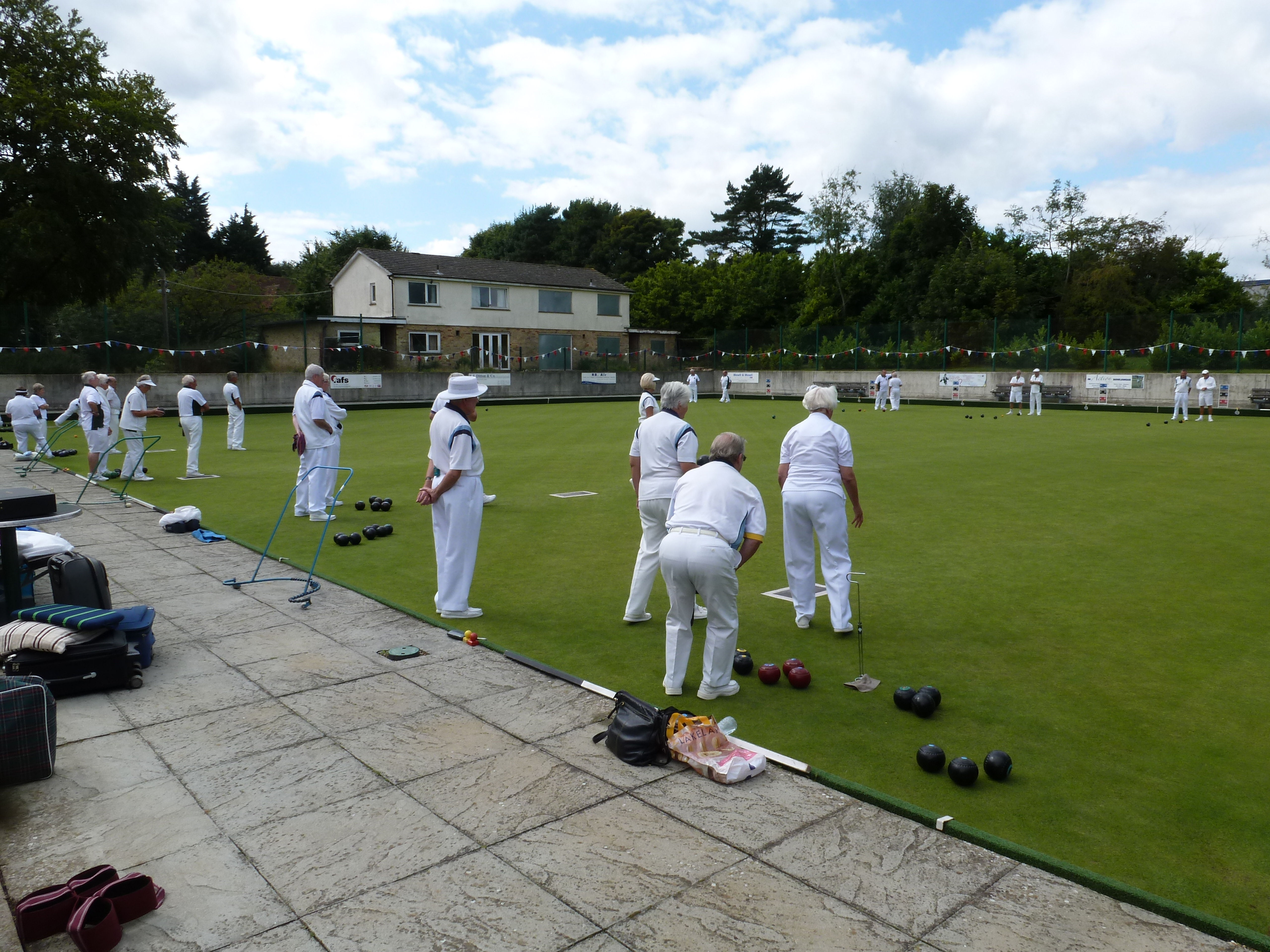
In 2004, Buckland Paper Mill Bowling club, using a green in Folkestone, reached the final of the Kent County triples and the semi-final of the English National Championships. Nonetheless, with falling membership the club was considering winding-up. Then the Dover Harbour Board Social Club agreed to help make up the shortfall in funds and construct a new bowling green in Dover. The club was renamed the  Gateway club and on 3 August 2007 began playing at their new home adjacent to the Dover Harbour Board Sports and Social Club at the White Cliffs Business Park opposite the Transport Museum.

Visit by the Chelsea Pensioners to River Bowls Club. Terry Scott Dover Mercury 30.09.2010

Visit by the Chelsea Pensioners to River Bowls Club. Terry Scott Dover Mercury 30.09.2010

River Bowling Club, one of the smaller bowling clubs in the locality lost their clubhouse in 1993 when it was razed to the ground. The following year they opened a new one and in August 2010, they entertained a team from the Royal Hospital Chelsea. It was a return match and the River bowlers were victorious in both – ‘although the captains’ rink was an honourable draw!’

Gateway Bowling Club at Old Park, Whitfield. AS 2014

Gateway Bowling Club at Old Park, Whitfield. AS 2014

In Dover the game of bowls is alive, flourishing and enjoyed by both participants and observers like me!

  • Published:
  • Dover Mercury: 20 & 27 November 2008
Posted in Bowling in Dover, Sports | Comments Off on Bowling in Dover

Charles Rolls – the first two-way, non-stop English Channel flight

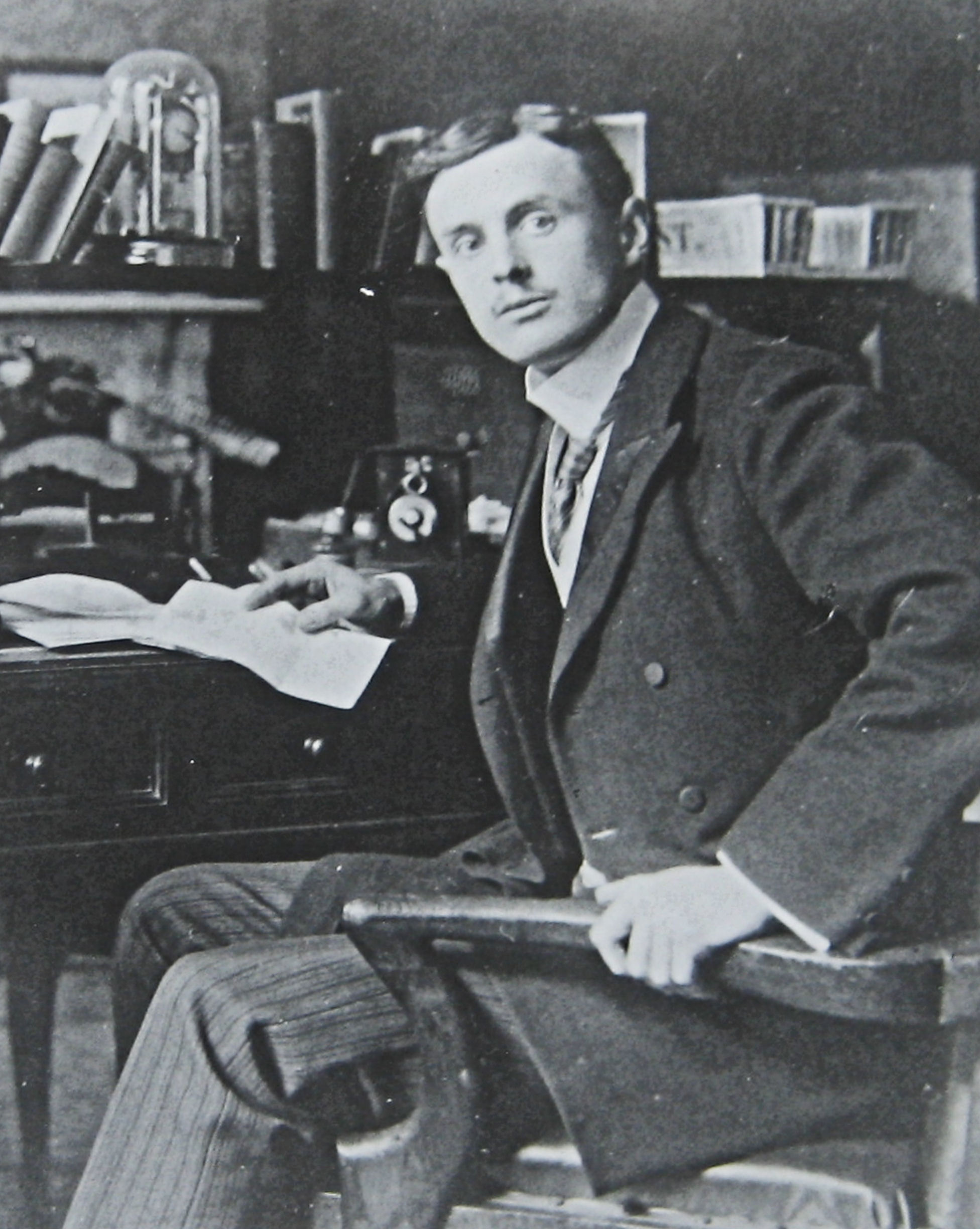
Charles Rolls c1909

Charles Rolls c1909

Charles Stewart Rolls was born in London on 27 August 1877 into an wealthy family. His father, John Allan Rolls – 1st Baron Llangattock, made his fortune through agriculture in Monmouth, Wales. Shortly after the birth of Charles, he bought a villa in Knightsbridge and ensured that his son received an upper-class eductaion. It was while at Eton that Charles developed an interest in engines and on graduating with a degree in Mechanism and Applied Science from Trinity College, Cambridge, he bought his first car, a Peugeot Phaeton.

A founder member of the Automobile Club of Great Britain, in 1903, with the help of a £6,600 loan from his father, Charles started one of Britain’s first car dealerships. C.S.Rolls & Co was based in Fulham and specialised in importing Peugeot and the Belgium Minerva cars. Although Charles had a business head with an eye for an opportunity, both his family and contemporaries saw him as an odd sort of chap.

Very tall, (1.95m – 6’5″), aristocratic and eloquent, Charles disliked mixing with his own class. Reading about him, I am reminded of Henry Higgins in ‘My Fair Lady’, especially in the way he treated his mother’s friends. Charles was also a vegetarian, unusual in those days, but smoked very heavily. He would frequent the music halls and afterwards could give a full account, accurately mimicking the various acts.

Charles was also very restless but once he set his mind on something, he would make it his own. It is therefore not surprising to read that he took up ballooning and was a founding member of the Royal Aero Club. In 1903, he won the Gordon Bennett Gold Medal for the longest single flight time. The 4 May 1904 saw the historic meeting between Charles and Henry Royce, car dealer, took place at the Midland Hotel, Manchester and on 23 December they signed a deal. Charles would take all the cars that Henry could make. Two years later the partnership was formalised as Rolls Royce Ltd.

On 19 September 1899, Charles was in Dover to attend the town’s first motorcar exhibition at Crabble Athletic Ground. Organised by the Mayor, Sir William Crundall (1847-1934) members of the Automobile Association drove down from London for the event and 25 or 26 vehicles of various types took part in a grand parade round the cycle track, including Charles, who drove a Panhard. The Mayor was driving an electric phaeton belonging to Alfred Harmsworth (1865-1922), later 1st Viscount Northcliffe, the owner of the Daily Mail newspaper. Harmsworth was also a close friend of Claude Johnson (1864-1926), who later was to play a key roll in the Rolls-Royce company.

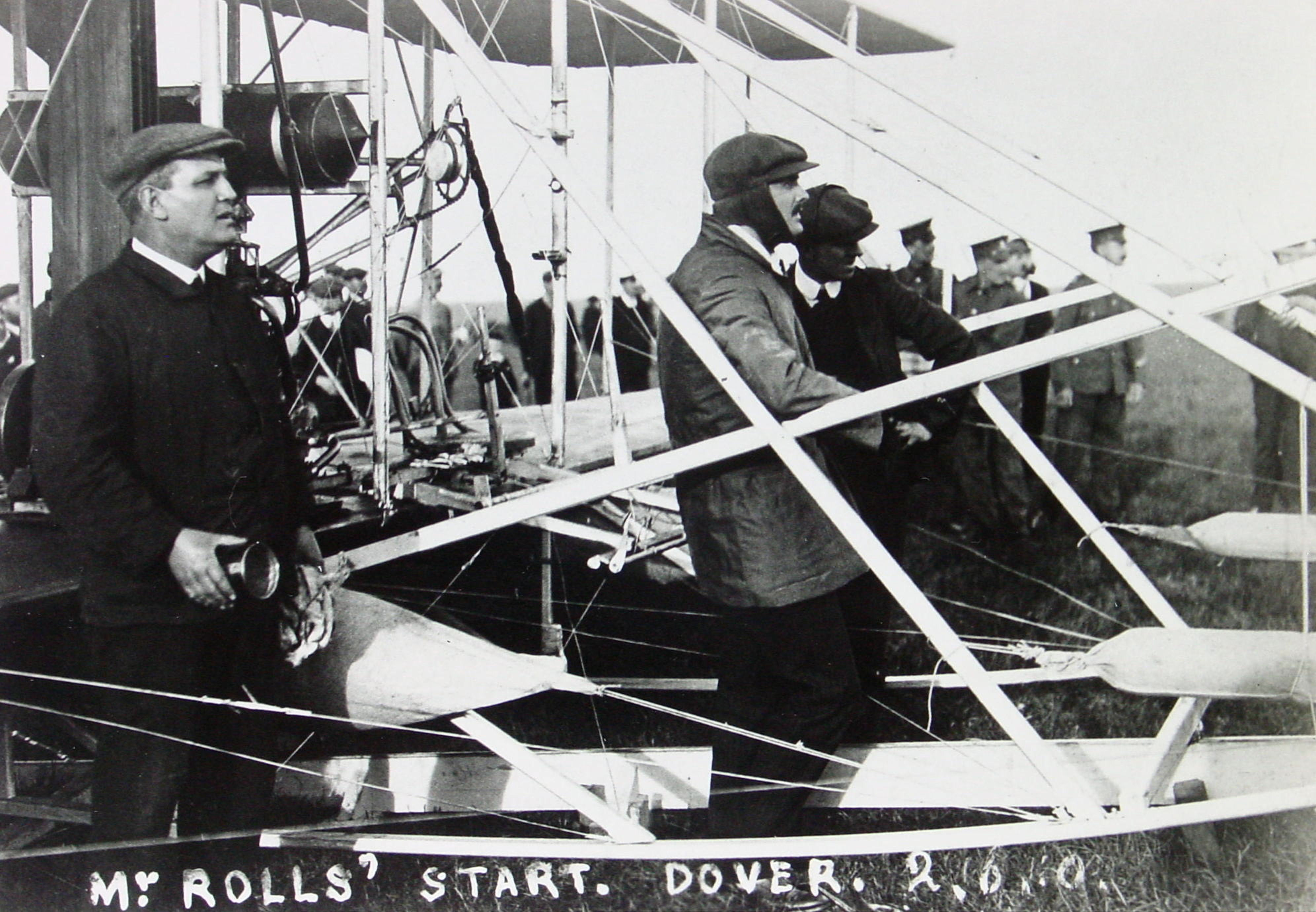
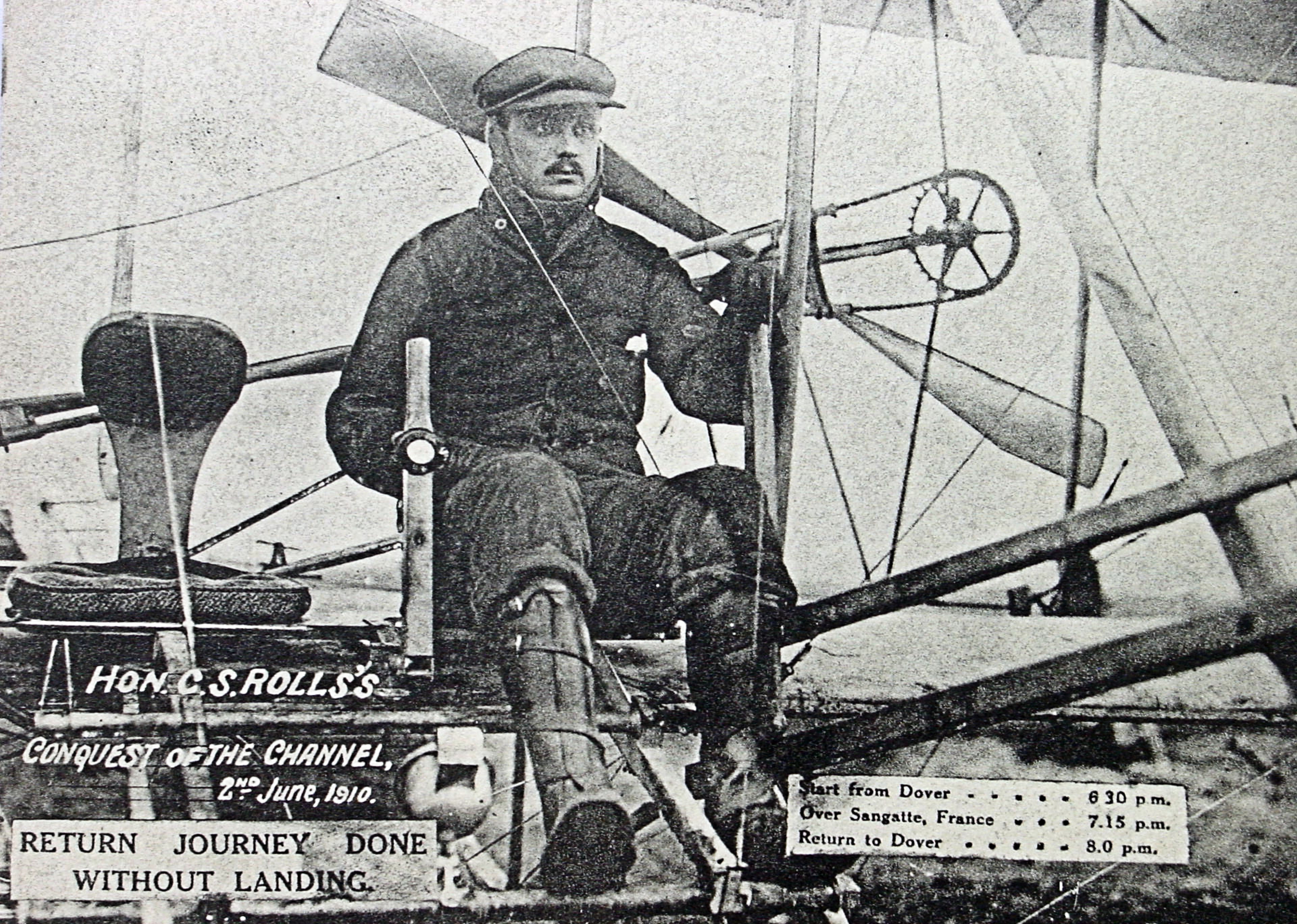
Charles Rolls awaiting to take off for his memorable flight 2 June 1910. Dover Library.

Charles Rolls awaiting to take off for his memorable flight 2 June 1910. Dover Library.

However, Charles’s fascination for flying continued to grow and having first met Orville and Wilbur Wright, who had made the world’s first powered controlled sustained flight, in New York, he tried to persuade Henry Royce to build a machine. Henry was not interested but undaunted, Charles bought a Wright Flyer aircraft, built under licence by Short Brothers, in which he made more than 200 flights. In the spring of 1909 the Wright brothers came to England and Charles was their official host on behalf of the Aero Club. On 25 July that year Louis Blériot make the first heavier than air crossing of the English Channel and this put France in the lead in European aviation. Charles won the imagination and hearts of his English compatriots when he announced that he was going to do the double crossing of the Channel!

Charles Rolls postcard (damaged) back over England 2 June 1910. Dover Library

Charles Rolls postcard (damaged) back over England 2 June 1910. Dover Library

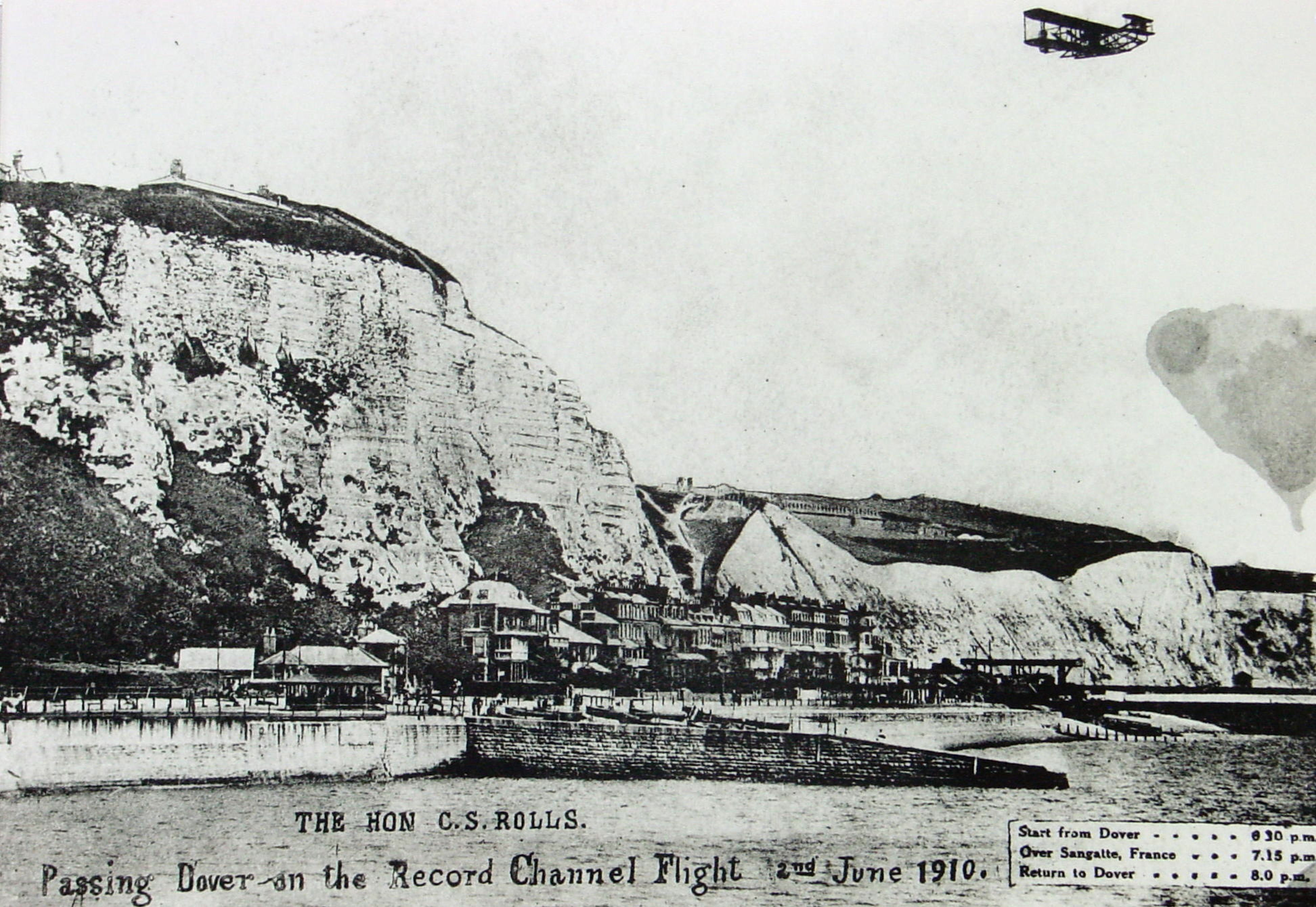
On his first visit to Dover, with this in mind, Charles decided to open an ‘aeroplane garage’ at Swingate, to the east of the Castle and the aerodrome he was to use. On 20 May 1910, a Charles Wright flying machine arrived at Dover and the word was out that Charles was to make the double crossing of the Channel! Trials subsequently took place, and on 2 June, crowds made their way up to Swingate aerodrome to watch. With everything to his satisfaction and ideal weather conditions Charles left Swingate at 18.30. He was over Sangatte, France, at 19.15 and back in Dover at 20.00. The journey had taken 95 minutes and he circled the Castle in triumph!

 Charles Rolls postcard, commemorating his two way non-stop flight 2 June 1910. Dover Library

Charles Rolls postcard, commemorating his two way non-stop flight 2 June 1910. Dover Library

Over 3,000 people witnessed the event, after which Charles was carried through the town shoulder high. A month later, on 12 July 1910, Charles Rolls lost his life due to a controlling wire breaking that had been added to his original Wright Flyer. The accident happened during a flying display at Bournemouth. Charles was 32 and the first Briton to be killed in an aeronautical accident.

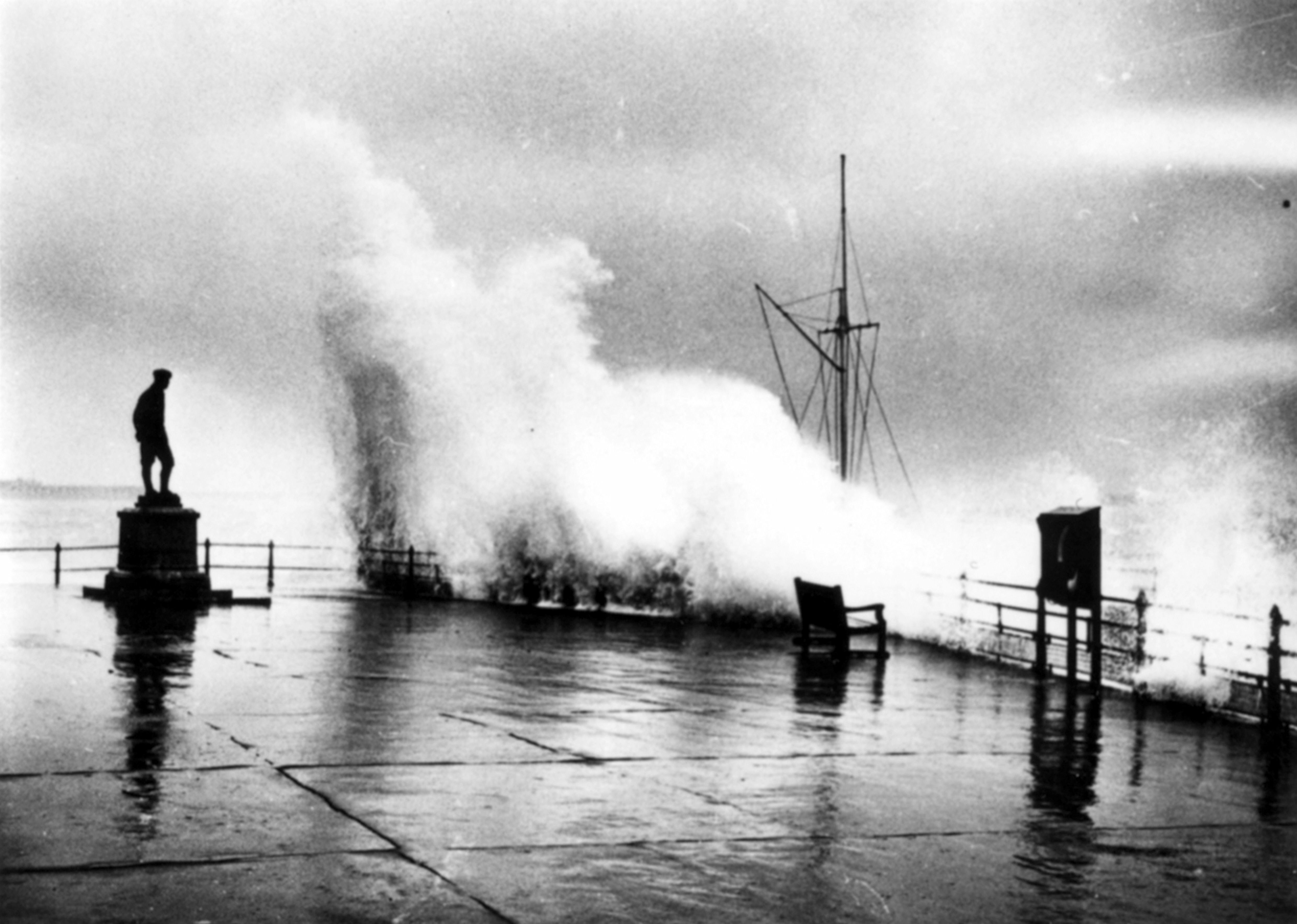
On 27 April 1912, a statue to Charles Rolls was erected in the Guilford Gardens on the Seafront and unveiled by John Campbell 9th Duke of Argyll (1845-1915). His ancestor, John Campbell 5th Duke of Argyll had been Dover’s Member of Parliament for four years from1762. During World War II (1939-1945), the base of the statue was damaged and along with the statue of Captain Matthew Webb (1848-1883) – the first person to swim the English Channel without artificial aids – they were removed to safety. Following the war, both statues were returned to the Seafront but the whole area had been devastated and there were no gardens left.

Dover Seafront with statue of Charles Rolls 1950s. Dover Museum

Dover Seafront with statue of Charles Rolls 1950s. Dover Museum

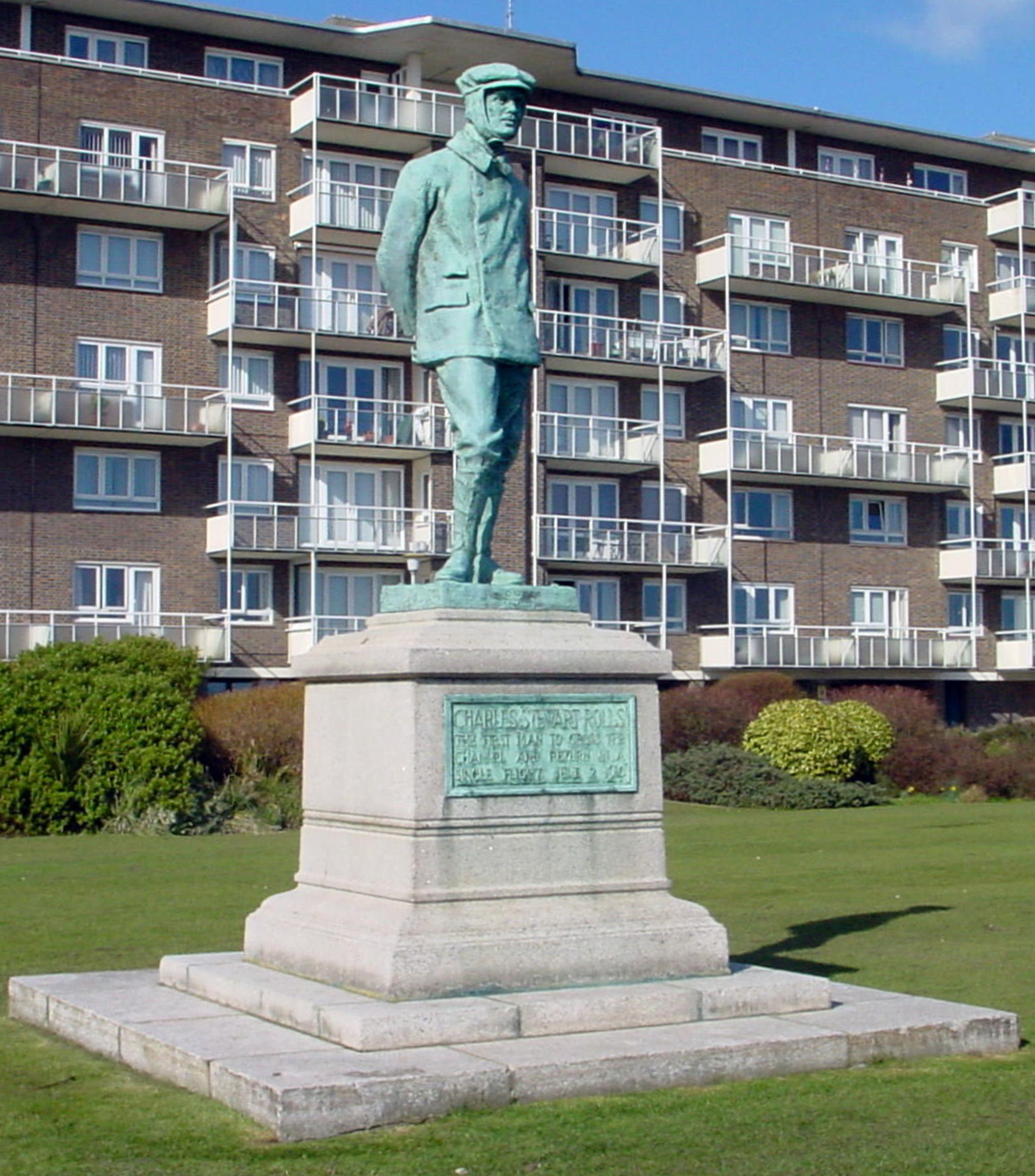
In March 1951, the Charles Rolls statue, with pomp, was placed as near as possible in its original position. Two years later, in 1953, following a major change in Dover Harbour Board policy, the Eastern Docks became the main cross-Channel terminal. Coincidental to this was the rise in the use of the motor car and to cope with the influx of traffic to the Docks the access roads were widened at the expense of the Seafront. Both the Webb and the Rolls memorials were in the way of the new road configuration and in September 1991, the Webb memorial was removed to the Gateway Gardens on Marine Parade – very close to its pre-war site. The Rolls statue was relocated in front of a public lavatory! This led to a public outcry and locals Budge Adams and David Atwood, campaigned to have the statue moved. Eventually it was moved to its present position in Marine Parade gardens in front of the Gateway flats. 

Charles Rolls memorial - First man to cross the English Channel and return in a single flight 2 June 1910

Charles Rolls memorial – First man to cross the English Channel and return in a single flight 2 June 1910

On Friday 2 June 1995 Mike Evans, Chairman of the Rolls Royce Heritage Trust, the rededicated the memorial. In his speech, he paid tribute to the Dover Society, the initiative and persistence of Budge Adams and David Atwood and said that the statue reminded people that it, ‘was to commemorate Charles Rolls greatest achievement, his cross-Channel flight of 2 June 1910, the first two-way, non-stop English Channel flight, just one year after Louis Blériot’s pioneer Channel flight. These achievements alerted people to the significance of air travel and air power in the future, with Lord Northcliffe’s Daily Mail declaring ‘Britain no longer is an island.’


  • Published:
  • Dover Mercury: 03 June 2010
Posted in Aviation, People, Rolls Charles - the first two-way non-stop English Channel flight, Rolls Charles - the first two-way non-stop English Channel flight, Rolls Charles - the first two-way non-stop English Channel flight, Sea Front | Comments Off on Charles Rolls – the first two-way, non-stop English Channel flight

Dunkirk Evacuation

Between 26 May and 4 June 1940, 338,226 British and Allied troops were evacuated from the beaches of Dunkirk, France.

The town and port of Dover, together with many civilians, played a crucial part.

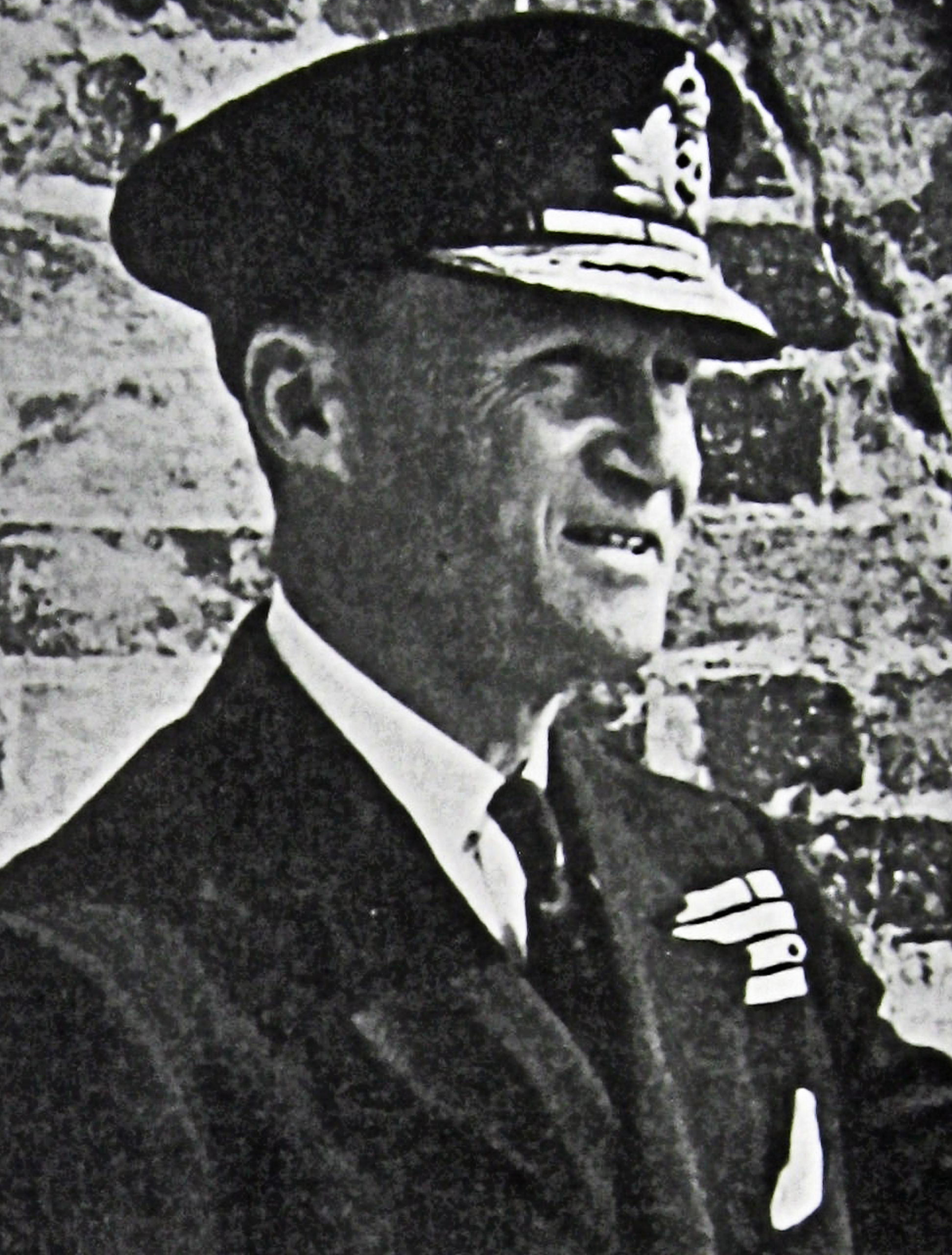
Vice-Admiral Bertram Ramsay (1883-1945) who Organised Dunkirk evacuation. Doyle Collection

Vice-Admiral Bertram Ramsay (1883-1945) who Organised Dunkirk evacuation. Doyle Collection


Following the German invasion of Poland, World War II (1939-1945), was declared on 3 September 1939 but there was no stopping Adolph Hitler’s (1889-1945) forces. By 21 May 1940, they were approaching Amiens, northern France, and advance attachments had reached Aisne. The previous day, (20 May) Vice-Admiral Bertram Ramsay (1883-1945), who had served with the Dover Patrol in World War I (1914-1918) was in command of the Dover Station. He attended a meeting to discuss ‘an emergency evacuation across the Channel by very large forces.’ His intention was to utilise the ports of Dunkirk, Calais and Boulogne to evacuate 10,000 men of the British Expeditionary Force (BEF) from each port every 24 hours.

Ramsay’s headquarters was the gallery in the tunnels below Dover Castle, cut by French prisoners of war in Napoleonic times (1793-1815) and housing a dynamo during WWI. The latter, it is popularly believed, gave the name Operation Dynamo to the Evacuation. Ramsay’s staff worked in adjacent rooms also cut in the chalk. The look out balcony facing the Channel can still be seen along with mock-ups of the rooms at that time.

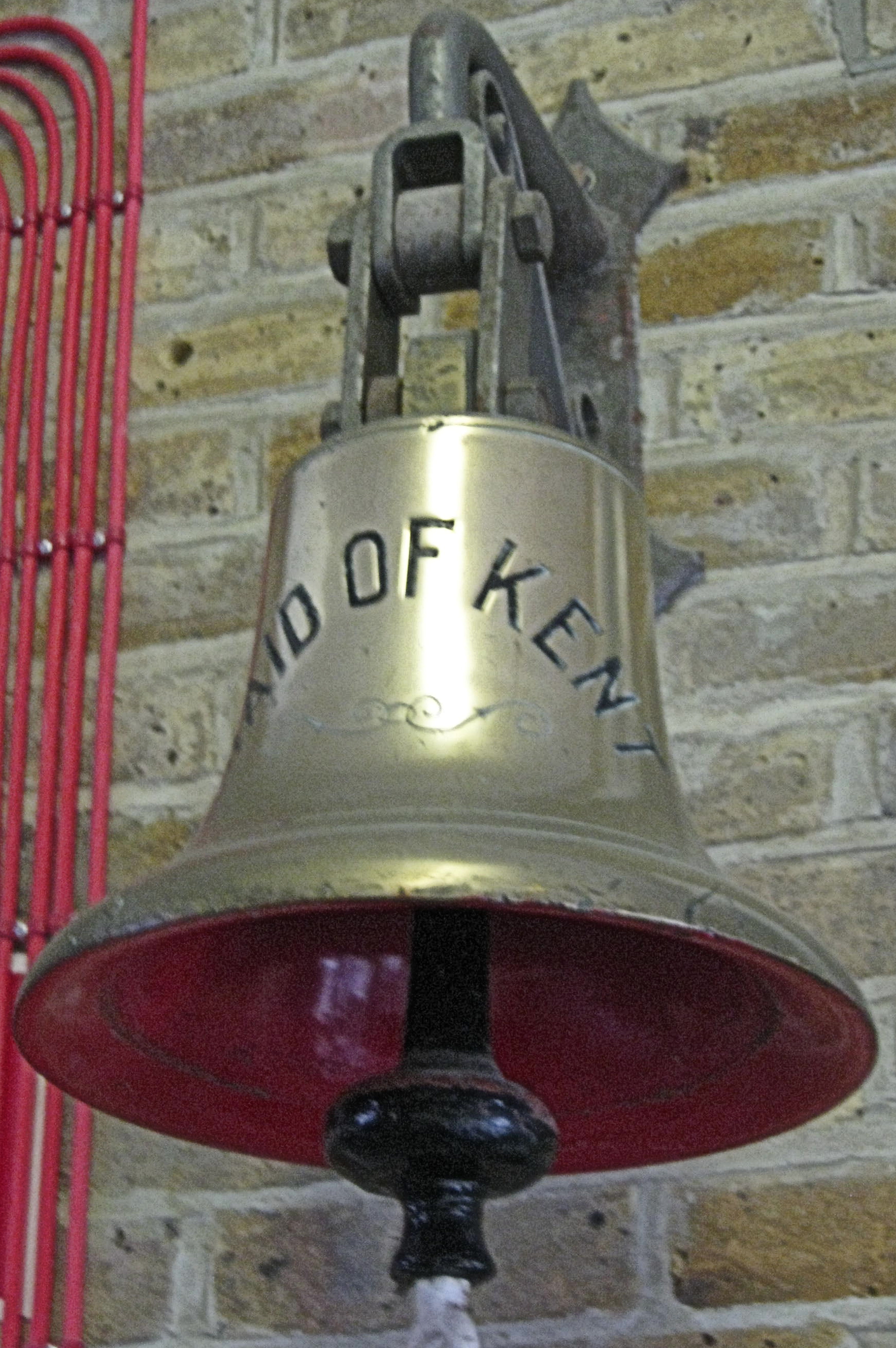
Maid of Kent Bell. Dover Transport Museum

Maid of Kent Bell. Dover Transport Museum

On 22 May, the Germans captured Amiens, Arras and Abbeville and reached the coast despite the most desperate resistance. Throughout, they had used dive-bombers to clear away ground obstacles followed by vast numbers of tanks. The infantry followed light armoured cars and motor cycle units. In Dieppe harbour on 23 May, a stick of five bombs hit the 2,789-ton twin-screw Southern Railway’s cross-Channel ferry, Maid of Kent, which had been utilised as a hospital ship. The flames spread rapidly, killing and injuring many on board and reached a crowded hospital train alongside. Commandeered Belgium trawlers brought the survivors, including the Master of the Maid of Kent, Leonard Addenbrooke, to England.

Although the French were doing all they could to slow down the advance and Allied forces ceaselessly battered German communications, the forces kept on coming. On the night of 24 May, Boulogne fell and Calais quickly followed. British forces, along with French and Belgium comrades, had only one escape route, Dunkirk. On the 26 May, Operation Dynamo was put into action and it was later described, in an Admiralty communiqué, as the most, ‘extensive and difficult combined operation in British naval history…’

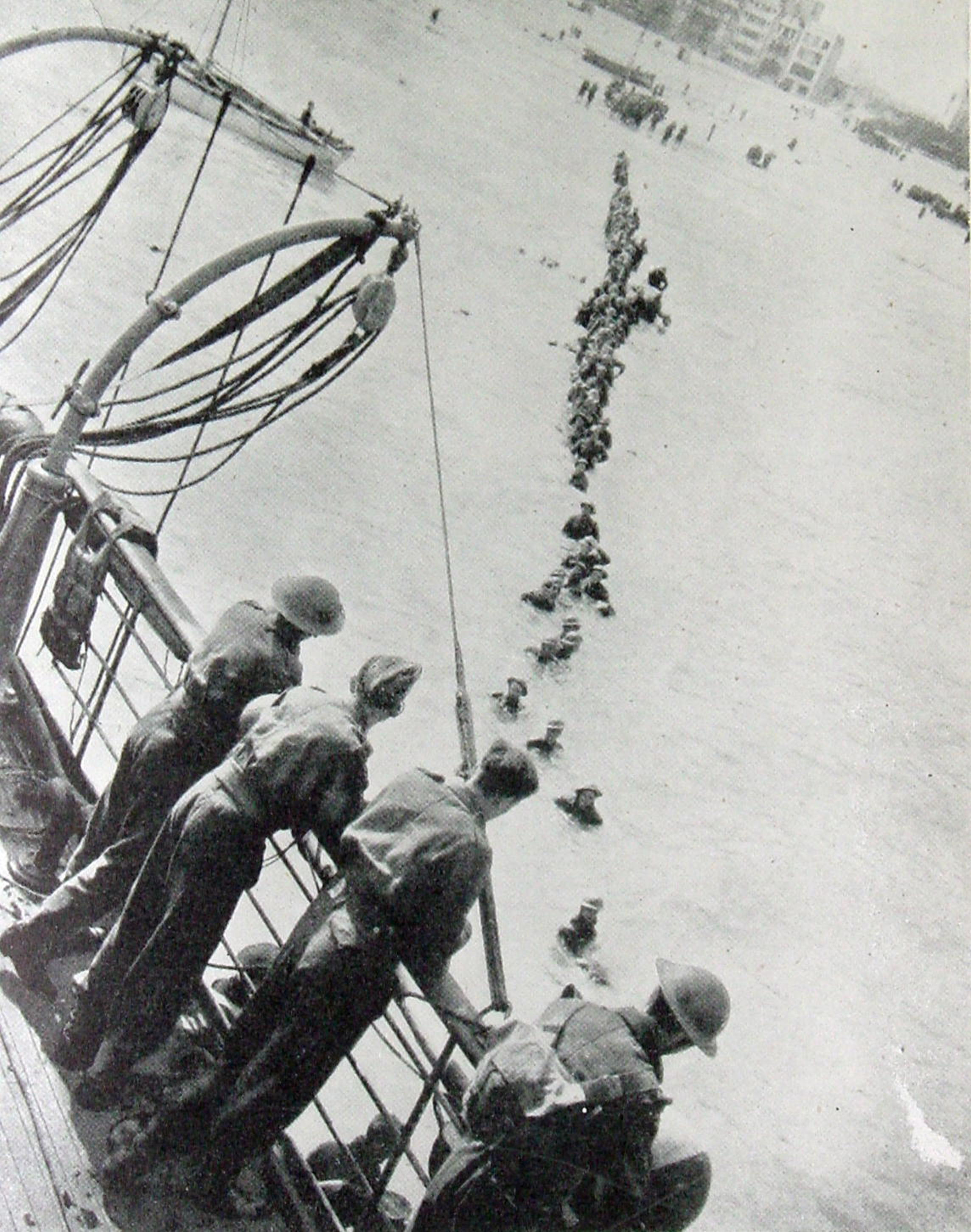
 Dunkirk Evacuation 27 May - 3 June 1940, line of beleagured soldiers making their way to a waiting ship. Doyle Collection

Dunkirk Evacuation 27 May – 3 June 1940, line of beleagured soldiers making their way to a waiting ship. Doyle Collection

Thousands of soldiers were stranded on the Dunkirk beaches but under Ramsay’s direction a fleet of 222 British naval vessels and 665 other craft, known later as the ‘Little Ships’, went to the rescue. The ‘Little Ships’ included, motor launches, pleasure boats, lifeboats, yachts, trawlers, drifters, tugs and paddle steamers, many handled by their civilian owners.

Mona’s Isle, an Isle of Man packet, was the first ship to make the round trip between Dover and Dunkirk but was bombed on leaving a beleaguered beach on 27 May. The 26-year-old Dover Harbour Board tug, the Lady Brassey along with Simla, another tug, went to her assistance. Under constant fire, the two tugs towed the ship, packed with troops, back to Dover. Two nights later, the same two tugs went to the help of the Montrose, which had been severely damaged off Dunkirk.

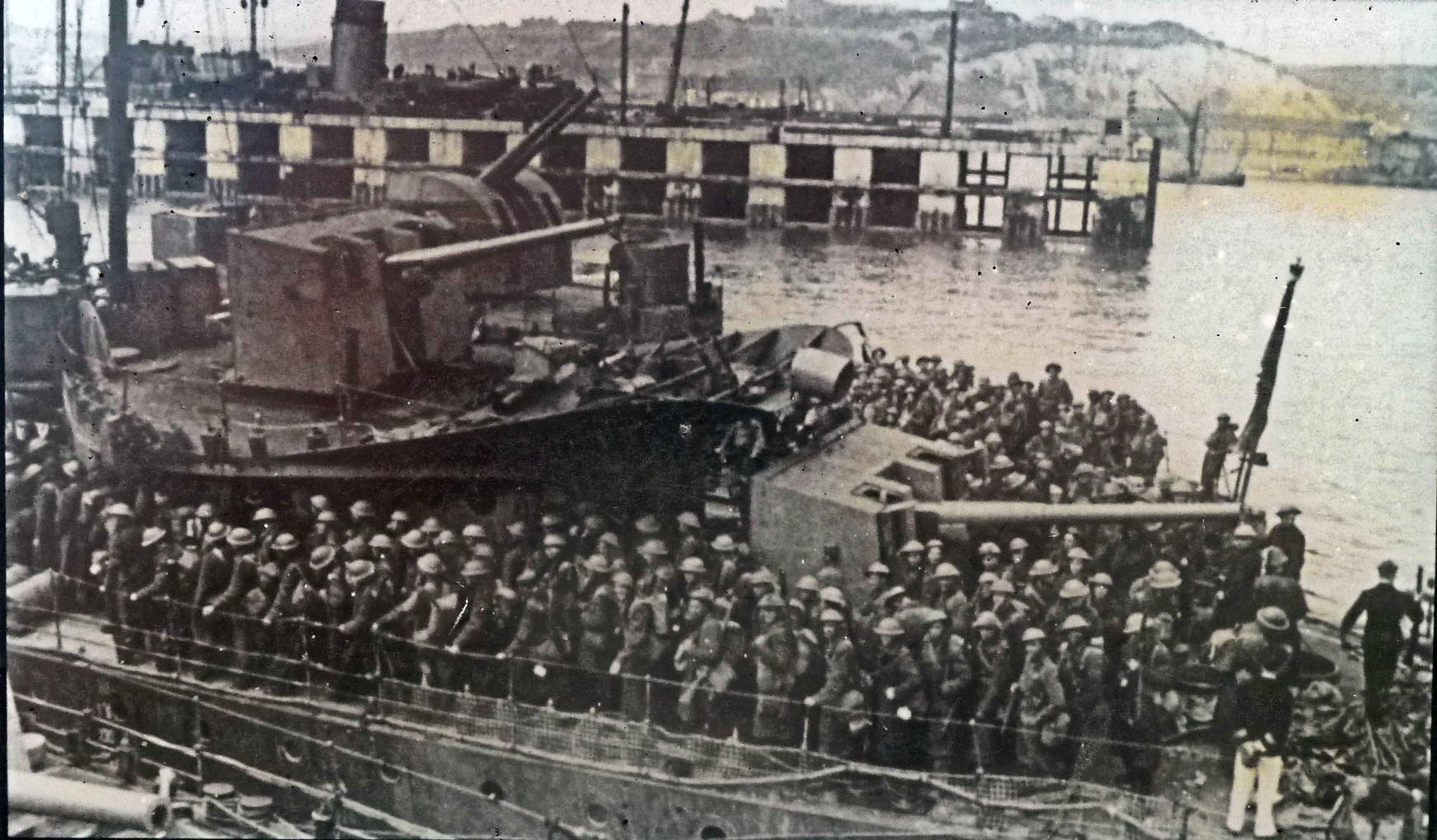
Dunkirk Evacuation - Troops landing at Dover. Doyle Collection

Dunkirk Evacuation – Troops landing at Dover. Doyle Collection

The 29 May saw 50,311 men rescued, 30 May, 53,227 and the peak day, 31 May 68,014 men were rescued with 34,484 landing at Dover. Twenty-five destroyers, sixteen motor yachts, fourteen drifters, fourteen minelayers, twelve transporters, twelve Dutch skoots, four hospital ships, and twenty-one assorted foreign vessels, including French and Belgium as well as British, were involved in the operation that day. On the final day of Operation Dynamo, the Air Sea Rescue and Marine Craft sections of the Royal Air Force, under constant fire, searched the Channel between the Goodwin Sands and Boulogne for survivors. They returned with thirty-five French troops and two British seamen.

Buckland Hospital c1950. Anglo-Canadian Trade Press

Buckland Hospital c1950. Anglo-Canadian Trade Press

Over the nine days of the Evacuation, 180,982 men were landed at Dover with just under 400 taken to what had been Buckland workhouse but for the purpose of the war converted into a casualty hospital. It was equipped with 110 beds and a massive under ground concrete bunker containing an operating theatre with two operating tables. A team of doctors including Dr. Gertrude Toland (1901-1985) carried out operations. Altogether, approximately 350 wounded were dealt with in the nine days and 300 survived. In addition, 108 bodies of men who had died on the ships before reaching safety were taken to the town’s Tower Street Mortuary, in the Pier District.

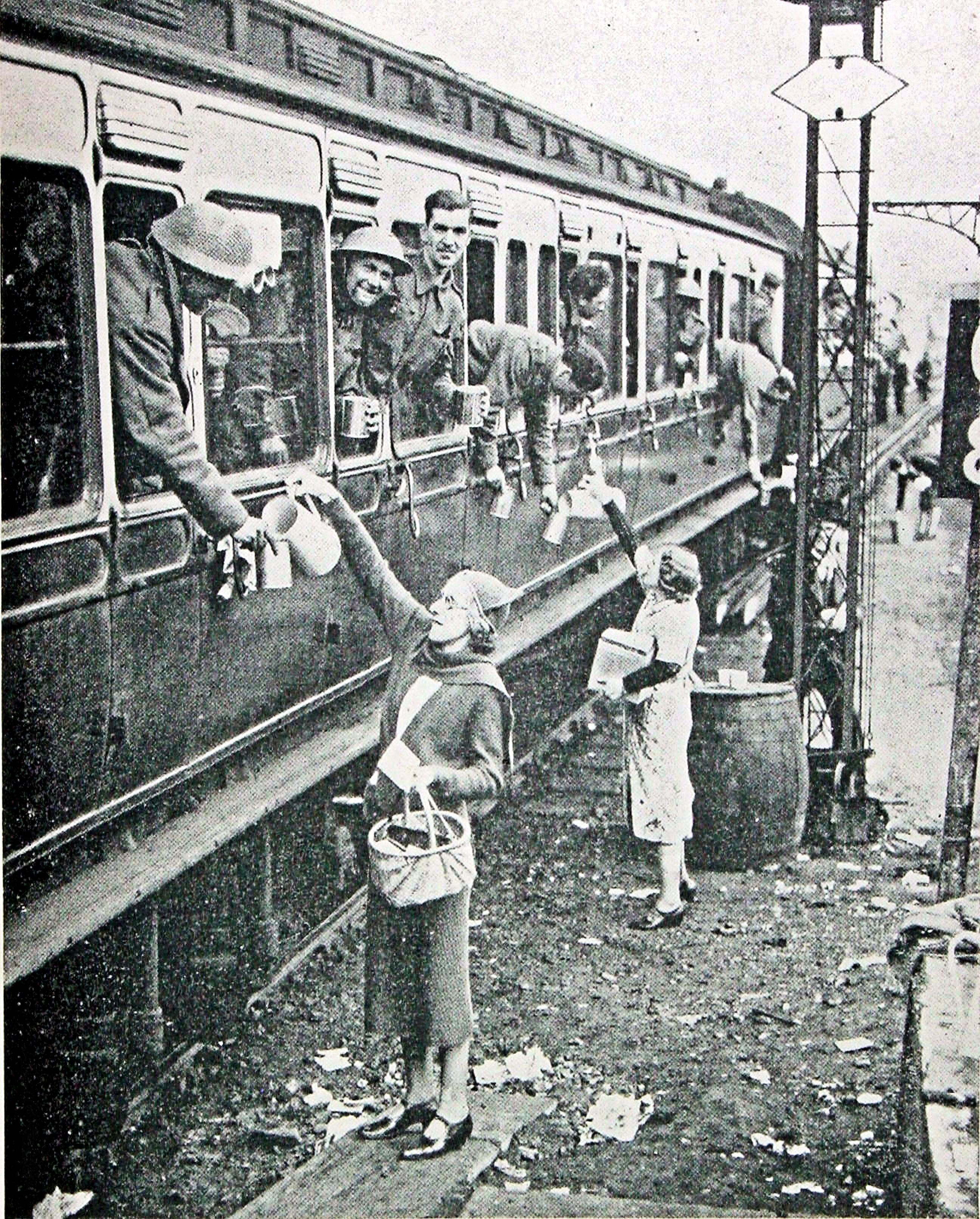
Dunkirk Troops being given food and drink enroute by train out of Dover - tired but cheerful. Doyle Collection

Dunkirk Troops being given food and drink enroute by train out of Dover – tired but cheerful. Doyle Collection

Lining up in Snargate Street, were EKRCC buses that took whole battalions of soldiers to destinations in Kent while some 327 trains took the survivors to locations throughout the country. On the journey the trains stopped at stations for about eight minutes so that women volunteers, working eight-hour shifts, could give food to the starving soldiers. 60,000lbs of bread a day were baked in ovens at Shorncliffe barracks, Folkestone, and private contractors provided another 50,000lbs. Men, at the barracks, made tea and cut sandwiches for 24 hours a day. Although there were initial problems, such as the tea being provided in china mugs, which broke when thrown from the carriage windows as the trains moved off! The cups were quickly replaced by tin cans fitted and paper cartons.Some 327 trains took the survivors to locations throughout the country. On the journey trains stopped at stations for about eight minutes so that women volunteers, working eight-hour shifts, could give food to the starving soldiers. 60,000lbs of bread a day were baked in ovens at Shorncliffe barracks, Folkestone, and private contractors provided another 50,000lbs. Men, at the barracks, made tea and cut sandwiches for 24 hours a day. Although there were initial problems, such as the tea being provided in china mugs, which broke when thrown from the carriage windows as the trains moved off! The cups were quickly replaced by tin cans fitted and paper cartons.

Throughout the Evacuation, the German aircraft were constantly over the Channel firing at the packed boats and ships. Mines had been strewn across the Strait so minesweepers were constantly at work in the dangerous task of sweeping. When they found and destroyed the mines, the explosions made houses rock in Dover. Many of the Little Ships were lost or seriously damaged along with Royal Naval vessels, Basilik, Grafton, Grenade, Havant, Keith and Wakeful.

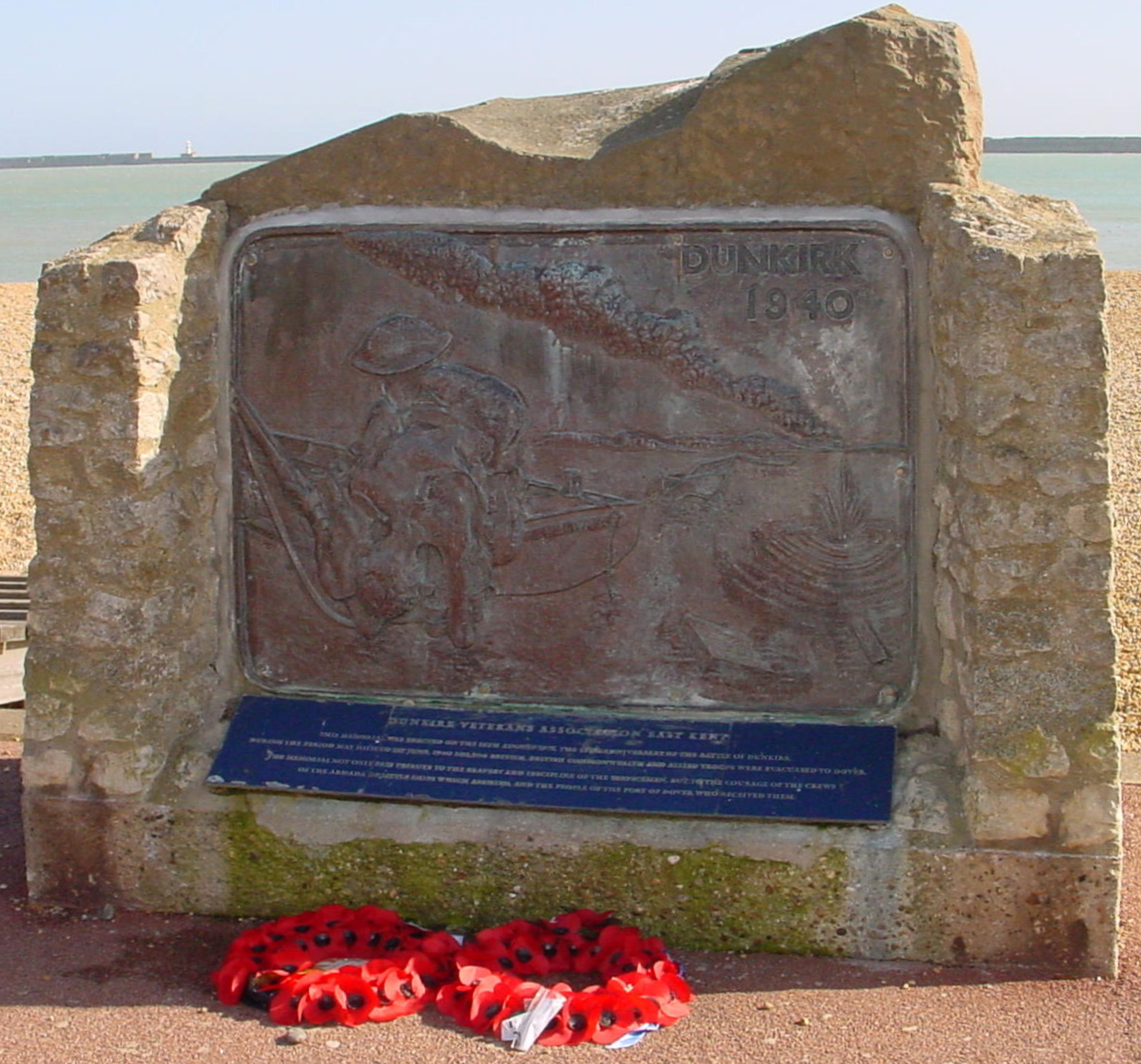
Dunkirk Memorial, Dover Seafront.

Dunkirk Memorial, Dover Seafront.

In June 1957, Queen Elizabeth the Queen Mother (1900-2002) unveiled a war memorial in Dunkirk (Dunkerque) to the soldiers who lost their lives while awaiting Evacuation and have no known graves. On Dover’s seafront, the Dunkirk Veterans’ Memorial was unveiled on Saturday 16 August 1975, by Major-General John Carpenter (1921-2009), to honour those who took part in the Evacuation. On behalf of the Town, the Mayor George Ruck, laid a wreath and a flypast salute was made by an Air Sea Rescue helicopter from RAF Manston.

Major-General Carpenter was a subalterton at Dunkirk in 1940 and in the early hours of 31 May he led his platoon on foot to the beach at Bray Dunes. As there wasn’t any ships he waded out and grabbed an abandoned lifeboat into which he crammed in his men. They were machine-gunned by enemy aircraft but were eventually picked up by a Dutch coaster and with only a few casualties returned to England. At the time of the unveiling of the plaque on Dover Seafront, Major General Carpenter was the chairman of the Dunkirk Veterans’ Association.

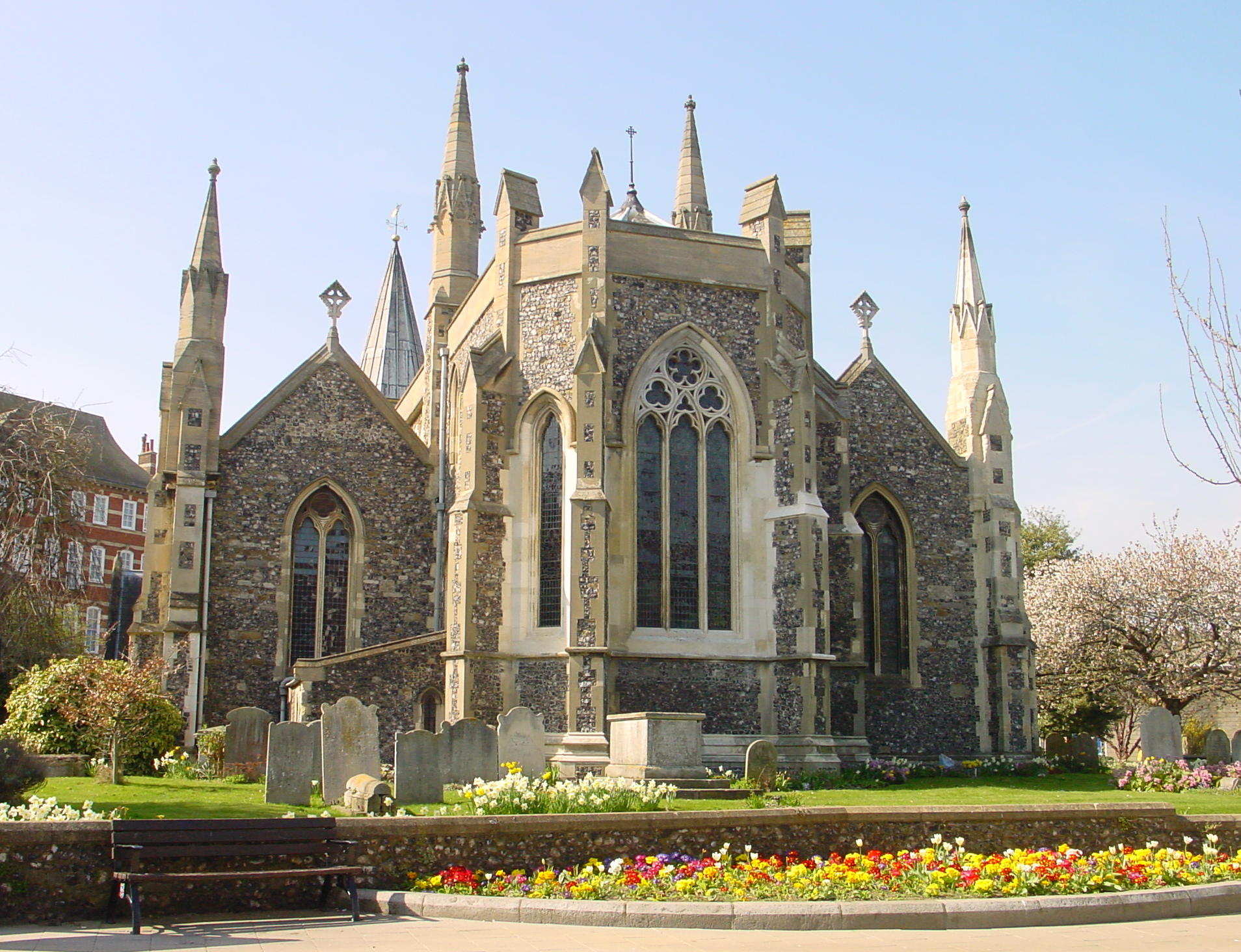
St Mary's Church from the south-east.

St Mary’s Church from the south-east.

In St Mary’s Church, there is the Red Ensign of the ‘Fleet of Little Ships’. The flag was paraded through Paris when General de Gaulle (1890-1970), the French wartime leader, took the salute at the end of the War. There is also a window dedicated to all those who served in the Air Sea Rescue and Marine Craft sections of the Royal Air Force during World War II. It too was dedicated by Queen Elizabeth the Queen Mother when she was the Lord Warden (1978-2002).

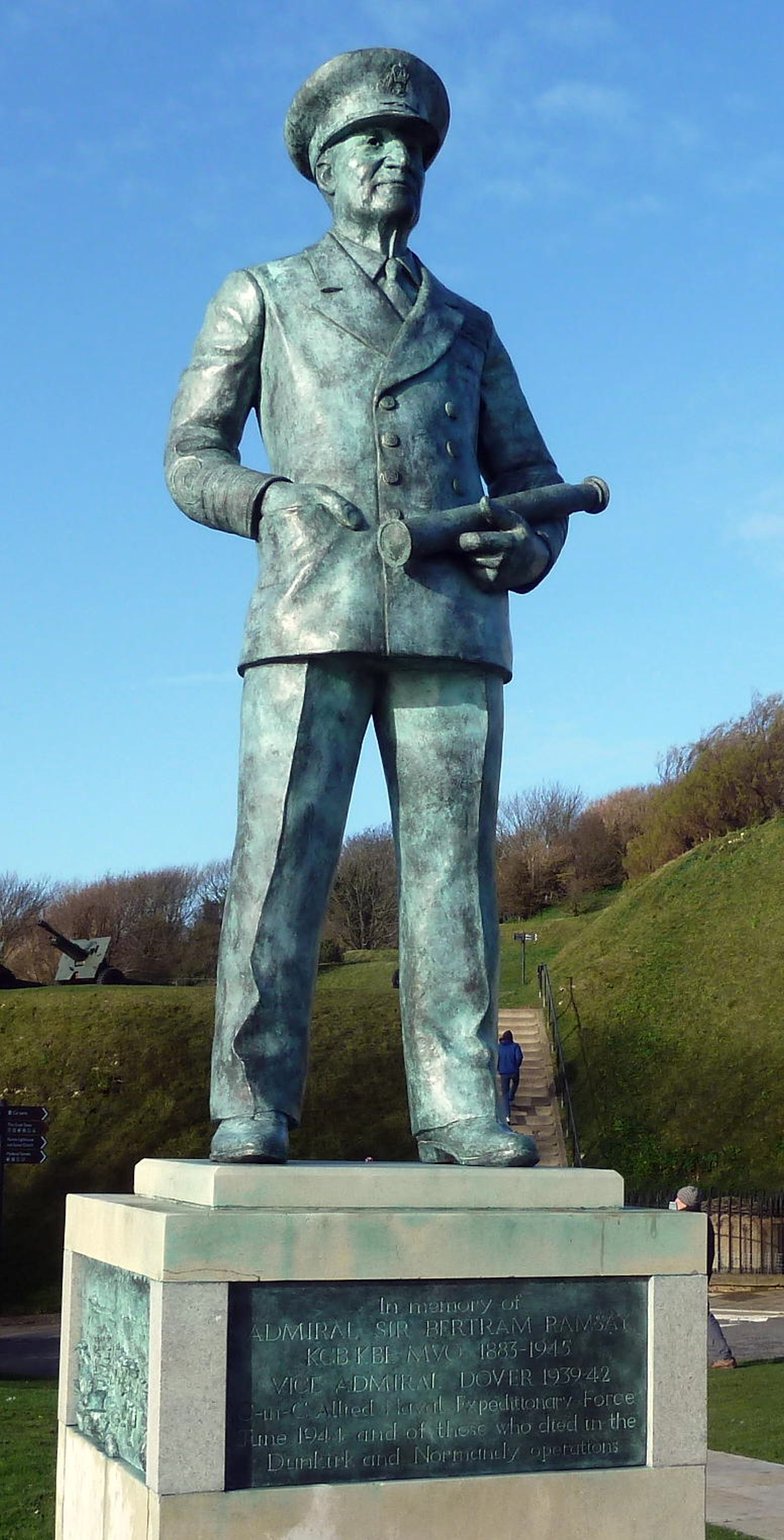
Admiral Bertram Ramsay statue, Dover Castle

Admiral Bertram Ramsay statue, Dover Castle

For the maritime organisation of the withdrawal from Dunkirk, on 26 June 1940, Vice-Admiral Bertram Home Ramsay was awarded the Knight Commander of the Order of the Bath – Military (KCB) at Buckingham Palace. In 1944, as Admiral Sir Bertram Ramsay, he was given responsibility of organising Operation Neptune, the naval support for the D-Day Landings (6 June 1944). On 2 January 1945, the Admiral was killed in an air crash. A memorial statue of Admiral Ramsay was erected in Dover Castle grounds in November 2000.

The Southern Railway’s cross-Channel Ferry, Maid of Kent that was sunk at Dieppe on 23 May 1940 was later raised by the Germans and scuttled in deep water outside Dieppe harbour. Her bell was kept as a souvenir and found in a garage in Germany some years later. It was then returned to the British Railways Board, the successor to Southern Railways and hung in what had become Southern House – now Lord Warden House. The Bell now has a permanent home in the Dover Transport Museum, Whitfield.

The Isle of Man Post Office authority featured the Dunkirk Evacuation in 1981 to commemorate the diamond jubilee of the Royal British Legion. The stamp featured the Isle of Man Steam Packet Company’s ferry Tynwald outward bound for Dover, passing the sunken King Orry, which had been dive-bombed while taking troops on board. The Tynwald made her first trip to Dunkirk on 28 May 1940 and her last on 4 June. It is claimed she was the last ship to leave Dunkirk, by which time she had saved nearly 9,000 soldiers. The King Orry, while evacuating troops on 29 May, was badly damaged and sank near Ostend.

Dunkirk 1940 Troops arriving in Dover having been evacuated. Doyle Collection.

Dunkirk 1940 Troops arriving in Dover having been evacuated. Doyle Collection

Rev. William (Bill) Purcell was in charge of St Mary’s Church at the time of the Dunkirk Evacuation kept a diary in the vestry book. On 25 May 1940, the day before the Evacuation started, he wrote, ‘The feeling of nightmare has been very strong these 15 terrific days. 15 days and Holland is conquered, Belgium and North France over-run the Germans in the Channel ports and 19 miles from this house, the BEF cut off and the Empire tottering. All of us waiting for bombs to drop, sirens to wail, parachute troops to invade us. Horror and inconceivable disaster on all sides. The sun has shone all the time, there is a hard drought, the spring is most beautiful. We can hear guns.’

Following the Evacuation, anti-invasion measures were frantically enhanced around Dover but by the 22 June, France had surrendered and on 10 July, the Battle of Britain began.

  • Published:
  • Dover Mercury: 27 May 2010
Posted in Dunkirk Evacuation, World War II | Comments Off on Dunkirk Evacuation