South Eastern Railway Company – the Blowing Up of Round Down Cliff

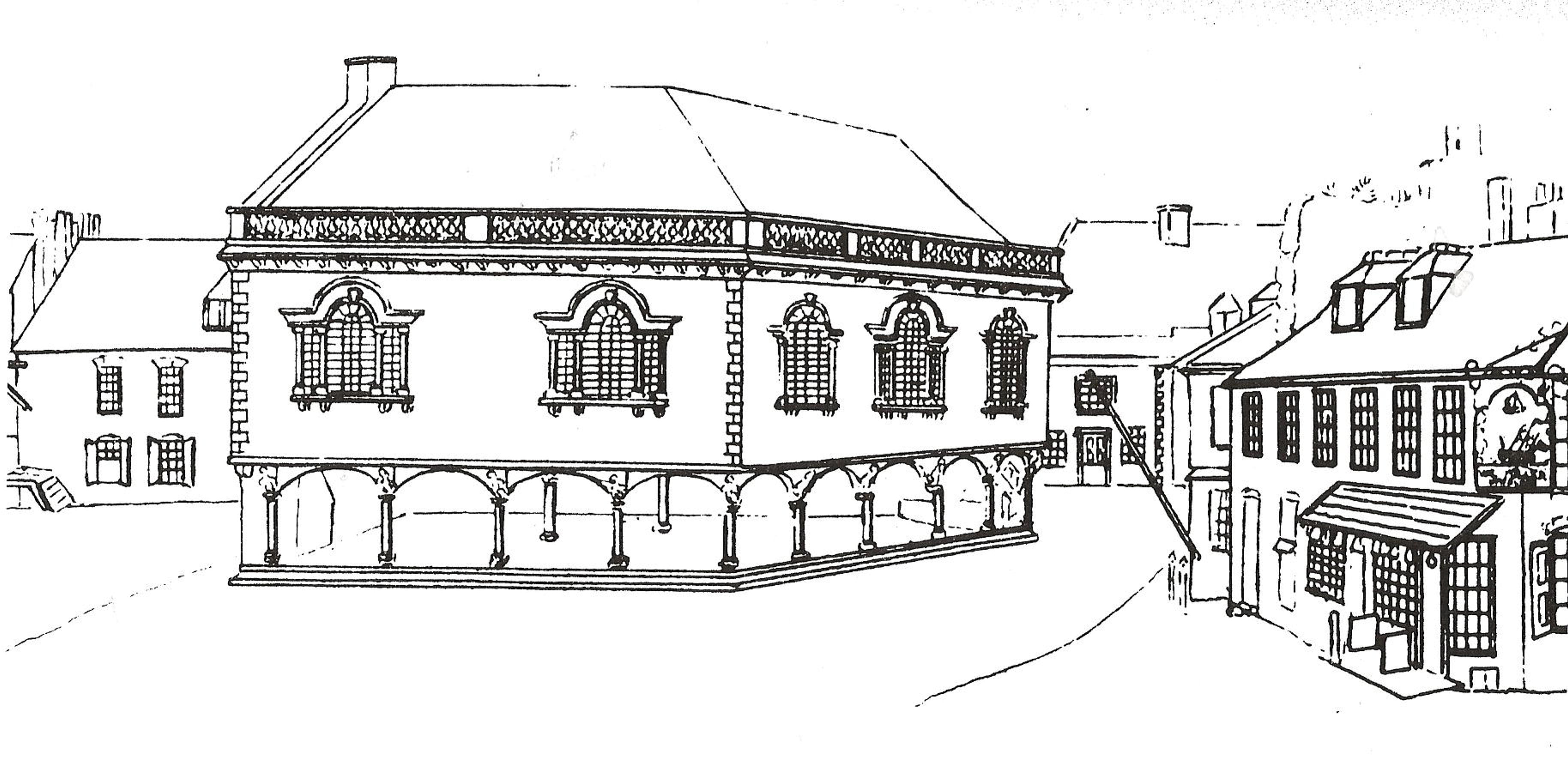
Dover Town Hall / Guildhall - Market Square - built 1605 demolished 1861

Dover Town Hall / Guildhall – Market Square – built 1605 demolished 1861

In May 1834, a meeting was called in what was then Dover’s town hall, in the Market Square. Headed by the Mayor – Joseph Webb Pilcher – and supported by one of Dover’s would be members of Parliament, John Minet Fector junior, along with several other dignities. The only item on the agenda was to bring the new fangled railway to Dover. It was proposed to continue the proposed Greenwich-Ashford Line to the town and Colonel Landmann, of the Greenwich Railway, addressed the assembled throng.

It was estimated that the total cost of the Line would be £1,300,000 and the length, 73-miles. There would be 38 stations conveying 520,000 passengers annually. At 2pence a mile, it was estimated that the revenue to the company would be £135,700 annually. Colonel Landmann then looked at the cost of passengers travelling from Dover to London – and visa versa – by the existing means of transport. These were the stagecoach and ship. He showed that against these forms of competition, a railway line was cheaper to the passenger and created more revenue for the operating company. In regards to the carriage of goods, notably fish where speed was of the essence, he again showed that railways were cheaper, more efficient and gave greater profits to the investors than the alternative means of transport. Colonel Landmann finished his talk by looking at the positive effects of the existing railways operating to Liverpool and Manchester.

The audience showed a great deal of interest but of particular concern was the route the line would take between Folkestone and Dover. Two alternatives were given; the first was from Cheriton, over the Canterbury Road near Uphill in Folkestone and then down the Alkham Valley to Kearsney and along the River Dour valley into Dover. The terminus would be in the vicinity of the Market Square. The second line was along the seashore from Folkestone to Dover with a terminus by the then harbour.
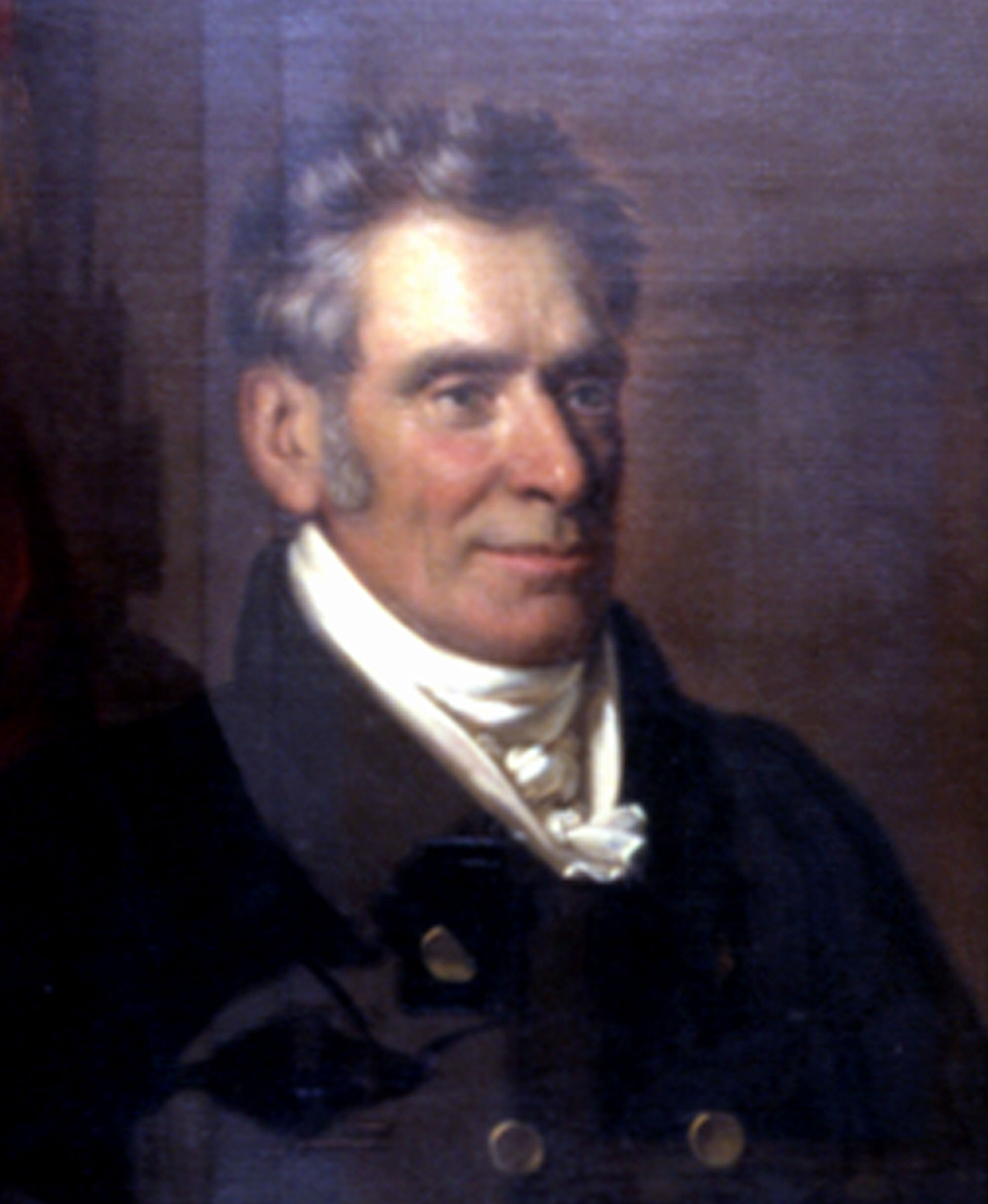
Dover's Member of Parliament John Minet Fector - Dover Museum

Dover’s Member of Parliament John Minet Fector – Dover Museum

The meeting was rounded off by Dover’s Member of Parliament, John Fector, who called for a motion to bring the railway to Dover, saying that, ‘by carrying it into effect, the intercourse with France would be materially improved, and Dover would feel the good effects of a communication by which farmers and fishermen could expeditiously convey their goods to London markets.’ The motion was unanimously carried.

Two years later, in 1836, the South Eastern Railway Company (SER) took this decision further and asked Parliament for an Act to build a line from London to Dover. At the same time, the London and Brighton Railway Company were applying for an Act to build a railway. Given Royal Assent on 21 June 1836, both requests were juxtaposed into one Act stating that both companies were to use the same line from London Bridge to Redhill. This made the train journey to Dover 20-miles (32 km) longer than by stagecoach and added to the overall costs.

 Schematic drawing giving dates of the laying of Lines in East Kent

Schematic drawing giving dates of the laying of Lines in East Kent

Albeit, from Redhill the line through Tonbridge to Ashford was (and still is) almost a straight line, while to Folkestone the company only required the building of two short tunnels. These two factors kept down costs but the decision on which way to take the Line from Folkestone to Dover still had to be made. The estimated overall cost was estimated at  £3,000,000. A requirement of the Act was that 50% of the capital was to be raised before the project could go ahead. Objecting landowners, along the proposed line, used this aspect to protest against the project calling would be investors, ‘men of straw – all brag and no money’.

SER managed to raise the required capital and the decision was made to take the line from Folkestone to Dover along the seashore as the cheaper option. The engineer, William Cubitt (1785–1861), superintended the project and in November 1837 the contract was given to two Kentish firms for the excavation of the Shakespeare cliff for a tunnel. This was 1,331 yards (1,217 metres) long but the chalk was not as sound as first thought, hence two single-line tunnels 12-feet wide, 30-feet high and 10-foot apart were built. They are Gothic in style to lessen the pressure on the crowns of the arches. The tunnel was ventilated by seven shafts between 190-feet and 207-feet in length and seven galleries running out from the southern tunnel towards the sea. The southern and part of the northern tunnel were faced with brick.
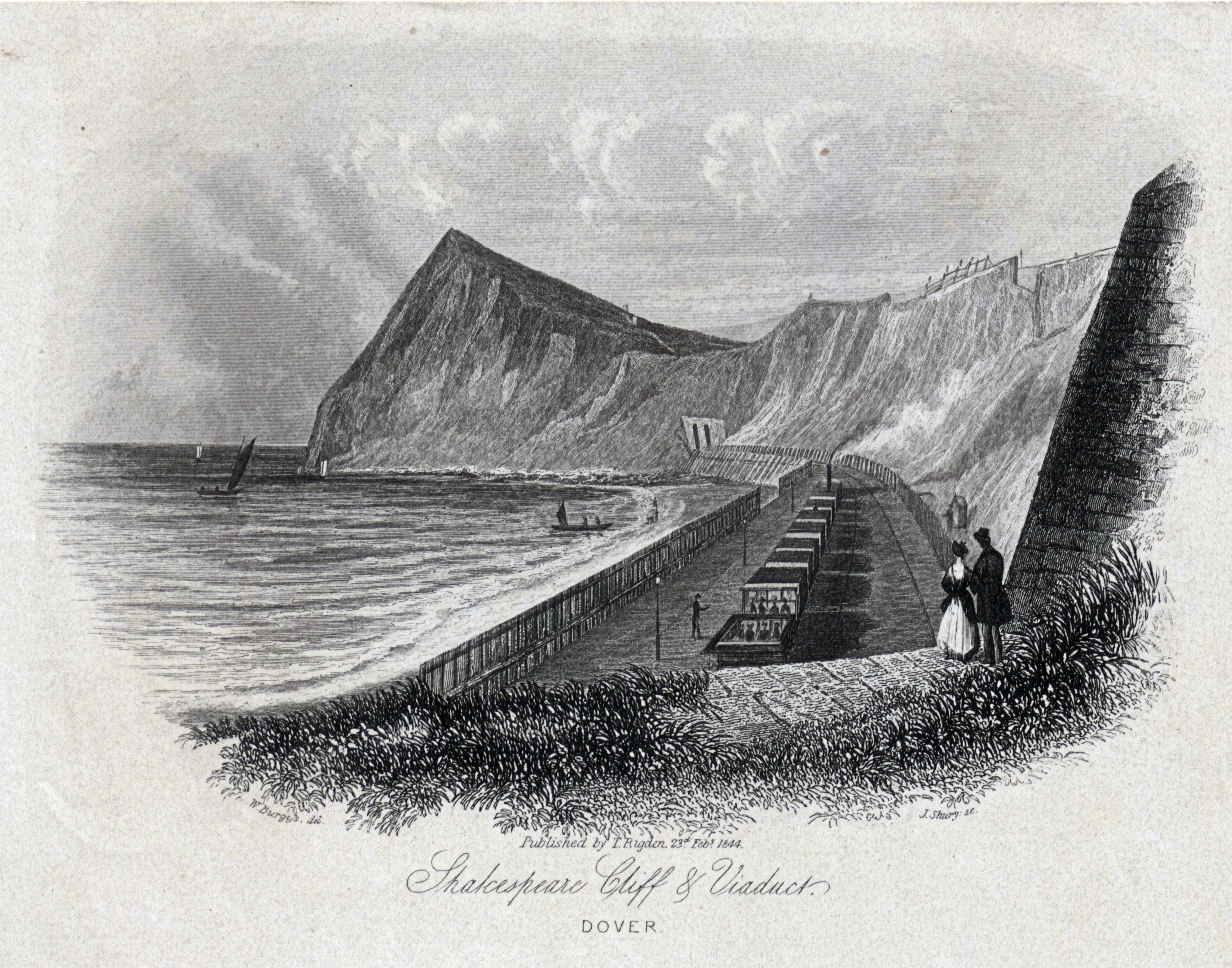
Shakespeare Beach Viaduct and Shakespeare Cliff by J Shury 23 February 1844

Shakespeare Beach Viaduct and Shakespeare Cliff by J Shury 23 February 1844

A platform of earth, excavated from the tunnel was laid alongside Shakespeare beach to Archcliffe Tunnel that was also being excavated. At the time, Archcliffe Fort projected out to sea and the 50-yard tunnel (45.7 metres) was built under the Fort but later demolished. The Board of Ordnance, at the time of the excavation, stipulated that the tunnel should be able to be closed off at both ends in case of hostilities and that there should be loopholes for musketry defence in the retaining walls.

The contracts were being tendered for a seawall and it was decided that the track would be laid on a low-lying timber viaduct across the shingle close to the wall. However, the first attempt was washed away by the sea. On consideration, the company was forced to opt for the more expensive, ‘… heavy beams … against which waves would dash in vain, as its peculiar construction offered them no residence.’ Further west,  from Folkestone in August 1842, the line was being laid towards Abbots Cliff going through Martello tunnel – 776 yards (710 metres) in length and Abbots Cliff tunnel – 1,904 yards (1,741metres).

By June 1842, the line from London had reached Folkestone, where stage coaches or post-chaise were provided for passengers to Dover. At the time, the company were seriously discussing making this a permanent arrangement and abandoning the line to Dover, as it was already proving costly. With this in mind they bought Folkestone harbour to provide a cross-Channel passage replacing the service at Dover. The folk of Dover were angered by this and Parliament was petitioned reminding them, and the company, of the Act and the need to comply. The SER argument for not proceeding centred on Round Down Cliff rising to a height of 375-feet above sea level. It was estimated by William Cubitt to average some 70-feet in thickness and was unstable so could not be tunnelled. The Company,  however, was obliged to comply with the Act and Cubitt decided to ’blow’ the cliff out of the way using gunpowder. On the positive side, he said, the resultant chalk would provide a platform for the railway line.

The day chosen for the event was Thursday 26 January 1843 and ‘caution’ notices were distributed throughout Dover telling people to stay indoors or to watch at a respectful distance. It was expected that women would hide in their boudoirs, children would be kept indoors and only the bravest of men would climb to the top of the cliffs and watch.
In the event nearly every man, woman and child from Dover attended! Army personnel were obliged to put a cordon of rope tied to poles and carrying red and white flags along nearby cliff edges and across the cliffs closest to Round Down Cliff. Both police officers and army personnel patrolled the cordon.

Round Down Cliff viewed from the Directors pavillion 26 January 1843 - Dover Museum

Round Down Cliff viewed from the Directors pavillion 26 January 1843 – Dover Museum

At 10.00hrs, that morning, the Directors, having spent the night at the Ship Inn on Customs House Quay, Dover, went to view Shakespeare Tunnel. Then, having looked at Round Down Cliff from the shore proceeded by zigzag steps to the top. From there they were accompanied by senior army personnel under the command of General Sir Charles Pasley (1780–1861), to a large pavilion erected about 150-feet from the edge of the cliff. They were joined by local dignitaries, their wives and national celebrities, including, Sir John Frederick William Herschel, 1st Baronet, (1792– 1871), mathematician, astronomer and chemist, Adam Sedgwick (1785 –1873) one of the founders of modern geology and Sir George Biddell Airy (1801– 1892), Astronomer Royal 1835-1881.

The elite group were then taken through the expected sequence of events. Initially, there would be a series of small explosions followed, after 30-minutes, by the main explosion. Over this, Professor Sedgwick expressed concern that if there was a concealed fissure, one of the small explosions, ‘might throw it open.’ To which another member of the audience responded that if that were the case, then all those in the pavilion would be ‘swallowed up,’ Someone else added that they would ‘be swallowed down!’

Round Down Cliff demolition schematic drawing showing how it was to be done.

Round Down Cliff demolition schematic drawing showing how it was to be done.

The actual procedure was that a small arched tunnel some 300-feet in length and running east to west had been pierced through the bottom of Round Down Cliff. From this and at equal distances, three well-like shafts had been sunk from which three horizontal galleries had been excavated. At the end of each gallery was the gunpowder. The centre gallery contained 75 barrels and the eastern and western 55 barrels each. The 185 barrels equalled 18,500-lbs of gunpowder brought from Faversham Gunpowder Works. The placing of the gunpowder had been undertaken the previous Tuesday by Mr Hodges, the railway assistant engineer, and Corporal Rae of the Sappers and Miners. General Pasley and Lieutenant Hutchinson checked all was correct and then the galleries were sealed with tightly rammed chalk and sand. Lieutenant Hutchinson was an expert in creating simultaneous explosions and planned to use 3 sets of Daniel’s Tripel batteries to create ‘galvanic fire.

At 09.00-hours on the morning of the event, a red flag was hoisted on Round Down Cliff. Lieutenant Hutchinson tested the wires using a galvanometer (an instrument for detecting or measuring an electric current by movements of a magnetic needle or of a coil in a magnetic field). The batteries were charged and there was a final run through of procedures. At 13.30hours, there was a discharge of half a dozen blasts on the face of Abbots Cliff creating a great sensation in the crowds. Then the multitude became silent before turning to each other uttering in dismay that nothing really had happened!
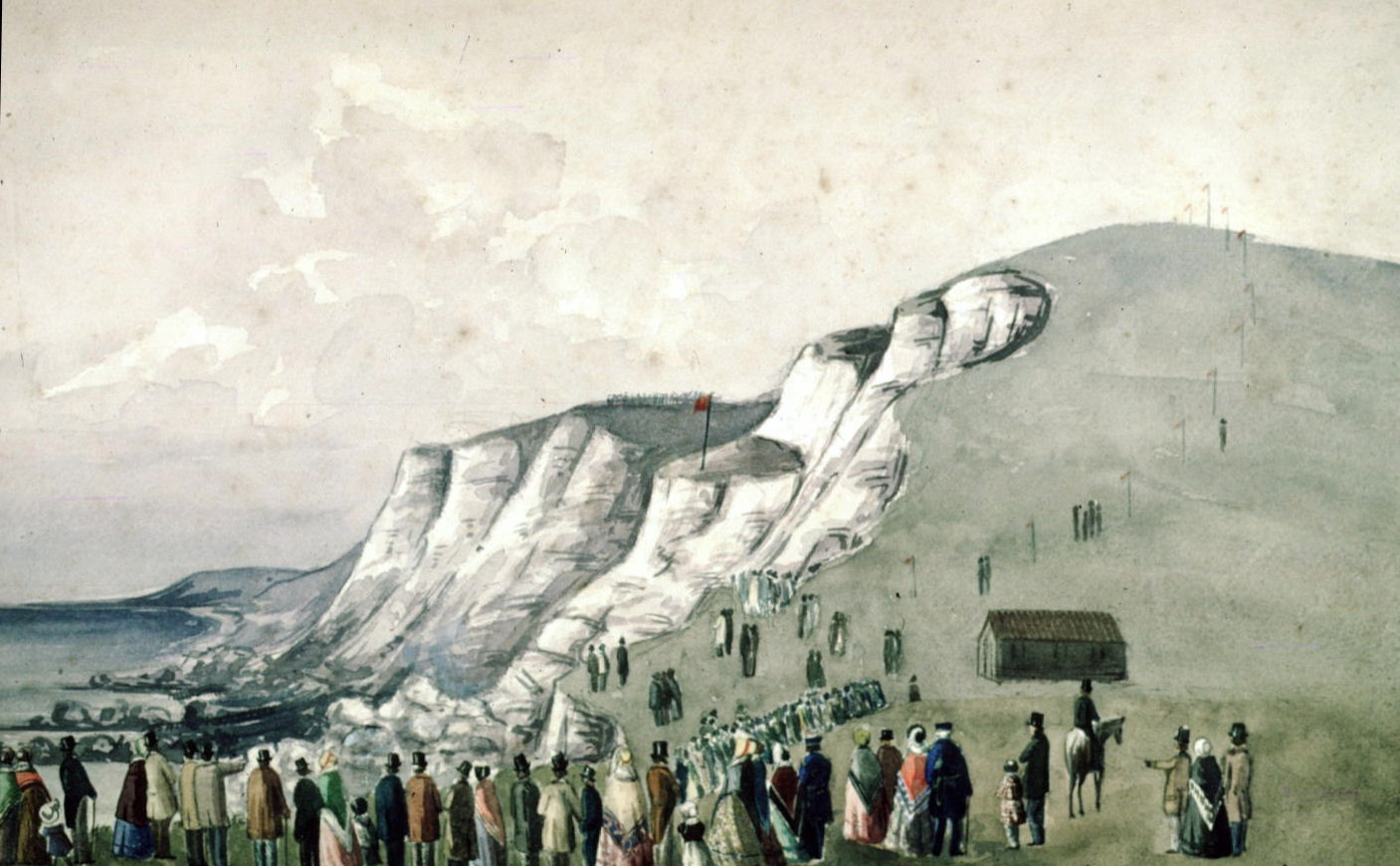
Demolition of Round Down Cliff 26 January 1843 painted by Samuel Mackie - Dover Mu

Demolition of Round Down Cliff 26 January 1843 painted by Samuel Mackie – Dover Museum

Everyone, excepting Lieutenant Hutchinson – who undertook to fire the central battery – the resident engineer, John Wright and the assistant engineer, Mr Hodges – who were taking charge of the western and eastern batteries – was asked to leave the Battery House. At 14.15hours the signal flags were hoisted and silence engulfed the multitude of onlookers. All that could be heard were a few crows and choughs. A few minutes later a single gun was fired and four minutes later two guns and the crowd started shouting ‘Now! Now!

A lighted fuse was thrown over the cliff edge and at 14.26hrs, a dull, muffled boom could just be heard at the same time there was a heavy jolting movement of the earth. The bottom of the cliff, according to one bystander, ‘seemed to dissolve.’ Then the face of the cliff slowly sank giving way to clouds of chalk. This rotated as it made its way up the new cliff face and then fell back into what was, by this time, a fermenting, foaming sea. There was no loud explosion, smoke or fire and all that could be heard were the gasps of the audience.

In the Battery house there was disappointment for so quiet was the explosion that the three men thought they had failed. Then someone broke the silence by shouting, ‘Three cheers for the engineer!’ The whole assembled throng cheered for William Cubitt and the three knew that all had gone well!
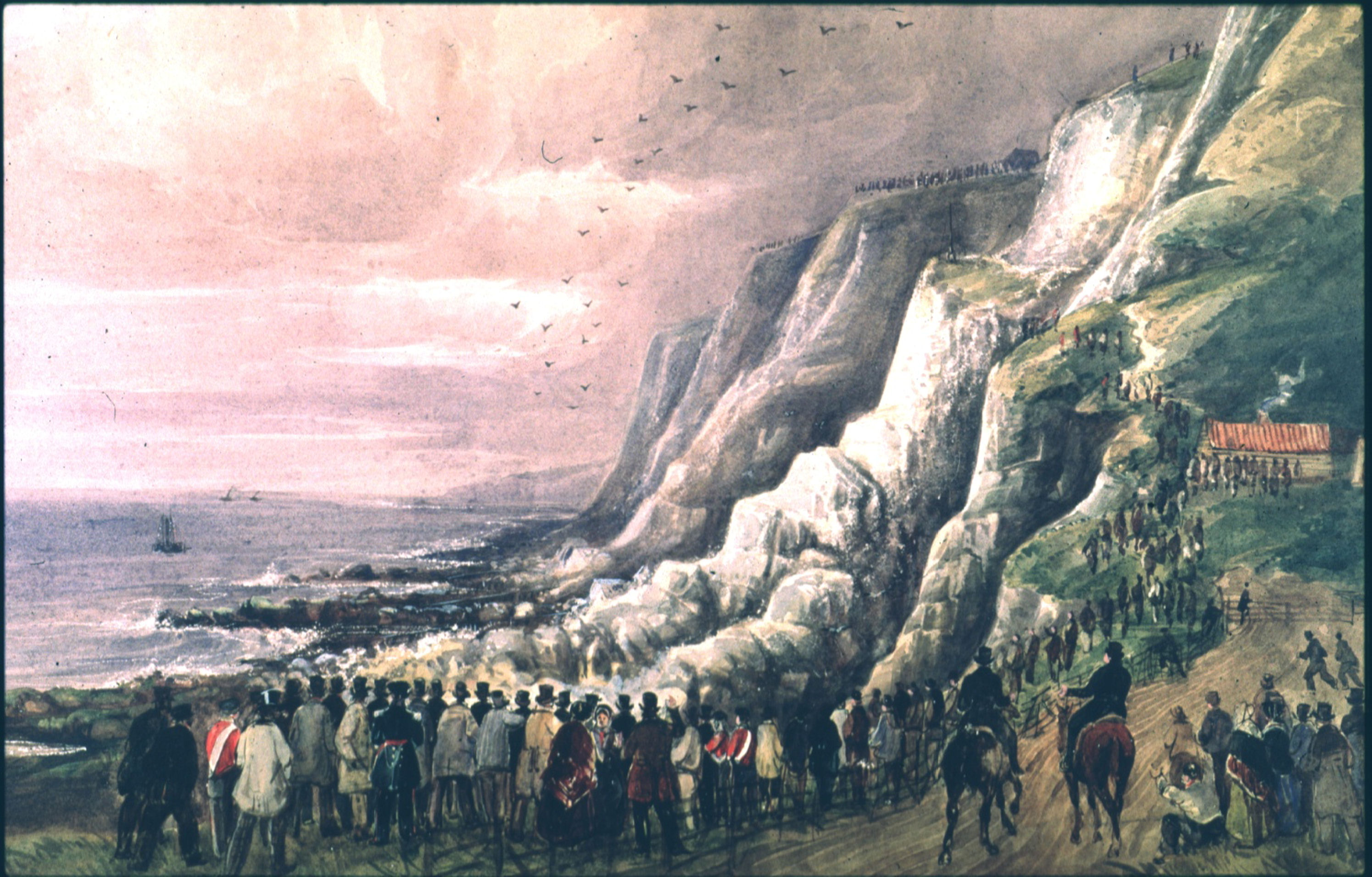
Round Down Cliff following the explosion 26 January 1843 painted by William Burgess - Dover Museum

Round Down Cliff following the explosion 26 January 1843 painted by William Burgess – Dover Museum

The explosion removed a section of the cliff 300-feet long, 300-feet high and 70-feet thick amounting to some 400,000 cubic yards of chalk. A second blasting took place on 2 March and a third on 5 May with the final blasting on the 17 October. However, the final blast was not as successful as the others were. Altogether upwards 1,000,000 tons of cliff had been removed creating a shelf at sea level of about fifteen acres on which the line was built to Dover.

  • Published:
  • Dover Mercury: 30 January & 6 February 2014
Posted in Armed Services, I. South Eastern Railway Company - the Blowing Up of Round Down Cliff, Railways, South Eastern Railway Company - the Blowing Up of Round Down Cliff | Comments Off on South Eastern Railway Company – the Blowing Up of Round Down Cliff

Blockships

Admiralty harbour map -Daily Telegraph 1909 showing Western and Eastern entrance

Admiralty harbour map -Daily Telegraph 1909 showing Western and Eastern entrance

At the outbreak of World War I (1914-1918) on 4 August 1914, Dover’s harbour was taken over by the Admiralty and one of the main considerations was to prevent enemy submarines entering. It was decided to block the Eastern entrance with a moveable V-shaped boom but it fitted so badly that it was carried away during a heavy sea … as was its replacements! With regards to the Western entrance, not only was there a considered danger from submarines entering but an even greater danger from torpedoes being fired from outside that entrance on moored ships within the harbour. The quickest, cheapest and most effective way to block the entrance was to sink two old ships filled with shingle across and the Livonian and the Montrose were chosen.

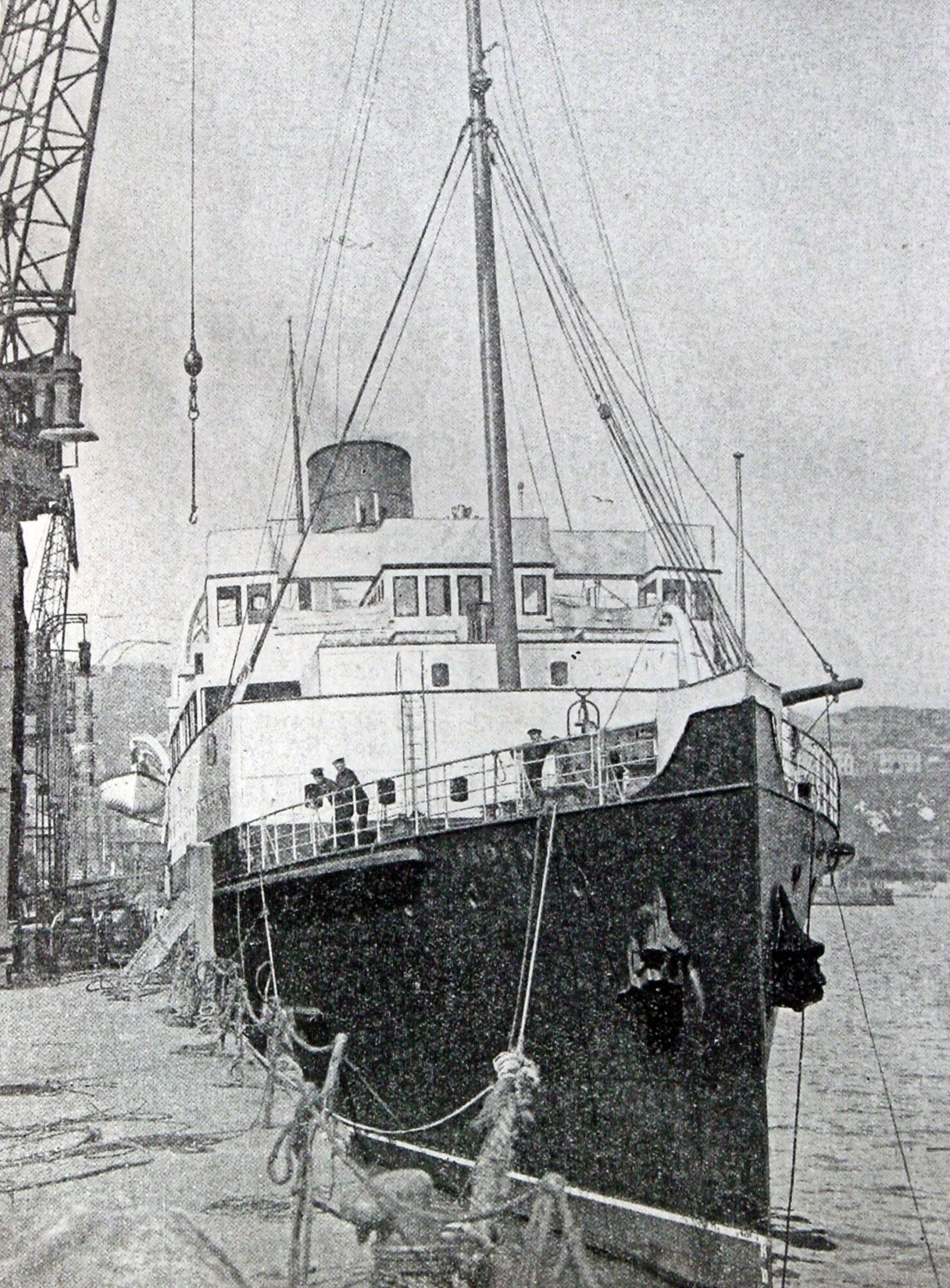
The Montrose had been built at Middlesborough in 1897 and formerly belonged to the Canadian Pacific Company of Montreal. The ship had achieved fame in 1910 when her Master, Captain Kendall, had recognised Dr Hawley Harvey Crippen (1862-1910), who was wanted for the murder of his wife. He was with his mistress, Ethel le Neve, amongst the passengers on the way to Montreal from Antwerp. A telegram was sent from the ship to England and a detective took a faster passage from Liverpool. He arrested the pair off Father Point in the St Lawrence, Canada. Crippen’s arrest had followed the first use of wireless telegraphy to apprehend a criminal and it was for this reason that the case received notoriety.

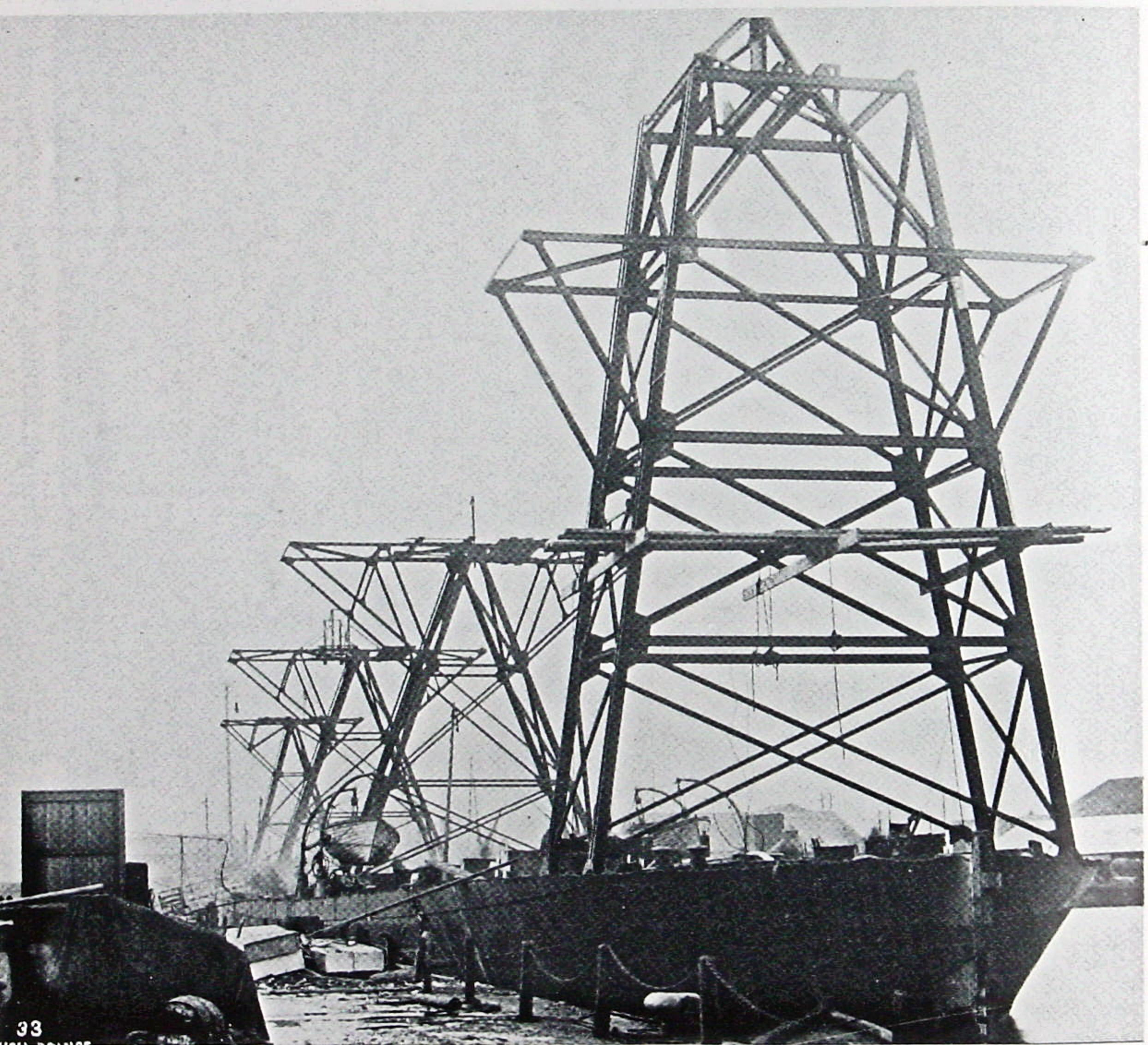
To prepare the blockships, both were stripped of their interiors and the masts, funnels plus two upper decks were removed. On the remaining superstructure, four steel towers were built to hold the nets that were to be swung across the Western entrance. Unfortunately, during the night of 28 December 1914 a gale blew up and the Montrose broke her moorings on Admiralty Pier. She then slid along the Southern Breakwater and four crewmen from a tug managed to get on board. They tried to secure a line on the former Atlantic liner but the tug was not powerful enough and the Montrose broke free. She then sailed majestically out of the Eastern entrance with four hapless crewmen on board.

The Montrose rounded the South Foreland and came to rest on the Goodwin Sands. That night the Deal lifeboat, Charles Dibden, had been called out after the South Goodwin Lightship had broken her moorings. The crew of the Charles Dibden were unable to reach the Lightship before she was swept out to sea and lost. Due to the minefields in the area, the coxswain, Bill Adams, decided to anchor for the night when he saw the Montrose looming out of the darkness. Bill realised that she was out of control and when she came to rest the four crewmen sent up distress flares. The lifeboat went to the rescue and saved the men. Sadly, the four crewmen lost their lives a few weeks later in another shipping disaster. As for the Montrose she broke in half during another gale but the wreck was still visible on the Goodwins until the early 1930s

Spanish Prince being converted into a blockship and sunk March 1915. Alan Sencicle Collection

Spanish Prince being converted into a blockship and sunk March 1915. Alan Sencicle Collection

The Livonian was a 420-foot long, 4,107-ton cargo ship built by Dobie and Company, Goven in 1881. She was filled with Thames gravel and sunk in position in the Western entrance during December 1914. To replaced the Montrose, the Spanish Prince, a 450-foot long, 6,500-ton cargo ship built by Scotsoun in 1894, was sunk the following March. At the same time, a steel curtain was fixed across the two ships.

Following the cessation of hostilities in 1918, the blockships were pulled to one side and the Western entrance was reopened. The Admiralty gave consideration to the removal of the blockships but they had declined to make the decision when the harbour was formerly handed over to the Dover Harbour Board (DHB) on 29 September 1923. DHB recognised that the blockships were a shipping hazard but were in financial debt as they had earned very little income while the harbour was in the hands of the Admiralty.

Maid of Kent - twin-screw turbine steamer of 2,693 tons gross, built for the Southern Railway in 1925

Maid of Kent – twin-screw turbine steamer of 2,693 tons gross, built for the Southern Railway in 1925

In November 1925 DHB sort, through an Act of Parliament, to permanently close the Western entrance. They argued that it was subject to strong currents across the entrance. In the same Bill, they applied for the removal of the blockships as it was a hazard. Their argument was strengthened on 18 March 1926 when the newly built cross-Channel ferry, Maid of Kent, launched on 5 August 1925, on leaving the harbour was swept by the currents onto the Southern breakwater smashing in her bow below the waterline. The following 13 February the same ship hit the blockship Livonian. The Admiralty opposed the Harbour Board Bill saying that it was essential for the Navy to have two entrances in the harbour. As Dover was, at this time, a commercial port, their argument did not hold and the Bill became as Act. However, experiments using models showed that closing the Western entrance would create more problems than already existed and so that idea was dismissed.

Dapper - Salvage ship note bullnose over which 250 tons can be lifted c 1920 - Amos & Amos

Dapper – Salvage ship note bullnose over which 250 tons can be lifted c 1920 – Amos & Amos

In 1930, DHB invited tenders to remove the blockships and responses came from Dutch, German and English firms. However, the prices quoted were so high that DHB felt the job could be done cheaper in-house particularly as the Harbour Master, John Iron, was a salvage expert. Iron’s plan was to remove the gantries and then pump out the ballast, raise the ships and take them to the Eastern Dockyard for scrapping. £12,000 was spent on equipment and work started at the end of February 1931. The Livonian was lying nearest to Admiralty Pier so she was dealt with first. The gantries were removed and the ballast was pumped out using DHB’s salvage vessel, Dapper, and dumped in the Channel. Divers using acetylene burners then cut the ship into four pieces. Two Admiralty lighters were brought in, filled with water and sunk to the level of their decks. At the same time, divers passed six 9-inch steel wire ropes under a section of the ship and at low tide these were fastened into position. As the tide started to rise, on 29 August 1932, the DHB tug, Lady Duncannon pumped the water out of the lighters and the first section of the Livonian was lifted. The Lady Duncannon along with her sister tug, the Lady Brassey, pushed the section across the harbour to the Eastern Dockyard for disposal.

After the removal of the final section, the bits that remained on the seabed, were blasted away on the morning of 6 May 1933. The Western entrance opened that afternoon for the first time in two years. On average 40 men and six divers had been engaged on a daily basis but the operation had been fraught with danger although no one was killed. It was therefore decided to leave the Spanish Prince where she lay. However, she proved to be a shipping hazard and after being struck by the Zografia Nicolaou on 14 March 1935 the gantries were removed. Later, during a gale, the Spanish Prince shifted position and became less of a hazard.

During the Battle of Britain, in 1940, it was again deemed that the Western entrance should be blocked. The War Sepoy, a Z-Type tanker, built by William Grey and Co. of West Hartlepool under the World War I Standardised Shipbuilding Scheme, was chosen. She was 412-foot long, 52-foot beam and 5,800 tons gross and completed on 6 February 1919. Too late for active service, she had spent the inter-war years as a fleet oiler. She was in Dover harbour during an air raid on 19 July 1940 when she was badly damaged. Beyond repair, the War Sepoy was filled with concrete, towed into position and sunk in the Western entrance. The steamer, Minnie de Larringa joined her, on 5 February 1941. She had been sunk in the Port of London by German bombing before being refloated and towed round to Dover to be sunk again.

In October 1945, the blockships, having served their purpose, were recommended for removal. Two years later the first tentative steps were taken but due to the adverse currents of water, poor weather and other demands on Admiralty salvage boats, not a lot was done. On 2 May 1950 naval divers operating from the Admiralty salvage craft Salvictor, began a preliminary survey of the War Sepoy and the Minnie de Larringa and noted that the War Sepoy lay buried under the hull of the Spanish Prince.

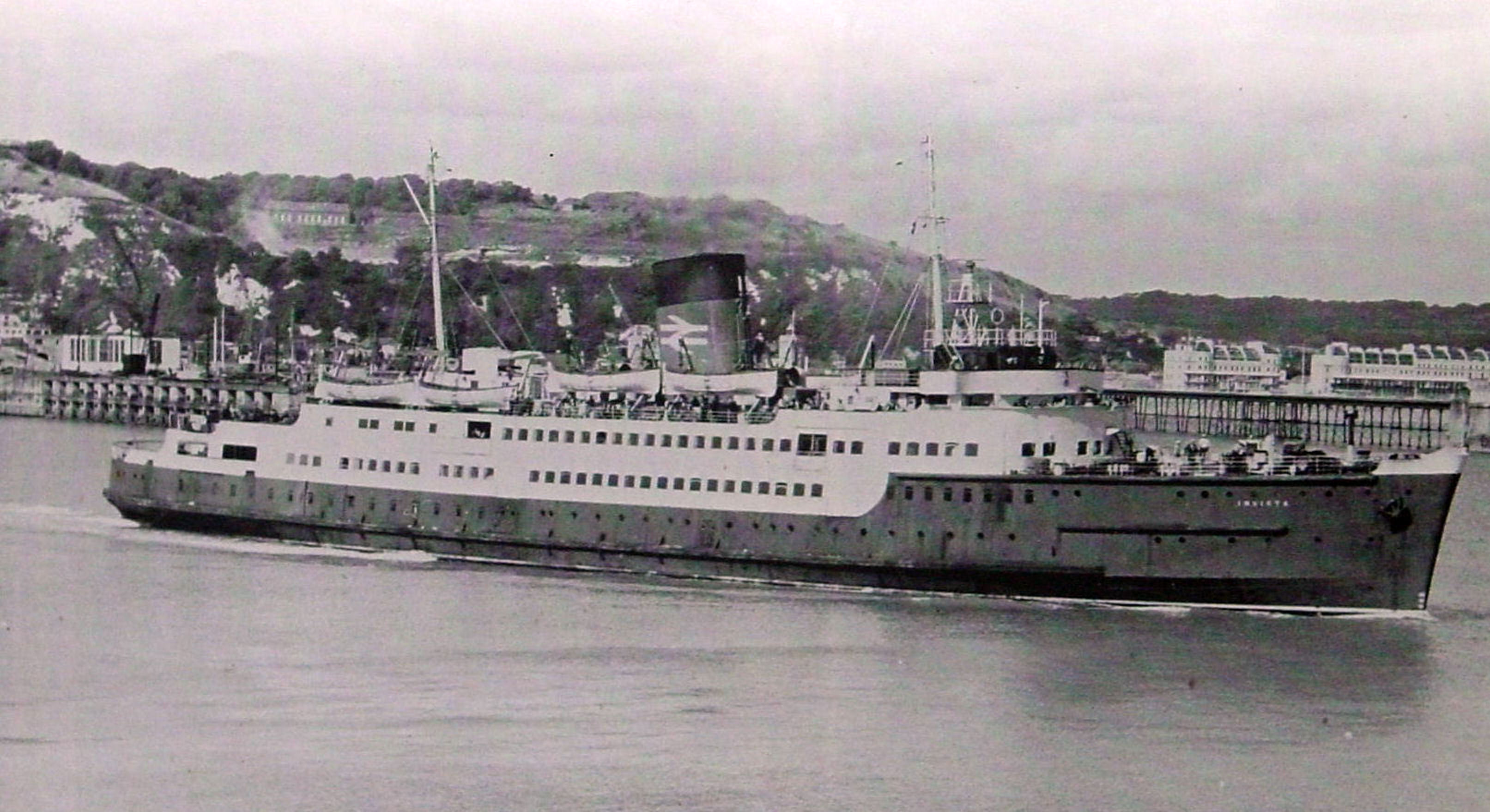
Invicta, on 26 April 1963, the first ship to go through the Western Entrance following World War II . Alan Sencicle collection

Invicta, on 26 April 1963, the first ship to go through the Western Entrance following World War II . Alan Sencicle collection

The salvage tugs Succour and Swin in August 1960, with the help of DHB tugs Diligent and Dominant, raised a 100-foot by 50-foot section of the Minnie de Larringa. This consisted of the second and third holds and weighed about 300-tons. A second large piece of the blockship was lifted a month later and the final portion of the War Sepoy was lifted in August 1962. The pieces were taken across the harbour to the Eastern Docks to the Dover Industries wharf for disposal by one tug pulling and the other pushing. On 26 April 1963, the Western Entrance was opened for the first time since 1940 and the Golden Arrow vessel Invicta left Dover that way. At the helm was the senior master of the Southern Railway’s Fleet, Capt. William Waters, who gave a blast on his siren to celebrate the event.

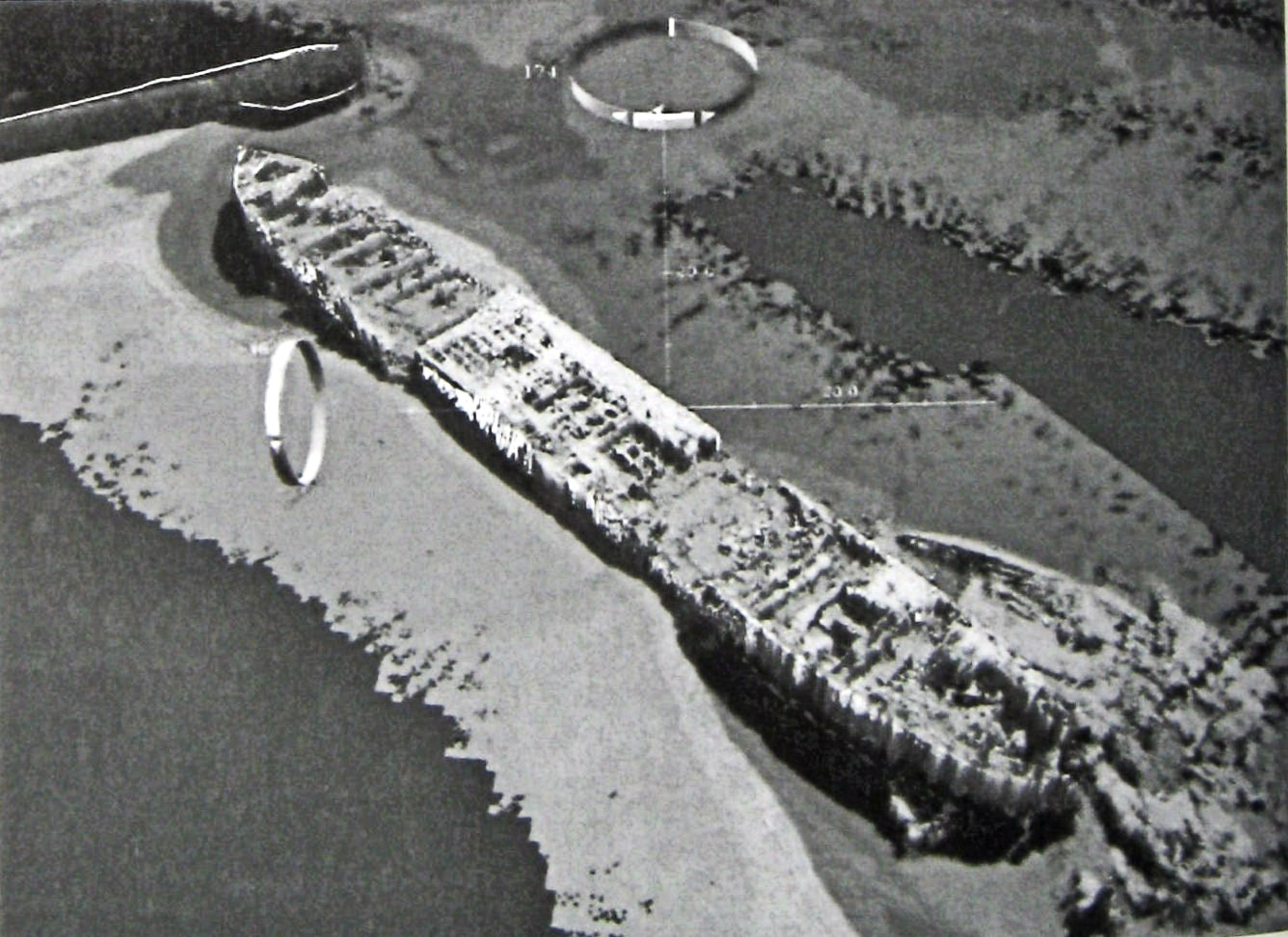
Spanish Prince - Sonar scan, prior to clearing to a depth of 8.5 metres during 2010. Thanks to Dover Harbour Board

Spanish Prince – Sonar scan, prior to clearing to a depth of 8.5 metres during 2010. Thanks to Dover Harbour Board

However, the Spanish Prince collapsed during the operations and shifted position. A Cardinal buoy, to the east of the Western entrance marked her new position. The blockship’s superstructure continued to break-up naturally but remained potential hazard. In 2007, plans were floated to redevelop the Western Docks and included a ferry terminal with four roll-on, roll-off ferry berths. For the plan to work the Spanish Prince had to be removed. Salvage work, undertaken by Herbosch Kiere and costing £2.4million, started early in 2010. They used their multi-purpose barge Waasland, together with specialist lifting and cutting equipment. The Spanish Prince was cut up where she lay and taken ashore by tug and barge. On completion, the chartered depth where the she had laid was increased to 8.5metres and the Cardinal buoy was removed. The proposed development, at the time of writing, has not gone ahead.

  • Published:
  • Dover Mercury 19 November 2009
Posted in Blockships, Blockships, Port and Transport, World War I | Comments Off on Blockships

Dover Sharks

Dover Harbour circa 1830

Dover Harbour circa 1830

Before the Admiralty Pier was built, Dover’s harbour was on the west side of the bay and relatively small. Further, there was a constant problem with silting that, at times, made it difficult to enter and exit. Sailing ships would therefore anchor off shore and goods and passengers would be ferried between the beach and the ships in small boats.

Prior to 1778 these boatmen, or watermen as they are sometimes referred to, would set a price and start to row. However, some would stop midway and threaten to throw the passenger and/or their baggage into the sea unless they paid more!  Indeed, it was stated in the Charter given by Queen Mary (1553-1558), to the town, that boatmen were required to obtain a licence and to conduct themselves fairly. The Charter placed the policing of the boatmen’s behaviour in the hands of the Mayor and Jurats but they do not appear to have taken this seriously.

Paving Commission 1777 Front Cover. Dover Library

Paving Commission 1777 Front Cover. Dover Library

When the Dover Local Government Act created the Dover Paving Commission, in 1778, the duty of regulating boatmen became their responsibility. At that time, larger ships were being built which led to fewer Dover ship-owners and they hired their own fleet of boatmen. The price of the boatmen’s service was included in the overall price of the passage ticket but some boatmen were still not adverse to use threats to get a second fare out of the passengers. This eventually came to the attention of the Commissioners of Salvage who, on 25 May 1816, set a scale of charges that had to be adhered. These were 4shillings (20p) for each adult and 2shillings (10p) for each child carried with the Paving Commission and the ferry operators being obliged to ensure that this was upheld.

The actual job of the boatmen was arduous; they were expected to row out into the bay in all weathers with perhaps only one helper. More helpers would mean less room for passengers and their baggage that, at times, included horses and carriages! Further, boatmen and their dependants who due to old age or sickness could no longer work, were destined to the workhouse unless another source of income could be found. In the 1820s, the local fraternity of boatmen decided to raise money for their poorer colleagues by organising a series of boat races and invited soldiers from the garrison along with the town’s folk to take part. Prize money was raised by public subscription and the event was to take place in the summer of 1826 but bad weather precluded it.

Nonetheless, the publicity brought many people to the town and the following year the town  organised the event. This was patronised by His Royal Highness, the Lord High Admiral William, Duke of Clarence (later William IV 1830-1837) and society folk from far and wide attended. Held on 28 August 1827, it was reported in the Times (30.08.1827) that of the three races for boatmen, only the second race was won by a Dover boat – Fly.  Nonetheless, the whole event was so successful that it raised the much-needed funds for the destitute boatmen and spawned the annual Dover Regatta!

In 1833 the House of Commons conducted an inquiry into the distress of Dover boatmen that had been displaced by the pilot cutters and made provisions for them. By 1844 the rules governing boatmen had become stringent and safety conscious. Boats were required to be 22 feet long and 5feet 6inches wide. They were not allowed to carry more than six full-grown persons at any one time and there was to be no more than one boat on each side of any vessel at any one time. If the captain of the vessel told them to leave, they had to follow the order and any other commands that the captain might make.

The fees were:

  • For conveying any person on or from on board any vessel grounded within or at the entrance of the harbour, including his or her personal luggage: 1 shilling (5 pence)
  • For taking any person from the shore on board of any packet or passage vessel lying in the roads or bay, either to the eastward or westward of the harbour, including his or her personal baggage 2 shillings 6 pence (12.5pence)
  • For landing from any such vessel, either to the east-war or westward of the harbour, any two wheeled carriage 10 shillings 6 pence (52.5 pence)
  • For landing, in a like manner, any four wheeled carriage £1 1shilling (£1.5pence).
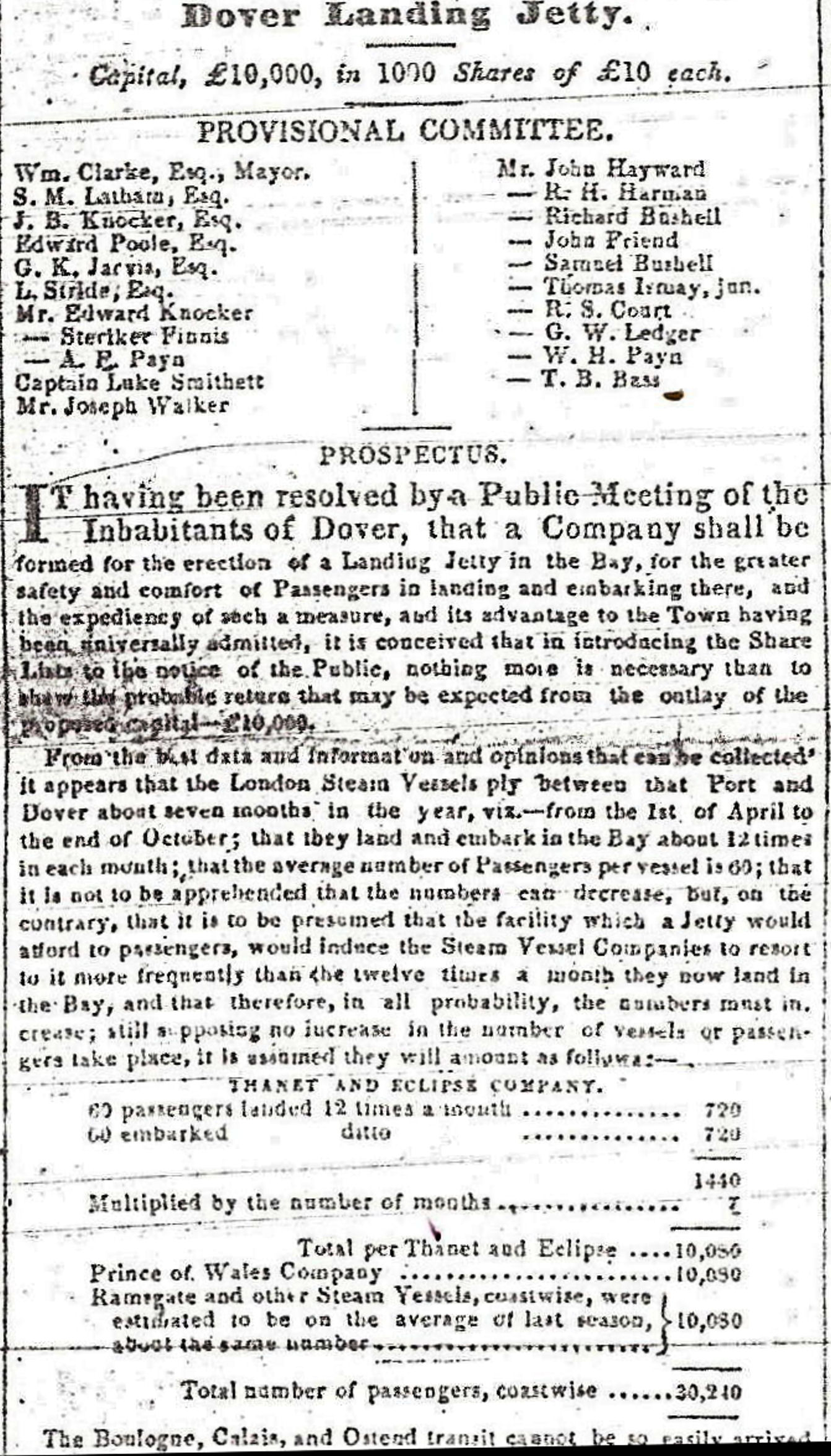
Dover Landing Jetty prospectus 02.03.1844

Dover Landing Jetty prospectus 02.03.1844

Steam driven vessels had been introduced in the 1820s and generally cross Channel ships were getting larger and carrying more passengers and goods. In March 1844, the Dover Landing Jetty Company was floated and once built it was believed that there would be no more need for boatmen as ships could tie up alongside. The jetty was to be opposite Waterloo Crescent and it was estimated that £10,000 of capital was needed. The Committee included local businessmen, Thomas Bass, Steriker Finnis, John Hayward, George Jarvis, Edward Knocker, John Knocker, Samuel Latham, Luke Smithett, Lewis Stride and Joseph Walker.  The South Eastern Railway Company offered to buy £3,000 of the shares and the remaining ones sold quickly. The first pile of the Jetty was driven in 1847 and although the Dover Landing Bill was not introduced into Parliament until 4 February 1848, it received Royal Assent on 9 June that year.

Edward Rice - Liberal MP for Dover 1837-1857. Dover Museum

Edward Rice – Liberal MP for Dover 1837-1857. Dover Museum

In the meantime, many of those who had subscribed towards the Landing Jetty were also putting pressure on Parliament for Dover to become a Harbour of Refuge. Henshaw Latham (1752-1846) – the head of one of Dover’s two banks and three times Mayor (1814, 1821 and 1830) – had put this proposal before Parliament in 1836. This had been taken up by one of Dover’s two MPs, Edward Royd Rice (M.P. 1837-1857), who was also a partner in Latham’s bank. The Admiralty eventually agreed to build two piers out into the bay that would provide the shelter needed for ships in distress. Work started in April 1848 on the west, Admiralty Pier, from what was then Cheeseman’s Head seaward of the South Pier head. This required the demolition of the Cinque Ports Pilots’ Station, which was replaced by another near the newly constructed Lord Warden Hotel. Due to financial pressures, the second pier was not built, instead a landing stage was constructed.

The Admiralty Pier, when completed in 1871 was 2,100-feet long and cost £693,077. It was first used as a ferry berth on 14 June 1851 when the Father Thames, landed 50 passengers and five days later the Princess Alice the first cross-Channel steamer landed 86 passengers. The use of the Pier for this purpose was sealed but this spelt the death knell of the Dover Landing Jetty Proposal.

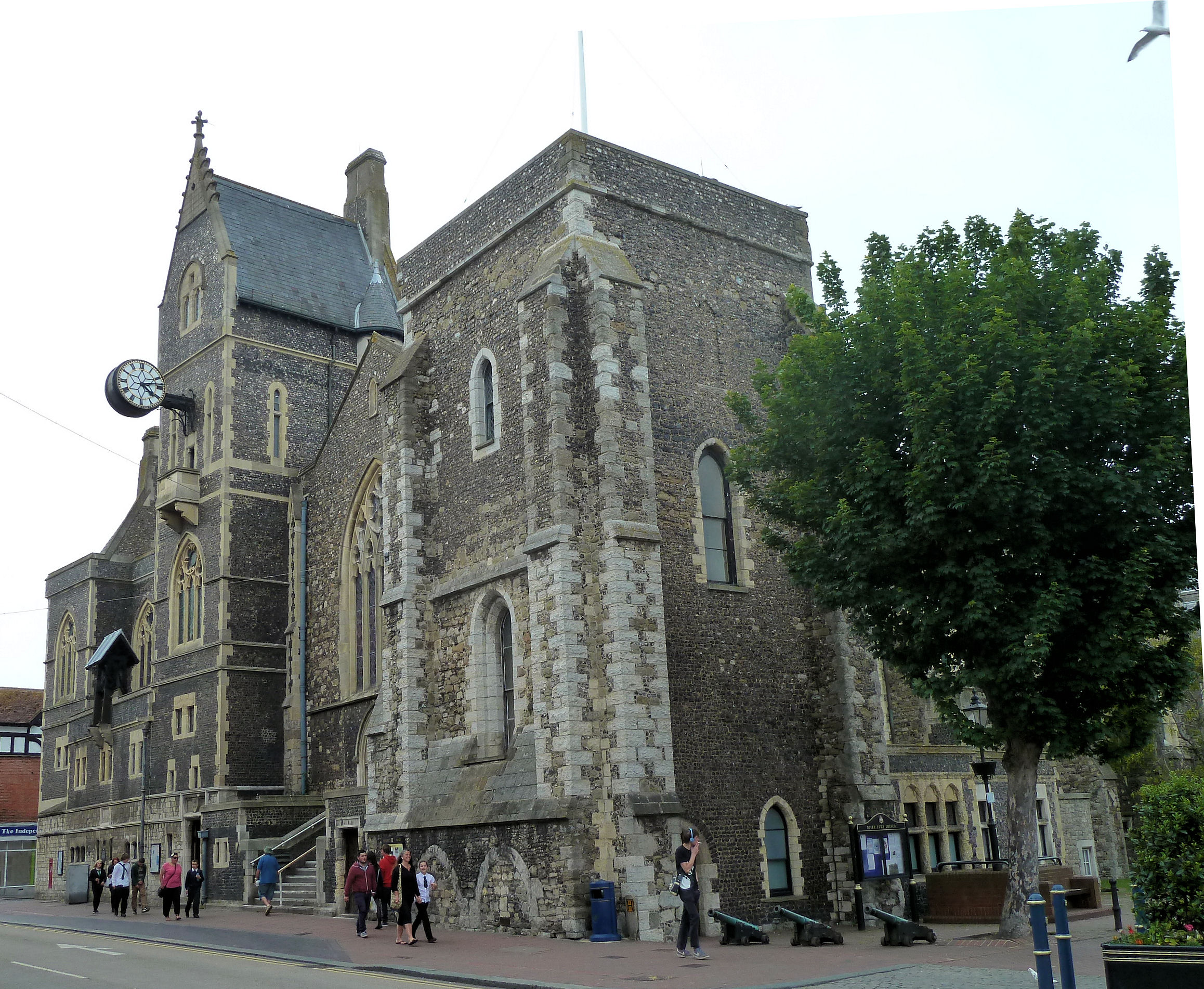
Maison Dieu, Dover's former Dover Town Hall which included Dover's Court

Maison Dieu, Dover’s former Dover Town Hall which included Dover’s Court

It also seriously affected the future Dover’s boatmen and some turned to their old trick of threatening passengers for more money. In February 1853, a gentleman who had returned from France for which he had bought a ticket that included the services of a boatman. On the day he travelled, they were midway between the ship and the shore when the boatman demanded a further payment of 2shillings (10p) from each of the passengers. The gentleman refused to pay and the boatman stopped rowing. It was cold, started to rain and the sea was choppy. Due to the pressure of the other passengers the gentlemen made the payment and they were all eventually rowed to the beach.

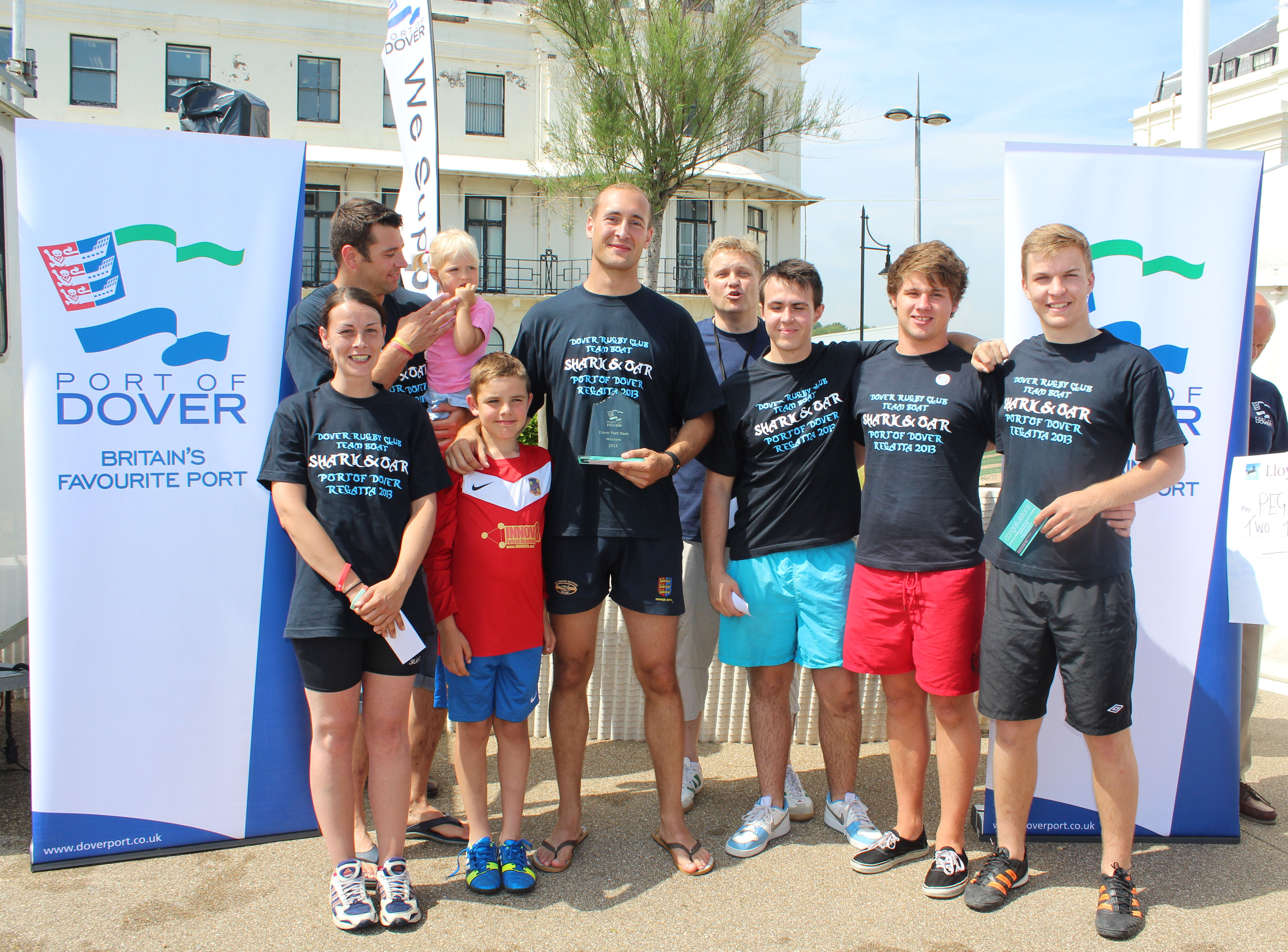
Modern day Dover Sharks - Dover Regatta 2013. DHB

Modern day Dover Sharks – Dover Regatta 2013. DHB

The gentleman then went to see Thomas Baker Bass, a solicitor, who was also the Town Clerk. He brought the case to the attention of the magistrates, headed by the Mayor, Charles Lamb. It was heard in Dover’s Court, then in the Town Hall – now the Maison Dieu –  and both the local and national media covered the case. The Bench punished both the boat owner and the boatman with heavy fines and imprisonment. Although this was possibly the last case of this nature  it left a legacy that people for Dover are saddled with today – the national press ran the story under heading of, ‘Dover Sharks’

However … with typical Dovorian sense of humour, we make the most of it as can be seen in the photograph above taken at the Dover Regatta of 2013!

  • Published: 
  • Dover Mercury – 27 February & 6 March 2014
Posted in Dover Sharks, Port and Transport | Comments Off on Dover Sharks

William Adcock – Builder of Excellence

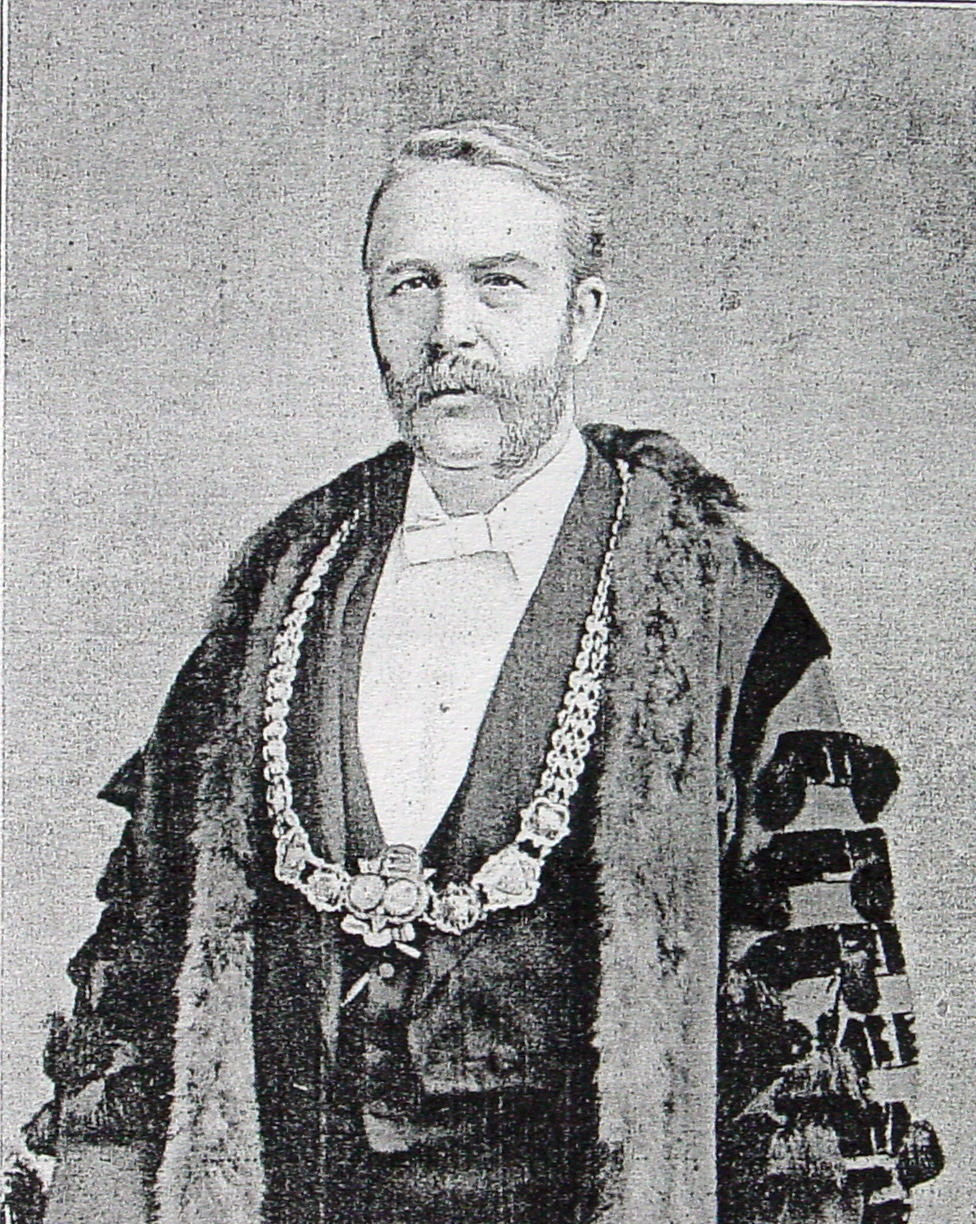
William Adcock - Mayor of Dover 1885-6 & 1890-1. Dover Library

William Adcock – Mayor of Dover 1885-6 & 1890-1. Dover Library

As one looks around Dover, there are still monuments to the work of William Adcock, Mayor 1885 and 1890. These include many of the nineteenth century villas’s that line Maison Dieu Road, Park Avenue, Godwyn Road, Leyburne Road, Castle Avenue, Leighton Road, and Millais Road. Also a number of the shops in Biggin Street.

William John Adcock was born in Nottingham in 1840, the son of a joiner and was admitted to Nottingham Grammar School on 20 January 1851 when he was 9 years and 10 months. William left school at Midsummer 1854 and the comment on his report was that he did well. He then joined the family building business and on its behalf, came to Dover in 1862. This was in connection with the Ecclesiastical Commission contract at Farthingloe and while in the town, he met and fell in love with Elizabeth Reynolds Mowle. She was the daughter of tailor, Reynolds Mowle, Snargate Street. They were married at St James new Church in 1863.

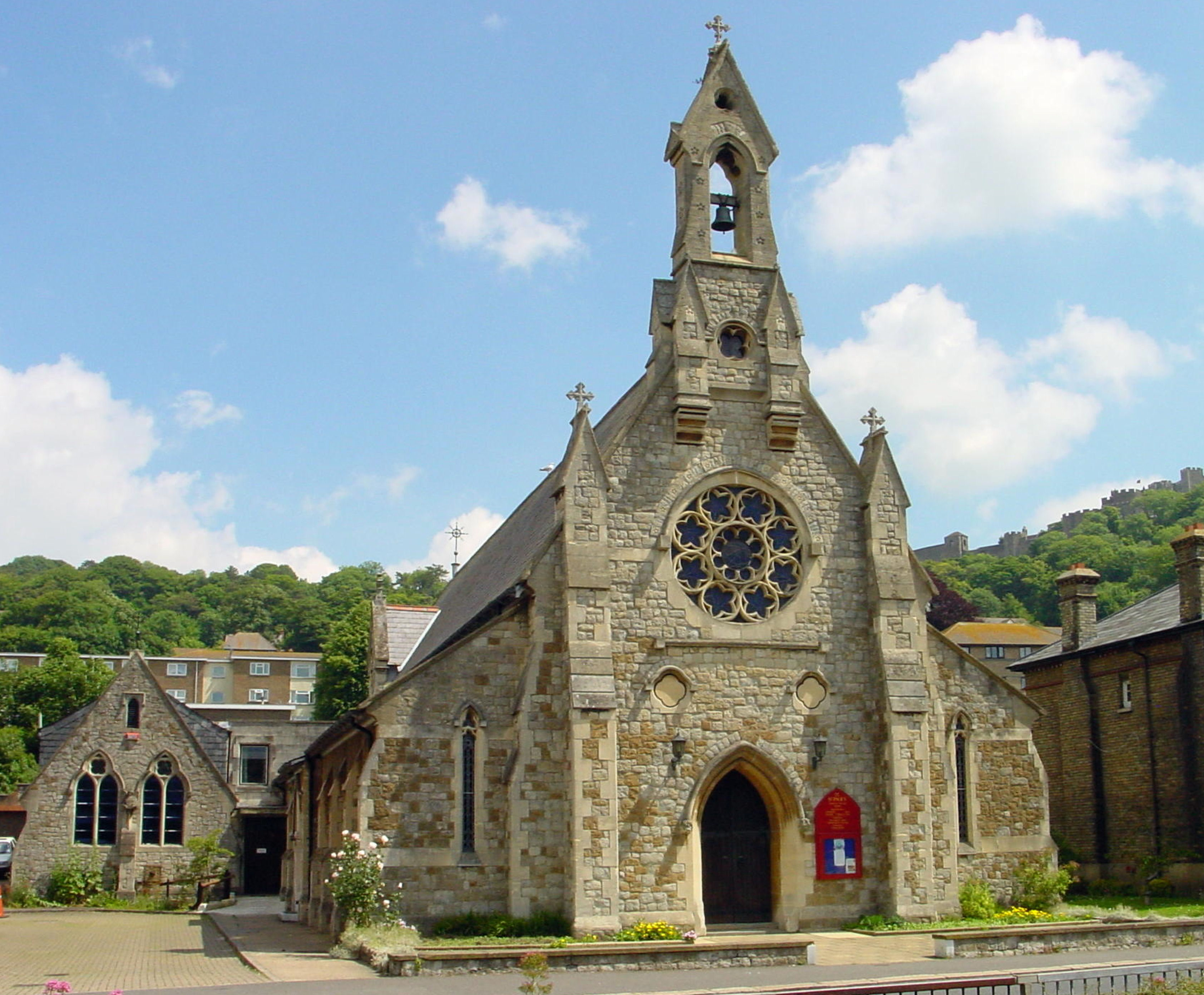
St Paul's Roman Catholic Church, Maison Dieu Road built by William Adcock.

St Paul’s Roman Catholic Church, Maison Dieu Road built by William Adcock.

Having decided to stay in Dover, William bought the premises of Thomas Mark, a builder in Townwall Street. Priding himself in the quality of his work, he specialised in building and the business quickly grew. When George Fry’s Maison Dieu building yard, Ladywell, became available William took it over. His reputation for quality workmanship was cemented in 1869, when he won the contract to restore the old St James’ Church – now the neglected ‘Tidy Ruin’ near the swimming pool. He had already proved his worth as one of the builders of St Paul’s Catholic Church on Maison Dieu Road and the census for 1871 shows that he was employing 60 men and 6 boys.

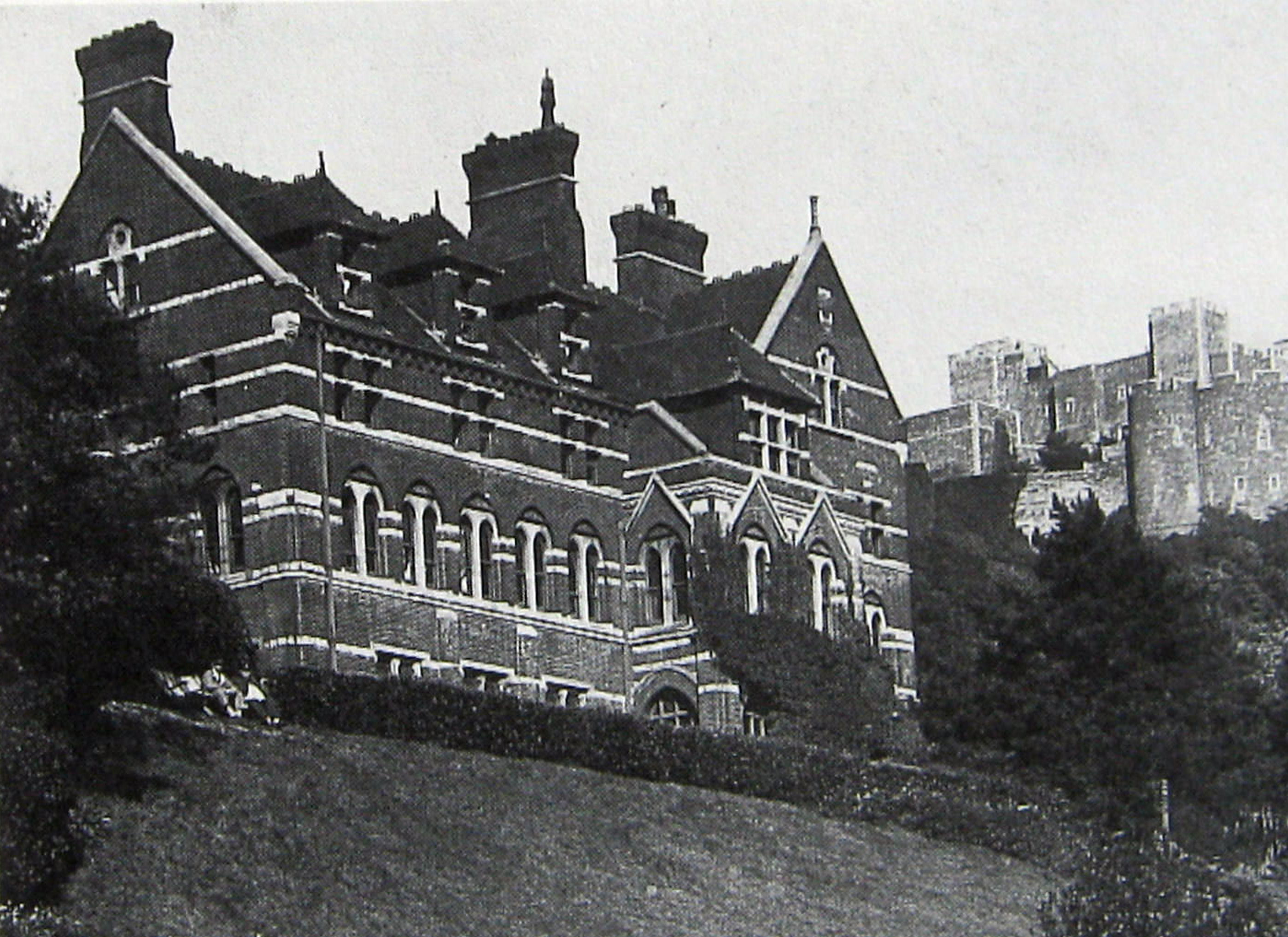
Castlemount built by William Adcock destroyed by fire 1973. Dover Library

Castlemount built by William Adcock destroyed by fire 1973. Dover Library

Over the next few years his firm built, Castlemount House, this later became Castlemount School (destroyed by fire in 1973). The quadrangle at Dover College and a number of churches and chapels. His reputation for restoring ancient buildings continued to grow and included the now demolished Old Park Mansion. He was also commissioned to build the military quarters at the Citadel on Western Heights and other military buildings around the town.

Such was William’s reputation as a builder of excellence that although he was rarely the cheapest tender for work, he did win most of the contracts he bid for. Indeed, he was ‘head’ hunted for contracts such as the battery for six guns at Tilbury and the defensive works on the Isle of Grain. When the upper galleries of Admiralty Pier were destroyed by a storm in 1877, the Admiralty specifically named him as the only builder who could be sure to provide an adequate sea/storm defensive.

William won the contract, in 1877, to build St Bartholomew’s Church that once stood on the corner of Templar Street and London Road, to serve the Tower Hamlets district. To Early English designs by the Diocesan Surveyor, Joseph Clark, William’s price for the building was £6,370, the final cost was £7,500. The church was 111-feet long, 55-feet wide, consisting of a clerestoried nave of five bays, side aisles and seated 750 persons. An, apse-shaped chapel was built shortly after as a memorial. The Archbishop of Canterbury Archibald Campbell Tait (1811- 1882) consecrated the church on 22 January 1879.  In 1972 the parish joined with SS Peter and Paul Church, Charlton which made St Bartholomew’s church redundant. It was demolished and flats were built on the site.

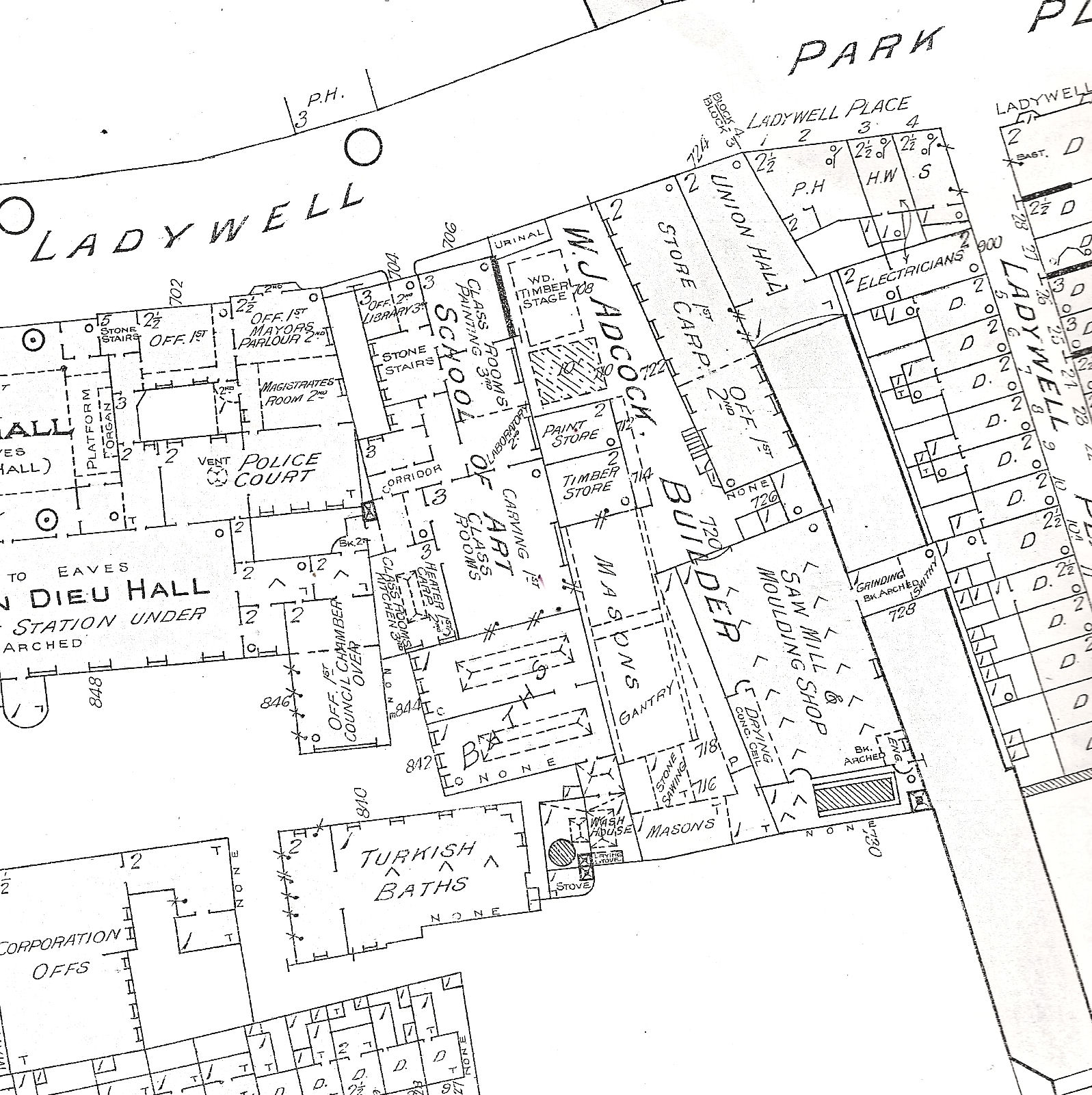
Adcock Buildersyard, Ladywell - Insurance Map 1905

Adcock Buildersyard, Ladywell – Insurance Map 1905

However, in January 1878, while William and his wife were away, fire broke out at his Ladywell premises. As the fire raged William’s stables, in which there were several horses, also came under threat. Although the doors were opened and people tried to cajole the horses out, they refused to move. That is, until one of William’s men, a Mr Dodd managed to coax them out and lead them to safety.

The fire also threatened to engulf the Maison Dieu, Maison Dieu House, 6 cottages and a ginger-beer factory. The police, who also ran the fire brigade at the time, were called and luckily as the yard was next to the River Dour water was pumped from the river. Although three fire hydrants were also utilised, William’s premises were completely gutted. Much of the contents of the workshops were insured and a new workshop was erected on the site not long after. However, in those days workers had to provide their own tools and most did not insure them. The Dover townsfolk opened a subscription to buy the replacement tools.

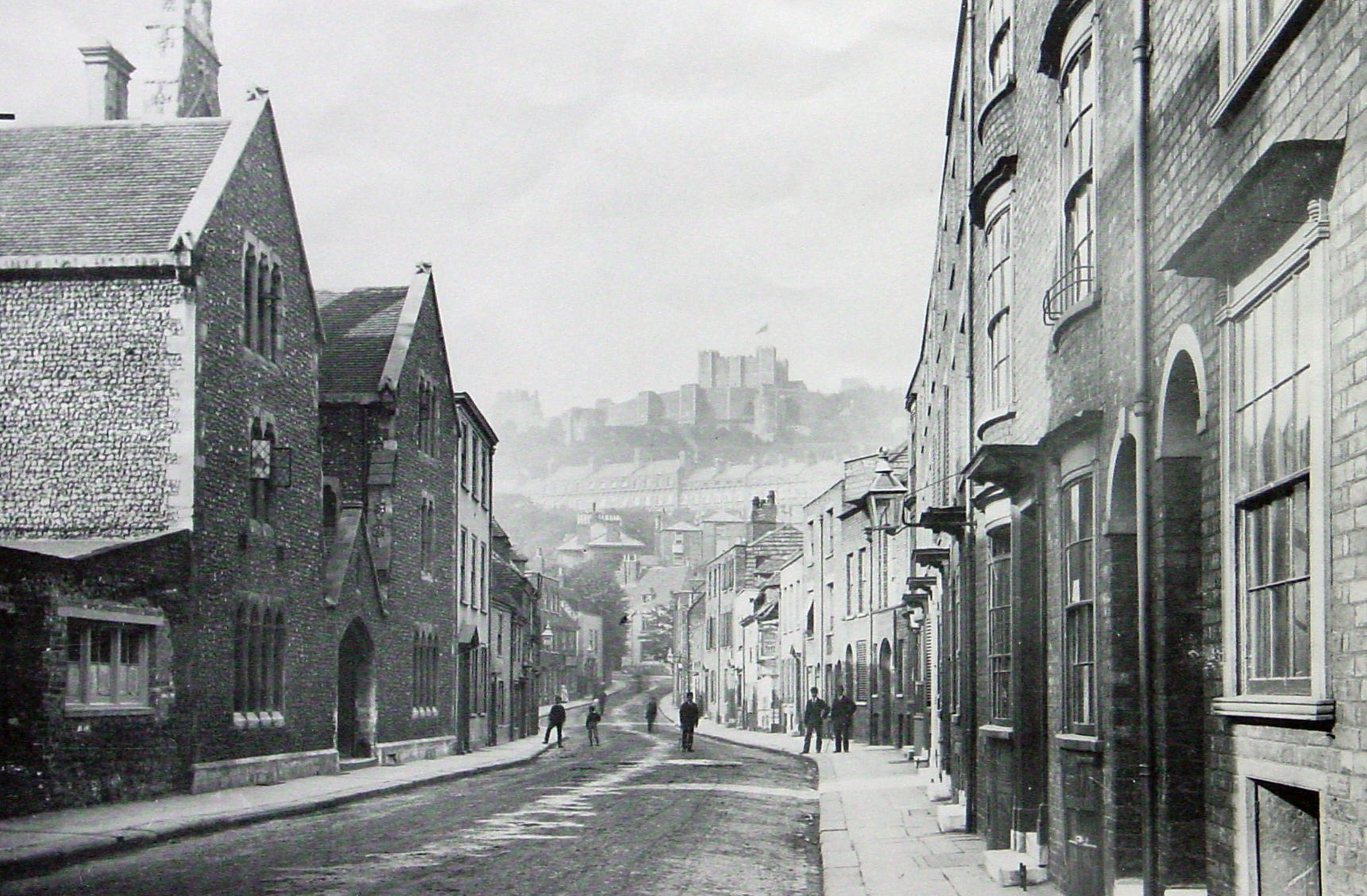
St James Street circa 1880. Dover Library

St James Street circa 1880. Dover Library

Having spent his childhood in Nottingham’s St James Street, it is of interest that as an adult he lived in Dover’s St James Street at number 56. When he was in his 30s William, joined the Conservative Party, winning a seat in Castle Ward in 1871 and again in 1874. On both occasions he was unopposed so why he chose to stand in the Liberal stronghold of Town Ward in 1877, was not specified. Albeit, he stood against Richard Dickeson and Philip Stiff, two councillors of high repute, and was thrashed. As compensation his Party, who had at the time the overall power under the influence of Joseph Churchward, nominated William as an Alderman. He was give the full term – six years but in 1883, the Conservatives lost overall power and William his seat.

William had bought a large plot of land in the Maison Dieu Fields estate and in 1883 built Leyburne House, on the west side of Leyburne Road and moved in. At the same time he built 22 residences in Harold Terrace and over the next few years sixty more residences in the area. Shelling during World War II (1939-1945) destroyed Leyburn House and a large car park now occupies the area.

In November 1884, William stood in the Liberal dominated Pier Ward  but lost. The following year, with Philip Stiff out of the way due to him having been appointed an Alderman, William stood for Town Ward and won. Immediately, he was elected Mayor, but on 15 November Alderman Philip Stiff – also a builder of high repute, had a heart attack and died. William’s first duty as Mayor was to attend Alderman Stiff’s funeral.  On 25 June 1886, Mayor William and his family received a visit at Leyburn House from the Compte and Comptess de Paris, who called to acknowledge the hospitalble reception given to them on their arrival at Dover!

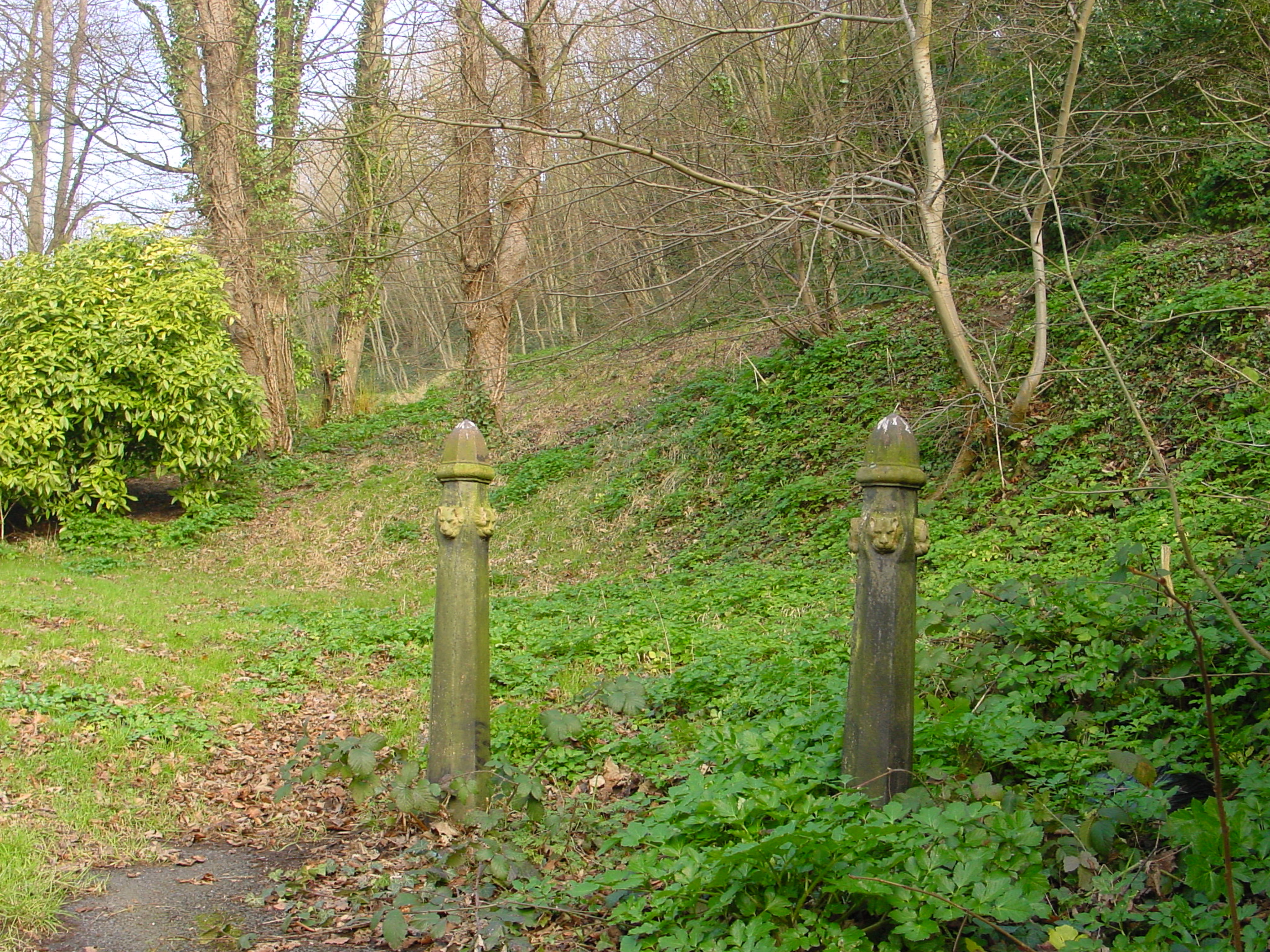
Remains of the zig-zag path at the top of Laureston Place built by the unemployed 1886

Remains of the zig-zag path at the top of Laureston Place built by the unemployed 1886

One of the major economic features of the United Kingdom in the nineteenth century were regular booms and slumps. On 4 January 1886, during a slump when unemployment was high, William called a special council meeting to deal with the problem. At that time there was no unemployment benefit and whole families were sent to the workhouse if they had no means of paying their way. At the meeting, William suggested that the council should provide work for the unemployed by building an ornamental zigzag walk running up Castle Hill. The description of what he envisaged included seats, trees, bushes and ornamental shrubs. William gained permission from the War Department, who owned the land. The remains of the zig-zag path can still be seen at the top of Laureston Place, on the opposite side of the road to the top entrance of Connaught Park.

When this was finished the men worked on improving Union Road (now Coombe Valley Road) and levelling the then Pier Recreation Ground. The total costs for these works were £643 and were funded by the council. The labour costs were 2s 6d (12½p) a day per man and William paid. He also ensured that the workers received their remuneration every evening for the day’s work.

With the help of his wife, Elizabeth and eldest daughter Anne and their female friends, they organised meals for the children of the poor. The women collected £171 and the crypt of the Maison Dieu, which had formerly been the town prison, was commandeered. That winter, 17,000 free dinners were provided. During this time, William led a deputation of Dover councillors to the Board of Trade to press for Dover’s harbour to be upgraded into a Harbour of Refuge, but without results.

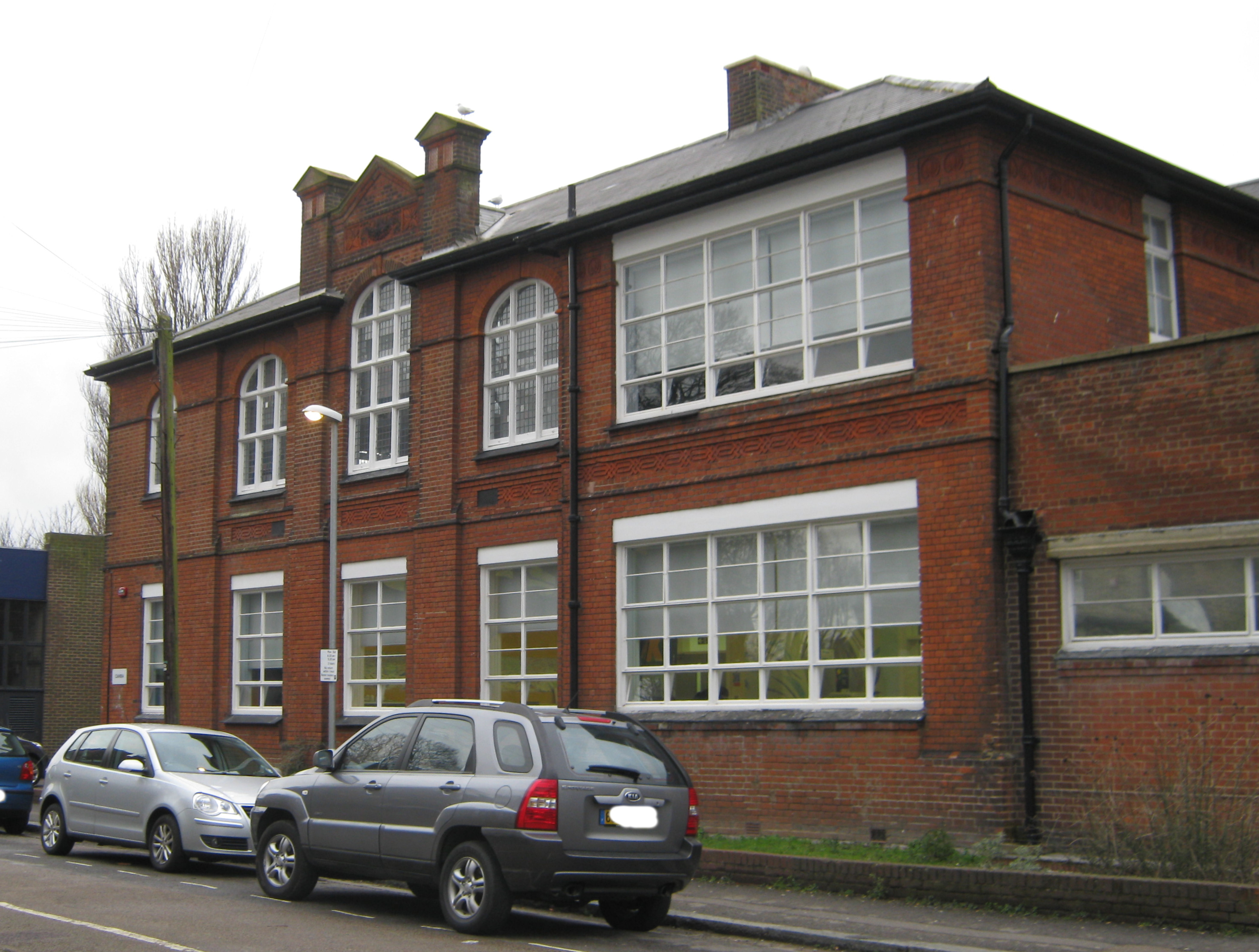
Built as the Dover Girls' High School, became the Dover Art School, now K-College.

Built as the Dover Girls’ High School, became the Dover Art School, now K-College.

Although the remainder of William’s first term of office was eventful, it was a public meeting that he called on 5 October 1886 that he was particularly remembered by his contemporaries. This appertained to the establishment of a Girls’ High school in Dover and was a controversial issue. At the time secondary education of girls was not considered of importance and in Dover, even elementary education was seen by a significant number as a waste of public money. Dover College had provided secondary education for boys since 1871 and William, having had a grammar school education, felt that it should be available to girls too. The plan went ahead and the Girls’ High School built in the Paddock and eventually evolved into the Dover Girls’ Grammar School.

Over the next few years William supported William East, the headmaster of Dover’s Art School, then in Northampton Street, for the town to invest in a purpose built combined Art and Technical School. Indeed, William Adcock went as far as making his builders’ yard on Ladywell available for £3,000, Kent County Council (KCC) gave a grant of £12,000 and the Corporation borrowed £11,000, repayable over thirty years. Of interest, the building contract was given to another local builder, William Bromley. The wife of Sir William Crundall, Mayoress of Dover, opened it in June 1894.

In March 1890, William purchased extensive properties, for £2,500, along the High Street in Canterbury belonging to the Delaseaux family. The rental value, at that time, was given as £205 per annum and they were bought on behalf of Edward Lukey, the then Mayor of Dover and son of John Lukey, who ran a wine business in Bench Street. Following the demolition much of the property, William’s firm built the County Hotel for Edward Lukey.

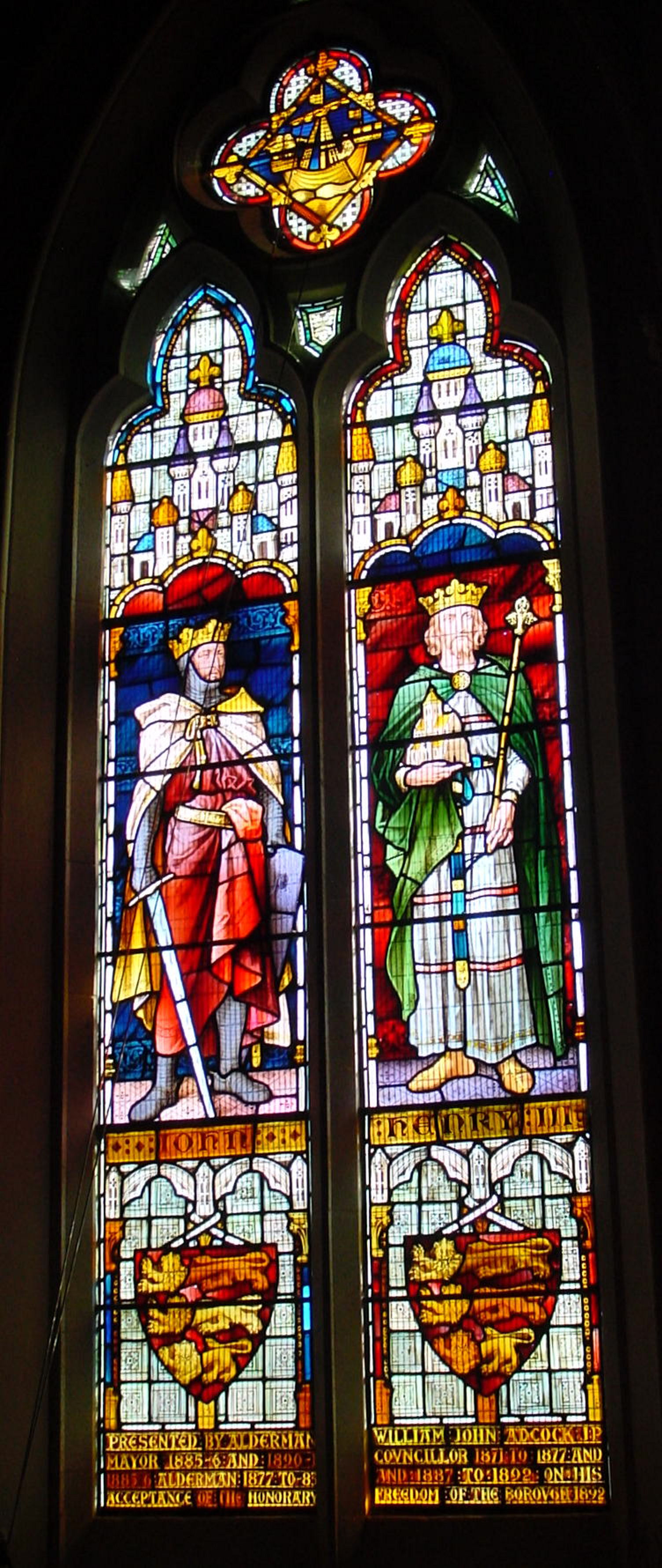
William Adcock window, former Council Chamber, Maison Dieu depicting King John and Henry III.

William Adcock window, former Council Chamber, Maison Dieu depicting King John and Henry III.

Eight months later William succeeded Edward Lukey as Mayor and again the economy was going into yet another slump. He immediately negotiated the purchase of what is now the Danes Recreation Ground, on behalf of the council. Before his term of office was over, William had the pleasure of ‘kicking off in two games of football and matches there…’ William also backed a project that resulted in the building many of the homes along Buckland Avenue. When his term of office finished William was granted the Honorary Freedom of the town, his citation stated, ‘twice a Mayor, thrice as Councillor, thrice as an Alderman, once as County Councillor and magistrate both for the borough of Dover and the County of Kent.’ In return, he donated the window in the Maison Dieu that depicts King John (1199-1216) and Henry III (1216-1272).

In the mid 1890s, William and his family moved to a new residence, which he built and called ‘Merton‘ in Kearsney. There is now a bungalow on the site. The house was gas lit and had a large stairwell in the centre of which was a gas mantle. In March 1907 William was leaning over the banister to light the mantle when he fell, sustaining an eight-inch gash on his head. The doctor was called who stitched the wound and the shaken William went to bed. Over the next few days, his condition deteriorated and on 4 April 1907, he died age 67 years. William was buried in St Peter & St Paul, River, churchyard and he is still seen by many in the building trade as, ‘the greatest builder to come out of Dover.’

  • Published:
  • Dover Mercury: 15 & 22 May 2008
Posted in Adcock William - Builder of Excellence, Builders | Comments Off on William Adcock – Builder of Excellence

Witch Trials

Dover Castle - the Seat of the Lord Warden, Constable of Dover

Dover Castle – the Seat of the Lord Warden, Constable of Dover

Theodore (602-690), Archbishop of Canterbury, published the first ecclesiastical laws condemning witchcraft in England, in the seventh century. It would seem from this that the fear of witchcraft had been around for a long time before and it continued, reaching its peak in the sixteenth and seventeenth centuries. At that time, on a county basis, Kent was second only to Essex in indictments with East Kent providing the most cases.

One of East Kent’s earliest recorded cases concerned Eleanor Cobham (c.1400–1452), the second wife of Humphrey Duke of Gloucester (1390-1447). Duke Humphrey was the youngest son of Henry IV (1399–1413) and appointed Lord Warden and Constable of Dover Castle (1415-1447) on 27 November 1415 by his eldest brother, Henry V (1413-1422). Duke Humphrey held the office for 32 years and throughout his tenure he was very popular throughout the Cinque Ports and was generally referred to as ‘Good Duke Humphrey’.

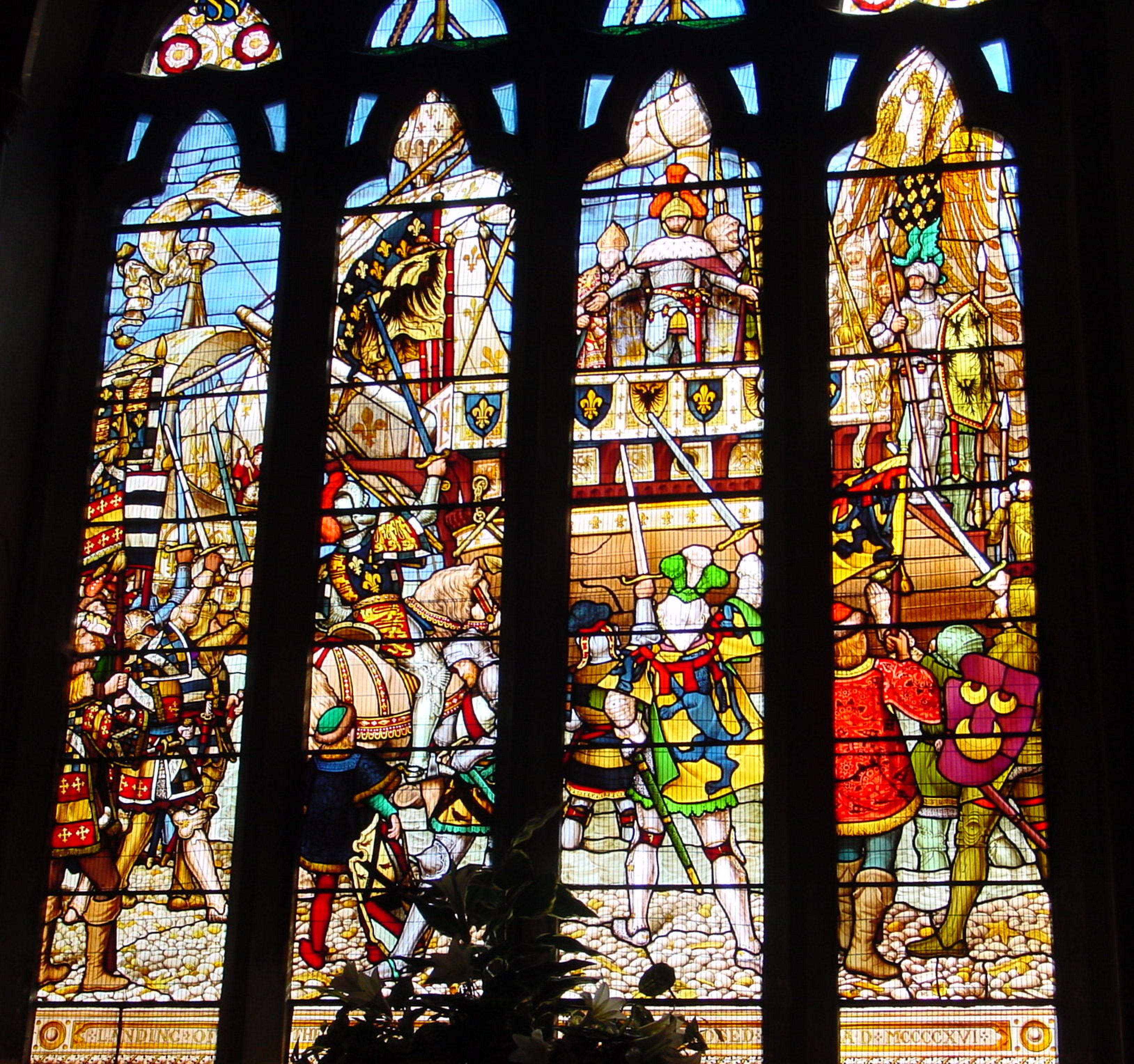
Landing of Emperor Sigismund, Good Duke Henry challenging him. Window in the Stone Hall, Maison Dieu

Landing of Emperor Sigismund, Good Duke Henry challenging him. Window in the Stone Hall, Maison Dieu

On 16 March 1415-16 (the new year started on 25 March), Sigismund of Luxembourg, King of Hungary and Croatia (1387-1437) and later Holy Roman Emperor (1433-1437), accompanied by the Archbishop of Rheims, visited Henry V to bring about what was hoped to be a reconciliation between Henry and the King of France, Charles VI (1380-1422). One of Duke Humphrey’s first duties was to challenge the Emperor, as he arrived at Dover, demanding his intentions and assurances that he would not attempt to excise any authority in England. When he was satisfied, the Emperor and his retinue were allowed to disembark. This scene is depicted in one of the windows in the Stone Hall, Maison Dieu.

Henry VI (detail) from a window in Maison Dieu.

Henry VI (detail) from a window in Maison Dieu.

Henry VI (1422-1461 + 1470-1471) succeeded his father to throne when he was only 6-years old but by Henry V’s will Duke Humphrey was appointed the Lord Protector to his nephew. Following the death of his elder brother, John, Duke of Bedford (1389-1435), Duke Humphrey became second in line to the throne and claimed the right of Regency. However, as the young Henry VI grew up he started to view Duke Humphrey with suspicion that was fuelled by his uncle’s enemies. In 1428, Humphrey had married his mistress, Eleanor Cobham who was said to be beautiful and clever. Eight years later, she was granted the robes of a duchess for the Garter ceremony.

Sometime after this rumour was rife that Eleanor had consulted astrologers who told her that Henry VI would suffer a life threatening illness in the summer of 1441. However, when Duke Humphrey’s enemies consulted their astrologers they found no evidence to show that the king would become seriously ill and therefore, if the rumours were true, Eleanor was guilty of treason. Thomas Southwell, Humphrey’s and Eleanor’s chaplain, Roger Bolinbrook, Eleanor’s personal clerk and Mary Jourdemain, a well-known witch were arrested. They were all charged with treasonable necromancy and following their interrogation, Eleanor was arrested. She denied most of the charges levied against her but did admit to consulting with Mary Jourdemain to obtain potions to help her conceive.

Southwell died while a confession was being extracted from him in the Tower of London. Bolinbrook and Jourdemain were brought to trial. Both found guilty Bolinbrook was hung drawn and quartered and  Jourdemain was burnt at Smithfield.

At Eleanor’s trial it was alleged that she had predict Henry VI’s death and used ‘spells’ to become pregnant in order to bear the future king. She was ‘examined’ by the Archbishop of Canterbury, Henry Chichele, at Leeds Castle and declared a witch. Eleanor was doomed to be burnt at the stake but because of her high birth, was reprieved. Instead, on 13 November 1441 she was made to walk the streets of London holding a burning taper – a punishment usually reserved for prostitutes. She was then obliged to divorce her husband and to spend the rest of her life in prison. At first Eleanor was sent to Chester Castle then Kenilworth, followed by Peel Castle on the Isle of Man and finally, in March 1449, Beaumaris Castle, Angelsea, where she died on 7 July 1452.

The reaction of Dovorians to all of this had been outrage and Henry VI threatened the town with serious penalties. However, two years before, William de la Pole (1396 -1450), the King’s Lord Chamberlain, negotiated a marriage treaty between the King and Margaret of Anjou (1430-1482). The couple married on 22 April 1445 and in November 1446, Henry VI, under Margaret’s influence, pardoned the people of Dover.

Although Duke Humphrey’s power was on the wane, on February 1447 he called Parliament together at Bury St Edmunds. When he arrived he was arrested and charged with high treason and three days later was dead – believed by Dovorians to have been murdered on the orders of William de la Pole. Humphrey’s death meant that next to the royal couple, William de la Pole was the most powerful man in England. In 1448, he was created the first Duke of Suffolk but the next three years saw the loss of nearly all of the English possessions and De la Pole was held responsible. On 28 January 1450, he was arrested, imprisoned in the Tower of London and sentenced to death.

North side of Market Square showing Lloyds Bank and Dicken's Corner, where the Church of St Peter once stood, said to be haunted by the headless ghost of William de la Pole

North side of Market Square showing Lloyds Bank and Dicken’s Corner, where the Church of St Peter once stood, said to be haunted by the headless ghost of William de la Pole

This was then commuted to five years in exile on the Continent but as his ship was crossing the Channel, on 2 May 1450, it was besieged and de la Pole was beheaded. The headless body was dumped on Dover beach and then taken to Wingfield, Suffolk for burial. According to Dover folklore locals, to avenge the death of Duke Humphrey, assassinated De La Pole and the head was buried in a chalk receptacle in St Peter’s Church. This stood, at that time on the northeast side of Market Square. The rest of that story can be read in Haunted Dover, suffice to say, the headless William de la Pole is said to haunt the part of Dover’s Market Square where St Peter’s church once stood.

The first recorded witch trial to take place in Dover was on 30 June 1558. This involved Clement Baker and his wife and was held in front of the Mayor, Thomas Colley and six Jurats (senior councillors). The couple were found guilty and were ordered that they, ‘shall for their evil demeanour and behaviour depart this town of Dover as a banishment for the space of one whole year and a day within this fourteen days next ensuing the date herafter and not come within the same towne upon payn of such punishment and fine as shall happen.’

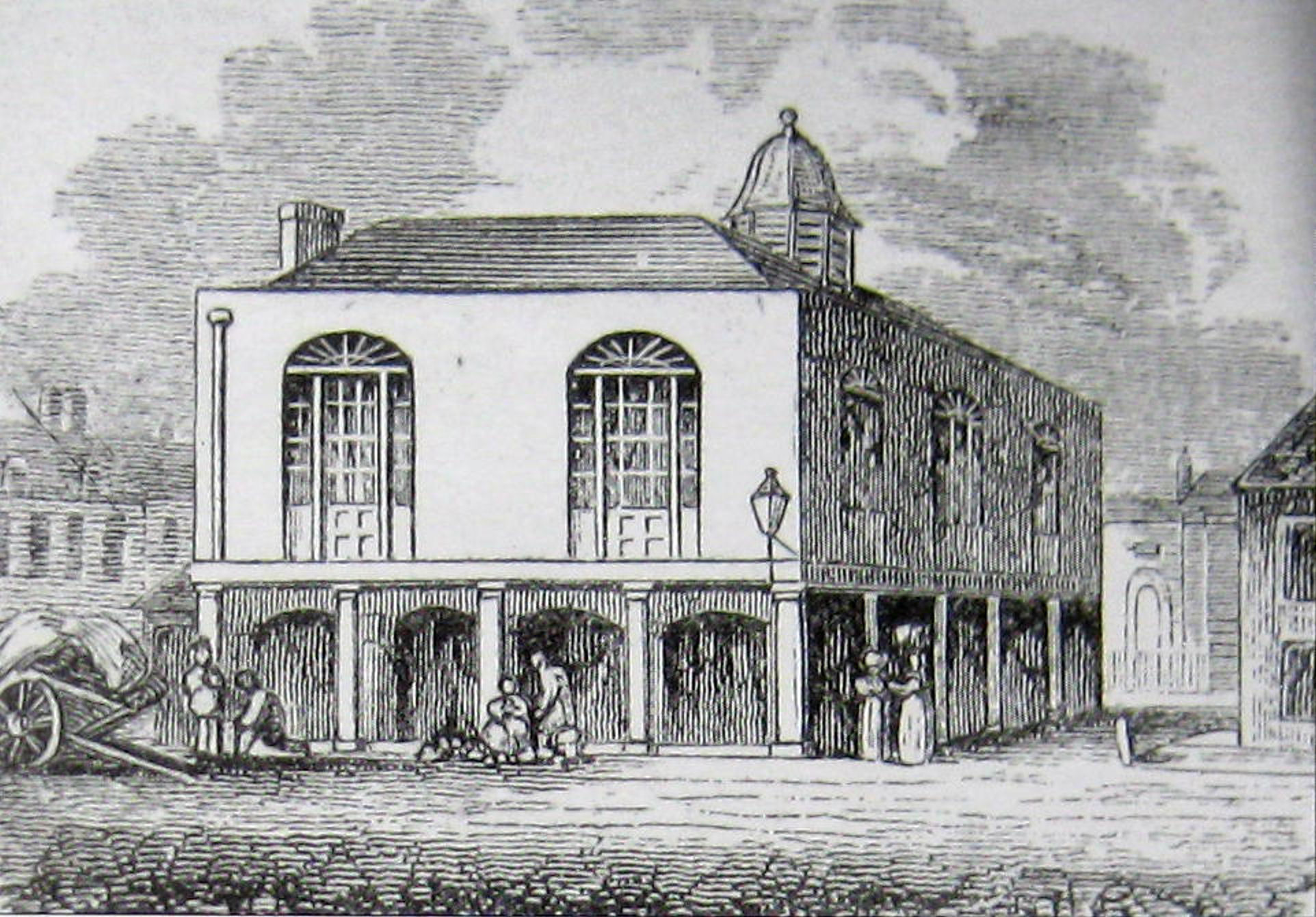
Town Hall, Market Square, 1606-1834 demolished 1841, where Dover's witch trials took place. Dover Museum

Town Hall, Market Square, 1606-1834 demolished 1841, where Dover’s witch trials took place. Dover Museum

The punishment was lenient for those days and it was also unusual for a man to be prosecuted. A great work on witchcraft was written by Reginald or Reynold Scott, as he signed himself (1541-1599), of Scot’s Hall, Smeeth, near Ashford. Following considerable research, including attending witch trials he published his 16-volume treatise in 1584, ‘The Discoverie of Witchcraft wherein the Leud dealing of Witches and Witchmongers is notablie detected…’ Throughout, he tried to protect those accused from persecution, saying that most were women and were ‘… commonly old and whose cheefe fault is that they are scolds‘. He went on to say that ‘… in tract of time the witch waxeth odious and tedious to hir neighbors; and they againe are despised and despited of hir: so as sometimes she cursseth one, and sometimes another; and that from the maister of the house, his wife, children, cattell &c. to the little pig that lieth in the stie … Doubtlesse (at length) some of hir neighbors die, or fall sicke; or some of their children are visited with diseases that vex them stangelie: … Which by ignorant parents are supposed to be vengeance of witches.’

The books were received with universal condemnation and as was custom of the day, the common hangman burned them. However, they were reprinted in 1651 and in folio in 1655 and James VI of Scotland (from 1603 James I of England), published ‘Demonologie’ printed in Edinburgh in 1597. The King’s work was aimed at refuting Scott’s sympathetic stance with James calling him that ‘damnable heretic Scot.’

In his work, Scott said that both children and adults were encouraged to inform on relatives and neighbours – children made 25% of witchcraft claims. Once accused, then inhuman tactics were used to extract a confession. Initially they were stripped and the ‘devil’s mark’ – a pimple, wart, growth or supernumerary nipple from which, it was believed the devil or ‘familiar’ could suckle, was searched for and included the internal examination of the anus and sexual organs.  If none were found, then the accused was ‘pricked,’ they were scratched all over until a ‘devil’s spot’ was found. It was believed that only the devil or familiar could see one but that it was insensitive to pain and did not bleed, hence the scratching. Next, the confession was obtained. This was obtained by beatings, deprivation of sleep and being walked. The latter was continuous and could last several days during which time the accused was not allowed to go the lavatory although excrement was sometimes washed off with cold water.  Throughout all of this, the accused was continually asked leading questions by a cleric, Bible in hand.

The ‘final test’, the accused faced was to be ‘swam’. Wearing only their underclothes, they were dragged to a stream, the harbour or village pond. The big toes and thumbs were tied together cross-wise and a rope was tied around the waist so that the person could be retrieved after the event. They were then thrown into the water and if they drowned they were declared innocent, if they floated, this proved that they were a witch and brought out to be tried in a church court. The evidence from the confession, swim and pricking along with the allegations made by the accusers would be then used and when found guilty the person was either hung or burnt.

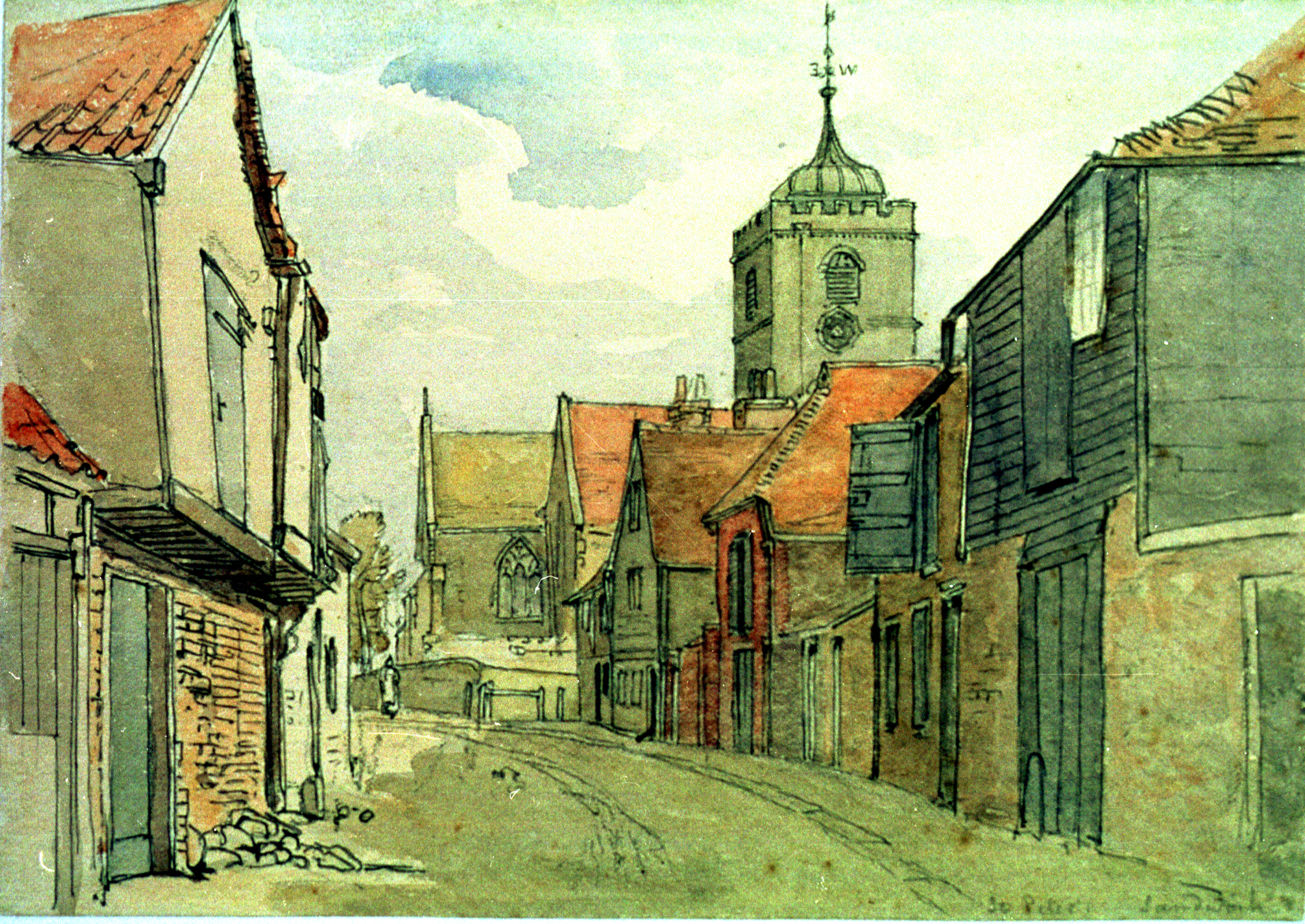
Sandwich - looking towards St Peters Church 1886-89 by J L Roget - Dover Museum

Sandwich – looking towards St Peters Church 1886-89 by J L Roget – Dover Museum

The 1631 records of Sandwich, tell of Goodwife Reynold who having ‘been swum for a witch’ and was hanged. In 1645 the same fate was metered out to Widow Drew and in her case the accounts show that ‘been swam for a witch’ cost the locals 2s (10pence) but after her death ‘her goods were sold at auction’ – one assumes to pay for the punishment.

That year, 1645, Joan Wallingford, Joan Cariden, Jane Hott and Elizabeth Harris were found guilty of practising witchcraft at Faversham and the first three were executed. Apparently, Thomas Gardener fell out of a tree or a window and hurt his posterior, which became a source of amusement. Angry, he blamed Joan Wallingford as the true cause of the accident, saying that it had been brought about by witchcraft. Joan, subjected to the usual interrogation procedure, confessed that she was a witch and named the other three as accomplices. Her pet dog was cited as her familiar.

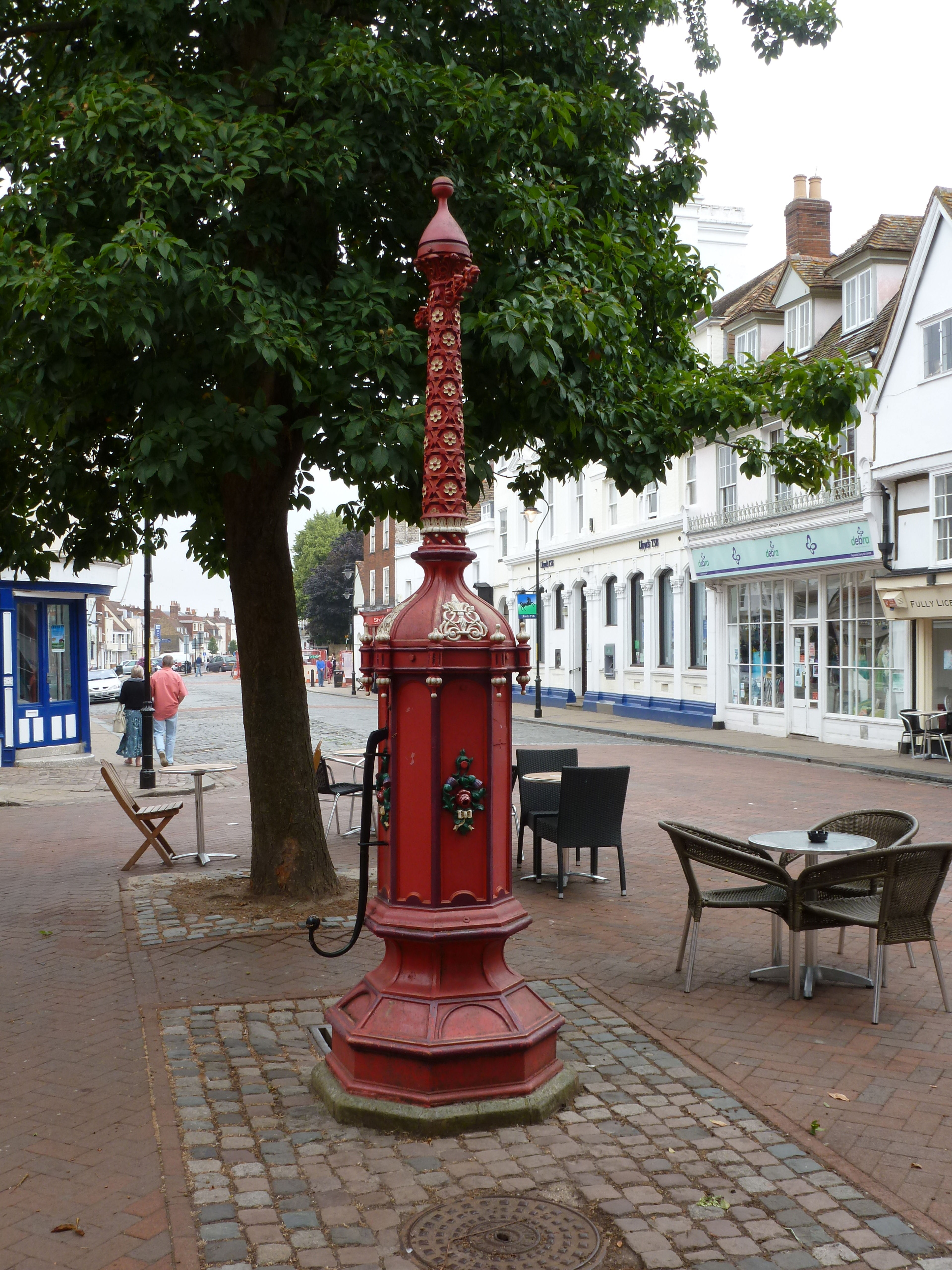
Faversham town pump where the alleged witches were hung.

Faversham town pump where the alleged witches were hung.

Joan Cariden and Elizabeth Harris, following the usual interrogation, also confessed. Jane Hott denied witchcraft but did ‘admit’ to a familiar – ‘a thing like a hedgehog but as soft as a cat had paid regular visits to suckle from her.’ They were all swum but floated. Jane Hott said that this had happened because one of the spectators had previously had his way with her and had laid bets that she would not sink. Three of the women, Joan Wallingford, Joan Cariden and Jane Hott were hung on Monday 29 September 1645 from a tree near Faversham’s town pump. Why Elizabeth Harris was not included and what happened to her is not clear.

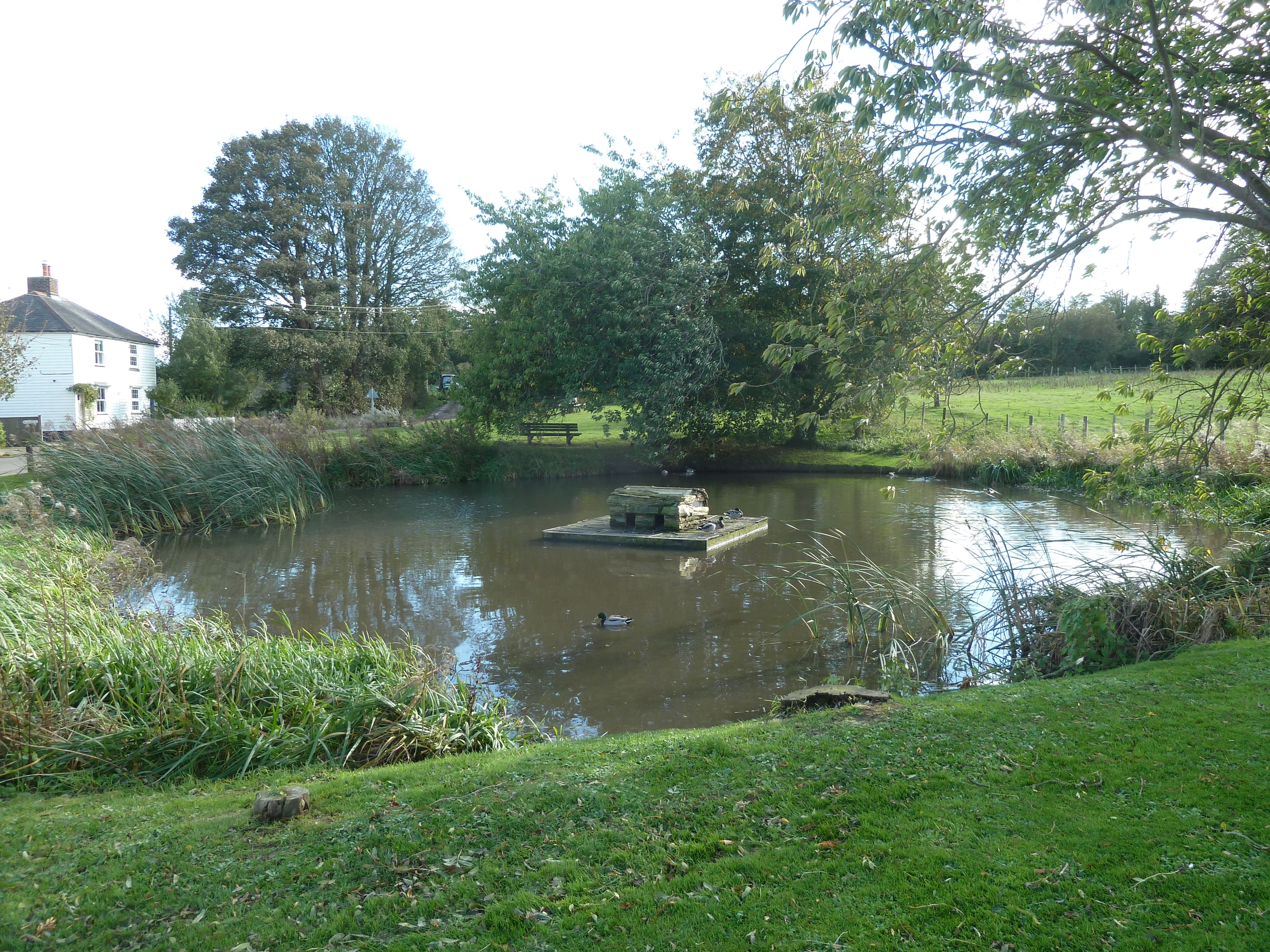
In the 1640s, Nell Garlinge of Coldred was thrown into the village pond but drowned and therefore declared innocent. At about the same time, another woman simply known as Esther was dragged three miles from her hut in Nonnington to Adisham pond where she too was hurled into the cold water. Esther floated and the crowd, ‘mad with superstitious wrath, pelted the poor woman with stones,’ until a farmer called upon his men to rescue her. Unfortunately, he was too late as Esther was dead on his arrival.

Coldred Village Pond where Nell Garlinge died during being 'swum'.

Coldred Village Pond where Nell Garlinge died during being ‘swum’.

Sometimes, good sense did prevail. When Goodwife Gilnot of Barham was accused by her neighbours of witchcraft, Henry Oxinden (1607-1642), the local squire, wrote a letter to Dean Isaac Bargrave (1586-1643) at Canterbury Cathedral, saying: ‘Sir, my earnest request unto you is that you will not lightly believe such false and malicious reports as you hear, or may hear alleged against this woman, whom I believe to be religiously disposed … And for so much as the neighbours help themselves together, and the poor woman’s cry, though it reach to heaven, is scarce heard here upon earth, I thought I was bound in conscience to speak in her behalf.’

The last execution, in England, for witchcraft took place in 1685. So when Hanna Baker of Elham was found guilty of ‘inchanting cattell’ in 1703, she was sent to prison for a year. She was also made to stand in Elham pillory on ‘the day after Ladyday (25 March), St John’s Day (24 June), Michaelmas (29 September) and Christmas (25 December) for the space of six hours.’

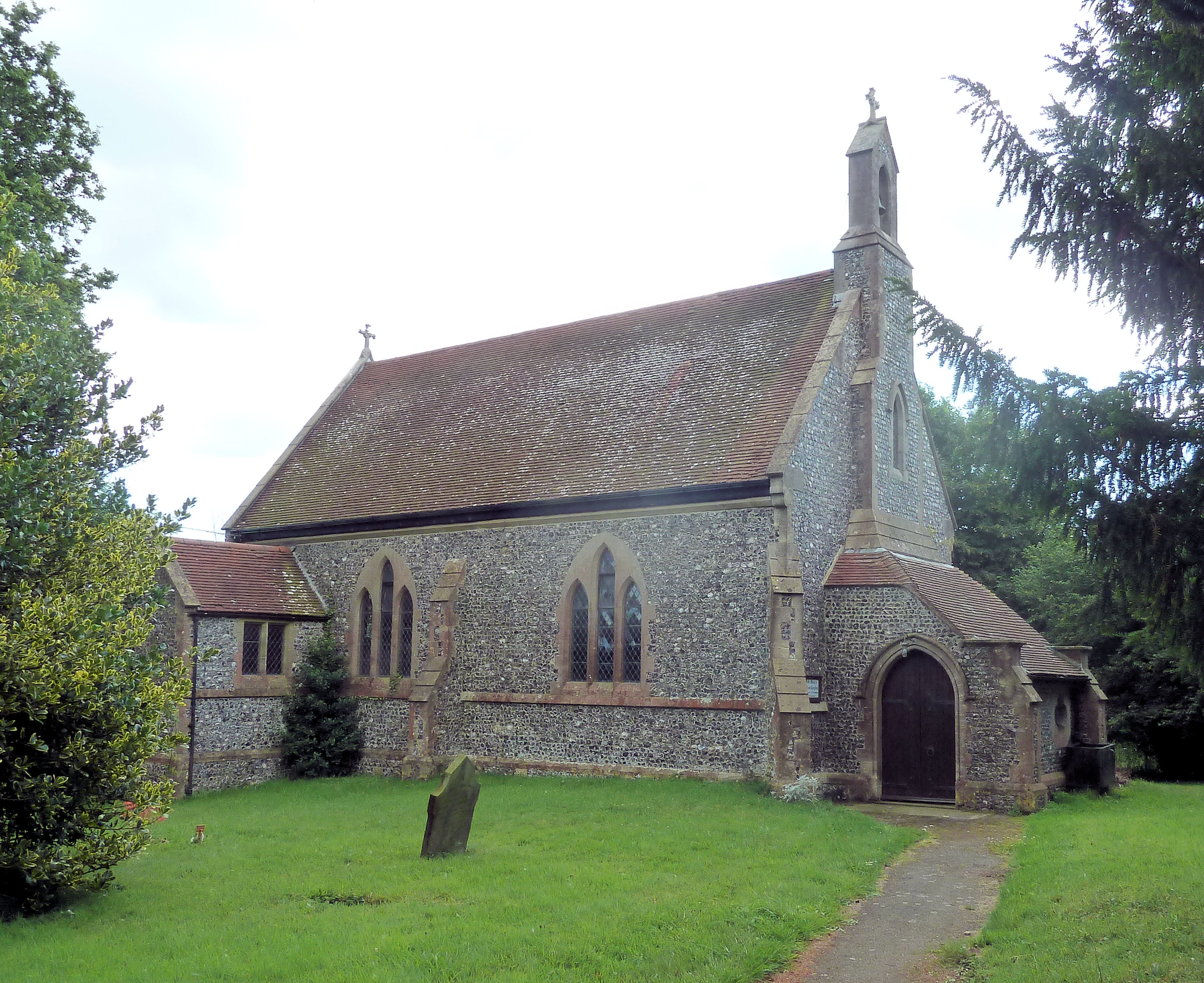
St Mary's Church, West Langdon

St Mary’s Church, West Langdon

The laws against witchcraft were repealed in 1736, but that did not mean that ‘hunts’ were over. In 1762, a quarter of a century later, the wife of John Pritchers of West Langdon was dragged from her house for about a mile along a dirt track. When the posse reached the home of a thirteen-year-old boy whom she was supposed to have bewitched, she was ‘pricked’ in order to find a ‘devils spot.‘ The crowd convinced she was guilty, were about to ‘swim’ her, when a local magistrate intervened and saved the poor woman’s life. The chief perpetrators of what had happened were both convicted.

  • Published:
  • Dover Mercury: 16 September 2004
Posted in Courts, Crime & Punishment, Religion & Churches, Villages and Towns, Witch Trials, Witch Trials, Witch Trials | Comments Off on Witch Trials