Glatton – the Catastrophe and the Salvage

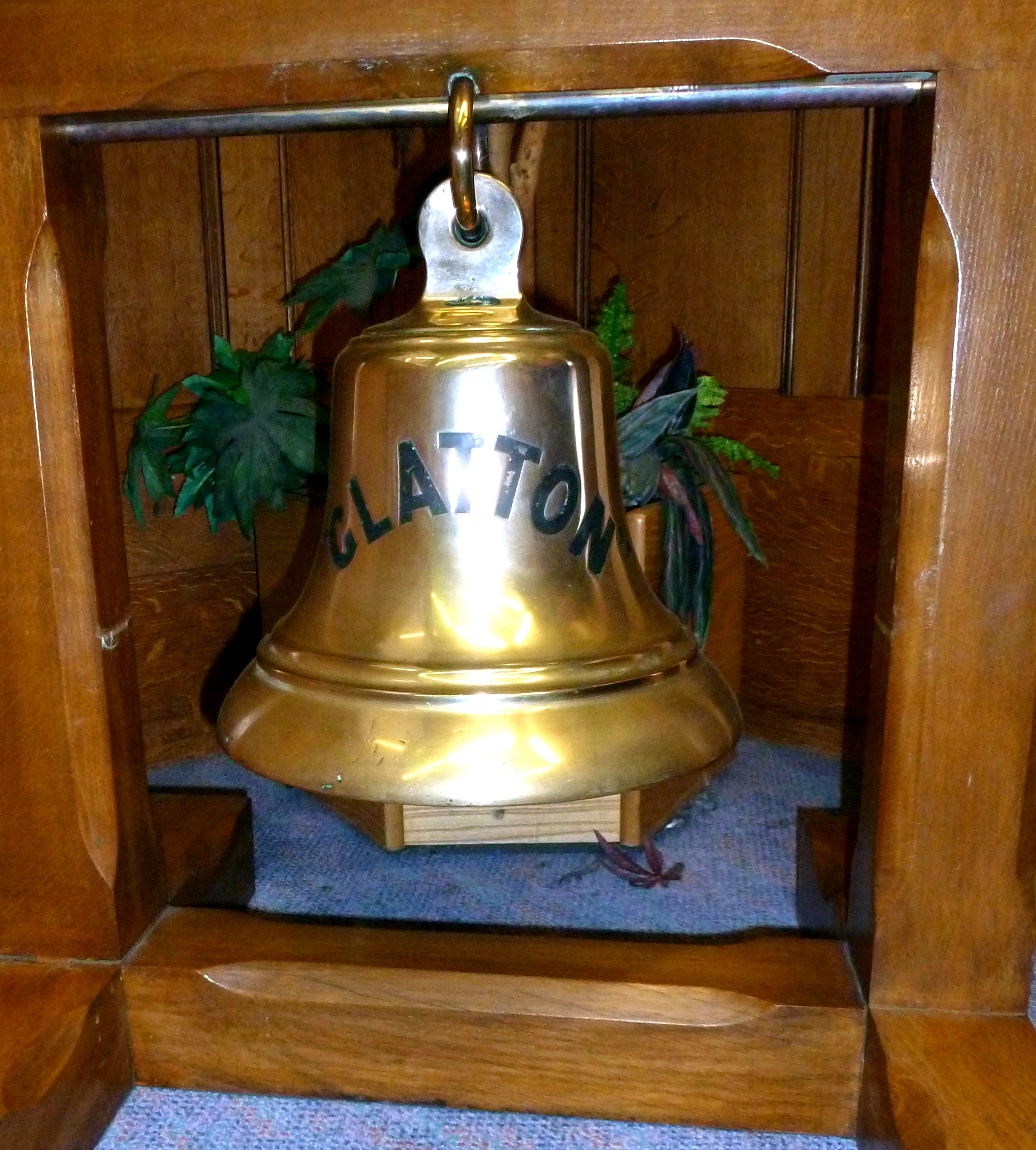
Glatton's Bell in the foyer of Dover Harbour Board House, Waterloo Crescent. LS 2013

Glatton’s Bell in the foyer of Dover Harbour Board House, Waterloo Crescent. LS 2013

In the foyer of Harbour House, Waterloo Crescent – the headquarters of Dover Harbour Board (DHB) –  is the bell from the World War I (1914-1918) monitor ship Glatton. It is a reminder of a wartime catastrophe that was kept under wraps for the sake of the country’s moral.

The Glatton, a monitor, was originally built for the Norwegian Navy in January 1913, as one of eight coastal defence ships. In 1918, she was taken over by the Royal Navy and sent to Sir W G Armstrong Whitworth & Co Ltd, Newcastle-upon-Tyne for conversion into a new type of monitor warship. Monitors were designed for coastal bombardment, consequently they had a shallow draft and usually had two guns high up in the turret. At the refit, the Glatton, and her sister ship Gorgon, were fitted with two 9.2-inch guns in the turret and four 6-inch guns lower down. They were also fitted with blisters on the side of their hulls that could be filled with water. These were to provide additional stability when firing the guns and also protection against submarine attack.
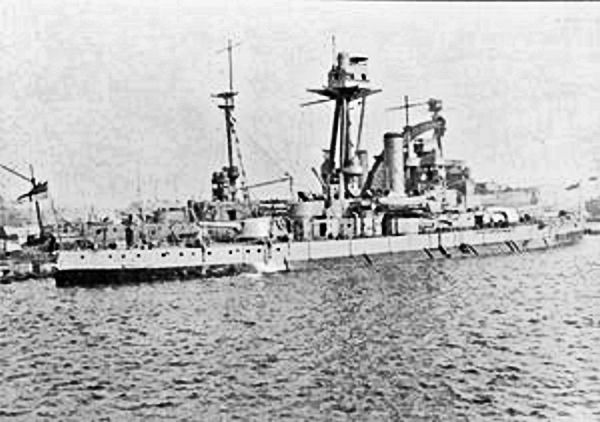
HMS Gorgon sister ship to the Glatton. Internet

HMS Gorgon sister ship to the Glatton. Internet

The Glatton was commissioned on 31 August 1918  and on Friday 6 September was loaded with ammunition, depth charges and explosives. Her orders were to take soldiers across the Channel from Dover to France for the offensive and then to be part of the attack on the German held Belgium coast. On 9 September, before leaving North Shields, the Glatton underwent sea and gun trials and then left for Dover arriving on 12 September. By that time, there were other armoured monitors in the harbour, including the Gorgon. There were also several well-armed smaller ships all being assembled for the offensive.

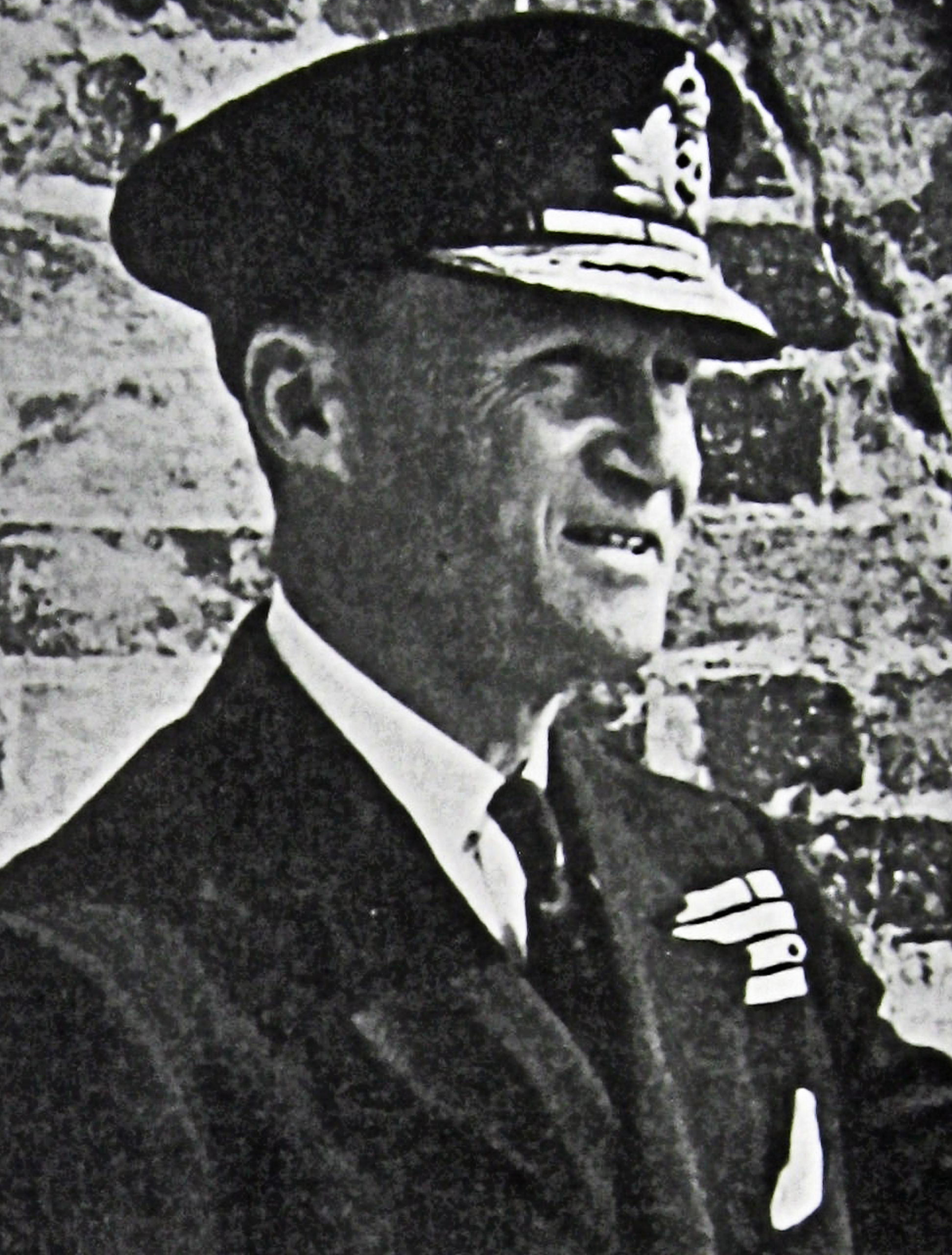
On the morning of 16 September, the Glatton was some 500 yards from the shore and took on board 135-tons of coal from the collier Thornley. In the afternoon her 303-crew members were on board but early in the evening a large number left to enjoy Dovers entertainments including Captain Neston Diggle (1881-1963). Captain Diggle was a highly decorated Royal Navy officer.

The evening was quiet and those left on board were going about their business. Then suddenly, at 18.17hrs, there was a tremendous explosion. In Dover buildings shook and windows were broken. Many local folk thought that the Germans were shelling the town with heavy guns from ships close to the harbour and ran for shelter. Those who could distinguish between the sound of an explosion from gunfire guessed that it came from the harbour and made their way down to the Seafront. The news quickly spread that the Glatton had blown up and yellow flames (probably from burning cordite) were belching from her. Soon the Seafront was packed with spectators.

In the harbour, the Glatton was ablaze but within minutes of the explosion the DHB tugs, Lady Duncannon and Lady Brassey, were alongside. Both tugs were spraying water onto the blaze and as the skipper of the Lady Brassey, Captain W J Pearce, told reporters afterwards, ‘I ordered my men to get out the fire-fighting apparatus and we forced our way through the scorching, suffocating barrage of smoke and scrambled on the Glatton. Vague figures kept looming up – wounded men struggling to escape but everyone were now aware that at any moment the ship might blow up.’

Meanwhile, the remaining DHB tugs and dockyard tenders were towing other fully loaded monitors as far away from the burning vessel as possible. From the monitors and other ships in the harbour, lifeboats were launched and attempts were made to rescue as many as possible of the crew of the Glatton. The first of the survivors were landed on the Promenade Pier – at the time, renamed Naval Pier as it had been commandeered by the Royal Navy for the duration of the War. Some of the injured were able to walk to the shore end but they were all badly burnt and their clothing torn to pieces. Naval ambulances took the men to the Naval sickbays and the military hospital on Western Heights Injured were also taken to the hospital ship Liberty, berthed in the harbour.
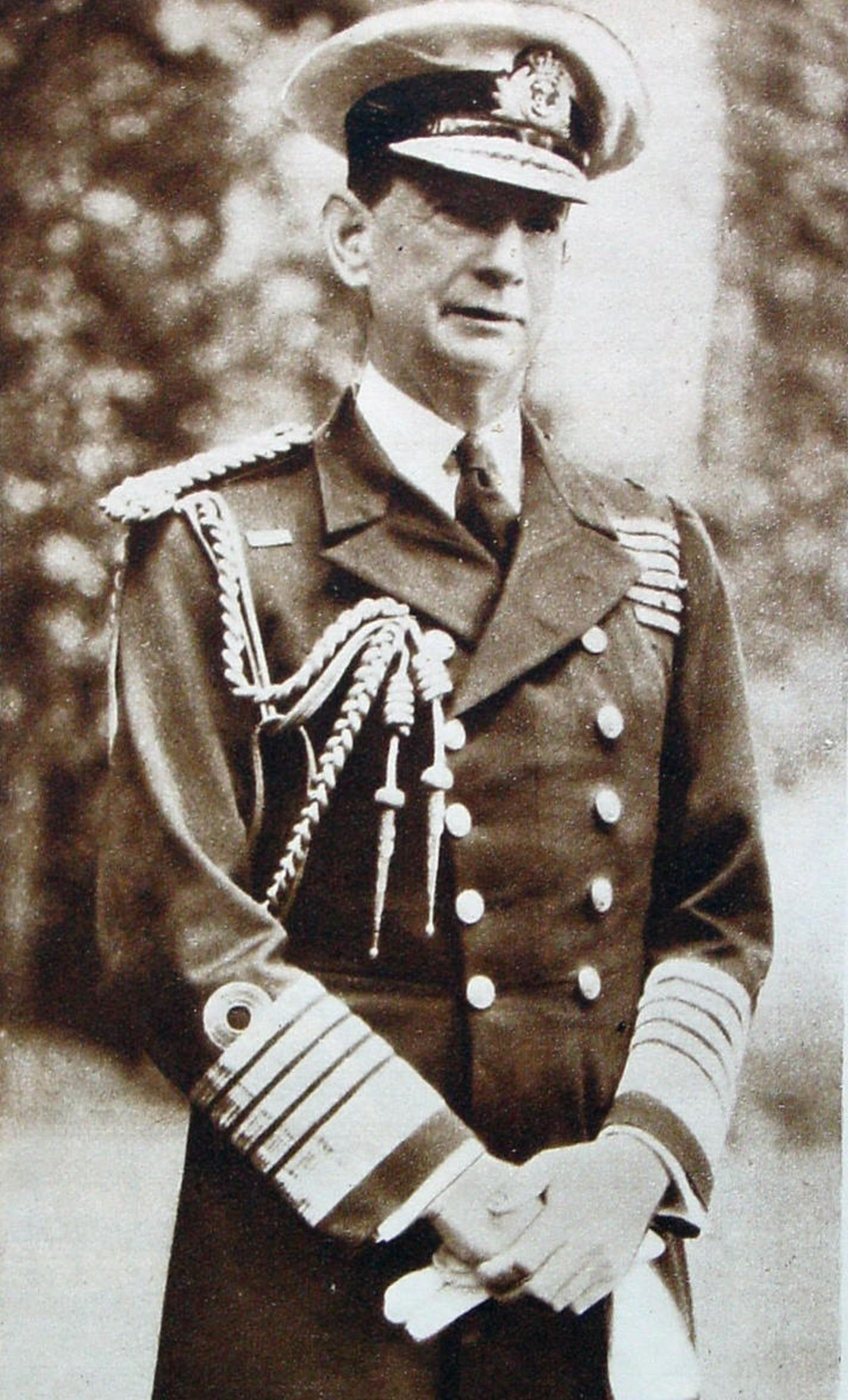
Vice-Admiral Roger Keyes (1872-1945). Doyle collection

Vice-Admiral Roger Keyes (1872-1945). Doyle collection

As it was Wartime, the town was subject to military rule. The Admiral of the Port was Vice-Admiral Roger Keyes (1872-1945), who on 23 April 1918 had masterminded the successful Zeebrugge Raid. At the time of the Glatton accident he was about to attend a dinner in St Margaret’s Bay. On being told of catastrophe the Admiral immediately returned to Dover and twenty minutes later was running down Promenade Pier passing wounded men. From there, Keyes took a boat out to the Glatton and boarded her, where Captain Diggle met him. Both surveyed the extent of the damage at which time a white pall of smoke some 600-feet high hung over the ship. The Vice-Admiral was told that the explosion had occurred amidships. Keyes then returned to Admiralty House on Marine Parade.

Ratings on board the Glatton, many of them injured, volunteered to open the seacocks in the bow of the ship, in an attempt to flood the magazines. They were successful and the fire was extinguished in that part of the ship. All the tugs and dockyard tenders were playing water onto the blaze when suddenly the fire amidships flared up again. The dense smoke changed from white to black indicating that oil and fuel were burning and the fire was moving towards the stern of the vessel. In the magazines there, the remaining half of the ammunition was stored. Every vessel that could hose water was around the midship and stern of the Glatton but it was becoming obvious that the inferno could not be brought under control in time to prevent a massive explosion.

It was then that Keyes had to make the most important decision of his life.

Did he  allow those fighting the fire to do their best and risk the Glatton blowing up?

If he took that option it could have a subsequent domino effect of causing other munitions ladened ships to blow up and, in the worst-case scenario, potentially thousands of deaths with the destruction of the town of Dover.

Alternatively, he could order the sinking of  the Glatton even though there may be men still trapped on board.

Keyes contacted Mayor Edwin Farley, the local military and the harbour officials and appraised them of the situation and what he planned to do.

On the Vice-Admiral’s command the town’s air raid sirens were sounded and the police, who were then under council jurisdiction erected barriers across the town in line with the Market Square. Detachments of troops arrived from the Castle and Western Heights with rifles and bayonets, wearing steel helmets and gas masks. Their orders were to help the police shepherd the crowds from the Seafront, the streets behind and all the adjacent properties, to safety behind the barriers. The armed soldiers manned the barriers but most folk made their way up to Western Heights where they could see what was going on. On board the Glatton, Captain Diggle ensured that everyone, who could be found, dead or alive, was off the ship and he then left by the last boat. All of the vessels in the harbour pulled away from the Glatton to what was hoped were a safe distance.

Vice-Admiral Keyes, then ordered two destroyers to torpedo the Glatton.

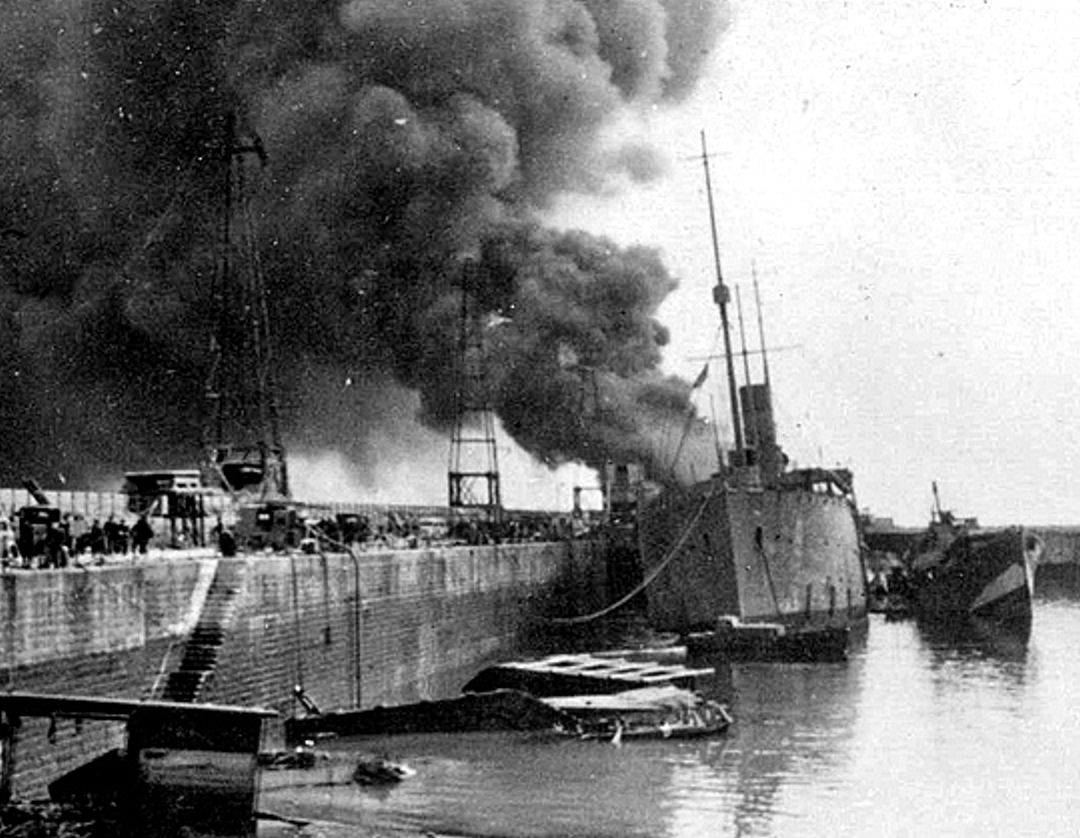
Glatton following her being sunk in Dover Harbour September 1918. AS Collection

Glatton following her being sunk in Dover Harbour September 1918. AS Collection

At 19.50hrs the Cossack, a Tribal-class destroyer, aiming at a pre-selected vulnerable part on the starboard side (right, looking towards the bow), fired two 18-inch torpedoes one of which failed to explode. The M-class destroyer Myngs followed, firing two 14-inch torpedoes. When the three torpedoes exploded, smoke was driven up the Glattons funnels and the blaze roared with renewed vigour. As she was a monitor, the Glatton was almost flat bottomed and it was expected that she would heal-over. She did, but not as quick as had been anticipated – would she blow? At 20.10hrs the Glatton turned turtle, her port side(left) uppermost and started to sink in 40-foot of water. Much to the relief of all concerned.
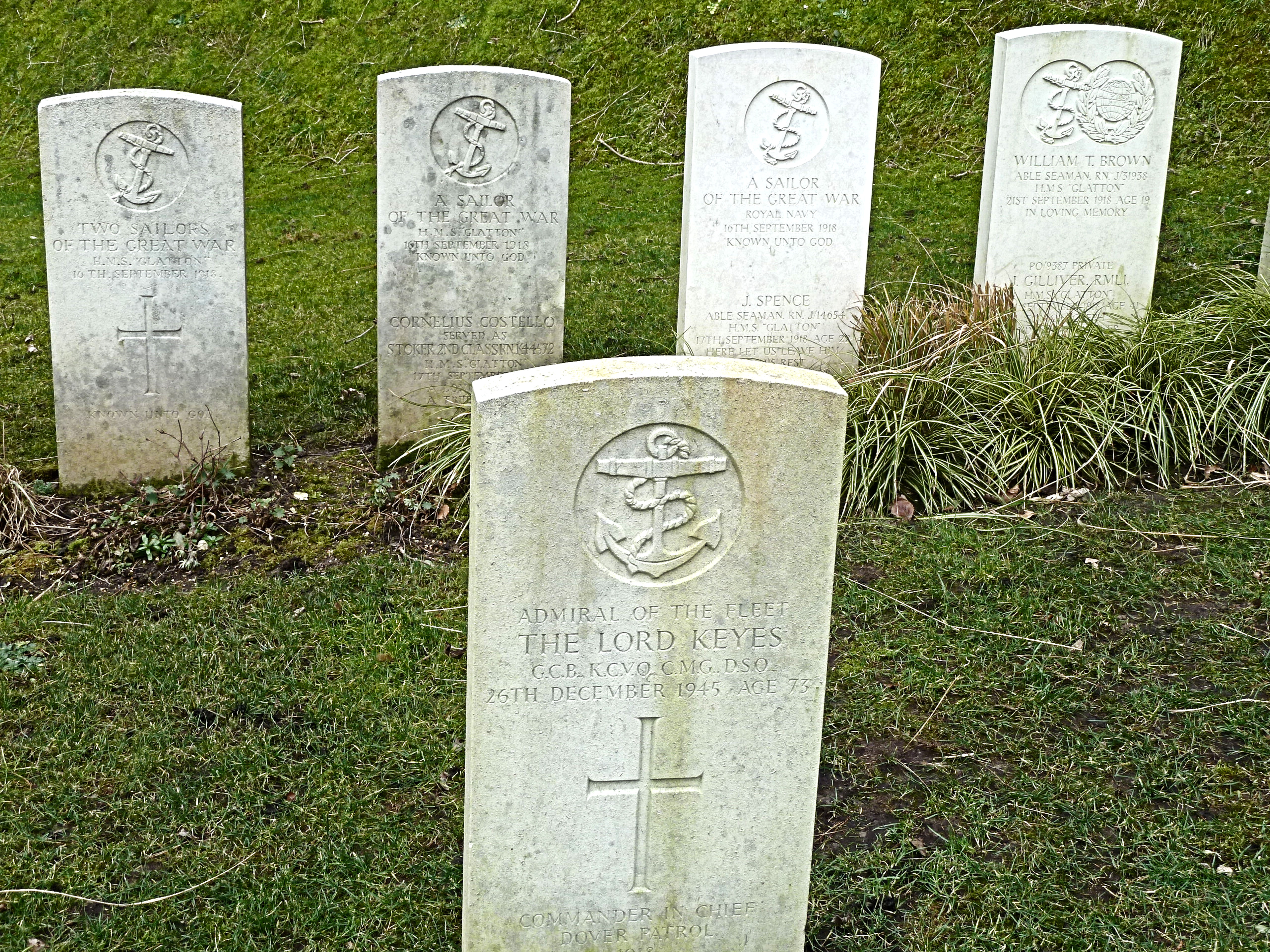
Gravestones of Vice-Admiral Keynes and eight of the victims of the Glatton accident. St James Cemetery, Dover - AS 2015

Gravestones of Vice-Admiral Keyes and eight of the victims of the Glatton accident. St James Cemetery, Dover – AS 2015

During the following week the Secretary of the Admiralty issued the following statement: One of His Majestys monitors was sunk in Dover harbour on September 16 as a result of an internal explosion. One officer and 19 men were killed by the explosion and 57 men are missing, presumed killed. All the next of kin have been informed.

A prolonged investigation was undertaken and attempts were made to play down the disaster. The latter, it was believed, would be relatively easy because of the on going War on the Western Front and at sea, where the death and injury toll was high. Further, Spanish ‘Flu’ was taking its toll of civilians and armed forces personnel alike. Nonetheless, the cataclysmic extent of what had happen in Dover harbour on 16 September 1918 was beginning to emerge.

In early 1919, four Royal Navy Personnel received the Albert Medal for gallantry in saving life on board the Glatton. They were Lieutenant George Devereux Belben, D.S.C., R.N., Sub-Lieutenant David Hywel Evans, R.N.V.R. – who had taken part in the Zeebrugge Raid of April 1918 – P. O. Albert Ernest Stoker, O.N. 227692 and Able Seaman Edward Nunn, O.N. J.15703. Their citation began with a description of the disaster and goes on,
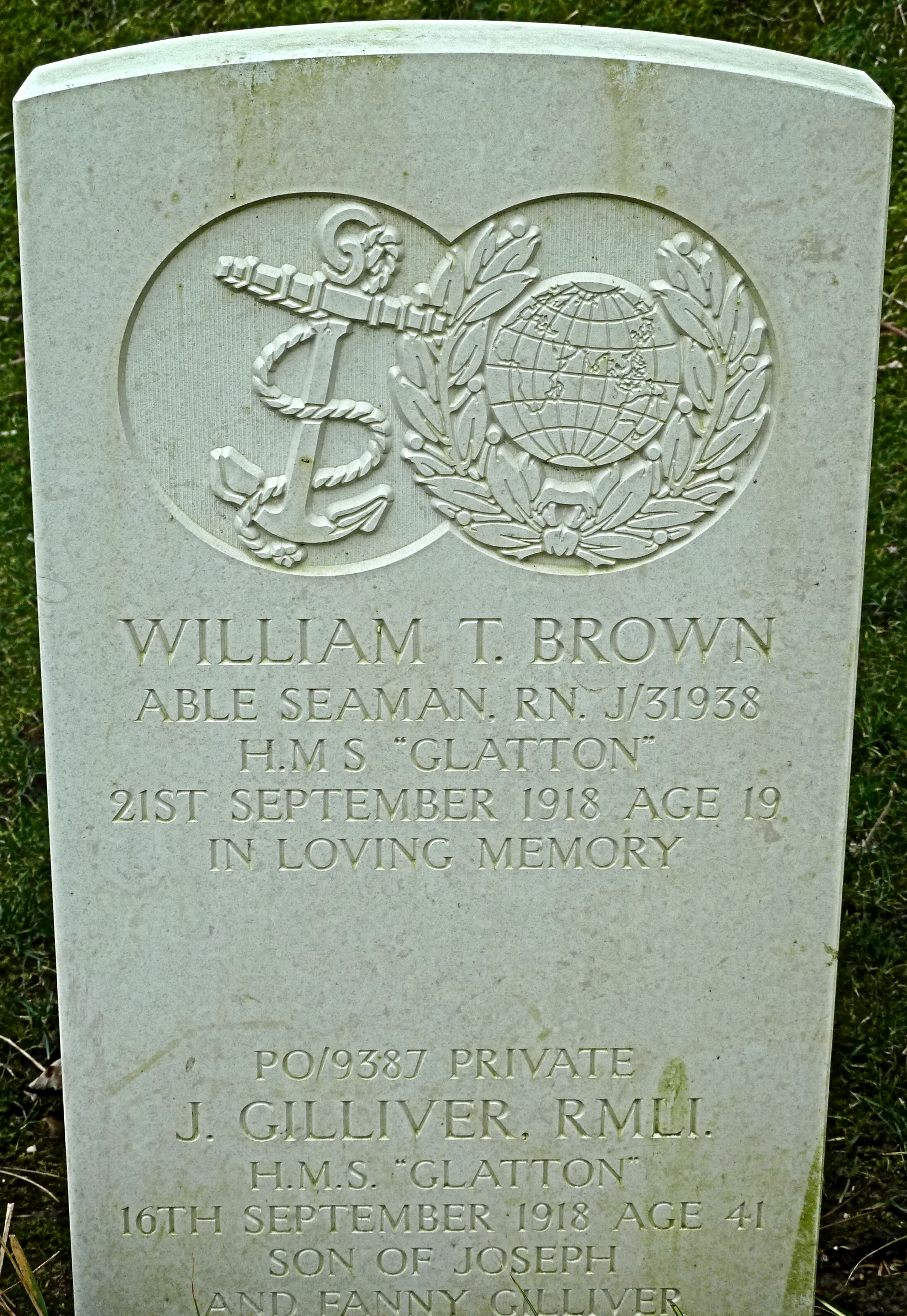
Gravestone of Seaman William T Brown d 21.09.1918 & Private J Gilliver d 16.09.1918  victims of the Glatton accident. St James Cemetery Dover. AS 2015

Gravestone of Seaman William T Brown d 21.09.1918 & Private J Gilliver d 16.09.1918 victims of the Glatton accident. St James Cemetery Dover. AS 2015

Efforts were made to extinguish the fire by means of salvage tugs. The foremost magazines were flooded, but it was found impossible to get to the aft magazine flooding positions. The explosion and fire cut off the aft part of the ship, killing or seriously injuring all the officers who were on board with one exception. The ship might have blown up at any moment. Lieutenant Belben, Sub-Lieutenant Evans, Petty Officer Stoker, and Able Seaman Nunn were in boats that were rescuing men who had been blown, or who had jumped, overboard. They proceeded on board H.M.S. Glatton on their own initiative, and entered the super-structure, which was full of dense smoke, and proceeded down to the deck below. Behaving with the greatest gallantry and contempt of danger, they succeeded in rescuing seven or eight badly injured men from the mess deck, in addition to fifteen whom they found and brought out from inside the superstructure. This work was carried out before the arrival of any gas masks, and, though at one time they were driven out by the fire, they proceeded down again after the hoses had been played on the flames. They continued until all chance of rescuing others had passed, and the ship was ordered to be abandoned, when she was sunk by torpedo, as the fire was spreading, and it was impossible to flood the aft magazines.

Admiralty, 31 January 1919

The one officer mentioned in the citation, who survived the initial blast, was the Ship’s doctor, Lieutenant Commander Edward Leicester Atkinson (1881-1929). Along with the four men, Captain Diggle said that he too deserved the Albert Medal. It was learnt, by the media, that the doctor had been blinded in the Glatton catastrophe. On investigation, they  discovered that in 1912, Dr Atkinson had been the physician and parasitologist of Captain Robert Scott’s (1863-1912) ill-fated Terra Nova expedition to the South Pole.
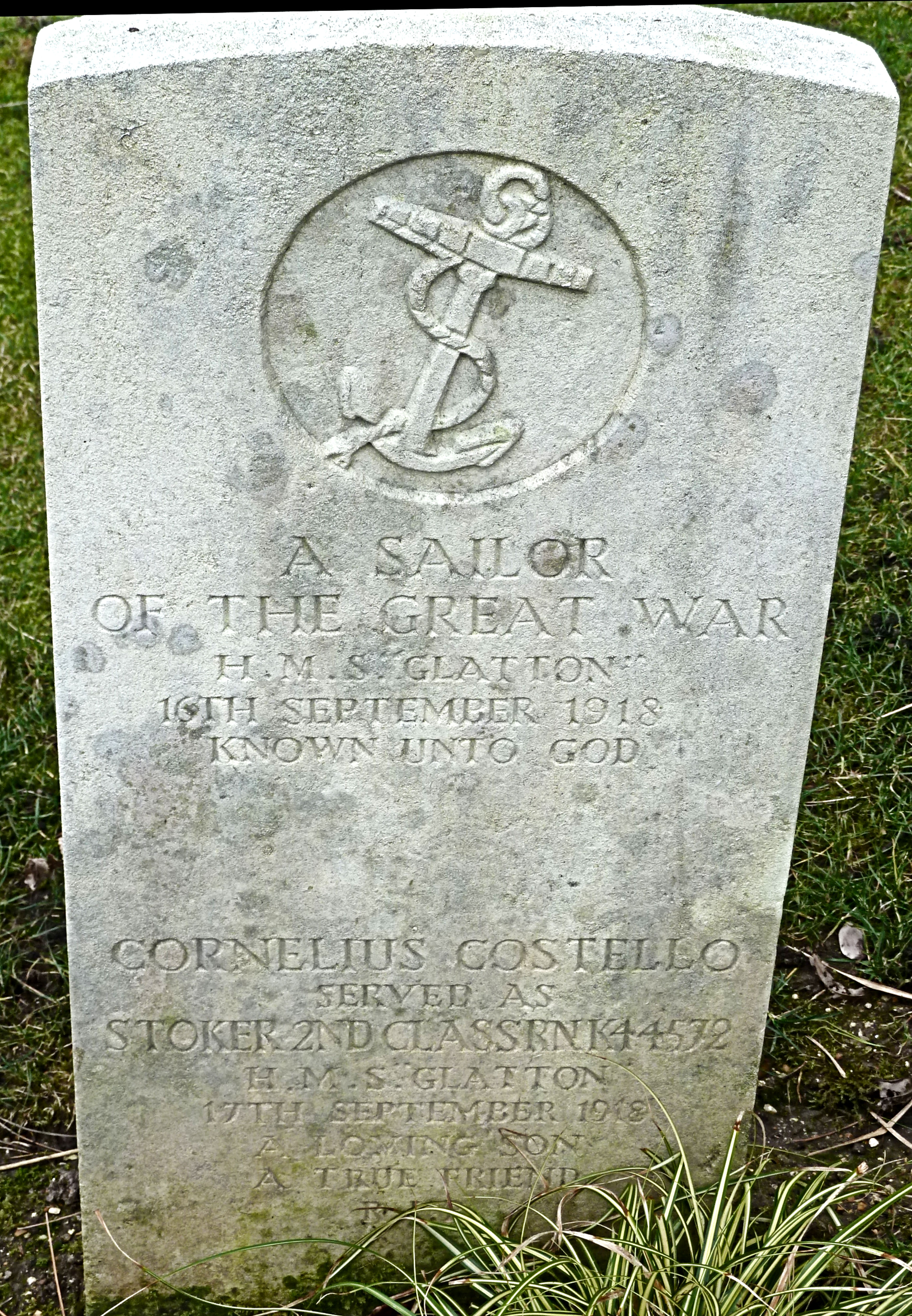
Gravestones of an Unknown Sailor d 16.09.1918 & Cornelius Costello stoker d 17.09.1918 victims of the Glatton accident. St James Cemetery Dover. AS 2015

Gravestones of an Unknown Sailor d 16.09.1918 & Cornelius Costello stoker d 17.09.1918 victims of the Glatton accident. St James Cemetery Dover. AS 2015

In the spring of 1919 the Court of Inquiry into the Glatton catastrophe was held and it was confirmed that the explosion had occurred in the midships magazine situated between the boiler and engine rooms. The magazine was insulated with 5 inches of cork covered by wood planking 0.75 inches thick and provided with special cooling equipment. Therefore, it was concluded, that it was unlikely that the cordite, which was speculated, had spontaneously combusted.

The magazines of Glatton’s sister ship Gorgon were examined and it was found that the red lead paint on the bulkhead of the midship magazine was blistered beneath the lagging. Tests indicated that it had been subjected to temperatures of at least 400º Fahrenheit (204º Celsius). Temperatures inside the magazine did not exceed 83º Fahrenheit (28º Celsius) and a test was carried out using red-hot ashes but this was inconclusive. However, further tests showed that the cork could give off flammable fumes under high heat and pressurized air. It was observed that on the Gorgon, that the stokers in the midship boiler room, were in the habit of piling the red-hot clinker and ashes from the boilers against the bulkhead directly adjoining the magazine. This was to allow the ashes to cool before they were sent up the ash ejector.

The Court concluded that the first explosion on the Glatton was caused by the slow combustion of the cork lagging of the midship magazine that led to the ignition of the magazine and then to the ignition of the cordite in it and so caused the explosion. They said that the cause was probably due to the clinker piled against a magazine bulkhead that ignited the cork insulation, starting a blaze that spread to the ammunition.
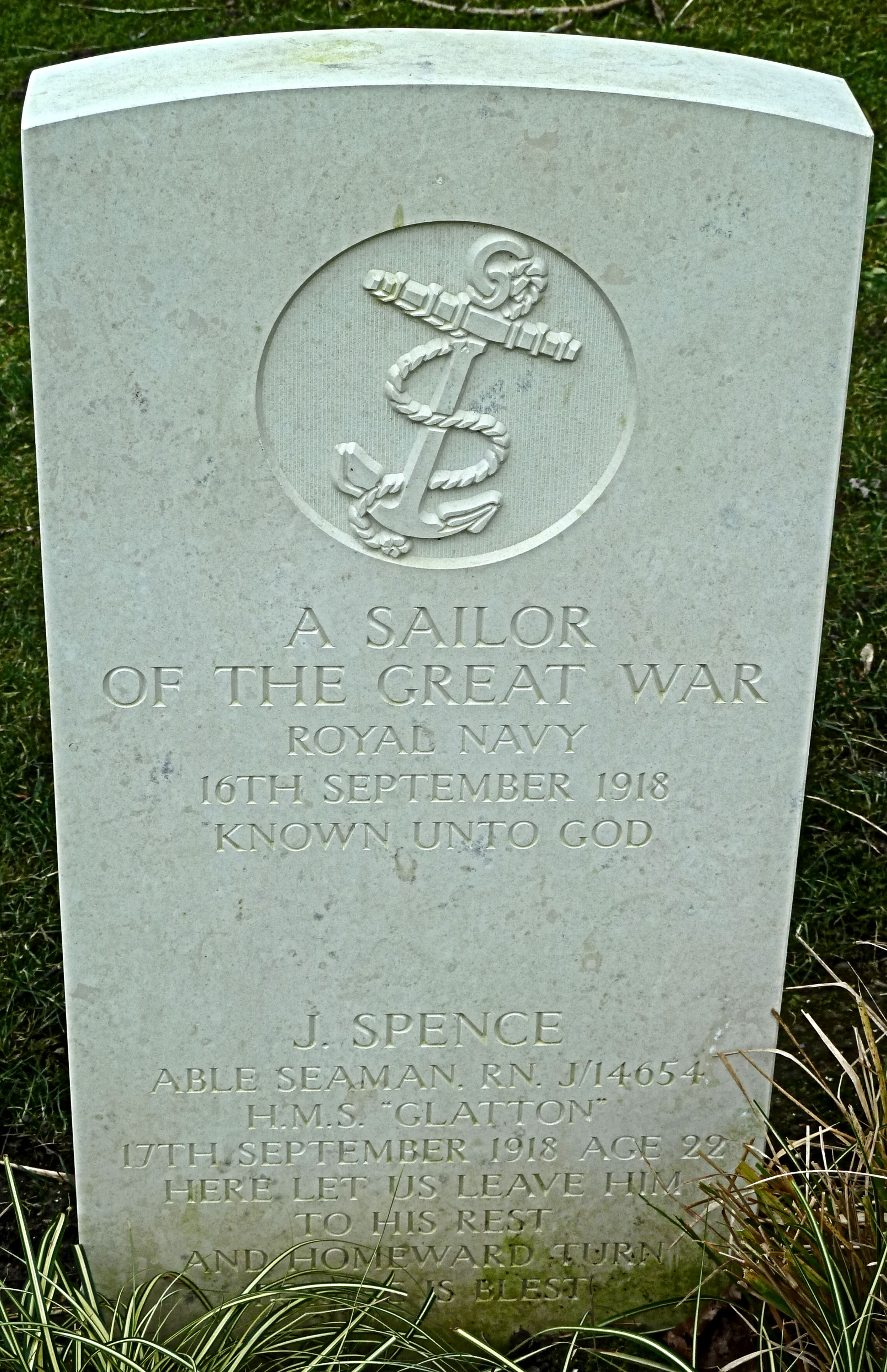
Gravestone of an Unknown Sailor d 16.09.1918 & J Spence 16.09.1918 victims of the Glatton accident. St James Cemetery Dover AS 2015

Gravestone of an Unknown Sailor d 16.09.1918 & J Spence 16.09.1918 victims of the Glatton accident. St James Cemetery Dover AS 2015

It was accepted, by the Court, that Vice-Admiral Keyes had made a difficult decision to torpedo the ship but had the fire reached the stern of the ship and the aft magazines then it was certain that the ammunition would have gone up. From then on there would have been a chain of explosions involving much of the shipping in the harbour and the result would have been a catastrophe involving a great loss of life. As for those still on board, the Inquiry stated that the ironwork of the ship was so hot that no one could have remained alive when the torpedoes struck the vessel.

Gravestone of  two Unknown Sailors, victims of the Glatton accident. St James Cemetery, Dover - AS 2015

Gravestone of two Unknown Sailors d 16.09.1918 victims of the Glatton accident. St James Cemetery, Dover – AS 2015


In May 1919, Surgeon Lieutenant Commander Edward Leicester Atkinson was awarded the Albert Medal. His citation starts with an account of the initial explosion on the Glatton and then says, The explosion and fire cut off the aft part of the ship, killing or seriously injuring all the officers on board with one exception. The ship might have blown up at any moment. At the time of the explosion, Surgeon Lieutenant Commander Atkinson was at work in his cabin. The first explosion rendered him unconscious. Recovering shortly, he found the flat outside his cabin was filled with dense smoke and fumes. He made his way to the quarterdeck by the means of a ladder in the warrant officers flat, the only one still intact. During this time, he brought two unconscious men on the upper deck, he himself being uninjured. He returned to the flat, and was bringing the third man up, when a small explosion occurred while he was on the ladder. This explosion blinded him, and, at the same time, a piece of metal was driven into his left leg in such a manner that he was unable to move until he himself extracted it. Placing the third man on the upper deck, he proceeded forward through the shelter deck. By feel, being unable to see, he here found two more unconscious men, both of whom he brought out. He was found later on the upper deck in an almost unconscious condition, so wounded and burnt that his life was despaired of for some time.

Admiralty 20 May 1919

In the days that followed the loss of the Glatton, DHB’s Harbour Master, Captain John Iron speculated on the fate of the upturned hull and how it could be moved out of the fairway, used for shipping movements in the busy harbour. Dover harbour was still under the jurisdiction of the Admiralty who had their own harbour master in Dover with the title, Kings Harbour Master. Albeit, Captain Iron was Salvage Officer to the Admiralty and in his report he pointed out that the Glatton had sank in 40-feet of water close to the fairway and needed to be moved. A lighthouse was erected on her blister as a warning to shipping and the Admiralty estimated that the salvaging would cost about £60,000. Salvage companies were approached and representatives came to Dover. They looked, assessed the situation and all went away having said that it was impossible.

Nothing more was done, but on 12 July 1923, a legal action was brought by the owners of the yacht Magadalene against the Kings Harbour Master in Dover, for damages. The yacht had hit the wreck of the Glatton because, the yacht owners’ legal council alleged, it was insufficiently lighted. The Admiralty countered, saying that the wreck had a lighthouse on it and further, the yacht had no right to be in an Admiralty port. On the latter point the owners’ lost the claim. On 29 September that year, the Admiralty Harbour was handed back to the DHB and the Magadalene case left them vulnerable if another vessel hit the wreck. DHB invited 19 salvage companies to give estimates on salvaging the Glatton but only the Liverpool Salvage Association said that they could. Their price was £45,000 and having earned very little revenue since 1914, when the Admiralty took over the harbour, DHB could not afford it.

The only way DHB could raise sufficient revenue was to encourage the cruise industry to return to Dover but in the post-World War I years, Britain and Europe were in the grip of an economic depression. Further, since the Admiralty had taken over the harbour in 1914 there had been no attempt at dredging resulting in the loss of deep water. Therefore, the larger liners of the Hamburg American Line, that had previously come to Dover, could no longer call at the port. Captain Iron and his team had undertaken preliminary dredging but to make the harbour fully operational it was imperative to move the Glatton away from the fairway.

Glatton next to salvage boat Dapper 1925. Amos & Amos

Glatton next to salvage boat Dapper 1925. Amos & Amos

After deliberations the Chairman of DHB, Sir William Crundall, asked if Captain Iron could provide an estimate to move the Glatton. This he did and calculated that it would cost £5,000. The Captain later admitted that he had underestimated the amount of accumulated mud within the vessel that was to increase the overall cost of the salvaging. The work was scheduled to start on 18 May 1925, with a general survey undertaken by divers to ascertain the position and condition of Glatton. The divers went down and found that the ship was so encased in mud and silt that this had to be removed before they could make their survey. Using small explosive charges to break up the mud, DHB salvage vessel Dapper and tug Lady Brassey, with powerful centrifugal suction pumps, cleared away 12,000 tons of mud that had collected under the decks, between the port gunwale and the seabed.

The operation to remove the mud took several weeks to complete and then the survey was made. Divers Maddison, Bolson, and Matthews found that the Glatton had turned over to an angle of 66º and was resting on the barbette of the starboard six-inch gun, the upper edge of the boat deck and the top of the conning tower. Iron’s wrote later that, ‘The tripod mast, four feet in diameter, of half-inch steel, and the two struts, two feet in diameter, were found to be buckled into a V shape, but were not broken. To clear these away we had to cut them through with acetylene submarine cutting apparatus, and the strengthening bars inside had to be blown away with small charges. The funnel and the bridge had to be cut away by the same means, and everything cleared away that extended below the armour plated conning tower, which was then thirty-five feet below water at neap tides.’ (Captain Iron)

The next stage was to close all openings of the wreck making it airtight. This was undertaken by the divers who attached steel plates, including along the starboard side where the torpedoes had entered. The gun emplacements and the sight holes were also made as airtight as possible. Then eight pairs of nine-inch wire ropes were passed under the Glatton for which,  in some places divers cut tunnels through the mud with water jets. Once this was accomplished, air was pumped into the Glatton by fitting a four-inch airpipe the entire length of the wreck, between the bulge and the shell plating. The airpipe had branch pipes going into as many of the ship’s compartments as possible.

As an experiment the Glatton was checked if she was airtight. This was done by pumping in air at the rate of 70,000 cubic feet (1981 cubic metres) an hour using two compressors. This was done with great care as the last thing that Iron wanted was for the ship to right herself. If that had happened, any openings that had previously been blocked by the seabed would be exposed allowing the air to escape. If this happened the Glatton would sink back down again and the work would have to start all over again. The experiment worked but in order to prevent the Glatton from righting herself, two pairs of nine-inch wires were placed round the barbettes of the guns and passed under the starboard gunwale.

Four lifting lighters with a capacity of 1,000 tons were hired from the Admiralty at Portsmouth harbour. They arrived at the end of September 1925 and once positioned were, at low tide, ‘pinned down’ to the Glatton with wire hawsers. The weather, over the following weeks precluded any attempts to lift the Glatton but she had sufficient buoyancy that she was in danger of moving by herself and to avoid this, air was periodically let out.
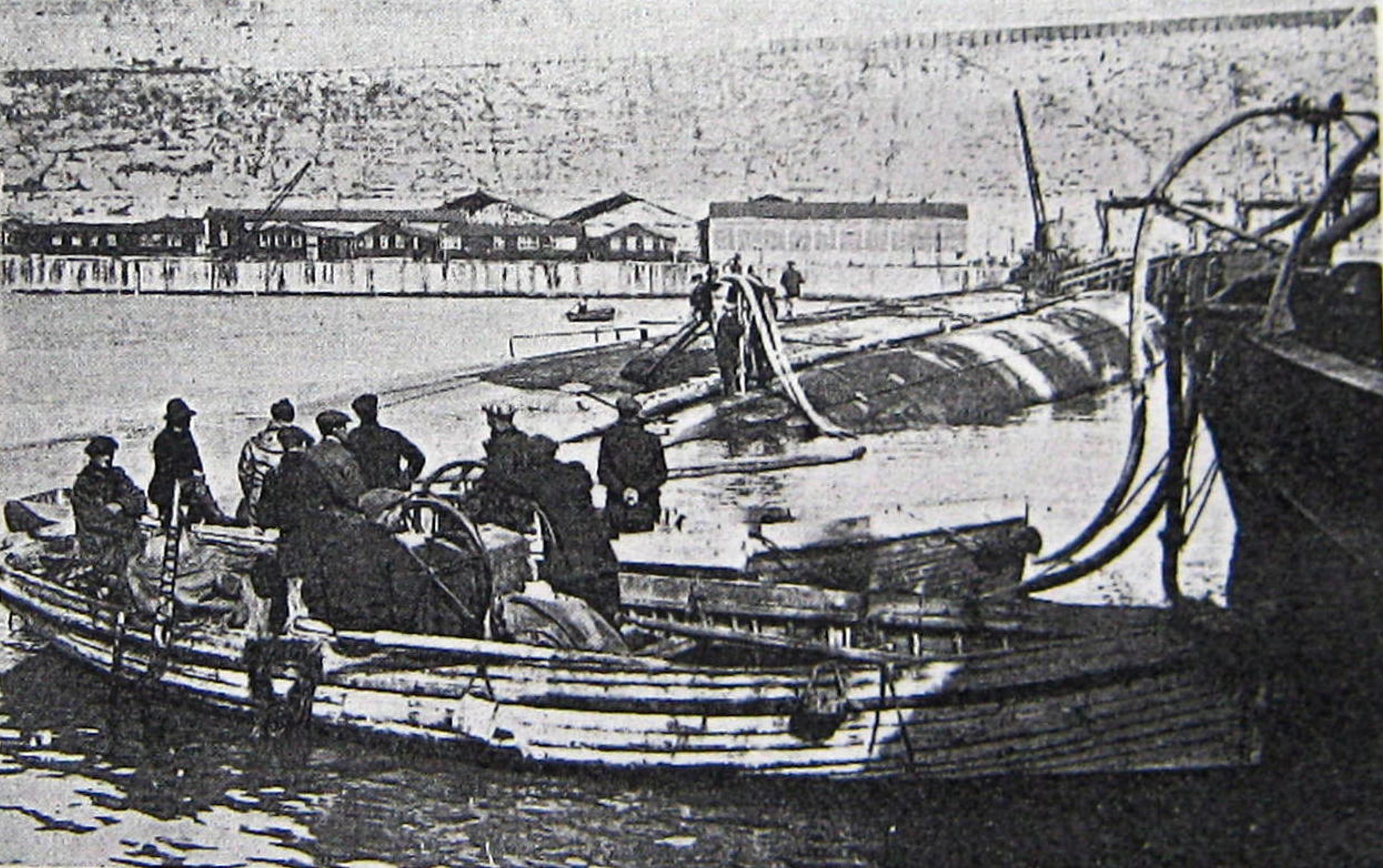
Air being pumped into the Glatton during the salvage operations, 1925-6. Amos & Amos

Air being pumped into the Glatton during the salvage operations, 1925-6. Amos & Amos

On 2 December, the weather had settled and air was pumped into the Glatton. The lifting lighters were dewatered and with the Dapper, Lady Brassey and the other DHB tug Lady Duncannon, attached to the wreck. ‘It was the moment of truth’, to quote Captain Iron. ‘… As the tide began to rise, we waited to see what would happen. It was an anxious moment, and perhaps for the first time since I had had anything to do with this ‘major operation’ I began to wonder if after all I hadn’t bitten off more than I could chew.’ Suddenly a cheer broke out, the Glatton was rising! Slowly she rose, bottom up, and Captain Iron ordered that the operations be suspended for the day.

During the night and early the following morning, a flotilla of craft of all sizes arrived in Dover harbour. The trains from London were packed with would be spectators and reporters. By 8.30hrs, the Seafront was crowded with sightseers. Initially, little happened and a diver found that a cable was fouling and was dealt with by a small explosive charge. This sent up a jet of water much to the delight of the crowds and the boats that were beginning to crowd round, back off. It was a neap tide and once it turned at 10.30hrs slowly, the Glatton started to move. She was towed towards the eastern Dockyard until the tide began to ebb. That night, when the tide was right, she was moved out of the fairway and work was suspended.

It was on the spring tide of 19 and 20 February 1926 that the Glatton was moved to within 300-feet of the western pier of the Camber in the Eastern dockyard. The operation was undertaken over two spring tides and completed on 10 March when she was finally placed alongside the Camber pier. The whole operation had cost £12,000.
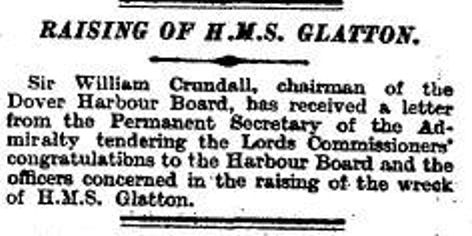
Congratulations on the lifting of the Glatton from the Permanent Secretary of the Admiralty. Times 08.04.1926

Congratulations on the lifting of the Glatton from the Permanent Secretary of the Admiralty. Times 08.04.1926

The Glatton was still upside down and the plates were taken off from her bottom. This was to allow the bodies to be removed and the shells unloaded. The bell of the Glatton was removed, cleaned, mounted and can be seen in the foyer of Harbour House today. A service was conducted on the upturned hull.

The Chairman of DHB, Sir William Crundall, received a letter of congratulations from the Lord Commissioners of the Admiralty that he passed on to Captain Iron along with Mr Polland and Mr. P. G. Sutton, who had assisted him. Captain Iron’s quotes above were taken from his book: Keeper of the Gate published by Sampson Low, Marston & Co 1936.

Messrs A O Hill Ltd, based alongside the Camber, subsequently broke up the vessel and this was completed by 1930. In May 1934, at the Court of Appeal Justices Slesser and Romer concurring dismissed an appeal by the Inland Revenue against a decision by Justice Finlay. This had enabled DHB to deduct from their assessed profits the cost of removing the wreck of the Glatton.

At the time that the Glatton was lifted, she was the second largest ship to be salved by the means of compressed air. She was also the only ship to be salved and carried inshore a distance of about 1400 feet (427 metres) at an angle of 60º, with all her guns – two 9.2-inch and four 6-inch and equipment intact.
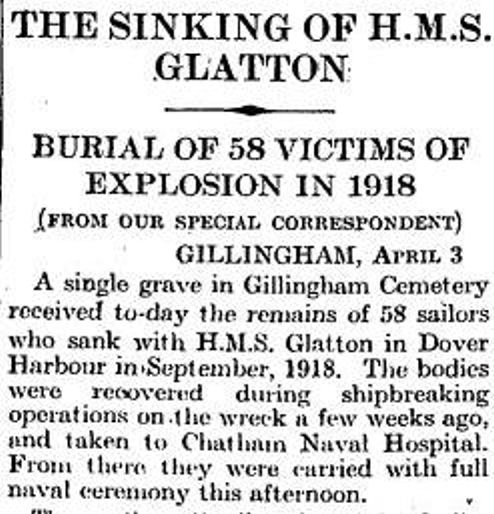
Memorial to the Glatton victims that had been in the vessel since 1918 buried at Gillingham. Times 04.04.1930

Memorial to the Glatton victims that had been in the vessel since 1918 buried at Gillingham. Times 04.04.1930

Sixty officers and men died in the original explosion on the Glatton and 19 more died of their injuries. The Market Hall was used as a mortuary and some of the men were buried in St James cemetery, Dover. Following the salvage, the bodies of a further 58 sailors were recovered from the Glatton and were taken to Chatham Naval Hospital. From there they were given a full naval ceremony at Gillingham cemetery on 3 April 1930.


  • Presented: 11 February 2015
 

Posted in Glatton - the Catastrophe and the Salvage, Glatton - the Catastrophe and the Salvage, Maritime, World War I | Comments Off on Glatton – the Catastrophe and the Salvage

Objection to proposed changes at Dover Library

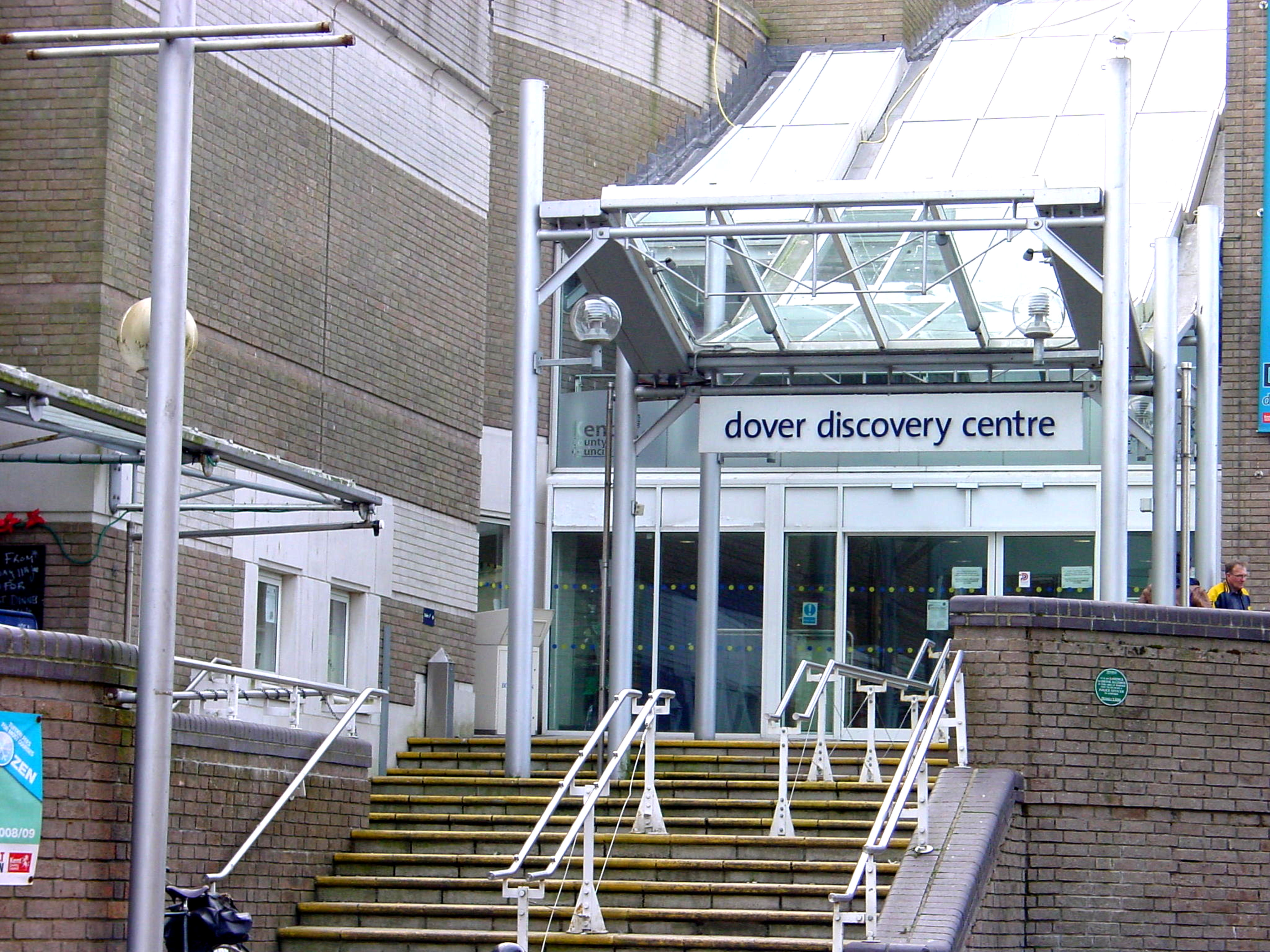
Dover Discovery Centre  Market Square within which is the Dover Public Library. Alan Sencicle

Dover Discovery Centre Market Square within which is the Dover Public Library. Alan Sencicle

Over the last decade, we have seen the Dover library service, situated in the Dover Discovery Centre –  Market Square,  run down with the closure of the separate Children’s library, the demise of the Reference library and the reduction of books and materials available in the Local Studies library. Now we are being asked to condone a further reduction in the library services in Dover and District (hereafter referred to as Dover) by accepting Kent County Council’s (KCC)  preferred frugality measure of putting Dover Library services in the hands of a Charitable Trust. This, we are told, will be supported for an undisclosed time period with a token grant from KCC. In other words, the Consultative Document is asking the Dover Council taxpayers to accept the slow privatisation of the Dover Library Services by the Voluntary sector.

For the reasons stated below, the Dover Society find the proposal, as outlined in the Consultative Document: www.kent.gov.uk/lraconsultation, totally unacceptable.

1. One of the authors of this submission is a qualified economist with many years of teaching the subject at the University of Kent. She points out that notwithstanding that the Library Service is a Statutory obligation on KCC, the proposal put forward is totally inefficient within the definition of Efficiency. It is evident from reading the KCC document that its authors are familiar with the term, as they use it liberally. However, for clarification purposes, the Economic definition of Pareto Efficiency on which Social Capitalism is based, is the situation ‘where it is impossible to make one set of people better off without making another set worse off’.

TThe new £12 million Maidstone Library and Archive Centre approximately 45miles from Dover. Kent County Council

The new £12 million Maidstone Library and Archive Centre approximately 45miles from Dover. Kent County Council

2. If the remit of the Consultative Document is accepted, then by the above definition it is totally inefficient. KCC have made the people of Maidstone and District better off by providing them, to quote the Consultative Document, with integrated ‘library, registration and archive services, the introduction of self-service technology, and combining the Maidstone Library with the County Archive Centre to create the Kent History & Library Centre.’ While making the folk of Dover and District worse off by asking us to accept a service that is far worse than the service Dover ratepayers provided for ourselves prior to KCC taking over in 1974!

3. The new Library and Archive Centre in Maidstone opened on 23 April 2012 and cost the council taxpayers of all of Kent, including those of Dover, £12 million to build, not counting fittings. Not only have the hard working folk of Dover paid for this facility, which is not easy to access from Dover (see paragraph 12 below), but also within the 40,000 books plus other material housed there, are books and documents specifically appertaining to Dover. Further, much of this material was, not long ago, housed within Dover library and therefore accessible by locals. Therefore, on the point of ‘efficiency‘ the Consultative Document proposal fails to have credence.

4. The Consultative Document also lacks transparency. In other words, it fails to give the full facts, first by not explaining KCC responsibilities within the law and second by totally ignoring the Government’s Sieghart Report of December 2014.

5. Legally, the Consultative Document is obliged to make reference to the Public Libraries & Museums Act 1964, and does, but then goes on to say that the preferred option is that an independent charitable trust is set up to run Kents Library, Registration and Archive service.’ The Law states that Councils have to abide by the Act as it makes the Public Library services a statutory duty for Local Authorities.

To comply with the Act, KCC must:

  • Provide a comprehensive and efficient library service for ALL persons in the area that want to make use of it.
  • Lend books and other printed material free of charge for those who live, work or study in the area.

The Government superintends KCC’s role in its duty to oversee and promote the public library service. Thus, the Government and/or we council taxpayers can take legal action where a local authority fails to perform its duties. The KCC Consultative Document, if accepted, will be taking the second step in circumventing those Statutory duties.

6. At Maidstone, the County town and headquarters of KCC, the present Library, according to the Council’s website: ‘houses around 14 kilometres of historic material relating to Kent dating back to 699 AD and is the place to come for anyone interested in local history.’ The main library for the Maidstone area is also within the same building and offers:

  • access to Kent’s archives and local history under one roof
  • a state-of-the-art public search room for consulting original documents, older books and local studies material
  • superb photocopying and photography facilities
  • free access to history websites – including Ancestry and Find my Past
  • a bookable meeting room
  • a multi-use space used for history workshops, talks and exhibitions
  • advice from experts in reading old handwriting (palaeography), Latin, locating sources, research topics, conserving books and documents
  • courses on reading old handwriting, family and local history – ask staff for details
  • Exciting programmes of exhibitions and talks.

The children’s library hosts regular story time, baby bounce and rhyme sessions.

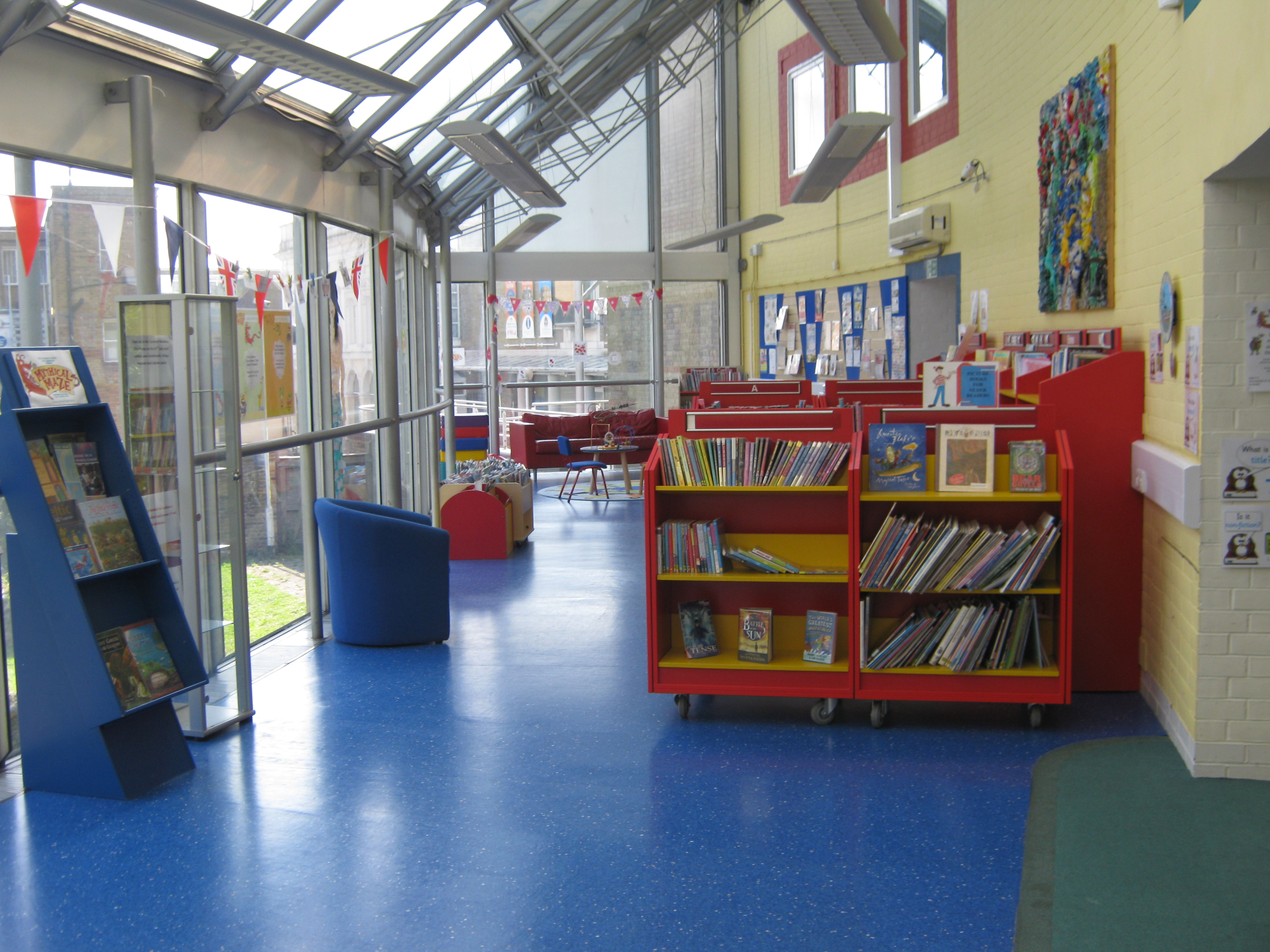
The present Dover Library children's section

The present Dover Library children’s section

7. Dover is the most populous town within Dover District Council’s area and five of Dover’s wards are in the bottom 20% of most income-deprived areas in the county. Out of the list above (paragraph 6), Dover’s main library contains:

  • one photocopy machine
  • Approximately twelve computers – all to be booked in advance due to demand and mainly used by the unemployed and those people who have recently arrived in the UK looking for work etc.
  • a children’s library with a cursory nod to the extras
  • a token amount of Dover’s archives and local history that is constantly being reduced and sent to Maidstone

Hardly a comprehensive and efficient library service for ALL the persons in Dover that want to make use of it.

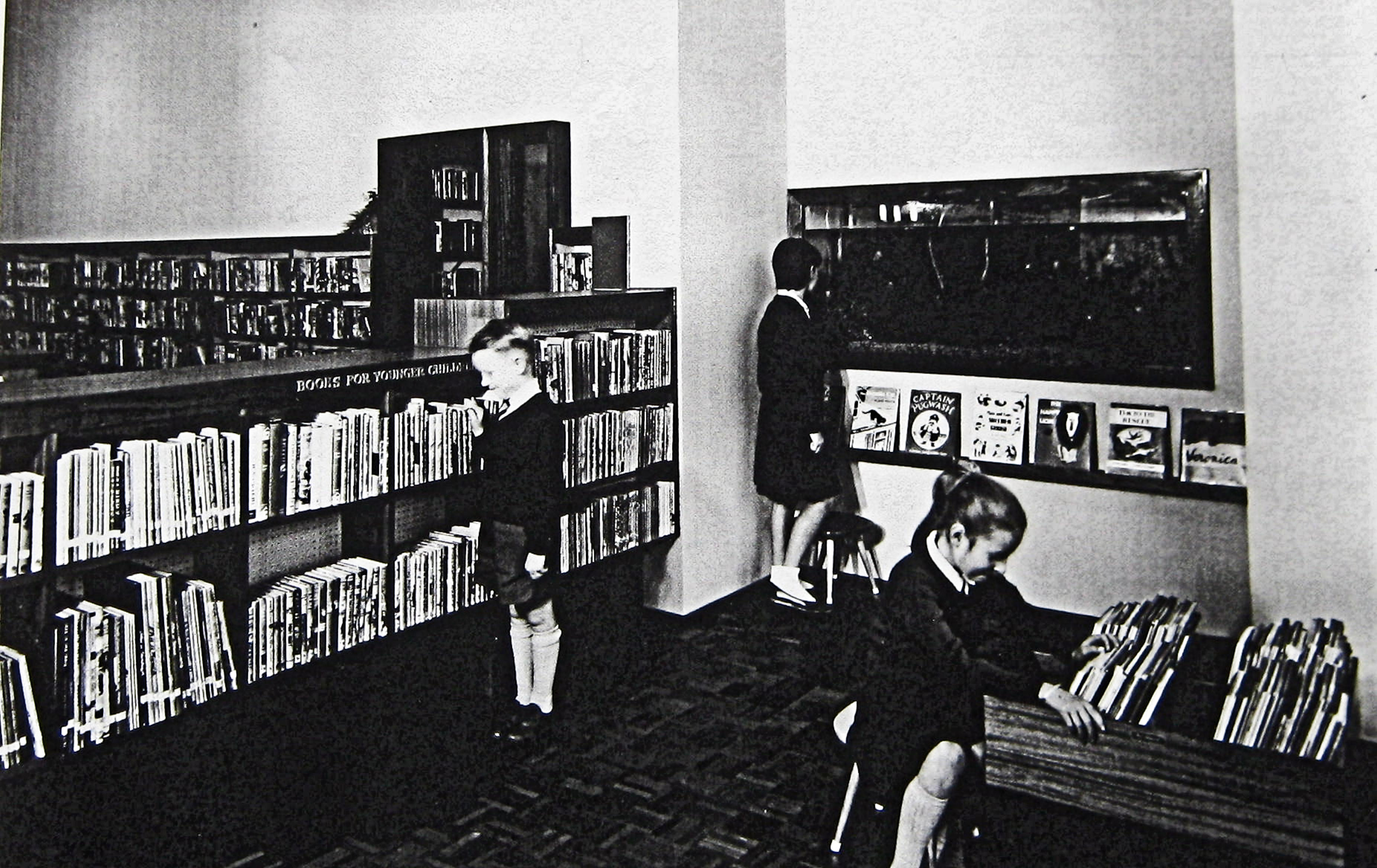
Purpose built Junior Library opened in 1963 put on the market and sold in 2003. Dover Library

Purpose built Junior Library opened in 1963 put on the market and sold in 2003. Dover Library

8. It is recognised that because of attempts by Authorities, such as KCC, in trying to find ways of circumventing their Statutory obligations, the library services are on the brink of disaster due a combination of funding cuts and local policies of pulling the ladder away from those who need libraries most. For these, and other, reasons the present Government commissioned the Independent Library Report for England that was published 18 December 2014. Of note, this was before the KCC released its Consultative Document – yet there is no mention within it!

9. The Commission was Chaired by Lord Graham Tope and the panel members were the report’s author – William Sieghart, author – Joanna Trollope, Faber publisher -Stephen Page, chief executive of the British Library – Roly Keating, library expert – Sue Charteris, entrepreneur – Luke Johnson, Wandsworth Council CEO – Paul Martin and Suffolk Libraries General Manager – Alison Wheeler. The Paper is generally referred to as the Sieghart Report and as the author said, libraries are facing a ‘Beeching moment’, referencing the huge closure of railway branch lines in the 1960s.

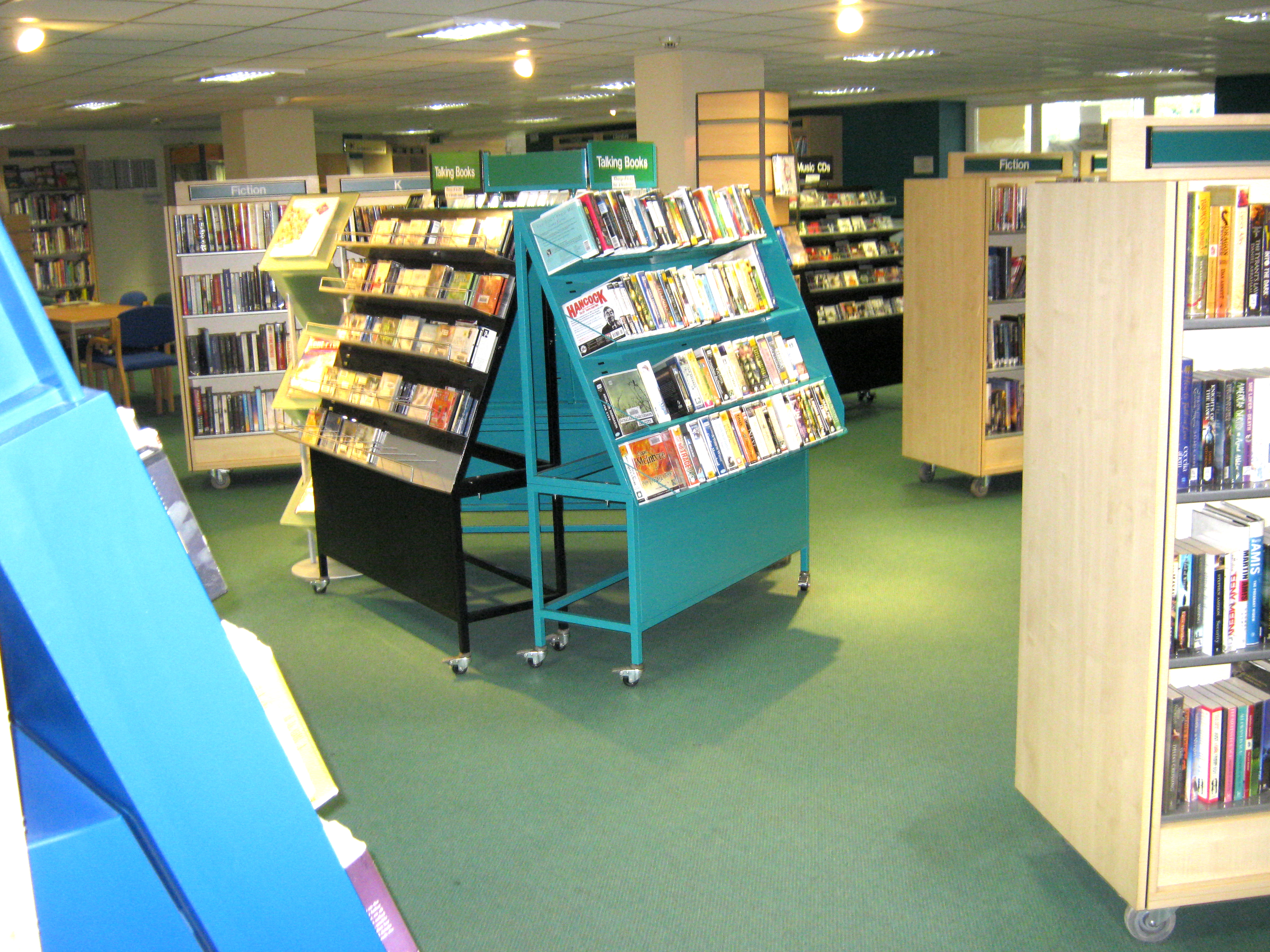
Dover Library present books and CD collection.

Dover Library present books and CD collection.

10. The Sieghart report states that across England 35 per cent of people use a library regularly and ‘among the poorest it’s closer to 50 per cent. It’s a vital lifeline for a lot of people.’ Dover district has 5 of the poorest wards in the County so statistically, the library will be used by 15% more than a library in the more affluent towns in the County. Yet Dover is to have this important facility farmed out to a Charitable Trust with a token financial backing by the Statutory Authority – KCC. Of note, the Prime Minister, David Cameron, has publicly stated many times that ‘everyone should have the opportunity to get on in life,’ but evidently, if the KCC Consultative Document is accepted, this does not apply to Dover residents.

Dover Library part of the book collection c1993.  Dover Library

Dover Library part of the book collection c1993. Dover Library

11. The Sieghart Report points out that people rely on their public library service as it provides a valuable and highly treasured public service:

  • For the children needing extra support developing their literacy skills, libraries help them to realise their potential and give them hope of a better future.
  • For the lonely and those on low incomes libraries provides access to a wider world
  • For the elderly who find themselves lacking the skills and ability to get online, libraries help them connect with their families and learn valuable new skills.
  • For the unemployed, demonised by the government and told to ‘get a job’ using online services they often do not have access to, they offer the glimmer of hope that they can get a job that offers them dignity and security.
  • For those interested in the community they live in and its history, libraries provide access to a wide range of information.

The above are just a few of the examples cited.

12. The Siegart Report has been hailed as the last chance to halt a period of decline in which 324 libraries have closed throughout the country since 2011. As part of hitting localities where library services are needed most, the Report points out that reasons given for libraries to close is that bigger and better library facilities have been made available elsewhere in the Authority’s jurisdiction. As discussed at length above, the prime library facility in Kent is at Maidstone – this is some 45miles from Dover!

According to KCC’s own figures:

  • 26% of households in the Dover area do not have a motorised vehicle (Kent average 21.6%);
  • 44.9% have one such vehicle – which, in all probability, will be used by the household provider (Kent average 53.8%)
  • 29.1% (Kent average 34.7%) have two or more motorised vehicles.

13. Regarding public transport, for a Dover resident to travel to Maidstone to view Archives and Local History appertaining to Dover:

  • By train, travelling to Maidstone East, they require changing at Ashford and the journey takes at least 1¼hours and costs £19.20 for an off-peak day return.
  • By bus, the journey from Dover requires to change at Folkestone and board a bus to Ashford. From Ashford it is another bus to Maidstone and the journey takes 2½-3hrs not counting waiting time. For those who hold bus passes the journey is free. Because the journey requires two bus changes, the cost is not available.
  • In either of the travel options above, a further hike is required to reach the Maidstone Library and County Archive Centre.
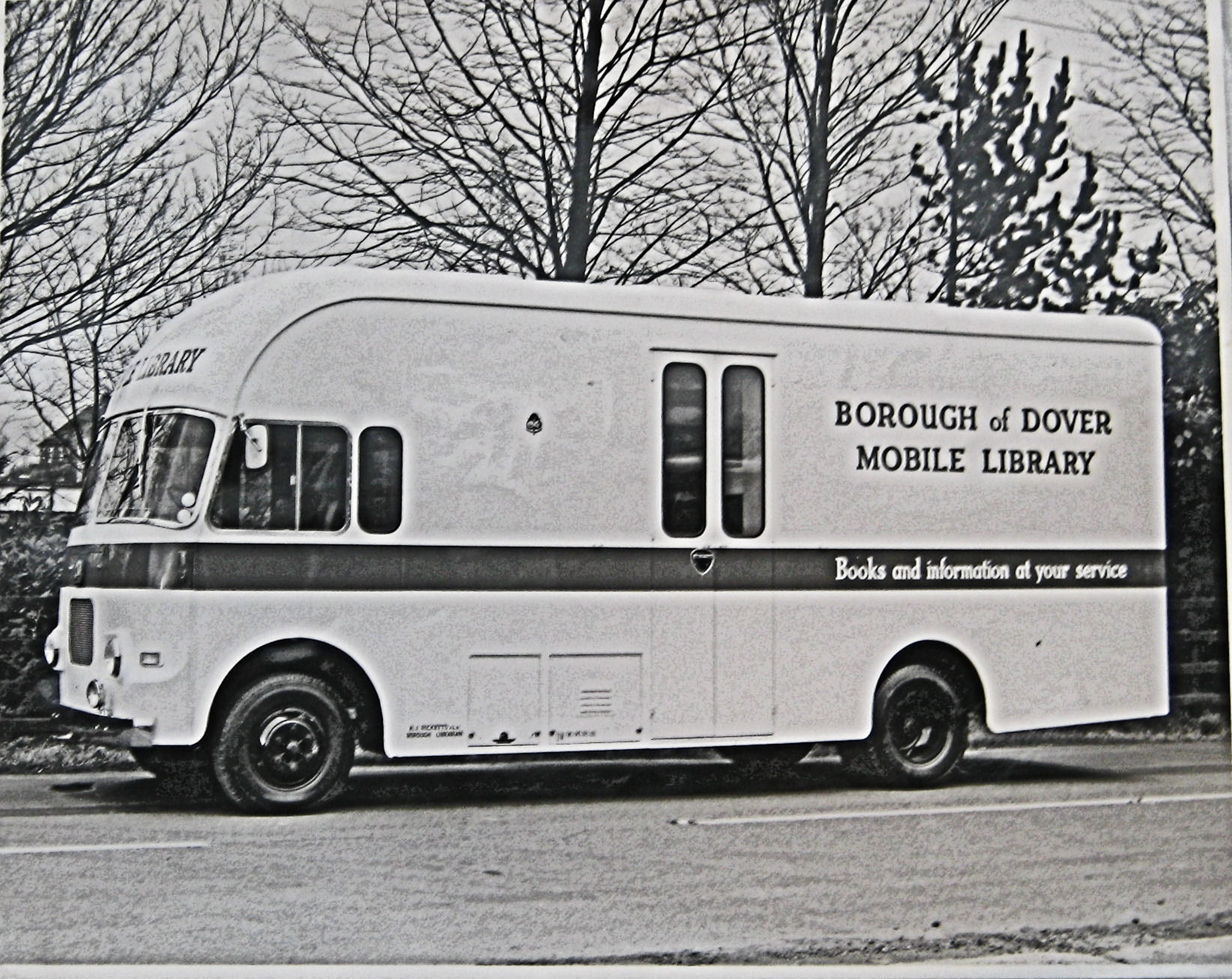
Mobile Library van introduced in 1968, six years before Dover library services came under KCC. Dover Library

Mobile Library van introduced in 1968, six years before Dover library services came under KCC. Dover Library

14. For all of the above and more, the Sieghart Report makes a number of recommendations to achieve ‘reinvigoration of the library network’. This includes:

Library taskforce. One of the key recommendations is the creation of a library taskforce to offer ‘the necessary leadership‘ and ensure the report is implemented. The group, provisionally called Leadership for Libraries, will lobby for libraries and be supported by organisations including Arts Council England, the BBC and the British Library and will report jointly to local and central Government.

Professional development The taskforce will be given the job of recruiting new staff as well as encouraging and developing current staff. The report pointed to the TeachFirst programme, which ‘has helped raise the profile of the teaching profession’.

15. Another key recommendation is to bring members of the community into the management of libraries, which the report compared, to bringing parents on to school governing bodies. However, the Report makes it clear that, ‘This does not mean just handing libraries over to volunteers. It would continue with all the Statutory responsibility but add the community’s resources.’ The Report rightly states that ‘Locals will not put up with council management, overcharging or poor opening hours; they demand higher standards.’

16. At the time the 1972 Local Government Act was implemented and Dover Public Library Service came under KCC (1974), the Library facilities and services were consistent with the provisions described in the Public Libraries & Museums Act 1964:

  • Lending, reference/information, children’s section, meeting rooms, collections of periodicals, recorded media, technical and commercial literature, international documents, a full and documented range of archive and local history materials.
  • Dover Library supported branch libraries by providing a basic lending reference/information service at the neighbourhood level.
  • Dover Library provided a supply of books to the aged and housebound, to hospitals, persons and others that are unable to reach the Library.
  • Dover Library undertook such activities as lectures, exhibitions and displays that helped to advertise the services to a wider public. It was also a thriving local studies and cultural centre.
  • Dover Library worked closely with local schools and colleges, industry and other institutions such as the then Young Offenders Institute. Locals with specialist knowledge, such as local history, were encouraged to participate to widen the interest.
  • Dover Library provided technical information services and special collections for the use of groups, such as dramatic societies, workers educational associations and local history enthusiasts.

Now, 2015, the few staff that remain work so hard to provide a basic service that they could not even consider providing most of the above of what was free at the point of delivery back in 1974. To reduce the service even more in the hope to discouraging usage and justify closure, KCC recommends that Dover’s library be managed by a Charitable Trust. The Dover Society does NOT condone such action.

  • Presented:
  • 24 February 2014
Posted in Dover Society’s objection to proposed changes at Dover Library, Library, Objection to proposed changes at Dover Library, Objection to proposed changes at Dover Library, Schools and Education, Societies, Culture and Entertainment | Comments Off on Objection to proposed changes at Dover Library

Sisters of St Vincent – Eastbrook Place

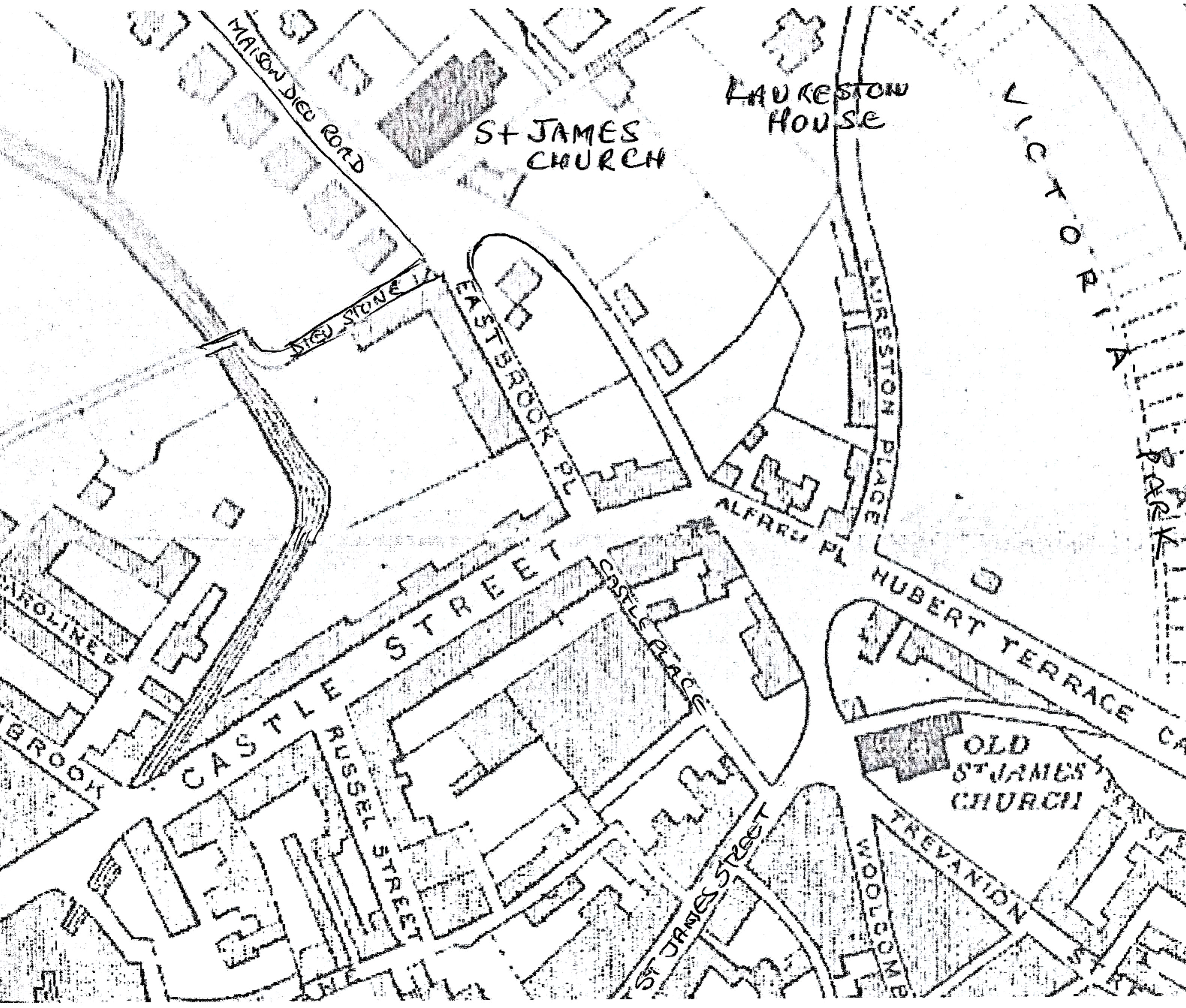
1890 Map showing location of Dieu Stone Lane, Eastbrook Place and Castle Place. LS

1890 Map showing location of Dieu Stone Lane, Eastbrook Place and Castle Place. LS

The Sisters of Charity of Saint Vincent de Paul first came to Dover in 1883 and bought cottages on Dieu Stone Lane. Originally known as ‘D’ Stone Lane, Dieu Stone Lane is an ancient right of way originally running from the Biggin Street side of St Mary’s Church to Maison Dieu Road, then known as Back O’ Charlton. Dieu Stone Lane marked the boundary between the Maison Dieu lands and the town. A large wool factory was established in the 18th century and the raw wool came from the surrounding area and the Romney Marsh. Continental wool combers had settled nearby giving the name to Woolcomber Street. Between Back O’ Charlton and what became Woolcomber Street, was a narrow lane with cottages and a Seamans’ mission called Castle Place. Later the lane was widened and became the seaward end of Maison Dieu Road.

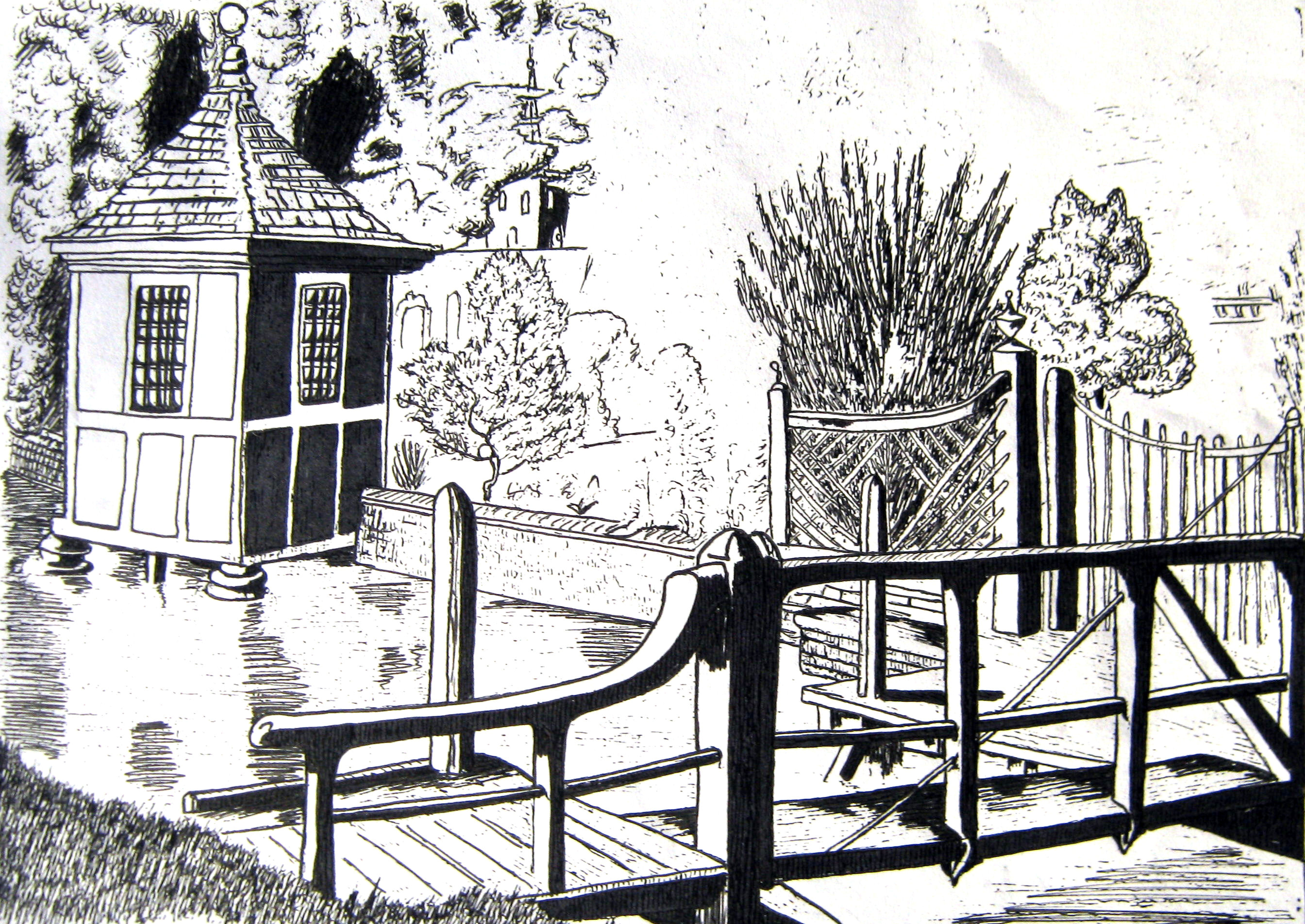
River Dour Crossing between what is now Pencester Garden and Dieu Stone Lane by George Jarvis George c1820-1840. Anthony Jarvis

River Dour Crossing between what is now Pencester Garden and Dieu Stone Lane by George Jarvis  c1820-1840.     Anthony Jarvis

For centuries there was a foot bridge crossing of the River Dour on Dieu Stone Lane and this, at the time the Sisters’ arrived, was a favourite haunt of young boys who played, what we now call ‘Pooh sticks’. There was a wicker gate on what became the Maison Dieu Road side of the river and nearby a large mill stone marked ‘D Stone’. It was said that the stone had a ‘magical quality’ and during the day, local storytellers would sit there, tell the legends of old Dover and collect around them large audiences. In the evening lovers would meet there. Between 1830 and 1835, Castle Street was formed, running from Ashen Tree Lane to Market Square, and Back O’ Charlton became of interest to building speculators.

Where Castle Street crossed Back O’ Charlton, there was a narrow lane called Maison Dieu Place. The Castle Street promoters widened this and Eastbrook Place was built on the west side between Castle Street and along Dieu Stone Lane. At the time, Eastbrook Place was promoted as being ‘open to country breezes.’ Back O’ Charlton was laid in 1860 and renamed Maison Dieu Road up to Eastbrook Place on the west side. On the east side, it was Maison Dieu Road up to Castle Street. It was not until post World War II (1939-1945) that Maison Dieu Road was extended to the junction of Woolcomber Street but even then, Eastbrook Place retained its name. At about the time the magnificent St James’ new Church opened in 1860, across the road from Eastbrook Place, John Jeken lived at Eastbrook House on Dieu Stone Lane. Captain Yates lived next door at 8 Eastbrook Place and by 1881, the villas along Maison Dieu Road that we see today had been built.

St Vincent de Paul. Internet

St Vincent de Paul. Internet

The history of the Sisters of St Vincent began with St. Vincent de Paul (1581-1660). He was a French priest who dedicated his life to serving the poor and was canonized 1737. The story goes that in 1605, Vincent was on a Marseilles ship in the Mediterranean that was captured by Barbary pirates following which he was sold into slavery. One of his masters was a famous alchemist and Vincent became knowledgeable in science and medicine. On the death of his master, Vincent was sold to a former Christian, who had converted to Islam in order to gain his freedom from slavery. Eventually, master and slave escaped back to France and by 1609, Vincent was in Rome. That year he returned to France as a chaplain and in 1612 was the confessor and spiritual director to the wealthy Madame de Gondi. She persuaded her husband to endow and support a group of able and zealous missionaries to work among poor tenant farmers and country people in general. In 1617, Vincent founded La Dames de la Charité – the Ladies of Charity – whose role it was to collect funds, for the missionaries. 

One of these women was Louise de Marillac (1591-1660), an illegitimate daughter of a wealthy family. Louise had wanted to become a nun but was refused admission into the convents she applied to, probably on the grounds of continuing ill health. Her illegitimacy prevented Louise marrying well but an arranged marriage was made to Antoine Le Gras, a lowly secretary to the Queen Mother and Regent of France, Marie de Medici (1575-1642). The couple seemed to be happy but in 1625, Antoine died leaving Louise and their young son with very little financial means such that she was forced move to a cheaper area of Paris. Her new home was in Vincent de Paul’s parish and she joined the Ladies of Charity.

Although the Ladies of Charity were doing good work, there was a need for an organiser – someone who was enthusiastic and educated but who could communicate, organise and teach the poor and sick. Vincent de Paul approached Louise and in 1629, she became that organiser and proved to be very successful. In 1633, Vincent de Paul and Louise jointly founded the ‘Daughters of Charity’ (Filles de la Charité) – young, energetic servant women with the right attitude. Most had come from the country to Paris in seek of work and their role, as a ‘Daughter‘, was that of nursing the poor in their own homes and caring for neglected children.

The number of Daughters of Charity quickly grew and they took on the needs of the sick and poor across Paris. From these Daughters, Louise invited four to live with her in order to gain systematic training in the care of the sick at the same time as deepening their spiritual life. These four women were the foundation of what became the Company of the Daughters of Charity or Sisters of Charity of Saint Vincent de Paul (Societas Filiarum Caritatis a S. Vincentio de Paulo) as they were called when they received official approval in 1655. Unlike other religious communities, the members make annual vows throughout their life, which leaves them always free to leave without the need of ecclesiastical permission.

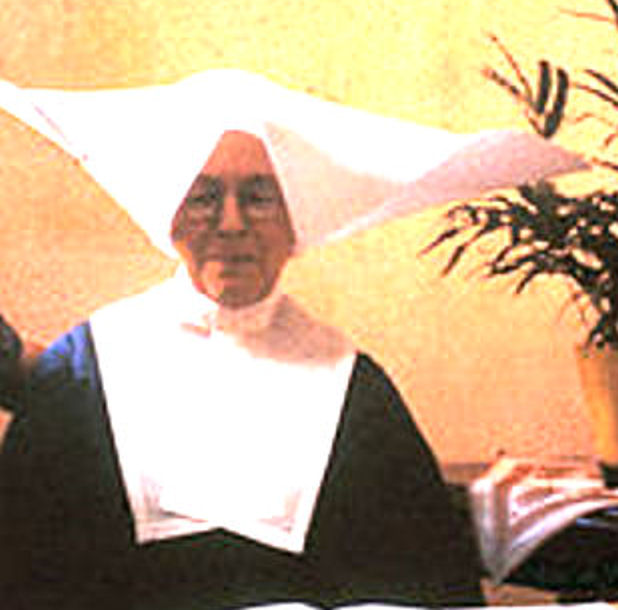
The Sisters' of St Vincent's traditional religious habit included a large, starched cornette. Internet

The Sisters’ of St Vincent’s traditional religious habit included a large, starched cornette. Internet

Known as the Sisters of Charity of Saint Vincent de Paul, their work was highly esteemed and Louise and the Sisters were invited to Angers, then the capital of Anjou in the Loire Valley of Western France. Louise was asked to take over the management of St John the Evangelist Hospital that had been founded by Henry II (1154-1189) of England. She instituted a successful comprehensive scheme that included doctors and nurses as well as the Sisters. Louise then went on to expand the service of the Sisters of Charity to orphanages, mental and elderly institutions, prisons and even onto the battlefields. The nuns were popularly known as the ‘Grey Sisters’ as their habit was based on that worn by Breton peasant women – a grey wool tunic and a large starched cornette (headdress) of white linen. By the time of Louise’s death in 1660, there were 40 Sisters of Charity of Saint Vincent de Paul Houses in France.

Prior to the French Revolution (1789-1799), Roman Catholicism was the state religion of France but on 13 February 1790, all religious orders were dissolved. In November that year the National Assembly required an oath of loyalty to the Civil Constitution by all those who had refused to accept the earlier legislation. A number of the Sisters refused and were guillotined as traitors. In the years that followed, Roman Catholicism partially regained its pre-revolution status and the Sisters of Charity of Saint Vincent de Paul were re-formed. As the 19th century progressed, there was a call for the separation of the Church and State and following the French elections of 16 May 1877, moves were made for this separation and gradual secularisation began.

From 1880, there was a steady substitution of lay nurses for nuns in hospitals and an increasing number of Sisters of Charity of Saint Vincent de Paul joined other Sisters who already had established a House in London. In 1905, the French Government instituted the separation of the Church and the State, which prohibited the official recognition, payments or subsidies of any religious organisation. In consequence, a large number of religious communities left the country and Edward VII invited them to come to Britain. Other communities settled in and around Dover, including Les Dames Augustines du Frécieux Sang who moved to Kearsney Manor, Les Frères des Ecoles Chrétiennes, monks who moved to St Margaret’s and Castlemount, and the Sisters of Ursulines of Jesus, who initially settled in Maison Dieu Road before moving to Castle Avenue. In 1934 Louise de Marillac was canonised by Pope Pius XI (1922-1939), her feast day is 15 March and she is the Patroness of Christian Social Workers.

The first English House of the Sisters of Charity of Saint Vincent de Paul was founded in Sheffield in 1858 and a second in Westminster, London, a year later. Having escaped the post 1877 anti-clerical laws in France, the numbers increased considerably and some were initially sent to Salford to open a convent there. At that time, there was religious hostility in south Lancashire towards Catholicism – see the story on Reverend Faithorn Green of St Peter and St Paul’s Church, Charlton–  so the nuns looked for an alternative place to start their work.

Dieu Stone Lane Cottages. Dover Library

Dieu Stone Lane Cottages. Dover Library

Under the guidance of Miss Eyston or Sister Augustine as she was called, on 15 August 1883 the Sisters who had previously been sent to Salford came to Dover. In the Dieu Stone Lane premises, they provided a holiday and convalescent home for children from the poorer parts of London. Soon they were taking in needy local women and girls from London and locally, as well as going into people’s homes to provide nursing care. One of the Sisters had been with Florence Nightingale at Scutari, in the Crimea (now Üsküdar near Istanbul). Some of the Sisters also taught at St Paul’s Catholic School and in 1886, Sister Cecelia Hill was appointed headmistress.

St Paul's Roman Catholic Church, Maison Dieu Road. Alan Sencicle

St Paul’s Roman Catholic Church, Maison Dieu Road.        Alan Sencicle

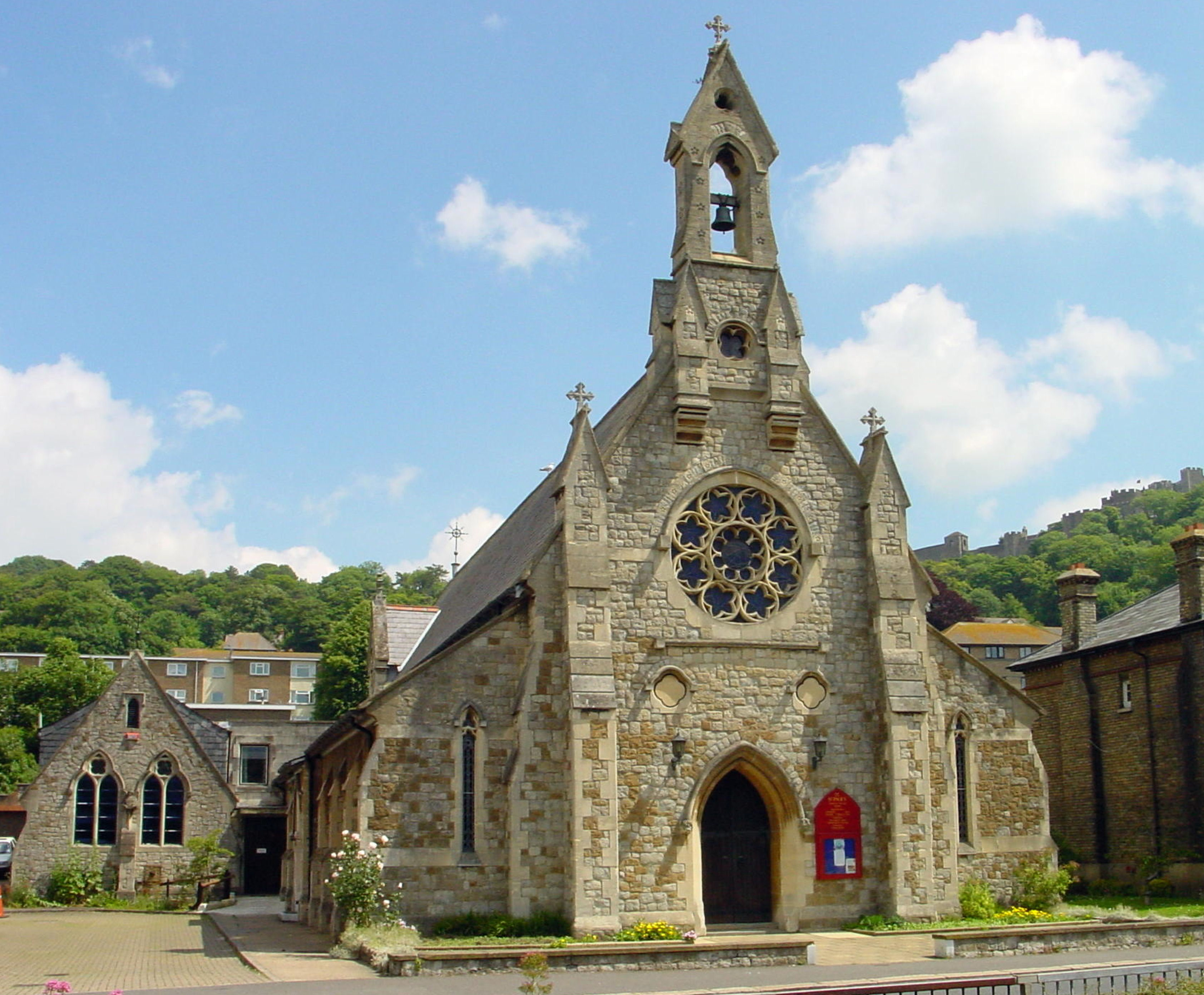
St Paul’s Roman Catholic Church, Maison Dieu Road, was the first purpose built Catholic Church in the town since Henry VIII’s Reformation (1529-1536). In 1835, a Methodist Chapel in Elizabeth Street was bought and refurbished by the Catholic community as a church and a school. The London, Chatham, and Dover Railway Company acquired the Elizabeth Street premises in 1860 to make way for the Canterbury line and the Harbour Station. The compensation was generous from which the Catholic community purchased the site on Maison Dieu Road and St Paul’s Church was built. Archbishop Manning of Westminster and Dr Grant, Bishop of Southwark officially opened the Church on the 15 May 1868. Two years later work started on building a new school for boys at the east end of the church that opened in 1872. Ten years later a school for girls was built behind the boys’ school and an infants’ school in 1889. The total number of children accommodated was 170.

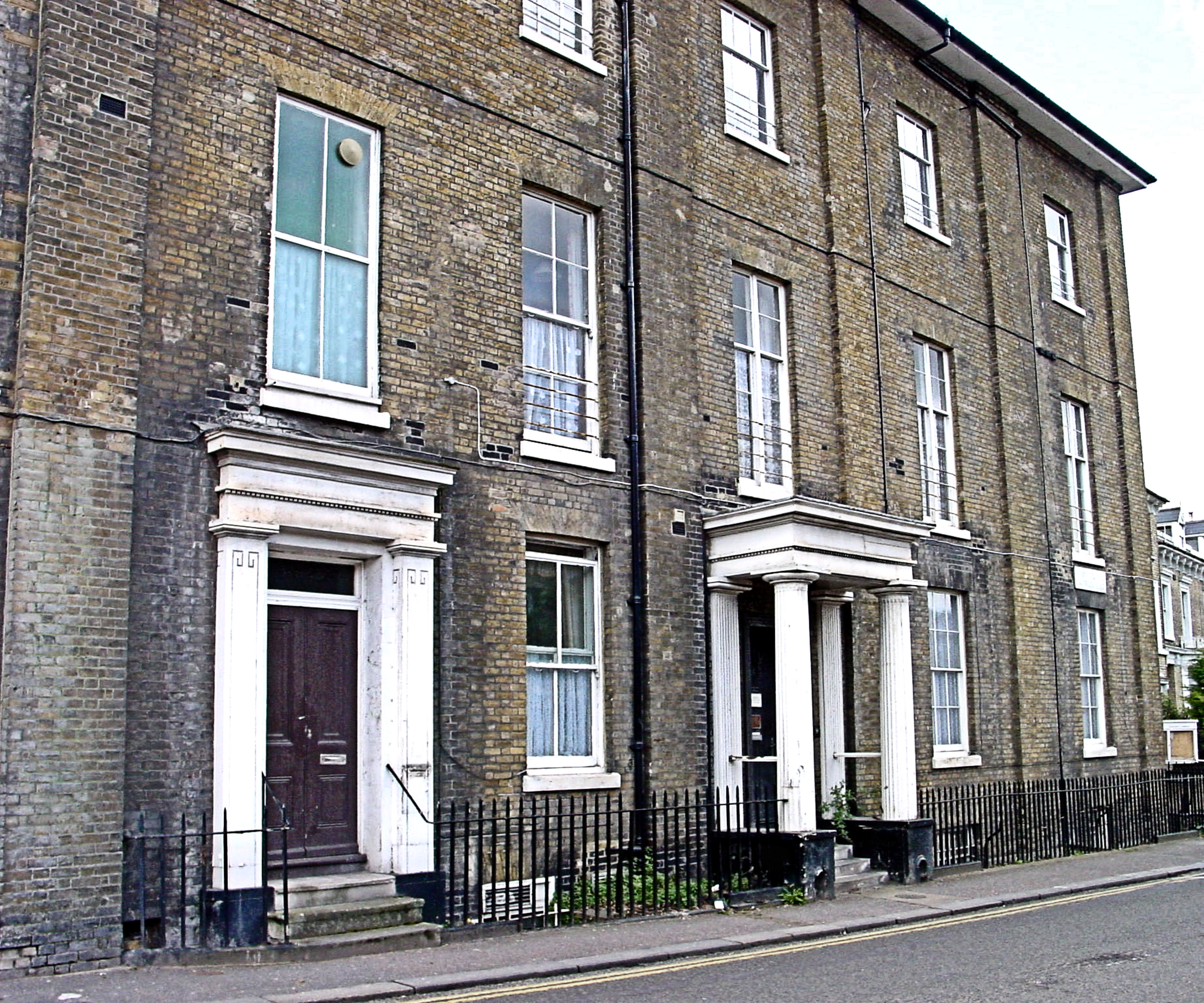
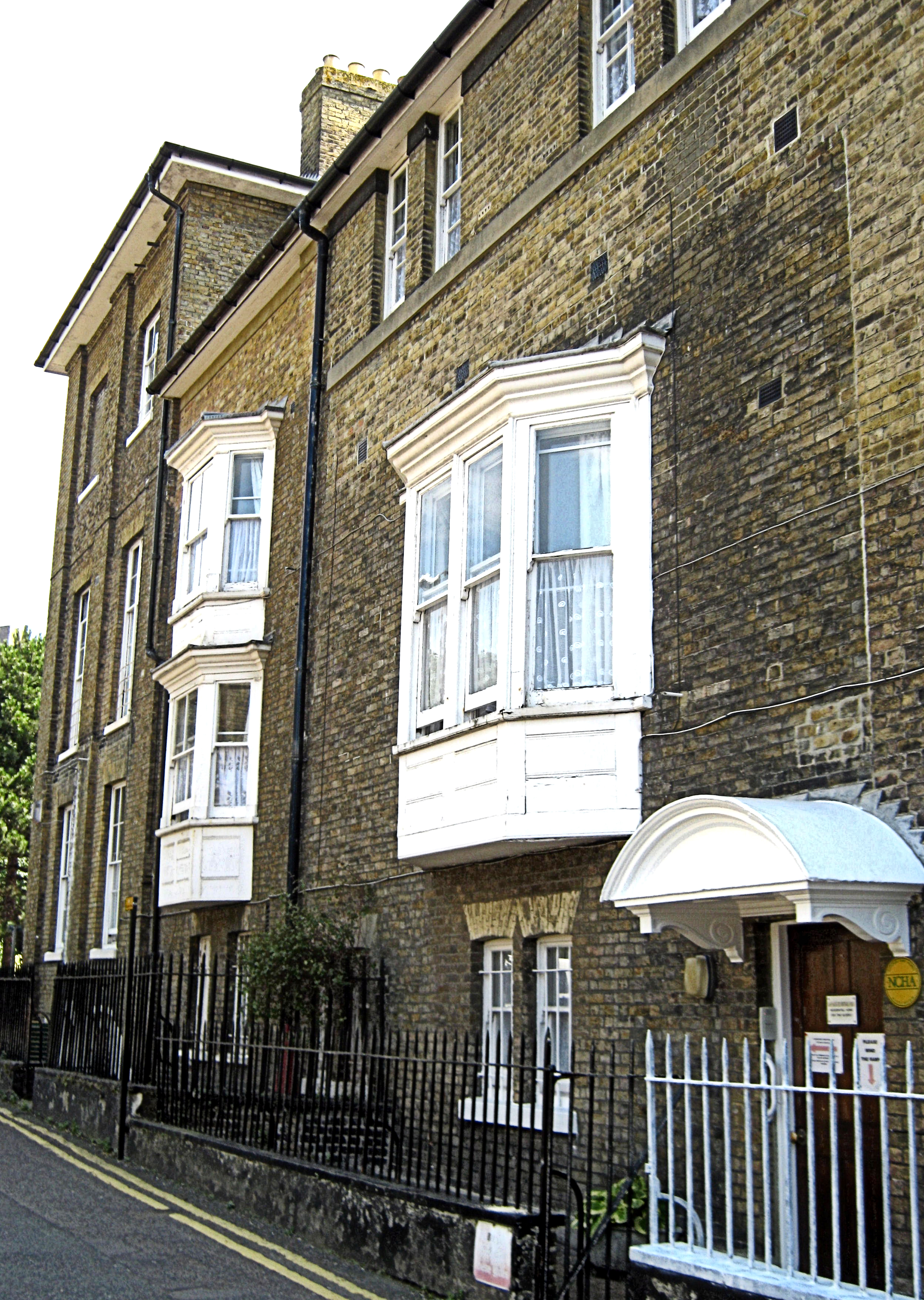
Eastbrook Place - Sisters of St Vincent House now St Mary's residential care home. Alan Sencicle

Eastbrook Place – Sisters of St Vincent House now St Mary’s residential care home. Alan Sencicle

George Robinson of Castle Place owned several properties in the area where the Sisters of St Vincent had settled. He was the uncle of Sister Clothilde Robinson who persuaded him to donate 8 Eastbrook Place to the Sisters. Once they moved in, the Sisters took over the attic and the cellar for their own use with the remainder of the building being used for nursing care headed by Sister Augustine. In 1887, and paid for by Sister Hill, the Sisters took over 9 Eastbrook Place. Shortly after number 7, paid for by a bequest of Sister Byrne.

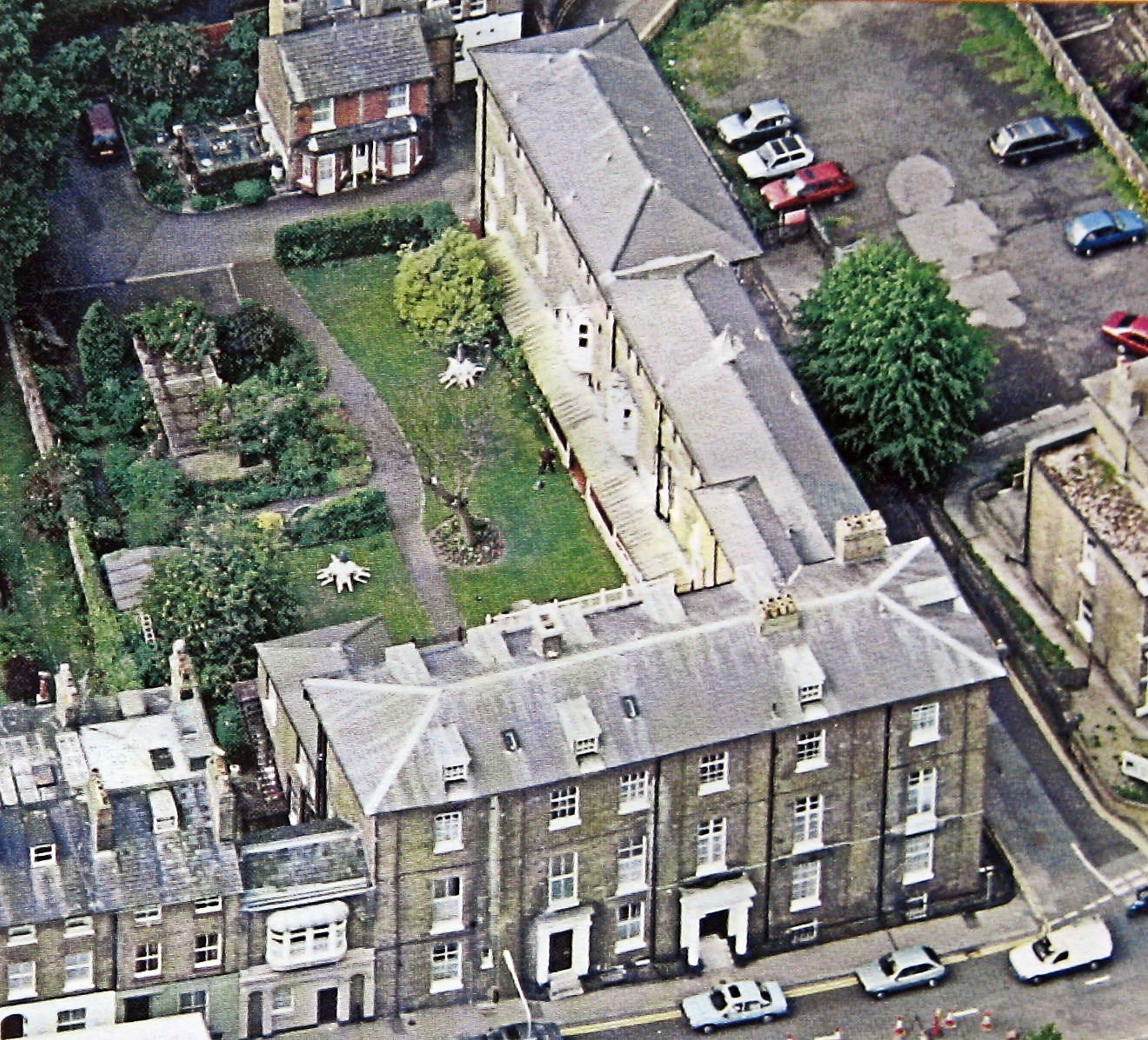
The long wing on Dieu Stone Lane built in 1909 for orphans from London cared for by the Sisters of St Vincent. LS

The long wing on Dieu Stone Lane built in 1909 for orphans from London cared for by the Sisters of St Vincent. LS

The long wing of the house in Dieu Stone Lane was added in 1903 when the Sisters opened an orphanage for boys from the Catholic Children’s Rescue Society. From 1907, number 7 was also part of the orphanage when the Sisters started working in conjunction with Southwark Rescue Society and Workhouse Association. These children came from the streets and workhouses of London and many had physical disabilities. The care offered included full time education at St Paul’s school and in 1908, the Sisters bought Arlington House, 11 East Cliff. This was paid for by Sister O’Hare and used as holiday homes for poor children from London.

Following the outbreak of World War I (1914-1918), the Sisters decided to remain in Dover and continue with their work. However, the frequency of air raids increased and on 9 March 1916, a German seaplane dropped a bomb that landed on the roof of the convent. It exploded and one of the Sisters was slightly hurt. Ten days later, when Dover was again under attack from seaplanes, another bomb landed on the building. The place was crowded and Sister Vincent was injured. The decision was then taken to move and temporary accommodation was found in St Leonards-on-Sea, East Sussex. The Womens Royal Naval Service (WRNS) – the women’s branch of the Royal Navy formed in 1917 – required temporary accommodation, so the convent was repaired and they moved in.

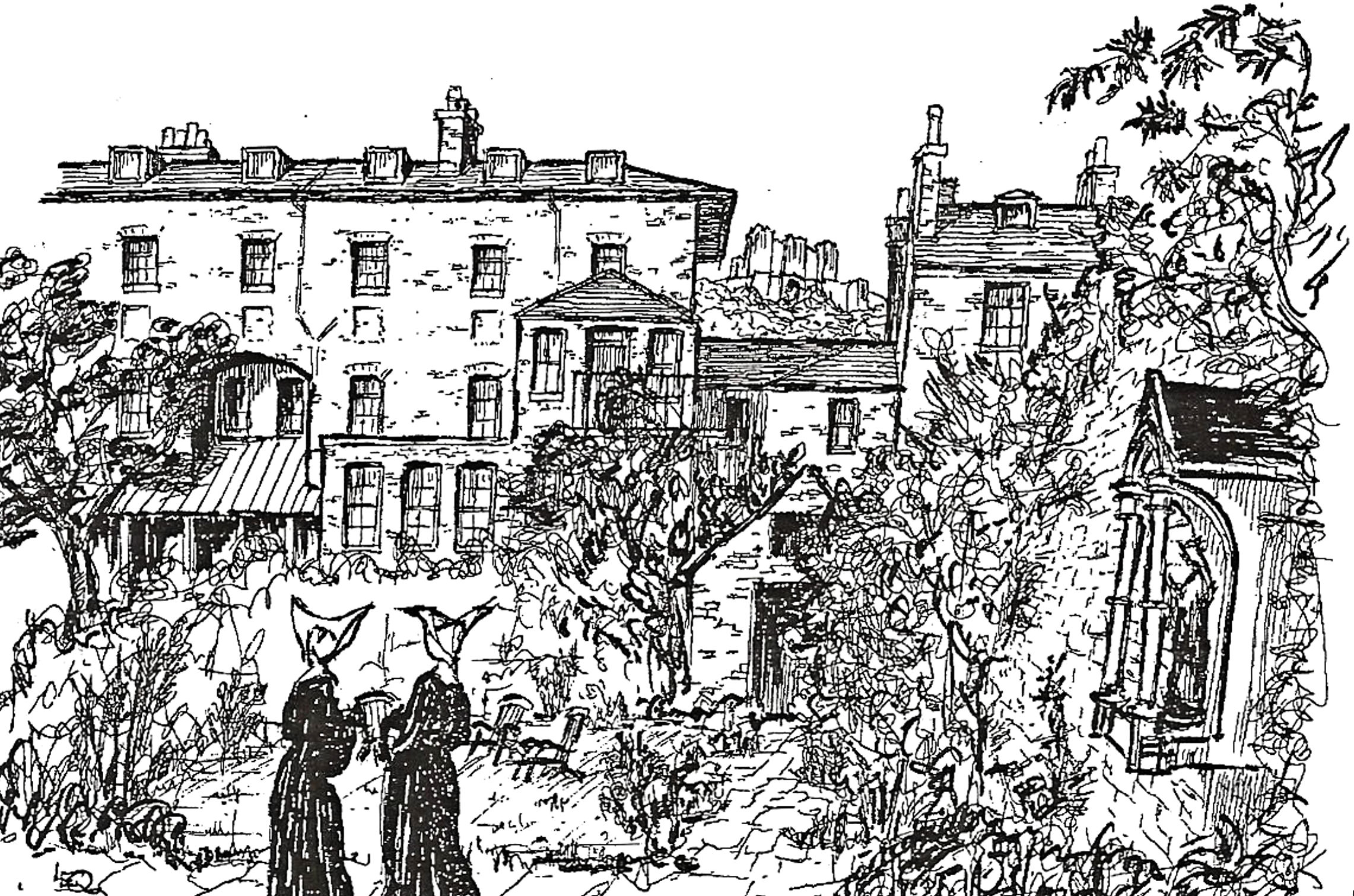
Sisters of St Vincent in the garden of Eastbrook Place looking towards the Castle.

Sisters of St Vincent in the garden of Eastbrook Place looking towards the Castle.

When peace returned, the Sisters returned to Dover and they quickly picked up the reins of teaching, running the orphanage and community work. In 1927, in keeping with the philosophy of the time, they created ‘open-air’ facilities at Eastbrook Place. At that time, the tuberculosis virus was a killer and it was known that the disease was closely linked to poverty and overcrowding. As many of the orphans came from such environments most suffered from the disease. Medical treatment was limited but the philosophy of the open-air schools was that fresh-air, good ventilation and exposure to the outside would help to allay the progress of the disease and could possibly cure it.

By 1934, the number of children being sent to Eastbrook Place was overwhelming the establishment and the Sisters decided on opening a purpose built ‘Daughter House’ at St Leonards-on-Sea. The Vincent de Paul School, as the new facility was called, was staffed by Sisters from Dover and was both successful for the patients and popular with the authorities. During World War II (1939-1945), the medical treatment for tuberculosis advanced and the need for open-air schools diminished. St Vincent’s became a boarding school for 45 girls with special needs, most of which were sent by Local Authorities. However, due to government cutbacks by 1993 there were only 12 girls and that year, the school was forced to close.

Back in the 1930s, following the transfer of the children from Eastbrook Place to St Leonards, the Dover buildings were refurbished as a convalescent home for women and children from the poorer parts of London. So as not to cause confusion, the Dover Mother House was renamed St Mary’s.

World War II broke out on 3 September 1939 and following the Dunkirk Evacuation between 26 May and 4 June 1940, Dover was at the front line of the Battle of Britain – 10 July to 31 October 1940. St Mary’s closed and the Sisters moved with the children attending St Paul’s school to Wales.  All of Dover’s children were evacuated and the St Paul’s children were sent to Ebbw Vale, Monmouthshire. On Sunday 20 October, St. Mary’s Convent at Eastbrook Place took a direct hit by a shell.

Albeit, although Dover was still subject to attacks throughout 1942, the children started to drift back to the town but there were no schools for them to attend. Teachers were reluctantly given permission to re-open schools and in 1943, the Sisters returned to Dover and taught mixed denomination classes at St Paul’s school. On Friday 1 September 1944, a shell demolished Whyam House, on the opposite side of Maison Dieu Road from St Mary’s and the convent was badly damaged by the blast.

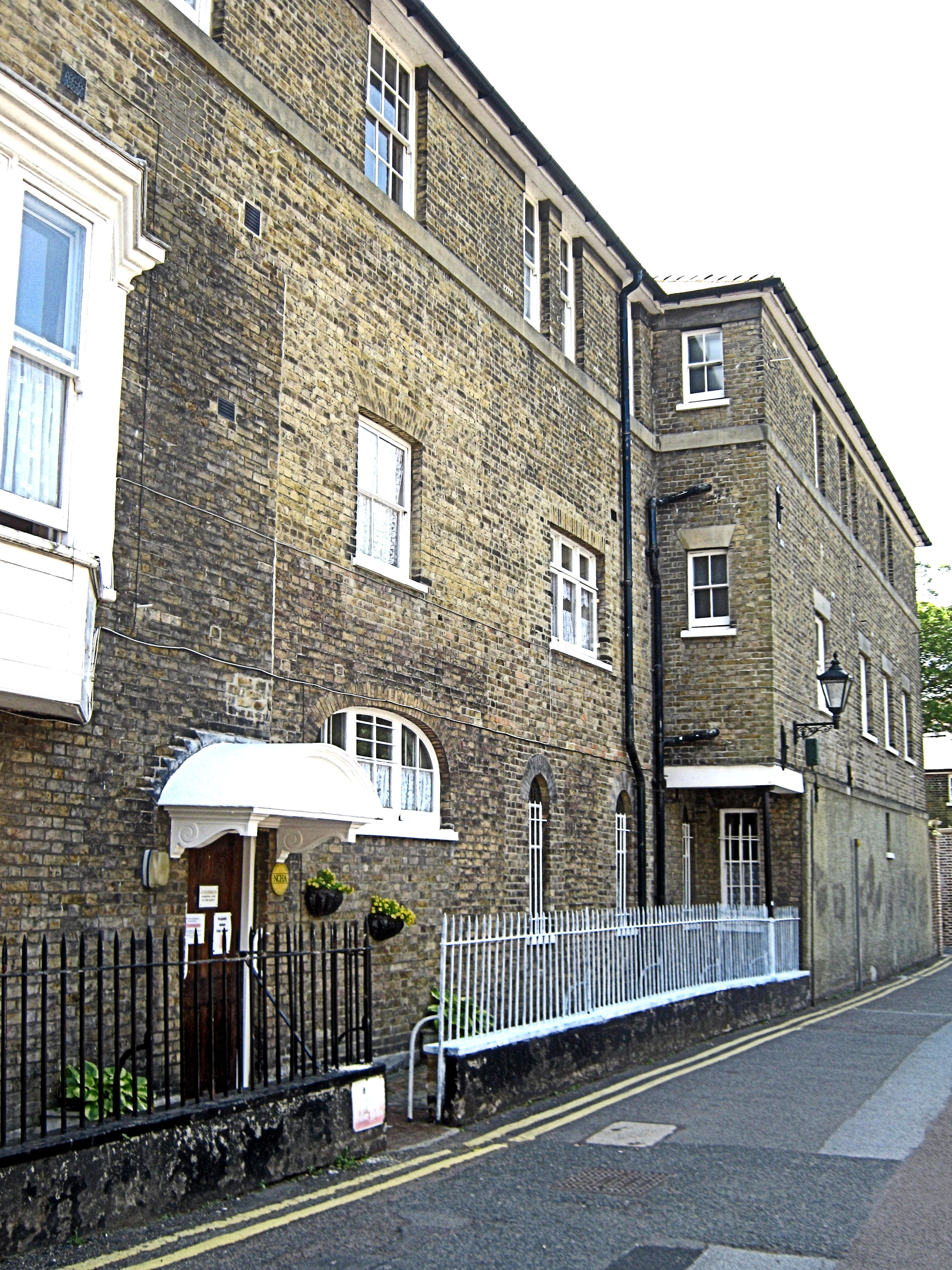
St Mary's Dieu Stone Lane. LS

St Mary’s Dieu Stone Lane. LS

Following the War, the Sisters continued teaching and they reopened the convalescent home for underprivileged mothers and children from London. Gradually, they took in an increasing number of elderly ladies and in 1958, following major refurbishment of the premises, St Mary’s was registered with Kent County Council (KCC) as an establishment for the care of the elderly. The Sisters stated philosophy was to provide a service, ‘to all faiths and none’ and the small ecumenical chapel was available for use by all the residents.

St Edmund’s Roman Catholic Secondary Modern School, Old Charlton Road, was built in 1961 to accommodate 360 children. Seven years later, in 1968, St Paul’s Primary School was transferred to the former Saint Ursula’s Convent, re-named St Richard’s Primary School. The Sisters taught at both schools as well as looking after the elderly at St Mary’s, making home visits and were on the roster of the ecumenical soup kitchen. Most of the residents at St Mary’s were self-financing although a few were aided by KCC. At the time, two helpers were employed one of whom later became a resident. On 20 September 1964, all the Sisters of Charity of Saint Vincent de Paul, including those in Dover, adopted a simple modern dress and blue veil.

Pencester Gardens . Alan Sencicle

Pencester Gardens . Alan Sencicle

A story told by the residents at this time was about an elderly lady who regularly fed bread to the birds in the nearby Pencester Gardens. The Sister Superior asked the elderly lady to stop as the seagulls recognised her and would wait in St Mary’s garden or Dieu Stone Lane. The elderly lady apologised and appeared to take notice of Sister Superior but every day she would go for a walk carrying an umbrella – whatever the weather. The seagulls would gather behind her trotting along! When the lady reached the furthest end of Pencenter Gardens, she would open her umbrella … and the birds would have a feast on the food that she had been carrying in the umbrella!

In 1977, stringent health and safety regulations were introduced and the Sisters were forced to comply otherwise KCC would rescind their registration. At the time, there were twelve Sisters and at first, they looked for a more modern building to house the residents while keeping 7 Eastbrook Place as the Mother House. They put the remainder of St Mary’s buildings on the market and went house hunting, but they could not find anywhere suitable.

St Mary's following the major refurbishment. LS collection

St Mary’s following the major refurbishment. LS collection

Finally, the Sisters’ took St Mary’s off the market and decided to undertake an extensive rebuilding and modernisation programme. In 1979, architects Lee Evans Partnership of Canterbury were called in and for the duration, the Sisters and seven of the residents lived at 7 Eastbrook Place. Two years later twenty-six elderly residents, some of who had returned others new, found a transformation. The St Mary’s premises were attractive, adapted to their needs and there were considerably more facilities available.

On 23 July 1983, celebrations were held to mark the centenary of the Sisters of Charity of Saint Vincent de Paul having a House in Dover. The Reverend Michael Bowen – Archbishop of Southwark, officially reopened St Mary’s followed by a Mass held in St Paul’s Church. Guests included Peter Rees MP 1970-1987 and the Mayor, Councillor Marie Hart.

Some years before, the house at the end of St Mary’s garden was bequeathed to the Sisters by an elderly lady and had been used for short stay residents. At about the time that the alterations took place in the main building, the house living rooms were extended and a laundry room was added. The refurbished building was subsequently used for visitors. In 1988-1989, further improvements took place at St Mary’s when a TV/video room was built and a larger lift was installed in a new location. The attic, where the Sisters once lived and the basement where guest nuns stayed, were both refurbished. These alterations increased the number of rooms for residents to 30.

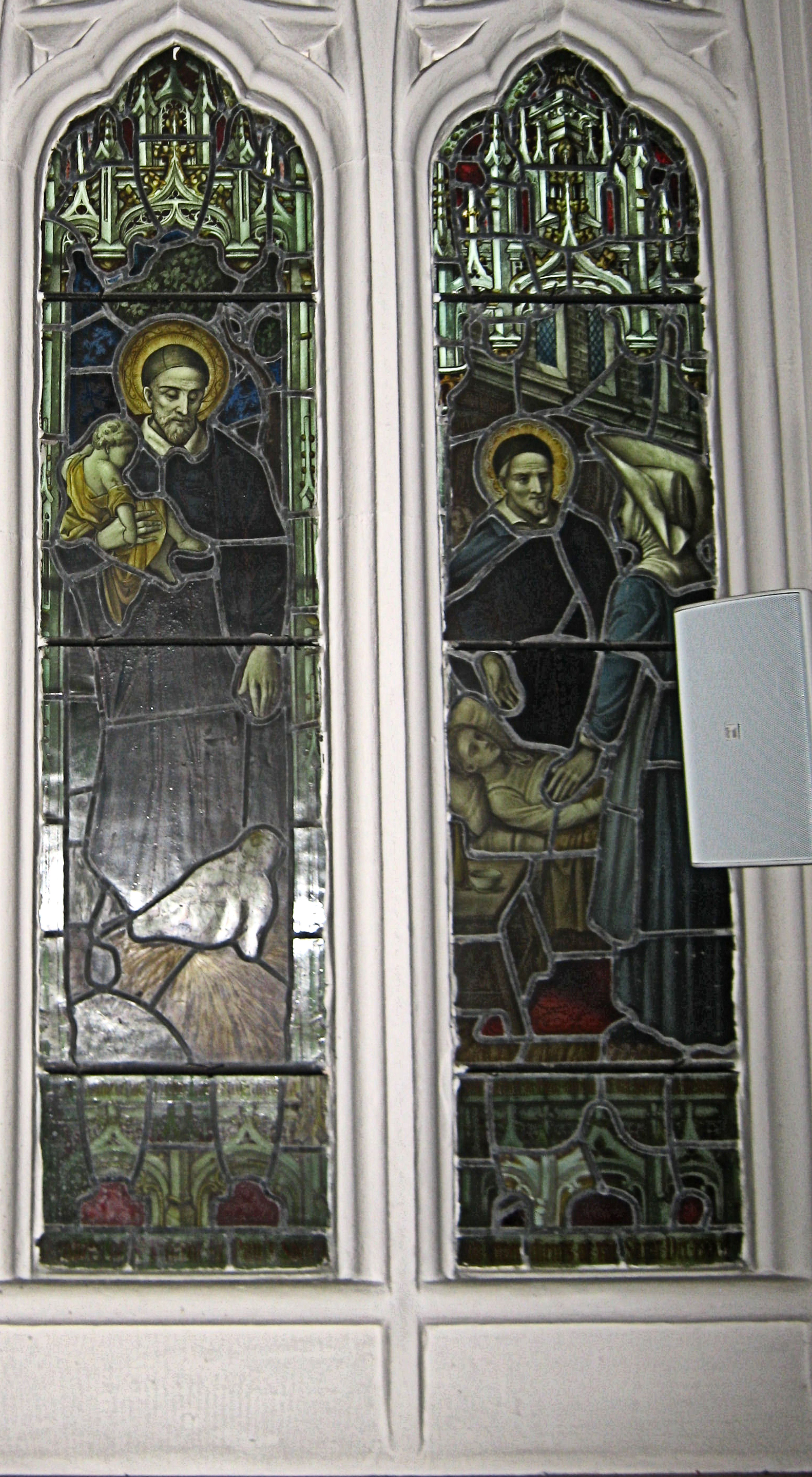
St Vincent Sisters of Charity depicted in one of St Paul's Church windows. LS 2011

St Vincent Sisters of Charity depicted in one of St Paul’s Church windows. LS 2011

The Castle Street Area Society, founded in 1988, helped to realise a promise made by Dover District Council (DDC) to upgrade the area and this included Eastbrook Place. Walker Brothers Civil Engineers started Work in 1990 and about this time the whole of Eastbrook Place was Listed as Grade II. In February 2005, with only five Sisters left in Dover, they announced that they would be leaving the town. Having sold St Mary’s as a residential home for the elderly and headed by Sister Sarah King-Turner, Provincial of the Daughters of Charity of St Paul, they said their official goodbye. This was marked by a special Mass at St Paul’s Church, with the principal celebrant Bishop John Hine, followed by a reception in St Mary’s Church (Anglican) Hall.

On coming under new ownership the care home retained the name but in October 2017, the care home went into administration and closed in January 2018. Albeit, there is a reminder of the Sisters time in Dover, in a window in St Paul’s Church.

  • First Presented:
  • 07 February 2015
Posted in Hospitals and Health, Maison Dieu Road, Religion & Churches, Sisters of St Vincent - Eastbrook Place, Sisters of St Vincent - Eastbrook Place, Sisters of St Vincent - Eastbrook Place | Comments Off on Sisters of St Vincent – Eastbrook Place

Part 3 Swingate, Radar and the Towers

Swingate Aerodrome 1917 - Royal flying Corps Avro 504A. Dover Museum

Swingate Aerodrome 1917 – Royal flying Corps Avro 504A. Dover Museum

By the late 1920’s all that remained of the former World War I (1914-1918) Swingate aerodrome, east of Dover, were empty hangars.  (see: Marconi, Wireless & Swingate Aerodrome)  Since the War, the Regular and Territorial (TA) armies had used the site, which belonged to the military, for training camps. The hangars were used for teaching purposes. At the time, Air Vice-Marshall Sir Sefton Branker (1877-1930), supported by the Secretary of State for Air – Christopher Birdwood Thomson, 1st Baron Thomson (1875-1930), was putting forward the argument that the former Swingate aerodrome be taken over by the Royal Air Force (RAF) and upgraded to a military airfield.

On 13 August 1929, Sir Alan Cobham (1894-1973) of National Flying Services Limited, had flown into Swingate where he was met by the Mayor of Dover Alderman Hilton Ernest Russell, the Corporation and senior Army and RAF officials. Discussions took place over the possibility of turning Swingate into a municipal aerodrome. The council declined to pursue the idea but the RAF officers were keen. While the Army preferred to retain Swingate as a training area. Albeit, an increasing number of privately owned aircraft were using Swingate as a stop over, particularly in bad weather.

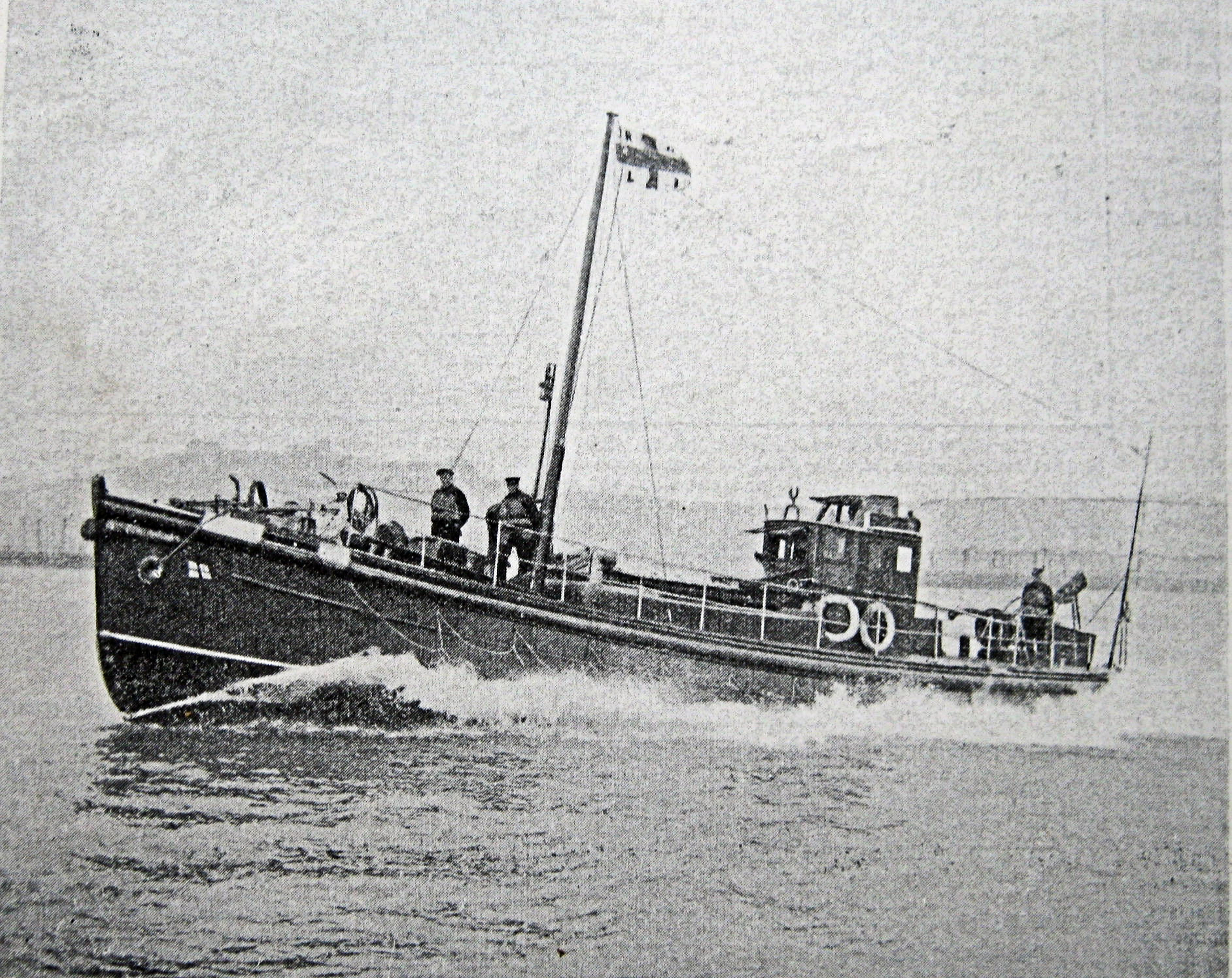
Sir William Hillary Lifeboat built 1930 and placed at Dover to rescue the increasing number of aviators ditching in the Channel

Sir William Hillary Lifeboat stationed at Dover to rescue the increasing number of aviators ditching in the Channel

With increased interest in flying and  the numbers of light aircraft, the number of planes ditching in the Channel were increasing. resulting from this, the Royal National Lifeboat Institute (RNLI), in 1929, ordered a special lifeboat to be based in Dover. Named Sir William Hillary after the founder of the RNLI, she was launched on 22 November 1929 and came on station before the end of the year. The official launch took place on 10 July 1930 by Edward, Prince of Wales (later Edward VIII) from the slipway in the Wellington Dock. He had flown into Swingate especially for the occasion!

The practical application of Wireless communication had successfully been demonstrated by Guglielmo Marconi (1874-1937) in the late 1890s. Electrical engineer and physicist, Professor John Ambrose Fleming (1849-1945), who acted as consultant to Marconi, recognised that receiving equipment was limited due to the detectors lacking sensitivity. Although crystal detectors, known as ‘cats’ whiskers’, had been invented and were proving popular, in 1904 Fleming invented the oscillation valve, as he called it. This, a thermionic valve, acted in the same way as a pump and made radiotelephony possible. The thermionic valve, or electron tube as the American physicist Lee De Forest (1873-1961) who developed the concept called it, receives, amplifies and transmits radio signals.

Gugliemo Marconi (1874– 1937). Dover Museum

Gugliemo Marconi (1874– 1937). Dover Museum

By the 1920s, crystal detectors were the norm and engineers and scientists were of the opinion that the curvature of the earth and the altitude of mountains determined the maximum distance between wireless stations. Ordinarily, they suggested, relay stations should be 50 miles apart but in certain cases intervals of over 100 miles could directly be bridged. Marconi suggested that very short waves, micro-waves, could overcome these limitations but this was met by scepticism. Using thermionic valves and short wave radio, in 1924, Marconi succeeded in telephoning Australia and showed that the size of the transmitters and the power needed to send signals greater distances dropped enormously. In that year he was given a contract by the British Post Office to set up circuits with Canada, Australia, South Africa and India – giving rise to the Post Office beam wireless service.

However, it was a subsidiary of the American International Telephone and Telegraph Corporation, the British Standard Telephones and Cables, that commercially exploited the thermionic valve, or valve as it is usually known, and micro-wave transmission. In the spring of 1931, they gave a demonstration of telephony across the Strait of Dover, from Leathercote Point, at the east side of St Margaret’s Bay, using a short wavelength of 18 centimetres with a power of 0.5watt. Identical equipment was placed at Cap Blanc Nez using aerials about 2.5 centemeters long within a parabolic reflector three metres in diameter. It was reported that the quality of speech transmitted was better than that of a normal telephone conversation of that time and no fading was detected.

Micro-wave transmission using a parabolic reflector Leathcote Point spring 1931. Dover Express

Micro-wave transmission using a parabolic reflector Leathercote Point spring 1931. Dover Express

In November 1932, the Air Ministry ordered micro-wave equipment from Standard Telephones and Cables Ltd, operating on the lower wavelength of approximately 15 centimetres. The micro-waves, oscillating at about 2,000million times a second (2000 Mhz) were generated in a ‘Micro-Radion tube’ and led to a transmitting aerial where they were concentrated by mirrors into ‘fine pencil rays’ and ‘thrown into space’ by a circular reflector some 10-feet (3.05metres) in diameter. The equipment was located at Lympne aerodrome and operated in conjunction with similar equipment ordered by the French Air Ministry at St Inglevert aerodrome south-west of Calais. In conjunction with teleprinters, the apparatus was mainly to be used to announce the arrival and departure of aeroplanes not fitted with a radio and for routine service messages.

Long before World War I, Christian Huelsmeyer (1881-1957) in 1904 had discovered range finding by transmitting very short-wave radio signals. When the signals hit solid objects they sent back their reflections or ‘echoes’ and he demonstrated his discovery to the German military. Huelsmeyer showed them that objects such as warships could be detected at a range of 1mile (1.6kilometres) but the German military were not impressed. Marconi, on the other hand, recognised the possibilities of Huelsmeyer’s discovery and gave a demonstration in 1922. Following which the discovery was taken up by a number of research establishments including the American International Telephone and Telegraph Corporation laboratories, US Naval Research laboratory and the British Meteorological Office.

Also in 1932, the US Naval Research laboratory announced that they could detect aircraft 50 miles away using micro-waves and in Britain, scientist (later Sir) Robert Alexander Watson-Watt, (1892-1973) described a technique that he called RAdio Detection And Ranging or RADAR to the British Air Ministry. As noted in the story, Marconi, Wireless and Swingate Aerodrome, thunderstorms were ill omens to the flimsy aircraft in World War I. At that time the head of the Meteorological Office in Hampshire, Charles Cave, was looking into ways of detecting thunderstorms. When Watson-Watt joined the Meteorological Office in 1915, he was given the job of finding a method of detecting thunderstorms. Watson-Watt observed that when a lightning bolt is triggered it ionises the surrounding air and gives off a signal – the crackling noise that can be heard on Medium/Long wave AM radio. With the help of his assistant, J F Herd, by 1923 they had constructed a low-sensitivity radio direction finder and by using three radiotelegraph receivers for triangulation, they could track the direction of an incoming storm.

Sir Robert Watson-Watt (1892-1973) - Royal Air Force Museum

Sir Robert Watson-Watt (1892-1973) – Royal Air Force Museum

Watson-Watt improved on the equipment and using the Admiralty’s radiotelegraph stations to locate thunderstorms went on to successfully refine the detector. This he did by using the newly invented cathode ray oscilloscope that displays, at that time in two dimensions, varying signal voltages as a function of time. While demonstrating the use of the oscilloscope in detecting thunderstorms, Watson-Watt noted that when aircraft flew by, they too interfered with the signals. £10,000 was made available by the Air Ministry to undertake further research and on 13 May 1935, Watson-Watt along with Arnold Wilkins (1907-1985), Edward (Taffy) Bowen (1911-1991), L H Bainbridge-Bell, Robert Hanbury Brown (1916-2002) and a small group of support scientists gave an effectual demonstration. Those attending were government officials, who held the purse strings, and representatives from all three armed services. It took place at Daventry and showed that an aeroplane caused a trace on the cathode ray oscilloscope and thus proving the principle of radar!

World War I sound mirror and what was believed to be a 'Tucker' 1920s Sound Mirror at Fan Bay. Both are now believed to be of the earlier type. National Trust

World War I sound mirror and what was believed to be a ‘Tucker’ 1920s Sound Mirror at Fan Bay. Both are now believed to be of the earlier type. National Trust

Dr William Sansome Tucker (1877-1955), the Director of Acoustical Research, in 1927, put forward a plan for a chain of 20-foot ‘Sound Mirrors’ along the South Coast to augment the 15-foot ones built during World War I (see: Marconi, Wireless & Swingate Aerodrome). It was believed, up until very recently (spring 2015) that a ‘Tucker’ Sound Mirror was built at Fan Bay along with  another at Lydden Spout in 1928 but both fan bay mirrors are now believed to be of the earlier type. It had already been proved that Sound Mirrors were able to detect range over twenty miles on a good day and could ascertain direction. In 1933, a large 200-foot by 25-foot sound mirror was built on Romney Marsh and Tucker was developing 35-foot mobile steel mirrors that could be rotated. However, the increasing speed of aircraft meant that the planes would already be too close to be dealt with by the time they were detected. Albeit, the system that Tucker had developed for linking the Sound Mirror stations and plotting aircraft movements was of value. On abandoning his project, Tucker gave Watson-Watt and his team the data.

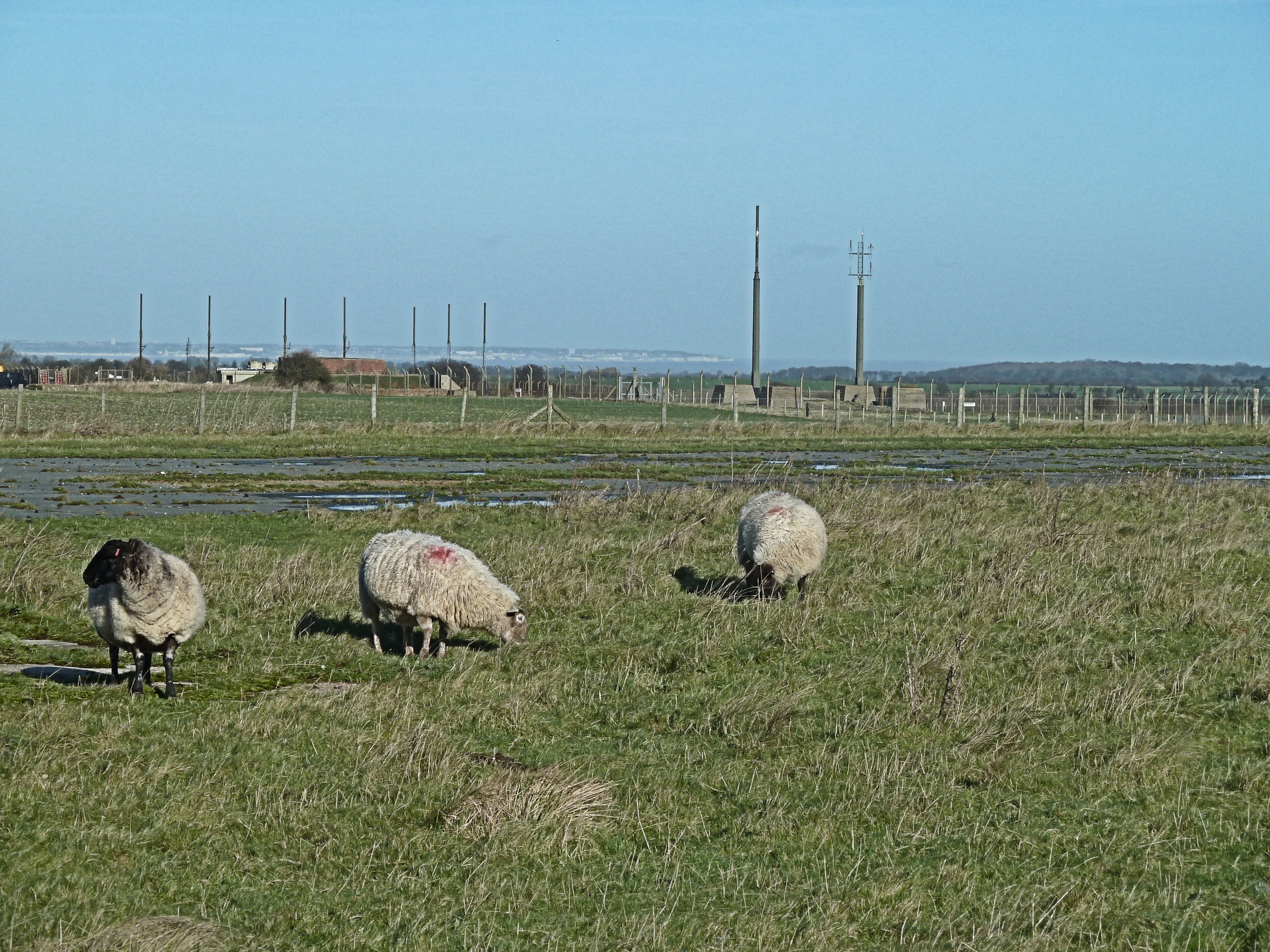
Watson-Watt and his team drew up plans for a system to detect aircraft using radio waves and soon after five radar stations were constructed, designated as Air Ministry Experimental Stations. One of these was at Swingate where four steel 364¼-foot (111 metres) transmitting towers were erected and to the east, four 240-foot (73 metres) wooden receiving lattice towers supporting a pair of dipoles at right angles to each other. There were also two shorter receiving towers. William Harbrow Ltd of St Mary Cray, who had erected the hangars at Swingate for Charles Rolls back in 1910, built the receiving towers using Columbian pine! The transmitting towers had large platforms at the top and halfway down and between the towers were strung, vertically aligned, long wave and short wave transmitting aerial arrays.

Swingate timber receiving tower erected by William Harbrow of St Mary Cray. William Harbrow Ltd 1936

Swingate timber receiving tower erected by William Harbrow of St Mary Cray. William Harbrow Ltd 1936

Short waves radiated in pulses, fed from a transmitter block through to the bottom of the wire aerial arrays had an effective beam width of about 100°. The reflected waves were then received by a pair of dipole antennas, at a right angle to each other, on top of the receiving towers. Direction finder bearings were taken by the echoes that were displayed by vertical spikes on a horizontal range scale on a cathode ray tube. The range was measured by time delay of the echo. The azimuth – the horizontal direction expressed as the angular distance between the direction of a fixed point and the direction of the object – was measured by the relative strength of signals at the two receiving antennas. The elevation was by comparison to the receiver antennas closer to the ground.

The successful trials by the Air Ministry Experimental Stations led to the Chain Home System (CHS) of radar stations along the coast to give early warning of approaching enemy aircraft. At Swingate, the Royal Air Force (RAF), who were housed at Northfall Meadow, operated the new facility. Later St Margaret’s RAF camp was built on Reach Road for personnel operating both Swingate and Leathercote Point RAF stations. While Swingate was still in its experimental stage, the RAF personnel were not allowed to wear uniform, as absolute secrecy was imperative. A rumour was deliberately spread by saying that the site was to become a municipal airfield but not to tell anyone!

In 1938, a Graf Zeppelin was seen flying along the coast and it was later reported that it was trying to monitor transmissions from the five experimental CHS stations. As a precaution, it was said, the power of the low frequency transmission was increased relative to the high frequency transmission, which played havoc with the German receivers and deceived those on board as to the actual purpose of the towers.

The last TA Infantry camp at Swingate, prior to the outbreak of World War II (1939-1945), was held from 15 July to 13 August 1939 with the emphasis on training in manning anti-aircraft defences. A battalion of TA Royal Engineers who specialised in mobility followed them. Their training was in harbouring, concealment, active and passive defence against air attacks. They also received special training in cutting rails, setting off camouflets (explosions designed to create artificial caverns) and bore hole charges in a nearby chalk quarry. Their time at Swingate was then extended and the Sappers dug ‘Crawl trenches’ all over the site in the hope that the enemy reconnaissance would not be able to determine its actual use. Finally, within deep dugouts, some of which were along the cliff face, supposed specimens of different types of posts were built. These included Bren-gun posts, dogleg trace, sniper’s post, bridge traverse and machine-gun posts and a platoon HQ. A Battalion HQ was also constructed with a 30-foot long cover.

By the outbreak of World War II (1939-1945), Swingate was part of the up and running Chain Home System. This covered the British mainland coast from the Isle of Wight to Scotland staffed by the RAF – wearing their uniforms! Although work had been carried out on radar technology in France, Japan and Germany by the time War broke out, Britain was in the forefront. Further, Britain was the only country with airborne radar that enabled fighter aircraft to detect enemy aircraft in darkness. This had the ability to gauge the enemy’s speed and range. Britain had also developed the cavity magnetron that enabled a very narrow beam of radio waves to be transmitted, giving the precise location of approaching aircraft.

Vice-Admiral Bertram Ramsay - Fortress Dover Commander from 24 August 1939 to April 1942. Doyle Collection.

Vice-Admiral Bertram Ramsay – Fortress Dover Commander from 24 August 1939 to April 1942. Doyle Collection.

Air defence, in the south-east of England, was based on successive zonal layers centred on London. Early warning of approaching enemy aircraft consisted of the age-old visual observations and the Chain Home System. Small anti-aircraft gun batteries within the complex and the nearby World War I Langdon battery, west of Swingate protected the Swingate masts. This was refurbished and became a command post and a second battery. A command post was constructed to the east of and nearer Swingate at Fan Bay by February 1941. The command post-batteries, of which there were several in and around Dover, were well equipped with modern technology as it became available and had their own plotting rooms. The batteries were responsible to the Fire Command Post – part of Fortress Dover – at the Castle. Throughout the War, all of Dover’s defences, be they on land, sea or air, came under the Combined Operations Headquarters, also based at the Castle. There, all sensor data was organized, and analysed and commands given for artillery fire. Later these commands were extended to intercept fighter missions. The officer with overall responsiblity was the Fortress Commander and from 24 August 1939 to April 1942, this was Vice-Admiral Bertram Ramsay (1883-1945).

In May 1940, the French and Belgium Channel ports fell to German occupation, which led to the Dunkirk Evacuation that was masterminded by Bertram Ramsay. Information gained by the Chain Home System at Swingate played its part. Following the fall of Dunkirk, General Field Marshall Hermann Goring (1893-1946), Commander of the Luftwaffe, issued instructions for the first phase of a battle, which if successful, would establish air superiority over the Channel. This would be followed by the invasion of Britain. As a result, on 2 July 1940, attacks on shipping and Channel ports by small groups of bombers with fighter protection began. Defences around the country were quickly erected and at Swingate, miles of barbed wire were laid around the complex and pillboxes were erected. The compounds were made into strong points, with extra barbed wire, ack-ack gun emplacements and block traverses fitted with platforms in case the expected Battle of Britain, as it was called, was lost.

Fighter Command Groups and Sector Boundaries, airfields and squadrons 18 August1940. Battle of Britain Memorial, Capel.

Fighter Command Groups and Sector Boundaries, airfields and squadrons 18 August 1940. Battle of Britain Memorial, Capel.

Swingate, as an RAF station, came directly under RAF Fighter Command and at the time there were eight military airfields in Kent, Biggin Hill, Manston, Hawkinge, Gravesend, Eastchurch, Detling, Lympne and West Malling. The first four were to play a major role in the forthcoming Battle and in overall charge was Air Chief Marshal Sir Hugh Dowding, Commander in Chief Fighter Command, from 1936 to 1940. Fighter Command was divided into four Fighter Groups with each group subdivided into sectors. Each sector had an operations room plus emergency standby and satellite airfields. Information was collected by the ‘Y’ service, which monitored German wireless messages along with Chain Home radar stations that tracked aircraft movements. Each sector controller was responsible for up to six squadrons and incoming raids tracked by radar were plotted in the operations room on large detailed maps using wooden blocks, called plots, marked with the raid number and estimated number of aircraft following which the appropriate squadrons were deployed.

The prolonged aerial conflict for control of the skies above the Channel and South Eastern England took place between 10 July and 31 October 1940. It was at this time that the towers at Swingate, as the nearest Chain Home station to the Continent, came into their own with the station, successfully reporting the Luftwaffe bomber formations before they had crossed the French coast. By the end of June, the Luftwaffe had lost 270 aircraft, the Royal Air Force 145, but at sea 18 steamers and 4 British destroyers had been sunk and in response, all coastal convoys were abandoned. At the German High Command, concern was being expressed that the British had found some way of early detection of their attacks and it was reported that the Chain Home masts played some part in this. Goering made a point of looking at the Swingate masts through binoculars, and it is said on the internet that he dismissed them as of little consequence. Nonetheless, on a moonlit night shortly after Swingate was bombed but little damage was reported.

Sandhurst in Dover harbour after being attacked 29 July 1940. Michael Harmer collection

Sandhurst in Dover harbour after being attacked 29 July 1940. Michael Harmer collection

On 29 July, Swingate radar showed that there was a build-up of German formations over Pas de Calais of more than forty dive-bombers with escorting fighters heading for the port of Dover. A number of Royal Navy ships and minesweepers were berthed in the harbour. From the Castle the Fighter Command scrambled squadrons to intercept and both anti-aircraft guns and Royal Navy ships’ guns started firing. In the sky above Hurricanes, Spitfires, Messerschmitts fought while those dive-bombers that made it, dropped their loads on the town and harbour and the 10,000-ton depot ship, Sandhurst was hit. Laden with ammunition and torpedoes, Dover tugboat and firemen using thousands of gallons of seawater fought to contain a potential catastrophe. All around more bombs rained on the harbour. At the same time other bombers circled Swingate, demolishing barracks and damaging a standby transmitter. The feeder line insulation was also damaged due to pressure waves.

Temporary repairs were undertaken at Swingate and a makeshift barrack block was erected. Then, much to the disbelief and annoyance of those involved, the Women’s Auxiliary Air Force (WAAFs) at the station were relocated to a base outside of Dover. The order had come from the Fortress Commander’s office and said, in essence, that all non-combatant personnel from the Dover Garrison area had to go to safer locations. It was explained to those involved that the WAAFs played a crucial role in the interpretation of the radar signals but to no avail even though WRNS (Women of the Royal Naval Services) worked at the Castle!

Sometime during the summer of 1940, the Windmill at St Margaret’s Bay was commandeered under the orders of Vice-Admiral Bertram Ramsay. It was painted shiny white and taken over by a special unit of the WRNS, all of which were German linguists. As part of the Admiralty Lookout team, their job was to monitor the radio messages from E-boats – fast, wooden hulled motor boats that attacked Allied shipping in the Channel – and report them to the Fortress Command. When the offensive was taken in 1941, these WRNS, along with naval personnel, operated transmitters that jammed the E-boats’ communications and radar.

The four original transmitting towers at Swingate. Dover Museum

The four original transmitting towers at Swingate. Dover Museum

On Monday 12 August, the town and harbour came in for another major onslaught, this time from cross-Channel shelling. Overhead, dive-bombers approached and Swingate was targeted. Feeder cables were severed and temporary repairs were made. Two days later, Swingate picked up a massive enemy aircraft formation over the Pas de Calais and four fighter squadrons were sent out. Over 200 aircraft battled it out in the skies above Dover causing a tremendous amount of damage but with few civilian casualties and those were minor. At sea, the unarmed South Goodwin Lightship, that under its previous name of South Sands Lightship had played an important part in the development of radio, was lost. Albeit, only two Hurricanes were hit while four dive-bombers and four Messerschmitts were brought down. Those at the Castle realised the full importance of Swingate.

Along with a number of other Chain Home stations, Swingate came under a heavy attack from dive-bombers again, on Monday 12 August. Feeder cables, telegraph poles and an operation hut was destroyed taking the main transmitter off-air. Some twenty minutes later, a standby unit became operational and 97 minutes after the attack, the main transmitter was back on-air. A week later on the afternoon of 19 August, sixty enemy aircraft were detected by Swingate radar flying at about 20,000-feet between Dungeness and North Foreland and going east. Suddenly two bombers peeled away dropping their load on Swingate, Northfall Meadow, Castle and Castlemount. Although no civilian casualties were reported, the same could not be said for the military of which there were many. The towers at Swingate, again, survived but not the cables.

Five days later, the Swingate cables having been repaired, the station reported that there was another build-up of German formations over Pas de Calais and they were met by RAF fighters and anti-aircraft guns. Swingate was again attacked and the attacks continued throughout the Battle of Britain. Towards the end, the towers came under attack from long-range German guns but survived. By 31 October 1940, against the heaviest of odds, the British forces compelled the Germans to abandoned their proposed invasion.

Following the Battle of Britain, Vice-Admiral Bertram Ramsay extended the facilities at Swingate to help Naval plotting by tracking both enemy and friendly coastal forces. RAF Swingate quickly proved its worth in this field, enabling Dover based Motor Torpedo Boats (MTBs) to make a succession of successful interceptions. However, the German High Command having recognised that the Swingate Towers had played an important role in the Battle of Britain the station was bombed several times from the end of October and in November 1940. One of bombs made a direct hit on a switch room and the place was totally wrecked. It was said that none of the airmen inside were killed or injured – but stating that no one was killed or injured was often the case in relation to armed service personnel during the War. Standby equipment at Swingate was used for some time after, as it took several months to make full repairs.

In the afternoon of Thursday 14 November, the towers came under a concerted attack from bombers. The formation had been detected and followed across the Channel, so the anti-aircraft batteries were ready. It was probably a combination of surprise that the batteries were ready and the magnitude of their barrage that caused the bombers to change direction. However, they did drop their load but missed the towers. The result was death, injuries in the town of Dover and destruction of the RAF’s station’s unofficial vegetable patch! A few days later, the bombers returned dropping some 20 bombs on the station. The sick quarters and the Officers’ Mess were severely damaged but no one was reported killed or injured and the radar installations survived intact.

Sheep grazed Swingate Down throughout the War and they still graze there. AS 2015

Sheep grazed Swingate Down throughout the War and they still graze there. AS 2015

From February 1941, the gun batteries along the coast were equipped with radar. This made their task more effective as their job was to stop enemy ships going through the Dover Strait. It was a sunny clear spring day on 29 April that year, when the German long range guns across the Channel turned their sights on Swingate and fired airburst shells. The number of personal injured or killed and the damage done to the radar station is unknown but it is on public record that three locals, Dennis Keeler, William Irving and James Rogers, who worked there, were injured. All through the War, farmers kept sheep at Swingate fields and every morning they checked them and took away the dead ones killed during attacks. However, it was said that injured sheep would hobble to the RAF camp at St Margaret’s, find their way into the kitchens of the camp, where they would sheer themselves of their fleece and find their way into the cooking pots!

During the first part of the War, the German Battle Cruiser Scharnhorst operated unchallenged in the Atlantic resulting in the sinking of 115,622 tons of British Merchant Shipping. Early in 1942, along with her sister ship, Gneisenau and heavy cruiser Prinz Eugen, she was in Brest, Brittany – northwest France. It was known that following refit they were going to Norway and intelligence suggested that they would make the attempt to leave Brest at night. An allied submarine was detailed to watch Brest harbour and during the early evening of 11 February 1942, the submarine went out to sea to recharge her batteries. The three ships escorted by six destroyers and ten torpedo boats, used the opportunity and slipped out of Brest harbour undetected.

As the night wore on what had been sea mists turned into thick fog aiding their escape. Then Messerschmitt fighters flew in to protect the convoy, which was first picked up by radar at the Rye Chain Home station, east of Hastings. The officers in charge deemed the report as unreliable as it was believed that the ships were still in Brest. However, two RAF reconnaissance flights were sent to investigate. The guarding E-boats supplemented the fog by putting up a smokescreen but the reconnaissance planes were able to verify the Rye report. By that time other Chain Home stations, including Swingate, had picked up the convoy. More planes left their bases and soon engaged in combat but were outnumbered and returned to base.

Channel Dash Memorial, Marine Parade. AS 2012

Channel Dash Memorial, Marine Parade, Dover. AS 2012

By 11.45hrs, the convoy were passing Boulogne and entering the Strait of Dover. Five Motor Torpedo boats left the port but were unable to penetrate the fog and smoke screen, so returned to base. The German convoy then came under attack from the heavy guns of South Foreland Battery, where radar location was used, but after 15 minutes the convoy was out of range. The German convoy continued to come under attack from both sea and air as they passed through the Channel and into the North Sea with the Gneisenau retaliating and hitting the Worcester with three salvoes. During the whole of this time, the RAF carried out 256 sorties to bomb the German fleet but due to the weather and smoke screen, only 40 were on target, without causing much damage and the three ships reached German waters. 106 RAF aircrew, 24 Royal Navy crew of the Worcester and 13 aircrew of the Fleet Air Arm 825 Squadron lost their lives. There is a monument on Dover’s Marine Parade to the Channel Dash or Operation Fuller, as the event was officially called.

In the subsequent Inquiry, one of the reasons given as to why the Rye report had not been taken seriously was that Chain Home stations were excellent at detecting high flying aircraft but not low level. The German’s were aware of this and low-level air attacks were increasing. On 26 April 1942, flying in low, an aircraft dropped three bombs on Betteshanger colliery, near Deal. Nine surface workers were injured, and 182 miners were trapped below until the pit winding mechanism was repaired to get them out.

To deal with such occurrences the Chain Home Low (CHL) system was developed, the nearest station to Swingate was at Fan Bay. At about the same time Swingate became part of the Gee Chain of radar stations. The Telecommunications Research Establishment, following the work of Robert J Dippy on short-range blind landings, had developed the Gee radio navigation system. This was a long-range general system that enabled aircraft to attack cities at night without the need of bombsights or any other external references and revolutionised the effectiveness of RAF bombing raids. The first plane to use the Gee   Chain was a Wellington Bomber piloted by Pilot Officer Jack Foster of 115 Squadron – later a Squadron Leader who was awarded a Distinguished Flying Cross. As Gee Chain surface-plotting capabilities improved Swingate’s work was extended to Air-Sea Rescue.

DUMPY - diagram by Peter Sullivan February 1987

DUMPY – diagram by Peter Sullivan February 1987

Following the attack on Pearl Harbour, in December 1941 by the Japanese, the US came into the War. The 127 AAA Gun Battalion were sent to Swingate, joining the Royal Regiment of Artillery in defending the station. The WAAFs returned to the station in 1943 but the shelling from across the Channel was unremitting. In the late spring of 1943 the RAF moved as much of its operations as was practical from Swingate to a new facility in the caves below the Castle. It was four levels of a tunnel complex dug within the cliffs and became known as DUMPY – ‘Deep Underground Military Position Yellow.’ The project was completed in April 1943.

The attacks on Swingate did not let up and in January 1944, there was a direct hit resulting in a considerable number of fatalities and injuries among the duty personnel. The Ops-Room was demolished and the towers were damaged. As a result, an Ops-Room was installed within the DUMPY complex. During the preparations for the D-Day Landings on 6 June 1944, the demand on Swingate escalated but so did the attacks not only from shells but also from the V1 flying bombs (doodlebugs). During this time, the American Battery earned a reputation for its ability to hit the flying bombs on the nose as soon as they were in range. Following the D-Day Landings in Normandy, the shell attacks from across the Channel became incessant, day and night. That is, until 26 September when the Allied advance captured the guns around Calais and Boulogne.

Swingate Towers from the Sea, Konings Albert and Langdon Boarracks on left. Henry A Hoover 1948

Swingate Towers from the Sea, Konings Albert and Langdon Boarracks on left. Henry A Hoover 1948

Following the War, Swingate remained a RAF station manned by Signal Units and the batteries by the Artillery. Moves were made to return the site back to its pre-war role as a TA Training ground, and in the summer of 1948, some 100,000 members of the Combined Cadet Force (CCF) were camped there. Mannie Shinwell (1884-1986), the Minister for War, was supposed to address them but gale force winds meant that the whole camp had to move to Shorncliffe, Folkestone to hear the Minister‘s speech! The following year the CCF camp returned to Swingate but tensions between the US and the USSR of the Cold War (1945-1980) were escalating. It was realised that if war resulted it would be nuclear – very different to that of World War II. At the Castle DUMPY was converted into a Regional Seat of Government and at Swingate, the batteries were stood down.

Even though the British Broadcasting Corporation (BBC) had inaugurated the world’s first television service on 2 November 1936, BBC television did not reach the general public of Dover until 1961 (See Television Transmission and Production).  However, in 1952, using a Swingate tower and in cooperation with British Railways Southern Region, the BBC had undertaken ship to shore television experiments. This was to ascertain the possibility of obtaining television pictures on a cross-Channel ferry. The BBC were also using the tower as a temporary repeater station to beam television across the Channel to Calais and from there, using repeater stations throughout the Continent.

Swingate Towers c2000. The fourth tower was dismantled in 1955. Phil JohnsonThe conversion from the British 405 lines to the Continental 625 lines was undertaken by the receiver stations but it did mean that viewers in Paris, Rome and Berlin were able to view Queen Elizabeth II’s coronation on BBC but not the locals in Dover! In 1955 one of the Swingate transmission towers was dismantled and the following year a permanent two-way cable television link was established between London, through St Margaret’s Bay, to the Continent. BBC converted their Swingate operations in 1957 to receive Continental transmissions as well as sending them. This was to enable the British viewers, who could get BBC, to see the Queen on a State visit to France and Denmark. In the meantime, the Croydon transmitter was built to broadcast the London ITV signal. After fierce competition, Southern Television won the ITV franchise for the south and southeast of England. They went on air at 17.30 on Saturday 30 August 1958 from their studios in Southampton using a Swingate tower as a relay to Dover.

As the Cold War continued to escalate the RAF opened a radar base at the old World War II camp on Leathercote Point, near the Dover Patrol Memorial, St Margaret’s, as a nuclear attack early warning station. NATO had introduced ACE High (Allied Command Europe) early warning communication system and although Swingate was not a major site, it too was part of it. Although supposedly secret, the evidence was there for all to see from the four huge dish antennas that had been erected on the site! A network of Royal Observer Corps underground posts were established in 1962 with the job of monitoring radioactive fallout in the event of a nuclear attack. Built of reinforced concrete the complex is below ground and about 25-feet square (7.5square metres). Nuclear blast and radiation proof, it comprised of a workroom, accommodation, lavatories and washroom. It still exists and now has English Heritage Grade II Listing status.

Royal Observer Corps 1960s Nuclear Blast observer post - Dover ROC post at Swingate (1). Nick Catford

Royal Observer Corps 1960s Nuclear Blast observer post – Dover ROC post at Swingate (1). Nick Catford

Nick Catford, whose work on Kent’s Royal Observer Corps (ROC’s) underground posts was published by Kent Defence Research Group in 1999, has sent three photographs of the Dover ROC post at Swingate. The first shows main access shaft with the ventilation shaft to the rear. The pipe on the left is for the Fixed Survey Meter (FSM) probe. When in use, the flat top was removed and replaced by a plastic dome that was bolted in place. A Geiger Muller tube was then pushed up into the dome from the monitoring room below. This was a sensing device used for the detection of ionising radiation. The level of radiation could then be read on the fixed survey meter below. The metal dome on the top of the ventilation shaft was the mounting for the Ground Zero Indicator (GZI). The GZI consists of four horizontally mounted cardinal compass point pinhole cameras within a white enamelled metal drum, each ‘camera’ contained a sheet of photosensitive paper on which were printed horizontal and vertical calibration lines delineating compass bearing and elevation above the horizon. The bright flash from a nuclear explosion would burn a mark on one or two of the papers within the drum. The position of the burn spot enabled the bearing and height of the burst to be estimated. With triangulation between neighbouring posts these readings would give an accurate height and position. A third instrument mounting for the Bomb Power Indicator (BPI) is hidden in the grass.

Royal Observer Corps 1960s remains of the inside of a Nuclear Blast observer post - Dover ROC post at Swingate. Nick Catford

Royal Observer Corps 1960s remains of the inside of a Nuclear Blast observer post – Dover ROC post at Swingate. Nick Catford

The second of Nick Catford’s photographs is the internal view of the three-man 15-foot by 8-foot monitoring room. The furniture was the same in all ROC posts, twin bunks and single bed, instrument table and a cupboard for small stores, eating utensils etc. The post was not connected to the mains electricity supply. There was a 12-volt light powered by the battery that can be seen. A generator for charging that battery was kept in the sump at the bottom of the ladder. The post had a crew of four but this was later reduced to three nationally and the single bed was removed.

Royal Observer Corps 1960s Nuclear Blast observer post - Dover ROC post at Swingate (2). Nick Catford

Royal Observer Corps 1960s Nuclear Blast observer post – Dover ROC post at Swingate (2). Nick Catford

The third photograph that Nick sent, along with the descriptions cited, is a closer view of the access shaft. Beneath the hatch there is a 15 ft fixed iron ladder. At the bottom of the shaft there are two rooms. A small room that housed an Elsan chemical toilet and storage shelves.

BBC eventually broadcast low powered TV transmissions from Swingate for the Dover viewers in February 1961. Later that year VHF (FM) radio was transmitted by attaching antennas to the middle tower of the three remaining towers. Although in 1960, the Leathercote Point RAF station closed, the radar facilities were maintained until 1982. In October 1968 the Royal Observer Corps monitoring station closed and was eventually stood down in 1991 following the end of the cold war. Only a succession of Signal Units remained at Swingate. A shorter transmitting tower was erected as an intermediate relay station to British forces stationed in West Germany.

Not long after the Royal Observer Corps moved out, the United States Air Force moved in. Initially, the USAF said that they were at Swingate to use the facilities as a communications link for their bases throughout Southern England. Adding, that to meet the regulations of the time a considerable amount of reconstruction work had to be done. As time past, doubt was expressed on this explanation. In 1969, the BBC introduced stereophonic programmes on Radio 3. One of the transmitting stations was Swingate, broadcasting on 92.4 Mhz FM.

Memorial to the the men of Nos 2, 3,4 and 5 Squadrons of the Royal Flying Corps who took off from Swingate between 13 and 15 August 1914. Erected in 1966. AS 2015

Memorial to the the men of Nos 2, 3,4 and 5 Squadrons of the Royal Flying Corps who took off from Swingate between 13 and 15 August 1914. Erected in 1966. AS 2015

Built in early 1966, is the granite memorial we can see today on Upper Road, Swingate. The memorial commemorates the men of Nos 2, 3,4 and 5 Squadrons of the Royal Flying Corps who took off from Swingate between 13 and 15 August 1914, (see Marconi, Wireless & Swingate aerodrome). The Flying Corps had flown to Amiens to support the British Expeditionary Force at the start of World War I. The idea of the memorial came from Group Captain George Carmichael, who flew with one of the Squadrons and the memorial patron was Sir John M Salmon (1881-1968), the senior Air Marshall of the RAF. On 11 November that year Dover’s ‘Old Contemptibles’ laid a wreath of honour. Captain JW Bareham, who attended, had flown from Swingate with the original contingent.

 Swingate Downs Area of Outstanding Natural Beauty (AONB) - openstreetmap thanks to Protect Kent - Branch of the CPRE

Swingate Downs Area of Outstanding Natural Beauty (AONB) – openstreetmap thanks to Protect Kent – Branch of the CPRE

Arms control treaties had cooled the Cold War and in the spring of 1970 the RAF Signal Corps were withdrawn from Swingate. The towers were designated for television use and the last contingent, RAF 345 Signals Unit, moved out at the end of March that year. Problems with lorries backing up on the roads leading to the port of Dover, during bad weather or other reasons for ferry delays, was becoming an increasing problem. In the early 1970s the A2 bypass from the top of Lydden Hill to Eastern Docks was under consideration and following the closure of RAF Swingate, moves were made to turn the whole area into a lorry park. The bypass opened in early 1977, passing close to Swingate, but the site had been ruled out for two reasons. The Americans were still there and the site was/is a designated Area of Outstanding Natural Beauty (AONB).

The AONB status became a local issue in 1979 when the Americans wanted to set up a temporary transmitting station for use by military aircraft in establishing long-range navigational fixes in the North Sea and Europe. At the time the ordinary folk were unaware that the Soviet invasion of Afghanistan that year was to usher in another chapter of the Cold War. Planning permission was given but reluctantly. As a reaction to the heightened international tensions, the Campaign for Nuclear Disarmament (CND), founded in 1958, increased their activity. In October 1981, they published a map showing places that were likely to come under attack if there was a nuclear war and two places named as being vulnerable were in Dover. One was DUMPY – the emergency Regional Seat Government and the other, the American base at Swingate!

Memorial to the Royal Regiment of Artillery & AAA Gun Battalion of the US Army. AS 2015

Memorial to the Royal Regiment of Artillery & AAA Gun Battalion of the US Army. AS 2015

Following the end of that chapter of the Cold War the USAF moved out of Swingate and in August 1986, a second Memorial was erected near to the RFC Memorial on Upper Road. This was in memory of all ranks of the Royal Regiment of Artillery and of the 127 AAA Gun battalion of the United States Army, who had served in the Dover area during and shortly after World War II. Over the following years, the Swingate towers were used by the fast growing telecommunications industry.

In November 2007, a local, P Chiselden, became concerned that one of the red navigation warning lights on the top of one of the three remaining towers was no longer working. He reported this to the police, the local MP of the time – Gwyn Prosser – and the local papers. Before the light was fixed, a local reporter asked a Ministry of Defence (MoD) spokesman if there were plans to demolish the towers. The spokesman responded by saying that ‘the masts were used for a variety of radio transmissions, some for the public, and others including cross-Channel communications and that the site is secured.’ It therefore came as a shock when in March 2010 one of the three towers was dismantled without notice. Another MoD spokesman said that the tower was no longer needed and that it had become unsafe. He added that none of the towers were Listed by English Heritage.

Swingate Towers today. AS 2015

Swingate Towers today. AS 2015

People were outraged and before long applications were made to English Heritage for the remaining structures on the site to be Listed. Today, Transmitter Tower 2 has grade 2* listing and the Transmitter site, the Royal Observer Corps Underground Nuclear Monitoring Post plus Receiver site together with a buried World War II Reserve and Pillbox all have Grade 2 Listing.

In 2014, the Langdon Cliff based National Trust with archaeologists and some 50 volunteers uncovered the two sound mirrors at Fan Bay and the nearby World War II battery below Swingate. The site is open to the public and well worth a visit if you are fit – there are a lot of steps!

  • Presented: 30 January 2015
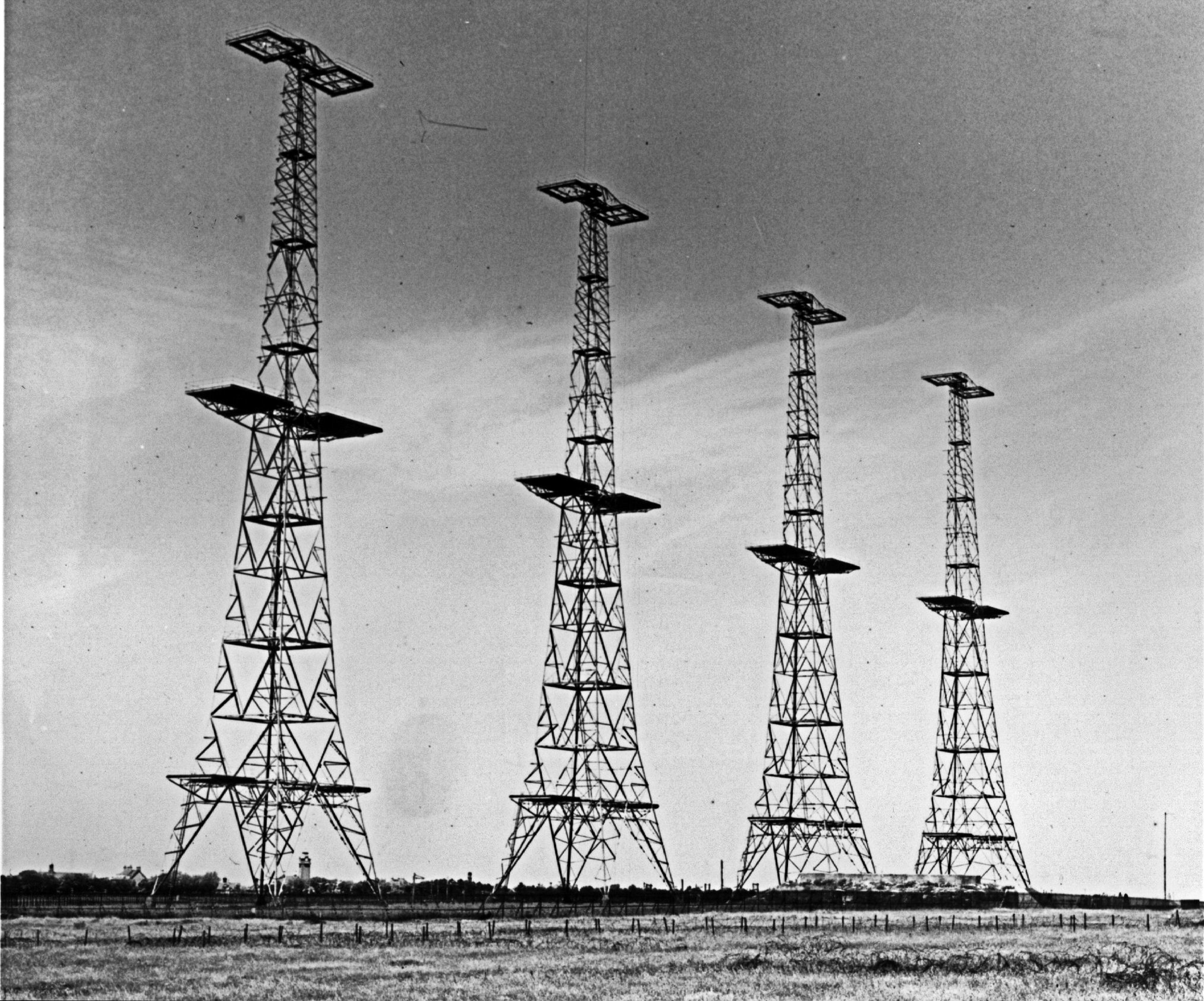
Posted in Aviation, Open Spaces, Radio and Telecommunications, Swingate, Swingate - Radar and the Towers, Swingate - Radar and the Towers, Swingate - Radar and the Towers, Swingate - Radar and the Towers, World War II | Comments Off on Part 3 Swingate, Radar and the Towers

St Margaret’s Bay Windmill

St Margaret's Windmill that Sir William Beardsell had built. Dover Museum

St Margaret’s Windmill that Sir William Beardsell had built. Dover Museum

High on the cliff tops of St Margaret’s Bay, to the east of Dover, stands a Windmill but it is no ordinary windmill. It was commissioned by Sir William Beardsell and completed in 1928. Sir William, born in Stockport in 1865, the eldest son of Joseph Beardsell, was educated at Manchester Grammar School. He spent most of his working life as a merchant in Madras (now Chennai), India where he ran a successful business together with a partner, William Johnstone. Beardsell was very much involved in public affairs and was appointed the Sheriff of the High Court in Madras and according to the 1918 ‘Who’s Who’, he enjoyed riding, motoring, golf and photography. On 12 August 1920, King George V (1910-1935) conferred upon him the honour of a knighthood. Sir William retired and settled in St Margaret’s buying the lower Trinity House lighthouse.

The village of St Margaret’s was named after St Margaret of Antioch (died 304AD) by the Canons of St Martin-le-Grand, Dover. The village is Britain’s closest to France, just over 18 sea miles (33 kilometres) on the south-eastern tip of Kent. To the west is Dover and to the east are the Goodwin Sands. The Goodwins are a series of sandbanks approximately 3 miles (5km) from the coast, 10 miles (16kms) long and up to 2 miles (3kms) wide in places. Some of the sands are so close to the surface that at low spring tides cricket matches have been played on them! However, the Goodwins are justifiably called the ‘Great Ship Swallower’, they are almost at the narrowest part of the Dover Strait and are deadly.

Dover & Environs 1828 with St Margaret's and the lighthouses underlined in red. Dover Library

Dover & Environs 1828 with St Margaret’s and the lighthouses underlined in red. Dover Library

For this reason, two lighthouses were built on the South Foreland, near the village of St Margaret’s in 1793. These were demolished and replaced by another pair, built by Trinity House, in 1843. Both sets of lighthouses were designed to show a constant light such that if mariners maintained a course that kept the two lights in alignment or sailed south of this transit line, they would miss the Goodwins. The stratagem worked.

The lower of the two replacement lighthouses was of national interest in September 1851, when the first submarine telegraph cable was laid across the Channel. This was from a cave below the lower lighthouse and up until the middle of the 20th century, the remains of the iron ladder could be seen traversing the cliff to the cave. On 1 January 1872, both lighthouses received national plaudits when the first practical use of electricity was introduced as an illuminant for the lighthouses.

One of the original South Foreland Light Houses built in 1793. LS Collection

One of the original South Foreland Light Houses built in 1793. LS Collection

However, the Goodwin Sands are not stable and by 1904, the alignment of the lighthouse lights was no longer reliable. The upper lighthouse was converted to a rotating optic (flashing light) from which vessels took a bearing in order to navigate around the Sands. It was within this lighthouse that on Christmas Eve 1898, Gugliemo Marconi (1874-1937) demonstrated his new wireless system. He transmitted a signal to the South Sands (Goodwin) Lightship making the world’s first shore to ship radio transmission. It was in February 1899 that Marconi demonstrated his first practical radio-signalling system by contacting the East Goodwin Lightship, 12 miles away, from the upper lighthouse. In the 1980s, the upper lighthouse was decommissioned and purchased by the National Trust in 1989. It is now a popular tourist attraction particularly as one of the best examples of a mid-19th century lighthouse, complete with the original clockwork weights mechanism and some 20th century electrically powered mechanisms.

It was the lower lighthouse that Sir William bought and this was decommissioned in 1904, following which the building was turned into a private residence. Shortly after purchasing the old lighthouse, Sir William had the house built nearby for his sister, Mrs Annie Scott, and then decided to add a windmill to ‘give rural charm’ to the property. He combed Kent for a mill that would serve his purpose and eventually did buy one but it was unsuitable to be moved. Finally, his architect suggested building a false windmill and this was agreed.

St Margaret's Bay Windmill, showing house and living quarters below the Windmill. Dover Museum

St Margaret’s Bay Windmill, showing house and living quarters below the Windmill. Dover Museum

The Windmill was constructed by millwrights Messrs Holman Bros of Canterbury and completed in 1928. Although it cannot strictly be termed a mill as it lacks the internal machinery essential for the milling process, externally it has all the attributes. It looks like a typical smock mill as it is timber framed and clad with weatherboarding, octagonal in shape with a boat-shaped cap, four sweeps that work, fantail and wooden smock. The same mechanical principles as a working mill were built into the cap and top floor. The whole rests on a brick-base, which also supported the living quarters. Besides these, Sir William did have a practical use for his ‘folly’, for inside the Windmill was a generator powered by the Windmill to provide electricity for domestic purposes.

In September 1939, shortly after the outbreak of World War II (1939-1945), Sir William entered a Manchester nursing home where, at the age of 75, he died on 6 December 1940. In May 1940, the French and Belgium Channel ports fell to German occupation, which led to the Dunkirk Evacuation. From the outbreak of War, there had been hostile activity in the Strait of Dover but from that time the situation changed dramatically for the worse. Between the 10 July and 31 October 1940 was the Battle of Britain, a prolonged aerial conflict to control the skies above the Channel and South Eastern England. At the same time and for the years that followed there were sea battles, artillery attacks from the Continental mainland and bombing. It was not for nothing that this part of Britain became known as Hell Fire Corner.

Vice-Admiral Bertram Ramsay the Commander of Fortress Dover 24 August 1939 to April 1942.  Doyle Collection.

Vice-Admiral Bertram Ramsay the Commander of Fortress Dover 24 August 1939 to April 1942. Doyle Collection.

Throughout the War, the officer responsible for co-ordinating all of Dover’s defences be they on land, sea or in the air, was the Fortress Commander based at the Castle. From 24 August 1939 to April 1942, this was Vice-Admiral Bertram Ramsay (1883-1945). From his headquarters at Dover Castle he was responsible for the various defensive measures. One of the first things he organized were the defensive gun batteries. World War I (1914-1918) gun batteries were updated and redeployed and new ones built. Initially, the nearest battery to St Margaret’s Windmill was at Fan Bay, becoming operational in February 1941. This was armed with three 6-inch guns with a range of 25,000 yards. In October that year the South Foreland battery, close to the Windmill with four 9.2 guns and a range of 31,000 yards, became operational and was primarily an offensive battery. The whole area, some 200 acres, had by this time been requisitioned by the War Office, including the Windmill, and was closed to the public.

Wanstone Farm was located on the west side of St Margarets, to the rear of South Foreland Lighthouse. Here the 233 Independent Maintenance Battery was located, whose job it was to maintain all the guns in the area. As the War progressed, five new long-range batteries were created to fire at enemy shipping in the Channel. They were positioned along the coast around the village of St Margaret’s and were known as ‘Winnie‘, ‘Clem‘, ‘Jane‘ ‘Pooh‘ and ‘Bruce‘. Jane and Clem were two 15-inch guns that came into operation in August 1942, and were located on Wanstone farm. Jane was originally designed for HMS Repulse and named after a Daily Mirror cartoon character. Clem was said to be named after the Labour leader Clement Attlee (1883-1967) or Winston Churchill’s (1874-1965) wife Clementine (1885-1977). The two guns were wire wound and made of a composite of steel and steel wire. This construction was introduced in the 1890’s to deal with the increased barrel pressures caused by the use of the then new propellant – cordite. These were the nearest of the big guns to the Windmill. Although quite some distance away, they would have shattered windows when they were fired if they had not been boarded up.

Although the various batteries had their own command posts, plotting rooms, radar etc., the nerve centre was the Fire Command Post at Dover Castle. There they co-ordinated and worked in conjunction with all the other defence departments such as the Admiralty Lookout and the Port War Signal Station. The personnel came from all three armed forces and those operating in the Admiralty Lookout and Port War Signal Station were trained in communications. Their work played a vital part in Fortress Dover’s defence by locating enemy ships, relaying orders and helping to coordinate naval, air and military forces in action. As the War progressed they moved into offensive action.

Dover's Cliffs from Cap Gris Nez c1943 taken by German reconnaissance. To the left is Langdon Cliff and to the right, the South Foreland. Ken Collyer

Dover’s Cliffs from Cap Gris Nez c1943 taken by German reconnaissance. To the left is Langdon Cliff and to the right, the South Foreland. Ken Collyer

Before the windows were boarded, the Windmill had excellent views of the Channel and Vice-Admiral Bertram Ramsay authorised it to be commandeered for the use by a special force. The electricity generating mechanism was removed and the Windmill painted shiny white. The logic was to make the Windmill look like an innocuous working windmill and therefore more likely to remain free from attack. The ploy worked for the Windmill was never attacked although many long-range photos were taken of it by reconnaissance flights!

The special unit that the Vice-Admiral had in mind was part of the Women’s Royal Naval Service (WRNS) all of which were German linguists. As part of the Admiralty Lookout team, their job was to monitor the radio messages from E-boats – fast, wooden hulled motor boats that attacked Allied shipping in the Channel and report them to Fortress Command. When Fortress Dover became more offensive the WRNS, along with naval personnel, operated transmitters that jammed the E-boats’ communications and radar. 

Following the War, the Windmill remained within the area commandeered by the War office. The nearby South Foreland battery was maintained with the guns being used for training purposes. In 1957, as defence policies changed from conventional to atomic warfare and guided missiles, coastal defences in the area were run down. The 4 guns of the South Foreland battery were dismantled that year, Jane and Clem early the following year. The last to go was the 233 Independent Maintenance Battery. The land and property was then returned to private hands. What state the house and the Windmill was in, I have not been able to ascertain but in 1969, the Windmill underwent repairs by millwrights Vincent G Pargeter and Philip Lennard. At that time some of the original shutters were replaced and the striking gear was overhauled. A new fan, fan shaft, drive shaft, pair of bevel gears, fan shaft bearings were installed and the sweeps repaired. Lightning later damaged one of the whips of the sweeps but this was dealt with.

Cluttons advert for the St Margaret's Windmill. August 1972

Cluttons advert for the St Margaret’s Windmill. August 1972

In 1972 the Windmill and house was put on the market and the advert tells us that the property, at the time, stood in 4.1 acres of grounds. The property consisted of five bedrooms, two bathrooms, three reception rooms, cloakroom, breakfast room, kitchen, cellar gardens and grounds. All the advert says of the Windmill is that it had three floors. In the 1990s, the house and Windmill was in possession of entrepreneur John Gordon (Algy) Cluff.

The Windmill is now Grade II listed and has, no doubt, undergone subsequent refurbishments, but this information does not appear to be in the public domain. Albeit, the Windmill still stands, beautifully resplendent close to the cliff edge next to the old lower lighthouse, a legend in its own lifetime.

  • Published:
  • Dover Mercury – 06 October 2005


Posted in Buildings, St Margaret's, St Margaret’s Bay Windmill, St Margaret’s Bay Windmill, St Margaret’s Bay Windmill, World War II | Comments Off on St Margaret’s Bay Windmill