Captain Matthew Webb – the first Person to swim the Channel

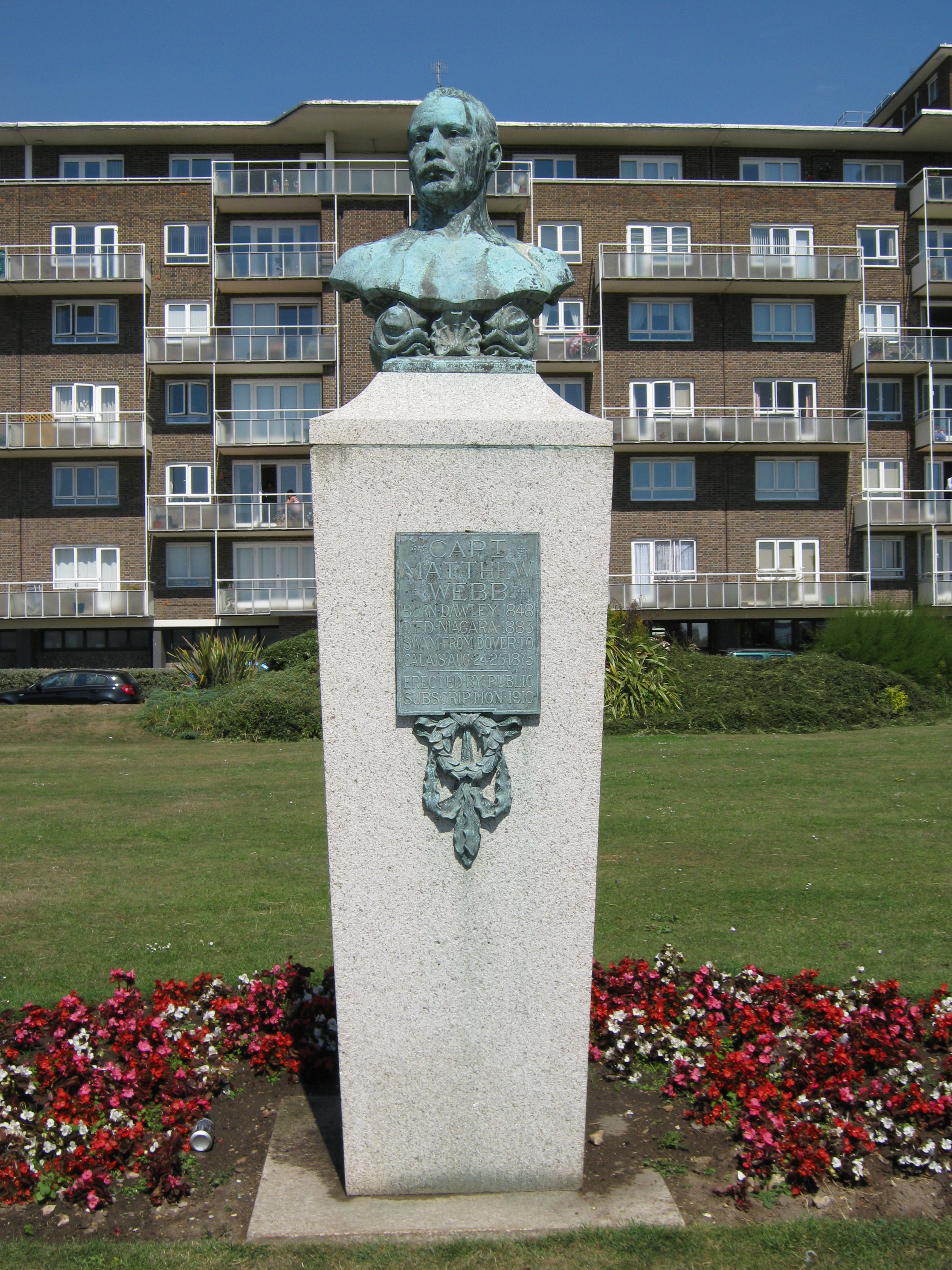
Captain Matthew Webb - Monument (detail), Marine Parade. Alan Sencicle 2009

Captain Matthew Webb – Monument (detail), Marine Parade. Alan Sencicle 2009

In the gardens at the front of the Gateway Flats on Marine Parade is a monument to Captain Matthew Webb (1848-1883), the first person to swim the English Channel without artificial aids. The latter is important for on Friday 28 May 1875 Paul Boyton (1848-1924), successfully crossed the Channel from Boulogne in 23 hours 30 minutes. Boyton wore a novel airtight suit made of vulcanised rubber, the prototype of the modern wet suit. He propelled himself, lying on his back, feet first using a paddle. When he became tired of paddling, Boyton used a small sail fixed to the sole of one of his boots. Captain Webb did not have any artificial aids when he made the crossing on 24-25 August 1875.

Matthew Webb was born at Irongate, near Dawley, Shropshire on 18 January 1848, where his father was a local doctor. Webb learnt to swim when he was 7 years old and when he grew up trained to become a mariner on board the Conway sail training ship moored on the Mersey. Knowing himself to be a strong swimmer, while traversing the Suez Canal a hawser was fouling the ship, Webb dived under and cleared the towrope.

Then on 23 April 1873, while serving as second mate on the Cunard ship, Russia travelling from New York to Liverpool, a sailor fell from aloft into the sea. The ship was running before the wind under steam and canvas at the rate of 15knots but Webb jumped in and attempted to rescue the man. Although not successful, the attempt earned Webb £100 from a collection made by the passengers, the Stanhope Gold Medal and made him a celebrity when he arrived back in England.

Shortly after Webb was appointed captain of the steamship Emerald and while on board, he read of a failed attempt to swim the Channel by J. B. Johnson on 24 August 1872. Johnson had given up after 1 hour and 3 minutes. Soon after Captain Webb resigned his post to become a professional swimmer and started training at Lambeth swimming baths and in the Thames. When satisfied with his progress, Webb came to Dover and stayed at the Flying Horse Inn, King Street. In June 1874, Webb swam from the Admiralty Pier to the North East Varne Buoy a distance of 11 statute miles. He returned to London and swam from Blackwall Pier to Gravesend Town Pier, a distance of 18 miles. In July, Webb was welcomed back to the Flying Horse Inn by the landlord, James Ball and Webb’s support team of locals. On 19 July he swam from Dover to Ramsgate, a distance of 19½ miles. Webb then turned his attention to his ‘experiment’ – to find out if it was possible to swim the Channel.

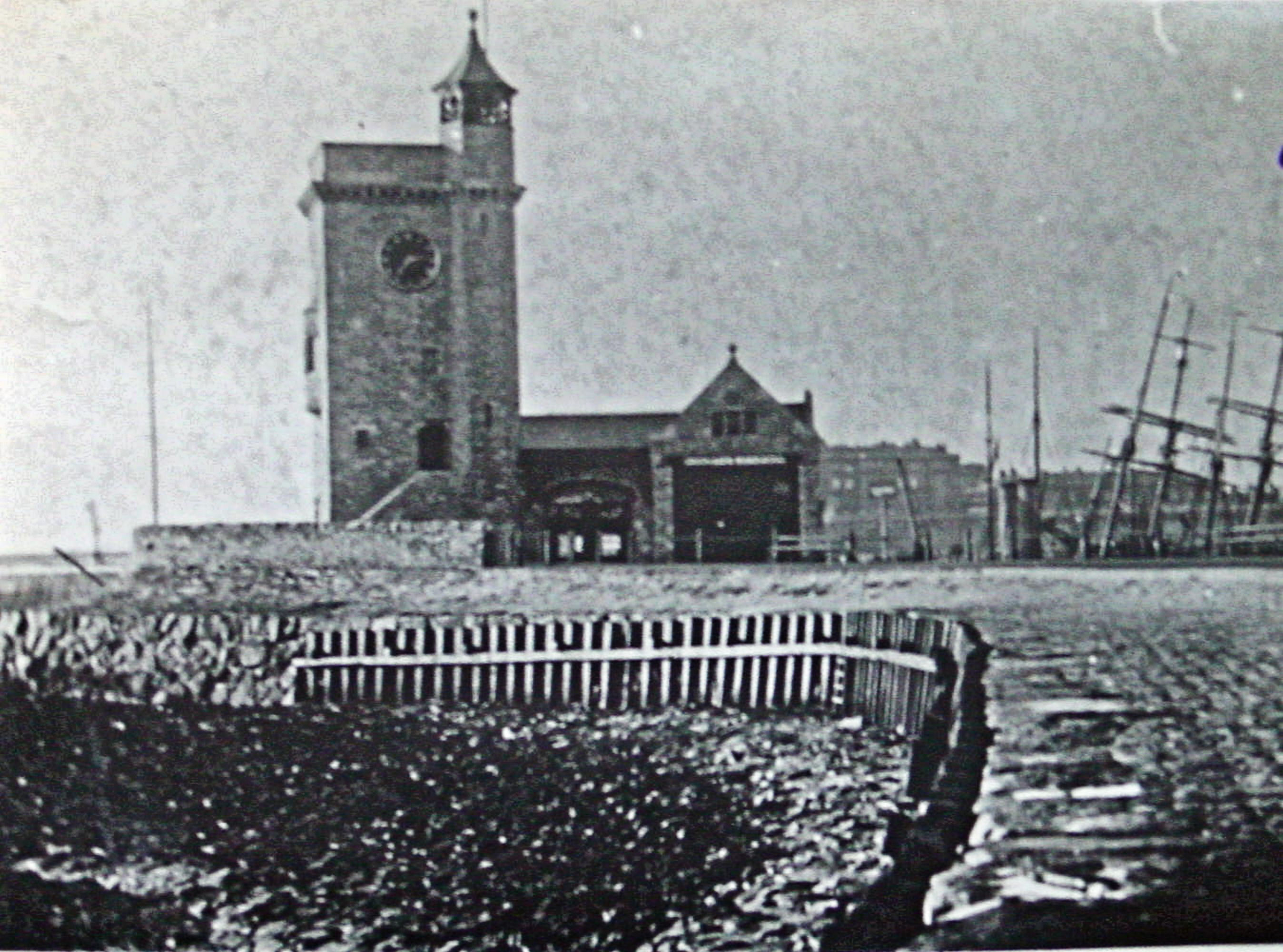
Admiralty Pier before the extension was built. It was from here that Webb started his 'experiment'.

Admiralty Pier before the extension was built. It was from here that Webb started his ‘experiment’.

It was a pleasant afternoon on 12 August 1872, when at 16.58 the 5-foot 8-inch tall Captain Webb, having anointed himself with porpoise oil, dived into a calm sea off the Admiralty Pier. The tide was in flood and a lugger and two rowing boats accompanied him. Webb swam eastwards towards South Sands Head buoy, where he hoped to get the benefit of an ebb tide that would carry him westward towards the Varne. From there, he hoped that the current would help him get to France. Every hour Webb was given sandwiches washed down with old ale and coffee by one of his support team. However, at 22.00hrs, the wind got up and there was a heavy storm. By 23.45hrs, the sea was so rough that Webb was forced to abandon the project and climb aboard the lugger. He had swum 15½ statute miles. It was another twelve days before the weather was favourable but the media saw the delay as an excuse for not going ahead with the experiment.

At 12.56½hrs on Tuesday 24 August 1875, smeared with porpoise oil, Captain Webb again dived into the Channel from the end of Admiralty Pier to test his experiment that it was possible to swim to France in one go. On the Pier’s Turret, which was in the course of construction, some 300-400 bystanders cheered him on. Webb started with the wind, tide and weather in his favour and was accompanied by three support vessels. His brother and cousin were on one and in charge of Webb’s refreshments. There was also his local support team including Benjamin Brown, who helped in the preparation, Webb’s pilot, George Toms of the Shakespeare Inn – Elizabeth Street and John Bavington Jones, editor of the Dover Express, who afterwards published the authoritative narrative of the swim: Across the Strait. Reporters from the national press and representatives of the Land and Water Magazine – a sporting gazette – were on board as referees.

Webb’s swimming technique was described as him laying on his chest with his arms out straight in front, the palms of his hands touching. He then drew up his legs followed by stretching them out behind him until he was straight from the tips of his fingers to the tips of his toes. Webb then brought his hands and arms back in a graceful curve. His arms and legs were never in motion at the same time. He also kept his head down putting his mouth and nose slightly under the water with every stroke and blowing porpoise fashion when his head was out of the water.

The current carried Webb in a westerly direction towards the Varne bank, which he hoped to reach by the time the tide turned that would then take him to France. At midnight, one of the passengers on a steamer that had just berthed in Dover reported that at 22.00hrs Webb was seen fourteen miles off Dover which was then bearing west-north-west swimming strongly and in ‘capital spirits’. The weather that evening was fine, the wind calm and the sea smooth such that the lugger accompanying Webb had to be rowed. At 23.47hrs, a Reuter’s telegram was sent from Boulogne and stated: ‘the night is beautifully calm, with a slight haze on the horizon, but clear over head. Everything is just as desired for the success of Captain Webb’s experiment.’

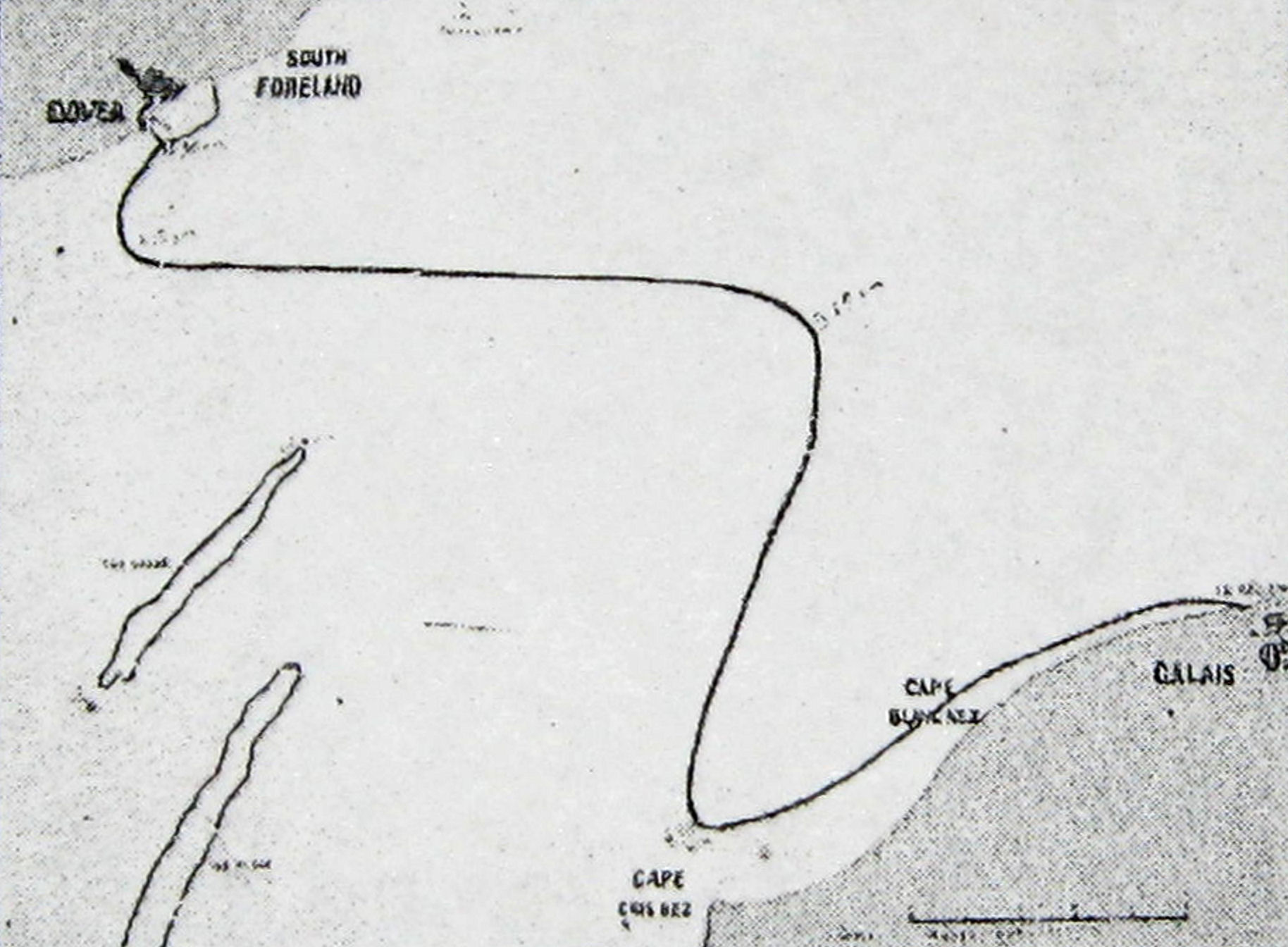
Chart of Captain Matthew Webbs swim 24-25 August 1875 drawn in 1910 after the building of Admiralty Harbour

Chart of Captain Matthew Webbs swim 24-25 August 1875 drawn in 1910 after the building of Admiralty Harbour

At about the same time as the telegram was sent, the passengers and crew of a Dover ferry, on its way to Calais, passed Webb and all cheered. One of those in the accompanying rowboats lit a red light that illuminated Webb’s face and this encouraged the passengers and crew to cheer even louder! At 02.00hrs Cap Gris Nez light could be seen but the strong tidal stream took Webb away from the shore. Fatigue seemed to be taking its toll on Webb and having been stung by a jellyfish much earlier in the swim, this was becoming a source of pain. Baker, the 16year-old diver on board one of the rowboats donned in a lifeline and made ready to jump in and rescue Webb if necessary.

By 07.00hrs, the weather had deteriorated and the wind was getting up with the sea becoming increasingly rough. Off Calais, a local ship stood off on Webb’s weather side, acting as a windbreak, but when the tide turned Webb was carried out to sea. At 09.00hrs, young Baker jumped in and encouraged Webb to continue. The sea, by this time, was breaking over the rowboats but Webb persevered and at 10.40hrs, he made landfall half a mile west of Calais utterly exhausted but not delirious as, has been stated elsewhere.

Captain Matthew Webb had made the first successful cross-channel swim without artificial aids! Time taken was 21hours 45 minutes and he had actually swum 39miles (64 kilometres). Once the news travelled there was such euphoria that, according to the New York Times, ‘From the remotest village in the Highlands, down to the lowest slum in Wapping, there is probably not a soul to whom the name of Captain Webb is unknown.’

On reaching land, Captain Webb was too weak to stand so had to be helped by his cousin and two locals to walk slowly up the beach. Once on the road it was obvious that Webb was finding it difficult to keep awake and was taken by carriage to the Hôtel de Paris in Calais. There he was given hot wine and a comfortable bed. The doctor checked Webb’s temperature, which was normal, but his pulse was very slow. After five hours sleep, Webb woke up hot and feverish, his temperature was recorded to be 101ºFahrenheit. After a drink, Webb went back to sleep and when he woke up some hours later, his temperature had returned to normal but he complained of stiffness.

The next day, 26 August, Webb and his team left Calais on the mid-day passage to Dover. On board he was given a berth and was instantly asleep but the doctor reported that Webb was fine. Shortly after arriving in England, Captain Webb was the guest of the Belgium Vice-Consul, W Forster and in the afternoon of the 27 August, was entertained to a garden party. This was organised by the officers of the Royal Artillery based on Western Heights and held at the Royal Oak Hotel, 56 Oxenden Street in the Pier District.

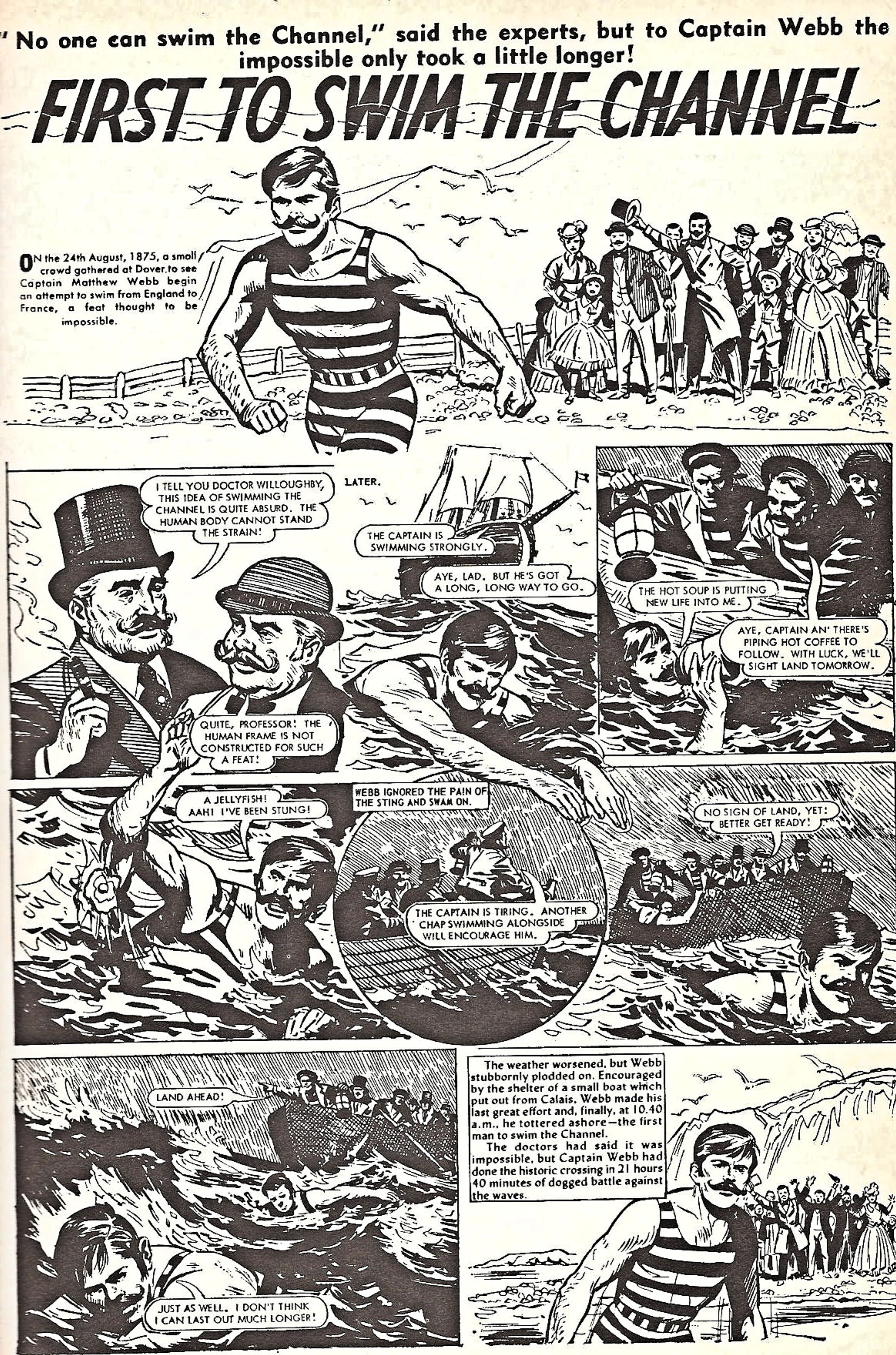
Cartoon depiction of Captain Webb's momentous swim. Dover Library

Cartoon depiction of Captain Webb’s momentous swim. Dover Library

That evening, Webb was the guest of honour at a reception held at the Royal Cinque Ports Yacht Club, on Marine Parade. The place was packed and the proceedings were led by Dover’s Mayor, Frederick Peirce who was quoted as saying that, ‘In the name of the people of Dover, whose feelings were sure to represent those of the whole English nation, heartily congratulate Captain Webb upon having accomplished the greatest feat in swimming which the world had ever known.’ Captain Webb responded saying that he had been confident that he would succeed as long as he trained and kept himself in peak condition. He hoped that what he had achieved was not altogether useless and that it would, ‘induce people to learn to swim more than formerly. At present many were drowned through being unable to swim a stroke.’ This received rousing cheers.

At the end of October 1875, Webb formally visited his old training headquarters at the Flying Horse Inn on the invitation of Mr Haynes, the secretary of the Royal Cinque Ports Yacht Club. There Webb was presented a cheque for £42.1s 6d that had been collected by the Yacht Club and in the town. For the occasion the Flying Horse Inn was especially decorated and, it was particularly noted that the bar and parlour maids wore extra ribbons in their hair for the occasion! Of note, the Flying Horse Inn, King Street, closed in 1891 and was demolished soon after. On the site an attractive post office was built but in recent years came into private hands.

Over the next few months, songs were written about Webb and he published his account of the momentous swim. He was also invited to numerous towns and cities where he was presented with financial testimonials. He used each occasion to promote the necessity of learning to swim. However, during this time the number of fatalities from drowning increased significantly. This was due to men boasting that they were equal to Webb and accepting challenges on the basis of bets on accomplishing swimming feats.

In the years that followed, Webb actively participated in lucrative challenges, for instance, in May 1879, a six-day endurance contest was held at Lambeth Swimming Baths. The winner was determined on the number of laps completed between 09.00hrs and 23.00hrs for the duration of the six days. There were valuable prizes on offer and altogether, Webb swam 74 miles, winning the contest. Later that year, Webb visited America and on 13 August swam from Sandy Hook Point to Manhattan Beach, near New York. The distance was 10 miles in a direct line but due to tidal flows, Webb actually swam about 16 miles in a little over 8hours.

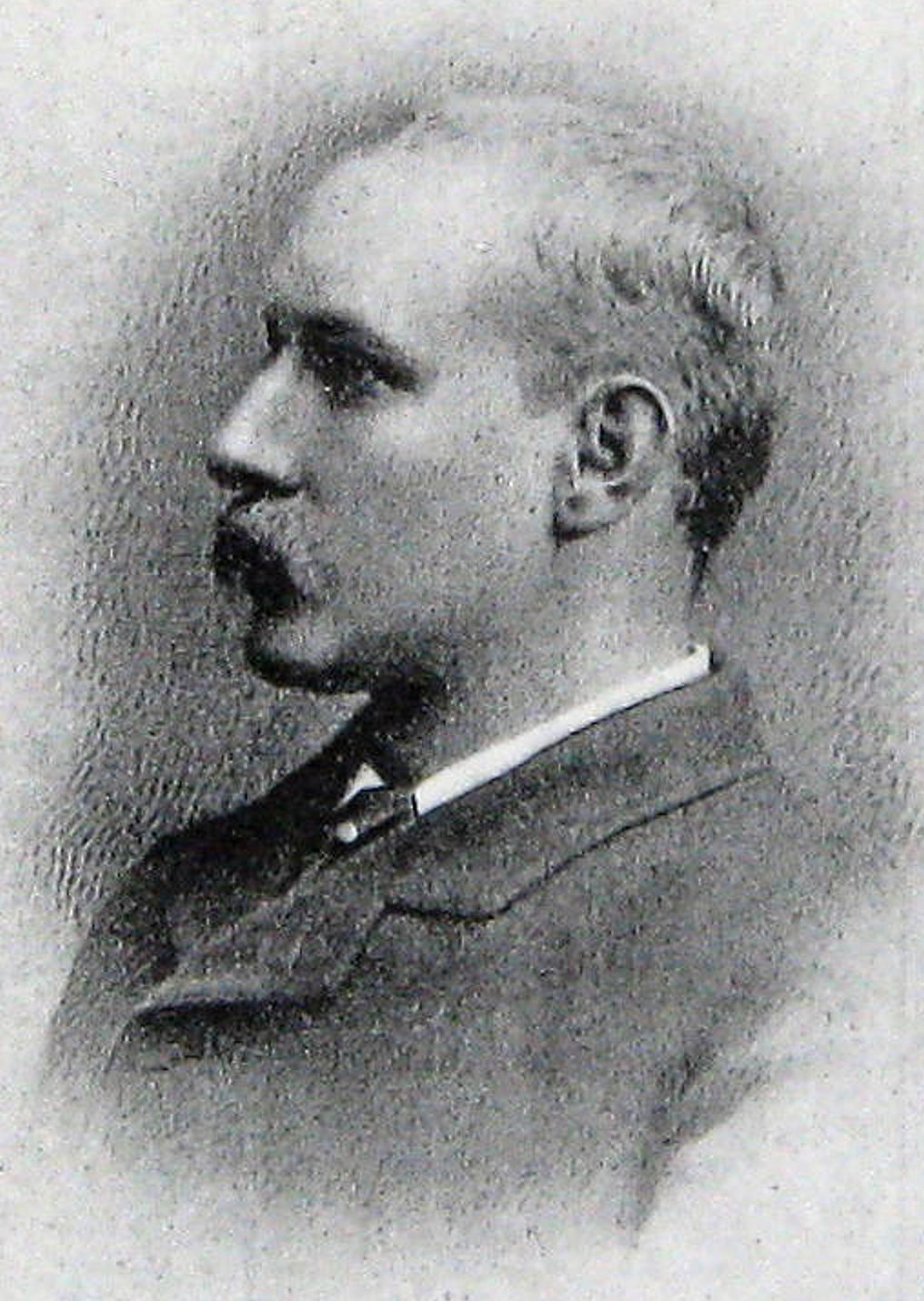
Captain Matthew Webb age 24 First person to swim the Channel without artificial aids.

Captain Matthew Webb age 24 First person to swim the Channel without artificial aids.

As a protection from the water Webb used ‘Vaseline’ a new preparation that had only been patented in 1872 and made from petroleum. His contract required that Webb finished at 17.00hrs or as soon after as possible but he actually arrived long before the deadline so was obliged to swim up and down until a rocket was fired to tell him to cross the finishing line! As he swam across the finishing line, Webb was greeted with loud cheers from the audience, all of whom had paid a considerable amount to be there. During this visit to America, Webb participated in a  lucrative publicity stunt at the Horticultural Hall, Boston, where he remained in a tank of water for 128hours.

In March 1880, following his return to England, Webb was paid a substantial fee to swim for 60hours in the tank at the Royal Aquarium, Westminster. On 27 April, he married Madeline Kate Chaddock and they had two children, Matthew and Helen. June 1881 saw Captain Webb back in the Royal Aquarium tank that had been strengthened and lengthened to 20 yards. This time, he was paid £300 plus prize money if he won, to undertake a six-day swim of 10-hours a day against a long time adversary, W Beckwith. Beckwith won the prize money. On 1 October, Webb was back in the water at Hollingworth Lake, Lancashire, where he beat A Jennings in a five-hour swim accomplishing 5 miles 660 yards.

5 May 1883 Webb opened Battersea new baths before leaving for another tour of the US. On arrival, reporters wrote that Webb’s was not as athletic as he had been four years previously, but Webb needed the money to support his growing family. Railway companies put up $10,000 prize money for the first person to swim across the Niagara River below the Falls and Webb accepted the challenge. The swim was arranged for 21 July and special trains were put on as it was expected that 10,000 people would turn up. However, Webb postponed the event and the railway companies lost interest. In fact, Webb was determined to go ahead with the swim.

Webb had been told that the waters, after going over the Falls, enter a deep and narrow gorge creating a fast flowing river averaging 39 miles an hour. That it was jagged rocks, just below the surface, that created the rapids, eddies and a giant whirlpool. Webb said that he thought that the whirlpool was about a quarter of a mile long and that it would take two to three hours to traverse it. On arrival, he examined the crossing, paying particular attention to the whirlpool but said that he felt confident to have the strength to swim it by keeping away from the suck hole in the centre.

On the afternoon of 24 July 1883, even though the Railway Company had not put on special trains, crowds lined the banks of the river and the suspension bridges that crossed it. Webb set out in a small boat from the Canadian side and was rowed by ferryman John McCloy. About 300 yards above the old suspension bridge, he dived in at 16.02hrs. He soon encountered the rapids, where the river narrowed from 500 feet wide to 300 feet. He was tossed around and at one point almost turned over but successfully negotiated them. He then passed through Horseshoe Falls, his speed increasing by the force of the river. Then Captain Matthew Webb entered the whirlpool.

At first Webb appeared to be doing well with onlookers cheering when they caught sight of him. Then he was seen no more. By 18.00hrs, rumour was spreading that Webb had drowned and a search was carried out along the river, but no trace of a body was found. Webb’s body was recovered four days later and was buried at the nearby Oakwood Cemetery.

Captain Matthew Webb - Unveiling of the Dover Memorial by Lord Desborough 3 June 1910 Clarence Lawn. Thanks to David G Atwood

Captain Matthew Webb – Unveiling of the Dover Memorial by Lord Desborough 8 June 1910 Clarence Lawn. Thanks to David G Atwood

Following Webb’s momentous swim across the English Channel, many tried to repeat his success but failed. Because of these constant failed attempts, the enthusiasm was fading along with the memory of Captain Webb. In 1908, Alfred Jonas, a well-known personality in the British sporting circles of the time, decided that something should be done to keep Captain Webb’s memory alive. The Amateur Swimming Association (ASA) supported his idea and they asked William Henry Grenfell, 1st Baron Desborough (1855-1945), to be the Patron of a Webb Memorial Fund. Lord Desborough was an all round sportsman who had swam the Niagara rapids twice as well as being one of the Oxford eight who had rowed from Dover to Calais in 1885. He was an excellent Patron and soon enough money was raised to commission a memorial from the well-known sculptor, Francis William Doyle-Jones (1873-1938).

An appropriate site was found on Clarence Lawn in front of the Burlington Hotel, Dover and on 8 June 1910, Lord Desborough unveiled the finished memorial. It is a bronze bust surmounting a plinth of Peterhead granite and has a bronze inscription surrounded by bay leaves and seaweed. The bust is naked with the head turned slightly to the right but with the eyes looking out towards the Channel. The Mayor, Walter Emden, accepted the memorial on behalf of the town, in a grand ceremony. Among the guests were those who had accompanied Captain Webb on the great swim, including the Captain’s brother and cousin.

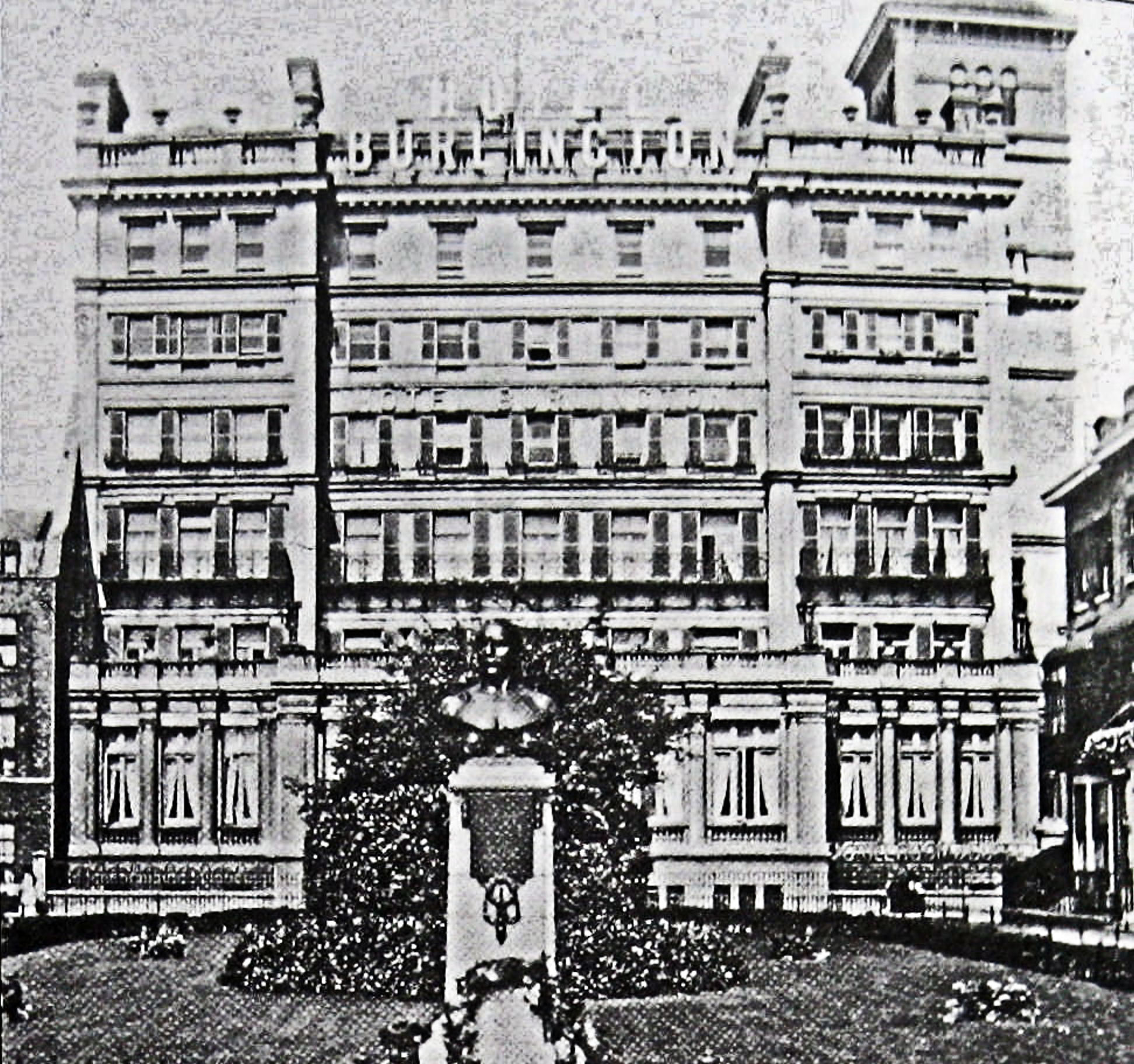
Captain Matthew Webb  Memorial on Clarence Lawn in front of the Burlington Hotel  c1904 - Adams Collection Dover Museum

Captain Matthew Webb Memorial on Clarence Lawn in front of the Burlington Hotel c1910 – Adams Collection Dover Museum

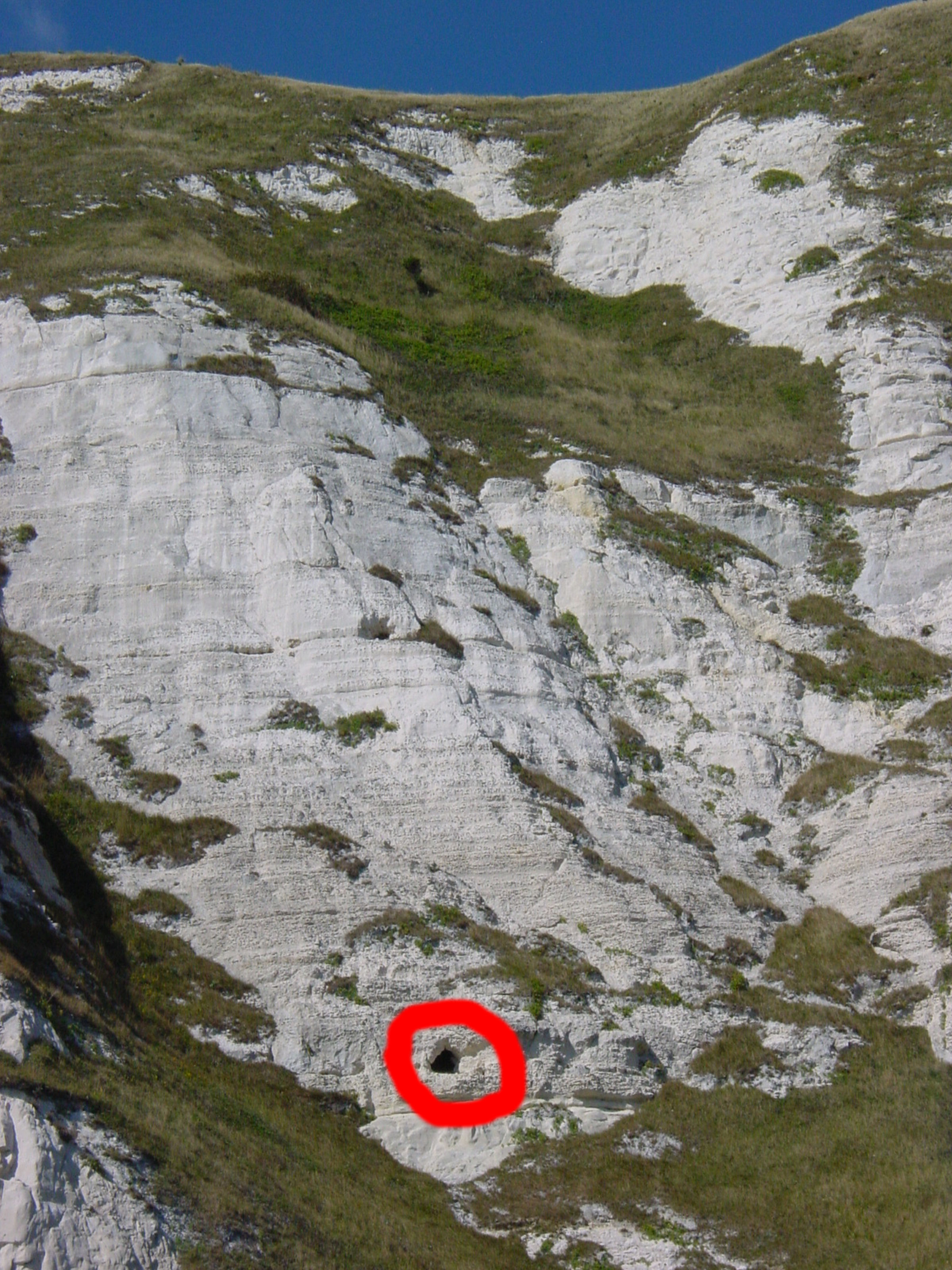
The monument held pride of place on Clarence Lawn, up until the bombardment of Dover during World War II (1939-1945) when shrapnel chipped the plinth. According to Dover Corporations list, the statue was stored in a local cave for the duration of the War, along with the statue of Charles Rolls – the first person to fly across the Channel both ways non-stop – that had been on the nearby Guilford Lawn.

Following the War, the Webb memorial was repaired and in the summer of 1951 was re-erected at the east end of the promenade near the entrance to the Eastern Dockyard. At that time, the Dockyard was an industrial zone. The Rolls statue was re-erected in March of that year on the Seafront close to the Boundary Groyne. On the 76th anniversary, August 1951, of the Webb’s momentous swim a special service was held at the memorial and wreaths were laid. Among those present were many of those who attempted to swim the Channel that year and Webb’s only surviving relative, Major Harry Chaddock. He was a brother-in-law and lived in Dover.

Captain Matthew Webb memorial in front of the Gateway Flats,  Marine Parade. LS 2010

Captain Matthew Webb memorial in front of the Gateway Flats, Marine Parade. LS 2010

In 1953, after a major change in Dover Harbour Board policy, the Dockyard became the main cross-Channel terminal and was renamed Eastern Docks. Coincidental to this was the rise in the use of the motor car. To cope with the influx of traffic to the Docks the access roads were widened at the expense of the Seafront. Both the Webb and the Rolls memorials were in the way of the new road configuration and in September 1991, the Webb memorial was removed to the Gateway Gardens on Marine Parade – very close to its pre-war site. After a bitter fight, instigated by local historian Budge Adams together with David Atwood, the Rolls statue was eventually moved to the Gateway Gardens.

It was not until 1911 that Thomas Burgess became the second person to succeed in swimming the Channel. Burgess took one hour longer than Captain Webb and it was his thirteenth attempt. The first woman to swim the Channel was Gertrude Ederle (1905-2003), in 1924. The Channel Swimming Association (CSA) was formed in 1926 with the objectives to investigate and authenticate the claims of persons who have swum the English Channel. They certificated Captain Webb’s swim in 1928, although he infringed some rules, notably being accompanied by a lugger and two rowing boats and being sheltered by a boat from the waves near Calais.

Gertrude Ederle, like many of the others who successfully completed the swim, crossed the Channel from France to England. This is advantageous due to the fact that Cap Gris Nez is the closest point to England. The swimmer can leave from this point just before the commencement of the flood tide and aim to be well clear of the strongest tidal streams off the headland. Swimming from England to France, it is very difficult to plan for an arrival off Cap Gris Nez at slack water. Many Channel swimmers have failed due to these strong tidal streams. In 1993, the French authorities banned cross channel swims from their side of the Channel.

Nonetheless, the challenge of swimming the Channel continued to grow. In 1951, Florence Chadwick (1918 -1995) became the first woman to swim from England to France. Ten years later, in 1961, the first two way crossing in one go was achieved by Argentinean, Antonio Aberto. He took 43 hours 10 minutes. In 1981, Jon Erikson (1954-2014), from Chicago, made the first three way swim taking 38 hours 27 minutes. Alison Streeter MBE, has swam the Channel the most number of times, including a triple-channel swim, all of which has earned her the title of Queen of the Channel. These days, nearly every year, over 100 people register to swim the Channel from Dover to France and many are successful.

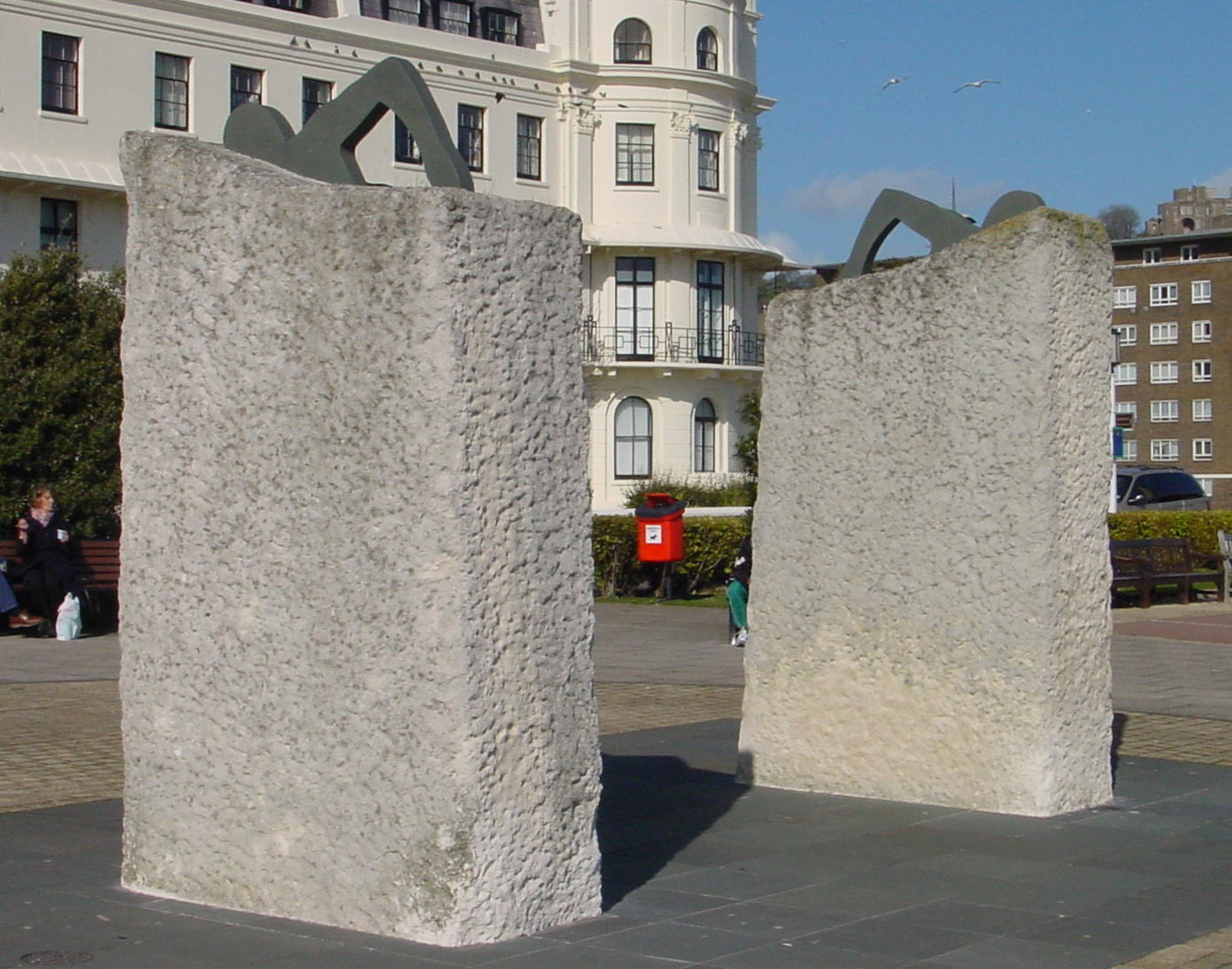
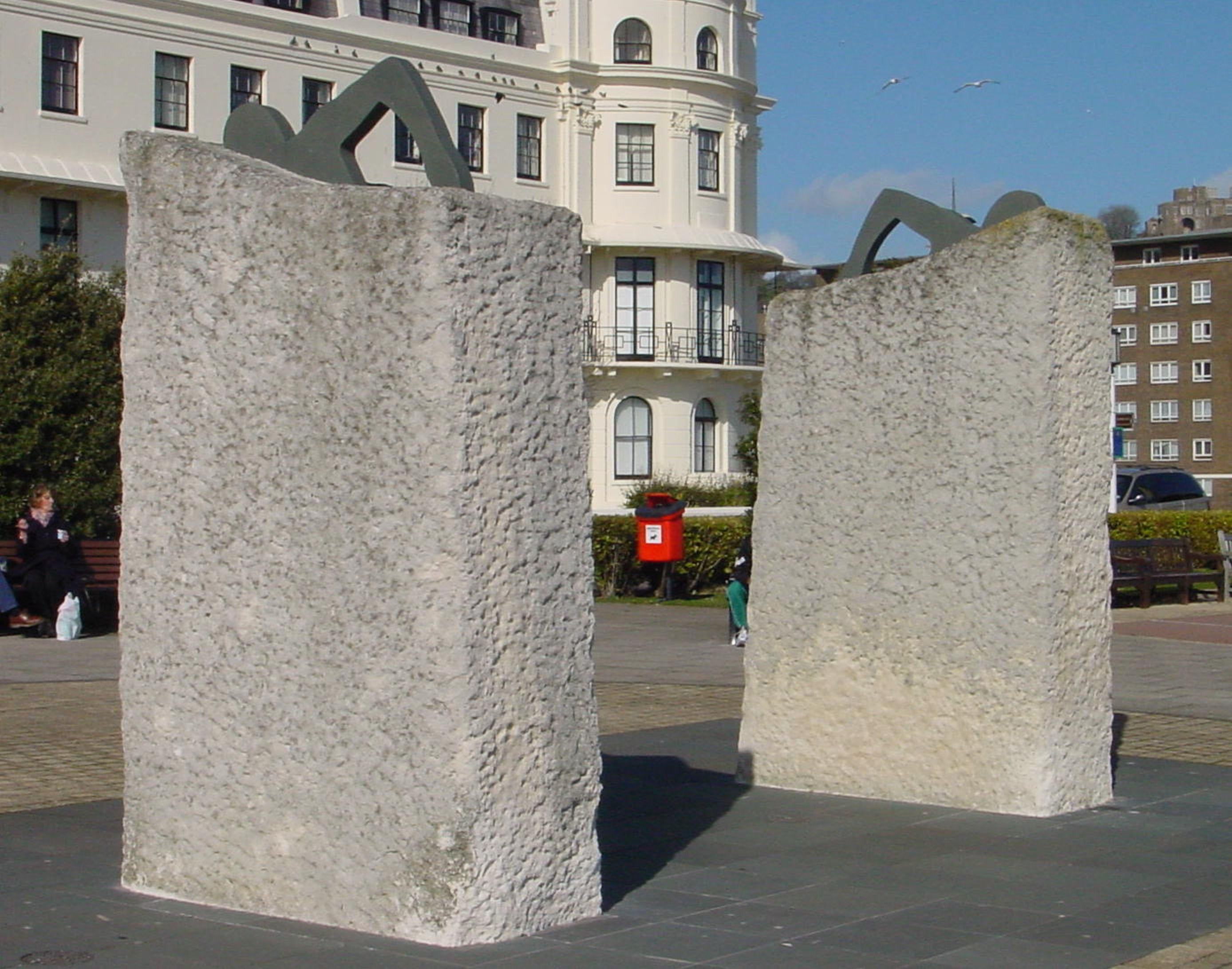
 'Crest of the Wave' sculpures by Ray Smith 1995 on Dover's Seafront.  Alan Sencicle 2009

‘Crest of the Wave’ sculpures by Ray Smith 1995 on Dover’s Seafront. Alan Sencicle 2009

As a joint initiative between Kent County Council and Dover District Council in 1992, professional artists and designers were invited to submit designs to commemorate cross Channel Swimming. Ray Smith’s sculpture ‘On the Crest of a Wave’ was chosen and can be seen in the centre of the Seafront. They are two blocks of white Portland stone on a bed of green slate. On the top are profiles of swimmers pushing forward into a rising wave of stone and cut from dark green slate.

  • Presented:
  • 20 December 2014


Posted in Maritime, People, Sea Front, Sports, Webb Captain Matthew - the first Person to swim the Channel, Webb Captain Matthew - the first Person to swim the Channel, Webb Captain Matthew - the first Person to swim the Channel, Webb Captain Matthew - the first Person to swim the Channel | Comments Off on Captain Matthew Webb – the first Person to swim the Channel

Channel Submarine Telegraph and Telephone Cables

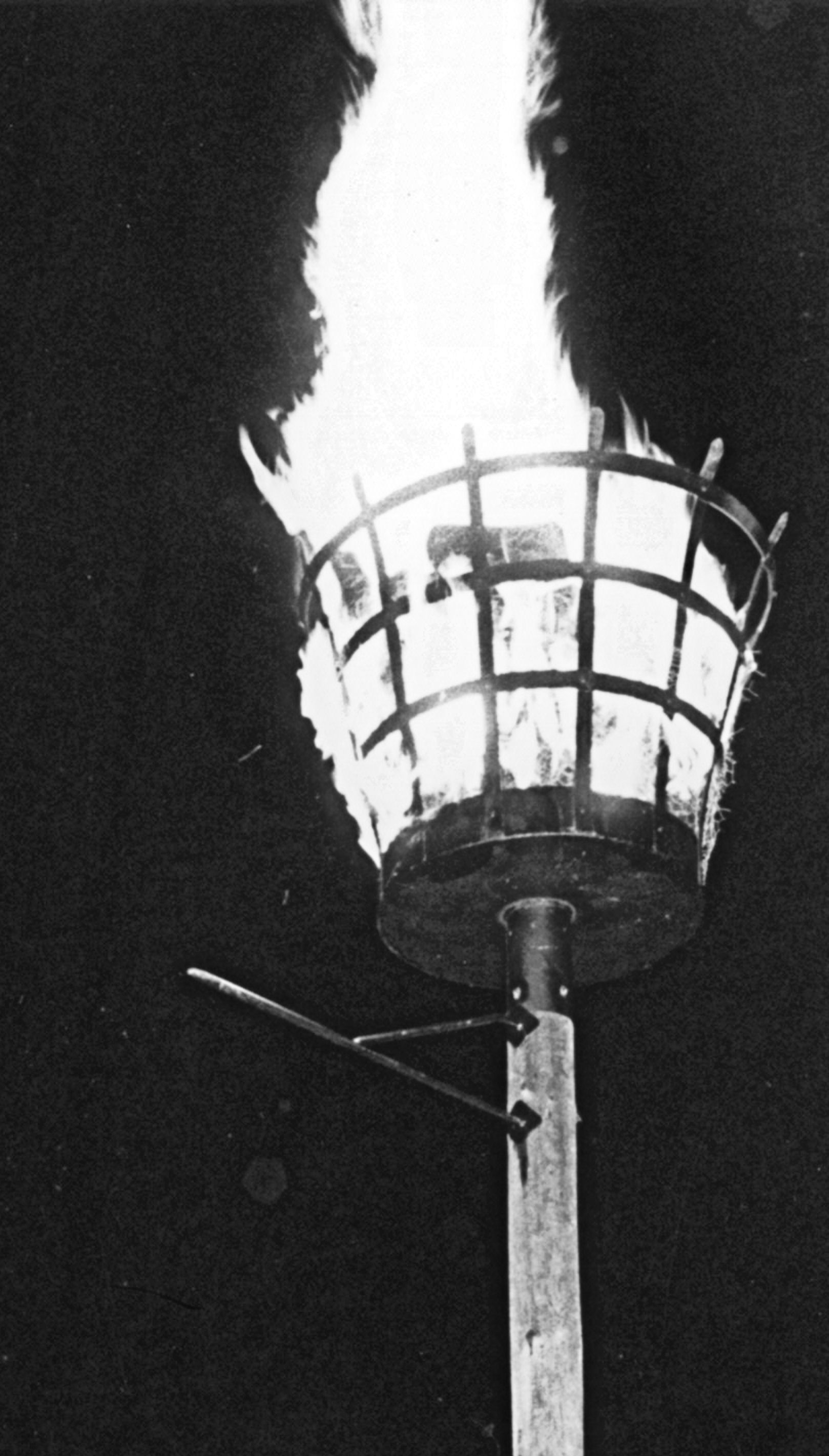
Beacon similar to one used to warn of the Armada invasion 1588. Dover Museum


Up until the mid-19th century communicating over distances was fraught with natural problems such as the weather. At the time of the Armada (1588), beacons were used to transmit to London, Dover and elsewhere in the country that the Spanish had been sighted off the Lizard in Cornwall. During the Napoleonic Wars (1793-1815), peace was achieved on 25 March 1802 when the Amiens Peace Treaty was signed and, indeed Mayor George Stringer held a ball at his home, Castle Hill House. However, the Treaty only lasted a year and when Britain declared war on France a chain of semaphores was used between Deal and London to transmit the news.

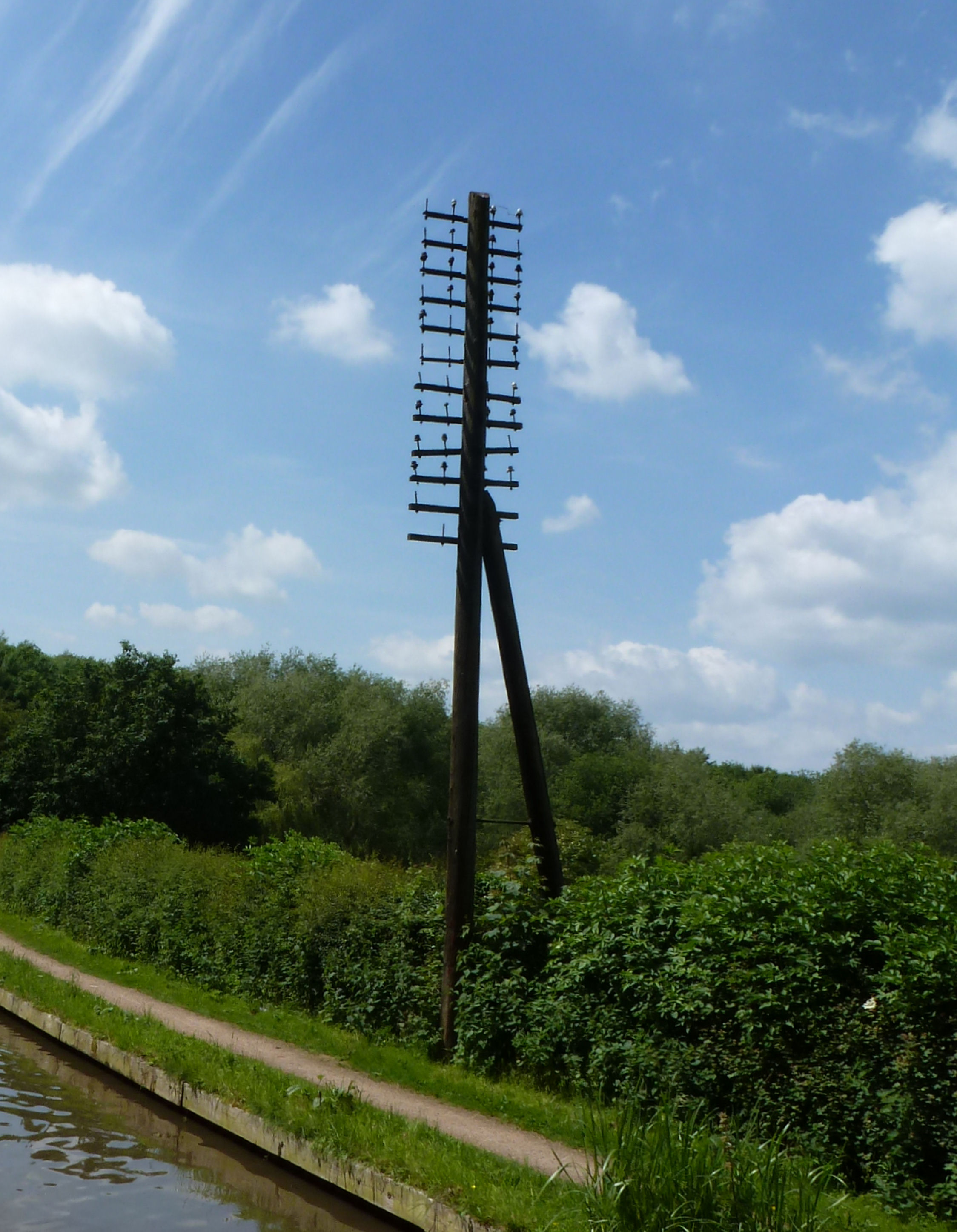
Old fashion cable carrying telephone pole. LS 2014

Old fashion cable carrying telephone pole. LS 2014

In 1833, Carl Friedrich Gauss (1777-1855) and Eduard Friedrich Weber (1806-1871) used copper wire to carry an electric current to a sensitive galvanometer, or current detector. They recognised that the movements, caused by electric signals, could be used as a code to pass messages. Adapted by Sir William Fothergill Cooke (1806-1879) and Charles Wheatstone (1802-1875), the first electric telegraph for public use was established in 1837 along the Great Western railway from Paddington to West Drayton. This lead to the adoption of  Greenwich Mean Time (GMT) as the base for international time zones.  The transmission wires, along the railway track, were supported on overhead poles as air is a great insulator of electric current. The ground, on the other hand, is a good conductor of electricity, particularly so when wet.

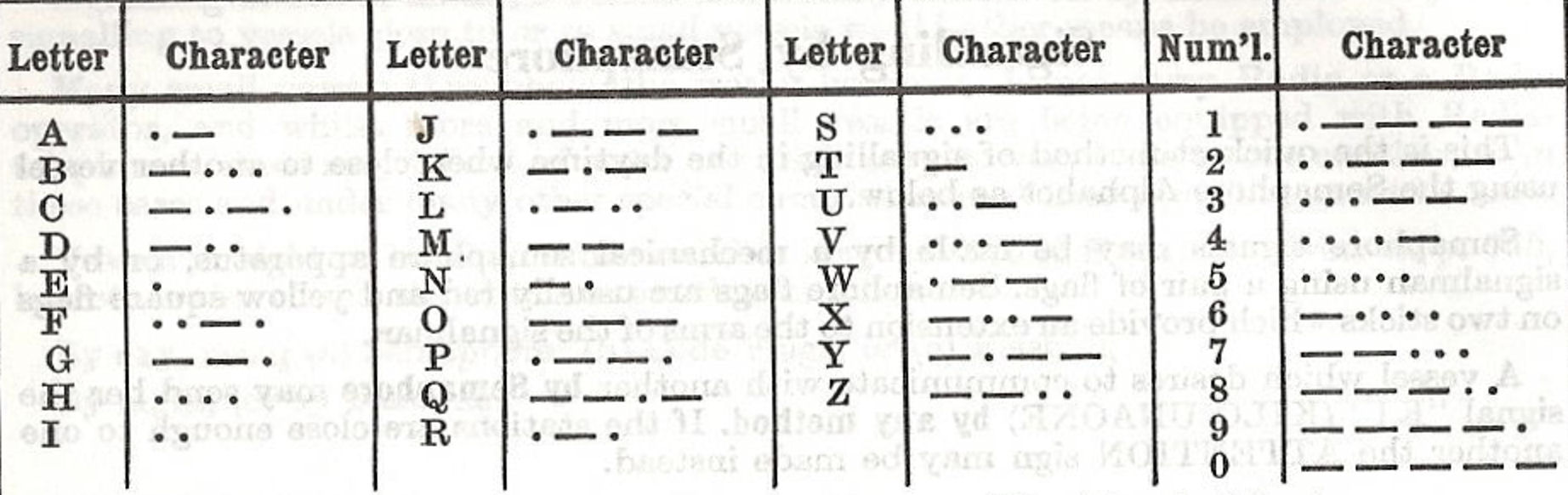
Morse Code. Reeds Alamanac 1971

Morse Code. Reeds Alamanac 1971

Samuel Finley Breese Morse (1791-1872) in America in 1838, demonstrated his Morse code in which varying combinations of short and long signals – dots and dashes – represented different letters of the alphabet and numbers. At about the same time he introduced the relay, an electrically operated switch by which a signal sent along the wire was strengthened at intervals, making long distant communication possible. Water, like the ground, is a good conductor of electricity so a good insulator was needed to prevent the electric current from leaking into the water. Morse insulated a wire with tarred hemp and in 1842 at New York Harbour, he successfully telegraphed through the submerged wire. Wheatstone successfully repeated Morse’s experiments in Swansea Bay.

Wheatstone had given evidence to the House of Commons two years before over the possibility of laying a Channel telegraph link between Dover and Calais. That year, 1840, he patented an alphabetical telegraph, or, ‘Wheatstone A B C instrument,’ out of which he developed his type-printing telegraph that he patented in 1841. This was the first teleprinter and printed a telegram in type using letters of the alphabet and numbers. These were on revolving hammers and were worked by two circuits, actuated by the current, that pressed the required letter on to the paper.

Charles Vincent Walker (1812-1882) had also been undertaking experiments with electricity and in 1845, the South Eastern Railway Company (SER) appointed him as the Company’s electrician. In that capacity, he had introduced Cooke and Wheatstone’s electric telegraph on the new railway line to Dover. Aware of Wheatstone’s experiment on underwater cables he tried various insulating materials to send submarine signals. It was already known that the emulsion exuding from an injury to the palaquium gutta tree, found in Malaysia, produced the emulsion latex that coagulated when exposed to air becoming rigid. However, gutta-percha, as it was called, also had insulating and adhesive properties. It was these qualities that those experimenting in submarine communication recognised.

 Folkestone harbour mid 19th Century where Charles Walker undertook experiments in the use of submarine cables for transmission. Dover Museum

Folkestone harbour mid 19th Century where Charles Walker undertook experiments in the use of submarine cables for transmission. Dover Museum

To prove to the Company directors that submarine transmission was possible Walker ran several wires from Folkestone harbour to Copt Point, east of the town. These were soaked in different insulating materials, one of which was gutta-percha. Several days later, in front of the directors, Walker, with the help of his apprentices including John Francis Costello, attempted to transmit a telegraph signal through each of the wires. The wire soaked in gutta-percha was successful showing that it was possible to use a permanent cable to communicate with France.

John Watkins Brett (1805–1863) had also been perfecting underwater electric telegraph cable and an electric form of typewriter. In 1847, together with his brother Jacob, he obtained a decree from the French King, Louis Philippe (1830-1848), to establish a link between France and England. However, before they had chance to undertake such a project the revolution of February 1848 had forced Louis Philippe to abdicate. Later that year Louis Napoleon (1808-1873) declared himself president of France so John Brett set about persuading him of the virtues of telegraphic communication between France and England. Louis Napoleon eventually agreed to an experimental communication. Brett had already persuaded the British government to allow such an experiment to go ahead.

The Widgeon was a wooden paddle steamer that had been a mail packet on the Dover – Calais crossing before becoming an Admiralty survey vessel. In the third week of August 1850 the Widgeon, made several crossings of the Channel laying flagged buoys that marked the course of Brett’s experimental cross Channel cable. The steamer Goliath, during this time had arrived in Dover. On board was 30 miles of copper wire, a tenth of an inch thick encased in a coating of gutta percha 9/16 of an inch thick. 

Goliath paying out the Submarine Cable. 28 August 1850 Illustrated London News

Goliath paying out the Submarine Cable. 28 August 1850 Illustrated London News

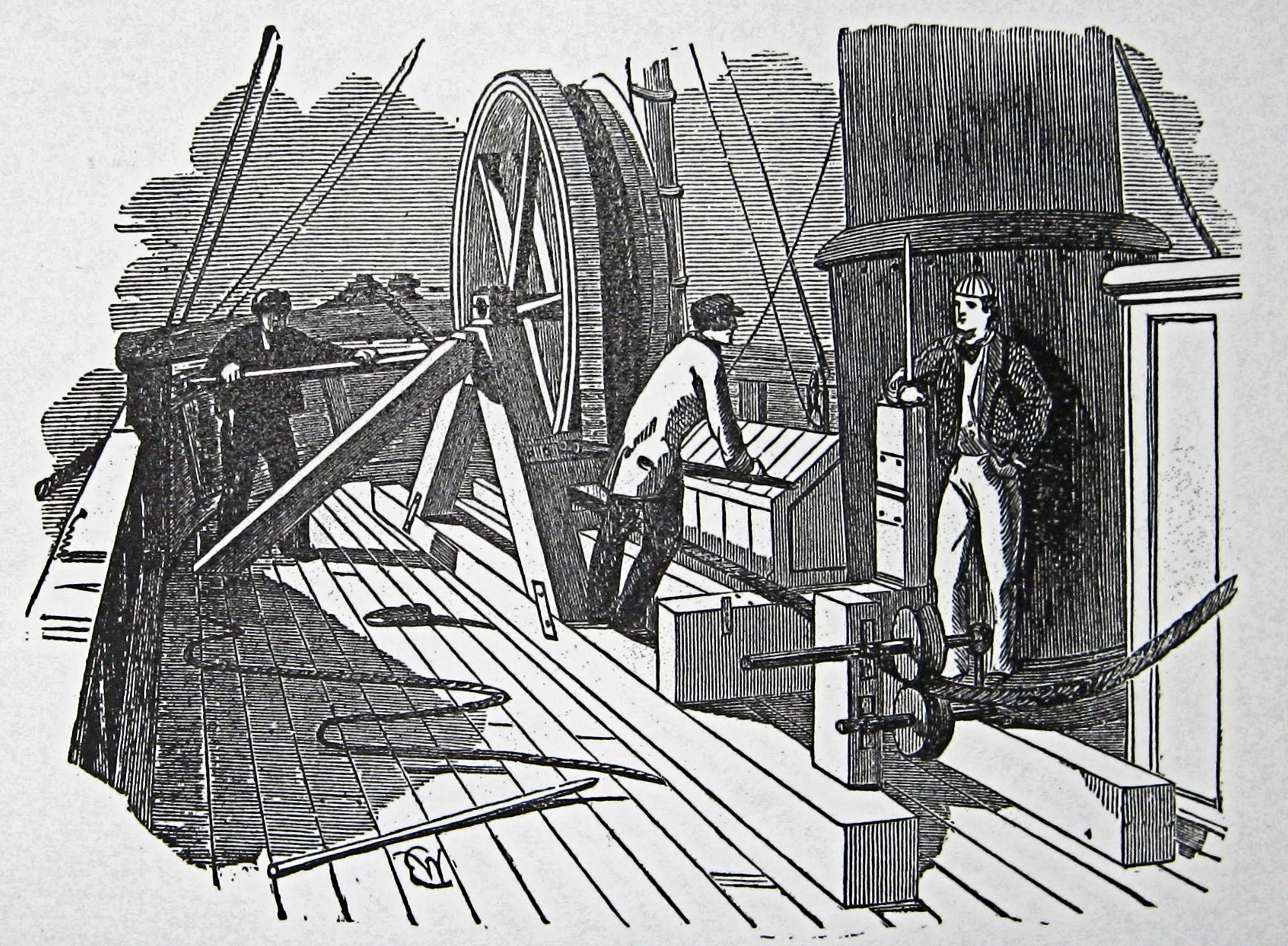
It was reported that it was a fine calm day with a favourable wind on Wednesday 28 August 1850. The Goliath, under Captain Beer with a crew of 30, accompanied by the Widgeon, under Captain Bullock, left Admiralty Pier. On board, besides scientists and engineers was John Brett. The ship followed the flagged course across the Channel, laying the cable. This was coiled around a large drum, 15-feet by 7-feet, amidships. The cable weighed five tons and the cylinder two. The last 300-yards of cable was enclosed in leaden tube to go over the ground on the French coast.

The cable was paid out at the rear of the ship and every sixteenth of a mile weights from 12lb to 24lb were clamped onto it to ensure that the cable sank. There was concern that the shifting sands of the Varne and the Colbert would prove a problem but in the event, this was not so. However, as the Goliath approached the French coast the wind started to get up.

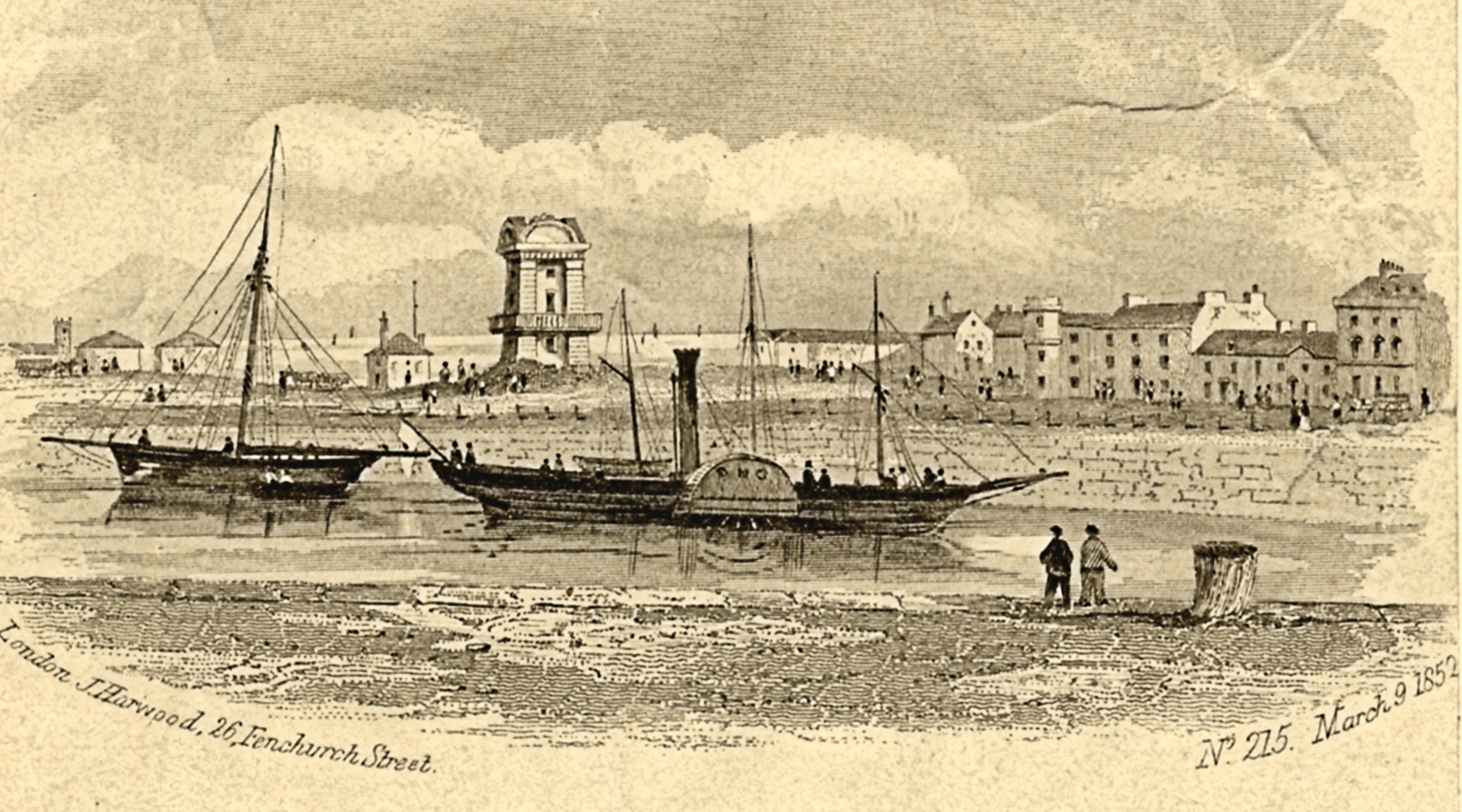
Harbour, Pilot's Tower and Paddle Steamers 1852. Dover Museum

Harbour, Pilot’s Tower and Paddle Steamers 1852. Dover Museum

Back in Dover, that afternoon, the children of the Pier District were awe-struck when they saw large crates, in which were batteries, being carried into the Pilots Tower. Then, at the nearby Town station, they saw a horsebox taken into a siding and were emphatically told not to touch the thick wire running from the Tower to the horsebox. A large crowd of children and some adults had gathered when a table, chairs and a large crate were taken into the horsebox. By the time Jacob Brett, Mayor Steriker Finnis, Charles Walker along with his young assistant Costello, and other interested parties arrived that evening, a large crowd had gathered. As well as the locals there were reporters who had arrived on the train from London. They were saying that an experiment was about to take place that was so incredible, it would change the world. On being told this, even the adults were awe-struck!

When the Goliath reached France the leaded end of the cable was taken on shore and at 20.30hrs. John Brett using the Brett printing machine sent the first telegraphed message across the Channel. It was in legible Roman lettering and was received by the apparatus, manned by Jacob Brett, in the horsebox. The message said: ‘The Goliath has just arrived safely; and the complete connexion of the underwater wire with that left at Dover this morning is being run up the face of the cliff.’ The first message from Dover to France was sent at 21.00hrs and, is said, to have been dictated by Mayor Finnis. ‘The Ancient Ports of Dover and Calais must be the great highway of communication with the whole Continent; in fact, the whole world!’

The exercise had cost approximately £2,000 but it was an epoch-making experiment of which the news quickly spread. Indeed, the Lord Warden, the Duke of Wellington (1769-1852), came over from his official residence at Walmer Castle the following day to inspect the apparatus at Dover. However, he was too late to send a message as fisherman, close to the French coast, had cut the cable!

In June 1851 John Brett along with Charles Fox – later knighted (1810-1874), Francis Edwards and Charlton James Wollaston, set up the Anglo-French Submarine Telegraph Company for the purpose of organising regular communication by sub-marine telegraph between England and France. He had already obtained, from the British government, monopoly rights for ten years and the French government readily agreed to the same terms. Work had started on improving the cable at the Blythe and Co. Submarine Telegraph Works, Wapping.

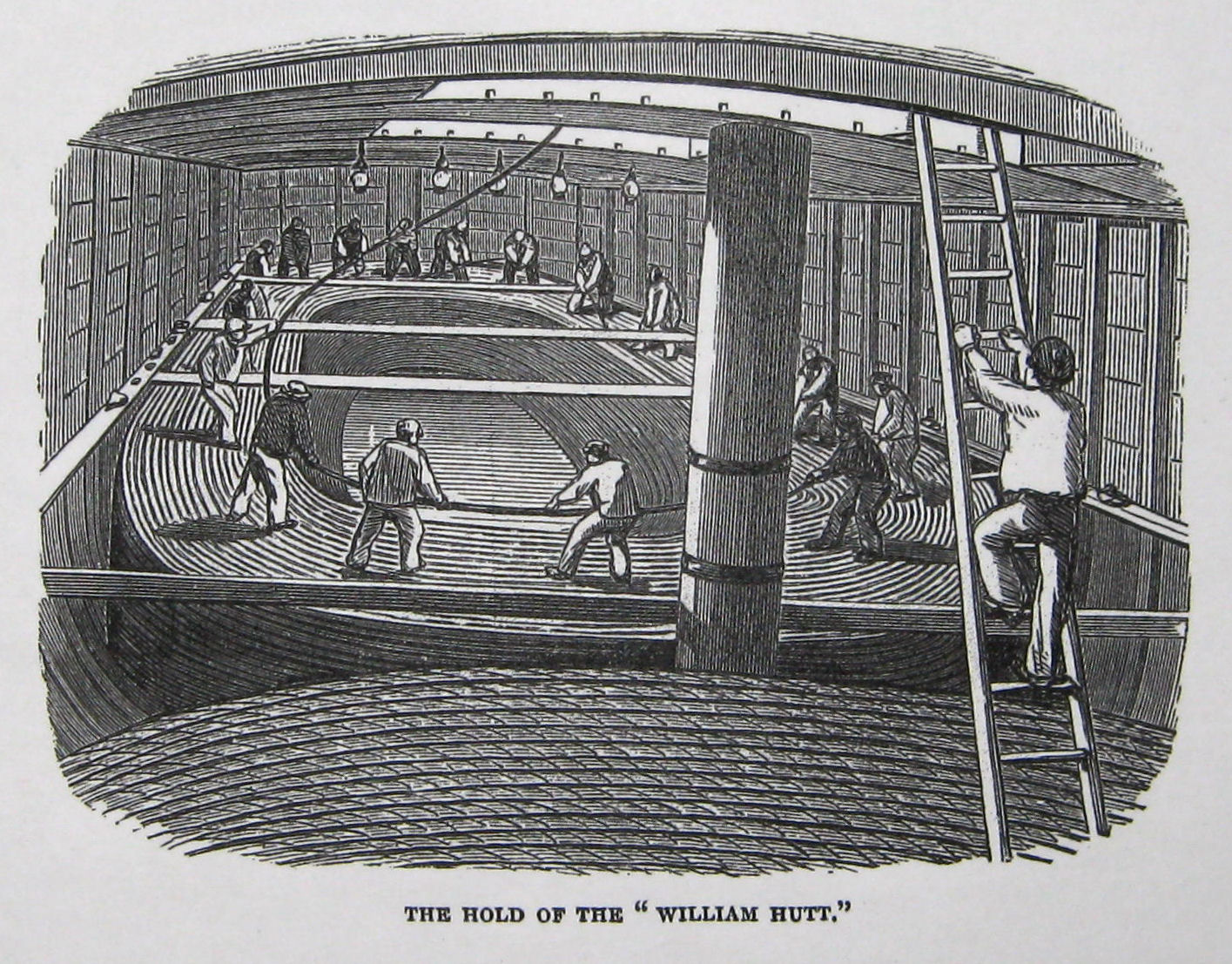
Submarine cable laying hold of the William Hutt. Illustrated London News 14.05.1853

Submarine cable laying hold of the William Hutt. Illustrated London News 14.05.1853

Sixteen copper wires were twisted into four wires, covered with gutta percha a ¼inch thick, and plaited by a machine in the manner of an ordinary rope around a shaft. Hemp yarn, having been previously soaked in pitch and tallow, was then tightly twisted around this and the hemp was overlaid with a series of six similar soaked hemp yarns. This was then covered with ten layers of galvanised wire, each one about ¼-inch thick. 25 miles of wire was made this way and having been rolled up was five feet in height, twenty feet in circumference and weighed approximately 20-tons.

The cable was loaded onto the Admiralty ship the Blazer under the command of Captain Bullock. Before this operation began, the ship’s funnel, masts, upper gear and boilers had been removed and by a laborious but cleverly orchestrated series of manoeuvres, the cable was moved from the factory and stowed into the ship. The whole operation took some 70 hours. The Blazer then left Wapping towed by two steam tugs to Dover.

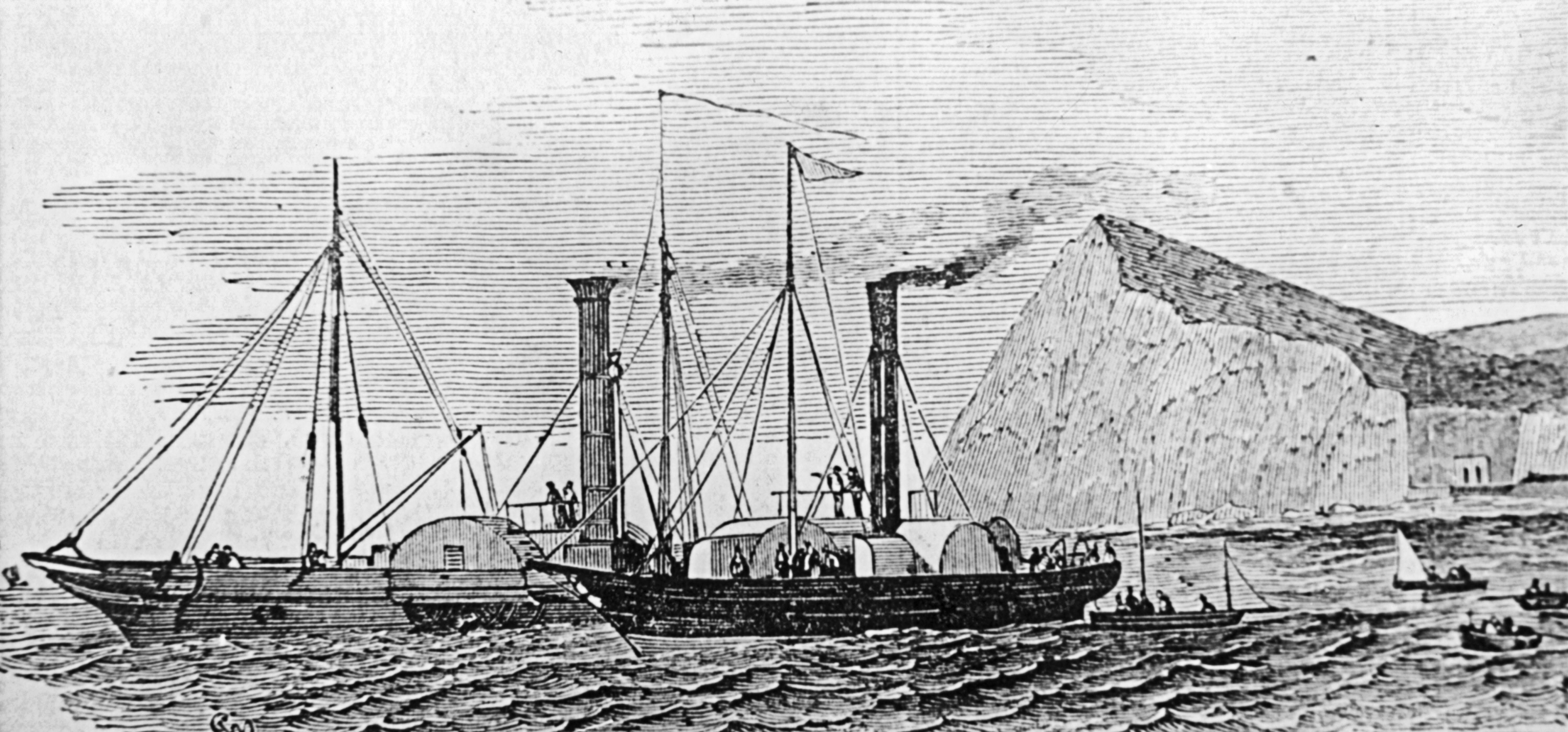
Blazer laying the first submarine cable although the operation started from South Foreland, illustrators of the time showed Shakespeare Cliff in the background. Illustrated London News 01.09.1851

Blazer laying the first submarine cable. Although the operation started from South Foreland, illustrators of the time showed Shakespeare Cliff in the background. Illustrated London News 01.10.1851

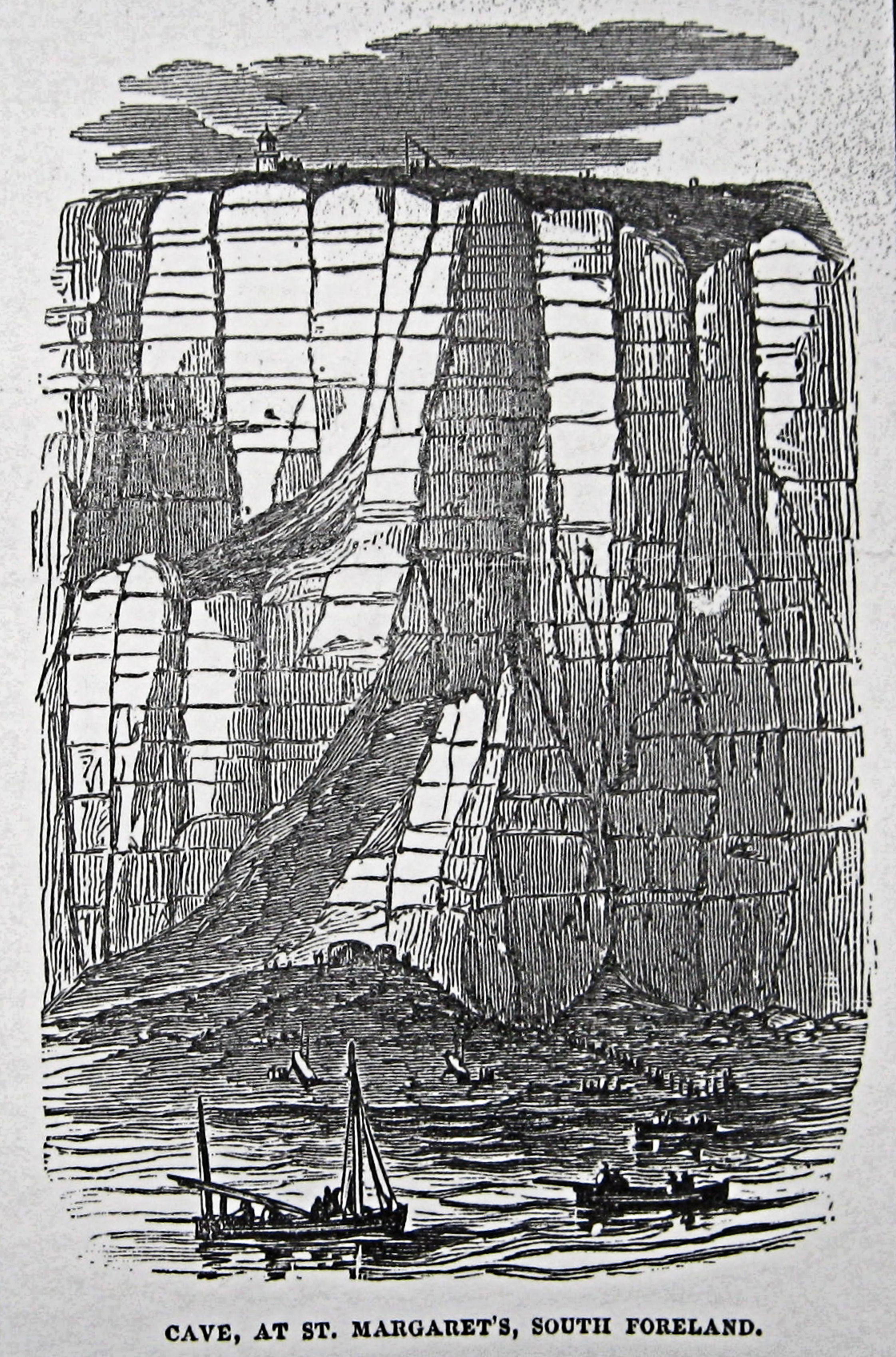
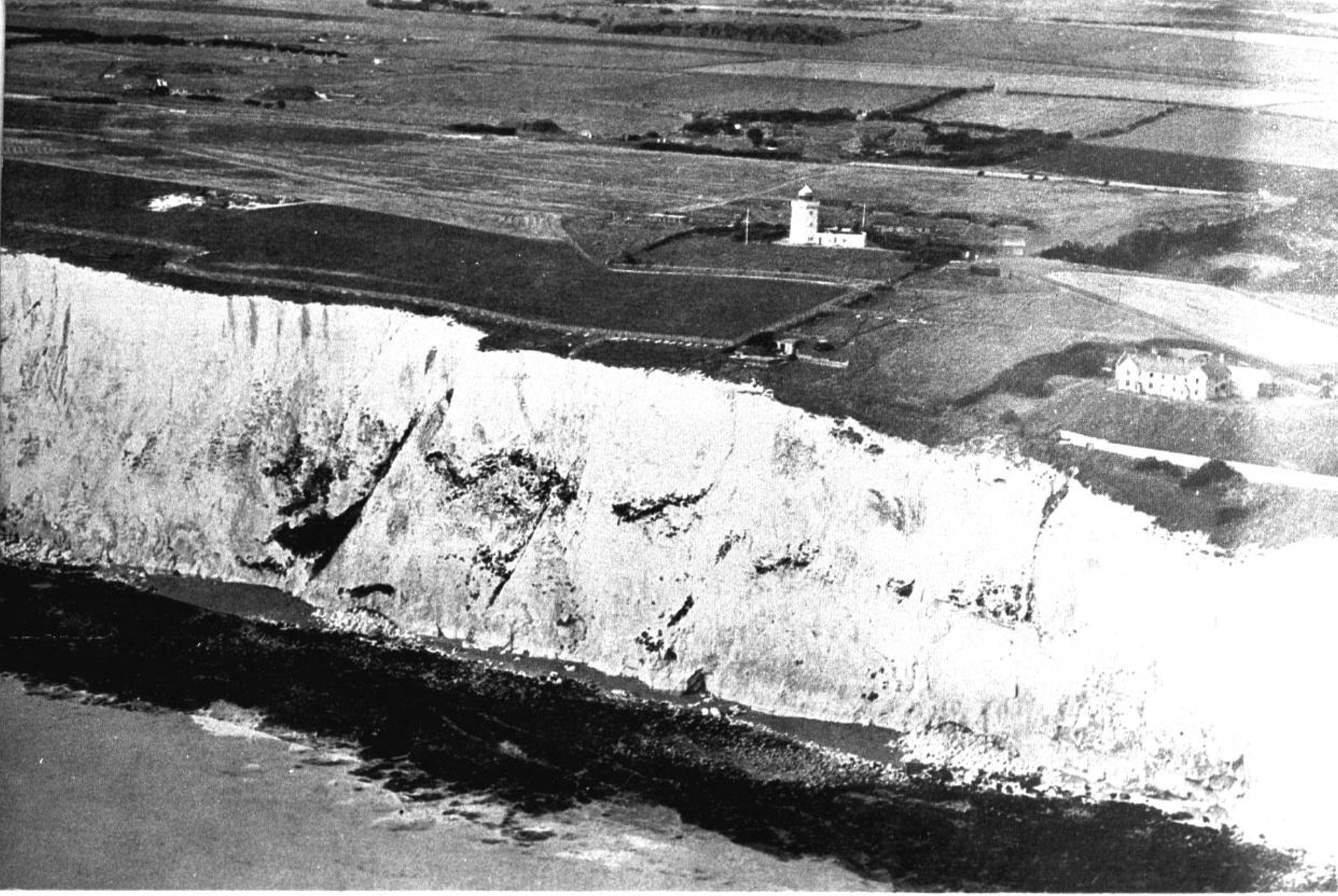
At 07.00hrs on 24 September 1851 the Blazer, accompanied by the two tugs, one lashed to each side, set out from the South Foreland to Cap Gris Nez. On board, as well as the cable and the engineering contractor Thomas Russell Crampton (1816-1888), were the four members of the Submarine Telegraph Company and a retinue of scientific engineers including William Cook and Charles Wheatstone. The ship had cast off from Dover harbour at 04.00hrs and on reaching South Foreland, near St Margaret’s the English end of the cable was taken ashore to a cave below the lower lighthouse. Here the communication apparatus had been set up and was attached. During the crossing, Charlton Wollaston supervised the lying of the cable and even though a number of problems were encountered, each was satisfactorily resolved. That is until one of the tug’s ropes parted and the wind and tide carried both it and the Blazer off course. By the time another tug, that was behind in case of such an occurrence, could be attached, the Blazer had gone about 1½ miles from the given course.

Submarine cable showing break in cable. Illustrated London News 14.05.1853

Submarine cable showing break in cable. Illustrated London News 14.05.1853

With the tug re-attached, the journey progressed slowly but at 18.00hrs, when the Blazer was about three miles off Cap Gris Nez, Charlton Wollaston calculated that there were only 2½miles of cable still on board. By this time, the seas were getting rougher and it was decided to go no further. On the following afternoon, the Blazer was towed as far as the cable would reach and this was secured to a buoy. To the end of the cable a coil of gutta percha was temporarily attached and run to the shore. Eventually communication began. In the meantime, connections had been made from South Foreland to a temporary office of the Submarine Telegraph Company under the Castle walls. There, in an upper room, the wires were attached to the various items of telegraphic apparatus but when the fuses were connected, there was an explosion. This, both Jacob Brett and Charles Walker expected but it caused alarm among the dignitaries in the rooms below and someone shouted fire and then there was panic!

The following morning, for Brett and Walker, there were a few anxious minutes and then communication was made and signals were interchanged with Calais. The Lord Warden, the Duke of Wellington, was at a meeting with the Harbour Commissioners in the then Harbour House in Council House Street in the Pier District. He was due too catch the 14.00hrs train to London and it was agreed that a signal from Calais would trigger a gun to fire a salute from Western Heights when the Duke’s train left. The signal was sent and the loud retort reverberated around the town and caused a ‘tidal wave’ in the Bay! A 32-pounder had been loaded with ten pounds of powder and a ball had been fired by a signal from Calais into Dover Bay!

Within a few days, the temporary length of cable was replaced and when a number of other problems were sorted out, great celebrations were held in both England and France. A portion of the coil was placed in the Calais museum next to the balloon that aeronauts Blanchard and Jeffries had used to make the first aeronautic crossing of the English Channel. The Black Eagle, under the command of Captain Hutchings towed the Blazer back to Wapping and all augured well. Unfortunately the weather deteriorated and by the time they had reached Margate the Blazer, not having any ballast, was tossing about so much that Captain Bullock and the crew had to be taken off.

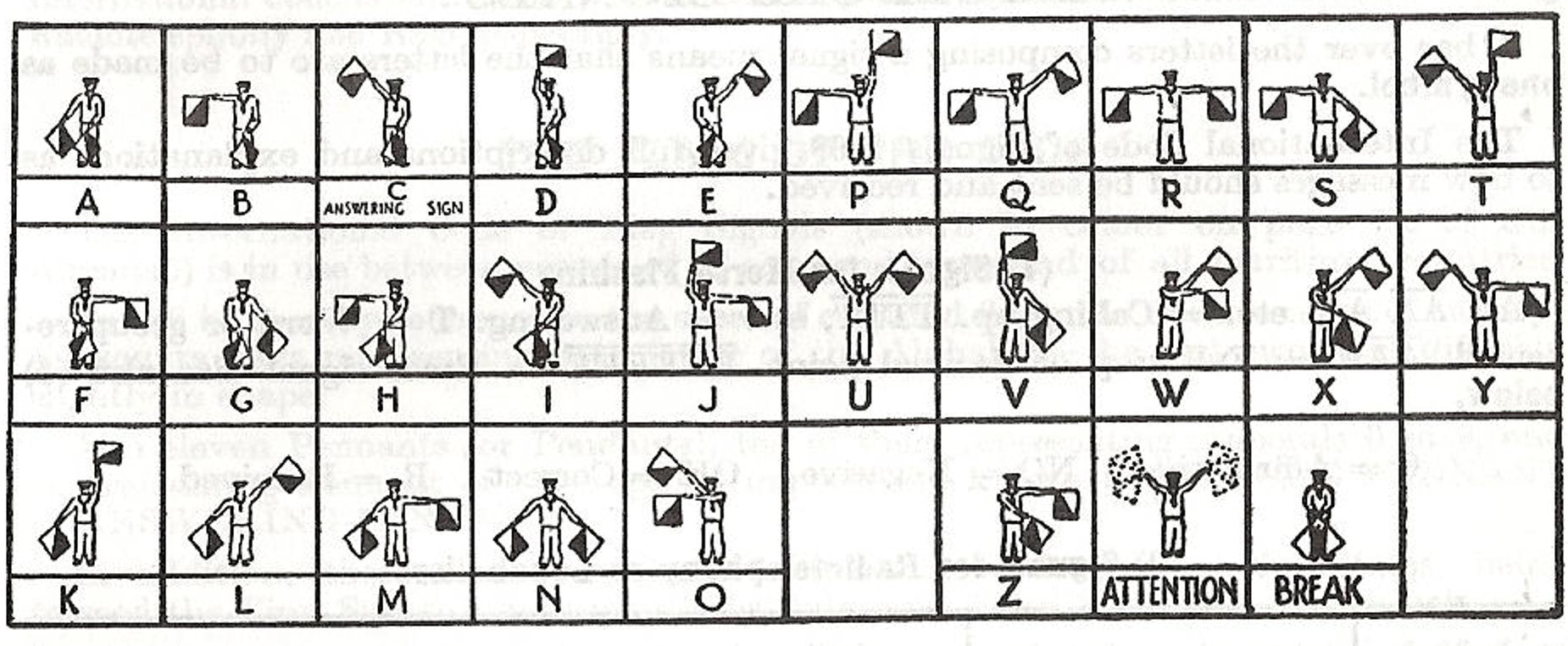
Semaphore favoured by the French Government. Reeds Alamanac 1971

Semaphore favoured by the French Government. Reeds Alamanac 1971

On 13 November at 13.00hrs, the Submarine Telegraph Company opened their office to the public at 30 Cornhill, London and during the afternoon, a number of distinguished visitors called. Most were particularly interested in the communication room that was upstairs. There was a Wheatstone printing machine also Brett and Morse machines and a machine invented by Frenchman, Louis François Clément Breguet (1804-1883). All were in direct communication with Paris. The Brequet machine was of particular interest as the printout was in semaphore as this was extensively used in France and the French government were concerned that the new telegraph system would throw many of their semaphore communication employees out of work. Machines using Morse code were favoured in England and it was these that were to be used until teleprinters came into regular use.

By November 1852, the Submarine Telegraph Company together with the European and American Telegraph Company had laid down wires along the turnpiked roads from London to Dover (A2), where they were connected to the submarine cable and in France, connected with the cable to Paris. On the first day all the connections were made the French transmitted that the weather was, ‘Foggy in Paris and Overcast and dull in Arras.’ The British replied, ‘May this wonderful invention serve under the Empire to promote the peace and prosperity of the World!

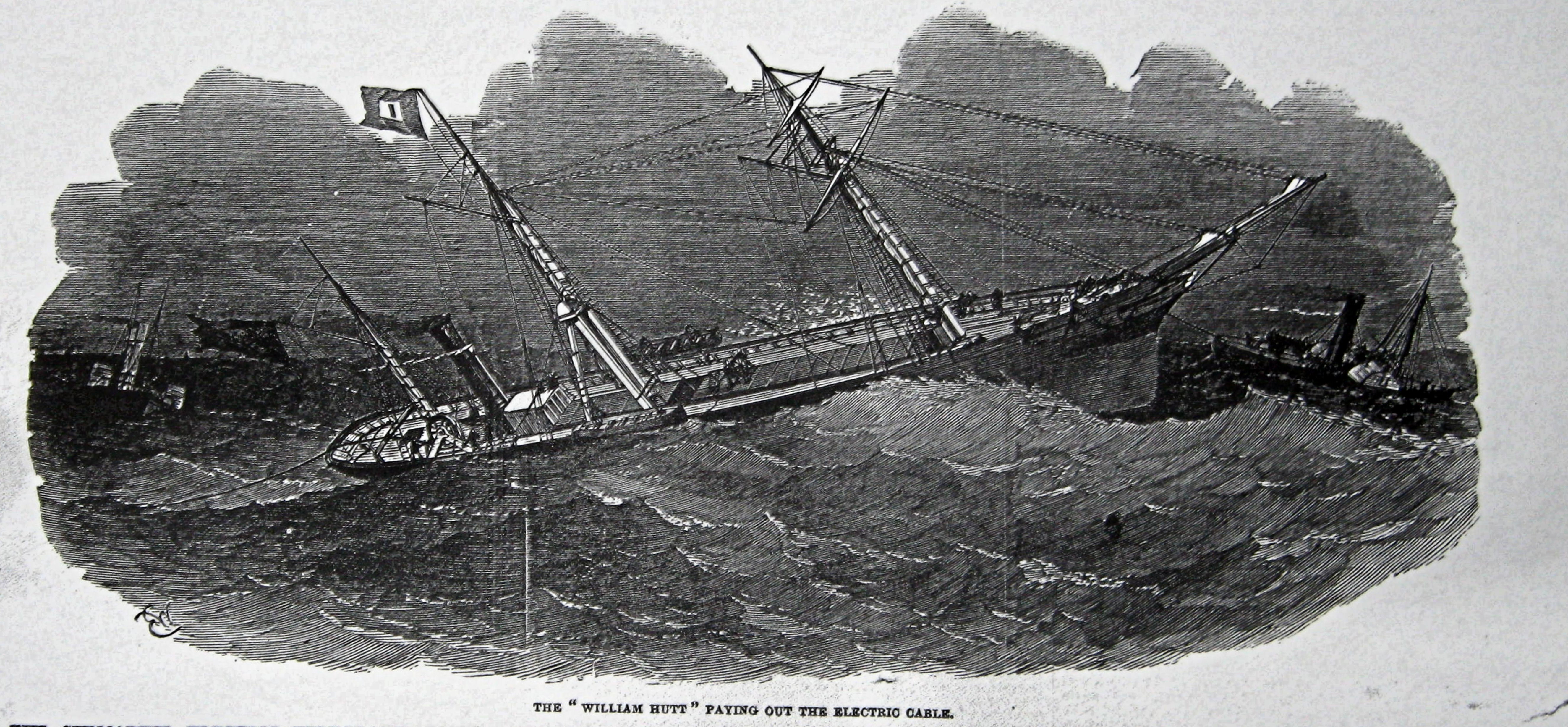
William Hutt paying out the electric cable. Illustrated London News 14.05.1853

William Hutt paying out the electric cable. Illustrated London News 14.05.1853

May 1853 saw the iron screw collier William Hutt arrive in Dover carrying 70 miles of cable that was laid between the cave at St Margaret’s and Middlekirk on the Belgium coast. The William Hutt was helped by two Admiralty packets, Vivid, under the command of Captain Luke Smithett and the Lizard under the command of Captain Washington. On completion, a message was sent to the Company office at 30 Cornhill, London announcing the success of the project.

During the next ten years, submarine cables were laid between England, Ireland and the Continent. The 500-ton wooden paddle steamer Monarch, launched in 1830, was the main ship used. Soon after, many of the countries and islands in the Mediterranean were linked by cable and plans were put afoot to join Britain with the United States. In 1856, the Atlantic Telegraph Company was formed but the connection was not achieved until 1868. Two years later a cable was laid between Egypt and India and the laying of that cable played a significant role in the British dominance of World trade.

In Dover, the Submarine Telegraph Company opened an office at 7 Clarendon Place, not far from the Town Station, and the Superintendent was John William Edwards. The station had their own telegraph machine, manned by John Costello, and both the military establishments at the Castle and on Western Heights had machines. On 15 May 1855, the Great Bullion Robbery took place on the London Bridge – Dover, South Eastern Railway Company train. The telegraph system was used extensively in communicating between the different bodies involved in both England and France and so helped in catching and bringing to justice the perpetrators.

The cross Channel shipping industry were also quick to recognise the importance of the telegraph especially if decisions were to be made as to delaying a crossing due to adverse weather conditions. However, submarine telegraph cables were vulnerable to damage and on the night of Monday 5 January 1857, during a storm force 10 a 700-ton heavily laden ship lost her anchor in the Downs. Driven by wind and tide she was in danger of colliding with a schooner whose crew let the anchor play out. 40-fathoms of the schooner’s anchor chain had been released, when the ship suddenly came to a halt. This was sufficient to lessen the impact.

In Ostend, Captain Edmund Lyne of the 293-ton, 128 horsepower Channel packet, Violet was trying to communicate with Dover by telegraph because of the wind and sea conditions and poor visibility.  The Violet was carrying the mail and the Captain needed prermission from Dover to delay departure. As the telegraph line was dead, the Captain was obliged to make the crossing and the Violet cast off at 20.30hours with a crew of 17, a mail guard and the one passenger. She never arrived in Dover. Meanwhile, the schooner as quickly as she had come to a halt suddenly swung round and was careering forward at great speed when, for the second time, she came to an abrupt halt. She eventually broke away and came to grief by which time her crew had taken to the lifeboats.

The wreck of the Violet was found on the southern spit of the Goodwins the following day. Captain Luke Smithett sailed in the Empress to investigate and found the vessel, sitting upright in the sand, without her funnel. Doors and part of the decks and bulkheads were missing. The bodies of three stokers were recovered, as well as mailbags. Further investigation found that the schooner’s anchor had fouled both the Ostend and Calais telegraph cables. It took a month to make repairs at a cost of £1,627.

A submarine cable was laid between Boulogne and Abbots Cliff, to the west of Dover, in 1859 and in 1860 the National Signal Station Company, part of the Submarine Telegraph Company, were operating from the Company building at 7 Clarence Place. Their advertisement stated that they communicate with shipping by flag semaphore and signal lamp blinkers, by the use of telegraph, to ship owners, Lloyds Insurance and any persons interested. Nationally the number of telegraph companies had escalated and the British Government, in order to gain control, in 1868 voted to nationalise the service under the Post Master General. The Act was extended two years later, in 1870, and made it clear that the Submarine Telegraph Company would not come under the Post Office.

Submarine cable laying cave at St Margarets Bay. Illustrated London News 14.05.1853

Submarine cable laying cave at St Margarets Bay. Illustrated London News 14.05.1853

The engineer in charge of the Submarine Telegraph Company in Clarence Place at this time, was John Bourdeaux. He was a major promoter of telecommunications and gave frequent lectures and mounted exhibitions, particularly at the Dover Working Mans Institute, in Biggin Street. In January 1878, Bourdeaux took a party of local dignitaries that included the Mayor of Dover, Percy Simpson Court, to the telegraph cave at St Margaret’s Bay. There, he explained to the assembled throng, how the submarine telegraph worked and then he took out of his bag two instruments of polished mahogany that looked like ‘champagne glasses without stems.’ After sending a telegraph message to Calais, he then disconnected some wires and replaced them with wires from the mahogany instruments. Within minutes, he was talking into one of the wooden instruments holding the other to his ear. He passed these over to the Mayor who started to sing Auld Lang Syne! Bourdeaux shushed him so they all could hear the telegraph man in Calais singing the same song! Bourdeaux had successfully demonstrated submarine telephone communication.

Telephones had simultaneous been invented by Graham Alexander Bell (1847-1922) and Elisha Gray (1835-1901). Both filed their patents on the same day – 14 February 1876 – but as Bell got there first he was given universal credit. The following year Thomas Edison (1847-1931) developed his variable-resistance carbon transmitter and the modern telephone was born. Like the telegraph at that time, the telephone needed wires to communicate and so in Britain, the telephone came under the same body as the telegraph, the Post Office.

The price of telegrams to the Continent was a concern, especially the amount paid by the Post Office to the Submarine Cable Company. Henry Raikes (1838-1891), Post Master General (1886-1891) replied to a question in the House of Commons in March 1887, that during 1886, on account of these lines, £37,906 had been paid by the Post Office. He added that the total earnings of the joint arrangements between the Post Office and the Company had netted £132,229 for the same period and this was shared equally. In France, the Administration des Postes et Télégraphes had taken over the post and telegraphs with the Submarine Cable Company concession up for renewal in 1889. The Company felt that a new concession would not be as favourable as before and the Company opened negotiations with the British Government.

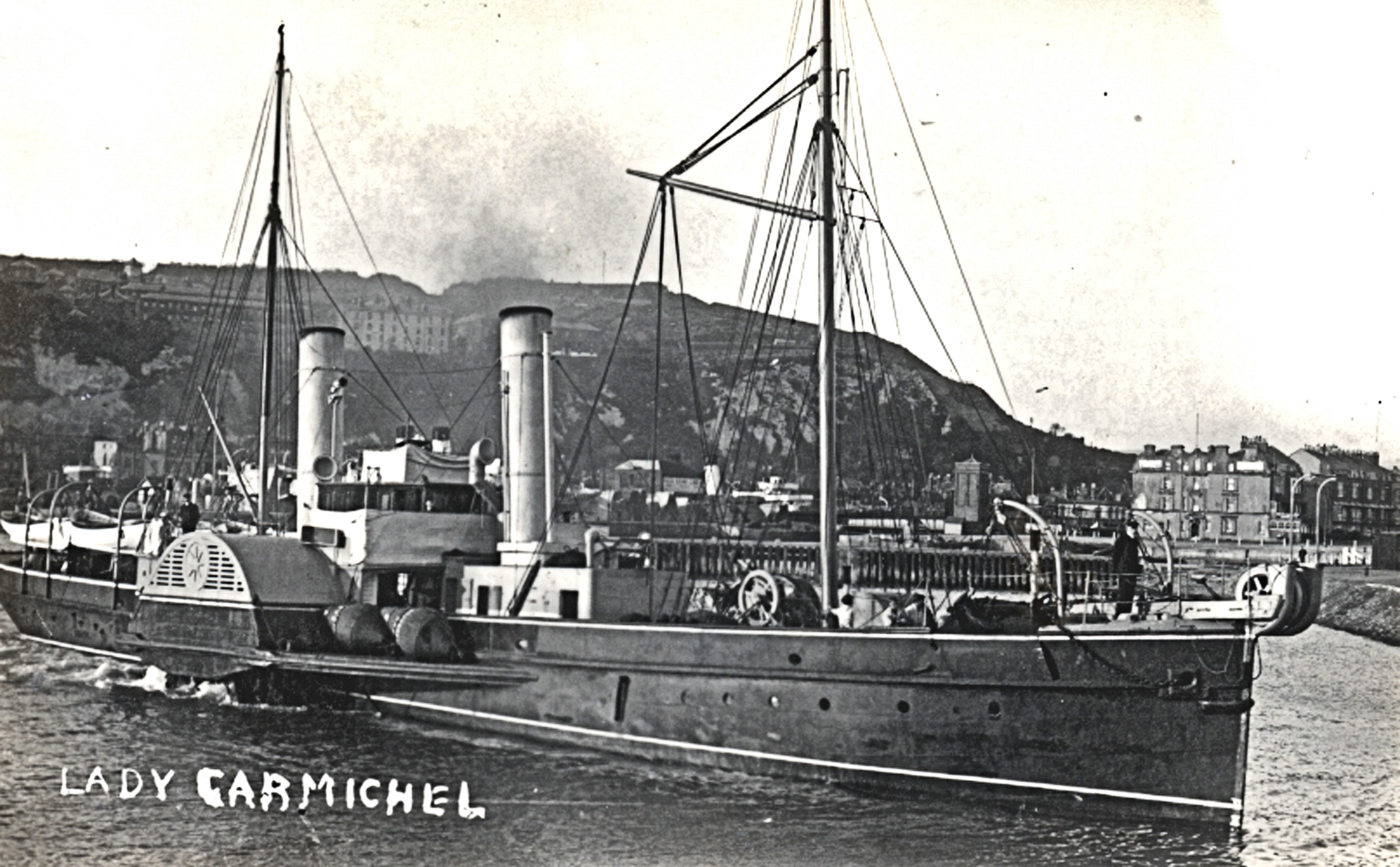
In February 1888, the Government agreed to buy the two cables between England and Belgium, the four between England and France, and one between Jersey and France. They also purchased the Company’s repair ship, the Lady Carmichael and their buildings in Dover, Ramsgate, Beachy Head and Jersey. The transaction cost the British Government £67,163 and they officially took over on 1 April 1889. The South of England Telephone Company had introduced the first commercial telephone to Dover in 1888, and with the expertise of John Bourdeaux, the company established a permanent telephone link between Dover and Calais the same year.

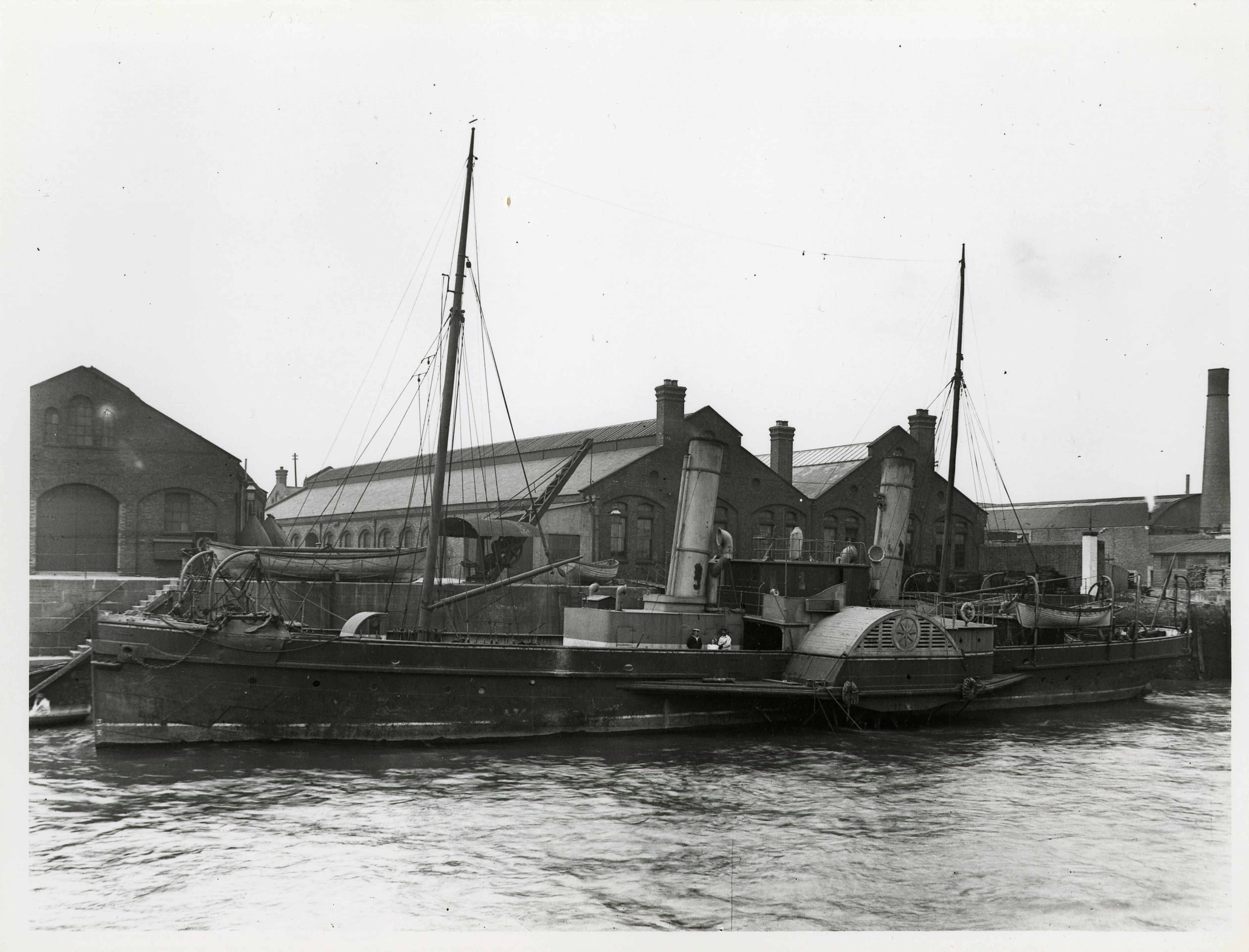
Lady Carmichael Paddle Steamer was converted to cable laying renamed Alert in 1889. Dover Museum

Lady Carmichael Paddle Steamer was converted to cable laying and renamed Alert in 1889. Dover Museum

The wooden paddle steamer Monarch, which had been used for both laying and repairing marine cables by the Electric Company, was taken over by the Post Office following the 1870 Act. Soon after she broke down and was replaced by a purpose built ship, also named Monarch. When bought by the Submarine Cable Company the 760-ton paddle steamer, renamed  Lady Carmichael after the Company chairman’s wife, was converted into a cable ship to repair the telegraph cables. Following the takeover, she was renamed Alert and kept in the Granville Dock.

Over the following decades, considerable advances took place in telegraph communication. William Thomson, 1st Baron Kelvin (1824-1907), invented the ‘Recorder’, which traced the message in code on a strip of paper. Alexander Muirhead (1848-1920) invented the automatic transmitter and then, in 1901, Sidney George Brown (1873-1948) designed the first automatic cable relay. This received signals from one section of cable and reinforced them before transmitting them to the next cable section. In 1875, Duplexing, permitting simultaneous operations in opposite directions on the same cable, was introduced. However, submarine cable breaks remained a huge problem.

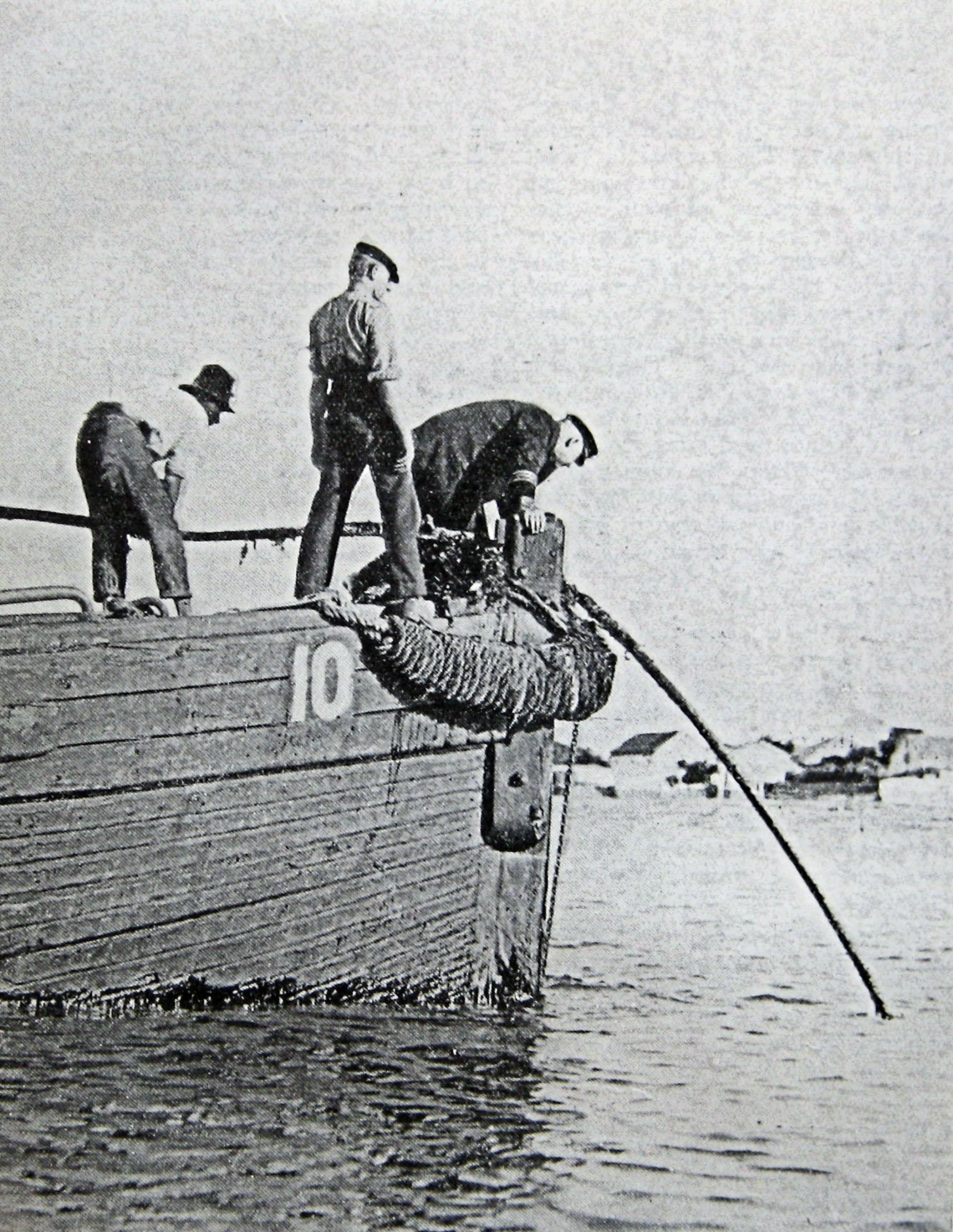
Dropping a marker buoy to show the start of a line that is being examined for a fault. Alan Sencicle Collection

Dropping a marker buoy to show the start of a line that is being examined for a fault. Alan Sencicle Collection

Up to this time, it was necessary to raise the whole of the cable from the sea bed, which by the sheer weight could cause another break. To get round this the cutting and holding grapnel was invented. The grapnel would be lowered from the ship to pickup the cable from the seabed and raise it to the surface. The cable was then cut and tested to find out on which side the fault lay. The ‘good’ end was sealed and buoyed. The faulty end was placed over the bow sheaves and as it was wound through, it was constantly checked until the fault was found. The faulty part was removed, good cable was spliced in and then the repaired cable was attached to the buoyed cable. Checks were then made to ensure that the cable was working again.

Shore end of a submarine cable paid out from a lighter. Alan Sencicle collection

Shore end of a submarine cable paid out from a lighter. Alan Sencicle collection

Laying a direct line between London and Paris was the next stage in the evolution of the telegraph system and this took place in 1891. The total distance was 271 miles and it was decided to adopt a loop circuit, which meant that the amount of cable needed was 542 miles including 42 miles of submarine cable. There were two separate lines with a common cable and four conductors belonging to both the English and French governments. Across land, the wires were carried on poles 30-feet above the ground, the English landlines were of copper wire and every mile weighed 400lb. The French used copper that weighed twice as much.

The connecting submarine cable consisted of four insulated wires each made up of seven copper wires and weighed 160lb. This was coated with gutta percha wrapped in tanned hemp and sheathed with 16 galvanised steel wires each 0.28-inch thick. The cable with a breaking stress of 3,500lb, was made by Siemens Brothers of Woolwich and laid by the new Monarch. The new cable joined the 14 cables that were already across the floor of the English Channel and there were two more running along its length. Three years later in 1894, at the Union Jack Bazaar held in Dover’s Town Hall, the Dover Postal Telegraph staff were operating telegraphic apparatus that could convey 400 words a minute. At the Castle and on the Western Heights, the military had introduced electric searchlights, telephones and improved telegraph communications. The station on Western Heights station was called Spion Kop and eight personnel under the command of T Wallace, the Chief officer, manned it.


Upper South Foreland Lighthouse above the Submarine cable cave, where Guglielmo Marconi conducted his experiments. Dover Museum

Upper South Foreland Lighthouse above the Submarine cable cave, where Guglielmo Marconi conducted his experiments. Dover Museum

January 1895 saw the twenty-fifth anniversary of the nationalisation of British telegraphs and although telephones were making in-roads into the telegraph market, as they both came under the nationalised post office, they used the same wires. That year 71,465,000 inland, press and foreign telegrams were sent through 32,831 miles of lines. The lines were made up of 206,304 miles of wire, the number of instruments in use was 8,500, the speed rate was between 70 to 600 words a minute and the average charge for an inland telegram, by the Post Office, was 7 pence and three farthings. However, in 1899 at the upper South Foreland lighthouse, on the cliffs above the submarine cave, Gugliemo Marconi (1874-1937) demonstrated his revolutionary new technique of communication – a wireless telegraph. Messages, during the experiment, were relayed between Connaught Hall and Wimereux near Boulogne.

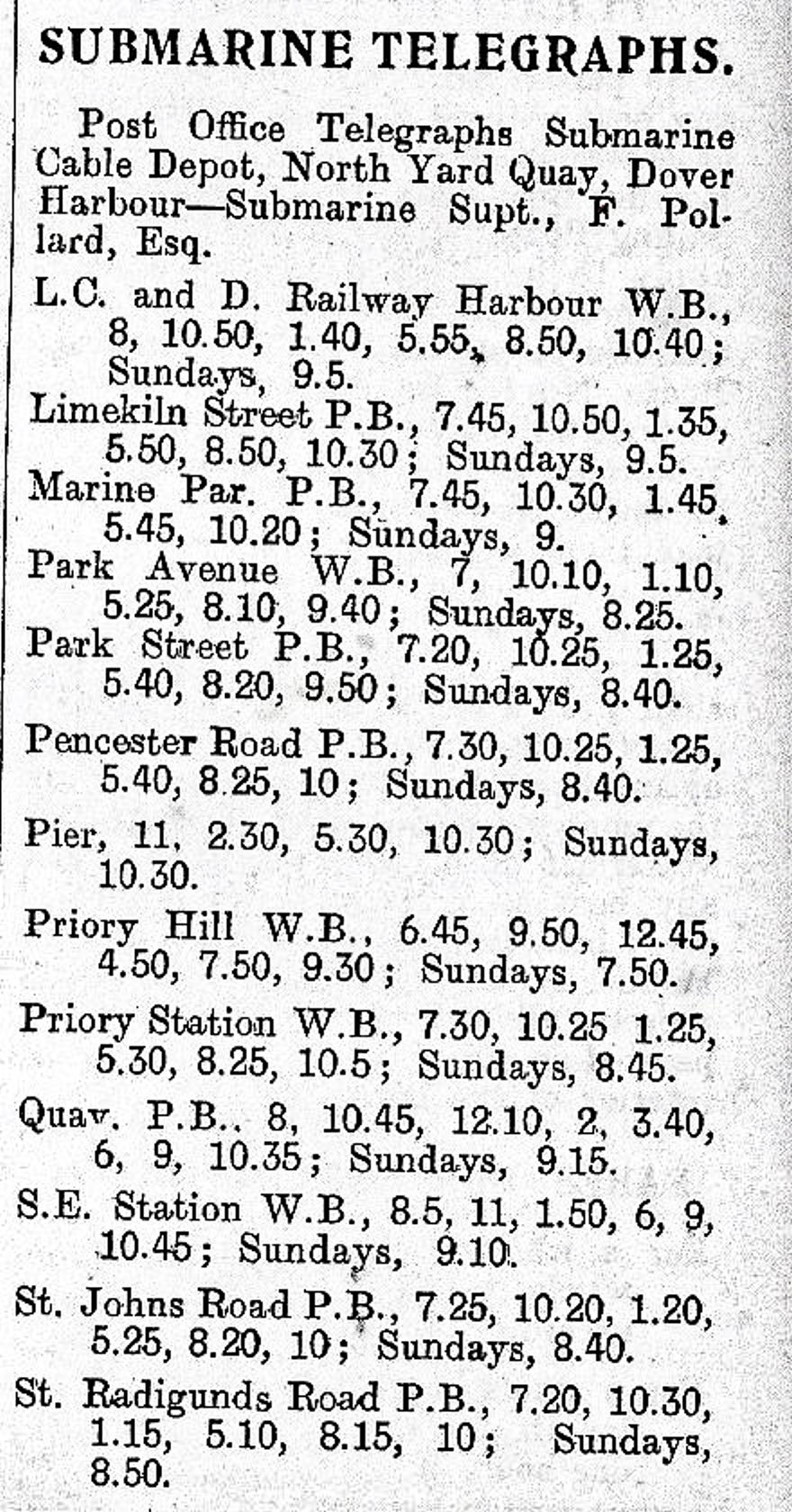
Submarine Telegraph Offices in Dover in 1908

Submarine Telegraph Offices in Dover in 1908

By 1898, the Submarine Telegraph Department had moved to North Yard Quay and W R Cuffey was the Superintendent. His assistant was F Pollard and the Alert was moored nearby. Ten years later the Submarine Telegraph Department Superintendent was F Pollard and the town boasted of 13 telegraph offices! On 12 May 1913, at the age of 82, the oldest telegraphist in the world, John Francis Costello died. He lived at 2 Osborne Villas, Elms Vale Road and before retirement had been with South Eastern Railway for 61years. As stated above, he was Charles Walker’s young assistant in the horsebox at Town Station on Wednesday 28 August 1850!

Alert at Woolwich 1915. Courtesy of BT Heritage and Archives

Alert at Woolwich 1915. Courtesy of BT Heritage and Archives

During World War I (1914-1918), the submarine telegraph came into its own, especially for communication between the military based in the UK and those on the Continent. In Dover, the scouts took over the role of the telegram boys delivering messages fast and efficiently. They were also in charge of guarding telegraph and telephone routes, reporting when any wires were down. However, at sea, the crew of the Alert faced a new problem, the necessity of building bypasses around sunken torpedoed ships that were laying across cables they had broken when sinking. The Alert crew also had to run the gauntlet of torpedo attacks. In 1915, the first cable ship Alert was sold out of service and was to be replaced by a pre-ordered new purpose built ship. However, following the sinking of the Monarch by a torpedo, the new ship took her name and duties.

The second cable ship named Alert  based in Dover came into service in 1918. She was built by Swan, Hunter and Wigman Richardson, 941-ton twin screw, 196-foot in length with a beam of 31-foot and a draught of 20-foot and designed to operate in shallow waters only. Her 105 horsepower engines gave her a maximum speed of 10.5 knots. The new Alert was constructed from steel and had a clipper stem with cable sheaves and a cruiser type stern. She had three cable tanks of 10,160 cubic feet capacity that could hold up to 81 miles of single core cable, 54 of 4 core or 35 of 6 or 7 core. Originally, she was coal-fired, but was converted to oil fuel in 1920. A year later, her archaic second-hand cable gear was replaced.

Eastern Dockyard Cable Depot 15 February 1922. Dover Museum

Eastern Dockyard Cable Depot 15 February 1922. Dover Museum

The General Post Office (GPO) moved their Submarine Divisional Telegraph station from the Western Docks to a purpose built depot on land belonging to the Admiralty in the Eastern Dockyard in 1921. Nearby, in the Camber, the Alert had her own mooring. The British telegraph service received a special recognition on 23 April 1924 when King George V (1910-1936) formally opened the British Empire Exhibition at Wembley, London. From the stadium, a special line was laid and when the King declared the Exhibition open his message was transmitted by the Atlantic submarine cable to Halifax, Nova Scotia. From there around the World through as many routes as were available until it returned, by the cables under the Channel, back to London. Automated working was employed throughout so as the message came in to each telegraph station it was pushed on without any manual intervention. 80 seconds after the message was sent it, had gone round the World. A telegram boy delivered it to the King!

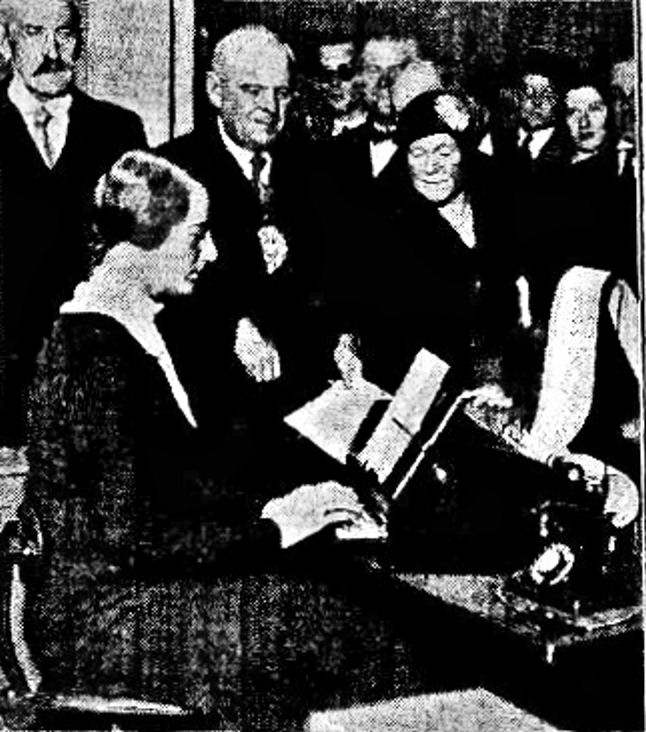
Teleprinter being introduced to the Post Office. Times 01.11.1932.

Teleprinter being introduced to the Post Office. Times 01.11.1932.

The submarine cables to France were re-laid in 1930, coming ashore at St Margaret’s bay beach. In 1932, a large repeater station was completed on Bay Hill, St Margaret’s Bay. The French purchased one of the cables from a German company as part of the reparation account. In 1926, one of the cables had been re-laid to Holland and was of Dutch manufacture. Otherwise the entire submarine cables around Great Britain were of British manufacture. Concerning receiving and sending telegraph messages, Britain appeared to have fallen behind other countries preferring automated Morse apparatus to the teleprinter. By the 1920s the teleprinter was in commercial use and the GPO considered switching over but the state of the country’s economy slowed this down. Nonetheless, in 1932 teleprinters, operated by superposed trains of waves of tonic frequency transmitted over telephone circuits, were introduced.

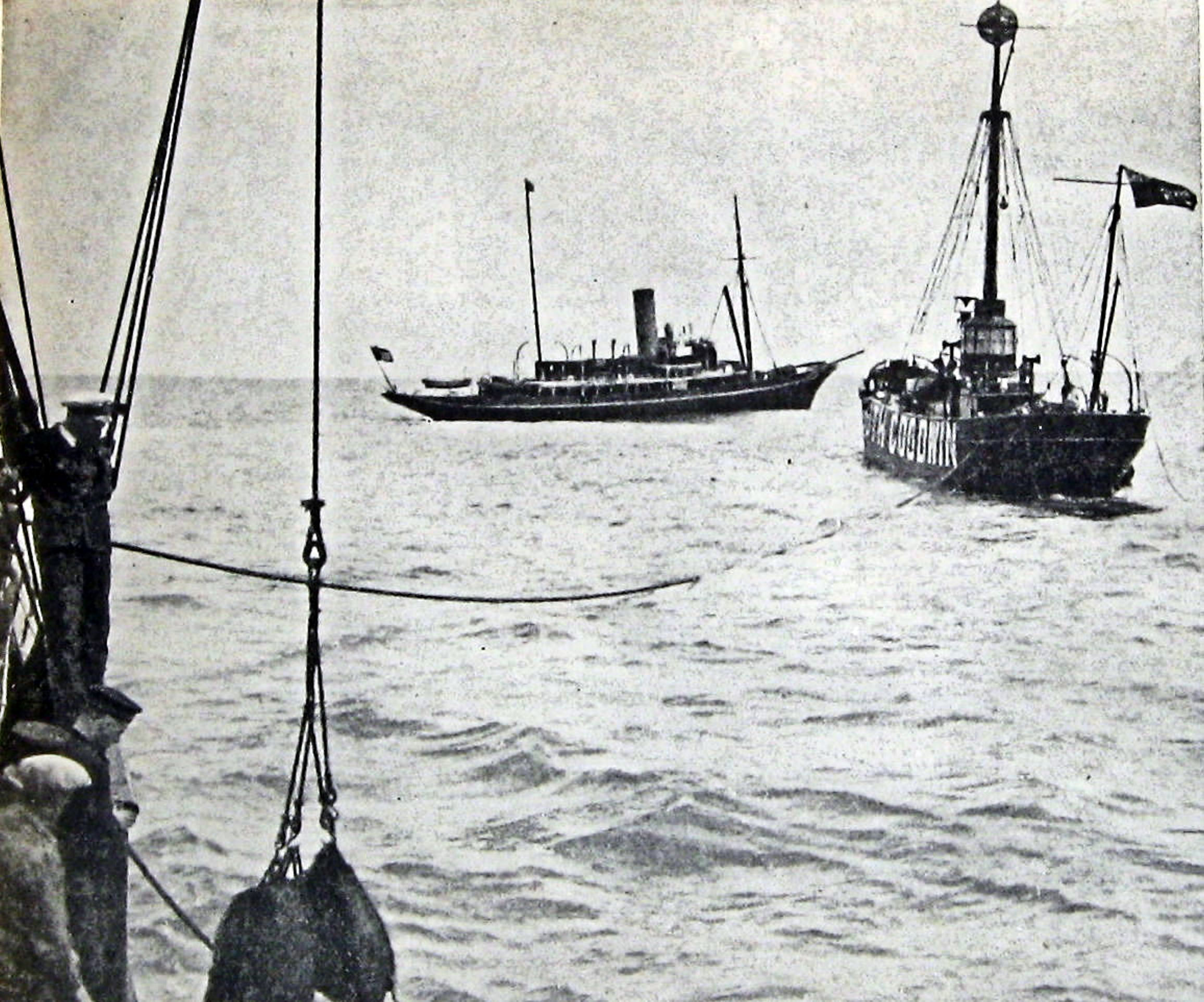
Alert and the South Goodwin lightship - Alan Sencicle collection

Alert and the South Goodwin lightship – Alan Sencicle collection

As the clouds of World War II (1939-1945) were gathering in the late 1930s, the Defence Telegraph Network (DTN), later called Q, was set up. This was to provide a communications network for the Armed Services separate from the public telephone. At the outbreak of War, many of those involved in telecommunications and adept at using Morse apparatus were drafted into the Armed Services and in the Army, the Royal Corps of Signals. The Alert remained on station in Dover, going out, often under enemy fire and torpedo attacks, repairing broken cables, creating bypasses when cables had been cut by sunken torpedoed ships and undertaking many jobs that she was never originally designed to do. For instance, she replaced German cables in the eastern end of the Channel with anti-submarine cables and in 1942 helped to lay an oil pipeline. Siemens, in conjunction with the United Kingdom Physical Laboratory, adapted submarine cable technology for Operation PLUTO  – an oil pipeline to Continental Europe. Following the D-Day invasion of June 1944, the Alert laid the (Pipe Line Under The Ocean) between Dungeness and Ambleteuse, north of Boulogne in the Pas de Calais.

Following the retreat of the Germans from the Pas de Calais, the bombing and the shelling of the town ceased and Dover became a busy port of embarkation. Reinforcements of men, munitions and machinery of war were sent to parts of Europe still under occupation. This meant that the menace of war was not far away. In February 1945, a cable break in the Dumpton Gap – La Panne No2 phone cable was reported off the North Foreland and the Alert went to investigate. What happened next is unknown, only that on 25 February 11.05hrs, some 30 hours after the last communication, evidence of the wrecked Alert was found. All the crew of 54 plus 6 gunners were lost, many were Dover men.

The following is the official list of those who lost their lives:

J G B Oats – commander; E G N Dellow and J Dixon, second officers; J C Stivey, third officer; J C Taws, fourth officer; H C Fisher, chief engineer; E Prince and J Cassingham, third engineers; R A Robinson, fourth engineer; J G Millar, ships doctor; H T Cronin, purser; N A MacLeod, wireless operator; H Bates, chief steward; W Smith, cable foreman; H W O’Beirne, assistant cable foreman; W E S Shepherd, boatswain.

W G Shelton, D C Phillips, F A Drury and A Gregory, quartermasters; A Insole, seaman cable joiner; F S Everall, F S B Baldwin, F S G Sharp, W F Cornwell, WTC Hunter, A V Godden, G H Jones, J C Brookshaw, P W Ellis, R S Button, FA Gilchrist, G R Peters, H F Hurford and G H Millard seamen cable hands.

W J Tickner, chief cook; F W Payne, second cook and baker; R C S Wakefield, second steward; L S Martin, FW Cant, A K J Kitt, R F Blamey, E J Smith and F H Williams assistant stewards; F A Hampsall, carpenter; W J Maple, donkeyman; C J Dowle, storekeeper, F Hope, cable engine driver; W J King and V W Mackay, leading stokers;    R E Booker, E J Demellweek and A G Wade, stokers; L C Voss, assistant engineer.

Gunners R.N. – S Heale, H W Bunting, M Campbell, F W Rivett, F Clarke, R P Stoyle.

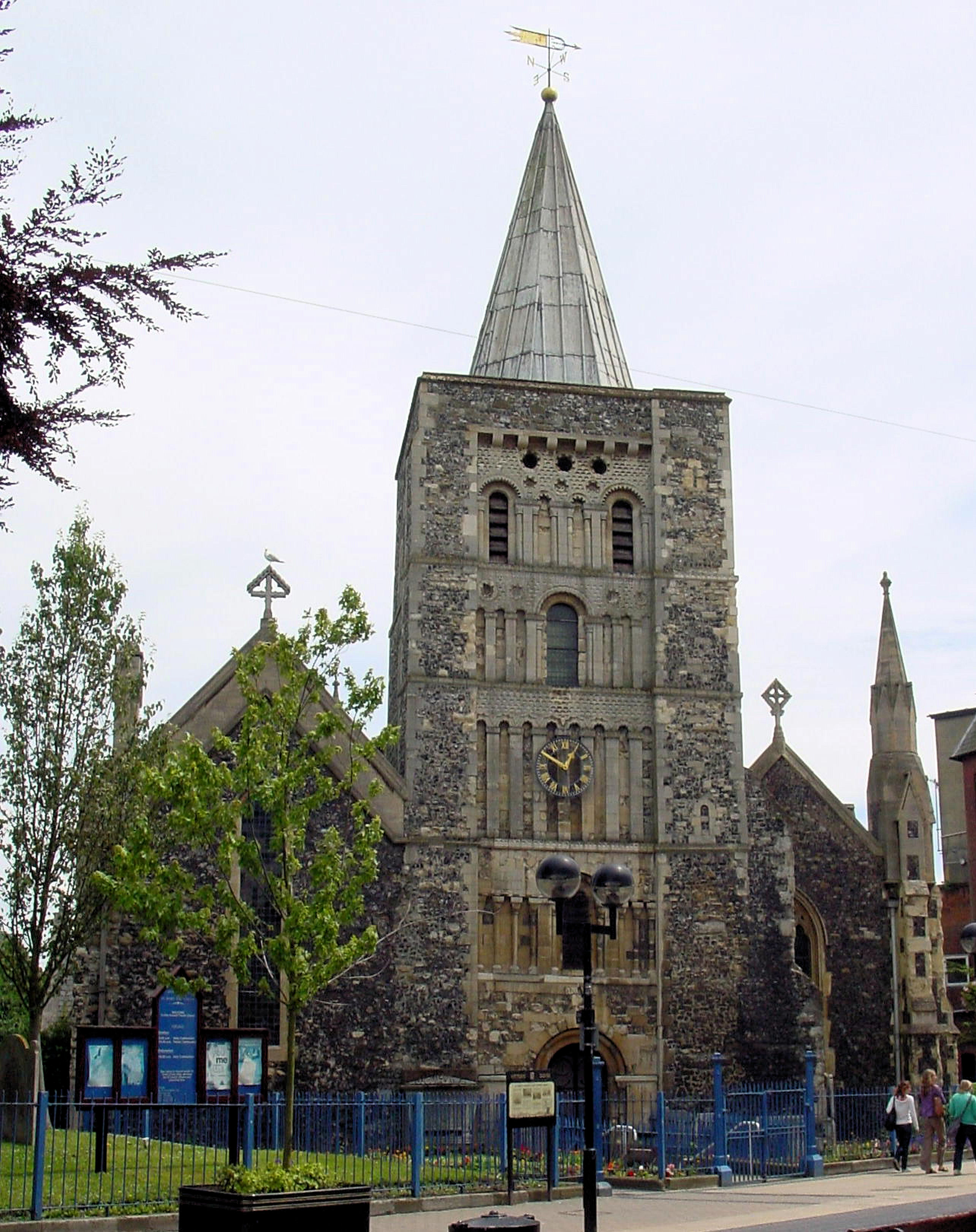
St Mary's Church, Cannon Street where those who lost their lives on the sinking of the Alert cable ship, off Dumpton Gap in February 1945, can be seen. Alan Sencicle 2009

St Mary’s Church, Cannon Street where those who lost their lives on the sinking of the Alert cable ship, off Dumpton Gap in February 1945, can be seen. Alan Sencicle 2009

The bodies of J Dixon, H C Fisher and J C Taws were found on an Alert raft that came ashore near De Hann, Belgium some days later. They were buried at Oye Plage cemetery. Norman MacLeod’s body was recovered from the sea and buried at Calais. Although there is no memorial to those lost on the Alert in Dover, their names are listed in Dover’s St Mary’s Church Book of Remembrance. Two months after the Alert was lost, the Monarch was sunk off Orfordness, on the Suffolk coast, but luckily 69 of her 74 crew survived.

After the tragic loss of the Alert, the cable layer Iris was based in Dover until 1947 when the twin-screw Ariel took her place. Built in 1939 by Swan, Hunter and Wigham Richardson the Ariel 1,479-ton had a length of 251-foot 8-inch, breadth of 35-foot 3-inch and a draught of 16-foot 4-inch. She had triple expansion engines of 1,400 i.h.p. giving a maximum speed of 12 knots. Although based in Dover to maintain the cables in the southern North Sea – Dover Strait area she was also called upon to repair cables further a field, from Norway in the north to Gibraltar in the south.

Sheaves and paying-out gear on the bow of the Dominia Cable ship. Alan Sencicle Collection

Sheaves and paying-out gear on the bow of the Dominia Cable ship. Alan Sencicle Collection

On the 1 October 1969, the GPO ceased to be a Government department but beyond the prefix H.M.T.S. Ariel changing to CS, nothing much else happened. The future of the Ariel at Dover was assured, indeed in 1974 it was said that she would be involved in laying a proposed a new generation undersea telephone cable between Britain and Belgium that would be capable of carrying 4,000 telephone calls simultaneously. There was also talk of laying optical fibre cables, made up of strands of glass each finer than a hair that would increase transmission capacity a million fold.

At Eastern Docks, the number of passengers and their cars passing through Dover to the Continent was escalating and freight traffic was also increasing. At Southampton, a new Post Office Central Marine Depot was being created and it seemed logical to Dover Harbour Board that if the Cable Laying facilities moved to Southampton, there would be room for new freight berths. Pressure was put on the GPO and as a spokesman for the Marine Division was reported in the local press, as saying, It is with great regret that operational necessity has compelled so many to tear up roots – cultivated so long in this port. The association between Dover and the Post Office has always been happy.

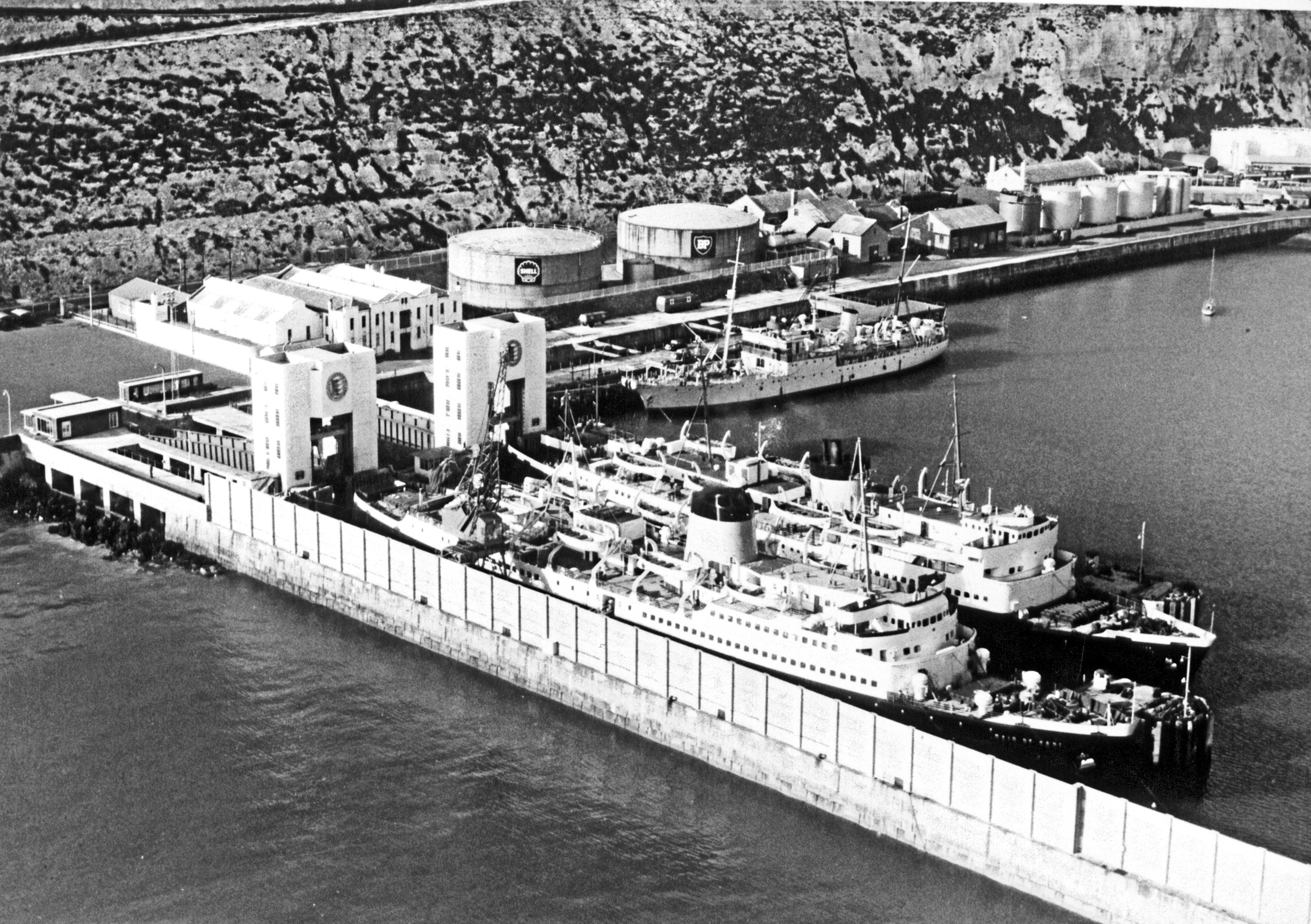
Ariel cable ship in the Camber 1959 in front of the two oil tanks the offices are to the left. The two cross Channel ships are Maid of Kent nearest the quay and the Lord Warden on the outside. Dover Harbour Board

Ariel cable ship in the Camber 1959 in front of the two oil tanks, the offices are to the left. The two cross Channel ships are Maid of Kent nearest the quay and Lord Warden on the outside. Dover Harbour Board

The departure of the cable vessel CS Ariel was at 16.00hrs on Thursday 2 January 1975. This brought to a close a significant chapter in Dover’s, Great Britain’s and the World’s history that had lasted for some 125 years. Shortly after the Ariel sailed away the cable depot building was flattened and made into a lorry parking area. The Ariel was withdrawn from service and scrapped in 1976. Her earlier Dover berth in the Camber has more recently been replaced by ferry check-in booths. 

  • Presented:
  • 20 December 2014

Useful sites:


Posted in Channel Submarine Telegraph and Telephone Cables, Channel Submarine Telegraph and Telephone Cables, Channel Submarine Telegraph and Telephone Cables, Maritime, Ships, St Margaret's | Comments Off on Channel Submarine Telegraph and Telephone Cables

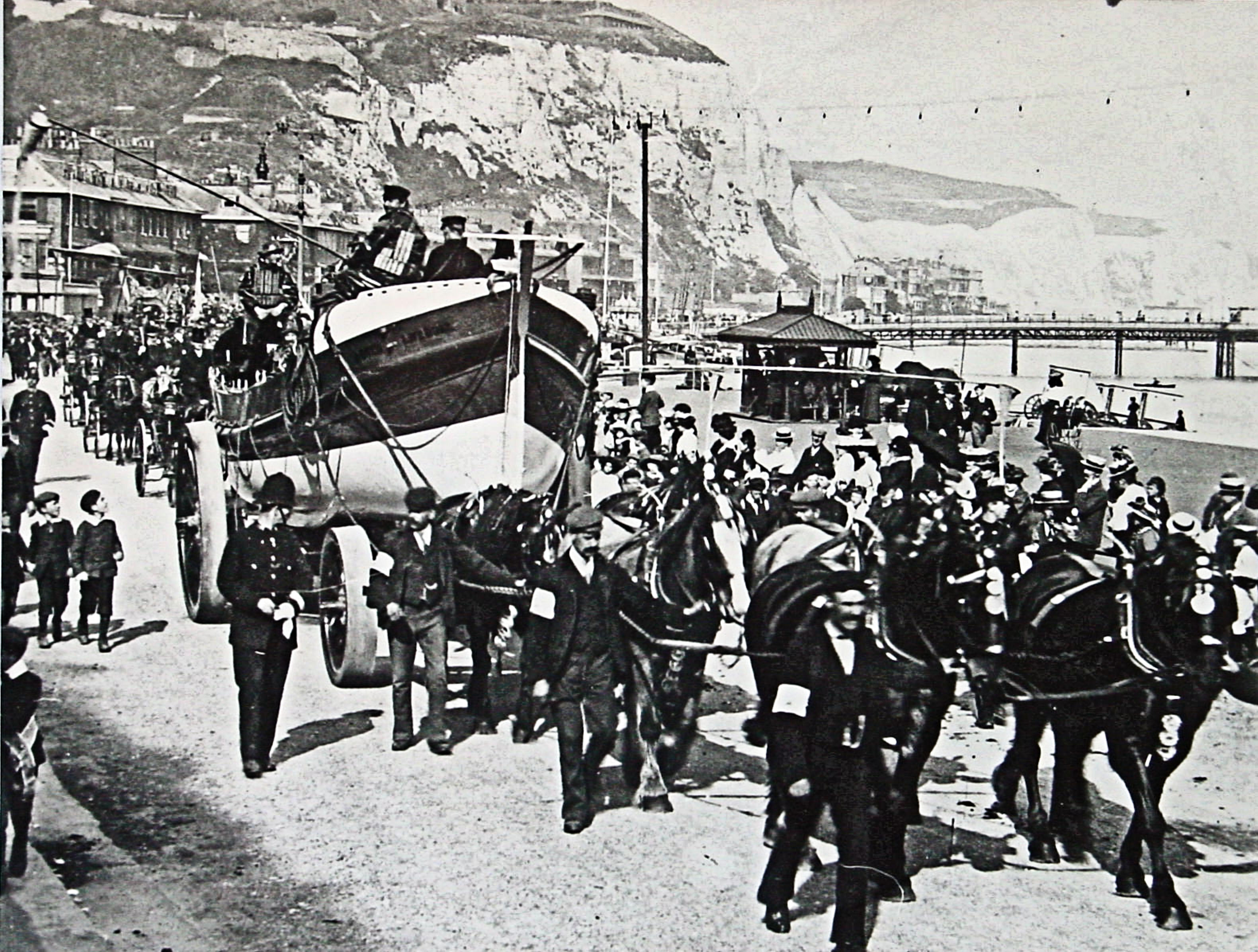
Dover Lifeboat Part II 1929 to the present day

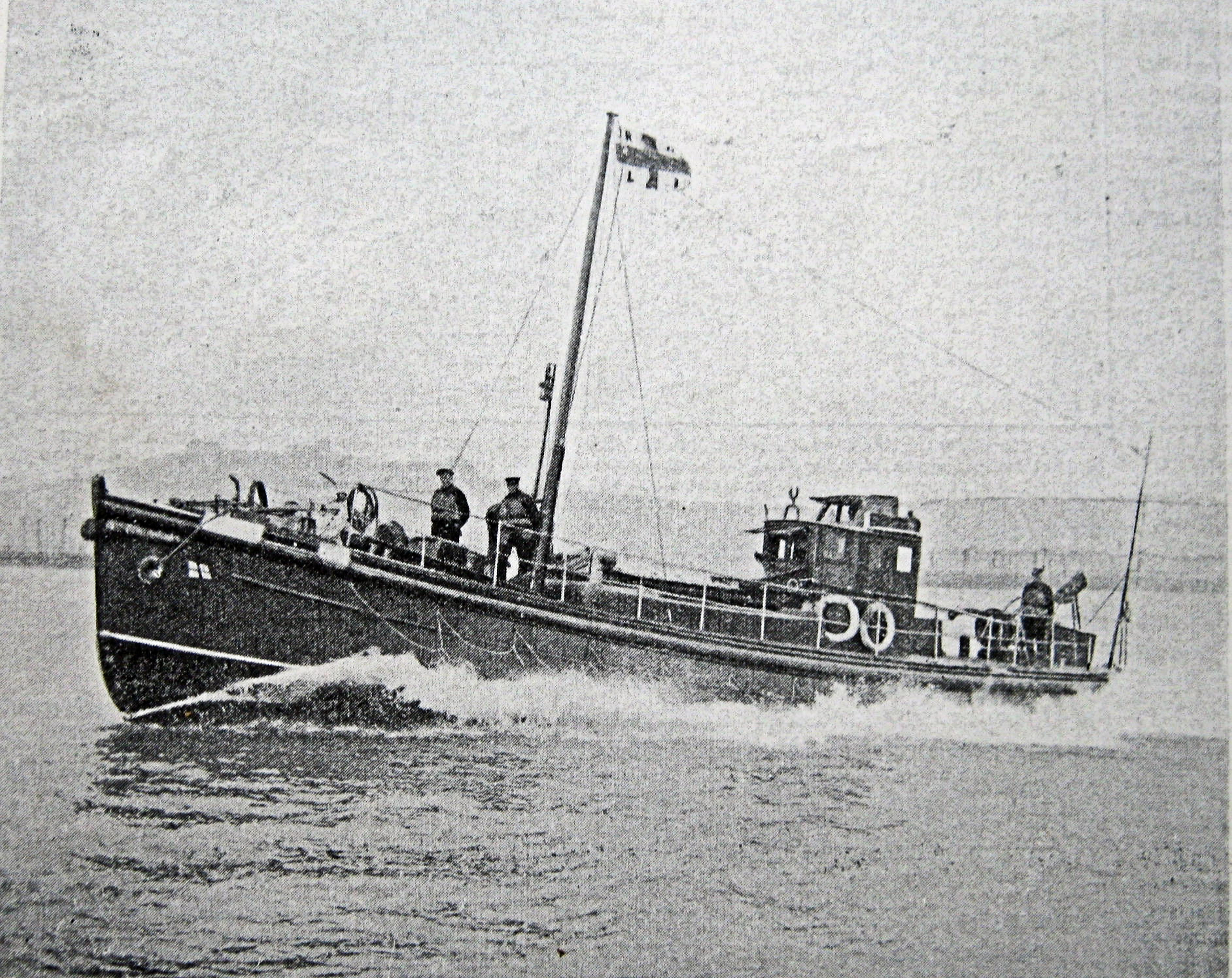
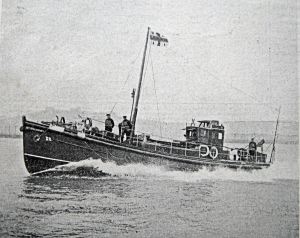
Sir William Hillary Lifeboat built 1930 to come to the aid of crashed aircraft.

Sir William Hillary Lifeboat built 1930 to come to the aid of crashed aircraft.

The Dover lifeboat had been in existence since 1837 and the story up until 1929 can be read in Part I. In 1928, Coxswain Adams was in charge and the lifeboat was probably the motorboat William Myatt. In January that year, the Royal National Lifeboat Institute (RNLI) ordered a totally new type of lifeboat from Thornycroft at Platt’s Eyot, Hampton-on-Thames. This was to rescue aeronautic casualties. Since Louis Blériot (1872-1936) had flown across the Channel in 1909 aeroplanes had proved a fascination for affluent adventurers. The development of aircraft during World War I (1914-1918) had increased interest but it was not until the late 1920s, with the easing off of the first interwar economic depression, that interest in recreational flying started to increase. With this the number of casualties increased and to deal with the growing problem the RNLI ordered a new and special lifeboat for their Dover station.

Named Sir William Hillary, after the founder of the RNLI, she was 64-foot, (19.5 metres) x 14-foot (4.7metres) with a draught of 4-foot 9 inches (1.45 metres). The skin was of double teak on oil timbers with steel bulkheads formed into eight watertight compartments. She had two 12-cylinder 375hp engines that gave her a top speed of eighteen knots. On board, there were two cabins with room for 50 people and she was lit by electricity. She had an electric driven capstan, a search light, a line-throwing gun illuminated by tracers at night to a distance of 80 yards, a Morse signalling lamp lit by electricity and wireless telephony that could take and deliver messages over 50miles. She had a plant that could throw jets of fire-extinguishing fluid, oil sprayers at the side for spreading oil to calm down rough water and ropes for hauling the casualties on aboard when it was not possible to use more conventional ways.
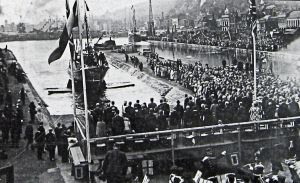
Sir William Hillary official launch 10 July 1930. Bob Hollingsbee Collection

Sir William Hillary official launch 10 July 1930. Bob Hollingsbee Collection

The Sir William Hillary was launched on 22 November 1929 and after undergoing trials, including a 4-hour endurance test, came on station before the year had ended. Kept in the Bay, she was instantly available should the summons occur. The crew were ferried out in the motorboat William Myatt, that was kept in the Camber, Eastern Dockyard, where there was always someone on duty. The Sir William Hillary first reported call out was to a collision in the Channel on 2 March 1930. The Japanese 5,500-ton cargo vessel Moke Maru had collided with the coastal vessel Mackvill of London, causing damage to both. The Sir William Hillary escorted both ships into the harbour.

Edward, Prince of Wales (later Edward VIII) officially launched the Sir William Hillary from the slipway in the Wellington Dock on 10 July 1930. He flew into the former Swingate aerodrome especially for the occasion. By this time, Colin Bryant was the Coxswain but it was not until 2 July 1932 that it was reported the Sir William Hillary had been called to deal with an aircraft in distress. The aircraft, it was said, had come down in the sea between the South Goodwin’s and the Brake Buoy but it was not there when the lifeboat arrived. In fact, the plane had remained afloat and skimmed the surface of the water to Calais sands where she ‘landed’.
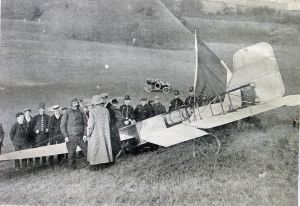
Louis Blériot's plane 25 July 1909 in Northfall Meadow following his successful flight across the Chanel. Dover Library

Louis Blériot’s plane 25 July 1909 in Northfall Meadow following his successful flight across the Chanel. Dover Library

Two days before, the Sir William Hillary had undertaken a traditional type of rescue when she went to Herne Bay in record time to go to the aid of the yacht Rosilinde. The lifeboat crew took a casualty on board leaving the other crewmember on the Rosilinde and towed the yacht back to Dover. In October that year, the Sir William Hillary was called out to see if she could find a German mail and freight aeroplane that was reported missing while on a flight from London to Berlin. The plane was a single-engine low winged Junkers that had left Croydon with two crew and no passengers at 20.55hrs. At 21.37hrs, three mayday distress signals in rapid succession were received but the Dover lifeboat searched the area where it was believe the plane had come down without success.

On 9 May 1934, a Wibault low winged monoplane with six passengers on board left Le Bourget aerodrome, near Paris, at 11.15hrs for London. She reported that the visibility was poor, when she passed over the French coast at Le Tréport at 12.10hrs, and was in radio communication with Croydon at 12.19hrs. At that time the pilot said that the plane was 18½miles west-by-south of Boulogne, after that nothing more was heard. The Sir William Hillary searched a wide area but found nothing. On 2 October that year, a twin-engine de Havilland 89 belonging to Hillman airways and with a highly experienced pilot and six passengers on board crashed into the sea off Folkestone. On crossing the Channel, the pilot reported that the visibility was poor and Croydon suspected that he was off course. The Folkestone lifeboat recovered the bodies and the Dover lifeboat searched the area to collect evidence as to the cause of the accident.

The Channel port of Boulogne has the oldest lifeboat society on the Continent. Alexandre Adams and John Larkins, an Englishman, founded the Boulogne Société Humaine, and from the start, the committee consisted of half French and half Englishmen. On 12 August 1934, Coxswain Bryant and the crew of the Sir William Hillary attended the naming of a new lifeboat there, the Alexandre et Louis Darracq. Also at the celebration was the crew of the Calais lifeboat, the Maréchal Foch, who had also been at the official launch of the Sir William Hillary.
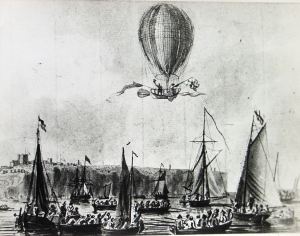
Blanchard and Jeffries Channel Crossing, Friday 7 January 1785. Dover Library

Blanchard and Jeffries Channel Crossing, Friday 7 January 1785. Dover Library

Alexander Korda (1893-1956) the film director was making the film The Conquest of the Air (1936), starring Laurence Olivier (1907-1989) and included the events leading up to the first successful cross Channel balloon flight by Jean-Pierre Blanchard and Dr John Jeffries on 7 January 1785. The balloon in the sequence being filmed, took off from St Margaret’s Bay on the afternoon of 7 August 1935 and as the cameras’ rolled the balloon travelled westwards. Off Folkestone, the balloon suddenly collapsed and landed in the sea. The Sir William Hillary was called out but was not required as the balloon was towed ashore by a speedboat accompanying the flight. On board was French aeronaut Charles Dolfus (1893-1981) and the balloon collapsing was in the script!

In 1937, Dover Lifeboat Station celebrated its centenary and the following year, on 5 June, the Coxswain and crew were awarded £55 for salvage services rendered to the yacht Nirvana. Salvaging is not part of a lifeboat crew’s job description and this only happens in very rare instances. Six months later, on 13 January 1939 the honorary secretary of the Dover lifeboat station, J R W Richardson, was awarded inscribed binoculars by the RNLI. World War II (1939-1945) was declared on 3 September that year adding to the dangers the crew of the lifeboat faced. On 26 November 1939 the trawler, Blackburn Rovers, with 16 men on board, was on anti-submarine patrol near Dover. A southwesterly gale was blowing when a wire fouled her propeller. Although the crew dropped anchor this failed to hold and Blackburn Rovers drifted towards a minefield.

At 10.00hrs Sir William Hillary, under the command of Coxswain Bryant and with Lieutenant Richard Walker, the Admiralty Assistant Harbour Master, went to the rescue. Lt. Walker had a chart showing the minefields, which showed that the stricken ship was on the edge of one. They managed to rescue the 16 crewmen along with important documents before scuttling the ship and holding their breaths. If she landed on a mine, she would have blown them all to smithereens. For the rescue Coxswain Bryant was awarded the RNLI Silver Medal, with Lt Walker along with Second Coxswain Sydney Hills and the two motor mechanics W. L. Cook and C. R. T. Stock the Bronze Medal. The other members of the crew, A. F. Barton, S. Walker, H. W. Hadley, E. J. Le Gros and J. E. Clarke were each awarded the RNLI Thanks on Vellum.

In early 1940, to deal with an increasing number of rescues a Norfolk and Suffolk class lifeboat, Agnes Cross, came to Dover. The Sir William Hillary left Dover that year and was later sold to the Admiralty. During her ten years tenure, she was responsible for rescuing 29 lives. Due to the increasing hazard of mines, the William Myatt and the Agnes Cross left Dover the following year for relocation. Dover lifeboat station closed for the remainder of the War.

The station opened again on 29 May 1947 under the command of Coxswain Johnny Walker. The H F Bailey II, a 45 foot (13.72 metres) Watson class lifeboat, built in 1924, was brought from Cromer and renamed J. B. Proudfoot and based in the Camber at the Eastern Dockyard. On the morning of 28 June 1947, there was thick fog and the steamer Heron of Piraeus had been in collision with the Danish vessel Stal and sunk some 14miles east-south-east of Dungeness. The survivors had been picked up by the Suavity and J.B.Proudfoot met her two miles off Dover where the 23 survivors and the ship’s pilot were transferred and brought back to Dover.

There was a storm blowing on the morning of 21 August 1948 when the crew of the J. B. Proudfoot received a call from the 2,905-ton steamer Baron Elibank saying that they had spotted a rowing boat that might be in trouble. Quarryman Robert Salisbury age 26 of no fixed abode and miner Kenneth Gant age 24 from Wakefield, Yorkshire, were suffering from exhaustion when they were rescued and brought back to Dover. On shore, it became evident that they had stolen the £60 rowing boat from the town’s beach so it was the police who welcomed them when the lifeboat returned to the Camber! The following day the two men, having recovered from their ordeal at sea, pleaded guilt to stealing the boat and were sentence to one month in prison. This was one of the six rescues that the J. B. Proudfoot was involved in during her two-year service at Dover.
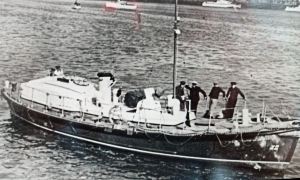
South Africa, on station 1949-1967. RNLI-Dover

Southern Africa, on station 1949-1967. RNLI-Dover

In June 1948, it was announced that one of three lifeboats presented by South Africa to the RNLI would be stationed at Dover. Aptly named Southern Africa she was the first ‘Barnett‘ class lifeboat to be built after World War II and arrived in 1949. Built by Rowhedge Ironworks, Wivenhoe near Colchester Essex, she was 52-foot (15.89 metres) x 13-foot 6inches (4.12 metres), powered by two 60 BHP ‘VE6’ diesel engines. The Southern Africa was officially named by Edwina Countess Mountbatten of Burma, (1901-1960) and the High Commissioner for South Africa on 16 September 1950.

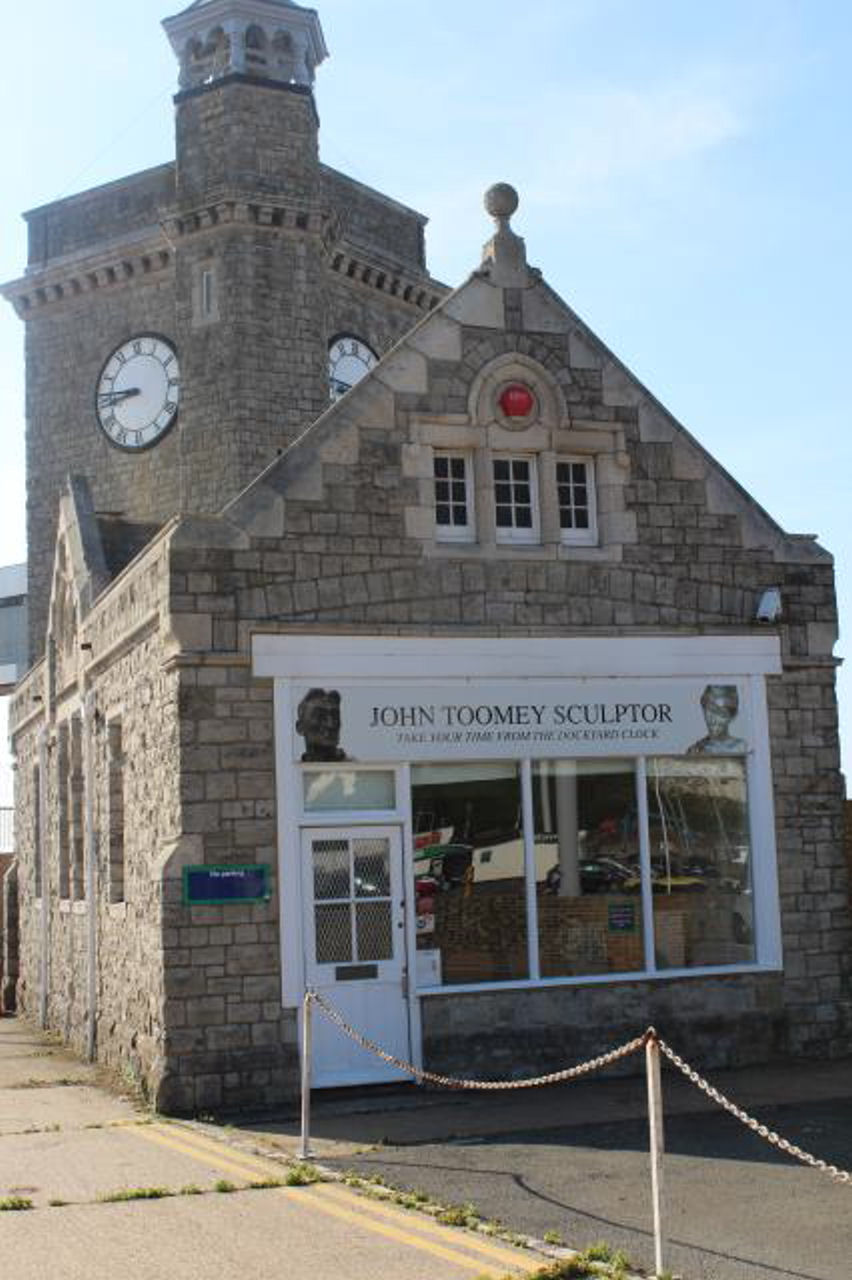
By this time, on receipt of a distress call, Dover Port Control would electronically fire two maroons from the roof of the Clock Tower to call out the lifeboat crew. As the crew lived and worked in and around the town the lifeboat station van, at certain fixed points, would collect those who did not have transport. On arrival, the men put on the protective clothing and life jackets, which were hung ready for use, and as there was always a man on station, they boarded the prepared lifeboat.

Just before midnight in September 1951, there was a gale blowing and Coxswain Johnny Walker was on station when he spotted a small yacht, evidently in trouble, just off the Eastern Arm. He called up Port Control and the maroons were fired but without waiting for the van bringing the last two crewmembers, the Southern Africa put out. The yacht was broadside on to wind and seas and within 30 yards of the cliff. When the lifeboat reached her, Coxswain Walker laid the Southern Africa alongside. A rope was thrown, made fast and the lifeboat pulled the yacht clear of danger. For this, Coxswain Johnny Walker was awarded the bronze medal for gallantry.
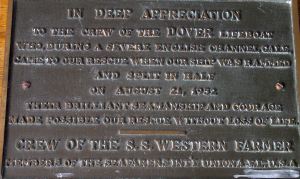
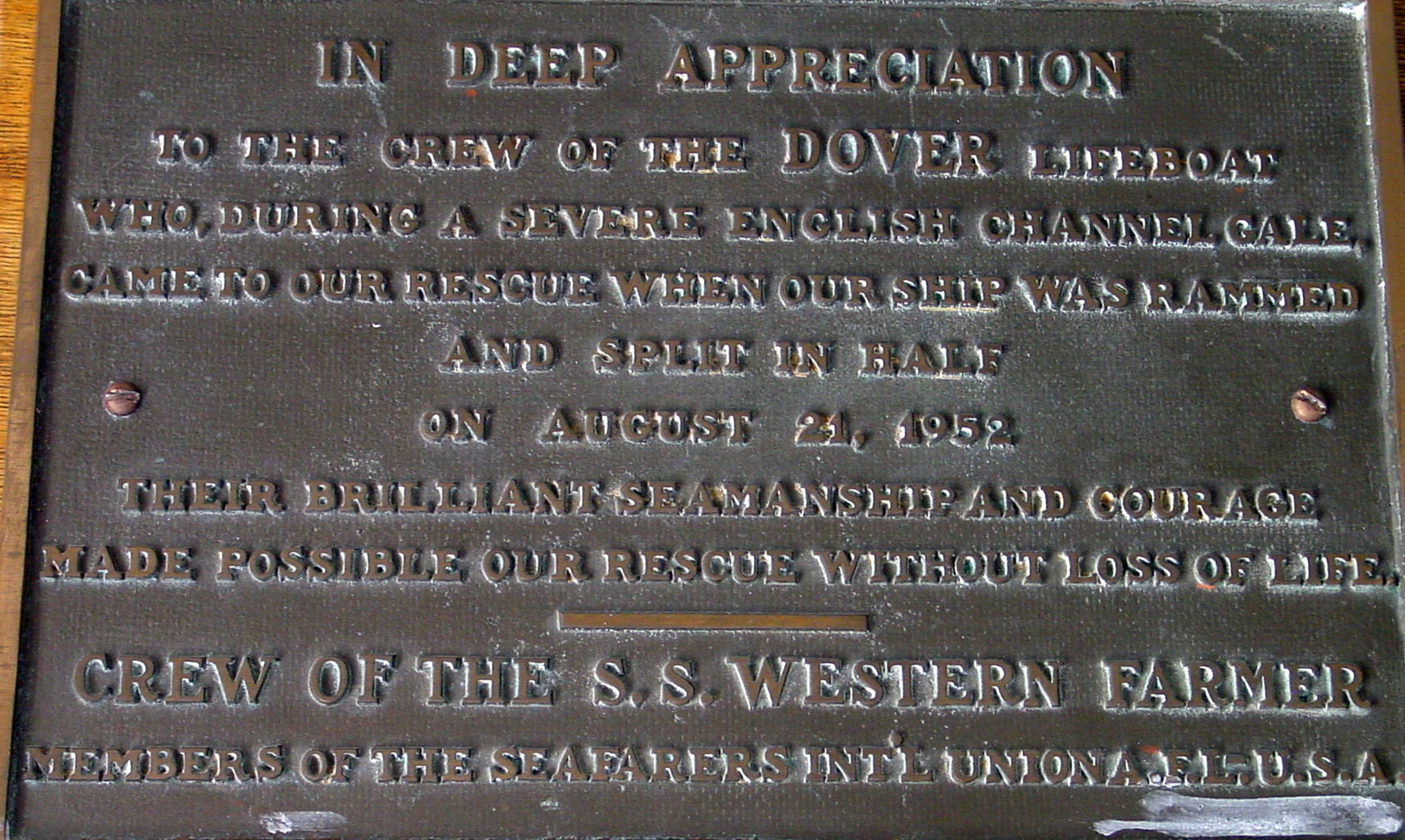
Plaque from the the crew of Western Farmer, rescued 21.08.1952. RNLI-Dover

Plaque from the the crew of Western Farmer, rescued 21.08.1952. RNLI-Dover

The 7,239-ton liberty ship Western Farmer was hit by the 11,732-ton Norwegian tanker Bjorgholm near the Goodwin Sands in August 1952, and her bow section sank almost immediately. A distress call was made and the Southern Africa rescued the captain and the 13 crew. The remaining part of Western Farmer drifted in the Channel and with several thousands of pounds of goods on board a number of French tugs honed in for salvage. Two succeeded in towing what remained of the Western Farmer towards Calais but due to the weight of the cargo, the weather and the strong currents the wreck foundered and sank. At the Dover Lifeboat station there is a plaque from the crew of the Western Farmer, giving thanks to the Dover crew who rescued them.

Fog was a feature of the weather in March 1953 and there were a number of collisions that the Dover lifeboat attended. On Friday 20 March, the visibility was down to zero when the call was received that 7,254-ton British steamer Statesman and the Greek steamer Flight-Lieutenant Vassiliades RAF had collided two miles south of Dover. The Southern Africa put to sea but after four hours search, were unable to find either vessel. As she returned to port, the Coxswain received a radio message saying that neither vessel needed assistance. Hardly had the crew time for a cup of tea when they were called out again. The 857-ton motor vessel Sparnestroom had radioed that she had collided with the 4,877-ton German steamer Waldermar Sieg four miles off Dover. By the time the lifeboat arrived the Sparnestroom appeared to be sinking but the Waldermar Sieg had taken off all the crew, excepting one. There was no sign of the missing crewman so the lifeboat took the 15 rescued crewmembers back to Dover.

The badly damaged Sparnestroom did not sink; instead she drifted down the Channel and next day was off Dungeness. On the deck, trying to attract attention, was the missing man the greaser Cornelius Shuurman. He had been below at the time of the accident! The ship, with some of her crew on board, was taken in tow by the Stentor. It was agreed that Cornelius would stay on the Stentor and return with both ships to Amsterdam. Later the Stentor radioded to say that the Sparnestroom had broken adrift and was missing but before the lifeboat was out of the harbour she radioed again to say that the Sparnestroom had been located and that her crew were on the Hector. The Dover Harbour Board tug, the Lady Brassey went to help and brought the Sparnestroom into Dover where the beleaguered ship was beached. She was later pumped out, received temporary repairs and returned to Amsterdam.
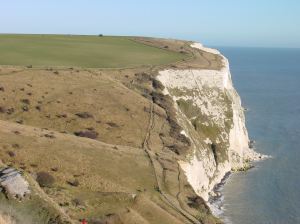
Every year the lifeboats rescue people cut off by the tide, climbing the cliffs or fall/jumped off the top of the cliffs around Dover - Langdon Cliff - looking towards South Foreland. AS 2011

Every year the lifeboats rescue people cut off by the tide, climbing the cliffs or fall/jumped off the top of the cliffs around Dover – Langdon Cliff – looking towards South Foreland. AS 2011

In March 1954 Miss Ursula Upjohn, the sister of judge the Brigadier Gerald Ritchie Upjohn, Baron Upjohn (1903-1971), was exercising her collie dog Trixie on the top of the cliffs at St Margaret’s Bay. The dog fell to the beach below and Miss Upjohn went down to her and was joined local fisherman, Jim Atkins. For four hours, Miss Upjohn stayed with her dog and when the tide was coming in Atkins went to get help. The coastguards called the Dover lifeboat and both they and Atkins directed the Southern Africa to the stranded lady and her dog who were rescued by dinghy from the lifeboat. Sadly, Trixie never regained consciousness and died. Every year the lifeboats rescue people cut off by the tide, climbing the cliffs or fall/jumped off the top of the cliffs around Dover. Of interest, sometime after this rescue and following the gift of a substantial donation, Rother RNLI – East Sussex, had a lifeboat named Ursula Upjohn and Dungeness RNLI a lifeboat named Alice Upjohn.

On 8 September 1954, Ted (Edward) May a 44-year old father from Scunthorpe, Lincolnshire,  attempted to swim the Channel from Cap Gris Nez, France, to Dover without an accompanying boat. To provide sustenance he towed a tyre inner tube full of provisions topped with a mast decorated by coloured electric lights attached to a large battery and a notice, ‘Lone Swimmer’. This was his second attempt in two weeks. On the first occasion a passing timber boat had picked him up about six miles from the French coast. When nothing was heard of Mr May, the  Dover lifeboat joined the Walmer lifeboat in a search for the Lone Swimmer, but without any luck. Some weeks later, Mr May’s body was washed up on the Dutch coast. Following the death of lone swimmer Ted May, the Channel Swimming Association insisted that a pilot boat equipped to deal with emergencies must accompany all registered swims.
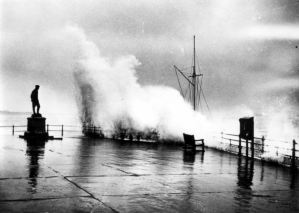
 

Stormy Weather c 1950 - Dover Seafront with statue of Charles Rolls. Dover Museum

Stormy Weather c 1950 – Dover Seafront with statue of Charles Rolls. Dover Museum

In 1955, the Dover Lifeboat Ladies Guild was formed to raise money for the service. In 1987, Nora Post received the RNLI Silver Badge and the RNLI Gold Badge in 1999. In 2002, Muriel Sharp also received the RNLI Gold Badge. However, it was not until 1996 that the Dover lifeboat had its first female crewmember, nurse Kendal Beasley. The gales in 1955 took their toll on shipping and the lifeboat was called out several times. On one occasion, it was to take off a member of the crew of the South Goodwin lightship who had injured his arm.

Early in 1956, the Southern Africa was involved in rescuing ten people from yachts during hurricane force winds. Then in May, she took the captain’s wife and small son off the 379-ton Dutch coaster Prins Bernhard. The ship had been damaged in a collision during thick fog with the German 3,098-ton ship Tanger. In July that year, the 2,613-ton French ship Dione was in a collision with the 8.000-ton Liberian Michael C that was undergoing trials. The lifeboat, DHB tug Lady Brassey and the pleasure steamer Queen of the Channel – packed with tourists – went to the rescue.
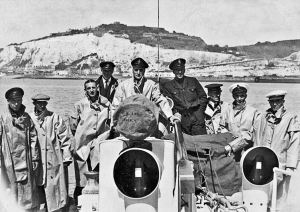
Coxswain Johnny Walker and crew aboard Southern Africa. RNLI-Dover

Coxswain Johnny Walker and crew aboard Southern Africa. RNLI-Dover

The Lady Brassey managed to separate the two ships and the crew of the Dione, having taken to her lifeboats, returned to their ship. She had almost lost her bow so was lashed, at the side, to the Southern Africa and the Lady Brassey towed them to Calais. At the end of that year, the Southern Africa was returning from the South Goodwin Lightship, with a BBC television crew on board, when she picked up distress signals from a fishing boat. The television crew lost no opportunity to film the rescue, which was televised in March 1957. For his services that year, Coxswain Walker received an RNLI silver medal for gallantry from Lady Mountbatten.

In August 1959 two of Dovers lifeboat men, Arthur Liddon and John Clarke, dived into the sea in mid Channel from the Southern Africa in order to rescue 35-year old Miguel Mendez. Mendez was one of the 21 crew on the Spanish cargo vessel Naranco that had sank off Dungeness following a collision with the 8,684-ton Panamanian ship Goldstone in thick fog. Nineteen of Naranco‘s crew had been picked up by the Goldstone. Of the two missing men, the Southern Africa found Mendez clinging to an upturned ship’s lifeboat and had been for two hours. He was so exhausted that he had to be lifted on board the lifeboat. The other crewmember was not found.

Basil D Ebsworth was appointed the new Secretary of Dover Lifeboat in February 1960 and according to the RNLI regulations was responsible for giving the order for the lifeboat to be launched. The Coxswain, Captain Johnny Walker, did not agree saying that ‘when I get a report of a ship in distress, all I can think about is getting cracking.’ The Secretary, however, stuck to the rulebook and in August 1960, matters came to a head. Coxswain Walker resigned along with deputy Coxswain John Clarke, bowman William Clark and relief mechanic George Hawkins – father of Tony and Richard Hawkins who feature later in the story.
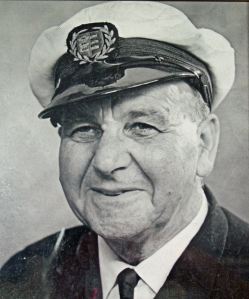
Alfred 'Darky' Cadman Dover Coxswain 1960-1967. Dover- RNLI

Alfred ‘Darky’ Cadman Dover Coxswain 1960-1967. Dover- RNLI

Alfred ‘Darky’ Cadman was appointed Coxswain and in November 1960, the Southern Africa rescued 16 anglers taking part in a fishing festival at Folkestone. They had been disappointed with their catch off the pier and decided to charter a boat and fish further out. However, a fuel blockage and strong winds swept them out to sea and the Dover lifeboat was called out. They found the men and towed the boat back to Folkestone. Rescuing crews off boats with an inadequate supply of fuel, engine problems or inadequate training/inexperienced crew is another regular occurrence for Dover lifeboats.

The 2,811-tonnes Yugoslav steamer Sabac, and the 6,223-tonnes London steamer Dorington Court, were in collision during thick fog six miles off Dover in January 1962. The Sabac was almost sliced in two and sank within five minutes. One of the first vessels on the scene was the British Railways train ferry, Hampton Ferry, under Captain Norman Dedman, which was sailing between Dover and Dunkerque. The Dover lifeboat went out, as did the DHB tug Diligent and the Walmer lifeboat. The crew of the Dorington Court and the Hampton Ferry, with the help of passengers, looked for people in the water. The Hampton Ferry picked up the master, first officer and a member of the crew of the Sabac together with four bodies, all of which had died from exposure. The Dorington Court found three survivors but one later died. Even though the wind picked up to gale force 8, the Southern Africa lifeboat crew spent a further 12-hours looking for bodies, picking up five and the Walmer lifeboat picked up seven. Of the Sabac‘s crew of 33, only five survived.

Fog was again a problem in March 1962 when the 4,153-ton Danish cargo ship Kirsten Skou was in collision with the 4,716-ton German motor vessel Karpfanger. The Kirsten Skou sank within twenty minutes but the crew of 38 managed to take to the boats and the  German ship picked them up. The crew of the Kirsten Skou were transferred to the Southern Africa and brought to Dover. Gales closed Dover Harbour in November 1962 during which the East Goodwin Lightship broke away from her moorings. She drifted for about four miles until the 7-man crew managed to anchor her. The Walmer lifeboat went to her aid and stood by until she ran low on fuel and then called the Dover lifeboat to take over. The Southern Africa stayed until the Ramsgate boat came to relieve her so the Dover lifeboat could deal with other emergencies, of which there were many.

When the Panamanian ship Carmen was in collision with a Turkish ship in June 1963, there was again thick fog. The Carman, with 23 crew on board, sank but 21 members of the crew were picked up and brought to Dover in the Southern Africa. A German lifeboat, the Georg Breusing, whose crew were in the UK attending a national lifeboat conference, helped the Walmer lifeboat in searching for the two missing crewmembers. During March 1965 there were at least two collisions in the Channel one of which involved German motor vessel 1,056-ton Katherine Kolkmann and British steamer 923-ton Gannet. The Katherine Kolkmann sank within 15 minutes and the Gannet rescued all but one of the crew of 15. However, the captain was badly injured and had to be airlifted to Buckland Hospital, Dover. The Southern Africa brought the remainder of the crew back to Dover and they were taken to the Seaman’s Hostel. The missing man was not found.

During gale force winds and heavy seas on 2 December 1966, the Varne lightship started dragging her anchors and the Southern Africa along with two Trinity House vessels went to her aid. The Trinity House vessels were unable to move the lightship and were concerned the ship might be driven onto the Varne bank so asked the Dover lifeboat to stand by. The weather continued to deteriorate and the commander of the Trinity House vessel Siren asked Coxswain Cadman to take the crew off. They made their first attempt at 10.42hrs and one person on each attempt with the lifeboat backing off and steadying between each man, by 11.35 all seven-crew members, including the captain, were safely on board. A letter of commendation was sent to Coxswain Cadman and the crew for their arduous and skilful service.
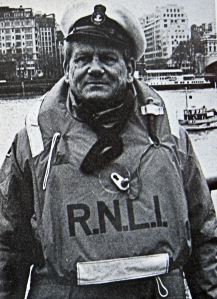
Coxswain/Mechanic Arthur Lidden. RNLI-Dover

Coxswain/Mechanic Arthur Liddon. RNLI-Dover

Coxswain Cadman was succeeded by Coxswain/Mechanic Arthur Liddon in 1967. The Faithful Forester replaced Southern Africa that year. The Faithful Forester was a Waveney Class 44 foot (13.5 metres) lifeboat built by Brook Marine of Lowestoft and capable of 15 knots. As her name implied, she was funded by the Ancient Order of Foresters. The Princess Marina of Kent (1906-1968), as President of the RNLI, named the Faithful Forester, on 26 July 1967. The Princess’s husband, Prince George, the Duke of Kent (1902-1942) had been the President of the RNLI from 1936 to 1942 and their son, Prince Edward, Duke of Kent, succeeded Princess Marina, as President in 1969. This was the Princess’s last naming ceremony for the RNLI before her death.

At 04.00hrs on 11 January 1971, there was a tremendous explosion off Folkestone that broke windows all along the coast. There had been a collision between the 20,500-ton Panamanian Tanker Texaco Caribbean and the 11,900-ton Peruvian cargo ship Paracus about five miles off Folkestone. Visibility was fair. The explosion was on board the Texaco Caribbean, which had discharged part of her cargo of petro-chemicals at Terneuzen, near Flushing and the remainder at Canvey Island. She was bound for Trinidad when the accident happened. The Texaco Caribbean had a crew of thirty and after she was sliced in half, 21 had managed to get into a lifeboat. The Norwegian ship Bravagos picked them up. The Folkestone trawler, Viking Warrior, picked up another crewmember and the Faithful Forester recovered three bodies taking them and the 21 crewmembers to Dover. An oil slick 11 miles long, approximately 250 yards wide and 6 inches deep formed. This was the worst oil pollution to reach the Kent coast and sackfuls of seabirds covered in oil were collected.
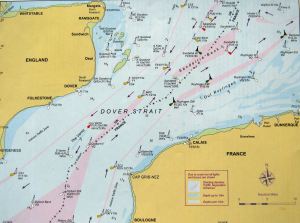
Channel Traffic Lanes and Separation Zones. Reeds Almanac 2009

Channel Traffic Lanes and Separation Zones. Reeds Nautical Almanac 2009

The bow half of the Texaco Caribbean sank within minutes but it was not for another ten hours before the stern sank. The 2,695-ton cargo ship Brandenburg hit this the following day with a loss of 21 lives and on the 27 February 1971, the 2,371-ton cargo ship Niki hit the wrecks with the loss of all 22 crew. The resulting inquiries led to the formation of the Dover Strait Traffic Separation Scheme. This divides the East and Westbound Channel shipping lanes by a separation zone and created inshore traffic zones on both sides of the Channel. At about the same time, limited radar surveillance was introduced at the then Coastguard Station at Leathercote Point, St Margaret’s Bay. The coastguard station was replaced in 1979 by a new, purpose built operations centre at Langdon Battery, overlooking the eastern end of the harbour. In the late 1970s the Channel Navigation Information Service was instigated which monitors and polices all ships in the Channel making it mandatory for all ships over 300-tons, to give an account of themselves. The Coastguards also co-ordinate the Search and Rescue System that includes air-sea rescue and lifeboats.
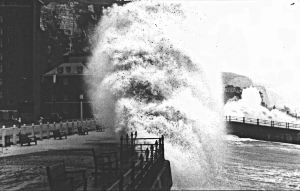
Stormy Weather - Dover Seafront c1970s - Dover Museum

Stormy Weather – Dover Seafront c1970s – Dover Museum

Barry Sheppard was a member of the lifeboat crew and he and his wife Margaret had a flat at East Cliff. On the night of 27-28 January 1974, the wind was shaking the building and the waves were pounding the promenade in front of the house. Because of the proximity to the lifeboat, Sheppard was often first aboard. On that night he was awaken by the maroons at 01.30hrs and could see the red flare above the Southern Breakwater close to the Eastern entrance to the harbour. There was a southwesterly force 9 gale blowing so the likelihood of the casualty being swept on to the rocks at Langdon Bay was a certainty. Sheppard rushed to the Faithful Forester and fired up the engines, John ‘Jack’ Smith soon joined him followed by second Coxswain Tony Hawkins. After Sheppard had told the others what he had seen Tony contacted the secretary – as the RNLI instructions demanded – and also the Coxswain Arthur Liddon. And then waited for two other crewmembers to arrive in order to comply with regulations. Sheppard, however, concerned over the casualty, wanted to put to sea immediately. After a short deliberation, Hawkins complied with Sheppard and the lifeboat left for the casualty.
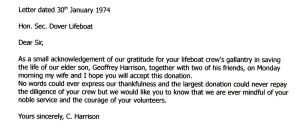
Letter from one of the parents of the crew of the Fancy of Falmouth that foundered in Langdon Bay on the night of 27-28 January 1974

Letter from one of the parents of the crew of the Fancy of Falmouth that foundered in Langdon Bay on the night of 27-28 January 1974

The seas were tremendous and as typical off the Eastern entrance, the waters were confused creating giant waves in all directions. Once out of the entrance the lifeboat crew could see a classic wooden yacht with no sails and three crewmembers sitting in the cockpit with seawater up to their knees. The boat, Fancy of Falmouth, was under Langdon Cliff and almost on the rocks. When close enough, the lifeboat crew threw a line and one of the yacht’s crew clambered forward to catch it and tied it around the mast. Hawkins moved the Faithful Forester forward to tighten the tow but the vessel was too waterlogged to move. The Fancy of Falmouth crew using the towrope and with the help of lifeboat crewmen, Sheppard and Smith, clambered into the well deck of the Faithful Forester.
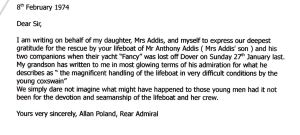
Letter from one the grandparent's of the crew of the Fancy of Falmouth that foundered in Langdon Bay on the night of 27- 8 January 1974

Letter from one the grandparent’s of the crew of the Fancy of Falmouth that foundered in Langdon Bay on the night of 27- 28 January 1974

The last of the three from the yacht, Fancy of Falmouth, cut his shin on a propeller when he was partially swept under the boat. Once aboard the ambulance service was informed and the Faithful Forester returned to the pen where the casualties were taken to hospital. The rescue was recorded but no details were given as the three lifeboat crew had broken the RNLI rules of not gaining permission from the Dover-RNLI secretary and had gone out with two lifeboat crewmembers short. However, the parents of the three young people whose lives they had saved thought differently and wrote to Dover-RNLI in gratitude. Thus, in some respect, vindicating ex-Coxswain Johnny Walker and his three comrades, one of who was the father of Tony Hawkins, who had resigned in 1960 because of the red tape.

In January 1975, the RAF Search and Rescue helicopter was returning to Manston, on the Isle of Thanet, when one of the crewmembers saw what appeared to be a weak light in the Channel. It was windy and the sea was rough but on closer inspection, the light appeared to come from a small boat with a sail. They called out the Dover lifeboat but when the Faithful Forester arrived at the scene the yacht, Golden Sands, appeared to be abandoned and in danger of capsizing. Then one of the lifeboat crew spotted a pair of eyes, Coxswain Liddon called out and slowly 14 men came up from down below. They looked in a very sorry state and were obviously suffering from seasickness. It soon became evident that the yacht’s engine had broken down so the men were taken on board the lifeboat and the boat  towed into Dover. On arrival at the port, the men were taken into police custody and charged with contravention of the Immigration Act.

The Golden Sands was moored in Dover but the owners of the £3,000 yacht were not traced so the lifeboatmen sought appraisement and sale of the vessel. A hearing was held at the Admiralty Court in March 1975, the order was granted and Coxswain Liddon and four members of the crew were awarded £200 salvage. Then, after a few moments thought, the judge increased the award to £300, saying that the owners of the yacht would have received £900. It is unusual for lifeboat crew to claim salvage as the service is primarily to save lives but at the time no one had claimed the boat. Sometime later, six men connected to this case, were arrested for contravention of the Immigration Act.
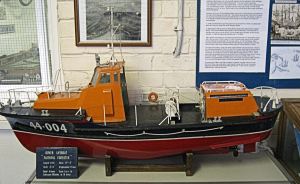
Model of Faithful Forester at Dover Transport Museum

Model of Faithful Forester at Dover Transport Museum

On 1 December 1975, the Faithful Forester went to the assistance of the Cypriot coaster Primrose adrift with steering problems in rough weather. Coxswain Liddon and his crew guided the stricken vessel back to Dover, an operation that took 8 hours. For the rescue, he received the Silver Medal for gallantry and Second Coxswain, Tony Hawkins, the Bronze Medal. Richard Hawkins, John ‘Jack’ Smith and Gordon Davis were awarded the RNLI ‘Thanks on Vellum’. In November 1976, the Faithful Forester was called out by the captain of the Bonnington, to help search for a couple from the yacht Scamperer feared run down by a ship during the night. The captain of the Bonnington was HRH Charles, Prince of Wales. The crew of the Faithful Forester undertook a wide and lengthy search but except for wreckage, nothing was found.
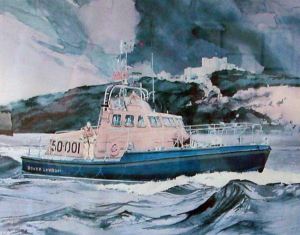
Painting (detail) of the RNLI Lifeboat Rotary Service) presented to HRH Queen Elizabeth the Queen Mother on naming 30.10.1979. RNLI-Dover

Painting (detail) of the RNLI Lifeboat Rotary Service presented to HRH Queen Elizabeth the Queen Mother on naming 30.10.1979. RNLI-Dover

Coxswain Arthur Liddon handed over to Tony Hawkins in 1978 and in 1979 the Faithful Forester left Dover. If my sums are correct, she was involved in the rescue of nearly 300 lives! On 30 October 1979, Queen Elizabeth the Queen Mother, Lord Warden of the Cinque Ports, officially named Dover’s next lifeboat, Rotary Service. Costing £300,000, she was funded by Rotary International of Great Britain together with bequests from M. Redgate, M. Fowkes and D. Craig. Capable of nearly 20knots, Rotary Service was one of only two Thames Class lifeboats. Built of steel she was 50 foot long (15.25 metres) and powered by twin General Motors diesel engines.

In 1981 retired Coxswain Arthur Liddon died, he had been in the RNLI service for 31 years. In August that year, 10 police officers from Dover rowed across that Channel in a whaler to raise money for the Dover Lifeboat. The following June the Rotary Service rescued six men and a boy from the French trawler Armand Eche, that had been under tow. The trawler sank shortly after. Captain Stanley Williams, of the Gateway, a Trinity House Pilot for 44 years, retired as Chairman of the Dover RNLI in 1982, he was succeeded by bank manager Roy Pain who was also the Dover RNLI Treasurer.

At this time, there was a major expansion of the Eastern Docks. The first part of which was completed by 1984 and cost £9.2m. At that time the second part of the scheme had already started that included reclaiming 4 hectares of the Camber, where the lifeboat was moored and costing £5.1million. A new home was found for the lifeboat in the Tug Haven at Western Docks and DHB workshops were converted into a boathouse at a cost of £30,000.
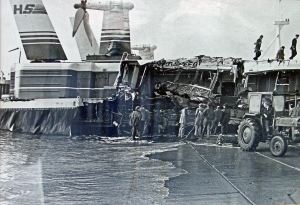
Hovercraft Princess Margaret 30 March 1985 after hitting the Southern Breakwater. Dover RNLI.

Hovercraft Princess Margaret 30 March 1985 after hitting the Southern Breakwater. Dover RNLI.

Shortly after 1600hrs on Saturday 30 March 1985 the Hovercraft, Princess Margaret, with 370 passengers on board – mainly French schoolchildren – was entering by the Western entrance. At the time, there were strong winds and heavy seas and she hit the Southern Breakwater. A number of passengers were thrown into the sea and members of the crew jumped in to rescue them. Both the Rotary Service and the tug Dexterous were prompt on the scene. After rescuing those in the sea the next job was to rescue the passengers still in their seats, none of which had seatbelts, and suspended over the tempestuous sea. The lifeboatmen ran a rope through the Prince of Wales Pier to steady the Hovercraft, and then putting Rotary Service on the damaged side of the Hovercraft, carefully helped the stricken passengers to safety. Altogether, the lifeboat crew worked for eight hours taking off 175 passengers and 8 crew as well as searching for the missing. Four passengers died in the accident.

The Dover Strait was calm during the night of 14 August 1986 when three Romanian seamen on the 8,100-ton Paulus, threw a dinghy into the water. The ship was en route from Turkey to Sweden and all was quiet on board when they dived into the water. However, it took them nearly an hour to locate the dinghy and when they did, the men climbed on board and sent up distress flares. These were seen by a cable laying ship, which alerted the coastguard and the Rotary Service was called out. The three men were suffering from exposure when they were picked up. On arrival in Dover they asked for asylum.
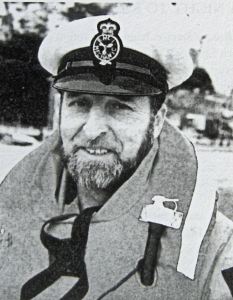
Roy Couzens - Lifeboat Second Coxswain Second Mechanic. Dover RNLI

Roy Couzens – Lifeboat Second Coxswain Second Mechanic. Dover RNLI

Dover Lifeboat service celebrated its 150 anniversary in 1987 with a ball at the Town Hall. This was also the year of the Great Storm that devastated the south coast of England. This happened during the night of 15/16 October when wind speeds of over 100mph were recorded. Shortly after 05.11hrs Rotary Service, with Second Coxswain/Mechanic, Roy Couzens at the helm was about to go out to the help of the 1,600-ton Bahamian registered bulk-carrier Sumnia, in trouble outside the Admiralty Pier. However, it was found that there was rope twisted around the lifeboat’s propeller and divers Cook and Gill, under difficult condition, cleared the problem. The seas were heavy, as a hurricane force 12 on the Beaufort wind scale was blowing, when they eventually headed out to the casualty.

On arrival, Second Coxswain/Mechanic Couzens, manoeuvred the lifeboat to within twenty feet of the distressed vessel and two men wearing lifejackets could be seen on the Sumnia. An enormous wave hit the distressed vessel sweeping the two men off the deck and battling against huge waves, the crew pulled one of the men aboard the lifeboat. They then rescued the second, by which time the Sumnia was breaking up and four men were still unaccounted for. As the lifeboat crew were searching for them in the rough seas, the Rotary Service suddenly dropped from the top of a 60 foot (18.2metres) wave and Roy Couzens was thrown violently. Obviously hurt he carried on. By this time, the lifeboat had been joined by the DHB tug, Deft, and launches, George Hammond II and Verity. The crew of the Deft rescued a third sailor and the lifeboat crew pulled out of the sea a fourth man. Initially he seemed to be dead but artificial respiration was successfully applied and he recovered. The lifeboat then headed back to base with the three rescued men on board.

After leaving the rescued men with their colleagues, the lifeboat headed back out to sea to look for the two missing men. However, as they did Second Coxswain/Mechanic Couzens suddenly felt unwell and Acting Second Coxswain Michael Abbot took the helm. Roy Couzens’s condition deteriorated so Michael Abbot returned the Rotary Service back to base. From there Roy Couzens was taken to hospital where it was diagnosed that he had suffered a heart attack. The remainder of the lifeboat crew returned to duty and the bodies of the master and the first mate of the Sumnia were found.

For outstanding seamanship Roy Couzens, received the RNLI’s Silver Medal. Each of the crew, Michael Abbot, Geoffrey Buckland, Dominic McHugh, Christopher Ryan, Robert Bruce and Eric Tanner received the Bronze Medal. Roy Couzens also received the Maud Smith Award for the most outstanding Act of Lifesaving that year. For their part in the search and rescue operation, the Master and crew of the DHB tug Deft, received a Letter of Thanks, signed by (George) Iain Murray, the 10th Duke of Atholl (1931-1996). The crews of George Hammond II and Verity received letters of thanks from the Director of the RNLI, Lt Commander Brian Miles. Letters of Thanks were also sent to divers Cook and Gill, who had cleared the rope from the lifeboat’s propeller shaft. The Rotary Service crew won the Silk Cut Nautical Award for Rescue that year.
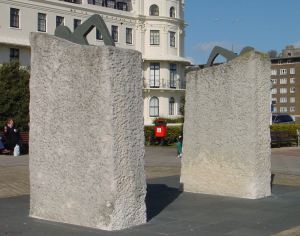
'Crest of the Wave' sculpures by Ray Smith 1995, Dover Seafront. Alan Sencicle 2009

‘Crest of the Wave’ sculpures by Ray Smith 1995, Dover Seafront. Alan Sencicle 2009

Fausta Mareno, age 41, was one of the 89 official attempts to swim the Channel in 1989 when her escort boat, Mary Mayne, noticed that she had suddenly stopped swimming. They hauled Fausta out of the water and called the coastguard who called out the lifeboat. The Rotary Service arrived within 30 minutes and resuscitated Fausta and she regained consciousness. The lifeboat was taking her back to Dover when Fausta loss consciousness again from which she never recovered and was pronounced dead on arrival in Dover. At that time, Fausta was the fourth person to die attempting the crossing since Captain Matthew Webb first made the swim in 1875.
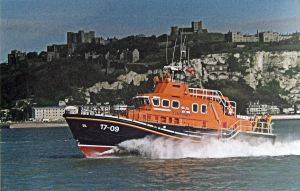
City of London II Lifeboat in Dover harbour. LS 2010

City of London II Lifeboat in Dover harbour. LS 2010

Rotary Service was involved in many outstanding rescues but in March 1997, City of London II replaced her. A Severn class all weather lifeboat the City of London II was funded by the City of London Branch Centenary appeal plus legacies from E. Horsfield and G. Moss and cost £1.5m. The City of London II is 17 metres (55.78 feet) in length and 6 metres (19.69 feet) beam. Her top speed is 25 knots and displacement 44-tonnes. She is fitted with state of the art technology including a fixed camera for filming rescues for training and publicity purposes. She carries a crew of seven, coxswain, mechanic, navigator and four, which includes a doctor.
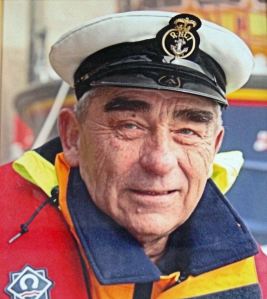
Tony Hawkins MBE Coxswain 1978-1999. RNLI-Dover

Tony Hawkins MBE Coxswain 1978-1999. RNLI-Dover

Her crew, under Coxswains Tony Hawkins (1978 – 1999), David Pascall (1999 – 2003), Duncan Mackay (2003 – 2007), Stuart Richardson (2007- 2010) and Mark Finnis (2011-present) have dealt with a variety of catastrophes with the courage and professionalism of their forebears. Further, 1998 saw Coxswain/Assistant Mechanic Tony Hawkins awarded the MBE in the Queens Birthday Honours list. The following year he retired as a lifeboat man but was still actively involved in Dover’s lifeboat organisation.

During the early hours of 24 August 1999, 17 miles northeast of Margate, the Cruise liner, Norwegian Dream, collided with the container ship, Ever Decent. The 50,764-tonne Bahamian registered Norwegian Dream built in 1992, carrying 2,400 passengers and 600 crew, sustained damage to the bow. On the bow was the debris from some 20 containers off the container ship. Further damage along her starboard side included a smashed lifeboat yet, amazingly, there were few injuries with only approximately 20 persons being treated by the ship’s doctor. The 52,000-tonne cargo ship Ever Decent registered in Taiwan, owned by the Evergreen Marine Corporation and with a crew of 40, was holed. The collision also caused a fire lasting well over 24 hours in some of the containers and produced noxious fumes. Tugs equipped with fire fighting equipment were deployed to control the blaze and the City of London II was called to the scene along with the lifeboats from Ramsgate and Margate. Coxswain Dave Pascall and his crew spent 37 hours ferrying firemen and their equipment to and from the blazing ship. The Norwegian Dream came to Dover where her damage was assessed.

In 2000, the lifeboat moved to a new berth by the Crosswall and a generous legacy from relatives of a deceased local enabled a new £513,000 boathouse to be built nearby. That year, to mark the 40th anniversary of the Dunkirk Evacuation, 40 little ships left Granville Dock for Dunkerque. They were escorted, amongst other vessels, by the City of London II. Ferries and hovercraft kept a respectful distance. In July that year Michael Murphy a 14-year old boy from Birmingham on a school trip to France, was left behind at a French Service Station north of Lyons. However, it was eight hours later, when the school party were aboard the Cross-Channel P&O Ferry Pride of Dover, that it was discovered he was missing. The teachers informed the captain and an air-sea rescue operation, costing approximately £100,000, was launched including the Dover lifeboat. Just over four hours later this was called off when it was reported that Michael had been found by the French police in the early hours of that morning wondering the streets of Lyon!

Since the 1990s, there had been an ever-increasing number of asylum seekers, economic migrants and refugees arriving at the Port of Dover. In August 2002, five men, trying to paddle their way to Britain in an 8-foot boat, were picked up in the Channel by the Dover lifeboat. They were all suffering from hypothermia. That was the fourth time that year the City of London II had under taken such a rescue. Those who made/make the crossing often failed to gain the required permission to stay but before they were sent back, disappear. Others, who made/make the crossing  disappear on arrival. In 2002, on the orders of the then Home Secretary, David Blunkett, immigration officers were going into ethnic minority areas to seek out immigrants to send back. On 20 August that year, one such person threw himself overboard from the ferry and tried to swim back to Dover. He was unconscious when the Dover lifeboat picked him up and died before the City of London II reached port. Picking up would be immigrants in trouble in the Channel is still a regular occurrence for the lifeboat at Dover.

Just after the schools broke up for the summer holidays in July 2002, Britain enjoyed a heat wave with several parts of Kent recording temperatures of 32ºC. Dover beach was packed with sun lovers and many of the children were paddling around the harbour in rubber dinghies – often not wearing a life jacket. On 28 July, Dover lifeboat were called out 12 times to rescue children who had been blown out to sea, luckily all were brought back safely. Later that year Dover lifeboat crew featured in the ITV documentary series, ‘Lifeboats‘, when this problem and other types of rescues were recounted.
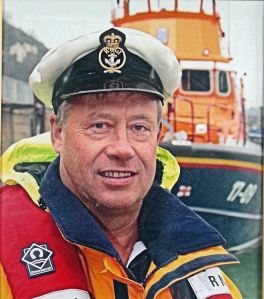
David Pascall Coxswain 1999-2003 who died suddenly in 2008. Dover-RNLI

David Pascall Coxswain 1999-2003 who died suddenly in 2008. Dover-RNLI

In February 2008, former Coxswain (1998-2003), Dave Pascall of Chaucer Crescent, died suddenly. On his retirement as coxswain, he had stayed with the RNLI becoming a training assessor visiting lifeboat stations across the country. That year also saw the death of another Dover RNLI stalwart, Roy Pain. He had devoted many years to the administration side of running the Dover lifeboat, for a long time as treasurer and then as both chairman and treasurer. Although saddened by both deaths in such quick succession, moral stayed buoyant and Dover lifeboat crew was featured on TV’s Channel 5. In 2012, in recognition for their work, many of Dover’s lifeboat crew, all of those who had served for five years or more, received the Queen’s Diamond Jubilee medals.

Except for the station mechanic who is full time, the coxswain and crewmembers are all volunteers. It costs about £450,000 a year to finance the Dover station, which includes depreciation and repairs of the boathouse and the craft – at the time of writing there is talk of a move as Dover Western Docks are to be redeveloped. The Dover Lifeboat team work in conjunction with the Coastguards (Maritime and Coastguard Agency) – their station is on Langdon Cliffs, the Coastguard helicopter based at Lee-on-Solent, French and Belgium helicopters, as well as the RAF’s Air-Sea Rescue.

Finally, folk ask why the maroons are no longer fired – this is due to the advent of paging technology superseding the need and people complaining about the debris created by the maroon casings.


  • Published:
  • Dover Mercury: 21 & 28 October & 25 November 2010


Dover Lifeboat Website: http://www.doverlifeboats.co.uk


Posted in Dover Lifeboat Part II 1929-to the present day, Maritime | Comments Off on Dover Lifeboat Part II 1929 to the present day

Dover Lifeboat Part I from 1837-1929

Cliffs at Dover c1880s by R K Newton. Dover Museum

Cliffs at Dover c1880s by R K Newton. Dover Museum

Before Dover had its first lifeboat in 1837, working vessels such as hovellers or luggers, manned by concerned locals, would go to the assistance of vessels in distress. According to a report presented to the House of Commons, between 1833 and 1835, off Dover, 1,573 vessels were reported stranded or wrecked, 129 missing or lost, while the entire crews of 81 vessels were reported to have drowned. The total number of persons drowned during those 3 years was 1,714.

In response, the Dover Humane Society was set up and commissioned a local shipbuilder, Messr. Elvin, to make a self-righting boat. Manned by volunteers, mainly fishermen, and kept near North’s Battery – close to the present day Granville Gardens – she was 37 foot (11.28 metres) x 7 foot 9 inches (2.36 metres) wide. The boat was launched by a combination of horse, women and manpower. At sea, sails were used whenever possible but more often than not, she was rowed by 12 oarsmen. Her coxswain was John Town and she was in service for 16 years from 1837 to 1853.

The next lifeboat to come on station was built by T C Clarkson in London and arrived in 1853. She was a 28 foot (8.54 metres) x 6 foot (1.82 metres) self-righter, manned by six oars and had undergone trials on the Thames, at Woolwich, where the Dover Humane Society had seen her and were impressed. Coxswain Richard White was appointed in charge of the station in 1847 but in April 1855, the Dover Humane Society invited the Royal National Lifeboat Institution (RNLI), to take over its running.

Hauling Out the Lifeboat, Marine Parade. Courtesy of Dover RNLI.

Hauling Out the Lifeboat, Marine Parade. Courtesy of Dover RNLI.

Founded in 1824 by Colonel Sir William Hillary, the RNLI ruling was that all lifeboats should have the strength to withstand heavy seas and rough handling, power to free herself rapidly from water taken inboard and buoyancy to keep afloat even when flooded. Called the Peake design, the Dover lifeboat was adapted to meet these specifications.

The Dover Humane Society boat was withdrawn in 1857, sold, and the RNLI provided Dover’s next lifeboat. She was a 28 foot (8.54 metres) x 6 foot (1.82 metres) self-righter built by Forrestt of Limehouse Basin, London who specialised in building boats for the RNLI. Pulled by six oars she was in service for 6 years until 1864, though it appears she was only used once. Indeed, in December 1862 the lifeboat from Ramsgate came to the rescue of four seamen in trouble off Dover because the Dover lifeboat was not available.

The RNLI replaced the lifeboat in 1864 with Dover’s first named boat, the Royal Wiltshire. She was paid for out of a collection organised by a Captain Reed in Wiltshire. The Royal Wiltshire was 32 foot (9.75metres) x 7 foot 5 inch (2.26 metres), a ten oared self-righter built by Forrestt. During her 14 years, she made 22 rescues with Coxswain White in command until 1870. By this time the lifeboat men would be wearing the tradional garb associated with them, clad in oilskins, sou’-westers and life belts within which the cork gave buoyancy.

Clock Tower and Lifeboat Station 1880s. Dover Library

Clock Tower and Lifeboat Station 1880s. Dover Library

At the west end of the Esplanade on the Sea Front, in 1866, a purpose built lifeboat house was erected at a cost £244. The Clock Tower was built nearby and the clocks installed in 1877. Before completion of the latter, a rocket launcher was placed on the roof from where two red rockets or maroons, as they are called, were released to summon the lifeboat crew when they were needed. At that time a ship at sea tended to only fire distress flares if it was in danger of sinking. In the case of a man overboard there was a definite procedure that all seamen on sailing ships were expected to follow.

Code Flag N - with general interpretation - but also used in the olden days to indicate that the beleagured person was to the left of the ships boat sent out to rescue them.

Code Flag N – with general interpretation – but also used in the olden days to indicate that the beleagured person was to the left of the ships boat sent out to rescue them.

Initially, the helm was put down and the hands would shorten sail. If the beleaguered person(s) could be seen, a life buoy would be thrown to them and hauled in. The ship’s boat would be launched to look for the beleaguered mariner(s) who could not be seen and a sailor would be assigned to climb the mizzen rigging. His job was to look out for and once spotted keep watch on the beleaguered person(s) so that he could instruct the boat crew where to go. This he would do using signal flags – M for starboard (right) and N for port (left) – and would dip the appropriate flag.

If a lifebuoy was thrown to the beleaguered person, in those days they were designed for the person to stand  on the lowest step that would keep the head above the water and to hold on to handles on each side. However, the temptation was to stand on a step high enough to be able to wave at the rescuers and that often cause the buoy to capsize with subsequent loss of life.

Captain Paul Boyton floating in his rubber suit with the media vessel behind May 1875. LS

Captain Paul Boyton floating in his rubber suit with the media vessel behind May 1875. LS

After twenty-three years, Coxswain White of Dover lifeboat retired in 1870 and James Woodgate took the helm. In May 1875, the Royal Wiltshire was part of the flotilla that accompanied Captain Paul Boyton’s (1848-1924), second and successful, attempt to swim the Channel in his special life-saving dress. Boyton was involved in the US Life Saving Service and had crossed from Boulogne to Fan Bay, east of Dover, taking 23½ hours wearing his  novel airtight suit and using a paddle. The suit was made of vulcanised rubber and consisted of a jacket with a hood and attached pantaloons within which were air pockets and pipes that enabled Boyton to inflate the suit rapidly. The suit was a forerunner of the divers’ wet suit.

However, in March 1876, Coxswain Woodgate and the Dover lifeboat crew were in trouble. On 17 February, the steamer Strathclyde was run down by the Hamburg liner Franconia with the loss of 38 lives. The Strathclyde was about two miles east of the Admiralty Pier and on board were 25 passengers and 47 crew. The Franconia struck the Strathclyde between the funnel and the main mast cutting through her decks to a depth of four feet. The Franconia went astern to release herself but was drawn back and hit the Strathclyde again causing further damage. The Franconia managed to get free but the Strathclyde sank stern first, taking five to ten minutes. The captain of Franconia did not attempt to launch a rescue bid. The Early Morn a Deal lugger was not far away and it was her crew that rescued the survivors.

James Woodgate Dover Lifeboat Coxswain 1870-1894. He and his crew were completely exonerated of that allegation of procrastination when going to Strathclyde in 1876. Dover RNLI. AS 2010

James Woodgate Dover Lifeboat Coxswain 1870-1894. He and his crew were completely exonerated of that allegation of procrastination when going to Strathclyde in 1876. Dover RNLI. AS 2010

At the inquest, it was said that although she eventually arrived the Dover lifeboat had deliberately delayed going to the rescue. This was because the RNLI paid a reward to the crews for every call answered whether the rescue was successful or not. This allegation led to an inquiry but evidence showed that the Royal Wiltshire was launched as quickly as possible after the first alarm was given. That a tug had towed the boat as fast as possible and had reached the Strathclyde in reasonable time taking into account the state of the tide, sea and weather. Coxswain Woodgate and his crew were completely exonerated of the allegations levied upon them. However, at the Old Bailey, the captain of the Franconia was found guilty of manslaughter but this was quashed on appeal. The owners of the Strathclyde subsequently brought action in the Admiralty Court against the Franconia and were awarded £45,000.

In April 1876, the Royal Wiltshire’s crew assisted the fishing boat Edith of Lowestoft and her crew of ten men. She had run aground on the Mole Rock, just outside the entrance to Dover harbour, at that time, during an easterly gale and heavy seas. For this, the Dover lifeboat crew was commended but little media attention was paid to their act of bravery. This was typical at that time. If lifeboat crews were found at fault they were savaged by the local and national newspapers, as had happened in the case of the Dover lifeboat crew and the Strathclyde. When crews put their lives at risk to save others, the media were not interested. To try and counter this, the RNLI introduced a series of awards for meritorious service and badgered the national newspapers to publish their presentation.

The 35 foot (10.67 metres) x 9 foot (2.74 metres) self-righter Henry William Pickersgill, named after the lifeboat’s patron and built by Woolfe and Sons of Shadwell, London, came into service in 1878. Her first reported rescue took place on 9 December 1881 in a south-westerly gale, when the Jersey barque Chin Chin ran aground near the South Foreland – the easterly tip of south east Kent. The lifeboat crew were a man short and Major Henry Scott, the then chairman of the Dover RNLI, volunteered as an oarsman. The Henry William Pickersgill was launched and headed through the exceptionally heavy seas and when she arrived at the scene, there was wreckage all around the Chin Chin. The lifeboat crew managed to manoeuvre alongside and rescued five men. For the rescue, Major Scott was awarded the RNLI Silver Medal, the first of many such awards to the Dover lifeboat crew.

Life boat crew circa 1898. Dover RNLI.

Life boat crew circa 1898. Dover RNLI.

After ten years and making five rescues, the Henry William Pickersgill was replaced in 1888. The new lifeboat was the Lewis Morice, ON197, 37 foot (11.28 metres) x 8 foot (2.4 metres) pulled twelve oars and cost £556. Autumnal gales in 1891 were particularly fierce but when the Government dredger No18, being towed by the tug Seahorse, left Sheerness for Portsmouth, it augured well that they would make the journey successfully. Unfortunately, as they rounded the South Foreland they ran into a southwesterly squall and the hawser parted. The dredger was under the charge of gunner George Barrett and the tug was unable to get near.

In answer to the distress flares released by Gunner Barrett, the Lewis Morice, towed by the Dover Harbour Board (DHB) tug Lady Vita, put to sea. Between them they managed to get the crew safely off the dredger, which sank shortly afterwards. Because of the wind, both the lifeboat and tug made for Ramsgate rather than Dover, where they landed the crew. James Woodgate was awarded a bar to an earlier awarded silver medal for this rescue.

Beaufort Wind Scale used to describe Wind Speed and Sea Conditions

Beaufort Wind Scale used to describe Wind Speed and Sea Conditions

The Benvenue, 2,300 tons and laden with general cargo left London bound for Sydney, Australia. The date was 11 November 1891 and not only was it cold but as they reached the open sea a force 9 on the Beaufort scale was blowing. This meant that it was a strong gale and it drove the ship down the Channel. At 07.30hrs, she came to rest on a sandbank off Sandgate, Folkestone and started to break up. Her crew of 20 clambered as high as they could and Sandgate lifeboat went to the rescue. Using rockets, they eventually managed to get a line on board but this broke when it was hauled in.

Members of the Folkestone garrison then used field-guns to try to send a line but the line broke on discharge. By this time the wind speed had increased to storm force 10 and the Sandgate lifeboat, standing by, capsized but her crew managed to get ashore. By this time the Benvenue crew were numb with cold, exhausted and at least one was seen dropping into the sea. He tried to swim but disappeared under the waves. The Hythe lifeboat went to the disaster area but the wind had increased to violent storm 11 and she was swamped and lost. One of the crew did not manage to get ashore.

ewis Morice Lifeboat by Ella King 1895. Dover RNLI. AS 2010

Lewis Morice Lifeboat by Ella King 1895. Dover RNLI.          AS 2010

A telegram was sent to Dover asking for help and the Lewis Morice, with Coxswain Woodgate and his crew on board set out under tow by the Lady Vita. Hurricane force 12 was recorded when they reached the end of the Admiralty Pier and turned west towards Sandgate. For four hours the lifeboat and the Lady Vita battled against the wind and tide but made little headway so returned to harbour. Once ashore four men from the Lewis Morice had to be carried off. With replacement and additional crew, the Lewis Morice tried again to leave for the scene of the disaster, this time towed by the DHB steam tug Granville with the Lady Vita behind. They eventually arrived at the disaster site at about 19.00hrs and rescued the remaining crew of the Benvenue, taking them to Folkestone. It was later confirmed that the captain and four men of the Benvenue, drowned that day.

Although the Dover lifeboat men showed great courage and the RNLI endorsed this, the popular reaction was negative, saying that the Dover lifeboat crew lacked courage and had deliberately delayed leaving the port. Angry, Dover’s Mayor, William Crundall, wrote to the Times giving a graphic account of the danger the Dover lifeboat men had put themselves in and finished by saying, “I write that my brave fellow-townsmen may have credit due to them, and the public may have the pleasure of feeling that, in this awful conjuncture, the crew of the Benvenue were … saved.” (Times: 14.11.1891)

 Lifeboat Parade on Dover Seafront 1901. Dover Library

Lifeboat Parade on Dover Seafront 1901. Dover Library

The effect was phenomenal such that three days later, Mayor Crundall wrote again to the Times saying, ‘I have received from different parts of the country several sums in recognition of the heroic conduct of the crew … I intend therefore to open a special fund for the benefit of the Dover Lifeboat crew, and I shall be happy to appropriate any further subscriptions …’ (Times: 17.11.1891)

£195 was collected and at a public meeting held in the Connaught Hall in the then town hall, on 10 December, the crews of the Dover lifeboat and the DHB tugs Lady Vita and Granville were each presented with a sum of money from the fund. At the same time, Coxswain Woodgate was presented with the RNLI diploma and Silver Medal for his general gallant service. On the following day, Captain Woodgate and his crew were involved in another rescue during heavy weather. The Lewis Morice was launched and with the help of the DHB tug Granville, went to the rescue of a French three masted schooner. That night 130 vessels were anchored in the Downs for shelter, including 15 steamers.

On the 30 December 1891, the Lewis Morice was launched at 21.00hrs to go to the help of the barque Warwickshire, an iron vessel of 692-tons and registered in Liverpool. She had left London with a general cargo and 15 hands to go to Mauritius but during a gale ran ashore at West Bay, Dungeness. There the Winchelsea lifeboat attended her. With the captain, crew plus men on board from Dungeness to work the pumps, the ship was re-floated and was being towed by a DHB and a Rye tug to Dover when another squall blew up. The towing ropes broke and the Warwickshire drifted to the South Foreland, where she was lying at anchor. Although the seas were very rough, the crew of the Lewis Morice successfully rescued all but one of the beleaguered Dungeness men. His name was Swanson and had fallen into the sea as he was jumped from the stricken vessel to the lifeboat. It was for this rescue for which Coxswain Woodgate received the RNLI Silver Bar.

Former Lifeboat Station built in 1893 with the Clock Tower behind. Dover Harbour Board

Former Lifeboat Station built in 1893 with the Clock Tower behind. Dover Harbour Board

The building of a Harbour of Refuge/Commercial Harbour at Dover was started in 1893 and the Prince of Wales Pier was to be the eastern pier. To make room for the root of the new Pier, the Clock Tower was moved and the adjacent lifeboat house was demolished. It was replaced with a new lifeboat house that still stands today although with a different use. The following year, in 1894, after twenty-four years service, Coxswain Woodgate retired and was replaced by James Driscoll.

On the 25 September 1896, it was said the barometer fell by one inch and one tenth (37 mbar) in six hours. During the resultant storm, the lifeboat was launched and towed by a DHB tug to two vessels both in trouble off Folkestone. The crew rescued the men off both ships and brought them back to Dover. Within minutes, they were called out again to go to a vessel in trouble and again made successful rescues.

The following year, 1897, the RNLI was subject to a Parliamentary Inquiry when the Institute wanted to replace the rowing/sailing boats with steam powered ones. Evidence, from worthy stalwarts and salts, stated, on the one hand, that the lifeboats and crews were adequate for purpose and that steam vessels were not required. Others said that lifeboat crews tended to be incompetent and more interested in salvaging property than rescuing lives. One of those who gave such evidence was a Dover pilot of 38 years service. He added to his testimony that in the whole of his experience, the Dover lifeboat had only ever been launched three times to undertake rescues so could not see the sense of a steam boat!

Possibly because of what had been said at the Inquiry, lifeboats with oars stayed on station at Dover and the DHB tugs only occasionally towed them to rescues. In March 1898, a Dutch schooner, the Sorden, and a Ramsgate fishing vessel were in trouble during a gale and the Lewis Morice put off from the beach. Helped by men and women on the Promenade Pier pulling a guy rope she reached the pier head. From there the lifeboat crew rowed her to the casualties but was unable to reach either vessel due to the force of the waves. Eventually, a DHB tug managed to get a rope on board the fishing vessel and towed her into port. The lifeboat stayed by the schooner until the tug returned and towed her into port. The tug, the Cambria, then came back for lifeboat and towed her into port, against, it was said, instructions to the contrary.

William Henry Cole, Dover Lifeboat Coxswain 1901-2 & 1906-9. Dover RNLI.

William Henry Cole, Dover Lifeboat Coxswain 1901-2 & 1906-9. Dover RNLI.

Gales and heavy seas in January 1899 threatened to swamp the collier brig James Simpson off Dover and a French chasse-marce 71, belonging to Calais. The Lewis Morice was launched along with two DHB tugs and both vessels were brought safely into Dover.  In 1895 the start was made on the proposed Harbour of Refuge to an upgrade that resulted in the Admiralty Harbour that we see today. January 1900 saw the Lewis Morice going to the help of the Admiralty Works lightship involved in the construction of the new harbour. The lightship had been hit during heavy weather by a transatlantic liner of 6,000 tons belonging to Torreys and Field. The lightship stayed afloat and the crew remained on board to undertake repairs but the lifeboat stayed on hand for 12 hours in case help was needed. The following year, 1901, the Lewis Morice was taken out of service. During her career, she was launched 17 times saving 31 lives. That year, James Driscoll retired as coxswain and William Cole took over.

William Cole was only in charge for a year when Herbert Pilcher took command until 1906. During 1901, the Mary Hamer Hoyle, ON461, replaced the Lewis Morice. She was a gift of former MP, owner of cotton mills and philanthropist, Isaac Hoyle (1828-1911) to the RNLI in memory of his second wife. Self-righting, she was the same length as the Lewis Morice and propelled by 12 oarsmen. Not long after the Mary Hamer Hoyle arrived she was out on a rescue mission. A fierce gale was blowing from the south-south-west on the 12 November 1901 and the steamer, the Stelvie of South Shields, was wrecked in Dover bay. In her death throes, she crashed into the Jasper, a large Admiralty work tug. The Jasper broke loose with men on board and headed towards the South Foreland where she came to rest. The DHB tug Granville, towed the Dover lifeboat out to rescue the crew of the Jasper but the lifeboat was unable to get close enough to take the men off.

Mary Hamer Hoyle Lifeboat 1901-1914. Promanade Pier in background. Dover Museum

Mary Hamer Hoyle Lifeboat 1901-1914. Promenade Pier in background. Dover Museum

The coastguards scaled 300-feet down the cliff and offered to take the men that way using a breeches buoy, but they refused to leave the boat. If the men had not refused, the coastguards would have fired a communication line over the Jasper and then secured a larger line to the communication line with a breeches buoy attached. The buoy is so called as it has legs in which the rescued person puts theirs so that the buoy does not capsize. However, the crew of the Jasper had refused but when the tide receded they climbed on board the lifeboat and were brought to Dover.

As the lifeboat returned to Dover and entered  the Bay the wind shifted to due south and the lifeboat crew saw what look like distress flares coming from the end of the Promenade Pier. The seafront was packed with people and at first, they thought that some sort of celebration was going on. They left the rescued Jasper crew in the care of the Seaman’s Mission and went to investigate. Quickly, it was realised, a large steamer had hit the Pier and was in trouble. Soldiers from the barracks were in control of the situation and signalled for the lifeboat to manoeuvre to the lee of the vessel. Once there, several of the Dover lifeboat crew went on board to render assistance. Lines, fired by the soldiers, secured the vessel to two Dover tugs and the crew, except for the captain, climbed into the lifeboat and they too were taken to the Seaman’s Mission.

Rough Sea at Dover 01.10.1905. Dover Museum

Rough Sea at Dover 01.10.1905. Dover Museum

The London 2,900-ton steamer Brator hit another lightship marking the Admiralty Pier works in the early hours of 10 May 1902. The captain and three of the lightship’s crew were seriously hurt and were taken off by the lifeboat to the Seaman’s Mission, where they received attention. Throughout the building of the Admiralty harbour there were problems with vessels hitting lightships although the first one to get into trouble had actually foundered in a gale. On that occasion the crew were rescued by lifeboat. A larger lightship replaced her and she was hit by the Atlantic liner mentioned above. The next one, much larger but she too was hit, as was her successor. The one hit by the Brator was the fifth and on each occasion the Dover lifeboat went to the rescue.

The wind had turned into a gale in the latter part of the afternoon of 10 September 1903. By late evening the staging for the Southern breakwater, then in the process of being built, was carried away. The maroons were fired – a hopper barge was adrift with two men on board. Coxswain Pilcher with the help of Police Inspector Thomas Nash, several constables and others including William Smith Clark, the master of Qui Vive, went to help. The lifeboat was in the new boathouse adjacent to the Clock Tower and when called upon the lifeboat was wheeled to the beach from where it was launched. The boat was being taken towards the sea when the Harbour Master, Captain John Irons, suggested that it would be safer to launch it by using a crane on the North quay. They turned the boat round but the wind caught it and it was driven onto a fence trapping Inspector Nash and Captain Clark. One of the wheels of the lifeboat carriage hit Inspector Nash and as he fell, the toe of his hard-capped boots penetrated his heart. The Inspector was killed instantly. Captain Clark lost a finger and the rest of his hand was badly crushed. After the tragedy it was decided to keep the lifeboat afloat at all times.

Preussen 1910. Dover Museum

Preussen 1910. Dover Museum

William Cole returned as Coxswain in 1906 and in 1909 was succeeded by Thomas Brockman. Under the command of Coxswain Brockman, the Mary Hamer Hoyle was launched on 6 November 1910 at 17.30hrs to help in the rescue the crew of the five masted steel-hulled sailing ship Preussen. During a gale, she had been involved in a collision off Beachy Head with the Brighton Railway Company’s mail steamer Brighton bound from Newhaven to Dieppe. The 5,081-ton Preussen, built at Geestemunde and owned by F Laeisz of Hamburg, had been bound for West Africa with a general cargo, a crew of 48 and two passengers. The Preussen had the distinction of being the largest sailing ship in the world at that time.

Following the collision the Preussen‘s master decided to ride out the gale at anchor but she broke away and was taken in tow by three tugs. While the Preussen was under tow, going up Channel, the cable parted and she went aground off Fan Bay, east of Dover harbour. The maroons were fired and the Mary Hamer Hoyle went to the beleaguered ship’s assistance towed by the tug Lady Vita. The Preussen was on the foreshore and the southwesterly wind was gale force 9.

With exceptional seamanship, the Mary Hamer Hoyle crew managed to get close to the stricken vessel but the ships crew refused to leave. Two hours later, they showed the green light, which indicated that all was well and the lifeboat was towed back to Dover. Coxswain Brockman reported that the Preussen lay well under the cliff and her topmasts had gone just before they reached her. He also reported that they had encounted a terrific sea that had ‘lifted and tossed the craft like a cork.’

The coastguards from both East Cliff and St Margarets Bay endeavoured to rescue the crew of the Preussen with the aid of rocket apparatus to throw ropes to the stricken ship in order to use breeches buoys, but to no avail. At 23.00hrs, the crew of the Preussen let off distress rockets and the Mary Hamer Hoyle was again launched. The wind had increased to storm force 10 giving high waves with long over hanging crests and poor visibility. Mary Hamer Hoyle was unable to get close to the Preussen and so stood off and hove to. Several hours past and eventually the Mary Hamer Hoyle did manage to get close, but the crew of the Preussen again refused to leave and at 05.00hrs, the lifeboat was towed back to Dover.

Lifeboat Mary Hamer Hoyle 1901-1914. Launched from the seafront. Dover Museum

Lifeboat Mary Hamer Hoyle 1901-1914. Launched from the seafront. Dover Museum

Before 09.00hrs, the lifeboat had been towed back to the Preussen by which time the Mary Hamer Hoyle arrived for the third time, the crew and passengers of the Preussen could be seen huddled together on the closed deck above the midships deck house. Nearby there were tugs from England, France, Belgium, Holland and Germany in attendance – 12 in all! It had been arranged that at high tide, in the afternoon, an attempt would be made to tow the ship afloat.

At high tide, even though the wind had not abated, the tugs manoeuvred in an attempt to get a hawser on board but none of the tugs could get close enough. By 14.00hrs, they gave up and all steamed back to Dover harbour. The Lady Vita towed the Mary Hamer Hoyle as close as she could to the stricken vessel as Coxswain Brockman wanted to try to row between the Preussen and the cliffs. The sea though was exceedingly heavy and running so they had to give up. Instead they offered to take the crew off using a breeches buoy but the crew refused and the rescue was abandoned. Again the coastguards attempted to use a breeches buoy and fired a communication line over the Preussen, but again those on board refused to leave.

The following day the wind had dropped and the Lady Vita towed a lighter to the wreck. Eventually 18 of the crew and the two passengers were taken off and landed at Dover, where they were taken to the Sailors Home. The remaining 30 crew members stayed on board and helped to salvage the cargo but after two days were forced to leave because the heavy weather had returned. The weather continued to take its toll on the Preussen and by January, she had broken in two. Nonetheless, much of her cargo had been retrieved, not all by the Preussen crew of the official salvage teams. Preussen crockery could be found in many Dover homes for decades after and along with the panels of the captains cabin much eventually found their way into auction houses!

The Dover lifeboat crew received just praise and donations for their action over the Preussen and in December 1911, they made national headlines again. This time they were successful in rescuing 18 of the crew from the stricken Norwegian barque Gudrun that was stranded on the Goodwins. By 1914 and the outbreak of World War I (1914-1918) the Mary Hamer Hoyle had made 39 rescues but as members of the crew left to join the armed services the lifeboat service in Dover ceased operating.

The station closed for the duration of World War I, opening again in 1919 with Coxswain Brockman still in charge. Shortly after John Walker took over and the James Stevens No 3 came on station. A steam-driven, screw propelled boat she was 56 foot 6 inches (17.2 metres) in length and 14 foot 8 inches (4.47 metres) in breadth drawing 3 foot 6 inches (1.07 metres) with twin funnels side by side. The James Stevens No 3 was first launched in 1899 serving at Grimsby, Gorleston and Milford Avon before she came to Dover. Unlike her predecessors in Dover, that had been rowing boats, she could not be brought ashore and so was berthed in the Camber in the Eastern Dockyard.

The station closed again in 1922, the James Stevens No 3 having been launched five times during her three years service. The town’s folk were saddened and a concert was organised in aid of the Dover lifeboat that was to be held in the Connaught Hall. The venue was booked, local musicians and actors had rehearsed and all the tickets sold. The evening came but when folks turned up they found the doors locked. The organisers had not actually booked the hall, instead they had absconded with the ticket money!

The State of the Arts Lifeboat - Sir William Hillary built 1930. Alan Sencicle Collection

The State of the Arts Lifeboat – Sir William Hillary built 1930. Alan Sencicle Collection

A lifeboat came into service in January 1929 with Coxswain Adams in charge, moored in the Camber and was probably the William Myatt. She was reported as going to the help of the cross Channel ferry, the Ville de Liege on 11 February 1929. The month before the RNLI had announced that they had ordered a new type of lifeboat from Thornycroft at Platt’s Eyot, Hampton-on-Thames. This boat was designed to assist aeroplanes that had been forced down in the Channel and also cross Channel steamer traffic; therefore, with a speed of 17-18 knots, she would be faster than the ordinary types of lifeboats. By the end of the year the new lifeboat, the Sir William Hillary, was on station. Her career and the story of Dover lifeboat up to the present day can be read in Lifeboat Part II.

  • Published Dover Mercury:
  • 29 September, 7 October & 14 October 2010


Posted in Dover Lifeboat Part I from 1837-1929, Maritime | Comments Off on Dover Lifeboat Part I from 1837-1929

Farthingloe – The Historic Valley of Legends and Outstanding Natural Beauty

Farthingloe, Maxton & Elms Vale - Bartlett's street map pf Dover c 1960s.

Farthingloe, Maxton & Elms Vale – Bartlett’s street map pf Dover c 1960s.

In September 2016 the Campaign to Protect Rural England (Kent) won an Appeal against Dover District Council to save the beautiful, historic, Farthingloe valley from development. Below is the story.

Farthingloe is a dry, long valley with a gently sloping valley bottom on the west side of Dover. It runs parallel to the cliffs beyond which is the Channel and until the building of the A20 over the cliffs, Round Down Cliff was part of Farthingloe. Much of the valley is classed as an Area of Outstanding Natural Beauty (AONB) and in Roman times, there was a settlement that centred on what became Farthingloe Manor (now Great Farthingloe farm). Numerous types of Roman pottery and tiles have been found along with a Roman cemetery comprising cremation burials.

Following the arrival of the Saxons, Farthingloe was given the name Venson Dane and Wellclose, names retained by the Normans and referred to as such in the Domesday book of 1086. The name Farthingloe was first mentioned in connection with Matilda de ffarthinglo who held the manor in 1385, in the Dover Corporation deed of that year, it is spelt Ffarnyglo. According to legend, Lady de ffarthinglo lived in the valley during the 5-6th century when King Arthur defended Britain against the Saxon invaders.

Farthingloe Valley looking west. AS 2014

Farthingloe Valley looking west. AS 2014

The Lady of Farthingloe was reputed to have been a great beauty and one day, so the story goes, Sir Gawain was returning to Camelot from the Continent by way of Dover. He saw the beautiful Lady of Farthingloe, instantly fell in love and promised to come back and marry her – his numerous amorous affairs and declarations of love were well known. She, however, believed him but it was not for another seven years that he returned and during that time she had probably contracted smallpox. By the time Sir Gawain did return, the once beautiful Lady of Farthingloe was ‘cruelly pitted’. Albeit, when Sir Gawain saw her he declared that he still loved her, they married and lived in quiet seclusion in the Farthingloe valley.

Time passed and things started to go wrong in Camelot. Lady Guinevere, Arthur’s wife, had fallen in love with Sir Lancelot and Sir Mordred, another knight of the Round Table, told Arthur. The distraught King laid a trap for the ill-fated couple and Guinevere was sentenced to the stake. At the last minute, Sir Lancelot saved the beleaguered queen but this led to civil war. Sir Gawain, always faithful to the King, gave chase to Sir Lancelot who had escaped to France. Arthur joined him, leaving the kingdom in the hands of Sir Mordred who immediately crowned himself king and planned to marry Guinevere. She, however, had fled to a convent. Arthur and Sir Gawain returned to England and met Sir Mordred at Barham Downs, between Dover and Canterbury, where a bloody battle ensued.

There, Sir Gawain was killed and the Lady of Farthingloe went to search for his body but only found his head. This she took to the Canons at St Martin-le-Grand in Dover. Peace negotiations followed and Arthur gave Kent to Sir Mordred and after his death, the rest of the kingdom. Sir Mordred, however, was not satisfied. Sir Gawain, the legend tell us, appeared to the Lady of Farthingloe and she ‘set forth for Camelot to warn the King of Sir Mordred’s impending treachery.’ There, because she was so disfigured no one would believe that she was Sir Gawain’s wife and her entry was barred. Sir Mordred did see King Arthur, challenged him  and both were killed.

Haunted Dover by Lorraine Sencicle published by History Press

Haunted Dover by Lorraine Sencicle published by History Press

On hearing this, the distraught Lady of Farthingloe joined Guinevere in the same convent. She also gave the Manor of Farthingloe to the Canons of St Martin’s, where later the Prior‘s manor house was built. As for Sir Gawain‘s head, in William Caxton’s (c.1415- c.1492) preface to Sir Thomas Malory’s (d.1471) Le Morte d’Arthur, he wrote, ‘… in the Castle of Dover ye may see Gawain’s skull.’ It was believed that the skull was kept in St Mary de Castro Church at the Castle for several centuries. This and other legends/ghost stories of Dover can be read in Haunted Dover – History Press 2009.

Farthingloe Manor was held by the Canons of St Martin-le-Grand during the Saxon period and the Prior’s residence was built there. Farthingloe, along with the remainder of the Canons’ possessions was transferred to Dover Priory following their demise in 1139. They held Farthingloe until the Dissolution of Monasteries that began in 1536. The Manor House, the valley and the cliff were, at that time given to the Archbishop of Canterbury and administered by the Ecclesiastical Commissioners until the twentieth century.

Farthingloe Manor and the lands were rented for farming in the early 17th century. It would appear that the Manor was the centre of Mastiff breeding at that time. Mastiffs are a large molosser breed of dogs known for their size and strength and in early 1625, Edward Dering (1598-1644) purchased one from Farthingloe. In June that year he bought two more to give to the Lord Warden of the Cinque Ports (1625-1628), George Villiers, 1st Duke of Buckingham (1592-1628) and a favourite of James I (1603-1625). The following year, on 25 October, another Farthingloe mastiff was sent by Dering to the Duke who was then in France.

Round Down Cliff showing the Coining House cave. Alan Sencicle

Round Down/Abbots Cliff showing the Coining House cave. Alan Sencicle

Long before Edward Dering’s time, the mists over Round Down Cliff lent it both smuggling and another legend. When Kent historian, Edward Hasted (1732-1812) was writing, circa 1790, he noted that in the middle of Round Down cliff, ‘are two large square rooms cut out of chalk, one within the other, they are called the Coining House, and have a very difficult way to come at them, the cliff here being upwards of four hundred feet high.‘  called the Coining House caves, they were used to store smuggled goods and long before Hasted’s time were said to be haunted by a ghostly voice calling out the name ‘Susanne’. This, along with the precarious descent to the caves, served to keep anyone from prying.

English high quality wool had been sort after by Continental weavers for centuries and therefore export taxes were imposed. It was these that led to smuggling and by the 17th century customs officers used professional informers to help bring about prosecutions. The informers earned their living from the rewards paid on conviction. The story of Susanne goes back to the middle of that century, when one such informer was William Carter, a Kent clothier who between 1667 and 1689 was the foremost in the profession. He specialised in catching smugglers of un-manufactured wool and his eldest son, Richard, was equal to his father in proficiency.

In 1669, Richard came to Dover to investigate suspected smugglers operating between Dover and Hythe. While in the town, he was seduced and subsequently fell in love with a girl from Hougham, of which Farthingloe is a hamlet. Her name was Susanne. One misty day he went to meet Susanne and while walking along the top of Round Down Cliff he stumbled over an iron bar that had been hammered into the cliff. Attached to the bar was a rope, which he recognised as belonging to the samphire gathers that precariously collected the plant that grows there on the cliff face.

At that moment, the mist cleared and Richard saw that the rope, instead of going all the way down the cliff face as it would for the samphire gathers, stopped after about 30 feet. From there was a path that appeared to zigzag its way down the cliff face. Richard went down to investigate and found the Coining House and inside were a large number of sacks containing un-manufactured wool. The full story and what happened next can be read in the book Haunted Dover. Suffice to say that it is Richard’s ghost that haunts the cave. Not long after these events two Coastguard stations were built overlooking both Round Down Cliff face and Farthingloe Valley. Both stations had cottages for the coastguards.

World War II battery on the site of one of the Napoleonic gun emplacements . Round Down Cliff. AS 2014

World War II battery on the site of one of the Napoleonic gun emplacements . Round Down Cliff. AS 2014

By the end of the 18th century, a thatched chapel had been built in the valley when the lessee of Farthingloe Manor was a Nathaniel Walker. Although his widow held the lease at the time of the Napoleonic Wars (1792-1815), John Marsh occupied the Manor. During the Wars the number of buildings increased around the Manor and fortifications were built at Western Heights and along Round Down Cliff. Indeed, the latter was crowned with 27 guns! It was also a popular venue for the folks of Dover, such as diarist Thomas Pattenden, to watch the hostilities that took place at sea.

The Folkestone road, through Farthingloe, had opened in 1783 following the demise of the Old Folkestone Road as a toll road. As the Pier District of Dover developed in the 17th century, Snargate Street and Limekiln Street came into existence. From there the road to Folkestone was by way of Haycliffe, Round Down Cliff, Abbots Cliff, Capel and Folkestone. Turnpiked in 1763, gradually the name Haycliffe was changed to Aycliffe but due to cliff falls, the road was proving dangerous and costly to maintain. By Act of Parliament, the turnpike proceeds were used to lay a new Folkestone Road through the Farthingloe Valley and a tollhouse was built on the corner of the present Elms Vale Road. The road remained a turnpike until 1877.

Great Farthingloe Farm. AS 2014

Great Farthingloe Farm. AS 2014

During the Napoleonic Wars, the Georgian style Great Farthingloe farmhouse had been built and it would seem that the name change was due to Little Farthingloe farm, on the north side of the Folkestone Road, coming into existence. Features from the old manor house were incorporated into the Great Farthingloe farmhouse and it is now Listed as a Grade II building. The Marsh family continued to live there but by the early 1820’s there were other farms in the valley. These farmers included Thomas and Robert Elve, William Carey and Edmund Greaves.

On 21 June 1836, the South Eastern Railway Company applied to Parliament to build a railway line from London to Dover and was soon after given Royal Assent. It was planned that from Folkestone, the railway line would run through the cliffs or along the beach to Dover. On 14 November 1837, Round Down Cliff and the beach below were transferred by Deed, from the Archbishopric of Canterbury to the Railway Company.

Round Down Cliff showing exposed cliff following the 1843 blast. Below is the Channel Tunnel ventilation facility. AS 2014

Round Down Cliff showing exposed cliff following the 1843 blast. Below is the Channel Tunnel ventilation facility. AS 2014

By June 1842, the line from London had reached Folkestone. Although tunnels could be cut through the cliffs to Dover, Round Down Cliff, rising to a height of 375-feet above sea level, was considered too unstable to be tunnelled. On Thursday 26 January 1843 the Cliff was blasted out of the way bringing down an estimated 400,000 cubic yards of chalk on which the railway line runs today. Of note, the Coining House Cave was to the side of the blast so can still be seen.

Great Farthingloe Manor Farm was put to auction on 17 December 1846 at the Shakespeare Hotel, Dover, on behalf of the leaseholder, Richard Marsh. The auctioneer was a Mr Harrisson and the solicitor responsible was Edward Knocker of Dover. The estate included the 500 acres lands called Fants or Hants and comprised of arable pastureland with a substantial farmhouse, 3 cottages, gardens, barns, stables and other buildings. The Church Commissioners administered the estate by a renewable lease that in 1846 still had 22 years to run. In March, the following year John and Benjamin Taylor of Langdon Court bought the lease for £6,640.

Modern day Plough Inn, Folkestone Road, Farthingloe. AS 2014

Modern day Plough Inn, Folkestone Road, Farthingloe. AS 2014

At this time, or shortly after, the Plough Inn was built on the corner of the Folkestone Road and the track leading to Church Hougham. Richard Constable and his wife Mary ran the pub and Richard also farmed 23 acres. Like a number of Dover pubs, inquests were held there and probably the body, or bodies, were kept in the cellar for the inquest. At the end of January 1848, the inquest on the deaths of Thomas Chatwin, age 34, and Richard Betts, age 17, both seamen, was held at the pub. They had drowned below one of the Coastguard stations when their boat had capsized. The coroner was Thomas Delasaux and Daniel Tapley was the jury foreman. The only witness was mariner Thomas Baker, who had been in the boat with the deceased. A verdict of Accidental Death was returned.

A map dated 1866 showed orchards and a tree-enclosed lawn east of Great Farthingloe farm and to the west a network of farm lanes connecting to Folkestone Road. All the tithes were paid to the Rectory of St Laurence Church, Hougham. At about this time speculative builders had turned their sights on the Folkestone Road. At first building was slow, the 1868 Dover Directory list forty middle and upper class villas along with the Winchelsea Street estate. Soon after, semi-detached villas were built along the road and newly laid streets to the north. The Clarendon estate, behind the south side of the road were then built. Towards the end of the 19th century, housing had reached Maxton. Farthingloe, however, was in the hands of the Church Commissioners and they curtailed any more development.

In 1862, William Adcock of Nottingham came to Farthingloe to undertake work for the Church Commissioners. While in Dover, he met and married tailor’s daughter, Elizabeth Mowle, and settled in the town. Adcock went on to set up what became a highly successful building business, was elected Mayor twice and was noted for both his buildings and for beneficial employment of those out of work in Dover. Sometime prior to 25 May 1870 John Brockwell was the lessee of Great Farthingloe Manor farm but on that day he was declared bankrupt. At the time, besides the farm assets listed in 1846, there was a large pond to the west of the house. The other farmers in the valley included, Christopher Woollage age 56 with 14 acres and Henry Harbourn age 36 with 40 acres.

Farthingloe Coal Boring c1896

Farthingloe Coal Boring c1896

Although life in the valley carried on as normal, deep underground changes were taking place. Towards the end of the nineteenth century, a Channel Tunnel was started at the foot of Shakespeare Cliff. Financed by Edward Watkin, the Chairman of the South Eastern Railway, a 22.55 metre shaft was sunk and a level heading driven for 792.68 metres. A second heading was driven for 1,944 metres under the sea. However, in July 1883, following advice from government, the project was abandoned. Across the Channel, near Calais, coal had been found so not long after the channel tunnel operations were suspended, a borehole was sunk at the bottom of the abandoned shaft. A second borehole was sunk at Great Farthingloe farm and together with a third bore hole, it was confirmed that there was coal of sufficient quantity and quality to be worth mining.

Shakespeare Colliery, owned by Kent Collieries, 24.04.1912 - Times

Shakespeare Colliery, owned by Kent Collieries, 24.04.1912 – Times

Under the supervision of Francis Brady, the Chief Engineer for the Railway Company, drilling was started to a depth of just over 300 metres from the beach. In 1896, Arthur Burr formed the Kent Coal Field Syndicate, bought the mineral rights and the first shaft, named after Francis Brady at the new Shakespeare Colliery, was started that year. The colliery was on the site of the blasted chalk from Round Down Cliff but from the outset, it had troubles and proved unproductive. Nonetheless, the continual demand for coal encouraged other borings to be undertaken in and around the Dover area and 14 coal seams, stretching from Dover almost to Herne Bay, were eventually found. The first bucketful of commercial East Kent coal was raised at Snowdown Colliery, north of Dover, on 19 November 1912. Shakespeare Colliery was closed in 1915.

By 1882 John Brooks was the landlord of the Plough but that year was in trouble with the police for allowing skittles, the British form of nine-pins, to be played on his premises. Under the Gaming Act of 1854 skittles would have been allowed as long as there was no betting. At the Plough the loser(s) paid for the beer that they and the winners drank while the game was in progress – and that was illegal! Brooks had been cautioned twice before by the police, on this occasion he was fined £1 with costs. Albeit, the pub was a popular venue, particularly on fine days when its garden would be full of folk from Dover out for a stroll. In 1901 the Census recorded that John Tapley ran the 200-acre Little Farthingloe farm, on the same side of the road as the Plough, while William, Charles and Arthur Broadley had taken over the lease of Farthingloe Manor farm. On 19 January 1912, they dissolved the partnership.

Sound Mirror, Abbots Cliff, west of Farthingloe and Dover

Sound Mirror, Abbots Cliff, west of Farthingloe and Dover

The Ministry of War took over much of Farthingloe valley and Round Down Cliff during World War I (1914-1918) and erected defensive military structures such as pillboxes. An aerodrome was built at Capel and in 1916, the Admiralty laid a 6-inch stoneware drain from the Aerodrome to the Corporation’s main drainage system at Manor Road, Maxton. It was laid along the main Folkestone Road as far as Little Farthingloe farm where it crossed the fields of Great Farthingloe farm to Manor Road. The farms, at that time, were short of labour due to the men going to the Front but in 1916, the Women’s Land Army was formed and the women eased the problem. During and following the War concrete-slab sound mirrors were built along the cliffs including one at the adjacent Abbot’s Cliff, which can still be seen.

Following the War, Farthingloe was returned to the Church Commissioners but in 1921, the lessee of Little Farthingloe Farm, M Stuart, was declared bankrupt. Dover College founded in 1871, on the site of the old Dover Priory, was granted a Royal Charter in 1922. Part of the Little Farthingloe farmlands, at about this time, were rented by the college for a playing field. On 27 June 1929, the Prince of Wales (later Edward VIII) arrived at Marine Station and was met by the Seaforth Highlanders, of which he was Commander in Chief. From there, the Prince and an entourage of dignitaries wended their way in motor cars and carriages to the Dover College playing fields at Farthingloe.

Farthingloe Valley former Dover College Playing Fields. AS 2014

Farthingloe Valley former Dover College Playing Fields. AS 2014

Lining the route from the Dover College sports ground at Maxton to Farthingloe, were boys from Dover College. At the ground, the dignitaries were met by boys from the Duke of York’s Military School, dressed in their brilliant red uniforms, who showed them to their seats. When this duty was accomplished the Dukies assembled into a band and marched away to their music during which time boys from the College replaced them to look after the dignitaries. The Seaforth Highlanders then undertook the Trooping of the Colour and were inspected by the Prince. The event finished with the salute and the kilted soldiers, against the rugged green background, were apparently quite awesome. In the afternoon, there was a programme of games organised for the Dover College boys.

In 1925, Dover College applied to have an extension of the main drain from the Dover sewerage system at their pavilion in Maxton to the sports fields at Farthingloe. The main drain laid by the Admiralty from Dover to Capel was sealed off at Manor Road in 1923 when the Admiralty surrendered all rights to it and Farthingloe was outside of the town boundary. As Dover College was within the boundary the council agreed but when they looked at the old sewerage pipe, it was found to be in a poor state.  Basic necessary repairs would cost £260, £390 if permanent repairs were undertaken or £640 to lay an entirely new sewer.

At the time, many of the former villas along the Folkestone road, recently classed as A259, were being converted into guesthouses and this was putting added pressure on the sewerage system. To cope with this plus repairing/relaying a sewer to Farthingloe was expected to cost a further £1,070 so the council went for the cheapest option and asked the tenants of the Farthingloe farms to contribute. In 1934, the boundary was redrawn and Farthingloe, up to the Plough inn, became part of Dover and the council ended up having to pay for the most expensive option!

The publican at the Plough Inn was in trouble in September 1925, this time for selling intoxicating liquor out of permitted hours. John Sayer was found to have five men on his premises drinking beer at 22.45hrs. He was fined 10shillings and the drinkers were bound over for a year with one, John Green, being fined 5shillings. Sayer left the pub and the new landlord, Mr. Bowll, a former Cadet Corps Instructor at Dover College, appears to have behaved himself. However, the pub became a target for thieves. In 1931 ,it was taken over by Albert Chapman and became a popular eating-house for motorists. In 1935, he was granted a licence to supply wine with the meals he served. That year Chapman carried out structural  improvements and the pub became even more popular. Albert Chapman died in 1952, having retired three years earlier.

WWII Gun Emplacement Round Down Cliff. AS 2014

WWII Gun Emplacement Round Down Cliff. AS 2014

Following the outbreak of World War II (1939-1945), the number of military personnel in Dover increased significantly and defences were strengthened. Initially, it was hoped that Allied forces on the Continent would deter a German advance west to the Channel ports and therefore attack from the air was seen as a greater risk. Anti-aircraft batteries were built along the cliffs, including Round Down, in groups of four or more and directed from their own command post. Following the German invasion of Norway in April 1940, anti-invasion measures were increased and the arrival of the German forces on the Channel coast followed by the Dunkirk evacuation led to an expected invasion and pillboxes were erected.

Along the coast, barbed wire and guns commanded every likely line of approach and Round Down Cliff was heavily defended. By 1941, the batteries were equipped with radar for target-detection and gun-laying and although most were later destroyed, remnants can still be seen. In the valley, troops trained in the art of mechanised warfare and carried out manoeuvres in readiness for the day when the enemy should come. Air photographs following the Battle of Britain (10 July-21 October 1940) show both Round Down cliff and Farthingloe valley to be heavily and extensively cratered from the bombs and shells. In 1944, the batteries were incorporated as part of trip line batteries along the Kentish coast to counter the VI flying bomb offensive. Locals, however, still lived in the valley and the town was subject to both bombing and shelling until the end of September 1944.

Little Farthingloe farm Women's Land Army Museum. AS 2014

Little Farthingloe farm Women’s Land Army Museum. AS 2014

Before War was declared, the vulnerability of Britain being an island nation would lead to food shortages and women for the Land Army were recruited from June 1939. Administered by the Ministry of Agriculture and Fisheries the figurehead was former Women’s Suffrage movement stalwart, (Gertrude) Trudie the Baroness Denham (1884-1954). Initially, the Army was made up of volunteers but as the war progressed conscription was introduced. Coming from all walks of life, the women had to be single and if they did marry they were obliged to leave.

Women's Land Army at Work. From a British Government leaflet. Doyle Collection

Women’s Land Army at Work. From a British Government leaflet. Doyle Collection

The Women’s duty was to aid the farmer for which they received low pay, worked long and very hard hours. Their duties included tending poultry and animals, digging, sowing, hoeing, weeding, driving farm machinery, threshing and sacking. To give more daylight in the evening double summertime was introduced when clocks were put forward by two hours. The Women’s Land Army was finally disbanded on 21 October 1949 and the only museum in the country dedicated solely to them is at Little Farthingloe Farm. The exhibition consists of personal letters from ex-Women’s Land Army girls, authentic uniforms and information and is well worth a visit.

Following the War, the north side of the valley, including Little Farthingloe farm, was returned to the Church Commissioners. The south side including Great Farthingloe farm remained in the hands of the War Department. Folkestone Road (A259) through Farthingloe was the less used of the two main roads out of Dover to London, the more popular was the A2, via Canterbury. In order to improve the A259 the Ministry of Transport sanctioned modern street lighting along the road as far as the boundary with Folkestone that was, by this time, on the west side of Capel.

However, the inadequacy of both trunk roads became evident in January 1955 during particularly heavy winter snow. The A2 was already blocked so all traffic was using the A259 when a four ton lorry overturned at Farthingloe blocking the only access and egress to Dover town and port. Two years later, in order to alleviate such problems, the road through Farthingloe was widened and an application was made to the council for planning permission to build a petrol station next to the Plough Inn. However, this was refused.

In April 1955, the War Department proposed to erect new gun practice ranges on the Round Down Cliff side of Great Farthingloe farm. There had been ranges along the south side of the valley and cliff top since the beginning of the War. The new ranges, they said, would be for the firing of rocket-propelled weapons and this caused public outrage. Albeit, the council were obliged to accept the proposal but did make stipulations. These included reassurances that live ammunition would not be left on the ranges, a baffle wall to keep down noise and they forbid army vehicles accessing the ranges by the Old Folkestone Road through the Aycliffe housing estate.

The Church Commissioners put Little Farthingloe Farm to auction in 1963 when it was stated that the 174 acre farm, had a good main residence, farm buildings and out buildings. At the time the tenants of Great Farthingloe farm was the Miller family who were great supporters of the Dover carnival and each year would enter a float with a thatched roof. When Peter Miller’s father died, his mother moved to the Gateway and Peter took over the running of the farm. However, on 4 December 1975 he died in tragic circumstances.

His close friend, Barry Sheppard, takes up the story. ‘While Peter’s wife was in hospital after giving birth to their first child, two soldiers from Folkestone who had been out for the night in Dover were walking back to barracks. When they reached Farthingloe, they were very cold and decided to seek refuge. They entered the cellar of the house, in which was stored straw. They lit a fire for warmth but it got out of hand. Peter’s bedroom was above and became filled with smoke. He and his faithful sheepdog died.’ The soldiers were from the 1st Royal Green Jackets, based at Shorncliffe, Folkestone. Rifleman Christopher Radmore age 23, a married man with two children, also died as a result of the fire. Great Farthingloe farmhouse was not badly damaged.

Map showing the National Trust landholdings at Farthingloe. National Trust 2014

Map showing the National Trust landholdings at Farthingloe. National Trust 2014

In 1979, National Trust purchased part of the 67-acre Great Farthingloe farm from the Ministry of Defence for £25,000. This included the top of Round Down Cliff. They also tried to purchase the beach below that was, by this time, owned by  British Railways, Southern Region. Although they were not interested in selling it, as they needed to retain access to the railway lines, an arrangement was made with the National Trust to look after it. Great Farthingloe farm remained a tenancy of the Ministry of Defence.

The following year, 1980, the Saxon Shore Way long-distance footpath opened. Starting at Gravesend, Kent, it follows the Southeast coast as it was in 3rd century AD when the Romans occupied Britain against marauding Saxons. The path is 163 miles (262 km) in length and finishes at Hastings, Sussex. At Farthingloe, the path runs along Round Down Cliff top having come from the Western Heights. Farthingloe, by this time, had become a tourist destination and for years there had been an accommodating caravan park next to the Plough Inn. In 1987, the pub owners, Beefeaters, applied for planning permission to build a 50 two-bed roomed Travel Lodge but this was refused. They applied again, two years later, having modified their plans to 32 bedrooms and permission was given. In 1995, they successfully applied to erect a second block of 32 bedrooms and in 2007, the pub underwent a major refurbishment. In the summer of 1990, a farm trail opened at Little Farthingloe farm that gave visitors and locals the chance to see a working farm.

Prior to building the Channel Tunnel, Eurotunnel had looked for a site for its construction workers camp. They did not get their ideal location at Aycliffe but accepted 36acres east of Great Farthingloe farm. Eurotunnel then made a bid to buy the land but the Ministry of Defence, who still owned it, declined. Dover District Council (DDC), were delighted at the decision over the location of the camp and hoped that the ‘after use’ of the site would be tourist related. The Chamber of Commerce also gave its backing, but made it clear that they saw the ‘after-use’ as an industrial/ business park.

Over the latter there was major opposition, not only from those who lived in the in the Valley but from Dover folk, Kent Trust for Nature Conservation and the Council for the Protection of Rural England (CPRE). The site under consideration was in an Area Of Natural Beauty (AONB) and a Site of Nature Conservation Interest (SNCI) and therefore should be protected. Following discussions, the ‘after use’ of the site was dropped and temporary planning permission was given for a Channel Tunnel workers camp.

Archaeological work was undertaken at the site in advance of the camp being built but nothing of interest was reported. The Tunnel-related work involved the terracing of land up the slope and the construction of an access track to the Channel Tunnel workings at Aycliffe. The workers camp, which formally opened in 1988, contained some 1,600 rooms, in 38-bedroom blocks, cost Eurotunnel £9million and was nicknamed Stalag 15. There was a chapel dedicated to St Patrick in the 18th century thatched barn, spacious bars and a subsidised canteen.

Farthingloe -Workers Camp late 1980s. Dover Museum

Farthingloe -Workers Camp late 1980s. Dover Museum

Workers, earning on average £1,000 a week, paid £45 for this accommodation and the wartime Hougham battery complex was used for fire safety training. Ventilation shafts were built for the tunnel at the base of the cliffs and the spoil was deposited mainly along the foot of Round Down Cliff. Tunnelling was completed in 1991 and by 1993 the camp was empty. The contents were put for auction and each 38-bedroom block was sold for £16,000.

Proposed routes of the A20. January 1988

Proposed routes of the A20. January 1988

During this time, consideration was being given for the new A20 road to Dover’s Eastern Dock. Several routes were under discussion and there was a public inquiry in spring 1988. Nonetheless, the route chosen was the one preferred by the Department of Transport and stated by DDC Chief Executive John Moir, to the House of Lord Select Committee on 18 March 1987 (Hansard pp343-345), as the council’s preferred route. This is the route we see today going across the west of Farthingloe Valley, then along the cliffs separating Farthingloe from Round Down Cliff and Aycliffe from Shakespeare Cliff, then into Dover close to Western Docks. From there it separates the town from the seafront before finishing at Eastern Docks. Started in 1989 and completed in 1993 it cost £24mllion to build. It has since been stated that this was not DDC’s preferred route, that they wanted the link to the M20 via an improved A2 and A249.

Farthingloe Wastewater Treatment Works, Broomfield Bank. AS 2014

Farthingloe Wastewater Treatment Works, Broomfield Bank. AS 2014

Because of the new A20, the first major modification to Dover’s sewerage system took place in 1994. The original main outfall near Western Docks was replaced with a 1,500mm diameter concrete pipe. At about the same time a well-landscaped, virtually automatic water treatment plant was built on Broomfield Bank, on the north side of the Farthingloe Valley. This was completed in 1999 at the same time as the pumping station in Elizabeth Street was upgraded to take the town’s wastewater to Broomfield Park for treatment. Another change, due to the new A20, Folkestone Road was redesignated as B2011. As it was no longer a trunk road many of the former hotels and guest houses were turned into one-bedroom flats – which put an unforeseen strain on the new sewerage system!

With tourism in mind, a consortium of DDC, KCC, Eurotunnel, Kent Trust for Nature Conservation, Countryside Commission, Shepway District Council and the National Conservancy Council launched the White Cliffs Countryside Project in December 1989. Run by full time staff and volunteers, the initial aim was to attract more visitors to the area as well as protecting and managing areas directly affected by the Channel Tunnel. The Project, led by Dr Kirk Alexander, was scheduled to last three years but was so successful that it became permanent and the name was changed to White Cliffs Countryside Partnership (WCCP). The headquarters are at the Council Offices, Whitfield.

In 1998, the WCCP took over the management of Samphire Hoe, at the foot of Round Down Cliff, the 75 acres of newly created land from the Channel Tunnel spoil. Samphire, after which the Hoe is named, is a succulent plant that grows in crevices on the cliff face and used to be pickled as a delicacy. The samphire gatherers, mentioned earlier, drove iron bars into the top of the cliff, attaching a rope that they climbed down to gather the plant. They were immortalised by William Shakespeare (1564-1616) in the tragedy, King Lear (Scene 6 Act 4):

‘There is a cliff, whose high and bandy head

Looks fearfully in the confined deep…

Show scarce so gross as beetles, halfway down

Hangs one that gathers samphire, dreadful trade!

Methinks he seems no bigger than his head.

The fishermen that walk upon the beach

Appear like mice…’

Even though temporary planning permission had been given for the Channel Tunnel Workers camp before it was removed, Eurotunnel Developments Ltd applied for a further two-year extension to the temporary planning permission. By this time, it would appear that they owned the site on which they wanted to develop a high quality low-density business park. It was envisaged that the business park would provide 19,510 metres of office space and research accommodation and that the site would be landscaped to include a lake. The thatched barn was to be turned into a restaurant and belts of woodland were to be established. Actively supported by Dover’s Chamber of Commerce, outline planning permission was given and the designation of the site was changed from temporary to permanent. Renamed Farthingloe Technology Village, hard core was laid at the entrance to the site.

Farthingloe Valley showing Areas of Outstanding Natural Beauty (AONB). Openstreetmap

Farthingloe Valley showing Areas of Outstanding Natural Beauty (AONB). Openstreetmap

Nothing more happened until 2000 when a planning application was made by Eurotunnel Developments Ltd for a temporary call centre at the Technology Village. Thereafter, the holding appears to have been sold and various planning applications have been submitted all of which, it would seem, have been refused or withdrawn.  In March 1998, Old Park was formally bought by Dover Harbour Board (DHB) with the stated intention of creating a Lorry Park and Port Zone. The lorry park was desperately needed to ease congestion to Eastern Docks but it never materialised to any extent on that site. Then, in November 2005, DHB announced that they were going to build a £30million lorry park off the A20. Several sites were being considered all of which were met with opposition from environmental campaigners as they were designated AONB sites.

By this time much of the south side of Farthingloe valley was either in the hands of /or being considered by China Gateway International (CGI) – a development company. They had divided the south side of the Valley into four plots designated A to D. Plot C was at the west end and, they stated,  was, ‘subject, in part, to contractual arrangements that have been concluded with the Dover Harbour Board. This comprises an area of 135.94 acres and the Company has granted the Dover Harbour Board the option to acquire between 50 and 70 acres at a price of not less than £25,000 per acre which it proposes to use for the purpose of providing a buffer zone/marshalling area for the Port of Dover.’ 

CGI went on to say that the  lorry park was to alleviate traffic congestion at peak times and that, ‘the Dover Harbour Board will be obliged as a condition of the sale to provide a new entrance and exit from the land purchased onto the A20.’ According to Bob Goldfield, former Chief Executive of DHB, negotiations with CGI were terminated by DHB about 2008 when it was evident that DHB would not get planning permission for the proposed lorry park.

Site of the former Channel Tunnel Workers Camp, Farthingloe. AS 2014In 2012, CGI sought planning permission for a housing development around Great Farthingloe farm together with developments on Western Heights. This was outside DDC’s Core Strategy, adopted in 2010, and neither sites were listed in the supporting Strategic Housing Land Allocations Assessment. In the part of the planning application applicable to Farthingloe, CGI proposed to build 521 residential units, a 90-apartment retirement block and the conversion of the Great Farthingloe farm and thatched barn to pub/restaurant plus the conversion of the stable block to a retail shop. Although for many environmental and historic reasons, this was seen as detrimental to Dover, outline planning permission was given. For this DDC could receive monies on account of the New Homes Bonus fund – this is a levy on money raised from the development that can be spent on the District.

At the time of writing, Farthingloe remains one of the most historic, beautiful and enchanting areas close to Dover’s town centre, but for how long?

The story above was first present in on 21 November 2014 since then:


December 2015: The Campaign to Protect Rural England (CPRE) tried to gain a Judicial Review against the Farthingloe development proposals pointing out that it is an Area of Outstanding Natural Beauty (AONB), and as such protected by law. However, Dover District Council (DDC) encouraged by, amongst others, the local Member of Parliament – Charles Elphicke, spent £75,000 of council taxpayers’ money to fight CPRE and won. As CPRE are a registered charity, they are obliged to pay £10,000 towards these costs. Further, the ruling has put in jeopardy AONB protected sites throughout the country.

This is the second precedent the DDC Planning Committee has set, not long ago they allowed a carwash to exist in close proximity to the 18th century Grade II* Listed Castle Hill House. One councillor was reported as saying that he voted for the carwash, as he could not hear it when he was in the local pub!

September 2016: Following a second attempt to gain a Judicial Review on the proposed Farthingloe Development the Campaign to Protect Rural England (CPRE) were successful in saving the Area of Outstanding Natural Beauty from developers.
Lord Justice Laws and Lord Justice Simon at the Court of Appeal quashed the planning application to build 521 homes and a 90 apartment retirement village. They said that  Dover District Council’s planning committee failed to give legally adequate reasons for granting permission, contrary to an officers’ recommendation which had made ‘trenchant criticisms’ of the density, layout and design of the proposed development.
They went on to say that the Council planning officers had made huge efforts to mitigate the harm while ensuring the scheme was still financially viable. They recommended a reduction in the number of homes to 375 and changes to the density and design to protect the most sensitive part of the landscape. This was ignored by both the developer, China Gateway, and the planning committee!

Useful contacts:

Campaign to Protect Rural England (Kent): http://protectkent.org.uk/

Kent Downs: www.kentdowns.org.uk

National Trust : www.nationaltrust.org.uk/white-cliffs-dover/

White Cliffs Countryside Partnership: http://www.whitecliffscountryside.org.uk
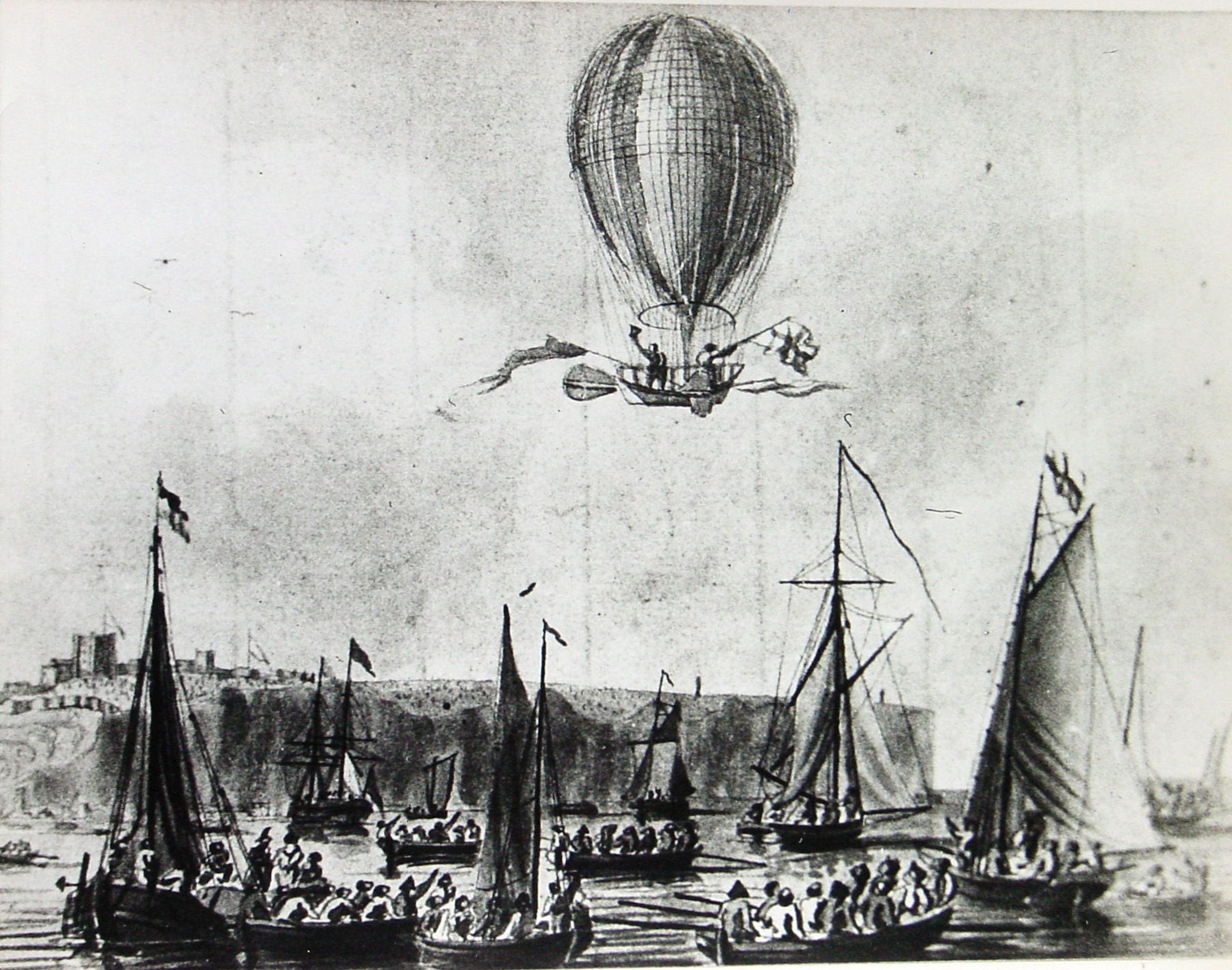
The Womens Land Army Museum, Little Farthingloe Farm, Folkestone Rd, Dover, CT15 7AA


Posted in Farthingloe - The Historic Valley of Legends and Outstanding Natural Beauty, Farthingloe - The Historic Valley of Legends and Outstanding Natural Beauty, Farthingloe - The Historic Valley of Legends and Outstanding Natural Beauty, Farthingloe - The Historic Valley of Legends and Outstanding Natural Beauty, Open Spaces, Tourism, Villages and Towns, Wanton Destruction | Comments Off on Farthingloe – The Historic Valley of Legends and Outstanding Natural Beauty