A Walk around the historic St Mary’s Church

St Mary's Church - Cannon Street

St Mary’s Church – Cannon Street

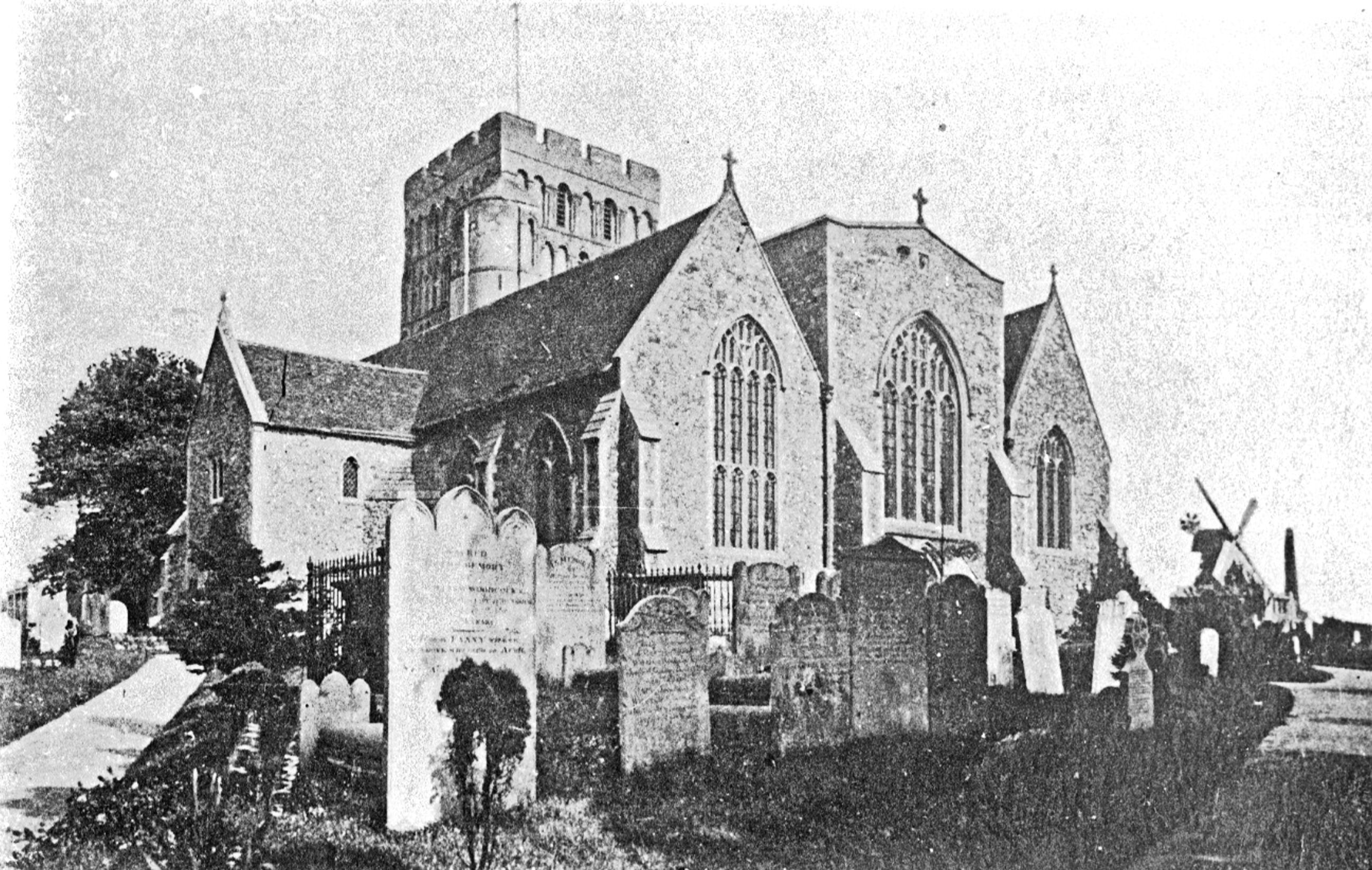
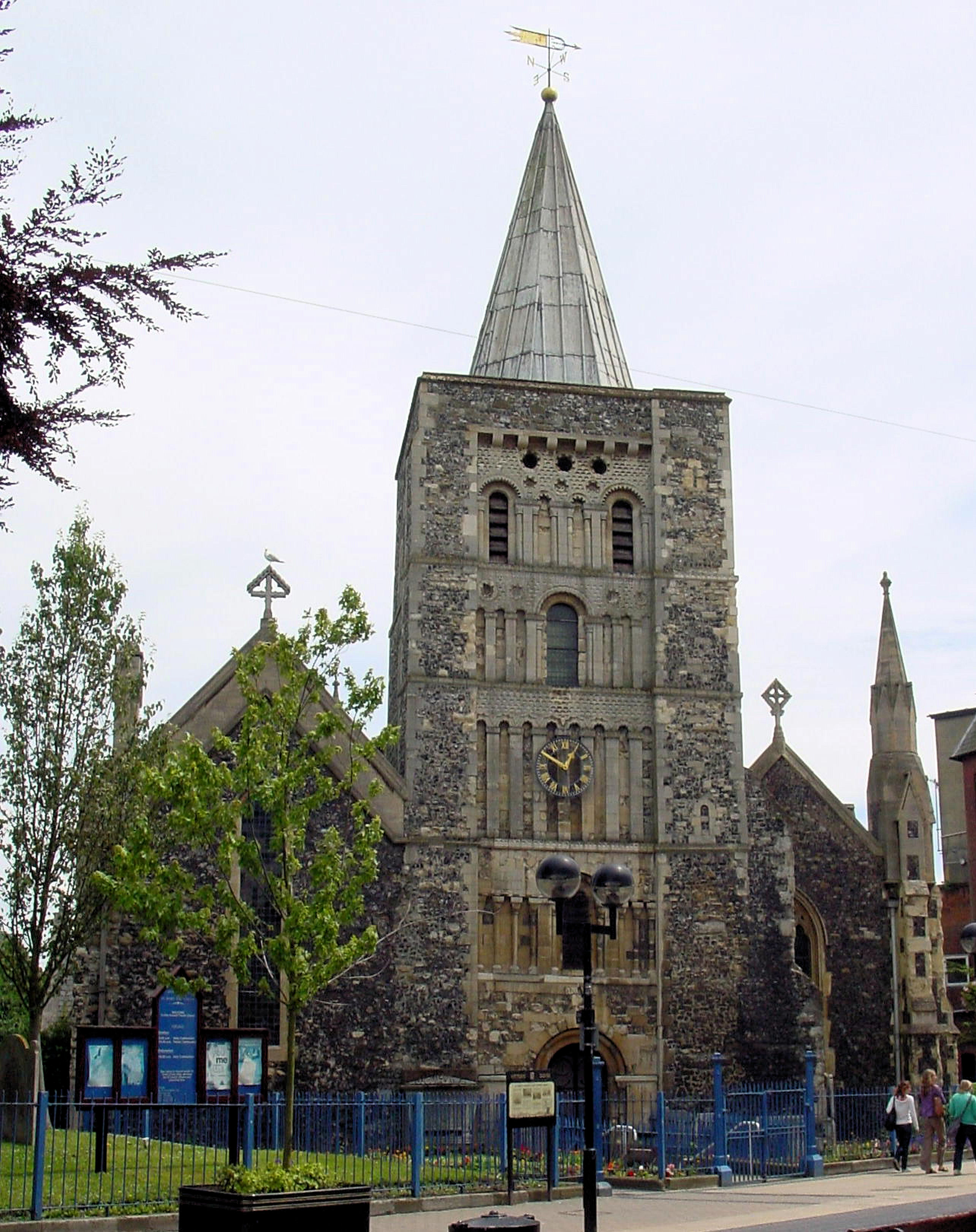
During the summer months, members of St. Mary’s Church, Cannon Street, are available most mornings to show people round the ancient building. It is a living place of worship yet the historic artifacts are laid out in such a way that some commercial edifices could learn a lesson or two. The history of the Church is subject of a separate story; suffice to say it is Church of England and was built on the floor of a Roman building during Saxon times. The stone arch, supporting the east wall of the tower is typically Saxon and was probably a semi-circle but the weight of the tower has flattened it. This can be best seen from the nave. The tower is of Norman origin and built over a period of time, the lower two stages, circa 1100 AD or earlier, and three upper stages, circa 1150 AD.

In 1843 St Mary’s was virtually gutted and rebuilt such that the ancient memorials to locals that line the walls at the east end, bare no relation to when and where in the church they were originally erected and likewise with the carved paving slabs on the floor. Following World War II (1939-1945) what was left of the stained glass windows were reinstalled and since then the blank ones have slowly been replaced with newly dedicated stained glass. It is these, the adjacent memorials and the ancient family memorials that give a fascinating insight into the town’s history and make  a visit to the church, for other than spiritual needs, well worthwhile.
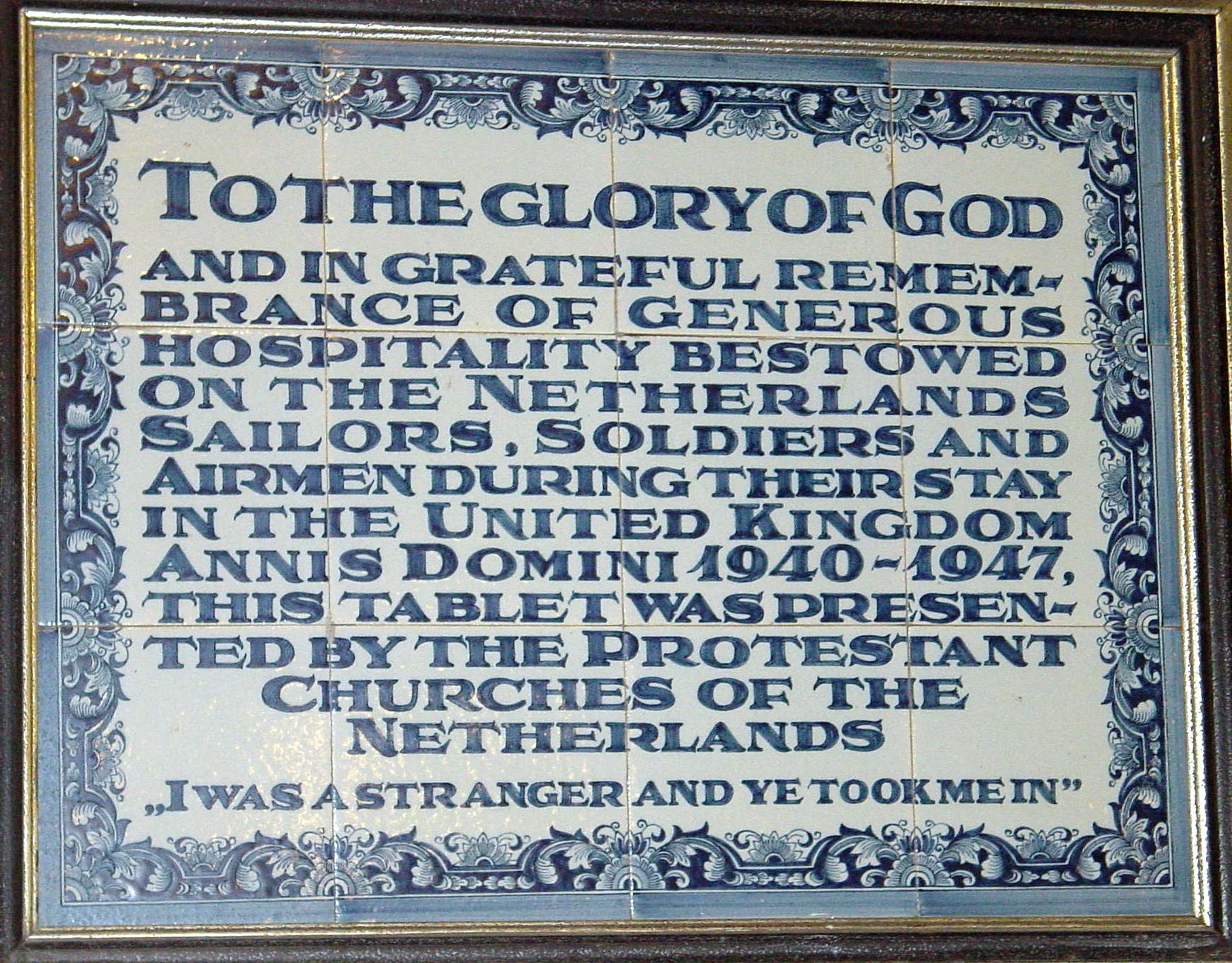
Plaque dedicated by the Netherlands Soldiers, Sailors and Airmen following World War II

Plaque dedicated by the Netherlands Soldiers, Sailors and Airmen following World War II

Leaving the family memorials to stories relating to the individuals and going round the Church clockwise, the first memorial on the north wall is a plaque dedicated to the Netherlands Troops. This was presented by the Dutch Protestant Churches in appreciation of hospitality given to Dutch sailors by the town, between 1940 and 1947, and was dedicated on 7 May 1950. It poignantly states, ‘I was a stranger and ye took me in.’

Next, is a window dedicated to all those who served in the Air Sea Rescue and Marine Craft sections of the Royal Air Force during World War II. It was dedicated on 10 July 1980, by the then Lord Warden, Her Majesty Queen Elizabeth the Queen Mother. The window was designed by John Lawson and depicts an Air Sea Rescue craft going to the aid of a pilot in a rubber dinghy within sight of the German occupied cliffs of Cap Gris Nez, France. The wing tip of a Spitfire is just visible. Overhead is an R.A.F amphibian aircraft and the sky is criss-crossed with vapour trails. The crest of the Royal Air Force surmounts the scene.
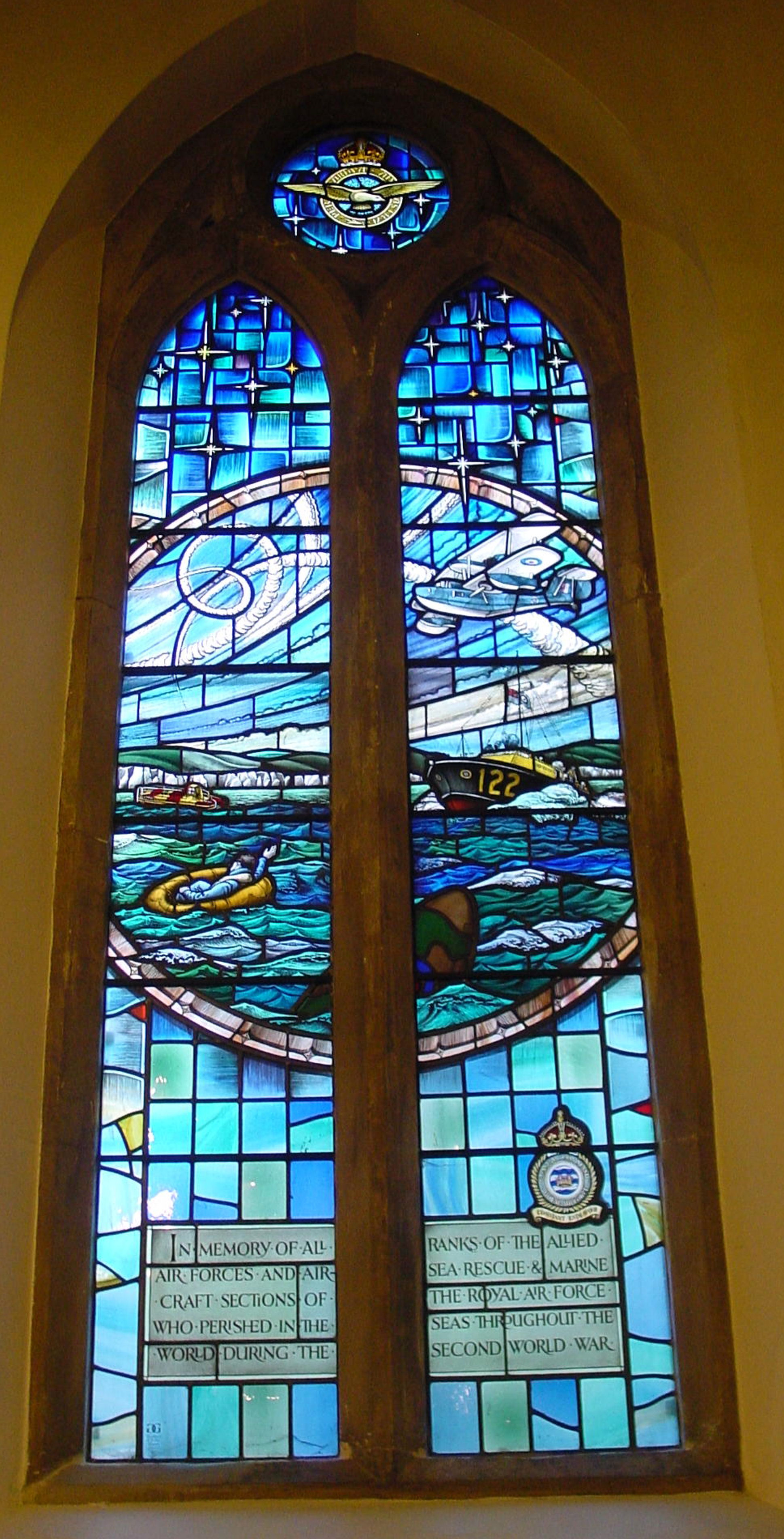
Air Sea Rescue and Marine Craft sections of the Royal Air Force window

Air Sea Rescue and Marine Craft sections of the Royal Air Force window

On the wall is a notice taken from the foreword of the Air-Sea Rescue and Marine Craft book and tells us that, ‘by the time World War II was approaching its climax nearly one thousand Royal Air Force marine craft were deployed to some three hundred Units and Sections throughout the various theatres of war.’ In addition, there is the role of the four thousand RAF Sailors who commanded, crewed, and operated these crafts who were, in essence, supporting allied aircraft and the aircrews who flew them. Later they became the Marine Branch of the Royal Air Force.

Opposite is a set of memorabilia relating to Air-Sea Rescue, including a case inside which is a book listing the awards made to Air-Sea Rescue and Marine Craft personnel. The case was donated by Mrs S Banks in memory of her husband Stan Banks, BEM, awarded for bravery at Dieppe. The Dieppe Raid was carried out on the 19 August 1942 and was the biggest combined operation on the Continent following the evacuation of Dunkirk. A large force of some 6,000 infantrymen, mainly Canadians, was escorted by Allied air force contingents, Royal Navy minesweepers and destroyers and, approximately 250 ships. One of these was the Invicta – launched in 1939 and immediately conscripted. The raid was not a success. The Canadian casualties, who made up four-fifths of the attacking force, were 170 dead, 633 wounded and 2,547 missing.
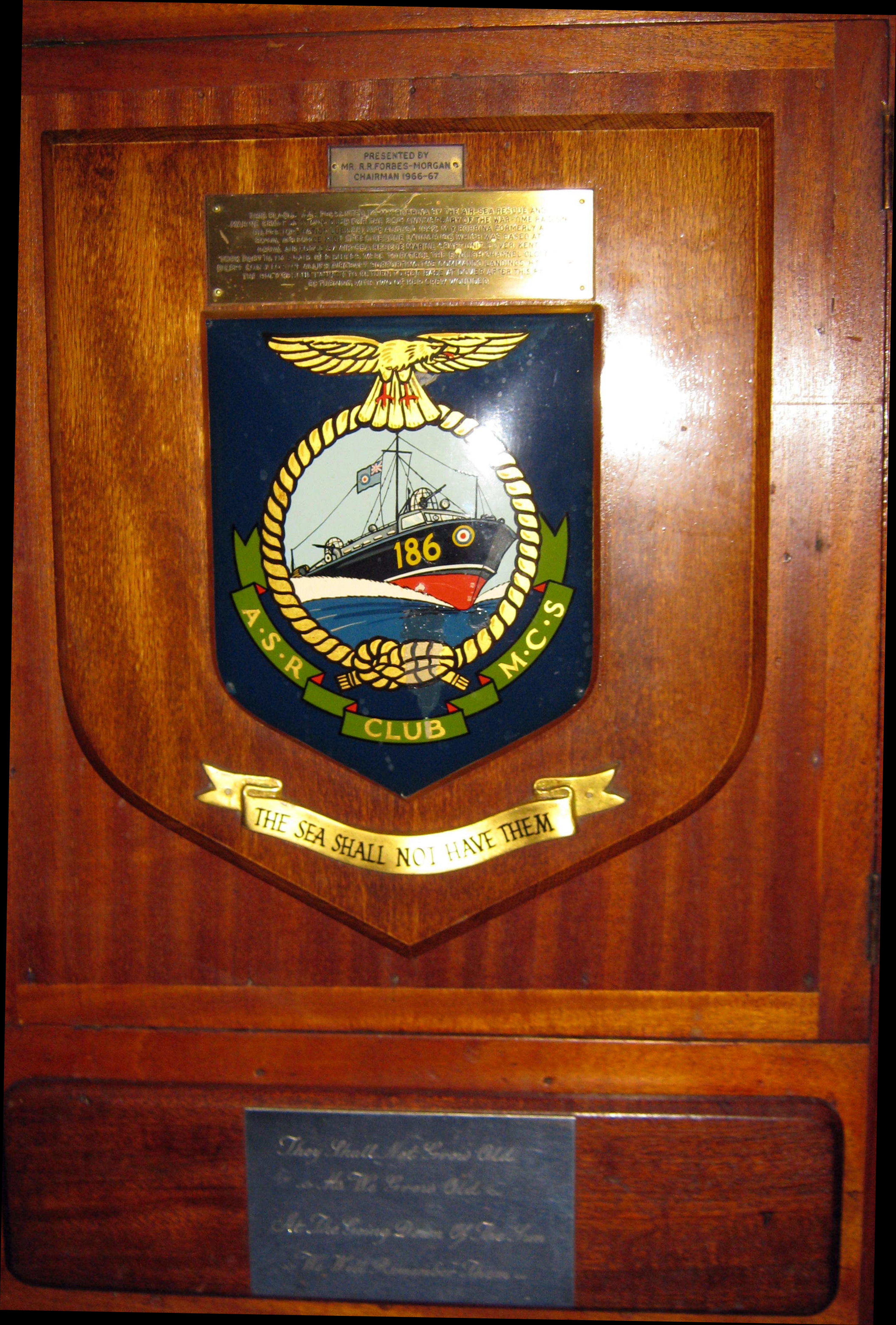
Air Sea Rescue Dieppe Raid presented to MV Robrina 14.08.1942

Air Sea Rescue Dieppe Raid presented to MV Robrina 14.08.1942

There is plaque dedicated to MY Robrina, a Royal Air Force High Speed Rescue Launch 186 based at R.A.F 27 Air-Sea Rescue Marine Craft Unit, Dover. Taking part in the Dieppe Raid, her duties were to patrol the English Channel close to the Dieppe Coast for the Allied Aircraft and supporting the Commando Landings. HSL 186 was the only rescue launch to return to her base at Dover after this Raid. Two of her crew were wounded.

Above hang the colours of 22 Squadron RAF. These were laid up and presented to the Squadron at RAF St Maguan on 20 October 1960 by Air Marshal Sir Ralph Sorley, and were replaced by new colours presented by Air Chief Marshal Sir David Evans on 12 March 1978 at RAF Finningley. The Flight at Manston, one of the five detached flights around the country, provided the colour party for the laying up ceremony. The Crest and Battle Honours of the Squadron are contained in a case, together with a beautifully hand-written explanation that tells us the Squadron was formed at Gosport on 1 September 1915 during World War I (1914-1918). It then details the history up until 1981.

Beneath the window is a Lectern that was presented on behalf of Henry Strong Boyton (1831-1915), 33 years a member of the St. Mary’s choir and 31 years a sides man. Henry was involved in banking and, for many years, secretary of the Dover and East Kent Building Society founded in 1855.
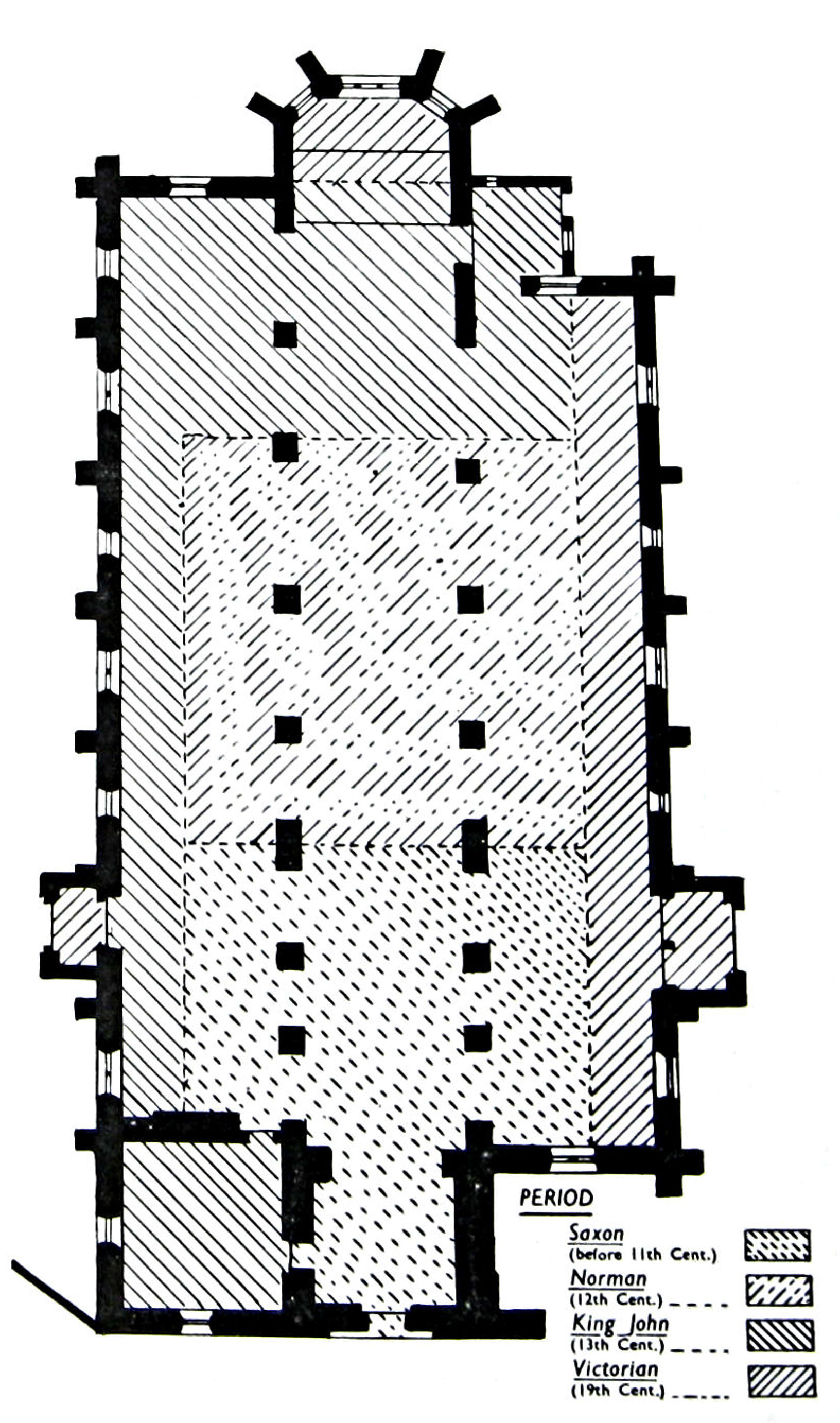
St Mary's Church plan c1960 - Showing the four different periods of building. David Iron Collection

St Mary’s Church plan c1960 – Showing the four different periods of building. David Iron Collection

The next window is dedicated to the Trinity House Pilots. The origin of pilots helping ships to traverse vagaries of the Channel and its ports is lost in the mists of time. However, in 1515, Henry VIII (1509-1547) formalised the profession and created the Fellowship of the Cinque Ports Pilots or Lodesmen (meaning one who leads the way). In 1854, they became part of Trinity House but kept a separate identity. The Pilotage Act of 1987 transferred the service to competent Harbour Authorities and in October 1988, this took effect.

Throughout both World War I (1914-1918) and World War II (1939-1945), Dover Pilots conducted vessels as far west as the Bristol Channel and north as the Scarpa Flow. In the run up to the D-Day landings (6 June 1944), they were involved in moving parts of Mulberry harbours and as an appreciation for all their work, the plaque bearing the Trinity House Coat of Arms, was presented. This hangs in front of the gallery at the west end of the Church. An oak tablet, adjacent to the window almost opposite in the south aisle was presented in 1949.

Near to the window is a Stuart brass and in old English it tells us that the bodies of William Jones, gentleman of Dover and his wife Katherine were buried nearby. They were happily married for 49 years and had one son and nine daughters. Katherine died on 21 December 1632 aged 72 and William on 1 June 1638 aged 75.

Above are the three Patron’s Standards – the Lord Warden, the Lord Lieutenant of Kent and the Archbishop of Canterbury. From 1536 until 1871, the parishioners retained and exercised the right of electing their minister. Reverend Puckle was chosen that way in 1842 after elections that were fiercely fought, bitter and voting lasting two days. Canon Puckle wanted to ensure that never happened again and at a meeting presided over by Dr Tait, Archbishop of Canterbury, in October 1871 it was resolved to hand over the right to select their minister to a Trust. It was suggested by Steriker Finnis that the Trust should be made up both the ecclesial and the laity and that it should be the office not the persons chosen. He went on to suggest that the Trust be made up of the Archbishop of Canterbury, the Lord Warden of the Cinque Ports and the Lord Lieutenant of Kent. The motion was carried, the incumbents agreed and formal approval was given. This agreement still stands.

However, questions have been raised as to why the Lord Lieutenant of Kent was included as a patron. Military in origin and dating from Tudor times, the office of Lord Lieutenant is responsible for maintaining order in the County, and all military measures necessary for local defence. Dover, up until recent times, was a military town and the first Lord Lieutenant of Kent was  Thomas Cheyney (c1485-1558 – executed). At the time of his appointment in 1551 he was the Lord Warden of the Cinque Ports (1536-1558). It has also been suggested that a number of Dover notables connected with St Mary’s Church have also been appointed as Deputy Lieutenants of Kent.

St Mary's Church - Free Pew

St Mary’s Church – Free Pew

Among the nearby pews are some proclaiming to be ‘Free‘. On 30 December 1841, St Mary’s vicar ceased to be paid by a stipend from the rates paid by households to the council. As the town’s population was expanding fast, it was decided to introduce Pew Rents so the affluent members of the town could be assured of a pew when they went to church. Free pews were available for everyone else. The reaction in the town was not quite what was expected and many of the congregation left St Mary’s for St James’ old Church as pews there were free! By 1938, it was reported that the St Mary’s Church had 1,650 sittings of which 1,200 were free.

Lady Chapel Window

Lady Chapel Window

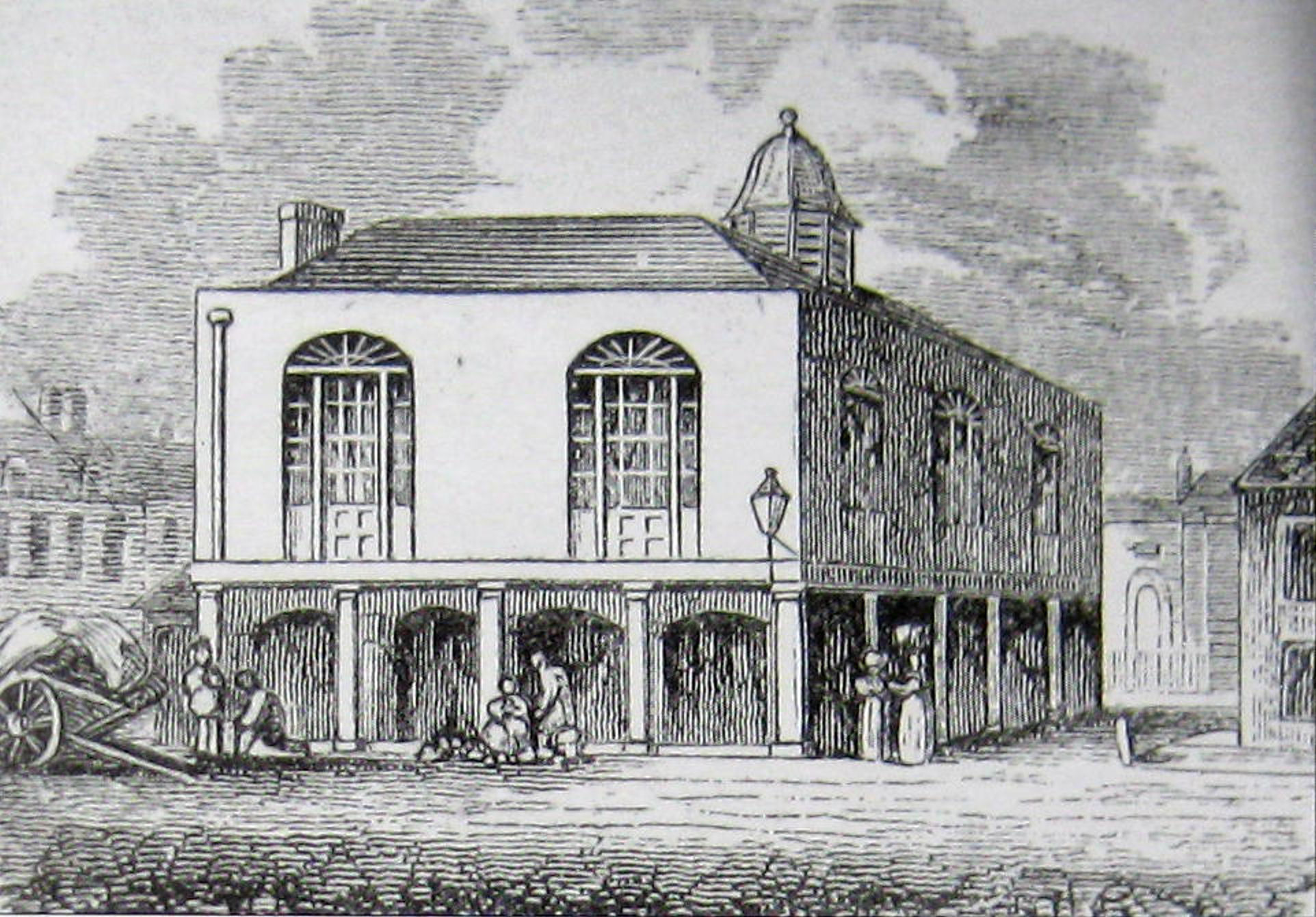
The Lady Chapel was dedicated to the late Reverend Thomas S Frampton (died 1923) on 6 January 1928 by his wife. The window dates from 1958 and depicts on the left, King Alfred the Great, patron saint of learning. On the right, Hubert de Burgh, Constable of Dover Castle and benefactor of the Maison Dieu and the scene underneath are of monks tending the sick in the Maison Dieu. Beneath, King Alfred’s window is a scene from Dover’s first school. This was founded in 1616, when the Corporation voted £8 a year to pay St Mary’s vicar, Robert Udney, to provide free education for six poor children. The school was held in the Court Hall that once stood in Market Square, but ceased four years later when Rev. Udney moved to a new living at Hawkinge.

A recent addition to the Lady Chapel is a sculpture by Ashford artist Michael Rust who was commissioned by the Rev Dr. Michael Hinton to create a ‘joyful Mary’. Donated to the church in memory of his wife Jean, the 90cm high sculpture on a custom-made oak stand, was carved from a single block of East Kent lime wood. The carving depicts a young Jewish peasant girl ‘materially poor, but rich in spirit’, lifting the baby Jesus high, with mother and child smiling joyfully at each other.

The Great East window and represents God's providence sparing Dover more suffering during World War II

The Great East window and represents God’s providence sparing Dover more suffering during World War II

The great East window was unveiled in February 1955 by the Archbishop of Canterbury and was ‘inspired by Canon Arthur Stanley Cooper’. He was the Honorary Canon of Canterbury Cathedral, Rural Dean of Dover and Vicar of St. Mary’s 1943-1958. It represents God’s providence sparing Dover more suffering during World War II when the town earned accolade ‘Hell Fire Corner.’

The window portrays the Ascended Christ surrounded by Saints connected with the town:
Top left Virgin Mary, patron Saint of the Church.
Top right St John the Baptist.
Left, beneath the Virgin are St Richard of Chichester and St Edmund.
Right, beneath St John, St Peter and St James
Left window St Martin, Right St Nicholas
Above St Martin are the Arms of the County of Kent and of Dover. Above St Nicholas the Arms of the Cinque Ports and Dover Harbour Board, beneath, the Arms of the Trinity House Cinque Ports Pilots.
These are set over pictures of the town’s ancient buildings – the Maison Dieu, Castle, St Mary’s Church, Old St James’ Church and the White Cliffs of Dover.
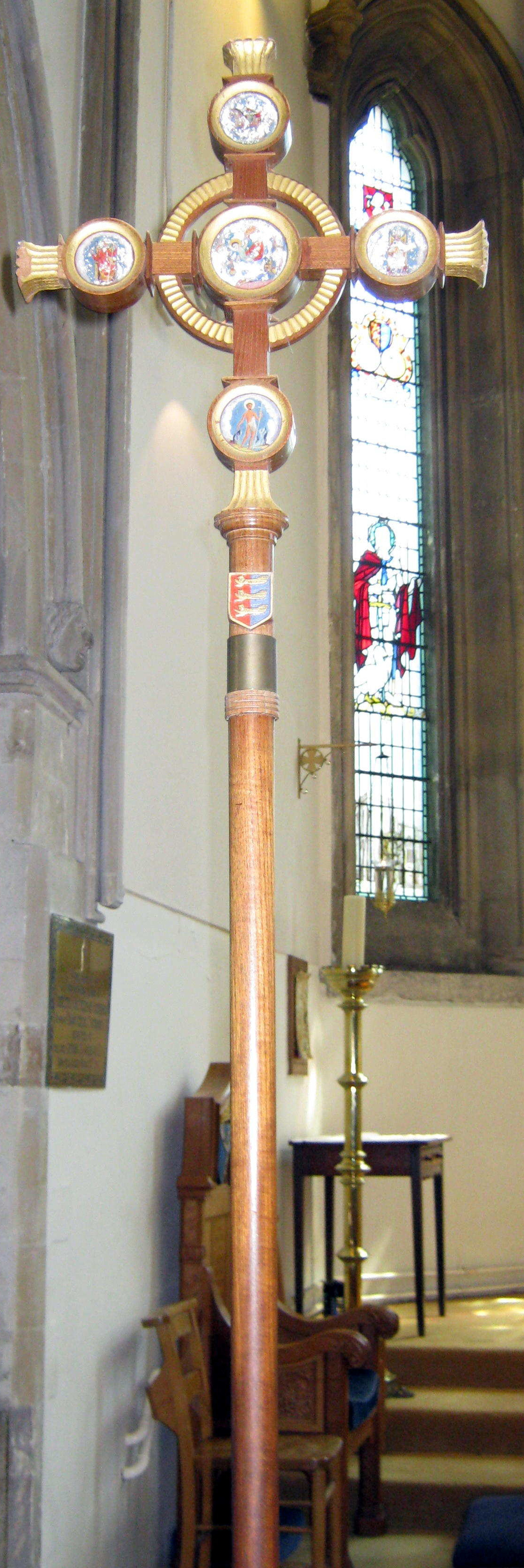
The Processional Cross

The Processional Cross

In a holder attached to the first pew is a ‘Processional Cross’ made by craftsmen of Dover Harbour Board. It is of teak that came from the tugs, Lady Brassey built in 1912 and Lady Duncannon built in 1914. It was dedicated on 29 May 1949 but it was another ten years before the tugs were replaced during which time, as before, they were on continual duty. During a morning service in September 2001, a man in his 50s deliberately smashed the Cross and then ran away.

The Seafarers’ Window is on the south side of the Chancel, with laid up colours on either side. During World War II, many naval personnel worshipped in St Mary’s and when peace came, the Royal Navy made a gift of money. This, together with finance from the War Damage Commission, bought the window that was installed in 1958.

The British Railways ferry Invicta is shown with the Blue Ensign – the personal flag of Captain H. Len Payne, master and Commodore of the Southern Railway Fleet. The Red Ensign belonged to the tug Lady Brassey, which played a significant and heroic role during World War II. Badges of different seafaring organisations, including the Royal Navy, Merchant Navy and the Royal Dutch Navy are portrayed. The inscription reads: ‘They that go down to the sea in ships and occupy their business in great waters; these men see the works of the Lord; and his wonders in the deep.’

Boer War Memorial

Boer War Memorial

On the south wall of the Chancel is a memorial to the men of the Borough who gave their lives in the South African War (Boer Wars 1899–1902), listing their names. Following the wars Bill Traynor, who had been awarded the Victoria Cross, came to Dover and held the post of Barrack Warden. Remaining in the town for the rest of his life (died 1954) he did everything to ensure that his fallen comrades in the Boer Wars were remembered. The tablet is of alabaster bearing the town’s Coat of Arms and was unveiled by Frederick Lord Roberts of Kandahar on 19 April 1912.

St Mary's Church Organ

St Mary’s Church Organ

St Mary’s Church organ was bought in 1742 with money partly raised by subscription and the remainder provided by the Cinque Ports Pilots. Its installation spurred an interest in the performance of music and choral works, in the town, that is still very much alive today. The organ was completely rebuilt and modernised in 1969-1970 using the Toke bequest. In 1484, Thomas Toke, Mayor of Dover in 1472, bequeathed land at Dugate, at the foot of Whinless Downs, towards the repairs of the Church.

Moving to the south aisle, above are the laid-up colours of the Royal Air Force Association, the Royal British Legion (two colours) and the Royal Naval Association. Beneath is the Red Ensign of the ‘Fleet of Little Ships’ that served in the evacuation of Dunkirk (26 May – 4 June 1940). It was this flag that was paraded through Paris when General Charles De Gaulle, the French wartime leader, took the salute in the city soon after liberation.
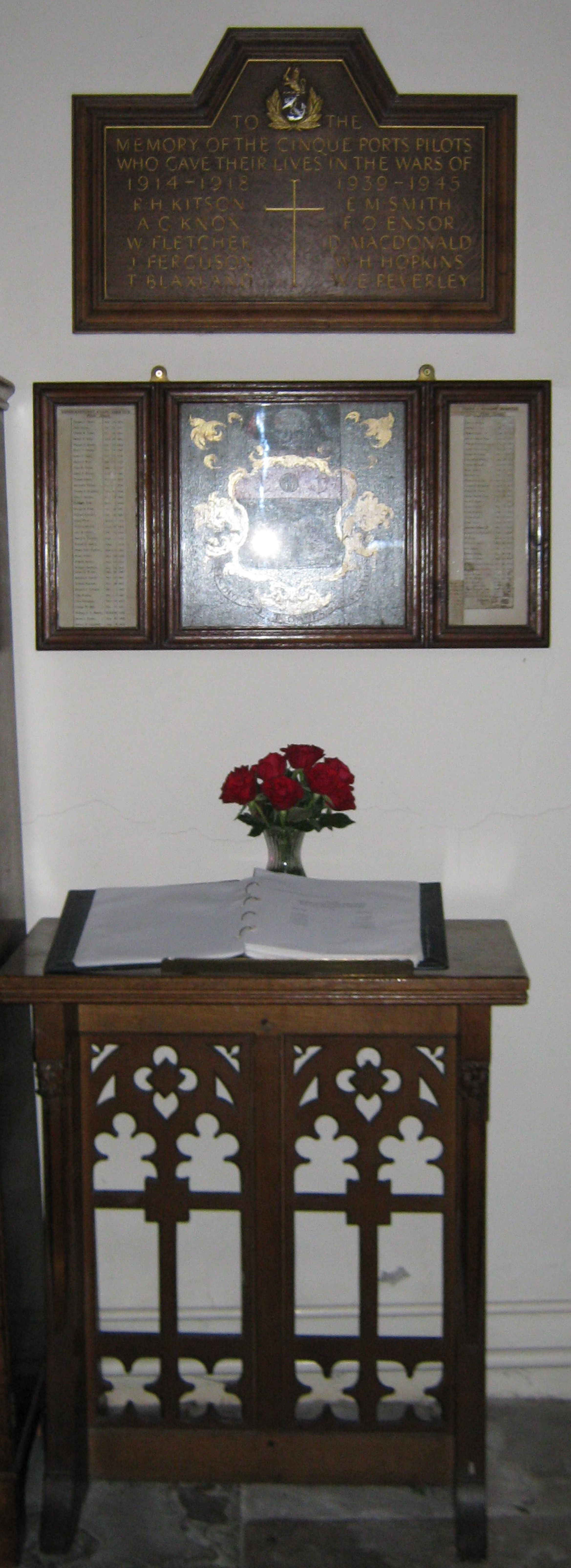
Cinque Ports Pilots memorial. The book rest below comes from the old St James' Church

Cinque Ports Pilots memorial. The book rest below comes from the old St James’ Church

The oak tablet on the wall was presented on Trinity Sunday (the first Sunday after Pentecost, 50 days after Easter Sunday) in 1949 by Senior Cinque Ports Pilot, Captain D Magub, and dedicated by the Bishop of Dover. It commemorates ten Cinque Port Pilots who gave their lives during both World Wars, they were (World War I): R H Kitson, A G Knox, W Fletcher, J Ferguson T Blaxland. (World War II): E M Smith, F O Ensor, D MacDonald, W H Hopkins, W E Peverley.

Below is a book-rest inscribed, ‘To the Glory of God and in gratitude for the use of the St. James’ Old Church from some of the Officers of the Royal Navy who worshipped there during the year 1918.’ The piece was rescued from the war damaged church – now called the Tidy Ruin – following World War II. It was restored and re-lacquered. On the book rest is the St. Mary’s Church Book of Remembrance that was dedicated on 9 September 1956 and reprinted in 1993. Some references muddle this book with the Dover Patrol Golden Book – the Book of Remembrance that can be seen at the Church of St. Margaret of Antioch, St. Margaret’s at Cliffe.

Above is the first of two almost plain windows. High up is a painted glass commemorating the St. John’s Ambulance centenary 1887-1987. Founded in 1877, the St John Ambulance Association provided instruction on first aid and ambulance support to the public at home and at work. The following year their first textbook was published and groups of First Aiders, holding the Associations certificate, began to group together as Ambulance Corps. This, in 1887 became the St John Ambulance Brigade, which opened a centre in Dover about 1898.

Herald of Free Enterprise memorial window

Herald of Free Enterprise memorial window

The centre window of the south aisle is dedicated to the Herald of Free Enterprise disaster that happened on 6 March 1987. The Church was the venue for the Memorial Service and the Window was erected as a memorial. Every year, on the anniversary, the Church is opened to allow friends and relatives of the 193 people who lost their lives, to pay their respects. The left part of the Window depicts Christ calming the storm of the Sea of Galilee, the right those who helped in the rescue and a family mourning their lost loved ones.
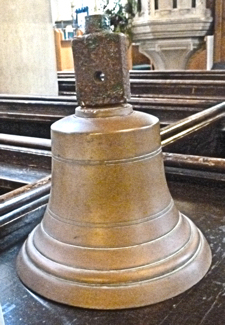
Herald of Free Enterprise Ship's  Bell in St Mary's Church. 2017

Herald of Free Enterprise Ship’s Bell in St Mary’s Church. 2017

In 2008, to mark the 20th anniversary of the Disaster the Board of Dover Counselling Centre presented a Memorial book. The book contains the names of the 193 people who died, a copy of the Order of Service for the 20th anniversary, and a poem by former Dover police officer Michael Kearney. Mr Kearney was involved in the aftermath of the Zeebrugge tragedy and as a result became involved in Cruise Bereavement Care. The book also contains reports from local papers, as well as contributions from people who responded to an invitation to express their thoughts about the disaster.
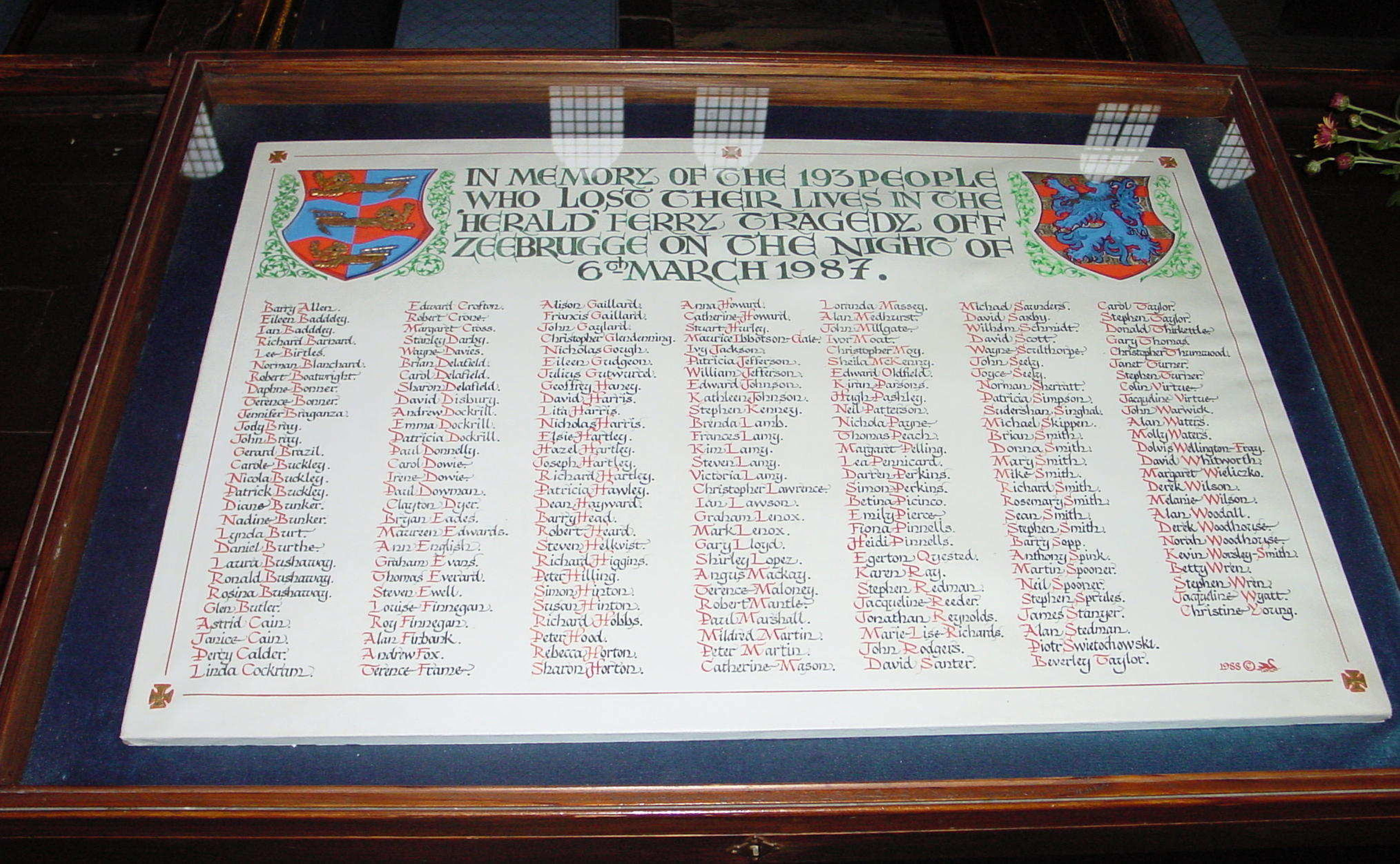
Herald Tragedy Memorial Book

Herald Tragedy Memorial Book


Above the Herald of Free Enterprise Zeebrugge Disaster window hangs the flag of the Royal National Lifeboat Institution.

The second almost plain window has one painted glass. This is dedicated to the British Red Cross that was formed in 1870 and granted its first Royal Charter in 1908. By that time there was an active branch in Dover. Following World War II, the local Society re-formed and in 1951 opened a headquarters in Pencester Road. However, developers wanted the property and presented them with a fait accompli. They were offered the first house in the Paddock, off Maison Dieu Road but the basement was prone to flooding. In 1981, the National Society made £25,000 available, the problems were dealt with and the building was refurbished. Lady Astor of Hever, president of the Red Cross, reopened the building but sadly, the decision was taken by headquarters to close the Dover branch.

The west window is the only one that contains stained glass from before World War II. It is dedicated to Captain George Steuard born in Dover on 1 May 1808, died 9 July 1896, and presented by Alice Beeston, his niece. George lived at Waverley Lodge, Blackheath having and spent a good deal of his life in Colonial Columbo, Sri Lanka.
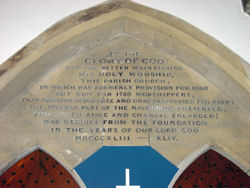
Commemoration of refurbishment of the Church 1843-1845

Commemoration of refurbishment of the Church 1843-1845

Above the south door is a plaque dedicated to the refurbishment of the Church between 1843-1845 and states: ‘To the Glory of God and the better maintaining His Holy worship, this parish church, in which was formerly provision for 1000 but now for 1750 worshippers, that for 1300 being free and unappropriated for ever; the Norman part of the nave being preserved, the aisle and the chancel enlarged; and rebuilt from the foundation in the years of our Lord God MDCCCXLIII – XLIV.’
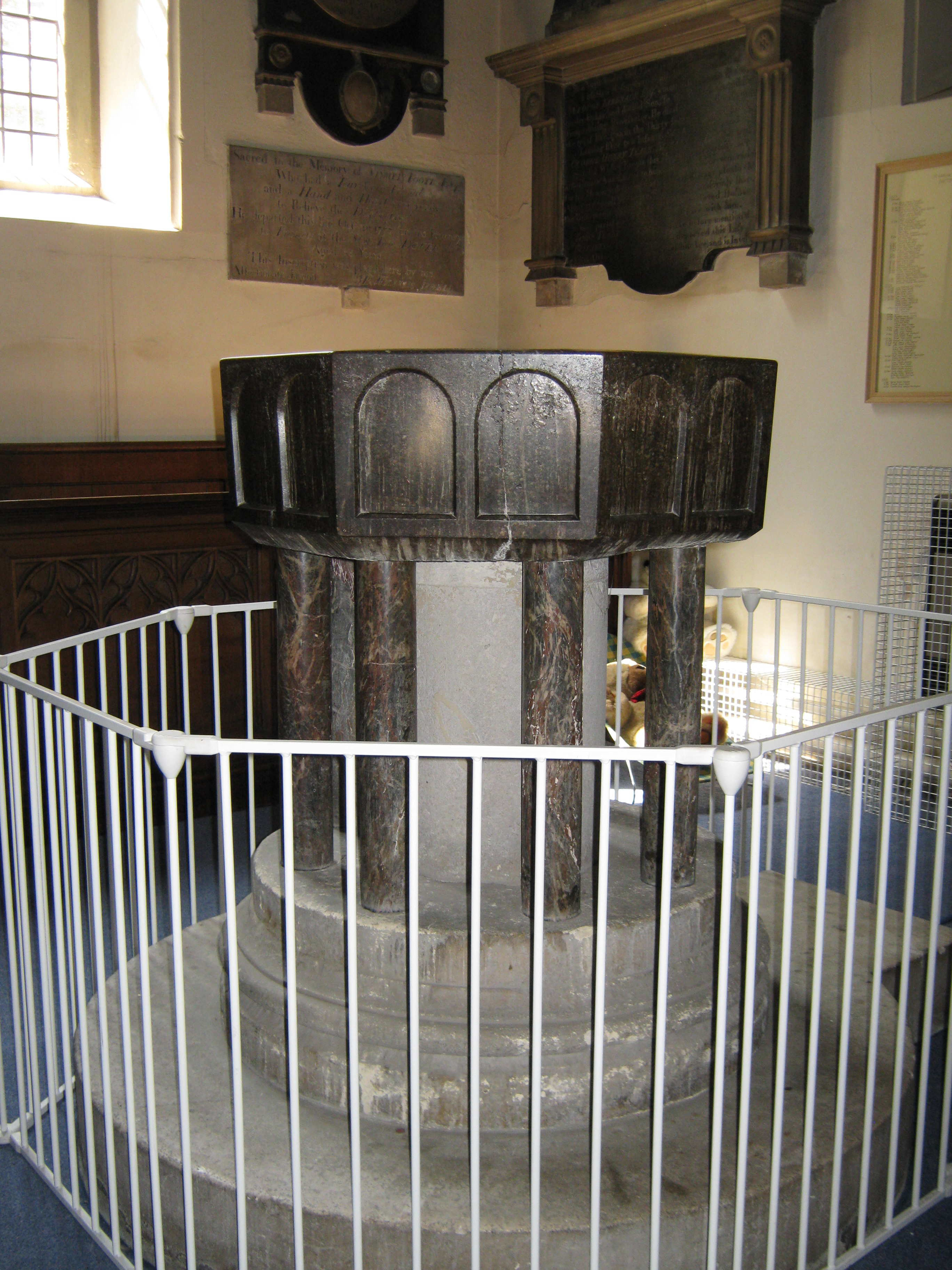
 Medieval Font, found and repaired on base made from a pillar saved from what was left of the ancient St Peter's Church, Market Square

Medieval Font, found and repaired on base made from a pillar saved from what was left of the ancient St Peter’s Church, Market Square

Nearby is an unusual Font with an even more unusual history. Baptism is the service at which people are made members of the Christian Church and in the early days, when most people were baptised as adults, fonts were set into the ground. Like a small swimming pool, the candidate stood while the water was poured over the head. When the baptism of children and babies became the norm, fonts were made of raised bowls and such was St Mary’s Font. It was said to be made of Purbeck marble but in the autumn of 1642, at the beginning of the Civil Wars, the Church was stormed and the Font disappeared. Following the Restoration of Charles II in 1660, a new font was bought and by the time the Church was restored in 1843 consideration was being given to having it replaced.

During the intense refurbishment the ancient Font, split in two pieces and incorporated into the walls, was found. This was repaired and returned to its original purpose. In 1908, while excavations were being undertaken on the north side of Market Square, a small pillar from the long gone St Peter’s Church was found and the capital of the Font now rests on this pillar.

At the west end of the Nave, above the Saxon arch, is a large mural of the Epiphany. The artist was John George Smith and was commissioned in commemoration of the fifty years of Canon Puckle’s Ministry from Rogation Sunday (5th Sunday after Easter) 1838 to Advent (begins with first Sunday nearest to 30 November – St Andrew’s Day – and lasts four weeks), 1888.

Arms of William and Mary 1688

Arms of William and Mary 1688

Below, is the bell ringer’s gallery on which there are three Arms. The left is dedicated to the Trinity House Pilots and was presented on 23 May 1948 – see above. The one on the right is dedicated to Dover Harbour Board and in the centre is a Royal Coat of Arms. This replaced one ordered to be erected in 1660 by Charles II. On 5 November 1688, William of Orange made landfall in Torbay and the Glorious Revolution (1688) saw him, together with his wife Mary, crowned. The town’s folk, having been subject to religious persecution, rejoiced and William Stokes, a local politician who had done much to help the persecuted, was elected Mayor. He immediately had the Arms of William III and Mary II erected. Of note, instead of the usual motto of ‘Dieu Et Mon Droit’, it carries William’s personal motto, ‘Jay meintendray’ meaning ‘I will maintain the right.’

Centre Aisle looking towards the great east Window

Centre Aisle looking towards the great east Window

The list of Vicars of St Mary’s, from 1150 to the present time, is displayed on the south wall of the tower. Initially the Church came under the auspices of St Martin le Grand and from 1230 to 1534 – the Dissolution of the Monasteries, the Masters of the Maison Dieu. Following the Dissolution Henry VIII, having closed the Church, imposed a fine on the bell ringers of St Mary’s Church for failing to acknowledge his arrival in the town. However, after the locals petitioned, the King allowed St Mary’s to be reopened as a parish church. The caveat was that they chose their own curate and paid him. As noted above, this ceased following election of Canon Puckle in 1841 and in October 1871, the patronage was vested in the three Patrons. As the town’s Church, from 1585, when William Willis was elected Mayor it was used for both local and parliamentary elections until 1836. During those occasions, the corporation seats were ranged around the Chancel with the mayor’s seat occupying the place usually filled by the altar.

 St Mary's Church Bell Ringers. Dover Mercury 2011

St Mary’s Church Bell Ringers. Dover Mercury 2011

Mention has already been made of the Bell ringers’ gallery in the Norman Bell tower. In 1496, churchwardens bought ‘clappers, ropes and other things for the two bells in the tower.’ By 1538 there were five bells and with the demise of St pater’s Church that stood near the Market Square, in Elizabethan times (1558-1603), the bells were given to St Mary’s. Seven bells made by Samuel Knight of Holborn replaced them in 1724. The eighth bell was cast a year later. Seven of the eight bells used today date from that time and shutters today, as then, regulate the volume. The bells were not rung from 1844 to 1898 and then it was found that the treble bell was cracked. Following recasting, by John Warner of London, all the bells were hung in an iron frame.

In 1910, to celebrate the coronation of George V the full peal of 5040 changes were rung. An appeal was launched in 1946 for the repair of the bells but was almost immediately withdrawn as George Clark of G.A. Nurseries in memory of his wife gave the whole amount. Another appeal was made in 1998, as the timbers supporting the iron frame were moving when the bells were swung. These and other problems were dealt with in 2002 when steel foundation girders were built into the tower walls. The existing gallery was modified providing new accommodation for the ringers on the floor below the old ringing chamber. On 14 December that year, 5008 changes of the Plain Bob Major, was rung by all the ringers who had taken part in the restoration. Besides Sunday mornings, on the third Wednesday of the month a quarter peal is rung with at least 1250 changes and lasts for about 45 minutes.
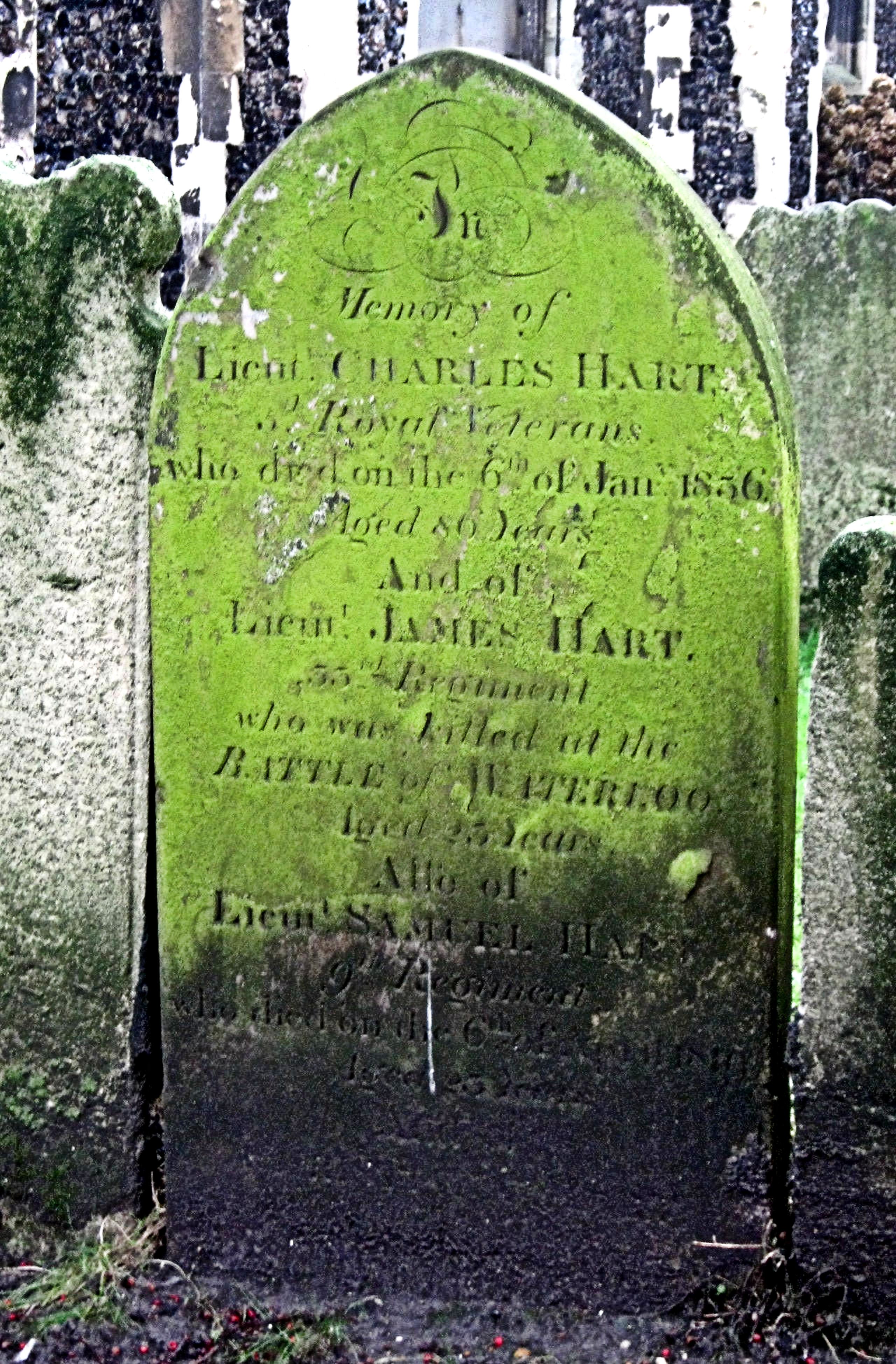
Right of the entrance to St Mary's Church gravestone of Lt. James Hart age 23years killed at the Battle of Waterloo. St Mary's Church. LS 2011

Right of the entrance to St Mary’s Church gravestone of Lt. James Hart age 23years killed at the Battle of Waterloo. St Mary’s Church. LS 2011 graveyard. LS 2011

The Church tower sundial was erected in 1656 during the time of the Civil Wars, while St Mary’s was still regarded as belonging to the Corporation. The Minister was obliged to be present, before any meetings, to perform prayers and to ensure that he and the Councillors were on time the sundial, we see today, was erected. A clock was given Peter Monins in 1736 but was said to be ten minutes slower than the sundial so was replaced by the one we see today. This was paid for by public subscription and erected on 13 September 1866.

The striking War Memorial in the churchyard, to the left of the main entrance, was unveiled on 24 November 1921 by Lieutenant Colonel Davidson, and dedicated by the Bishop of Dover. There are a number of tombstones and memorials in the churchyard. To left of the entrance of St. Mary’s is a memorial dedicated to the Bass family, the founding fathers of the solicitors Stilwell and Harby. One tombstone that particularly catches my eye is to the right of the Church entrance and dedicated to male members of the Hart family. The second inscription reads: ‘Lieut James Hart 33rd Regiment who was killed at the Battle of Waterloo (18 June 1815) aged 23 years.’
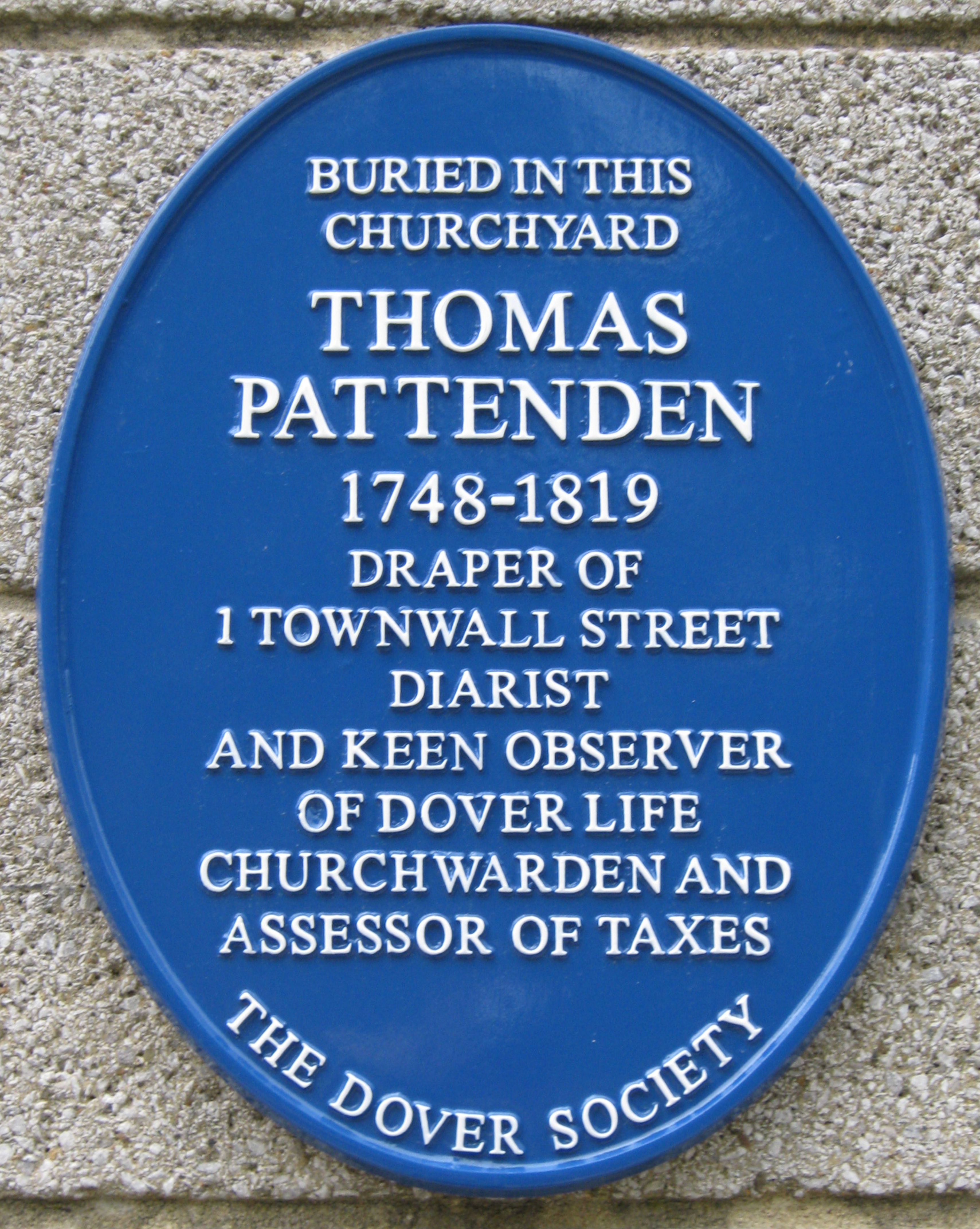
Dover Society Plaque to Thomas Pattenden diarist 1748-1819 on the side of the Parish Hall

Dover Society Plaque to Thomas Pattenden diarist 1748-1819 on the side of the Parish Hall

St Mary’s Churchyard was closed in 1873 and the Mowll family donated about three acres of land at the foothills of the Western Heights. There Cowgate cemetery opened and was used mainly between 1837-1870. The cemetery on Copt Hill, Charlton, has superseded this. The Archbishop of Canterbury F Donald Coggan opened St Mary’s Parish Centre on 21 December 1975. The contractor was the local building firm, Richard J Barwick. Prior to the opening, there was a service to mark the 900th anniversary of the dedication of the church. In 2008, it was refurbished out of a legacy left Jack Hewitt (1912-2004). On the wall outside is a Dover Society plaque to Thomas Pattenden (1748-1819) who for many years observed the day-to-day life of the town in a series of diaries.

  • Published:
  • Dover Mercury: 19 & 26 April, 03 May and 7 June 2012

:
Posted in Religion & Churches, St Mary's Church - A Walk around the historic Church, St Mary's Church - A Walk around the historic Church, Tourism | Comments Off on A Walk around the historic St Mary’s Church

Albert Mummery – The Father of modern Mountaineering

Albert Frederick Mummery from Tiger in the Snow by Walter Unsworth. Publisher; Victor Gollanez Ltd 1967.

Albert Frederick Mummery from Tiger in the Snow by Walter Unsworth. Publisher; Victor Gollanez Ltd 1967.

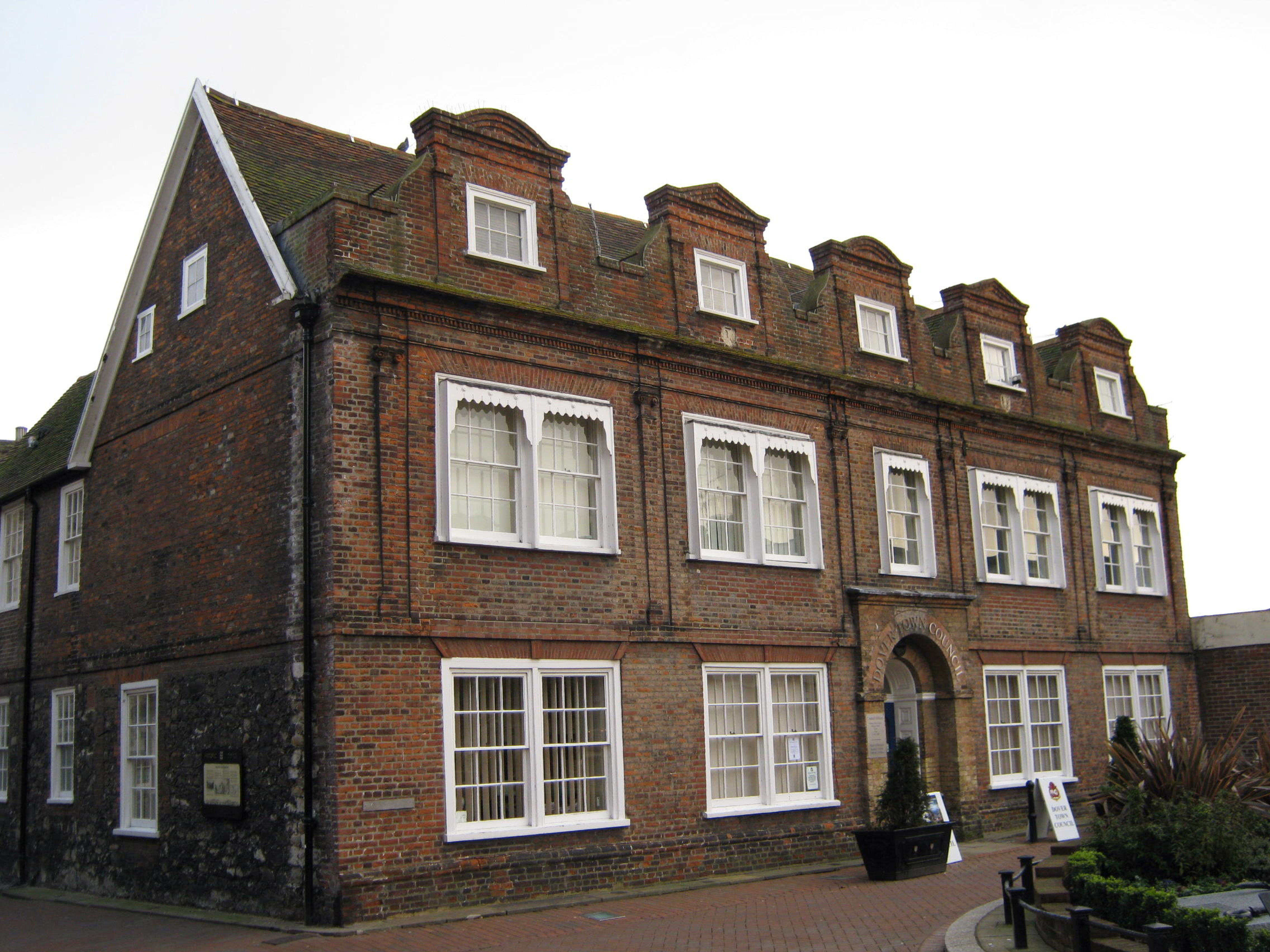
Albert Frederick Mummery was born on 10 September 1855 at Maison Dieu House, Biggin Street, where the present Dover Town Council have their offices. He was the younger son of William Rigden Mummery and his wife Esther, their eldest son was named  William Gange Mummery. William, the father, was born in Deal on 19 December 1819 and came to Dover and rented Maison Dieu House from miller, William Kingsford, in 1835. He married Esther, from Portsmouth, in 1843 and both were staunch Congregationalists and actively involved with the Russell Street Chapel that opened in 1838.

St Mary's Church, Cannon Street, The Town Clock was purchased the year William Mummery was Mayor

St Mary’s Church, Cannon Street, The Town Clock was purchased the year William Mummery was Mayor

About 1850 William and Esther bought the Stembrook Tannery and immediately William senior set about modernising it. From an early age both William and Albert were actively involved in the family business as this was seen as part of their education. Maison Dieu House, still in the possession of the Kingsford family, was put up for auction on 28 May 1857 and the Mummery’s made a successful bid. By 1861, the Tannery was employing 21 men and William Mummery senior, was making a name for himself in local politics. William was elected Mayor in 1865, 1866 and 1867. The town clock was purchased and on 13 September 1866 installed in the tower of St Mary’s Church.

That was the last time the family participated in the razzmatazz of a Mayor’s official duties. No sooner had William’s term of office ended than he died. He was 48-years old and William junior 22-years  and Albert was 13. Following the funeral, their mother sent the two brothers for a holiday in the Alps. There, as Albert later wrote in his book, My Climbs in the Alps and the Caucasus, ‘the crags of Via Mala and the snows of the Theodule raised a passion within me, which has grown with my years, and has to no small extent moulded my life and thought.’ On returning to Dover, it was agreed that William would take over running the tannery with Albert’s help, even though he was still at school.

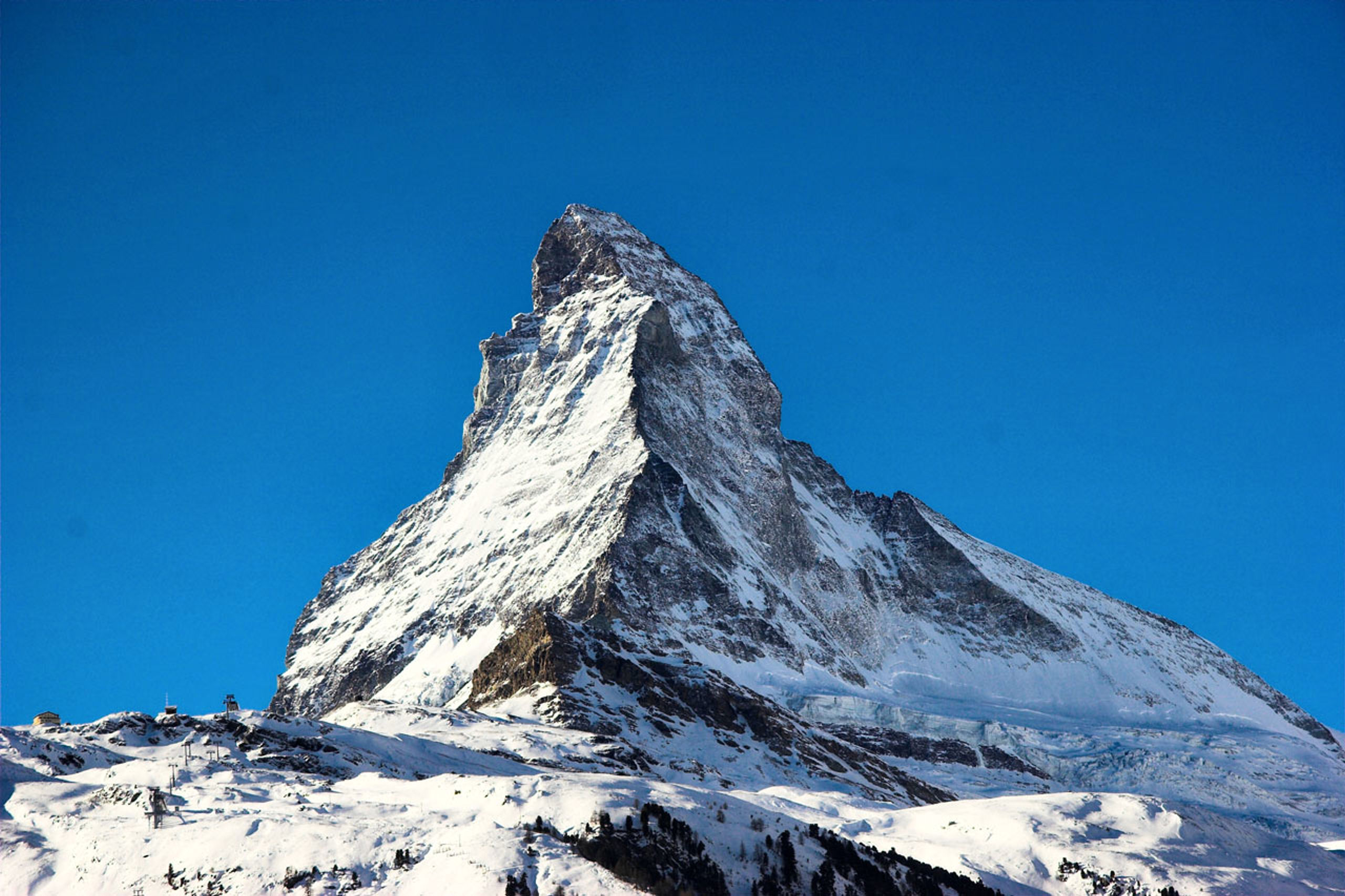
Matterhorn, 14,691-feet (4,478 metres) high, in the Pennine Alps on the border between Switzerland and Italy - Internet

Matterhorn, 14,691-feet (4,478 metres) high, in the Pennine Alps on the border between Switzerland and Italy – Internet

William took over the running of the tannery with enthusiasm, introducing recently patented machinery and the business continued to prosper. However, Albert longed to return to the Alps and his opportunity came in 1871. It was on this visit that he first saw the 14,691-feet (4,478 metres) high Matterhorn – in the Pennine Alps on the border between Switzerland and Italy. Albert wrote home to say that he scarcely dared to hope that he would ever climb it but three years later, and described as being tall, blond, with a powerful frame and oozing with energy, Albert returned and successfully climbed the mountain. On reaching the peak he wrote that he, ‘ought to cease taking an interest (in mountaineering).’

It was possibly about this time that Albert met J. Norman Collie and William Slingsby, then in the vanguard of guideless climbing and instead of ceasing to take an interest, he was captivated. The three became expert mountaineers with Albert eventually making seven ascents to the summit of the Matterhorn. Of this he wrote, ‘no sooner had I ascended a peak than it becomes a friend, and delightful as it is to seek fresh woods and pastures new, in my heart I long for the slopes of which I know every wrinkle, and on which each crag awakens memories of mirth and laughter, and of the friends of long ago.’

On one of his trips to the Alps, Albert met Mary Petherick, a daughter of an Exeter solicitor, who also enjoyed mountaineering. They married in 1883 and included a climb to the top of the Matterhorn in their honeymoon. That was in the middle of summer and as they sat at the top looking over the majestic Alps they both loved, Arthur said that ‘the wind was not sufficient to stir the flame of a match.’

Although, at the end of the nineteenth century high-risk sports such as mountaineering were frowned upon, Albert continued climbing. He was the first to ascend the Aiguille du Grépon (in the Mont Blanc group) – later a famous crack was named after him. The Dent du Requin and the Grands Charmoz also in the Mont Blanc Group; the Teufelsgrat on the three sided Tschorn (southern Switzerland), and on the Matterhorn, the difficult Zmutt ridge.

Albert Mummery with daughter Hilda from Tiger in the Snow by Walter Unsworth pub. Victor Gollanez Ltd 1967.

Albert Mummery with daughter Hilda from Tiger in the Snow by Walter Unsworth pub. Victor Gollanez Ltd

In July 1888, Albert ventured into Himalayas and said that it was like looking through a, ‘big hole in the cornice of the ridge I could look down 3,000 feet or more on to the vast unbroken glacier …’ That year his mother, Esther, died. Her obituary tells us that she was noted for her tireless works for the welfare of the poor. On her death, Albert decided to stay in Dover and devote his time to helping William with the family business. The 1881 census shows that by then the business was employing 27 men and 3 boys. Albert bought a house in Leyburne Road (since demolished) where he lived with Mary and their daughter Hilda, born in 1885.

Albert worked hard helping William at the Tannery and he also took a long hard look at the way the Town Council administered – William was a Liberal councillor for the Town Ward. From these observations, Albert researched and wrote the book The Physiology of Industry (1889) with his friend John Atkinson Hobson (1858-1940). A pioneering piece of work on the economic theory of underconsumption, the essence of which is that the macro economy required intervention to achieve stability. This stance was highly controversial at the time when classic macroeconomics centred on thrift.

Rakhoit Face, Nanga Parbat, Himalayas - xcitefun internet

Rakhoit Face, Nanga Parbat, Himalayas – xcitefun internet

However, Albert’s heart was still in his beloved mountains but fearing that he would never return in what spare time he had, he wrote his biography. Then, in 1895, the chance came for him to return to the Himalayas and an attempt to climb the unconquered, 26,929 feet, Nunga Parbat, the ninth highest mountain in the world. Situated at the western end of the great mountain range, the Nunga Parbat is in Pakistan administered Kashmir, near the Afghanistan/ Chinese border. Nunga means naked – one side is so steep that snow cannot lie on it – and Parbat means peak. Although this describes it well the mountain’s nickname is – the Killer Mountain.

Albert Mummery's gravestone in St Peter & Paul Churchyard, Charlton.

Albert Mummery’s gravestone in St Peter & Paul Churchyard, Charlton.

The mountain has three faces and the northern one is called the Rakhiot on which snow does lay. Along with two mountaineer friends and a number of Gurkhas, Albert set out from the military station of Astor. On 24 August 1895, having successfully established a camp at 10,000 feet, together with Gurkhas, Ragobir and Goman Singh, he set out to reconnoitre the Rakhoit Face of the great mountain. Shortly after leaving, the camp there was an avalanche and the three never returned – their bodies were never found. Subsequently there were many attempts to climb the Ninga Parbat and many more lives were lost. A German-Austrian team eventually conquered it in 1953.

Following Albert’s death, Mary and Hilda went to live with Mary’s parents in Exeter. Mary died on 8 March 1947 in Bournemouth, she never remarried. William Gange Mummery, Albert’s elder brother, died suddenly at Maison Dieu House on 8 January 1899 age 53. Nominally, the treasurer of the Russell Street Methodist Church his burial service was held there, after which he was buried in St Peter and St Paul’s Churchyard, Charlton. The Tanyard was put on the market and bought by George Bacon who ran it until he retired on his 70th birthday in 1922. The site was soon after incorporated into Pencester Gardens and following World War II, Pencester Court was built on the site.

Maison Dieu House, birthplace of Albert Mummery - the Father on modern Mountaineering.

Maison Dieu House, birthplace of Albert Mummery – the Father on modern Mountaineering.

Maison Dieu House was offered for sale in June 1899 and in 1904 was bought by the Corporation. Following World War II, the House became the town’s library until it was moved, in 2003, to the former White Cliffs Experience, renamed the Dover Discovery Centre. Dover Town Council bought the House in 2004 and once there was a plaque inside commemorating Albert Mummery but has now gone. The only memorial to Albert in the town is the small headstone in  St Peter & Paul  Churchyard, Charlton. Yet Arthur, born, worked and lived in Dover, has the worldwide acclaim of being the ‘Father of Modern Mountaineering’.

  • Published:
  • Dover Mercury: 12 & 19 March 2009
    Dover Society Magazine March 2011
Posted in Mummery Albert – The Father of modern Mountaineering, Mummery Albert – The Father of modern Mountaineering, People, Societies, Culture and Entertainment | Comments Off on Albert Mummery – The Father of modern Mountaineering

Hope Sherrard of Sandwich

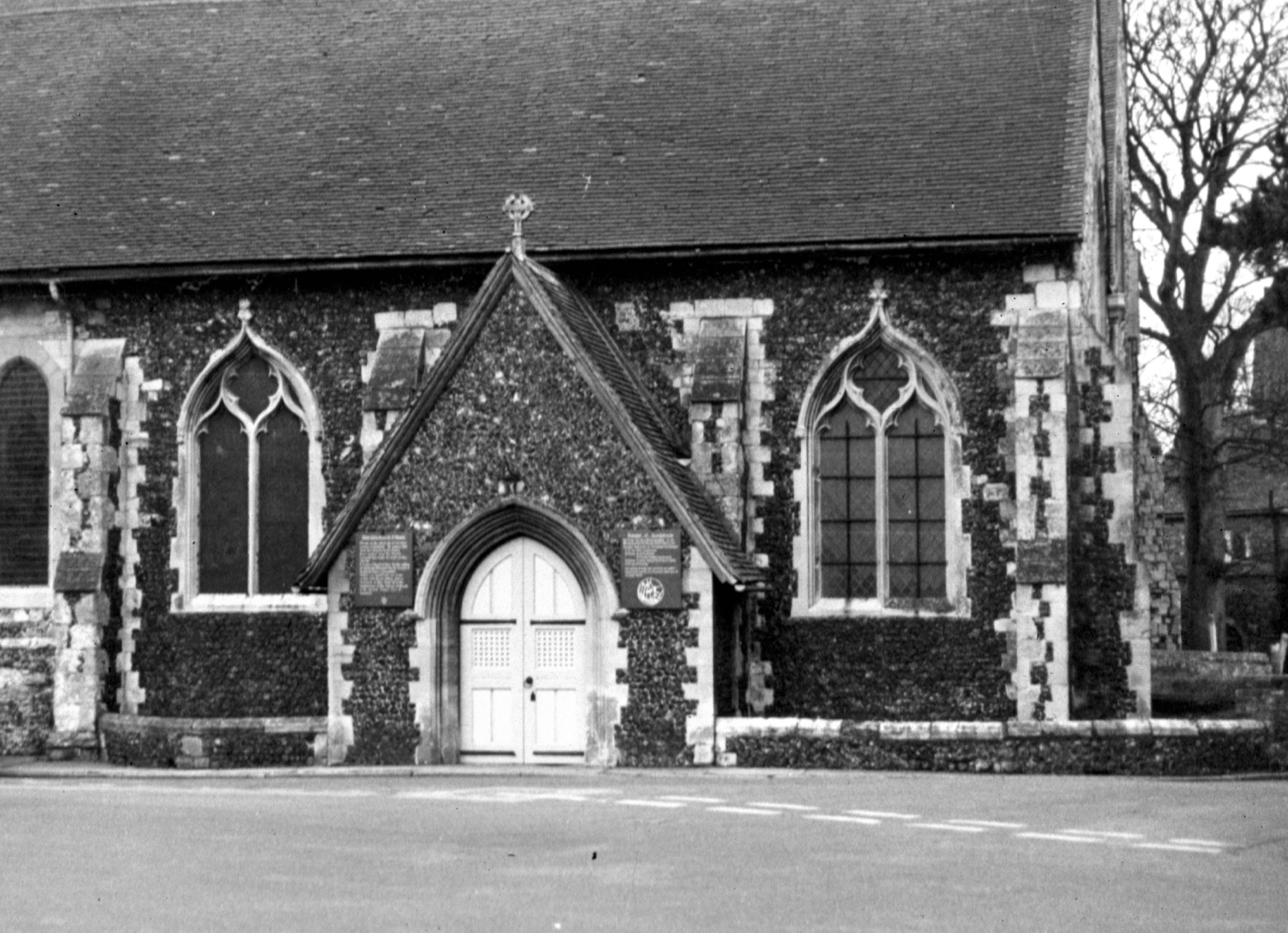
St Clements Church, Sandwich. Dover Museum

St Clements Church, Sandwich. Dover Museum

In October 1647, the House of Lords received a petition from Henry Forstall, Mayor of Sandwich – East Kent, and John Elgate, churchwarden of St Clement’s Church there. They were objecting to the installation of a Minister, one Hope Sherrard, at St Clement’s Church, Sandwich.

The two worthies complained that on account of his ‘inability to preach and his ill affections knew that he would never gain consent of any considerable part of the parishioners.‘ However, a testimonial from the parishioners of St Clement’s stated, amongst other things, that Hope was ‘pious peaceable in conversation and a great blessing to the town.’ Adding that ‘if Henry Forstall had not incensed rude seamen and others against him there would be no opposition.’

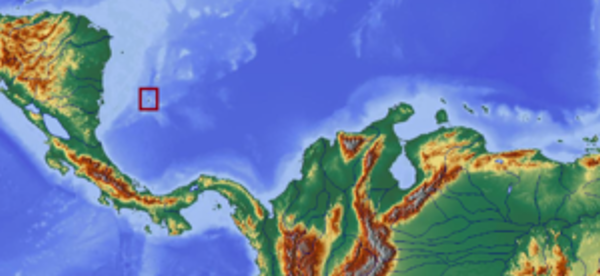
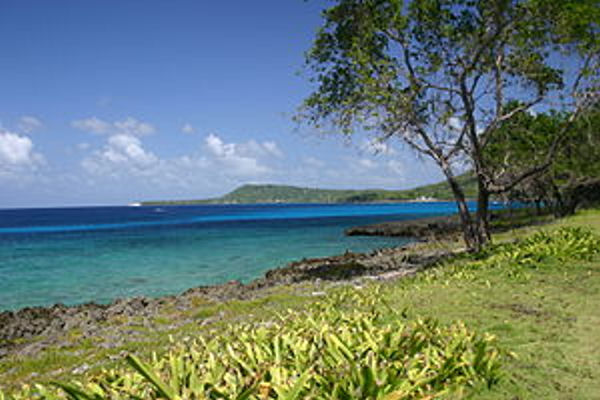
San Andrés and Providencia Islands in the Caribbean. Internet

San Andrés and Providencia Islands in the Caribbean. Internet

Hope Sherrard was no stranger to trouble, as a bright young man from a poor family, he was admitted to Emmanuel College, Cambridge, as a sizar – a student who ‘worked their passage’ on 10 February 1621. It appears that he may have graduated BA in 1631 (Speranntus Sherrard) and shortly after was elected as Minister to a group of settlers going to the Caribbean. They were sponsored by a group of wealthy and politically minded Puritans who had set up a company to finance a colony on San Andrés and Providencia islands, now part of the Columbian Islands, off the Nicaraguan coast (co-ordinates: 12º35’N 81º42’W). The colony was to survive on subsistence farming and Puritan ideals.

Discovered by Christopher Columbus during his 4th voyage (1502-1504), by 1527, the Spanish acknowledged possession of the islands. It is not known whether the islands were inhabited when the Spanish discovered them. By the end of the 16th century, the Dutch had a settlement there following which the Dutch and French used them as a base for privateering (legalised piracy). In 1628 Robert Rich, 2nd Earl of Warwick (1587–1658), who was very much involved in England’s overseas empire building, sent three ships to the Caribbean on a privateering mission. A Puritan, the Earl of Warwick, was later actively involved in the Civil Wars and the Interregnum (1642–1660) on the side of Oliver Cromwell (1599-1658).

Following a report from the captain of one of the ships, the Earl of Warwick and nineteen other Chartered Members, set up the Providencia Island Company, in order create the Puritan colony that Hope Sherrard was appointed to Minister. The colonists left England on the Seaflower in February 1631, under the charge of Captain William Rudyerd making landfall on San Andrés. The settlers then moved to Providencia, where the land was fertile and the mountainous terrain provided fresh water. Within a year, some eighty men arrived from Bermuda to join them and in 1632, a further contingent of around 150 came from England. The men, by the religious inclinations of the Company, were forbidden to play cards or other forms of gaming, whoring, drunkenness and profanity. All of which Hope advocated.

Supported by armed men, the new settlers quickly repelled the Dutch from the islands. However, within a year, the Company brought in enslaved people of West African birth or descent, from Jamaica. Over this, Hope objected saying that ‘Christians should not hold slaves.’ This fell on deaf ears as the Company wanted the colonists to grow cotton along with sugar cane. Both of these gave way to tobacco. Albeit, in 1634 there was a glut in the market for tobacco and the economy of the colony was hit hard that lead to hostilities within Hope’s flock.

Besides very little thought being given to religious convictions, there was even less given to the skills of the settlers. Although there was plenty of wood on the islands, there were no sawyers or craftsmen to create adequate shelters. Both the governor and Hope had a sort of brick house but the rest of the colonists lived in poorly built timber constructions that provided inadequate protection from the elements. The rain spoiled food, ropes and other necessities along with guns and powder. In 1634 Hope wrote to the Company in England, expressing his fears over an attack, finishing by saying that, ‘…we need to have prayers and faith now if ever, considering our imminent danger, having not shot for above a day’s fight in case all the enemy should assault us, and besides, 50 of our ablest and skillfullest men have gone from us of late … and we do not have the power to repel the enemy from landing.’

At the time, the Spanish did not know of the existence of the colony so Captain Rudyerd, in answer to Hope’s fears, told the Company that if the Island was properly fortified, it could be held against any force by 600 men. The Company acted swiftly and by December, the fortifications were reported as being more than adequate. A survey, undertaken the following year, 1635, showed that the colony composed of 500 ‘English’, 40 women, 90 people of African origin and a few children. Before the year was out the Spanish, having become aware of the colony’s existence, attacked.

San Andrés Island today - internet

San Andrés Island today – internet

They were repelled but the Company successfully applied to Charles I for ‘Letters of Marque’, enabling them to set up force of privateers to repel any further attacks – and legally commit piracy against Spanish Main ships carrying gold, silver etc. This had a positive effect on the economy of the settlement for although they refused to pay for defences, the Company agreed that settlers engaged in privateering retaining four-fifths of the value of the plunder. The inhabitants built defences and it would appear that Hope married about this time. His wife Mary gave birth to two children on the Island, one of whom was John, born in 1639.

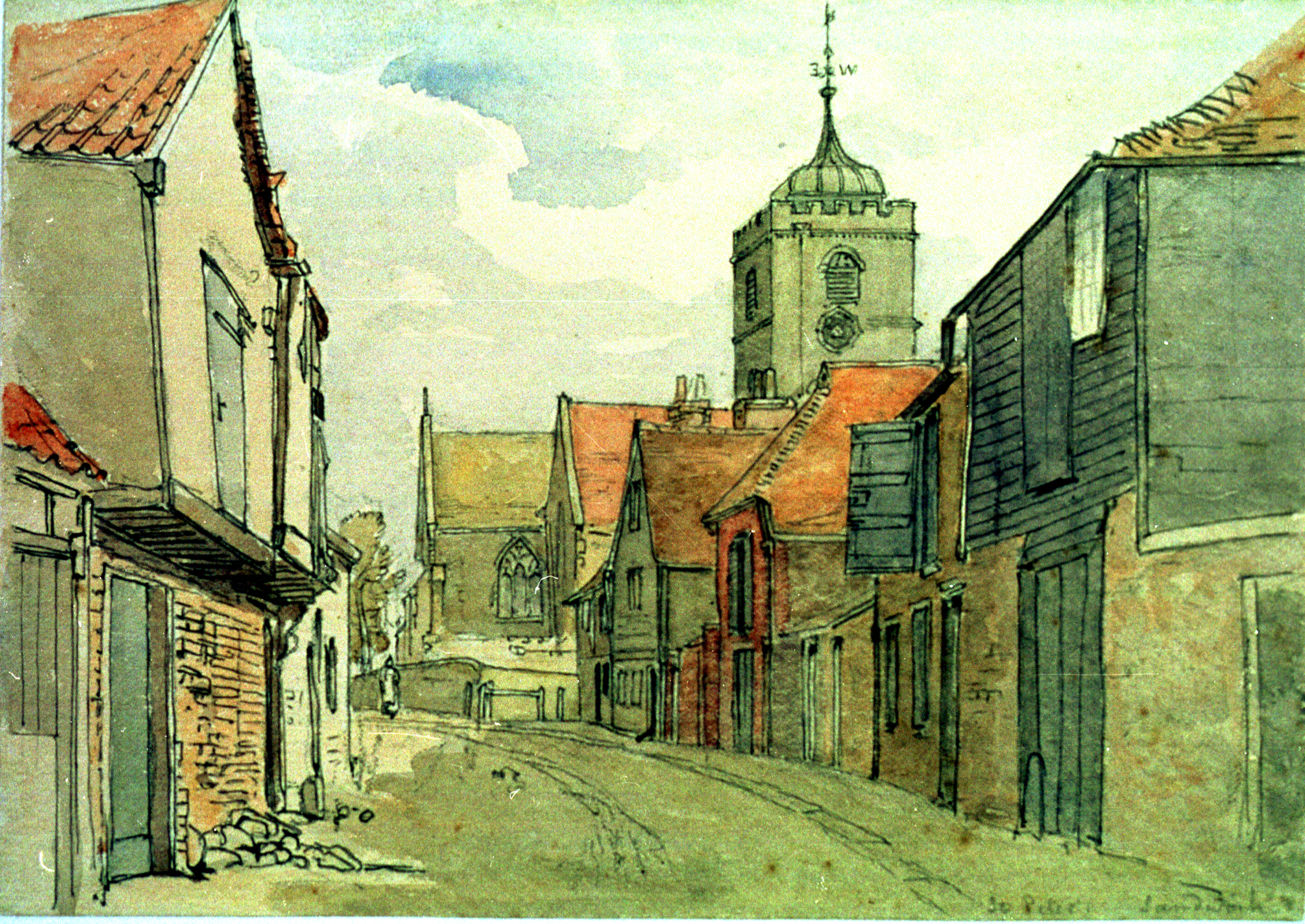
Sandwich, looking towards St Peters Church 1886-89  by J L Roget - Dover Museum

Sandwich, looking towards St Peters Church 1886-89 by J L Roget – Dover Museum

On his return to England, Hope was given the Ministry of St Peter’s Sandwich. This was just before the outbreak of the Civil Wars in 1642. There had been riots in Sandwich led by Royalist sympathisers, including Robert Lovell, Hope’s predecessor. When Hope arrived in the town, Robert was in Dover Castle prison but his wife still lived in the parsonage. Hope had with him his wife Mary and the two children but until Mrs Lovell moved out, they were homeless. In May 1643, Mary gave birth to a boy named after his father, but it is recorded that he was buried the following March.

In the meantime, Mrs Lovell refused to move from the parsonage, saying that her husband had been appointed by Charles I whereas Hope’s appointment was by Parliament.  On 6 September 1643 an order was issued  for her removal and the Mayor of Sandwich, Jurats, a constable, sundry townsfolk and Hope went to the parsonage and demanded admission. Mrs Lovell, although within, did not answer. A month later the same group tried again but Mrs Lovell still refused to open the door. On 14 November Mrs Lovell, when told that unless she surrendered the parsonage, there would be forced entry, ‘seemingly somewhat distracted’ promised to leave by Friday 20 November. However, on that day the contingent found the parsonage barred against them and they were forced to make break down the doors. Mrs Lovell was forcibly ejected and Hope and his family moved in. Eventually the Rev Lovell was released from the Castle and in 1653 and was awarded £7 out of the arrears of tithe due to him.

Towards the end of 1643, the town of Sandwich was devastated by plague with over 1,000 inhabitants dying. Mrs Lovell’s supporters said that this was a curse from God for removing her husband from the incumbency. Crosses and even crucifixes were erected to try to combat the pestilence. On 6 September 1645, Widow Drew was hung in Sandwich Market as a witch after being swum in the Delf stream. The accounts at the time include ‘wine and beer for seamen, hot water for her; and 2s for swimming.’ The widow’s goods were sold by auction.

St Mary's Church, Sandwich - Dover Museum

St Mary’s Church, Sandwich – Dover Museum

In the meantime, Hope was admitted as a Freeman of Sandwich – the usual procedure for a parson. He was also asked to serve St Mary’s Church, there, as the incumbent had died of the plague. In November 1644, Mary gave birth to a son, again named Hope, but on 25 April 1646, he was buried. In July that year they had another boy, Joseph and on 16 February 1648 their daughter Martha was baptised and later that year another son, Ralph. In the meantime, their son John was growing up fast.

However, when Hope was offered the third ministry in the town, St Clement’s, the churchwarden objected and the Mayor refused to support the appointment. At the time, the numbers of Non-conformists to Anglicanism in Sandwich were rapidly increasing and in the summer that year, the Mayor ordered the arrest of two. Separately, the town had received the order that fasting was to be strictly observed by all, even in unseasonable weather. Hope petitioned for the St Clement’s living, enclosing the testimonial cited in the opening paragraph, however, Mayor Henry Forstall, along with the Corporation presented the counter petition. The authorities sided with Hope, giving him an increase in his stipend at the same time as sending the Mayor to prison!

Dover Castle

Dover Castle

The previous incumbent at St Clement’s, Benjamin Harrison, was still in post and was kneeling in prayer in the pulpit of the Church when a Parliamentarian contingent arrived and ordered him out. Harrison ignored the officer in charge who then ordered his men to drag Harrison from the pulpit. This they did. Suffering head injuries during his arrest, Harrison was taken to the Castle prison but that afternoon an accident occurred and the soldier who had caused the injuries was killed. Following the Restoration, in 1660, Harrison returned to St Clement’s.

In the meantime, the Mayor and Jurats amalgamated the three churches at Sandwich and Hope was appointed in overall charge. He was also given the incumbency of St Margaret’s. Dissent, though, was growing against the Parliamentarians and Hope  was relieved of his posts. For this he was given £60 compensation by the Court for Plundered Ministers together with the incumbency of Melcombe Bingham, Dorset. He stayed there until 1658 and then my researchers on Hope Sherrard come to a dead-end. However, Hope’s son John, born in Providencia in 1639, entered Trinity College, Dublin in 1658 and his brother Ralph in 1664. It does not appear that John graduated but Ralph did with a BA in 1674.

  • Published:
  • Dover Mercury:  23 March 2006
Posted in Civil Wars and Interregnum, Hope Sherrard of Sandwich, People, Religion & Churches, Sandwich, Sherrard Hope of Sandwich, Sherrard Hope of Sandwich, Sherrard Hope of Sandwich | Comments Off on Hope Sherrard of Sandwich

Pepper Family – ancient and present day legacies

Pepper's Guns - Next to the Maison Dieu, Biggin Street.

Pepper’s Guns – Next to the Maison Dieu, Biggin Street.

At the top of Biggin Street, next to the Maison Dieu, are three cannons, said to have been brought back from the Battle of Waterloo (1815). Up until the 1920s, they were on display outside of a High Street shop that belonged to Matthew Pepper. The Pepper family is one of the oldest in Dover, with a number of members playing prominent roles in the town’s history.

Thomas Pepper was Mayor in 1559, 1563, 1565 and 1567 and from documents, we know that he held land ‘Above the Wall’. This was the area now occupied by the present day almshouses and Adrian Street. He also owned land in Elms Vale and Maxton. As Mayor, Thomas ruled with a firm hand, inflicting heavy fines on two Jurats and was instrumental in sending Roger Wood, the Town Clerk, to gaol! He also stop religious feuding prevalent at the time with emissaries, acting on behalf of Elizabeth I (1558-1603), reporting back to the Queen that, ‘The Maier, Jurats and Comynalte were all in p’feact amyte and concord thanks to yeomen unto God and hath openle pumiced soe to contynewe by God’s Grace.’

Biggin Gate Plaque - New Street

Biggin Gate Plaque – New Street

In Thomas’s final year as Mayor a document was published that raises doubts over the accepted site of Biggin Gate. This is generally believed to be near the junction of New Street and Biggin Street, where a plaque can be seen today. The document concerns the letting of a property and implies that Biggin Gate was further south. Biggin Gate was removed by order of the Common Council in 28 June 1762.

Thomas Pepper died about 1575 and was buried in St Peter’s Churchyard, site of the present day Church Street / Lloyds Bank, Market Square. He wrote his Will the year before and bequeathed his property in Elms Vale to a member of his family that was eventually sold on to the Stringer family. The Maxton property also went to a relative and was eventually sold. The profits from other property were distributed equally between to the poor within the parishes of St Mary’s, Dover and Hougham. Originally, the money was used, once a year, to make sixpenny loaves that were then given to the poor.

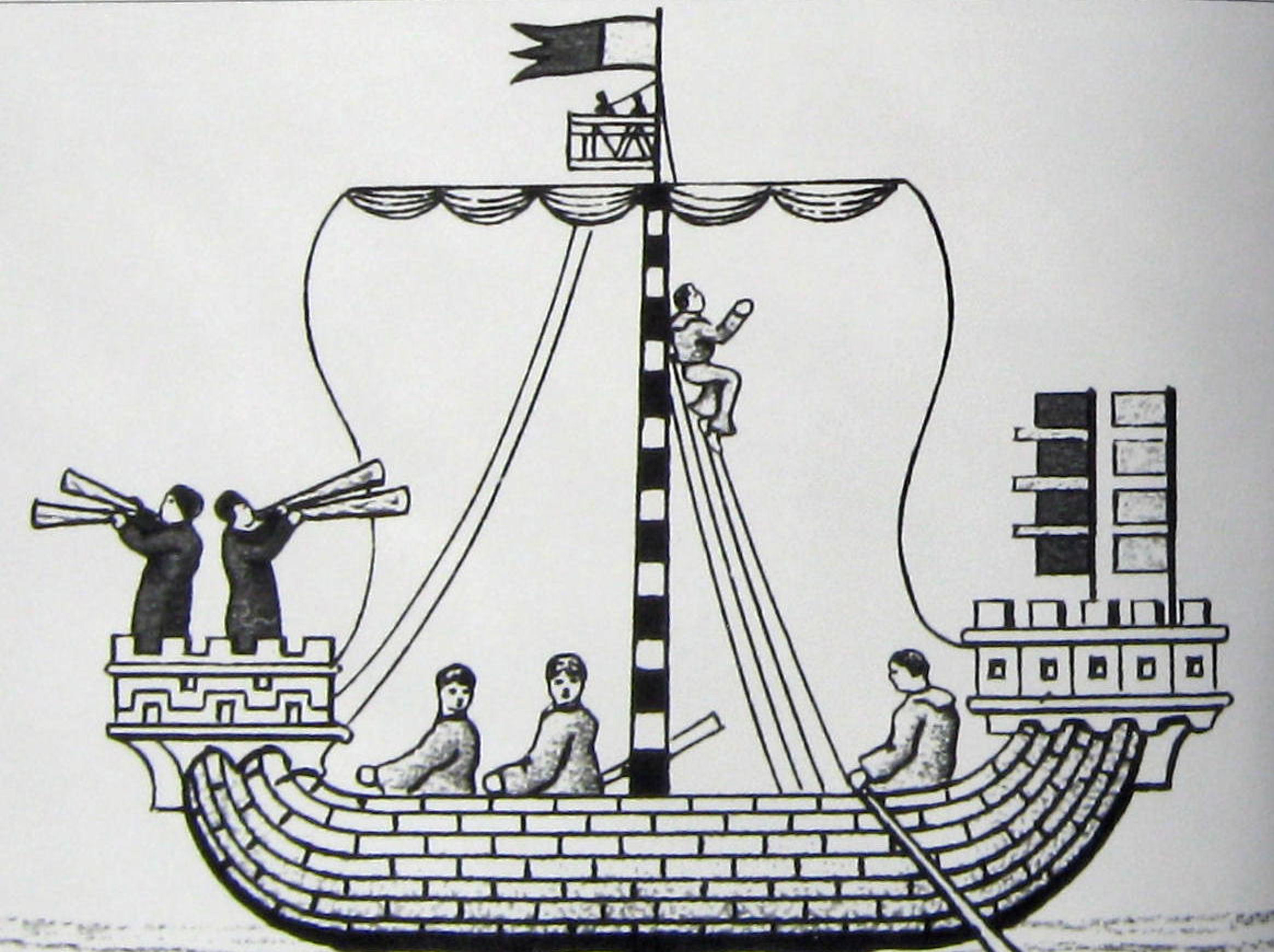
Cinque Port ship- c13th

Cinque Port ship- c13th

The next member of the Pepper family of note is Luke who was the Master of the Almshouses and Mayor of Dover from September 1634 for two years. At the time, Charles I (1625-1649) was making demands for ship-money. The Cinque Ports, of which Dover was a key member,  by their charters had for centuries provided ships and men for what was effectively the country’s navy. However, by the time of the Armada (1588), the Cinque Ports were only able to send five ships.

Although the country was not at war when Charles I asked for ship-money the navy was in a poor state. The writ stated that the authority it was addressed to, had to provide a ship of a certain tonnage, armed with a certain number of guns, equipped with a specific crew, supplied with provisions for six months and to be ready for service of the King at a certain sea-port on a set day. The cost of each ship as described in the writ was estimated at an average of £10 per ton. If the authority could not provide the said ship then they had to pay an equivalent tax and it was expected that this would annually raise about £10m. It was left up to the Sheriffs of each county to undertake the assessment of the authorities in their jurisdiction and the Cinque Ports were rated at one ship of 800-tons with 320 men. On this basis, Dover was expected to pay £330 per year from 1635 and for the following four years, with a 20% discount if paid promptly.

The first demand for the annual ship money was instigated by Lord Finche of Fordwich, in 1635, four years later Dover, along with the rest of Kent, had not paid it or any subsequent demands. The county, in retaliation, was accused of ‘having a sad lack of religion, being sympathetic to Catholics, and a large number of rogues and ale houses.’ Following this the Cinque Ports were ordered to provide both ship money and 300 soldiers with their clothing and other disbursements or pay £3 per man. The Ports petitioned Parliament saying that they could not afford it but by the time the complaint was to be heard, Parliament had been dissolved. The Civil Wars broke out in 1642 and Charles I was beheaded in 1649. Throughout all of this Luke was one of the leading protagonists.

Dover's ancient Town Hall that stood in the Market Square from 1605-1861

Dover’s ancient Town Hall that stood in the Market Square from 1605-1861

At the Restoration of Charles II (1649-1685) in 1660, John Pepper was an attorney and Common Councilman and was appointed Town Clerk the following year. Although the King promised to treat his subjects’ religious convictions fairly, within two years members of the Corporation were compelled to sign a document stating that they conformed to the prevailing religious doctrine – Anglicanism. Seven Jurats and twenty-three Common Councilmen refused and were removed from office – John signed.

Not long after John was appointed solicitor to the Cinque Ports Court of Brotherhood and later successfully obtained a renewal of the Cinque Ports Charter from Charles II without a great deal of alteration. However, Dover’s Charter, given by Elizabeth I (1558-1603) was called in and because of the religious descent in the town at the time (See Dynasty of Dover Part I – Stokes). A new Charter, it was envisaged by the King, would weaken the way the town was governed. John fought hard against this but in 1683, he died. Within weeks, a new Charter was issued and the power of electing the Town Clerk transferred to the Privy Council in London.

James II (1685-1669) came to the throne in 1685 and the Privy Council, in accordance to the new Charter, chose the Town Clerk. This was a Paul Pepper who was not a close relation of John’s nor was he a member of Dover’s Common Council. Following the Glorious Revolution of 1688, the Charter was repealed by proclamation on 25 October 1689 and Paul Pepper’s days as Town Clerk were numbered. With the right to elect a new Town Clerk of their own choosing, John Bedingfield was appointed and he held the office for sixteen years. During his time, a Thomas Pepper was the Town’s Sergeant. At sea, another John Pepper, who left Dover as a cabin boy, became Commodore of the East India Company’s fleet.

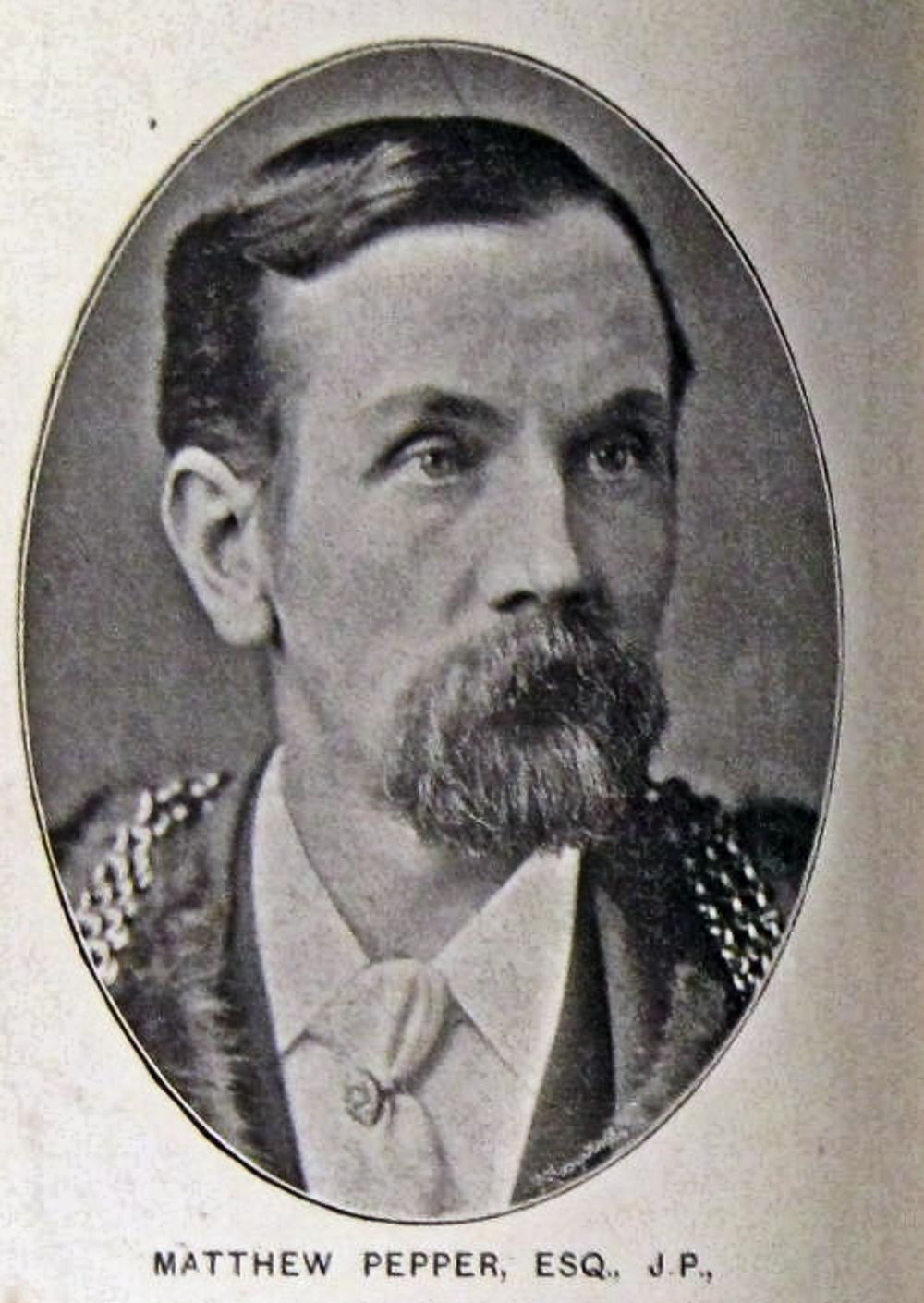
Matthew Pepper - Mayor 1895-1896

Matthew Pepper – Mayor 1895-1896

Matthew Pepper was the family’s next Mayor of Dover. Born in 1841 he trained as an engineer in Ipswich and married Sarah Luckhurst in 1866. Matthew opened a business in the High Street, opposite the present day Charlton Centre where he ran a successful wholesale and retail ironmongery store. It was outside of the shop that kept the three cannons used at the Battle of Waterloo (1815) mentioned in the opening paragraph. In 1883, he stood for the council as a Conservative in Castle ward, but at the request of the executive withdrew to enable William Crundall to stand. The latter went on to be elected Mayor 13 times and was knighted.

Two years later, in November 1885, Matthew was elected for Castle Ward unopposed to fill a vacancy caused by the death of Philip Stiff. He remained on the council until 1913 and was described as keen, witty, original and enterprising – a Radical mind in a Conservative body! Matthew became a magistrate in 1889, appointed Alderman in 1892 and elected Mayor in 1895-6.

Pepper Boundary Stone East Cliff

Pepper Boundary Stone East Cliff

That year saw Dover’s boundaries extended and the Pepper boundary stones erected. It was also at this time that the Biggin Gate plaque was put in to position. Further, Matthew was actively interested in international affairs. In an effort to reinforce the then Ottoman Empire, the authorities there had instigated anti-Christian pogroms, particularly in Armenia. Between 1894-1896, it was estimated that some 80,000 to 300,000 Armenians were massacred. However, in Europe very little action was taken. This made Matthew so angry that he wrote to the papers to this effect.

In local politics, Matthew was principally concerned with the administration of the Poor Law, holding an office on the Board of Guardians for Charlton from 1876. The same year as he was elected Mayor, 1895, he was appointed Chairman of the Board, which included the Dover Union – the workhouse that eventually became Buckland Hospital. He preferred helping people to get work or allowing people to stay in their own homes instead of being incarcerated in the workhouse. This, he particularly applied to widows with children, the sick and the elderly, whom, under his leadership, were supported by out-door relief – a combination of money, goods and vouchers. Under his administration, to deal with unemployment, the number of jobs provided by the council increased at the same time the number of healthy inmates of the workhouse fell as they too were provided with paying jobs. This policy, however, came in for fierce criticism, mainly from his own political Party.

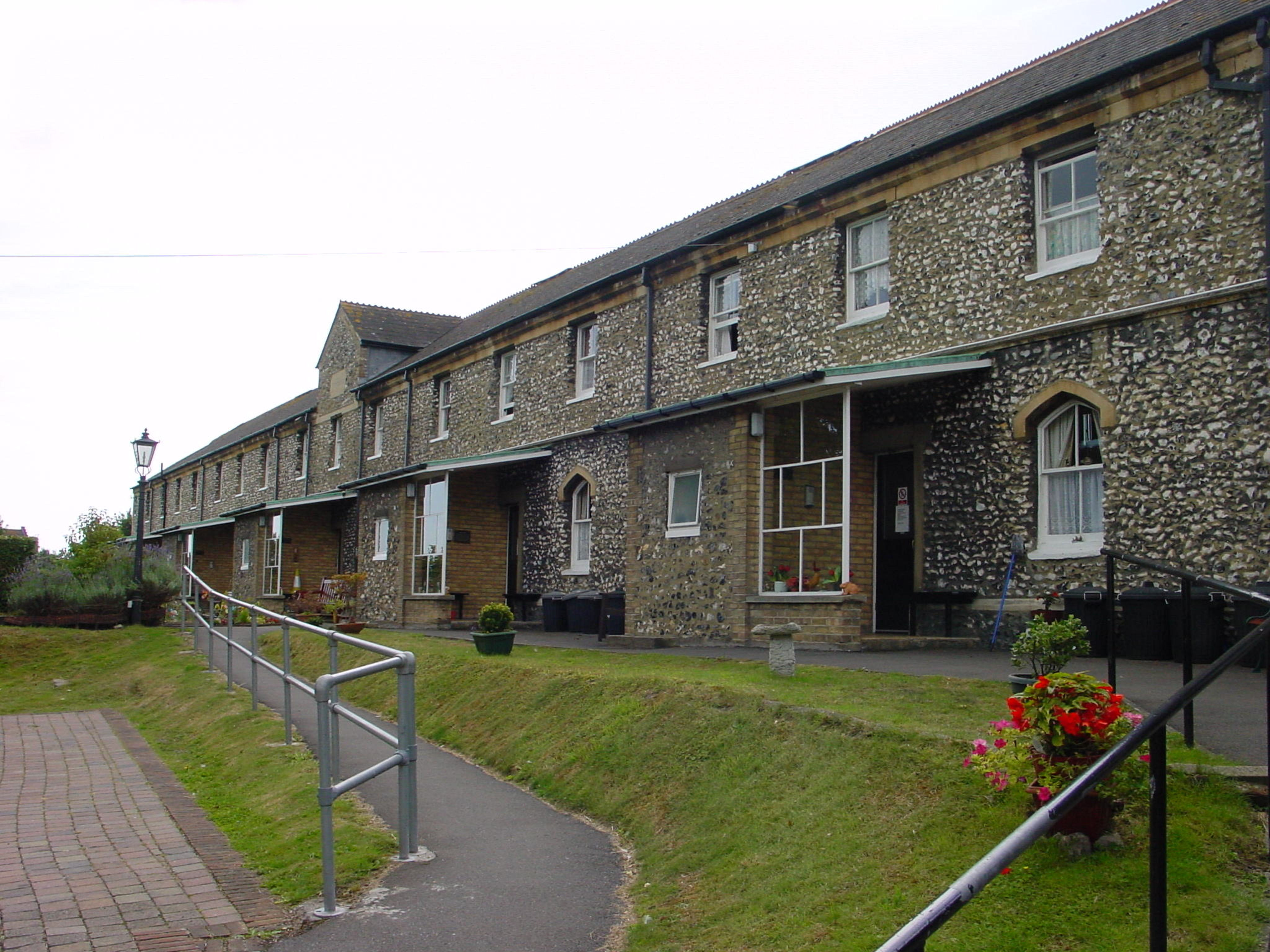
Gorley Almshouses, Cowgate Hill

Gorley Almshouses, Cowgate Hill

Another source of contention was the elderly. Part of the role as Chairman of the Board of Guardians were the Almshouses. The first of Dover’s almshouses was built medieval times but it was not until the 16 and 17 centuries that any more were erected. During the first half of the 19th century, a significant number of almshouses were built and in 1877, Mrs Gorely was persuaded by Dr Edward Ferrand Astley to leave money for ten almshouses below Cowgate Cemetery. Although the number of ‘able bodied’ inmates in the workhouse had fallen, the number of those that required hospitalisation – mainly elderly – was increasing. Matthew took great pains in successfully arguing for the workhouse hospital to be extended so that they could receive nursing care. However, this cost the ratepayers’ £6,790, just for the building works and did not go down well.

In 1903, the yearly income for the almshouses was about £300, derived from ground rents, nominal rents of the almshouses, rents from lands and dividends on Consols belonging to Almshouse charity. Still, reeling from the cost of the workhouse hospital, the following year the council voted that the Board of Guardians were to stop outdoor relief for the elderly – they were to be admitted into the workhouse or do without help. As for the Almshouses, the council stated that they were designed for people who were not absolute paupers so those who were on outdoor relief were to be transferred to the workhouse. The council were supported by the Dover Express of 8 January 1904, with the editor writing, ‘Trustees (of the Almshouses) in future should give help to broken down trades people or persons who have little left and are too aged and broken down to ever hope to get any more and should not have to look to the Poor Law supplement provision.’

Matthew was forced to give way but in April 1907 Dr Astley died and in his Will, he left two-thirds of his £23,000 estate to the Gorely Almshouses. This included increasing the weekly allowances to the inmates so that they would not have to leave their homes and go into the workhouse. On 17 September that year, Matthew’s business on the High Street, was devastated by a major fire following which he slowly withdrew from taking an active part in council affairs. He resigned his position as Chairman of the Board of Guardians, in 1913.

In the 1980s, one of the students I met while teaching at Dover Girls’ Grammar school was the daughter of George Pepper the editor of the Dover Express. He had been appointed editor when Norman Sutton, the father of Terry Sutton, retired in 1964. In 1986 George was promoted to group editor of the South Kent Newspapers with overall responsibility for the Express and its sister paper the Folkestone Herald. In March 1987, the papers were taken over by East Midlands Allied Press, the seventh take over in 18 years. In September that year George was dismissed but received compensation before his case was heard at an Industrial Tribunal. Up to that time, this author was a regular contributor to the Dover Express.

Pepper's Guns - Next to the Maison Dieu

Pepper’s Guns – Next to the Maison Dieu

Returning to Matthew Pepper, all the flags were lowered on all the municipal buildings on 24 April 1921, the day Matthew died. Sarah, his wife, died on 28 May 1928 aged 86. By 1925, the shop on the High Street had closed with Turnpenny’s taking over the premises. The block was sold to Drum Development Ltd in 1965, who demolished the properties and built the shops we see today. The three guns that stood outside of Matthew Pepper’s business he bequeathed to the town and are, as noted, adjacent to the Maison Dieu.

  • Published:
  • Dover Mercury: 21 & 28 July 2011
Posted in People, Pepper Family - ancient and present day legacies | Comments Off on Pepper Family – ancient and present day legacies

Dover Pageants

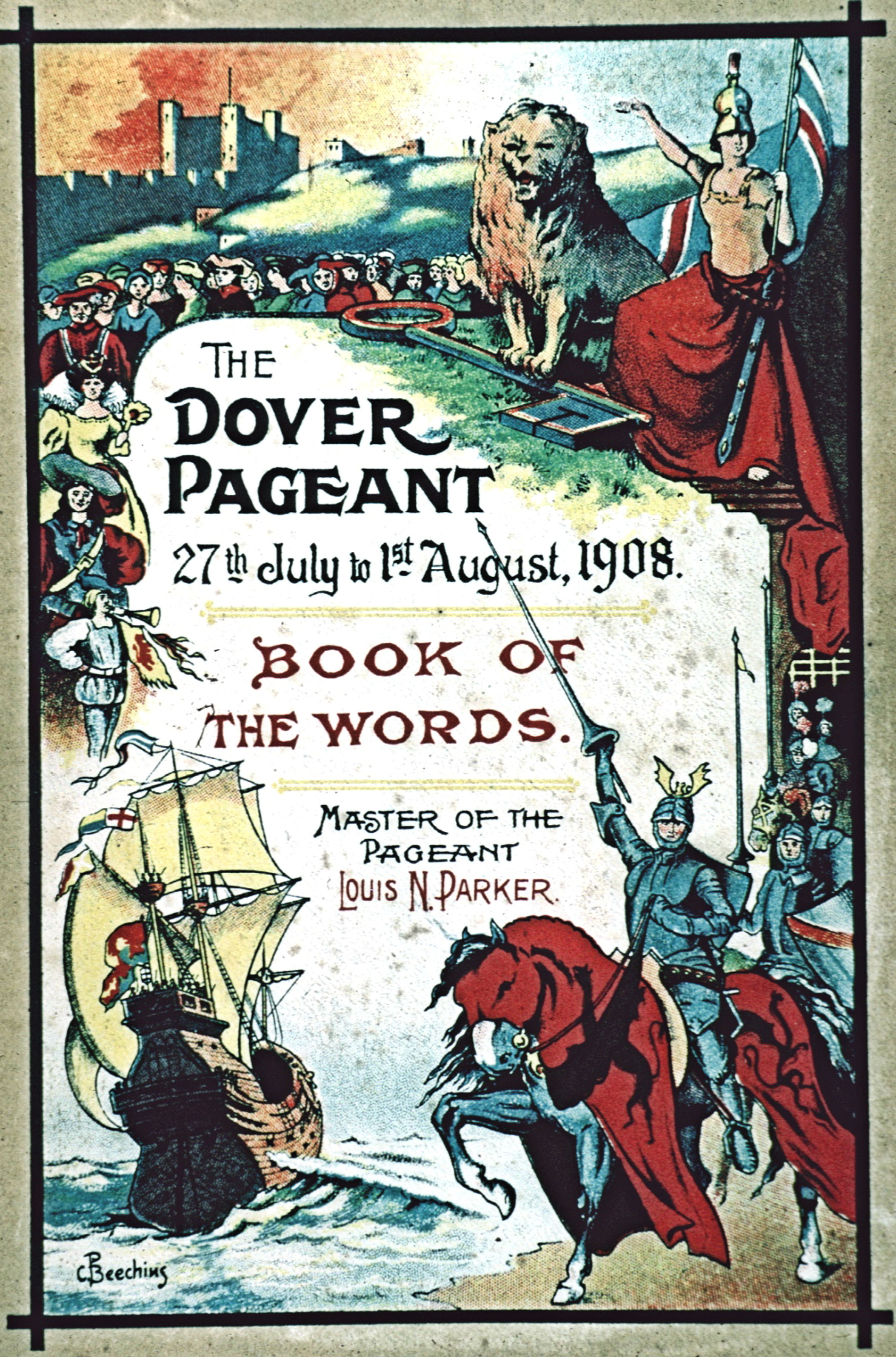
Dover Pageant Programme 1908. Dover Museum

Dover Pageant Programme 1908. Dover Museum

In 1908, Dover put on a magnificent Pageant under the direction of Louis Napoleon Parker (1852-1944). He was a well-known dramatist and composer, born of an English mother and American father in Calvados, France. Between 1877 and 1896, he had been the director of music at Sherborne School, Dorset.

Parker had staged the Sherborne Pageant in 1905, held at the town’s Castle and featuring 700 performers wearing a ‘panorama’ of costumes and ran for three consecutive days. The Pageant was to commemorate the 1200th anniversary of the founding of the town by St Ealdhelm. A year later Parker produced the Warwick Pageant in the grounds of the Castle there. This ‘sketched in dramatic form episodes covering 1700 years of the town’s history’ and was ’embellished with choruses, songs, dances and marches.’ 2,000 people took part in the final tableau and the show was put on in July and ran for seven consecutive days. People flocked from all over the country to see it!

Pageant Master 1908 Louis N Parker. Dover Museum

Pageant Master 1908 Louis N Parker. Dover Museum

The success of the two pageants led to other towns either putting on their own shows or hiring Louis Parker. Canon Henry Bartram, the Vicar of St Mary’s Church, attended the Sherborne Pageant and was so impressed that he eventually persuaded Parker to put a pageant on in Dover. Parker agreed but as money was involved, Dover Corporation needed some persuading. The great man came to the town addressed the council on 19 February 1907 and they agreed to hold a Pageant, under Parker’s direction, the following year.

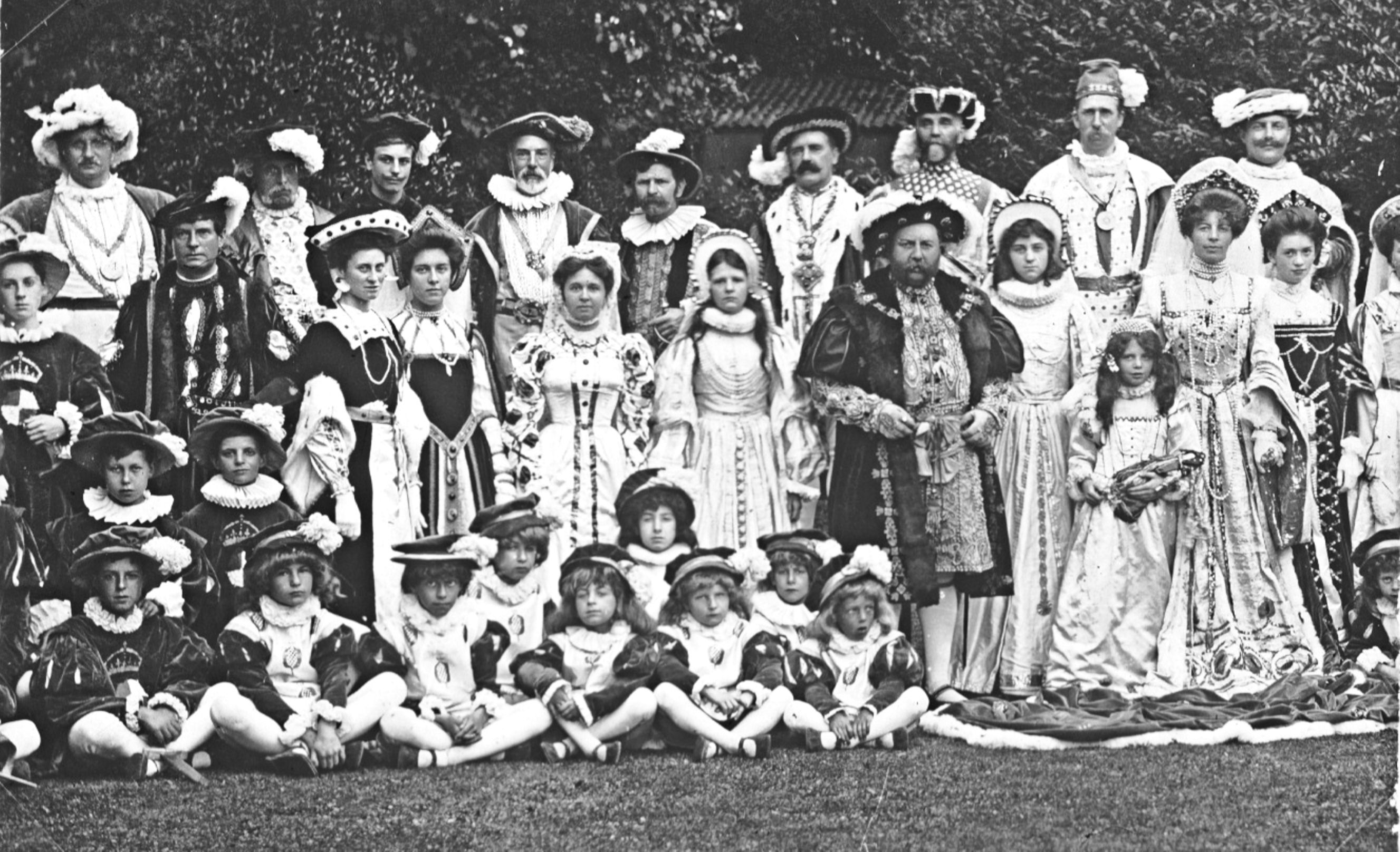
Over the next eighteen months local blacksmiths, carpenters, decorators, seamstresses etc., worked hard, in they’re own time, creating scenery and costumes. Some 2,000 performers rehearsed while the lead characters, mainly drawn from the higher echelons of Dover’s society, had studio photographs taken of themselves in their costumes.

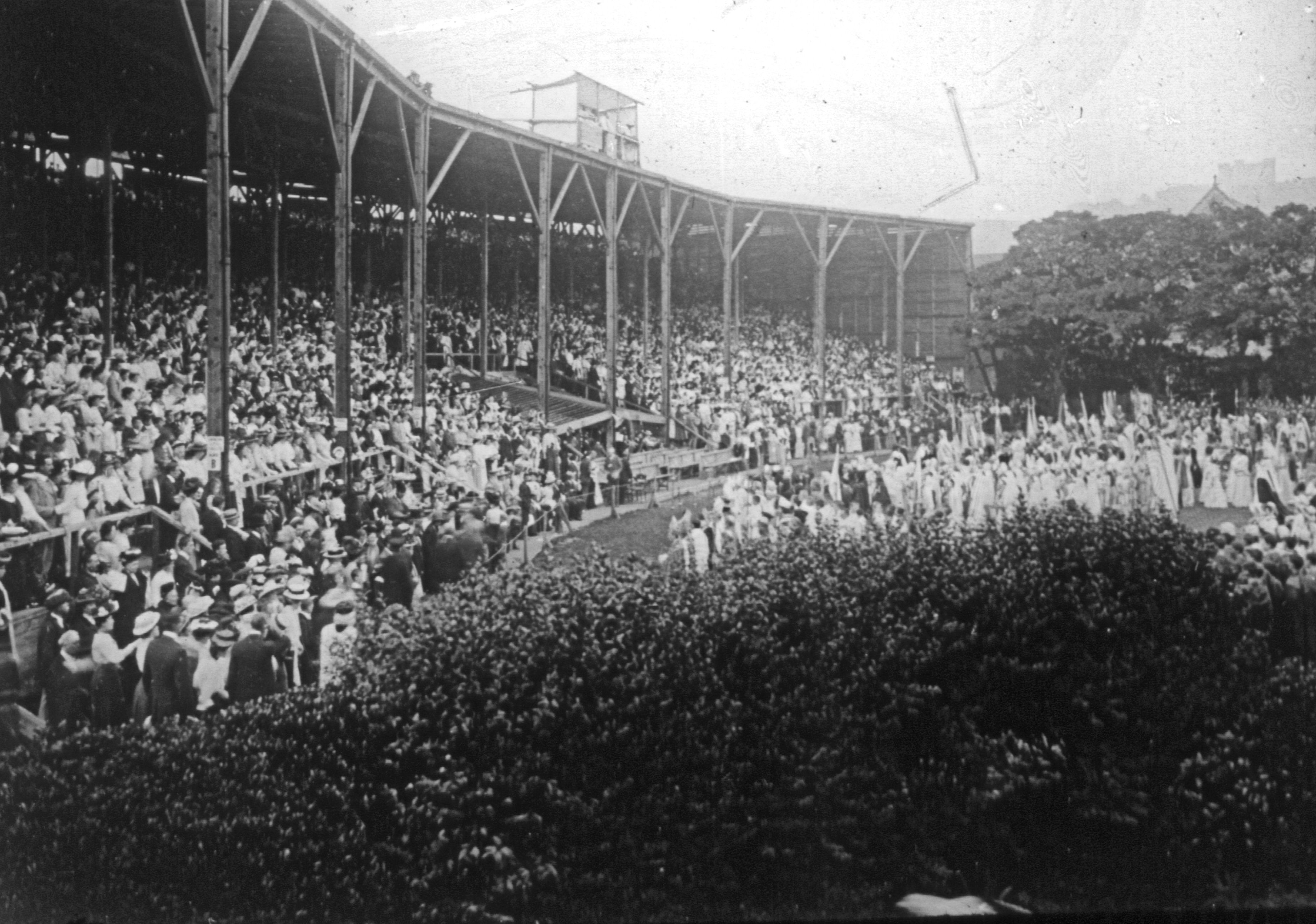
Dover Pageant 1908 grand stand. Dover Museum

Dover Pageant 1908 grand stand. Dover Museum

The show was performed every day in the afternoon, from July 27 to August 1, in the grounds of Dover College. At each performance there were 5,100 reserved seats ranging in prices from 21s (£1.05p), 10s6d (52½p), 5s6d (27½p) and 3s6d (17½p). To encourage visitors from out of town to come, the two railway companies that served Dover, South Eastern Railway Company and the London, Chatham and Dover Railway Company, offered reduced railway fares for ticket holders. Albeit, like many events in Dover, it was almost ruined by malicious rumour mongering. So bad was this that in May 1908, Parker held a grand ‘at home’ in Connaught Hall where local beauties dressed up as ‘Muses‘ and  ‘Bacchus’ with handsome assistants were on hand to provide refreshments.

During the week prior to the formal opening, the folk of Dover were invited to watch the final rehearsals for a small charge. On the Saturday of that week 5,000 local children came as well as soldiers stationed in Dover. Everything was auguring well when, on that day, an unexpected problem arose. By the sanction of Dover magistrates, the nearby Christ Church vicarage, on Folkestone Road, was licensed for the sale of intoxicating liquors throughout the duration of the Pageant. However, the vicar, the Rev. Hugh Falloon, who did not reside at the vicarage, returned from holiday. He was a teetotaller and when he found out what was happening, took possession of the vicarage! Demanding that all the ‘inappropriate’ furnishings be removed he still stood his ground until the licence was transferred to other premises!

Dover Pageant 1908 - a full house. Dover Museum

Dover Pageant 1908 – a full house. Dover Museum

The day finally arrived and the weather could not have been better. The event was introduced by Dover’s Mayor, Walter Emden, and formerly opened by Sir John Bell, Lord Mayor of London. In attendance were all the Mayors of the Cinque Ports and other Kent towns. Representatives from Calais, Antwerp and Ghent were also there. As guests of the town’s MP, George Wyndham (1863-1913), a Royal party came to see the spectacular on the Tuesday. This included, H.R.H Princess Alexander of Teck, (1883-1981) – grand daughter of Queen Victoria, H.R.H Princess Helena of Waldeck and Pyrmont (1861-1922), H.R.H. Princess Louisa Augusta of Schoswig-Holstein, Sibell, Countess Grosvenor wife of George Wyndham (1855-1929) and Kathleen Emily Wellesley Bulkeley-Williams, Duchess of Wellington (1848-1927). There were also several other titled aristocrats. The event was covered by the national press with the Times reporting, ‘Dover pageant was the best managed spectacle we have seen.’

Dover Pageant 1908 - Court of Henry VIII. Dover Museum

Dover Pageant 1908 – Court of Henry VIII. Dover Museum

The theme of the Pageant was England’s relationship with France over the centuries. This was 1908 and four years after the Entente Cordiale (08 April 1904) that fostered Franco-British relations. Starting from the days the Romans arrived at Dover, the scenes were spectacular. Dover being razed to the ground depicted William I (1066-1087) arrival in England, his troops burning the town and the town being rebuilt. This centred on St Martin le Grand, the monastery that once dominated the town and stood near the Market Square. King John’s (1119-1216) ultimate submission to Rome was shown followed by a scene depicting Hubert de Burg (1160-1243), as the builder of the Maison Dieu. A boat, of the actual size and shape as the ones used by the Cinque Ports fleet, was built, while the audience watched, on the stage each day. On completion, a full complement of 21 crew – as designated in the Cinque Ports Royal Charter of 1155 – climbed on board and unfurled a blood-red sail bearing the Invicta – the white horse of Kent.

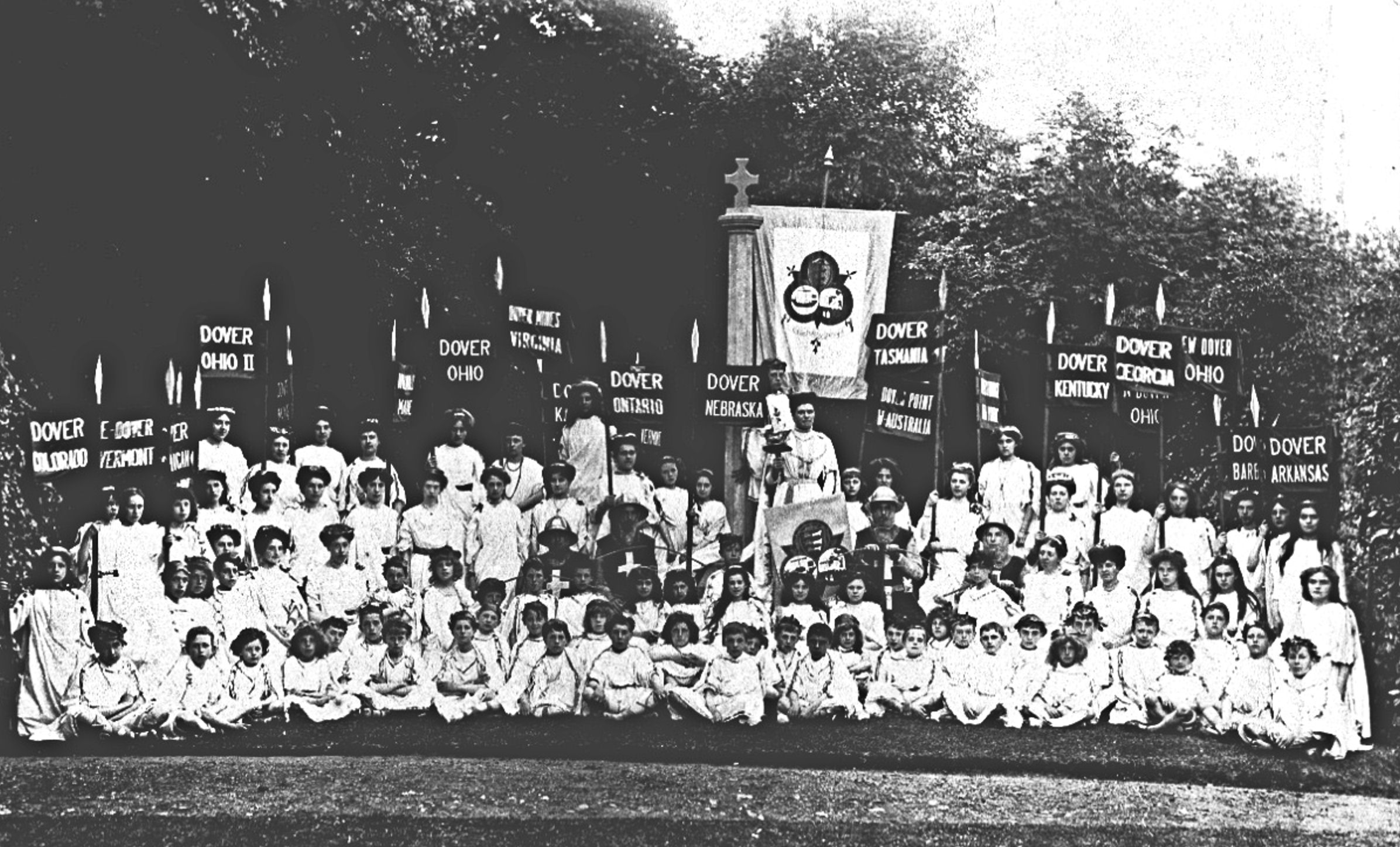
Dover Pageant 1908 - Daughters of Dover. Dover Museum

Dover Pageant 1908 – Daughters of Dover. Dover Museum

The episodes that followed were equally as spectacular, with the seventh and last episode appertained to the arrival of Princess Henrietta Marie of France (1609-1669) to meet her future husband, Charles I (1625-1649), at Dover Castle. This was all in French and written by Louis Tierceline a distinguished French poet. It was performed by the inhabitants of Douai, between Lille and Arras, northern France and finished with the entry of nine French Princesses that became Queens of England. The final tableau included Dover’s 43 colonial daughters and all the characters and animals that had taken part.

Dover Corporation’s organist, Professor Harry J. Taylor, was the music director and composed ‘All Hail to Thee Dauntless Dover’ for the occasion. He also conducted the orchestra made up of 100 musicians that included the complete band of the Queen’s Own Royal West Kent Regiment. The narrative chorus was sung by a choir of 80 and the madrigal by a chorus of 100 voices. Charles Long was the master of the dance routines and local art teacher, William East, designed the costumes. Lorna Bomford, better remembered for her activities in Dover Women’s Suffrage, designed and organised the making of the armour and weaponry.

After it was over there was no doubt that the event had been an unqualified success in almost every sense. It was favoured throughout with fine weather, the staging magnificent, acting was splendid and the music and singing excellent. Although American and French visitors had booked the best seats the attendance, when the full prices were charged was, however, poor. This had left a deficit of £1,948 and the event was classed as a serious failure. The guarantors covered the amount but in the inquiry that followed it were found that the income was over estimated and the expenditure, under estimated. No account was taken of the positive knock-on effects on the town’s economy.

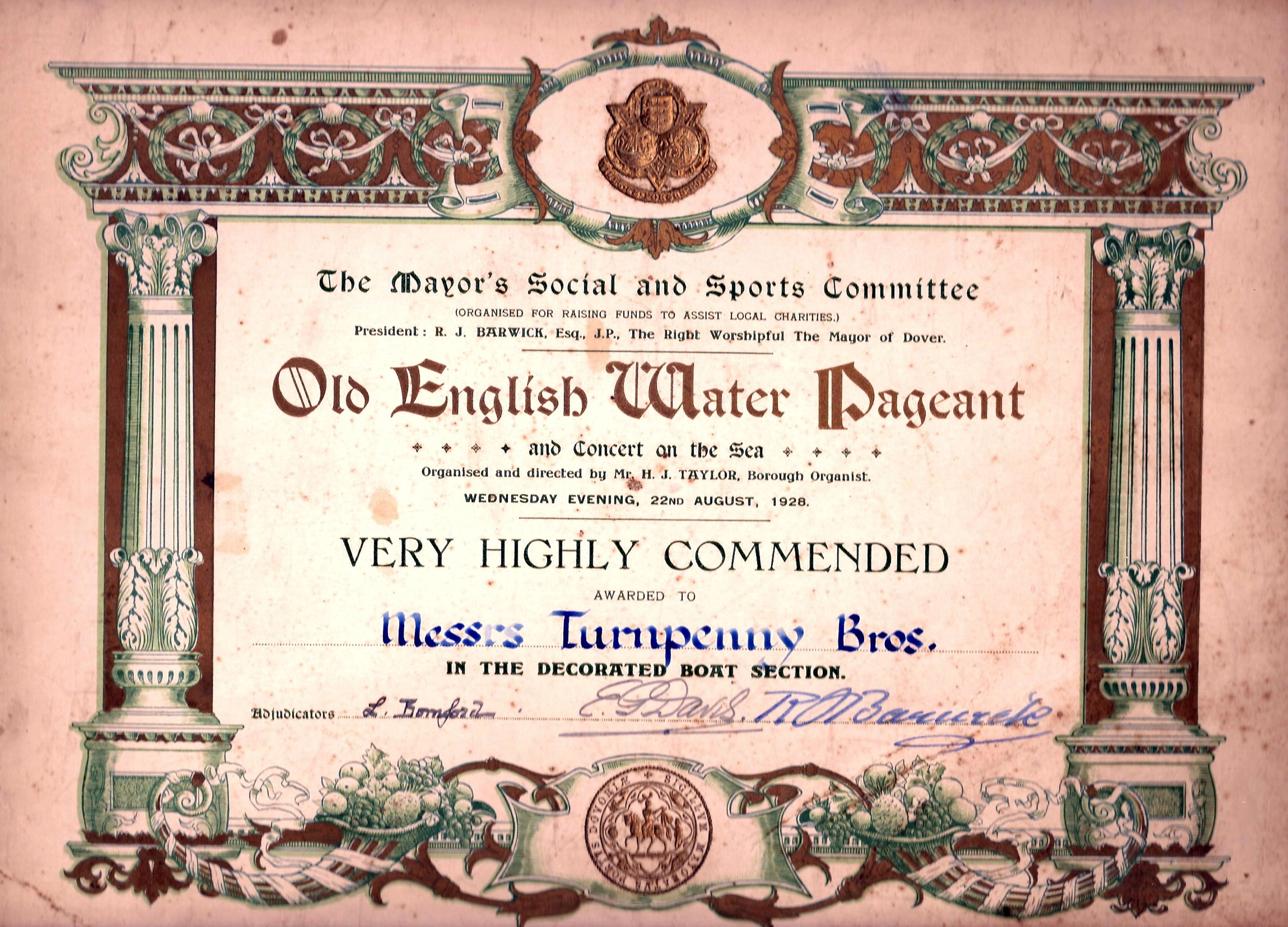
Dover Water Pageant 1928 - Highly Commended certificate. Thanks to John Turnpenny

Dover Water Pageant 1928 – Highly Commended certificate. Thanks to John Turnpenny

By the 1920s nostalgia began to surface again and in 1928 an ‘Old English Water Pageant and Concert on Sea’, was staged in the harbour. More akin to a carnival on water, local firms decorated their own boats for which they could win prizes. It was organised by the
Mayor’s Social and Sports Committee, the president of which was the Mayor, Richard Barwick. The adjudicators, besides the Mayor, included Lorna Bomford. The event was to raise money for local charities and Turnpenny‘s, the furniture shop’s entry was highly commended.

Dover Pageant 1990 Elizabeth I - Lorraine Sencicle , Walter Raleigh - Michael van de Heuven. Michael Banks

over Pageant 1990 Elizabeth I – Lorraine Sencicle , Walter Raleigh – Michael van de Heuven. Michael Banks

It was not until 1982 that local visionary, Mike McFarnell, breathed new life into the Pageant concept. In September that year, he announced that in conjunction with the English Tourist Board’s Maritime England Year, he was going to stage a Pageant in Connaught Park on May Day bank holiday Monday 1983. It was a success and quickly caught the town’s imagination. From the outset, both this author’s daughters were involved and in 1990, the author dressed up as Elizabeth I and joined in. Michael Van De Hoven, a master at Dover College, was Sir Walter Raleigh. The photograph features in Derek Leach and Terry Sutton’s book, ‘Our Town, Dover.’ Albeit, you can imagine my surprise when, four years later, a photograph taken of me that day was used to advertise Dover!

By 1992, I was actively involved as Assistant Pageant mistress with a script by local teacher and dramatist, the late Noreen Thomas. It was hard work but great fun especially as nearly everyone in the town was willing to lend support. In the end, more than 300 people took part. Even the weather showed diffidence to the national weather forecast which said it would be cloudy and cold … it was the hottest and sunniest day of the year!

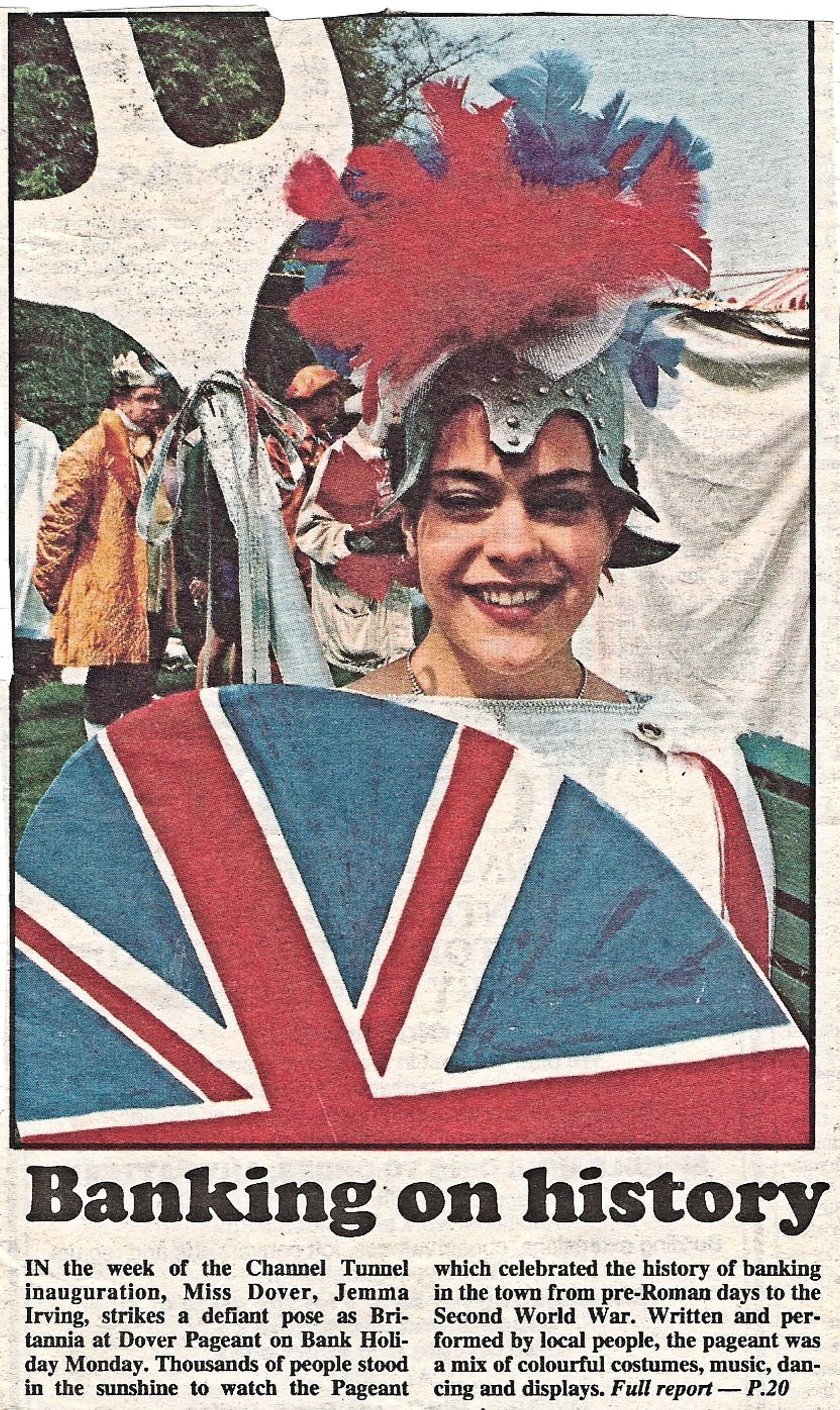
Dover Pageant 1994 - Miss Dover Jemma Irving. Dover Mercury

Dover Pageant 1994 – Miss Dover Jemma Irving. Dover Mercury

The official opening of the Channel Tunnel was on 6 May 1994, when unemployment in Dover was reaching 10%. On that day in Connaught Park, 600 Dovorians, including most of Dover District Councillors, took part in the Dover Pageant. The spectacle was watched by a further 3,000 and filmed by ‘France Trois’, who aired it throughout France at prime time! I still have the video. However, my over-riding memory is the photograph of Miss Dover, Jemma Irving, striking a defiant pose as Britannia, which up-staged all the published photographs of the high costing Channel Tunnel celebrations!

Pat Mills took over making costumes from me for the 1999 Pageant. She also made 44 beautiful banners representing Dovers around the World. As before, Dover’s colourful history, written by Noreen Thomas, was told in glorious weather with town’s folk and councillors taking part. Mike had moved the venue back to Dover College, which lent atmosphere to the whole display and also stopped people sneaking in without paying! Three years later Mike and Noreen, along with a host of Dovorians, brought the town’s colourful history to life again in the historic Dover College grounds. So popular was the spectacle that there were two performances on consecutive days. 2005, and again an audience of nearly 1,000 were treated to an afternoon of the town’s  history, splendour, entertainment, song and dance but sadly, in 2008 the last Pageant was held on Sunday 8 June … for the time being …

Mike McFarnell, the Pageant Master, however, is still full of creative ideas. In 2012 he organised the spectacular Dover Tattoo, held on 1 and 2 June on the former Connaught Barracks site. Unfortunately, well over three thousand people, who attended the first evening’s display, saw two of the three members of the Princess of Wales’s Royal Regiment Tigers freefall team make crash landings with one requiring hospital treatment. Although the accident did dampen spirits, the remainder of the event was, as expected, produced with military precision and provided first class entertainment finishing with magnificent fireworks displays.

  • First Published: Dover Mercury: 5 June 2008
Posted in Dover Pageants, Societies, Culture and Entertainment | Comments Off on Dover Pageants