Cinque Ports Pilots Part I

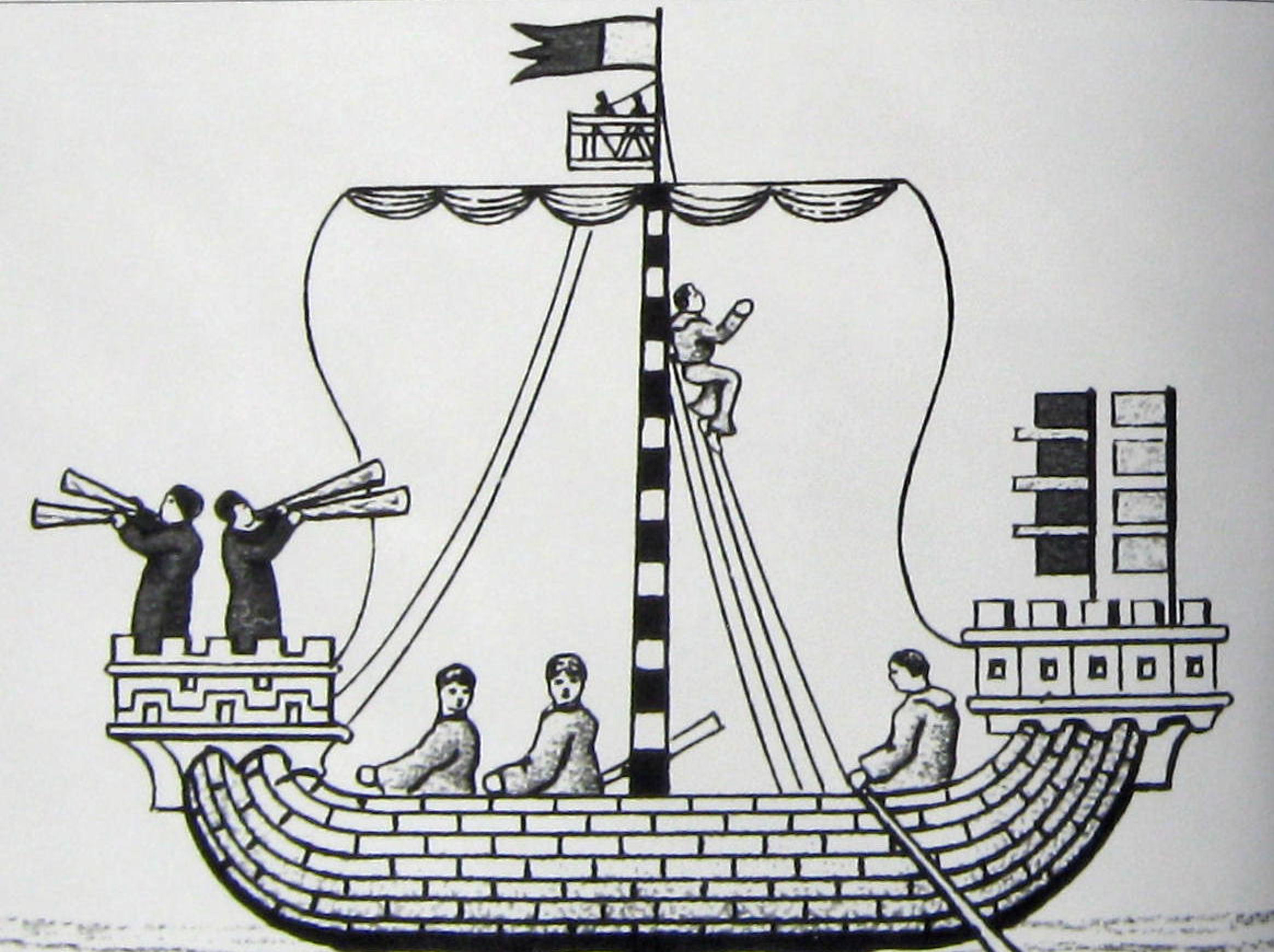
Cinque Port ship c13th century

Cinque Port ship c13th century

The fraternity of Pilots belonging to the Cinque Ports has probably been in existence since before William I (1066-1087) conquered England in 1066. The main prerequisites to become a pilot, at that time and for centuries after, was to be a Freeman as well as having a thorough knowledge of seas, coasts and ports of the dangerous Dover Strait. The punishment metered out to a Dover pilot who lost a ship he was in charge of but survived, in those days, was to be thrown to his death off Western Heights!

In the Middle Ages there were three Societies of Pilots in England besides the ones appertaining to the Cinque Ports, these were at Deptford, Hull and Newcastle and were known as Trinity Houses. The Deptford Trinity House – chartered in 1514 – was in charge of providing sea-markers and signals that overtime developed into having the sole responsibility for British lighthouses and lightships. Each of the five Cinque Ports – Sandwich, Dover, Hythe, Romney and Hastings, along with the two antient towns of Rye and Winchelsea, had their own fraternities of pilots that came under the umbrella of Cinque Ports Court of Shepway.

In 1312, it was decreed that four Wardens, from among the pilots, were to be appointed in order to ensure that each pilot took his turn and to divide the fees according to the work done. By 1495, the Dover pilots, as within the other Cinque Ports, were governed by a set of tight rules that they were obliged to obey. However, on 20 May 1515, Henry VIII put the Cinque Ports Pilots on a more formal footing when he sanctioned by Charter, the Fellowship of the Cinque Ports Pilots or Lodesmen (meaning one who leads the way). In 1526, the then Lord Warden (1521-1533), Sir Edward Guilford (c.1474 – 1534), was approached by the Dover pilots to adjudicated internal disputes.
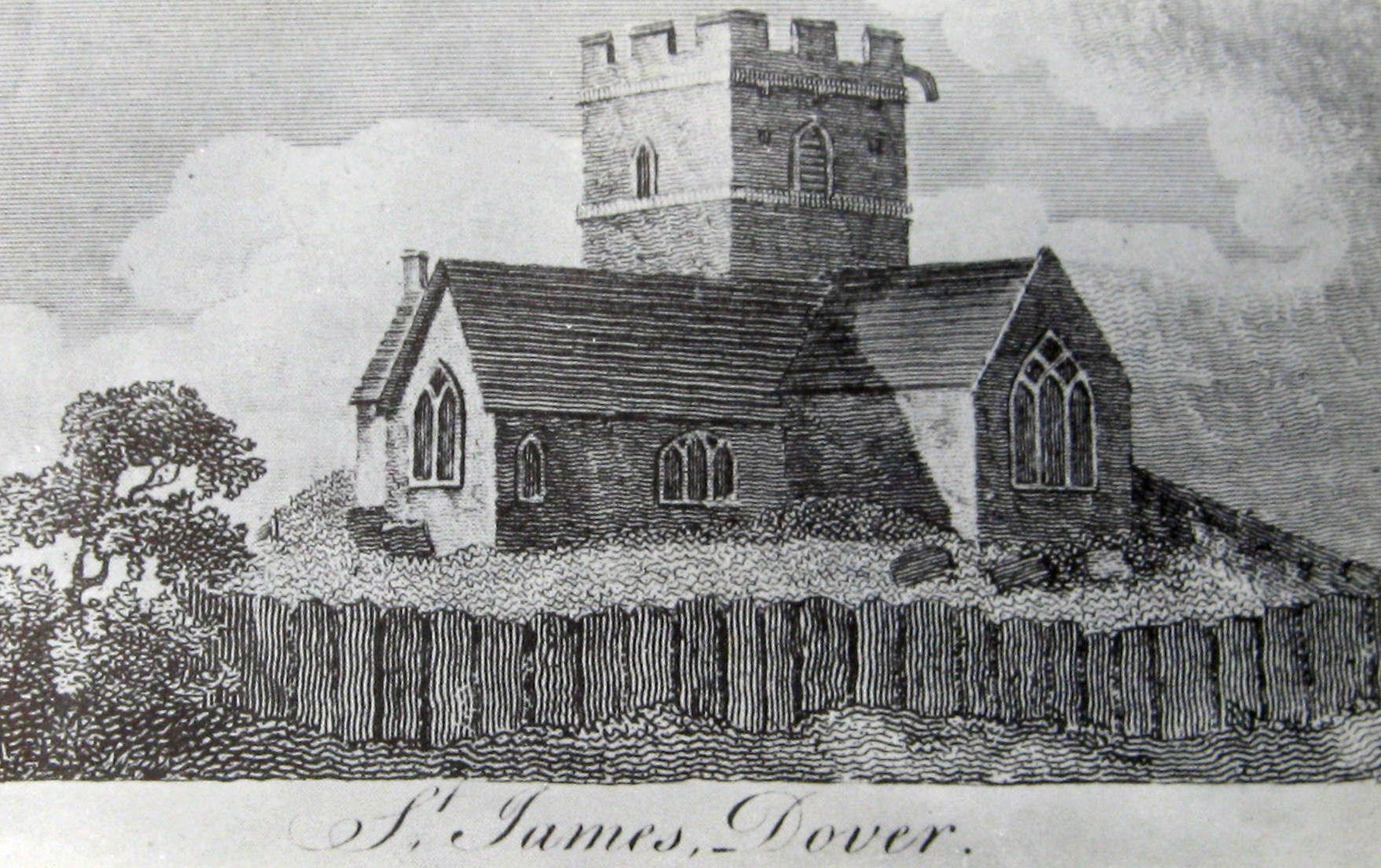
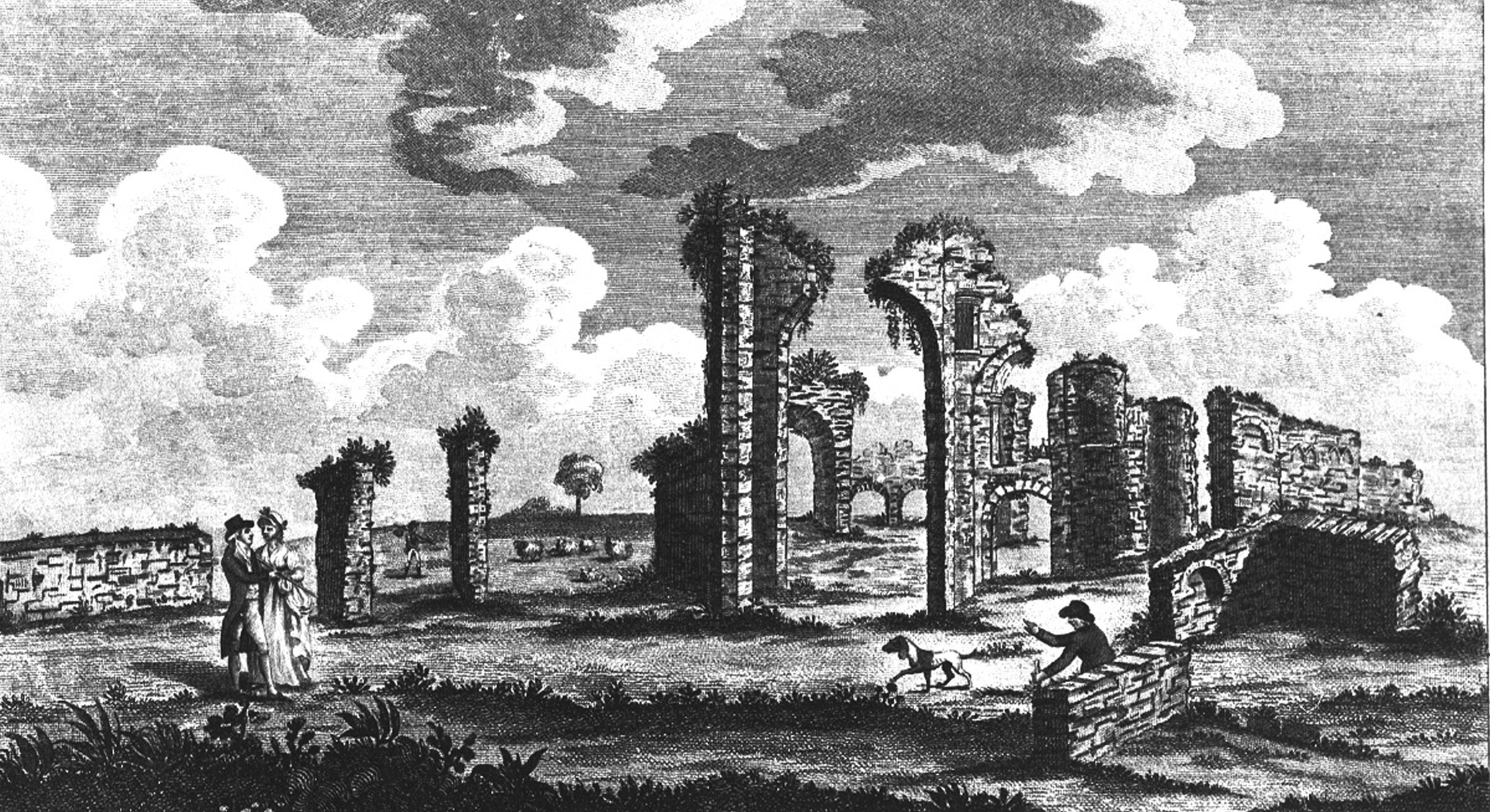
18th Century Sketch of St James' Church

18th Century Sketch of St James’ Church

As the Lord Warden already presided over the Court of Admiralty, which met in St James’ Church – the ruin on Woolcomber Street – it was easy for him to extend his role and agree. The result was the Court of Lodemanage and on 26 February that year, 14 candidates stationed at Dover, one at Deal and two at Margate were licensed as Pilots – Deal and Margate were Cinque Port Limbs of Dover and therefore came under the jurisdiction of the port. The pilots from the other Cinque Ports were invited to join but declined and in consequence, the fraternity became known as the Fellowship of Pilots of the Trinity House of Dover, Deal and the Isle of Thanet.

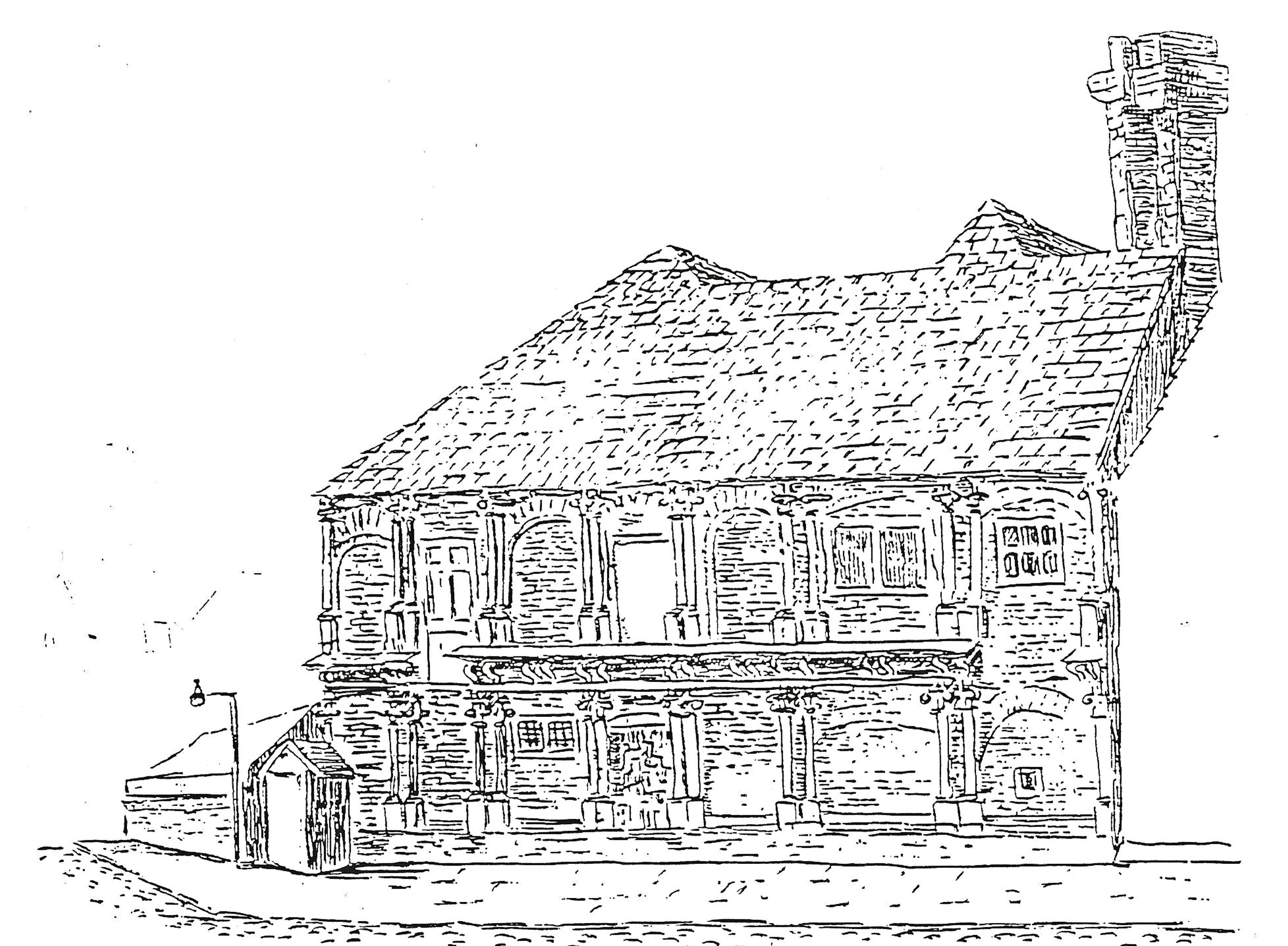
Wyke or Wick Tower - built by John Clarke in the 16th cent. From a British Museum print. Dover Library

Wyke or Wick Tower – built by John Clarke in the 16th cent. From a British Museum print. Dover Library

The Court of Lodemanage thereafter was presided over by the Lord Warden and supported by a jury drawn from the Dover pilots. The position of the Warden Pilot was formalised and was usually held by the oldest working pilot. One of the regulations stipulated that half the money raised from fines paid by pilots for misdemeanours was to go towards the repair bill of Dover Castle, the other half to the repair of Martins Mill After the Reformation (1529-1536), the second part of the fine was used for the repair of the Wyke – a sea wall that protected the town. At the same time legislation decreed that all ships, except those with native masters and mates, had to use a licensed pilot to navigate the Channel, Thames and Medway estuaries safely to port.

Slowly the rules were tightened and by 1550, pilots had been divided into three classes. It was also agreed that members could choose their own substitutes regardless of which class they belonged. This led to abuse of the system so in 1567 the substitute, or ‘rear turn’ as it was called, was by a fixed order within the pilots’ class. Later, this was adapted to allow pilots who were too old or infirm to use substitutes in their place and in such cases, the infirm pilot was given a quarter of the fee and thus he was guaranteed an income.

In subsequent years the class structure was reduced to two – the Upper and Lower books with experienced pilots belonging to the Upper Book. They took charge of ships over 60-tons and the tonnage and draught of vessel determined the amount these pilots charged. The less experienced pilots belonged to the Lower Book and they piloted smaller vessels and vessels out of Margate or Ramsgate, as they were minor ports at that time. They would move, on a seniority basis, to the more lucrative Dover or Deal as vacancies arose when they were promoted to the Upper Book to fill vacancies. Each Pilot was self-employed and out of his receipts, he was obliged to pay a percentage to the Lord Warden.
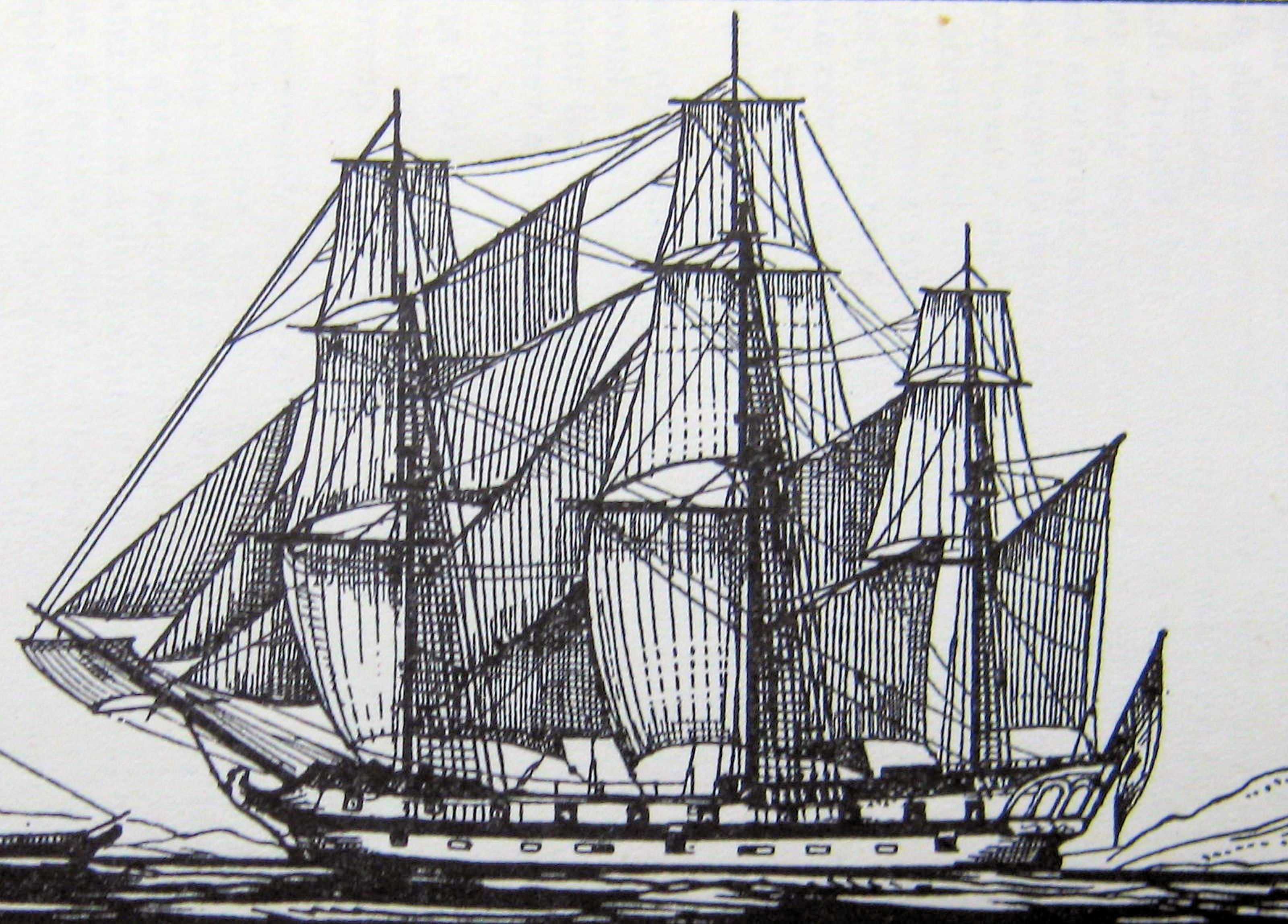
A square-rig sailing ship has sails which are set athwart her masts such as this Circa 1780 Frigate.

A square-rig sailing ship has sails which are set athwart her masts such as this Circa 1780 Frigate.

To become a fully-fledged pilot, the candidate had to serve seven years as a Master Mariner and then take an exam. This involved carrying out soundings of the Channel from Amsterdam to Calais on the Continental coast and along the English coast. He also had to prove that he had the knowledge to navigate a ship through the Downs, up the Thames and Medway and to all Channel ports in all weathers. Later pilots had to spend a year as a navigator on a square-rigged vessel, a precondition that lasted up until 1939.

Once attaining the requisite standard to be admitted into the fraternity, the candidate had to undertake a formal ceremony. First, he was required to swear on the Bible that he would abide by the rules of the Court of Lodemanage. He was then given the ‘Branch’ – a piece of wood affixed with the Seal of the Courts of Admiralty and Chancery. On acceptance, he was then issued with a licence that included his physical description and his own pendent that was to be flown at all times he was in charge of a vessel. A grand dinner that included all the Cinque Ports pilots followed the ceremony, which took place at St James’ Church. The candidate paid for the whole affair.

Dover Harbour c1543 - Cottonian Manuscript. Bob Hollingsbee collection Dover Museum

Dover Harbour c1543 – Cottonian Manuscript. Bob Hollingsbee collection Dover Museum

In 1568 pilots started surveying the Channel from the South Foreland to the Nore in order to chart the ever- changing channels and sandbanks of the Goodwins. From 1590, this became an annual survey. However, throughout that time strife between the Cinque Ports Pilots and Deptford Trinity House Pilots existed as both were working the same stretch of sea, namely the Thames estuary. Pilots from Deptford were reluctant to disembark and allow the Dover pilots to take over a ship going down the Channel. While, Dover pilots took the same attitude against Deptford pilots that wanted to take over ships going up the Thames to London. Eventually, it was agreed that Trinity House pilots navigated ships outwards and Cinque Ports pilots’ navigated ships inwards.

In Parliament Dover’s MP, Sir Henry Mainwaring on the 27 February and 8 March 1621, opposed the Bill for the transferring of the control of lighthouses along the Kent coast from the Cinque Ports Pilots to Trinity House. Arguing that their knowledge of the coast stretched back further and was far was greater that of the Trinity House Pilots. However, over the next 100years subsequent Lord Wardens introduced rules governing the pilots at the same time taking a greater slice of the fees they earned. Nonetheless, in 1648 pilots invested £180 in buying a small estate at Heslingwood, Napchester, Whitfield. However, when the Lord Wardens started to insist that pilots should remain at sea all the time, master mariners became less interested in becoming pilots and the fraternity was in danger of collapsing.

Added to this, following the Restoration of Monarchy in 1660, those who were interested were refused entry if they did not belong to the Anglican Church. Church attendance was compulsory but up until that time dissension was tolerated. Matters came to a head in 1682 when it was decreed that all Cinque Port pilots found at a conventicle or dissenters’ place of worship were to be suspended (see The Dynasty of Dover – Part I – the Stokes).

In 1688, as a reward for helping William III (1689-1702), navigate the Channel prior to the Glorious Revolution that year, the pilots were given the right to choose four Wardens from their own body and to keep a greater percentage of the fees they earned. These Wardens were chosen from the Upper book and given the prefix title of Captain followed by the name of landmarks in Dover and Limbs. They were Captain of Mote Bulwark and the Captains of Deal, Walmer and Sandown Castles. The most senior Warden, by service, was also the Master of the Court of Lodemanage and in the absence of the Lord Warden, he fulfilled the position of judge.

By this time, the Pilots had sold their Napchester estate and with the money purchased, in 1689, half an acre of land on the Western Heights.- later known as Pilots’ Field (now Pilots’ Meadow allotments). From there was a flight of steps that led to Snargate Street and the then harbour. Local boatmen, who berthed on the beach, would row the pilot to the ship. The navy dealt with any ship that refused to take a pilot on board.
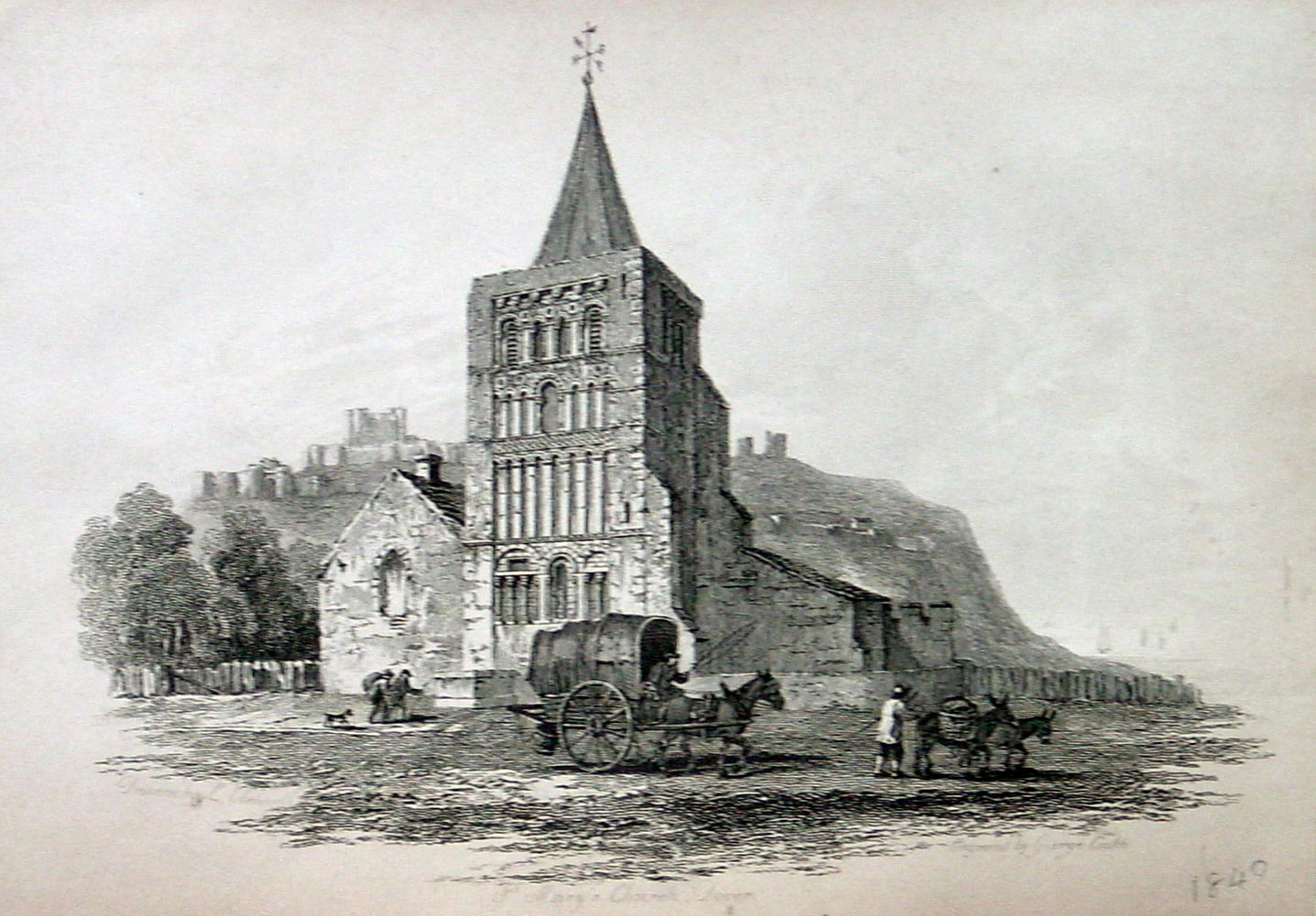
St Mary's Church, Dover. 1849

St Mary’s Church, Dover. 1849

In 1699, the compulsion for Cinque Ports pilots to be members of the Church of England was rescinded and at the same time they were given leave to build, for their own use, a gallery at the western end of the middle aisle of St. Mary’s Church. The front was elaborately adorned with their emblem and, if a ship was spotted, there was a staircase giving a quick exit into Cannon Street. Pilot’s galleries were also built in St. Leonard’s Church Upper Deal and St. George’s Church in Deal. Women were only allowed to enter these galleries to clean them but on no account were they allowed to sit on the pews!

During the eighteenth century overseas trade and in consequence shipping increased, this led to an increasing demand for pilots and it is recorded that in 1716, there were 50 pilots at Dover, 50 at Deal and 20 in Thanet. The following year saw the introduction of the Cinque Ports Pilotage Act (1717), this was the first parliamentary legislation covering pilotage. The Act stated, amongst other things, that it was inhuman to require pilots to remain at sea all the time. However, it revoked many of the privileges given by William III, notably the regulation that allowed the Pilots to elect their Master and Wardens. The Act was consolidated in 1724 and included further regulations.
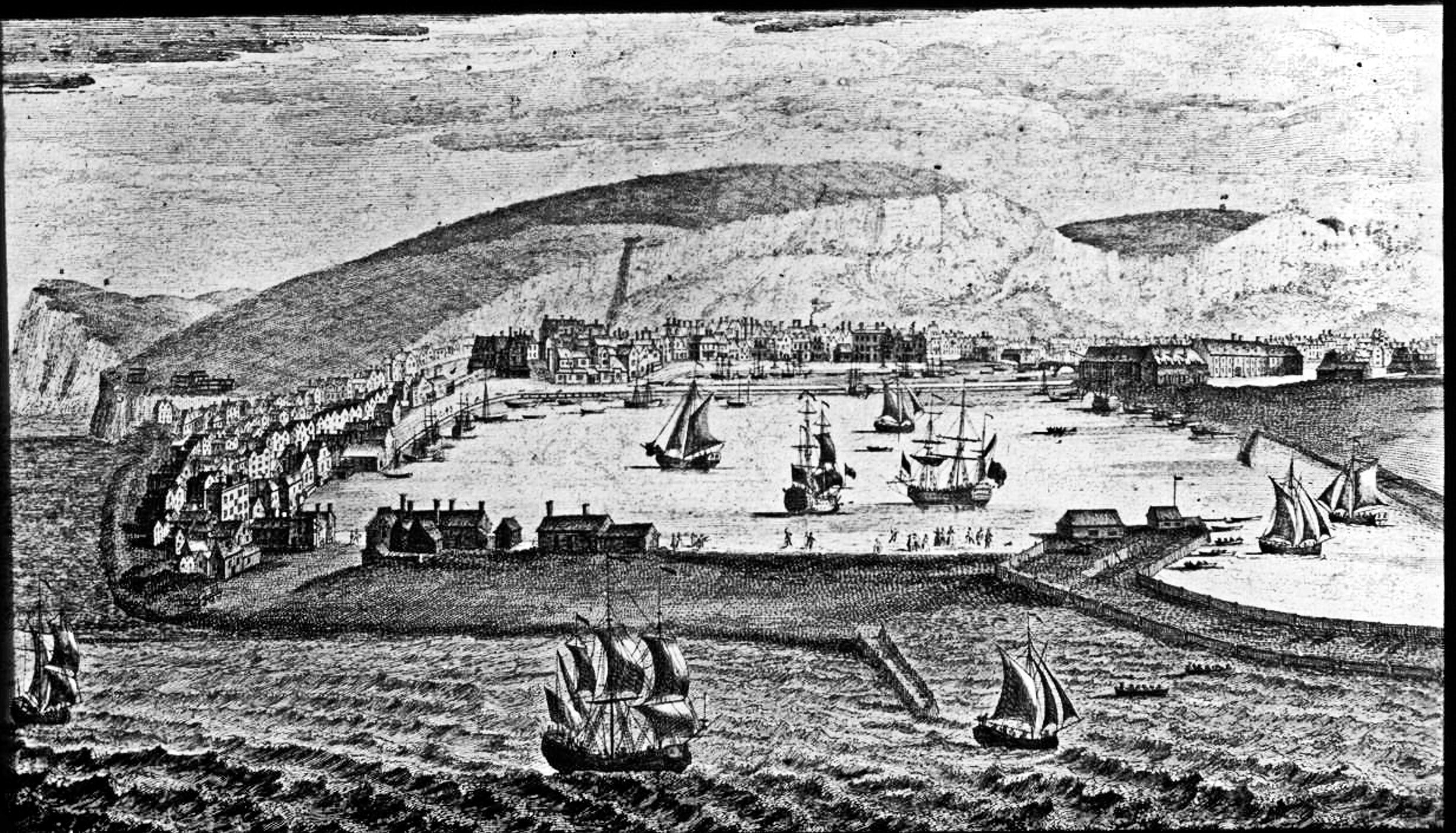
Dover Harbour 1738 glass slide by artist Nathaniel & Samuel Buck. Dover Museum

Dover Harbour 1738 glass slide by artist Nathaniel & Samuel Buck. Dover Museum

By 1730, a wooden Pilot’s lookout had been built on Cheeseman’s Head, (where nowadays Admiralty Pier leaves the shore) and Pilot’s Field was let out for grazing to raise money for Pilots’ pensions. Of interest, over a century later the Field had been renamed Pilots Meadow and was a favourite resting-place of Charles Dickens (1812-1870) when walking the cliffs. The Pilots cottages were on the seaside of Pilots Meadow and the senior Upper Case Pilot lived in the best one, which was described as having a double front and a small walled in garden. This is believed by many to be Betsey Trotwood’s home that Dickens described in the book David Copperfield as ‘A very neat little cottage with cheerful bow windows: in front of it, a square gravelled court or garden full of flowers; carefully tended and smelling deliciously.’
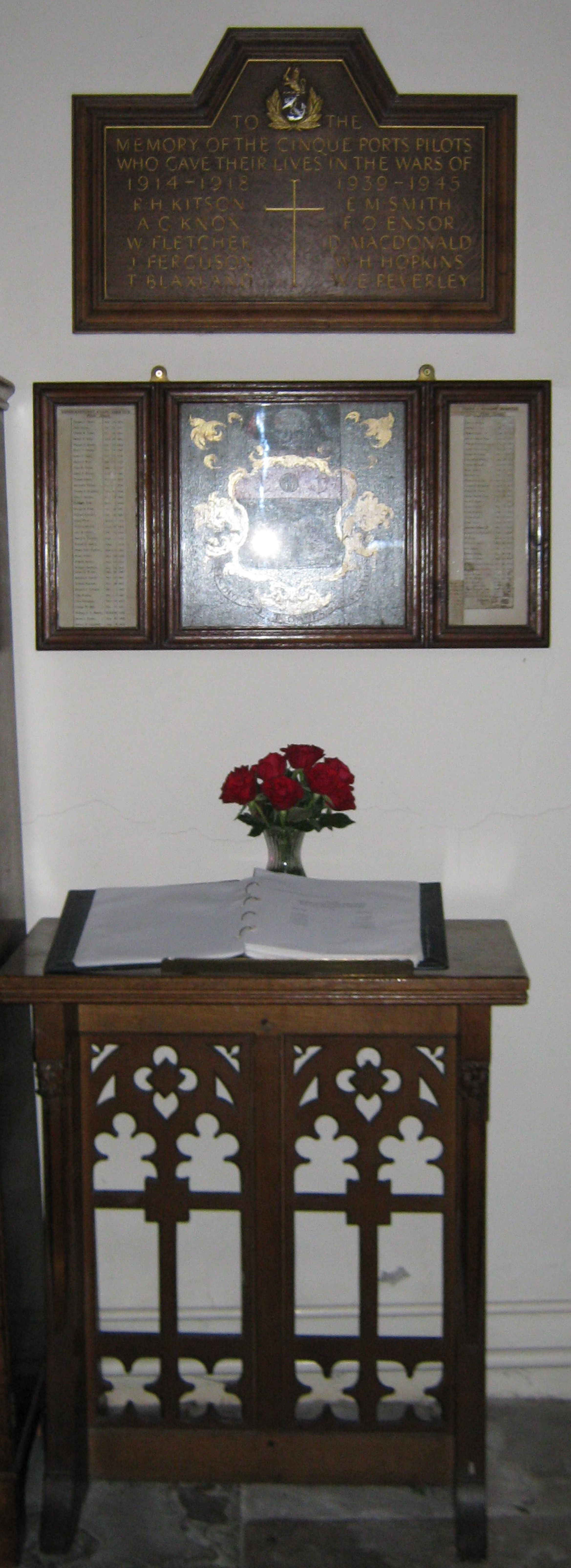
Cinque Ports Pilots memorial, St Mary's Church. LS 2010

Cinque Ports Pilots memorial, St Mary’s Church. LS 2010

More regulations were introduced in 1735 including one stating that Dover pilots should regularly cruise between the South Foreland and the Red Fall – Folkestone, Deal pilots between the North and South Forelands and Thanet pilots in their own bays and south to Sandwich. In Dover, pilots were coming in for increasing criticism over leaving St Mary’s Church during services to pilot ships. In order to try to placate the congregation the pilots bought, in 1742, a chandelier capable of holding twenty-four candles for the church to match one bought by the parishioners in 1738.

Albeit, the complaints continued so the pilots sort legal action and on 20 October 1748, obtained a license for the gallery that allowed them to come and go as circumstances necessitated. In 1834, a plaque listing all those who served as pilots was erected in St Mary’s Church and the list was kept up until 1891. This was restored in 2002 and refixed in the South aisle of the church under the plaque commemorating the pilots that were lost in World War I and World War II.

Watch belonging to Deal Pilot Gideon Chitty (1739-1788). The face instead of numbers is his name. Adrian Chitty

Watch belonging to Deal Pilot Gideon Chitty (1739-1788). The face instead of numbers is his name. Adrian Chitty

The fraternity was close knit and gave pilots special personal awards. For instance, I have recently been sent photographs of a gold watch belonging to Deal Pilot Gideon Chitty (1739-1788). The gold case is beautifully elaborate and the inscription reads, Gideon Chitty 237 Bayly Deal Pilot’. However, it is the watch face that is of particular interest to the historian. Instead of the numbers 1 to 12 for the hours, it is the letters GIDEONCHITTY!

Towards the end of the century, it was becoming increasingly apparent that an age-old right of locals being allowed to conduct vessels without the need for a pilot was being abused. Merchants were making masters or/and mates of their vessels nominal partners and registering them as residents of an East Kent port. At the time an increasing number of these vessels were running into trouble on the Goodwin Sands. To make matters worse, once in trouble, the ships were not only vulnerable to maritime catastrophe but to the unscrupulous.

On 8 February 1805 the Endeavour, a West Indiaman, ran aground on the Goodwin Sands. Her cargo was valued at £23,000 and included rum, sugar and coffee. Peter Atkins, a Deal boatman offered the captain help to unload the stricken vessel, which was accepted. Whereupon Atkins allegedly called out, ‘A wreck! A wreck!’ and a number of Deal boatmen came aboard and unloaded the ship. However, an audit of goods landed showed that only £500 had been salvaged and Atkins was prosecuted for ‘felony and piracy on the high seas,’ a capital offence.

The case was tried at the Admiralty Court in the Old Bailey, London, and received a lot of publicity. Lady Hester Stanhope (1776-1839), the niece of the Prime Minister William Pitt the Younger (1759- 1806) who was also the Lord Warden (1792-1806), was the chief witness on behalf of Atkins. She stated that the Deal pilots, who were under the Dover Court of Lodemanage, made excessive charges such that many ships traversed the Downs without qualified pilots. In most weathers this was not a problem, however, in storms, ships could easily lose their way and be swept onto the Goodwin Sands and wrecked. Furthermore, while waiting in the Downs for Deal pilots to come aboard, left ships vulnerable to French privateers as well as changes in the weather. The Deal boatmen, she said, seeing these travesties were risking life and limb to help such ships for which they received only a small reward for the dangerous work they undertook.
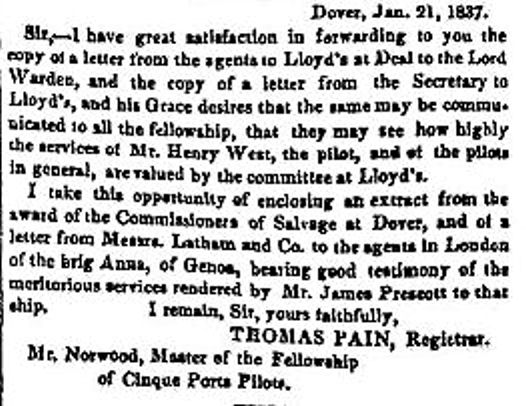
Report of a Lloyds agent commending pilots Henry West and James Prescott 21 January 1837

Report of a Lloyds agent commending pilots Henry West and James Prescott 21 January 1837

Atkins was found guilty and sentenced to Transportation but before the trial had even begun Medmer Goodwin of the Ramsgate Commissioners of Salvage, had approached Lloyds of London suggesting that his firm should act as agents for the Insurance underwriters. The offer was accepted on 28 August 1811 when agents were appointed for 140 ports. For Dover, John Friend of Deal, an associate of Medmer Goodwin, was appointed.

Throughout this time, the Napoleonic wars (1793 to 1815) had been raging and the Cinque Port Pilots were heavily employed in a naval capacity both in the Channel and in sea battles elsewhere. On 9 August 1805, an attempt was made to invade England from Boulogne and Horatio Nelson (1758-1805) led a successful offensive. After winning a crushing victory at the Battle of Trafalgar, off southern Portugal, on 25 October 1805, Nelson died from his injuries and his body was brought back to England for burial. His ship, the Victory arrived off the South Foreland on 16 December and came into Dover harbour for shelter as a gale was blowing. She left on the 19th for Chatham with Edward Sherlock (1743-1826), a Dover pilot, at her helm.

An Act of Parliament in 1808 stated that Upper Book pilots were to take vessels over 14 feet draught and two cutters were to be established off Dungeness. On the cutters were rowing boats to take pilots to homeward bound vessels. The cutters, crew, provisions and rowing boats were paid for out of the fees that the pilots earned and the facilities on board the cutter were to be basic. By this time, the number of pilots at Dover had increased to sixty-four and four years later, in 1812, a widows fund was introduced into which every member subscribed 5s (25p). This entitled the widow to a yearly pension of £12 12s provided she did not remarry.

The 1808 Act was replaced four years later and the new Act comprised of much of existing legislation adding a new section that attempted to define the responsibility and rights of the ship owner, master, and owner or consignee of the cargo. This was in relation to any sustained damage to the ship, goods or persons that occurred through ‘neglect, default, incompetency or incapacity of any pilot taken under the provisions of the Act.’ The repercussion was confusion and litigation as the Act effectively granted absolute freedom from claims for any damage done to other vessels or property to ships while under compulsory pilotage. The Pilotage Act of 1824 caused even more strife by making it possible for non-British vessels to enter or leave British ports without pilots.

Trinity House Pilot cutter c 1830. Alan Sencicle collection

Trinity House Pilot cutter c 1830. Alan Sencicle collection

On 29 July 1824, bankers and Upper Book pilots, Sam Latham and his sons Henshaw and Samuel Metcalf, were appointed Lloyds (Insurance) Agents in Dover in place of John Friend of Deal. The office complimented their role in the Court of Lodemanage, where they were particularly concerned in the prevention of shipping accidents. The statistics showed that 1,117 vessels had been lost in the Strait of Dover for the three years 1816-18 and a further 89 were registered as missing. The number of vessels of which the entire crews had drowned was 49, amounting to the loss of life 1,700 persons. The following year (1825), an Act of Parliament stipulated that ‘not less than 18 Cinque Ports pilots should always be cruising, day and night, off Dungeness.’

In 1831 a third cutter was introduced for pilots based in Thanet but two years later, the House of Commons conducted an inquiry into the distress of Dover boatmen that had been displaced by the introduction of pilot cutters. In order to safeguard their living the number of pilots was limited to 56 each at Dover and Deal and 12 in the Isle of Thanet. The Cinque Ports Pilotage Bill of 1834 argued in favour of boatmen undertaking the work of pilots between the South Foreland and Dungeness. The Lord Warden (1829-1852), Duke of Wellington (1769-1852) fought hard against this and it was not sanctioned.
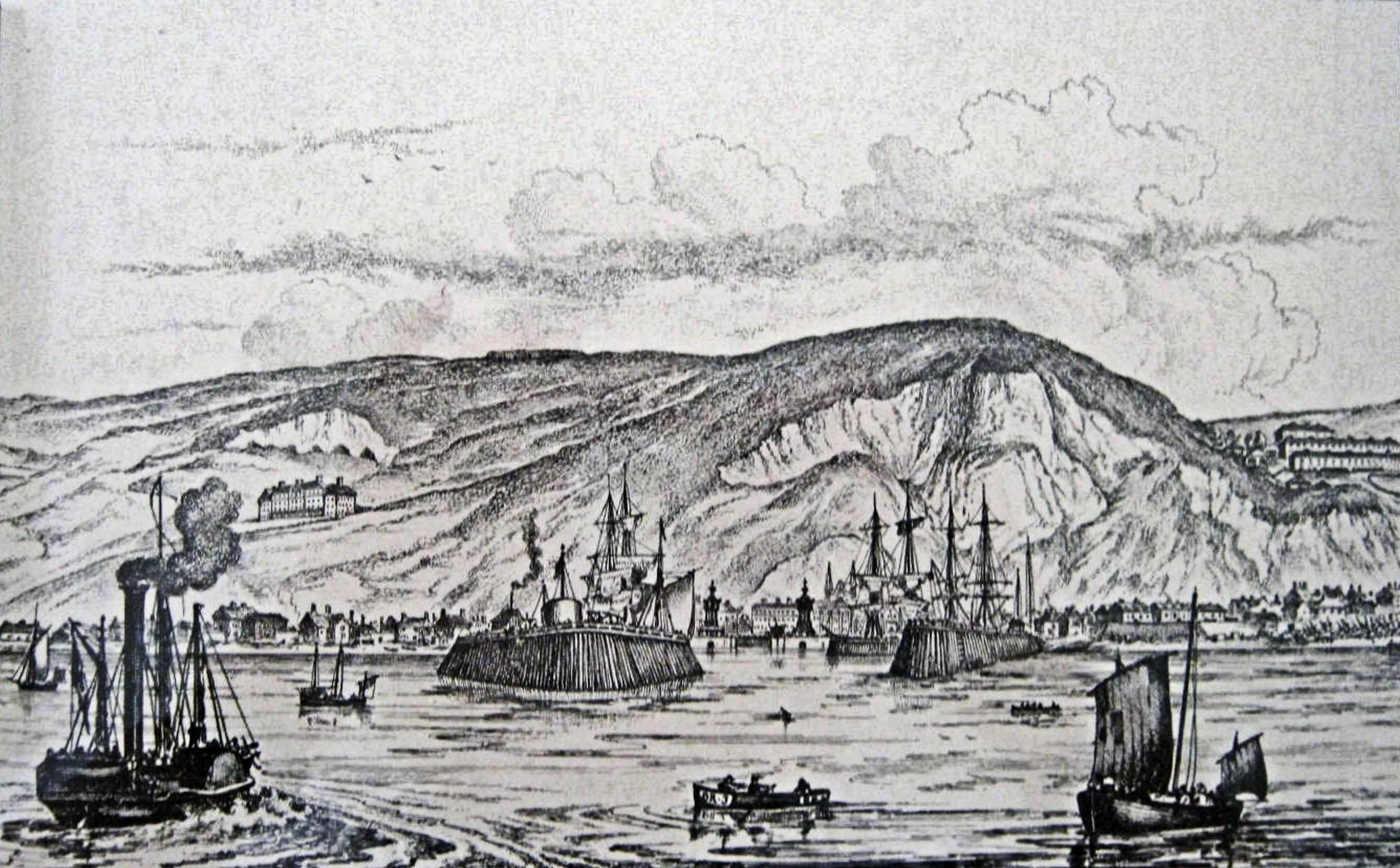
Dover Harbour Entrance by William Heath published 1836 by Rigden. Harbour House LS 2010

Dover Harbour Entrance by William Heath published 1836 by Rigden. Harbour House LS 2010

The following year a Royal Commission was set up to look at pilotage and the Pilotage Act of 1836 recommended the appointment of the Elder Brethren of Trinity House, Deptford, as the central licensing body but this was not implemented. At the time, the Cinque Ports pilots and the local shipping industry were more concerned with securing a Harbour of Refuge was needed between the Thames estuary and Portsmouth and did not realise that moves were being made to disband the Cinque Ports Pilots. Dover’s opportunity came to promote the case for a Harbour of Refuge  in a Parliamentary Inquiry held in 1836 and the first result was a start being made, in 1848, of the Admiralty Pier. This was completed in 1871 and the final result is the harbour we see today that was opened in 1909.

The ornate Pilots Tower that opened 1848 drawing shows old Pilots station that was on Cheeseman's Head. Thanks to Evelyn Robinson

The ornate Pilots Tower that opened 1848 drawing shows old Pilots station that was on Cheeseman’s Head. Thanks to Evelyn Robinson

There was again a move, in 1843, to replace pilots with boatmen as, it was argued, pilots charged too much. Again, the Duke of Wellington resisted. That year saw 100 applicants applying to fill 27 vacancies for Cinque Ports Pilots. The ceremony for the making of the new pilots proved to be an anxious affair and it culminated with the rejected candidates, their relatives and friends besieged St James’ Church!

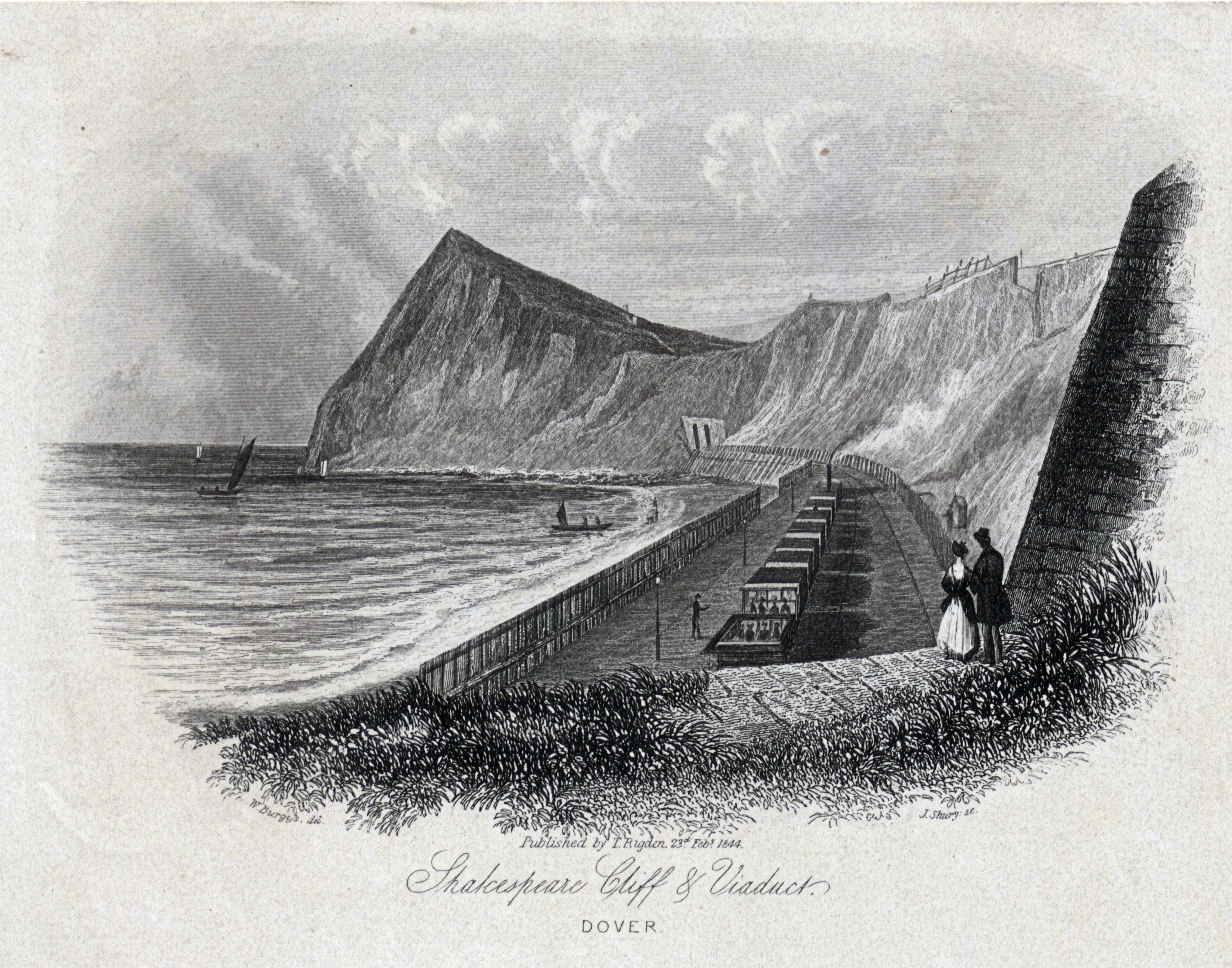
In 1844, to make way for the South Eastern Railway track, the pilot station was demolished on Cheeseman’s Head and a highly ornate station, built of stone and standing on a bed of concrete 10 feet thick, replaced it in 1848. Later, in 1864, three years after the London, Dover and Chatham Railway had arrived in Dover, both railway companies were allowed to extend their services along the newly finished Admiralty Pier and the pilots tower stood in the way. The ground floor, which had a ceiling height of 20ft (over 6 metres), was gutted to allow trains to run through it!

The Pilotage Bill of 1849 centred on disbanding the Cinque Ports pilots and their role being taken over by boatmen. One of Dover’s two Members of Parliament (1835-1852) was Edward Royds Rice (1790-1878) who argued that they should be retained. He pointed out that over the previous ten years the Pilots had taken 3,800 ships safely up the Channel and that in the whole of that period there had been only 14 complaints made. These, he said, were examined at the Court of Lodemanage and only six had been established leading to the dismissal of three pilots.
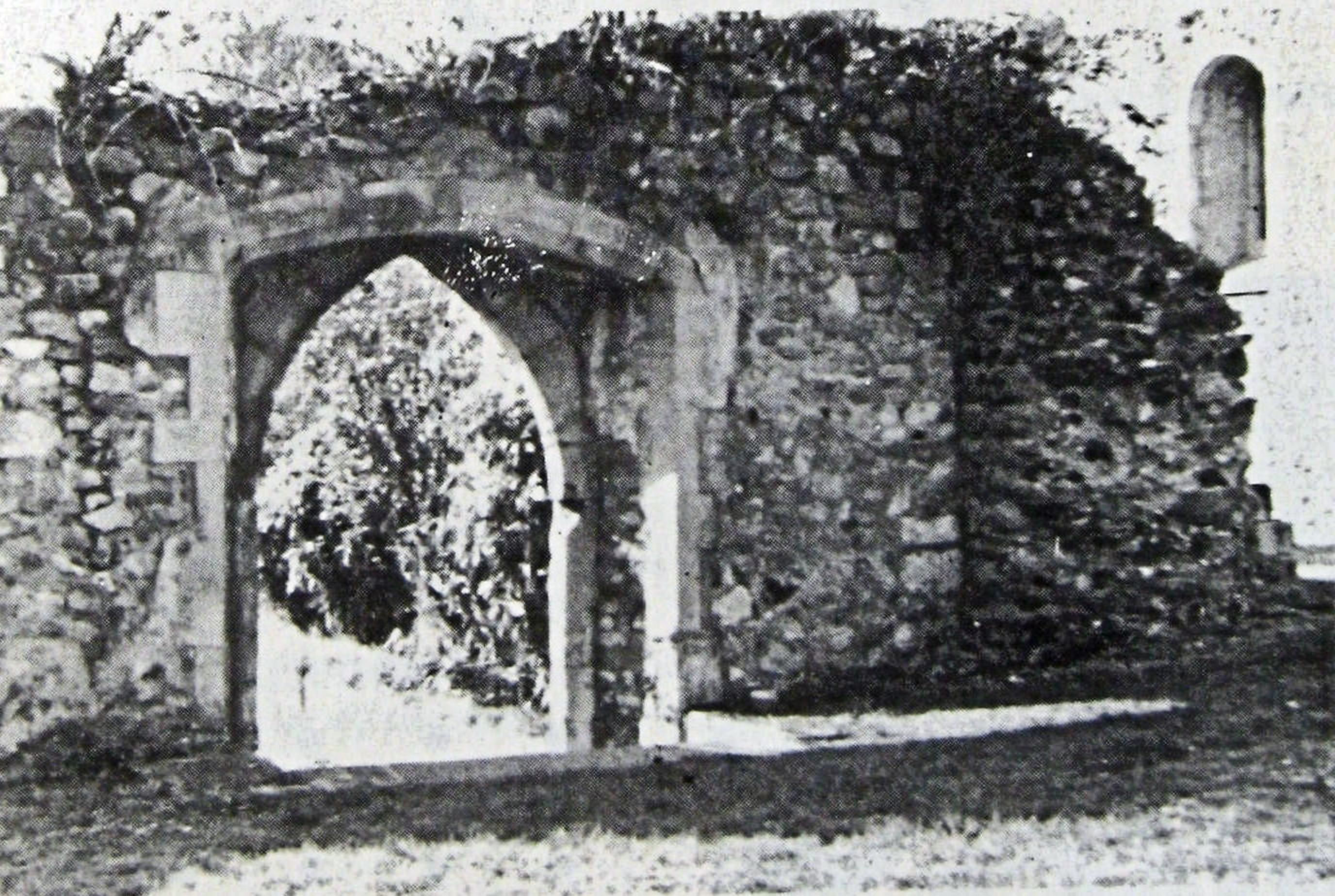
St James Old Church South Aisle where the Court Lodemanage once sat.

St James Old Church South Aisle where the Court Lodemanage once sat.

Albeit, the days of the autonomous Cinque Ports Pilots were numbered and they were transferred to the Trinity House of Deptford. This was ratified by Act of Parliament in 1853. The last Court of Lodemanage was held on 21 October 1851 and the town turned out to mourn. A procession, headed by the senior Warden – the Master of the Court of Lodemanage – followed by all the Pilots, including those who had retired, wearing their ceremonial blue coats and primrose waistcoats adorned with gilt buttons, marched from St Mary’s Church. There they had been blessed before going to St James’ Church. In the Admiralty Court a formal service was held and then, retracing their steps, the pilots went into the Antwerp Hotel that stood in Market Square, for a wake. Apparently, this lasted many hours and most of the pilots had to be carted home!

The story continues in Cinque Ports Pilots – Part II

Published:

Dover Mercury: 13 May 2010


Posted in Cinque Ports, Cinque Ports Pilots - Part I, Cinque Ports Pilots - Part I, Maritime | Comments Off on Cinque Ports Pilots Part I

Granville Dock

Map of Dover circa 1590-1600 re-drawn by Lynn Candace Sencicle
Map of Dover circa 1590-1600 re-drawn by Lynn Candace Sencicle

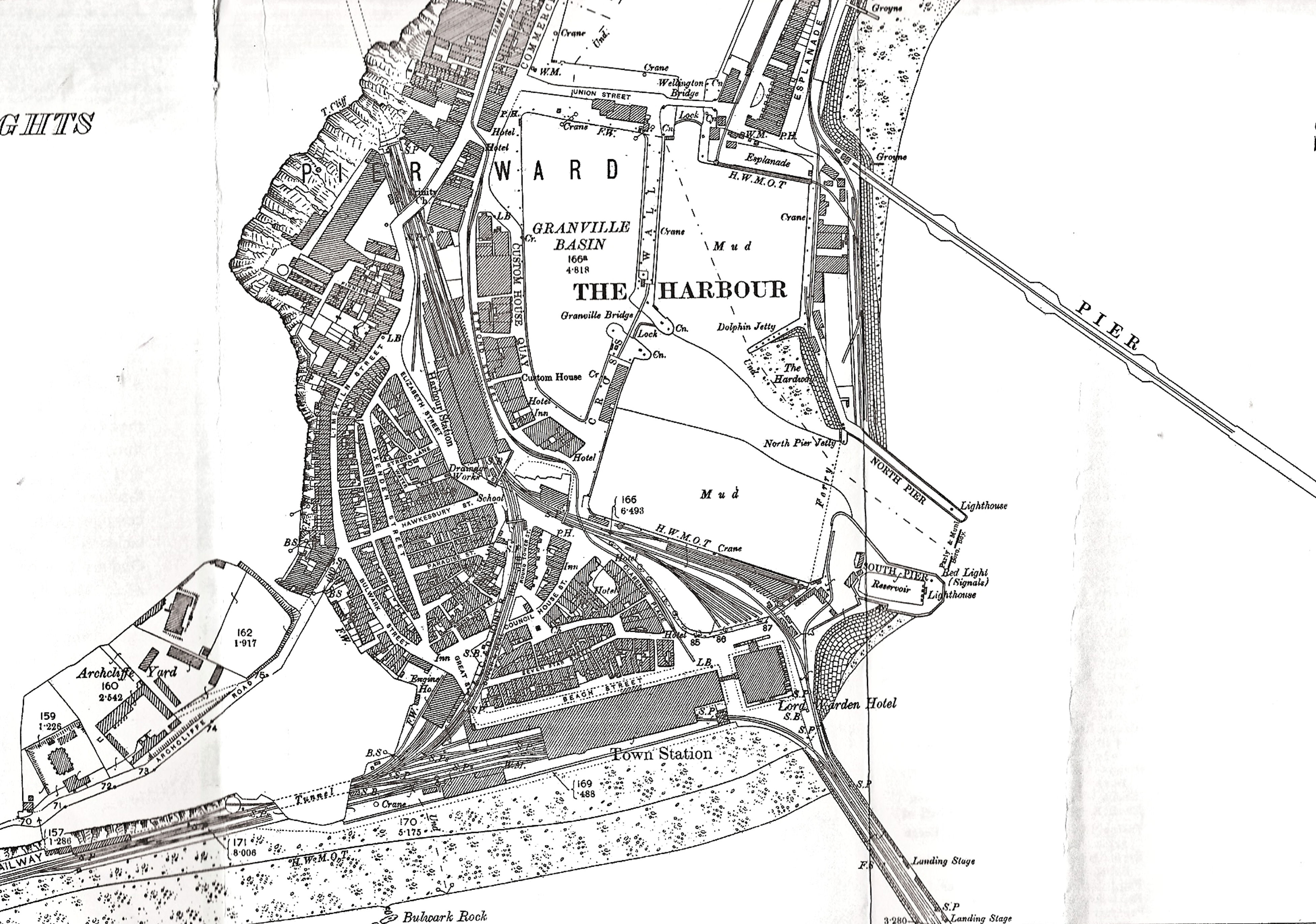
Dover Harbour Commission the predecessors to the Dover Harbour Board (DHB), was set up by  Charter in 1606. At the time, Dover’s harbour was at the west end of the bay and consisted of the Great Paradise and the Great Pent. The latter eventually became the Wellington Dock. The Great Paradise was the outer harbour and its entrance was frequently choked with shingle caused by the Eastward Drift.

The Eastward Drift is a natural phenomenon that brings shingle from the west and before the building of the Admiralty harbour, deposited it at the eastern end of the bay and on the east side of any obstruction built out into the bay. This included the then harbour entrance – now approximately where the north and south pier heads are. The Eastward drift problem was particularly bad at neap tides, as the tidal flow was too weak to wash the pebbles out of the harbour. In order to try to combat the problem the waters of the River Dour were collected in the Great Pent, which was dammed at the Great Paradise end (now Wellington dock) so that it acted as a reservoir. At neap tides, the reservoir was released through great sluices to wash away the shingle that had collected in the harbour entrance.

The first harbour to be created at the western side of the bay was given the name of Paradise Pent by the mariners. This had silted up by end of the 16th century and a new larger outer harbour was created and called the Great Paradise. In 1579 Elizabeth I (1558-1603) granted Dover the right of ‘Passing Tolls’ – a tax to pay for harbour works and initially 3d (1.25p) per ton, was paid by all ships passing through the Strait of Dover, whether they stopped at Dover or not. The Passing Tolls Acts were renewed many times over the next 400 years and the money was used for harbour repairs.

By the time Charles II (1649-1685) landed on Dover beach at the Restoration in 1660, the Great Paradise was becoming marshland covered by seawater at high tides. Thus, the King’s ship was forced to anchor in the bay and he had to be rowed ashore! The original Paradise harbour had long since become a marsh and was, by this time, drying out. On this reclaimed land, the Pier district was already growing. Indeed, the 1606 Charter gave the ground rent gained from reclaimed land to the Harbour Commissioners and this still holds.

Customs House on Custom House quay built c1670 demolished 1821. Dover Museum

Customs House on Custom House quay built c1670 demolished 1821. Dover Museum

On the reclaimed land along the north side of the Great Paradise, the rich merchants of the town built their homes and warehouses and laid down quays with the houses fronting onto Strond Street. In 1670, the Harbour Commission exerted their rights to create one continuous quay on which was built the Custom House. At the time, the Custom House  was near Bench Street but that was falling into disrepair and demolished in 1682.

The problem of the Eastward Drift remained such that towards the end of the 17th century the town was so poor that the council had to sell some of its precious artefacts – three silver maces. Following the Glorious Revolution of 1688, William III (1689-1694) ordered Admiral Sir Cloudesley Shovel (1650-1707) and Captain Whitham to make a survey of the state of Dover harbour and give recommendations. They advocated that the Harbour Commission spent some of their revenue on harbour repairs, so nothing happened!

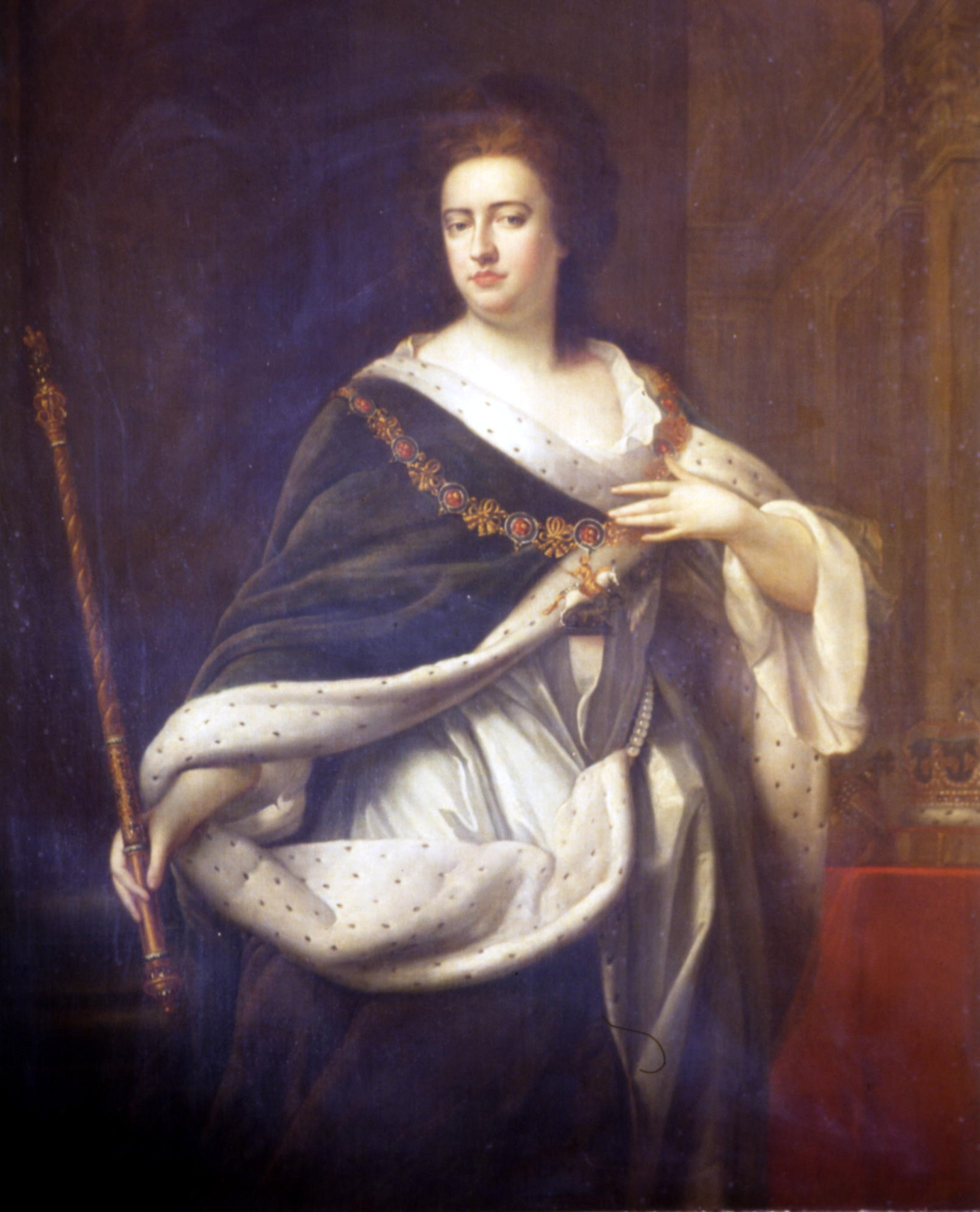
Queen Anne, before 1713 by Godfrey Kneller(1646-1723) , she ensured that recommendations for clearing the harbour of silt were instituted. Dover Museum

Queen Anne, before 1713 by Godfrey Kneller(1646-1723) , she ensured that recommendations for clearing the harbour of silt were instituted. Dover Museum

In 1699, Mayor Edward Wivell successfully petitioned the King for the renewal of the Passing Tolls Act for harbour repairs but it was not spent fruitfully. When Queen Anne (1702-1714) ascended the throne, Mayor John Hollingbery, petitioned her and she listened. The recommendations of 1689 were to be carried out and the first Crosswall was built across the Great Paradise.

The Crosswall went from Union Street, then called Snargate over Sluice, to the Pier district and was built of wood. The wall created an inner harbour called the Bason and the main outer, Tidal harbour. Gates were fitted into the Crosswall opposite the mouth of the Tidal harbour and during neap tides, the gates would be opened in the hope that the whoosh of water would wash away the shingle bar. It was not very effective then or for the next hundred years.

As the population of the Pier district grew so did the popularity of using the wooden Crosswall as a short cut. Even in dry weather, it was dangerous, especially when it was crowded, but on wet days, it was treacherously slippery. Between 1727-1732, it was faced with stone but the relatively narrow lock gates still proved dangerous. In 1738, a swing bridge was erected over the entrance to the Bason and shortly after stalls appeared. At the west end of the Crosswall a bustling, thriving fish market grew.

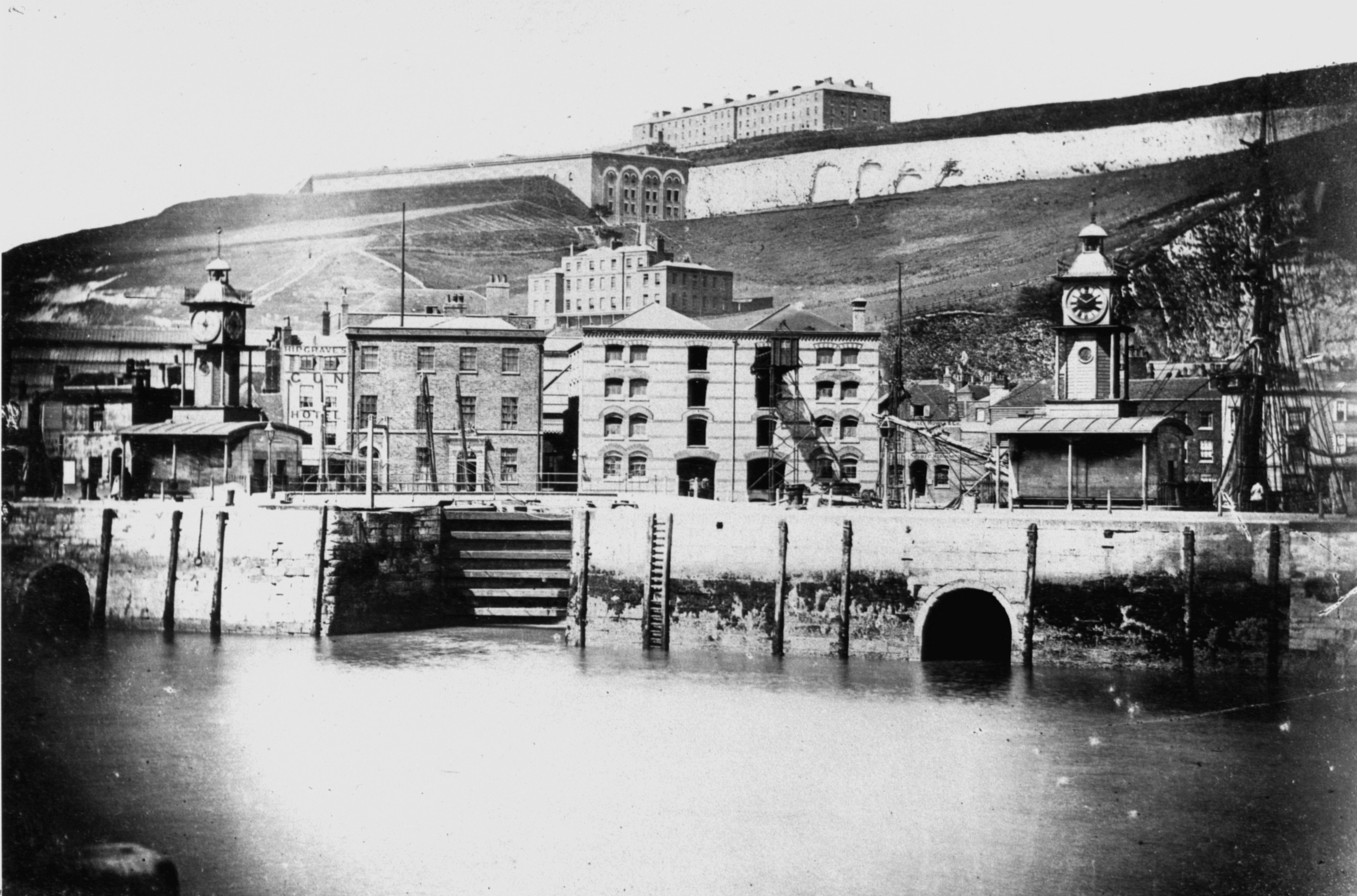
Clock Tower (east) and Compass Tower (west) on Crosswall c1870. Dover Museum

Clock Tower (east) and Compass Tower (west) on Crosswall c1870. Dover Museum

Between 1819 and 1821, the Crosswall was reconstructed by the then harbour master, engineer James Moon, and given new gates and sluices. The operating mechanism for the new sluices was more cumbersome than before so it was decided to build an edifice to house them and to turn this into a feature. The final building was a clock tower, with four faces that, with great ceremony, was opened on 14 April 1830. Because of the lack of symmetry, a second tower was built and this had four compass faces and James Walker using plans by Thomas Telford made improvements to the sluices in 1834.

In 1847, work started on the Admiralty Pier and it was hoped, amongst other things, that this would deflect the Eastward Drift away from the harbour entrance, it did not. The London, Chatham and Dover Railway opened in 1861 with the Harbour Station flanking the Tidal Basin adjacent to Custom House Quay. To accommodate the new line properties were demolished and the Crosswall was reduced in length at the west end forcing the fish market to move further east along the Wall.

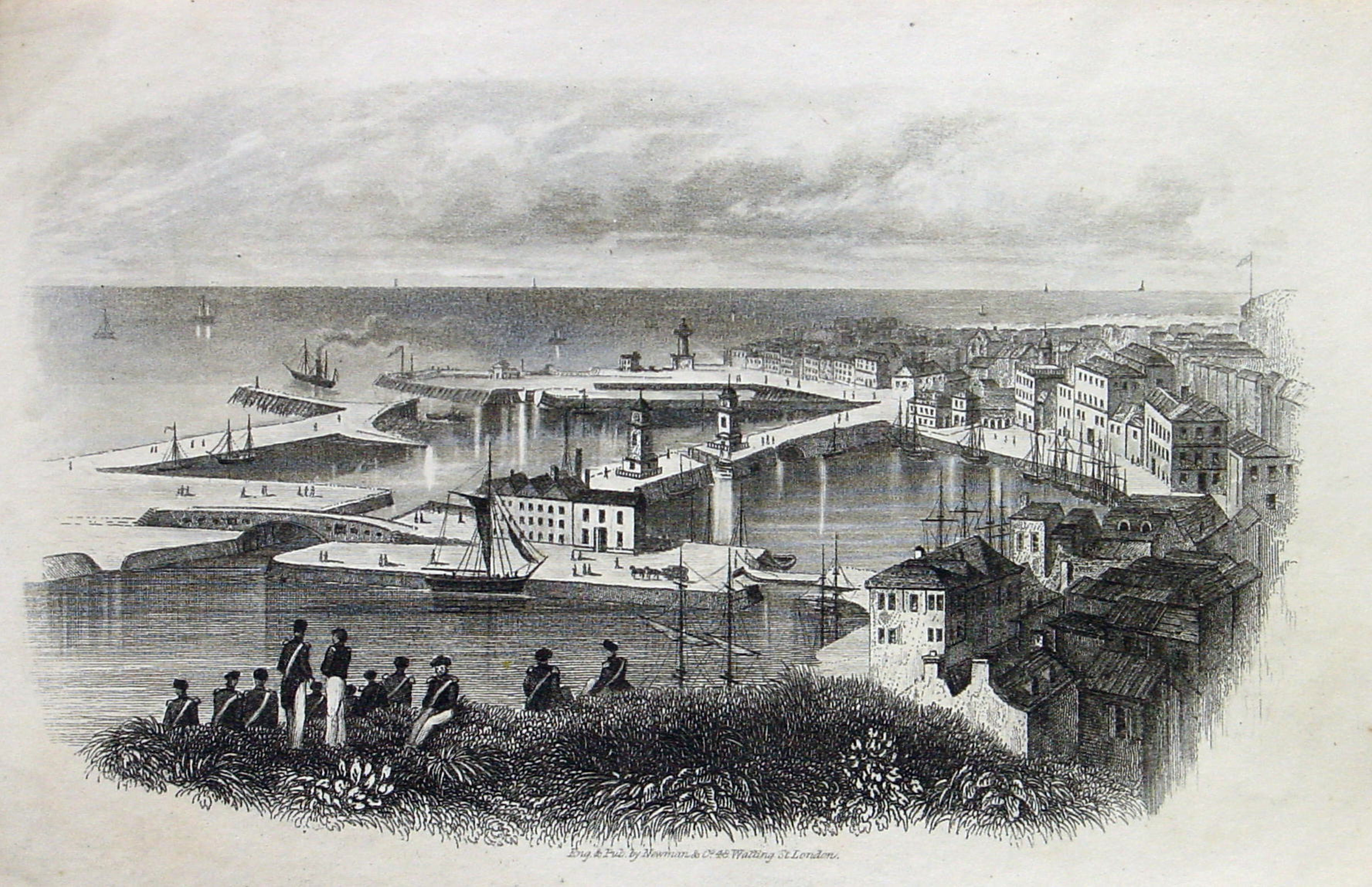
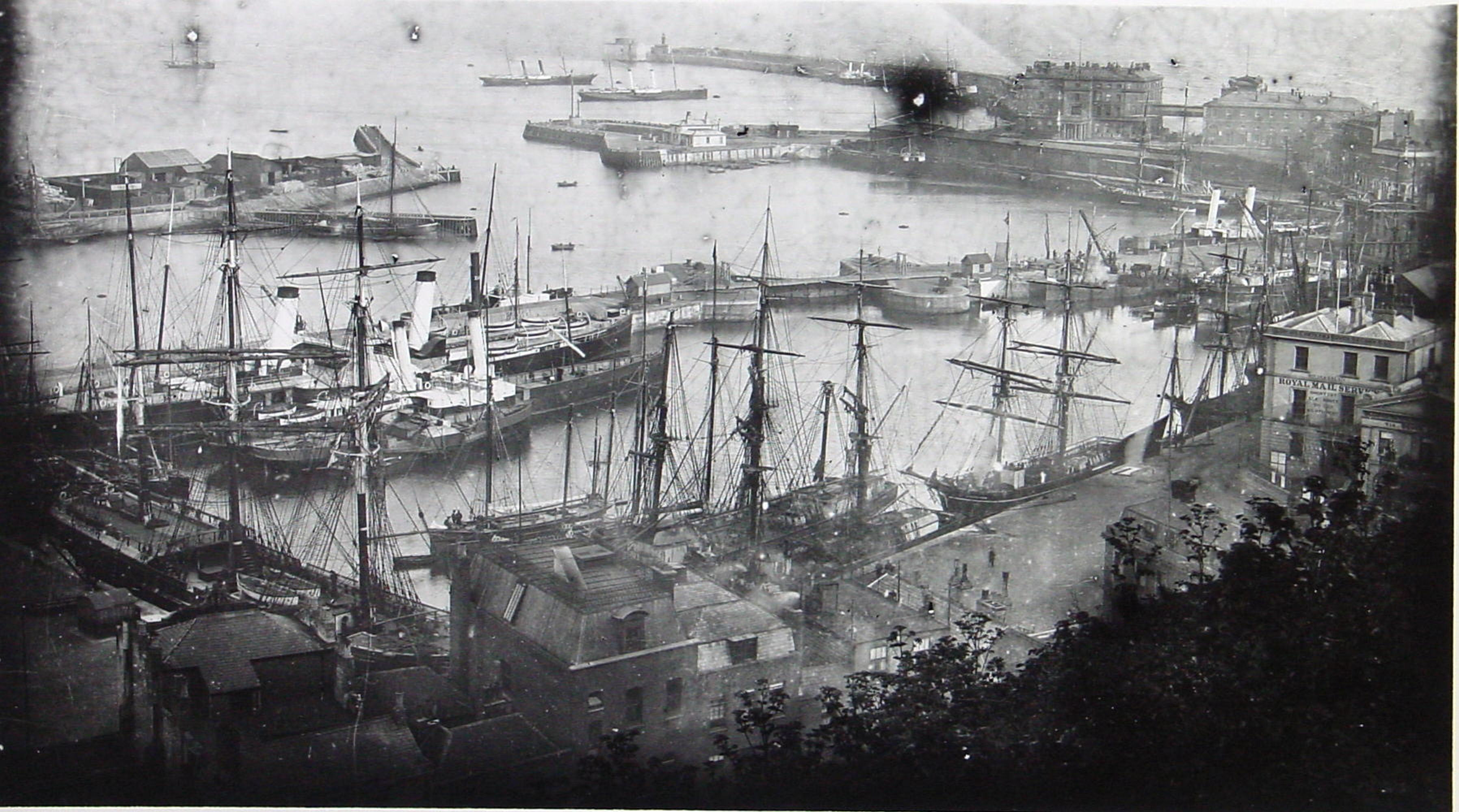
Bason and Tidal basin from Western Heights c 1850. Dover Library

Bason and Tidal basin from Western Heights c 1850. Dover Library

When the Harbour Commission was reconstituted to a Harbour Board (DHB) in 1861, the Passing Tolls Acts were abolished. At the time Steriker Finnis (1818-1889) was chosen as one of Dover Town Council’s representatives on the Board and on the death of Captain Jeffrey Wheelock Noble RN (1805-1865) in March 1865, Finnis succeeded him as the representative of the Admiralty. Finnis was voted deputy Chairman a position he held for almost a quarter of a century. The position of Chairman was held by the Lord Warden who at that time was George Leveson Gower Granville, 2nd Earl Granville (1815–1891), Lord Warden 1866-1891.

BBason being deepened 1871- 1874 to create Granville Dock. Strond Street behind

Bason being deepened 1871- 1874 to create Granville Dock. Strond Street behind

As sail was giving way to steam ships it was decided to widen the entrance to Bason and Finnis’ used this to persuade the Board to undertake major improvements to the dock. Work commenced in May 1871 with the demolition of the clock and the compass towers. The clocks were installed in the newly built clock tower, on the Esplanade in 1877. The entrance to Bason was widened to 70-feet, and the sill lowered to allow vessels drawing 20-feet at spring tides and 16-feet at neap tides to enter. The refurbished dock was opened by the Earl of Granville on 6 July 1874 and renamed Granville Dock. The aggregate expenditure was £74,416 13s 1d. The occasion was marked by the London, Chatham and Dover Railway Company’s paddle steamer, Maid of Kent, carrying passengers from Admiralty Pier into the dock, led by the harbour tug Palmerston, after an official lunch at the Lord Warden Hotel.

 Granville Dock c1890. Dover Library

Granville Dock c1890. Dover Library

Dover was to all intents and purposes the Harbour of Refuge for ships in trouble in the Channel. The pressure on parliament to turn Dover into an official Harbour of Refuge had been ongoing since 1836. Throughout that time, the number of shipping catastrophes continued to increase and troubled vessels were brought into the new Granville dock. To pump seawater out of damaged ships, in 1887, steam pumps were erected on the quay and one of the first ships that the new machine was used on was the Leander of Bremen. She struck a sunken vessel in November that year. Shortly afterwards the barque Norman, was brought to the Granville dock following a collision off Lowestoft.

Besides dealing with shipping catastrophes, as the quays were wide, the dock was used by cargo vessels. Commensurate buildings, such as Bradley’s corn store where once the Ship hotel had once stood, were built. In 1894, DHB built two sets of warehouses alongside the dock to hold goods for ocean going steamers.

August 1899 saw a national dock strike and following a visit by flying pickets from London, men working on unloading timber at Granville dock went on strike. They demanded an increase from 4½d an hour to 6d but the demands were ignored. Instead, men were brought in by a private firm and they unloaded the timber under the protection of the police. Although the situation was eventually resolved, it caused a great deal of resentment by locals of DHB that was to last a long time.

Granville Dock with Pier District on the left and Tidal Harbour on right. Archcliffe Fort is at extreme right. 1890

Granville Dock with Pier District on the left and Tidal Harbour on right. Archcliffe Fort is at extreme left. 1890

In 1912, the dumpheads were removed from the inner side of the dock entrance giving a longer quay that enabled the Clyde Shipping Company to use it as a berth. The following year, as work was being undertaken in preparation for possible war, the destroyer Kangaroo struck the quay badly twisting her stern and causing structural damage to the quay.  In early November 1913, the Sixth Submarine Flotilla comprising C7 to C13, arrived and moored in Granville Dock.

Following the outbreak of World War I (1914-1918) on 4 August 1914, the naval personnel built a floating repair shop in the Granville dock, using the shell of an old steel lighter belonging to DHB’s works department. Throughout the War, the dock was used for the repair of trawlers and cross-Channel ships. Railway materials for France were also loaded and shipped from the dock.

Granville Dock unloading timber c 1930. Thanks to David Ryeland

Granville Dock unloading timber c 1930. Thanks to David Ryeland

After the War DHB decided to utilise Granville dock for commercial activities and in particular, the coal and timber trades. They started in a small way at the end of the hostilities when the harbour was still in the hands of the Admiralty. However, by the time it was handed back to DHB, on 29 September 1923, the export coal trade was in decline due to the exchange rate out-pricing British coal. Nonetheless, there was a need for domestic coal in East Kent and for this there was gradual increase in the facilities for unloading coal from the north east of England. Following the 1926 General Strike imported coal from the Continent increased along with the arrival of coal from north America. Much of the latter was unloaded from berths on the Admiralty Pier. Over the following years other commercial activities including importing material for road building and bricks. The latter to meet the needs of Dover’s municipal housing schemes and Kent coalfield villages.

Yachts sometimes berthed in the Granville dock and in 1926 Police Constable Bill Griggs, 36, and colleagues, answered a call to a fire on the motor yacht Quo Vadis. Shortly after arrival, the yacht blew up killing P C Griggs. Two years later, in December 1928 at night, Police-Constable Steele dived into the dock to rescue Captain W J Thomson of the steamer Kenrix. Steele towed the unconscious man 40-yards to the steps of the dock where two other police officers rendered artificial respiration. Meanwhile, Steele dived in again to help a crewmember, James Huggeth, who had gone to help the captain but ran into trouble because of the cold. Huggeth was taken on board his ship and the captain to the Royal Victoria Hospital where he eventually made a good recovery.

In 1928 the Dover Harbour Board, sought parliamentary approval to close Commercial Quay, on the landward side of Wellington Dock in order to increase the size of the Dock and to create more quayside accommodation. The Dover Corporation opposed the Bill as it involved demolition of many of the properties between Commercial Quay and Snargate Street – Northampton Street. The Bill was passed in July 1929 and Wellington Dock was increased to 8 acres.

Granville Dock - unloading cargo. Dover Harbour Board

Granville Dock – unloading cargo. Dover Harbour Board

In preparation for possible war, during the night of 5 February 1939, an emergency was organised in which many of the town’s inhabitants took part. Arrangement had been made with RAF Hawkinge for aircraft to simulate attacking forces, but due to fog, they were cancelled. Nonetheless, the areas they had supposed to have attacked carried on with the exercise. The central control station was established in the basement of the then Town Hall (Maison Dieu) under the command of the Town Clerk, Samuel Loxton and all 70 wardens’ posts were manned by nearly 600 people with 50 motor vehicles. The police Chief Constable, Marshall Bolt and other borough officials, had drawn up hypothetical incidents.

The supposed attack included seven high-explosive bombs, two incendiary bombs, three mustard gas cases and a plane crash. The latter was supposed to have occurred at Charlton Green and set a house alight. At Granville dock an incendiary bomb was suppose to have set fire to a coal lighter and part of the quay causing two casualties. The alarm was given at 02.15hrs, within six-minutes the auxiliary fire fighters were on the scene, and the casualties were taken to hospital in an ambulance within 15-minutes. The feedback was that the communication had worked smoothly and that the results of enemy attacks on the dock could be dealt with.

Strond Street, close to Granville dock, 1945, showing war damage. Thanks to David Ryeland

Strond Street, close to Granville dock, 1945, showing war damage. Thanks to David Ryeland

The reality was far more serious than was envisaged. World War II (1939-1945) began on 3 September 1939 and from the start of the Battle of Britain, nine months later, Granville Dock became a prime target. On 8 October 1940, a 500kg bomb made a direct hit on the trawler HMT Burke under repair in the Dock. Eight people were killed including five Dover ship repair workers: Fred Stanford 18 of Clarendon Place, welder George Lamkin 18, of York Street, Cyril Playford 20 of Pilgrims Way, shipwright Arthur Young 33 of Endeavour Place and George Dewell of St John’s Road, Elvington.

However, such information was not made available for naval or army personnel so the other three casualties were not listed. Another example of this secrecy happened on Wednesday 1 October 1941, just before midnight, when a JU88 drop a bomb that set alight trawlers and motor launches in the Dock. The reports of damage and casualties were withheld, as were the many other attacks on Granville dock.

At about this time concern was being expressed over the Dock gates, fitted in 1874, they were wearing thin and there was a danger that they would not withstand many more attacks to the dock. In 1943 new mild steel, self-balancing gates, each leaf weighing some 67 tons, were ordered from Head, Wrightson & Co of Thornaby-on-Tees, Teesside. They were designed by Coode, Wilson, Vaughan-Lee and Gwyther and were reassembled off Admiralty Pier.

It was not until May 1945 that the Dock was emptied and an ancient caisson was fitted to keep it dry. The new gates were then floated across the harbour and fitted. Electronic winches with patent hydraulic couplings, the first of the type in the country, were installed to replace the original hand operated winches. Ransomes and Rapier of Ipswich made these; however, the original system of chain operation for opening the gates was retained. The whole cost nearly £35,000 and was the first part of a scheme to repair and modernise the dock.

Granville Dock Transit Shed 1960s. Dover Harbour Board

Granville Dock Transit Shed 1960s. Dover Harbour Board

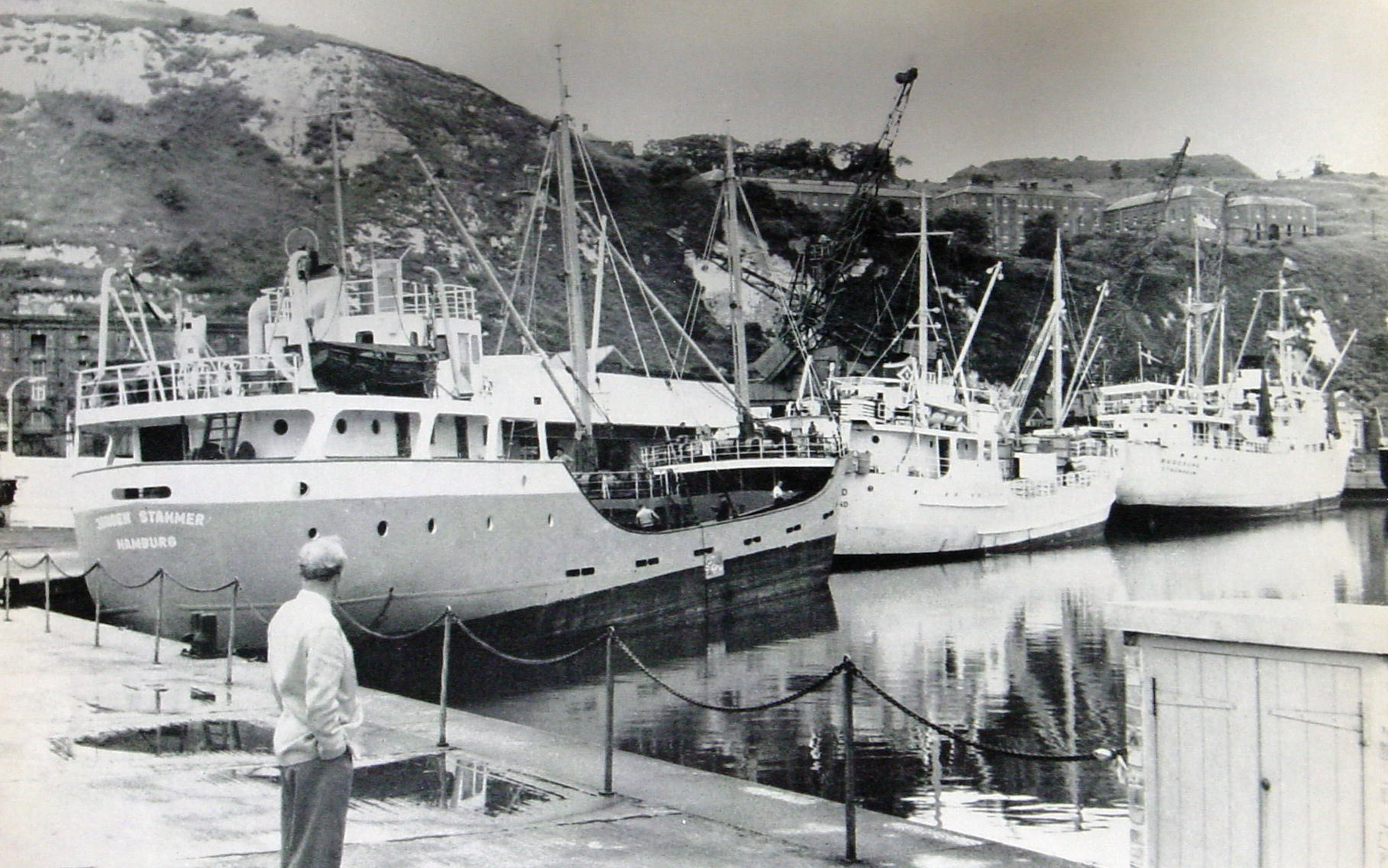
The first export of coal following the War was in June 1948 from Granville dock. With a modicum of fanfare, a Dutch vessel left, taking cargo of screenings to Rotterdam. The following year permission was given to demolish Custom House Quay and Strond Street was realigned. This was to provide space for a massive transit shed on the north side of the Dock and large electric cranes were installed. The Dock became a cargo terminal for grain, fruit, vegetables, stone, timber, wood pulp, coal and scrap metal. In 1951, authority was given for the closure of Strond Street to provide more cargo space.

Granville Dock cargo ships, c 1960s. Dover Harbour Board

Granville Dock cargo ships, c 1960s. Dover Harbour Board

In 1966 that DHB demolished the last of the few remaining ancient buildings on Strond Street. This was Mrs Adamson’s shop, believed to date from Tudor times but had an attractive Georgian-like facade. No thought was given to moving it to another location for at the time, Dover’s elite decreed that the town was to be forward-looking. Modern office blocks were built but on 27 July 1972, the British cargo ship, Salerno (1,559 tons), hit the Granville dock quay on which stood a two-storey office block. The building was badly damaged but luckily, the office-workers managed to escape shaken but unhurt.

Albeit, some people were looking back and 26 May 1985 saw a flotilla of 30 out of the 500 boats that took part in rescuing the British Expeditionary Force off the beaches of Dunkirk in 1940, left Granville dock. They belonged to the Association of Dunkirk Little Ships, the founder and Admiral of which was broadcaster, Raymond Baxter (1922–2006). In 2000, to mark the 40th anniversary of the evacuation 40 little ships congregated in the Granville Dock, all flying the St George Cross, a privilege bestowed on the little ships that took part.

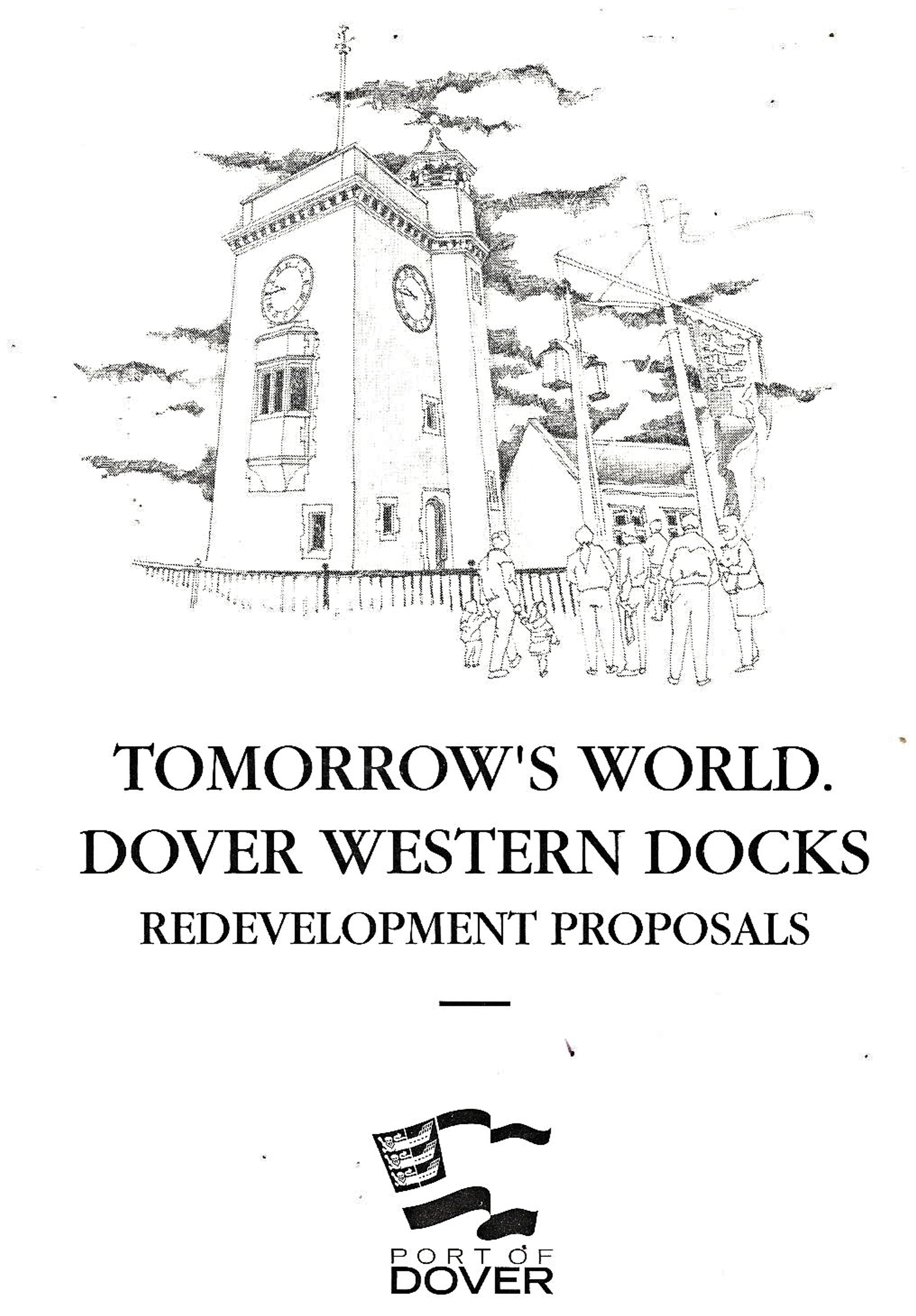
Dover Western Docks redevelopment plan 1993

Dover Western Docks redevelopment plan 1993

As cargo vessels became larger, the decision was made to create a berth at the Eastern Dock. With this in mind, in the early 1990s a major waterfront development plan for Western Docks was launched. The scheme was expected to cost £100m and included a yachting marina, blocks of luxury flats, a superstore, a 100-bedroom hotel and offices. The first phase was scheduled to start in 1994 with a superstore adjacent to Wellington Dock but requiring part of that to be filled in.

Once the cargo vessels were moved out of Granville dock, the plan was to turn it into a marina with space for 400 yachts. However, the redevelopment did not take place as the Environment Agency objected tothe development on the grounds that it could precipitate an increase in the unacceptable levels of flooding. Although much of the redevelopment plan did not happen, about £1m was spent on modifications and work on the gates, sluices and quay faces of the Dock providing space for about 136 yachts.

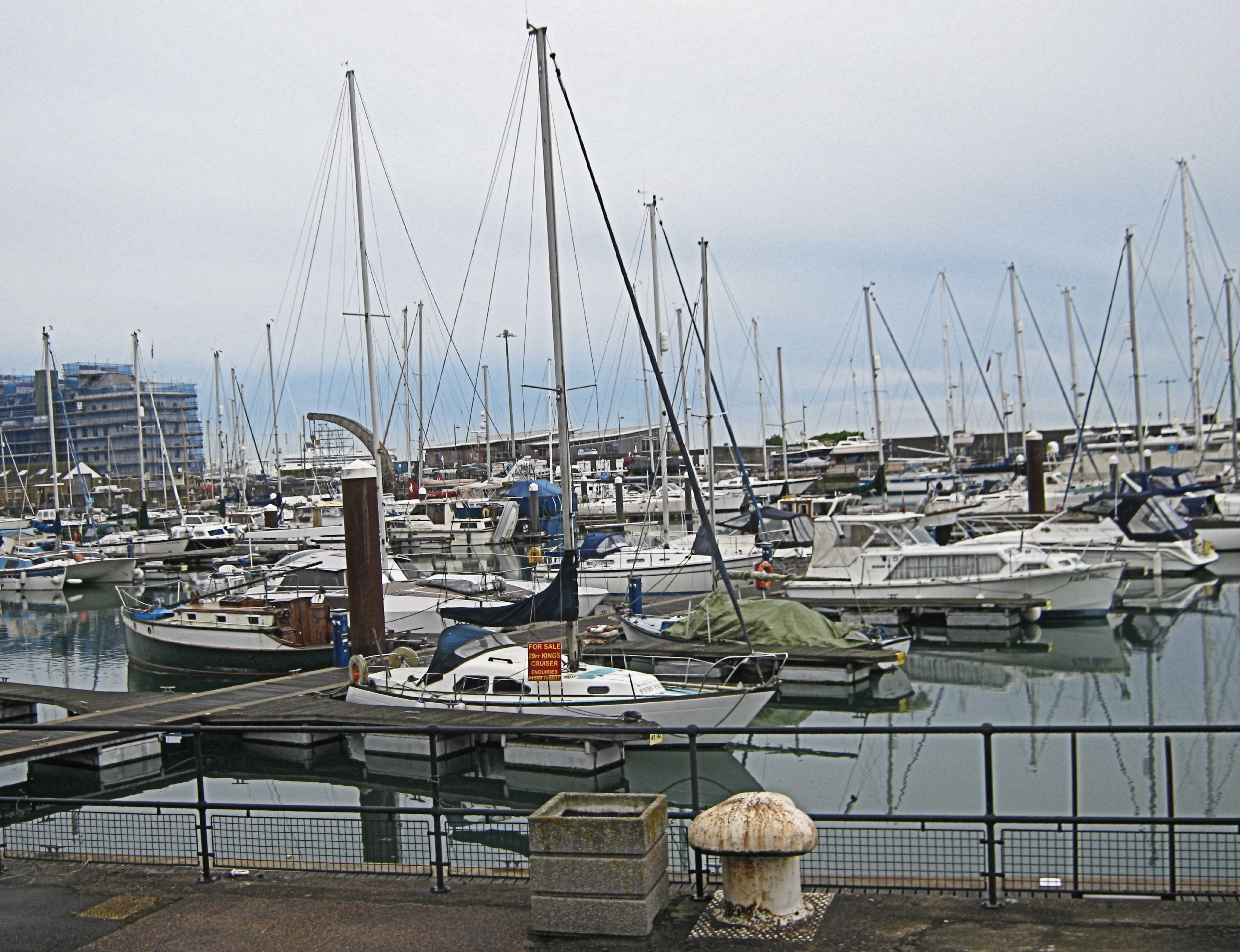
Granville dock - May 2014. LS

Granville dock – May 2014. LS

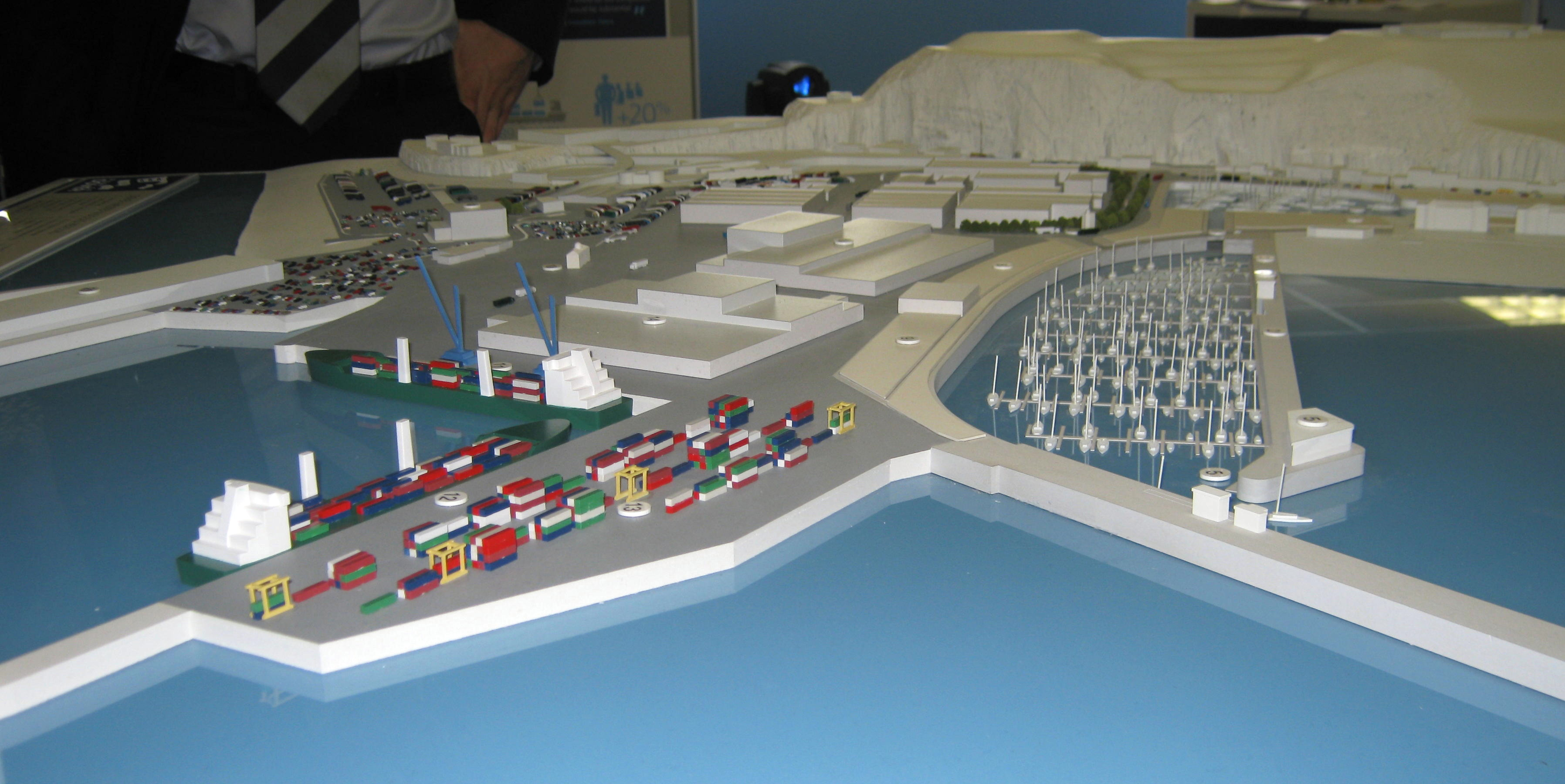
In 2006, another Western Docks regeneration plan was launched. This time to create a second ferry terminal with four new berths and a marina. A representative for the Dover Harbour Board said that ‘in thirty years the number of lorries using the port had increased by 530% to 1.98 million a year. It was forecast to double by 2034.’ With these figures in mind, ‘Dover is a freight port that handles lots of tourists, rather than a tourist port that handles lots of freight.’

Western Docks - model of proposal 2014

Western Docks – model of proposal 2014

At that time, there was talk of a buffer zone off the A20 between Folkestone and Dover, where freight vehicles would be held and released to the port as shipping space became available. The proposal is slowly becoming a reality and includes the widening of the Prince of Wales Pier in order to turn it into freight cargo berths. The freight lorries, it is envisaged, will be held on ‘reclaimed land’ – that is, the present Granville dock and the Tidal dock. In October 2015 Dover’s popular marina, which Granville Dock is part of, was awarded a Five Gold Anchor rating by the Yacht Harbour Association.

  • Presented:
  • 19 May 2014


Posted in Granville Dock, Maritime | Comments Off on Granville Dock

St Martin-le-Grand

Map showing location of St Martin's Churchyard Dover 1844

Map showing location of St Martin’s Churchyard Dover 1844

Once upon a time the church of St Martin-le-Grand, which stood on the west side of the present day Market Square, was said to rival Canterbury Cathedral in size and stature. What remains of the ruins can be seen besides the steps leading to the Dover Discovery Centre. The church and the monastery, in which it stood, was dedicated to Saint Martin (circa 316-397), bishop of Tours, patron Saint of France and soldiers and for well over a thousand years, the patron Saint of Dover.

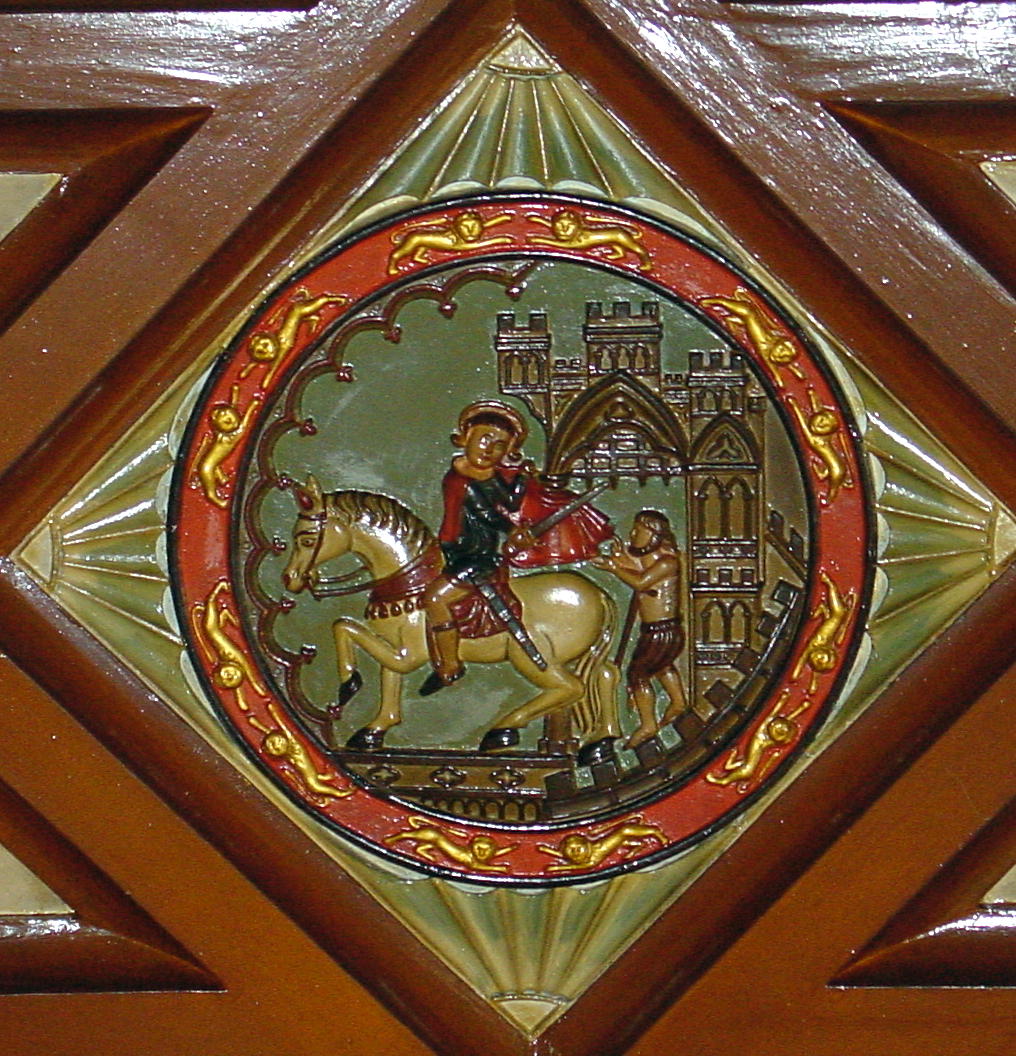
St Martin sharing his cloak with a beggar - Ceiling of the Court Room, Maison Dieu - former Town Hall. Alan Sencicle

St Martin sharing his cloak with a beggar – Ceiling of the Court Room, Maison Dieu – former Town Hall. Alan Sencicle

St Martin was the son of a Roman soldier from Szombathely, Hungary, converted to Christianity at the age of ten he too was in the Legions. On his discharge from the Roman army St Martin went to Poitiers, France and became a disciple of Saint Hilary (c300–c368). After spending time in Italy, he rejoined St Hilary and founded the first monastery in Gaul at Ligugé. In 371, St Martin was appointed Bishop of Tours, France, and established a monastery at Marmoutier. This became an important religious centre and St Martin continued his missionary work in Touraine and throughout Gaul with many miracles attributed to him. The miracle for which he is particularly remembered was the offering of half his cloak to a beggar at Amiens. Afterwards St Martin experienced a vision of Christ relating the charitable act to the angels. St Martin’s feast day – Martinmas – is 11 November and up until the mid-nineteenth century, this was celebrated with festivities and a fair in Dover.

Towards the end of the sixth century Æthelberht (560-616), King of Kent, gained supremacy over most of the Saxon kings ruling territories south of the Humber. He was married to Bertha of Kent (539–c612), the Christian daughter of Charibert I (517-567), king of a Frankish tribe and in 597AD, Æthelberht welcomed St Augustine (d 604), who brought Christianity to England. Æthelberht’s son, Eadbald (616-640), after initially abandoning Christianity, ordained twenty-two Secular Canons and founded a community ‘within the castle’ at Dover before he died.

St Martin-le-Grand - Summary table of the Lands held by the prebendaries - Lyons p62

St Martin-le-Grand – Summary table of the Lands held by the prebendaries – Lyons p62

The castle referred to has been shown to have been within the Roman Saxon Shore fort to the west of what is now Market Square. Over the following centuries from when the Roman’s left – or perhaps even before – the River Dour estuary had silted up creating land that is now the Market Square. In 691AD, Wihtred (c.670– 725), King of Kent, looked to St Martin before going into battle and following one particular victory ordered a purpose built monastery to be erected in the Saint’s honour for the Dover Canons.

Materials for the new monastery was brought by ships from the sea, according to 19th century writers, through Severus Gate, at the bottom of present day Bench Street, to the Westbrook quay that was possibly on alignment with present day King Street. Later, the King ordered a wall to be built across the seaward face of the former delta, by this time a flood plain between the Westbrook and Eastbrook of the River Dour, to protect the Canons from the sea robbers. The harbour, itself, was approached through the East Gate.

Following the Bapchild Royal Council of 697AD, the Canons were endowed with large grants of land – including at Buckland, Farthingloe, Guston, and St Margaret’s and after the Conquest (1066), Charlton. A separate Prior’s residence was built in the Farthingloe Valley – later Farthingloe Manor – and they were also given the lucrative tithe of the passage of the port of Dover. The Canons were subject only to God and the King and they could marry and have children. Rome ordained their lives and their duties included working amongst the people teaching them how to conduct their lives as well as religion. Excavation of the St Martin’s site, by Kent Archaeological Rescue Unit (KARU), shows that initially the monastery church was a small wooden single-cell structure with an altar-base at the east end.

In the late 7th century – circa 691AD – the church was greatly enlarged, using the same central axis but with a huge eastward extension. A century later, the floor of the church was re-laid and sealed with imitation red marble. Unfortunately, in the ninth century, fire seems to have destroyed much of the church but it was rebuilt keeping generally the same layout, but was possibly more impressive.

By that time Dover had become an important settlement and such a building programmes would have required skilled artisans such as masons, clerks, hewers, rough-masons, carpenters, well diggers, smiths and stone-porters. They were probably paid in both goods and money, with which they would have bought or bartered for goods from various stalls or booths in and about the area. Further, during the late Saxon period Dover had its own Mint and was the head of the Cinque Ports confederation providing a base for royal fleets in 1036, 1051 and 1066.

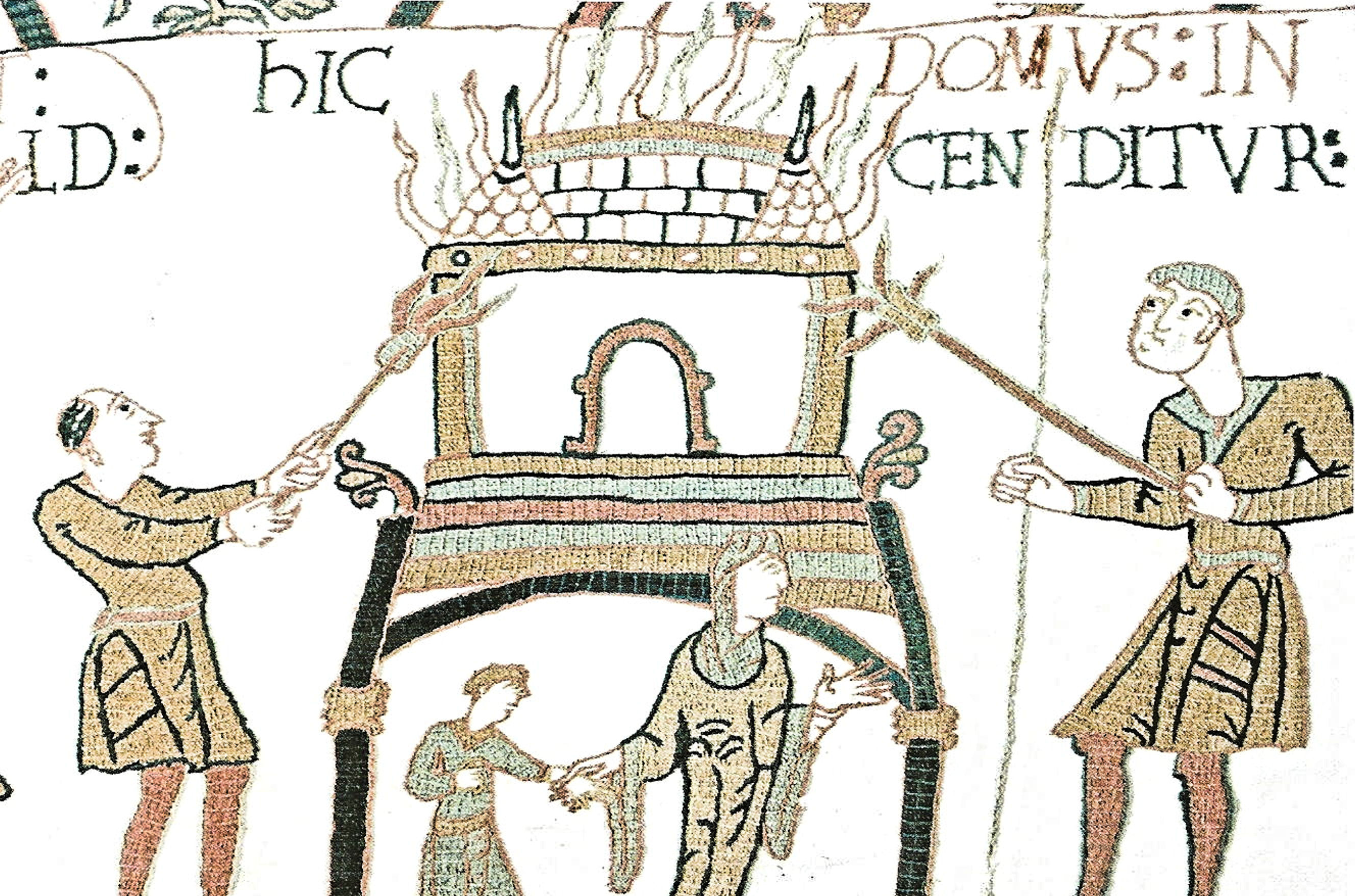
Bayeaux Tapestry showing the Burning of Dover. courtesy of Dover Museum

Bayeaux Tapestry showing the Burning of Dover. courtesy of Dover Museum

Following the Battle of Hastings (1066), William I’s (1066-1087) army marched along the coast razing villages and towns to the ground. This included Dover and the monastery of St Martin. He therefore ordered to new monastery to be built in a style similar to that of St Augustine’s Abbey, Canterbury. For a while, it is believed by some, that the new church was one of the more august monasteries in England and from excavations, it is known that the monastic buildings stretched far down what is now Bench Street and, eastwards, they reached the banks of the River Dour.

Even though the monastery was probably self-contained, it had a profound influence on town life and environs. Not least because the Canons’ land holdings was so extensive and they were the only Kentish landowners whose estates were not given to the warriors who came over with the Conqueror. Indeed, in the Domesday survey of 1086, the landholdings were treated separately under the heading, ‘Terra canonicorum S. Martini de Dovre.’

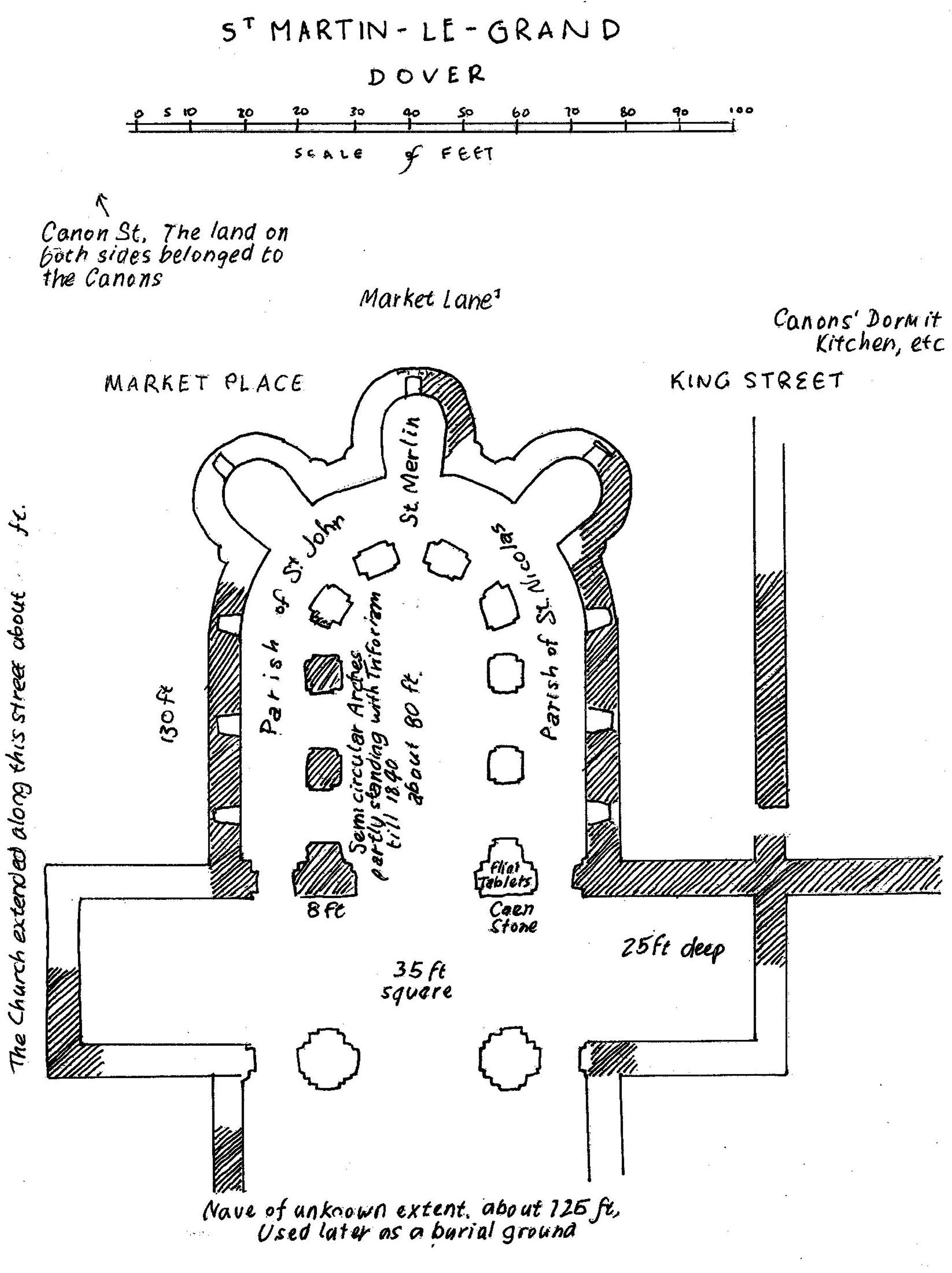
St Martin le Grand Ground Plan from C.R.Haines, Dover Priory. CUP 1930

St Martin le Grand Ground Plan from C.R.Haines, Dover Priory. CUP 1930

Within the monastery walls, there would have been the Chapter House – the administrative centre – domestic buildings such as the kitchens, bakery, buttery, pantries, refectory (dining room), storerooms, workshops, stables, infirmary, dormitory, and sleeping quarters for visitors. There would have been the library, cloisters and gardens for growing much of the Canons’ food although many of them would have had homes within the town.

It can only be conjectured as to what the magnificent church would have looked like. It is generally believed to be of a similar design to St. Augustine’s Abbey in Canterbury. The transept has been estimated as 25-feet (7.6 metres) in depth, over which was probably a high central tower. From this, extending some 80-feet (24.4metres) was the choir and the north side of the Church, which started from the stub of what was once Market Street, was some 270-feet (82.3 metres) in length and the roof was held on high arches.

When built, at the east end were three apsidal chapels, one in the centre, and the others respectively facing the north-east and south-east. These chapels were dedicated to St Martin, St Nicholas and St John and later more chapels were added. The walls, inside the church, were probably plastered and white washed – to give light, as the windows would have been small. In keeping with the time, it would only have had the minimum of sculptural decoration.

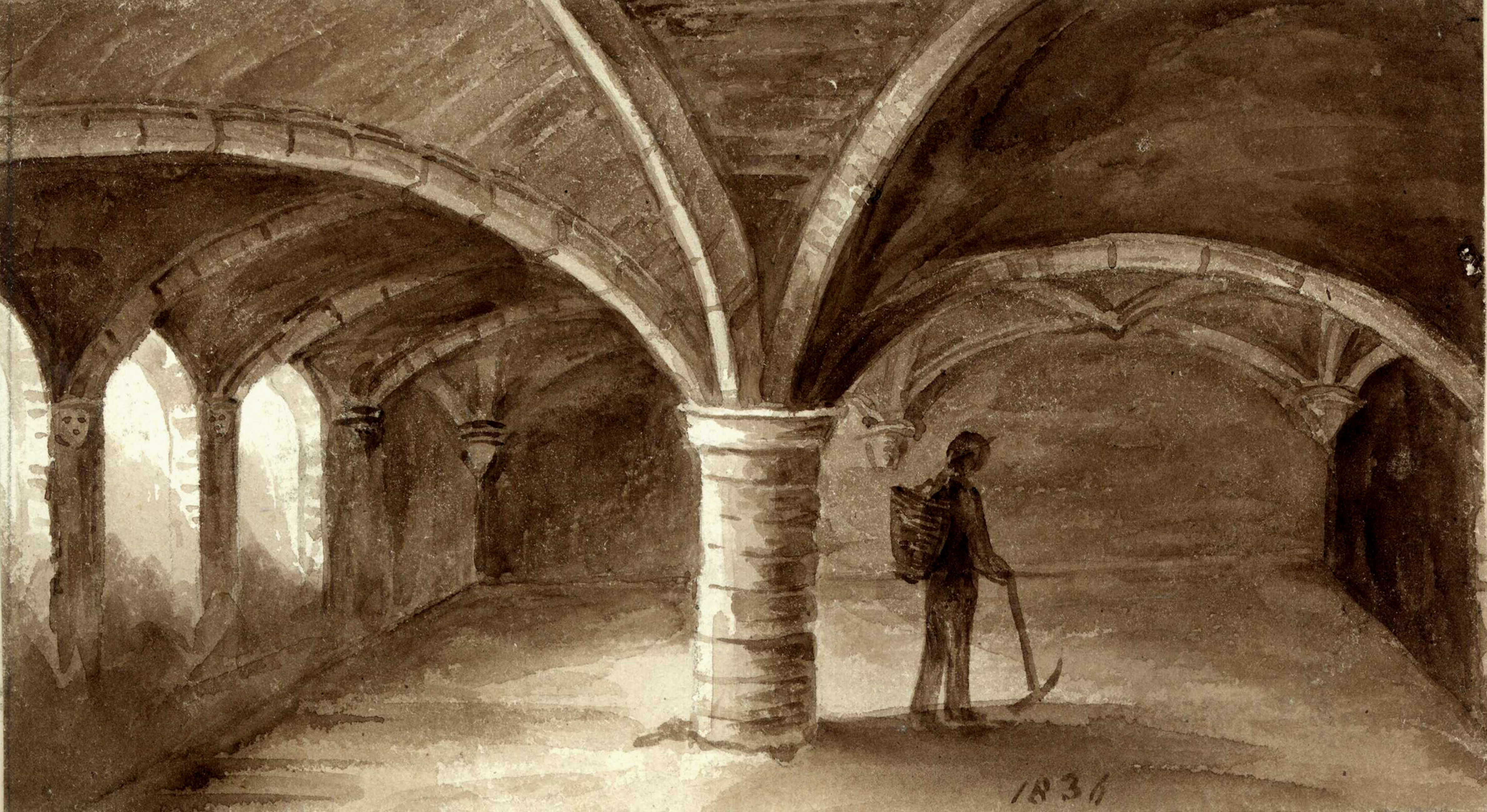
Crypt of St Martin's Monastery, Bench Street 1836 drawn by Rev J Maule courtesy of Dover Museum

Crypt of St Martin’s Monastery, Bench Street 1836 drawn by Rev J Maule courtesy of Dover Museum

The crypt would have been a series of pillars leading to a curved roof that could take of the weight of the magnificent church above. The crypt under another part of the monastery still exists and drawings from the 19th century give an idea of how it would have looked. The outside walls of the church were dressed with Caen stone giving the edifice a magnificent appearance befitting a royal chapel – which it was.

There would have been a protective wall around the monastery and this probably became part of the later town walls, for a gate, which led to the Western Heights, was known as St Martin’s Gate. The dormitories, kitchens, and other departments were on the south side of the church and in the precincts, civil workshops were established specifically to meet the needs of the monastic life. Up until recently off Queen Street was Last Lane, where the Canons’ shoes were no doubt made.

The monastic life probably centred on hard physical work – growing their own food and livestock as well as building and repairing the structure. They would also have administered both spiritually and medically to the town’s folk and spent a good deal of time in scholarship and prayer. Their life was ruled by the ‘Great Bell,’ and was said to have been rung every three hours, day and night, to call the incumbents to prayer.

The monastery would have provided lodgings for travellers, especially as Dover is the shortest sea crossing to the Continent and the church was also the sanctuary for felons. Soon after a felon arrived, the mayor in his role saw them as coroner, who would interview the offender. The interview marked the start of the 40 days of sanctuary after which the felon had to leave the town by the ‘high road’ – London Road. If they did not comply and were caught, they would be punished by being thrown off Sharpness, now Shakespeare, Cliff (see Executions).

After God, the Canons were responsible to the King and although it would appear that they were not politically minded,  nationally there was a power struggle between York and Canterbury for supremacy. The struggle was long and bitter and in the end, Canterbury won with the Archbishop becoming the Head of the Roman church in England. Because of St Martin’s magnificence, it had always been seen by some in Canterbury as a threat. Once the Diocesan hierarchy had been established and the Dover Canons, who were not responsible to the Archbishop, were vulnerable.

Dover Priory Refectory now Dover College from Effingham Road. Alan Sencicle

Dover Priory Refectory now Dover College from Effingham Road. Alan Sencicle

In 1124, Archbishop William Corbeil (1123-1136) persuaded Henry I (1100-1135) that the Canons’ moral behaviour left a lot to be desired. The main thrust of his argument was that as the monastery was in the centre of a seafaring town and this had a detrimental influence on the Canons. The ploy worked and Corbeil was able to replace the Canons with monks of his own order. However, due to Corbeil’s rationale over the proximity to the port, his monks could not take over St Martin’s. So a new Priory, also dedicated to St Martin, was built. This opened in 1136 on land west of the Maison Dieu that was built nearly 70 years later.

The Bishops of Norwich and St David’s came to Dover to dedicate the new Priory but before the ceremony took place the Benedictine monks of Canterbury swooped into Dover in the most ungodly fashion. They were not objecting to the Dover Canons being kicked out but over the Order that was replacing them. The two Bishops beat a hasty retreat and, it was said, Archbishop Corbeil was so distressed that he died eleven days later!

The Priory immediately assumed control of all the parochial rights and dues that belonged to St Martin-le-Grand and in 1139, the latter was officially reduced in status. Further, besides depriving the grand monastery of income the incumbent in charge was to be an archpriest. However, in 1174, Richard of Dover Priory was appointed Archbishop of Canterbury, a position he held until his death ten years later.

During his incumbency, it appears that St Martin’s status as the senior church in Dover after the Priory was ratified. This meant that the priests of Dover’s other churches were not allowed to start their mass until the Great Bell of St Martin’s was rung. Some of these priests were also the incumbents of St Nicholas and St John the Baptist that was still part of St Martin’s. It is written that in 1447 the rector of St Peter and Paul Church, Charlton was John Goldsmith who was also the rector of St John the Baptist parish church, ‘under the roof of St Martin-le-Grand.’ Further, money continued to be bequeathed to St Martin’s for repairs and also chapels with fine altars were continued to be erected. These included Our Lady Undercroft and St John of Byrlyngton.

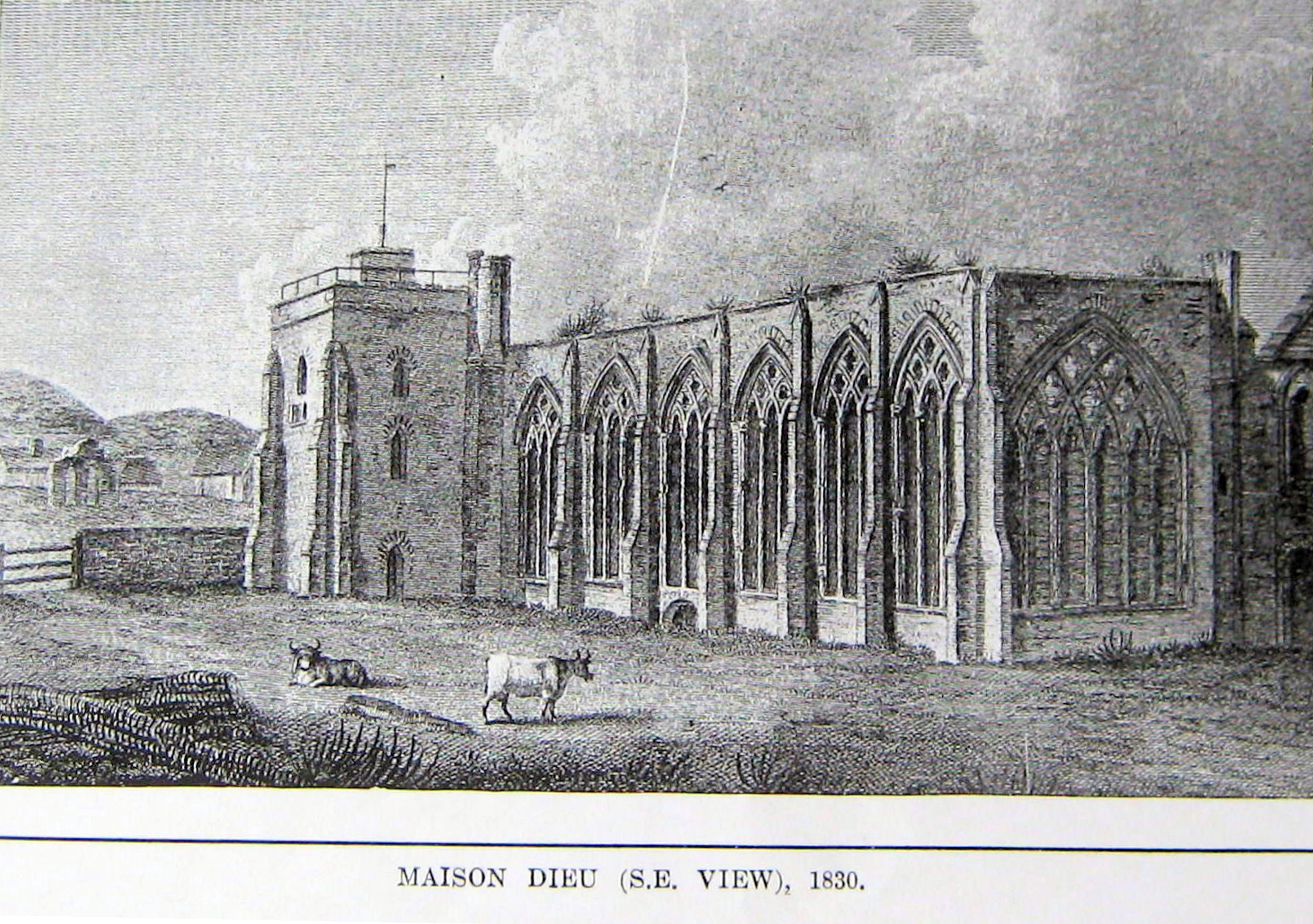
Maison Dieu circa 1830

Maison Dieu circa 1830

In 1203, Hubert de Burgh, Constable of Dover Castle, established the Maison Dieu. At the time the building was probably little more than one substantial hall with a kitchen and living quarters attached for the Master and brethren, including sisters, who ‘practiced hospitality to all strangers’ – hence reference to it as a ‘hospital’. In 1220, Thomas Becket’s (1118-1170) tomb at Canterbury was moved and Henry III (1216-1272) showed great reverence towards him.

This escalated the number of pilgrims going to Canterbury increasing the demands on the Maison Dieu and giving reason to believe that St Martin’s was utilised until stables, bakery, brewery and further accommodation was built. On 11 July 1227, Henry III dedicated the Maison Dieu. Five days before, on 6 July, he granted the lucrative tithe of the passage of the port Dover, which had once been in the possession of St. Martin’s, to the Maison Dieu.

Before the demise of St Martin’s the fair dedicated to the Saint, had been held in the precincts. Following the demise, a regular market was held and St Martin’s Great Bell was rung to at the start, at the time, ‘foreigners’ (none Dovorians) were allowed to open their stalls and when the market closed. The Bell was also rung when important announcements were made and to give warning of attack from the sea and other emergencies.

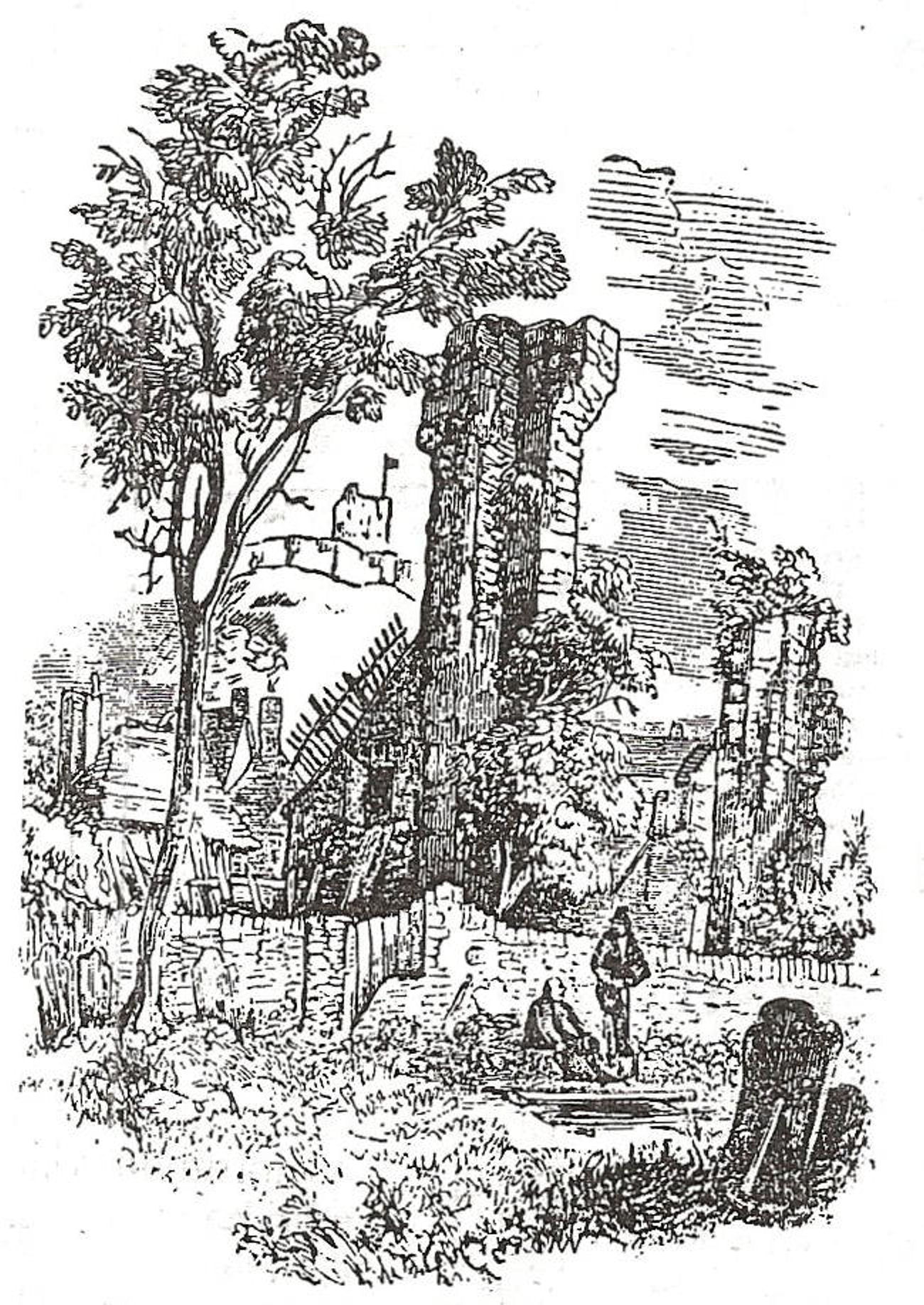
St Martin-le-Grand - in the 18th Century - Dover Museum

St Martin-le-Grand – in the 18th Century – Dover Museum

The annual fair held on 11 November – St Martin’s Day, was given a Royal Grant about 1160. Over time, the duration of the fair increased but during the 19th century it went into decline and in 1847, was officially abolished. In the fair’s heyday, people came from miles around and there was much merrymaking. At some point, a Market Cross was erected, demolished during the Wars of the Roses but replaced in 1479.

In 1511 representatives of William Wareham the Archbishop of Canterbury, undertook a Visitation. They found St. Martin’s steeple to be in a poor state of repair and that the Churchwardens of St John’s chapel had abandoned services. Their report added that, ‘the revenue was so small that no honest Priest could stay in the church.

The Reformation, beginning in 1529, saw the destruction of St Martin’s. The bells were given to St Mary’s and St James’ Churches; the clock and seats to St Mary’s; a pyx, used for the Eucharist, and six silver bells weighing 52½ ounces were sold for £13. 2s 6d (£13.12½p). This was to pay the town’s debts to wealthy inhabitants such as Thomas Allen and Thomas Bredgate. Everything else was sold and the money received increased the town’s coffers by £29 7s (£29.35p).

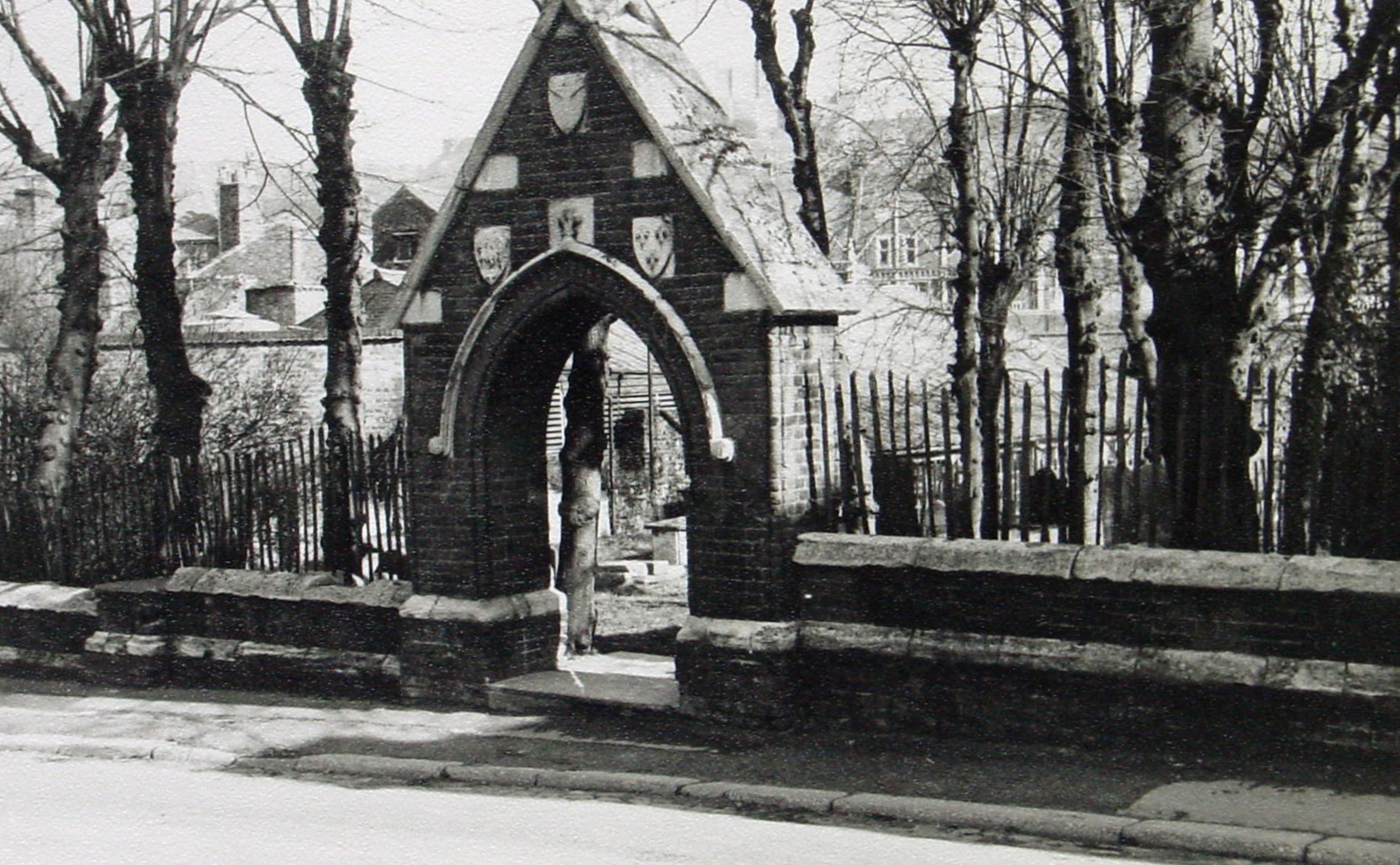
St Martin's Cemetery entance, once the central Apse, c 1950s. Courtesy of Dover Library

St Martin’s Cemetery entance, once the central Apse, c 1950s. Courtesy of Dover Library

The three great altars along with the altars in the various chapels were pulled down in 1549 and retaining the name of St Martin the nave, of the once great Church, was dug up. The central apse became the entrance to St Martin’s graveyard used by St Mary’s church until it was demolished in 1970. Materials from the Church walls were used to repair the town’s defences and gates. The land, probably through the Henry VIII (1509-1547) or/and Archbishop Thomas Cranmer (1489–1556), fell into private hands. Albeit, in 1540, the Corporation took full possession of the land, letting out sites to raise revenue. The properties that were subsequently built incorporated what remained of the Church and monastery.

Thomas Dawkes was one of the major tenants until he started working for the council and acquired land of his own in King Street. About 1558, the site was then let to Antony Burton, whose contract included burying the poor in St Martin’s cemetery ‘from time to time as often as required.’ It would appear that the Corporation had offices in what had been the Church and monastery buildings. Further, following the demise of the Maison Dieu, they had taken over the lucrative tithe of the passage of the port Dover! In the council minutes of that time it states that, the revenue is ‘deposited in a common chest and held in the Church of St Martin of Dover.’

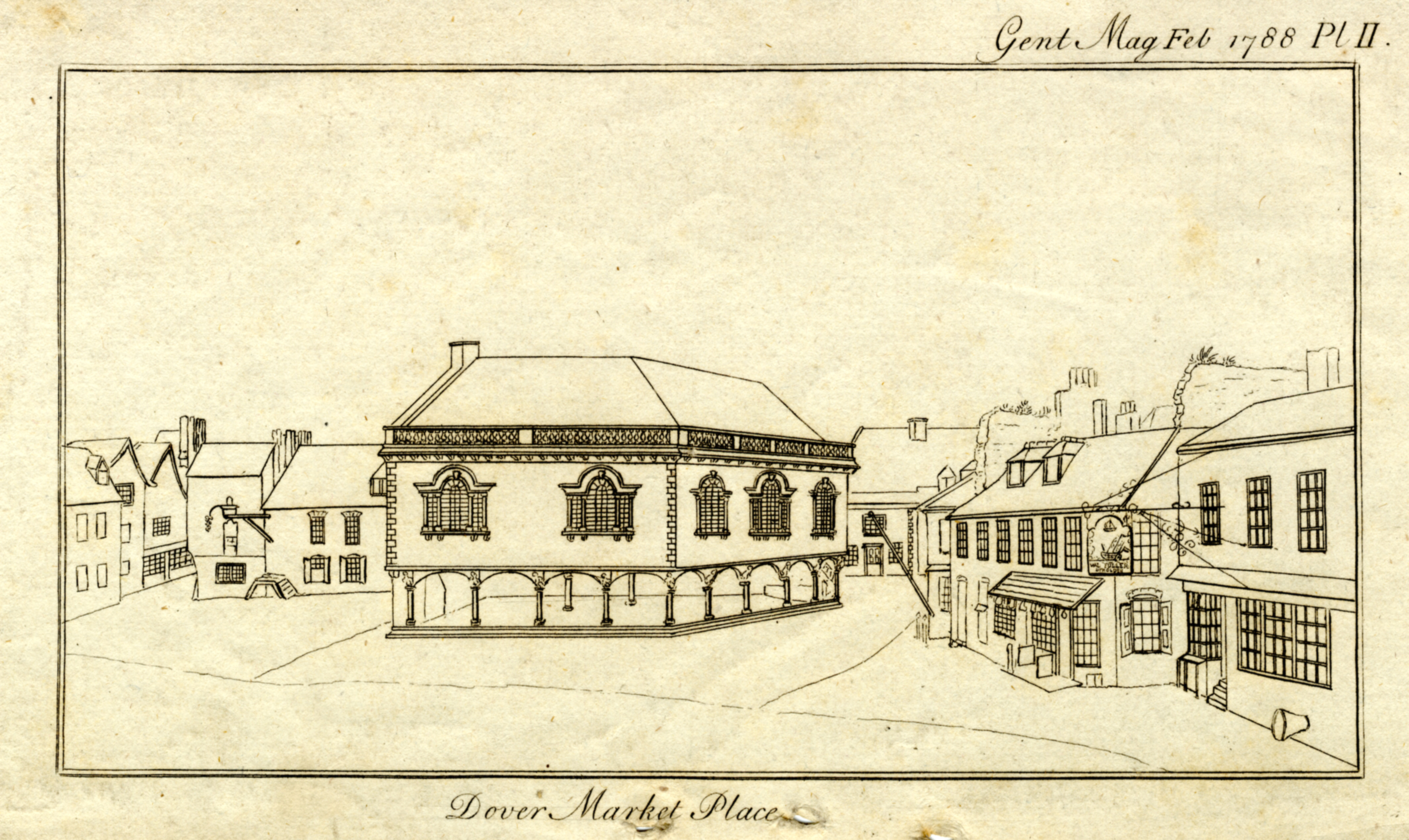
Court/Council Hall Market Square, ruins of St Martin-le-Grand can be seen behind the building on the right, 1788. Dover Museum

Court/Council Hall Market Square, ruins of St Martin-le-Grand can be seen behind the building on the right, 1788. Dover Museum

In 1605, the council built a magnificent, for the time, Court /Council/Guildhall in what is now the Market Square. Shortly afterwards James Hugessen, a local merchant adventurer, claimed that the land belonged to him and presented credentials to this effect! The town’s attorney, Thomas Attwell, accepted them and the Corporation had to admit their mistake. James Hugessen, as an act of goodwill, made a deed of gift of the land to the council on the understanding that out of the rents earned £3 yearly was to be equally divided annually and paid to six poor widows of the town.

Thirteen years later, in 1618, the council voted to use stones, ‘out of the walls of the decayed Church of St Martin,’ to build a bridge to the beach, over the River Dour. Known as Buggin’s bridge it remained the main thoroughfare from the town to the seafront until 1737. As for the great old church, although the east end remained standing, the site became known and used as ‘St Martin’s quarry.’

 St Martin-le-Grand ruins by William Burgess. Dover Museum

St Martin-le-Grand ruins by William Burgess. Dover Museum

Much of the east end of the church was demolished in 1818 but in 1826, the King / Bench Streets road-widening scheme revealed, what was believed to be part of one of St Martin’s under-crofts or crypts. In 1845, the archaeologist, Rev Plumpetre, described what remained of the monastery and nearly twenty years later William Batcheller wrote that some of the mossy ruins still ‘overtop adjoining premises, and in the Market Square may still be seen the fragment of the north transept wall.’

During excavations for the foundation of the houses fronting the entrance to Market Lane in 1859-60, several chalk coffins were found. They were in arched chalk niches and nearby were a large number of small Roman coins. Following a devastating fire on the west side of Market Square in 1863, the remains of the western apsidal chapel of the choir was exposed but was then demolished for new buildings. In July 1875, the Kent Archaeological Society undertook a survey and reported that relics of the north aisle of the choir, the groined roof of the western bay of the aisle, the north-east pier of the tower and chancel-arch – with the triforium arch passage, were still standing.

St Martin-le-Grand ruins 1892. Dover Museum

St Martin-le-Grand ruins 1892. Dover Museum

By the mid 19th century, the Gorley’s owned much of the land on the west side of Market Square including what was left of St Martin’s Church. Susan Gorely, who lived in Ladywell where her late husband had his building business, died in 1880. Henry Hart, who had an outfitting business in the town from the 1820s, bought the some of the land and built an emporium on the site in 1892. During the demolition of an old cottage, two chalk coffins were found; one was that of a priest and contained a pewter chalice and paten. It was believed that they were from the thirteenth century. At the same time, the north chancel of St Martin’s church was revealed.

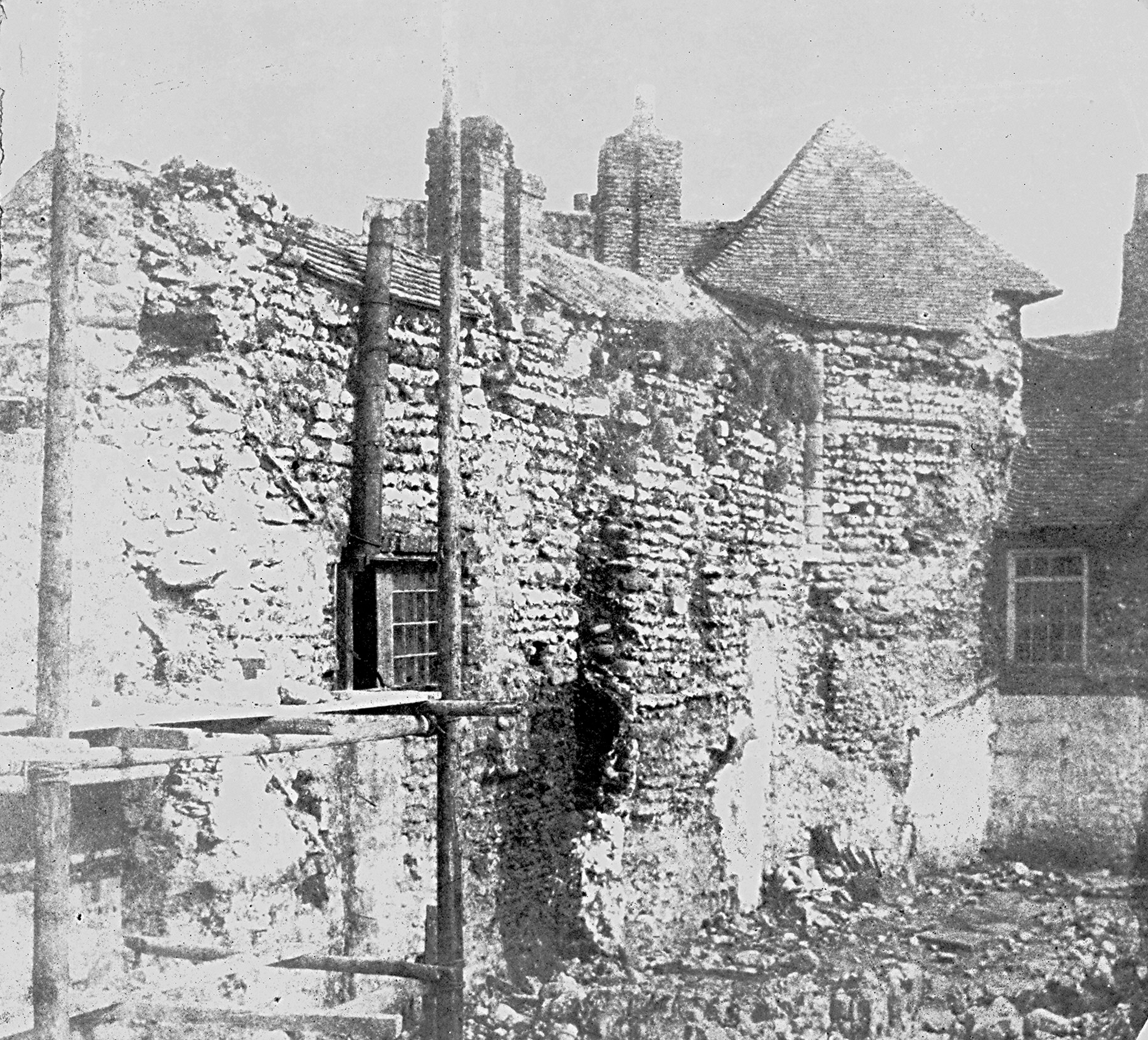
During World War II (1939-1945), bombing and shelling devastated the west side of Market Square. Rescuers reported that ancient stonework, believed to be associated with St Martin-le-Grand, had been revealed. In 1955 worked started on the building that became National Westminster Bank on the north-west corner of Market Square and a mass of flint masonry towering, 30-feet or so above the pavement was exposed to view.

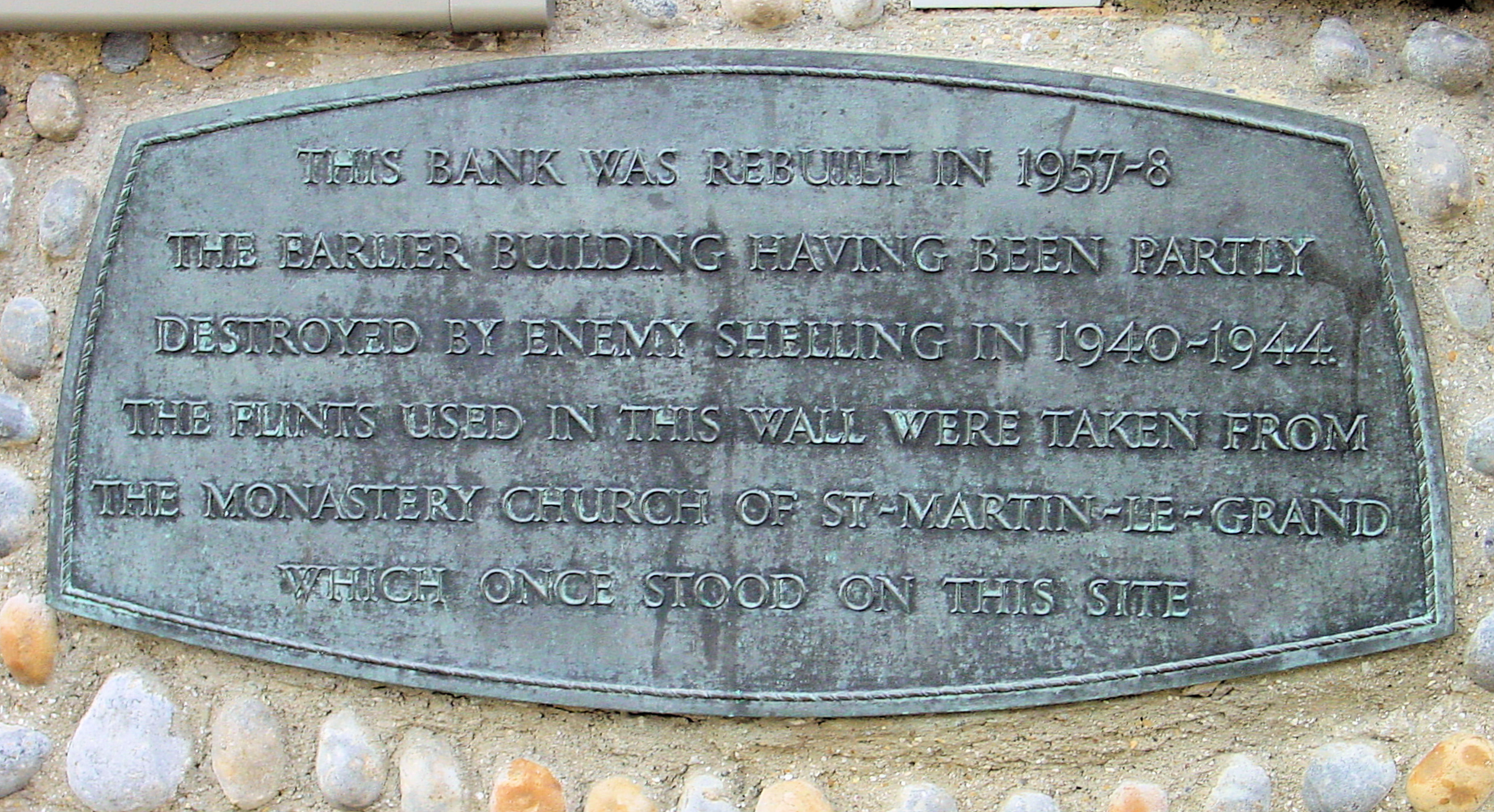
Plaque on the outside wall of NatWest bank, Market Square, dedicated to St Martin-le-Grand. Alan Sencicle

Plaque on the outside wall of NatWest bank, Market Square, dedicated to St Martin-le-Grand. Alan Sencicle

Although subsequently demolished, in honour to the great Church, part of a plan was set in the new marble flooring of the Bank. Sadly, for a long time this was covered with carpeting and more recently, I have been told by the Bank, the floor has been re-laid during a major refurbishment. Nonetheless, outside, at pavement level, are flints from the Church set in the wall with a plaque of explanation.

Ruins of St Martin-le Grand besides the steps leading to the Dover Discovery Centre. LS April 2012

Ruins of St Martin-le-Grand besides the steps leading to the Dover Discovery Centre. LS April 2012

What is left of St Martin-le-Grand, by the steps leading to the Dover Discovery Centre in the Market Square, received Schedule Ancient Monument Consent in 1993.

  • Presented: 27 May 2014


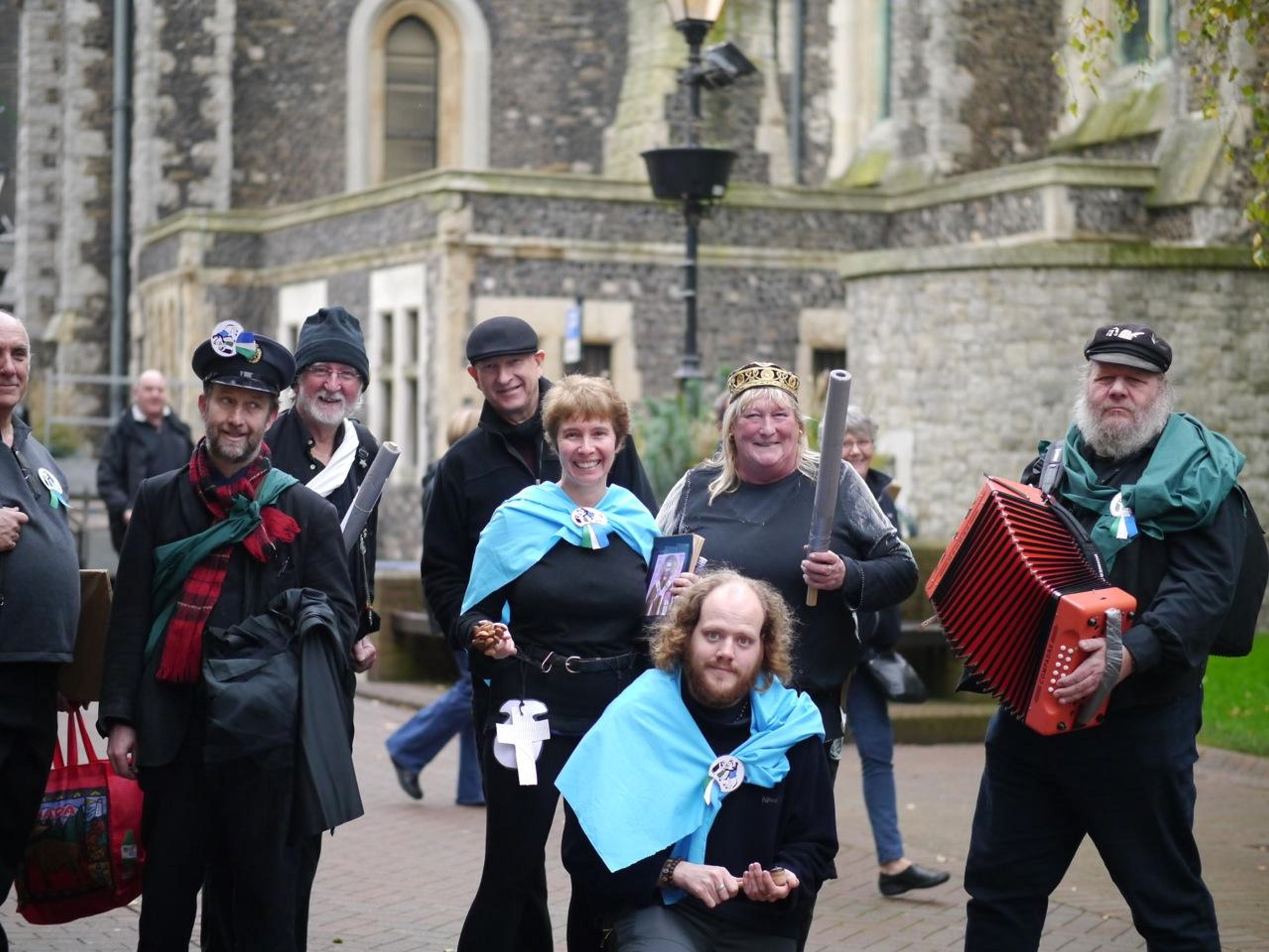
Martinmas Parade 2014. Clare Smith - Dover Arts Development

Martinmas Parade 2014. Clare Smith – Dover Arts Development

This year – 2014 – the ancient Martinmas Parade was reintroduced in conjunction with the  Dover Arts Development.


Posted in Market Square, Religion & Churches, St Martin-le-Grand, St Martin-le-Grand, St Martin-le-Grand, Tourism | Comments Off on St Martin-le-Grand

Burlington House – A monument to an Arrogant Establishment

Burlington House 2009 Britannia pub, on left, since demolished. Alan Sencicle 2009

Burlington House 2009 Britannia pub, on left, since demolished. Alan Sencicle 2009

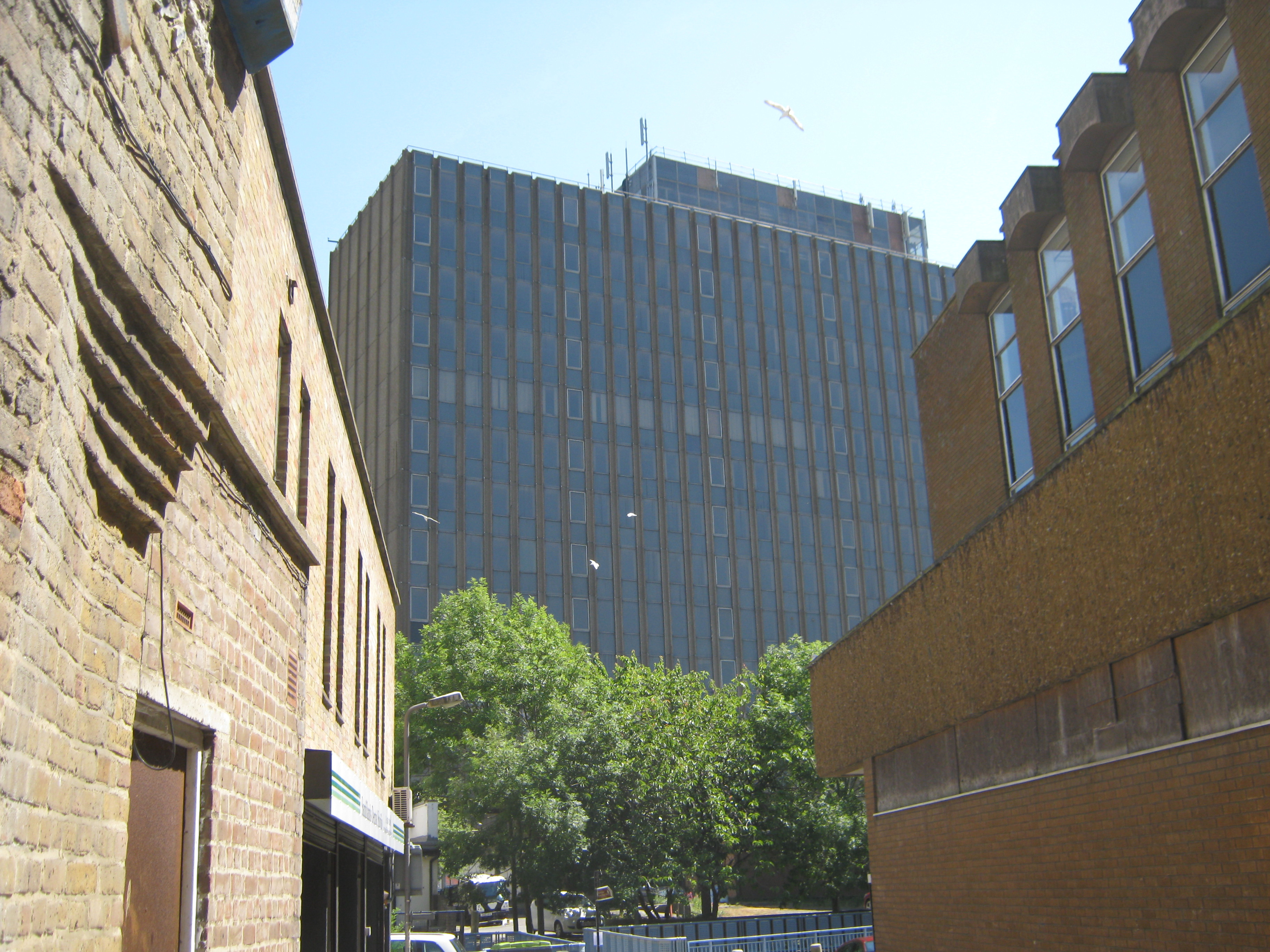
Burlington House, Townwall Street, once stood like an obscene gesture to those using the A20 going to the Eastern Docks. Almost from the outset Dover folks argued for its demolition but beyond vague promises and even vaguer excuses, the building stood. In my own archives, I have filed the documents and cuttings relating to the building under ‘Historic Buildings,’ for, in my opinion, it was a monument to Dover’s self-perpetuating arrogant elite. Particularly after I was publicly chastised for suggesting that it should be demolished!

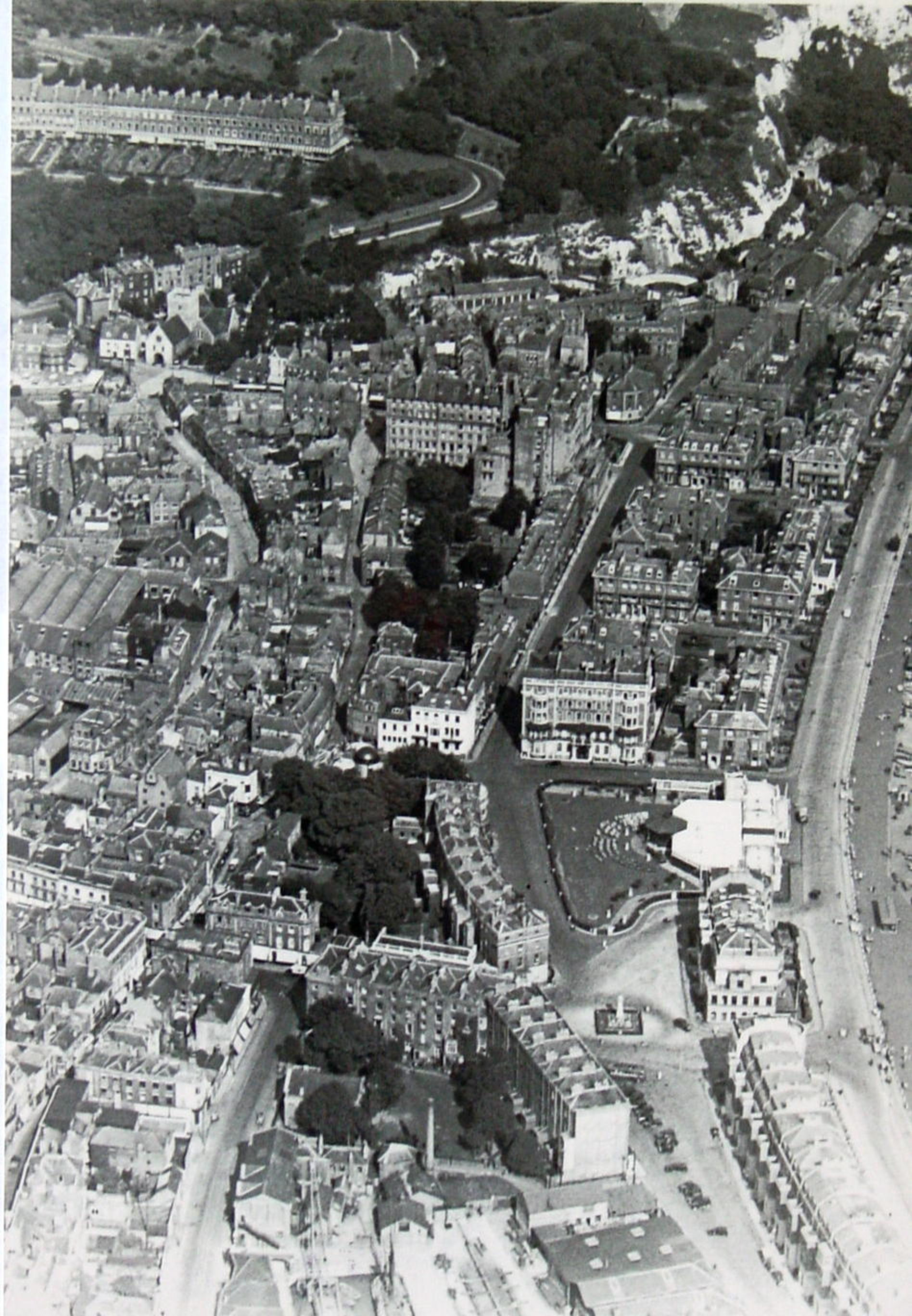
 Townwall Street circa 1930s, the narrow road left of the broad Liverpool Street running parallel to the seafront. Courtesy of David G Atwood.

Townwall Street circa 1930s, the narrow road left of the broad Liverpool Street running parallel to the seafront. Courtesy of David G Atwood.

Townwall Street evolved following the building of the Dover town walls in the 14th century and up to the outbreak of World War II (1939-1945) was a thriving thoroughfare within a densely populated area of Dover. In those days, going eastwards, the street merged into Clarence Street before reaching Woolcomber Street. There, on the south side was the iconic Burlington Hotel, a prominent landmark that, unfortunately, became the sight mark for German gunners across the Channel as well as bombers dropping their load on the town. On Sunday, 7 September 1941, a Junken dive-bomber dumped its load leaving the hotel a ruin. Following the war, the decimated building was bought by Dover Corporation who demolished it in 1949 but a later council gave the name to their iconic building – Burlington House.

Following the war, the council’s vision for the battered town was to turn it into the ‘vanguard town of the future.’ They drew up plans that were incorporated in the Abercrombie Report and when materials became available, in the name of concrete and glass modernisation, beautiful and historic buildings were demolished. Crucial to this philosophy was an icon that would epitomise, to Europeans crossing the Channel, that Dover represented a country that was prepared to shut the door on the past preferring modernism and forward thinking.

Townwall Street 1950s during the building of the Gateway Flats. Courtesy of David G Atwood.

Townwall Street 1950s during the building of the Gateway Flats. Courtesy of David G Atwood

The landward side and eastwards of Townwall Street, at that time was a huge bombsite. It was on this bombsite, closer to the sea, that the 221 Gateway flats were completed in 1960. To the west of the flats the iconic ultra-modern Dover Stage Coachotel was built. It opened in May 1957 but was demolished in 1988 to make for a car park for the ill-fated White Cliffs Experience. Back in the 1950s, for the Townwall Street site, the council wanted a ‘futuristic showpiece high class development’ that would ‘encourage more people to stay at the gateway of England without simply passing through.’ Although they owned the land at that time, the council did not have the money or have anyway of raising money, to create the ambitious edifice they had in mind.

Townwall Street circa 1962

Townwall Street circa 1962

A saviour arrived in 1961 when Regents Park Land Company came along with a £600,000 project to build a 20-storey block of 100 high-class flats with a piazza surrounded by a two-storey podium containing shops. The plan included a bridge over Townwall Street and the consultant architect was Arthur Keyon. He had judged the competition that produced the winning design for the Gateway Flats. The company bought the site for £40,000 but the project fell through and the council bought it back three years later for £30,000, making £10,000 profit not counting interest!

In 1968, the Corporation, in conjunction with Rank City Wall and Miller Brothers & Buckley Development, announced that, ‘the last and most important part of our post-war rebuilding programme. The last piece of jigsaw and the beginning of a new Dover,’ was to be built on the site. The council would retain the freehold and it was expected that ratepayers would also benefit from the rents paid on head-leases. The cost of the proposal to the developer was estimated as £1.5million.

The complex envisaged, revolved around a 23-storey office block and a 144 double-room hotel operated by Eurotels Ltd. The office block would also have a pent-house restaurant capped by an observation roof garden. There would be a conference hall for 650 people, showrooms, shops, and a multi-storey car park for 500 cars. Access to the East Kent Road Car Company bus garage on St James Street need to be retained, so the design included bridging the road. The river Dour would be a feature and the whole complex was expected to provide 600 permanent jobs.

The building was scheduled to start in October 1969 with completion in two years. Permission was required from Kent County Council (KCC), who refused, as they did not like the design. Dover council responded by saying, ‘if the design suits the international development group and the international company financing the development then it should be acceptable to the County Council.’

Townwall Street looking (eastwards) towards Hotel de France 1971. Hollingsbee Collection Dover Museum

Townwall Street looking (eastwards) towards Hotel de France 1971. Hollingsbee Collection Dover Museum

In the end, KCC agreed to the plan as long as the office block was reduced to 21-storeys. However, the Royal Fine Arts Commission objected to both the height of the office block and the ugliness of the overall design. Nonetheless, in 1970, the government gave its permission as long as the office block was reduced to the 12-storeys we see today. The hotel capacity was reduced to 83 double-rooms.

During the planning process, the multi-storey car park was treated as a separate issue and given permission. The St James Lane multi-story car park, as it was called, had 420-spaces and that pushed the cost of the overall complex up to £2m. The developers therefore dropped the conference hall, showrooms and the shops from the design and building work started.

Officially, the complex came into operation in June 1972 but it was not for another year that Holiday Inn took over the 125-year lease for the hotel. Offering a swimming pool, in-house movies, air conditioning and food service 16-hours a day and the hotel was a reasonable success from the outset.

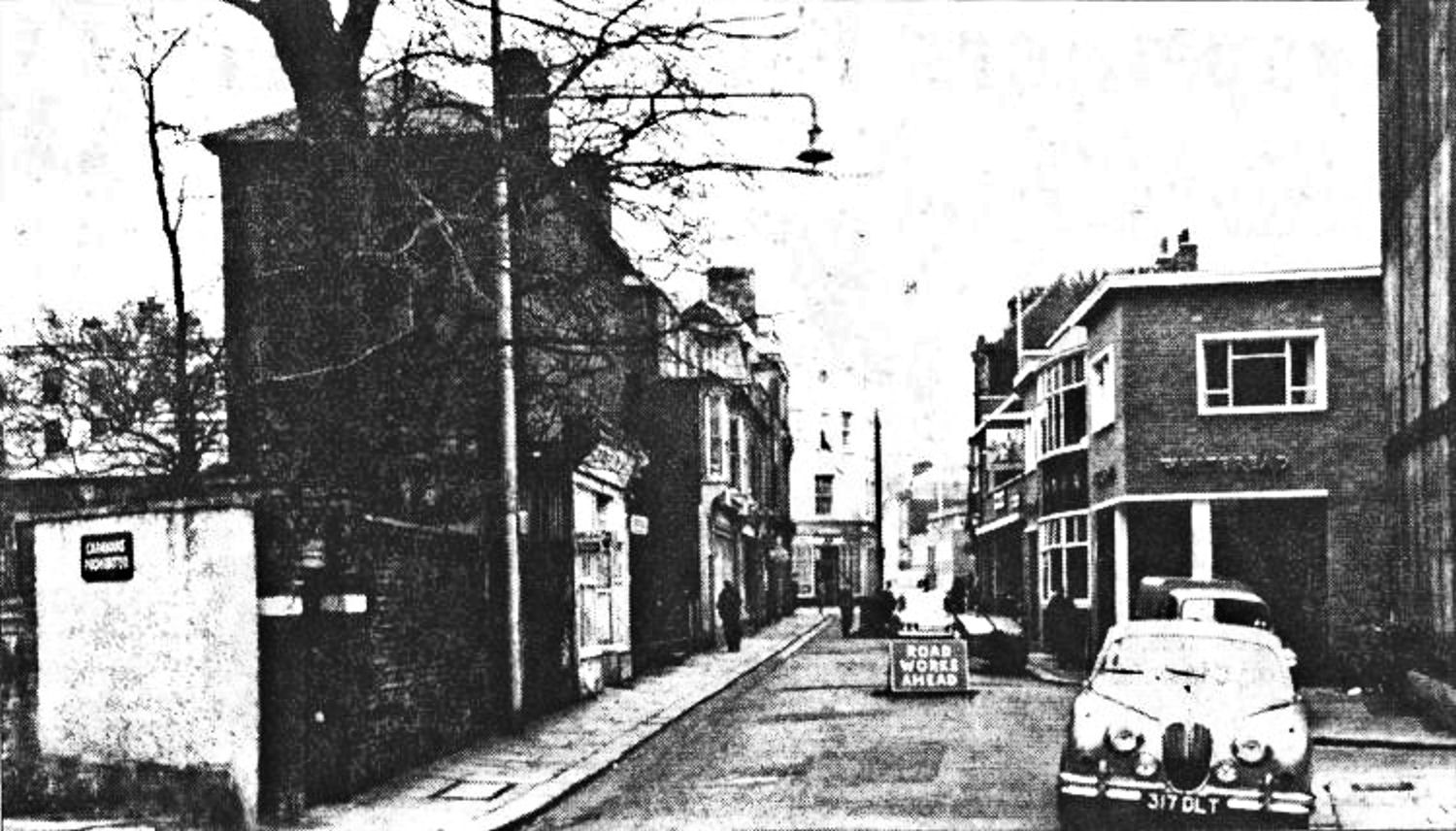
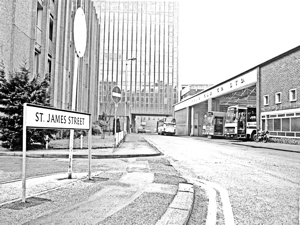
Bus garage in St James Street with the back of the Holiday Inn on the left and Burlington House straight ahead c 1975. Dover Museum

Bus garage in St James Street with Holiday Inn on the left and Burlington House straight ahead c 1975. Dover Museum

When East Kent Road Car Company bus garage in St James Street was built, the access and egress was no problem, but with the building of Burlington House and the adjacent Holiday Inn, these became a problem. The photograph was taken from Russell Street looking west. The back of Holiday Inn on Townwall Street and facing the sea, was on the left. Burlington House ahead shows the arch over St James Street that led out to the one way King Street. Buses on leaving the garage would turn left on to St James Street and then right onto the one way Russell Street. On arrival they would leave Townwall Street turn into Mill Lane and then left again into St James Street as can be seen by the coach in the photograph. On leaving the bus station they would turn left onto St James Street and then onto the one way Russell Street that would take them to Townwall Street. At that time they could turn right into St James Street and go through Market square, and up Biggin Street. However, but to the one way system, if the bus was going any where else, from King Street it would have to turn right on to the then ancient and narrow Dolphin Lane – at the back of the bus garage – from where they could reach the one way Russell Street. They would again turn right until they reached the two way Townwall Street.

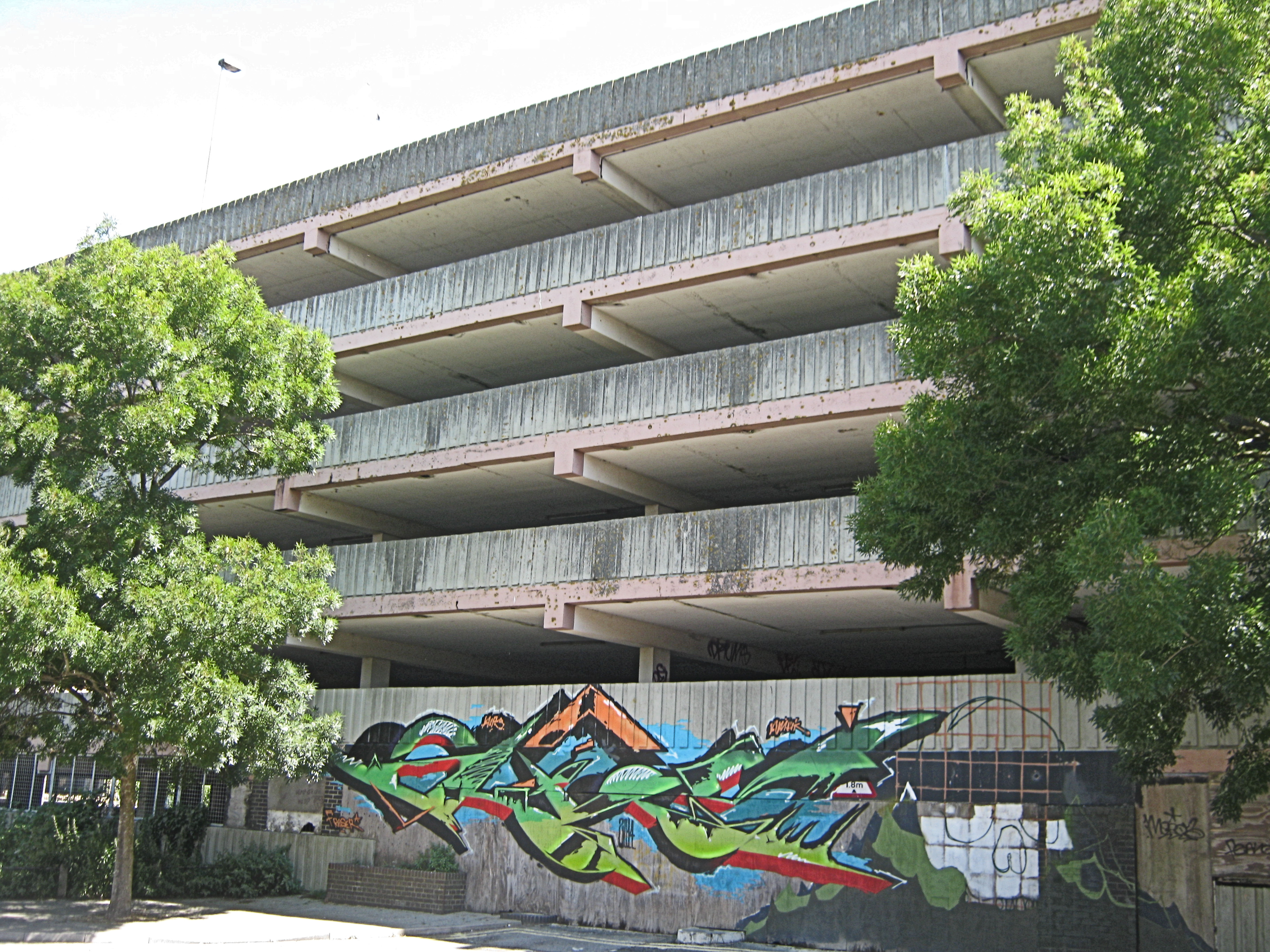
St James Lane multi-storey Car Park - now derelict. LS2014

St James Lane multi-storey Car Park – now derelict. LS2014

The multi-storey car park, on the other hand, failed to attract customers as it was difficult to find by those who did not know Dover’s road network. It was also relatively expensive compared to other car parks in the town. Even though there had been extensive advertising for the 80,000 metres of office space in Burlington House, as the tower block was called, it failed to attract any customers.

On 1 April 1974, Dover District Council (DDC) took over from the individual Dover, Deal and Sandwich councils as well as the Rural council and thus their approximately 1,000 staff were housed in 15 different locations throughout the new District. Burlington House was completed that year but was still empty and many felt that it should be leased by DDC for their headquarters. Indeed, KCC agreed, in principal, to share the office block agreeing to pay the developers’ asking price of £2 a square foot plus 25pence for air conditioning.

However, following a meeting that lasted nearly five hours, the move was rejected by the majority DDC Conservative councillors as they wanted a centralised office block in the council’s ownership. The Labour members agreed but argued to use Burlington House in the interim. Dover’s Mayor, Councillor Peter Mee, and seasoned Councillor Kathleen Goodfellow, both resigned from the sub-committee looking into DDC office accommodation.

County Hotel, Townwall Street, formerly Holiday Inn and the Moat House. Alan Sencicle 2009

County Hotel, Townwall Street, formerly Holiday Inn and the Moat House. Alan Sencicle 2009

In February 1975, the multi-storey car park was suddenly closed by the Car Parking Management and was later repossessed by DDC. The hotel changed hands from Holiday Inn to Dover Moat House Hotel in 1985 and then County Hotel. In the council owned Burlington House, floors were available for rent for office use. Customs and Excise along with Freight Forwarders, a bank’s administrative office and a government-training centre moved in, but most remained empty. Townsend Thorensen Ferries – later P&O – moved their Catering, Marine Accounts and Group Bookings in, taking up the 8th and 9th floor.

During this time, I was assigned a shared office in Burlington House but it was far from ideal. Along each floor is a central corridor running north – south with offices on each side. Because of the design, the windows of the offices face east or west. In the morning, on sunny days, the east offices are considerably warmer than the west and visa-versa in the afternoon. The central heating, which was ubiquitous to all offices, did not take account of this. Loos were in blocks, with male loos on one floor and female on the alternate floor – our floor was designated for men. Finally, even if the block had been half utilised, the lift capacity would have been inadequate.

By 1990, Towerstates Ltd held the head-lease of Burlington House and floors were let to the Customs, NatWest Bank and the Job Club for the unemployed, the rest remained empty. Concern was expressed by DDC that essential repair work had not been carried out and a Dilapidation Order was issued.

Early in 1993, Oaklea Properties bought the head-lease from Towerstates and they were particularly concerned about the ugly plant-room at the top of the building. When planning permission was first given ‘plant room’ was assumed to be a nursery for the roof garden not for the lift mechanism/electronics and other utility purposes!  The new lessees wanted to hide the mistake over the word ‘plant’ with an advertisement hoarding that could be seen from the sea. DDC responded by demanding improvements to the structure listed in the Dilapidation order, emphasising that dealing with roof and window leakage should be given priority.

The following year Oaklea Properties sought planning permission to convert the upper nine storeys into residential use. They also asked for 108 spaces of the now 297-space St James Street car park for residential use. The proposal fell through but the Property Company occasionally managed to let offices out to freight forwarding agents and leased space on the roof for telecommunication equipment. Planning permission for the latter was first given in 1995 and proved to be lucrative.

On 22 September 1993, DDC Land Committee received a presentation by John De Stefano Company Ltd, the managing agents for Oaklea, in respect of proposals for enhancement of the exterior of the buildings. The committee made it clear that the pressing concern was for repairs to parts of the structure in accordance with the Dilapidation order. Two years later saw another application for part of the building to be converted into residential use.

St James Development proposal (later DTIZ) 1995 frontispiece

St James Development proposal (later DTIZ) 1995 frontispiece

In 1995, the St James area re-development programme was launched by DDC under the heading ‘Indicative Master plan for a new future,‘ (later the Dover Town Investment Zone – DTIZ). The council had commissioned a study of the area between Townwall Street and Castle Street, which they recognised, presented a negative image. The study was presented in Connaught Hall, Maison Dieu (former Town Hall) on 17 October that year. I was one of those who attended.

 St James Development proposal (later DTIZ) 1995 note paragraph suggesting that Burlington House should be refurbished

St James Development proposal (later DTIZ) 1995 note paragraph suggesting that Burlington House should be refurbished

There, Steve Bee, of planning consultants Llewelyn-Davies, gave an over-view of the master plan that included the demolition of the MFI building on Woolcomber Street – that did happen.

Albeit, Burlington House was only given a cursory mentioned saying that some refurbishment would take place. Some in the audience took a different stance, loudly proclaiming that the building should be demolished! They were led by Terry Sutton, of the Dover Express, who was at the meeting representing the Dover Society.

Letter to Terry Sutton - Chief reporter Dover Express and Dover Society Representative re Burlington House

Letter to Terry Sutton – Chief reporter Dover Express and Dover Society Representative re Burlington House

There were others in that audience, including myself, who although deplored the building and could see their logic, did not altogether agree. At that time Dover’s unemployment rate was sky-high with many highly skilled folk on the scrap heap. We saw the building’s potential for providing much needed skilled jobs and I stood up and said so. Much of what I said was reiterated in a letter to Mr Sutton later (see left). Following that meeting, the council opted for a pragmatic approach and did nothing.

By the Millennium Burlington House was declared unfit for occupation and not economical to repair. By that time the St James area re-development programme, which was still on the drawing board, contained the proposal to demolish the office block. That year the building was removed from the business rates list by the Valuation Office because it was unfit for occupation.  The building was still leased to Oaklea Properties and the roof was rented to various companies who covered it with telecommunication aerials.

Burlington House from Mill Lane - LS 2014

Burlington House from Mill Lane – LS 2014

Two-years later overt public concern was centred on the safety of Burlington House has parts of the structure were falling off.  A DDC’s spokesperson comment was that Burlington House was ‘included within an area ear-marked for development in the Dover Town Investment Zone (DTIZ), for which the council has invited development proposals.’ On reading this, I wrote a letter that was published in both local papers outlining the above history of the building and calling it a ‘monument to bad planning.’ This immediately provoked a backlash from former councillors and senior council employees!

In 2005, Burlington House featured in TV’s Channel 4’s Demolition programme, as one of Britain’s most hated buildings. The presenter, Kevin McCloud, came to Dover and he described the building as a ‘dirty, dusty, stunted skyscraper.’ The cost of demolition was given at the time as £2m but the importance of its height that made it ideal for the telecommunication aerials on the roof was given as the major obstacle.

Light of India - awarding winning restaurant, Townwall Street. Alan Sencicle 2009

Light of India – awarding winning restaurant, Townwall Street. Alan Sencicle 2009

Planning permission was sort, in 2007, for temporary consent to erect display advertisement hoardings on the Burlington House. The application stated that it was intended to cover the four sides of the building with clean building wrap incorporating two areas, east and west, for the display areas. It was expected that the displays would be changed regularly and glare kept to a minimum. Justification was based on the DDC ‘Dover Pride’ initiative that included a campaign to encourage entrepreneurship. The grand advert proposal was rejected.

Start of the demolition of Burlington House. Alan Sencicle 2015

Start of the demolition of Burlington House. Alan Sencicle 2015

That same year, planning permission was given for the demolition of Burlington House, and Doverhistorian.com felt that it would be an ideal site for a Community Hospital. This was based on the White Paper ‘Our Health, Our Care, Our Say’ and would have included inpatient intermediate beds if it had not been rejected locally. Albeit, the general feeling supported the council’s proposal of an ASDA superstore on the St James Development site, plus 53 flats and a new build hotel.

This created a great deal of uncertainty for the proprietors and staff of the County Hotel and in Spring 2014, a Compulsory Purchase Order (CPO) was issued. Owners of both residential and existing commercial properties in the area were issued with CPOs including the nationally highly esteemed Light of India restaurant. All were subsequently demolished.

Demolition of Burlington House continues January 2016. Alan Sencicle

Demolition of Burlington House continues January 2016. Alan Sencicle

Albeit, ASDA, pulled out of the proposal but another retail chain has, apparently, stepped in. Cineworld have agreed to set up a six-screen cinema and Marks & Spencers are proposing down size the Dover store and move from Biggin Street into the redevelopment area. As for Burlington House, it was announced in February 2014 that DDC have applied to the Secretary of State for a CPO to be issued to the land owners on which Burlington House stands. This was ratified on 27 February 2015 by the Communities Secretary Eric Pickles and demolition began.

On 11 February 2016, Burlington House was heap of bricks and other building material that eventually was moved to provide in-fill for Dover Harbour Board’s controversial Western Docks project. The Canterbury Archaeological Trust led by Keith Parfitt, undertook the necessary survey of the site before the work began and created a comprehensive report of the historic remains on the site. Work was then started on building the £53million St James complex under the direction of the Senior Construction Manager Greg Adams and the Site Manager, Anthony Bee.

First Presented: 20 June 2014

Posted in Buildings, Burlington House - A monument to an Arrogant Establishment, Burlington House - A monument to an Arrogant Establishment, Local Government | Comments Off on Burlington House – A monument to an Arrogant Establishment

Great Bullion Robbery – Part II

Shakespeare Beach railway viaduct and Shakespeare Cliff by J Shury 23.02.1844

Shakespeare Beach railway viaduct and Shakespeare Cliff by J Shury 23.02.1844

On 15 May 1855, approximately £15,000 of gold bullion was stolen from the South Eastern Railway Company mail train from London to Dover. Part I of this story recounts the transportation of the gold, the discovery of the robbery and the investigation so far.

A Woman Slighted

It was shortly after dawn in early autumn of 1855 and Fanny Bolam Kay was lying in her bed working out what to do next. Henry Agar had paid the rent on the house in Shepherds Bush up until he was arrested and provided enough for her and Edward to live on for about a month. After he left her for Emily Campbell, she had cleaned the house from top to bottom, not because there was a huge need but out of anger.

Albeit, when it came to the washhouse and spare bedroom they did need a good clean. The spare bedroom grate was black while the wooden floor was covered in burn marks. Fanny had covered these with rugs in anticipation of taking in a lodger. There was also a pile of charcoal sacks to be rid of and other bits and pieces that Fanny failed to understand why Henry and William Pierce needed them.

She was about to get up when suddenly there was a loud banging on her front door followed by an even louder voice, with a Lancashire accent that Fanny hoped never to hear again. ‘Wake up your drunken whore or do I have to kick this door in!’ The banging started again together with Pierce yelling further obscenities waking up young Edward, her son.

Fanny reached the front door before Pierce had kicked it open. He immediately charged past her and went to the washhouse. His wife was behind him and told Fanny to get Edward as they were to go with them. Mrs Pierce said that she had brought a handcart and went through the house putting some of the mother and child’s possessions into a large carpetbag that she had brought with her. Neither of the pair paid any heed to Fanny’s protestations.

On arrival at the Pierce residence, Crown Terrace, Hampstead Road, London, Mrs Pierce showed Fanny into a small room in the attic that she was to share with Edward. Pierce told Fanny that she was to stay with them until the ‘heat’ had died down and to pay her way, she was to look after the Pierce children. Further, she was not to go out, in case the police saw her. Listening to the conversations between her two captors Fanny realised that Henry and Pierce had been involved in a bullion robbery and that the gold had been melted down in the washhouse and the spare room at her home in Shepherds Bush.

It was not until April 1856 that Fanny heard from Henry again. The letter came care of Pierce, dated 2nd of that month and the address was given as Portsea where Henry was held awaiting Transportation. From the letter, Fanny surmised that Henry thought she and Edward were no longer in London and that she was financially well cared for as Henry had given Pierce money for them. Out of this money, Henry asked Fanny to buy a silver cup for Edward and one each for Pierce’s children to remind them of Henry.

Since moving in with the Pierce family, Fanny had been treated as a poorly paid servant and she immediately confronted Pierce with Henry’s letter.  Pierce screwed it up and threw it on the fire. He then grabbed hold of Fanny and pushed her out of the front door and into the street. Edward was still in the house and it was Mrs Pierce who answered her banging on the door.

After collecting Edward, Mrs Pierce seemed genuinely concerned as to where they were going and quietly gave her a small amount of money. A few days later Fanny, believing that Pierce had left the house, called for their belongings. Pierce had, however, returned by the back door and on seeing Fanny he attacked her and badly beat her up.

 South Eastern Railway Logo

South Eastern Railway Logo

Distressed and heavily bruised, Fanny went to see Superintendent Weatherhead at London Bridge Station. There she recounted what had happened and her belief that Agar and Pierce were involved in the Great Bullion Robbery. Soon after Mr Rees, the solicitor of South Eastern Railway Company (SER) and one of the four key investigators into robbery, came to see Fanny.

Rees took the young mother and her son to a place of safety paid for by SER and gave her some money. Along with the other three investigators, Sergeant Smith, Sergeant Thornton and Detective F Williams, Rees went to see Agar. They presented him with Fanny’s statement and eventually Agar agreed to turn Queen’s Evidence on one condition. If, on conviction of the others involved in the robbery he was allowed to go to a country of his own choosing and never to return to Great Britain again. Agar was then transferred to Pentonville prison, London.

Turning Queen’s Evidence

Agar told the investigators that some years before, while Pierce was working for SER, they had carried out a robbery at London Bridge railway station. On that occasion they had stolen £800 from an iron safe kept in the basement after making a duplicate key. Agar was uncomfortable carrying out the robbery preferring to create counterfeit cheques and have them cashed, which required more skill. Following Agar’s last trip to America, Pierce had suggested that they should consider robbing a gold consignment going to France. Agar was not convinced but up for a challenge he agreed to go with Pierce to Folkestone to see if it was possible.

In the second week of May 1854 they rented rooms in Folkestone, near the station for a couple of weeks. At the quay side railway station they saw that the chest, in which the bullion was carried, was only transported on the mail train and that the chest had two locks. Over the next few days Agar noted that the clerks used just two keys and that the same two keys fitted all the chests. The problem was that the keys were kept separately and he could not see anyway of getting hold of them to make copies.

Folkestone - mid 19th Century. Dover Museum

Folkestone – mid 19th Century. Dover Museum

While they were in Folkestone Pierce recognised Inspector Hazel who had arrested him over the tickets fraud back in 1850. Following this they made out that they were not together but not long after Agar returned to London telling Pierce that the robbery was impossible.

On Pierce’s return to London he told Agar that he had spoken to William Tester, whom they both knew. Tester was the senior clerk in the London Bridge superintendent’s office and had access to one of the keys but only briefly. This was when loading or unloading a consignment from the mail train, for the rest of the time the key was locked in the Superintendent’s drawer.

A couple of weeks later Tester told them that at least one of the chests was going to be returned to Chubbs, the lock smiths, during the summer as a lock had seized up. When it was came back he would have one, if not both, of the keys for more than just a few minutes. In fact, Tester authorised for two chests to be sent to Chubbs but as it was the same lock that had seized up on both, only one key was needed. The chests and the key were returned in early October 1853 and Pierce arranged with Tester for Agar to make an impression. Agar made four impressions in wax.

The second key proved more problematic to get hold of. So Agar, who still had well over £3,000 from his American trip arranged for £200, in gold sovereigns, to be sent from London to Folkestone. The package was addressed it to: C E Archer c/o Mr Ledger or Mr Chapman, Senior Clerks, Folkestone Harbour station.  Agar then went to Folkestone to see how his consignment was dealt with and to see if he could work out a way of getting an impression of the second key.

Agar arranged for his consignment to arrive at Folkestone three days after he did. During that time he observed that before a ship from Boulogne moored up the clerk left his office, closing the door but not locking it. He also went into the office every day to enquire about his package, choosing a time when the clerk, Charles Chapman, did not have any other customers and was busy cashing up. On the third day, when his consignment was due, Agar bound two fingers of his right hand with a black silk finger-stall.

He again inquired about his package at a time Chapman was cashing up but this time the clerk assured Agar that it had. He then put the cash into a drawer from which he took two keys. With one of the keys he opened a cupboard in which there was the second key – the one Agar wanted an impression of. Using both keys Chapman opened the chest and took out Agar’s consignment. Agar, drawing attention to his bound hand asked Chapman would sign for the consignment on his behalf. Agar made a cross and Chapman added a note saying that ‘Mr Archer had hurt his hand.’

Rose Inn,  Cannon Street. Dover. Dover Museum

Rose Inn, Cannon Street. Dover. Dover Museum

A few days later, with Pierce wearing a specially made black wig and whiskers, Agar booked into the Rose Inn, Biggin Street, Dover using false names. They had arranged to meet James Burgess, a senior guard with SER. Burgess said that he was not keen on taking part in the robbery but Pierce talked him round. The following morning the Agar and Pierce walked across Western Heights, through Capel to Folkestone.

Shortly after arriving, they watched a ship come in from Boulogne and pandemonium then reigned. Although both Chapman and Ledger, the second senior clerk at Folkestone, were on duty, both left the office without locking the door. Pierce sneaked in and following Agar’s instructions took the key from the cupboard. Agar made several impressions and Pierce put it back before either of the two clerks returned.

Agar made several copies of the two keys but to ensure that they worked he travelled on the mail train when Tester had scheduled Burgess as the guard. While Agar was in Burgess’ van he sat on the floor so that he would not be seen by engine driver or the fireman would see him. Tester also made a point of scheduling John Kennedy as the under guard for although he was not part of the conspiracy, it was important as Burgess had to establish a routine that was slightly out of the ordinary.

At each station Burgess alighted, as always, but dealt with the third class passengers immediately behind the brake van. This was something that Kennedy would normally be expected to do but it was important to stop Kennedy coming to the front of the train. It took six to eight journeys before Agar was satisfied that he could open both locks with the counterfeit keys and he told the investigators that of the four chests only two required the second key. The locks on the other two were still seized up.

Folkestone Harbour- 19th Century - Courtesy of Folkestone Library

Folkestone Harbour- 19th Century – Courtesy of Folkestone Library

Back in London, Agar and Pierce bought about 2cwt of lead shot from different outlets. This they carried in carpetbags to Agar’s home in Shepherds Bush and kept it in a locked trunk. There they made small bags that held about 4lb-8lb of shot and packed them into two large carpetbags. The filled the spaces up with hay to stop the shot rattling. The two men also bought four large leather courier (shoulder) bags that they packed into a carpetbag.

For the robbery, the plan was for Tester to tell Burgess when there was a consignment of gold worthwhile stealing. So every evening for a couple of weeks Agar and Pierce went to the station prepared. Burgess was to give the signal by taking his hat off and wiping his face with a large handkerchief. On the evening of 15 May, Burgess made the signal.

On that evening Agar and Pierce bought two first class tickets to Dover and a porter took the two largest carpetbags and put them in Burgess’ van. Both men were wearing caped short coats and Pierce had on his black wig under a broad rimmed hat. Pierce got into a first class carriage and when no one was looking Agar climbed into Burgess’s van. Tester had already boarded the train, getting into a third class carriage and pulling the blinds down.

The train left at 20.30hrs and Burgess put a cape over the windows of his van so that the engine driver and fireman could not see into it. There were two iron chests and as soon as the train started to move, Agar, using number one key, opened the first. It did not require the second key. Inside were two wooden boxes one smaller than the other. Both had iron hoops around them. The larger box contained Messrs Abell consignment and the smaller, Messrs Spielmann’s.

Agar levered off the hoops using a mallet and chisel but carefully drawing the nails out and putting them to one side. Inside the larger box were gold bullion bars some of which he put into a black bag. By this time, the train had reached Redhill and Pierce came to the van. Agar passed him the bag and he passed it to Tester. Pierce then joined Agar in Burgess’ van just as the latter was blowing his whistle and Tester crossed the line to the opposite side of the tracks.

Folkestone Harbour - 19th Century - Courtesy of Folkestone Library

Folkestone Harbour – 19th Century – Courtesy of Folkestone Library

Together Agar and Pierce emptied the remaining gold bars from the large box and the small box, in which there was a considerable amount of foreign gold coins. They then filled both boxes with shot, replaced the iron hoops and put the nails back. Using a taper provided by Burgess, they waxed on new seals that had been purchased by Pierce for the purpose.

They then opened the second chest that required both keys. This contained Messrs Bolt’s package in which there was a large quantity of different coloured gold bars. These, Agar assumed, was Californian gold not only because of the colour but because the bars were much smaller. They took out as many as they estimated the weight of the amount shot that they had left. They then sealed the consignment and locked the chest.

The bullion  was put into the shoulder bags and these along with the spare carpetbags into the two large carpetbags. When completed, the three men tidied up and swept the van. Agar and Pierce alighted at station before reaching Folkestone, at first getting into a third class carriage. On reaching Folkestone, where there was a lot of bustle, they moved to a first class carriage. As they walked down the platform, they saw that the chests containing the shot were removed while their carpetbags, full of gold, stayed on board.

Dover Castle Hotel, 6 Clarence Place. Dover Museum

Dover Castle Hotel, 6 Clarence Place. Dover Museum

At Dover Town station, the two men collected the two carpetbags and went to the Dover Castle Hotel where they had a drink and left to catch the 02.00hrs train back to London. For this, they had two first class tickets from Ostend. These they showed  to the porter who had insisted on carrying Agar’s bag. Agar, told the investigators that he thought he had appeased the porter (Joseph Witherden) when he gave him a tip but after what happened outside Mansion House lock up, he knew that it had not worked!

On the way back to London they travelled in a first class carriage and emptied the two carpetbags throwing the hay out of the windows. It was still dark so no one saw it and as they were in the first class, they were far enough away from the engine for it not to catch fire. They put the carpetbags into one and Pierce left that in the waiting room of one of the stations that the train stopped. Hiding the very heavy shoulder bags under their caped coats, on arrival in London they caught a cab from the station alighting not far from Pierce’s house.

Later they met up with Tester who gave them the part of the consignment he had taken off the train at Redhill. They then exchanged one Californian gold bar for £203 6s and the gold coins for £213 10s. Pierce was in serious financial trouble at the time so Agar gave him most of this. The remaining gold bars were taken to Agar’s house where the two men created a furnace, first in the backyard washhouse, but they were concerned that the noise would arouse suspicion. Following Pierce sacking the maid, (Charlotte Painter), they moved into her room where they melted the gold to make bars weighing between 100 and 200 ounces each.

It was agreed that they would sell the gold in small batches and Agar sold two bars weighing about 200 ounces each to James Seward of Walworth Common. For this they received £3 2s 6d an ounce in gold sovereigns. Agar later sold a further four bars to Seward for the same price. When they had £2500 in sovereigns Pierce changed it for notes.

Over this, the two men had disagreed, Agar saying that the notes were traceable but Pierce argued that carrying around a lot sovereigns would bring unwanted attention. Pierce had said that he would ensure that the notes could not be traced by telling the bank cashier that he was acting on behalf of a company that the railway used. Much to Agar’s surprise, the bank accepted this and did nothing, but the investigators knew otherwise.

The four men, Agar, Pierce, Burgess and Tester met at the end of May with Pierce, Tester and Agar receiving £600 each and Burgess £700. The differences were to be made up at the subsequent share-outs. On Agar’s conviction, he received word that Pierce had moved the remaining gold and Agar’s own money from Shepherds Bush to his property. He had been assured that Pierce had given Fanny Kay £3,000 of Agar’s own money and that she and their son were living comfortably at Greenwich.

 Trial and Sentencing

Agar signed the confession and was taken to Millbank Prison, London. While at work on the evening of 5 November 1856, Burgess was arrested. Pierce had moved house but the police soon traced him and he was arrested later that same evening. Underneath his pantry steps, a hole was found in which the remaining gold bullion was stashed. The four investigators then went to Agar’s former home in Shepherds Bush. There they found traces of gold adhering to the firebricks in the washhouse and in the spare room. In the latter, they also found burns on the floor that glittered when a light was shone on them.  Tester, who was in Stockholm, was ordered to return to London.

William Henry Bodkin, Dover Recorder (1834-1874) and chief prosecutor in the Great Train Robbery trials.  Dover Museum

William Henry Bodkin, Dover Recorder (1834-1874) and chief prosecutor in the Great Train Robbery trials. Dover Museum

Burgess and Pierce were brought before Alderman Humphrey, at the Mansion House, London on 6 November 1856 with Tester joining them when he returned to the capital. The prosecution was conducted by William Henry Bodkin (1791-1874) the Recorder of Dover (1834-1874). The evidence presented rested heavily on Agar’s confession augmented by Fanny’s and Witherden’s testimonies. On 24 December, having pleaded not guilty, the three men were sent for trail at the Old Bailey. From when they were arrested they had been incarcerated in Newgate prison with no special privileges allowed. James Townsend Saward alias The Barrister alias Jim the Penman, was brought before Alderman Humphrey in early January 1857, and charged with having being involved in a ‘great number of forgeries upon London Bankers.’

The trial of Burgess, Pierce and Tester opened at the Central Criminal Court, the Old Bailey, London on 11 January 1857 before Mr Baron Martin and Mr Justice Willes, they were accompanied on the bench by Alderman Humphrey, Sir F G Moon, Mr Sheriff Machi, Mr Under Sheriff Crossley and Mr Under Sheriff Anderton. Throughout the trial, the three prisoners kept constant communication with their legal teams and were charged with:

  • Stealing 200lb weight of gold valued £12,000
  • Stealing a number of gold bars and some gold coins
  • Stealing the same property in the dwelling house of South Eastern Railway Company
  • Feloniously receiving property knowing it to be stolen.

All three prisoners entered a plea of ‘not guilty.’

William Bodkin headed the prosecution and among the defence team was Henry Bodkin Poland, the nephew of William Bodkin and his successor as Recorder of Dover (1874-1901). Poland was representing Pierce. It was recognised by all concerned that Agar was the brains behind the robbery and the basis of the prosecution was Agar’s testimony. However, unlike the earlier hearing, there was a stream of witnesses most of whom had given statements prior to Agar’s confession (Great Bullion Robbery Part I).

The defence centred on negating Agar’s account saying that he was a ‘scoundrel that, by his own admission, had only done 3 years honest work in his life.’ As for the other witnesses, the defence argued that little weight should be attached to their evidence as it was purely circumstantial. That was, with the exception of Fanny Kay. Her evidence, they argued, was based on malicious jealousy over a supposed £3,000 that Agar had supposedly given to Pierce for her and her bastard child. In reality, they argued, Pierce ‘had taken in the destitute woman and her offspring and given her a job when Agar had abandoned her.

Baron Martin summed up the case but before making a number of observations he emphasised: ‘That for the purpose of convicting anyone on the evidence of an approver (Agar), it was necessary that it should be corroborated by an other witness or witnesses whom the approver cannot have had communication with or control.’

The learned Judge then went on to say that Agar was arrested on 15 August 1855 and convicted in October so had no way of communicating with any of the witnesses. That he had remained loyal to all three until he heard of Pierce’s despicable behaviour towards Fanny Kay and the child. Agar, said the judge, had no animosity towards either Burgess or Tester nor shown any other than how they featured in the story. He then went through the corroborating evidence (Great Bullion Robbery Part I).

The Jury was dismissed at 17.00hrs and returned ten minutes later. Both Burgess and Tester were found guilty of larceny by a servant and were sentenced to 14 years transportation. Pierce was found guilty of larceny and sentenced to hard labour for two years during which, for three months – the 1st 12th and 24th – he was to be kept in solitary confinement. The Judge said that it was the maximum sentence he could give reflecting the difference between simple larceny and larceny by a servant. The latter, in consequence to the abuse of confidence, was treated under the law, as the graver offence.

Post Script: Kay-v-Pierce

Following the judgement the three men’s money was confiscated to the amount stolen minus the amount found hidden underneath Pierce’s the pantry steps. Of Agar’s money, the Court of Chancery ruled that £3,000 belonged to Fanny Kay and her son Edward, as she had played no part in the robbery. A trust was set up on 3 February 1857 for Edward, until he was of age, and this was held by the Commissioner of Police, then Sir Richard Mayne.

In the meantime, Fanny was given more than enough money for her to live as a gentlewoman with Edward. However, Fanny was ill and Mrs Pierce, following her husband’s conviction, had been kindly towards Fanny and Edward. Therefore, Mrs Pierce was asked to take care of Edward for which Fanny gave her  £500 in trust while she went to the coast in the hope of recuperating. Fanny died of tuberculosis at High Wickham – a part of Hastings, Sussex  – on 27 February 1858 age 27. By that time, concern was being expressed that Mrs Pierce was neglecting Edward so Sir Richard moved him into the care of Mr and Mrs William Cranston in Tottenham.

In July 1875, when Edward was twenty, he brought a case against Mrs Pierce for the return of the £500 that his mother had given in trust to look after him. It was heard by the vice-chancellor of the Court of Chancery Sir James Bacon (1798-1895). Mrs Pierce contended that the money was given to her personally, not in trust, but the ruling went against her and Edward received his full entitlement.

It would seem that Edward became a carpenter and in 1888, he married Jane Emma Lane. Edward had at least three children, Beatrice Fanny born 1885, Edward Robert born 1888 and Laura Ada born 1890 and lived in South Grove, Walthamstow, Essex. At the time William Morris is claimed to have complained that Walthamstow was becoming spoilt and ‘Cockneyfied!’ Edward’s three children were christened in 1895 at St Mary’s Church, Walthamstow but the year before, in January 1887, Edward had died of a stroke brought on by alcoholism.

South Eastern Railway line looking towards Folkestone from Dover 1846 - Dover Museum

South Eastern Railway line looking towards Folkestone from Dover 1846 – Dover Museum

  • Presented:
  • 11 May 2014
Posted in Courts, Crime & Punishment, Great Bullion Robbery - Part II, Great Bullion Robbery - Part II, Railways | Comments Off on Great Bullion Robbery – Part II