Theatres Part II – to the Present Day


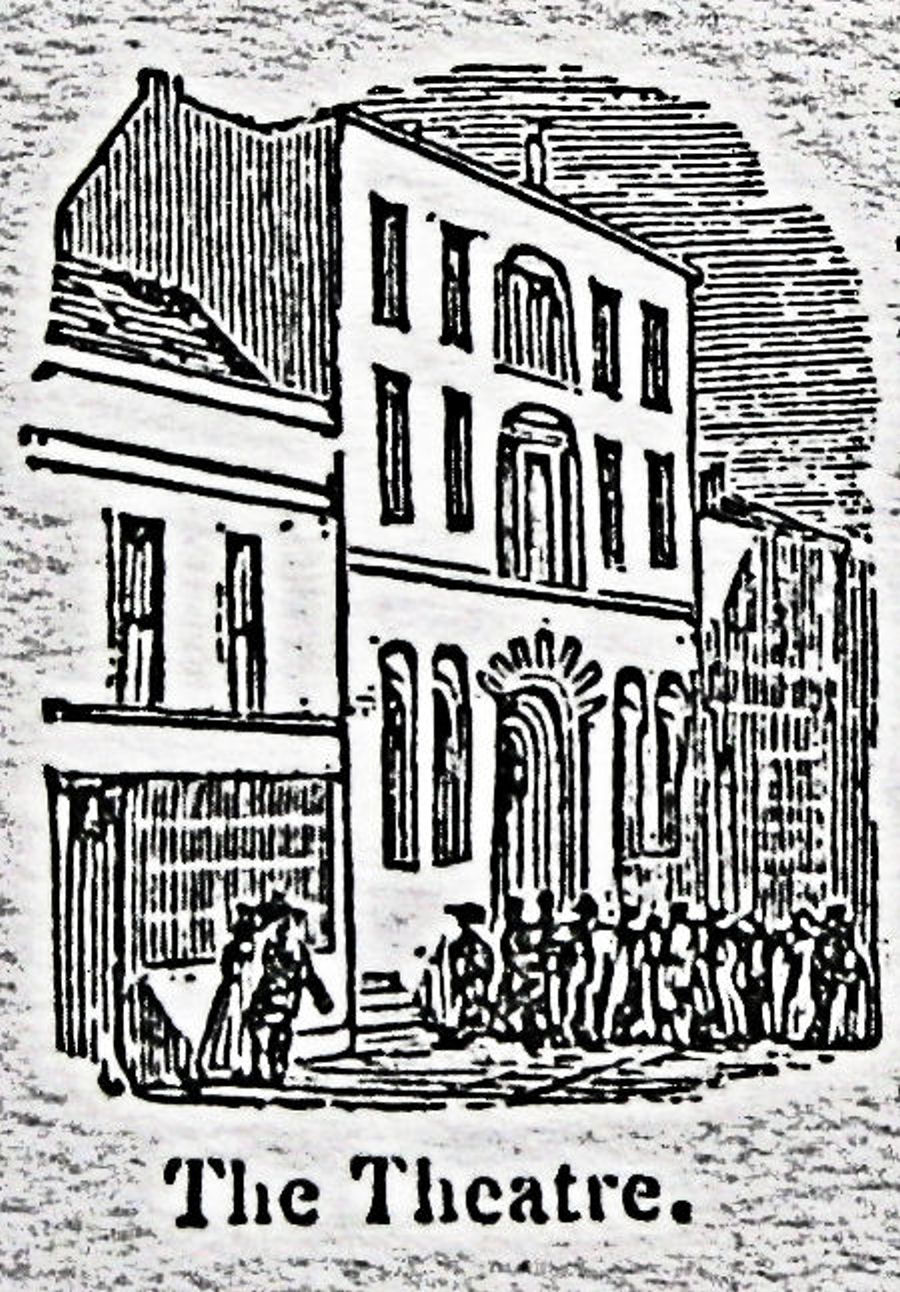
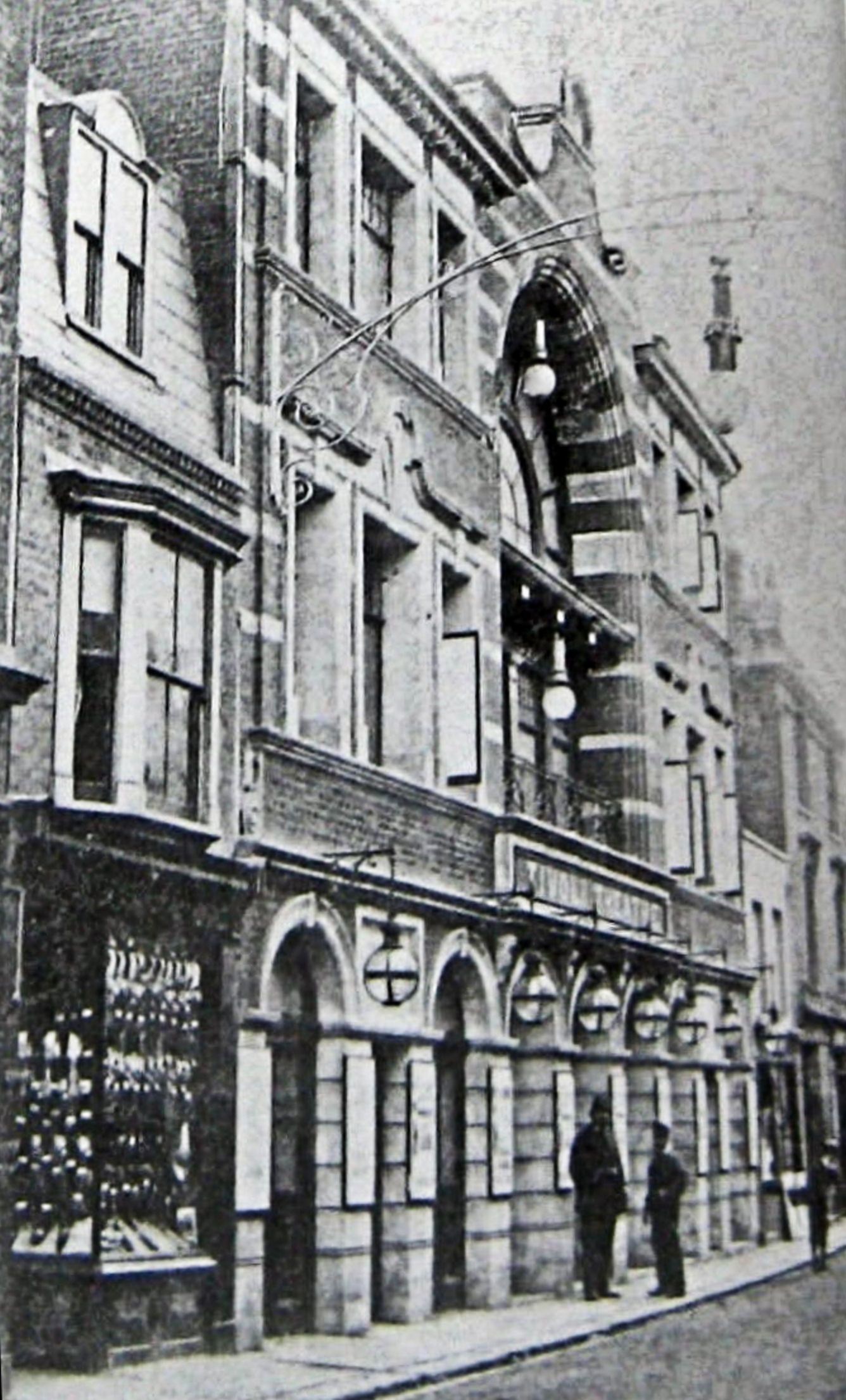
Theatre Royal, Snargate Street 1893

Theatre Royal, Snargate Street 1893

Towards the end of the 19th century there were a number of theatres in Dover, as described in Theatres Part I. The oldest theatre still standing at that time was the Royal Clarence on Snargate Street. It was subject to a make over and renamed the Tivoli theatre as the owners were Dover Tivoli Company. They went into receivership early in 1898 and Dover Amusements Company, headed by B Carter, bought the theatre. Carter decided to reinstate the Royal accolade that had originally been given nearly a century before by the Duke of Clarence, later William IV (1830-1837).

Renamed Theatre Royal, Dover Amusements Company did not live up to their name preferring ‘serious’ productions such as ‘The Terror of Paris’ about a bomb throwing anarchist. In March 1900, the manager and well-known vaudeville MC, Charles Stewart, left the theatre in order to form a company that planned a new 2000-seat theatre in Castle Place, Maison Dieu Road. Frederick Dew was appointed manager and the Theatre Royal continued to survive as Drew interspersed the serious productions with lighter plays. However, in 1906 the Snargate Street theatre was on the market again.

The theatre was acquired by Messrs George Head and Co. who renamed it the Royal Hippodrome with Harry Kemp Spain, the former manager of the Phoenix Tavern and Music Hall, Market Square, stage manager. Initially, it was not very successful and within a year, the company put it back on the market. However, it would appear that Harry Spain was then given a free hand and soon the theatre became so  popular that the owners took it off the market. It was at the Hippodrome that the Dover Operatic and Dramatic Society (DODS) put on its first production, the Mikado, in 1911. This was in honour of the Earl of Brassey as the Lord Warden (1908-1913).

Transfield's Hippodrome and Circus Maison Dieu Road c 1900. Dover Library

Transfield’s Hippodrome and Circus Maison Dieu Road c 1900. Dover Library

Across town, in February 1898, it was reported that Castle Place Cottages, on the corner of Castle Street and Maison Dieu Road, had been sold to actor Edward Compton. He owned Compton Comedy Company and they floated the idea of the new theatre. This was followed by an offer of £18,000 shares at £1 each to build a 2000-seat venue and five shops.

There were to be three entrances, all on Maison Dieu Road, over which there were to be two powerful arc lamps illuminating the whole front of the building. The thought of this whole structure outraged the Town Clerk, Sir Wollaston Knocker, whose residence at Castle Hill House was directly opposite!

Nonetheless, the Company erected a ‘temporary building’ that fulfilled Knocker’s worst fears. Further, to emphasise that it was to become a permanent fixture no expense was spared with regards to the patrons comfort. Deep pile carpeting covered the floors, the seats were well padded and the walls were decorated with richly embossed paper. From the ceiling hung 6 very powerful arc lamps and 25 gasoliers.

In March 1900 Charles Stewart, the former manager of the Theatre Royal joined the company and the theatre opened under the name of Transfield’s Hippodrome. Putting on vaudeville shows, for two year the theatre was a great success. However, the Town Clerk proved to be a powerful enemy and on the grounds that structure was inadequate, he ensured that the building was condemned. The theatre was forced to close and the construction was demolished. The site remained unoccupied until 1936 by which time it was said to have been jinxed. Now, in 2014, the site is derelict but with promises of better things to come – perhaps the jinx will go away?!

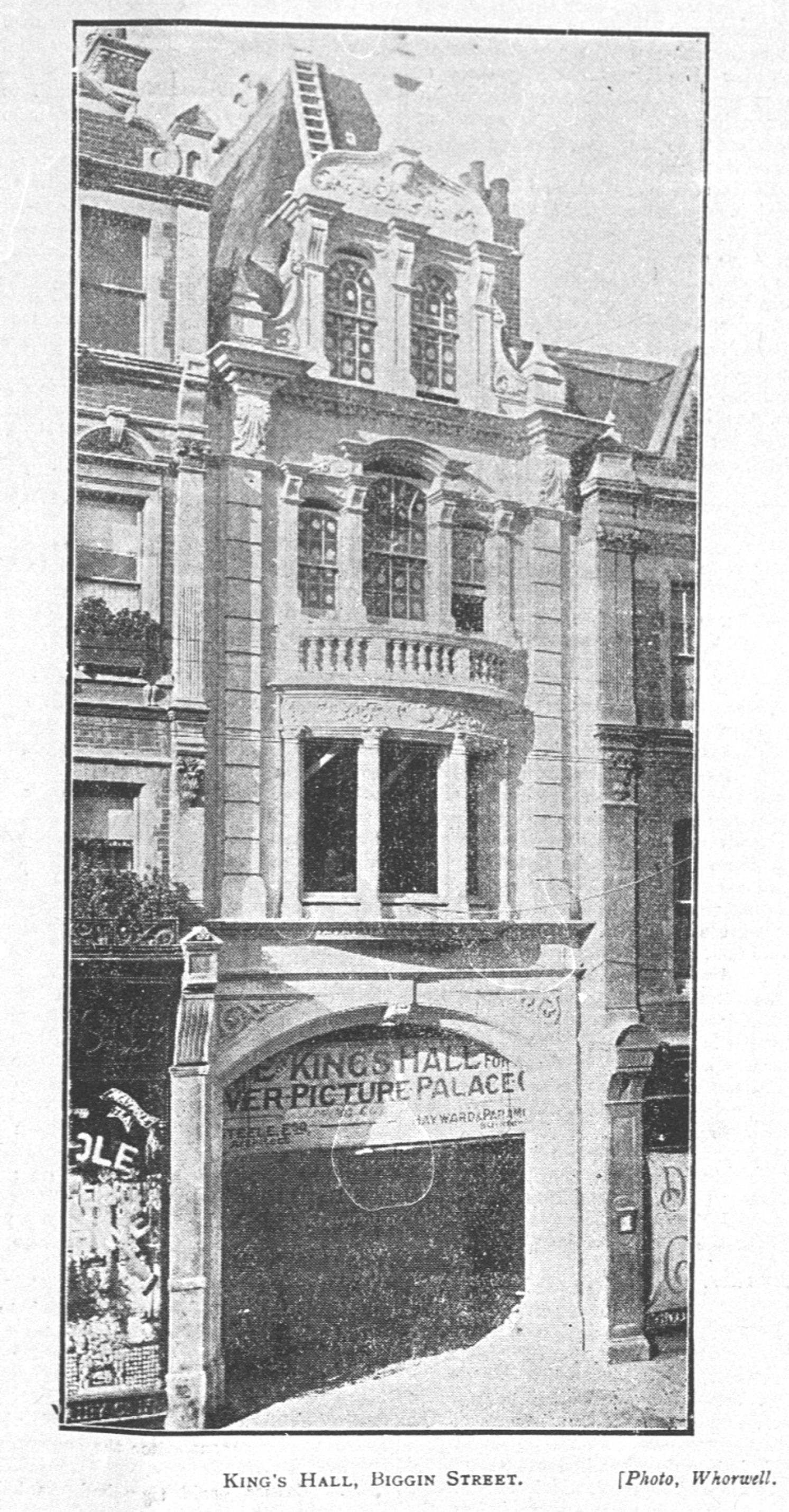
Kings Hall, Biggin Street. Opened as a theatre changed to a cinema, reinvented as a theatre, then a cinema now a bingo palace. Dover Museum

Kings Hall, Biggin Street. Opened as a theatre changed to a cinema, reinvented as a theatre, then a cinema now a bingo palace. Dover Museum

The Dutch gabled Kings Hall opened in Biggin Street as a theatre but shortly after, in 1911, was converted into a picture house. In 1928, faced with competition from the newly opened state of the arts Granada cinema in Castle Street, Kings Hall was again refurbished as a theatre. This required re-seating and re-carpeting as well as other work and the contract was given to Turnpenny Brothers, of London Road. They started work on Sunday evening 22 December 1930 and completed the job by the evening of the 24th.

The theatre was sold in March 1933 and on 1 June 1934, it became part of the Gaumont franchise but retained the name Kings Hall. However, on Wednesday 29 December 1937, the cinema was destroyed by fire. Although rebuilt it was requisitioned during World War II (1939-1945) by the Royal Navy for training in the use of gunnery aiming instruments. It reopened as a cinema in 1947 but in November 1960 it closed opening, the following August, as a successful bingo hall.

Royal Hippodrome, Snargate Street advert 1920. The Managing Director was former town councillor Sidney W Winter

Royal Hippodrome, Snargate Street advert 1920. The Managing Director was former town councillor Sidney W Winter

The Spanish ‘flu’ of 1918 hit Dover equally as hard as elsewhere and in November that year the council ordered that all cinemas to close. For some strange reason this did not apply to the Hippodrome or to entertainment’s held in Connaught Hall. However, theatrical productions had ceased in Connaught Hall following the installation of the Dr Edward Ferrand Astley’s (1812-1907) organ in 1902.

In 1908 Sidney W Winter acquired the Hippodrome. Elected to the council in 1912 he was unseated due to the invalidity of the election but Winter remained the owner. Prior to World War I (1914-1918) Harry Spain was the stage manager at the Hippodrome and he had encouraged the local amateur dramatic groups such as DODS to put on their productions in the theatre. Harry left the Hippodrome for war service and the Resident Manager was C Taylor Lawson. For reasons unclear, they refused to allow amateur productions at the Hippodrome. This caused a public outcry and a demand for amateur productions to be staged in Connaught Hall. This caused a public outcry and a demand for amateur productions to be staged in Connaught Hall.

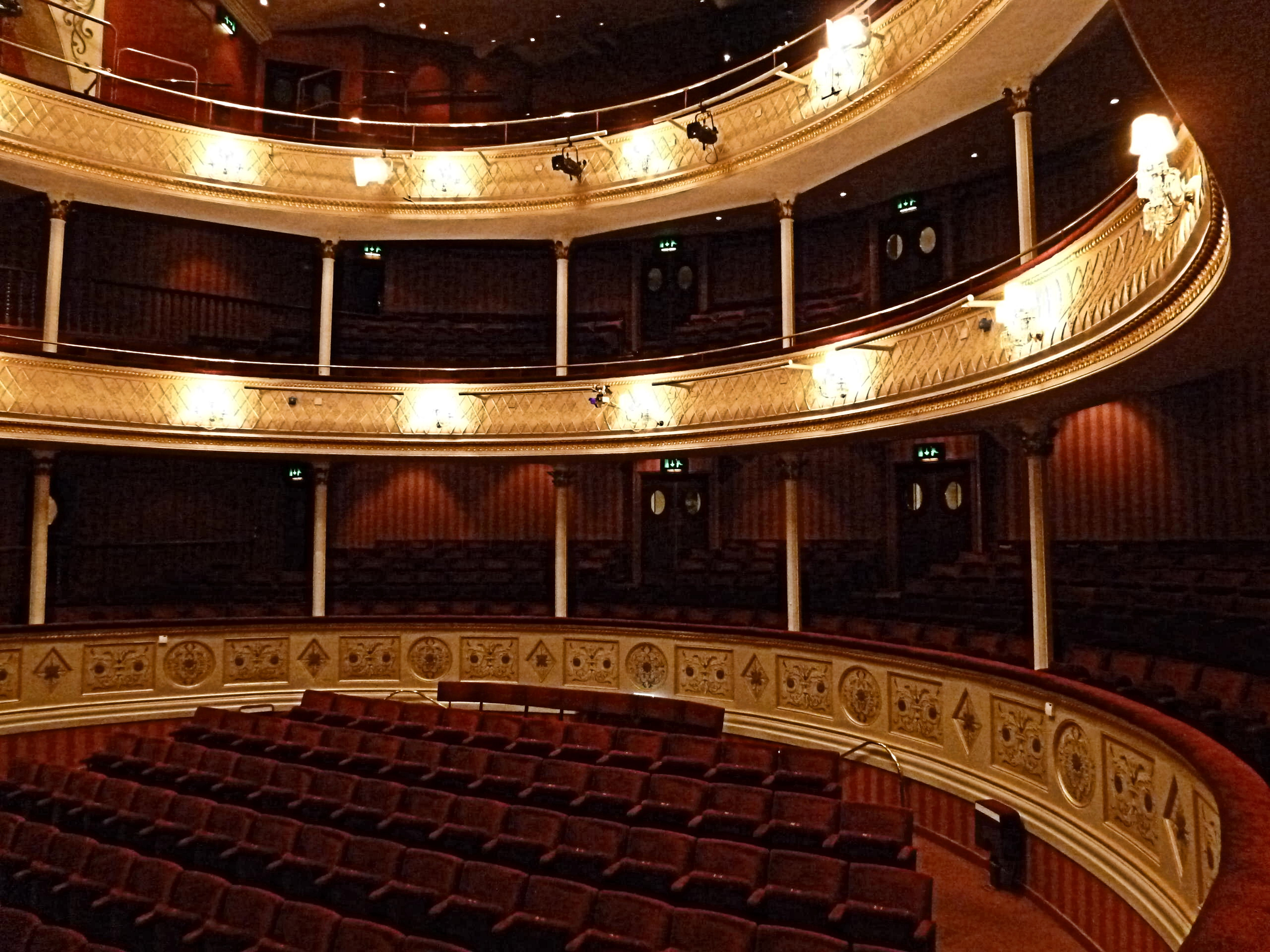
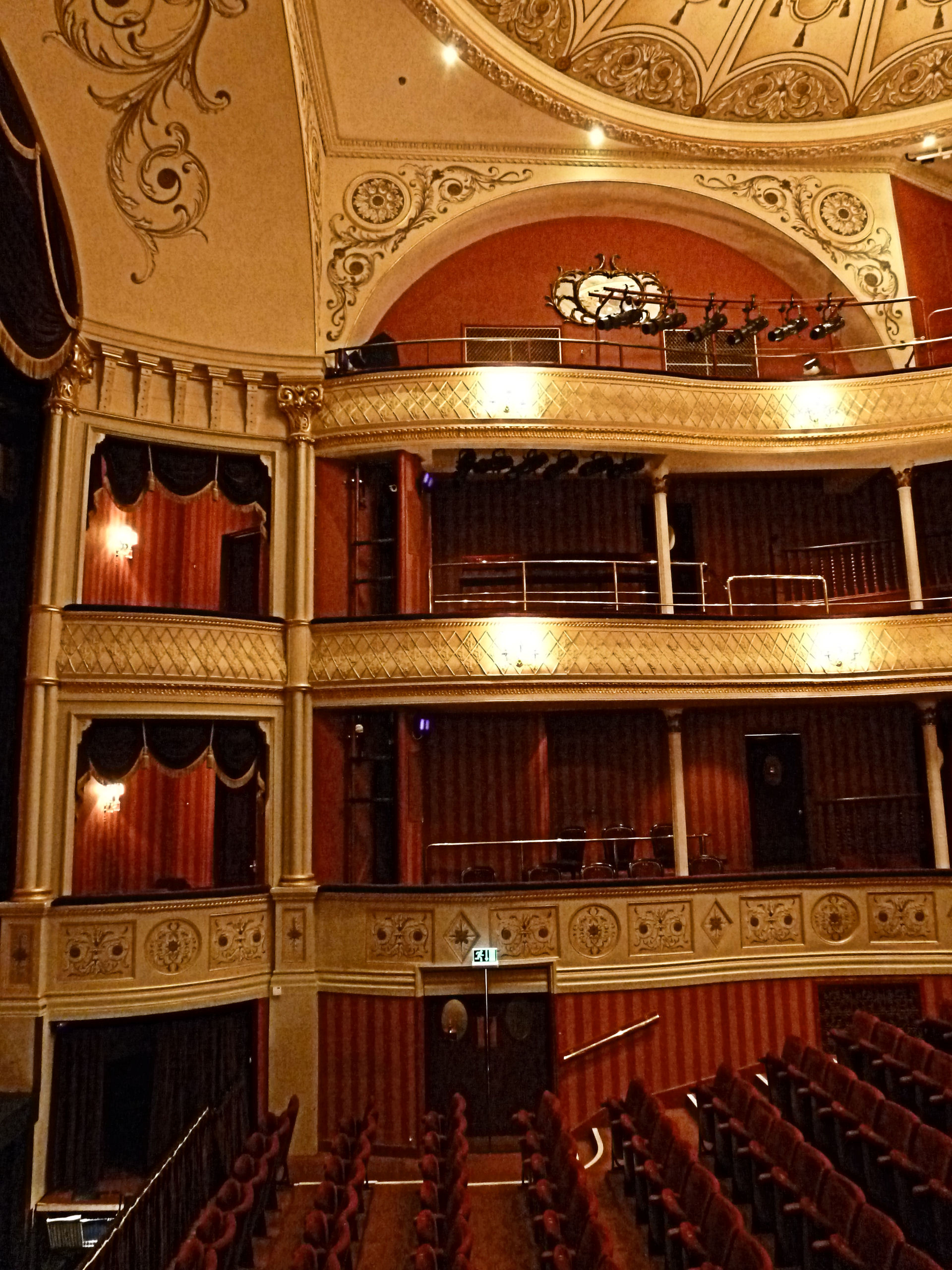
Auditorium of Theatre Royal Bath designed by C J Phipps (1835–1897) who designed the interior of Dover's Royal Hippodrome. Thanks to Theatre Royal Bath

Auditorium of Theatre Royal Bath designed by C J Phipps (1835–1897) who designed the interior of Dover’s Royal Hippodrome. Thanks to Theatre Royal Bath

Harry Spain returned from war service and returned to the Hippodrome as stage manager. In 1926, Sidney W Winter, died at Kingsbridge, Devon and the theatre was put on the market. While the for sale signs were hanging outside, Harry Spain – as temporary theatre manager – allowed DODS to stage a production at the Hippodrome and it was a great success. Indeed, up until the outbreak of World War II (1939-1945), DODS put on a number of spectacular and successful shows there. Albeit, with the new grand Granada cinema, opening on 8 January 1930, the days of the theatre in Dover seemed to be numbered. In 1932, the new owner of the Hippodrome, Mr W Rice, applied to turn the building into a cinema. Two years later, the theatre was in the hands of a Mr M Morris, who advocated the need for a theatre in Dover but by autumn 1935, the for sale signs were up again.

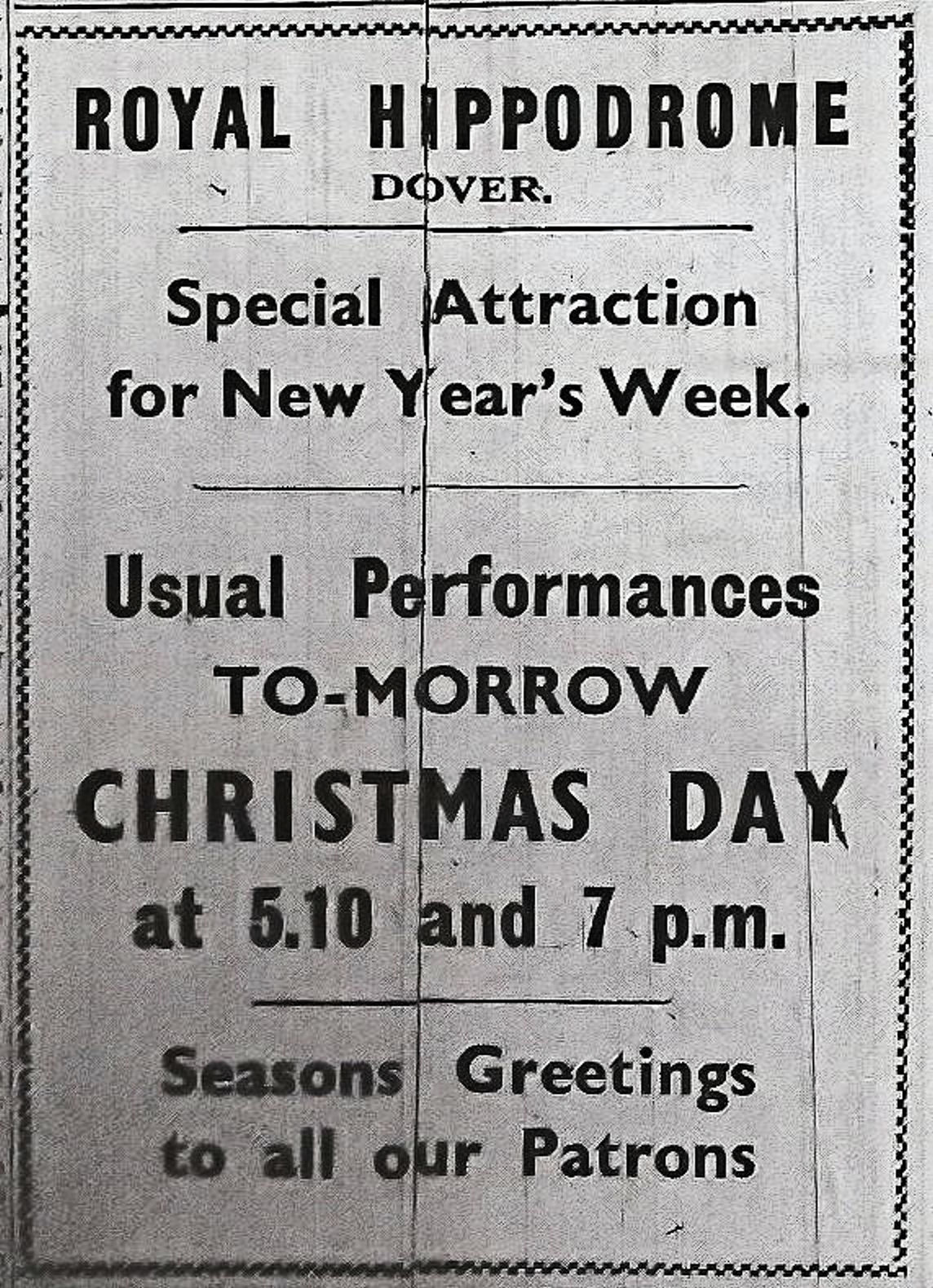
Hippodrome advert February 1942

Hippodrome advert February 1942

Herbert Roberts Armstrong (1882-1947), known as HR and his wife Rosina came and had  a look. HR had spent much of his working life in what was then Persia, now Iran, as superintendent of Social Services for the Anglo-Iranian Oil Company. The couple were by this time retired but decided to buy the Hippodrome keeping Harry Spain as stage manager. On 26 October 1936, having refurbished their new acquisition, the theatre reopened and quickly attracted ‘full houses.’ Three years later Dover became a military fortress when World War II was declared. This brought to the town an influx of military and naval personnel and the Hippodromes reached its peak of popularity.

Orchestra Pit of Theatre Royal Bath designed by C J Phipps (1835–1897) who designed the interior of Dover's Royal Hippodrome - Thanks to Theatre Royal Bath

Orchestra Pit of Theatre Royal Bath designed by C J Phipps (1835–1897) who designed the interior of Dover’s Royal Hippodrome – Thanks to Theatre Royal Bath

HR, so it was said, inspired artistes and audience alike with his energy and love of the Hippodrome. In his office there was a large poster that read, ‘To Hell with Hitler and his unexploded bombs, the Hippodrome is still open.’ According to the late Dick Whittamore, who started work there as pageboy in 1939, besides Harry Spain the staff included assistant manager – John Denton, cellerman – George Sidders, lighting – Nobby Granger and the chief cleaning lady – Mrs Hanson.

The Hippodrome had a five-piece orchestra that accompanied the various variety acts. The leader and first violin was Charlie Haynes, who lived at Kennington, near Ashford and the other musicians were Bob Page – piano, Harry Chandler – trumpet, Bill Delayhaye – clarinet, Mr Cooper – 2nd violin and members of the band also played drums. Secondary lighting was by gas that had to be lit manually and was very noisy!

In an article in the Dover Society Magazine of April 1996, Dick wrote that ‘at the outbreak of war the theatre closed for a few days whilst all the windows were blacked out and the neon signs disconnected. It reopened on 12 September with a visit from Robin Richmond with his electronic organ in an appropriately named show, ‘blackout blues.’ Babes in Woods pantomime opened on Christmas Day 1939 and on 8 January 1940 Little Bo Peep played for six days with matinees.’

Hippodrome - Ted and Barbara Andrews, Julie Andrews parents were the headliners one week in December 1941

Hippodrome – Ted and Barbara Andrews, Julie Andrews parents were the headliners one week in December 1941

The theatre’s agent was Universal Variety Agency, Haymarket, London and the Hippodrome boasted of many famous artistes and if they were unable to come, the agency always managed to find substitutes. On 15 December 1940 Ted and Barbara Andrews, the parents of Julie Andrews (b1935), were the headliners.

In the spring of 1941, the theatre concentrated on strip shows and entertainers included the famous Phyllis Dixey (1914-1964). Singer, Evelyn Laye (1900-1996) volunteered to play Dover and her £100 salary was donated to local charities. This was presented to the Mayor Jimmy Cairns, on the stage on the Saturday evening of that week. A stalwart performer was compare Geoffrey Warner, who not only performed on the stage but, wrote Dick Whittamore, he took artistes out to lonely gun sites to put on shows for the crews who could not make it to the theatre.

During this time, Press correspondents from many countries wrote of their experiences of Dover as bombs dropped and shells burst all around. Many propped up the bar under the stage itself for there, in complete defiance of all theatrical tradition, artistes in costume and wearing stage make-up mixed with members of the audience. For public safety, from 21 September 1940, all theatres along with cinemas, clubs and restaurants, had to close by 22.00hrs each evening and were not permitted to re-open until half-an-hour before sunrise the next day. The local police chief could change the closing time to 21.00hrs if necessary and in Dover local buses ceased to run at that time.

Hippodrome Snargate Street December 1942

Hippodrome Snargate Street December 1942

Albeit, from April 1941 the theatre was also allowed to open on Sundays and Christmas days for ENSA (Entertainments National Service Association), productions. They provided entertainment for troops during the war. On Sunday 19 December 1943, the Tommy Trinder Show was booked in aid of Prisoners of War Fund. However, the Lords Day Observance Society demanded that the show was to be cancelled and to enforce this, they started legal action.

Tommy Trinder (1909-1989), who was not actually booked to attend – just one of his shows being staged in the provinces –  heard about this so he personally brought down a show with top rate artistes. These included Sonnie Hale (1902-1959), Tessie O’Shea (1913-1995), Derek Roy (1922-1981) and the Jerry Allen Trio. Tickets ranged from 1 shilling to 5-shillings and the company played to packed houses raising £130 for the Fund.

Even though the theatre was allowed to open on Sundays, Dover was still a military fortress and often HR would interrupt shows in order to read out the names of those who had to return to their posts. On leaving, each would be given a free ticket for another night of the show. When the air-raid sirens sounded, the audience were shepherd across Snargate Street to a large shelter had been built into the face of the cliff. The entertainers, who saw it as an honour to be engaged by a theatre so near the front line, would follow and the show would resume.

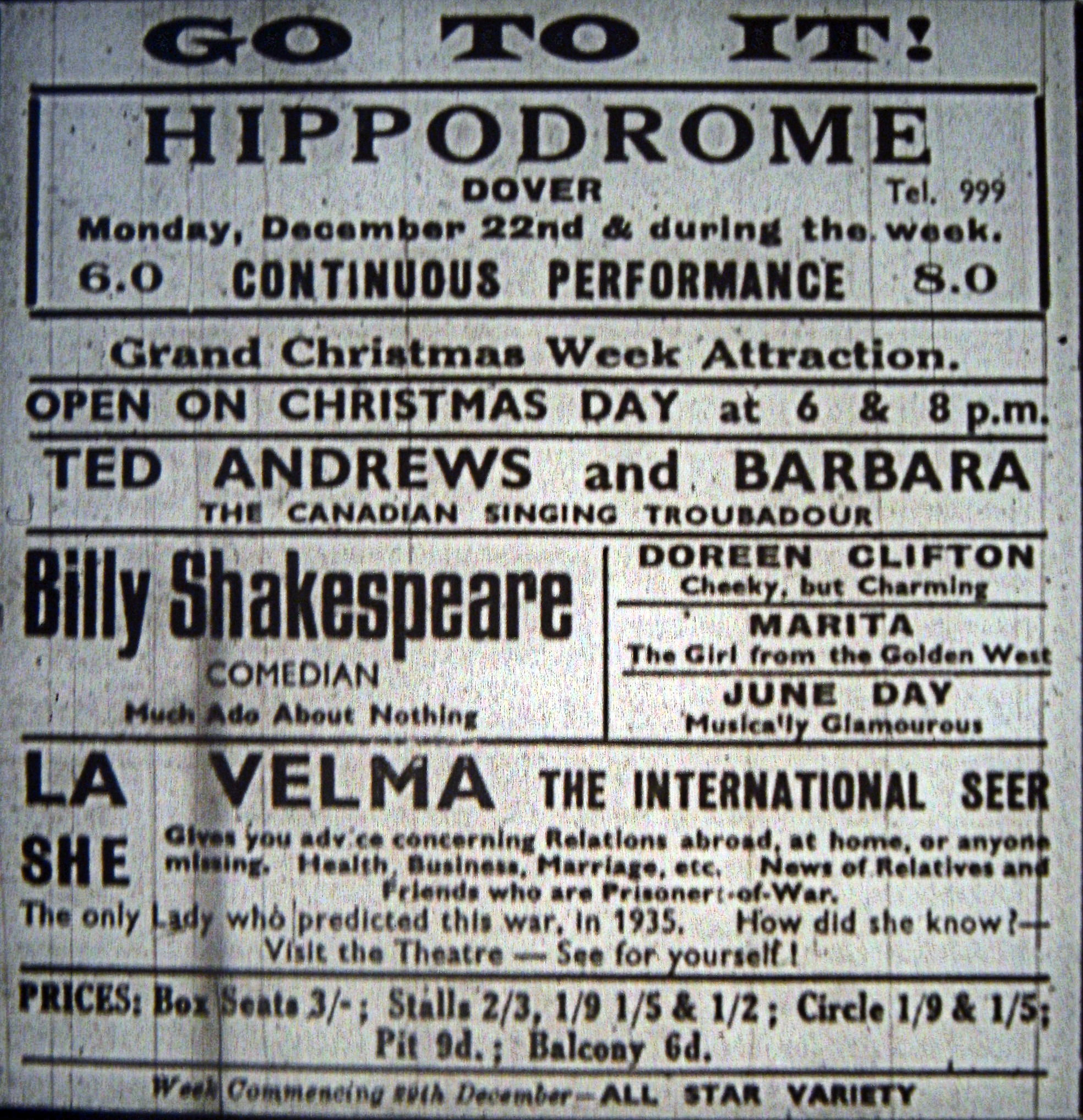
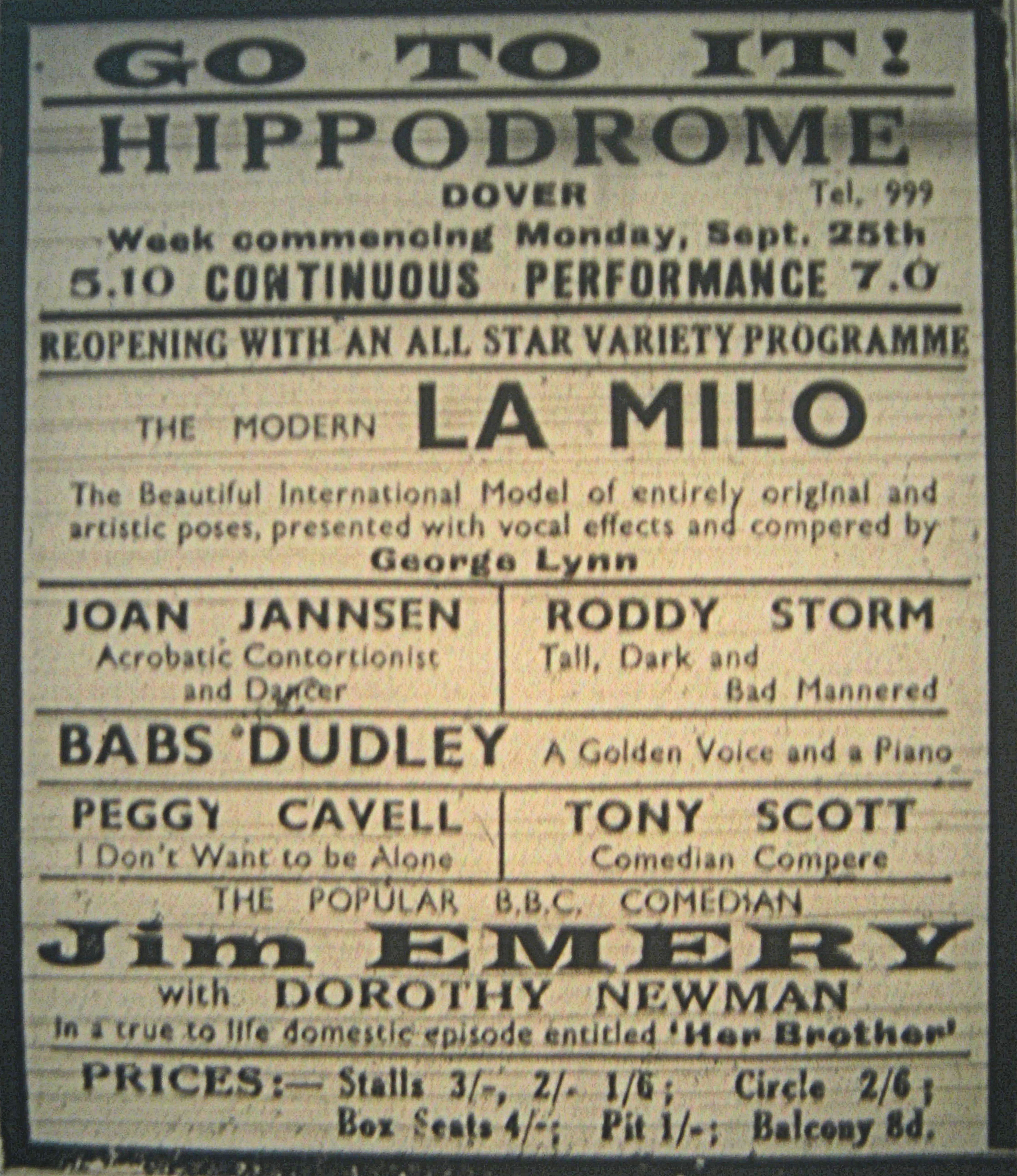
The last advert for the Hippodrome, the show that was booked but the theatre had been destroyed on the morning of 25 September 1944.

The last advert for the Hippodrome, the show that was booked but the theatre had been destroyed on the morning of 25 September 1944.

On 18 January 1944, Cinderella opened at the Hippodrome to record audiences of mainly children. All had been sent to Wales for the duration of the War following the Dunkirk Evacuation in June 1940 but most had drifted back to the town. Throughout that year, as normal, there was different show every week at the Hippodrome. For the last week in September that year the pianist – Renara, choirboy – Joe Peterson, comedian – Frank E West, Rex Ashley, Sonia, and Billy Barr and his lady, and Six Dancing Diamonds were booked.

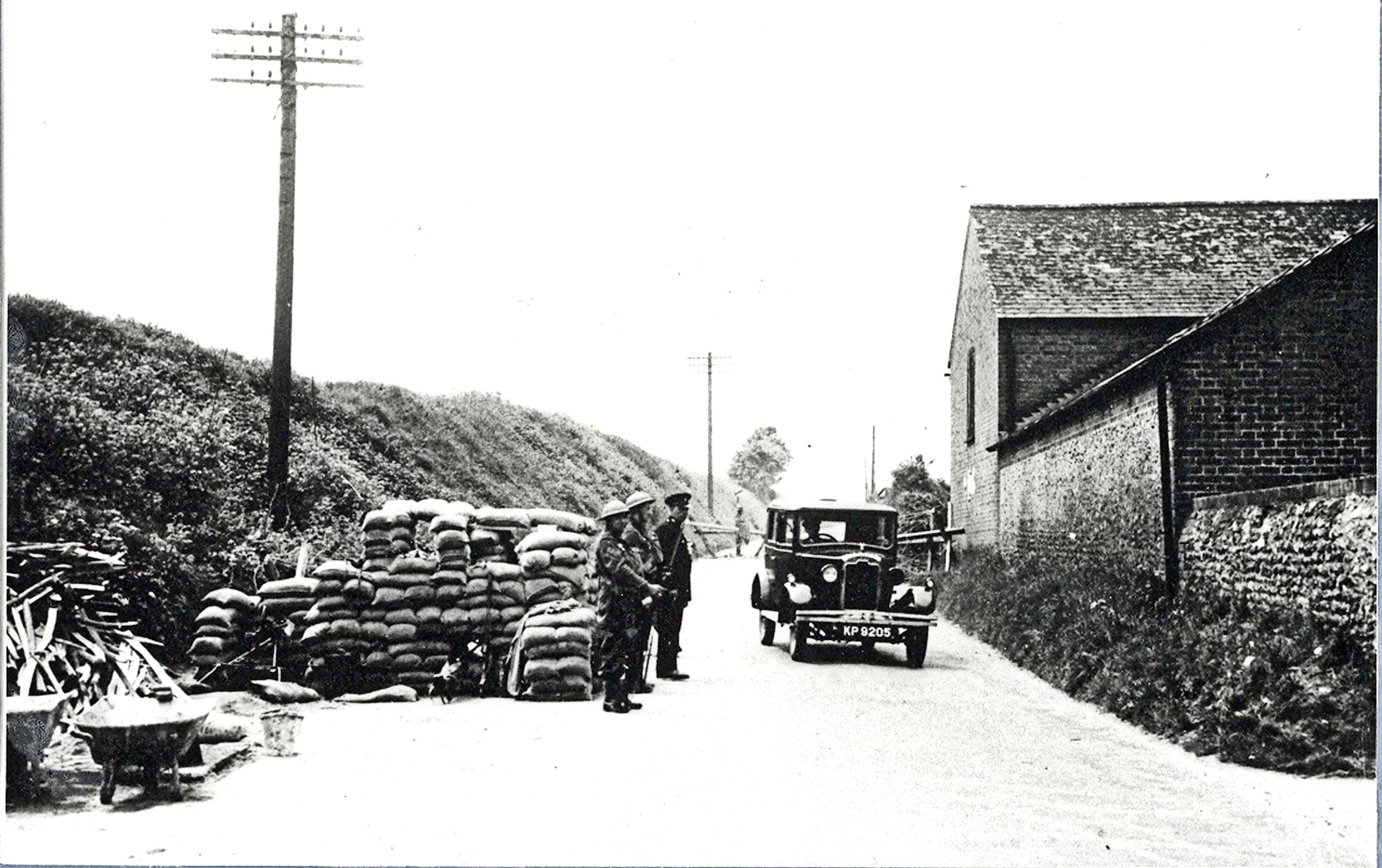
On 25 September 1944, a German shell hit the building during a morning rehearsal. No one was hurt as the roof caved in – it was one of the last shells to hit Dover but the Hippodrome never opened again.

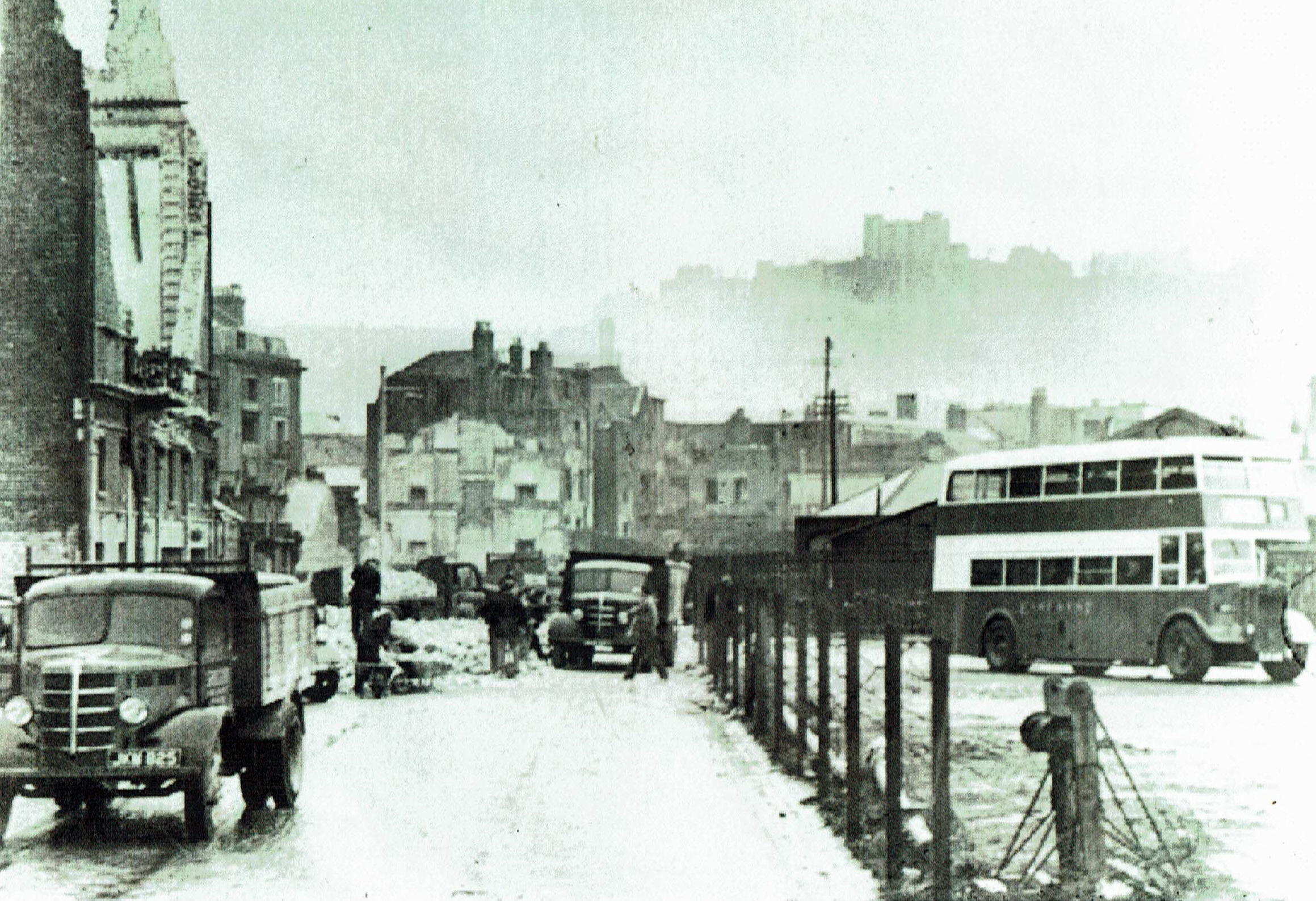
After the theatre closed, HR Armstrong reopened the Pleasure Gardens Theatre in Folkestone. While there a sick friend, who ran the Palace Theatre in Dundee, asked if he would help out. HR travelled to Scotland but shortly after arriving caught a chill and two weeks later died on 14 May 1947. There is a seat to his memory in Granville Gardens. The wrecked building stood for six years before the council arranged for it to be demolished. Almost as if the shattered building knew what was going to happen, part of it collapsed across what was then Northampton Street before it was finally demolished in January 1951.

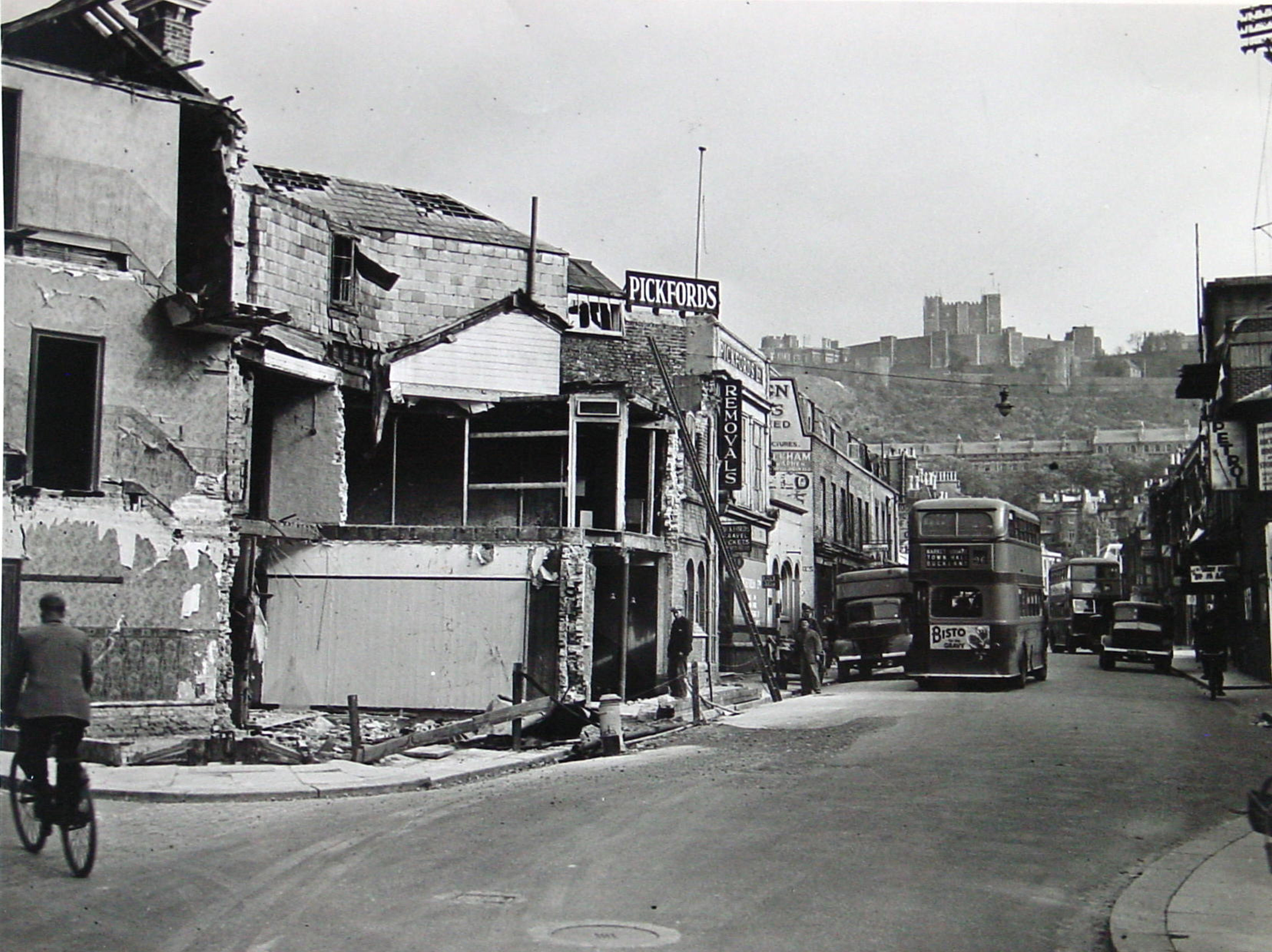
Snargate Street following shelling that destroyed the Royal Hippodrome. Kent Messenger.

Snargate Street following shelling that destroyed the Royal Hippodrome. Kent Messenger

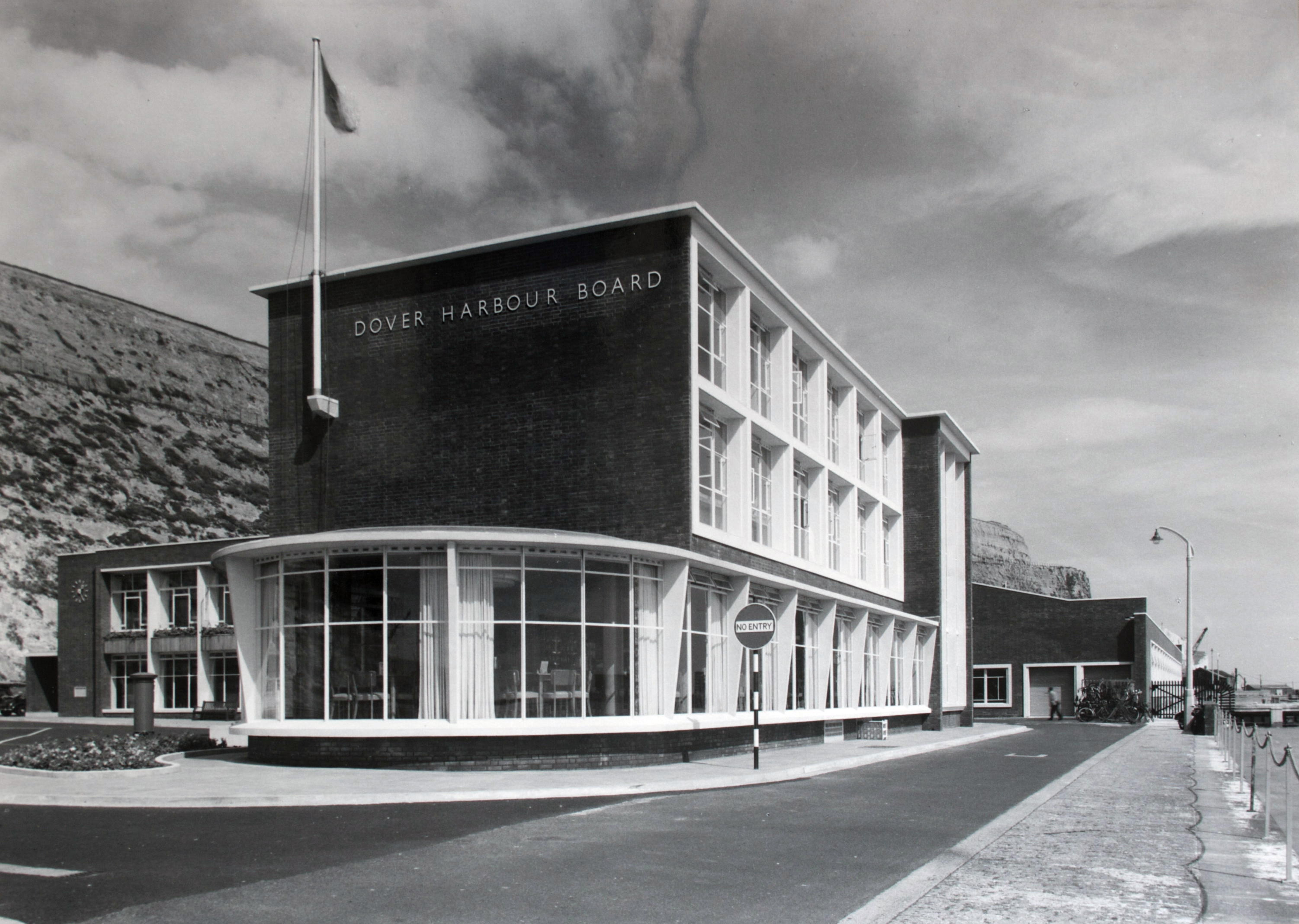
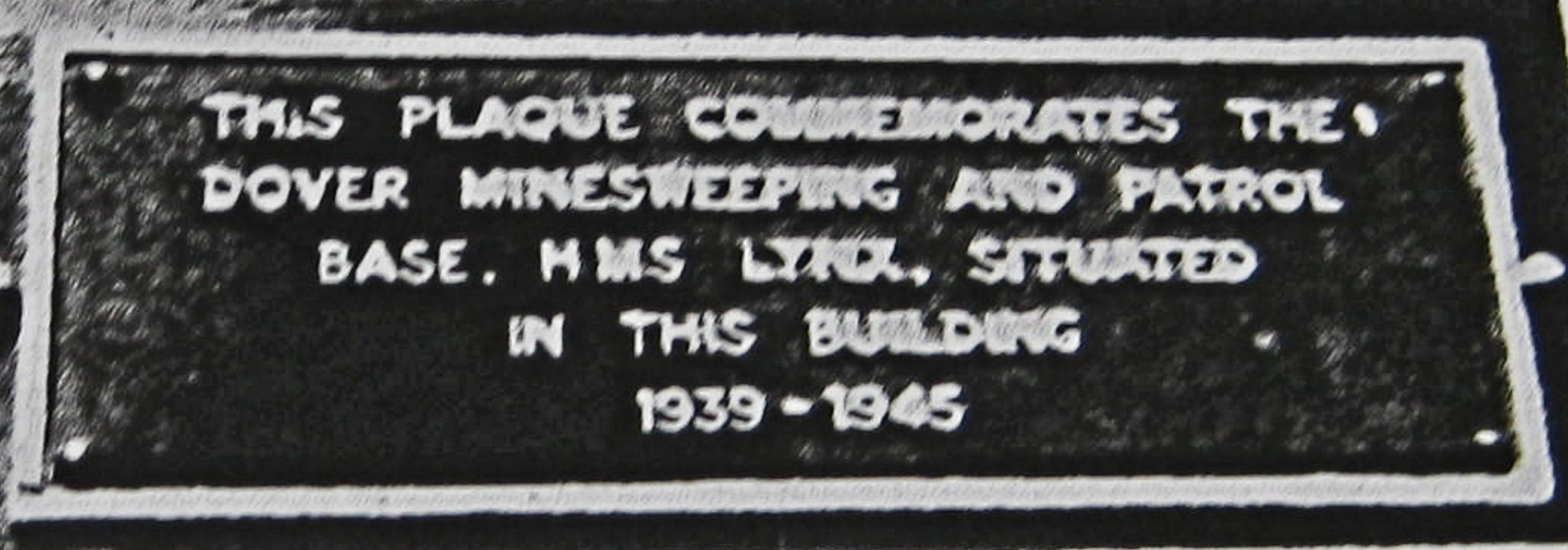
On the site of the demolished Hippodrome theatre, as part of the Dover Harbour Board’s policy of post-war development of Western Docks, offices were erected. These were taken over by Henry Tolputt and Company who used the forecourt for a timber yard. In September 1968 a commemorative plaque, marking the site of the old Hippodrome Theatre was put up in Snargate Street.

Mrs Rosina Armstrong, widow of HR, was present at the unveiling along with Mayoress, Mrs Jean Aslett, representatives of Dover Harbour Board and many people connected with the theatre. In her thank you speech, Mrs Armstrong said, ‘that if you ‘listen as you walk by in the dark where the Hippodrome once stood you will hear the roar of laughter of the audience long since departed. Maybe you’ll catch the strains of a well-loved melody – for a theatre never really dies.’

Hippodrome Plaque, Snargate Street since stolen. Alan Sencicle 2009

Hippodrome Plaque, Snargate Street since stolen. Alan Sencicle 2009

In the 1990s, the A2 road was re-routed through Dover cutting off the town from the seafront and burying what had been the site of the Hippodrome. In consequence, the plaque was removed and former Hippodrome employee, Dick Whittamore, eventually managed to persuade Dover Harbour Board to replace it.

A new plaque created on the instructions of IMPACT – a joint council initiative – was placed, on 25 September 1995, on the wall of the Hovertel, on Snargate Street with permission of the owners, David & Sandy Peters. Sadly, in September 2010, metal thieves using an angle-grinder stole the plaque since when it has not been replaced.

Auditorium of Theatre Royal Bath designed by C J Phipps (1835–1897) who designed the interior of Dover's Royal Hippodrome and still wished for. Thanks to Theatre Royal Bath

Auditorium of Theatre Royal Bath designed by C J Phipps (1835–1897) who designed the interior of Dover’s Royal Hippodrome and still wished for. Thanks to Theatre Royal Bath

Following the War, in 1950, Dover Operatic and Dramatic Society (DODS) reformed and opened with a production of Iolathe, using materials taken from the bombed out Hippodrome to build a stage in the Connaught Hall – the council did not object! Since then the company have successfully put on regular and excellent productions in the Hall that does not do them the justice that a dedicated theatre would.

In 1951, the Dover Players staged A Midsummer Night’s Dream in Kearsney Abbey as a contribution to the town’s Festival of Britain celebrations. The production was seen by 4,000 people and over the following years, they staged further successful productions in Kearsney Abbey. In 1952, as part of the Coronation celebrations, the notion of a dedicated concert hall and theatre was put forward but with an estimated to cost £50,000 the idea was abandoned.

Following the War Dover Operatic and Dramatic Society (DODS) in 1950 reformed and opened with a production of Gilbert and Sullivan’s Iolathe, using materials taken from the bombed out Hippodrome to build a stage in the Connaught Hall – the council did not object! Since then the company have successfully put on regular and excellent productions in the Hall that does not do them the justice that a dedicated theatre would. In order to buy property and turn it into a theatre, on 1 August 1999, DODS became a Company Limited by Guarantee.

When, in 2000, the listed former Technical College on Ladywell was offered for sale they made a bid but they were outbid by a charitable trust, Superior (Dover) Ltd, with the stated intention of helping to regenerate Dover. In reality after a couple or so years sold the building. DODS went on to look at the possibility of utilising the Salvation Army Citadel building on the High Street but this proved too expensive to convert. That building has since been turned to flats. In recent years, due to the relative high cost of hiring Connaught Hall to the return on tickets sold, DODS have sought other venues such as the St Edmund’s School’s New Eden Theatre and Astor College’s White Cliffs Theatre.

The Roundhouse Theatre at Dover Discovery Centre, Market Square. AS

The Roundhouse Theatre at Dover Discovery Centre, Market Square. AS

The White Cliffs Experience, in Market Square, was sold to Kent County Council for £1 and renamed the Dover Discovery Centre. In 2003 saw the library moved from Maison Dieu House to the Discovery Centre, which included the Adult Education Centre and a small tiered theatre without proper seating. That year professional actor and director, Richard Esdale set up the Blackfish Academy in Dover. This was to enable young people to express themselves through the performing arts and he won the contract from Kent County Council to use the small theatre. The initially works was carried out using generous donations and the Academy was able to buy 100 seats, a third of the theatre’s capacity and the new theatre was named the Roundhouse.

However on the wish list for Dover, is still a full size dedicated purpose built public theatre and concert hall. Many of us looked at the forlorn but once palatial cinema, the Granada, which stood on Castle Street, in the hope that money would be found to restructure and furbish as the much-needed theatre. Unfortunately, the building was sold to speculators who demolished the old cinema and the site is now temporary car park for the St James Development construction workers – there is no plan for a purpose built theatre and concert hall for Dover.

Part III of Dover’s theatrical heritage tells the story of the town’s amazing Amateur Theatrical Groups

First Presented : 13 April 2014


Posted in Buildings, Societies, Culture and Entertainment, Theatres Part II, Theatres Part II | Comments Off on Theatres Part II – to the Present Day

Theatres Part I – to 1900

Shakespeare Cliff so named following William shakespeares successful production of King Lear in which the cliff is spoken. LS

Shakespeare Cliff, so named following William Shakespeare’s successful production of King Lear in which the cliff is mentioned. LS

Dover’s theatrical connections go back at least to the days of William Shakespeare (1564-1616) when his theatre company, known as the King’s men’, visited the town. At the time, it is believed, Shakespeare was writing King Lear. It was seeing Dover’s Hay Cliff that gave him the inspiration for the scene in the play when the blinded Earl of Gloucester, who intends to jump off the cliff, asks Edgar to lead him to Dover, (Act IV Scene I). Following the success of King Lear, the cliff was renamed Shakespeare Cliff.  At that time performances would have been outside or in specially converted rooms or barns. Dover’s first recorded designated theatre opened in Pierce’s Court, close to Market Square, in 1785.

On 15 October that year, the Fector banking family opened a small theatre in the former Assembly House, close to present day 157 Snargate Street. This was under the management of the youngest son, William Fector (1764-1805),  and by all accounts, the beauty and fashion of the town and country ‘fretted their hour upon the stage’. The theatre was described as a small and elegant and the first production was a tragedy, The Siege of Damascus, in which William played Phocias, the lead part. The theatre was crowded and the production was given rave reviews, including in the Times of 19 October 1785. In the article, William Fector’s acting ability was likened to the famous actor, David Garrick (1717-1779), when he was the same age.

The cast also included Thomas Mantell – the six times Mayor of Dover between 1795 and 1824. Although his acting ability was not particularly acclaimed his wife, former actress Ann Oakley, more than made up for this. Further, it was her renowned beauty, set off with a white and rose costume, that caught the eye of the London critics. Over the next four years, there were a number of other productions most receiving equal rave reviews. For reasons, as yet unclear, William Fector ceased to receive any mention after 1788, even his death in 1805 went unreported and by which time the theatre had long since closed.

William IV, who as the Duke of Clarence, gave Dover's theatre the Royal approval. Internet

William IV, who as the Duke of Clarence, gave Dover’s theatre the Royal approval. Internet

On 22 November 1790 a larger, purpose built theatre was ‘erected by a company of gentlemen, who advanced the money in £50 transferable shares.’ The site became 33 and 34 on the seaward side of Snargate Street not far from New Bridge and was referred to as the Assembly Rooms. The theatre was very popular and the venue was also used for the town’s grandest balls, major social functions and dinners.

Robert Copeland was appointed the manager and lived on the premises. He also managed theatres at Sandwich and Deal as part of his ‘Dover Theatre Circuit’ enterprise. In 1802, he took over the running of the ailing Theatre Royal, Margate but it was the time of the Napoleonic Wars (1793-1815) and the theatre was requisitioned by the army for barracks. An astute businessman, Copeland negotiated a deal whereby the Dover theatre was given the Royal accolade and approved by the Duke of Clarence, later William IV (1830-1837).

Fanny Copeland Fitzwilliam - internet

Fanny Copeland Fitzwilliam – internet

In 1801, Copeland’s daughter Fanny was born in the Dover theatre and by the time she was two, she was acting on the stage. When she was 16-years old, Fanny was an accomplished actress appearing at the Haymarket, London where her career took off. In 1822, Fanny married Edward Fitzwilliam and in 1830, she took over the management of Sadler’s Wells. Having conquered the London stage she turned her attention to the United States and quickly added that country to her conquests – Fanny was paid more than any other actress at that time! However, her career came to an abrupt end on 11 September 1854 when she died of cholera. Fanny was buried in Kensal Green, London.

Following Copeland, there were a number of managers of Dover’s Royal Theatre, one of which was Frederick Fox Cooper. On 10 September 1842 he aroused national interest when well-known comedians of that time, Fitzjames and Gladstone, had their hair cut off in Dover gaol! It would appear that the theatre was not doing particularly well and Cooper could not pay his performers. They went on strike and during an argument Messrs Fitzjames and Gladstone hit Mr Cooper who called the police and both were arrested.

Royal Theatre, Snargate Street. Rigden 1844

Royal Theatre, Snargate Street. Rigden 1844

In court, the following morning, Fitzjames was fined 10-shillings (50p), which he did not have. Within two hours, the money was raised but in the meantime both men were kept in the gaol where their heads were shaven. With righteous indignation they loudly complained of ‘other indignities were inflicted upon them.’ On release, the two men took legal action against Mr Coulthard – the Dover gaoler. The Mayor of Dover, Edward Poole was also the Chief Magistrate and he dismissed the case. The local press supported the action but throughout the country, the decision was condemned!

Not long after the theatre closed and an advert appeared in the local papers, signed by John Boyton, stating that it could be hired by the day or the week for any public purposes. It was hired by South Eastern Railway Company to celebrate the official opening of their London and Dover railway line via Folkestone that took place on Tuesday 6 February 1844. For the event, all the paraphernalia required for theatre productions were stripped out and that afternoon 300 gentlemen sat down to dinner. In the gallery were the ladies who were ‘crammed in’ and due their hooped skirts found it difficult to partake of the meal! In 1858, the Assembly Rooms/theatre was disposed of by public auction. The purchaser was B Browning who extended the building and re-opened it as the Clarence Saloon. At the time the Clarence Hotel, later the Burlington Hotel, was in the process of being built.

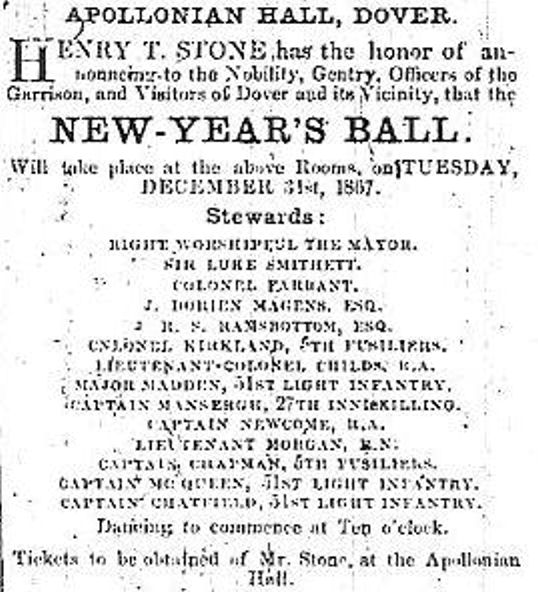
Apollonian Hall New Years Eve Ball organised by Henry Stone - December 1867

Apollonian Hall New Years Eve Ball organised by Henry Stone – December 1867

Meanwhile, in 1839, the Apollonian Hall and Tavern was built on the seaside of Snargate Street. In 1846, Henry Stone (1805-1892), who had previously been the faithful servant and confidant of John Minet Fector junior, took charge of the Hall. Including a gallery, it only seated eighty people nonetheless, it was particularly popular with the military fraternity in the town.

The Hall was a venue for balls, dinners, auctions, political rallies, seminars and lectures and occasional theatre productions until the Connaught Hall was built in 1883. Charles Dickens particularly liked the Apollonian when giving his public readings. However, because it was so small it quickly became crowded and in 1861, people were turned away. Among them was Snargate Street draper, John Agate and his family and he wrote an angry letter to Dickens. In response, Dickens’ apologised and it would seem that Agate was delighted with the letter as he put it on display in his shop window!

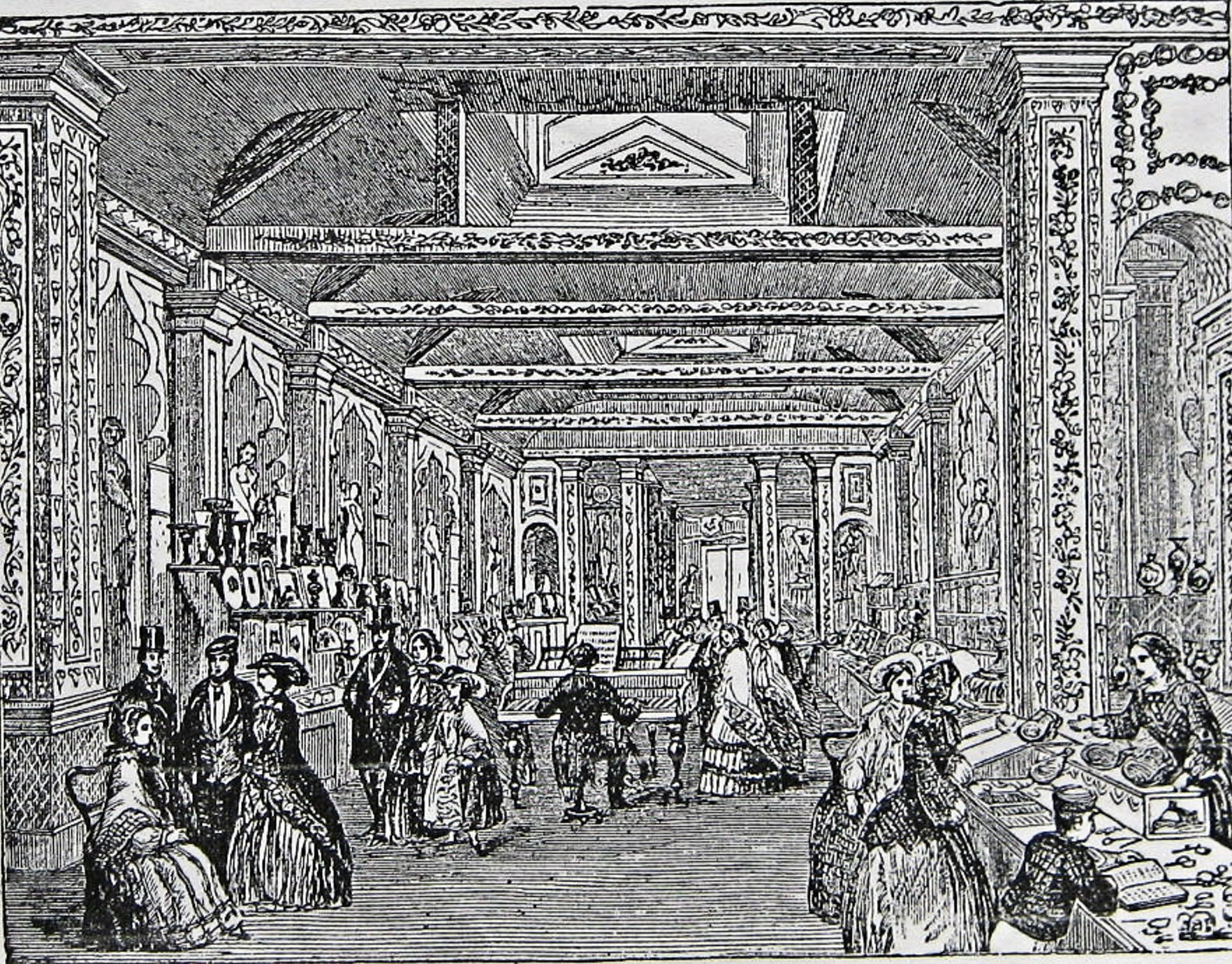
Squiers Bazaar proprietor J D Squiers. Snargate Street to Northampton Street later Wellington Hall.

Squiers Bazaar proprietor J D Squiers. Snargate Street to Northampton Street later Wellington Hall.

Henry Stone was elected to the Town Council for the Pier Ward in 1868 and in 1886, he was elevated to the Aldermanic Bench. Six years after Stone died, in 1892, the British Association held their conference in Dover at venues across the town. One venue was the Apollonian Hall. However, the days of its popularity were over and in September 1929 it was demolished in a dock redevelopment scheme.

On the same side of Snargate Street was Wellington Hall, which ran through to Northampton Street – approximately, where Braderlei Wharf car park is today. It was originally Squiers Bazaar established in 1811 and in all respects was similar to the Apollonian Hall and eventually became a cinema. Wellington Hall was the first to provide ‘talkies’ in Dover – the film was Mother’s Boy.

Queen’s Hall, at the junction of the then Last Lane and Queen Street, was originally an old malt house. Philip Papillon had purchased the malt house in 1708 for Presbyterians who radically altered and adapted it into a chapel. This closed in 1769 but was taken over by preachers of the Countess of Huntingdon’s Connextion and was virtually rebuilt in 1782. In 1802, the chapel was given the Congregationalists who again altered and enlarged the building and then named it the Zion Chapel. On 7 September 1904, the chapel was taken over by a Baptist congregation and it was then sold to the Electric Picture Theatre, who opened it as the Queen’s Hall. Initially it was a theatre and conference hall before being converted into a cinema. Later the building became Took’s leather works and finally an amusement arcade before it was demolished in 1974 to make was for an aborted Market Square scheme.

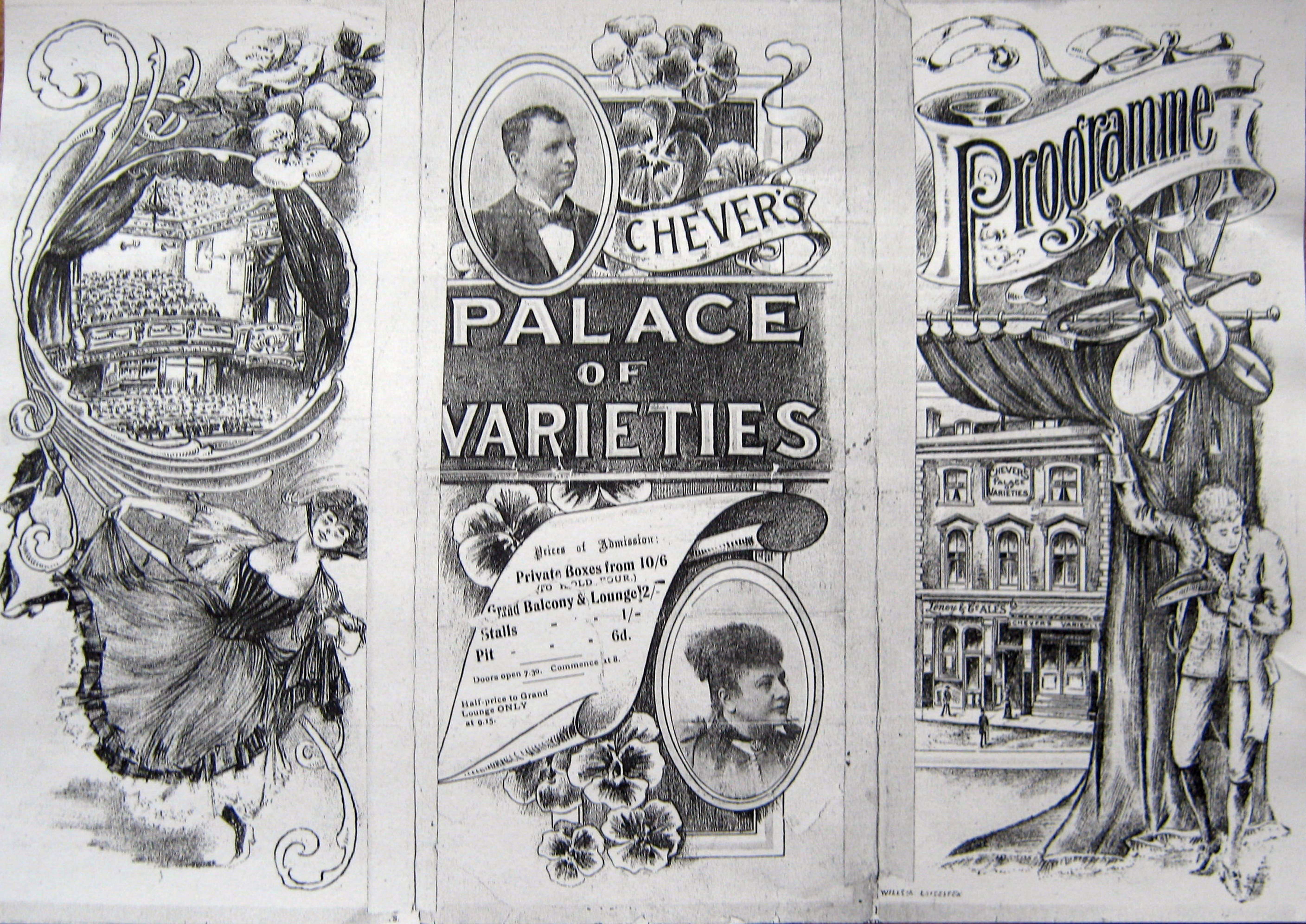
 Palace of Varieties opened in Market Square in 1898. Dover Library

Palace of Varieties opened in Market Square in 1898. Dover Library

In the Market Square, the Alhambra Music Hall opened in 1864. Later it became the Phoenix Tavern and Music Hall and in 1890, the licensee was Harry Kemp Spain, a Dover Freeman. About 1894 Jacob Englemann from Birmingham was appointed under manager. He then left to take over the Lion Hotel, Elizabeth Street, which was very successful under his stewardship. In 1897, W.H. Gillett was given the contract by Messr Chever to rebuild the theatre and it opened later that year as the Empire Palace of Variety.

At the time the theatre boasted of having the ‘best London artists’ and ‘electric light throughout.’ The prices of seats ranged from 6d to 10shillings. From 12 June 1899 and at a rent of £150 per annum, Jacob Englemann took up a seven year lease in partnership with Edward Randall. They purchased the fixtures and effects for £1000, of which £400 was provided by Englemann, and the remainder by Randell. However, on 6 March 1900, Randell was adjudged a bankrupt and absconded. Englemann borrowed £400 to acquire Randall’s share and a brochure dated 1901 gives the prices of admission as Private Box from 10s 6d, Grand Balcony and Lounge 2 shillings, Stalls 1 shilling, Pit 6d. The doors opened at 19.30 and performances commenced half-an-hour later. Patrons were admitted, at half price, to the Grand Lounge at the interval.

In November that year Englemann was declared bankrupt. His liabilities amounted to £1,196 18s 10p, estimated assets £459 1s 6d, giving a deficit of £737 17s 4d. The causes were given as ‘Bad trade in consequence of the fine weather and the absence of troops from Dover.‘ In 1910 the theatre was renamed ‘The Palace and Hippodrome Southern’ and during World War I (1914-1918) it was let, free of charge, by brewers Leney and Company, to the East Surrey Regiment. Re-opening in 1920 as the Palace Theatre, the economic depression severely hit sales and in 1926, the theatre closed and remained empty. The building was destroyed by enemy action on 23 March 1942 during World War II (1939-1945).

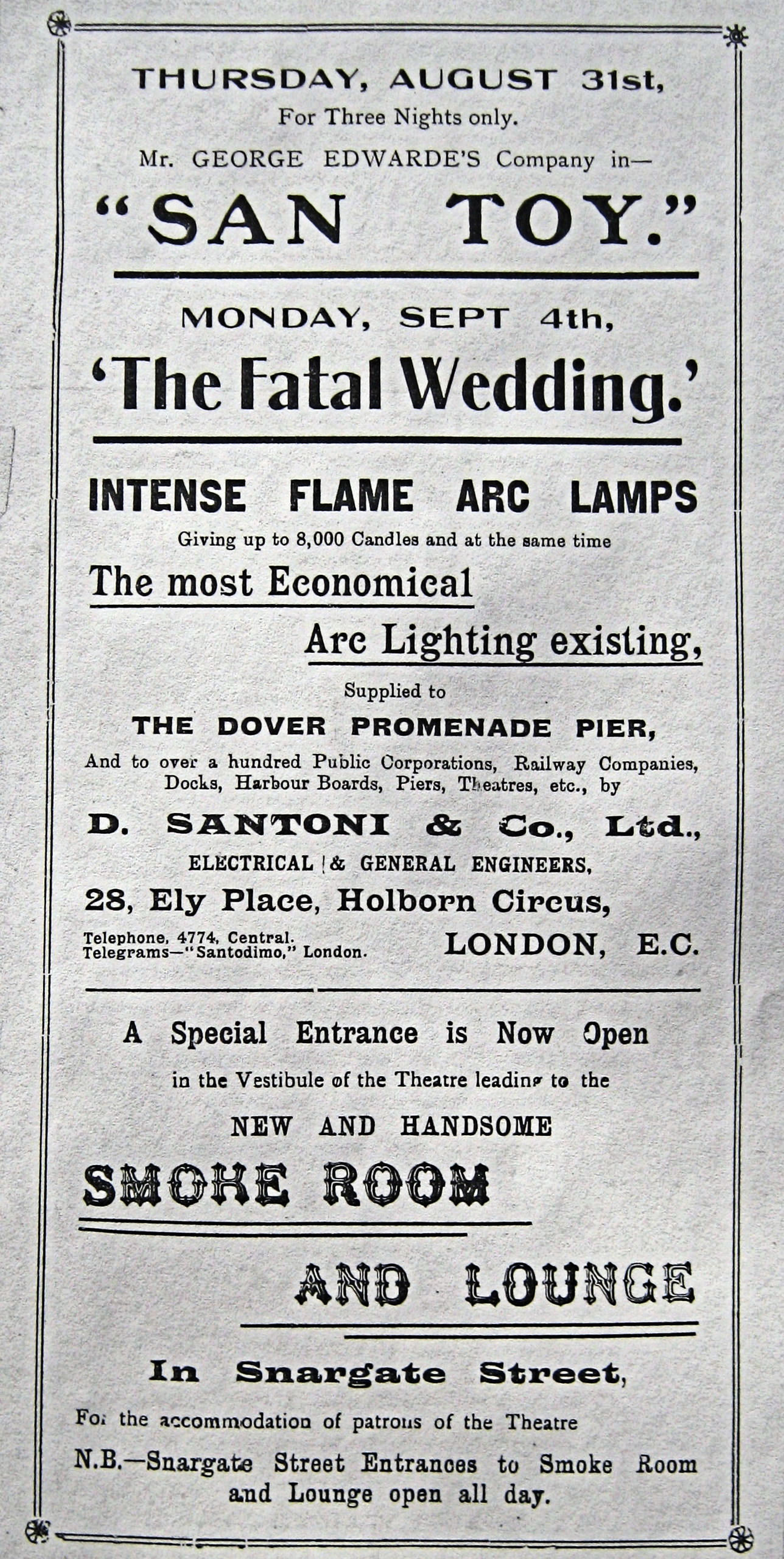
Theatre Royal, Snargate Street - Programme 1893

Theatre Royal, Snargate Street – Programme 1893

At the end of the 19th century, Dover was one of the wealthiest towns in the country and Snargate Street was the hub of both the towns’ retail sector and the home of the Royal Clarence theatre – the renamed Clarence Saloon. Charles Stewart bought the theatre early in 1886 and quickly secured the patronage of Dovorians who loved music hall entertainment. It was said that Charles was one of the best MC’s in the country and in April 1887 was presented with a walnut chairman’s hammer.

In 1890 he tried to open on a Sunday for a recital of sacred music and charging for admission. The Working Men’s Lord’s Rest Day Association threatened vigorous legal action and the project was abandoned. The theatre was, not long after, put up for sale and in 1894 was bought by Charles Pavely who installed Charles Stewart as manager. Two years later Pavely put the theatre on the market.

Auditorium of Theatre Royal Bath designed by C J Phipps (1835–1897) who designed the interior of Dover's Tivoli Theatre. Thanks to Theatre Royal Bath.

Auditorium of Theatre Royal Bath designed by C J Phipps (1835–1897) who designed the interior of Dover’s Tivoli Theatre. Thanks to Theatre Royal Bath.

The Dover Tivoli Company owned by C J Bayliss and Thomas Grover, who were later joined by C D Phillips, bought the theatre. All three men were listed bankrupts nonetheless, they decided to demolish the old building and rebuild. The building was gutted and the internal structure was designed by C J Phipps (1835–1897), the well-known designer of many principal theatres in England. Renamed the Tivoli, it had four private boxes, 500 seats in the stalls, circle and gallery. There were five bars – one at each level, a front bar and a stage bar and was built by Harry Richardson of Dover at a cost of £15,000. Under the management of Charles Stewart, the theatre opened on 14 June 1897 with the original cast of the hit London musical comedy by Harry Greenbank and Sidney Jones, ‘The Geisha’. However, the play was not a success as the audience preferred vaudeville.

Tivoli Theatre Snargate Street. Bob Hollingsbee Collection

Tivoli Theatre Snargate Street. Bob Hollingsbee Collection

At the time, the owners were more interested in gaining wealthy backers having issued 2,000 shares at £1 each, very few of which had sold. By January 1898, the company showed liabilities of £4,942 with hardly any liquid assets. The Official Receiver was called in and the Company went into liquidation.

What happened next – See Theatres Part II

Theatres Part III looks at Dover’s amazing Amateur Theatre Groups

First Presented: 13 April 2014

Posted in Buildings, Societies, Culture and Entertainment, Theatres - Part I, Theatres - Part I | Comments Off on Theatres Part I – to 1900

Sir Francis Cockburn (1780-1868) – Canada, Belize, Bahamas and Dover

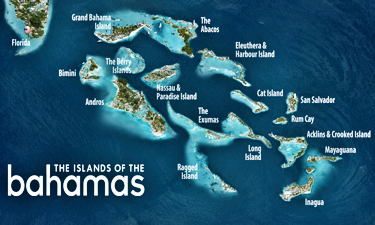
Cockburn Town sign, San Salvador Bahamas. Bahamas Ministry of Tourism

Cockburn Town sign, San Salvador Bahamas. Bahamas Ministry of Tourism

General Sir Francis Cockburn (1780-1868), is yet another unsung hero of Dover. Twice, during his army career his political masters assigned him to oblivion for his humanitarian stance. Nonetheless, he played a major role in the European settlement of Canada, was the Commandant of the Settlement of British Honduras (now Belize) and became the Governor of the Bahamas, for which he was knighted. In those countries – streets, islands, ports and a town where an internationally well-known event took place, were named after him. Here in Dover, Cockburn was applauded over his compassion for widows and orphans of drowned seamen.  Yet, he has been side-lined from British history due to his attitude towards African-American slavery and the British Law which ran contrary to the laissez-faire beliefs of the British establishment … that almost caused a war between the US and Britain!

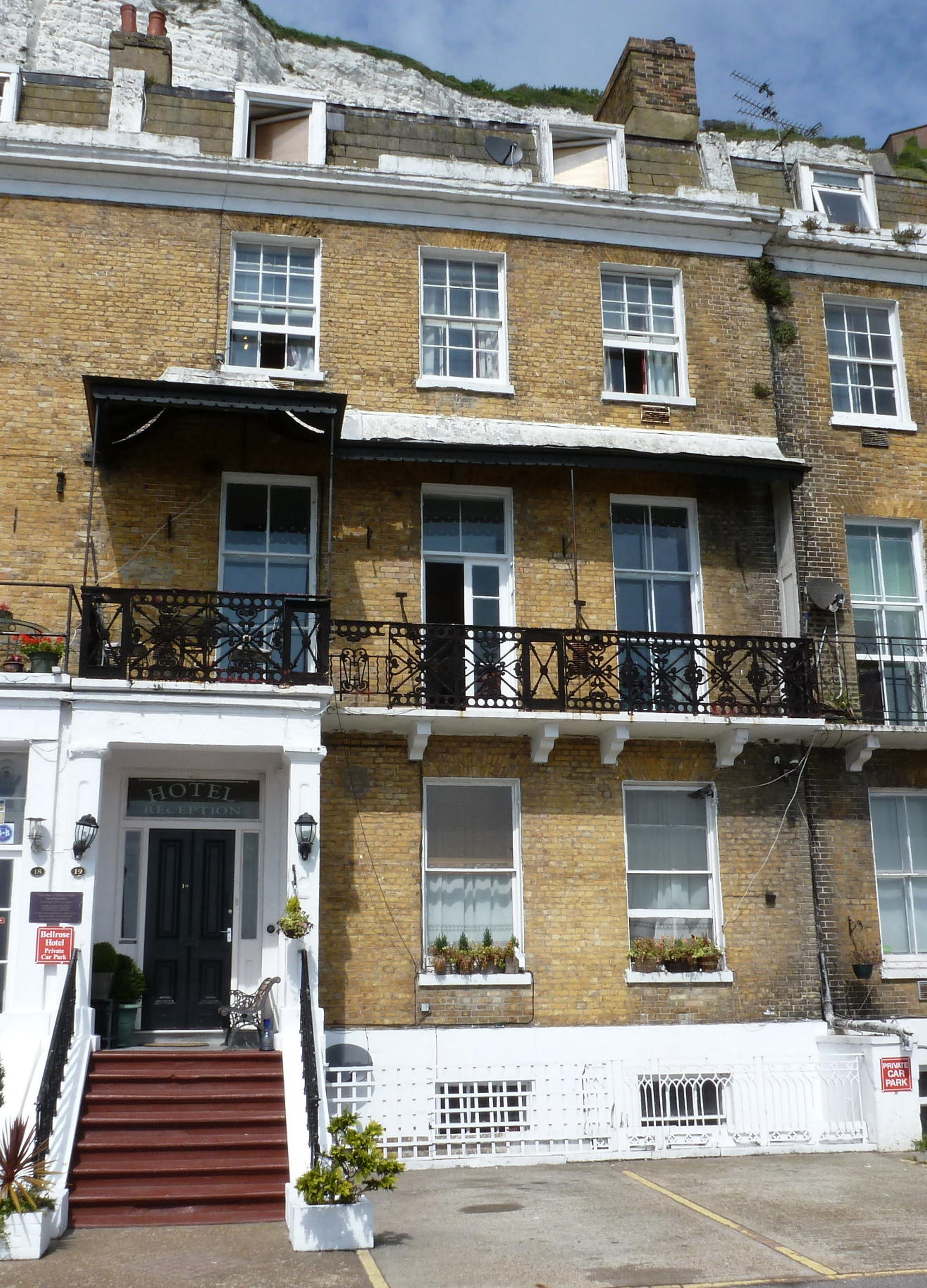
Home of Sir Francis Cockburn, 19 East Cliff between circa1830 and 1868 now a hotel. Alan Sencicle 2012

Home of Sir Francis Cockburn, 19 East Cliff between circa1830 and 1868 now a hotel. Alan Sencicle 2012

Cockburn was the fifth and youngest son of Parliamentarian Sir James Cockburn (1729–1804), 8th Baronet of Langton. His four older brothers all achieved greatness with James (1771-1852) becoming the Governor of Bermuda, Inspector General of the Royal Marines and the High Sheriff of Carmarthenshire; George (1772-1853) an MP, became Admiral of the Fleet; William (1773-1858) Dean of York and Alexander (1776-1852) the father of the Lord Chief Justice of England. Cockburn’s residence in England after 1830 was at 19 East Cliff where he lived with his wife, Canterbury born Alicia Arabella Sandys (1782-1854) whom he married in 1804, and died there.

In 1792 the Napoleonic Wars (1792-1815) broke out. Seven years later, at the age of 19, Cockburn joined the 7th Dragoon Guards as a career soldier. By the purchase of commissions and promotions he was promoted to Captain on 3 March 1804 and in 1807 was sent to South America with the 60 Foot Regiment. On returning to Europe, from May to December 1809 he served on the Staff in the Peninsula Wars (1808-1813) under Arthur Wellesley (1769-1852) later the Duke of Wellington. He was transferred from the 4th Division to the 3rd Division and was the Deputy Judge Advocate in Spain and Portugal. Cockburn left for Canada arriving on 27 June 1811 to serve with the Canadian Fencible Infantry and in September that year he was promoted Major.

Canada 1811 – 1829

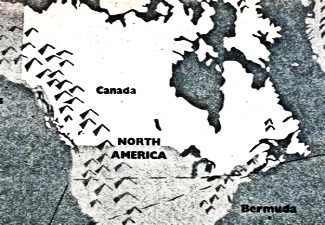
Canada schematic map

Canada schematic map

The modern history of Canada can be traced to 1583, when Sir Humphrey Gilbert (c. 1539- 1583), by the royal prerogative of Elizabeth I (1533-1603), founded St. John’s, Newfoundland, as the first North American British colony. The French explorer Samuel de Champlain (1574-1635) established the first permanent European settlements at Port Royal in 1605, and three years later, Quebec City. In 1663 Louis XIV (1643-1715) declared Quebec a French province and when the French colonised the Saint Lawrence River valley they called it New France. Meanwhile, British colonists settled along the eastern seaboard of the North American continent. Some sixty years after explorer Henry Hudson’s (c1565-1611), discovered Hudson Bay in 1610, the Hudson Bay Company was formed and exploited the wealth of the territories around the Bay. They also set up a series of trading posts between the Bay and the eastern seaboard.

Inevitably there was conflict between the French settlers and the Company and this was exacerbated during the European wars of the eighteenth century. Both the French and British destroyed each other’s settlements at the same time recruiting native Americans as allies. In May 1756, Britain declared War on France – the start of the Seven Years War (1756-1763). On 23 January 1758, General James Wolfe (1727-1759), who had previously been stationed in Dover (see Western Heights Part I), was appointed one of three brigadier-generals in North America serving under Major-General Jeffrey Amherst (1717-1797). In 1759, on the Plains of Abraham close to the township of Quebec, the British routed the French and seized the city.

This was followed by the British Royal Proclamation of 1763, creating the Province of Quebec out of New France with English becoming the main language, the Church of England the main faith and English Civil Law taking prerogative over French Civil Law. To quell dissent in the new Province, the French language, Catholic Faith and French Civil Law were reinstated by the Quebec Act of 1774. At the same time the Quebec territory was expanded to include the Great Lakes of North America and the Ohio Valley.

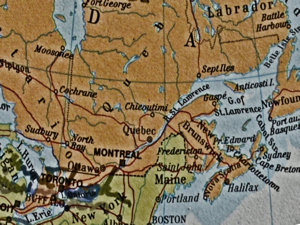
St Lawrence River area of Eastern Canada. Parnells World Atlas 1977

St Lawrence River area of Eastern Canada. Parnells World Atlas 1977

By 1775, there were twenty British colonies in North America, thirteen of which were along the Atlantic seaboard. A year later, in 1776, they declared their independence and the result was the American War of Independence (1775-1783). Although France supported the American colonists while the British/Canadian colonists supported the British along with the French Canadians elite. In the Quebec Act of 1774 the British had guaranteed religious freedom for Catholics and restored French civil law in the colony. The Quebecois clergy, land owners and leading citizens publicly supported the British feared, with good reason, that the rebel colonies, if successful, would repeal those freedoms. When the War ended Britain and the newly formed United States of America (USA) agreed on a boundary between their territories in which Ohio was ceded to the USA.

Some 40,000 British Loyalists emigrated from the USA to southern Canada, settling in Nova Scotia, New Brunswick and the northern part of Quebec province. Southern Quebec province remained predominantly French and thus the Constitutional Act of 1791 divided Quebec province into French-speaking Lower Canada and English-speaking Upper Canada, granting each its own elected legislative assembly. Upper Canada – later Ontario – lies to the south-west of Lower Canada – Quebec. ‘Upper’ and ‘Lower’ refers to the direction which the rivers flow from the Great Lakes Basin through the St. Lawrence River – the primary communications route of the time – which flows in a North-Easterly direction. Thus Upper Canada / Ontario is upstream from Lower Canada / Quebec (Thanks to Ron W Shaw for explaining this succinctly).

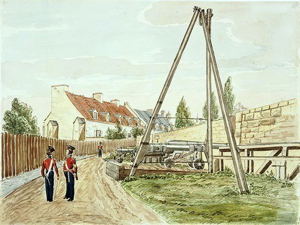
Artillery Barracks and gun emplacements Quebec by James Pattison Cockburn c1830. Wikimedia-commons

Artillery Barracks and gun emplacements Quebec by James Pattison Cockburn c1830. Wikimedia-commons

In 1812, the United States declared war on Britain for several reasons but in essence because of the implementation of trade restrictions due to the Napoleonic Wars. When Cockburn arrived in Canada, he would have expected the country to be split between the French colonists who supported Napoleon and British colonists who remained loyal. In reality the French colonists saw themselves not as ‘French’ but as ‘Quebecois’ and many volunteered to serve in the several incorporated Canadian militia and fencible units. Most of the British troops were still tied up in the European conflicts and as another war could not be funded, they opted for a defensive strategy. Nonetheless, between 1812 and 1814, Cockburn, together with the Canadian Fencibles, a large number of which were Quebecois undertook successful raids against enemy forces including capturing Detroit and burning the White House in Washington. successful raids against enemy forces including capturing Detroit and burning the White House in Washington.

In April 1813, a 1,700 strong American force supported by a naval flotilla invaded the capital of Upper Canada, York Town (later Toronto). Cockburn was among the contingent sent to help out the overwhelmingly outnumbered British supporting forces. There he met Frenchman Francis Tito LeLièvre (1755-1830), the Deputy Assistant Quartermaster General for York Town, who was serving with the Royal Newfoundland Fencible Regiment. Although the Fencibles put up a good fight, they were forced to surrender. However, the last man to leave York Town was LeLièvre, who as a parting ‘gift’, set fire to the British sloop of war Sir Isaac Brock, under construction in the dockyard and also blew up the fort’s magazine!

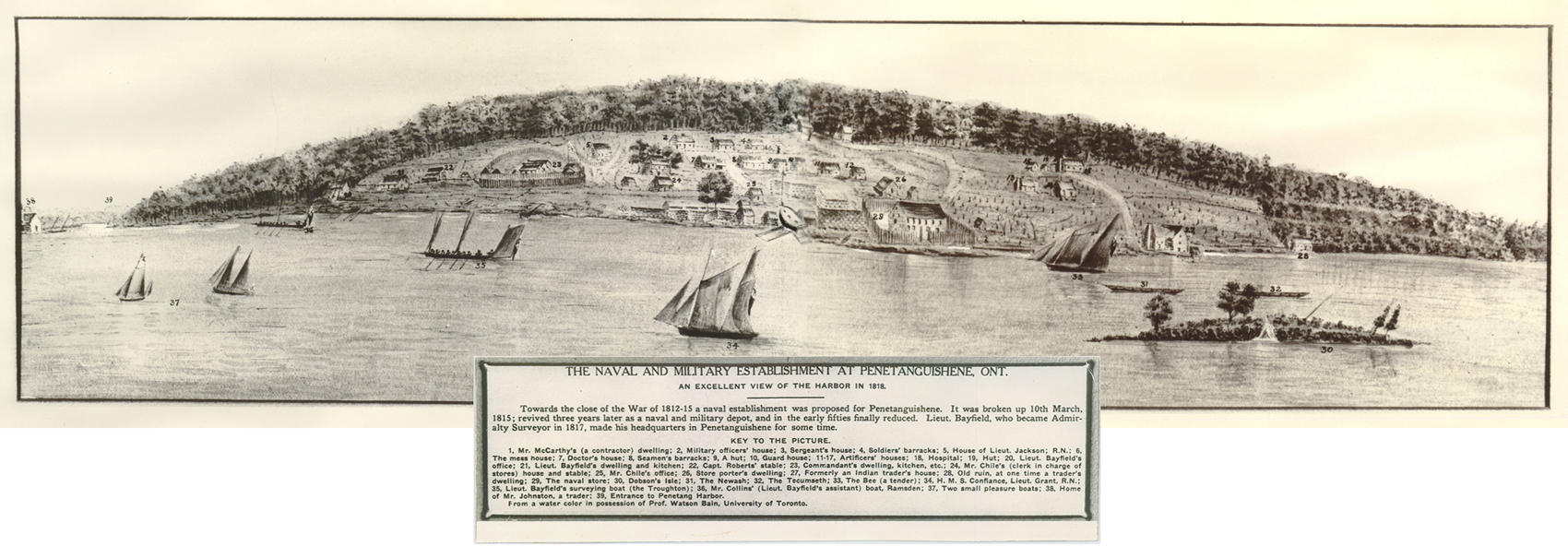
Naval Establishment at Penetanguishene, Canada 1818. Simcoe County Archives

Naval Establishment at Penetanguishene, Canada 1818. Simcoe County Archives

The abdication of Napoleon in April 1814 released British troops and an invasive strategy was pursued. In August 1813, four companies of Canadian Fencibles under Cockburn were sent to Prescott and on 7 0ctober the crossed the St. Lawrence River at Red Mills and successfully surprised a party from the 1st Regiment of U.S. Dragoons. Before Cockburn arrived in Canada, British army General, John Graves Simcoe (1752-1806), became the first Lieutenant-Governor of Upper Canada (1791-1796) and had founded York Town. At Georgian Bay, a large bay of Lake Huron and along its shores, Simcoe had recognised that Penetanguishene, on the west coast, would be ideal for a harbour.

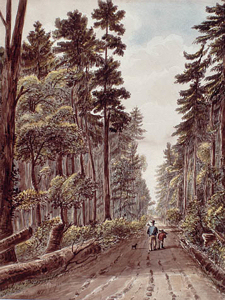
Road between Kingston and York Town, Upper Canada by James Pattison Cockburn c1830. Wikimedia-commons

Road between Kingston and York Town, Upper Canada by James Pattison Cockburn c1830. Wikimedia-commons

In October 1814 deputy-assistant commissary-general Sir George Head, (1782–1855) of Higham Kent, was ordered to superintend the construction of the military establishment at Penetanguishene. In November and December, Cockburn commanded a company of 50 Fencibles, all experienced axe-men, together with a detachment of sappers and miners. Their job was to lay what would become the Penetang Road between Lake Simcoe and Penetanguishene. The Penetang Road provided a land route from what became the Penetanguishene naval and military base to Barrie, on the western shore of Lake Simcoe, and from there to York Town. For his work, Cockburn was highly commended and Head arrived the next year to start construction of the base. General Simcoe named Simcoe County in honour of his father.

When Napoleon abdicated he was exiled to the island of Elba, west of Rome, in the Mediterranean. In February 1815, he escaped, quickly amassed an army and the Napoleonic Wars resumed. During the morning of 18 June that year, Napoleon and Wellington faced each other at Waterloo, Belgium. The battle was one of the bloodiest in history and lasted nine hours. 200,000 infantry, cavalry and gunners took part of which more than 13,000 were killed and 35,000 wounded. Afterwards approximately a quarter of a million soldiers and sailors, many of them maimed, returned to Britain and were faced with unemployment and destitution. Crops had been poor and in an effort to curtail imports to protect the price of home produced good, the Corn Laws had been introduced. These only served to make some very wealthy but the general population, much worse off. Income Tax had been abolished, replaced by taxes on staple commodities such as candles, paper and soap as well as luxury goods. In addition the Poor Law relief rates had been drastically cut, which meant that starvation was rife. Many of the soldiers who were in the colonies at that time, such as Canada and the Caribbean, were encouraged to stay where they were and offered land grants.

On 26 June 1815, Cockburn was promoted to the rank of Lieutenant-Colonel for the New Brunswick Fencibles then in the following year they were disbanded. As the garrisons were being run down, Cockburn was preparing to return to England and to be put on half pay. As the plight of the disbanded soldiers, who had been fighting on the Europen Continent, was of great concern the British Secretary of State for War and the Colonies, Henry Bathurst, 3rd Earl Bathurst (1762-1834), advocated their assisted emigration to the colonies. Just as Cockburn was about to leave Canada, the Deputy Quarter-Master General for Upper Canada suddenly died, so he was reassigned to take his place. His office was in Kingston while the headquarters of the Quarter-Master General’s Department was in Quebec City.

Map showing the location of the Perth Settlement in Upper Canada, to the south is the St Lawrence River, Kingston and the United States of America to the north is Montreal, the Ottowa River and Lower Canada. Stefan R Shaw 2013

Map showing the location of the Perth Settlement in Upper Canada, to the south is the St Lawrence River, Kingston and the United States of America. To the north is Montreal, the Ottowa River and Lower Canada. Stefan R Shaw 2013

There, Cockburn quickly discovered his post centred on settling former soldiers still in Canada and new immigrants. In March 1816, along with surveyor Ruben Sherwood and two others, they surveyed an area north of the Rideau Lake in present-day eastern Ontario. According to Sherwood, they explored an existing road as far as Stone Mills (Delta), then through the bush to what is now the village of Portland. They went down the frozen Rideau Lake to what is now Rideau Ferry, through the bush to Otty Lake and down Jebb’s Creek to Pike Crew, now the Tay River. There, according to Cockburn on March 22 1816, having identified the location of three townships they chose the site for what became the Depot of Perth on Pike Creek in the south-west corner of Township 2. The town of Perth grew around the designated headquarters of the Military Establishment.

Street named after Francis Cockburn in modern Perth. Barrie Crampton

Street named after Francis Cockburn in modern Perth. Barrie Crampton

Cockburn threw all his energies into ensuring that the assignment was a success. Former British military personnel members of the Canadian Fencibles settled in these towns. One of the latter was Cockburn’s old friend from the Battle of York Town, Francis Tito LeLièvre! Eventually some 1,500 people were settled in a large area that Cockburn named ‘the Settlement forming on the Rideau River’. This was soon changed to the Perth Military Settlement. In 1817, Cockburn wrote a detailed report that included the problems encountered, how they were dealt with and what could be learnt. This presentation and contents differed markedly from the usual short military reports and finished with the unforgivable – advice! Cockburn stated that civilian ‘townships’ should be established near existing military forts.

His report ended up on the desk of Sir Thomas Sydney Beckwith (1772-1831) Quartermaster-General for Upper and Lower Canada. Much to the surprise of some, Beckwith was impressed and on 10 January 1818 Cockburn was appointed Deputy Quartermaster-General for both Upper and Lower Canada, based in Quebec. Already seeing Canada as a land of opportunity, Cockburn had bought land in the Bay of Quinte area on the northern shore of Lake Ontario, is south-west of Perth. Before considering the establishment of more new townships, Cockburn decided to assess the problems new immigrants encountered and how best to deal with them. Before considering the establishment of more new townships, Cockburn decided to assess the problems new immigrants encountered and how best to deal with them.

One of the established townships that were assigned to Cockburn was Glengarry that had been established by Scottish loyalists and other Highland emigrants in 1784. Highland Clearances in Scotland had been going on, in phases, since Tudor times and many of those displaced, often with very little notice, emigrated. In 1792 many such Highlanders were on a ship intending to go to Canada but the ship was wrecked off the Scottish coast. Many of the impoverished Gaelic-speaking, would-be emigrants ended up in English speaking Glasgow. At first they managed to find low paid menial work but the Napoleonic Wars were having an increasingly negative effect on the economy and two years later most were destitute.

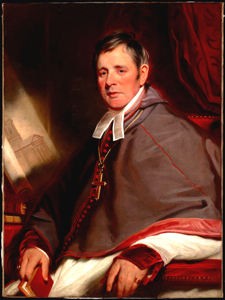
Father Alexander MacDonell (1762-1840) c1823-24 by Martin Archer Shee (1769-1860) Wikimedia-Commons

Father Alexander MacDonell (1762-1840) c1823-24 by Martin Archer Shee (1769-1860) Wikimedia-Commons

Catholic Priest (later Bishop) Father Alexander MacDonell (1762-1840) was working in Glasgow at the time. He became involved in setting up the Glengarry Fencibles to fight for Britain in the Napoleonic campaigns. Many of the impoverished men joined and went to war, while their pay enabled them to give their families in Glasgow a better life. On 27 March 1802, the Treaty of Amiens was signed and peace was restored (it lasted fourteen months). The Government disbanded all the Fencible regiments and for the Gaelic would be emigrants, the future looked bleak. Father MacDonell was already well acquainted with the Glengarry township and applied to the British Government for a tract of land there. Eventually, he was successful and the former Fencibles, along with their wives and children emigrated and became farmers. In the War of 1812, they re-banded as the Glengarry Light Infantry Fencibles and fought alongside the British Army. From what they told Cockburn, he formulated a plan which he was sure, would bring about the success of emigrants establishing in Canada.

Cockburn stated that ex-soldier emigrants should receive transport from Britain to the settlement in Canada, a year’s provision of rations, a piece of land, the instruments to work it and financial advances to be paid back in ten years. In return they should receive half (army) pay, even the ordinary former soldiers, that would be paid directly into the fund set up to enable the emigration to take place. The suggestions were discussed in both Canada and London and not too long after, most were implemented in various forms! Cockburn was resolute that the new settlements would be close to military forts, such that settlements were established along the Rivière Saint-François, in Lower Canada.

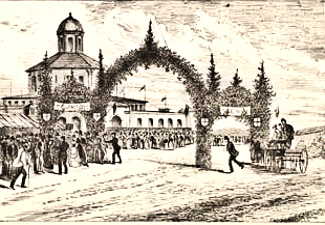
Richmond, Ontario - Return of the Governor General, Canadian Illustrated News 1872. This is the sort of welcome that would have been put on for Earl Richmond when he arrived in August 1819. Library Archives of Canada

Richmond, Ontario – Return of the Governor General, Canadian Illustrated News 1872. This is the sort of welcome that would have been put on for Earl Richmond when he arrived in August 1819. Library Archives of Canada

In 1816, Richmond township was established on the then Goodwood River, later renamed Jock River, a tributary of the Rideau river, Eastern Ontario. This was followed by others including Lanark, Eastern Ontario, which was settled by Scottish immigrants in 1820. At Franktown, in Beckwith Township about 8miles south of the River – a tributary of the Ottawa River, Eastern Ontario was planned to become a major trading centre but this did not happen. In 1822, Cockburn surveyed the Gaspé Peninsula on the southern shore of the St Lawrence River, with a view to creating a settlement there but by then administrative changes were afoot in England and the area is now a popular tourist region.

Nonetheless, the immigration policy proved successful and Cockburn wrote that his offices in Quebec were ‘literally filled with settlers from Morning to Night!’ Most, he added, had settled in quickly. Five years after arriving, it was later reported, most had built their own houses and stables and on average owned 25 acres of land. Nine years after settling, most had repaid their loans and also paid for their extended families to join them. Non-ex-service immigrants gave similar reports.

Charles Lennox 4th Duke of Richmond, engraving by John Kay print,1789. Wikimedia-Commons

Charles Lennox 4th Duke of Richmond, engraving by John Kay print,1789. Wikimedia-Commons

The founding of settlements close to military establishments ensured that Cockburn had extensive knowledge of both Upper and Lower Canada. Indeed, he was recognised as an expert on the country and in August 1819, he accompanied the newly appointed Governor General of North America, Charles Lennox, 4th Duke of Richmond (1764-1819) on an extensive tour of Upper and Lower Canada. The Duke saw for himself the colonisation of Canada but the tour was strenuous due to rough and diverse terrain and speed at which the Duke wished to travel. They only took one break and that was at William-Henry, now Sorel, Quebec where the Duke had been bitten on the hand by a pet fox. The injury quickly healed and the tour continued. The Duke agreed that the last leg would be more leisurely, with a stop at Kingston before going onto Perth then to the town named after the Duke, Richmond, before returning to Quebec.

Cockburn’s account of what happened next became a standard description, for a long time after, of the illness that the Duke suffered during the journey. In essence, on Friday 20 August they left Kingston and arrived in Perth in the evening of the following day. While in Perth, the Duke had complained of a pain in his right shoulder which was relieved by a rub of turpentine spirit but they delayed their journey until the following Tuesday. At 08.00hours they started out for Richmond, 30 miles away. This was over rugged terrain so an overnight stop at Beckwith, 15miles away, was planned. The Duke rode his horse except where the terrain was bad and due to hot weather they stopped at a farm where the Duke lay down for awhile and then ate some chicken broth. Not feeling well, the Duke had some watered brandy and when he said that he felt better they proceeded on their journey. However, as they continued the Duke increasingly complained of thirst even though he drank a copious amount.

On reaching ‘New Store’ at Beckwith, the Duke was fatigued and slept awhile, then joined the others for a meal but ate little. He complained that his shoulder hurt, which he attributed to rheumatism and was given another turpentine rub. He went to bed but had a restless night and the next morning it was evident that he was not well. Albeit, the Duke insisted on making the journey as he no longer felt thirsty as he had the day before. They made slow progress, and as part of the trip was by canoe on the Goodwood River from Chapman’s farm, 4miles from Richmond, it was decided to stop there. The party spent the night there though the Duke ate little and went to bed early. The next morning the Duke’s servant reported that his master had complained of a spasm in his shoulder and a pain in his throat. The Duke said nothing to Cockburn or anyone else about this, indeed, he was up early, full of energy, and keen to leave. However, it was apparent that the Duke had not washed, shaved and was  unusually unkempt. He ate a little breakfast and announced that he would walk rather than travel by canoe.

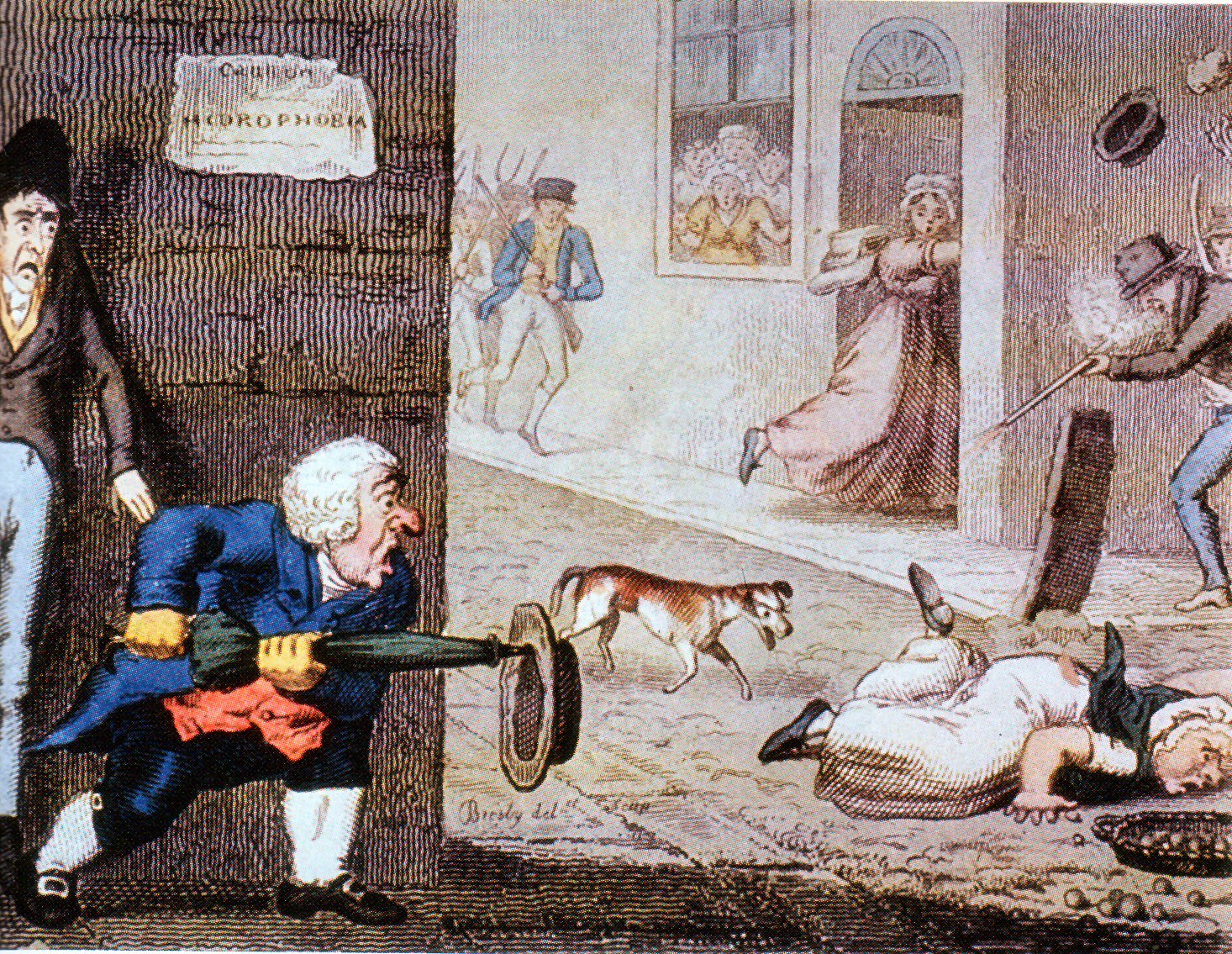
Rabies Cartoon c1826 centring on a mad dog. Wikimedia.org

Rabies Cartoon c1826 centring on a mad dog. Wikimedia.org

The Duke set off at a pace, walking upright and with great stamina making his way through swamps with no difficulty. However, it was observed that he seemed to have a ‘spasm’ when he saw others jump or walk into a wet area. They arrived in Richmond, hot, dirty and sweaty but the Duke insisted on walking round the settlement before going to the Masonic Arms, where he was to stay. That evening the Duke again complained of a sore throat and the town’s surgeon was sent for. He said that one of the Duke’s throat glands was slightly swollen and recommended a gargle of port wine, vinegar and sugar. Following this, the Duke later sat down for a meal, ate little due but drank a copious amount of water and laughingly said that ‘if I was a dog I would surely be shot as mad!’ It was agreed that they would leave early the next morning for Montreal. The Duke had a fitful night and ate little for breakfast due to his sore throat but he refused to stay in Richmond to recover.

Cairn at Richmond, Ontario, Canada, marking the approximate location where the 4th Duke of Richmond died. Wikimedia-Commons

Cairn at Richmond, Ontario, Canada, marking the approximate location where the 4th Duke of Richmond died. Wikimedia-Commons

They left at 05.00hrs and the Duke was taken by wagon to the canoe but on arrival he insisted that someone else should get into the canoe first. He said that he was sure that the water would make him fall. On sitting in the canoe, the Duke insisted on holding his little dog, Blucher, close to him and kept kissing it in between having spasms in his throat. The spasms increased at an alarming rate and the Duke became increasingly agitated and desperately terrified of the water. The Duke then had a convulsion and it was decided to take him ashore. On reaching land the Duke jumped from the canoe and ran as fast as he could into the woods with Cockburn in pursuit. Cockburn persuaded the Duke to return to Richmond, which he agreed but when they reached a small rivulet, the Duke became terrified and refused to go any further. However, he did agreed to go overland to Chapman’s farm but every time they came near any water course he became terrified. It required most of the party to lift the Duke over the water courses as he struggled violently as they tried to carry him. On reaching the farm the Duke ran into the barn and the surgeon was sent for. Over the next few hours the Duke was, at times, lucid but slowly he became increasingly confused, agitated and obviously in agony.

Holy Trinity Cathedral, Quebec by James Pattison Cockburn 1820, where Charles Lennox, 4th Duke of Richmond, was buried on 4 September 1819. Holy Trinity Cathedral.

Holy Trinity Cathedral, Quebec by James Pattison Cockburn 1820, where Charles Lennox, 4th Duke of Richmond, was buried on 4 September 1819. Holy Trinity Cathedral.

The surgeon arrived and bled two pints of blood from the Duke who was then able to take 12 drops of laudanum (an opiate) in peppermint water. The Duke agreed to go into the farmhouse, where he ate some chicken broth and rested in bed. As the evening progressed he sweated profusely, although he did not appear to have a fever. Then he had convulsions but over time they became weaker. At the same time, the Duke was increasingly having bouts of delirium and about midnight fell into a coma. Towards morning a great deal of spittle had formed in and around the Duke’s mouth. As quickly as it was wiped away more came giving the appearance that he was foaming. The Duke died just after 08.00hours on the morning of 28 August, the diagnosis being rabies. Cockburn took his body back to Quebec where the Duke of Richmond was buried at Holy Trinity Cathedral on 4 September 1819.

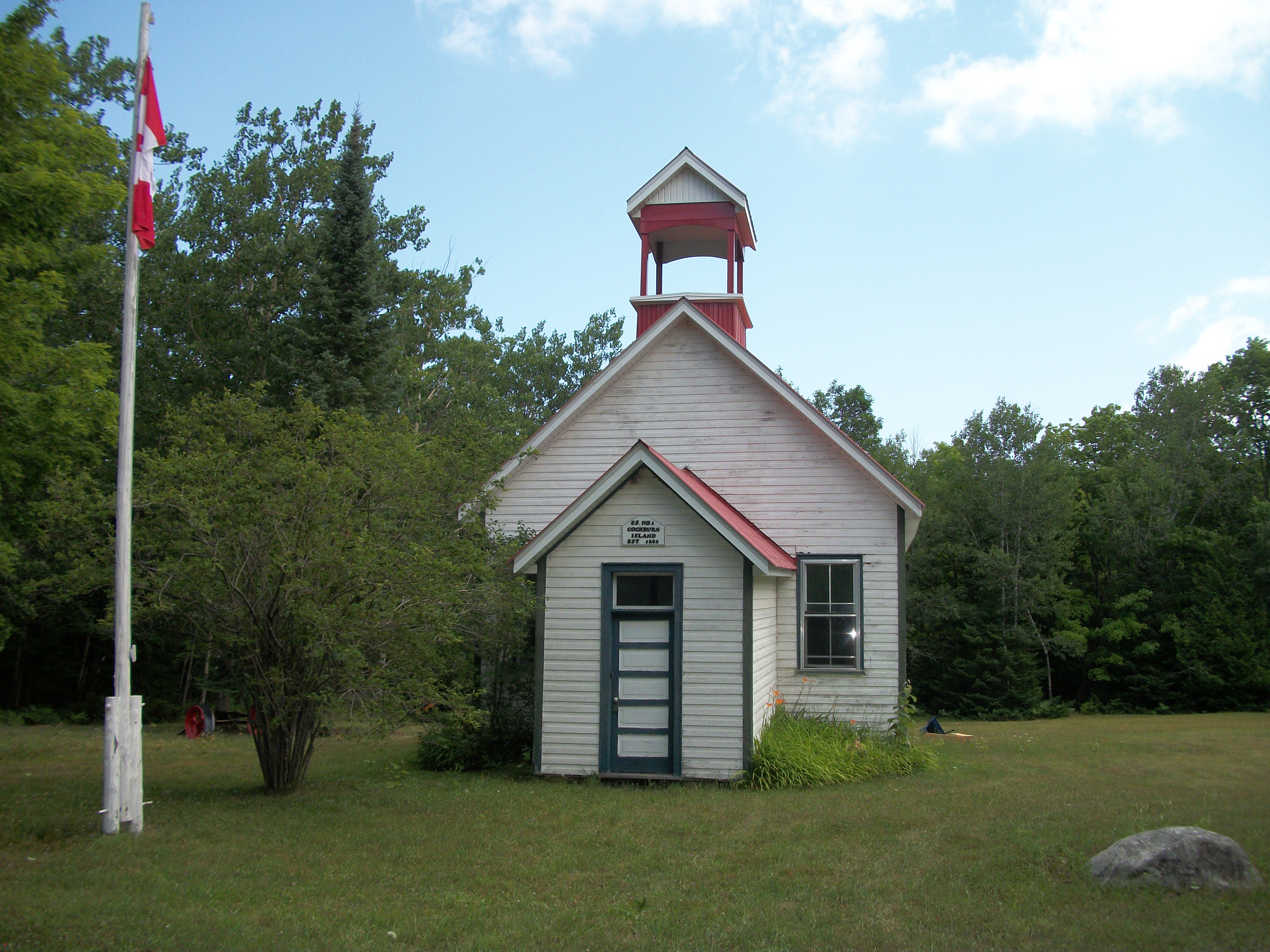
Cockburn School House, Cockburn Island, Manitoulin district, north eastern Ontario. Cllr Brenda Jones of Ontario, Canada.

Cockburn School House, Cockburn Island, Manitoulin district, north eastern Ontario. Cllr Brenda Jones of Ontario, Canada.

George Ramsay, 9th Earl of Dalhousie (1770-1838) succeeded the Duke of Richmond as the Governor General of North America and in 1821, Cockburn accompanied him on an extensive tour. The journey covered over 1,600 miles and included the military posts on the western frontier of Upper Canada. This tour was successful and in recognition, Dalhousie named Cockburn Island, in the Manitoulin district, north eastern Ontario, after Cockburn. These days it is famous as the least populated incorporated municipality in Canada!

British Military control of Canada ceased Christmas Eve, 24 December 1822 but Cockburn remained in the country until June 1823, to tidy up loose ends and hand over control to the civilian administration. On returning to England, he and Alicia moved home and eventually settled in East Cliff later that decade. Although he held the rank of Lieutenant-Colonel he worked with the Colonial Department, establishing the price of lands for property development in Upper Canada. He also provided advice on the best locations for settlement in the region.

In the spring of 1825, Cockburn headed a Commission of five, including John Davidson, Lieutenant-General Sir John Harvey (1778-1852), the secretary of the Canada Company – John Galt (1779-1839) and also of the Canada Company Simon McGillivray (1785-1840), to fix the price of lands. These belonged to the Crown or the Clergy and it was envisaged that the Canada Company would purchase some of this land in Upper Canada. The company had been set up specifically to acquire and develop Government and Clergy owned assets and was given Royal Assent in 1825. On 19 August 1826, Royal charter also incorporated the Company. That year, the Company founded Bytown on the south side of the Ottawa River. They had been attracted to the area due to construction of the military Rideau Canal and the town was named after its engineer, Colonel John By (1779-1836). The purpose of the Canal was to create a secure waterway between Montreal and Kingston and thus bypassing a stretch of the St. Lawrence River bordering the USA state of New York, which had proved to be vulnerable during the American War of 1812. In 1855 Bytown was renamed Ottawa.

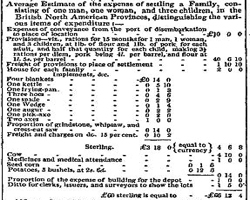
The estimated cost of settling a family in Canada from Cockburn's recommendations to Parliament. 1827

The estimated cost of settling a family in Canada from Cockburn’s recommendations to Parliament. 1827

Throughout the land negotiations of the 1825 Commission, Cockburn was an important witness at an inquiry undertaken by the British Parliamentary Emigration Committee who asked him to prepare a report on past programmes of assisted emigration with future recommendations. These recommendations included the need for a strong and responsible central government to administer the area! For individual families emigrating, they should be supplied with 18-months supply of provisions, which he expected would cost on average £60 and gave a detailed breakdown of how this would be spent. He recommended settlements in the Gaspé and Ottawa regions and between Lakes Simcoe and Huron, as well as along a specially laid road between New Brunswick and Lower Canada. In his report, Cockburn stated that assisted settlements in the French dominated border Townships was to be encouraged, as the French Canadians and their archaic seigneurial system were a barrier against United States expansionism! Under the French system, the seigneur or government granted a piece of land to a family under a royalty system whereby the family met most of their food, heating, and shelter needs by subsistence farming.

In the British parliament, the report was not well received with MPs’ stating that the government had spent £20,000,000 to assist the emigration of 109,000 people, the setting up of townships and other settlement issues. Out of the 109,000 emigrants that had arrived in Canada only 10,000 remained. They recognised that sickness had taken its toll but, they purported, by far the greatest contributor was crossing of the border into the United States. Emigrants to the USA, they said, were not subsidised, indeed, on arrival £10 was imposed on every emigrant. Those who came directly from Britain by ship were forced to pay before being allowed to land. While those who had their travel subsidised by the British Government to go to Canada easily crossed the border and integrated without paying the £10 immigration tax.

Another problem, MP’s said, was the effect of subsidised emigration on Britain. One MP cited the village of Marden, near Maidstone, Kent, as an example. There, 52 out of the 416 inhabitants had emigrated making 1 in eight, all of which were hard working labourers. He went on to say that as labour must always be in proportion to the country’s capital and when so much of both was being withdrawn the country suffered as a result. Another MP summed up the general mood of Parliament on this point, when he said that it would be better to send beggars to Canada than making beggars of those who remained.

Although the subsidies were severely reduced, emigration to Canada was tentatively allowed to go ahead. In May 1827, Cockburn was appointed the head of a Commission to determine the boundary lines between British settlements and to make arrangements for the reception and location of new immigrants. These were roughly 15,000 destitute Irish, escaping starvation due to reliance on one single crop – potatoes – that had failed. Socially, the main reason behind the famine was exploitation by absentee landlords. The latter, the British government refused to recognise, but others did. Cockburn presented his report to Parliament in July. The recommendations included the laying out of six townships on Prince Edward Island, off New Brunswick, in the Gulf of St. Lawrence.

Chatham, Richibucto, Shediac and Petitcodiac clearly shown. Prince Edward Island is off the east coast. New Brunswick Museum Archives from a Google map

Chatham, Richibucto, Shediac and Petitcodiac clearly shown. Prince Edward Island is off the east coast. New Brunswick Museum Archives from a Google map

Further, he recommended a road be laid between the head of the Shediac River, and the Richebucto and the Petitcodiac rivers in a direct line for Chatham Miramichi, with access roads to be created between them. His report finished by saying that there was deep water at Shediac and that this should be made into a harbour for the disembarkation of the migrants from where they could be transported to Prince Edward Island. Sir Howard Douglas (1776-1861) Lieutenant Governor of New Brunswick (1823-1831) supported Cockburn’s report, particularly endorsing the importance of strong communication links between New Brunswick and the rest of Canada.

Prince Edward Island - Winter view along Sans le Font Street from Chateau St Louis. Library & Archives of Canada

Prince Edward Island – Winter view along Sans le Font Street from Chateau St Louis. Library & Archives of Canada

The scheme was given authorisation on the receipt of Cockburn’s report. Work started, but within a year the subject was brought up in a House of Commons parliamentary question about the death rate of the new Irish emigrants to Canada. Sir Robert John Wilmot-Horton (1784-1841), the Under Secretary of State for War and the Colonies (1821-1828), replied that the death rate was approximately 30% but much of this was due to the poor state of health of the new emigrants brought about by previous starvation. This was deemed of little consequence and it was voted to abandon the scheme.

As a result of this, Sir Wilmot-Horton responded with a lengthy resignation speech (Hansard 4 March 1828). In it, Sir Wilmot-Horton praised the value of Cockburn’s emigration scheme and read out an extract from a letter sent by an Irish émigré to his family in Ireland. This was one among many, he said, that had been passed to the authorities in Ireland by families who also wanted assisted passage to join their relatives in Canada. The young man had written, ‘Here, we are, without any consideration of landlord or protector, and with plenty of good eating and drinking. I am constantly in a troubled mind for not having you or mother here. I am sure you will say that it was the happiest day of your life if you come. Likewise bring several others, which the surname of O’Flaherty, my brother-in-law Cornelius Lane, with you, and Jody Lane, and by all means don’t leave little Ellen behind you. Come to the land of plenty – there is no such thing as want here’

Barrie Crampton of Irish immigrant descent Perth Canada

Barrie Crampton of Irish immigrant descent Perth Canada

On 30 July 1829, Cockburn received orders to join the 2nd West Indies Foot Regiment in the Caribbean and thereafter ceased to be involved in the affairs of Canada. However, it is now recognised that Cockburn played an important role in the early emigration between 1815 and 1850 during which time over 960, 000 people disembarked there. At first they were mainly British ex-soldiers but they were soon followed by civilians seeking a ‘better’ life. Although infectious diseases took a heavy toll on émigrés they continued to arrive and between 1850 and 1895 approximately 1,317,700 people disembarked mainly from the British Isles and Western Europe.

Hall of the House of Commons, of the Canadian Parliament, in Ottawa. Wiki Loves Monuments 2013

Hall of the House of Commons, of the Canadian Parliament, in Ottawa. Wiki Loves Monuments 2013

Although Cockburn had advocated a strong and responsible central government, this was not immediately forthcoming. The North America Act of 1840 (3 & 4 Victoria, c.35) merged the British provinces into the united Province of Canada. Later, the signing of the Oregon Treaty in 1846 set the U.S. and British North American border at the 49th parallel. That is, with the exception of Vancouver Island, which was retained by the British. The British North America Act, 1867 established the Federation of Canada when the four colonies of Lower Canada (Quebec), Upper Canada (Ontario), Nova Scotia and New Brunswick were joined and the post of Prime Minister was created. Other colonies and territories, including Vancouver Island, later joined the Federation and on 11 December 1931 the Statute of Westminster established Canada as a sovereign state within the Commonwealth. The capital is Ottawa.

Just under a hundred years after Cockburn left Canada, much of the northern areas of the country had not been explored. In 1926, former Dover College schoolboy, Edgar Christian (1908-1927), along with explorer Jack Hornby and Harold Adlard, set off to reconnoitre the North West Territories of Canada. During the trek Christian kept a diary describing the journey that became an ordeal and ended tragically. The three were buried in an area that is now the Thelon Wildlife Sanctuary – the largest wilderness in North America. Dover College now keeps this diary. The Edgar Christian story can be read on this website.

British Honduras – now Belize 1829 – 1837

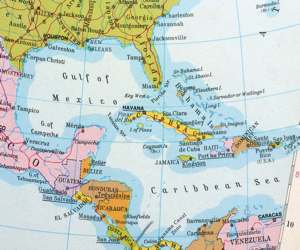
Central America map by the CIA World Factbook 2011. Wikimedia-Commons

Central America map by the CIA World Factbook 2011. Wikimedia-Commons

The 2nd West Indies Foot Regiment, to which Cockburn was assigned, was originally one of eight such Regiments but by then they had been reduced to six. All having been commissioned in 1795. The intention was to recruit free Afro-Caribbean’s and to purchase slaves from the West Indies plantations but shortly afterwards, the Regiments were disbanded. However, they were re-formed in 1798 and following the Mutiny Act of 1807, all soldiers recruited as slaves were freed. The Regiment to which Cockburn was assigned was based at His Majesty George IV (1820-1830), Settlement of British Honduras in the Bay of Honduras, now the country of Belize. Cockburn’s posting made him the Governor of the Settlement which was, at that time, under military control.

The colony had been founded in 1638 by former British buccaneers who were joined by loggers in this heavily forested semi-tropical area of the east coast mainland of Central America. The indigenous population were Mayan with Caribs people but the Spanish had previously colonised the northern area before the British arrived. Both the indigenous population and the Spaniards were openly hostile to the British but the inter-marrying and the importation of British females and African female slaves ensured the survival of the new colony. Although British Honduras was required to import most of their produce they successfully exported logwood or bloodwood (haematoxylum campechianum), as it is also known. The prepared logs were exported to Europe for use in dyeing fabrics. The prepared logs were exported to Europe for use in dyeing fabrics and also making brown paper for instance at Crabble paper mill, Dover.

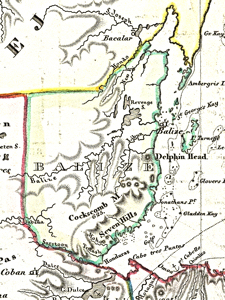
Physical Map of British Honduras / Belize 1840 by Heinrich Berghaus (1797-1884). Wikimedia-Commons

Physical Map of British Honduras / Belize 1840 by Heinrich Berghaus (1797-1884). Wikimedia-Commons

Although Spain claimed sovereignty over the colony, the defeat of the Spanish in 1798 permanently established the British Settlement under the protection of His Majesty – hence military rule. This was reinforced by a number of Acts in the British Parliament and treaties, most notably the 1783 Treaty of Versailles between Britain and Spain. This gave the British, rights to cut logwood between the Hondo and Belize rivers. The 1786 Convention of London expanded the concession to include the area between the Belize and Sibun rivers.

Cockburn arrived at the harbour of the main town of British Honduras, Belize, in November 1829. He was to be paid £2,000 a year out of which was a need for the upkeep and the running of his residence. This was also the official residence in which he was expected to entertain, again out of his pay. The amount was based on the value of the Settlement to the British Government and this was given as £578,760 a year in 1833. The year before Cockburn arrived, at the end of December 1828, Colonels Parks and Hall had been murdered near Truxillo (now Trujillo) in Honduras. This was the result of an altercation between Guatemala and El Salvador, neighbours of the Settlement.

Both countries had gained independence from Spain in 1821. Two years later the Federal Republic of Central America had been formed out of all former Spanish territories in Central America. However, the relationship between members of the Federal Republic was uneasy and within each country there was political unease. On 25 February 1832, Cockburn informed London that a civil war had been declared in Guatemala. He gave an account of what was happening and finished by saying that Gálvez governs as Head of State (José Felipe Mariano Gálvez c1794-1862). On 12 October, Cockburn reported that peace had been restored but that Gálvez had ordered a decree for a forced loan of $90,000 from the citizens of Guatemala. He added that raising half of that sum would cause vast distress among the already harassed merchants and tradesmen. Cockburn finished by saying that money there, was daily becoming scarcer and there was little mining taking place.

All military quarters, including Cockburn’s residence, were in a poor state due to neglect, heat and damp. The British Ordnance office had stated to Cockburn’s predecessors, as they did to him, that as soon as money allowed they would deal with the problems. Although the Colony had a military surgeon supported by military assistants they were heavily weighed down with the responsibility of the garrison and there were no hospital facilities. This came to a head in August 1830, when the Royal Navy survey ship Blossom docked in Belize bay. The captain, Richard Owen, reported that most of the crew were sick and that the ship’s surgeon had diagnosed yellow fever. Cockburn made two houses available as a hospital by a small quay some 12miles from the town. Captain Owen, whose health was rapidly succumbing to yellow fever, took the ship there assisted by the most able of his crew. All the men were taken ashore and the garrison surgeon with 6 of his medical assistants attended to them. Although senior Lieutenant William Wilson and 11 other members of the crew died the rest recovered including the Captain and the ship’s surgeon. Following receipt of his report Cockburn was assured that the lack of facilities would be dealt with.

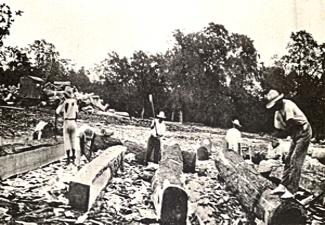
Squaring mahogany logs for export in Belize. Around 1936 from 'The forests and flora of British Honduras' by Paul Carpenter, 1884-1963. Wikimedia.org

Squaring mahogany logs for export in Belize. Around 1936 from ‘The forests and flora of British Honduras’ by Paul Carpenter, 1884-1963. Wikimedia.org

The Slavery Abolition Act of 1833, abolished slavery in all parts of the British Empire excepting territories in the possession of the East India Company and this came into force on 1 August 1834. In the directive that Cockburn received from London it stated that slaves were to be totally freed by 1840 but until then they were to remain on their plantations. There, they were to be given the status of apprentices for up to six years duration. Although there were slave-owning residents in British Honduras, mainly involved in the logwood trade, there does not appear to be a report of their reaction to this. The 1835 Compensation Act stated the financial compensation that plantation owners would receive, but again there is no mention of the reaction from the slave owners of British Honduras.

During the night of 22 February 1835, Cockburn reported hearing what sounded like repeated cannon fire. At first it was feared that the civil war had broken out again but the next day the Royal Navy schooner Firefly, arrived. She was the former Antelope – a Spanish privateer – that had been built in 1808. Her deck was covered in thick ash and had just come from Truxillo. The captain, Lieutenant John Julius McDonnell, reported that a volcano had erupted some 60 miles inland from that town and help was needed. This was despatched immediately and on 24 February the Firefly, having spent a couple of days in Belize, sailed for the Bahamas. Three days later, carried by a strong northwest current, she drifted onto the Northern Triangles shoal. This is 90miles off Belize in the Gulf of Honduras. There she was wrecked with the loss of seven passengers and six crew members.

Schooner (Chilean) the Goleta Colo-Colo by an unknown artist 1836, a typical schooner of that period. Wikimedia - Commons

Schooner (Chilean) the Goleta Colo-Colo by an unknown artist 1836, a typical schooner of that period. Wikimedia – Commons

Except for officers and crew who were to remain with McDonnell until help arrived, the passengers left on boats under the direction of Mr Nott, the Master’s Assistant supported by some junior officers and a few members of the crew. They eventually reached Belize where Nott reported to Cockburn. Rescue parties were despatched under the command of Nott. Meanwhile, the Firefly continued to sink and two rafts were constructed out of the debris. All but McDonnell and Mr Malcolme, the ship’s clerk and six members of the crew boarded the larger raft and cast off. Those who remained boarded the smaller raft with McDonnell. This raft drifted for about 48hours until they reached an isolated beach, where McDonnell, with a couple of men left Malcolm and the other crewmen to explore. Hardly had they gone a few yards when McDonnell was overpowered and knocked unconscious. Malcolm and the crewmen then boarded and cast off the raft abandoning McDonnell lying on the beach. He was rescued some ten days later by which time, according to Cockburn, the Lieutenant was thoroughly exhausted.

 Firefly, lost on 27 February 1835 the paper reports that the Captain and most of the crew safe and lists the officers lost. London Evening Paper 28 May 1835

Firefly, lost on 27 February 1835 the paper reports that the Captain and most of the crew safe and lists the officers lost. London Evening Paper 28 May 1835

When he had sufficiently recovered, McDonnell was arrested and along with the other officers and crew, conveyed first to Bermuda then to Halifax, Canada where they were taken to England. The mutineers had absconded. The Firefly men arrived at Portsmouth on 9 August 1835 and the trial began the following day. Cockburn was in Dover, having left British Honduras in April 1835 due to grave ill health, nonetheless he attended the trial and was the only witness. Cockburn gave a full account of what had happened and answered questions clearly. The Court cleared Lieutenant McDonnell and all the others charged. They then commended Nott on the rescue of the ship’s company and finding and rescuing McDonnell from a perilous situation.

Following the trial, Cockburn returned to Honduras but was with his wife at East Cliff, Dover in April 1837, preparing to return to the colony, when he received the order to go to St James’ Palace, London. There, on the commendation of the Secretary of State for War and the Colonies, Lord Gleneig Charles Grant (1778-1866), Cockburn was presented to King William IV (1830-1837) and promoted to Colonel. He was also appointed the Governor and Commander-in-Chief of the Bahamas!

 Belize Government House - Pocket Guide to the West Indies - Belize by John E Aspinal (1914) Internet Archive Book Images via Wikimedia-Commons

Belize Government House – Pocket Guide to the West Indies – Belize by John E Aspinal (1914) Internet Archive Book Images via Wikimedia-Commons

After Cockburn left British Honduras it remained under British military rule until it became a crown colony in 1862 with Belize City the capital. Logwood remained the main export until synthetic dyes killed off demand towards the end of the nineteenth century. Mahogany and other tropical hardwoods then became the main export commodity. In 1961, hurricane Hattie destroyed about three-quarters of the low-lying Belize City, following which it was proposed to build a new capital – Belmopan.  In 1964, British Honduras became a self-governing colony with Belize City the capital then later on 1 August 1970 Belmopan City became the new capital. Three years later, in June 1973, the country was renamed Belize – after the old capital! Full independence discussions were started shortly after. These, however, provoked Guatemala to claim sovereignty and threatening to invade. The Royal Navy’s Ark Royal with Buccaneer aircraft on-board went to Belize’s aid. In September 1981 the last British possession on the American continent, Belize, was granted full independence.

Bahamas 1838-1843

Map of the Gulf of Mexico and the Caribbean Sea showing the location of the Bahamas, Florida, Cuba, Haiti and the Dominion Republic. Parnell's World Atlas 1977

Map of the Gulf of Mexico and the Caribbean Sea showing the location of the Bahamas, Florida, Cuba, Haiti and the Dominion Republic. Parnell’s World Atlas 1977

The Bahamas are a group of 14 larger islands, nearly 700 smaller islands – most low lying – and some 2,000 reefs and keys. They are east of Cuba on the western side of the Caribbean in the Atlantic and strung out between the US Florida coast and Haiti. It was on what was later called San Salvador Island, within the Bahamas, that Christopher Columbus (d1506) made his first landfall in the New World in 1492. At that time, the Lucayan, a branch of the Arawakan-speaking Taino, inhabited the Islands. Despite land claims by Columbus and a Papal Bull of 1493, the Spanish made no attempt to settle the Islands, instead, they enslaved the native Lucayans and shipped them to Hispaniola (now the island of Haiti and the Dominican Republic).

In 1629, King Charles I (1625-1649) granted Sir Robert Heath (1575-1649) the ‘Bahama and all other Isles and Islands lying southerly there or neare upon the foresay’d continent’, but Heath did nothing with his possession and died in exile during the English Civil War of 1642-1651.  During that period two ships carrying strict Protestant dissenters left Bermuda to survey the Islands. Their hope was that they would make a suitable base for a new settlement where they could worship as they pleased. Eventually, about 70 of them established a settlement with an egalitarian constitution but by 1670, this had effectively ceased.

Said, in folk law, to be the Tower in Nassau from which Blackbeard watched out for likely ships to take. More likely an water tower. photograph by Jerry and Roy Klotz. Wikimedia-Commons

Said, in folk law, to be the Tower in Nassau from which Blackbeard watched out for likely ships to take. More likely an water tower. photograph by Jerry and Roy Klotz. Wikimedia-Commons

Over the following years the Islands became home to a diverse set of folk, predominantly British. Some of these were ex- transportation convicts that had served their term and, increasingly, escaped or freed African slaves. The main source of income was piracy and wrecking which Charles II (1649-1684) hoped to put to an end when he made a grant of the Islands to Christopher Monck 2nd Duke of Albemarle (1653-1688) and five others. Instead of restoring law and order the new owners built on the established wrecking and piracy skills of the Islanders and made their fortunes. A later settler with piratical aspirations was the infamous Blackbeard, Edward Thatch (c.1680–1718). By 1684 Charles II had enough, particularly from the objections by Spain, France and the British Admiralty. He outlawed piracy from the Islands but this was not achieved until 1717, when they were put into the hands of a military governor.

The following year the Bahamas became a Crown Colony but establishing a thriving economy without piracy proved to be very difficult. The sugar cane industry was yearly subjected to hurricanes in the summer months. For this reason, slavery was not so prevalent as elsewhere in the Caribbean and the Americas. However, following the American War of Independence, some 7,300 slave owning loyalists fled to the Bahamas and were granted land by the British government in compensation for their losses. This led to a great deal of tension between the new slave owning immigrants, who made much greater economic strides, and the earlier settlers.

The main islands that make up the Bahamas. Bahamas Ministry of Tourism

The main islands that make up the Bahamas. Bahamas Ministry of Tourism

On 25 March 1807, the British government abolished the transportation of slaves in the British Empire with the captains of ships involved being fined £120 for every slave transported. A year later the United States followed suit and banned the import and export of slaves. Then in 1818, the British Government ruled that any slaves brought to the Bahamas from outside of the British West Indies would be set free. During the following decades, the Royal Navy intercepted ships involved in the slave trade and the thousands of liberated Africans were resettled on the different islands that make up the Bahamas. However, following diplomatic intervention particularly by the US, only the owners and captains of slave ships that ran aground or were wrecked off the coast of the Bahamas were punished and the slaves set free. Such catastrophes were not infrequent as the slave ships often went through the treacherous seas that surround the islands.

In 1834 the Slavery Abolition Act of the previous year came into force but the slave owning colonists of the Bahamas demanded that their right of property be above that of the British Government’s legislation. This came to a head on 3 January 1834, when the House of Assembly in the Bahamas was dissolved by the then Governor, Blaney Townley-Balfour (1799-1882). In retaliation the slave owners refused to accept British produced currency as legal tender. The year before, in 1833 the value of the Bahamas to the British Government, through excise duties and taxes was £2,041,400, 257.77% greater than that of British Honduras. Thus, the British government was not too happy about what was happening in the Bahamas and appear to have speeded up compensation payments to the former slave owners. Cockburn’s remit as the new Governor, was to maintain law and order and ensure that the British Government received its dues – it was pointed out that the previous year the Bahamas had spent £143,211 on imports while exports only came to £88,694.

Street in Nassau 1877-1880 by Albert Bierstadt 1830-1902. Wikimedia-Commons

Street in Nassau 1877-1880 by Albert Bierstadt 1830-1902. Wikimedia-Commons

Cockburn and Alicia arrived in the capital, Nassau, on New Providence Island, in the autumn of 1837. Although the colonial buildings and gardens were beautifully kept, on the streets of Nassau there were destitute freed slaves everywhere. Following the 1834 Emancipation of Slaves Act special magistrates had been appointed to supervise the treatment of former slaves serving ‘apprenticeships’ and slowly their remit widened to monitor liberated slaves. The responsible officer was David Turnbull, the Bahamas superintendent of Liberated Africans. He told Cockburn that due to the influx of former slaves released from ships that had ran aground off the Bahamas, there was no work available. Back in 1820, Turnbull said, that a group of freed African slaves, faced with similar problem, had founded a community on Carmichael Island (these days a beach resort). In 1831, Cockburn’s predecessor as Governor (1829-1833), Sir James Carmichael-Smyth (1779-1838) – well know for his works on slavery and their emancipation – had founded the village of Adelaide. There he settled 157 former African slaves from the Portuguese slave ship Rosa and both communities were successfully surviving on subsistance farming, fishing and charitable funding.

There was a massive influx of over a thousand liberated slaves from two Portuguese brigs, Diligent and Cameons, in May 1838 and Cockburn ordered apprenticeship papers to be drawn up. The new arrivals were then divided into three groups. These were the Minors or Domestics under 16years of age, Labourers above the age of 16 and Mariners and others above the age of 16. Families within the different groups were noted. In less than two weeks Turnbull and his team found paid work for 800 of these former slaves on the Islands and at the same time keeping family groups together. Cockburn informed the Colonial Office in London of what had happened but they wrote back saying that he should not have taken such action as the apprenticeships were illegal. By November that year, they were all cancelled except those appertaining to the minors. The result was that the former slaves were thrown out of work while those who were retained had their hours increased and wages drastically cut. By December 300 of these former slaves were on the streets but Turnbull reported that there was plenty of work on other islands and colonies in the Caribbean. This was particularly so in the sugar cane industry but both Cockburn and Turnbull recognised that the freed slaves could not afford the passage.

In the autumn of 1838, Cockburn received a communiqué from the chief administrator of Demerara, one of the three counties that made up British Guiana, on the north coast of the South American Continent. He said that he had written on behalf of plantation owners, and told Cockburn that free slaves were withholding their labour and asked him to send indentured slaves from the Bahamas to take their place. Cockburn brought this to the attention of the Assembly in December 1838 and advised that they should refuse.

 Illustration of British Guiana 7 October 1843 by Johann Jacob Weber (Hrsg.), 1803–1880. Wikimedia-Commons

Illustration of British Guiana 7 October 1843 by Johann Jacob Weber (Hrsg.), 1803–1880. Wikimedia-Commons

Shortly after Cockburn received another communiqué, this time from the Governor of the three counties that made up British Guiana, Henry Light. Following the Slavery Abolition Act, Light’s predecessor, Sir James Carmichael-Smyth, had taken a tough stance against the plantation owners who were trying to maximise their work force while keeping wages as low as possible. However, in March that year Carmichael had suddenly died and Light, who had been the Lieutenant Governor of Dominica for less than a year, was brought in to take Carmichael-Smyth’s place.  The plantation owners saw him as easy prey hence the communiqué from the chief administrator of Demerara that Cockburn had previously received. Light, however, made it clear that he would sanction immigration of former slaves but only to plantations where they would not be exploited by excessive hours and poor pay. Light, stated that all immigrant workers were not to be exploited in that way and that they were to have adequate housing and health facilities. These and other points Cockburn made to the Bahamas Assembly and advised them to accept the offer. He reminded them that ‘The Bahamas was a depot for slaves freed by the British Navy and between 1830 and 1835 nearly 300 slaves owned by United States nationals had been freed on to the Islands and in the three years since, twice as many had been freed.’

Cockburn went on to say that if freed slaves wished and if the government of the receiving colony paid for their passage, received fair wages and treated as free labourers when they arrived, then such emigration should be encouraged. Adding that it was incumbent on both the labourers seeking higher paid work on other islands and their new employers, to make financial provisions for wives, children and elderly parents left in the Bahamas while they were away. And, all those seeking such work were to discharge all their debts before leaving. Cockburn finished by saying that most of the other governors of the British West Indies territories were as strongly averse as he was to the private transactions such as those advocated by the administrator in Demerara.  (From a compilation of reports sent to the British government December 1839-1840 by Cockburn)

Letter from Robert Vernon Smith on behalf of Home Secretary Lord John Russell on the emigration of former slaves from the Bahamas 3rd July 1840

Letter from Robert Vernon Smith on behalf of Home Secretary Lord John Russell on the emigration of former slaves from the Bahamas 3rd July 1840

The Bahamas Assembly accepted Cockburn’s advice and in June 1840, his communications were discussed at length in the British Parliament. There, Thomas Babington Macaulay (1800-1859) stated that he did not agree. Macaulay, at the time, was the Whig Secretary of State for War (1839-1841) and he told his fellow MPs that he had not long returned from India having served there on the Supreme Council. From his experience, wherever slavery had existed it was imperative that emigration was restricted. That it was ‘undesirable’ for former slaves to be able to move from one island to another on their own free will. The Governor of the Bahamas (Cockburn was not mentioned by name), should consider sending former slaves, if they were destitute, where they were most needed, for instance to Mauritius (in the Indian Ocean). There they would be paid six times as much as they would be paid in India…! When it came to the vote, 79 were for the motion supporting Cockburn’s proposals while 44 supported Macaulay’s (the Government’s) argument. This was followed by a directive from Robert Vernon Smith (1800-1873), on behalf of Lord John Russell (1792-1878), the Home Secretary (1835-1839) and dated 3 July 1840. The letter informed Cockburn that as the former slaves were free men he was not to obstruct them from emigrating to British Guiana. At the same time he was not to encourage the depopulation of the Bahamas ‘on the grounds of the maritime strength of Britain in the Gulf of Mexico.

Salt pans in Marakkanam India by Sandip Dey 2012. The ones in the Turks and Caicos, part of the Bahamas in Cockburn's time. Wikimedia-Commons

Salt pans in Marakkanam India by Sandip Dey 2012. The ones in the Turks and Caicos, part of the Bahamas in Cockburn’s time. Wikimedia-Commons

Destitution of the former slaves on the Bahamas and the danger they faced from exploitation, continued to weigh heavily on Cockburn’s mind. Besides fishing and subsistence farming, which hardly provided enough to sustain the population, the only major export was that of salt. This was sold mainly to the US and the largest salt pans were on the southern islands that make up the present day Turks and Caicos. There, seawater was allowed to flood into the large man made salt pans or salinas through sluice gates. The combined high temperatures and dry breezes ensured quick evaporation. The saline was run off into smaller pans where the salt crystallised and was then shovelled into sacks and carried onto barrows to be loaded on to shallow draft lighters. These small boats were then rowed out to waiting ships for export. At the time Cockburn arrived, most of the workers were poor former slaves together with a few equally poor Europeans. Poor diet, long hours, blaring white conditions and lack of medical care brought on blindness and early deaths to both groups.

Cockburn wrote to the Colonial Office to ask for more health care and permission to build a proper harbour. The latter, he said, would mean that the salt could loaded directly onto ships so the amount exported would increased, which in turn would provide more work and help the economy in general. Before permission was granted and using the military forces stationed on the islands, a natural harbour on South Caicos was built for the purpose. At the time the government in London was facing a financial deficit and in 1842, they looked for land in the colonies that they could sell to prospectors. Cockburn, reported that in the previous year the price of land had been reduced to 12shillings an acre and the only valuable land were the salt ponds on Turks and Caicos Islands. These, he said, required peculiar management and regulation suited to their nature and recommended that they remained in the hands of the Crown. Not long after Cockburn left the Bahamas, the salt pans were sold to private individuals who exploited the workers with low wages and long hours.

West India Regiment Barracks Nassau started in 1852. Rumelier collection OldBahamas.com

West India Regiment Barracks Nassau started in 1852. Rumelier collection OldBahamas.com

The general health of the military forces and the state of the barracks, were also of concern to Cockburn.  The barracks were in Dunmore Town on Eleutha and Harbour islands close to Nassau and were brick built between 1786 and 1797. Cockburn wrote that the garrison consisted mainly of men of the West Indies Regiments who were mainly former African slaves and a large contingency of British soldiers. The officers were all British and their mess was at Fort Charlotte, Nassau. In the garrison, he reported, out of approximately 1,000 British soldiers, an average of 35 were sick at any one time. This percentage and all the others were the same as he had previously observed in British Honduras but as the garrison was smaller there the numbers were smaller. The mortality of the British soldiers in these garrisons, he wrote, was greater than those in Britain with soldiers stationed in the Bahamas for two years amounting to 87 in every thousand and those for longer periods, 93 for every thousand. Epidemic fever, that ranged in the winter months, was the main cause of death.

Of the former African troops, very few suffered from the same maladies as the British. They, instead, were highly susceptible to smallpox with 2 dying out of every 7 attacked. They were also vulnerable to the lung consumption disease (tuberculosis) for although not so many, Cockburn wrote, suffered from the disease as the British, twice as many died as the equal number of British suffering that disease. In other words 20 out of every 100 of Africans suffering from the disease died. The Africans were also more likely to die of cholera than the British if a recent outbreak was anything to go by, he wrote. Adding that the disease had swept through the garrison and although most soldiers succumbed, not one British soldier died but 20 of the African soldiers had. Cockburn’s observations were published in the Journal of the London Statistical Society in 1838.

Cockburn attributed much of the maladies the soldiers suffered to the state of the barracks as they were old, cramped, lacked ventilation and were generally unhealthy. He wrote numerous letters to London making a strong case for new barracks to be built, but nothing happened. Years passed and in 1854, a Royal Commission report on the Consolidation of Military Administration, detailed what did happen as a result of Cockburn’s pleas to illustrate the lack of co-ordination between government departments.

The Commission stated that on investigation they found that Cockburn’s letters on reaching the Colonial Office were sent from department to department and eventually  memos were sent to the Board of Ordnance. They received the first of these memos about a year after Cockburn’s first letter had arrived in London and asked the Colonial Office for any other letters Cockburn had written on the subject. These, the Colonial Office was unable to find, so they wrote to Cockburn for the details and any recommendations he had. On receipt, these again were passed from department to department and several other minor authorities before eventually reaching the Board of Ordnance. A survey was undertaken by which time Cockburn had left the Bahamas but it was reported his observations had been correct in every respect and new barracks were recommended immediately. This report, according to Lord Fitzroy Somerset (1788-1855) the Master-General of the Ordnance went to the Colonial Office. They sent it to the Treasury who passed it on to the General-Commander-in-Chief who in turn passed it onto the Secretary of War. His department wrote to the Board of Ordnance with the order that the Islands did not come under their department! Lord Fitzroy Somerset, who had been appointed to the position of Master-General on 30 September 1852, pointed out that the Secretary of State was incorrect and told the Royal Commission that sixteen years after Cockburn had first wrote about the poor state of the Bahamas barracks new barracks were about to be started!

Shortly after Cockburn was appointed Governor and Commander-in-Chief of the Bahamas, the Esperanza, a Portuguese slave ship, was wrecked off east Caicos. The crew and 220 captive Africans, of which there were some 20-30 orphans, survived but 18 of the Africans died before the survivors were taken to Nassau. Cockburn ordered the potential slaves be liberated with the children being sent to the Carmichael Island community of freed African slaves. In 1840, the schooner, Hermosa ran aground off the Abacos islands at the northern end of the Bahamas. The ship was sailing from Richmond, Virginia to New Orleans with a cargo of 38 slaves and was taken to Nassau. Cockburn ordered the slaves to be freed but the captain and crew with what seemed like the support of a passenger, refused. The officials forcibly removed the slaves from the ship and the passenger changed sides. Cockburn asked to the see the passenger and also the senior official. He then allowed the captain and crew to take the Hermosa and leave the Bahamas waters.

 Slave Ships route between the Florida Strait and the Bahamas to New Orleans - Parnell's World Atlas 1977

Slave Ships route between the Florida Strait and the Bahamas to New Orleans – Parnell’s World Atlas 1977

Although the US no longer allowed the importation of slaves from Africa, slavery was legal in some States and the trade flourished between them. The main slave market was in New Orleans on the Mississippi River, about 100 miles from the Gulf of Mexico. Slave owners in the States on the Atlantic seaboard transported their slaves to and from the market by ship. This meant going around the peninsula of Florida, and close to or through the treacherous Straits of Florida between the Florida Keys and the Bahamas. During the British-US War of 1812-1815 Royal Navy ships stopped all US ships in this area and if there were slaves on board, they were allowed to go free. Following the War only those slave ships that ran aground or were wrecked in the Bahamas waters, were the slaves set free. Nonetheless, in the US, the detaining of the Hermosa and the freeing of the slaves led to widespread discussion and condemnation of Cockburn added to which, it was said, an English passenger, who had tried to stop the theft, had been arrested.

Government House, Nassau, Bahamas today. Bahamas Ministry of Tourism

Government House, Nassau, Bahamas today. Bahamas Ministry of Tourism

The passenger from the Hermosa was invited, with a senior Royal Navy officer, to Government House in Nassau to meet Cockburn. There, the passenger told Cockburn, what he had previously told the Bahamas officials at the quayside. He had previously served on the Royal Navy schooner Firefly and was one of the last officers to leave before the ship had sunk off British Honduras. He had drifted on a make-shift raft but was rescued by a passing US slave ship on passage to Richmond. There he was ill for a very long but when he recovered made plans to re-join the Royal Navy in Bermuda. He had come to an understanding with the captain of the Hermosa that he would work his passage there but bad weather had prevented that.

When the Hermosa ran aground, the passenger told Cockburn, he was not sure where they were and supported the captain until he heard English voices. Cockburn politely asked the passenger to stay at Nassau officers’ quarters until he had heard from the Admiralty but quietly told the Royal Navy officer that the passenger was not to leave Nassau on any account. Weeks after Cockburn sent his despatch to the Admiralty, Lieutenant McDonell and the former Master’s Assistant, now Lieutenant Nott, of the Firefly, arrived in Nassau. They identified the passenger as Malcolme – the ship’s clerk from the beleaguered Firefly, who had led the mutiny that left McDonell to die on a deserted island. Malcolme was taken back to England where he was tried and subsequently hanged.

Colonel Francis Cockburn knighted. London Gazette 8 September 1841.

Colonel Francis Cockburn knighted. London Gazette 8 September 1841.

In the summer of 1841, Cockburn and Alicia returned to East Cliff, Dover and on 8 September they were invited to St James Palace. There, Queen Victoria (1837-1901), knighted Colonel Francis Cockburn. A few weeks later Colonel Sir and Lady Cockburn returned to the Bahamas to wide rejoicing. However, in the waters off the Bahamas on Sunday 7 November something happened that eventually led to the premature removal of Cockburn from the Islands. This almost led to war with the US and has gone down in the history of Afro-American slaves as a momentous event!

The brig Creole, was travelling from Richmond, Virginia to New Orleans where the 135 slaves on board were due to be sold in the market there. Johnson and Epherson of Richmond owned most of the slaves with 26 owned by Thomas McCargo, a slave trader who was also on board the Creole. Also on board besides the captain – Robert Ensor – his wife, daughter, niece and eight slave servants, were William Henry Merritt in charge of Johnson and Epherson’s slaves and John R. Hewell and his nephew Theophilus, in charge of Thomas McCargo’s slaves with their slave servants.  Among the slaves being transported was Madison Washington, a recaptured escaped slave and his wife. On that November Sunday, Washington and three other slaves: Ben Blacksmith, Elijah Morris and Doc Ruffin together with fifteen other male slaves rebelled. They overpowered the ship’s crew, killing John Hewell. One of the slaves was badly wounded and later died. Captain Ensor was also badly wounded but Washington dressed the wounds. Likewise, other members of the crew who were injured were similarly looked after.

 Brig USS Somers, similar in design to the Creole, sketched by a crewmember of USS Columbus (1842). Wikimedia-Commons

Brig USS Somers, similar in design to the Creole, sketched by a crewmember of USS Columbus (1842). Wikimedia-Commons

Ben Blacksmith, apparently, told the others that he had heard that the slaves on the Hermosa gained their freedom in the Bahamas so they ordered the crew  of the Creole to take them there. When they arrived in Nassau on 9 November the officials told the slaves that they were free to go but Thomas McCargo and William Merritt ordered them to remain on the ship. First Mate, Zephaniah Gifford was sent to inform the American Consul in Nassau of what had happened and the Bahamian officers told Cockburn. An altercation took place between the Consul and Cockburn that ended with Cockburn refusing to allow the ship to leave unless all the slaves disembarked if they so wished. The Consul eventually agreed to the Captain being removed to receive medical help and the Creole, with the slaves on board to be anchored offshore. Members of the Royal Navy moved the ship and it was then guarded by garrison soldiers to ensure it did not leave. The crew and passengers were accommodated in Nassau and the 18 slaves that had taken over the ship were placed in custody in Nassau to await trial.

A couple of days later an attempt was made by some Americans living on the Islands to take over the Creole with the slaves on board and sail it out of Bahamian waters, but this was foiled. On 19 November Nassau magistrates went on board and told the slaves that they were free to leave the ship if they wished. All but three women and two children left and they, along with Captain Ensor, crew and passengers boarded a ship for Jamaica. members of the Royal Navy sailed the Creole to Jamaica, where the Captain, crew and passengers boarded her. When the Creole arrived in New Orleans on 21 December, they told all what had happened and outrage was loudly expressed by the public, the US Patriotic Society and in the US Senate.

Cartoon of a Slave Market dated 4 March 1833 with the legend 'The Land of the Free and the Home of the Brave'. The Webster-Ashburton Treaty of 1842 agreed to abolish slave markets within their territories. Library & Archives of Canada

Cartoon of a Slave Market dated 4 March 1833 with the legend ‘The Land of the Free and the Home of the Brave’. The Webster-Ashburton Treaty of 1842 agreed to abolish slave markets within their territories. Library & Archives of Canada

At the time discussions, that led to the Webster-Ashburton Treaty of 1842 between the US and Britain over the British North American colonies, was taking place. The talks lasted 10months and took place at the British Legation offices in Washington and the British government were in a conciliatory mood towards the US. The subsequent Treaty was named after Daniel Webster (1782-1852), the US Secretary of State (1841-1843) and Alexander Baring, 1st Baron Ashburton (1774-1848) a businessman representing the British Government. In essence, when it reached its conclusion, the Treaty placed the border between the US and Canada along the 49th Parallel, up to the Rocky Mountains in the west but failed to deal with the land beyond. In the east, the border was adjusted to give the British the Quebec/ Halifax Road enabling a winter connection between Lower Canada and Nova Scotia for which the US gained more land. In essence, it placed the border between the US and Canada along the 49th Parallel, up to the Rocky Mountains in the west but failed to deal with the land beyond. In the east, the border was adjusted to give the British the Quebec/ Halifax Road enabling a winter connection between Lower Canada and Nova Scotia for which the US gained more land. The Treaty also agreed on seven crimes that would qualify for extradition between the two countries. Discussions did  include the possibility of uniting in an effort to persuade the powers to close all slave markets within their territories but did not reach the final document.

Neither did the Treaty include slave revolts and therefore, although the Senate demanded the return of the 18 slaves from the Creole, to face trial in the US. Cockburn denied their demands on the grounds that the Bahamas were British and therefore British law prevailed. Cockburn informed the British Secretary of State for War and the Colonies (1841-1845) Edward George Geoffrey Smith-Stanley – Lord Stanley (1799-1869), of what he had done. Lord Stanley had ensured the passage through Parliament of what became the 1833 Abolition of Slavery Act and Cockburn expected his reply to be favourable. Indeed, Stanley passed Cockburn’s correspondence on to the Admiralty and in April 1842, Washington and his co-conspirators were tried for piracy in a specially convened Admiralty Court in Nassau. By this time, another of the slaves had died, so it was 17 who stood accused.

 Official medallion of the British Anti-Slavery Society 1795 designed by Josiah Wedgwood in 1787. Wikimedia-Commons

Official medallion of the British Anti-Slavery Society 1795 designed by Josiah Wedgwood in 1787. Wikimedia-Commons

The US lawyers stated that the slaves were guilty of being pirates who had murdered to gain the legal property of US citizens – the other slaves. The Creole, they went on to say, was a ship in distress and Britain should not treat US domestic ships that had come into its colonial waters under duress. Nor should they treat US domestic ships as part of the unlawful international slave trade. Cockburn gave an account of the events and through his lawyers, British law appertaining to slaves and the Bahamas. The Admiralty judges gave the arguments considerable consideration and ruled that: piracy intimated that private gain was involved and that in the case of the Creole, that was not a reason for what had happened. Further, slavery was illegal in international waters and therefore the men on the Creole were being been illegally held, thus they had the right to use force to gain their freedom. The former slaves were allowed to go but shortly afterwards, several were kidnapped, including Washington and taken to Cuba. There they were bought by a Mr Forbes but were freed by David Turnbull – the Bahamian superintendent of Liberated Africans – and taken to British Guiana.

The verdict, on 16 April 1842, was a landmark decision in the abolition of slavery in the US but it generated diplomatic tension with a popular demand in the US to declare war on Britain! This raised concern by the British government that it would affect the ratification of the Webster-Ashburton Treaty and in order to appease the US, Lord Ashburton, after reaffirming that slavery was not recognised under British law, announced that ‘British officials in the West Indies would be given directions … to do nothing in this respect when it can be properly avoided in the interests of good neighbourhood.’ Cockburn was ordered to return to Britain and then to report to the 95th Foot Regiment that were in Corfu.

The Webster-Ashburton Treaty, when ratified, called for a final end to the slave trade on the high seas! In 1853, Robert Lumpkin, the owner of the Hermosa slaves, sought compensation in the British Admiralty Court but failed. However, the Treaty of Claims of 1853 set up the Anglo-American Claims Commission and successful claims were made by the owners of the Comet – 165 slaves freed in 1830 and the Encomium – 48 slaves freed in 1833. As both had taken place in the Bahamas prior to the 1833 Act the success of the cases opened the doors to other claims of slaves freed prior to 1833. Claims for slaves freed from the CreoleHermosa together with the owners of the Enterprise – 78 slaves freed in the Bahamas in 1835. Slavery was finally abolished in the US in 1865.

Christopher Columbus Cross, Cockburn Town, San Salvador. Bahamas Ministry of Tourism

Christopher Columbus Cross, Cockburn Town, San Salvador. Bahamas Ministry of Tourism

Before leaving the Bahamas, Cockburn pressed the case for Nassau to become a major port of call in the Caribbean for the West Indies Royal Mail Steamers and was successful. The salt trade continued as the main source of revenue for the Islands until the end of the 19th century when it collapsed due to salt production elsewhere. The remainder of the Islands’ economy oscillated between legitimate agriculture and fishing and the more lucrative but often illegal means. However, following World War II (1939-1945) offshore banking and trust companies started to arrive followed by tourists. Since then the economy has boomed and internal self-government was achieved in 1964. In 1973 the Islands became fully independent within the Commonwealth. The expanded natural harbour on the Turks and Caicos Islands was named Cockburn Harbour and over time where Christopher Columbus landed in the New World, a settlement developed. It was named after Sir Francis Cockburn and today Cockburn Town is the largest town on San Salvador Island!

England 1843-1868

Camp of the 3rd Regiment of Foot (East Kent - The Buffs) Hougham side of Western Heights. Dover Museum

Camp of the 3rd Regiment of Foot (East Kent – The Buffs) Hougham side of Western Heights. Dover Museum

On returning to England in 1843, Cockburn attended meetings at the War and the Colonies offices before taking up his post with a Battalion from the 95-Foot Regiment. The battalion was stationed on the Western Heights and it would appear that Cockburn, who was 63years old, was on semi-retirement. At some point he met up with his old Commander-in-Chief during the Peninsula Campaigns of the Napoleonic Wars, the Duke of Wellington. The Iron Duke was the Lord Warden of the Cinque Ports (1829-1852) and was concerned about the vulnerability of Dover. The port is just 20miles across the Channel from France, the Duke said, and there was discontent on the Continent and since the arrival of the faster steamships that would speed up an invasion. The Duke expressed similar views in Parliament and in the late summer of 1846 Cockburn was transferred to Dover Castle in order to work closely with Wellington. By January of the following year, some 10,000 soldiers, the first from the 57th Foot Regiment and the remainder from the 3rd, 17th, 19th, 46th, 50th and 89th Foot Regiments, were arriving in Dover. They were stationed either at the Castle or at the Western Heights.

In Ireland, what became known as the infamous Great Irish Potato Famine (1845-1852) was gathering momentum. It was a period of mass starvation, disease and emigration from the stricken land. The Tory Prime Minister (1841-1846), Sir Robert Peel (1788-1850) set up a relief operation in 1845 with his government purchasing £100,000 of maize and cornmeal from the US. However, due to the lack of the correct milling equipment in Ireland plus logistic problems, the consignments failed to have any significant impact. People on the west coast of Scotland, who also relied on potatoes as a significant part of their diets, were also starving. The Peel relief operation there, was headed by Sir Edward Pine Coffin (1784-1862) and was more successful. Many of the destitute folk from Ireland made their way to England and were given relief work to do, with which they could buy food.

The potato crops failed again in 1846 and in July the Peel administration resigned, following a split within his Party over the Corn Laws, and the Whigs came to power. The new Prime Minister (1846-1852) was Lord John Russell, and from his experience over the Creole, Cockburn was wary. Nonetheless, Cockburn reminded the government of his Canadian Prince Edward Island plan of 1828, and this was brought up for consideration in Parliament. It was rejected and the predominantly laissez-faire liberals, justified their stance by dwelling on the mortality figures of emigrants of that time (see above). Russell had already stopped all the relief policies of the Peel government and the famine lasted until 1852, during which time hardly any government help was given. Over a million people died in Ireland due to the famine and a further million emigrated, mainly to the US.

On 26 December 1853, Cockburn was assigned to the 95th Derbyshire Foot Regiment in place of Lieutenant-General John Bell (1782-1876), who was heading the 4th Foot Regiment. The following March, he was invited to Parliament to listen to a speech made by Lord Edward Seymour (1804-1885). This appertained to the Report published by the Royal Commission on the Consolidation of Military Administration and revolved around Cockburn’s request for new barracks for the soldiers stationed in the Bahamas in 1838 (discussed above). The building of the new barracks had started on the basis of the Report and to Cockburn’s recommendations.  Three months later, on 25 June 1854, Cockburn was promoted to the rank of Lieutenant General with the 95th Foot Regiment. That year, Alicia, Cockburn’s wife, died and was buried in the churchyard of St Michael and All Angels Church, Harbledown, near Canterbury.

Possibly a Churchward ship, similar to the Violet, arriving at Dover harbour. Dover Museum

Possibly a Churchward ship, similar to the Violet, arriving at Dover harbour. Dover Museum

Cockburn was at East Cliff on the night of Monday 5 January 1857 and, no doubt, looked out into the Channel to see the fierce storm that was raging and putting ships in peril. At Ostend on the Belgium coast, Captain Edward Lyne was in charge of the 300-ton packet ship, Violet. It was incumbent upon him to make the crossing to Dover as the packet ship was carrying important mail. On board was a crew of 17, a mail guard and one passenger but the Violet never arrived. Joseph Churchward (1818-1900) owned the ship and Cockburn had heard that he was in financial trouble and had under insured the vessel. Over the following days parts of the ship were found and the worst was realised. The loss of the Violet left 16 widows and 42 children with no means of financial support. A subscription was hastily organised in the town by Captain Luke Smithett (1800-1871) and Cockburn wrote to him suggesting that a letter to the national newspapers would raise a lot more money for the dependants.

Lieutenant General Sir Francis Cockburn's letter to the press over the Violet disaster. Times 14 January 1857

Lieutenant General Sir Francis Cockburn’s letter to the press over the Violet disaster. Times 14 January 1857

Cockburn, wrote saying that  ‘ … these unfortunates, it does appear to me, are fully entitled to public relief as those in the army and navy who are killed in action or died in hospital in the Crimea.’ (Crimean War 1853-1856). He went on to say, ‘The wreck of the Violet is quite distinct from the general class of wrecks, inasmuch as it was entirely caused by the zealous and gallant determination to fulfil a public duty, and I do think if so stated in the London papers a large subscription would be made there. It was the desire duty to fulfil the contract made with the country that led to this sad result.’ Smithett made copies of Cockburn’s letter and sent them to the entire national and many international newspapers. Donations came in from far and wide and included a large contribution from Frederick William IV of Prussia (1840-1861). The fund raising proved so successful that monthly payments were regularly made to eleven of the widows at the Dover Sailors’ Home for many years after, as well as making improvements to the establishment.

General Sir Francis Cockburn's Grave - St Michael and All Angels Church in Harbledown, Canterbury, Kent - Eamonn O'Keeffe

General Sir Francis Cockburn’s Grave – St Michael and All Angels Church in Harbledown, Canterbury, Kent – Eamonn O’Keeffe

On 12 November 1860 Cockburn was promoted to full General and on 18 October 1866, he escorted the Duke of Edinburgh, Prince Alfred (1844-1900) the second son of Queen Victoria in Glasgow. There, the Prince unveiled a statue to his late father, Prince Albert (1819-1861). Although he was 86years old, Cockburn was as straight backed as ever – every inch a soldier, it was said. He died at East Cliff on 24 August 1868 and was buried besides his beloved wife at Harbledown, near Canterbury. His gravestone gives an account of his army career and the epitaph reads:
To the Memory of General Sir Francis Cockburn
Colonel of the 95th Regiment and Late Governor of the Bahamas
Who departed this life
Deeply respected by all those who knew him.
_

Another person from Dover whose great deeds have endured the tests of time. LS

Shorter Version First Published: Dover Mercury: 13 September 2012

  • Further Information:
    Bahamas Ministry of Tourism: http://www.bahamas.com
    Barrie Crampton: Historical Mapping Project: 200th Anniversary.LanarkCountyTourism.com/maps/
    Holy Trinity Cathedral: http://www.cathedral.ca
    Ron W. Shaw: Tales of the Hare: The Biography of Francis Tito LeLièvre (1755-1830). 2014  FriesenPress, Victoria, BC, Canada. ISBN 978-1-4602-1856-3
    Ron W. Shaw: First We Were Soldiers: The Long March To Perth. 2016 FriesenPress, Victoria, BC, Canada ISBN 978-1-4602-5972-6 (Paperback)
    Library and Archives of Canada: http://www.bac-lac.gc.ca
    New Brunswick Museum and Archives: http://www.nbm-mnb.ca/
    Simco County Archives: info@simco.ca
Posted in Cockburn Sir Francis (1780-1868) – Canada Belize Bahamas and Dover, Cockburn Sir Francis (1780-1868) – Canada Belize Bahamas and Dover, Cockburn Sir Francis (1780-1868) – Canada Belize Bahamas and Dover, People | Tagged | Comments Off on Sir Francis Cockburn (1780-1868) – Canada, Belize, Bahamas and Dover

East Kent Road Car Company and Dover Part II

The distinctive East Kent Road Car Company logo that was agreed in the summer of 1916

The distinctive East Kent Road Car Company logo that was agreed in the summer of 1916

Part 1 of the East Kent Road Car Company (EKRCC) story covered the growth of the firm from its inception in 1916 to the end of World War II (1939-1945), in relation to Dover. By the end of the War EKRCC was short of vehicles as all of its garages had come under varying degrees of enemy attack. The greatest loss of EKRCC’s employees lives had occurred in Dover when the Company garage on Russell Street was bombed in 1942. From then on, much of EKRCC’s operations within the town were run from the bombed out Russell Street garage and an old bus parked on a bombsite in Pencester Road. Thus, EKRCC was faced with the massive financial costs of purchasing new and replacement buses as well as major building works. This strain was seen when due to demobilisation of the forces in 1945, the number of passengers carried by EKRCC was just under 60million!

Castle Street following the last shell to hit Dover on Tuesday 26 September 1944. Kent Messenger. Dover Library

Castle Street following the last shell to hit Dover on Tuesday 26 September 1944. Kent Messenger. Dover Library

Further, not only was there a national shortage of materials, which increased costs, after taxes and working expenses the company were obliged to pay Dover Corporation 75% of the income earned from within the town’s boundaries. This was the result of the contract drawn up in 1936 when EKRCC took over the town’s public transport. As Dover was facing colossal problems due to 4 years of continual bombardment, the money was badly needed. In 1944-1945 this amounted to £11,148, which would have bought at least three new buses. At the outset of the War, in 1939, Dover was designated Fortress Dover and came under military rule which imposed travel restrictions. Once the fear of shelling, bombing and V2’s had passed in late 1944, the pre-war bus services started to be reintroduced. The first was the Sunday morning service that enable people to go to Church.

In 1946, for the first time since early 1940, people came to East Kent on holiday and J B Chevalier succeeded F W Saltwood as Traffic Manager of EKRCC. In February that year Chevalier introduced a regular service from Victoria coach station, London that proved a greater success than envisaged. The influx of tourists that summer was appreciated by East Kent’s holiday industry but resulted in long queues at bus stops due to the shortage of vehicles. The chairman of EKRCC and also the founder of the company, paternalistic businessman Sidney Emile Garcke (1885–1948) announced that the company’s basic obligation was to ensured workers were not too delayed. He therefore made available special priority tickets for those going to and from paid employment.

Under Garcke’s direction, female drivers had been introduced during the War as well as conductresses on the same terms, conditions and wages as men. However, following the War, male workers returning from the Front were looking for jobs so the policy was proving controversial. It was agreed with the Unions to retain the existing females but the drivers were to be replaced by men. The women’s wages could be up to 75% of the men’s wage for the same job. Traditionally, men were seen as the breadwinners while women’s wages paid for the family ‘extras’. Although some of the women were widows who had lost their husbands during the War, it was said that they received widows’ pension, which would make up the difference. The main Union representing bus workers was the Transport and General Workers Union (T&GWU).
East Kent Road Car Company Russell Street garage Dover following bombing on 23 March 1942. Dover Museum

East Kent Road Car Company Russell Street garage Dover following bombing on 23 March 1942. Dover Museum

Although EKRCC were faced with great expense to meet the bus company’s needs and the demands being placed on it, these paled against the tasks and expense facing Dover Corporation. Beside the destruction of the EKRCC garage and the building that housed the bus company’s pre-war offices in the Market Square, 957 homes had been destroyed; a further 898 homes had been seriously damaged but remained inhabited and 6,705 houses were less seriously damaged and habitable. Public, general business and industrial premises were in a general poor state with most suffering various degrees of devastation. In 1944 the Council had applied for powers to build 400 temporary houses, 178 permanent, and rebuilding 41 war-damaged dwellings.

During the intervening period, they had sought the advice of Professor Patrick Abercrombie (1879-1957) in planning for the future of the war battered town. His recommendations included the suggestion that the southern end of the town would be the main shopping and recreation area – where the present (2016) proposed St James shopping precinct is envisaged to be located! As, Abercrombie stated, it would be ‘undisturbed by other than local traffic and within easy reach of the Omnibus Garage and Station and the service routes.’ This, of course, was a long time before the present A20 was built.

Abercrombie Plan - Planned post-war redevelopment of Dover c1947. Dover Library

Abercrombie Plan – Planned post-war redevelopment of Dover c1947. Dover Library

Professor Abercrombie did not specify the location of the bus garage nor the proposed bus station but the assumption was that the garage would be on the pre-war site facing Russell Street and the bus station at the northern end of the shopping/recreation area. Number 10 Pencester Road, a shell damaged house on the north side of Pencester Road, had not long before been acquired by EKRCC. Therefore it was presumed Pencester Road would be the locality of the bus station. Specifically, Abercrombie’s report stated that industry was to be located at the Eastern Dockyard and north of the shopping/recreation area at Charlton along the Dour valley. The loss of homes was to be met with large housing estates on the hillsides of Aycliffe, St Radigunds within the Coombe Valley, Temple Ewell and on the former Old Park estate on the eastern slopes of Buckland.

Before the Professor was appointed, Dover Corporation had drawn up similar plans but ratification by such an eminent personage as Abercrombie was needed to provide influence on permissions and, more importantly, government grants. Following the publication of the Report, the council compulsory purchased 198 acres of the Old Park Estate and erected 480 pre-fabricated ‘temporary’ homes or Prefabs as they were called. For churlish reasons (see Old Park part II), the Old Park land was renamed the Green Lane Housing Estate and it was only as it developed, the area became known as the Buckland Estate. Abercrombie had emphasised, in order for the plan to work it relied on an adequate and efficient bus service. With this leverage, Dover Corporation entered into discussions with the vehicle strapped EKRCC, an agreement being reached whereby the tramlines that had been scheduled to be removed before that War would be taken up from Buckland Bridge to Cherry Tree Avenue and the road resurfaced. At the same time the entrance to Union Road, now Coombe Valley Road, would be improved to allow buses easier access.

At the end of 1946 Sidney Garcke stepped down as chairman of the EKRCC, a position he had held for 29 years, but he retained his seat on the Board until his death in October 1948. Alfred Baynton, who had been both the General Manager and Company Secretary of EKRCC since its inception, retired and was succeeded by R G James, Manager of the Devon General Omnibus Company as General Manager and B D Stanley became the Company Secretary. Stanley, like Baynton had been a shareholder of the company from 1916 as was Raymond Percival Beddow (1903-1981), who was appointed Chairman. On taking over, Chairman Beddow told shareholders that in December 1946, the company had just over 420 vehicles in stock – not all of them would have been licensed to operate but this was not mentioned. However, Chairman Beddow did say an order had been placed in September for 160 new vehicles.
East Kent Road Car Company number 90 Dover - Capel, 53-seater Leyland PD1 with Leyland body work. Dover Museum.

East Kent Road Car Company service 90, Dover – Folkestone, 53-seater Leyland PD1 with Leyland body work. Dover Museum.

Of the 160 buses ordered, 50 were Leyland Tiger PS1 (P=passenger S= single deck) single-deck coaches and 60 were Dennis Lancet single-deck buses, all with Park Royal of London, bodies. The latter were supplemented by a further 12 arriving in 1948 while the remaining 50 were Leyland Titan PD1’s (P=passenger, D=double-deck) double-decks. 49 were PD1As and the remaining one a PD2/1 but all having Leyland lowbridge bodies. However, due to shortages of materials at the factories, the buses did not start to arrive until October 1946, first 12 of the Lancets did not arrive until 1948 and the 160th bus did not arrive until 1949. The total mileage of the company’s buses up to the end of 1946 was 13million miles about 3.5million miles more than the year before.

At the time, the Nationalisation of the Railways bill was going through Parliament and this came into force on 1 January 1948. Southern Railway had a large shareholding in EKRCC and when it became Southern Region, that shareholding was retained. At the same time, the government’s Transport Bill proposed the setting up of the Transport Commission with the power to acquire passenger road transport undertakings under schemes promoted by the British Transport Commission (BTC). This was for the co-ordination of transport in a particular area, which could justify the nationalisation of a bus company. EKRCC and its parent company, British Electric Traction Company (BETC), unanimously objected to such a take over. The retired Baynton gave evidence to a Parliamentry Committee, on their behalf. Baynton based his argument on the one given by Garcke back in 1928 (see EKRCC story Part I),  and went on to say that this had been taken on board in the subsequent legislation and together with the Road Traffic Act of 1930, the public was adequately protected. In consequence, neither company Baynton represented were taken over by BTC.

However, a contemporary company to BETC, Tilling Motor Services, had sold out in September 1948 for £25million as its majority shareholdings were held by pre-nationalised railway companies. Thomas Tilling (1825-1893) had set up the London passenger transport firm and by 1850 it was one of the largest such services in the Capital and particularly noted for good time keeping. His sons, Richard and Edward joined the firm and in 1897 it was incorporated as Thomas Tilling Ltd (TTL). They had formed the Folkestone and District Car Company, which was one of the original firms that created EKRCC and by 1928, TTL had interests in 11 regional bus companies. These, like all of the other Tilling assets, were nationalised.
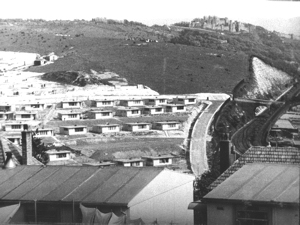
Prefabs on the developing Buckland Estate late 1940s. The railway track on the right is the Dover-Deal line. Dover Museum

Prefabs on the developing Buckland Estate late 1940s. The railway track on the right is the Dover-Deal line. Dover Museum

In January 1946 EKRCC, having lost its headquarters in Canterbury to enemy action, acquired Odsal House at Harbledown, for use as temporary headquarters. At about the same time the rebuilding of the war damaged St Stephen’s body and paint shops in Canterbury was started. Due to shortage of materials the buildings were not finished until 1948. On 21 May 1947, the bus service to the new prefab estate on what became the Buckland Housing Estate in Dover was started. The roads had been named after places in the U.S.A. which had sent food parcels and also places in the British Commonwealth that had helped the country during the War. The following year, the Olympic Torch arrived in Dover from France aboard the destroyer Bicester and huge crowds came to watch Dover Co-operative worker, Sidney Doble, carrying the torch through the town and out along the London Road towards Canterbury. Crowds lined the route all the way to beyond Lydden but EKRCC ensured that buses were waiting at strategic points to take people back to stops in Dover. The company was praised for the efficiency in clearing the crowds and having them on their way home within 90minutes.

Ashridge College, Berkhamstead, Hertfordshire 1950s. EKRCC drivers went there to undertake the RSA Chartership course and exam in Transport and Operations. Ashridge Archive

Ashridge College, Berkhamstead, Hertfordshire 1950s. EKRCC drivers went there to undertake the RSA Chartership course and exam in Transport and Operations. Ashridge Archive

Following the War, General Manager Baynton had encouraged all EKRCC staff to take courses and examinations on aspects of transport run by the Royal Society for the Encouragement of Arts, Manufactures and Commerce (RSA). On passing exams the employees received diplomas and Baynton promised them that these would further their careers within the company. The take up was such that managers of EKRCC garages set up local training facilities and this, in turn, encouraged more staff to undertake the courses with some drivers going on to take advanced courses in transport operations at Ashridge College, Hertfordshire*. On successful completion, the drivers were admitted into the Chartered Institute of Transport and Logistics. Dover historian, Joe Harman was one such EKRCC bus driver. Unfortunately, Baynton’s successor was not so enthusiastic about such training and made this felt in a number of ways. This was most notable when it came to promotion when it was made clear that length of service outweighed qualifications. This not only disgruntled the qualified staff who had worked hard and in their own time to gain the qualifications, but others saw little point in making the effort. Slowly external training with qualifications ceased at Ashridge for EKRCC employees but did continue at local colleges of further education. *Of note the course and similar courses at Ashridge College led to the 1954 Ashridge Act, which drooped the affiliation with the Conservative Party and to form Ashridge Management College.
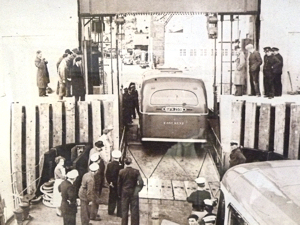
Loading an East Kent Road Car Company pre-war Leyland TD5 rebuilt as a 35 seater single decker by Beadles on to Townsend's Halladale on 11 May 1953 at Eastern Dockyard trying out the new drive-on drive-off facility. Lambert Weston for DHB

Loading an East Kent Road Car Company pre-war Leyland TD5 rebuilt as a 35 seater single decker by Beadles, aboard Townsend’s Halladale on 11 May 1953 at Eastern Dockyard trying out the new drive-on drive-off facility. Lambert Weston for DHB

Petrol rationing, which had been imposed in 1939, was lifted in May 1950 but petrol tax was increased, on average, from 35.95% to 49.65% and this cut heavily into EKRCC finances. To increase the fleet, some 24 double-deckers that had been bought in the 1930s and had seen heavy wartime activity were sent to the Eastern Coach Works at Lowestoft, where they were rebuilt as lowbridge 55 seaters. A further 35 went to the Park Royal Works in London and were also rebuilt as lowbridge 55 seaters. While, in 1951, 28 pre-war Leyland TD5s were given new chassis by Beadles of Dartford and converted into forward entrance 35 seater single-deck coaches. At least one of these was later used to test the new loading berths in 1953, at the newly built Eastern Docks, as can be seen in the photograph, the bus is being loaded onto Townsend car ferry Halladale.

In early 1949, EKRCC had launched its Inclusive Tours Department from a rented defunct Royal Air Force operations room overlooking Ramsgate Harbour. The holiday coach tours included tours of Scotland, the Yorkshire Dales, the Lake District, Cornwall & Devon and Wales. At about the same time, EKRCC ordered 25 half-cab front engined Dennis Lancet J3s for the service. That year, the weather was kind and the project a great success so in February 1950, EKRCC launched its first Continental coach tours brochure. On offer were two 14-day tours to Paris and the French Riviera, taking in Lyons, Cannes and Nice and crossing on the Halladale between Dover and Calais. The 28-seater coach (EFN 587) was craned on and off the ship both in England and France, but all went well with the tours. That is, with the exception of two ladies who wandered off during a short stop at Lyons. With the help of the Gendarmerie, the two ladies joined the coach at Calais!
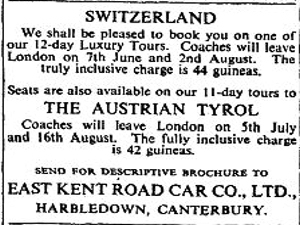
East Kent Road Car Company European coach tours to Switzerland and the Austrian Tyrol advert, 1953.

East Kent Road Car Company European coach tours to Switzerland and the Austrian Tyrol advert, 1953.

The following year London Coastal Coaches, who owned Victoria Coach Station, London, handled most of the bookings and the number of EKRCC tours expanded, included two costing 44guineas to Switzerland and lasting twelve days and two costing 42guineas of 11-days duration to the Austrian Tyrol. The Company went on to work with Global Coaches, Royal Blue Coaches and in 1953 joined the European Railways’ Europabus network of international coach services. For this, they provided buses and coaches between London and Dover, where passengers to Ostend travelled on Belgian Marine ships out of Dover and linked up with services to Brussels. For this service, the EKRCC vehicles were painted light blue to match the Europabus livery. On 26 March 1951 – Easter Monday – EKRCC organised a census taken on the A20 at Charing near Ashford, Kent. It was found that in the space of 90 minutes, 65 non-EKRCC coaches were taking folk from London to either Dover through Folkestone or Thanet through Canterbury. Most of these were owned and driven by former military drivers. When the Company started to implement cut-backs, they found it profitable to hire out vehicles to these independent companies.

Looking back, this was seen as the golden era for the Company and in 1952 it boasted of 586 vehicles and had depots in Canterbury – where major maintenance took place – Dover, Deal, Folkestone, Ashford, Herne Bay, Ramsgate and Rye in Sussex. In 1951 the first underfloor-engine single-deck coaches, five Leyland Royal Tiger coaches with Park Royal bodies (FFN 448-453) had arrived. At the time, the industrial complex within the Eastern Dockyard , as advised by Professor Abercrombie in his report, was  proving to be successful. To enable workers to get to and from the complex Dover Corporation created an extension of the promenade to the Dockyard gate and this included a bus turning area, a large bus shelter and public conveniences, which were completed in 1951. However, the relationship between the Corporation and Dover Harbour Board (DHB) was not good, with the latter secretly planning to take over the Dockyard for shipping.

By the end of 1949 the first of 15 x 20-seat Dennis Falcons arrived and were used to replace all of the EKRCC pre-war Dennis Aces. At the time, due to legal restrictions, these were the only vehicles in the fleet that could be used on one-man services and this did not go down well with the drivers or conductors. 80 Guy Arab III class double-deckers that had been ordered from Guy Motors of Fallings Park, Wolverhampton and started to arrive in 1950. The first (EFN170-209) were 53-seater lowbridge vehicles with Gardner 6LW engines. These were the last of this type to be bought by EKRCC. The second batch (FFN 360-399) had 56-seat highbridge bodies and also heaters – the first East Kent double-decks to be so equipped.

That year, on Wednesday 27 June 1951, Townsend’s Halladale left the Eastern Dockyard from where the Ferry Company operated. On board were a number dignitaries including EKRCC’s Chairman Beddow and his retinue plus DHB and Townsend officials as well as one of the new 8-ton single deck Leyland Royal Tiger 37-seater coaches (FFN453) and its driver. At Calais the ramp was lowered on to the rear of the ship and the bus with passengers was driven off, along the 120foot incline, without any trouble. The driver turned the bus round and successfully drove it back on board. Four days later, the Calais ramp came into operation as the first drive-on, drive-off ferry berth on this section of the English Channel. The ro-ro berths, as they are called, were an integral part of the rebuilt and renamed Eastern Docks that opened in 1953.
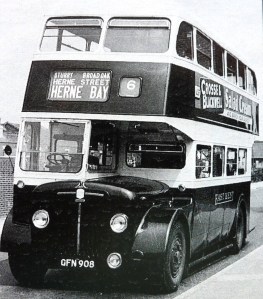
EKRCC Arab class 56-seat (later 58 seats) highbridge double-decker by Guy Motors of Wolverhampton. This one (908) was unique in the batch as it had a Guy body and an open platform. Vic Underhill

EKRCC Arab class 56-seat (later 58 seats) highbridge double-decker by Guy Motors of Wolverhampton. This one (908) was unique in the batch as it had a Guy body and an open platform. Vic Underhill

A further order for 30 Guy Arab IV double-deckers (GFN 908-937) were delivered in 1952 and like the Guy Arabs that had previously arrived, they were Park Royal’s highbridge with 56 seats. The front bonnet had been redesigned to conceal the radiator and they nearly all had platform doors updated with a curved front. For some odd reason one, GFN 908, had a Guy body and an open platform. That year saw the launch of the Maidstone and District and East Kent Club (M&DEKBus Club), named after the green liveried Maidstone and District Company (M&D) and the cherry red and white liveried EKRCC buses.

However, EKRCC continued to complain of financial problems. With a totally different approach, aims and objectives, the Company’s strategy was moving away from that adopted by Garcke and Baynton during their 28-year rule. At the time the company stated that out of their fleet, 220 buses were pre-war stock of which 77 had post-war bodywork and 66 were of the wartime utility vintage. Since the War the costs of raw materials had steadily risen and with them, wage increases. This combination had brought about inflation, which the government dealt with using fiscal policies such as taxation. For the years 1950 and 1951, EKRCC paid £215,000 per annum to meet tax and wage bills and in 1952 the tax and wage bill came to a further £317,000. The main tax bill was on fuel, which amounted to a 200% tax while wages had risen at an estimated 8% per annum since the end of the War.

Finally, the nationalisation of Southern Railway, a significant shareholder in the company, was taking its toll on company finances. EKRCC asked the Traffic Commission to be allowed to raise fares and in July 1951 this was eventually agreed, against opposition from passengers and the local media. A year later, EKRCC again applied for a fare increase and this was instigated on 27 October 1952. Amounting to between 2.5% and 12% the increase in fares was expected to provide an estimated £110,000 to meet costs. In the event, due to a fall in demand as folk found alternative modes of transport, the rise did not meet the outgoings, so again, the company applied for a fare increase. This was denied as being too close to the earlier fare increase and because of the dividends being paid to shareholders’, which was 10% of net income with bonuses of up to 10%!

In June 1952, Dover Corporation took issue with EKRCC over bus fares and hospital visits. Fares were charged by the mile and at the time Kent and Canterbury Hospital was the provider of specialist treatment. Bus service 15, as today, between Dover and Canterbury travelled by the then A2 that followed the route of the Roman Watling Street. As these days, the bus went through Temple Ewell, Lydden and up the steep hill to cross the North Downs to Barham. Unlike today, in those days the A2 was a single carriageway and after Barham Downs dropped sharply into the village of Bridge. On leaving Bridge it was a climb up a steep hill and then a straight road into Canterbury. The journey took approximately 55minutes but on alighting from the bus there was still a walk or another bus ride to the hospital. The fare stages made the journey expensive but seen as commensurate with the rail journey by EKRCC.
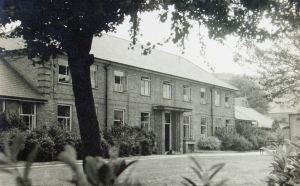
Buckland Hospital c1950 at the time Dover's cottage hospital with inpatient beds. Anglo-Canadian Trade Press

Buckland Hospital c1950 at the time Dover’s cottage hospital with inpatient beds. Anglo-Canadian Trade Press

The Royal Victoria Hospital was Dover’s General Hospital with Buckland Hospital, on the then Union now Coombe Valley Road, the annex that provided a number of services and inpatient beds. Those that had to attend Buckland Hospital for whatever reason faced the problem of expensive bus fares. The fare stages within the town were every mile and one was on Union Road at Primrose Road approximately 300yards from Buckland Hospital entrance. This meant that those who used the bus stop near the Hospital had to pay 2pence more than those who used the Primrose Road bus stop. Consequently, the fare structure hit the less able hardest! H S Price, EKRCC local Traffic Manager, promised to look into the situation and eventually the fare stage at Primrose Road was moved to Buckland Hospital. The Canterbury fare problem was not so easy to resolve as the EKRCC Board were more concerned that if the price of the fare was cut non-patients would also be eligible for cheaper fares.

November 1952, the company successfully applied for permission to recapitalise with the issue of 900,000 Ordinary £1 fully paid up shares for every two £1 shares held. While this was going on the Labour government floated a Bill to nationalise ALL public transport and in Dover there was a packed protest meeting held at Connaught Hall in the then Dover Town Hall, now the Maison Dieu. The nationalisation did not go ahead but EKRCC senior management continued to complain about the Company’s financial problems. Following accountants advice, so they said, ‘economic cut backs,’ were implemented. These centred on reducing or stopping poorly patronised services particularly in rural areas and town services, outside peak times. This enabled staff to be laid off and so both wage and fuel bills fell. Albeit, potential passengers looked to alternative methods of transport, notably bicycles, railways and ‘shanks pony’ (walking). The predictable result was a further fall in passenger demand which resulted in more cutbacks and the Company focused on the high yielding holiday traffic and cheaper ways of providing public services.
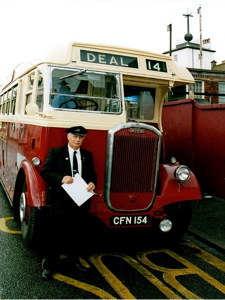
EKRCC Dennis Lancet 3 x 35 seats Park Royal bodywork bought in 1948, withdrawn in 1960, disposed following year. With Inspector John Conway at a Deal vintage show. AJ Conway

EKRCC Dennis Lancet 3 x 35 seats Park Royal bodywork bought in 1948, withdrawn in 1960, disposed following year. With Inspector John Conway at a Deal vintage show. AJ Conway

East Kent, like other eastern areas of the UK, suffered severe flooding in January 1953, with Southern Region railway lines, particularly between Faversham and Birchington,  washed away. EKRCC were called upon to provide replacement services and made some 40+ buses, which had been in winter storage, with drivers available. Once the floods had subsided, the railway company and Kent County Council (KCC) hired buses with drivers to take workmen to where repairs to the railway lines and sea defences were taking place. The subsequent revenue received by EKRCC provided sufficient finance to maintain services that would otherwise have been axed. In 1956 the remaining Guy Arab double-deckers arrived and were used to replace old rolling stock. This final batch had mechanically closing doors with heating on both decks and seating for 61 passengers. A couple that had arrived in February, were given an inaugural run taking pit-workers’ children, living in Deal and Dover, to see the pantomime in Folkestone.

Elizabeth II’s Coronation Day was on 2 June and EKRCC catered for an expected huge demand for vehicles to take passengers to and from London. In realty, although the demand did increase, it was far less than expected due to the general public buying televisions to watch the event and street parties organised for the occasion. In areas where the television reception was poor, such as Dover, there were also attractive civic events organised by the councils and social groups. All were well attended.

A wet summer and a subsequent fall in holiday traffic followed the Coronation so EKRCC implemented cutbacks in public services. Staff were shunted around localities and jobs within the Company and many looked for jobs elsewhere. One of those who left was Joe Harman, who became an ambulance driver. He later wrote that although EKRCC offered him an increase in wages to stay he would have been expected to work as a shift relief at different localities. Joe wrote that at about this time he had a routine x-ray – between 1945 and 1959 a mass x-ray scheme was undertaken by the National Health Service to combat the then prevalent Tuberculosis. The x-ray revealed a shadow on Joe’s lung but it disappeared after he left EKRCC. The cause was given as continual exposure to diesel fumes.
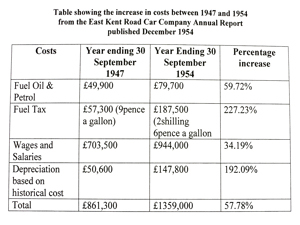
Table showing EKRCC costss 1947-1954. Annual Report December 1954

Table showing EKRCC costs 1947-1954. Annual Report December 1954

In October 1954, EKRCC put in another application to increase fares giving the justification as tax on fuel plus a nationally agreed wage rise. The proposed increase was ½pence and 1pence on single fares and 1pence and 2pence on return fares over certain distances, with an increase of up to 1shilling 7pence. The company presented a table comparing the rise in costs between September 1947 and September 1954. The total increase was 57.78% over that time. To support their claim, EKRCC argued that the tax was imposed on the company’s raw material, that of fuel, yet no other industry was subject to tax on their raw materials. Further, wages, which had continued to increase accounted for 40% of the total takings. Although, the company income was £82,224 net of tax other outgoings besides wages, other internal claims included running costs, overheads, leasing arrangements such as in Dover’s and vehicle maintenance and replacements. The South Eastern Licensing Authority listened but noted yet again that EKRCC had paid 8½% of net income in dividends and rejected the application on the grounds that the planned rise was ‘unnecessary at the present time.

The foundation stone for Folkestone’s new bus station in Bouverie Square was laid 29 April 1954 by the town’s Mayor, Alderman John Moncrieff and came into operation in July 1955. The building of Canterbury bus station was delayed due to a dispute with the city council. It was finally resolved with an agreement whereby EKRCC exchanged its freehold holdings in St Peter’s Street and St Peter’s Place, adjoining Canterbury’s Westgate Towers, for freehold land between St George’s Lane and the City Wall, south-east Canterbury. The resulting bus station became operational in May 1956.
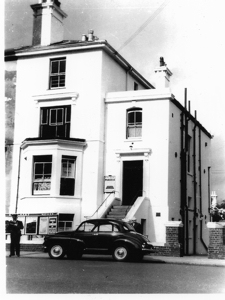
10 Pencester Road - EKRCC Booking & Enquiry Office where the Doctors surgery is today. Julie Wood's Dad

10 Pencester Road – EKRCC Booking & Enquiry Office where the Doctors surgery is today. Julie Wood’s Dad

In Dover, the EKRCC facilities consisted of a converted semi-detached house, number 10 Pencester Road, and a temporary repaired bombed out bus garage in Russell Street. Within the Pencester Road building was the booking, enquiry and parcel offices, administration offices and staff canteen and restroom.  The parcel office was a legacy of the arrangement that EKRCC had made with Southern Railway in 1928. There were no off-road bus or long distance coach parking bays, instead the public accessed buses and coaches parked alongside the pavement on the southern side of Pencester Road.  The 21-year lease over the provision of Dover bus services by EKRCC, which had been ratified in 1937, was coming to an end and the council, because of the situation in Pencester Road and the war damaged bus garage, were far from happy with EKRCC. They therefore were seeking an Act of Parliament to repeal their own powers under the 1936 Act which enabled the council to run their own company from 1957.

Both the 1936 Act and the Act that Dover Corporation were seeking covered a number of local issues but under the 1936 Act the Corporation acquired powers to operate their own bus service. This, however, did not come into effect until the expiry of the 21-year agreement the council had made with EKRCC and that would be on 31 March 1958. Under the agreement, EKRCC were obliged to pay Dover Corporation 75% of the net income earned by their services that operated within the town’s boundaries. The 1936 Act as it stood, meant that the Corporation would be obliged to take over the running of the town’s bus services with all the expense this would entail. If the Act was repealed, then the council could negotiate a new agreement with EKRCC and the Bus Company would continue to provide the town’s bus services.
 James A Johnson Dover's Town Clerk 1944-1968 who led the town's negotiation team for the 1958 new bus contract.

James A Johnson Dover’s Town Clerk 1944-1968 who led the town’s negotiation team for the 1958 new bus contract.

Batting for Dover in the negotiations was the bullish town clerk, James A Johnson, who had a reputation for getting his own way. At the end of December 1955, as negotiations were about to start in the New Year, Johnson announced that it was expected that EKRCC ‘would make substantial monetary payments to the Corporation for many years to come’. He went on to say that EKRCC would ‘provide a new bus garage in Russell Street and a bus station in the town centre’. The bus station, according to Johnson, was to be similar to those in Canterbury and Folkestone. What actually happened at the negotiations is unclear as the details appear not to have been recorded. What is known is that EKRCC emphasised their financial woes and the final settlement for Dover, was so poor that it caused acute embarrassment to both Johnson and the Corporation.

Following another increase in fuel tax plus a national 10shilling a week basic pay rise for drivers with corresponding rises for other workers within the bus industry, in April 1955, EKRCC applied again for permission to increase bus fares. Those using the buses during that era, may remember a cartoon depicting a bus with a large weight above illustrating the heavy burden of fuel duty. EKRCC also wanted to abolish workmen’s special concessionary fares from 1 May that year. KCC mounted a campaign of opposition against both and were vociferously supported by 22 local authorities, including Dover. The proposed increase in the price of a single fare was up to 50% and it was expected to raise £120,000 in revenue for the company that year. Permission was given but EKRCC did better than they expected, as there was a railway strike in June that increased the number of bus passengers. Albeit, a further bus drivers pay rise was sought and this went to the Arbitration Tribunal. In November 1955 the Tribunal awarded a pay increase of 11shillings a week with corresponding rises for support staff.
East Kent Road Car 1956 AEC Reliance with 41-seat dual -purpose Weymann body  in Pencester Road awaiting departure to St Margaret's. Vic Underhill

East Kent Road Car 1956 AEC Reliance with 41-seat dual -purpose Weymann body  in Pencester Road awaiting departure to St Margaret’s. Vic Underhill

Jointly, the 2 pay rises cost the company £145,000 per annum and when 10 new one-man operated buses arrived in 1955, they were seen as a way of cutting operational costs. They were part of a batch of 41-seater buses made by Associated Equipment Company (AEC) whose chassis works were in Acton west London. With the generic name of Reliance, they all had Weyman bodies and were front-entrance single-deckers. This was the first time that EKRCC had used this company and the engines were positioned under-floor increasing the amount of passenger space available. Subsequent deliveries had this feature. EKRCC said that the ten with cabs adapted for one-man operation was part of a pilot scheme for busier routes and a number were based in the Dover and Deal areas on routes 76, 78, 80, 89 and 93 but the staff were far from convinced. Nonetheless, it was recognised that the smaller 20-seater one-man Dennis Falcon buses were proving inadequate to meet demand even on their more rural routes, such as the 92 to Capel and 93A to West Langdon.

Within a year of the previous bus fare increase, EKRCC applied for a further increase to raise another £60,000. The South Eastern Licensing Authority sanctioned this in April 1956 much to the anger of KCC, Local Authorities and the public in general. In Dover angry letters were written to the local paper and an Appeal was sort by 15 Kent Local Authorities. At the tribunal the opposition to the fare increase stated that EKRCC had paid out share dividends of 25% the previous year but were forced to accept that the ordinary share dividend pay out, although far greater than was practical, was actually 8½% and the Appeal was lost.

A further 22 Weymann bodied AEC Reliance 41-seater coaches were delivered in 1956, and in the following two years the last Guy Arab IV double-deckers to be ordered by EKRCC arrived. This final batch of 25 had a more stylish body and seated 61 passengers. On arrival the corresponding number of old vehicles were withdrawn and from 1956 the 20-seater one-man Dennis Falcon buses were up-seated to 25 and later 29. In late 1955, EKRCC provided vehicles linking up with Skyways Coach-Air flights from Lympne to Beauvais, France. They then went on to link up with Silver City from Lympne to Beauvais. Some of the Dennis UF coaches with central entrance Duple bodies were rebranded and used for this service along with AEC Reliance coaches.

Map showing the course of the River Dour through Dover's town centre in the north is Pencester Road where EKRCC had their offices and most of the bus termini. To the south on St James Street/Russell Street was the Bus garage. Service Publications 1990

Map showing the course of the River Dour through Dover’s town centre in the north is Pencester Road where EKRCC had their offices and most of the bus termini. To the south, on St James Street/Russell Street, was the Bus garage. Service Publications 1990

While Dover Corporation’s Bill to Parliament was still under consideration, discussions with EKRCC ensued. These included Dover’s planned bus station and bus garage along with the leasing arrangements with EKRCC as public transport providers within the town. The contract for the latter was due for renewal in March 1958. During the negotiations, Dover Corporation agreed to give up their powers to operate public transport services and in return, EKRCC agreed to build a bus garage in Russell Street and a bus station in Pencester Road. EKRCC also agreed to only use one-man operated bus services in the town at peak times. However, in August that year EKRCC introduced all day one-man operated buses on certain routes in the Dover area as an economy measure. Passengers were expected pay the exact fare into machines called ‘robot conductors‘ and no change was given!

At the request of the Ministry of Housing and Local Government, Dover Corporation were asked to submit a plan for the devastated area of Woolcomber Street, St. James Street and the many smaller intersecting roads and streets. This was submitted and although the proposed bus station in Pencester Road was north of the area under consideration, the council included it. Their submission also included a special war memorial garden around the war damaged bus garage in Russell Street. EKRCC strongly objected, saying that they had plans to build a new station in Pencester Road and a new bus garage on the Russell Street site starting in 1957. Further, they said, the bus garage would include a memorial plaque to those employees of EKRCC who had been killed on 23 March 1942 by the bomb dropped from a German Junkers JU88. Dover’s Bill received Royal Assent and negotiations over the Dover Bus lease were started.

The weather in February 1956 was abnormally cold with blizzards and ice. This made driving difficult and impossible on some 48 of EKRCC bus routes and it was recorded that some 140 vehicles were abandoned. In October 1956, President Gamal Addel Nasser (1918-1970) of Egypt nationalised the Suez Canal, which threatened the UK’s economic and military interests in the region. On 5 November joint UK and French forces defeated the Egyptians but the Canal had been blocked to all shipping. The impact included a rise in fuel prices and the reintroduction of fuel rationing. The latter meant a cut of 10% in EKRCC supplies and this led to a reduction in services. Under the Hydrocarbon Oil Duties (Temporary Increase) Act 1956, fuel tax was increased by a further 1shilling a gallon and EKRCC received permission to temporary increase all fares by the same proportion. Both the fuel rationing and temporary tax increase finished in March 1957 and, at the same time, the temporary bus fare increases were withdrawn.
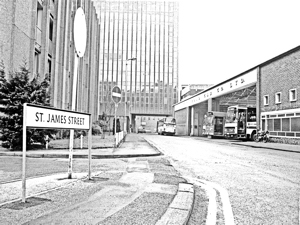
EKRCC bus garage in St James Street in this photograph is taken from Russell Street looking west. The back of Holiday Inn on Townwall Street and facing the sea, is on the left. <a href="https://doverhistorian.com/2014/07/05/burlington-house-a-monument-to-an-arrogant-establishment/">Burlington House</a> ahead showing the arch over St James Street that led out to the one way King Street. Buses on leaving the garage would turn left on to St James Street and then right onto the one way Russell Street. On arrival they would leave Townwall Street turn into Mill Lane and then left again into St James Street as can be seen by the coach in the photograph. On leaving the bus garage they would turn left onto St James Street and then onto the one way Russell Street that would take them to Townwall Street. At that time they could turn right into St James Street and go through Market square, and up Biggin Street. However, but to the one way system, if the bus was going any where else, from King Street it would have to turn right on to the then ancient and narrow Dolphin Lane - at the back of the bus garage - from where they could reach the one way Russell Street. They would again turn right until they reached the two way Townwall Street. c1975. The photograph has been provided by Dover Museum

EKRCC bus garage in St James Street in this photograph is taken from Russell Street looking west. The back of Holiday Inn on Townwall Street and facing the sea, is on the left. Burlington House ahead showing the arch over St James Street that led out to the one way King Street. Buses on leaving the garage would turn left on to St James Street and then right onto the one way Russell Street. On arrival they would leave Townwall Street turn into Mill Lane and then left again into St James Street as can be seen by the coach in the photograph. On leaving the bus garage they would turn left onto St James Street and then onto the one way Russell Street that would take them to Townwall Street. At that time they could turn right into St James Street and go through Market square, and up Biggin Street. However, but to the one way system, if the bus was going any where else, from King Street it would have to turn right on to the then ancient and narrow Dolphin Lane – at the back of the bus garage – from where they could reach the one way Russell Street. They would again turn right until they reached the two way Townwall Street. c1975. The photograph has been provided by Dover Museum

On receipt of a War Damaged claim EKRCC started work on building Dover’s new bus garage on the former bus depot site in Russell Street. This was designed to house 90 buses so the new garage was considerably larger taking up part of what had been Leney’s Phoenix Brewery and with the entrance opening up onto St James Street. In the late 1960s a complex one-way system was introduced in Dover and all the buses left the garage by way of King Street, with those going through town going via Market Square. For the remainder particularly the route became much more complex as described in the caption to the photograph from Dover Museum.  The new building included underground storage tanks capable of holding 30,000 gallons of diesel fuel. The working relationship between EKRCC, Belgium Marine and Europabus promised an increase in the number and extent of Continental tours in the summer of 1957. With the success of the two batches of AEC saloons, the Company ordered more AEC single decks and 12 luxury coaches. As the company had expanded its South Coast Express service they had ordered a further 39 single-decker dual purpose coaches, which arrived in 1957. These were all bodied by Beadle, the Kent builder but they were the last such bodies received by EKRCC.

In Dover that year, the Happy Travellers band, made up of EKRCC off-duty Dover bus drivers and conductors were successfully entertaining locals. However, on 20 July 1957 bus drivers in the provinces belonging to the T&GWU went on strike. This was in support of a pay rise of an extra £1 a week in an effort to bring them more into line with their London counterparts. The latter were paid 30shillings 6pence more a week. Windscreen stickers were made available by motoring organisations such as the Automobile Association and the Royal Automobile Club for car owners who were prepared to offer lifts to people waiting at bus stops. The government supported this by saying that they would cover any payouts in cases of accident where the insurance was inadequate.

In 1958/9 the highbridge Guy Arabs double-deckers were up-seated to 58 by the addition of two extra seats upstairs providing much needed further capacity. On 3 November 1957 the EKRCC application to increase fares was granted. In the application to the South Eastern Licensing Authority, EKRCC argued that it was to go some way to contributing to the cost of new double-deckers. These, they said, would have entrances at the front so that drivers could see that passengers were safely on board. In his speech to the shareholders that year Chairman Beddow, looked at the fall in net income for the year, which was £76,768, being down by 22% on the previous year. This, he blamed on the strike, which had occurred in the prime revenue season. Beddow also blamed the costs of running morning and afternoon school services as they made an average loss of 61%. As the company was obliged to provide the school services, loss making rural bus services were reduced. Apologetically, Beddow told shareholders, the amount they received in dividends would be less than the previous year but the ordinary dividend payments remained at 8½%.

 East Kent Road Car Company World War II Memorial (detail) to those killed on the evening of 23 March 1942 by an enemy bomb in the bus garage on Russell Street. Dover Transport Museum.

East Kent Road Car Company World War II Memorial (detail) to those killed on the evening of 23 March 1942 by an enemy bomb dropped on the bus garage on Russell Street. Dover Transport Museum.

EKRCC new bus garage in Dover officially opened in September 1958 and was later rebuilt to face the back of the Holiday Inn, in St James Street. Much larger than the old premises, it had the capacity for 90 vehicles with workshops, offices, stores and staff facilities. The promised memorial plaque was also erected – now in the Dover Transport Museum. However, the promised bus station was no longer on the agenda. This, said EKRCC chairman Beddow, was due to a change in policy within the company. EKRCC had found that although the new bus stations in Canterbury and Folkestone were popular with both passengers and the councils, they made little difference to the number of passengers using the buses. This, he said, was due to the fall in the price of cars, the availability of hire purchase and the fast new motorways that were being built. People were turning away from public transport in general and television was keeping people at home in the evenings. Dover Corporation and the local press expressed their anger, particularly about buses parking at the bus stops in Pencester Road, which was the major source of congestion in the area.

The first of 40 front-entrance, AEC Regent V double-deckers, bodied by Park Royal of West London, with seating for 72 passengers and with front entrance doors controlled by the driver were delivered. Slightly longer than previous double-deckers they had a completely new layout inside, with staircase and passenger door at the front which, according to Chairman Beddow enabled the driver to see that passengers were safely on board. Although publicity material said that the doors were extra-wide in a broad entrance. In fact the entrance was steeper than the previous Guy’s buses, which had a flat platform before an internal step. However, the new bus did have stanchions and handrails in the centre and at both sides of the platform to help with boarding. The 9.6-litre vertical AV590 forward-mounted engine gave a 125 brake horsepower and the 4-speed synchromesh gearbox enabled the driver to change gear faster. Unlike previous EKRCC buses, which had vacuum or hydraulic brakes, these new buses had pressurised air operated brakes. Costing just over £230,000, the first ones were assigned to Thanet replacing 40 x 1950 Guy Arab IIIs. These were then distributed to other depots across the company, including Dover, which received FFN 360-FFN 366.
EKRCC Wartime utility open-top Guy double-decker converted in 1960 to an open-top and introduced in Thanet in 1959. It was introduced to Dover for the south coastal route in 1968. Dover Museum

EKRCC Wartime utility open-top Guy double-decker converted in 1960 to an open-top and introduced in Thanet in 1959. It was introduced to Dover for the south coastal route in 1968. Dover Museum

In the summer of 1959 EKRCC introduced its first open-top bus service by converting some of the wartime ‘Utility’ buses made by Guy Motors. Painted in the reverse cream and red livery, they operated out of the Thanet Garage. In 1968 one was introduced on an experimental service between Dover and Folkestone which was later extended to Hythe thence St Mary’s Bay and Lympne Airport during the following three summers. As a cost saving measure, by the end of 1959 EKRCC had over 100 of its coaches adapted for one-man operation including 26 former rear-entrance Dennis Lancet buses converted to front-entrance for this purpose. On 16 May 1960 Dover Harbour Board opened the Lighthouse restaurant/café at the end of the Prince of Wales Pier and for that summer EKRCC ran a bus service along the Pier!
East Kent Road Car Company 1960 AEC Reliance with 41 seat Park Royal body on the first day of the Dover-Deal-Margate run 26 May 1974. left, driver Richard Wallace, right inspector Bill Ratcliffe. R Wallace Collection

East Kent Road Car Company 1960 AEC Reliance with 41 seat Park Royal body on the first day of the Dover-Deal-Margate run 26 May 1974. left, driver Richard Wallace, right inspector Bill Ratcliffe. R Wallace Collection

Lobbying from bus companies, amongst others, moved the government to implement ‘Clearway’s on certain roads. This permitted vehicles to stop only as long as necessary to pick up or set down passengers during certain times and thus it enabled traffic to flow more freely but at other times allowed for overnight and daytime parking when the road is not so busy. In Dover, the council talked of introducing clearways along Pencester Road during peak times, to stop buses parking there! EKRCC took little notice as they were more interested in lobbying to increase the size of coaches for their Continental services. Following the recommendation of the International Convention on Road Traffic at Geneva in September 1949, Continental coaches had been allowed to be 36-feet in length and 8feet 2½inches in width, while British coaches were limited to 30-feet in length and 8feet in width. This difference, meant that Continental companies could carry a maximum 45 passengers against 41 on British coaches. EKRCC eventually won and in 1962 the company ordered 20 x 36feet long AEC Reliances with 46 seats. The coaches had Park Royal bodies, 9.5litre engines and over the next four years the Company had added a further 58 to their fleet.

EKRCC moved its headquarters out of the temporary offices at Odsal House, Harbledown, to a new state-of-the-art building in Station Road West, Canterbury in 1960. More single-deck dual-purpose coaches arrived, all bodied by Park Royal and delivered in two batches, 40 in 1960 and a further 19 in 1960/61. Increasingly, all but trunk routes were converted to one-man operation. The company also ordered more AEC Regents that arrived in the years 1960-62 in two batches. These had a more angular design and those based in Dover, all half-cabs, came from the second batch. However, the most notable delivery, as far as Dover was concerned, were three lowheight, 13feet 6inches, double-deck AEC Bridgemasters to operate the 129 route to the St. Radigunds estate, which could not accommodate the standard highbridge double-decks. This was due to the low, 14feet 6inches high, railway bridge over the then Union Road (from 1964 Coombe Valley Road). Formerly, the route had been served by ageing, lowbridge Leyland and Guy buses.

Ernest Marples (1907-1978) was the Minister of Transport from 1959-1964 and was also a director of Marples Ridgeway civil engineering company. Founded in 1948 by Marples and engineer Reginald Ridgway, the company’s projects included road construction such as the A329(M), M56 and M27. In 1962 Marples was responsible for the Transport Act which dissolved the British Transport Commission and established the British Railways Board. In anticipation of this, Marples appointed Dr Richard Beeching (1913-1985) who infamously ravaged British Railways. The result was major closures of lines and stations and these were offset by government funded motorway construction! This major change in transport policy was not lost on EKRCC, who ordered 78 x 36foot single-deck coaches, the last one arriving in 1966. Of interest, the later ones had forced-air ventilation and panoramic windows. In 1964, EKRCC introduced AEC Reliance coaches with Duple Commander bodies that were mainly used for Continental tours. These coaches replaced 1957 Beadle-bodied touring vehicles that were re-deployed for British long distance tours.
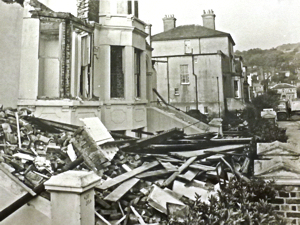
Pencester Road, the demolition of properties in October 1964 to make way for the shopping mall along the north side of the road. Kent Messenger

Pencester Road, the demolition of properties in October 1964 to make way for the shopping mall along the north side of the road. Kent Messenger

Although Dover still did not have a bus station, because of the collection of bus stops along the south side of Pencester Road plus offices in the nearby building, the area was referred to as Dover bus station. This was the case at the beginning of 1964 when St Martin’s Property Company of London announced plans to build a £100,000 new shopping centre opposite Dover’s bus station. Development began later that year on the three-storey block of twelve shops and a supermarket with the demolition of properties facing Pencester Gardens. However, the false impression that Dover did have a bus station led to local uproar. By the end of that year EKRCC, who owned the former bombsite on the south side of Pencester Road between number 7 and the River Dour, submitted plans to Dover Corporation. This was for a booking and enquiry office on the site, which were completed the following year. At the same time, mention was made of the possibility of demolishing existing properties on either side of the Maison Dieu Road end of Pencester Road and redeveloping the sites to create a bus station.

By this time the development of Buckland housing estate had begun in earnest. To meet the health needs of folk living on the estate and elsewhere in Dover a group of ten local GPs inaugurated a plan under the 1964 National Health Act, to establish a health centre. Under the Act, Local Authorities, such as KCC, were given the power to provide, equip and maintain such health centres where family doctors may work closely with the local authority health services. KCC agreed as the site chosen on Maison Dieu Road, would enable the greatest access of patients as close as possible to the proposed new bus station. Further, some of these General Practitioners occupied 3 Pencester Road, owned by KCC along with the adjacent properties. The Dover Health Centre on Maison Dieu Road, as it was/is called, was the first in Kent, cost £120,000 and opened in 1967.

EKRCC income had fallen from £149,501 for 1961 to £146,562 for 1962, even though fare increases had been successfully achieved. In 1961 a trial bus service was introduced between East Cliff and Connaught Park via Castle Hill, returning by Frith Road and Maison Dieu Road. The annual payment to Dover Corporation for 1961-62, was £3,200 and a pay rise costing EKRCC £77,000 was agreed. This, it was planned, was to be partially offset with a productivity deal, which was expected to net £50,000. The productivity deal failed to realise the expected return, nonetheless, dividends on shares remained at 8½%. In March 1962, due to the lack of bus parking facilities in Dover, a bus driver parked a single decker workmans’ bus in a car park in Townwall Street one evening. This was normal procedure when another driver was to take a workmans’ bus out in the early hours of the next morning. When the early morning driver turned up, the bus was not there. It was later found abandoned and badly damaged in Reach Road, St Margaret’s. In the hope of stopping such action again, EKRCC talked of expanding the size of the garage in Dover and also to include lock-up facilities in the proposed new Pencester Road bus station.
East Kent Road Car Company AEC Regent V with Park Royal body delivered in 1964. On London Road, Buckland. Eric Baldock

East Kent Road Car Company AEC Regent V with Park Royal body delivered in 1964. On London Road, Buckland. Eric Baldock

Private car ownership was escalating and was taking its toll on the number of bus passengers. At the same time management and employees relations were turning sour and this went into a nosedive in spring 1963. EKRCC not only discouraged bus crews to remain members of the T&GWU; they actively discouraged new employees joining the union. Matters came to a head on 1 June 1963, when some 3,500 busmen working for the EKRCC and the Maidstone and District Motor Service, went on strike to allow all employees to join the T&GWU. They won, bus fares increased and further strike action took place for pay increases which were given with Union endorsed productivity deals. Yet, EKRCC net income actually increased in 1964, such that the dividends paid to shareholders was 10%!

In 1966, EKRCC instigated a policy, without Union agreement, to stop payments to bus crews for work over and above their contracts. This was done by rewriting job descriptions to incorporate extra duties into established contracts. A walkout ensued in June 1966 but this had little effect on company income. At Folkestone’s Grand Hotel, EKRCC invited 200 guests to celebrate its silver jubilee on 4 October that year. Heading the guest list was Alfred Baynton. Others included representatives of the 22 local authorities in whose area EKRCC operated. The invitations had been sent to and accepted by senior and retired employees and representatives of the T&GWU. In his speech, EKRCC Chairman Beddow said that the company employed over 2,000 of which 442 had completed 25years service or more, 117 had 40-years service or more and the longest serving employee was lathe operator Reginald Taylor of Canterbury. He had completed 50years with the company for which he was presented with a gas cooker.  The Chairman also told his audience that EKRCC had 622 vehicles, 2,160 employees, ran 137 different services, covered 17,625,000 miles in the previous year and carried 60million passengers.
EKRCC Bedford 1967 VAS with Marshall 29 seat body. Service 135 then 309 to the Citadel, Western Heights. Richard Wallace.

EKRCC Bedford 1967 VAS with Marshall 29 seat body. Service 135 then 309 to the Citadel, Western Heights. Richard Wallace.

The success of the 36feet AEC vehicles led to the purchase of 4 Marshall of Cambridge bodied buses in 1965 on the same AEC chassis. Used as crew-operated buses at first, they, and a subsequent batch of 10 arriving in 1967, were to usher in one-man operation on a number of trunk routes from 1967 onwards.  However, reluctance by staff to operate them on a one-man basis to their maximum 51-seat capacity saw most of the second batch temporarily reduced to 45-seats. In 1966, vehicles with 53 seats were allowed to be one-man operational. Before that year one-man operated buses had to be 45-seaters or less. In 1968 a batch 25 x 53-seaters arrived, some of which were reduced in seating capacity. Albeit, following an agreement with the Unions, they were allowed to operate at their full capacity from late 1968. This enabled most of the EKRCC’s longer routes, such as between Dover and Folkestone and Dover and Canterbury, to become one-man operational. In 1967, 10 small Bedford VAS buses with 29-seat Marshall bodies were delivered and these allowed the replacement of the Dennis Falcons which worked on Dover’s Capel, West Langdon and the Citadel, Western Heights routes.
East Kent Road Car Company AEC Regent V double-deck 1966 bus now owned by the Home Front Tours outside the Dover Transport Museum. Norman Burnett.

East Kent Road Car Company AEC Regent V double-deck 1966 bus now owned by the Home Front Tours outside the Dover Transport Museum. Norman Burnett.

From 1961 more Regent buses began to arrive, these had more angular half-cab Park Royal bodies but otherwise the chassis were similar to earlier AEC Regents, making up a fleet of 161 such vehicles. By this time EKRCC’s sister company Maidstone and District were purchasing rear-engine vehicles, such as Atlanteans and later, Daimler Fleetlines, for all new double-decks but EKRCC preferred to stick with the conventional chassis of the AEC Regents for double-decks and Reliance for single-decks. Modern observers tend to believe that this was possibly due to the influence of EKRCC’s Chief Engineer of the time Mr. S.H. Loxton. In 1966 and 1968 two rear-engined AEC Swift coaches were also trialled but Reliance’s were still ordered for single-decker coaches up to and including 1968. A further 36foot 8inch AEC Reliance service single-deckers came into the fleet in 1968 but these had Willowbrook bodies, a change from the large numbers of Park Royal service coaches that had been purchased since 1962.

Even though EKRCC fares continued to increase and for the years 1965 to 1967  they continued to pay out 10% of net income in share dividends, the actual income of the company continued to fall. EKRCC was not the only bus company facing falling demand and the Labour Party’s Minister of Transport (1965-1968), Barbara Castle (1910-2002), proposed to effectively nationalise the country’s local bus companies. The government had set up the Transport Holding Company using the previously nationalised former Tilling Group of bus companies and in November 1967 British Electric Traction Company sold its Public Service Vehicle interests to the Government for £47m. At the EKRCC shareholders meeting in February 1968, the Chairman, Raymond Beddow, announce his retirement.

He told shareholders that, ‘Some years have been good and some not so good but all in all the company has given a good and faithful service to the public and I am confident it will continue to do so.’ His successor as chairman was J H Richardson and at about the same time the Transport Holding Company announced that it would be acquiring the minority shares of the various companies that had come under the umbrella of British Electric Traction Company. For EKRCC minority shares, their holders were paid 44shillings 6pence per share and EKRCC was transferred to the Transport Holding Company.

Jim Skyrme. Chairman of the East Kent Road Car Company who took the company into the National Bus Company in 1967. 30.12.1971

Jim Skyrme. Chairman of the East Kent Road Car Company who took the company into the National Bus Company in 1967. 30.12.1971

As part of the nationalisation, the Transport Holding Company acquired a 75% shareholdings in chassis builders Bristol Commercial Vehicles and body manufacturers Eastern Coach Works based in Lowestoft, Suffolk. Leyland Motor Corporation owned the other 25% in the two companies and of note, in 1968 Leyland Motor Corporation merged with British Motor Holdings to form the British Leyland Motor Corporation. In July 1967, Richardson resigned from EKRCC and S J B (known as Jim) Skyrme, the Chief Engineer with the British Electric Traction Company, was elected Chairman.

The following month it was announced that Norman Todd, a full time member of the Central Electricity Generating Board, on retirement was to be the part-time Chairman of the new National Bus Company and T W H Gailey, the full-time Chief Executive. Norman Todd, as part time chairman of NBC received £5,000 a year, at a time when the average wage for a man was £1500 a year. Gailey, who was also the chairman of the Tilling Association Ltd, received between £7,500-£9,000 a year for his NBC job. There were also four part time members of NBC’s Board, three of which were, Alderman W Alker – Bury Transport Committee, A P DeBoer and Sir William Hart (1903-1977) – Clerk to the Greater London Council and each were paid £1,000 a year. The fourth member was the full-time chairman of the Scottish Transport Group W H Little who declined the offer of a salary.

Nationalisation – East Kent Bus Company
East Kent Bus Company 1969 Daimler Fleetline with Park Royal 72-seat Highbridge body in EKBC poppy red and sporting the NBC logo. Now owned by Phil Drake and Dave Ferguson. Mark Bowerback.

East Kent Bus Company 1969 Daimler Fleetline with Park Royal 72-seat Highbridge body in EKBC poppy red and sporting the NBC logo. Now owned by Phil Drake and Dave Ferguson. Mark Bowerback.

The National Bus Company came into operation on 1 January 1969 and was obliged to show that it had broke-even at the end of every financial year. They had, under their control approximately 20,000 public buses and coaches – nearly one-third of all those operating in the UK – and control of assets worth over £100m. NBC did not actually run bus services but were the owner of a number of regional subsidiary bus operating companies that were locally managed with their own fleet names and liveries. East Kent Road Car Company was renamed East Kent Bus Company (EKBC) and its livery was poppy red and cream with East Kent in white followed by the double-N (National Bus Company) arrow logo. In the name of economy there was rationalisation that led to amalgamations, as later happened with EKBC and M&D, the west Kent bus company. The main financial role of NBC was that of channelling government grants into the individual companies and negotiating subsidies from local authorities, such as KCC. 

In 1969, the government made a grant of 50% of the cost for one-man operated double-deckers and EKBC ordered 20 Daimler Fleetline double-deckers. After trials as driver/conductor operated buses they were all finally based at Thanet. They were aimed at one-man operation and at that time Thanet was the only depot that was agreeable with regards to double-deck operation. At the same time 10 AEC Swift rear-engine coaches arrived with Marshall of Cambridge bodies followed by a further 15 similar vehicles in 1970/71.

Strike - Picket Line Notice. Dover Transport Museum

Strike – Picket Line Notice. Dover Transport Museum

The General Election was held on 18 June 1970 bringing the Conservatives into power. Not long after EKRCC crews belonging to the T&GWU, like their 64,000 municipal transport employees and 98,000 private bus company employees elsewhere, entered into a dispute with the NBC over pay. In essence they wanted a 25% pay increase. Negotiations broke down and an overtime ban together with a work to rule with regards to one-man bus crews ensued. The dispute reached this level in July but then collective bargaining started to break down. In some parts of the country agreements were reached, with an average £2 a week wage rise accepted. In the EKBC area, the dispute had started just before the schools broke up and with less demand on its buses, the management coped.  When the men finally returned to work in the autumn, they found a lot of the rostered overtime had gone thus reducing their take home pay. At Folkestone the men published their own satirical magazine on the dispute – On the Buses – and were supported by local socialist groups.

NBC’s revenue in 1969 was £148.7m giving a final profit of £800,000. In 1970 it was £163.7m but the final accounts showed a loss of £8.1m. The number of passengers carried had fallen by 10%, while wage and price inflation had taken their toll exacerbated by the industrial unrest. In March 1970 new drivers hours regulations, which restricted the number of hours drivers were allowed behind the wheel meant that more had to be employed. The most serious problem, it was said, was that of loss making routes. Local Authorities were obliged under the 1969 Act, to subsidise unprofitable but socially valuable services with the Ministry of Transport paying half the cost. This was not policed and therefore many Local Authorities either ignored the directive or only half-heartedly made an effort. In consequence, except for the most serious loss making services, NBC complained that they had to provide the services.  In order to help NBC’s finances for 1971, the government gave a grant of £6m.
East Kent Bus Company 1971 AEC Swift 51-seater with Alexander body, 301 Athol Terrace - Maxton service. Dover Museum

East Kent Bus Company 1971 AEC Swift 51-seater with Alexander body, 301 Athol Terrace – Maxton service. Dover Museum

In 1971, with the arrival of a further 12 AEC Swifts, with Alexander W bodywork and painted in traditional EKRCC livery they were the last new buses to feature these colours. Most of these buses were based in Dover where the conductors were made redundant as the new buses replaced the double-deckers in the town. The final conversion of Dover’s last crew-operated routes to one-man operation took place in September. The Dover and Folkestone depots were refurbished to deal with one-man operated buses and Deal depot, for the same reason, was given a make-over the following year. However, the Faversham depot was closed.

Due to a combination of an order for double-decks diverted by NBC away from East Kent and the difficulties with expanding double-deck one-man operation due to staff resistance EKBC acquired 30 Leyland Leopard coaches from Southdown Motor Services. These were refurbished and most were repainted from green and cream to traditional EKRCC livery, leaving a few to enter service with traditional Southdown livery. They were based at Folkestone until they were all withdrawn by 1977. In 1970/71 a number of Plaxton-bodied coaches arrived and were far more comfortable and stylish than their predecessors.  20 were 36foot x 49 seat cars and 10 had 40foot chassis and 53 seats.

In 1972, the first of a fleet of new 49-seater single deck Leyland National coaches started to arrive. All with the NBC poppy red livery, the first batch comprised 26 vehicles, the order being completed in 1973. The funding for the Leyland National buses was partly paid for by a government grant and they were a natural outcome of the assets acquired during Nationalisation. Most notably the 75% holdings in Bristol Commercial Vehicles and Eastern Coach Works of which British Leyland Motor Corporation owned the other 25%. Park Royal, in 1949 had become part of Associated Commercial Vehicles and in 1972 Leyland Motor Corporation acquired the latter.  In 1968 Leyland Motor Corporation had merged with British Motor Holdings (BMH) to form British Leyland Motor Corporation. This was, at that time, the fifth biggest company in the UK and one of the top three motor manufacturing companies outside of the United States.

Under BMH, previously known as British Motor Corporation were numerous well known motor companies including Austin, Morris, Riley, Wolesley, MG, and Jaguar and through the latter, Guy motors which was once popular with EKRCC.  Leyland’s stable included Triumph, Rover, Alvis and its large commercial range that included those mentioned above.  The deal between Leyland and BMH was a one-for-one share exchange and the value of BMH at the time was £193million and for Leyland, £217million. British Leyland Motor Corporation was nationalised in 1975 following which many of its subsidiaries closed, including Park Royal, Bristol Commercial Vehicles and Eastern Coach Works.

Fred Wood (1926-2003), a successful businessmen, was appointed chairman of NBC in 1972 and in April, an EKBC holiday coach was the first vehicle over the new viaduct when it opened from Limekiln Street to Marine Station and Admiralty Pier. Not long after, the former EKRCC now EKBC holiday and regular long-distance coach services, became part of the South East region of the newly created National Travel Fleet. Wood instigated the white livery with the NBC logo and the word NATIONAL, in alternative red and blue lettering painted on the side. National Travel Fleet was rebranded as the National Express in 1974.
East Kent Bus Company 40-seater AEC Reliance 691 with Duple Bodywork on the Scotland Tour 1970. Dover Museum

East Kent Bus Company 40-seater AEC Reliance 691 with Duple Bodywork on the Scotland Tour 1970. Dover Museum

The former pride of EKRCC and main source of super-profit before Nationalisation was the holiday service and this lucrative operation was maintained by EKBC. There was a major upgrade in 1970 when 8 luxurious AEC Reliance 691 touring coaches with Duple Commander IV bodywork arrived. However, in 1971 Jim Skyrme, the former Chairman of EKRCC who took the firm into Nationalisation, succeeded Gailey as Chief Executive of the National Bus Company at the end of 1971, a position he held for five years. In 1972, under Wood’s directive, EKBC’s holiday enterprises were taken over and together with other pre-nationalisation bus company holiday coach services were rebranded as National Coach Holidays. The company was then run from Cheltenham but re-privatised in 1986 when it was sold to Shearings Group. They, amongst other types of holidays, specialised in coach holidays. Wood was knighted in 1977 for his reorganisation of NBC.

As part of the restructuring in the name of efficiency, the Maidstone and District Bus Company was amalgamated with EKBC. This loss of individual identity had a negative effect on staff moral that was exacerbated by another NBC policy. Senior and middle managers, keen on promotion, were moved around the various former companies within the NBC stable thus undermining identity cohesiveness within the companies. NBC also had a corporate painting policy, for both the inside and outside of buildings. When the outside of the bus office in Pencester Road was painted NBC Corporate Blue, there was a local outcry as it was out of character with the area. This, senior management within NBC chose to ignore. In the spring of 1973, EKBC had all its bus services renumbered. Dover and Deal services were given the prefix 5, Canterbury services were given the prefix 1, Thanet 2, Ashford 3 and Folkestone 4.
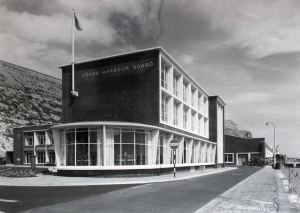
Dover Harbour Board reception terminal at Eastern Docks 1953. Lambert Weston for DHB

Dover Harbour Board reception terminal at Eastern Docks 1953. Lambert Weston for DHB

EKBC, in 1974, introduced a regular coach service between London and Paris and London and Brussels via Hoverlloyd Hovercraft Company at Pegwell Bay near Ramsgate. Following rebranding, that year, the Dover – London coach service was given the registration number 007 after James Bond. In the accompanying National Express publicity it was said that Ian Fleming, the author of the James Bond books, had moved into a beach cottage in St Margaret’s Bay following the War, which was correct. However, National Express publicity went on to say that Fleming had taken the number, 007, from the Dover to London coach number of that the time – which was a figment of NBC’s publicity department’s imagination! Nonetheless, the coach service from the Eastern Docks to London proved so popular that by the end of the decade there were 14 departures a day and National Express opened a waiting room and enquiry office within the Docks reception terminal.

Throughout the 1970s the momentum of the public abandoning bus travel in favour of  private motor vehicles gained pace. In order to achieve its financial target, EKBC continued to replace crewed with one-man operated buses and then started cutting routes, particularly those in rural areas. One of NBC main roles was to negotiate subsidies from local authorities, such as KCC however, they seemed somewhat lax in this area. To make this an obligation it was incorporated into the Local Government Act of 1972, which also obliged local authorities such as KCC to develop and co-ordinate efficient transport systems for rural areas. Further, as a result of the 1972 Act, on 1 April 1974, Dover District Council was formed and shortly after proposed a scheme of concession bus fares for a limited number of people living in the District. That year, EKBC advertised for new staff, promising recruits free bus travel.
East Kent Bus Company number 87 Dover-Ramsgate service 51seater AEC Swift 69 with Alexander body 1971. Dover Museum

East Kent Bus Company number 87 Dover-Ramsgate service 51seater AEC Swift 69 with Alexander body 1971. Dover Museum

One new recruit was retired Major General Derek Carroll (1919-1996) O.B.E. Chief Engineer, British Army of the Rhine 1970-1973. The Major General lived in Shepherdswell and on taking up the post of bus driver with EKBC, he told reporters that he believed in starting at the bottom. A year later the Major General and EKBC parted amicably with the retired Major General proudly announcing that he had gained the Heavy Goods Vehicle and Public Service Vehicle licences. After working as an Immigration Officer at Ramsgate Hoverport in 1976 the Major General set up his own coach business and also worked part-time as Kent Ambulance driver for the next ten years!

During this period, the NBC, which owned some 700 sites, many in the centre of towns and cities, changed its policy of selling off sites that were surplus to requirement. The Chairman, Fred Wood, successfully argued, particularly against government mandarins, for a planned programme to assess such sites potential for redevelopment.  He told parliament that together, the sites had a book value of £36m but with a current market value of between £50m and £60m. This could be increased, he said, if NBC, using outside experts, prepared schemes, sought planning permission and sold the development rights but retained the freehold. His advisers assessed that this policy could potentially net NBC £200m-£300m if all sites were dealt with this way. From the resulting revenue, Wood said, new attractive bus stations, with restaurants, car parks and pedestrian ways could be built. Following this statement, hopes were raised that Dover would get one such bus station in the town in the area of Pencester Road.

Bristol Commercial Vehicles VRT double-deck vehicles, in the mid-1970s, entered the fleet. The first batch having highbridge14feet 6inches Eastern Coach Works bodywork. Later batches had rarer Willowbrook highbridge bodies before the final batch delivered in 1980/1 had lowheight,13foot 8inches Eastern Coach Works body. These replaced the last of the AEC Regents from normal passenger services in the early 1980s. Although painted in the standard NBC/EKBC poppy red, increasingly EKBC were being criticised as poppy red faded into dappled pink generally making the buses look old and uncared for.

In June 1976 one of EKBC coaches carrying children and their teachers, collected from London, was being taken back to the Royal School for Deaf Children in Margate. Near Sittingbourne, the coach hit a stationary lorry on the M2. One child, age 12years, and an adult, who had been assisting the lorry driver, were killed in the subsequent multi-vehicle pile up. Fifteen children and three adults were hurt. Doctors and nurses, at the hospitals where the children were taken, had difficulty on communicating with them until the police brought in members of the congregation from a church service for the deaf to help. This was the worst road accident in which an EKBC vehicle was involved.

Dover Precinct south from Biggin Street looking down Cannon Street to the Market Square. LS 2016

Dover Precinct south from Biggin Street looking down Cannon Street to the Market Square. LS 2016

The York Street bypass in Dover, opened in 1972 to traffic between Folkestone Road and Snargate Street. With the removal of through traffic from the town centre, DDC, in 1979, gave approval for a pedestrian precinct and implicit were plans for EKBC to create a bus station somewhere close by. The area designated for the precinct was from the Market Square to Pencester Road. EKBC objected saying that it would financially hit the company hard, such that town services would have to be reduced. KCC, took the objection up on behalf of EKBC and threatened to take DDC to court, not only because of the precinct but also for not allowing EKBC to park over-night in the Russell Street car park. DDC conceded on both issues but when the new precinct opened on 27 February 1981, there was general criticism that it was half-baked because buses, along with service vehicles and permit cars, were allowed to drive through it. Further, the notion of a bus station failed to materialise yet in 1979 new joint EKBC and Maidstone and District headquarters were built in North Road, Canterbury. The former headquarters in Station Road West were sold and sometime after turned into apartments.

In 1979 DDC announced that as the owners of 2,4,6 and part of 8, Pencester Road, next to the EKBC office at number 10, they planned to demolish the buildings and applied to KCC for outline planning permission. This was to erect offices for their Technical Services Department. As DDC was made up of three and a half former councils – Dover, Deal, the Rural district and part of Sandwich, they had inherited small offices throughout the area. Eventually, the Technical Service office project on Pencester Road was abandoned with the building of the large Council complex at Whitfield. Albeit, within their application to KCC for the Pencester Road project, DDC mentioned a proposed Magistrates Court, on the site on Pencester Road next to the EKBC and National Express bus park.

Daimler Fleetline Park Royal by former Betteshanger Colliery offices now owned by Phil Drake &amp; Dave Ferguson August 2010. Phil Drake

Daimler Fleetline Park Royal by former Betteshanger Colliery offices now owned by Phil Drake & Dave Ferguson August 2010. Phil Drake

Nationally, NBC told their various subsidiaries, including EKBC, to assess how they were meeting local needs and a market research programme was launched. Called the Viable Network Project and subsequently referred to as the Market Analysis Project (MAP). Each bus company was obliged to consider its existing, short and long term demand and potential for bus routes, fares, frequency and lengths of journeys. Also alternative forms of transport, school runs and the necessity of providing non-profit making services such as to villages and isolated areas. It involved employing numerous part time workers, including this writer,  requiring the completion of pre-prepared questionnaires by interviewing passengers at bus stations, or as in the case of Dover bus stops in Pencester Road, as well as house to house calls. Needless to say, along Pencester Road, where this author was stationed, the views of bus users was dominated by the need of a bus station with somewhere warm and dry to sit and clear details of which bus stop to use, where to catch it and easy to read time tables.

On completion, NBC publicity department stated that virtually every bus route within its remit was examined and the Local Authorities of the areas the bus company operated were given copies for comment. In some areas, the results were analysed and subsequent services did meet community needs. Albeit, inherently within the reports was the breaking up of the larger bus operations to smaller units and far more finance from Local Authorities to subsidise loss making rural services. In the EKBC area, analysis showed that inter-urban areas made the most income and although it was expected that rural services would be loss making, it came as a surprise to many that town services, which included some of those in Dover, Deal and Folkestone, were also loss making. In September 1980, new route networks were introduced on an area-by-area basis and had the effect, in some cases of turning loss making services into financially viable ones. Be that as it may, national events leading to a change of government and a radical change in policy curbed a good many of the project findings.

Deregulation and Denationalisation

In May 1979 Margaret Thatcher’s (1925-2013) Conservative government was elected and one of the new Prime Minister’s (1979-1990) objectives was privatisation of state/municipal owned industries, including the National Bus Company. On the back of the reported Market Analysis Project partial findings in November 1979, the government published its White Paper outlining a Transport Bill that became law in October 1980. Within the new Act, the Traffic Commission, which regulated licensed vehicles, crews, public transport routes and fares, was abolished. Licensing was replaced by operators’ licenses and regulations were put in place for annual testing of vehicles and for authorisation of bus garages from where services would be run. At the same time, an order was issued to the different companies including EKBC to cut budgets and government subsidies were also cut. Following on from this the Deal, Albert Road depot was closed in 1981 and 45 members of staff – about half the workforce – were made redundant. Throughout the EKBC further net work closures and staff redundancies were made in order to try and make ends meet.

The Transport Act deregulated coach services and the end of 1980, EKBC in the face of possibly competition that did not materialise, introduced services between Folkestone and London and Herne Bay and the City of London. The coaches took 2½hours, which was slower than trains but the fares were considerably cheaper. The Herne Bay-London service remained for some ten years. The already successful Dover-London service, which ran into Victoria coach station, was eventually moved from Eastern Docks to Pencester Road where it remains to this day. Five 53-seater Leyland Tigers with Plaxton coach bodies were delivered in 1983, intended mainly for London express work. Five MCW Metroliners arrived in the same year as East Kent had been chosen to evaluate this new vehicle and they went on to add more to the fleet including second-hand examples. Also from 1983, ten AEC Reliance coaches from 1973 were given new bodies.

Following swingeing cut backs by government, KCC voted to drastically cut subsidies for loss making routes in 1982. This was against a forcefully put argument that such services enabled people to get to work, young people to undertake training courses, parents with children but without their own transport and the elderly to get out and about, utilised rural housing rather than becoming weekend cottages, and numerous other reasons. Indeed, the response of one councillor was that if people did not have their own transport, then ‘Let them take taxis.’ (Kent Messenger January 1982). In consequence, villages and whole areas of towns were left without a public bus service.  In line with the MAP recommendation to break up larger bus operations to smaller units, NBC separated EKBC and the Maidstone & District bus companies. During this time, the NBC subsidy scheme for capital investment ceased and the EKBC offices, at 10 Pencester Road, closed.

In 1982 NBC sold half of its joint venture with British Leyland and this included its holdings in Bristol Commercial Vehicles and Eastern Coach Works. In Canterbury, the depot was slimmed down and buildings leased to Kent Engineering. This had previously been EKBC’s engineering department but was marketed as a separate company for accounting purposes. Other EKBC assets were actually sold and this included 10 Pencester Road, which was bought by KCC demolished and eventually a doctors’ surgery was built on the site. On the south side of Pencester Road, Dover’s £1½m magistrates court was built and opened in 1986, while the adjacent land was retained by EKBC as a bus park with an enquiry office and staff rest room.
East Kent Bus Company 1972 Leyland National dual door with Leyland body work bought in 1984 and painted in Sealink livery for the Priory Station / Eastern Dock run. Vic Underhill

East Kent Bus Company 1972 Leyland National dual door with Leyland body work bought in 1984 and painted in Sealink livery for the Priory Station / Eastern Dock run. Vic Underhill

Government subsidies were finally abolished and with the lack of subsidies for poor paying routes EKBC relied increasingly on Contract customers. One of these was the nationalised Sealink Ferries that operated out of Dover. In 1984 EKBC purchased some 1972 Leyland National dual door with Leyland bodywork, which were painted in Sealink livery for the Priory Station / Eastern Dock run. They also had a contract with the National Coal Board. East Kent had four operational coal mines, Snowdown which was the first to become commercially operative in 1912, Tilmanstone had produced coal from 1913, Betteshanger from 1927 and Chislet that had produced coal since 1919 but closed 1969. However on 6 March 1984, Coal Miners went on strike that did not end until 1985. This led to a loss in potential revenue of £250,000 to EKBC. Of note, following the strike, Tilmanstone and Snowdown closed in 1987 and Betteshanger on 28 August 1989, while Sealink was privatised on 27 July 1984.
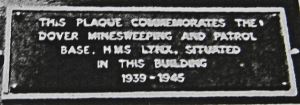
HMS Lynx plaque commemorating the use of the East Kent Road Car Company Garage as the Minesweeping and Patrol craft wing of the wartime Dover Patrol and unveiled in the Dover garage in June 1984

HMS Lynx plaque commemorating the use of the East Kent Road Car Company Garage as the Minesweeping and Patrol craft wing of the wartime Dover Patrol and unveiled in the Dover garage in June 1984

Problems with the survival of EKBC, Sealink Ferries and Kent Coalfield were probably far from the minds of those who attended a special ceremony that took place in June 1984 in the EKBC Dover garage on St James Street. Following the devastation of Dover’s bus garage in World War II on 23 March 1942, the Royal Navy took over the cellars of the building. It was then established as HMS Lynx, the Minesweeping and Patrol craft wing of the wartime Dover Patrol whose job it was to try and keep the Channel clear of enemy attacks. In June 1984 the men and women who had served in the Dover Patrol returned to the unveiling of a commemorative plaque. The ceremony was officiated by Dover born Rear Admiral George Brewer, and the plaque was erected in the East Kent Bus Company garage. Providing a guard of honour were members of the Dover Sea Cadets TS Lynx.

East Kent Bus Company 1986 Ford 190 long-wheel vase transit with Dormobile 16-seat minibus body at Folkestone. Vic Underhill

East Kent Bus Company 1986 Ford 190 long-wheelbase transit with Dormobile 16-seat minibus body at Folkestone. Vic Underhill

During this time, EKBC divided its area into five district offices – in Ashford, Canterbury, Dover, Folkestone and Thanet. Each sector was headed by District Managers with support staff responsible for all aspects of the services in their District. The stated philosophy was to provide ‘hands-on’ control in order to enable quick and effective response to meet changes in local needs. In 1986, EKBC introduced, what also turned out to be successful, 45 minibuses to provide frequent travel services to the housing estates of Ashford, Canterbury, Dover and Folkestone. 27 of these minibuses had Ford Transit long wheelbase chassis and 18 were Freight Rover Sherpas. They all had 16-seater bodies made by Dormobile Ltd. The Dormobile coachworks factory was at Cheriton, Folkestone owned by Martin-Walter Ltd, which had started as a coach manufacturer in 1773. From 1954 Martin-Walter specialised in making small van bodywork that they named Dormobiles until their collapse in 1989. The buses, colloquially known as bread vans, were painted in distinctive bright yellow with a red and black line along the side. The frequency of the minibus services lured many folk away from their cars for travel around the towns. Albeit, by then another White Paper on public bus services had resulted in the 1985 Transport Act which had brought into force the deregulation of the bus services.

On Sunday 26 October 1986, the Transport Act came into operation and the deregulation of the nationalised bus industry began in earnest. The Act also abolished road service licensing under which existing operators could object about others who wished to provide a new service within their area. This increased the flexibility of operators to offer services and allowing different bus services to compete on the same routes. The competition was, and still is, administered by the Traffic Commissioner’s office who are also responsible for the licensing and regulation of heavy goods vehicles, buses and coaches, and the registration of local bus services. The requirement of accredited bus operators was to provide 42 days’ notice of their intent to start, cease or alter the operation of a route – the length of time was reviewed twice in the first five years but retained. As the Act put a legal curb on Local Authority input, the Traffic Commissioner could take over a service by creating a separate, independent, company. Effectively the results of the Act was a free-for-all on profitable routes generating bus wars and at the same time the reduction or loss of services to isolated areas and other loss making routes. This situation still exists is some parts of the country today.
East Kent Bus Company bus shelter with seats by the bus yard on Pencester Road c1986. Dover District Council

East Kent Bus Company bus shelter with seats by the bus yard on Pencester Road c1986. Dover District Council

Dover, at this time, was in a bit of a mess and in face of the threat of the Channel Tunnel, DDC were looking for ways to reinvent the town. A number of photographs were taken, including the bus yard on Pencester Road. Of this, they wrote, ‘the bus station is an obvious hub for visitors but due to the lack of investment, it presents a poor appearance. It is the Key location adjoining a town centre park, the River Dour, the new Magistrates Court and opposite the site with planning permission for a small hotel. There is a clear need for a scheme to remove outworn structures, tidy the site, reorganise facilities as appropriate and introduce suitable landscaping.’ Two photographs accompanied the statement, one of the bus yard, which remains much the same now as then and the other, the ‘bus station’s only bus shelter with seating, according to the report.

In February 1986, 28 potential bus operators had registered with KCC to supply services they planned to operate that did not require council subsidies. EKBC had previously made it clear that they would no longer operate rural/loss making services without a subsidy to which KCC reacted by setting up a separate register. This was for potential operators who were willing to run such services to state how much subsidy they would require. EKBC-managers, if they were considering a management buyout, were allowed to bid for both as long as they, like the other bidders, sent in a business plan that included service and financial details. On analysis it was seen that most of the bids were for non-subsidised services and that these were for Monday to Saturday during the daytime. Only a few tendered, including EKBC-managers for evening and Sunday services. Locally, in Dover, the EKBC-managers proposed to operate services using minibuses and intimated that they would use an increasing number of minibuses in the town and some of the services would be re-routed.

The service details of EKBC-managers bid appertaining to the Dover-Deal area stated that they would run a service between Folkestone-Dover-Deal but would divert some of the buses to St Margaret’s. Some of the Canterbury-Deal services would be re-routed through Wingham, Ash and Woodnesborough to Sandwich and the Dover-Canterbury service would have some buses re-routed via Shepherdswell. EKBC-managers also said that they would introduce a service between St Margaret’s and Martin Mill railway station. Barratt Star (Coaches) bid for the school journeys on the Waldershare-Deal service and the still nationalised National Express registered for the Sandwich to Canterbury section of the London Express service via Deal and Canterbury. Services for which no bids were received included, Aylesham-Sandwich, River-Archers Court, Shepherdswell-Eythorne, Alkham Valley, Deal-Kingsdown, Betteshanger, Northbourne, Eastry and Staple.
John Berkshire East Kent Bus Company senior manager who led the EKCB-managers bid for the East Kent Bus services. East Kent Travel Ltd

John Berkshire East Kent Bus Company senior manager who led the EKCB-managers bid for the East Kent Bus services. East Kent Travel Ltd

Of those who tendered, EKBC-managers won 90% of the bids and they entered negotiations with NBC for the whole of the EKBC operations. John Berkshire, a senior manager of EKBC led the EKBC-managerial consortium that consisted of senior managers and employees and whom joined forces to raise the financial backing to make a bid. At this point a French company, with greater financial backing, put in a counter bid and this had the effect of raising the price of the bid. Eventually, to settle the question, both potential buyers were asked to submit sealed bids. EKBC-managers went cap-in-hand to the merchant bank, Hill Samuel, for a large loan and submitted their bid. These were opened with great ceremony at London’s Victoria Coach Station on Thursday 5 March 1987 and the announcement was made, the new owner of the East Kent services were the EKBC-managers!
East Kent Road Car Company2 70 seater MCW Metrobuses double-deckers with Metro-Cammel-Weyman bodywork in Pencester Road. East Kent Travel Ltd

East Kent Road Car Company2 70 seater MCW Metrobuses double-deckers with Metro-Cammel-Weyman bodywork in Pencester Road. East Kent Travel Ltd

Albeit, as part of the purchase of EKBC, EKRCC2 acquired the minibuses with the distinctive livery of bright yellow and red and it was decided to leave them in that livery. Nonetheless, the NBC ‘double arrow‘ was removed from all the vehicles and replaced by a red EK in a white box. Even though they were desperately short of money as a stop-gap measure, EKRCC2 purchased 12 second hand Leyland Atlanteans from Northern General in 1986 and a further 16 second-hand Atlanteans from Greater Manchester Buses in 1987. They also bought 10 x 70 seater MCW Metrobuses double-deckers with Metro-Cammel-Weyman bodywork in 1988, the first of a number of this chassis.

The five District Managers who had been responsible for their own area under EKBC retained their positions and responsibilities. As before, they were responsible to the headquarters, which remained in Canterbury. The major difference between the role of the District Manager from that under the nationalised EKBC, was that each was expected to run their area as a separate business entity. This meant that they were not only responsible for the operational and engineering aspects of the area but the commercial and the financial sides too. Hence, the District Manager was duty bound to ensure that within his District all staff, vehicles and properties were utilised in ways to ensure the maximum profit for EKRCC2.
East Kent Road Car Company2 tourism promotion display c1990. East Kent Travel Company Ltd

East Kent Road Car Company2 tourism promotion display c1990. East Kent Travel Company Ltd

The District Manager for the Dover, Deal and Sandwich area was John Paul. At the time DDC, in response to the threat of the Channel Tunnel that was in the process of being constructed, was pursuing a policy of tourism. Their plan was to turn this part of East Kent, and particularly Dover, from a place people passed through on their way to and from the Continent, to that of a major tourist attraction in its own right. Paul immediately started to work with DDC to help bring folk to the area, to provide local services to meet tourists and local needs and to make the vehicles and drivers available for private work. All of which was similar to the services operated by the EKRCC back in the 1930s (see Part I EKRCC). For the summer of 1988, White Cliffs Country Bus Tours, a joint venture with DDC, was launched by EKRCC2. The specially arranged tours took passengers to designated tourist attractions in the area such as Dover Castle and other historic buildings, parks and gardens such as Kearsney Abbey and Russell Gardens as well as excursions to the attractive villages and vine and fruit growing parts of the District. The venture proved a success and as the other District Managers were undertaking similar ventures, EKRCC2 included tourism as part of their remit.

National Express was privatised in 1988 in a management buyout. With the exception of its logo being in lower case, the new company, retained its  livery. With its own fleet, EKRCC2 carried out contract work for Shearings but this fizzled out as the decade progressed. Under the title Holiday Coach, EKRCC2 reintroduced holiday coach travel for which second hand Metroliners were bought from Premier Travel. These had toilets and drinks machines with EKRCC2 purchasing 2 new MCW Hi-Liner coaches. In 1991, the destinations were as far apart as Ireland and Austria.  In the late 1980s EKRCC2 bought the coach holdings of Marinair Travel in order to eliminate it as a rival. The deal brought with it some 12 coaches and a minibus, which EKRCC2 intended to run as a separate low cost company. In the end the coaches were retained and repainted in National Express livery.

The last AEC Regent double-decker, still belonging to EKRCC’s successor, EKRCC2,  made its final trip in November 1986. The AEC Regent double-decker was originally introduced to EKRCC’s fleet in 1959 and by 1967 the company had 121. In the early 1980s the AEC Regents were withdraw from normal passenger services but some were retained to train bus drivers and use for the occasional special occasions such as the Sandwich Open Golf championship.  The final trip for the grand old lady of the East Kent Road Car Company was to take bus enthusiasts on a farewell tour of East Kent. Those travelling on the nostalgic run were given specially printed souvenir tickets.

At the end of March 1987 a much needed school bus service was introduced between Capel, west of Dover, to Dover Boys’ Grammar School and Astor Secondary School on Astor Avenue. Providing morning and evening services during term time, the bus was scheduled to start from Folkestone and included stops at the Astor Avenue schools on its way to Pencester Road in Dover. There it would pick up more pupils and on its return journey to Folkestone, go by way of the same schools. In the afternoon, the bus was scheduled for the reverse journey and the demand was such that the number of buses used had to be increased. However, the service remained loss making and with the increasing fear of attacks from child predators the number of parents doing the school run increased. This put the demand for school buses into reverse until it ceased altogether.

In the autumn of 1988 EKRCC2 introduced a policy of a total smoking ban on all their buses and coaches. At about the same time DDC resolved to provide a concessionary fare scheme. The eligible persons were retired men and women aged 65years or over in receipt of housing benefit and/or community charge rebate, or income support. Also, blind persons, mentally disadvantaged persons and disabled persons with a disability or injury that seriously impaired their ability to walk. It was estimated that between 8,000-9,000 residents in the District were eligible and in 1989 the take up rate was 2,000. The scheme entitled the eligible person to purchase tokens to the value of £22 in bus fares for £5 or they could buy a yearly pass that cost £28.50. DDC’s subsidy to EKRCC2 on each concessionary permit was from £15-£17 and a provision of £80,000 was made for the year 1990/91. However, EKRCC2 objected to the scheme, particularly against those who were eligible under the scheme but who were in employment. The council discussed this at length but the objection was eventually over-ruled.
Bus Pass for use in Kent & Medway area issued for the year ending 31 March 2008

Bus Pass for use in Kent & Medway area issued for the year ending 31 March 2008

Eventually, eligibility was widened to include all of retirement age within designated areas and for travel at off-peak times. For Kent and Medway residents the Passes enabled travel on bus routes which started or finished within that area. By that time most local authorities were operating similar concessionary schemes. Under the Transport Act 2000 all Local Authorities had to provide at least half price for pensioners and by that time nearly 4m people received free bus travel. The Court of Human Rights, in April 2002 ruled that the government had to make men between the age of 60 and 65years eligible – the same entitlement as women. In the 2006 Budget it was stated that free off-peak Bus Passes would be extended from local to national travel for pensioners and disable people to start on 1 April 2008. In 2006, Bus Passes cost government £400m.

On 1 April 2008, Bus Passes were extended to free off-peak bus travel on weekdays and all day at weekends and Bank Holidays throughout England, but not on long distance coach services. For English residents, the cost increased to £1billion. At the same time, comparable schemes were introduced within Wales and Scotland. Bus companies are reimbursed for these passengers by the Local Authority, who pays a percentage of the adult single fare for each such passenger carried. The government then reimburses the councils a fixed amount based on four sets of criteria. These are the number of residents deemed eligible to Bus Pass travel, in the Local Authority’s area, the number of journeys made using the Passes within the area, the retail space within the area, and the estimated number of overnight visitors to the area. It has been shown that Bus Passes have significantly increased bus travel and have also helped to cut down on car travel. Further, it is argued that the Passes should be extended to parents with young children and school children and students.
Pencester Road Magistrates Court and East Kent Road car Company2 Bus Yard with, left 72-seater Daimler Fleetline with Leyland body and right 49-seater Leyland National with Eastern Coachworks body. Dover Museum

Pencester Road Magistrates Court and East Kent Road Car Company2 Bus Yard with, left 72-seater Daimler Fleetline with Leyland body and right 49-seater Leyland National with Eastern Coachworks body. Dover Museum

In May 1989 eight double-deckers, parked in the bus bay on Pencester Road when Geoffrey Hodges of Durban Crescent, Dover, arrived at 22.15hrs having driven his National Express coach from London. He had dropped off his passengers when he heard a crackling noise and looked around to see a parked bus at the far corner of area on fire. He promptly went to a telephone box and called the fire brigade at the same time a police car pulled up. Driver Hodges ran to the bus adjacent to the one on fire and moved it and four other double-deckers. In the meantime the flames leapt over to the bus parked next to the one on fire and completely engulfed it. Driver Hodges was about to move the last bus away, when the police stopped him as the bus was burning on the side away from Driver Hodges. It like the other two buses, was a write-off. Dover firemen spent two hours hosing the buses and making the area safe. John Paul, the area manager, was called out by the fire service and  arranged for three replacement buses to come from Thanet. The three buses destroyed were 1976 Atlanteans and the cost of replacement buses was estimated at £80,000. In the event they were replaced by two 80-seater Scanias with Alexander bodies.

The 10 Metrobuses double-deckers that EKRCC2 bought when they first won the East Kent contract, proved to be efficient in a number respects, including their heating systems and 12 more were ordered. These arrive in 1989 and 7 were fitted with semi-coach seats for long distance weekend and school holiday private hire journeys. That year National Express offered to take 8 Volvo B10M coaches with Plaxton 3500 bodies. In 1990, EKRCC2 order 10 x 85 seater Leyland Olympians with long wheelbase chassis and Northern Counties bodywork.
East Kent Road Car Company2 Dover Minilink services c1989. LS

East Kent Road Car Company2 Dover Minilink services c1989. LS

EKRCC2, in 1991, celebrated 75 years of service of EKRCC and a MCW Metrobus 7755 (E755UKR) was repainted in the traditional livery. In 1990, the company had carried over 20million passengers and a growing number of staff were shareholders. The fleet of the popular minibuses, renamed Minilink, was 86 strong. Many were 23 seaters and these little buses covered over a third of EKRCC2 route mileage. When EKRCC2 purchased an ex MCW demonstrator single-decker, the company had become the largest owner of a fleet of single-deckers and coaches!

The number of cars on the UK roads continued to increase and Local Authorities increased the cost of car parking. In consequence, car drivers parked along roads, including designated bus stops. This was, and still is, against Rule 243 of the Highway Code. The Road Traffic Act of 1988 created Traffic Wardens under the auspices of the police whose job included enforcing parking restrictions. However, the Road Traffic Act of 1991, decriminalised most parking offences and the responsibility for parking passed to Local Authorities. Since then, high profile campaigns against parking restrictions and cut backs in Local Authority funding from central government has rendered many enforceable parking restrictions, such as parking at designated bus stops and along designated urban bus routes with parking restrictions, virtually toothless.

Economically, the country was rapidly declining into recession, with rising unemployment and falling company earnings. In 1989-90 the KCC subsidy for loss making services in the Dover and Deal district was given at £554,000 and councillors voted to reduce it to no more than £2 a passenger journey. EKRCC2 dealt with the ensuing loss of revenue by reducing and amalgamating services and laying off staff. The administration of the bus services in Dover was switched to Folkestone and in Deal to Sandwich. This resulted in the loss of 8 full time management, supervisory and clerical jobs and 5 part-time. One of those who were surplus to requirements was the district manager, John Paul. In driving and engineering department of the Dover area, 15 workers were no longer required although some were redeployed.

This directly affected workers in other employment. For instance the last bus leaving Dover town centre to Elms Vale was at 17.45hrs, when most people finished work at 17.30hrs. The response from EKRCC2 was that the customers that missed the 17.45hrs bus could catch the one going to Maxton via Tower Hamlets. Not only was this journey more expensive, the minibus on that route could not take the increasing number of passengers that wished to travel. The hourly service on the steeply sloping Templeside in Temple Ewell, introduced in 1989 after a 30-year fight, was cut to three buses a day.  While the service up the hilly Ridgeway Estate in River was cut to two buses a day. The number of the town’s school buses was reduced and half-fares for school children were not allowed on the ordinary bus service before 09.00hrs and between 15.45 and 17.30. This had a positive effect on Dover’s taxi services as parents found it cheaper for their children to share taxis than travel by bus.

National Express 007 Dover-London coach at the Pencester Road terminus. St Paul's Church on Maison Dieu Road on the left. AS

National Express 007 Dover-London coach at the Pencester Road terminus. St Paul’s Church on Maison Dieu Road on the left. AS

By 1992 EKRCC2 was beginning to recover from the worst of the economic depression and EKRCC2 made a pre-tax profit of £1.55m on a turnover of £16.5m. However, in February that year they closed the Sandwich travel shop following the retirement of Faith Stringer, who had worked at the Sandwich depot for 45years. Albeit, with great fanfare, it was announced that Dover was to get a bus station in Pencester Road. This turned out to be a Bus Travel Office on the Pencester Gardens side of the bus parking area but it was the first new EKRCC travel office for 20years. One of its main features was the wheelchair access paid for by a £2,000 grant from KCC and the first customer to try it was Sylvia Marsh. Four clerks were employed by EKRCC to provide information and tickets for National Express London coaches, Wallace Arnold coach outings and coach holidays with Shearings.

In August 1993, EKRCC2 received an offer from Stagecoach Holdings of £4.78m for the entire share capital of East Kent Travel Ltd. At the time EKRCC2 assets were estimated to be worth £16.9m and they had 750 employees about 100 of which were shareholders. The company also had 250 vehicles. The offer was accepted and a Stagecoach spokesman said that the EKRCC2 acquisition ‘would add to the geographical spread of their bus operations. It will increase our group’s services towards London ahead of proposed privatisation next year of London bus companies.’ (Press Release August 1993)
Stagecoach takeover of East Kent Road Car Company2 in August 1993 by George Pitts, Dover Express 19 August 1993.

Stagecoach takeover of East Kent Road Car Company2 in August 1993 by George Pitts, Dover Express 19 August 1993.

Presented: 15 December 2016

Special thanks go to John Conway, Phil Drake and especially Richard Wallace for all their help.

Further information and reading:
 Richard Wallace, the author of ‘East Kent – A century of service – 1916 – 2016’ published by Crowood Press (2016)
 Friends of the East Kent (Road Car) Company: friendsoftheeastkent.weebly.com.
 Dover Transport Museum: dovertransportmuseum.org.uk
 Homefrontbus.com
 Daimler Fleetline Park Royal Bus – Phil Drake & Dave Ferguson: rfn953g@btinternet.com

Posted in Businesses, East Kent Road Car Company and Dover Part II, East Kent Road Car Company and Dover Part II, East Kent Road Car Company and Dover Part II, Local Government, Trams & Buses | Comments Off on East Kent Road Car Company and Dover Part II

East Kent Road Car Company and Dover Part I

The distinctive East Kent Road Car Company logo that was agreed in the summer of 1916

The distinctive East Kent Road Car Company logo that was agreed in the summer of 1916

In April 1916, Sidney Emile Garcke (1885–1948) presided over a two-day conference in Canterbury. The purpose of the meeting was the possibility of amalgamating a number of East Kent omnibus companies. The result was positive and on 11 August that year, the East Kent Road Car Company (EKRCC) was Registered and on  EKRCC commenced operation on Friday 1 September 1916.

The companies that amalgamated were Garcke’s Deal & District Motor Services, Albert Road, Deal – which provided some 18 buses with spare body parts; farmer George Griggs operated the Ramsgate Motor Coaches and  provided 5 buses; Fred Wacher and Co, Herne Bay coal merchants, but ran services to Sandwich, contributed 9 buses and Thomas Tilling’s (1825-1893) Folkestone and District Buses, based in Kent Road, Cheriton and had 29 Tilling-Stevens petrol-electric buses. Tilling had set up a passenger transport firm in London and by 1850 was running one of the largest services in the Capital. His sons Richard and Edward joined the firm and in 1897 as Thomas Tilling Ltd, amongst other operations, the Folkestone operation was set up. The Tilling-Steven buses were unusual for although they had a conventional petrol engine they had a dynamo-powered electric motor on the back-axle.

At the time engineer Sidney Garcke, the son of the founder of the British Electric Traction Company (BET) Emile Garcke (1856-1930), was an officer commanding the Berkshire R.A.S.C., Motor Transport. Prior to World War I (1914-1918), Garcke had worked for his father but was particularly interested in motorbuses, having conducted experiments to produce a viable motorbus in Birmingham. After several attempts, due to Birmingham’s undulating terrain, where some nasty accidents had occurred, then in April 1908, Garcke came to Deal. Here, with six of the Bush-built 24-seater buses with Brotherhood engines that he had experimented with, Garcke launched the Deal & District Motor Services. The manager of the new company was engineer Loftus George Wyndham Shire (1885–1963), whom he had worked with in Birmingham. Two years later, Garcke was offered a directorship with the British Automobile Traction Company (BAT) a subsidiary of BET, and became the Managing Director in 1912.
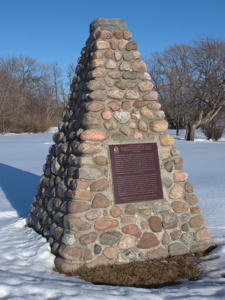
Negotiations that led to the setting up of the EKRCC had taken place at the Canterbury branch of Dover solicitors Mowll & Mowll headed by John Hewitt Mowll (1891-1948). At the inaugural meeting Garcke was elected Chairman, Alfred Baynton, General Secretary and at the end of 1918, Major C J Murfitt joined the Board as the head of the engineering and operational side. During the negotiations it was agreed that the 74 vehicles the new company inherited would have red livery with East Kent painted on both sides in cream. The head office was to be in Station Road, Canterbury and the central garage would be at St Stephen’s, Canterbury. Although it was agreed that the 200 or so staff that EKRCC  had inherited through the amalgamation would have standard uniforms, due to Wartime shortages they would keep the ones they had with the addition that the drivers would have Company oilskins and the conductors, hats and overcoats.

East Kent Road Car Company vehicle with a gas bag on the roof c1918. Dover Museum
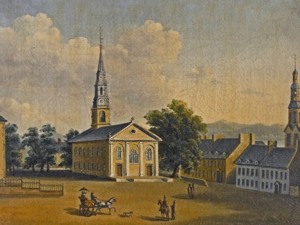
East Kent Road Car Company vehicle with a gas bag on the roof c1918. Dover Museum

Although the new company had a large fleet of vehicles, many were in a poor condition such that only about 40 were serviceable. Nonetheless, once the news of the amalgamation was out, local councils expressed concern that the new company would infringe existing public transport routes that they operated. In response to this Kent County Council (KCC) issued a directive stating that EKRCC had to pay these councils either £10 per route mile per year or 1pence per bus mile for using water-bound roads; or 0.75pence per mile for using tarmac roads and 0.375pence for traversing concrete roads, which ever was the greater. Further, due to Wartime conditions, the new company was faced with fuel shortages and getting spare parts became increasingly difficult. Towards the end of the War petrol was so strictly rationed that EKRCC adapted some of the Tilling-Stevens buses to run on coal gas. The gas was stored in large bags on the roofs of the vehicles but were difficult to drive especially along the coastal roads. At Capel, west of Dover, on more than once occasion a bag blew off and out to sea! Added to this, since the start of the War it had been expected that it was the duty of every man, who was of military age to do his duty and fight for the country, which meant there was also a chronic shortage of experienced bus drivers.

P W Sneller's Omnibus Service founded in 1878. Bob Hollingsbee

P W Sneller’s Omnibus Service founded in 1878. Bob Hollingsbee

From the mid 19th century, the town of Dover had rapidly expanded with new developments taking place along the valleys on the west side of the town. The ancient town centre, from the seafront across New Bridge, along Bench Street and King Street to Market Square then Cannon Street and Biggin Street, together with Charlton’s High Street and the London Road at Buckland, was thriving. So was the compact maritime Pier District, on the west side from the harbour to the cliffs, where Snargate Street was eclipsing Cannon Street and Biggin Street as Dover’s retail centre. To the east was Castle Street and the St James area comprising of buildings dating back to Tudor times, together making up a hotchpotch of housing, shops, offices and small factories. To enable the general public to get around were the horse-drawn omnibus services that operated on the mostly cobbled or untarred and dusty streets. One omnibus service, founded in 1876, was run by Frank Sneller (1855-1900) and based in Cherry Tree Avenue. There was also Back’s horse omnibus, which ran between the South Eastern Railway Station at Beach Street and Buckland Bridge, while another service was owned by Henry Alfred Smith, who operated from the Terminus Hotel in Beach Street and parts of town.

A Dover tram coming out of the tram shed at the bottom of Crabble Hill.

A Dover tram coming out of the tram shed at the bottom of Crabble Hill.

In 1894, Dover’s Electricity Company was established in Park Place and on 9 November 1895, the Corporation passed a resolution proposing an electric tramway. Authorisation was confirmed by the Tramways Orders Confirmation (No.1) Act of 1896 and the first tramway was officially opened on 6 September 1897.  The 3foot 6inch (just over a metre) gauge track went from Market Square through the town centre for 3 miles and was laid within a year. All the trams were double-deckers and up to 1926 had open top decks. Further, each tram was fitted with a primitive cowcatcher type of guard to prevent anyone falling under the front of the vehicle and the seats were slatted reversibles by moving the backrest in the opposite direction to the way the tram was going – one such seat can be seen at the Dover Transport Museum. The tram service was popular from the outset as it was cheap, convenient, dependable and fast compared to horse-drawn vehicles. Dover ratepayers paid £27,700 for the system and the receipts in the first year were £7,478. The second year these increased to £9,882 when 4,673,124 passengers had travelled on Dover’s trams.

However, the Dover tram service only ran along the main streets of the town and to go further afield the choice for most was either the train or horse-drawn vehicles. On 26 June 1899 the Dover and East Kent Motor Bus Company, not EKRCC, addressed this problems when they started a two hourly bus service to the village of St Margaret’s, on the east side of Dover. Their vehicle, a Pioneer, was built by the Liquid Fuel Engineering Company of East Cowes, Isle of Wight and their first bus took two days to come from Cowes, having had an overnight stop in Hastings.

The Pioneer buses were very popular such that later Robert Morton & Son of Wishaw near Glasgow obtained a licence to build them. The first one to arrive in Dover had a steam engine with a marine type boiler that was fired by paraffin oil. The exhaust pipe was vertical and came out of the wooden roof looking like a chimney! The buses had two-stroke piston valves with cylinders 3inches and 6inches in diameter and a 5-inch stroke. The Pioneer could generate between 25 and 30 horse-power and was capable of going 25miles an hour (mph) but usually travelled at 18mph slowing down when going up hills. The steepest incline out of Dover was Castle Hill Road but as the buses improved in design, fully loaded they could tackle the hill with ease at about 4 mph.

East Kent Omnibus Company Pioneer used for the Dover - St Margaret's - Deal service c1910. Dover Museum

East Kent Omnibus Company Pioneer used for the Dover – St Margaret’s – Deal service c1910. Dover Museum

The chairman of the East Kent Omnibus Company was Harry Stone, the Clerk of St Margaret’s Parish Council and the secretary was John Betridge. The buses were capable of carrying up to 28 passengers and had a wooden awning for the roof. However, the iron tyres made the ride uncomfortable and shortly after the service was started, to try and  get round this, rubber was inserted between the wheel rims and the tyres. The terminus in St Margaret’s was at the top of Bay Hill and the journey took about 40minutes and was so successful it was later extended to Deal. The fare to St Margaret’s was 6pence, luggage being carried on the roof. Passengers were protected from the elements by a glass screen in winter and canvas curtains in the summer. The early Pioneers were divided into two compartments; behind the driver was one for smokers and had two cross-wooden benches seating 10 passengers. The rear compartment had benches down both sides. The driver was open to the elements with only overhead protection. In his cab there was a steering lever and at the side, the steam regulator and reversing gear.

On 19 September 1899 the Mayor of Dover, Sir William Crundall (1847-1934) organised Dover’s first motorcar exhibition which was held at Crabble Athletic Ground. One of the exhibits was a Pioneer and there were free rides on the bus. Unfortunately, the driver drove it off the track onto the grass where it sank almost up to the axles! Nonetheless, the bus was a success and eventually the East Kent Omnibus Company had three buses and one of the drivers was Herbert Salter. By 1902 Salter owned the company and he launched a service in Folkestone.

However, this ‘new fangled thing,’ as locals called the Pioneers did not go down well with the drivers of the horse-drawn vehicles. Complaints were such that Dover Rural Council ordered that drivers of horse-drawn vehicles had the right to stop the bus in order to drive past it in the opposite direction. The evening of 20 February 1909, saw the East Kent Omnibus Company’s worst accident when a party of sergeants based at the Castle were returning to their quarters on Western Heights. As the motor bus was going down Castle Hill Road, the brakes failed but the driver stopped the bus from careering down the steep bank at the side of the road, by crashing into a wall. He and some of the soldiers were injured and the bus was a write-off.

East Kent Road Car Company Leyland bus outside of Woodhams on Castle Street for the Dover - St Margaret's Bay Service c1920. Dover Museum

East Kent Road Car Company Leyland bus outside of Woodhams on Castle Street for the Dover – St Margaret’s Bay Service c1920. Dover Museum

When EKRCC came into operation in 1916, because of the War, Dover was under military rule and only authorised vehicles, including buses, car, lorries and railway companies could enter or leave the town. The East Kent Omnibus Company had the authority but they, like EKRCC were hit with wartime stringencies that was taking its toll on their vehicles. This came to a head in late December 1915, when a cliff fall blocked the South Eastern and Chatham Railway line at the Warren near Folkestone. After consultation with the Board of Trade, it was decided that the blockage could not be removed during the War and the state of the East Kent Omnibus Company vehicles were finding it impossible to meet the extra demand. When EKRCC came into fruition, Company Secretary, Alfred Baynton, negotiated with South Eastern Railway to replace the rail service by EKRCC buses.

The military refused to allow EKRCC vehicles to access the town and in  consequence, if a passenger wanted to go by train to Folkestone from Dover they were obliged to go by way of Canterbury and the Elham Valley railway. It would appear that EKRCC came to a loose arrangement with the East Kent Omnibus Company to provide a joint service with the Omnibus taking passengers between Dover and Farthingloe and EKRCC between Farthingloe and Folkestone. Eventually, the military authorities capitulated and allowed EKRCC to run a service between Market Square and Folkestone for workers with special permits. The East Kent Omnibus Company carried on running the bus service from Market Square to St Margaret’s and to Deal until EKRCC took over initially using their vehicles.

Crabble Road Tram Accident - Crabble 19 August 1917. Dover Museum

Crabble Road Tram Accident – Crabble -19 August 1917. Dover Museum

For travelling around Dover, the tram service remained popular but Sunday 19 August 1917 saw one of the worst tram accidents on record with 11 dead and 60 injured, many seriously. The Crabble Tram accident occurred at the bottom of the steep Crabble Road, River, where it crosses the River Dour. In 1915 the Ministry of War had issued a directive stating that tram driver vacancies were to be filled by soldiers who had been discharged from the Army on medical grounds. The driver of the tram that day, Albert Bissenden, fell into this category. He made a fateful error that was exacerbated by a catalogue of cost-saving measures going back to when the tram line to River was envisaged. Trooper Gunner, a former tram driver who was on board that day tried to stop the tram using his feet as emergency brakes. Sadly, he lost both his feet but was later awarded the Albert Medal for his actions. The official verdict into the accident was that ‘the deaths were caused by the tram-car running away and overturning and that the accident was caused through the error of judgement and inexperience of the driver of the car, and that the deceased’s met their deaths through misadventure.’ However, within all the reports, the underlying blame was firmly put onto Dover Corporation and due to inadequate insurance cover the town’s rates, in order to pay back money borrowed to meet compensation claims and repairs, were high.

War ended in November 1918, following which a regular bus service, operated by EKRCC, between Dover and Folkestone was introduced. In April a regular service between Dover and Canterbury was started and EKRCC rented from the council a designated area in the Market Square for a terminus. At the time, EKRCC was faced with fierce competition from former armed service drivers, who on being demobbed were setting up their own bus companies. Eventually, in East Kent, most of these companies that survived were absorbed by EKRCC. In 1921, the company introduced a regular coach service between Margate and London and started the predator take-overs or amalgamates with other companies. These included Pullman Motors, Silver Queen Motors, South Coast Motor Services and Cambrian Coaches, which had their headquarters in the old Oil Mills in Limekiln Street. Although the bus services were EKRCC ‘bread and butter,’ it was within the coach services where the profits lay. In 1932, under the influence of the London Coastal Coaches, a consortium of coach operators including EKRCC, the London Coach Station opened in Buckingham Palace Road, Victoria, London.

Daimler bus, one of 40 ordered c1919 and given new bodies in 1927 by Shorts of Rochester for the Dover - Canterbury service. LS

Daimler bus, one of 40 ordered c1919 and given new bodies in 1927 by Shorts of Rochester for the Dover – Canterbury service. LS

Following the War, Dover Corporation not only faced the huge costs associated with the Crabble Tram Accident, but due to military occupation and enemy action, their sources of revenue had been severely curtailed. To make matters worse, the country was sliding into an economic depression that was to last until the end of the decade. Hence, the philosophy of the town’s tram service was that of ‘make do and mend’, a preference for second-hand trams and new trams were only purchased when absolutely necessary. By 1922, the council were looking into the possibility of switching to what appeared to be cheaper trolley buses or making an arrangement with EKRCC to run buses in the town. However, the first was met with derision from the Chamber of Commerce and ordinary folk. While the second was met fierce resistance from within the council chamber as they wished to remain in control.

Although Dover council was desperately short of money on their own account, the government was providing infrastructure grants to reduce unemployment. It seemed to the council that if they looked to extend the tram service along the coast to St Margaret’s and possibly Deal, they would get one of these grants which could have long-term financial benefits for the town’s tram service. In 1920 the Dover, St Margaret’s and Martin Mill Light Railway Company had successfully applied to run a railway line from the Sea Front Railway at New Bridge to the Eastern Dockyard. Their idea was to connect this line with the old Pearsons railway track, extending it to St Margaret’s. From there, the proposed line would join the Southern Railway Dover-Deal railway line at Martin Mill. This had come to nothing but the council proposed to use the Parliamentary authority to construct a road / tram track along the agreed route but they were unable to get a government grant so the idea died. Nonetheless, they continued to look for other ways to secure finance to maintain the ailing tram service.

Palmer's coach factory Union Road. Dover Museum

Palmer’s coach factory Union Road. Dover Museum

Having created a foothold in Dover with the designated terminus, EKRCC built on it by giving the contract to build 30 wood-frame 29-seater bus bodies to G S Palmer. The company was based at the corner of London Road and the then Union Road, Dover, with another factory in Cherry Tree Avenue. Then, in 1922, the Dover Gas Company moved its offices, workshops and showrooms from Russell Street to Northbrook House in Biggin Street – at the time of writing occupied by Halifax Building Society.

The Gas Company opened their new showrooms in 1923 and put their Russell Street premises up for auction. There they were purchased by EKRCC for £3,500 who demolished the Gas buildings and erected a bus garage on the site. Of interest, while excavating the foundation pits for the new building a number of Roman artefacts were found and these tied in with the already accumulating evidence that there had been a Roman harbour in the area. The bus garage opened the following year but Dover council were angry and in retaliation, EKRCC were required move their terminus from Market Square to Ladywell!

With a garage in Dover, EKRCC increased the regularity of buses to Folkestone but due to the narrowness of the road between the two towns, the buses had difficulty in passing other vehicles, including their own buses! This was exacerbated by the lack of footpaths, which put passengers at risk and although bus stops could be erected, there was little room for passengers to wait. Dover Corporation made it clear they had no money to pay for the road to be widened  but did tell EKRCC that they were considering running a tram service between the two towns and were only waiting for Folkestone to agree. In fact the proposal never amounted to anything but EKRCC lost no time in badgering Kent County Council (KCC) to widen the road. KCC then acquired the land and widened the road from the Dover boundary at Farthingloe to the Folkestone boundary at the western end of Capel. Using unemployment grants KCC widened the road and EKRCC put in standing places for passengers by the bus stops.

In February 1928, Southern Railway submitted a Parliamentary Bill to enable the company to provide and work road vehicles in any district to which access is afforded by its system. This was for the conveyance by road of passengers, their luggage, goods and livestock, and to apply its funds for the purpose. The Bill also sought to enable Southern Railway to enter working relationships with Local Authorities, companies or persons owning or running road transport services. In 1918, Garcke had resigned his position as Managing Director of BAT in order to give him more time on his growing motorbus enterprises, which included the Maidstone & District Motor Services Ltd. However, retained his position on the Board – being elected chairman in 1923! In 1928, at the time the Southern Railway Bill was going through Parliament, Garcke was appointed a director of the BAT parent company, British Electric Traction Group (BET). He was also a member of the Council of the London and Provincial Omnibus Owners’ Association and under both ‘hats’ he took the leading role in the Parliamentary debates on the Bill.

East Kent Road Car Company Excursion Poster C1930. Dover Transport Museum

East Kent Road Car Company Excursion Poster C1930. Dover Transport Museum

The reason Southern Railway was seeking the changes in its Bill was due to rail transport being increasingly adversely affected by road transport and this was blamed on the bus companies. Garcke quickly assumed the leading role on behalf of the bus companies saying that there were about 11,000 bus companies in operation in the UK and that the number of passengers carried by the largest 45, in 1927 was 534,376,739. The number of staff employed by these 45 companies amounted to 850. Nonetheless, the effect on trains by buses was over exaggerated. The main culprits, he told the Parliamentary Select Committee examining the Bill, were private motorcars and motor bikes. The Omnibus Owners’ Association, he said, had carried out tests at various locations with frequent bus services, of which he gave details. These showed that on average 72% of road traffic on the particular routes were private vehicles. The lowest ratio was on the Dover-Folkestone road and this was due to the beautiful scenery through Farthingloe and Capel together with the low bus fares. On weekdays private transport amounted to 41% while on  Sundays it was 53%. Guarke went on to say that since the advent of mass-production in the motor industry, the cost of motorcars had fallen to £100-£150 each and it is this that Southern Railway should be looking for the fall in railway travel.

Southern Railway’s Bill was enacted with the points that Garcke had made, taken on board. Following which, both sides negotiated a deal and in August 1928 Southern Railway had acquired 49% of EKRCC shares and the Bus Company came to an arrangement with the Post Office to carry parcels. These could be handed into any of EKRCC bus stations, to the conductor of a bus or to special appointed agents in towns and villages on the EKRCC routes. Charges were based on the single fare and the weight of the package, for which conductors carried a small spring weighing machine. In Dover, postal collecting boxes had been introduced on the trams in 1926 and following the parcel agreement, they were introduced on EKRCC buses. By which time in Dover, possibly due to pressure from Southern Railway, the Market Square terminus was reinstated and soon after premises was acquired to open an office on the west side of the Square.

Of interest, EKRCC parent company was British Electric Traction Company (BETC). Following the death of Richard Tilden Smith (1865-1929), who owned Tilmanstone Colliery, his interests were sold to the Anglo-French Investment Consolidation Ltd. This was part of the Drayton Group and affiliated to the Group was the British Electric Traction Company, the parent company of EKRCC.

EKRCC buses lines up in Market Square circa 1935 and note the EKRCC office sign on one of the buildings on the left - west side of Market Square. Bob Hollingsbee Collection, Dover Museum

EKRCC buses lined up in Market Square circa 1935 and note the EKRCC office sign on one of the buildings on the left – west side of Market Square. Bob Hollingsbee Collection, Dover Museum

In 1929, EKRCC extended its operations to commercial charabanc services using single-decker coaches designed to take passengers on day-trip outings. The following year the wide sweeping Road Traffic Act (1930) affecting, both private and public road vehicles came into force. For public vehicles, the Act created Traffic Commissioners who were responsible for licensing and upholding new rules on the operation and the conduct of drivers, conductors and passengers on public service vehicles. The Act also introduced a 30-mile an hour speed restriction on buses and coaches, created a central regulation for coach services, and limited the hours of continuous driving. In 1931, EKRCC introduced their new Tilling Stevens B49 single-decker buses to Dover. Painted in the company’s colours of red and cream, the glossy buses lined up in Market Square making Dover’s trams look well past their sell-by-date. However, as the buses were petrol fuelled and without self-starters, the tram drivers took great delight in ridiculing bus drivers when they were swinging the starting handles to get the buses going!

East Kent Road Car Company advert in Dover Gateway 1925. Dover Library

East Kent Road Car Company advert in Dover Gateway 1925. Dover Library

1930 was a boom year for Dover, the shops were almost as successful as they had been before the War and folk from the surrounding villages were coming into Dover on buses to do their shopping. By this time EKRCC were running buses between Dover and Canterbury, Deal, Eythorne, Folkestone, Hythe, Ramsgate and St Margarets Bay, with stops in most of the hamlets and villages en route. Even Dover’s ageing tram service had seen their takings increase though the stock was looking distinctly worn out. Dover Corporation had been offered five top covered tram-cars by Birmingham & Midland Joint Committee for £800. Before making the decision, they looked at alternatives and found that the cost of a new tram would be about £1,500, while a ‘rail-less’ trolley would cost £2,500 but would be cheaper to run. The five tramcars option was taken up but the council was aware of a growing agitation against trams. The motorcar owners saw them as a nuisance, while cyclists were in constant danger of being thrown when their bicycle wheels had been caught in tram tracks. Some injured cyclists had threatened to sue but none, to date, had carried out the threat. This was a relief for by the time the second-hand trams arrived, Dover’s economy was rapidly following the national economy into a deep depression and the council cut back on insurance to save money.

By 1932 EKRCC’s takings, like Dover Corporation’s tram takings, were falling due to the fall in demand and particularly the holiday trade industry. Excursions to local destinations remained on offer and those that were taken tended to be by local folk who had previously taken short holidays outside of the district. Staff were laid off  and as had happened after the War, some managed to get hold of vehicles, which they operated by undercutting EKRCC fares. Further cuts were imposed but care was taken not to make drivers redundant, instead a policy of driver’s collecting fares on single-decker buses was introduced and conductors were laid off.

In August 1932, a golf ball hit the windscreen of an EKRCC bus while it was passing the South Foreland Golf Club on the main Dover-Deal road, now the A258. The ball smashed the thick plate glass window and although flying glass cut a passenger, the driver was not hurt. The golfer apologised to the passengers and gave the injured passenger his golf ball as a memento of the occasion but the incident caused the bus company concern. This centred on the question of what would have happened if the driver had been hit and finding alternative windscreens that would offer greater protection became a priority. Although EKRCC had frozen wages and cut the number of employees, at the Annual General Meeting of December 1932, it was able to report that profits had increased and that they were able to pay a dividend of 6%!

The 1930 Road Traffic Act required new vehicles to have laminated glass windscreens – a process that had been introduced in the 1920s – and EKRCC had decided to replace older vehicles windscreens on an ‘as and when basis’. Following the golf-ball incident, all the buses had their windscreens changed and the company applied to the Traffic Commissioners for the authority to increase fares, part of which was to pay for the new windscreens. The following year, due to the continuing economic depression, the number of passengers carried by the company fell by 15.5% and even the amount paid in dividends were cut. However, by December 1934, the yearly net profits had increased to £41,503 against £26,168 for 1933 and everything was again auguring well.

The problem of public transport, in Dover had become acute and at the end of 1933, Dover council held a referendum on the proposal as to whether Parliamentary powers should be sought in order to replace the trams with a trolley bus system. The council expected that the idea would be fully endorsed and within the council chamber there was talk that the referendum was a waste of public money. On 6 January 1934, 37% of eligible Dover voters went to the polls and the result was:
For Trolley Buses: 976
Against Trolley Buses: 6,348
Majority Against Trolley Buses: 5,372
When the council recovered from the shock result, they set up a Transport Sub-Committee who, after much debate, drafted a Parliamentary Bill. This centred on taking up the Crabble Road to River terminus tram track and replace the service with council run petrol buses.

An East Kent bus in Market Square 1935 during the Silver Jubilee celebrations. Dover Museum

An East Kent bus in Market Square 1935 during the Silver Jubilee celebrations. Dover Museum

The number of Dover tram passengers in 1935 was 4,673,124 – the same as the joint first two years of operation – but the Transport Sub-Committee were seriously considering replacing trams with buses. Before parliamentary approval could be sought, another referendum was required. This was held in January 1936 but the turn out was even lower than the year before as only 25% of the electorate!       Of those who voted:
In favour of Omnibuses: 2,743
Against Omnibuses: 2,200
Majority in Favour of Omnibuses: 543 or 2.75% of the voting population of Dover. These figures, without spelling out the percentage of the voting population, were incorporated into the Dover Parliamentary Bill to replace trams with a bus service.  On 1 April 1936, the Borough boundary was extended up to the Plough inn on the Folkestone Road at Farthingloe. The Bill was sent to Parliament and on 4 April, EKRCC offered to provide a bus service in the Borough. Then, 18 days later, the full council rejected the offer.

In Parliament, due to the political climate of the time, the Bill became bogged down, so the council sought the advice of Alfred Baker,  the General Manager of the Birmingham Corporation Transport Department. He looked into the problems Dover was facing and the alternatives and presented a report to the Council. EKRCC made another offer and Baker was authorised to open negotiations with Alfred Baynton, by this time the General Manager of EKRCC as well as Company Secretary. On 8 August 1936, an agreement was reached but was not made public until 20 September. This had the desired effect as the general principals had been reached and by the time it was made public, there was general acceptance.

The agreement gave EKRCC a 21-year lease to operate buses between Marine Station, Buckland and River and between Market Square and Maxton. The bus service was to take the slightly longer route to the Lord Warden Hotel by going over the viaduct instead of following the tram track by way of Strond Street and the Crosswall.  The Maxton buses, would go as far as a designated turning point. The contract stated that EKRCC was to pay £3,000 towards the cost of laying concrete over the tram tracks and compensate tramway employees that they were unable to employ. After working expenses had been defrayed and a capitalisation charge of 3pence per bus mile, Dover Corporation was to receive approximately £2,055 per annum. This was based on 75% of the EKRCC profits gained within the Dover Borough boundary and inter-urban services that came within the Borough boundary regardless of boundary changes. Dover Corporation was not liable in the event of loss. Finally, the Corporation was to cease the running of trams at midnight on 31 December 1936.

River Tram with Crabble Athletic Ground in background

River Tram with Crabble Athletic Ground in background

The people of Dover were sad to see their beloved tram service go and when, on 31 December 1936 Mayor, Alderman George Norman, drove the ceremonial last tram to Buckland tram shed, at the bottom of Crabble Hill, the people lined the streets to wave goodbye. The town council had agreed to pay all their tram employees double for the last six days the service was in operation. On that evening, just before 23.30hrs, the last regular tram, Car No23, was driven by Vic Tutt onto the sleeper track at River.

The conductor on that service was Joe Harman, later a Dover historian, and he and Vic walked back to the Buckland tram shed. There, Joe telephoned the Electricity Works to cut the electricity off for the last time to Dover’s tramway system. Over the following days the old open-top cars were run out to the track at River and set on fire while the others were sold by contract. One of the former tram staff that were offered jobs by EKRCC was Joe Harman who was rapidly promoted to bus driver and given training as an engineer. Another was  Alexander Vassey, who had been a Dover tram driver for years and as soon as his sons, Albert, Alex junior, Alfred and Arthur, were old enough they joined him. They were all transferred to EKRCC and were later joined by their younger brother Richard!

On taking over the control of Dover’s public transport, EKRCC introduced petrol driven double-deckers*. The buses had to be started by a handle and matches were used to set the throttle and choke. Because the Russell Street bus depot had been built for single-deckers, the roof was raised and the EKRCC leased the Crabble Hill tram shed for £122 a year from the council. However, training of tram drivers to drive buses had not been considered and on the first day the company took on former tram drivers, one was unable to negotiate the island in the middle of Market Square. At the time it had an arc light standard in the middle – this can be seen in the pictures above – and he demolished it! This was not the only accident that happened that day but none led to injuries.* The type of double-deckers used at this time in Dover is highly controversial: according to drivers at that time, they were patrol engined Lancet, reporters said that they were petrol engine Leyland TD4 or TD5s; According to modern day specialist researchers they were diesel engined Leylands.

East Kent Road Car Company TD4 double-decker on the narrow streets of Dover following winning the franchise from an article by Alfred Baynton in Bus & Coach magazine August 1937

East Kent Road Car Company TD4 double-decker on the narrow streets of Dover following winning the franchise from an article by Alfred Baynton in Bus & Coach magazine August 1937

Bus fares matched the tram fares and the workmen buses replaced workmen trams. These were on special buses and showed a ‘W’ on the service aperture.  The workmen buses ran between Maxton and Buckland to Admiralty Pier and only workmen could use them. The journey cost 1penny regardless of the length. However, unlike trams, buses had to negotiate other traffic and it was found it difficult to keep to the printed timetables. The juggling of schedules in order to try to rectify this did not go down well with the passengers, and there was a growing demand to reinstate the trams. EKRCC, faced with the possibility of defaulting on the Dover contract, increased the number of buses on the service between Buckland and the town centre, but this was to the detriment of the Maxton service. At Maxton, passengers were encouraged to travel on the Dover- Folkestone buses but this led to overcrowding. The new bus services also had a negative effect on other road traffic users and one area of congestion was Biggin Street, Worthington Street, Priory Road and Priory Street. As Priory Street and Worthington Streets are parallel  they were made one-way – going the opposite direction to each other – and this has been the case ever since.

East Kent Road Car Company Dennis Lancet single-decker that were used on the River service while the new Crabble Road Bridge was being built and was then used for the Shepherdswell and Nonnington services. Joe Haman collection

East Kent Road Car Company Dennis Lancet single-decker that were used on the River service while the new Crabble Road Bridge was being built and was then used for the Shepherdswell and Nonington services. Joe Harman collection

The service to River was initially a problem due to the steep Crabble Road, where the infamous Crabble tram accident had happened. The railway bridge crossing the Road was too low to allow a double-decker bus to go under. Therefore a contract was made between Dover Corporation, EKRCC and Southern Railway for a new, underline, railway bridge to be built. While this was going on Crabble Road was widened and curbed and petrol engined Dennis Lancet front-engine single-decker buses were used for the River service travelling along the Lower Road, River. The bridge was completed in 1937 when Leyland diesel engine double-deckers replaced the Lancet single-deckers which were redeployed on the recently inaugurated Shepherdswell and Nonington routes. To create a larger turning area in River, several houses were demolished and the concrete terminus was complete with a brick shelter and public lavatories. Initially the service to River ran from East Cliff to River via Maison Dieu Road but it was found more profitable to split the route into two separate services and run more buses.

Once the basic bus service was established, the council decided that other routes should be opened but EKRCC were not as keen as they were not seen as profitable. In the end, a trial service was run to Elms Vale and this proved profitable and so was followed by other services including one for Dover miners working at Tilmanstone Colliery. This, however, affected the East Kent Railway line so much that they cut the services between Shepherdswell and Tilmanstone to twice a day. EKRCC started a service to the Pilgrims Way area on what became the Buckland estate and to the Ropewalk on the fledgling Aycliffe estate. The bus to the Pilgrims Way area was once every half-hour and an hourly bus service was introduced to the Glenfield Road area. These new services, however, were at the expense of the Crabble Hill – Kearsney service, which had originally been quarter-hourly but was cut to an hourly service.

When EKRCC replaced the Dover tram service, there was another independent East Kent tram service in operation. This was the Isle of Thanet Electric Tramway run by a private company, the main owner of which was the Isle of Thanet Electric Supply Company (ITESC). The Isle of Thanet Electric Tramway was partly financed by Margate, Ramsgate and Broadstairs councils and the Company had negotiated with the three councils to replace trams with buses. The deal had almost been completed when the three councils’ changed their mind and gave the contract to EKRCC. With their hands forced, in August 1936, ITESC sold their Tramway operation to EKRCC for £135,000. However, EKRCC were obliged to accept the same terms and conditions previously negotiated between the three councils and ITESC before the Traffic Commissioners would give their approval. This, the Traffic Commissioners were slow to do and EKRCC were forced to run the services as an agency until midnight on 24 March 1937, when permission to take over came into operation.

Once this was achieved, EKRCC had the monopoly of the East Kent public road transport, which was the main reason for the delay by the Traffic Commissioners. Then, within less than a month of EKRCC formerly taking over there was a national strike by members of the Transport and General Workers Union in bus companies that recognised the Union. This was about pay and working conditions but at the time, EKRCC did not recognise the Union but some of the workers of the newly taken over Thanet depot were members. On 21 April, these workers issued a statement giving EKRCC 48hours to recognise the Union and open negotiations for a settlement. Without confrontation, Alfred Baynton, on behalf of EKRCC, agreed and successful negotiations took place.

A Manchester bus being craned aboard the Townsend cross-Channel ferry Forde, in the Camber, Eastern Dockyard 1930s. Dover Museum

A Manchester bus being craned aboard the Townsend cross-Channel ferry Forde, in the Camber, Eastern Dockyard 1930s. Dover Museum

The negotiated settlement was implemented throughout the EKRCC but regardless of this and the costs of taking over the Dover and Thanet operations, 1937 was a profitable year. The main source of this finance came in the three-month summer period when holidaymakers from the English industrial heartland’s descended on East Kent – the Garden of England – as the area was known at the time. Large percentages of the holidaymakers were either directly or indirectly employed in the armament and associated industries that had been expanding over the previous three years. To meet this need, EKRCC invested in some 60 new vehicles and started running services to the Continent. For this, EKRCC used Captain Stuart Townsend’s vehicle-carrying cross-Channel ship Forde between Dover Eastern Dockyard and Calais on which the buses were already being craned on and off.

By the end of 1938, wage costs were eating into profits of many bus companies and there was talk of rationalisation or even nationalisation. Neither of these appealed to Sidney Garcke, EKRCC’s long standing Chairman, who argued that economies of scale were finite and EKRCC had reached its optimum size and consequently it was not faced with such problems. At the time, EKRCC’s area stretched  from the mouth of the Thames round the Kent coast to Hastings in Sussex, plus 11 large Kent towns not on the coast plus rural services in-between. EKRCC’s gross revenue for the year ending September 1938 was £700,000 but taxes amounted to £108,000. The number of buses owned was 549 and the number of passengers carried was 46million.

Garcke again emphasised that the most profitable time was during the three summer months and it was the revenue from the holiday traffic that sustained the company for the remainder of the year. Nonetheless, at the Annual General meeting a number of shareholders complained that the dividend was merely 6% of the net profits, when they expected more. Garcke responded saying that wages accounted for 40% of the net takings equalling £236,800. All of the remaining revenue, except for 6% of the net equalling £35,520 that went in dividends, went on running costs, overheads and vehicle maintenance and new buses – which was what the company was all about! This, he added, amounted to £319,680!

World War II (1939-1945) started on 3 September 1939 when, during the normal course of events holiday traffic would be buoyant until the end of the month. Earlier in the year, EKRCC had ordered a fleet of Leyland Tiger TS8 32-seater touring coaches with Park Royal bodywork and rear entrances. However, because of the declaration, trade came to an abrupt halt as holidaymakers fled the county. Nonetheless, EKRCC were optimistic comparing the situation with World War I when, despite the battles ranging on the Continent just across the Channel, holiday makers still came to East Kent. This time, so safe was East Kent seen by the authorities that before the end of September thousands of children were evacuated from London to the area, which created a demand for bus travel. By Christmas 1939, as the War was still not directly affecting the UK, many of the evacuated children returned to the Capital and EKRCC joined East Kent holiday resorts in a publicity drive. This was to persuade the holidaymakers to return for the summer of 1940 and a picture of a new Tiger coaches featured in an advert.

East Kent Road Car Company Leyland Tiger TS8 ordered in 1938 the first and only one to arrive was BFN 797 in March 1940 (Phil Drake). LS

East Kent Road Car Company Leyland Tiger TS8 ordered in 1938 the first and only one to arrive was BFN 797 in March 1940 (Phil Drake). LS

This period, in the UK, was called the Phoney War, nonetheless there were shortages. By the end of September 1939, fuel rationing had been introduced and this adversely affected the number of EKRCC bus services. On roads, a maximum speed of 20mph in built-up areas was imposed which meant that the bus timetables had to be rewritten. These two aspects combined to make EKRCC have more buses then they needed and the company came to an arrangement with the Ministry of Health, to lease some 30 Leyland TS7 buses. These buses were converted into ambulances and manned by EKRCC first aid trained drivers.  EKRCC was expected to maintain these ambulance/buses but it was generally felt that as the War would remain at a distance, they would not be used as ambulances. Hence, the adaptations were undertaken such that they could be easily returned to normal usage. In March 1940, the first of the Tiger coaches, with the registration BFN 797 arrived for the summer season, it was the only one out of the ordered fleet to arrive.

At the outbreak of War, Dover, as in World War I, became a military zone with the title, Fortress Dover. By Christmas, there was an influx of military and naval personnel which created an unforeseen demand on EKRCC that lasted until the early spring of 1940. At the same time, early bookings by potential holiday makers made the coming season look very promising. On the Continent, the German forces, were employing blitzkrieg tactics – attacking with a dense force of parachuted-armed soldiers quickly followed by armoured, motorised infantry with close air support. Country after country was falling like dominoes and refugees from the Continent were arriving at Folkestone on cross-Channel ferries in increasing numbers. Fortress Dover had ceased to be a commercial port nonetheless, many refugees arrived in Dover on a variety of seagoing vessels. These berthed by the Prince of Wales Pier and from there the refugees were taken by EKRCC buses to the then Town Hall, now the Maison Dieu, for documentation and interrogation. At the time, there was a fear of German spies and a Fifth Column – people who were working with the enemy to undermine the UK – entering the country.

Dunkirk Evacuation 1940 - Troops arriving in Dover. Doyle Collection.

Dunkirk Evacuation 1940 – Troops arriving in Dover. Doyle Collection.

As German forces were rapidly moving through France, on 10 May 1940 an All Party Coalition was formed in Britain with Winston Churchill (1874-1965)  as Prime Minister (1940-1945) and Anthony Eden (1897-1977) as the Secretary of State for War (May-December 1940). By 21 May, although putting up desperate resistance, thousands of Allied troops, mainly comprising of the British Expeditionary Force, were cornered at the port of Dunkirk. Vice-Admiral Bertram Ramsay (1883-1945), who had served with the Dover Patrol in World War I, was in command of Fortress Dover and in charge of the Evacuation of Dunkirk. On Sunday 26 May Operation Dynamo was put into action when, under Ramsay’s direction, a fleet of 222 British naval vessels and 665 other craft, known later as the Little Ships, went to the rescue of the beleaguered troops.

The Dunkirk Evacuation continued over the following nine days. Lining up in Snargate Street, were EKRCC buses that took whole battalions of soldiers to destinations in Kent while some 327 trains took survivors to locations throughout the country. Over the nine days of the Evacuation, 180,982 men were landed at Dover and EKRCC provided 250 vehicles, including those converted into ambulances, fully manned for 24/7. These were located at Dover, Folkestone, Margate and Ramsgate with 50 held at Canterbury to meet contingency needs. Not only were the buses driven by EKRCC drivers but also by other members of staff to give the drivers time to snatch meals and sleep.

Following the Dunkirk Evacuation the UK seriously prepared itself for wartime conditions. EKRCC timetables were cut and over 100 buses and their drivers were seconded to government projects with a large contingency attached to the Army replacing transport lost before and during the Dunkirk Evacuation on the Continent. Children from London that had remained in the County were sent, along with children from East Kent, to Wales for their safety. They all travelled by train from the main railway stations but EKRCC buses were used to collect the children from a variety of locations to take them to the stations. In preparation against invasion EKRCC buses were also used to take armies of workmen and Home Guards to erect a variety of defences.

The blackout had been imposed at the beginning of the War but it was not until the fall of Dunkirk that it was taken seriously. For EKRCC drivers, during the hours of darkness, the roads were extremely hazardous. There was no street lighting and house lights were hidden behind blackout curtains. The bus headlights were masked so that they could not be seen from the air, nor did they light up the road ahead as this would have enabled the enemy to follow them. The interiors of buses were lit with dim blue lights in order to make them difficult to be seen. During daylight hours buses were vulnerable to air-attack and to make them less visible, they were repainted grey with white painted edges on the front wings. The latter was to enable pedestrians and road users to see them.

In the event of an air raid, bus crews were instructed to go to the nearest shelter and wait there until the all clear was sounded. All EKRCC bus-crews carried their personal documentation and passes and for those members of staff that were likely to come to Dover or lived in the town, they were given special passes issued by the military. All passengers that wanted to enter or leave the town were required to have a special pass. The taking of photographs was banned throughout the East Kent area, so only official and approved photographs remain.

World War II Road Block on the Folkestone Road at Farthingloe. Dover Museum

World War II Road Block on the Folkestone Road at Farthingloe. Dover Museum

10 July 1940 saw the start of the Battle of Britain – the prolonged aerial conflict for the control of the skies above the Channel and South Eastern England. This was between the Luftwaffe (the German Air Force) and the Royal Air Force. Both EKRCC St Stephen’s garage in Canterbury and the offices at Horsebridge, Whitstable took a direct hit. Although, no one was severely hurt, buses and the buildings were badly damaged. The Battle lasted until 31 October 1940 and in May, Anthony Eden, had set up the Local Defence Volunteers (LDV) – later renamed the Home Guard. During the summer, EKRCC set up platoons under the heading of Home Guard Transport Column and included a Dover platoon. One of their main tasks was the defence of EKRCC’s premises and vehicles but they also worked closely with other companies of Home Guards and mainly drove Tilling-Stevens vehicles. Gas masks were issued to the population and although people were suppose to always have one with them, spare ones were carried on the EKRCC buses.

The failure of the previously expected profits from holiday traffic hit EKRCC hard and to raise revenue they hired vehicles to other bus companies at £2 a day. They also leased buses and their drivers to the government to take armament and aircraft workers to and from their factories. EKRCC buses and drivers were used to transport construction workers to locations that had been hit during bombing and the later shell attacks. EKRCC buses and drivers were also used to transport the Entertainment’s National Service Association -ENSA – members to entertain troops. At times, the provision of buses and drivers was gratis, particularly to the armed services based in Fortress Dover when they were redeployed, at short notice, to other areas. By the end of EKRCC’s financial year in September 1940, the company net profits had fallen from £58,214 for the year 1938-1939 to £22,248 and for the first year since 1916, the company did not pay out any dividends. At the AGM, held in December, Sidney Garcke, was full of praise for the staff, particularly the drivers and conductors in the east of EKRCC area, saying that they were constantly running the gauntlet. He went on to say that ‘All concerned with the enterprise, from the most senior to the most junior; from those who have been with us since the beginning to those who have joined us lately, deserved the praise and gratitude of the public.’

1941 was the silver jubilee year of the founding of EKRCC and Sidney Garcke was still the Chairman. In the New Years Honours of that year, he was created a Commander of the Order of the British Empire or CBE. The company accounts showed an increase in revenues of 28% over the previous year due to the presence of military in the area and the leasing of buses. However, the buses were depreciating, while others were victims of air raids. The lack of new buses being manufactured meant that they could not be replaced. Eventually, in order to rectify this, EKRCC set aside the assumed costs for replacements. This reduced the Excess Profits Tax and the refund was paid into the appropriate account. By 7 May 1941, the Dover area was nicknamed Hell Fire Corner and during shelling, one exploded in Market Square overturning and severely damaging an EKRCC bus. The driver and conductor were injured, mainly from flying glass and the company offered the forty-one EKRCC staff living in Dover relocation. The new homes were in a village some miles from the East Kent coast and although the company offered to pay all expenses, only two took up the offer. This, reporters and journalists in other parts of the country wrote, proved the stories emanating East Kent were fabricated. In August, one such journalist was sent to the area for twenty-four hours to ‘find and report the truth.’

He arrived from London at a Canterbury railway station and from there caught an EKRCC bus to Dover. It had been reported that on the steep roads into and out of Dover,buses, on clear days, were at the most vulnerable to attacks from across the Channel. The day the journalist arrived, the weather was clear and sunny,  all was quiet and the bus safely reached Buckland Bridge. En route, it had been stopped on several times at checkpoints, which the reporter found both tedious and a waste of time and could not see the point of having to have a special pass to come into Dover.

As the bus wended its way along Buckland’s London Road, the reporter noted the curtained windows of the houses and cottages, children on the streets, babies in prams and shops selling flowers. By the time the bus reached the Market Square, although he had seen gaps where buildings had once stood, the boarded up windows and the tile-less roofs, the reporter was firmly convinced of the exaggeration of Dover’s situation. He checked into a bed and breakfast in Biggin Street and spent the evening at Dover’s Hippodrome theatre on Snargate Street. There, he mixed with service personnel based in Dover, locals and members of the cast in the bar. They were all cheerful and made light of the reports on what was happening to the town. During the second half of the show the sirens were sounded but the audience did not seem perturbed, which totally convinced the journalist of the sham.

World War II - Snargate Street, note the East Kent Road Car Company bus on the right. Dover Transport Museum

World War II – Snargate Street, note the East Kent Road Car Company bus on the right. Dover Transport Museum

The night was quiet and the next day the journalist walked round the town and began to see the extent that Dover was under constant attack from bombs and shells. He spoke to some children playing on a bombsite and they told him that they had been evacuated to Wales but missed their homes and had come back but that there were no schools. He then met up with an EKRCC conductress and asked her why she was staying in the town.  She replied that she and her young son, who had returned from Wales, had lived in Dover all their lives and ‘would not leave it for anything.’ She went on to say that her husband was ‘in the Persian Gulf and I am sure that he would wish to have the home fires burning!’ The journalist spoke to others and later he wrote of his first impressions and how they changed when he realised the extent of attempts that the people of Dover were making in order to retain a semblance of ‘normality.’ He took the EKRCC bus back to Canterbury and as it climbed up Crabble Hill, he heard the sound of shells exploding nearby. One of the explosions shook the bus, to which the bus conductoress casually remarked, ‘We left just in time!

In August 1943, another journalist took the same journey by which time it was generally acknowledged that EKRCC was the only Bus Company in the country that ran services under a permanent emergency. The journalist had been told that three of the company offices had been hit and three of the garages blown up while the rest had been damaged to a greater or lesser extent. He had also been told that two old Daimler double-deckers had been turned into mobile offices and another into a staff mobile canteen. Mobile fare stages had become the norm, as there was ‘little point in making them permanent as no one knows when it will be blown up!’ In Canterbury  the journalist had been told  that some 14 members of EKRCC staff had been killed and thrice as many wounded by shellfire, bombs and machine-gun on the roads that traverse East Kent.

As his bus from Canterbury arrived in Dover, the journalist saw evidence of the continual shelling and bombing everywhere yet the attitude of Dover people had hardly changed. The only major difference was the children were not so much in evidence on the bombsites as a semblance of schooling had been introduced in the intervening period. On arrival in Market Square, he noted the bombed-out EKRCC office and the other wrecked buildings and made his way to Dover’s Russell Street bus garage and stood aghast looking at the devastation. The derelict building was empty except for a bus being refuelled by the driver who told him that ‘luckily the tanks had remained intact and that they were still being used for company buses.

East Kent Road Car Company Russell Street garage Dover following bombing on 23 March 1942. Dover Museum

East Kent Road Car Company Russell Street garage Dover following bombing on 23 March 1942. Dover Museum

When asked what had happened to the garage, the driver told him that on the moonlit evening of 23 March 1942, the Dover EKRCC manager Brian Taylor was finishing off his work at the garage when at 19.15hours he heard the sirens. The staff were making their way to the air-raid shelter in the basement of the building but as Taylor was leaving his office, he received a ‘phone call saying that the EKRCC office in Market Square had been hit and that it was believed there were dead and injured. Taylor was a Lieutenant in the Home Guard and, of his staff, that members who were at the garage that evening were William Ford, Robert Lynch, Frederick Mische, Victor Pilcher and Walter Sherwood. Taylor, the driver said, would have had no doubt that they would go and help. But before Taylor had chance to leave his office and while bus conductress, Minnie Hawkins was still on her way to the shelter, a German Junker’s JU88 dropped it’s armour-piercing bomb onto the garage. The bomb penetrated the roof of the garage and the air-raid shelter below.

The Civil Defence, soldiers and locals were quick on the scene and on clearing debris, they found Minnie Hawkins just outside the shelter, dead. Soon doctors and nurses and more help arrived and a shuttle service of ambulances was arranged to take victims to hospital. Victor Pilcher, who had been blown out of the shelter through a gap as the roof fell in, was found still alive but badly injured. He died four days later from internal injuries at the Casualty Hospital, now Buckland Hospital. The shelter was located and the rescue squad managed to get into it through the hole in the roof. However, it had almost filled up with water from a burst water main and this hampered rescue attempts. Eventually EKRCC Inspector William Pearson was hauled through the hole. He too was dead and his body was followed by those of William Ford, Frederick Hogben, Robert Lynch, Walter Sherwood and Frederick Mische who was an ARP Ambulance driver as well as being a member of the Home Guard. At the funerals, members of the Home Guard were bearers of their colleagues’ coffins and representatives of the Transport and General Workers’ Union attended.

The reported devastation of the EKRCC office in Market Square turned out to be correct and Jack Graves, a bus inspector, was killed. The office had been in the same block as the Conservative Carlton Club on the west side of Market Square, which had taken the hit and where four were killed. Outside, Private Alan Bowles, a 20 year-old soldier in the Buffs, had died under falling masonry and Ella Dixon, age 17 of East Langdon, was killed while sheltering in a doorway. The wife of the club steward was buried under the club’s debris for 13hours before she was finally rescued. Following the War, a Memorial was erected at the rebuilt Russell Street bus garage, which also included others connected with EKRCC who were killed during the War. Prior to garage demolition, the Memorial was removed to the Dover Transport Museum, Old Park, Whitfield where it can be seen.

East Kent Road Car Company World War II Memorial (detail) Dover Transport Museum. LS 2010

East Kent Road Car Company World War II Memorial (detail) Dover Transport Museum. LS 2010

The EKRCC employees were:
William George Ford age 29 of 82 Longfied Road – killed 23.03.1942
John Graves age 49 of 10, Shipmans Way – killed 23.03.1942
Minnie Gladys Hawkins age 27 of 68 Oswald Road – killed 23.03.1942
Frederick James Hogben age 55 of 25 Buckland Avenue – killed 23.03.1942
Robert Magnus Lynch age 37 of 43 Elms Vale Road – killed 23.03.1942
Frederick Charles Mische age 45 of 11 Winchelsea Street – killed 23.03.1942
John Mullane age 64 of 41 Albany Place – killed 07.06.1944
William Pearson age 56 of 140 Mayfield Avenue – killed 23.03.1942
Victor William Pilcher age 43 of 2 Knights Way – died from injuries 27.03.1942
Walter Sidney Sherwood age 31 of 7 Underdown Road – killed 23.03.1942
Brian Taylor age 32 of Court Cottage, Kearsney – killed 23.03.1942
Other Dover EKRCC employees killed during World War II include,
Flight Officer A Bourner,
Flight Sergeant Cadman,
AP Clarke,
Sergeant Griggs,
Private A Morley,
Private J Pay
J Redpath

During his time in East Kent, the journalist no doubt reported that on 31 May 1942, the EKRCC headquarters in Station Road, Canterbury was attacked and in the same raid, the company’s Canterbury garage and body shops were destroyed. In addition, during an afternoon in October 1942 a bus travelling on the Herne Bay / Canterbury Road, near Sturry was attacked by several aeroplanes using machine guns. The conductress managed to get all the passengers out and into a ditch for safety. She then ran back to the bus to see why the driver had not joined them to find him hanging over the wheel, shot through the heart. On the same afternoon, another bus was leaving Canterbury when two bombs exploded on either side. The conductress and nine passengers were killed. Although injured the driver managed to pull out the remaining 36 passengers from the badly wrecked bus and took them to a shelter.

The journalist had planned to take a bus from Dover to Ramsgate across what he had been told was the most dangerous of all of EKRCC routes,  the Downs. He was told that these buses only ran if there was a driver willing to take the bus and if a conductress went along,  that was her decision. For this reason there was no fixed time schedule and he was warned that there was no knowing when the Germans might swoop out of the clouds and attack the bus. Eventually, a bus left for Ramsgate and the journalist managed to get on board. He later wrote of the ‘white scars in the harvest fields alongside the road,’ which the conductress told him that huge German shells had quarried them out of the chalk. When they arrived at St Peter’s depot in Thanet, the Dover driver, Harry Howland, told the journalist that the windows of his cab had been blown out several times and that ‘you never know when you look out of your cab when you will see a yellow nosed plane with a couple of Jerries looking at you!’ He went on to say that on one day, the Germans dropped 187 sticks of bombs on Dover between 15.00hrs in the afternoon and 21.00hours at night. ‘But,’ he added ‘Spitfires shot down 17 big machines and the bus company’s staff stood at the doorways and watched them come down … we never turned a wheel!’

At the St Peter’s depot in Thanet, the journalist met Driver Thaxted, who told him that on one wet afternoon earlier that year a German machine had flown low over the depot. ‘It was so low that you could see the raindrops sweeping off the wings.’ It dropped two bombs and one wrecked the wall of the depot while the other skidded along the floor almost to Thaxted’s feet but he got out in time before it exploded! The depot was badly damaged and a temporary office had been set up in an old bus. In answer to the journalist’s question about what had happened to the Canterbury operations, Thaxted told him that many of the clerical staff had previously been dispersed to scattered locations, including Lydden, where Dover’s clerical staff had been moved. Buses that could be repaired were sent to Faversham and that EKRCC had taken over Alcroft Grange on Tyler Hill on the outskirts of Canterbury as temporary headquarters. Before he left Canterbury for London, he met Alfred Baynton, the long term General Manager and Company Secretary. He was in charge of co-ordinating all of the EKRCC’s scattered premises, dealing with the dead and injured staff which included making many of the arrangements as well as the general day to day running of the company.

As most of the company’s bus repairs had been carried out at Canterbury following the attack, a temporary body shop was set up at Seabrook, near Folkestone until better arrangements were made. At the time, Seabrook was being used as a temporary garage for the Dover operation until they were moved to the tram shed at the bottom of Crabble Hill later in 1942. The history of the Seabrook garage history goes back to 1872, when South Eastern Railway had envisage opening a line to Folkestone Harbour via Sandgate from the Sandling Junction. However, due to adverse pressure from locals, the line was not laid beyond the Seabrook station. During the interwar period, EKRCC bought the station and built a garage across the platforms. Following the Dunkirk Evacuation, as it was on the coast, the fuel tanks were filled with sand to avoid explosion. This meant that when the depot was commandeered for repairs the fuel had to be kept in a tank wagon!

Following the bombing of the bus garage, the shore based establishment HMS Lynx moved into the cellars and they became the headquarters of Minesweepers and Patrol Craft personnel. HMS Lynx was set up in September 1939 and paid off in 1946 and the commanding officer was accommodated at the nearby former Fremlins brewery!

Local historian, Joe Harman, worked for Dover EKRCC and in his reminiscences of the War years (Bygone Kent Vol 12 No3) he tells us that following a near miss of the Buckland Tram shed by enemy attack on 25 October 1943, buses tended to be parked overnight at the River Terminus. However, on cold mornings it was difficult to get them running and during severe frosts it was necessary to drain the radiators and cylinder blocks overnight. To get round the problem of starting the buses the next morning, within the fleet were some Tilling-Stevens buses and these had 12-gallon radiators. In the morning, the staff draped warmed sacks over one of the Tilling-Stevens radiators, set the throttle and using cold water from an indoor toilet and the emergency fire tank in the radiator, cranked the bus into life. As the engine ran, they drained up to two gallons of water at a time out of the Tilling-Stevens drain tap and used this water in the other buses radiators!

Chairman of EKRCC, Garcke, back in 1913, was one of the principle founders of the Provincial Omnibus Owners’ Association and in 1943, the Association became part of the newly formed Public Transport Association. Like many other bus companies by the end of that year, EKRCC was desperately short of vehicles. Out of the pre-war fleet of 549, the company had lost 208 buses. The Association put pressure on the Ministry of Supply, to allow new buses to be built and eventually specifications for a bus was drawn up. These were ubiquitous ‘utility’ single and double-deckers, built to a design that required the minimum amount of materials, skills and costs. The chassis was based on the successful pre-war Arab design, made by Guy Motors of Fallings Park, Wolverhampton. However, due to shortages, the lighter aluminium of the 1930s, was replaced with heavier metals. The engines were built by L. Gardner and Sons of Barton Works, Patricroft, Manchester and were either of the 5LW or 6LW range. Although, generally, the bodies were built by various manufacturers and consequently each batch could differ, EKRCC were lucky in that most of the fleet of 97 buses they ordered were made by Charles Roe of Leeds or Metro Cammell Weymann. The rest were hybrids built by EKRCC at Canterbury. As for the passenger seating, moquette cushions gave way to wooden slats.

Castle Street following the last shell to hit and cause material damage on Dover. This was on Tuesday 26 September 1944. Kent Messenger. Dover Library

Castle Street following the last shell to hit and cause material damage on Dover. This was on Tuesday 26 September 1944. Kent Messenger. Dover Library

June 1944 saw D-Day and the Normandy landings. As the Allies moved up the coast of northern France, the shelling of Dover became increasingly ferocious until the last shell to cause material damage hit Castle Street on the evening of 26 September. Once the realisation that the four years of bombardment had ended in Dover, a temporary EKRCC terminus opened in Pencester Road on a bombsite. One of the old Daimler buses was brought from Thanet to serve as a mobile office and another was brought in to serve as a staff canteen. To help to kit it out Dover’s Home Guard loaned its field kitchen.

Part II of the East Kent Road Car Company tells the story from 1945.

Presented: 26 October 2016

Further information:

Dover Transport Museum: dovertransportmuseum.org.uk

Home Front Bus Tours: info@homefrontbus.org.uk


Posted in Businesses, East Kent Road Car Company and Dover Part I, East Kent Road Car Company and Dover Part I, Trams & Buses | Comments Off on East Kent Road Car Company and Dover Part I